
Fence Companyin Fontana, CA
A Fontana fence needs no building permit up to 42 inches, and side and rear fences stop at 6 feet. New fences are block, tubular steel, wrought iron or vinyl, because wood is allowed only to replace an existing approved wood fence. Vinyl goes in to 'High Wind' specifications, and the first inspection happens at the post holes.
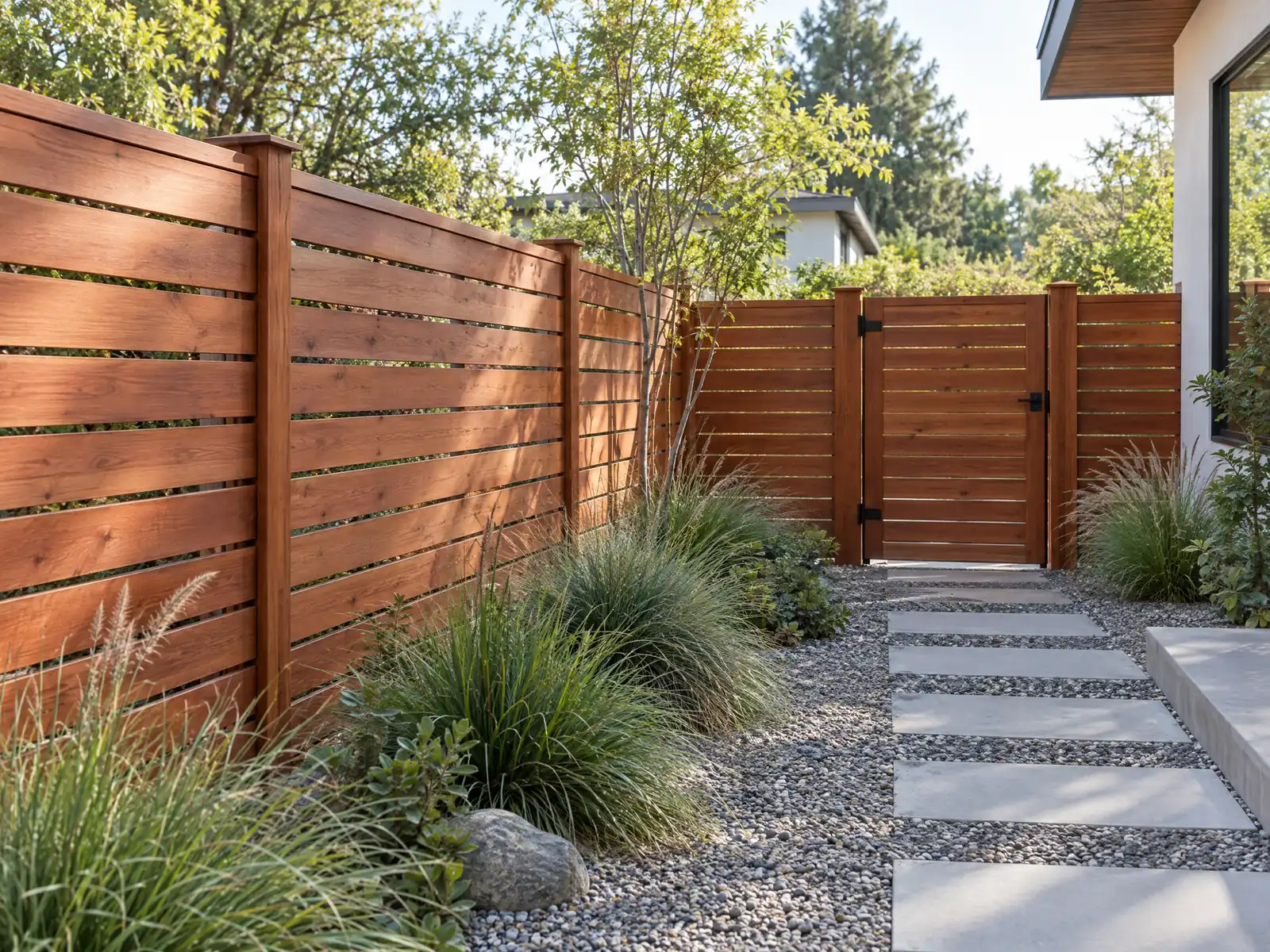
Fontana's first wind fence was a row of trees. San Bernardino County's history page says A.B. Miller planted long rows of eucalyptus to protect his groves from severe winds, and some still line the I-10 freeway; the City's tree article lists windrow trees among its heritage trees. Miller bought the 17,000 acres of Rosena in 1905, and the town took the name Fontana in 1913. Kaiser Steel opened its mill in 1942 and stopped in 1984 by the City's account (Wikipedia says December 1983), and ACS 2024 counts 61,759 housing units, 74.6 percent of them single-family detached and about 77 percent built from 1980 on. That is a great many backyards in a city whose code carries a special wind region.
On a fence job MDG Builders (CSLB #1040337) measures, files and coordinates, and separate licensed subcontractors build the work: a C-13 fencing contractor for vinyl, steel and iron runs and a masonry contractor for block, which CSLB treats as its own class. Our fencing page has the sourced prices, the Fontana overview lists every trade we manage here, and the guides for San Bernardino and Jurupa Valley show how two neighbors handle fences. Permits come from the City's Building & Safety Division. Municode and AmLegal returned an HTTP 403 error to our researcher, so the code text below comes from GoCodebook, a third-party mirror, and the City should confirm each section.
What Fontana's fencing handout, block wall rules and fire overlay say about fences
Where fencing permits come from in Fontana: City of Fontana Building & Safety Division (Development Services, Community Development).
- Fontana's Fencing Requirements handout (rev. 07-22-20) says a building permit is not required for fences under 42 inches, fences are limited to 6 feet, vinyl and wrought iron posts (4 by 4) may be 8 feet on center up to 4 feet high and 6 feet on center above that, posts need a footing at least 12 inches wide and 2 feet deep with at least 18 inches of post embedment, fasteners must be hot-dipped galvanized or stainless, gates are at least 36 inches wide, the first inspection is at the post holes before concrete, and fences may not retain earth. Wood fencing must be approved by Planning and vinyl systems must be installed per manufacturer specifications for a 'High Wind' area.
- Fontana's amended CBC Section 105.2 (Municipal Code 5-62(a) and (b)) exempts only solid fences not over 3 feet 6 inches high and open fences at least 90 percent open and not over 4 feet high from a building permit, and exempts retaining walls only up to 3 feet measured from the bottom of the footing and only if they carry no surcharge and impound no flammable liquids. Read in GoCodebook's third-party mirror.
- Zoning section 30-464 limits solid fences, walls and hedges (including vinyl) in a required front setback to 3 feet 6 inches in decorative material, allows wrought iron or tubular steel up to 5 feet at the sidewalk elevation with pilasters at least 10 feet on center and no wider than 18 inches if the owner verifies sight distance in writing, caps vinyl at 42 inches from the sidewalk, limits side and rear fences to 6 feet (8 feet with Planning Director approval where lots differ in elevation), caps fences at 30 inches inside the corner cutoff, and caps a retaining wall plus fence at 9 feet combined. Read in GoCodebook's third-party zoning mirror.
- Section 30-464 allows only block or solid concrete walls, tubular steel or wrought iron, and vinyl; wood fences are allowed only to replace an existing approved wood fence. Block walls seen by the public must be decorative block or stuccoed and painted to match the home with a decorative cap, side gates must be wrought iron or tubular steel, driveway gates in the front setback may not exceed the front fence height and may never open into the public right-of-way, and perimeter walls of 100 feet or more get decorative pilasters every 50 feet.
- The City's concrete block wall handout (REV. 06-23-08) calls for 8-inch slumpblock or 6-inch precision block and bars 6-inch slumpblock and 4-inch precision block, requires cells with rebar to be solid-grouted, bars the standard wall from retaining earth, requires a permit above 42 inches and a signed block wall or fence agreement if any part crosses a property line, and lists three inspections (footing, bond beam and final) with no concrete or grout before City approval.
- The City's handout for a block wall atop a 2-foot retaining wall shows a 6-foot maximum overall height with the retaining portion limited to 2 feet, solid-grouted retaining courses with head joints omitted in the first course for drainage, and footings next to slopes at least 5 feet to daylight; alternate designs need an engineered analysis and the City says the standard design carries no guarantee against failure.
- Inside the Fire Hazard Overlay District, any wood or vinyl fence must stay at least 5 feet from the wall of the nearest structure with noncombustible material in that gap, fences or walls required next to fuel modification areas must be masonry, and side and rear yard enclosures must have gates on both side yards for emergency access. Read in GoCodebook's third-party zoning mirror.
- Fontana's pool barrier handout requires a fence or wall at least 60 inches above grade on the outside face, no more than a 2 inch gap at the bottom (4 inches over a hard surface), openings that do not pass a sphere of the listed size (1 and three-quarter inches in the code amendment), horizontal members on the pool side when spaced under 45 inches, pedestrian gates that open outward and are self-closing and self-latching, and doors from the house or garage with self-latching hardware at least 54 inches high or an alarm; the barrier must be installed, inspected and approved before plastering or filling the pool.
Sources for these rules
- fontanaca.gov: Fencing Requirements PDF
- gocodebook.com: article iii california building code 3
- gocodebook.com: sec. 30 467
- fontanaca.gov: Block Wall Specifications PDF
- fontanaca.gov: Retaining Wall and Block Wall Combo Handout PDF
- gocodebook.com: sec. 30 656
- fontanaca.gov: Swimming Pool Fencing Requirements PDF
Which fence materials does Fontana allow, and can I still build a wood fence?
Zoning section 30-464, read in the mirror, allows block or solid concrete walls, tubular steel or wrought iron, and vinyl. Wood is allowed only to replace an existing approved wood fence, and the City's fencing handout adds that any wood fence must be approved by Planning. We found no mention of chain-link in the sections we read, so ask Planning before pricing it.
A Specific Plan can change those rules. The City's Planning FAQ says Fontana has 27 Specific Plans, most of them residential, that can replace the base zoning, and it tells owners inside one to call Planning at (909) 350-6718. The City's interactive zoning map shows the zoning for any address. Homeowner associations add their own approval step, and we did not research which Fontana tracts have one.
Ask Planning in writing which material list applies to your lot before a material is chosen.
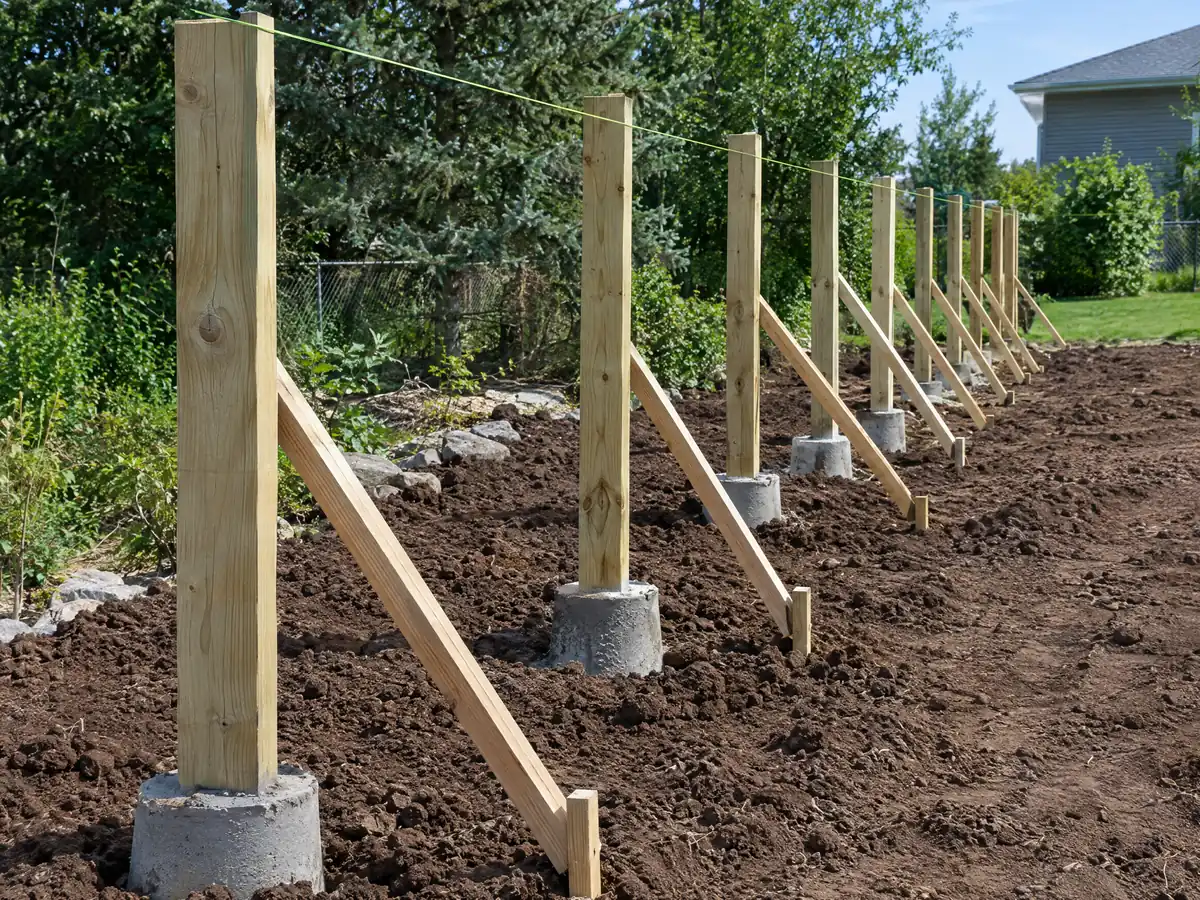
How deep do fence posts go in Fontana's wind, and when is the first inspection?
The City's Fencing Requirements handout, revised July 22, 2020, sets a floor for vinyl and wrought iron. Posts are 4 by 4, spaced 8 feet apart up to 4 feet high and 6 feet apart above that, footings are at least 12 inches wide and 2 feet deep, posts sit at least 18 inches in the concrete, fasteners are hot-dipped galvanized or stainless, and gates are at least 36 inches wide. Vinyl must go in to the manufacturer's specifications for a 'High Wind' area, which matters where Santa Ana gusts in the Cajon Pass corridor regularly top 60 miles per hour.
The first inspection is at the post holes, before concrete, so the crew must call for it ahead of pour day. Fences may not retain earth, so a fence on a cut or fill needs its own retaining wall design. The City's Wind and Storms page puts the windy season at roughly September through May, so ask how the crew braces panels that stand before the concrete cures. The handout is six years old, so confirm with the counter that it is current.
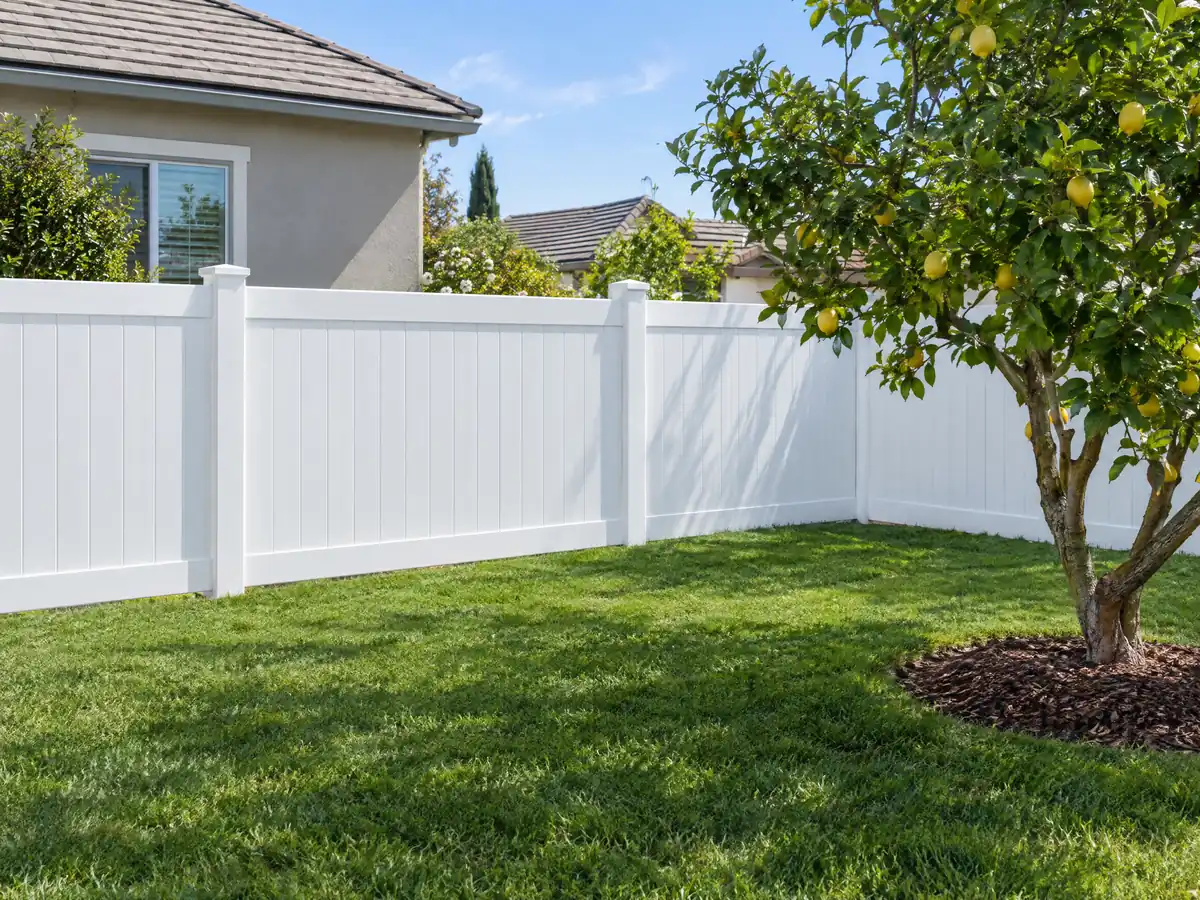
How tall can a fence be in a Fontana front yard, side yard or corner lot?
In the required front setback, section 30-464 caps solid fences, walls and hedges, vinyl included, at 3 feet 6 inches in decorative material. Wrought iron or tubular steel may reach 5 feet at sidewalk elevation if pilasters sit at least 10 feet apart and no wider than 18 inches and the owner verifies sight distance in writing, while vinyl is capped at 42 inches from the sidewalk. Fences inside the corner cutoff stop at 30 inches. Side and rear fences stop at 6 feet, or 8 feet with Planning Director approval where the two lots differ in elevation.
Two City documents draw the permit line in different places. The fencing handout says no building permit is needed under 42 inches, while the amended Building Code 105.2 exempts solid fences up to 3 feet 6 inches and open fences at least 90 percent open up to 4 feet. Use 42 inches as the safe line. Driveway gates in the front setback may not be taller than the front fence and may never open into the public right-of-way, and side gates must be wrought iron or tubular steel.
Ask the counter to confirm your fence height in writing before posts are ordered.
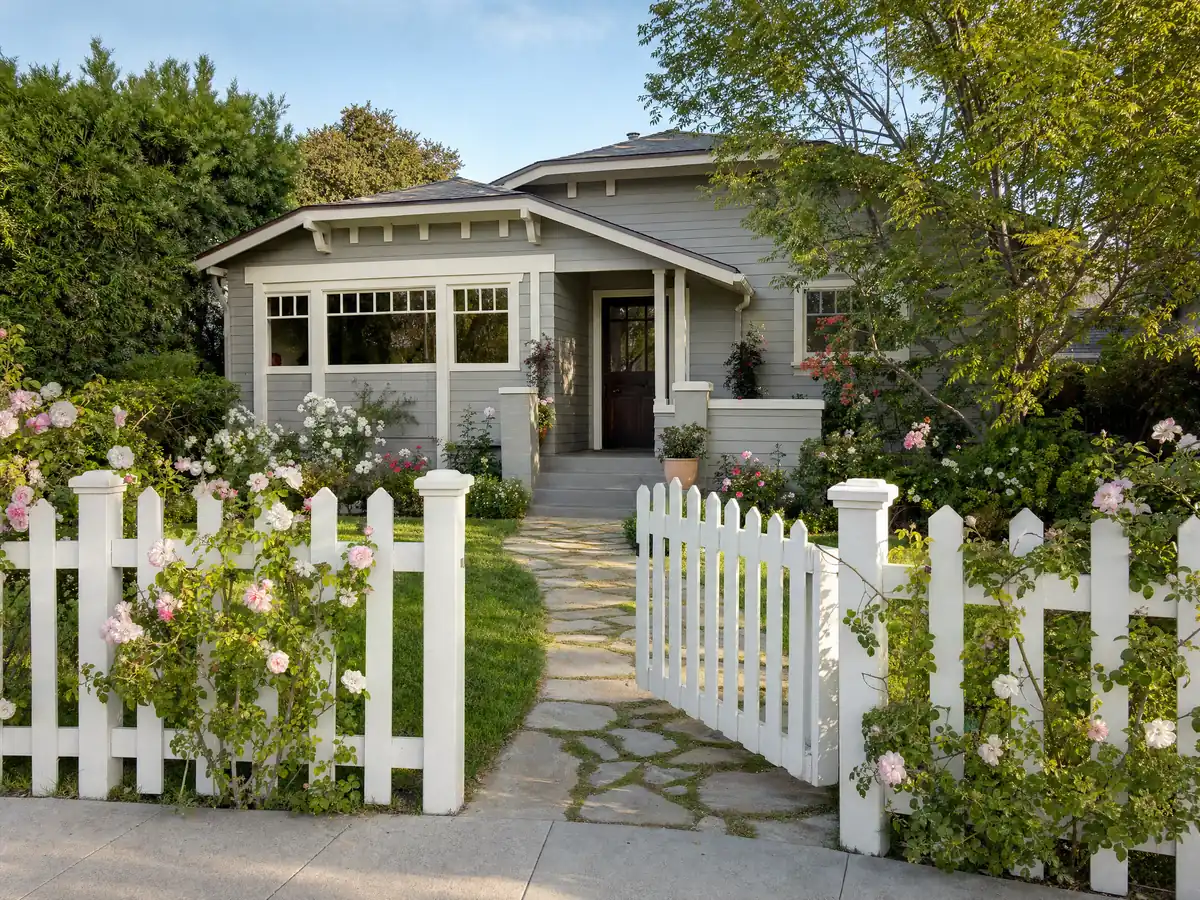
What does a block wall need in Fontana, and how is it different from a fence?
A block wall is masonry work, a different CSLB class from fencing, and the City's block wall handout is older still, dated June 23, 2008. It calls for 8-inch slumpblock or 6-inch precision block, bars 6-inch slumpblock and 4-inch precision block, requires cells with rebar to be solid-grouted, and bars the standard wall from retaining earth. A permit is needed above 42 inches, three inspections follow (footing, bond beam and final), and no concrete or grout goes in before the City approves each stage.
Section 30-464 asks that a wall the public can see be decorative block, or stuccoed and painted to match the house, with a decorative cap, and that perimeter walls of 100 feet or more carry decorative pilasters every 50 feet. A wall or fence built right on the property line needs a signed Block Wall or Fence Agreement with the neighbor. The City's handout for a block wall on a 2-foot retaining wall shows a 6-foot maximum overall height and warns that the standard design carries no guarantee against failure, while the zoning text caps a retaining wall plus fence at 9 feet combined, so ask which governs.
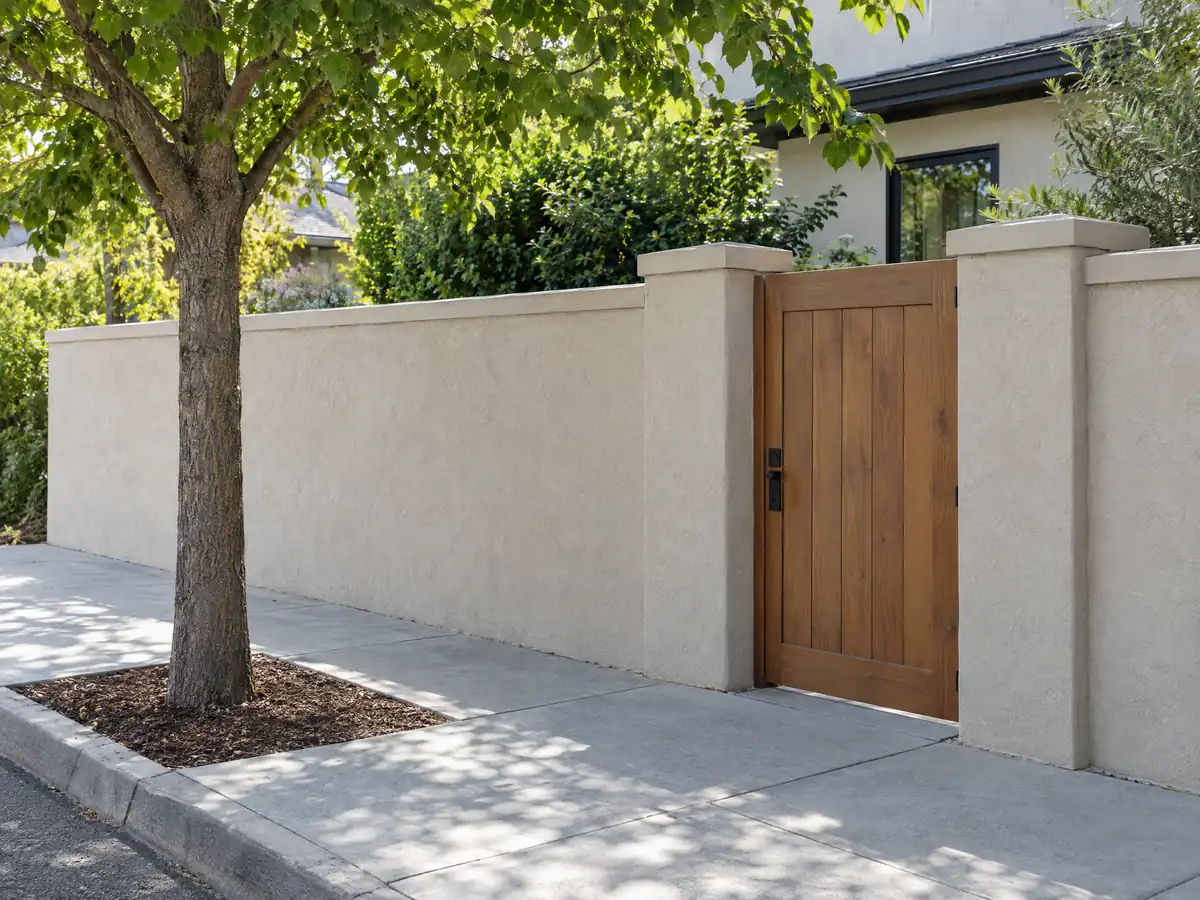
Do fences have to stay away from the house in Fontana's fire overlay, and what about slopes?
Inside the Fire Hazard Overlay District, section 30-656 keeps any wood or vinyl fence at least 5 feet from the wall of the nearest structure, with noncombustible material in that gap. Fences or walls required beside fuel modification areas must be masonry, and side and rear yard enclosures need gates on both side yards for emergency access. The City's Wildfire page notes that Santa Ana winds channeled through the Cajon Pass can carry embers ahead of the flames, which is the reason for the gap.
On lots sloped 10 percent or more, the Hillside Overlay District requires a Hillside Development Permit for projects including grading and building permits, and the Planning Commission takes over at a 15 percent average slope. We found nothing on whether a fence alone triggers it, so ask. Heritage trees need a permit to remove on projects with a subdivision or design review, and the City counts paving over the root area or changing the grade as removal, which matters if a footing line passes a windrow eucalyptus or olive.
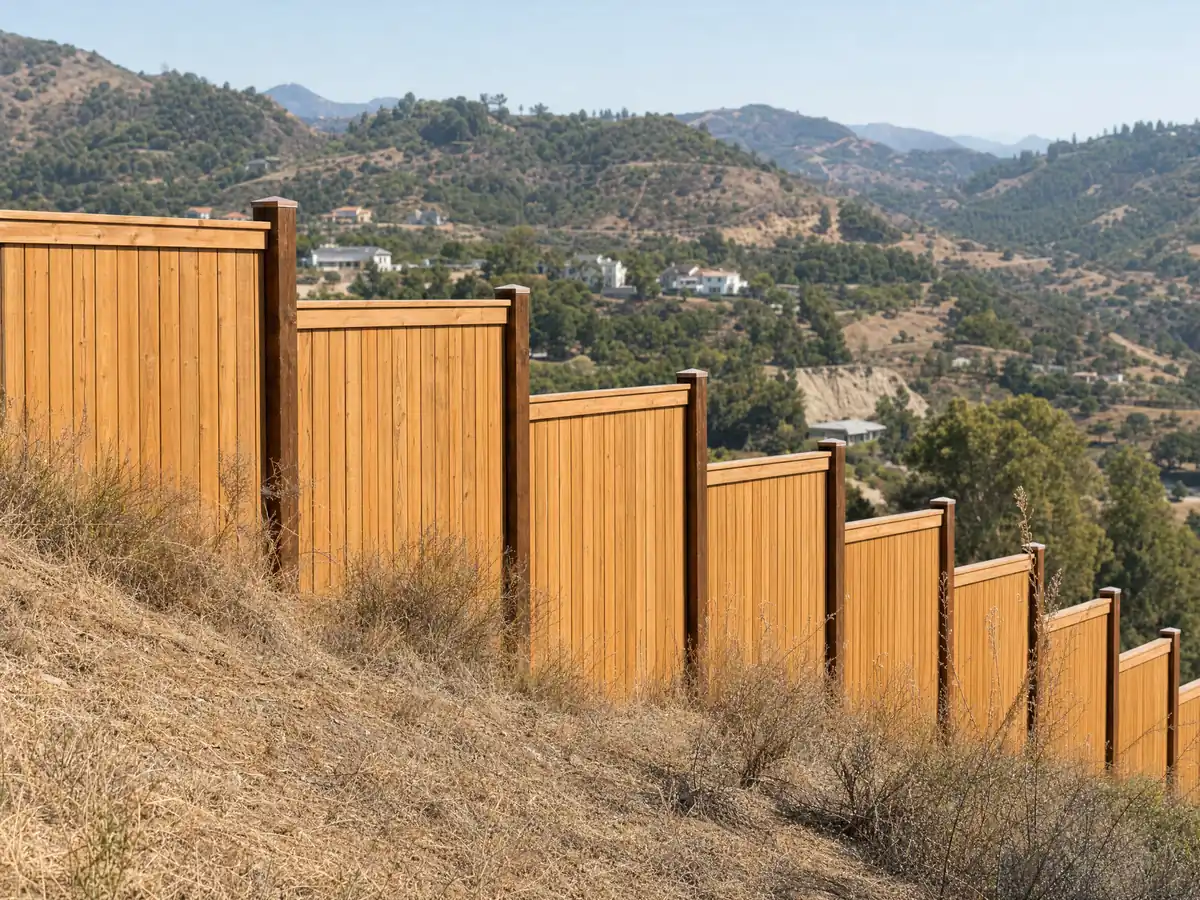
What does Fontana's pool barrier rule mean for a gate or fence replacement?
Fontana defines a swimming pool as any body of water or structure holding water more than 18 inches deep, including portable and above-ground pools, spas, hot tubs, wading pools and fountains. A new or remodeled pool at a single-family home needs an enclosure plus at least one more drowning prevention feature, such as a mesh fence with a self-latching gate, a safety cover or a pool alarm. The City's pool fencing handout asks for a barrier at least 60 inches above grade on the outside face, no more than a 2 inch gap at the bottom (4 inches over a hard surface), and gates that open outward and close and latch themselves.
Doors from the house or garage need self-latching hardware at least 54 inches high or an alarm. The barrier must be installed, inspected and approved before the pool is plastered or filled, and the zoning code bars a pool from any spot where the required barrier cannot be installed. Pool equipment needs 3 feet of clearance behind a fence, none behind a block wall.
Bring the pool plans to the fence estimate, because the barrier gets its own inspection.
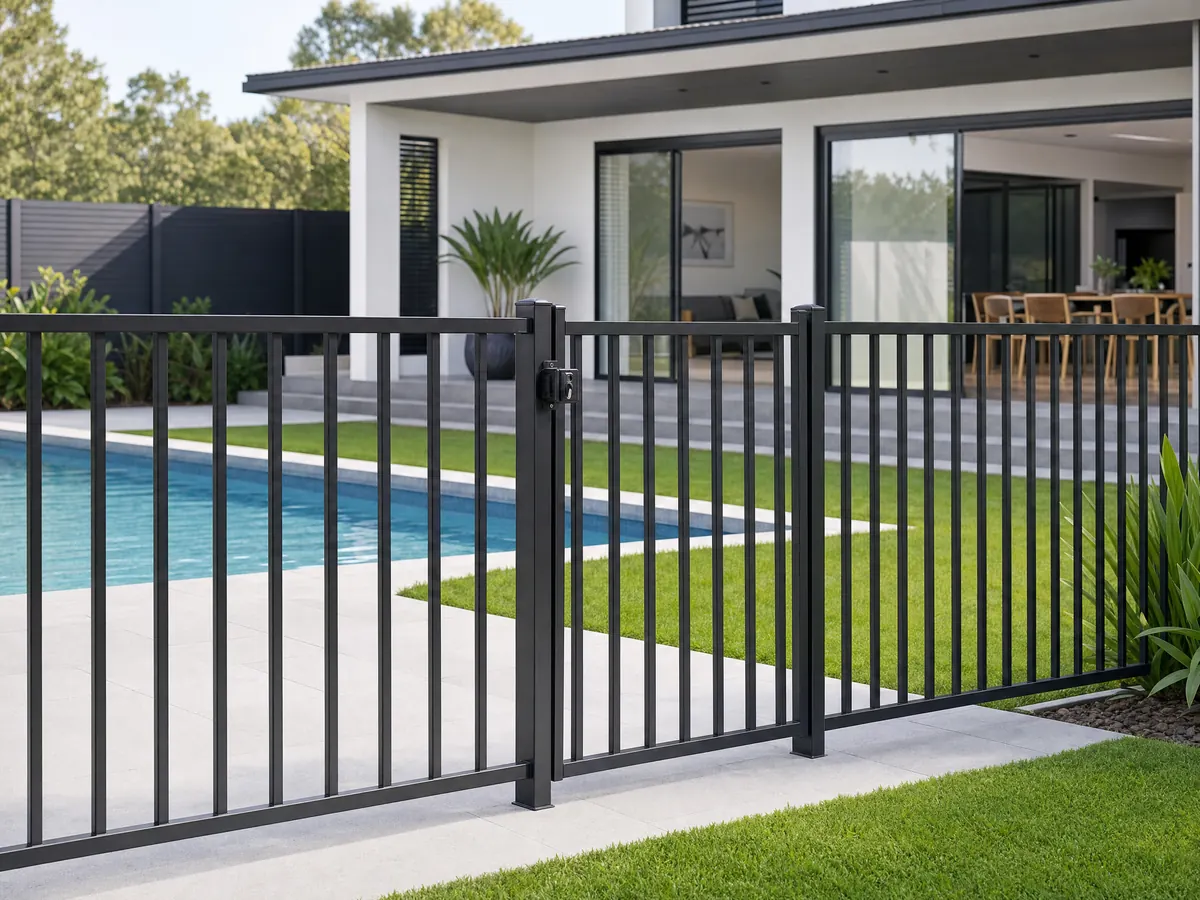
How much does fence installation cost in Fontana, and who pays for a shared fence?
We found no Fontana price survey, so we lean on Los Angeles numbers. Angi's Los Angeles page, updated August 4, 2026, shows a $3,051 average inside a $1,734 to $4,422 range, $15 to $60 a foot overall, and about $2,100 to $2,350 for 100 feet, with vinyl at $1,850 to $3,400. Its national page lists a gate at $150 to $2,000 and removal of an old fence at $3 to $5 a foot. For planning we use $25 to $55 a foot for vinyl privacy runs and $35 to $85 for steel or ornamental iron. We found no independent per-foot source for block walls, so none is printed, and the wood figures matter only for replacing an approved wood fence.
California Civil Code 841 presumes neighbors share the reasonable cost of a boundary fence equally and asks a landowner who plans to spend money on one to give each affected neighbor 30 days' written notice. Read our license guide before choosing a company, and see how general contractors use subcontractors for who does what on a managed job.
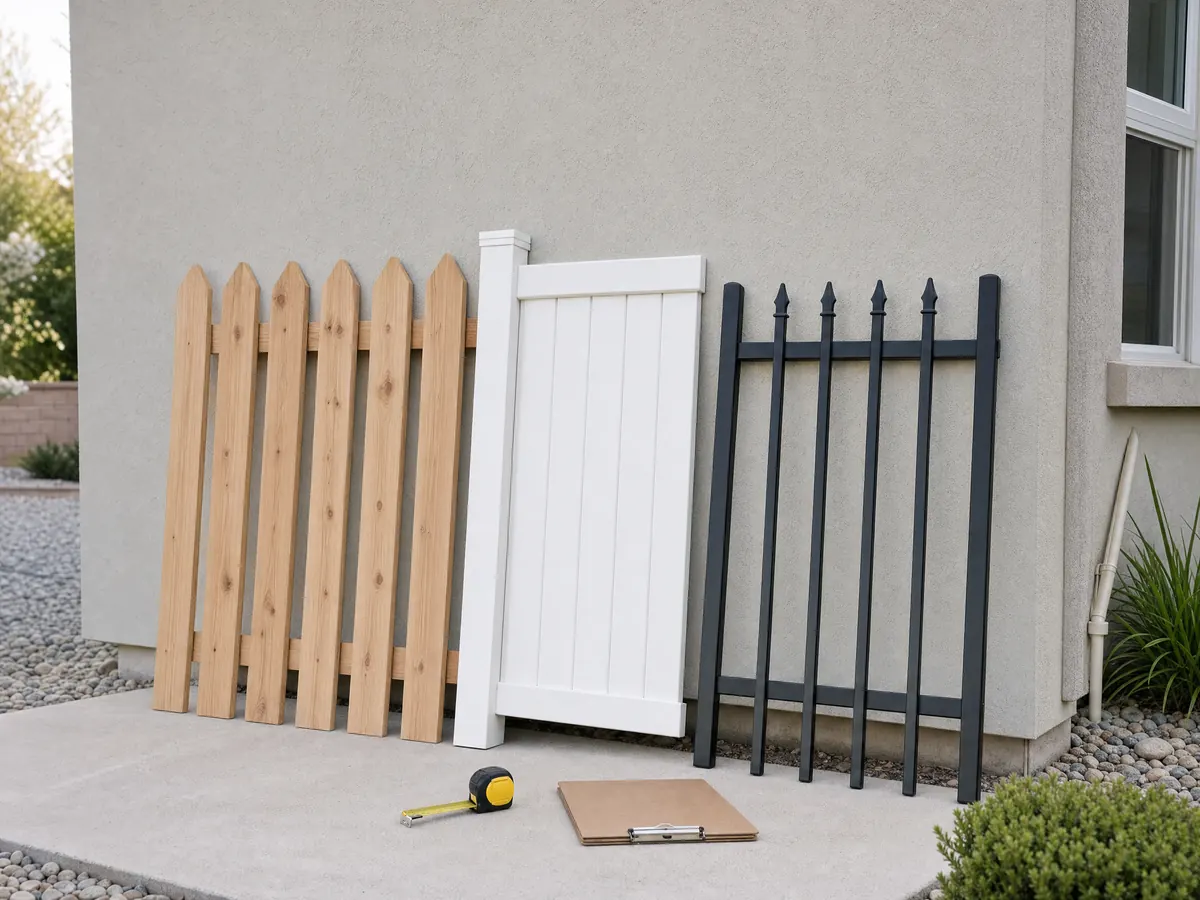
Fence photos from Fontana and nearby communities
Fence scenes tied to Fontana places such as Downtown, Summit Heights, Southridge and Village of Heritage, and to nearby communities such as Rialto, Rancho Cucamonga and Ontario, from post footings and vinyl runs to block walls and pool barriers.
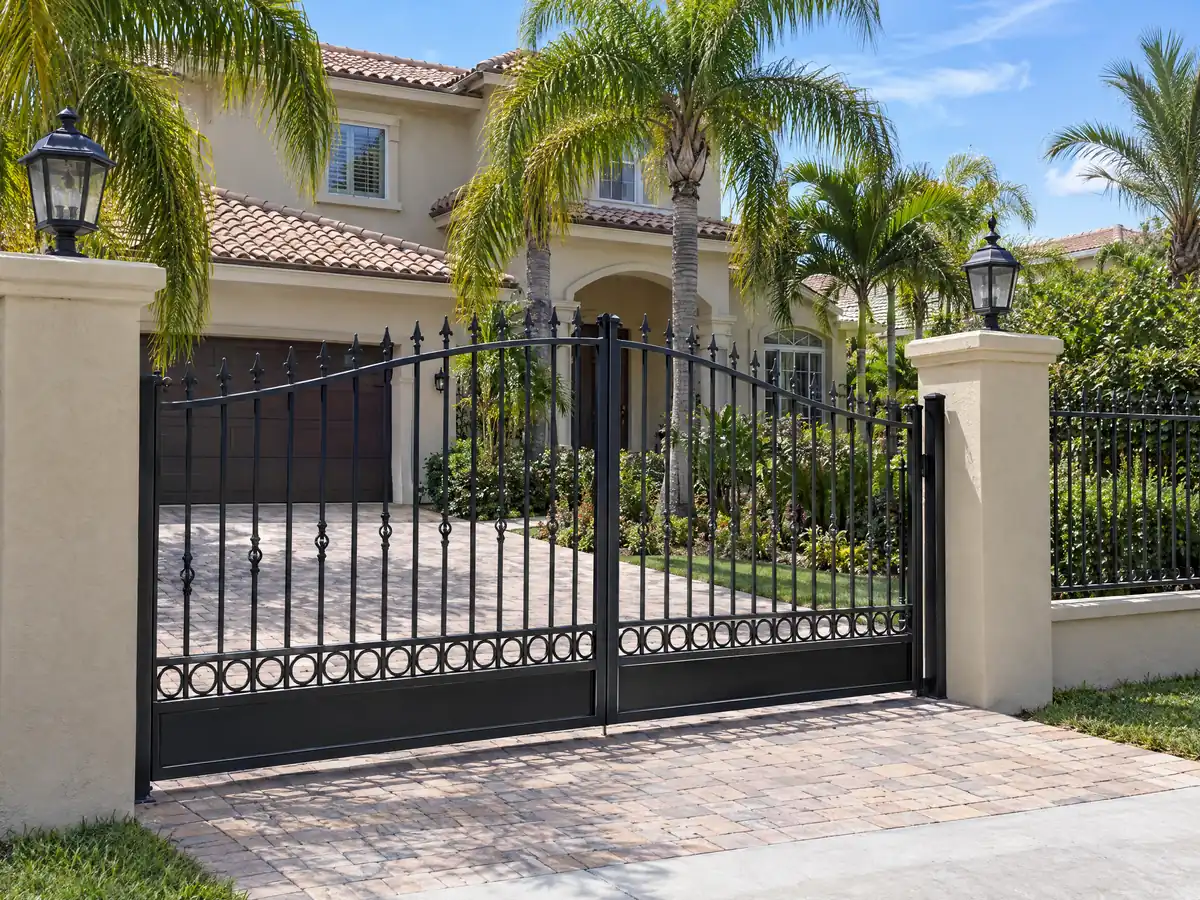
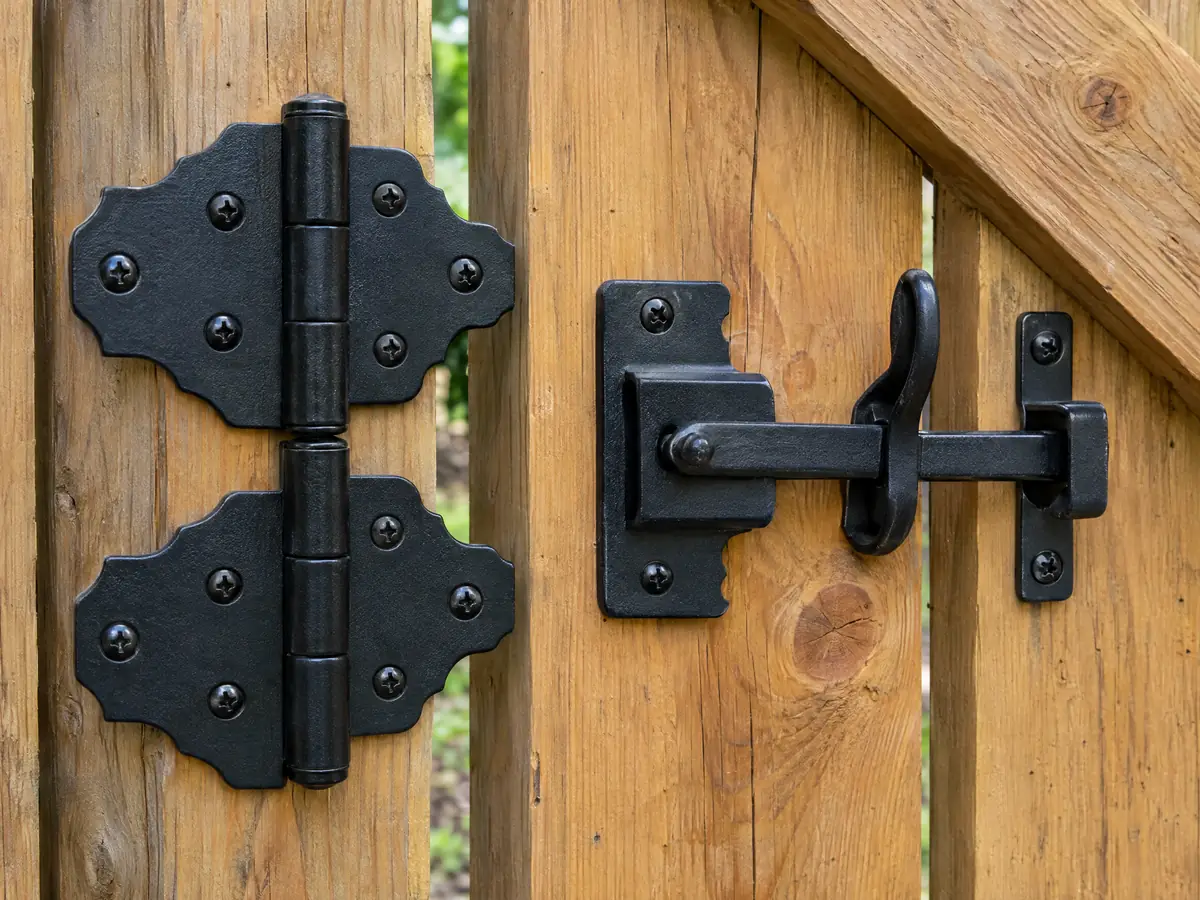
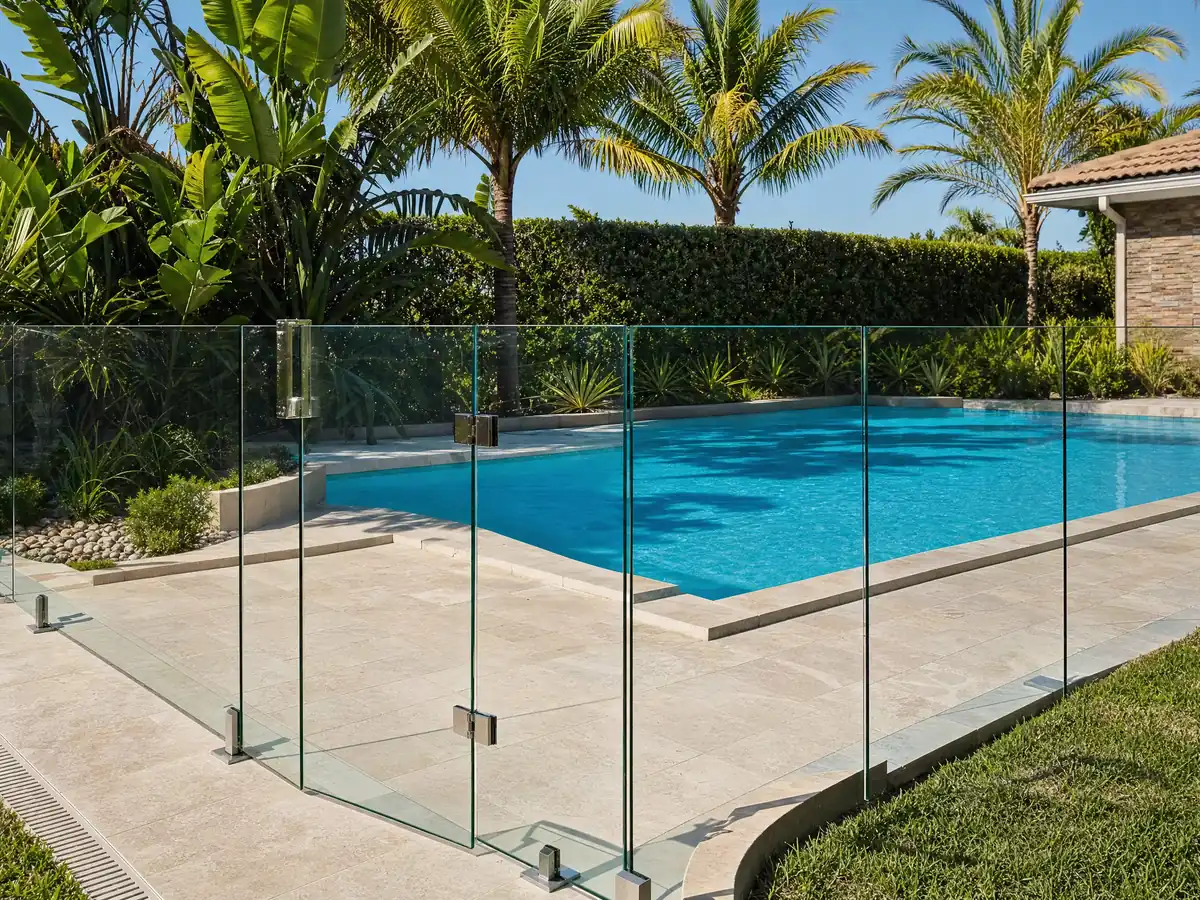
Where these Fontana fence figures come from
Fence prices by material, each with a source and a date, are laid out on the fencing page, along with the figures that conflict. A new fence often comes with other outside work, and the Fontana rules for it are on the roofing page and the painting page. For an Inland Empire fence guide with a different height rule, read the page for Corona.
| What it covers | Typical range |
|---|---|
| Wood or vinyl privacy fence, 6 feet | $25 to $55 per linear foot |
| Chain-link | $12 to $30 per linear foot |
| Aluminum or ornamental iron | $35 to $85 per linear foot |
| Typical 100-foot backyard run | $2,500 to $5,500 total |
| Block walls, horizontal slat fences, gates and openers, hillside lots | Set by the written proposal |
Fontana fence questions, answered
Do I need a permit to build a fence in Fontana?
Not up to 42 inches. The City's fencing handout says no building permit is needed for fences under 42 inches, and above that a permit and inspections apply. The amended Building Code lists solid fences up to 3 feet 6 inches and open fences up to 4 feet as exempt, so use 42 inches as the safe line and call (909) 350-7640.
What is the maximum height for a backyard fence in Fontana?
Six feet for a side or rear fence. Zoning section 30-464 allows 8 feet only with Planning Director approval where the two lots differ in elevation, and a fence over 42 inches needs a building permit. A retaining wall plus a fence is capped at 9 feet combined in the zoning text, so check that figure before building on a slope.
Can I build a wood fence in Fontana?
Only as a replacement for an existing approved wood fence. Zoning section 30-464 allows block or solid concrete, tubular steel or wrought iron, and vinyl for new fences, and the City's handout says wood must be approved by Planning. In the Fire Hazard Overlay a wood fence also stays 5 feet from the wall of the nearest structure.
How much does fence installation cost in Fontana?
We found no Fontana survey. Angi's Los Angeles page, updated August 4, 2026, shows a $3,051 average and a $15 to $60 a foot range, and we plan on $25 to $55 a foot for vinyl privacy and $35 to $85 for steel or iron. Block walls have no independent per-foot source we trust. A written proposal sets the real price.
How deep do fence posts need to be in Fontana?
For vinyl and wrought iron, the City's handout asks for footings at least 12 inches wide and 2 feet deep, with posts embedded at least 18 inches. Posts are 4 by 4, spaced 8 feet apart up to 4 feet high and 6 feet apart above that. The first inspection is at the post holes, before any concrete is poured.
Do I need a permit for a block wall in Fontana?
Above 42 inches, yes. The City's block wall handout requires a permit over 42 inches, three inspections for footing, bond beam and final, and a signed block wall or fence agreement if any part crosses a property line. The handout dates from 2008, so confirm the specifications with the counter before laying out the footing.
Who pays for a shared fence between neighbors in Fontana?
Usually both, equally. California Civil Code 841 presumes neighbors share the reasonable cost of a boundary fence, and a landowner who plans to spend money on it must give each affected neighbor 30 days' written notice. Fontana also asks for a signed Block Wall or Fence Agreement when a fence goes directly on the property line.
What are the pool fence rules in Fontana?
A pool barrier must be at least 60 inches high on the outside face, with gates that open outward and close and latch themselves, and doors from the house need self-latching hardware at least 54 inches high or an alarm. The barrier is inspected and approved before the pool is plastered or filled, and a new pool needs one more safety feature.
Does Fontana have different fence rules in fire hazard zones?
Yes. Inside the Fire Hazard Overlay District, a wood or vinyl fence stays at least 5 feet from the nearest structure's wall, fences required beside fuel modification areas must be masonry, and yards need gates on both sides for emergency access. Check your address on the Fire District's Fire Hazard Severity Zones page first.
How do I check a fence contractor's license in California?
Search the license number on the Contractors State License Board website and confirm that class C-13 fencing is active, since C-13 excludes masonry walls and block work needs a masonry license. Compare the business name on the card with your contract, and ask for a certificate of insurance. Our license guide covers the steps.
Ask for a fence estimate in Fontana
Say which part of town you live in, which side of the lot faces the street, the material you prefer and whether a pool, slope or fire zone is involved. We read the height and setback rule for that yard before we call you back.