
Fence Companyin Rancho Cucamonga, CA
A Rancho Cucamonga fence needs no building permit up to 6 feet in wood, metal or chain-link and up to 3 feet in masonry, which is stricter than the state's 7 feet. Zoning still limits a solid front yard fence to 3 feet, so a fence can be exempt from a permit and still break the code.
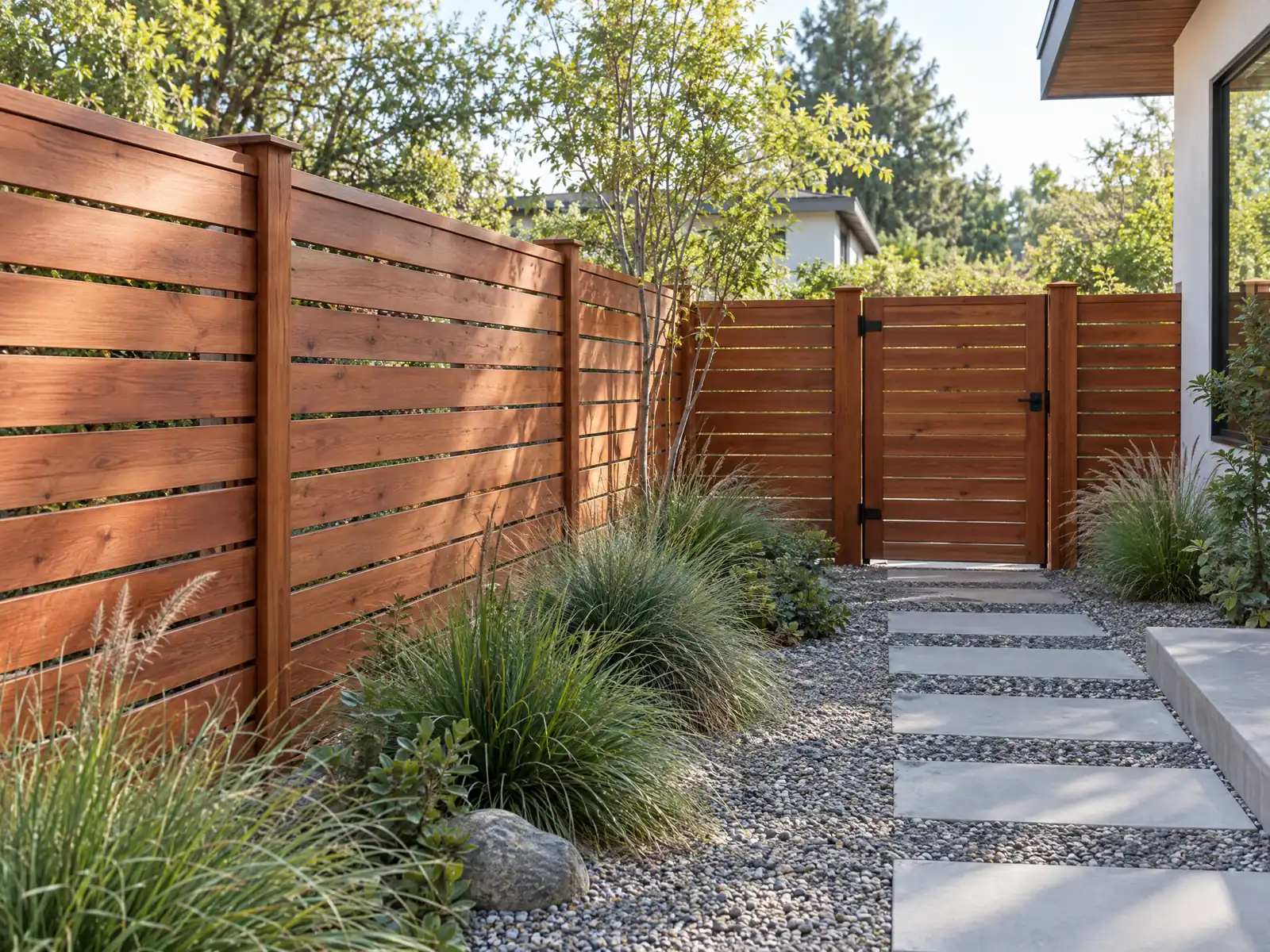
Fences in Rancho Cucamonga began as windbreaks. The City's cultural resources report says eucalyptus windrows were planted in Alta Loma and Etiwanda in the late 1800s to protect crops from severe winds, and it describes Alta Loma as half-acre equestrian-oriented lots in the north and quarter-acre lots in the south, with Etiwanda mixing one-acre, half-acre and quarter-acre lots. Census Bureau ACS 2024 one-year estimates count 62,033 housing units, 60.9 percent of them single-family detached and 8.9 percent single-family attached, and the 1980s are the largest building decade at 25.7 percent. Most jobs are therefore a backyard run or a side gate on a lot from that wave, while the larger lots to the north mean longer runs.
On a fence job, MDG Builders (CSLB #1040337) reads the zoning table before pricing anything, applies for the permit when one is needed and sequences the crews: a C-13 fencing subcontractor sets wood, vinyl or metal, and a masonry subcontractor builds any block. Our fencing page lists the sourced prices, the Rancho Cucamonga overview covers every trade here, and the guides for Claremont and Corona show how a nearby Los Angeles County city and a Riverside County city set their limits. Upland, Fontana and Ontario write their own rules. The City's Planning Department decides fence heights and its Building & Safety Department decides permits. The Development Code host, ecode360, blocked our request, so the zoning sections below come from GoCodebook, a third-party mirror stamped as of October 22, 2026, and from the City's Planning handout of November 2024; please confirm any section with Planning.
What Rancho Cucamonga's permit exemption, zoning table and Standard 49-1 say about fences
Where fencing permits come from in Rancho Cucamonga: City of Rancho Cucamonga Community Development, Building & Safety Department.
- Zoning height limits (RMC 17.48.050, Table 17.48.050-1, and the Planning handout of 11/2024): in the required front yard a solid fence or wall may not exceed 3 feet, open fencing such as picket or wrought iron may reach 6 feet if the top 3 feet is at least 90 percent visually open, and a combined solid and open fence tops out at 6 feet; side and rear yards allow 6 feet; street side yards allow 6 feet with a new fence at least 5 feet back from the property line. (read in GoCodebook's third-party code mirror, text as of 2026-10-22)
- Visibility triangles (Planning handout citing Chapter 17.140): nothing above 3 feet may stand in the clear visibility triangle, which is 10 feet along the driveway or alley edge and the curb line at a driveway corner and 20 feet along each curb line where two streets meet (the zoning table sets 36 inches).
- Building permit threshold (Ord. 1048, RMC 15.12.010 and 15.14.010): no permit is required for wood, chain-link, plastic, metal or similar fences not over 6 feet high or for masonry or concrete fences not over 3 feet high above the lowest adjacent grade, which is stricter than the state's base exemption for fences up to 7 feet (CRC R105.2); the Planning handout adds that a permit is needed for a concrete or masonry wall or pilasters over 3 feet and for any fence over 6 feet.
- The state's base exemption list (2025 CRC R105.2, effective January 1, 2026) exempts fences not over 7 feet and retaining walls not over 4 feet (measured footing bottom to wall top) unless supporting a surcharge, but Rancho Cucamonga amended the fence item, and its Planning handout says retaining walls 3 feet or taller measured from the bottom of the footing need a building permit, so treat 3 feet as the City's trigger and ask Building & Safety before relying on the 4 foot state figure. (state text read in GoCodebook's third-party mirror of the 2025 CRC)
- Retaining walls (RMC 17.120.020 and the Planning handout): each retaining wall may be no more than 4 feet high unless site conditions make terracing infeasible, stepped walls need at least 3 feet between them, and a wall visible from the public right-of-way must be decorative block or have a decorative finish; a retaining wall under 36 inches is exempt from the fence chapter except for terraced hillside walls. (read in GoCodebook's third-party code mirror, text as of 2026-10-22)
- Materials (RMC 17.48.040): fences and gates used for screening or privacy in residential districts must be solid wood with steel frames, solid vinyl, tubular steel or wrought iron (backed by painted solid or perforated metal sheeting where tubular steel or wrought iron is used), chain-link is not allowed for screening in any zone (even with slats or fabric), walls around a residential development are decorative block, and every fence or wall next to a public right-of-way or in a residential zone needs a graffiti-resistant surface treatment. (read in GoCodebook's third-party code mirror, text as of 2026-10-22)
- Measurement and exceptions: height is measured from finished grade at the base of the fence to its top (at the retaining wall's midpoint when two parcels sit at different levels), the maximum can be raised by up to 2 feet through a Minor Exception decided by the Planning Director after a 10-day neighbor comment period, and new fences and walls that do not meet the residential limits need Site Development Review (RMC 17.48.020 exempts compliant residential fences from planning entitlements).
- The City posts standard drawings for block walls (BSF-0004, which cannot be used where a wall retains soil), pilasters, retaining walls (BSF-0012) and patio covers on its Building & Safety Standards page, and a Common Property Line Fence or Wall Agreement form on its Applications page.
Sources for these rules
Do I need a permit to build a fence in Rancho Cucamonga, and why does the line sit at 6 feet and 3 feet?
Not for a wood, chain-link, plastic, metal or similar fence up to 6 feet high, or a masonry or concrete fence up to 3 feet, measured above the lowest adjacent grade. Ordinance 1048 wrote that into RMC 15.12.010 and 15.14.010, which is stricter than the base exemption for fences up to 7 feet in the 2025 California Residential Code (R105.2). The City's Planning handout adds that a permit is needed for a masonry wall or pilasters over 3 feet and for any fence over 6 feet, and the Master Fee Schedule has a category for fences over 6 feet.
Retaining walls carry two numbers that conflict. The state's base list exempts retaining walls up to 4 feet, measured from the bottom of the footing to the top of the wall, unless they support a surcharge, but the City's handout says a building permit is required at 3 feet or more measured the same way, and RMC 17.120.020 separately caps each wall at 4 feet high. Treat 3 feet as the City's trigger and ask Building & Safety before leaning on the state's 4 feet.
Permit-free is not rule-free. Zoning, visibility triangles and the fire standard below all reach a fence that needs no permit, and the permits that are required go through the Online Permit Center because the City issues nothing over the counter.
Mark each fence run as permit or no permit on the written proposal, with its height measured from the lowest adjacent grade.
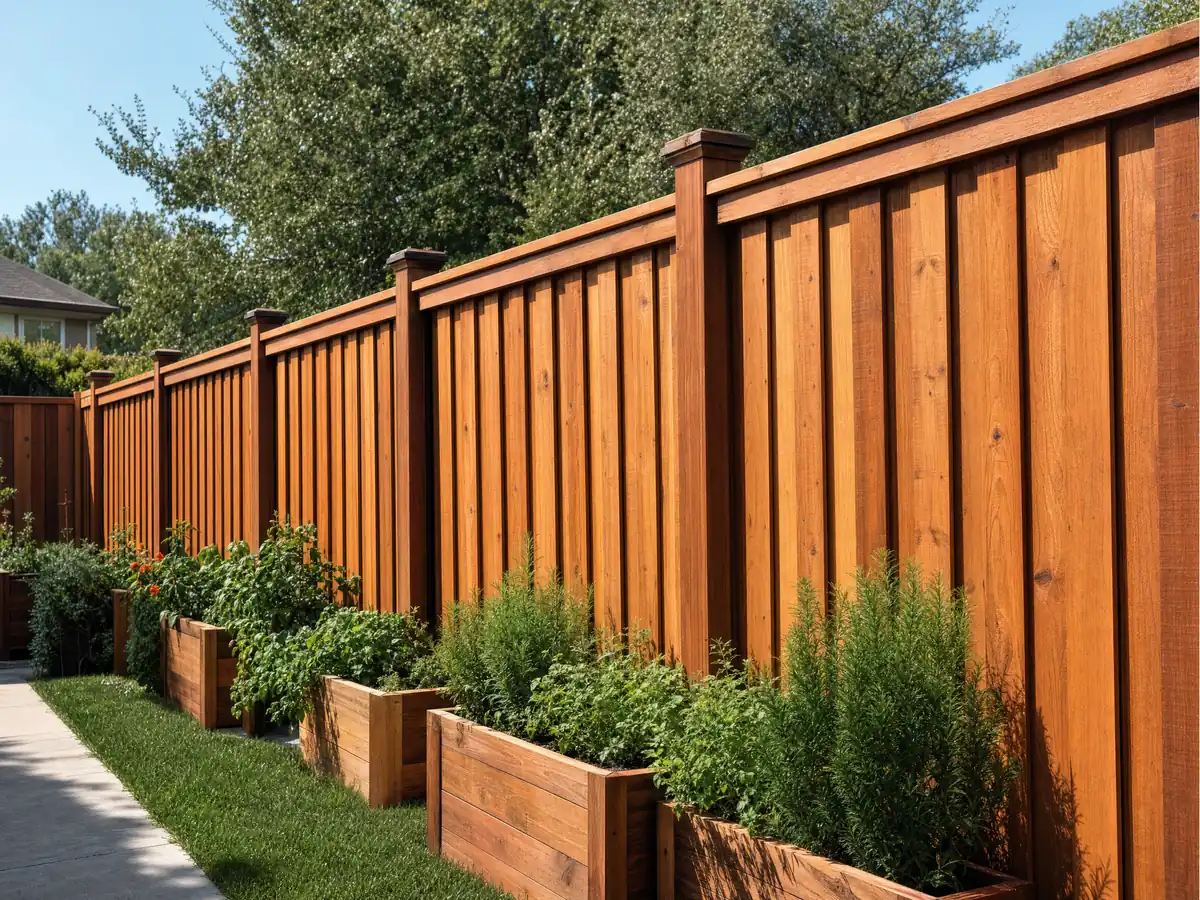
How tall can a front yard fence be in Rancho Cucamonga, and can I put a privacy fence there?
A solid front yard fence cannot exceed 3 feet, so a privacy fence in the required front yard is out. The zoning table in RMC 17.48.050 allows open fencing such as picket or wrought iron up to 6 feet if the top 3 feet is at least 90 percent visually open, and a combined solid and open fence tops out at 6 feet. The Planning handout of November 2024 says the same.
Corners add a second limit. The handout, citing Chapter 17.140, says nothing above 3 feet may stand in the clear visibility triangle, which is 10 feet along the driveway or alley edge and the curb line at a driveway corner and 20 feet along each curb line where two streets meet, while the zoning table itself prints 36 inches. A front gate near a driveway may land inside that triangle, so the site plan should show it.
- Solid front yard fence: 3 feet at most
- Open picket or wrought iron: up to 6 feet if the top 3 feet is 90 percent open
- Driveway and street corners: nothing above 3 feet in the visibility triangle
Ask Planning to mark the required front yard line on the plot plan before panels are ordered.
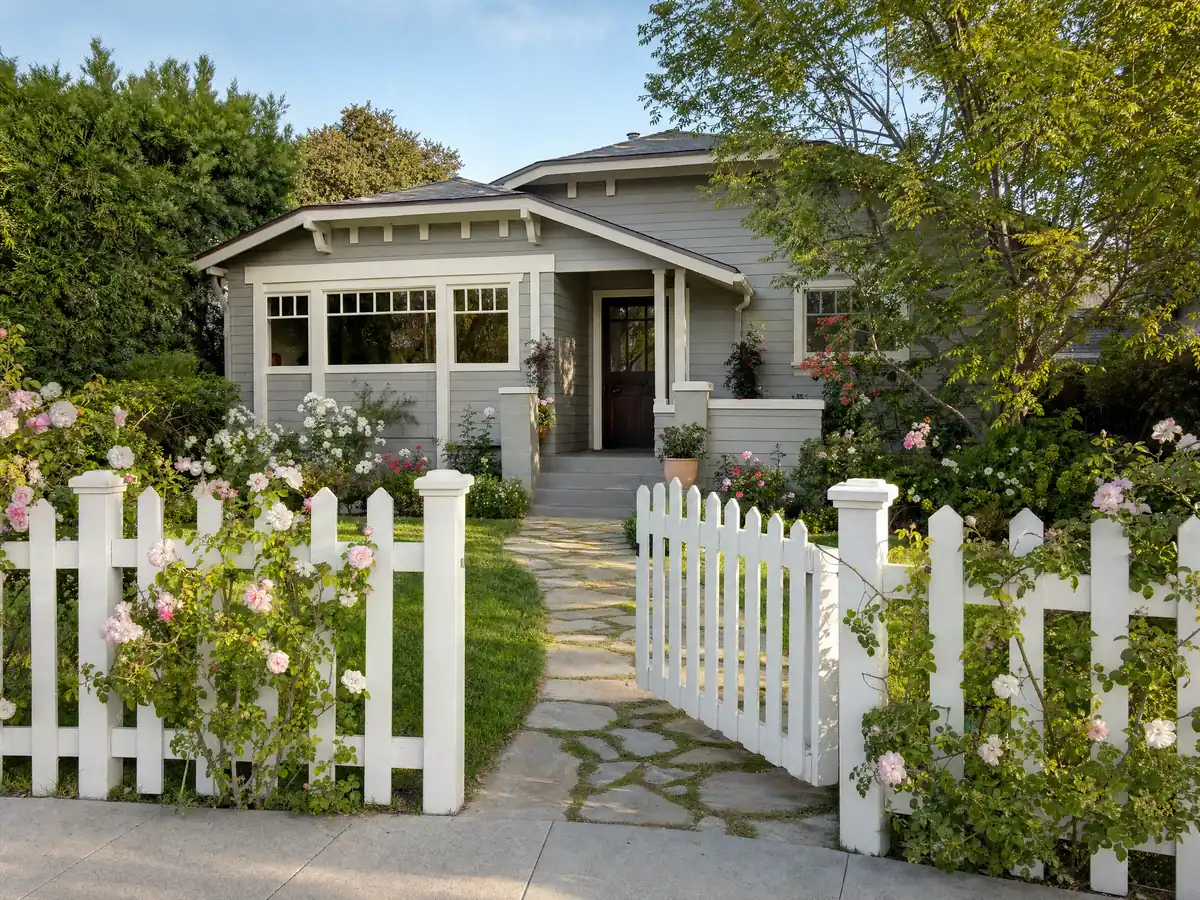
What height is allowed on the sides and back, and can I get an exception?
Side and rear yards allow 6 feet, and a street side yard also allows 6 feet when a new fence sits at least 5 feet back from the property line. Height is measured from finished grade at the base of the fence to its top, and where two parcels sit at different levels the measurement is taken at the retaining wall's midpoint.
Taller needs a process. The Planning Director can raise the maximum by up to 2 feet through a Minor Exception after a 10-day neighbor comment period, and a new fence or wall that does not meet the residential limits needs Site Development Review, while RMC 17.48.020 exempts compliant residential fences from planning entitlements. A 7 or 8 foot fence is therefore a Planning application with neighbors invited to comment, and the state's 7 feet is not a right here.
Shared fences have their own paperwork. The City posts a Common Property Line Fence or Wall Agreement form on its Applications page, and California Civil Code 841 presumes neighbors share the cost of a boundary fence equally and asks the owner who plans to spend money to give 30 days' written notice.
Send the neighbor's notice in writing and keep a copy with the survey.
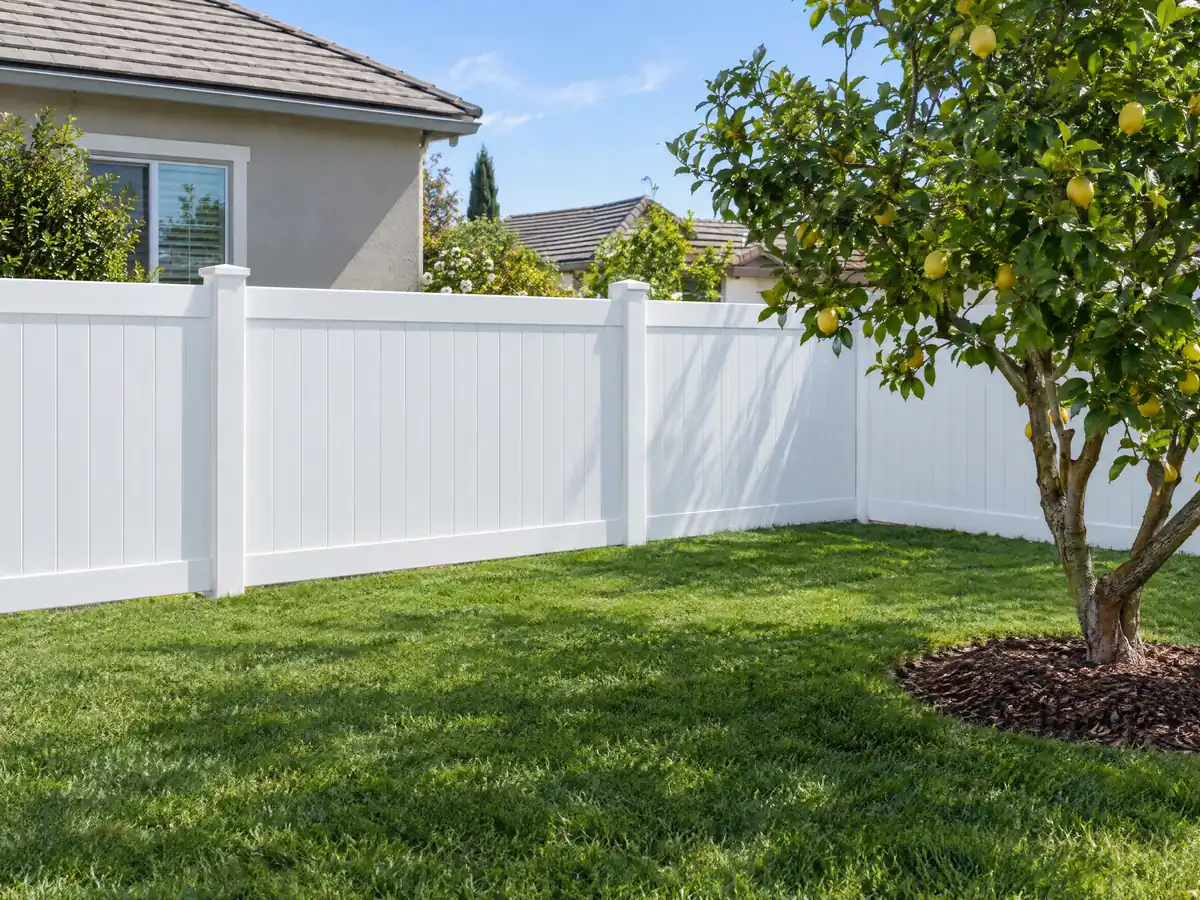
Which fence materials are allowed, and who builds a block wall?
Screening and privacy fences in residential districts must be solid wood with steel frames, solid vinyl, tubular steel or wrought iron, and tubular steel or wrought iron must be backed by painted solid or perforated metal sheeting. RMC 17.48.040 bars chain-link for screening in every zone, even with slats or fabric, requires a graffiti-resistant surface treatment on every fence or wall beside a public right-of-way or in a residential zone, and makes walls around a residential development decorative block.
Block is masonry, which is a different license. The CSLB fencing class, C-13, excludes masonry walls, and block walls fall to class C-29, so a fence company that also builds block is either licensed for both or hires the block out. The City posts standard drawings for block walls (BSF-0004, not usable where a wall retains soil), pilasters and retaining walls (BSF-0012) on its Building & Safety Standards page.
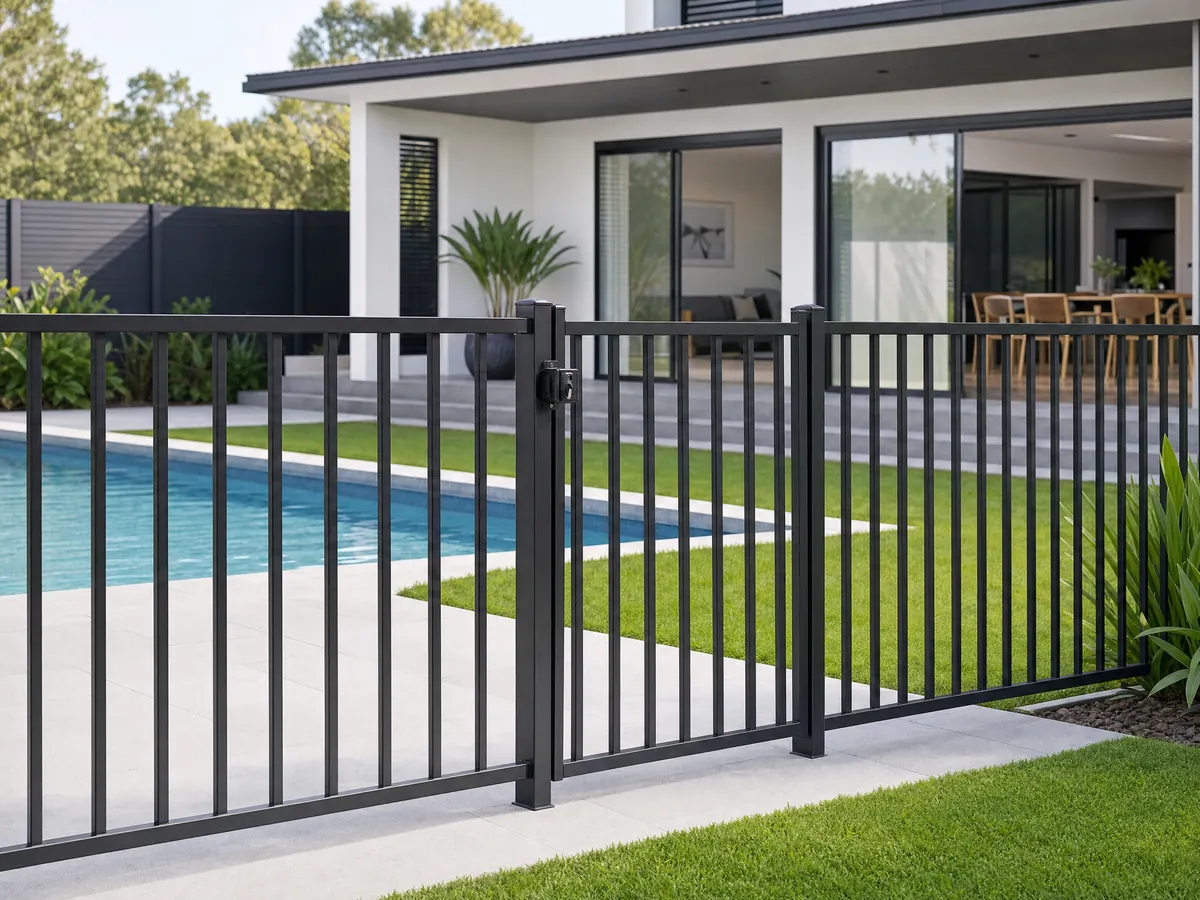
Pool fences sit in their own category. An enclosure must isolate the pool from the home, a new or remodeled pool needs three drowning-protection measures, and replacing a pool fence or gate therefore belongs in the pool permit conversation.
Ask for the license number of whoever builds the block, since it is not the fencing crew's class.
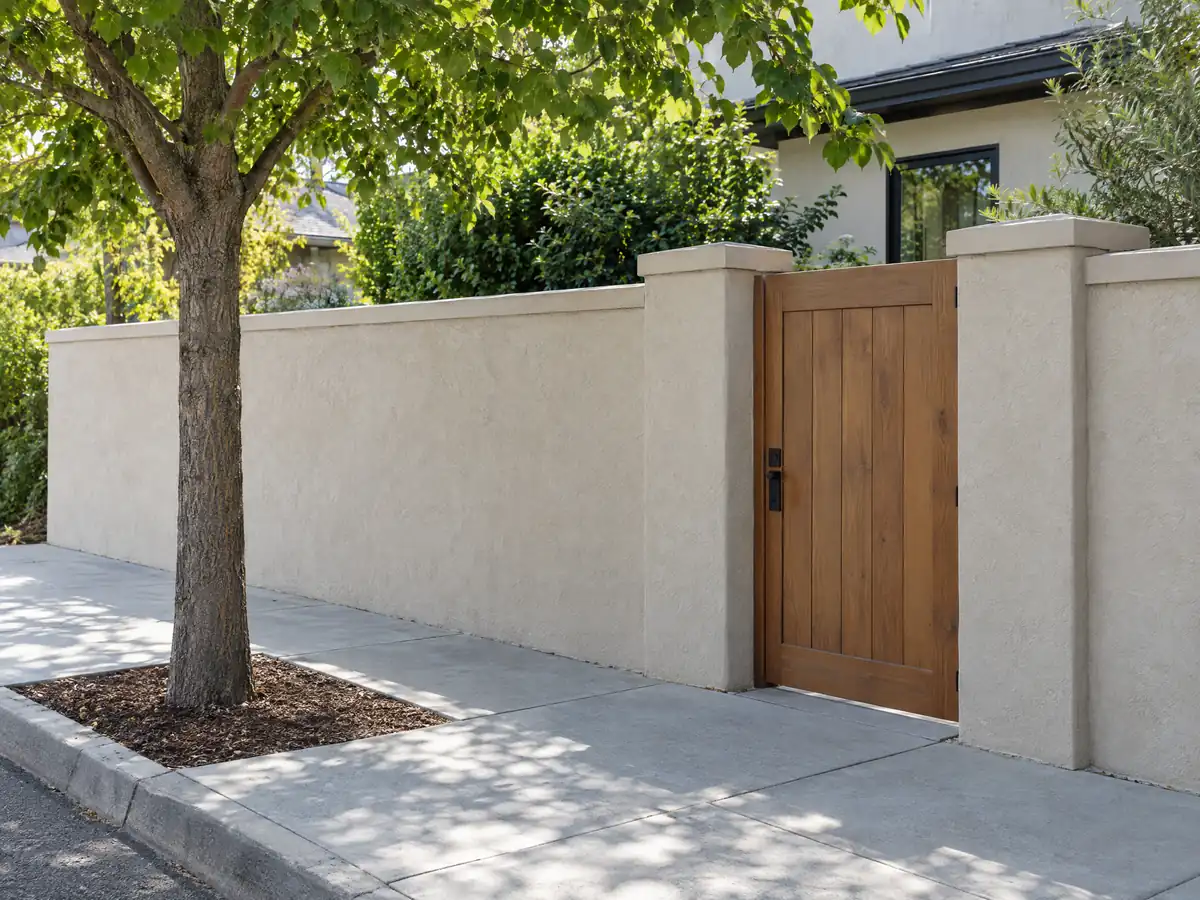
How do the Wildland-Urban Interface Fire Area and Standard 49-1 change fences near the house?
They take wood out of the first 5 feet. Fire District Standard 49-1 requires new fences and gates within 5 feet of a building or accessory structure to be non-combustible, and it lists wood fences and gates among the combustible items excluded from Zone 0, the 0 to 5 foot band around the structure. Accessory structures include sheds, patio covers and decks, so the band covers a wood side gate beside the house and a fence that touches a patio cover.
Where a lot has less than 100 feet of defensible space available and adjoins hazardous vegetation, the standard requires a non-combustible wall at least 6 feet high with no openings along that property line. The standard applies to new construction, additions and accessory structures in the Fire Area, which the City's ADU handbook places on the north side. Whether a stand-alone fence replacement is covered is a question for the Fire Prevention Bureau at (909) 477-2770. We cannot say which parcels are inside the area or in a CAL FIRE zone, and the copy of the standard we read is dated December 2022 and may have been superseded.
Ask Fire Prevention in writing whether the address is in the Fire Area before a wood gate is ordered.
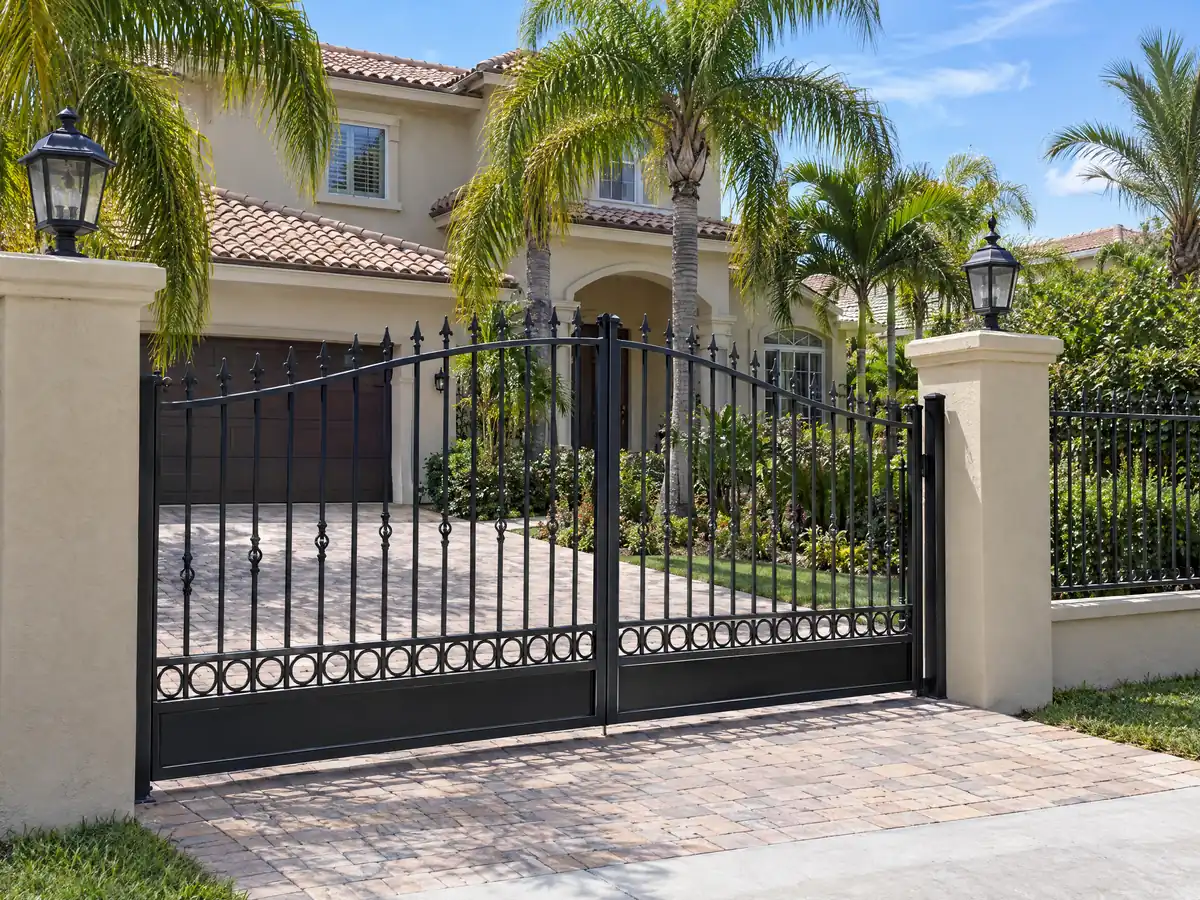
What changes for a fence on a hillside, an equestrian lot or a retaining wall?
Slope adds review. The Hillside Overlay Zone is generally north of Hillside Avenue plus the Red Hill and Beryl Hill areas, and Hillside Development Review applies there and on any lot with a slope of 8 percent or more, with Minor Design Review available for limited projects. Whether a hillside fence counts as one of those is a question for Planning. Stepped retaining walls need at least 3 feet between them, a wall visible from the public right-of-way must be decorative block or have a decorative finish, and a wall under 36 inches is exempt from the fence chapter except for terraced hillside walls.
The Equestrian Overlay Zone, bounded by Banyan Street from the west city limit to Milliken Avenue, then south to State Route 210 and east to Interstate 15, exists to keep large animals and a rural character. Fence details there follow animal-keeping rules we did not read. The Local Hazard Mitigation Plan puts landslide risk in the undeveloped north, the foothills and Red Hill, and names two Alquist-Priolo zones, the Cucamonga Fault and the Etiwanda Avenue Fault Scarp, so a tall engineered wall deserves a soils conversation with the engineer.
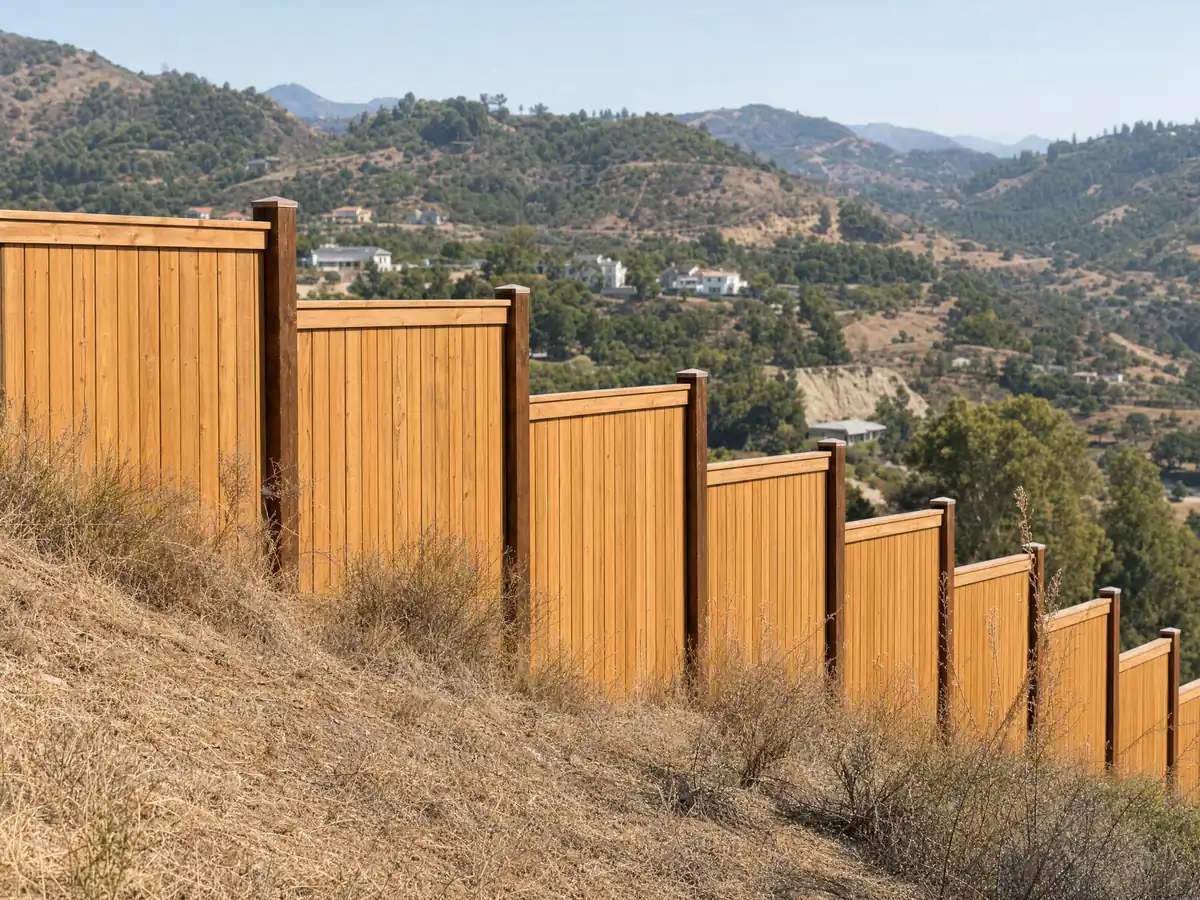
How much does fence installation cost in Rancho Cucamonga, and what should a quote say?
No Rancho Cucamonga price survey turned up, so these are Los Angeles figures, and we print no per-foot price for block walls because we found no independent source. Angi's Los Angeles guide, updated August 4, 2026, shows an average job of $3,051 inside a $1,734 to $4,422 range, a spread of $15 to $60 a foot, $2,100 to $2,350 for 100 feet, $1,600 to $2,500 for wood and $1,850 to $3,400 for vinyl. Angi's national page adds $150 to $2,000 for a gate and $3 to $5 a foot to remove an old fence, and federal wage data put Los Angeles-area fence erectors near $28.00 an hour in May 2025. Our planning ranges are $25 to $55 a foot for wood or vinyl privacy fence and $35 to $85 for aluminum or iron, with chain-link at $12 to $30 shown for completeness, since it cannot screen here.
Under Business and Professions Code 7159 a home improvement contract must be written, a down payment cannot exceed $1,000 or 10 percent of the price, whichever is smaller, and the client has 3 business days to cancel (5 for seniors). See our license guide for the credential check and how general contractors use subcontractors for who answers to whom.
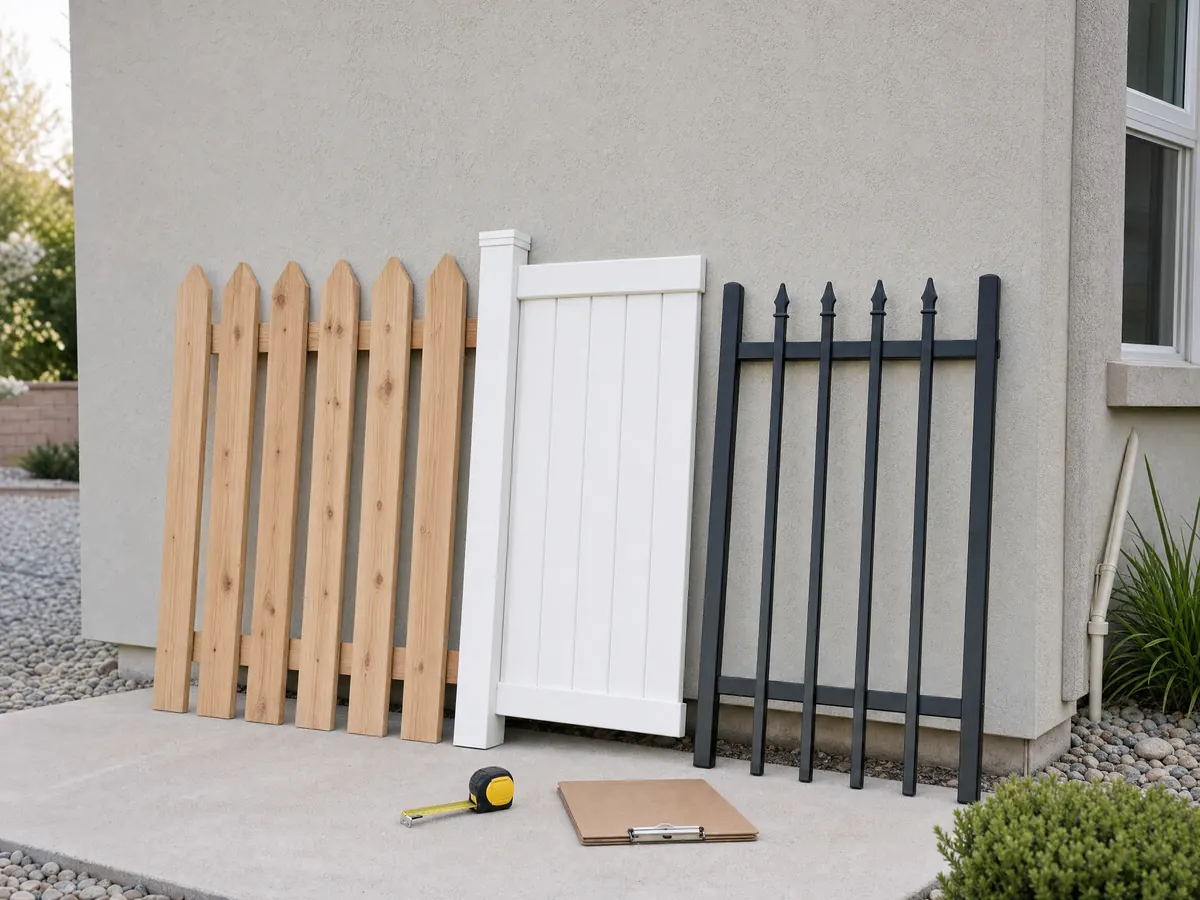
Fencing photos from Rancho Cucamonga and nearby communities
Fence scenes tied to Rancho Cucamonga places such as Alta Loma, Etiwanda, Cucamonga and Terra Vista, and to nearby communities such as Upland, Fontana and Ontario, from wood privacy runs and block walls to gates and pool barriers.
Where these Rancho Cucamonga fence figures come from
The fencing page shows every fence price with its source, its date and the numbers that disagree. Fence work often pairs with a re-roof or a repaint, and the Rancho Cucamonga rules for those are on the roofing page and the painting page. For a city that sets fence heights by zone and by what the street can see, read the guide for Glendale.
| What it covers | Typical range |
|---|---|
| Wood or vinyl privacy fence, 6 feet | $25 to $55 per linear foot |
| Chain-link | $12 to $30 per linear foot |
| Aluminum or ornamental iron | $35 to $85 per linear foot |
| Typical 100-foot backyard run | $2,500 to $5,500 total |
| Block walls, horizontal slat fences, gates and openers, hillside lots | Set by the written proposal |
Other work we manage in Rancho Cucamonga
Rancho Cucamonga fencing questions, answered
Do I need a permit to build a fence in Rancho Cucamonga?
Not for a wood, metal, chain-link or plastic fence up to 6 feet, or a masonry fence up to 3 feet, because Ordinance 1048 set those limits. Zoning still applies, and a solid front yard fence is capped at 3 feet. Anything taller, or any masonry wall over 3 feet, needs a permit applied for online.
How tall can my front fence be in California?
In Rancho Cucamonga, a solid front yard fence can be 3 feet, and open picket or wrought iron can reach 6 feet if the top 3 feet is at least 90 percent open. Other California cities set their own numbers, so check the local zoning table instead of relying on the state's 7 foot permit line.
Can I put up a 7ft fence in Rancho Cucamonga?
Only through Planning. The permit-free limit and the zoning limit are both 6 feet for side and rear yards, so a 7 or 8 foot fence needs a Minor Exception, which can add up to 2 feet after a 10-day neighbor comment period. A fence over 6 feet also needs a building permit.
Do you need a permit to build a block wall in California?
In Rancho Cucamonga, a masonry or concrete fence up to 3 feet needs none, and over 3 feet it needs a permit. The City posts standard block wall drawing BSF-0004, which cannot be used where the wall retains soil. Block is masonry work, class C-29, not the C-13 fencing class.
What is the maximum height of a retaining wall without a permit in California?
The state's base list says 4 feet, measured from the bottom of the footing, unless the wall supports a surcharge. Rancho Cucamonga's Planning handout says a permit is required at 3 feet or more, and RMC 17.120.020 caps each wall at 4 feet. Treat 3 feet as the trigger and ask Building & Safety.
Does your neighbor have to pay for half the fence in California?
Civil Code 841 presumes that adjoining owners share the cost of a boundary fence equally, and an owner who plans to spend money should give each affected neighbor 30 days' written notice. The presumption can be rebutted. Rancho Cucamonga also posts a Common Property Line Fence or Wall Agreement form for owners who settle it in writing.
What is the difference between a fence company and a masonry contractor?
California's fencing license, C-13, excludes masonry walls, and block walls fall under the masonry class, C-29. A fence company builds wood, vinyl, chain-link and metal, and a masonry contractor builds block. On our jobs MDG Builders manages both, and a client can ask for each subcontractor's license number.
How much does fence installation cost in Rancho Cucamonga?
We found no Rancho Cucamonga survey. Angi's Los Angeles guide shows $15 to $60 a foot, $2,100 to $2,350 for 100 feet, $1,600 to $2,500 for wood and $1,850 to $3,400 for vinyl. Our planning range is $25 to $55 a foot for wood or vinyl privacy fence, and a measured, written proposal is the real price.
What are the new fence rules in California in 2026?
We found no single new statewide rule that overrides Rancho Cucamonga's zoning. The City applies the 2025 codes from Ordinance 1048, effective January 1, 2026, with fences permit-free to 6 feet and masonry to 3 feet, and Fire District Standard 49-1 already keeps wood fences out of Zone 0 near buildings.
Do I need a permit to replace a pool gate or pool fence in Rancho Cucamonga?
Probably. A pool enclosure must isolate the pool from the home and satisfy the Swimming Pool Safety Act, and the City's pool handout ties barriers to the pool permit and its three drowning-protection measures. Ask Building & Safety whether a like-for-like gate swap is treated as maintenance before you assume it is.
Ask for a fence estimate in Rancho Cucamonga
Give us the neighborhood, the fence material, which side of the lot faces the street and whether a pool, a slope or a fire area is involved. We read the height limit for that yard before we call back.