
Flooring Installationin Rancho Cucamonga, CA
Flooring installation in Rancho Cucamonga needs no building permit for the floor covering itself, because the state exemption list names tiling, carpeting and similar finish work and the City did not change that item. Structural, plumbing and electrical work still needs one. Only about 29 percent of homes predate 1980, so asbestos is the exception here, not the rule.
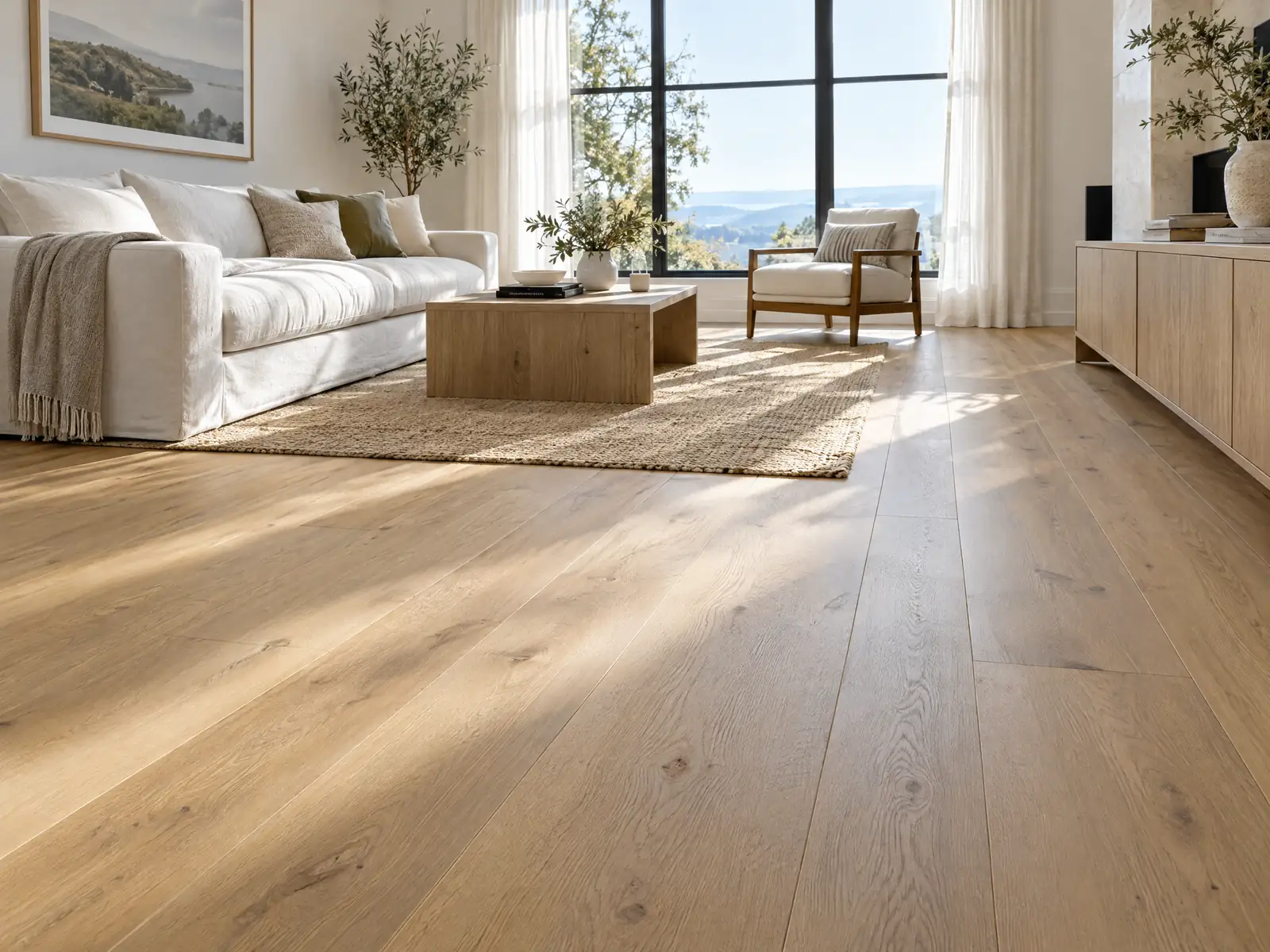
Three towns became one city here in 1977, when Alta Loma, Cucamonga and Etiwanda incorporated together as Rancho Cucamonga on land that began as a Mexican grant and later held vineyards. Wikipedia's census table shows 55,250 residents in 1980 and 101,409 in 1990, and the Census Bureau's 2024 estimates credit the 1980s with 15,927 of the city's 62,033 homes, so most floors here sit on slabs poured during the tract boom.
MDG Builders (CSLB #1040337) is a Tarzana general contractor, which means we write the scope, take the permit questions to Rancho Cucamonga's Building & Safety Department and keep the schedule, while licensed flooring and tile subcontractors lay the material. Products are on the flooring page, and the Rancho Cucamonga overview lists the other trades we manage in the city.
What Rancho Cucamonga's Building & Safety Department, the Fire Protection District, South Coast AQMD and state law say about flooring work
Where flooring permits come from in Rancho Cucamonga: City of Rancho Cucamonga Community Development, Building & Safety Department.
- Permit: finish flooring (tiling, carpeting, similar finish work) is exempt from a building permit under 2025 CRC R105.2, and the City's bathroom handout treats floor covers as maintenance when no other work is included; structural subfloor, plumbing or electrical work beneath the finish is not exempt. (state text read in GoCodebook's third-party mirror of the 2025 CRC)
- Floor coatings: South Coast AQMD Rule 1113 defines floor coatings as opaque coatings formulated for or applied to flooring including garages, decks and porches, and clear coatings applied to concrete flooring, sets the floor coating VOC limit at 50 grams per liter (read from the PDF's scrambled table by category code 14), and applies to anyone who applies or solicits architectural coatings in the District, so epoxy and polyaspartic garage floor products used here need to meet it.
- Asbestos in old flooring (Rule 1403, last amended 2007): the rule applies to owners and operators of any demolition or renovation that disturbs asbestos-containing material; it does not apply to an owner-occupant personally renovating a single-unit dwelling, the survey requirement is waived on single-unit dwellings when under 100 square feet of ACM is removed, and certain handling and training requirements (including the on-site trained representative) do not apply to the exclusive removal of non-friable resilient floor covering or asphalt roofing that has not been sanded, ground, cut or abraded. ACS 2024 shows about 29.2 percent of homes (18,110) predate 1980.
- Garage floors and parking: a single-family home must keep 2 spaces (1 in a garage or carport and 1 in the driveway), each garage space at least 10 by 20 feet clear (RMC 17.64), except that converting a garage or carport to an ADU does not require replacement parking, so a garage floor job and a garage conversion are different permits. (read in GoCodebook's third-party code mirror, text as of 2026-10-22)
- Unpermitted garage conversions: RMC 15.12.030 prohibits owning, using or occupying a converted space that never had a permit, and any garage-to-living-space conversion (flooring, slab, insulation, plumbing and electrical included) needs a building permit; the ADU handbook calls garage conversions the most cost-effective ADU route.
- Wildfire area garages: Fire District Standard 49-1 requires automatic garage door openers to close the door after 20 minutes of inactivity, back-up battery power, and sweeps and gaskets on garage doors in the Wildland-Urban Interface Fire Area, which affects floor-to-door threshold details on garage upgrades.
- Waste and dust on flooring demolition: if a flooring job is part of a permitted remodel, the 65 percent construction and demolition waste diversion rule and a waste management plan apply, and Rule 403 and RMC 15.12.160 govern dust from grinding or demolition. (read in GoCodebook's third-party code mirror, text as of 2026-10-22)
Sources for these rules
- gocodebook.com: section r105 permits
- aqmd.gov: r1113
- aqmd.gov: rule 1403
- gocodebook.com: chapter 17.64 parking and loading standards
- cityofrc.us: RC%20ADU%20Handbook Updated%205.21.24
- testweb.cityofrc.us: Landscaping Guidelines WUIFA Planning Application
- gocodebook.com: chapter 8.19 construction and demolition waste collection
What do the Fire District and the air district say about a garage floor in Rancho Cucamonga?
A garage floor job here touches two rule books before the first coat goes down. The Rancho Cucamonga Fire Protection District's Standard 49-1 applies to new construction, additions and accessory structures in the Wildland-Urban Interface Fire Area on the north side of the city, so a recoat of an old floor may not trigger it while a new garage or an addition will. The standard asks for garage door openers that close the door after 20 minutes of inactivity, battery backup, and sweeps and gaskets on the door. The copy we read is dated December 2022, so ask the Fire Prevention Bureau at (909) 477-2770 whether a newer one applies.
South Coast AQMD Rule 1113 covers the epoxy and polyaspartic products themselves. It defines floor coatings to include opaque coatings applied to garage floors and clear coatings applied to concrete, and it limits volatile organic compounds by product category. We could not read the District's table cleanly, so check it for the exact product before you accept a bid, and keep the label.
Parking rules shape the work too. A single-family home keeps 2 spaces, one in a garage or carport and one in the driveway, and each garage space is at least 10 by 20 feet clear under Chapter 17.64 of the Municipal Code, which we read in GoCodebook's third-party mirror, so confirm it with the City. Turning the garage into a room is a different permit, and RMC 15.12.030 bars anyone from occupying a conversion that never had one.
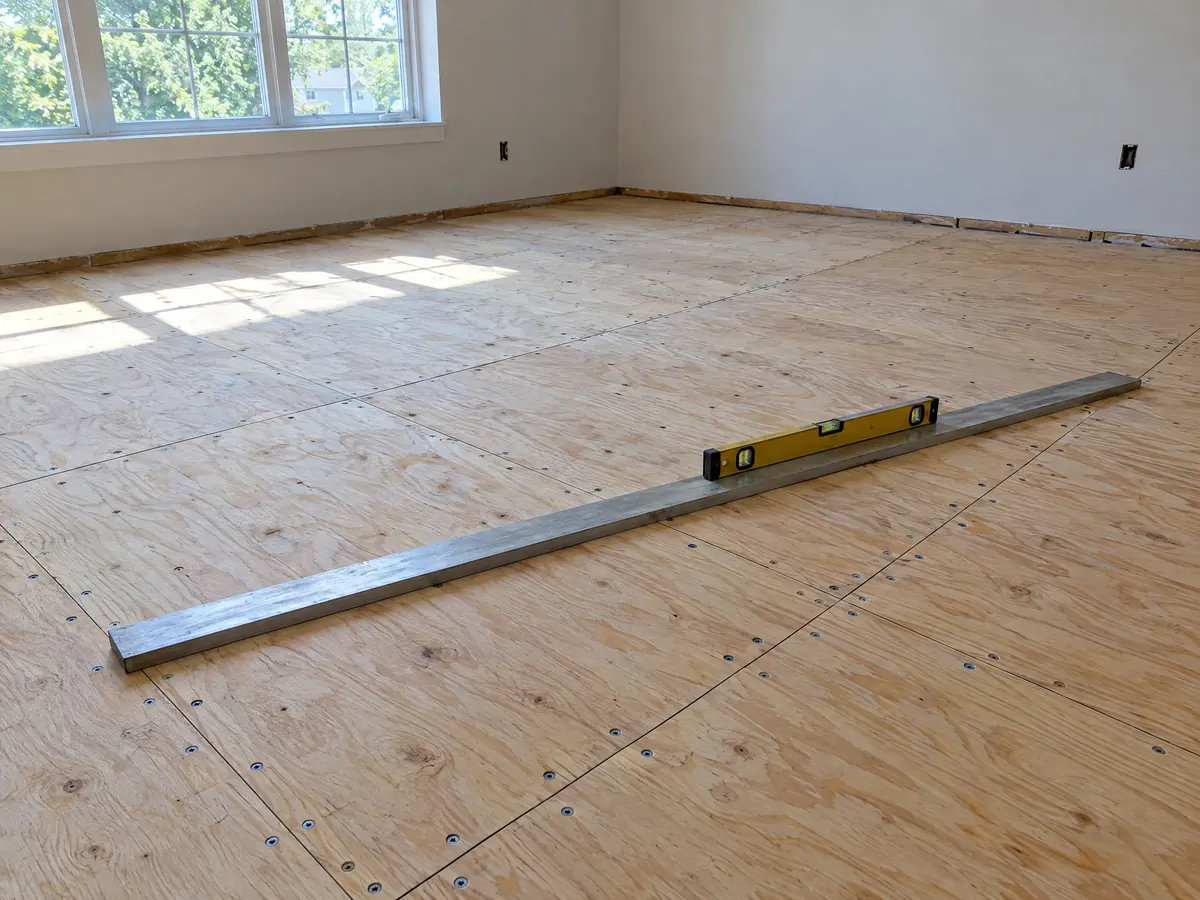
What is under the floors of a house built in the 1980s or 1990s in Rancho Cucamonga?
Usually a concrete slab with a finish laid over it in the last 30 years, not the stacked layers of old resilient tile that older cities carry. ACS 2024 puts 36,624 of the city's 62,033 homes in the 1970 through 1999 decades, with the 1980s alone at 25.7 percent, and 19,181 homes, about 31 percent, have gone up since 2000. Only 18,110 predate 1980: 3,194 from the 1960s, 1,891 from the 1950s, 50 from the 1940s and 1,093 from 1939 or earlier. The margin of error on the total is about 2,800 units.
That split changes what you test. SCAQMD Rule 1403 applies to owners and operators of renovations that disturb asbestos-containing material, and it excludes an owner-occupant personally renovating a single-unit home, but a paid crew gets no such exclusion. The risk sits mostly in the older third of the stock, such as the Cucamonga streets and the North Town area near Eighth Street, which the City's cultural resources report ties to the Guasti vineyard workers' neighborhood of the 1900s. Have the proposal say who takes the sample, who removes a layer that tests positive and who pays.
The Census table cannot separate 1978 from 1979, so we give no count for EPA's pre-1978 lead rule, but baseboards and casings in an older home are painted surfaces, and paid work that disturbs them falls under EPA's lead-safe renovation rule.
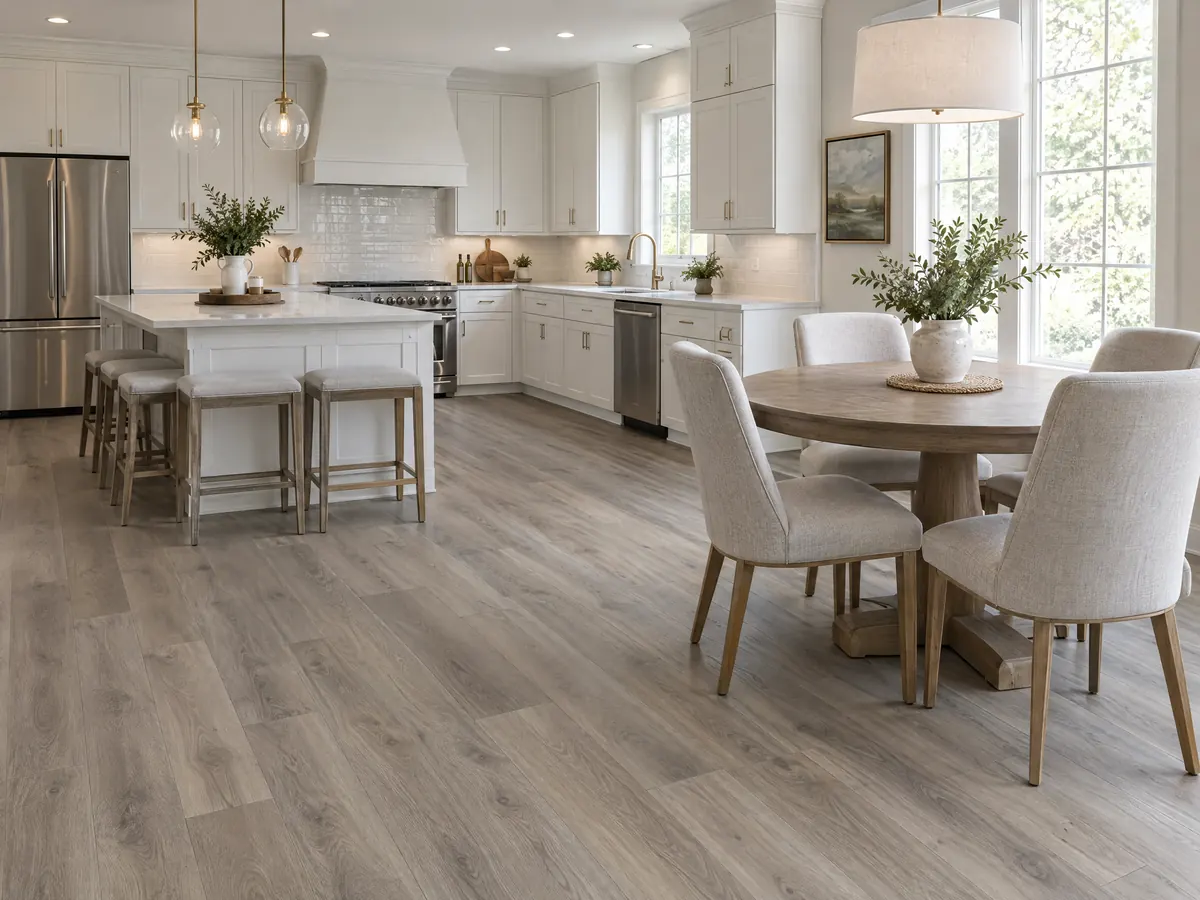
Do you need a permit to replace flooring in Rancho Cucamonga?
Not for the floor covering, as far as the state list goes. The 2025 California Residential Code, effective January 1, 2026, exempts painting, tiling, carpeting, cabinets, counter tops and similar finish work in R105.2, and the City's bathroom handout treats floor covers as maintenance when nothing else is included. In our read, Ordinance 1048 changed only the fence and shed lines of that list. We found no City page that applies the exemption to a specific flooring job, so describe the scope to Building & Safety if you are unsure.
Everything beneath the finish is different. Structural subfloor repair, new plumbing, a moved circuit and radiant heat are permit work, every permit is requested in the City's Online Permit Center because Building & Safety issues none over the counter, and an electrical permit needs a California contractor license of the right class unless the owner of a single-family home takes an owner-builder permit. The City's Applicable Codes page sends any plan filed in 2026 through the 2025 edition.
Permitted jobs carry smaller duties. Smoke alarms must be provided when permitted alterations exceed $1,000 in value, a waste plan with 65 percent diversion applies to any project needing a building or demolition permit, and construction noise next to a home is exempt from the limits only outside 8 p.m. to 7 a.m. Monday through Saturday and never on Sundays or national holidays. Grinding dust also falls under SCAQMD Rule 403 and RMC 15.12.160.
Does moisture or ground movement affect a slab floor in Rancho Cucamonga?
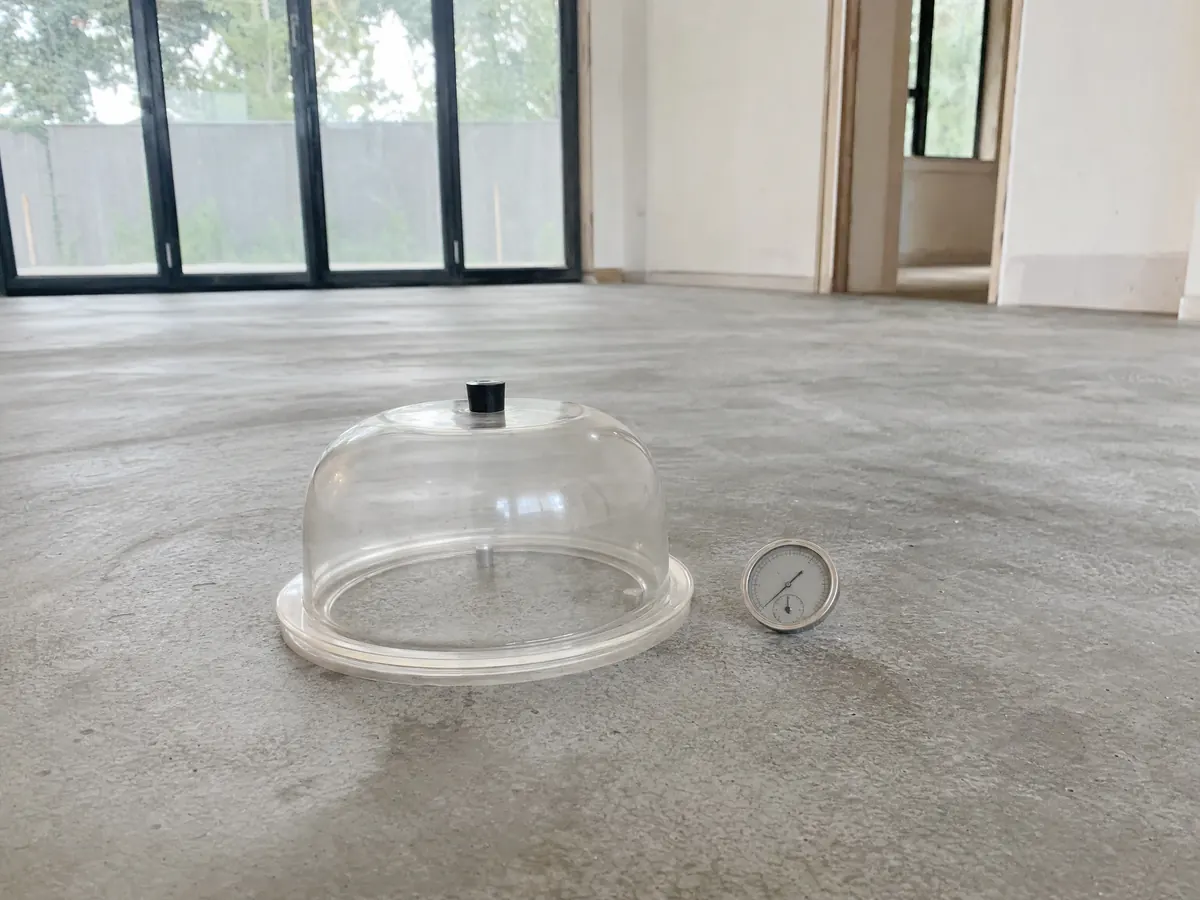
Moisture can, even in a dry climate. NOAA's 1991 to 2020 normals for Ontario International Airport, the closest full station at about 5.5 miles south-southwest of the city center point, show 11.64 inches of rain a year, 9.17 of them from December through March and just 0.05 and 0.03 inch in July and August. The foothills north of the airport are wetter, about 15 to 39 inches according to the City's Community Wildfire Protection Plan, so downspouts and irrigation beside a slab matter more than the July weather. Humidity probes under ASTM F2170 and calcium chloride dishes under F1869 give the readings, and the flooring maker sets the pass mark.
Ground movement can crack a slab and spoil a rigid finish. The City's Local Hazard Mitigation Plan describes two State Alquist-Priolo zones, the Cucamonga Fault and the Etiwanda Avenue Fault Scarp, plus a City-designated Red Hill Fault Zone, and says small areas near Hellman Avenue and Base Line Road and west of Vineyard Avenue south of Base Line may be liquefiable. Parts of the city also sit in FEMA flood zones. Run a straightedge over the slab before planks or large tile are ordered.
Heat sets the schedule. The airport normals show 93.2 days a year at or above 90 F, 19.0 at or above 100 F and an August average high of 94.9 F. We found no Rancho Cucamonga source on how heat affects particular products, so ask when the air conditioning must run and follow the maker's installation sheet.
Can you refinish old floors in the historic homes of Cucamonga, Etiwanda or Alta Loma?
Often, but the City's historic rules read as exterior rules. The 2020 cultural resources report counts 77 Designated Local Landmarks and 29 Designated Points of Interest, and Chapter 17.18 of the Municipal Code requires a Certificate of Appropriateness to alter, restore or rehabilitate a landmark or contributing resource, while ordinary maintenance that changes no design, material or appearance needs none. We read that chapter in GoCodebook's mirror and found no sentence about interior boards, so ask Planning before refinishing a landmark's floor and treat porch boards and thresholds as exterior features.
The age is layered. The Casa de Rancho Cucamonga was completed in 1860, Etiwanda was the first town the Chaffey brothers planned after buying the land in 1881, and by 1913 the City says it had paved streets, rock curbs and streetlights. The report counts Alta Loma, Cucamonga and Etiwanda as historic neighborhood character areas and asks owners to confirm a property's status with Planning. Landmark owners can get a 50 percent refund of building permit and planning fees on projects that meet the Secretary of the Interior's Standards.
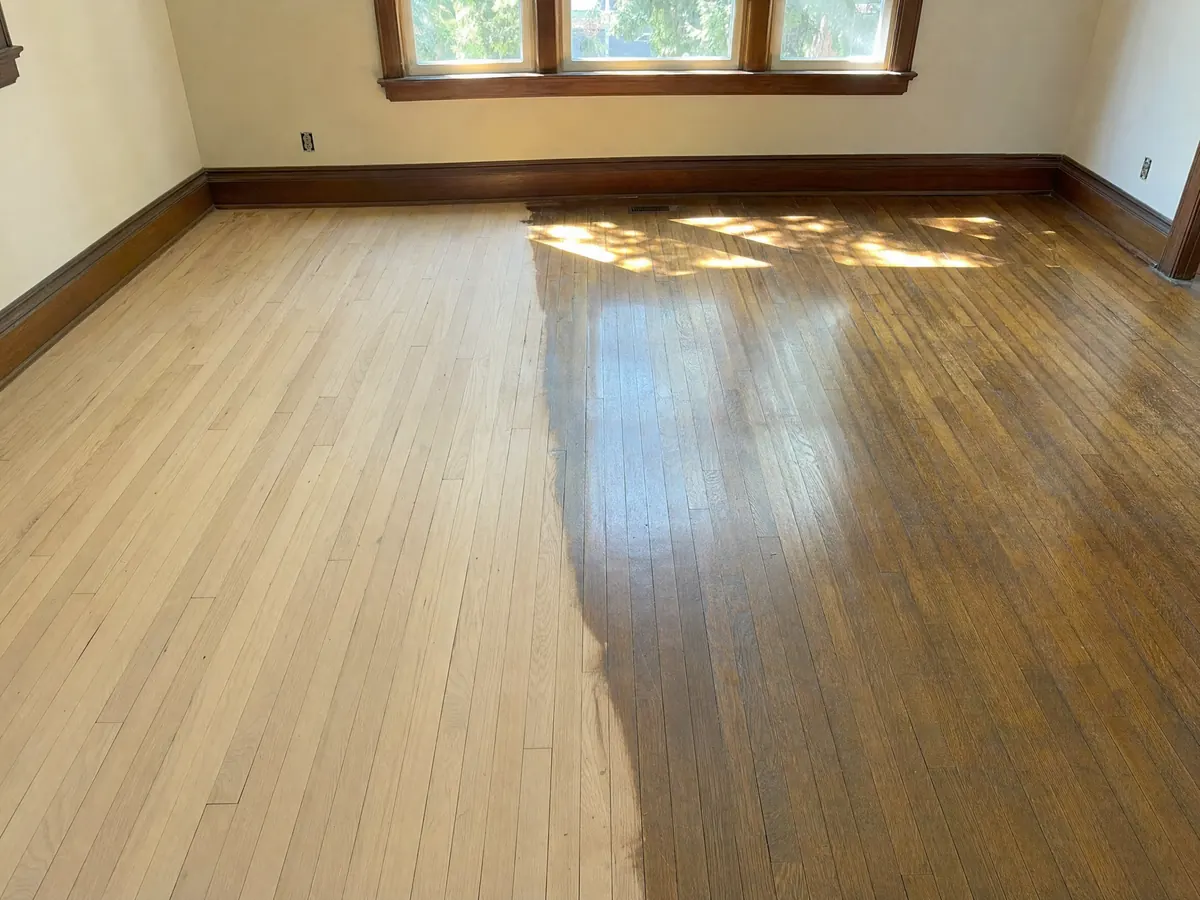
Refinish or replace depends on the wear layer. Look at a board edge at a floor register first. If the wear layer is thick enough, Angi's Los Angeles refinishing range of $4 to $8 per square foot sits well below the $12 to $22 it lists for new solid hardwood installed.
What changes for flooring in a Rancho Cucamonga condo, townhome or rental?
The building's rules matter as much as the City's. Renters occupy 40.0 percent of the city's 60,009 occupied homes, 22.2 percent of units (13,774) sit in buildings of five or more, and 8.9 percent (5,524) are single-family attached, so many floors have a neighbor below. The City's permit pages list the homeowners association among the reviews that may be required, and we did not find the share of homes under an association, so get written approval before the material is ordered.
We found no City sound-rating rule for hard floors, and the sources we read on condo sound limits disagreed on the number, so read the association's governing documents and expect a field sound test to settle disputes. In a rental, schedule demolition around the City's quiet hours and put the dust and asbestos sampling in writing.
What does a flooring contractor charge in Rancho Cucamonga, and who needs which license?
No Rancho Cucamonga price study with a stated method turned up, so the anchor is Angi's Los Angeles pages, which we rate medium to low in confidence. On July 8, 2026 it listed labor at $3 to $9 a square foot, engineered hardwood at $10 to $18 installed and solid hardwood at $12 to $22, and its September 15, 2026 laminate page put removal of an old floor at $455 to $685 for 200 square feet. Floor layers in the Los Angeles metro area averaged $33.48 an hour in the federal May 2025 wage survey. Inland Empire bids may differ.
Have the bid break out tear-out, slab moisture testing, leveling, stairs and the transition strips. Business and Professions Code 7159.5 caps a home improvement down payment at $1,000 or 10 percent of the price, whichever is less, and work that needs a permit cannot go to someone without a contractor license.
CSLB assigns carpet, resilient sheet goods and wood floors to its C-15 class and ceramic tile to C-54. Our license check guide walks through reading a CSLB record before you sign.
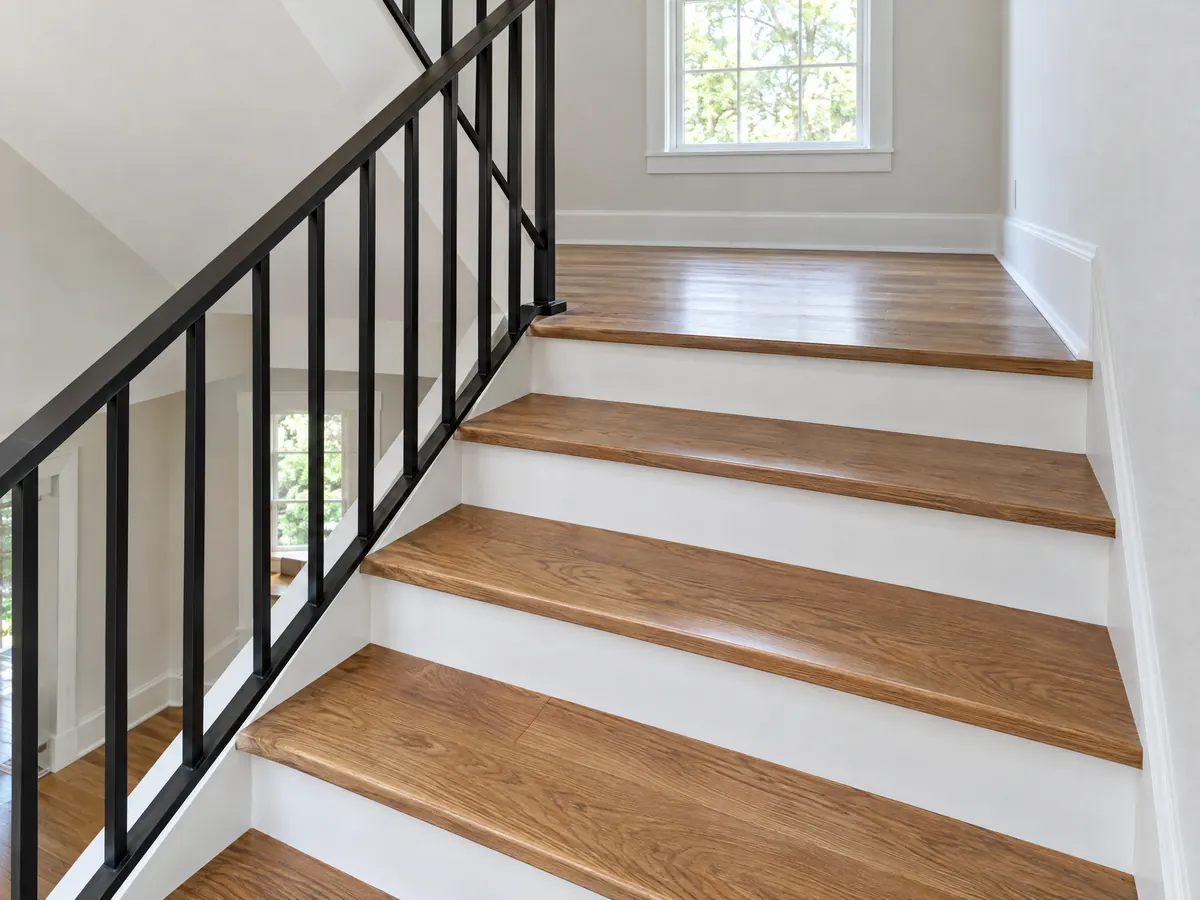
Flooring photos from Rancho Cucamonga and nearby communities
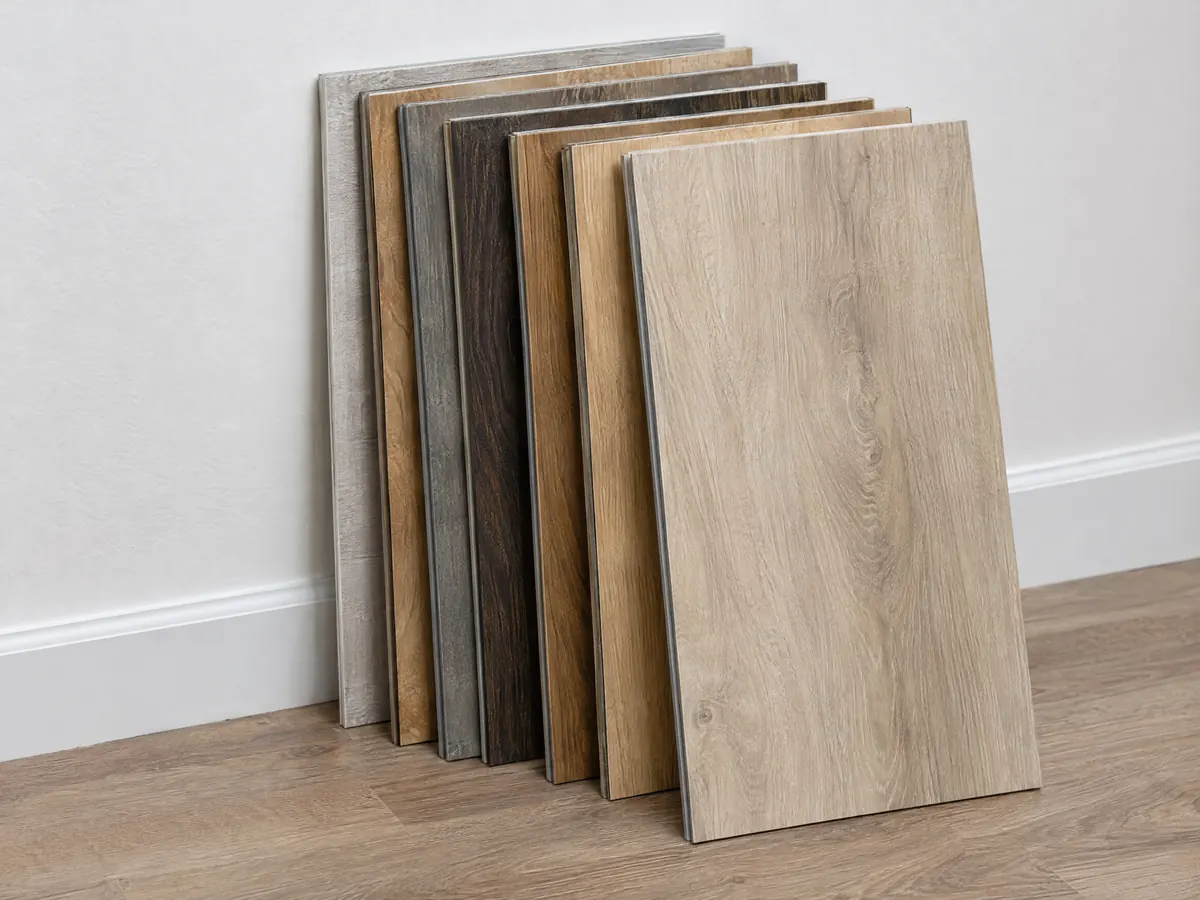
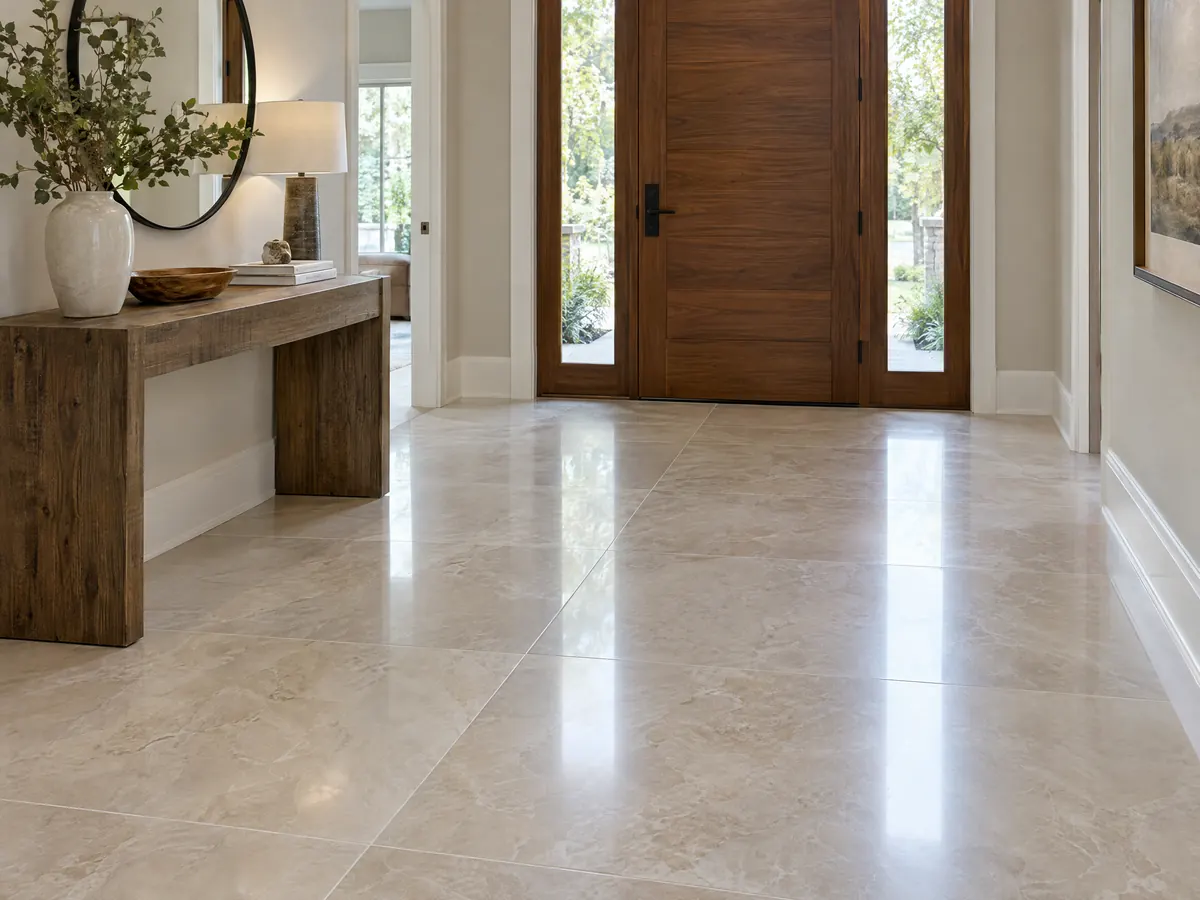
Plank samples, slab moisture tests, tile and finished rooms from Rancho Cucamonga and the cities around it, shown at the steps where the decisions get made. Tap any photo to enlarge it.
What flooring costs around Rancho Cucamonga
Dollar figures here are Los Angeles ranges from our flooring page, not a Rancho Cucamonga bid, and demolition, testing, drying and subfloor repair belong on separate lines of the written proposal. The same property may need concrete work in Rancho Cucamonga or decks in Rancho Cucamonga. Next door, see flooring in Claremont and flooring in Pomona, and flooring in San Bernardino for the county seat. Flooring in Los Angeles is the big-city benchmark. Our flooring cost guide compares refinishing with replacement, and the subcontractor guide explains which trade lays which layer.
| What it covers | Typical range |
|---|---|
| Installation labor only | $3 to $9 per sq ft |
| Solid hardwood, installed | $12 to $22 per sq ft |
| Engineered hardwood, installed | $10 to $18 per sq ft |
| Refinishing existing hardwood | $4 to $8 per sq ft |
| Laminate, whole project | $2,000 to $5,500 |
| Hardwood, whole project | $3,153 to $8,496 |
| Removing the old floor | $455 to $685 per 200 sq ft |
| Tile | No sourced Los Angeles range |
Other work we manage in Rancho Cucamonga
Rancho Cucamonga flooring questions, answered
Do I need a permit to replace flooring in Rancho Cucamonga?
Not for the floor covering, because the state exemption list covers tiling, carpeting and similar finish work and the City's Ordinance 1048 did not change that item. Structural subfloor repair, plumbing, electrical or radiant heat still needs a permit. Send Building & Safety the scope through the Online Permit Center if anything beyond the finish is involved.
How much does it cost to have flooring professionally installed?
Angi's Los Angeles page, updated July 8, 2026, lists labor at $3 to $9 a square foot, engineered hardwood at $10 to $18 installed and solid hardwood at $12 to $22. We found no Rancho Cucamonga study that states its method, so treat these as medium to low confidence. Removal, leveling and stairs usually appear as separate lines.
How much to refloor a 2000 sq. ft house?
At Angi's Los Angeles rates, 2,000 square feet comes to $6,000 to $18,000 for labor alone, $20,000 to $36,000 for engineered hardwood installed and $24,000 to $44,000 for solid hardwood installed. These are Los Angeles ranges, not a Rancho Cucamonga bid, and stairs, removal and slab or subfloor repair change the total.
Can you put flooring over concrete?
Yes, after the slab is tested and prepared. The maker of the flooring or adhesive sets the moisture limit, so the installer should read ASTM F2170 probes or set an F1869 dish before patching and leveling. Most Rancho Cucamonga slabs are newer than 1980, which lowers the chance of old adhesive that needs a lab check.
Why does moisture come through a concrete floor?
Water vapor rises from the soil beneath the slab, and rain, irrigation and downspouts keep that soil damp. The Ontario airport normals show 11.64 inches of rain a year and most of it from December through March, so a dry August says little. A slab test gives the real reading before anything is glued down.
Could old flooring in a Rancho Cucamonga house contain asbestos?
It could in the roughly 29 percent of homes built before 1980, and nobody can see it. Old resilient tile, sheet vinyl and mastic are the usual suspects. Send a sample to a lab before any layer is sanded or pulled, and have the proposal say who removes and who pays for a layer that tests positive.
Can I coat my garage floor with epoxy in Rancho Cucamonga?
Generally yes, as long as the product meets South Coast AQMD Rule 1113, which limits volatile organic compounds by coating category, so check the District's table for the exact product. In the north-side fire area, Standard 49-1 adds garage door details such as sweeps and gaskets, so check the threshold height before the coating cures.
Can I refinish hardwood floors instead of replacing them in an older Rancho Cucamonga home?
Often, when the boards can take another sanding, and a cut edge or a floor register shows how much wear layer is left. Refinishing costs less than new solid hardwood on Angi's Los Angeles pages, though the City may want a say first if the house is a designated landmark.
What license does a flooring contractor need in Rancho Cucamonga?
Flooring work goes to a contractor holding a current California license, typically C-15 for carpet, resilient flooring and wood, or C-54 for ceramic and stone tile. We did not confirm a City business license rule, so ask Building & Safety, then look the number up on the CSLB site and ask each subcontractor for a license number and certificate of insurance.
Tell us the age of the house, the rooms and what is under the floor now
Say whether it is a 1980s tract home, an older Cucamonga or Etiwanda house, a condo or a garage, which rooms you want done and what the floor is now. The slab test, asbestos question and permit check come with us to the first visit.