
Roof Repairin Rancho Cucamonga, CA
A Rancho Cucamonga roof repair under 400 square feet needs a Roof Repair Permit, and a reroof over 400 square feet needs a Reroof Permit, both applied for online because the City issues nothing over the counter. Typical wood-frame houses need at least a Class B covering, and Very High fire zones need Class A.
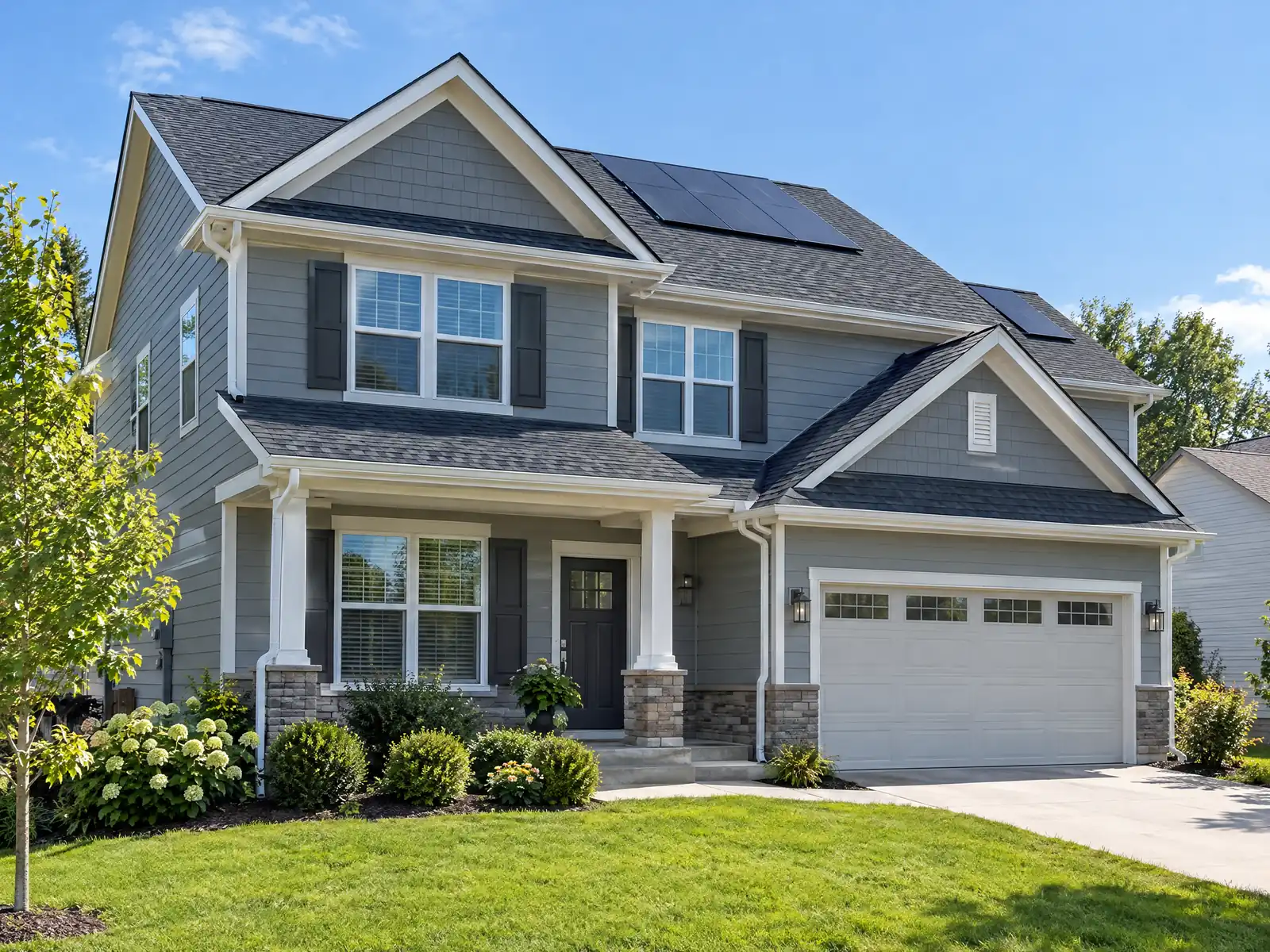
Rancho Cucamonga's roofs sit on land with a long working history. A Mexican grant of March 3, 1839 to Tiburcio Tapia became the rancho, John Rains bought it in 1858, and the Victoria Gardens Master Plan says the region held over 6,000 acres of vineyard in the 1920s, one of the largest in the world. Alta Loma, Cucamonga and Etiwanda incorporated together as Rancho Cucamonga in 1977. Most of today's roofs cover homes from the boom that followed: Census Bureau ACS 2024 one-year estimates count 62,033 housing units, with the 1980s the largest decade at 15,927 units, about 59 percent built from 1970 through 1999 and about 29 percent before 1980, and the median owner-occupied home is worth $766,300 (margin of error plus or minus $32,014). A house from the 1980s is now between 37 and 46 years old, so ask whether its roof is original and request the reroof permit record.
On a roofing job, MDG Builders (CSLB #1040337) is the general contractor that writes the scope, files the permit online and keeps the calendar, and a C-39 roofing subcontractor strips the old covering and lays the new one. Our roofing page has the sourced prices, the Rancho Cucamonga overview lists every trade we manage here, and the guides for Claremont and Corona show how a Los Angeles County neighbor and a Riverside County city handle the same work. Upland, Fontana and Ontario each run their own counters, so do not assume the rules below cross the city line. The City's Building & Safety Department issues permits inside city limits, and its wildland fire area page explains the fire overlay. The Development Code host, ecode360, blocked our request, so the code sections below come from GoCodebook, a third-party mirror stamped as of October 22, 2026, and each one should be confirmed with the City.
What Rancho Cucamonga's reroof handout, Ordinance 1048 and Standard 49-1 say about roofs
Where roofing permits come from in Rancho Cucamonga: City of Rancho Cucamonga Community Development, Building & Safety Department.
- Minimum roof covering (Table 1505.1 in RMC 15.12.050 and Table R902.1 in 15.14.060, Ord. 1048): Class A for Type I through IIIB construction and Class B for Types IV, VA and VB (typical wood-frame houses) on new buildings, re-roofs or additions, with Class A required in Very High Fire Hazard Severity Zones; the City's reroof handout says the same (minimum Class B, Class A in the Very High zone). (read in GoCodebook's third-party code mirror, text as of 2026-10-22)
- Reroof handout (BSF-0029): all roofs go on solid sheathing (15/32 inch CDX radiant barrier plywood minimum if sheathing is installed), asphalt shingles need at least 6 fasteners each, tile heads are nailed and eave tiles clipped, no more than one overlay of asphalt composition over asphalt or wood shingles, and no new covering over wood shake; roofing heavier than 6 pounds per square foot (tile) needs a structural evaluation by a licensed design professional, while lighter materials need no plans or calculations. The handout's page 1 footer reads revision D of 8/11/2020 although the file is posted as revision F (Feb. 2026) and cites the 2025 codes.
- Like-for-like rule: the reroof handout says residential roofs must be replaced with the same material approved with the home's design review or original approval (asphalt composition for asphalt, tile for tile), and any other roofing material needs Planning Department approval (909-477-2750), so a change from tile to composition, for example, is a Planning matter before it is a permit matter.
- Repair versus reroof (policy effective May 1, 2020, in the same handout): a repair under 400 square feet of a residential dwelling needs a Roof Repair Permit; a reroof or lift-and-relay over 400 square feet needs a Reroof Permit; and any repair over 50 percent of the total roof area of a detached residential structure needs a Reroof Permit. Planning review applies when the roofing type changes.
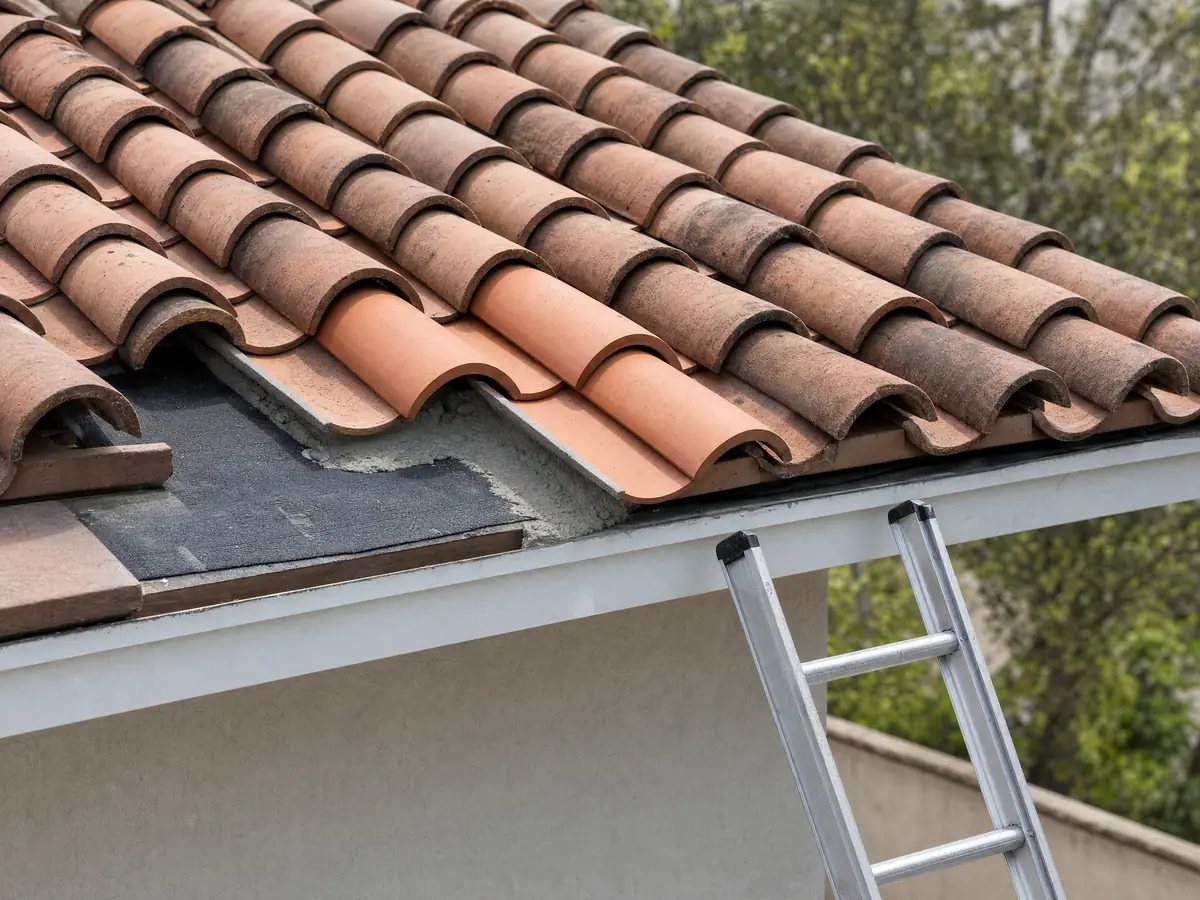
- Reroof inspections and reflectance (same handout): tear-off must expose the sheathing with damaged wood replaced, new sheathing and its nailing are inspected, a final inspection follows with the smoke and carbon monoxide self-certification handed to the inspector, an access ladder must be provided, and the roofing system must meet the Energy Code's solar reflectance and thermal emittance values (0.08 and 0.75 for asphalt shingles, 0.10 and 0.75 for other products, as the handout states them).
- Who issues it: the Building & Safety page routes solar, reroof and patio cover permit issuance to CDtech@CityofRC.us (all other permits to EDRnotification@CityofRC.us).
- Wildfire area roofs: inside the Wildland-Urban Interface Fire Area, Fire District Standard 49-1 applies to new construction, additions and accessory structures and requires construction under the wildfire chapters (CBC Chapter 7A, CRC R337 and the State Referenced Standards); the 2025 CRC (effective January 1, 2026) says R337's provisions now live in Part 7, the California Wildland-Urban Interface Code, although the City's March 2026 submittal guidelines still cite R337 by name.
- Historic properties: the Planning Director may approve repair or replacement of deteriorated roofs, windows, siding, chimneys, accessory structures or fencing with materials of the same kind, type and texture through a Certificate of Appropriateness, and a roof change on a landmark that alters its appearance goes to the Historic Preservation Commission. (read in GoCodebook's third-party code mirror, text as of 2026-10-22)

How do Santa Ana winds change the way Rancho Cucamonga roofs are built and repaired?
They set the bar that edges, ridges and fasteners are measured against, and the City's own documents disagree about how high the bar sits. Ordinance 1048 amends the Building Code to a basic wind speed of 96 mph (Vasd 75 mph) and the Residential Code to Vult 110 mph (Vasd 85 mph), both with Exposure C, while the City's design criteria page, dated October 27, 2020, lists 110 mph ultimate. Houses fall under the Residential Code, so 110 mph is the number to ask about, but the plan checker has the last word.
The history explains the caution. The Community Wildfire Protection Plan says Santa Ana gusts can pass 80 mph, and the Local Hazard Mitigation Plan records gusts above 100 mph during the April 30, 2014 Etiwanda Fire and a 1996 Etiwanda fire started by towers toppled in 90 mph winds. On October 14, 2026 the City told residents to secure loose items before a High Wind Warning for October 15 through 17 and to report damage through its RC2GO portal. The hazard plan adds that any part of the city can be hit, not only the foothills.
- Lifted or missing shingles or tiles
- Ridge or hip caps that have shifted
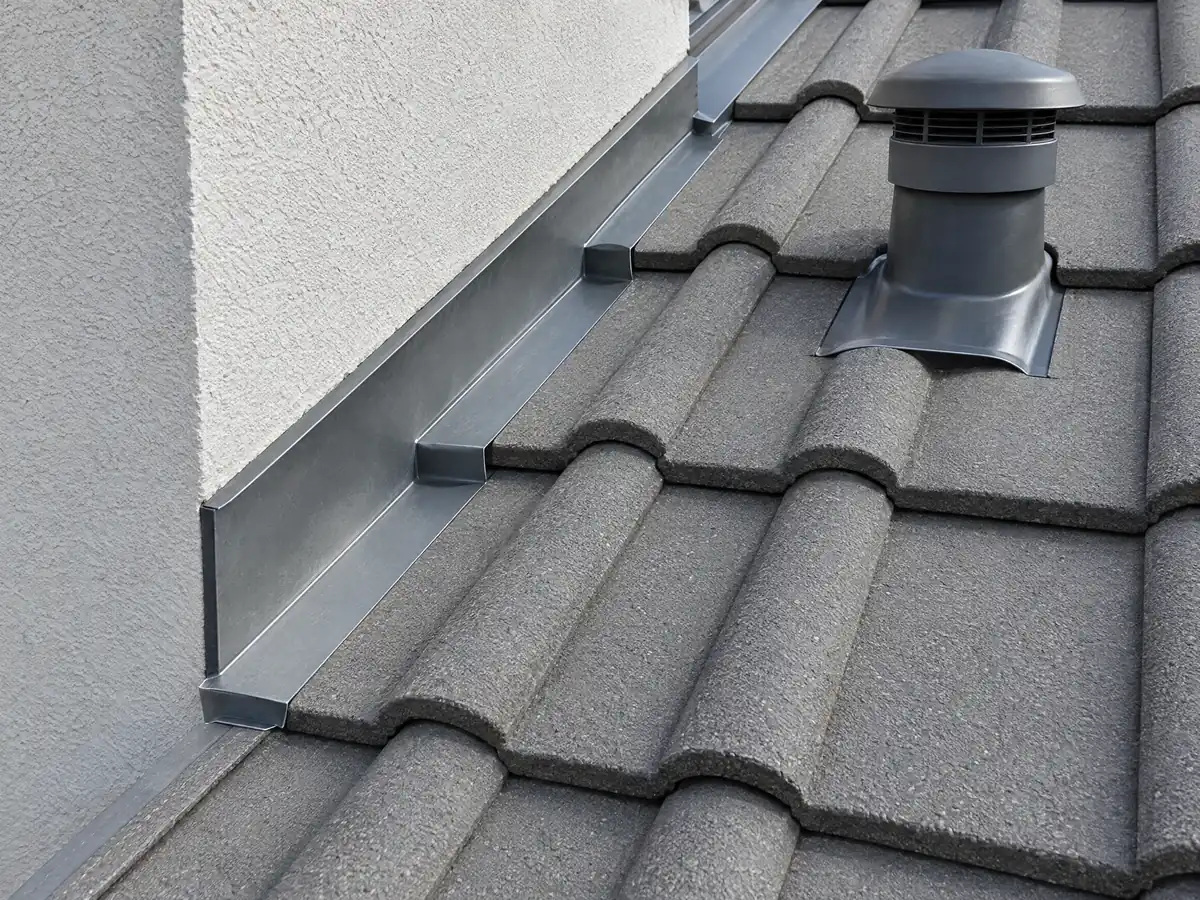
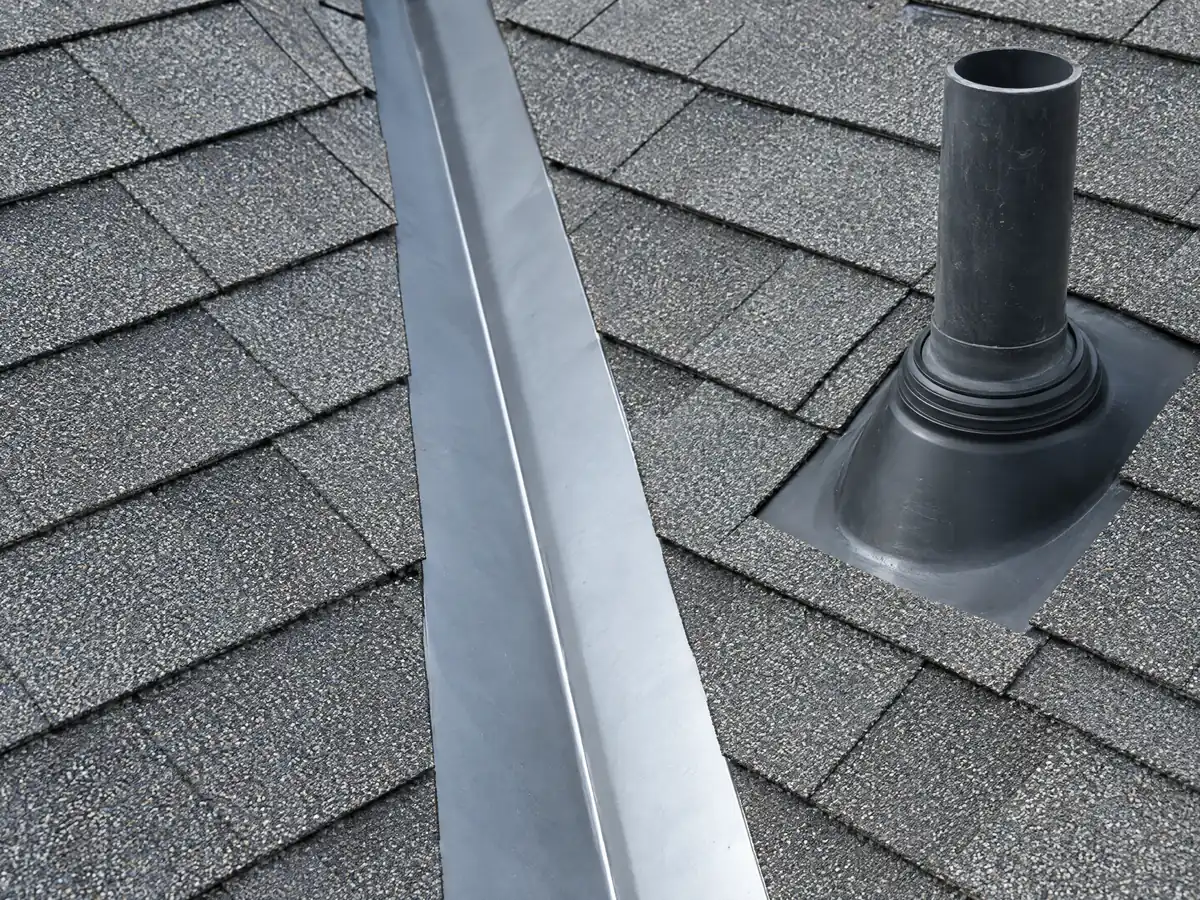
- Flashing bent back at walls and vents
- Fresh stains on the ceiling below
Photograph the roof and any debris after a wind event before anyone tarps or repairs it.
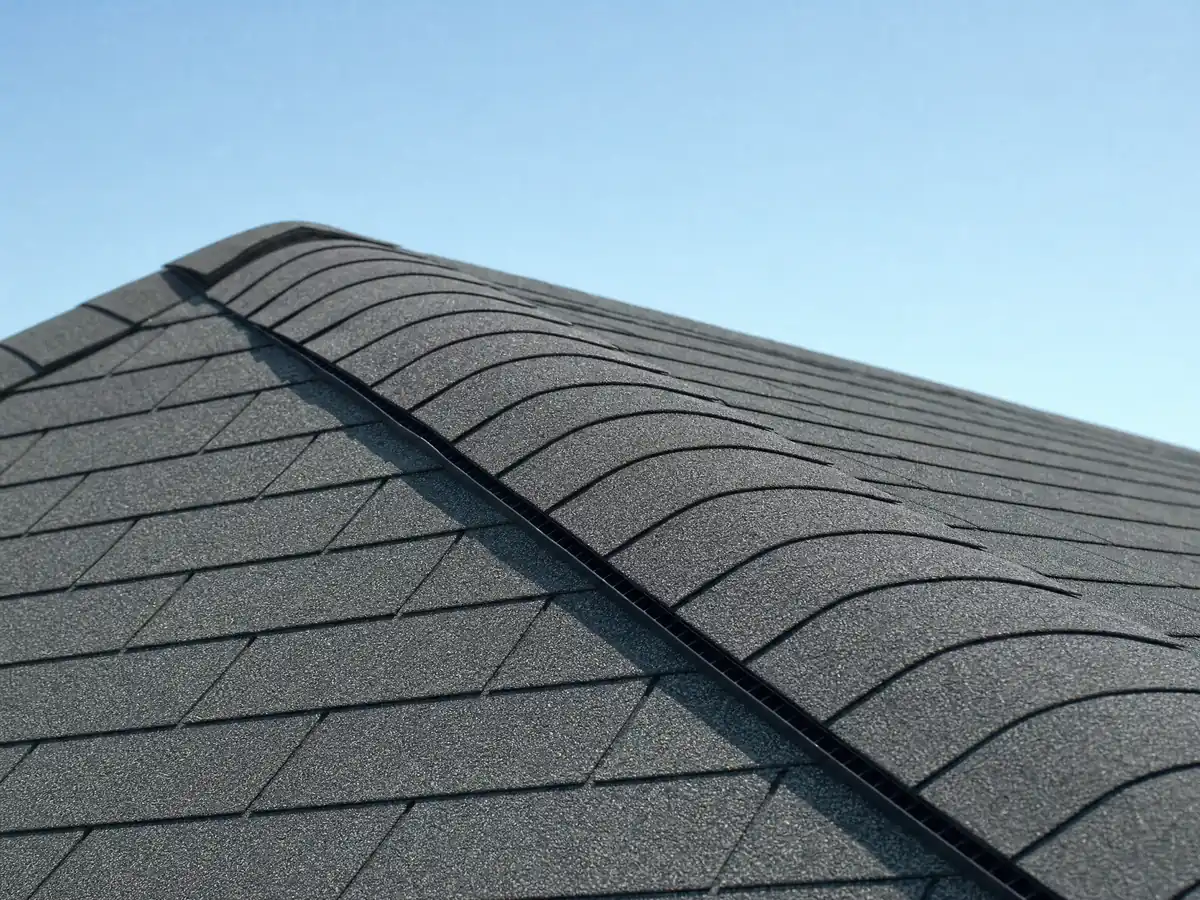
Do I need a permit to repair or replace a roof in Rancho Cucamonga, and what is the 400 square foot line?
Yes for both, and the size of the job decides which permit. The City's reroof handout, citing a policy effective May 1, 2020, says a repair under 400 square feet of a residential dwelling needs a Roof Repair Permit, a reroof or lift-and-relay over 400 square feet needs a Reroof Permit, and any repair over 50 percent of the total roof area of a detached residential structure needs a Reroof Permit. No exempt category appears in that list, so even a small patch is a permit conversation.
Applications go through the Online Permit Center, because the Building & Safety page says no permits are issued over the counter. Solar, reroof and patio cover permits are issued through CDtech@CityofRC.us, other permits go to EDRnotification@CityofRC.us, and inspections are scheduled by text at (909) 303-1786 or by phone at (909) 477-2710. Under RMC 15.12.030, as read on the mirror, no one may own or occupy a structure altered without the required permit, so an unpermitted reroof follows the house to its next owner.
The handout contradicts itself on its age: it is posted as revision F from February 2026, yet its first page footer reads revision D of August 11, 2020. Treat the 400 square foot policy as current and ask the counter whether it has changed.
Get the permit number before the dumpster arrives and file the inspection record with the house papers.
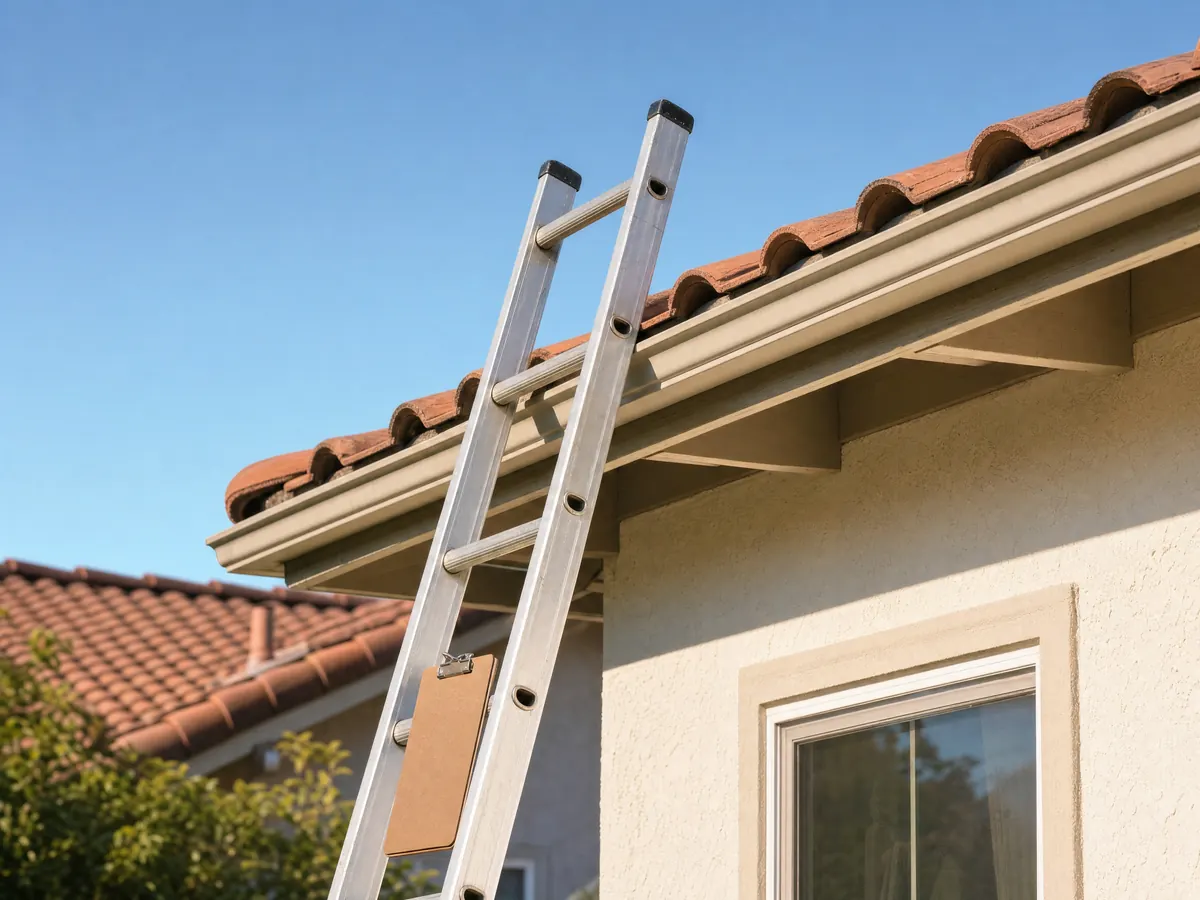
Is Class B enough for my roof, and when does the Wildland-Urban Interface Fire Area require Class A?
For a typical wood-frame house, Class B is the minimum covering on a re-roof anywhere in the city, and Class A is required in Very High Fire Hazard Severity Zones. Table 1505.1 in RMC 15.12.050 and Table R902.1 in RMC 15.14.060, as amended by Ordinance 1048, set Class A for Type I through IIIB construction and Class B for Types IV, VA and VB, and the City's handout repeats the split.
Inside the Rancho Cucamonga Fire Protection District's Wildland-Urban Interface Fire Area, Fire District Standard 49-1 also applies to new construction, additions and accessory structures. The District adopted the area by ordinance in 2012 after CAL FIRE's 2008 mapping, the City Council ratified it, and the Community Wildfire Protection Plan says it covers nearly one-third of the District's service area. The City's ADU handbook places it on the north side of town. Whether a roof-only job on an existing house must meet the standard is a question for Fire Prevention at (909) 477-2770, and we cannot say which streets are inside the area or in a CAL FIRE Very High zone, because we did not open the City's 'Search For My Property' map.
One more wrinkle: the 2025 California Residential Code, effective January 1, 2026, moves the wildfire provisions once in R337 into Part 7, the California Wildland-Urban Interface Code, yet the City's March 2026 guidelines still cite R337 by name. The copy of Standard 49-1 we read is dated December 2022, and we could not confirm a newer one.
Get the zone answer for your address in writing before the roof product is ordered.
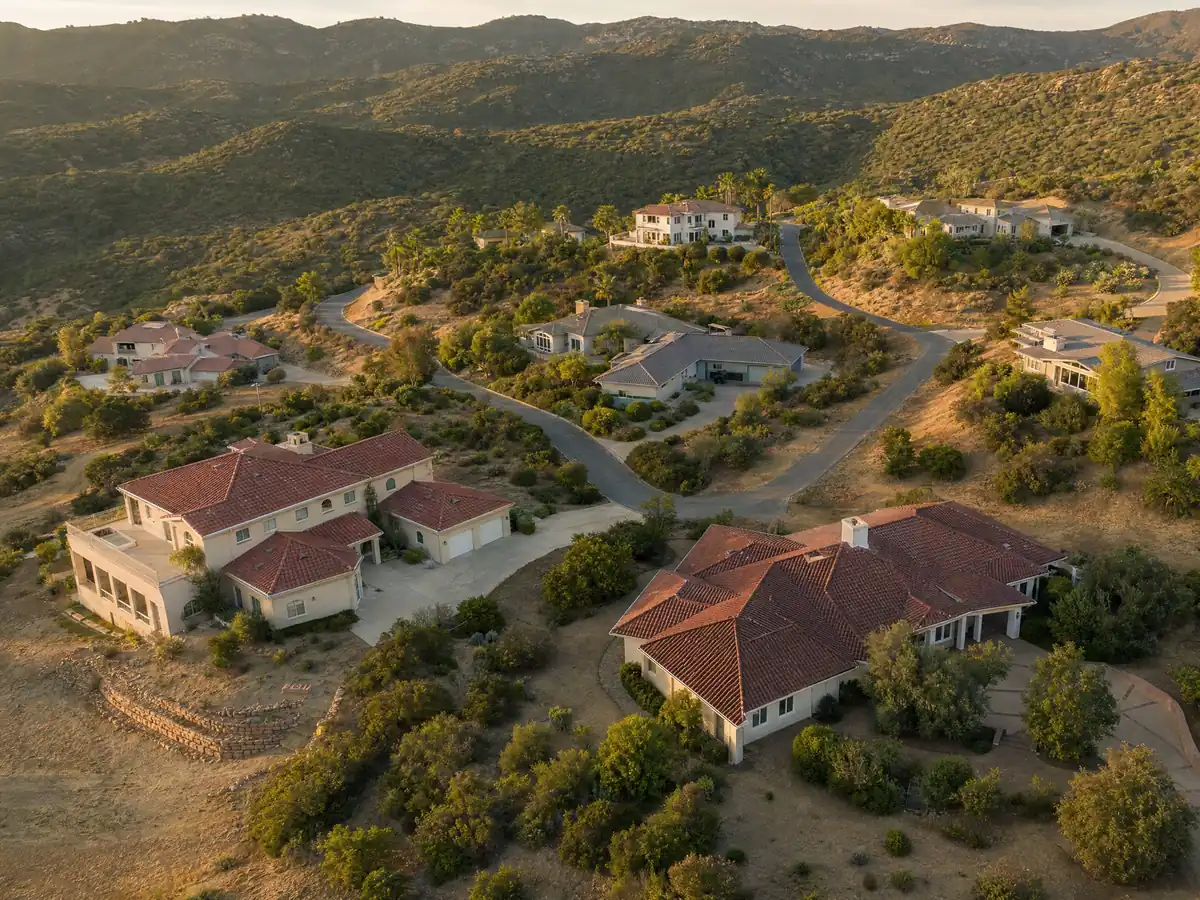
Can I replace tile with composition shingles, and what if my tile roof is heavy?
Only with Planning's approval. The reroof handout says a residential roof must be replaced with the same material approved with the home's design review or original approval, asphalt composition for asphalt and tile for tile, and any other material goes to the Planning Department at (909) 477-2750, so a switch is a Planning matter before it is a permit matter. Accessory structures must match the home's roofing, barns for horses or farm equipment may use metal with the Planning Director's approval, and properties in the fire area may propose alternative materials for fire safety.
Weight is the other line. Roofing heavier than 6 pounds per square foot, which is where tile sits, needs a structural evaluation by a licensed design professional, while lighter coverings need no plans or calculations. No new covering may go over wood shake, and asphalt composition may be laid over asphalt or wood shingles only as a single overlay. A first tile quote may leave the evaluation out, so ask.
Ask whether the quote includes the structural evaluation if the new roof will weigh more than 6 pounds per square foot.
What does the City inspect on a re-roof, from the sheathing to the final?
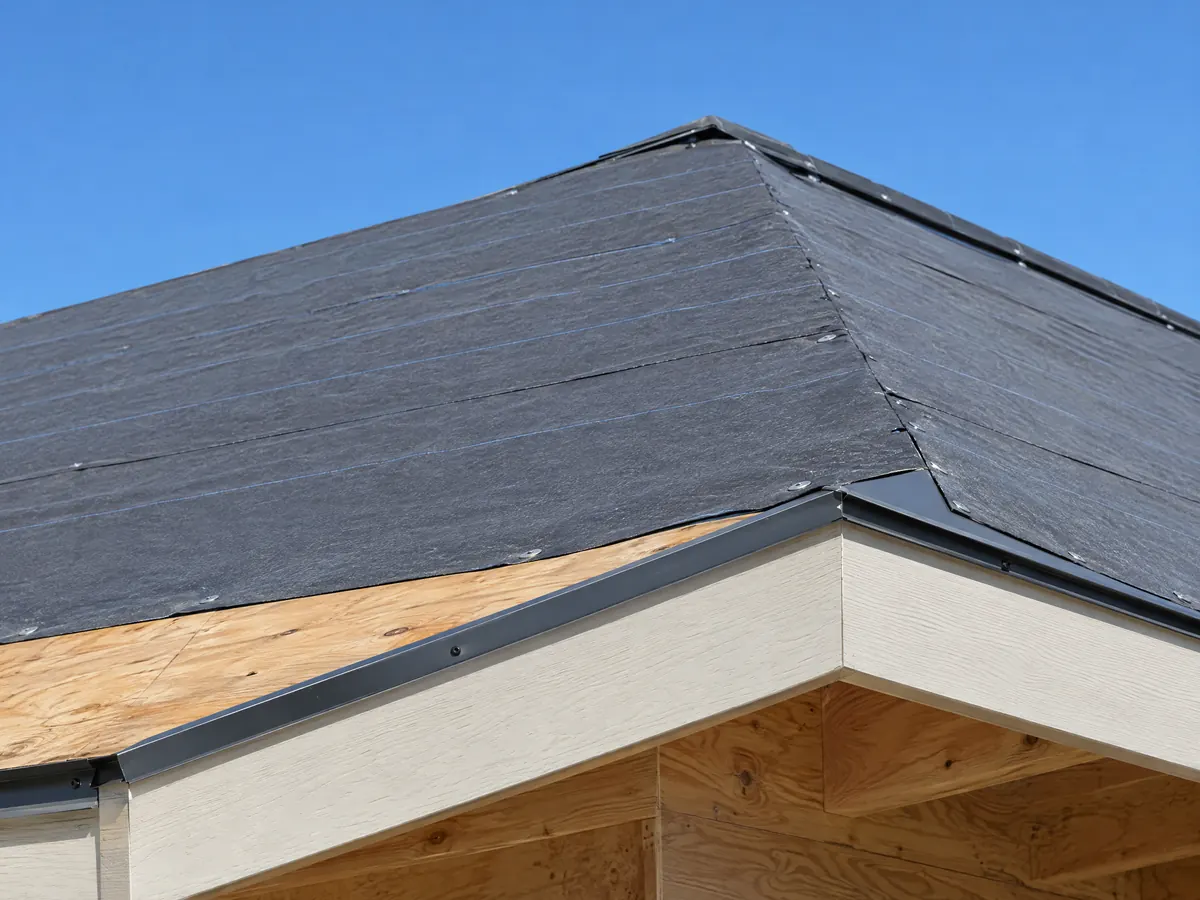
The handout lists the checkpoints, and a good roofer schedules around them. All roofs go on solid sheathing, 15/32 inch CDX radiant barrier plywood at minimum where sheathing is installed, asphalt shingles need at least 6 fasteners each, tile heads are nailed and eave tiles clipped, and tear-off must expose the sheathing with damaged wood replaced before the sheathing and its nailing are inspected.
A final inspection follows. The inspector expects an access ladder and the owner's smoke and carbon monoxide self-certification, which traces to the state rule that permitted work valued over $1,000 triggers alarms (CRC R310.2.2 and R311.2.2). The roof must also meet the Energy Code's reflectance values, which the handout states as 0.08 solar reflectance and 0.75 thermal emittance for asphalt shingles and 0.10 and 0.75 for other products. Page 2 of the handout still cites the 2022 Energy Code, so confirm the figures with the counter.
- Solid sheathing exposed and repaired at tear-off
- Fastener count and tile nailing at the sheathing inspection
- Ladder access and alarm self-certification at the final
Ask the roofer to photograph the bare deck before the new covering goes down.
Does a roof in Alta Loma, Cucamonga or Etiwanda need a Certificate of Appropriateness?
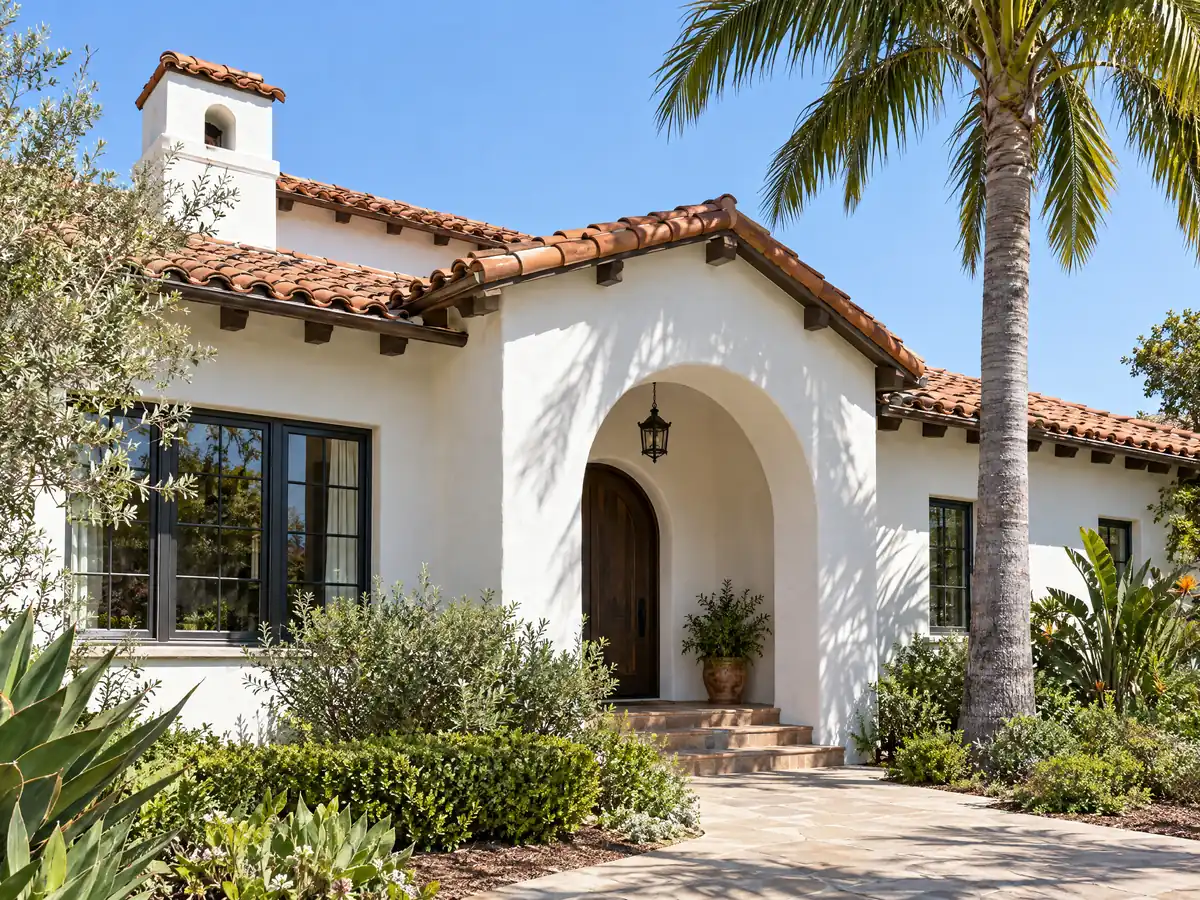
Only if the property is a landmark or a contributing resource, and even then like-for-like repair is quick. RMC Chapter 17.18 makes any property on the National Register or the California Register an automatic landmark and requires a Certificate of Appropriateness before alterations. The Planning Director may approve repair or replacement of deteriorated roofs, windows, siding, chimneys, accessory structures or fencing with materials of the same kind, type and texture, while a roof change that alters a landmark's appearance goes to the Historic Preservation Commission.
The City's 2020 cultural resources report counts 77 Designated Local Landmarks and 29 Designated Points of Interest, and treats Alta Loma, Cucamonga and Etiwanda as historic neighborhood character areas, a looser regime than the full landmark rules. Etiwanda was the first town planned by the Chaffey brothers in 1881, and the vineyard workers' North Town near Eighth Street dates from the 1900s, but we have no list of landmark addresses. Landmarks can qualify for a 50 percent refund of building permit and planning fees and for Mills Act contracts.
Ask Planning to confirm the status of the address in writing and keep the answer with the contract.
How much does roof replacement cost in Rancho Cucamonga, and how do I hire a roofer?
We found no Rancho Cucamonga or Inland Empire price survey, so the figures here are Los Angeles ones and a local bid may land elsewhere. Angi's Los Angeles guide, updated July 31, 2026, reports a typical range of $10,256 to $24,963 around a $17,271 average, at $4 to $12 a square foot for asphalt, $7 to $15 for tile and $7 to $16 for metal, plus $1,000 to $3,000 for tear-off and $500 to $1,000 to detach and reset solar panels. Cost vs. Value 2025 from Remodeling magazine priced a reference Los Angeles asphalt roof at $36,417 and a metal one at $62,069 without naming the roof size, so it describes a larger roof than the average Angi job. Our planning ranges are about $10,000 to $25,000 for asphalt, $15,000 to $37,000 for tile and from about $20,000 up for metal.
Roofing is CSLB class C-39. Business and Professions Code 7159 requires a signed written contract, caps the down payment at $1,000 or 10 percent of the price, whichever is smaller, and ties later payments to finished work. Check any roofer with our license guide, and read the California roofing cost guide to see why a survey average and a reference roof sit so far apart. The inbox that issues reroof permits also handles solar permits, so ask how panels and roof schedules fit together.
Roofing photos from Rancho Cucamonga and nearby communities
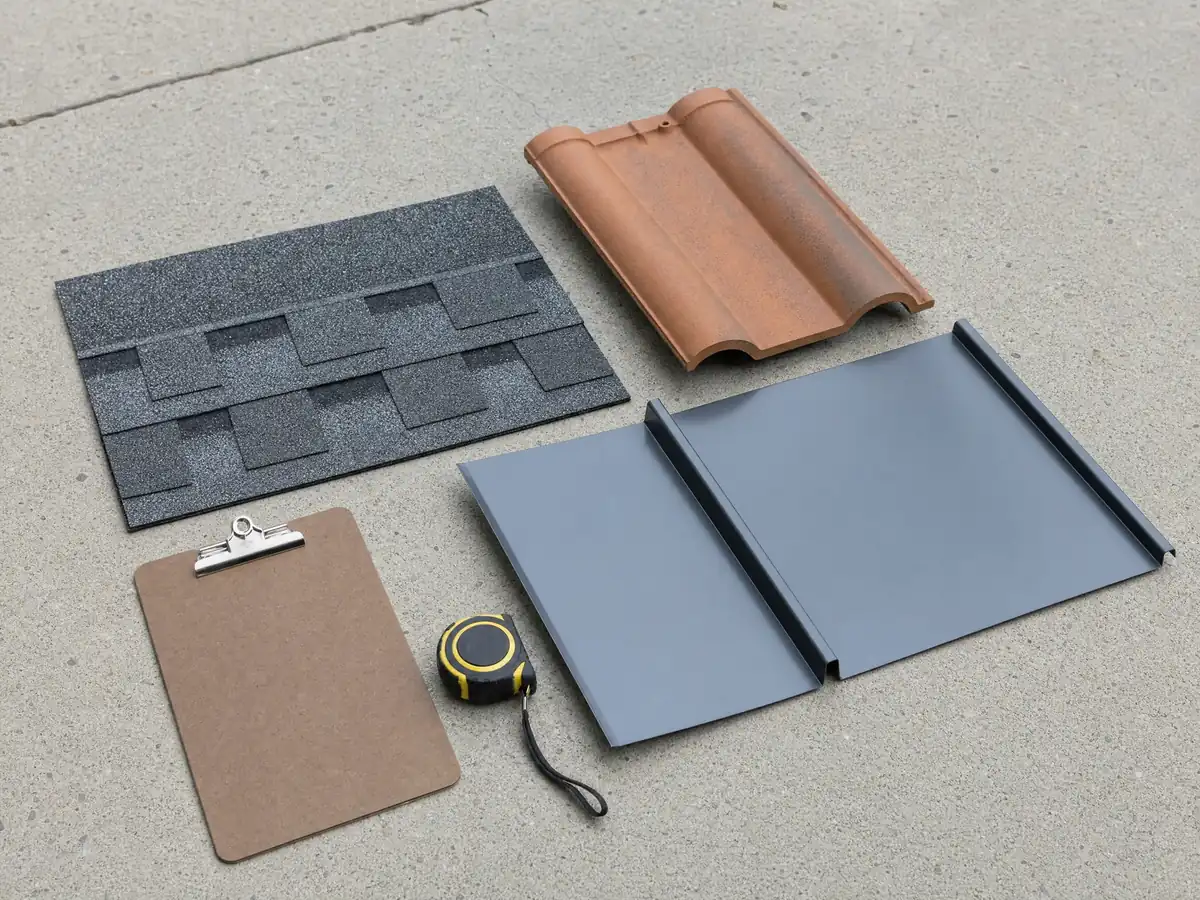
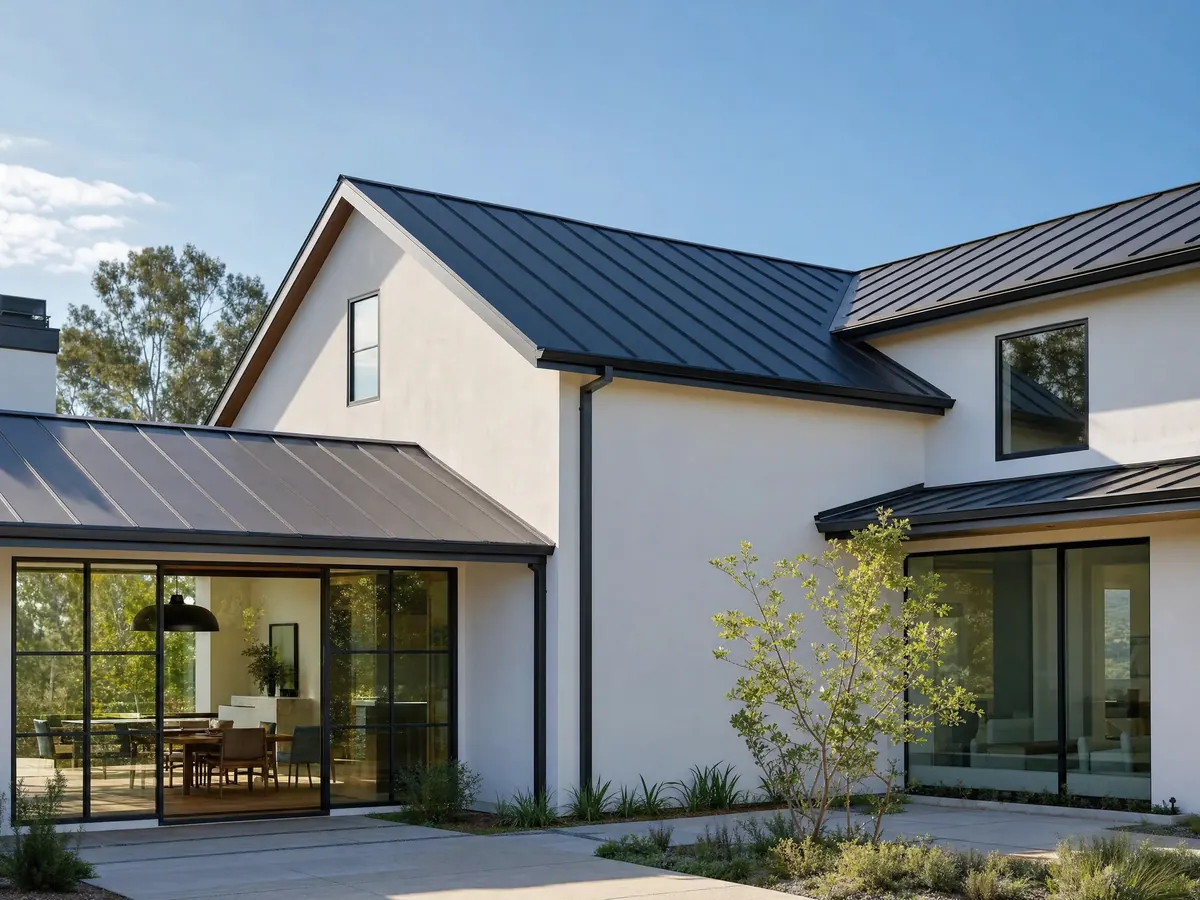
Roofing scenes tied to Rancho Cucamonga places such as Alta Loma, Etiwanda, Cucamonga and Victoria Gardens, and to nearby communities such as Upland, Fontana and Ontario, from tear-offs and underlayment to tile repair and flashing work.
Where these Rancho Cucamonga roof figures come from
The roofing page sets out each roofing price next to its source and date. Roof work often leads into other exterior jobs, and the Rancho Cucamonga rules for them are on the fencing page, the painting page and the kitchen remodeling page. For a different fire and permit setup, compare the roofing guide for Pasadena.
| What it covers | Typical range |
|---|---|
| Asphalt shingle, typical single-family roof | $10,000 to $25,000 |
| Concrete or clay tile | $7 to $15 per sq ft |
| Metal | $7 to $16 per sq ft |
| Remodeling Cost vs. Value 2025, Los Angeles | Asphalt $36,417. metal $62,069. |
| Extras | Tear-off $1,000 to $3,000. solar detach and reset $500 to $1,000. |
Other work we manage in Rancho Cucamonga
Rancho Cucamonga roofing questions, answered
Do I need a permit to replace my roof in Rancho Cucamonga?
Yes. A reroof or lift-and-relay over 400 square feet needs a Reroof Permit, and a repair under 400 square feet needs a Roof Repair Permit. Apply through the Online Permit Center, since the City issues no permits over the counter, and use CDtech@CityofRC.us for reroof permit questions. Unpermitted work follows the house to the next owner.
What is the 25 percent rule for roof repairs?
We found no Rancho Cucamonga document that uses a 25 percent rule. The City's lines are 400 square feet, which separates a Roof Repair Permit from a Reroof Permit, and 50 percent of the total roof area on a detached residential structure, above which a repair needs a Reroof Permit. Ask the counter how it measures roof area.
How do I know if I need a roof repair or a full replacement?
Measure the damage against the permit lines first: under 400 square feet is a repair permit, while more than 400 square feet, or more than half the roof of a detached structure, is a reroof. Then ask the roofer to show and photograph the sheathing, because the City requires damaged wood to be replaced once the old covering is torn off.
What is a Class A roof, and do Rancho Cucamonga homeowners need one?
Class A is the top fire rating in the City's roof tables, and it is required on re-roofs in Very High Fire Hazard Severity Zones, while typical wood-frame houses elsewhere need at least Class B. We cannot say which parcels sit in a zone, so check the City's fire area map or call Fire Prevention at (909) 477-2770 before ordering.
Is my Rancho Cucamonga roof in a fire hazard zone?
We cannot say for your address. The Fire District's Wildland-Urban Interface Fire Area covers nearly one-third of its service area and the City's ADU handbook places it on the north side, but we did not open the City's 'Search For My Property' map or the CAL FIRE viewer. Look up the parcel there and put the answer in the contract.
How much does roof replacement cost in Rancho Cucamonga?
We found no Rancho Cucamonga survey. Angi's Los Angeles guide gives $10,256 to $24,963 as the typical range, at $4 to $12 a square foot for asphalt and $7 to $15 for tile, and Cost vs. Value 2025 prices a reference asphalt roof at $36,417. Our planning ranges are $10,000 to $25,000 for asphalt and $15,000 to $37,000 for tile. A written proposal is the real price.
Can I replace my tile roof with shingles in Rancho Cucamonga?
Only with Planning's approval. The reroof handout requires the same material approved with the home's design review or original approval, so tile goes back as tile and anything else goes to the Planning Department at (909) 477-2750. Roofing heavier than 6 pounds per square foot also needs a structural evaluation by a licensed design professional.
What is the best time of year to replace your roof?
Summer is the driest season but also the hottest. NOAA's normals for Ontario International Airport, 5.5 miles away, show 0.05 inch of rain in July and 0.03 in August against 9.17 inches from December through March, with 93.2 days a year at or above 90 F and 19.0 at or above 100 F. Ask the crew how it handles heat and wind forecasts.
How do I check a roofing contractor's license in California?
Look the number up on the Contractors State License Board site, make sure class C-39 roofing shows as active and compare the business name with your contract. Then ask for the license number and a certificate of insurance for any subcontractor on the job. Our license guide walks through the check.
Ask for a roof inspection in Rancho Cucamonga
Tell us the neighborhood, the roof covering, the age of the house and where water or wind damage shows. Before we call back we check the 400 square foot permit line, the fire area question and whether a historic review could apply.