
Roof Repairin Montclair, CA
Plan on a permit for a roof job in Montclair: the City's fee schedule lists reroofing lines, and Planning must approve the material before Building issues the permit. The counter takes walk-ins Monday to Thursday, 7 to 9 a.m. and 4 to 5:30 p.m., and the City runs its own fire department.
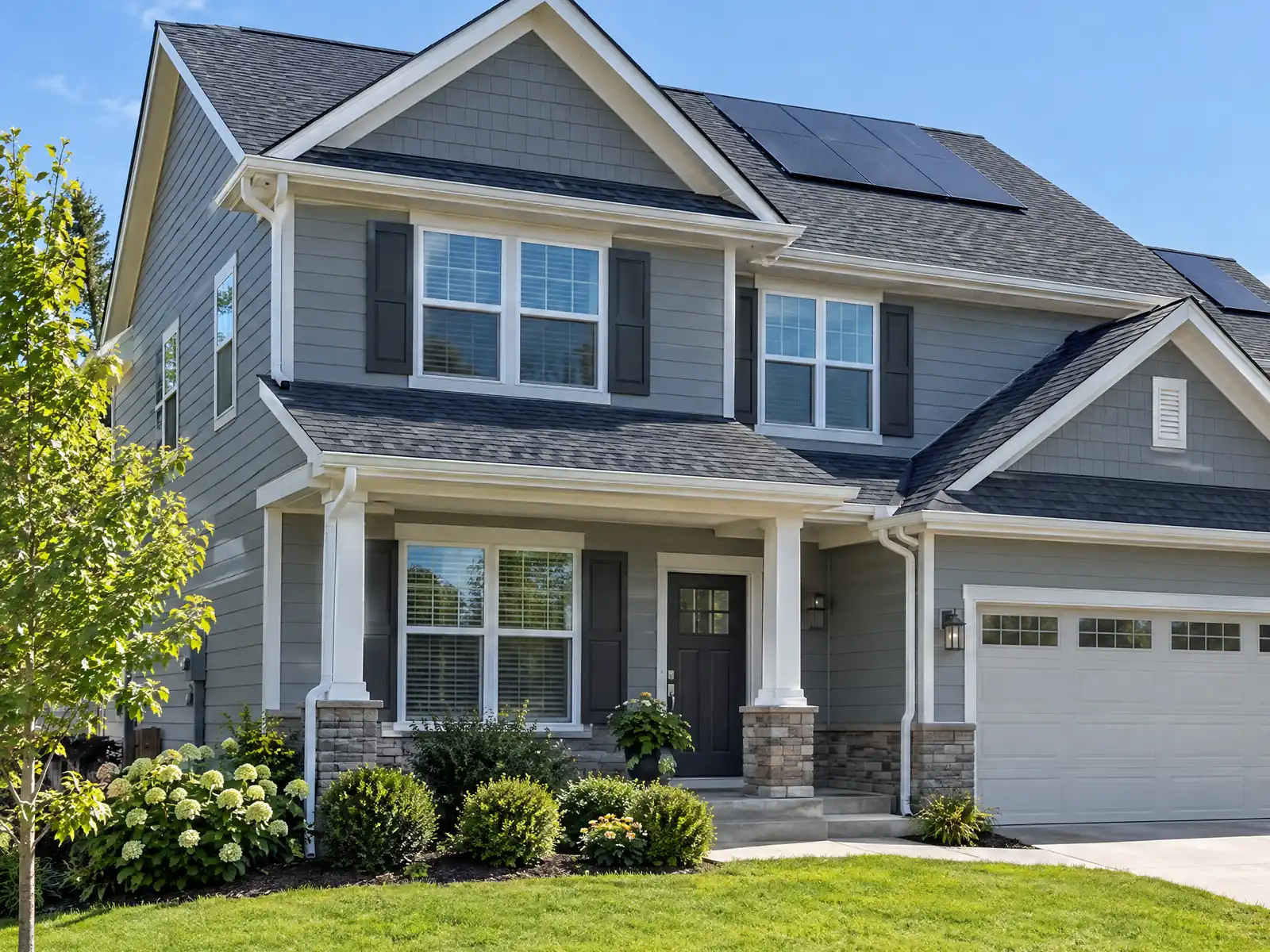
Montclair's roofs sit on a fast postwar build-out. Voters incorporated the Monte Vista tract as a city in April 1956 and renamed it Montclair in 1958, after the Post Office declined a branch under a name already used in Northern California, according to the City's General Plan and Housing Element. Developers cleared citrus and avocado groves for tracts of modest one-story Ranch homes, and Montclair Plaza, now Montclair Place, opened in 1968. Census Bureau ACS 2020-2024 five-year estimates count 10,974 housing units, a median year built of 1969 and 65.9 percent of units built before 1980, so the framing under many roofs is at least 46 years old.
MDG Builders (CSLB #1040337) does not tear off shingles ourselves. We write the scope, make the counter visits, line up the calendar and hire a licensed C-39 roofing subcontractor to do the field work. Our roofing page holds the sourced prices and the Montclair overview lists every trade we manage here. Next door, Upland and Ontario share the county but not the permit system, while Pomona sits across the line in Los Angeles County. Permits come from the City's Building Division. The City points its Municipal Code to Municode, which answered our automated request with an HTTP 403, so the code sections below were read in GoCodebook, a third-party mirror stamped October 4, 2026, and each one should be confirmed with the City. Several City handouts are older still, and we label them.
What Montclair's fee schedule, re-roof handout and fire rules say about roofs
Where roofing permits come from in Montclair: City of Montclair Community Development Department, Building Division.
- Planning sign-off first: the City's asphalt-shingle re-roof handout says Planning approval is required for all roofing materials before the building permit is issued. Other handout points: install over solid sheathing; only two total layers of asphalt shingles; corrosion-resistant 12-gauge nails, usually 4 per strip shingle. The handout cites the 2007 California Building Code, so treat its code references as old and confirm current ones.
- Energy rule on the same handout: a cool roof is required when more than 50 percent of the roof, or more than 1,000 square feet of roofing, is replaced, with listed alternatives (attic venting at 1/150, R-30 ceiling insulation, a radiant barrier, no ducts in the attic, solar-covered areas, R-3 roof deck insulation over a vented attic, sealed and HERS-tested ducts, or R-1 deck insulation with a 3/4 inch air space), and a radiant barrier on new sheathing over conditioned space. These are the handout's words, from the 2007-code era.
- Permit status: the City's Master User Fee Schedule (2022) has a 'Reroofing Fees' section with separate lines for composition no tear-off, composition resheeting and other roofs per 10 squares, which shows re-roofs are permitted work; the dollar amounts did not extract in aligned form and are not quoted.
- Reroofing is named as exempt from the local fire sprinkler trigger in MMC 10.28.030, so a re-roof alone does not set off the 50 percent remodel sprinkler rule. (read in GoCodebook's third-party code mirror, text as of 2026-10-04)
- Structural basis for roofs: wind 96 mph Exposure B, rainfall 2 inches per hour (for drainage design) and Seismic Design Category D, E or F; no snow load is listed on the City's design criteria page.
- Solar on roofs: the City's older solar bulletin for systems of 10 kW or less says the permits are a Residential Solar System Permit plus an electrical permit if the panel is added, upgraded or moved, with Planning and Fire review routed by the Building Division, a roof plan showing access pathways, fire classification and labels, and expedited structural criteria. The bulletin points at an old web address and the City's current Solar Permits page is a portal link whose content did not load as text, so confirm current steps.
- Solar eligibility checklist for expedited review: system 10 kW AC or less, roof-mounted on a one- or two-family dwelling or accessory structure, within legal building height, utility-interactive without battery storage, single-phase service panel of 225 A or less, and a standard electrical plan and structural criteria attached.
- Fire Code amendment 1205.2 exception 3 recognizes listed building-integrated photovoltaic roofing that does not expose firefighters to shock (MMC 10.28.044). (read in GoCodebook's third-party code mirror, text as of 2026-10-04)

How old are Montclair roofs, and what did the 1950s tract boom leave behind?
The 1950s are Montclair's largest building decade at 26.0 percent of units, about 2,848 homes, followed by 2,217 from the 1960s and 1,632 from the 1970s. The ACS cell margins are wide, so treat those shares as approximate. Another 144 units date to 1939 or earlier. A roof laid when a house was new has probably been replaced by now, but we found no Montclair survey of roof ages, so we print no lifespan.
Ownership changes who signs the contract. ACS counts 45.2 percent of occupied units as renter-occupied, 18.0 percent of units in buildings of five or more and 8.2 percent as mobile homes, so a landlord, an association or a park owner makes many roof decisions. For the 56.0 percent of units that are single-family detached, ask three things at the first visit: is this the original roof, how many layers are on the deck, and is any decking soft where a leak has run?
- Granules piling up in gutters or at downspouts
- Cracked, curled or missing shingles and slipped tiles
- Flashing pulling away at chimneys, vents and wall lines
- Brown stains on ceilings or damp insulation in the attic
Ask the roofer to photograph the deck once the old covering is off.
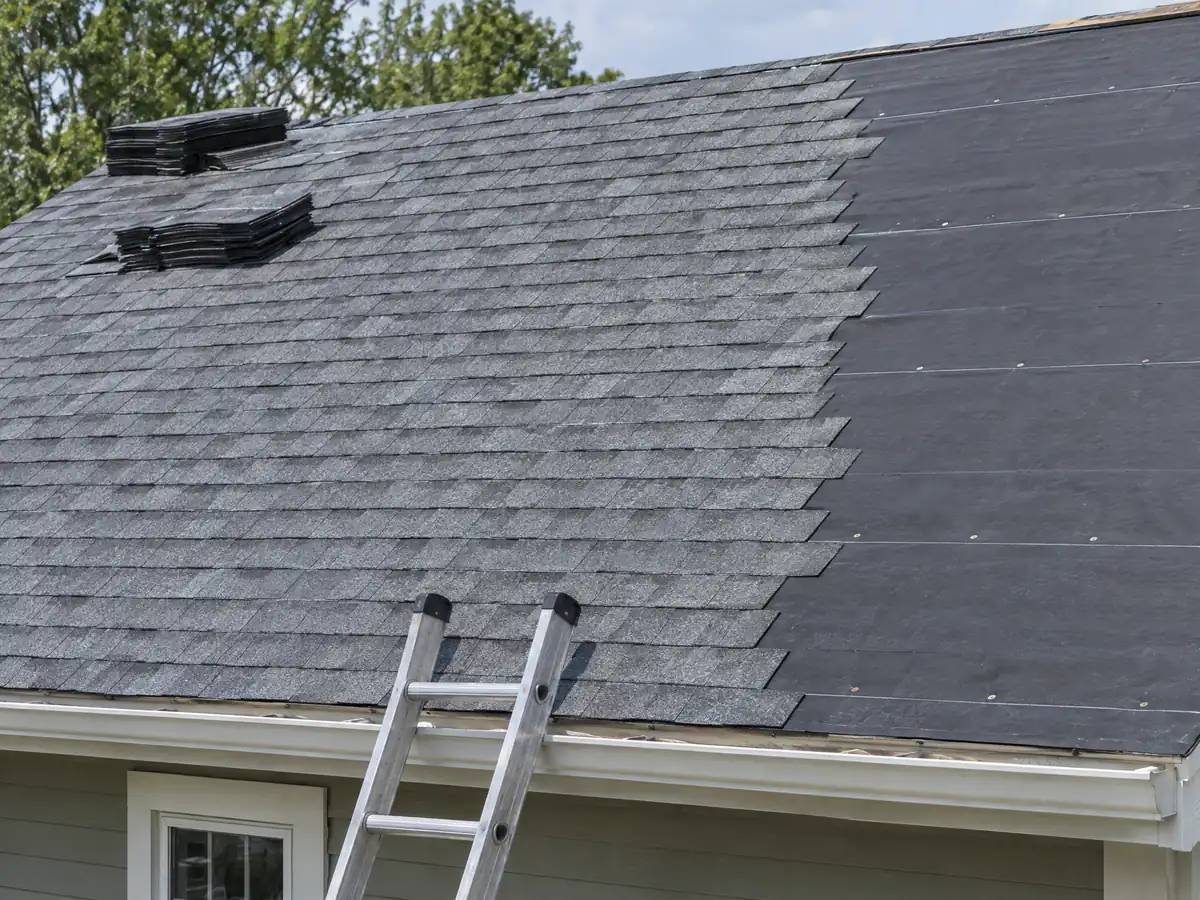
Does a roof replacement in Montclair need a permit, and when is the counter open?
Plan on yes. The City's Master User Fee Schedule, the 2022 update, has a Reroofing Fees section with separate lines for composition with no tear-off, composition with resheeting and other roofs, which shows re-roofs are permitted work. The dollar amounts did not extract from the PDF in readable columns, so we quote none. We found no exemption for roof repair on the City's pages, so a call to Building at (909) 625-9477 is the safe first step.
Most permits are issued in person. The counter takes walk-ins Monday through Thursday from 7:00 to 9:00 a.m. and from 4:00 to 5:30 p.m., City Hall is closed every Friday, and the City's FAQ describes no general online portal. The permit can be pulled by a licensed contractor, the owner or an agent of either, and a workers' compensation certificate must be on file first under Business and Professions Code 7031.5. An owner who pulls it signs the City's Property Owner's Package, which warns of liability for injuries to unlicensed workers.
Inspections run through the hotline at (909) 625-9448. A request made before 5:00 p.m. is scheduled for the next business day, so a Thursday call lands on Monday. Under the amended code the permit lapses if work does not start within 180 days or stops for 180 days, and work done without a permit draws an investigation fee on top of the permit fee.
Book the roofer only after you hold the permit number.
What do Montclair's re-roof handout, debris plan and work hours require?
Start with Planning. The City's asphalt shingle handout says Planning must approve every roofing material before the building permit is issued. Its other points: shingles go over solid sheathing, no more than two total layers of asphalt shingles are allowed, and nails are corrosion-resistant 12-gauge, usually four to a strip shingle.
The energy section asks for a cool roof when more than 50 percent of the roof, or more than 1,000 square feet of roofing, is replaced, with listed alternatives such as attic ventilation, R-30 ceiling insulation, a radiant barrier or sealed and tested ducts. It also wants a radiant barrier on new sheathing over conditioned space. The sheet cites the 2007 California Building Code. The Council adopted the 2025 California Building Standards Code by Ordinance No. 25-1016, effective January 14, 2026, so ask the counter which energy provisions govern your roof today.
A tear-off also brings paperwork. Every building permit application needs a Construction Waste Management Plan showing at least 65 percent diversion under CalGreen 4.408, and the City's form says hauling goes through its franchise hauler, Burrtec Waste Industries, unless a residential owner self-hauls to a recycling or disposal facility. No permit issues without an approved plan. Work may not start before 7:00 a.m. or run past 8:00 p.m.
Get Planning's written yes on the material before the order is placed.
Does Montclair have its own fire department, and is my roof in a fire hazard zone?
It does. The Monte Vista Fire Protection District served the area until the City assumed the operation on January 1, 1967, and in October 1999 the Council voted to keep its own department after collecting bids from four neighboring agencies. Two stations on Monte Vista Avenue each carry a three-person paramedic engine, per the 2025 General Plan. There is no San Bernardino County Fire step for a Montclair roof, and the Fire Prevention Bureau, managed by the Building Official, reviews sprinklers, alarms and engineered systems.
On the zone question, the CAL FIRE layer we queried for local responsibility areas, labelled 2011, shows no fire hazard severity zone inside the city boundary. Its Very High polygons begin at about 34.097 N, just north of the line. That is an old layer and not a new State recommendation, so check your parcel on CAL FIRE's current map before ordering material. We found no Montclair roof class requirement, and MMC 10.28.030 names reroofing as exempt from the City's local sprinkler trigger.
Ask Fire Prevention in writing whether any roof class applies on your street.
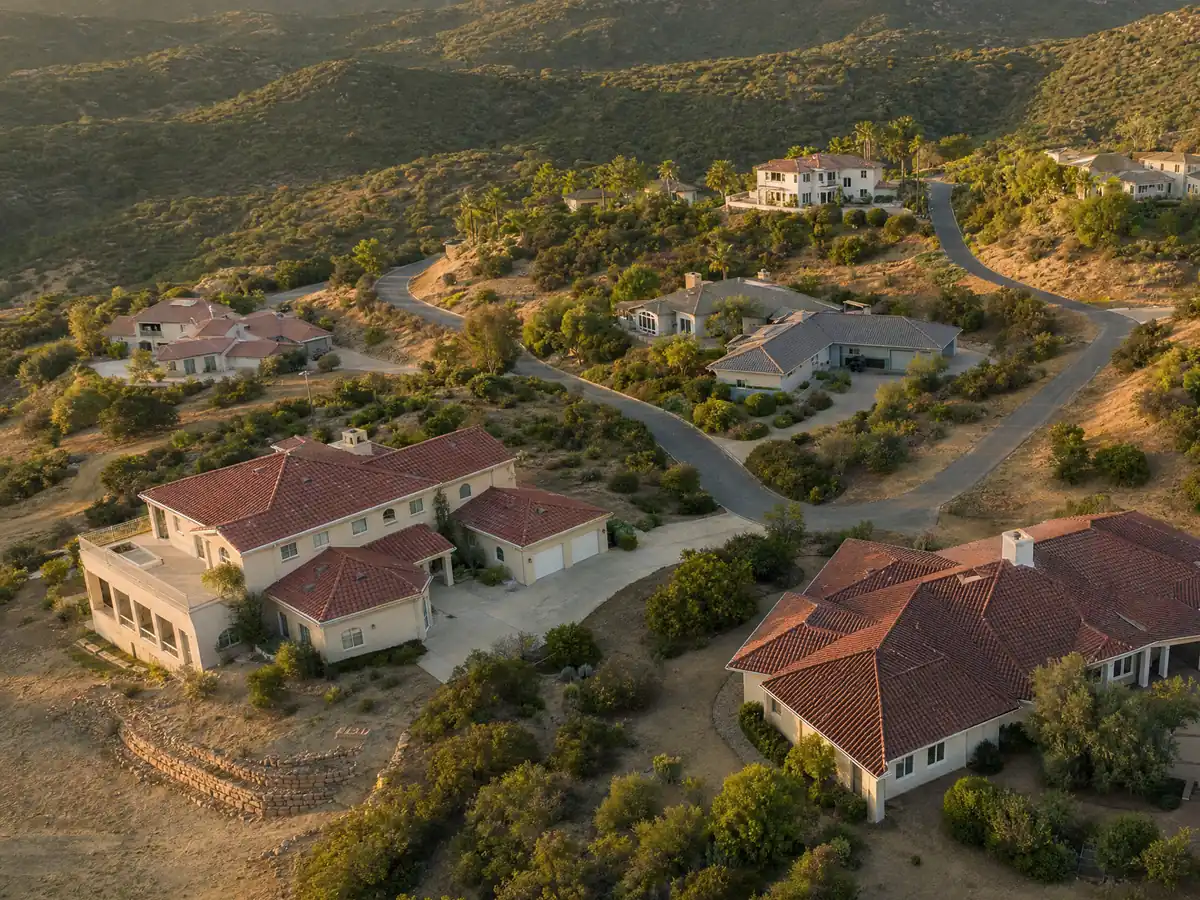
Can solar panels stay on during a Montclair re-roof, and what does the City ask for?
Panels normally come off and go back on. Angi's Los Angeles guide, updated July 31, 2026, puts removal and reinstall at $500 to $1,000. The City's solar bulletin for systems of 10 kW or less names a Residential Solar System Permit plus an electrical permit when a panel is added, upgraded or moved, with Planning and Fire review routed through the Building Division and a roof plan that shows access pathways. The bulletin points at a retired web address and the City's current Solar Permits page is a portal link that did not load as text, so confirm today's steps.
Expedited review is written for roof-mounted systems of 10 kW AC or less on one- or two-family homes, connected to the utility without batteries, on a single-phase panel of 225 amps or less. The Fire Code amendment at MMC 10.28.044 also recognizes listed building-integrated photovoltaic roofing that does not expose firefighters to shock. We found no rule written for the detach and reset step itself, so ask whether the re-roof and the solar work need separate permits.
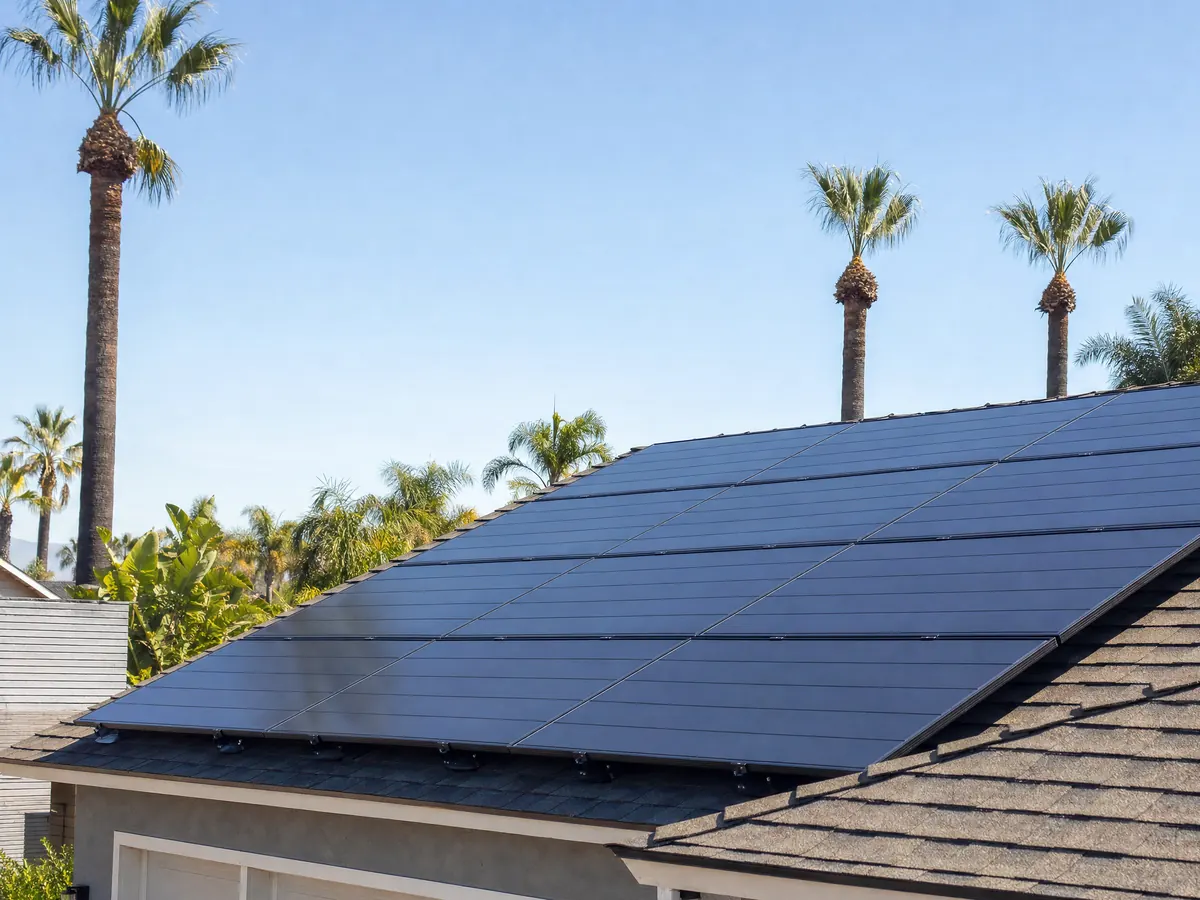
What do 14 inches of rain and 70 days over 90 degrees do to a Montclair roof?
NOAA's 1991 to 2020 normals for Pomona/Fairplex, the closest station at about 3.9 miles west of the city center, record 14.47 inches of rain a year, with the annual value flagged partial because it rests on 11 years. December through March brings 11.47 inches, July 0.00 and August 0.03. Highs average 92.4 F in August, with 70.5 days a year at or above 90 F, 10.7 at or above 100 F and 2.7 with lows at or below 32 F. Ontario International, 5.7 miles away, runs hotter and drier at 11.64 inches and 93.2 days at or above 90 F.
The City's design criteria call for wind of 96 mph in Exposure B, rainfall of 2 inches per hour and Seismic Design Category D, E or F, with no snow load listed. Those numbers show up at the details: valleys, drip edges and gutters take the short heavy winter storms, while the long dry months bake underlayment and sealants. Summer is the easy season for tear-off, but ask the roofer for a same-day dry-in plan anyway.
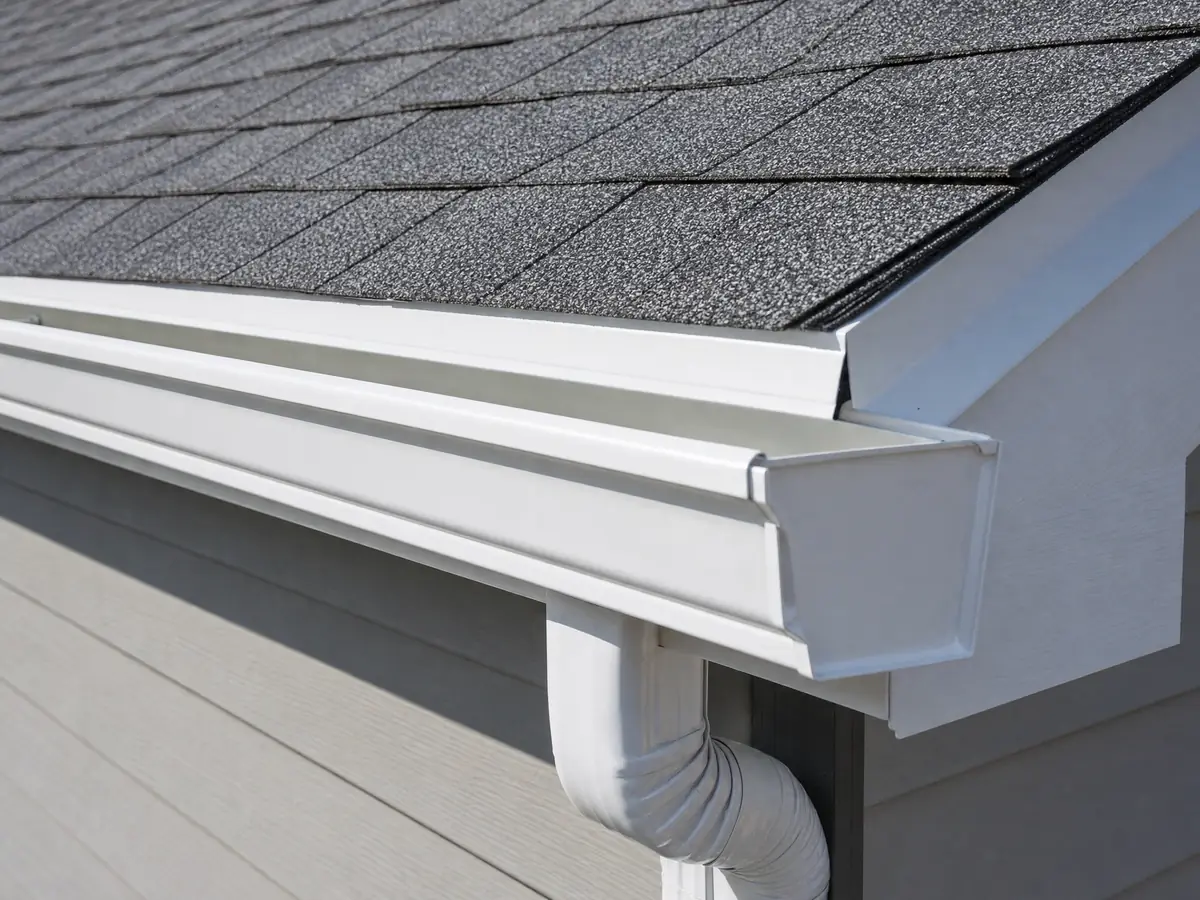
How much does a new roof cost near Montclair, and what should the contract say?
We found no Montclair price survey, so the figures come from Los Angeles. Angi's Los Angeles guide shows a typical $10,256 to $24,963, an average of $17,271 and $8.60 a square foot, with asphalt at $4 to $12, tile at $7 to $15, metal at $7 to $16 and tear-off at $1,000 to $3,000. Remodeling magazine's Cost vs. Value 2025 report prices a reference Los Angeles asphalt job at $36,417 with 73.6 percent recouped at resale, and a metal job at $62,069 with 48.7 percent, without printing the roof size. Our planning ranges are about $10,000 to $25,000 for asphalt, $15,000 to $37,000 for tile and $20,000 and up for metal, with deck repair and a solar reset extra.
Roofing is CSLB class C-39. Business and Professions Code 7159 requires a signed written contract before work starts, caps the down payment at $1,000 or 10 percent of the price, whichever is less, and ties progress payments to finished work. Before a crew arrives, get the roofer's license number and proof of insurance and look the number up on the CSLB site. Our license guide shows how, and how general contractors use subcontractors explains who answers for what on site.
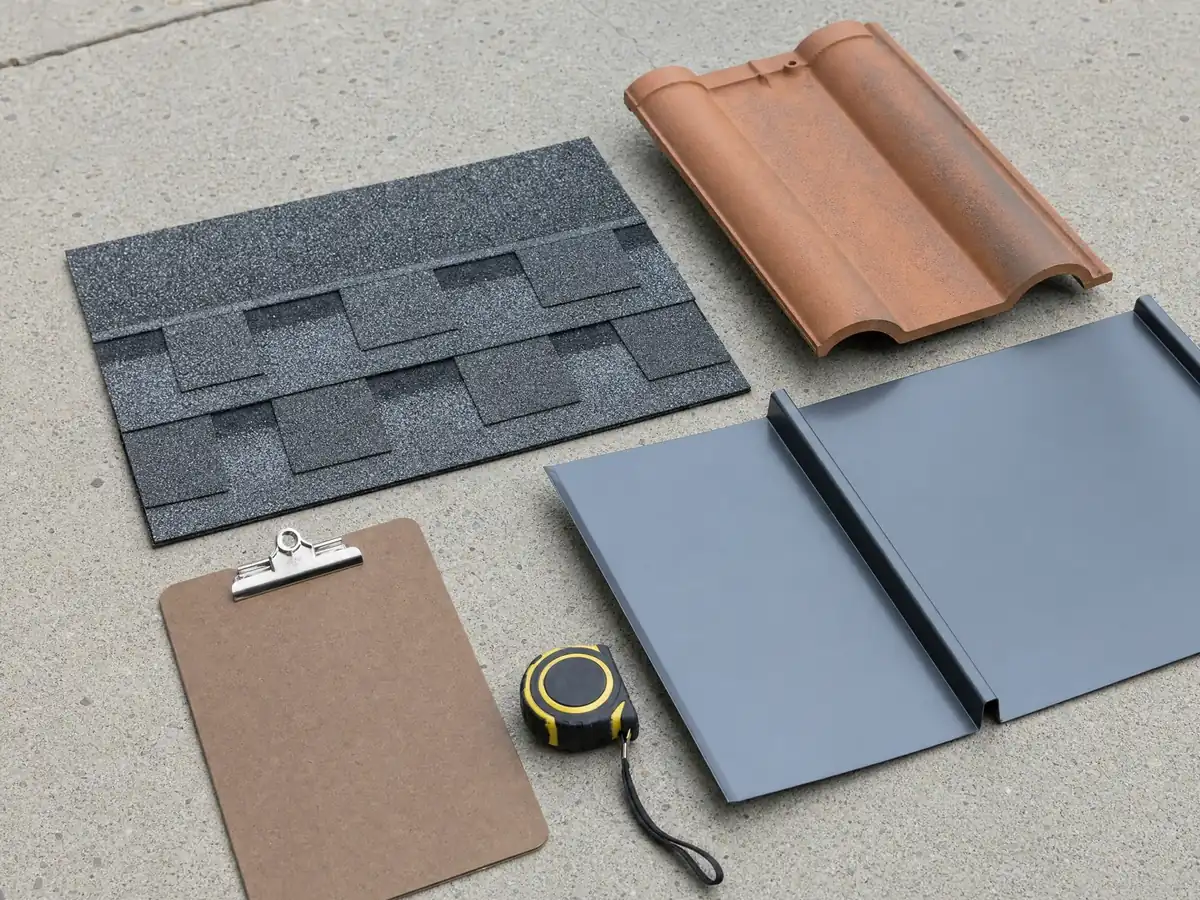
Roofing photos from Montclair and nearby communities
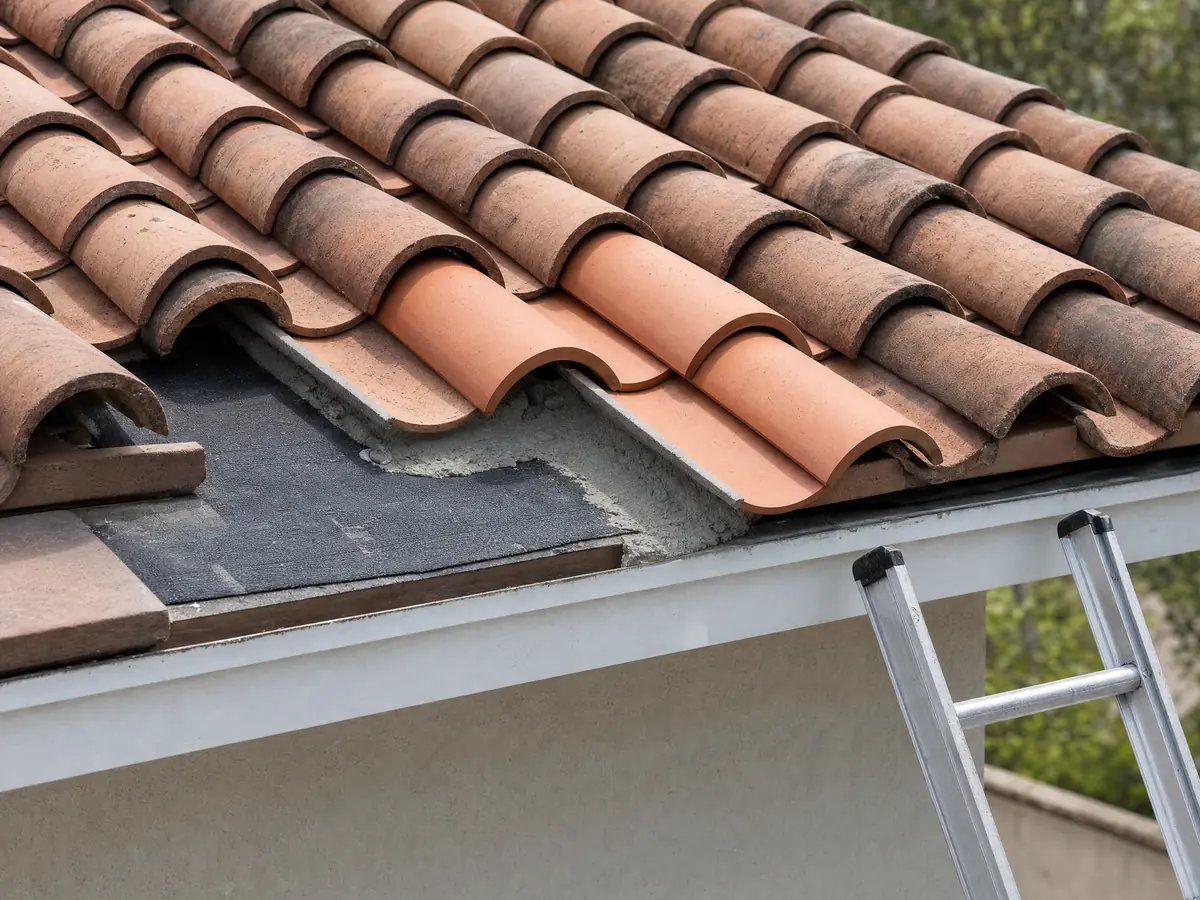
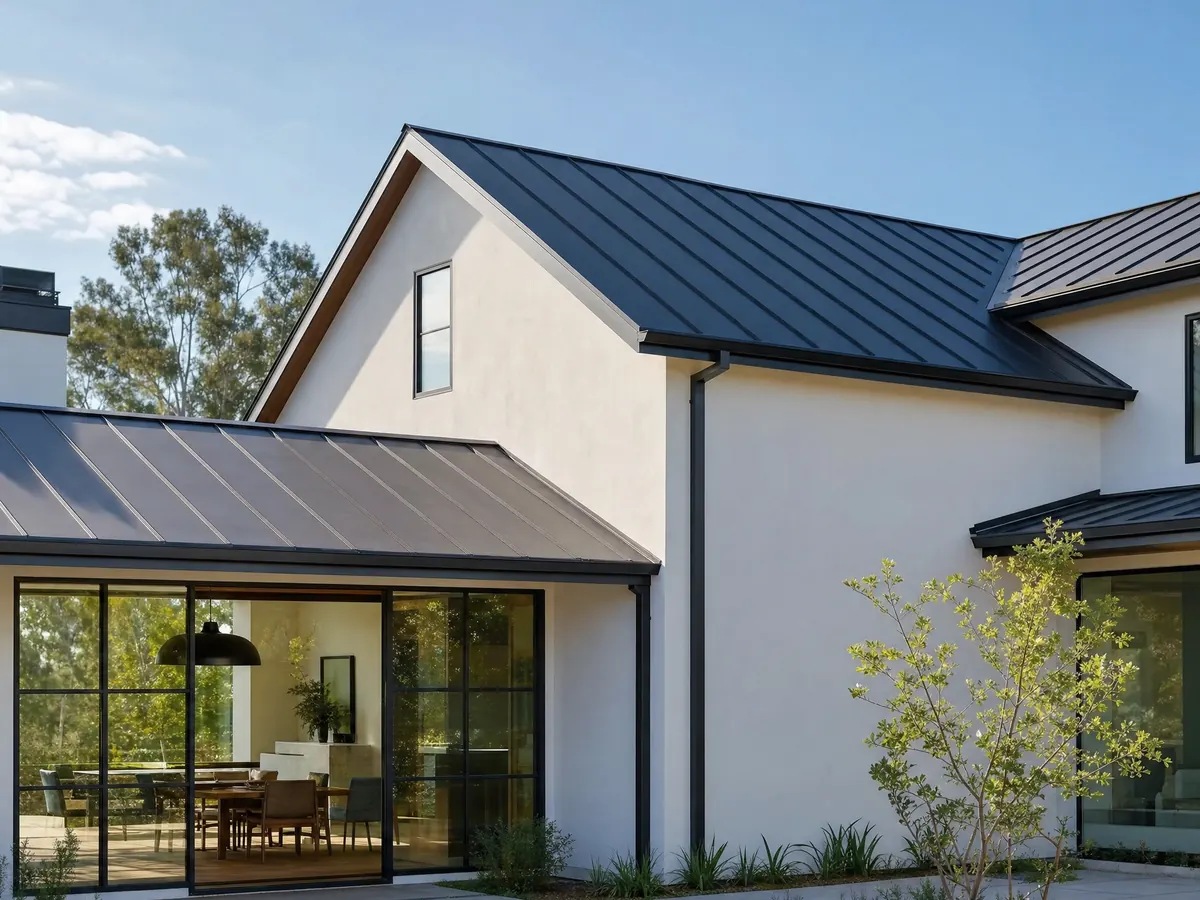
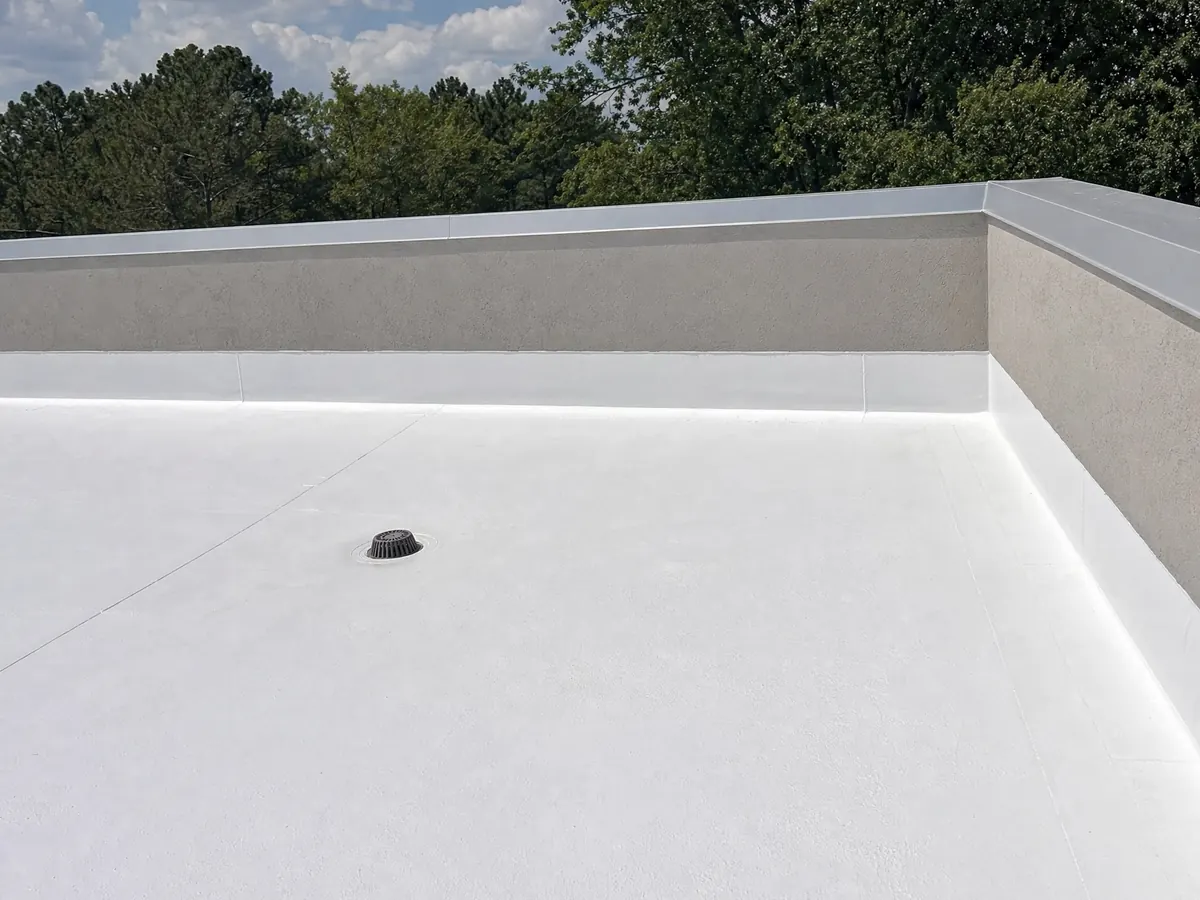
Roofing scenes tied to Montclair places such as Montclair Place, the Holt Boulevard corridor, the Civic Center area and the postwar tracts, and to nearby communities such as Upland, Ontario, Claremont and Pomona, from tear-offs and underlayment to flashing and finished roofs.
Where these Montclair roof figures come from
The roofing price table, with every source and its date, lives on the roofing page, and the California roofing cost guide shows why one survey's average and another study's fixed reference roof land so far apart. Montclair's rules for the other exterior jobs are on the fencing page, the painting page and the kitchen remodeling page. To compare a Los Angeles County rulebook with this one, read the roofing guide for Pasadena.
| What it covers | Typical range |
|---|---|
| Asphalt shingle, typical single-family roof | $10,000 to $25,000 |
| Concrete or clay tile | $7 to $15 per sq ft |
| Metal | $7 to $16 per sq ft |
| Remodeling Cost vs. Value 2025, Los Angeles | Asphalt $36,417. metal $62,069. |
| Extras | Tear-off $1,000 to $3,000. solar detach and reset $500 to $1,000. |
Montclair roofing questions, answered
Do I need a permit to replace my roof in Montclair, California?
Plan on yes. The City's 2022 fee schedule lists separate reroofing lines, which shows re-roofs are permitted work, and Planning approves the material first. We found no roof repair exemption, so call Building at (909) 625-9477 before work starts. The counter takes walk-ins Monday to Thursday, 7 to 9 a.m. and 4 to 5:30 p.m.
How many layers of roofing are allowed in California, and what does Montclair say?
Montclair's re-roof handout allows no more than two total layers of asphalt shingles, installed over solid sheathing. The handout cites the 2007 building code, so confirm that limit with the counter against the 2025 code adopted January 14, 2026. A tear-off to bare deck also lets the roofer see the sheathing before new underlayment goes down.
What is the 25 percent rule for roof repairs in Montclair?
We found no 25 percent roofing rule in the Montclair chapters or handouts we read. The only roofing percentage the City prints is the cool roof trigger, more than 50 percent of the roof or more than 1,000 square feet replaced. Ask Building whether any repair threshold applies, and have the roofer list the share of each slope being replaced.
What is a cool roof in California, and does a Montclair re-roof need one?
A cool roof reflects more sunlight and stays cooler than a standard one. The City's re-roof handout asks for one when more than 50 percent of the roof, or more than 1,000 square feet, is replaced, unless a listed alternative such as attic ventilation or ceiling insulation is used. The handout is old, so confirm the 2025 energy rules with the counter.
Does Montclair have its own fire department?
Yes. The City assumed the old Monte Vista Fire Protection District on January 1, 1967, and the Council voted in October 1999 to keep its own department, which runs two stations on Monte Vista Avenue. Montclair projects do not go through San Bernardino County Fire. Fire Prevention reviews sprinklers and engineered systems, and weed abatement is also the department's job.
Is my Montclair roof in a fire hazard zone in southern California?
Probably not, but check your parcel. The 2011 CAL FIRE local responsibility layer we queried shows no fire hazard severity zone inside the city boundary, with its Very High polygons just to the north. That layer is old, so confirm on CAL FIRE's current map before ordering material, and ask Fire Prevention if any roof class applies.
Should I repair or replace my roof in Montclair?
Repair when the damage is local and the rest of the covering is sound, and replace when leaks, curling or exposed deck spread across several slopes. Houses here are old, with a median build year of 1969, so ask the roofer to inspect the deck and show photos. A repair quote should state the square footage touched.
Should I stay home during roof replacement in Montclair?
Usually yes, though the days are loud. Work may not start before 7:00 a.m. or run past 8:00 p.m. under the City's inspection procedures. Ask the roofer about daily dry-in, where the dump trailer will sit, and whether the crew will bring a portable toilet, which the City says must stay on the site and out of the public right-of-way.
How do I check a roofing contractor's license in California?
Look up the license number on the Contractors State License Board site and confirm class C-39 roofing, an active status and a bond. A written contract is required, and the down payment is capped at $1,000 or 10 percent, whichever is less. The City also does not keep a recommended contractor list, so the CSLB check is yours to run.
Ask for a roofing estimate in Montclair
Tell us which part of Montclair you are in, roughly when the house was built and whether the roof is shingle, tile or flat. We confirm the Planning and Building steps before we call you back, so you know which counter window to plan around.