
Fence Companyin Upland, CA
A fence in Upland can be exempt from a building permit and still break the rules. Wood fences up to 6 feet and block walls up to 2 feet are exempt, yet zoning caps any front or street-side fence at 3.5 feet and bans chain link in residential zones. Taller block walls and retaining walls over 3 feet need permits.
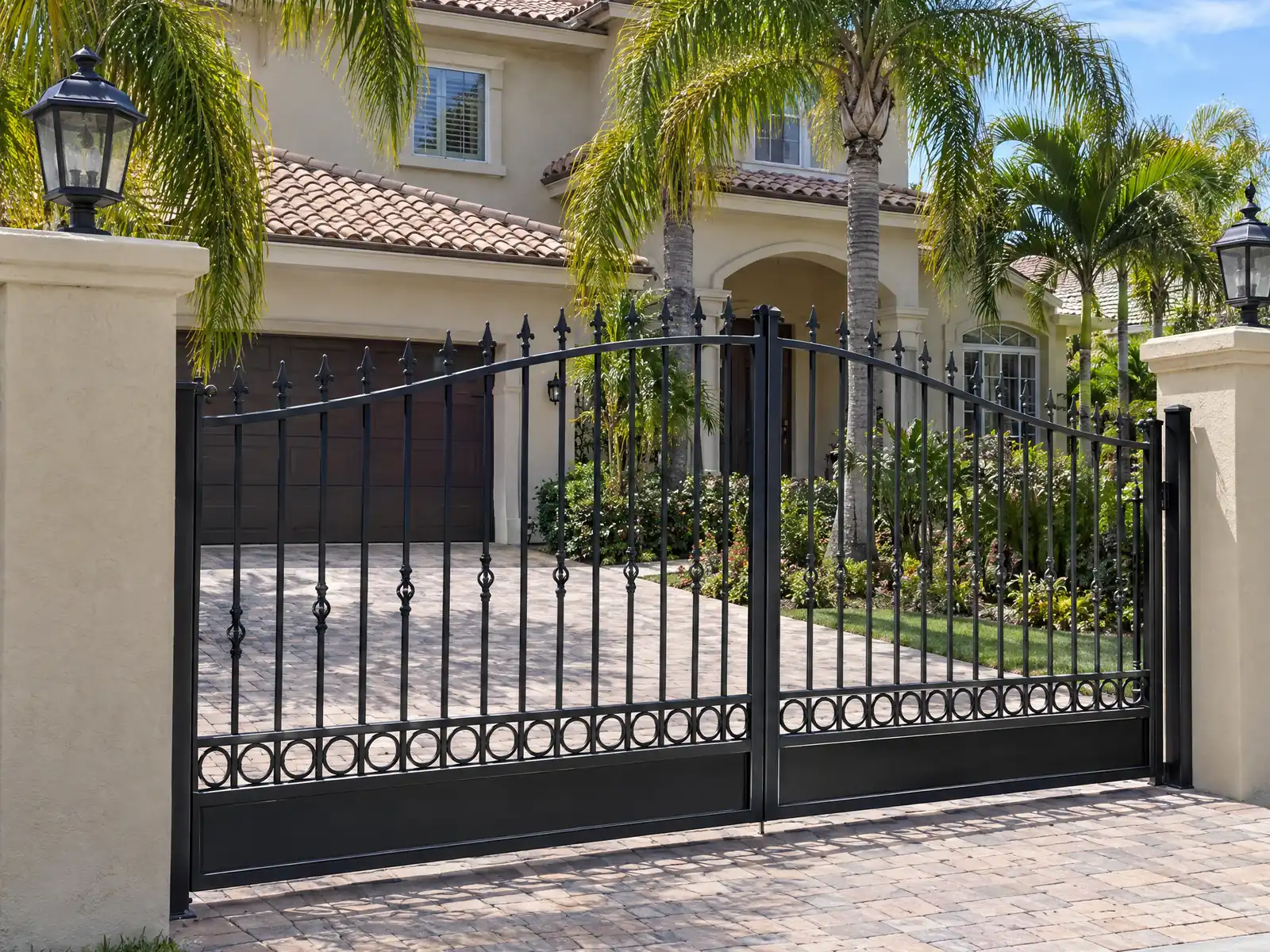
Upland's fence lines follow a grid drawn in citrus days. Chaffey's Euclid Avenue was laid out 200 feet wide in 1882, the Ontario Land and Improvement Company renamed the northern colony the Town of Magnolia in 1887, and the Santa Fe railroad reached it the same year with packing houses lining A Street. Wikipedia says growers began selling to developers after the mid-1940s and the San Bernardino Freeway of 1954 turned a citrus district into suburbs. ACS 2024 counts 28,366 housing units, 54.5 percent of them single-family detached and 11.9 percent attached, with a median year built of 1978, so one fence code covers lots from the 1890s to the 1980s.
On a fence job, MDG Builders (CSLB #1040337) reads the zoning limits for your yard before pricing it, files whatever Upland requires and keeps the crews in order, with a licensed C-13 fencing subcontractor setting the posts and a masonry-licensed subcontractor handling any block. The fencing page lists our sourced prices and the Upland overview covers every trade we manage here. The guides for Ontario and Rancho Cucamonga show how two San Bernardino County neighbors set fence limits. Walls and fences meet the City's Planning Division and its Building and Safety Division. The Municipal Code host, ecode360, answered with an HTTP 403 error, so the code text below was read in GoCodebook, a third-party mirror stamped October 4, 2026, and each section should be confirmed with the City.
What Upland's exemption list, zoning chapter 17.13 and historic code say about fences
Where fencing permits come from in Upland: City of Upland Development Services Department, Building and Safety Division.
- Height limits (RMC 17.13.040, Table 17.13-1): in every zone except industrial a fence or wall may be no more than 3.5 feet high inside the front and street-side setback area (the minimum required setback or up to the main building) and 6 feet in the rear or interior side setback and elsewhere on the parcel (industrial zones 3.5 and 8 feet); in residential zones an extra 2 feet is allowed only for ornamental features that do not screen (an archway over a gate, ornamental figures), and decorative arches and entry features in the front or street-side setback may reach 8 feet. Height is measured from the adjacent finished grade at the base, from the higher side if grades differ, and from the base of the wall if a fence sits on a wall. (read in GoCodebook's third-party code mirror, text as of 2026-10-04)
- Materials (RMC 17.13.060): fences and walls must be decorative masonry, ornamental steel or iron, or wood that complements the home's architecture (other materials only if the Development Services Director finds them compatible); sheet metal, vehicles, tanks, garage doors, aluminum siding and corrugated tin are prohibited; and chain-link, barbed wire, razor wire and wire mesh fences are prohibited in all residential zones and in areas visible from a public or private street. (read in GoCodebook's third-party code mirror, text as of 2026-10-04)
- Permit exemption (City FAQ and RMC 15.04.050): the Building and Safety FAQ says permits are not required for fences 6 feet or less or for block walls 2 feet or less, which matches the exemption list ('wood and chain link or similar type of fencing not over 6' and block walls or similar type not over 2'). Because the zoning chapter bans chain-link in residential zones and caps front and street-side fences at 3.5 feet, a fence can be permit-exempt and still not comply with zoning; a block wall over 2 feet is not on the exemption list, and block wall construction is on the Land Development page's Waste Management Plan list. (read in GoCodebook's third-party code mirror, text as of 2026-10-04)
- Waste Management Plan for block walls: the Land Development page lists construction of block walls among the projects that require a WMP (along with pools, spas, remodels, additions and demolition).
- Retaining walls: RMC 15.04.050 exempts retaining walls not over 3 feet, measured from the bottom of the footing to the top of the wall, unless they support a surcharge; a retaining wall over 3 feet is not on the exemption list (no separate retaining-wall chapter or height cap was found). (read in GoCodebook's third-party code mirror, text as of 2026-10-04)
- Visibility and right-of-way: RMC 17.10.060.C requires a clear vision triangle at corner lots (25 feet along the front and side property lines from the intersection, connected diagonally) and a 10-foot vision triangle at alleys and driveways, with no structure, vehicle, object or landscaping over 3 feet inside it (trees pruned up 8 feet are allowed), and RMC 17.13.050 prohibits private fences and walls in the public right-of-way and any placement that creates a safety hazard or blocks emergency access. (read in GoCodebook's third-party code mirror, text as of 2026-10-04)
- Historic districts: 'replacing of fencing or other significant landscape features' is a minor alteration under the COA rules and the placement or removal of fences and walls counts as an alteration of a historic resource, so a fence change on a registered, surveyed or district-contributing home goes through Planning (the findings include compatible fencing and materials); the City's Planning line is (909) 931-4130. (read in GoCodebook's third-party code mirror, text as of 2026-10-04)
- Game court fences: RMC 17.04.040.A requires tennis courts and other game areas to sit in a side or rear yard, at least 5 feet from the property line, with a fence of at least 10 and at most 14 feet in wire or steel mesh that passes at least 90 percent of light; lights must be timer-controlled, used only between 6:00 a.m. and 10:00 p.m., and limited to eight fixtures no taller than 22 feet. (read in GoCodebook's third-party code mirror, text as of 2026-10-04)
Sources for these rules
Does a 6 foot fence need a permit in Upland, and can an exempt fence still be illegal?
Usually no building permit, but that is half the answer. Upland's own exemption list, RMC 15.04.050 as read in the mirror, covers wood and chain link or similar fencing not over 6 feet and block walls or similar not over 2 feet, and the Building and Safety FAQ repeats the fence item. The same section adds that an exemption never authorizes work that violates the technical codes or any other law.
Zoning is that other law. RMC Chapter 17.13 caps fences in front and street-side setbacks at 3.5 feet and bans chain link in residential zones, so the exemption list names a material the zoning code forbids. Read the permit list as a floor and the zoning chapter as the ceiling. The section's lead-in still cites the 2013 code, so for a tall pilaster or a fence on a slope, ask Building and Safety at (909) 931-4110.
Ask the proposal to state the permit status and the zoning height of every run.
How tall can a fence be in an Upland front yard, side yard or backyard?
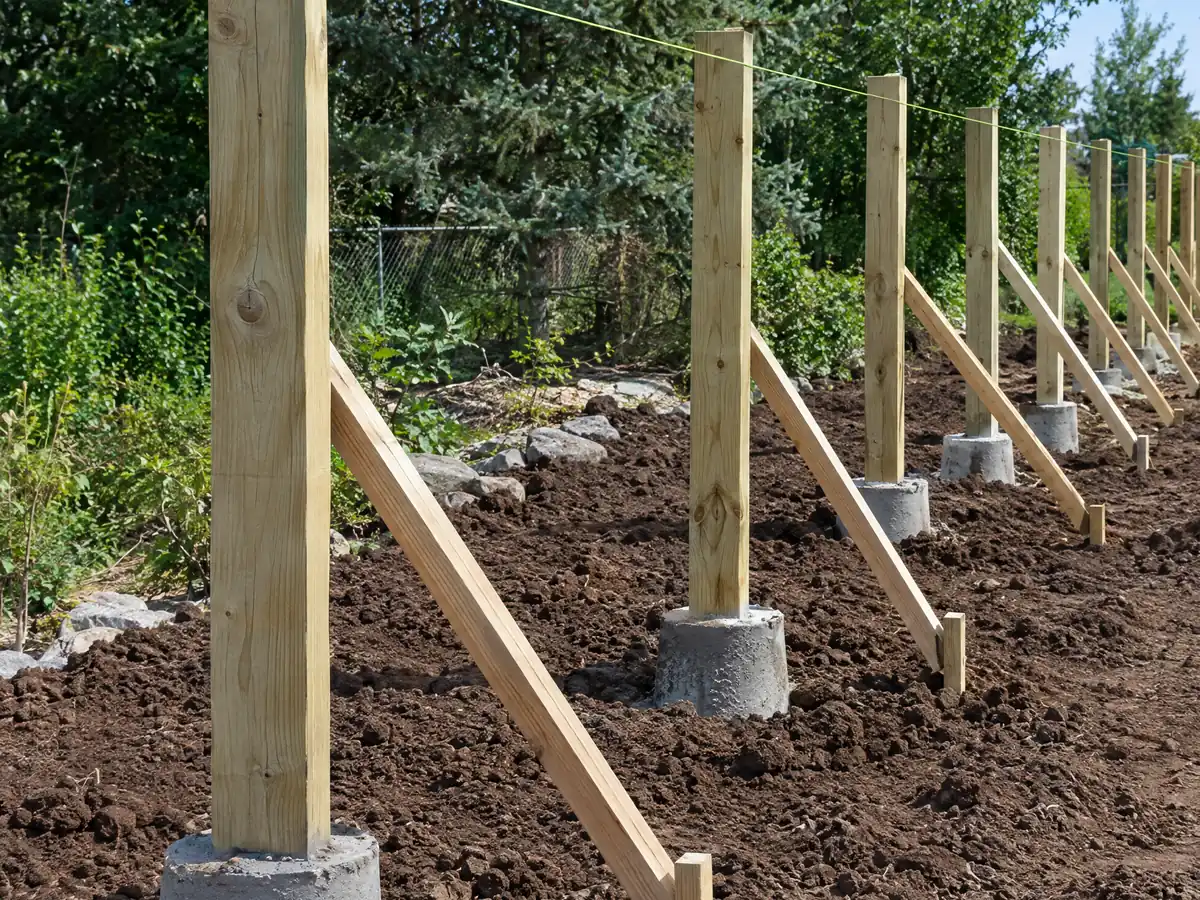
Table 17.13-1 allows 3.5 feet inside the front and street-side setback, meaning the minimum required setback or the line of the main building, and 6 feet in the rear, the interior side setback and elsewhere on the parcel. Industrial zones follow different numbers. A back-yard fence taller than 6 feet falls outside the table.
Two measuring rules matter. Height is taken from the finished grade at the base, from the higher side where grades differ, and from the base of the wall when a fence sits on a wall, so a 6 foot fence on a 2 foot block base measures 8 feet and exceeds the limit. In residential zones an extra 2 feet is allowed only for ornamental features that do not screen, such as an arch over a gate, and decorative arches and entry features in the front setback may reach 8 feet.
Have the proposal show the finished height of each run and the grade it was measured from.
Is chain link allowed in Upland, and which fence materials are?
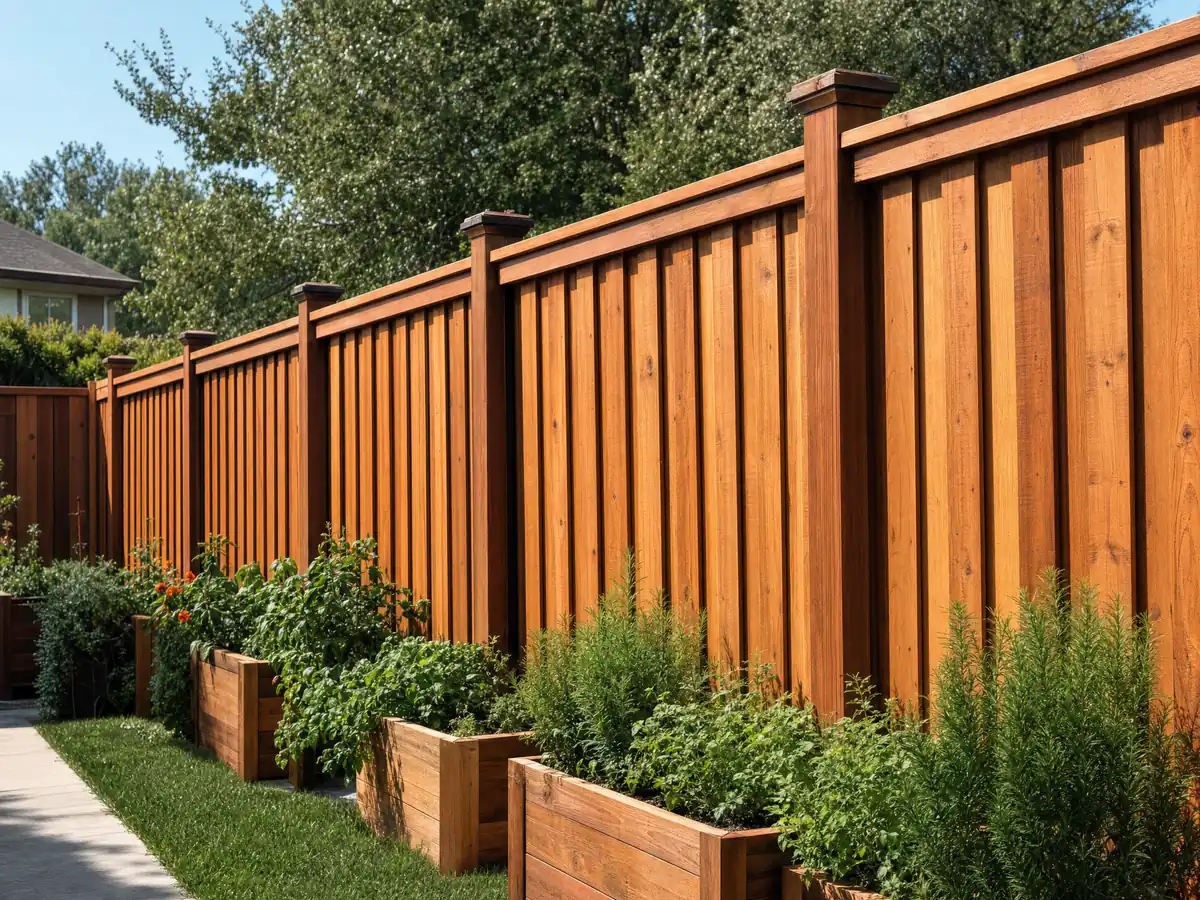
RMC 17.13.060 asks for decorative masonry, ornamental steel or iron, or wood that complements the home's architecture, and lets the Development Services Director accept another material found compatible. Sheet metal, vehicles, tanks, garage doors, aluminum siding and corrugated tin are prohibited. Chain link, barbed wire, razor wire and wire mesh are banned in every residential zone and anywhere visible from a public or private street.
That ban collides with the exemption list wherever a chain link fence already stands. We found no rule on rebuilding an existing fence of a banned type, so ask Planning at (909) 931-4130 before replacing one. Game courts are the exception in spirit: RMC 17.04.040.A requires the fence around a tennis or other game court to be 10 to 14 feet of wire or steel mesh passing at least 90 percent of light, in a side or rear yard and 5 feet from the line.
Does a new fence in an Upland historic district need a Certificate of Appropriateness?
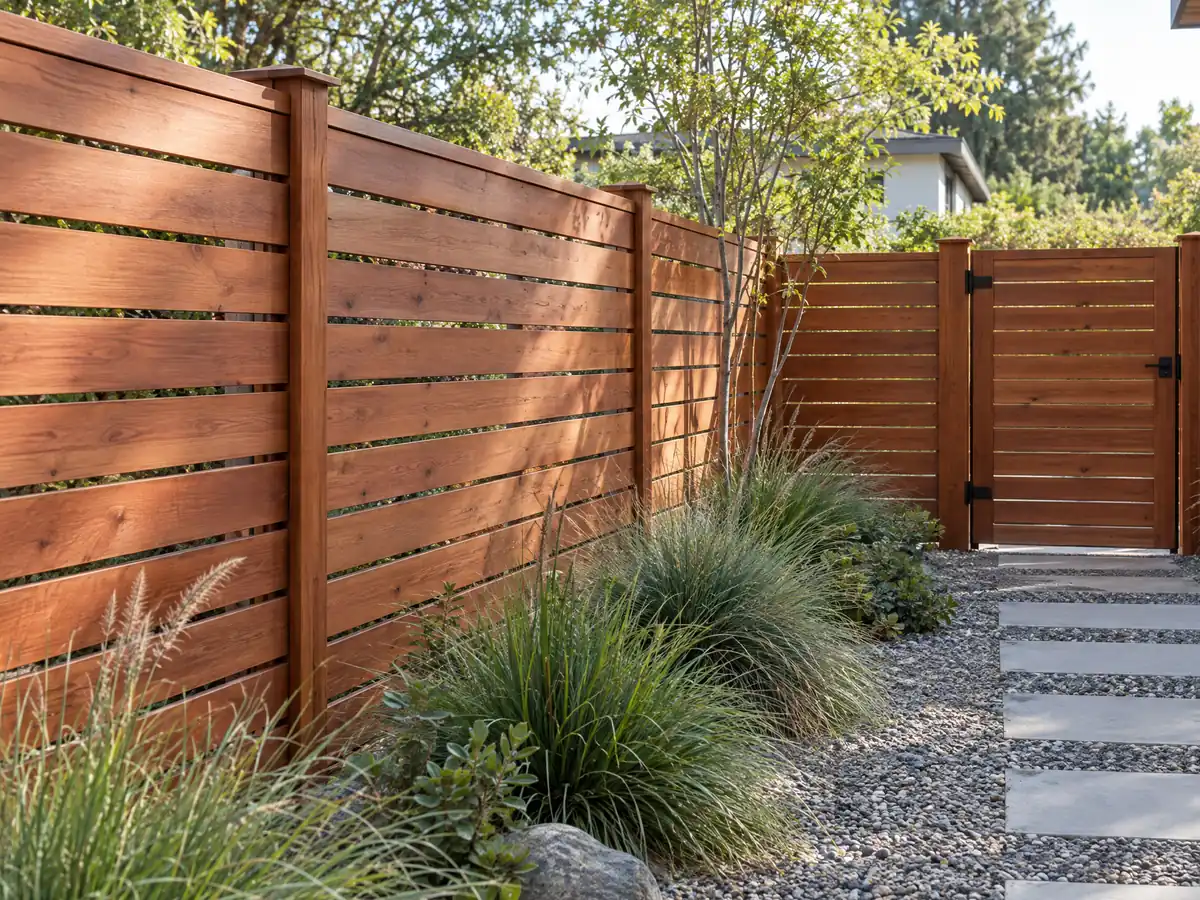
Yes when the home is registered, on the City's survey or contributing to one of nine districts. RMC 17.26.110 counts the placement or removal of fences and walls as an alteration, next to paint color, paving and tree cutting, and replacing fencing appears on the minor-alteration list that the Development Services Director can decide without a public hearing.
The findings ask for compatible fencing and materials under the Secretary of the Interior's Standards. The districts, designated between March 2003 and April 2004, are Arrow/Laurel Bungalow, Citrus and Transportation, Civic Center East, Euclid Avenue, Old Magnolia, Old Town, Pleasant View, Stowell and Victorian Row. Land within 250 feet of the Euclid Avenue centerline also sits in the Scenic Corridor overlay, where single-family homes follow RS-4 standards. Planning can say whether an address is designated.
Request the designation answer in writing before posts are ordered.
Where can an Upland fence go near corners, driveways, sidewalks and the street?
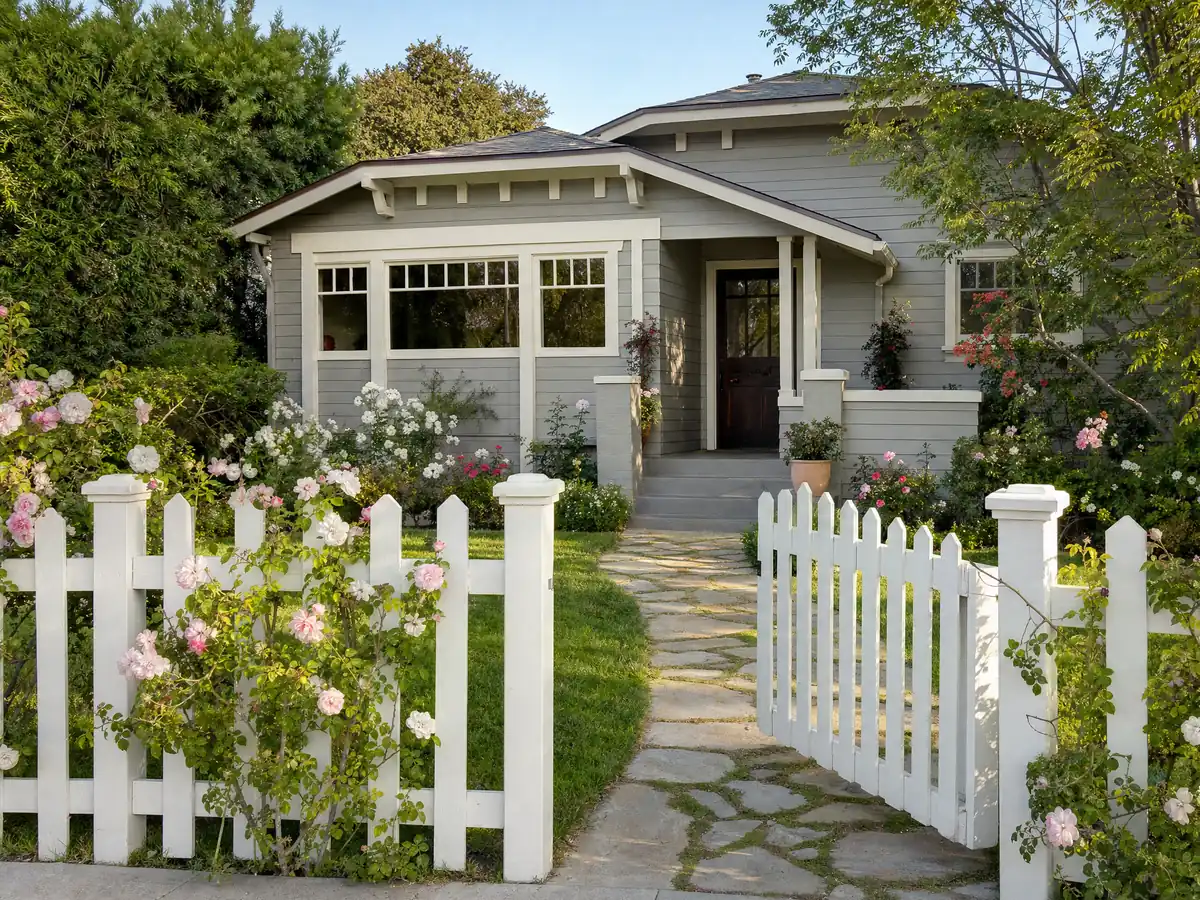
RMC 17.10.060.C requires a clear vision triangle of 25 feet along the front and side lines of a corner lot and a 10 foot triangle at alleys and driveways, with nothing over 3 feet inside it except trees pruned up to 8 feet. RMC 17.13.050 bars private fences and walls from the public right-of-way and any placement that creates a hazard or blocks emergency access.
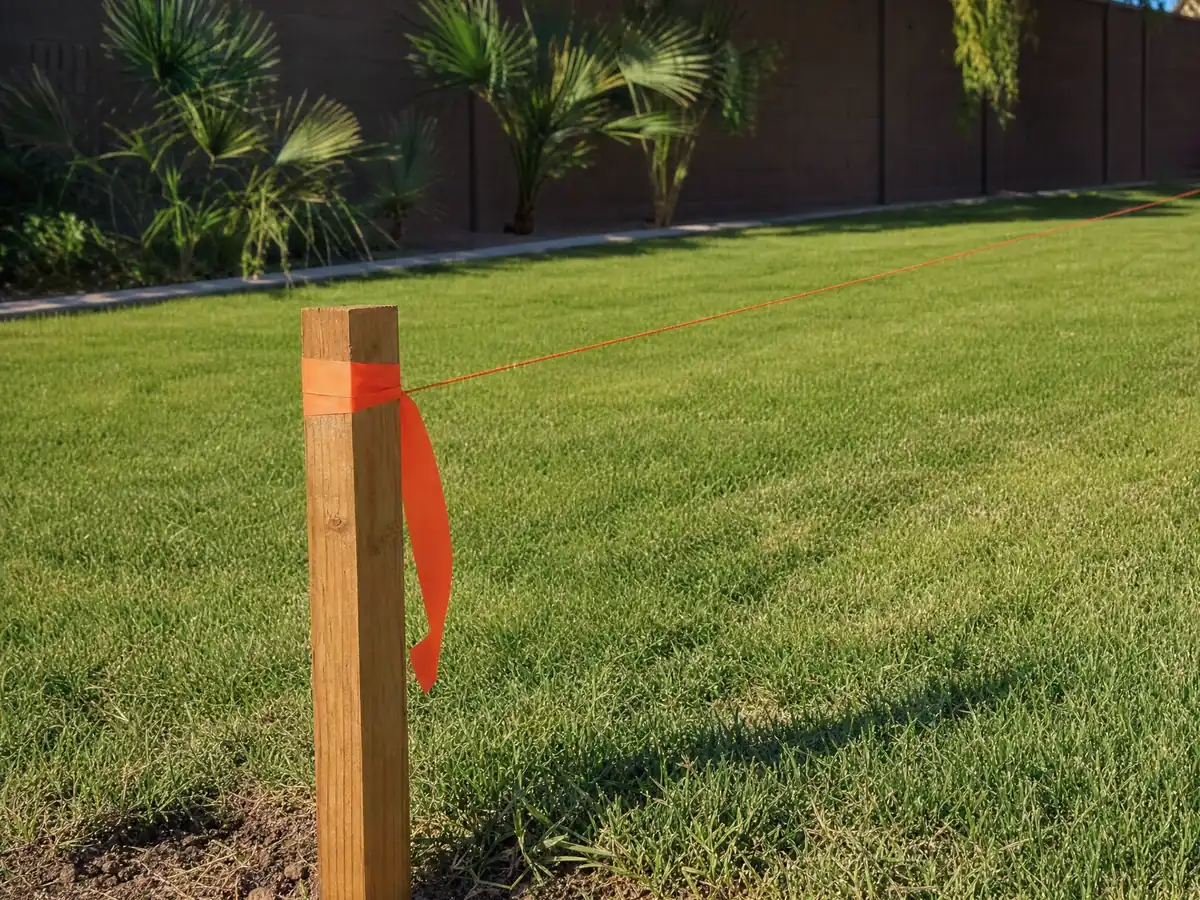
Work or objects in the right-of-way need an Encroachment and Construction Permit from Land Development, and Public Works inspects Monday through Friday, 7:00 a.m. to 3:30 p.m., a different calendar from Building and Safety's Monday through Thursday. A gate or driveway widening also meets the 40 percent cap, which allows no more than 40 percent of a front or side yard in driveway, walkway or hardscape. Survey pins settle the property line before anyone digs.
What changes when the wall is retaining, the lot slopes or there is a pool?
A retaining wall not over 3 feet, measured from the bottom of the footing to the top of the wall, is exempt unless it supports a surcharge. A taller one is not, and neither is a block wall over 2 feet, which also triggers a Waste Management Plan. We found no separate retaining wall chapter or height cap. Masonry walls are CSLB class C-29, since class C-13 fencing excludes masonry.
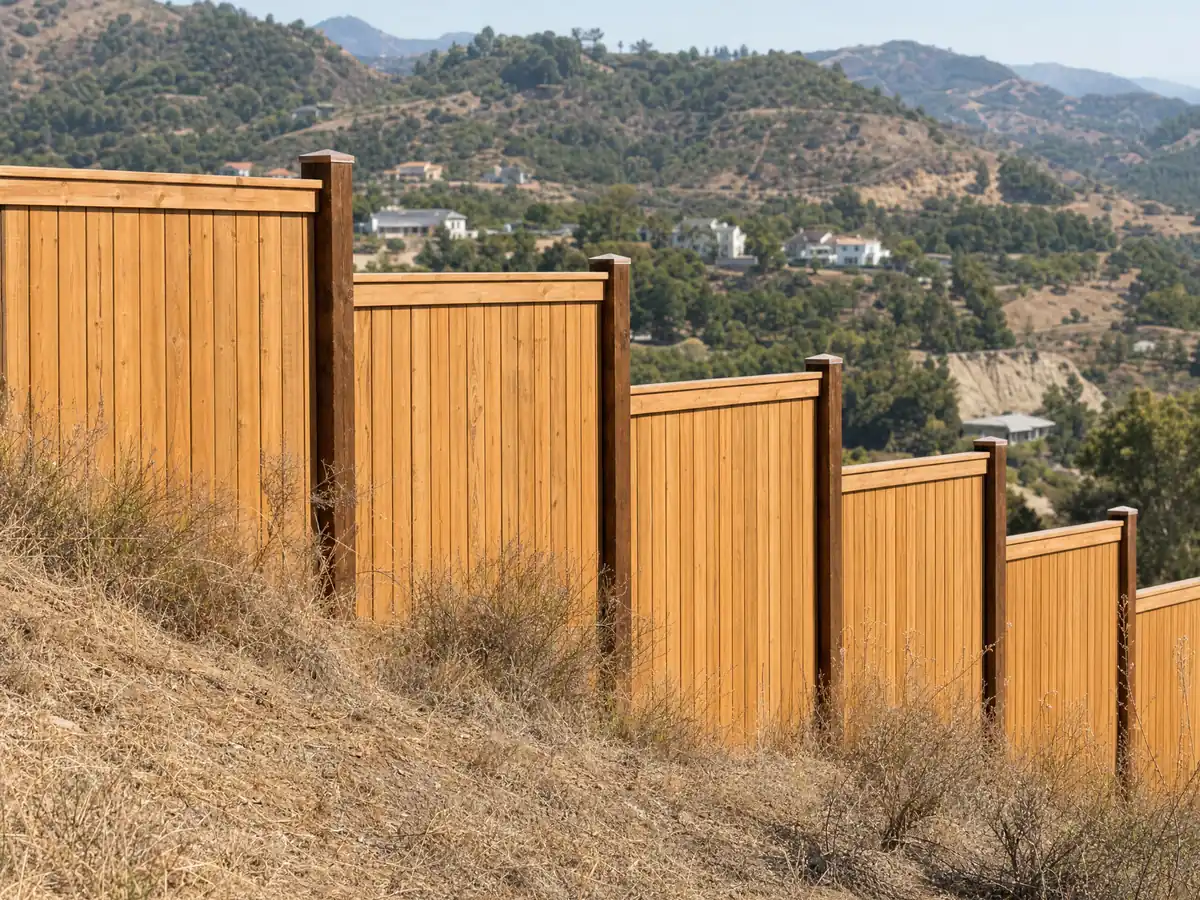
Upland climbs from about 1,175 feet at 7th Street to about 2,000 feet at 24th Street. Grading falls under RMC Chapter 15.52, run by the City Engineer, which exempts an excavation under 18 inches deep and at least 5 feet from a property line and a fill under 12 inches deep on natural terrain. We opened no hillside ordinance.
Pools and spas must sit at least 5 feet from side and rear lines and stay out of the front yard. The City adopted Appendix V, the Swimming Pool Safety Act appendix, of the 2022 Residential Code and lists a separate Pool Drain Permit. We did not read a barrier height or latch rule, so ask the counter for the current one.
How much does fence installation cost in Upland, and who should I hire?
No Upland survey turned up, so the figures below are Los Angeles ones. Angi's Los Angeles page, updated August 4, 2026, shows an average of $3,051 in a $1,734 to $4,422 range, $15 to $60 a foot, wood at $1,600 to $2,500 and vinyl at $1,850 to $3,400 for a typical job. Its national page lists gates at $150 to $2,000 and old fence removal at $3 to $5 a foot, and federal data put Los Angeles-area fence erectors at $28.00 an hour in May 2025. We plan on $25 to $55 a foot for wood or vinyl and $35 to $85 for aluminum or ornamental iron. Chain link, which a planning range would put at $12 to $30 a foot, is not an option on a residential street here. Block walls have no independent per-foot source, so none is printed.
California Civil Code 841 presumes that neighbors share the cost of a boundary fence equally and calls for 30 days' written notice before costs are incurred; read the statute before you order. Our license guide and how general contractors use subcontractors explain who builds what.
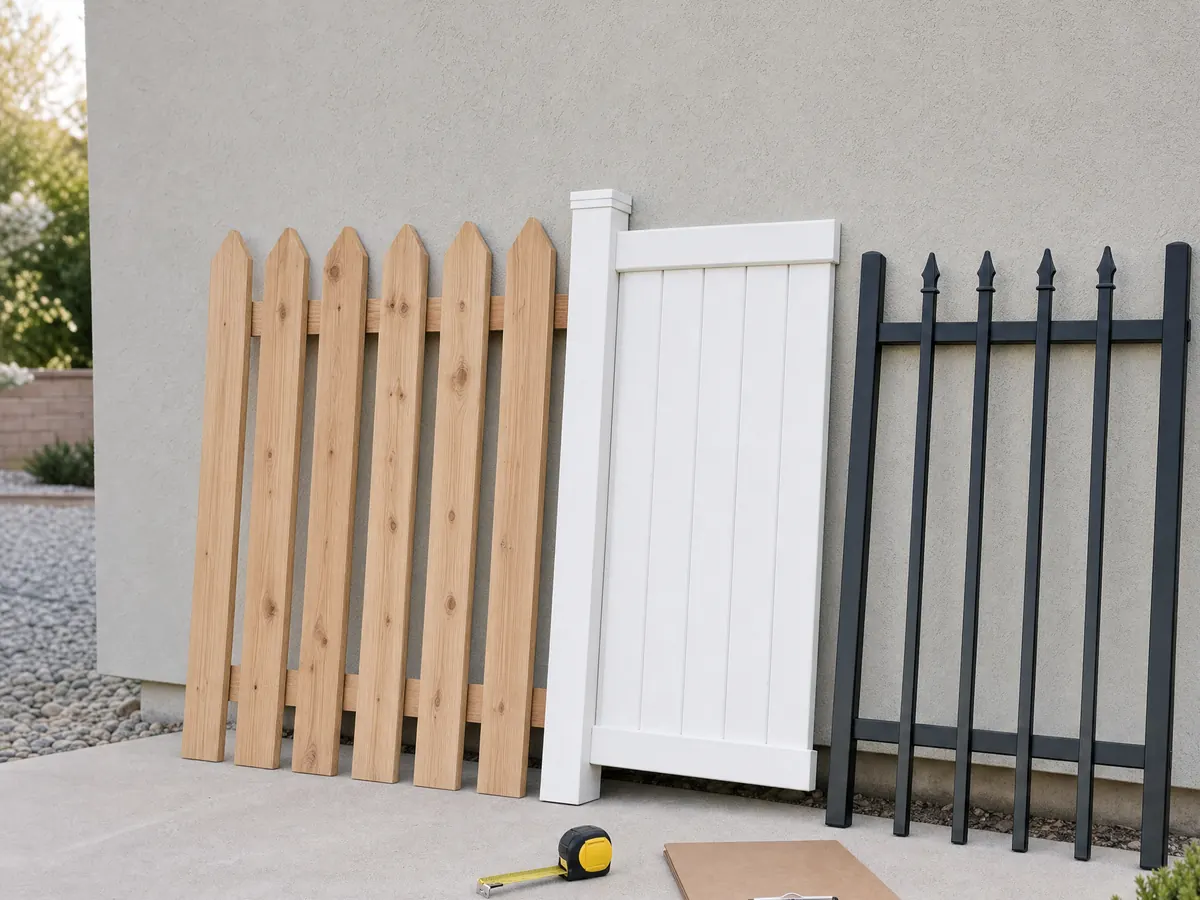
Fencing photos from Upland and nearby communities
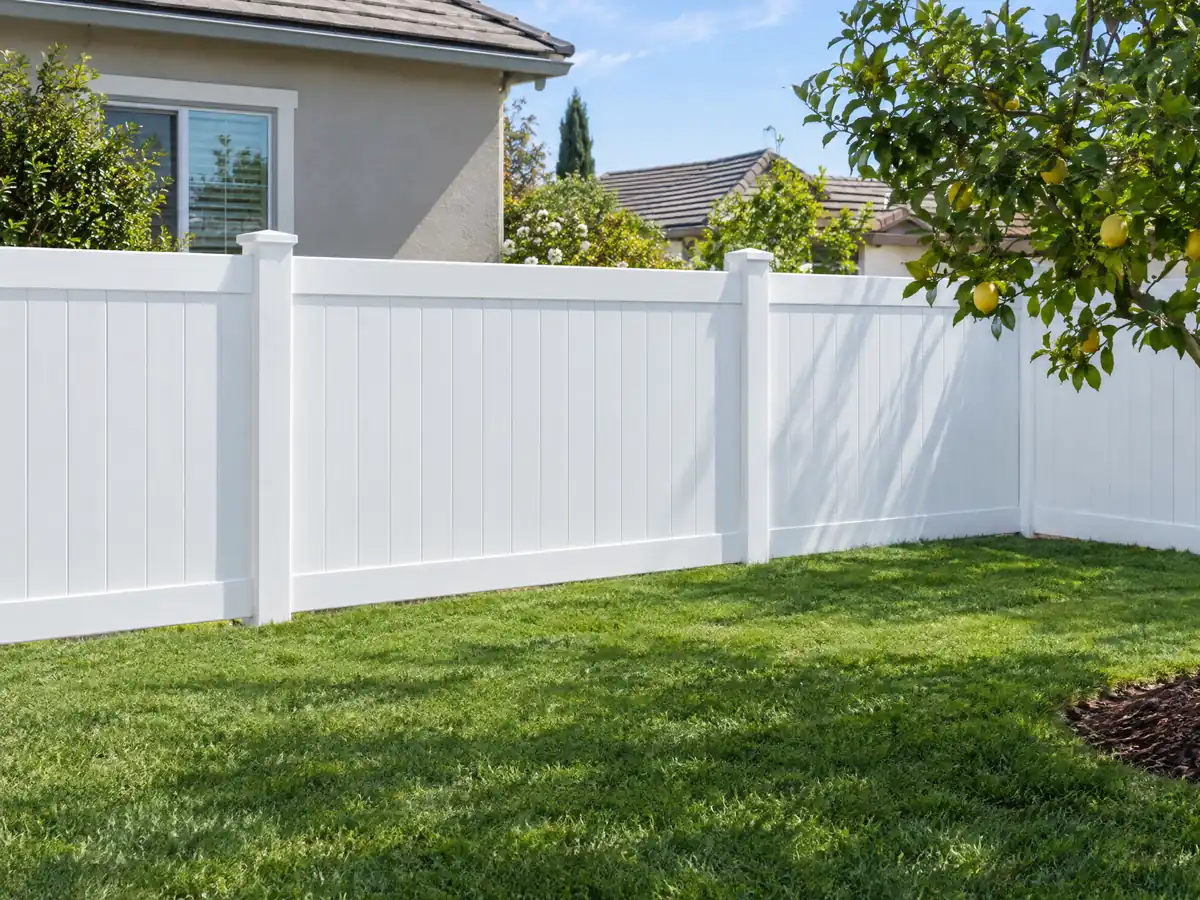
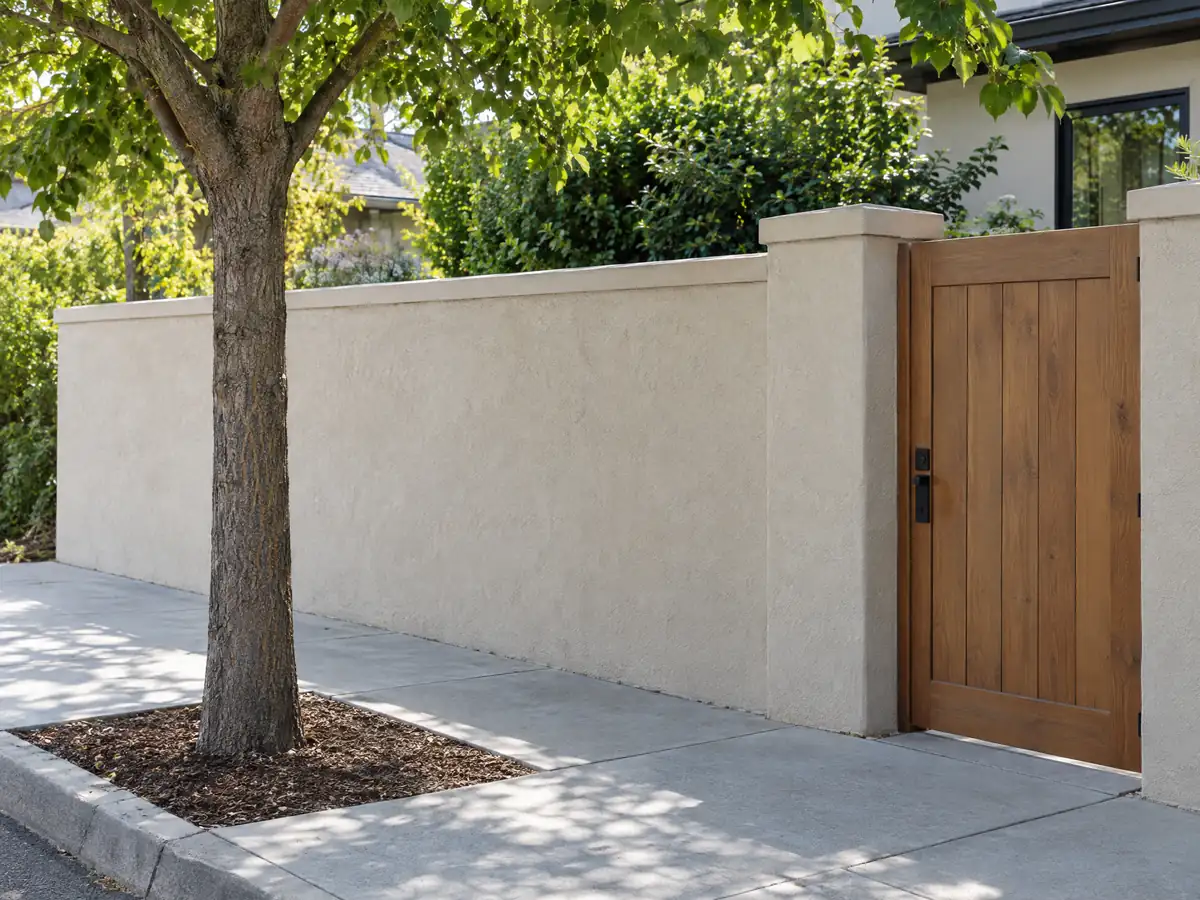
Fence scenes tied to Upland places such as Historic Downtown Upland, Euclid Avenue, The Colonies and College Park, and to nearby communities such as Montclair, Claremont, Ontario and Rancho Cucamonga, from wood privacy runs and block walls to gates and pool barriers.
Where these Upland fence figures come from
Prices for each fence material, with source and date, sit in the table on the fencing page, along with the figures that disagree. A new fence often comes alongside a roof or paint job, and Upland's rules for those are on the roofing page and the painting page. To compare a Los Angeles County city that sets fence height another way, read the guide for Glendale.
| What it covers | Typical range |
|---|---|
| Wood or vinyl privacy fence, 6 feet | $25 to $55 per linear foot |
| Chain-link | $12 to $30 per linear foot |
| Aluminum or ornamental iron | $35 to $85 per linear foot |
| Typical 100-foot backyard run | $2,500 to $5,500 total |
| Block walls, horizontal slat fences, gates and openers, hillside lots | Set by the written proposal |
Upland fencing questions, answered
Do I need a permit to build a fence in Upland?
Often not for the building permit, because Upland exempts wood fences up to 6 feet and block walls up to 2 feet. Zoning still applies, so a front or street-side fence is capped at 3.5 feet and chain link is banned in residential zones. Block walls over 2 feet and retaining walls over 3 feet do need permits.
How tall can my front fence be in Upland?
3.5 feet. Upland's zoning table caps any fence or wall inside the front and street-side setback at that height, measured from the finished grade at the base. Decorative arches and entry features in the front setback may reach 8 feet. We found no exception for a taller solid front fence, so ask Planning at (909) 931-4130 before designing one.
Can I have a chain link fence in Upland?
Not in a residential zone. RMC 17.13.060 bans chain link, barbed wire, razor wire and wire mesh in all residential zones and anywhere visible from a public or private street. The permit exemption list still mentions chain link up to 6 feet, which is why exempt does not mean allowed.
Do I need a permit for a cinder block wall in Upland?
Yes once it passes 2 feet. Upland's exemption list covers block walls or similar not over 2 feet, and a taller wall needs a building permit and a Waste Management Plan. Block is masonry work for a C-29 licensed subcontractor, and the wall must still meet the 3.5 foot front setback cap.
What is the maximum height of a retaining wall without a permit in Upland?
3 feet, measured from the bottom of the footing to the top of the wall, and only if it does not support a surcharge such as a driveway or a building. A taller retaining wall is not on the exemption list. We found no separate retaining wall chapter, so the Building Division sets the plan requirements.
How much does it cost to install 100 feet of fence?
At our planning range of $25 to $55 a foot for wood or vinyl, 100 feet runs about $2,500 to $5,500, plus $3 to $5 a foot to remove an old fence and $150 to $2,000 per gate by Angi's national figures. Angi's Los Angeles page shows $2,100 to $2,350 for 100 feet. We found no Upland survey.
Who pays for a fence between neighbors in California?
Under Civil Code 841, adjoining owners are presumed to share the cost of a boundary fence equally, and an owner who plans to spend money on it should give 30 days' written notice. The presumption can be rebutted. We found no Upland rule that changes it, so agree on height and material before ordering.
Do I need approval to replace a fence at a historic home in Upland?
Yes if the home is on the local register, on the City's survey or contributes to one of the nine districts. Placing or removing a fence counts as an alteration, and replacing fencing is a minor alteration the Development Services Director can decide. Contact Planning before building to confirm the designation.
What are the pool fence rules in Upland?
Pools and spas must be 5 feet from side and rear lines and not in the front yard, and the City adopted the Swimming Pool Safety Act appendix of the 2022 Residential Code. We did not read a specific barrier height or latch rule, so confirm both with Building and Safety at (909) 931-4110 before ordering.
Can I put up a 7 foot fence in Upland?
Not under the zoning table we read. Upland allows 6 feet in rear and interior side areas, and its permit exemption list also stops at 6 feet for wood fences. Ornamental arches or gates may rise higher, but a solid 7 foot run is outside the table, so ask Planning about a request before designing one.
Ask for a fencing estimate in Upland
Tell us your street, whether the fence faces the front or a corner, what material you have in mind and whether the home sits in a historic district. We check the height and material limits before we call you back.