
Concrete Companyin Upland, CA
A concrete company in Upland can pour sidewalks, driveways and walks up to 30 inches above grade without a building permit, but no more than 40 percent of a front or side yard may be driveway, walkway or other hardscape. Block walls over 2 feet and retaining walls over 3 feet need permits.
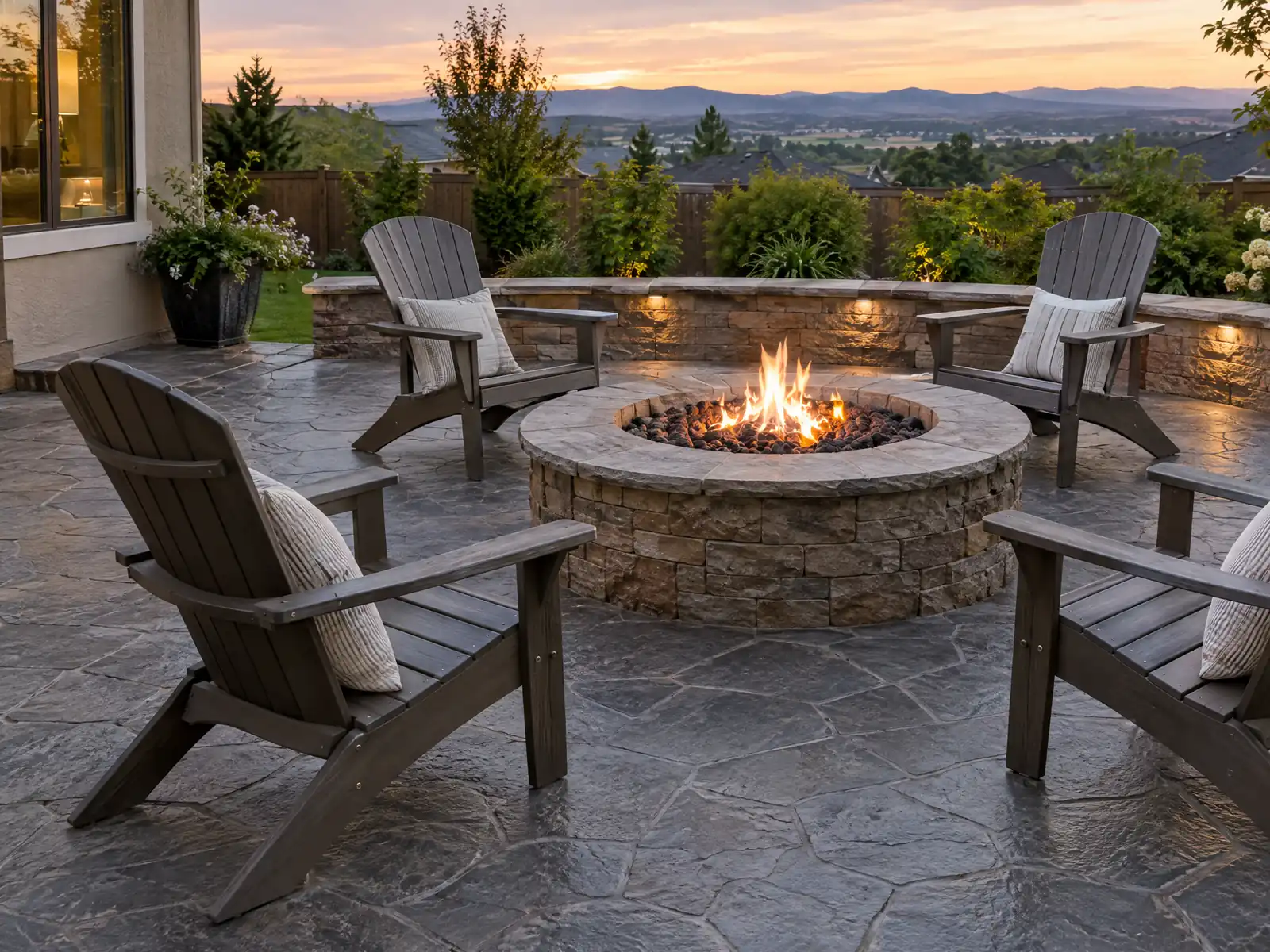
Upland's concrete is a record of three eras. George Chaffey laid out Euclid Avenue as a 200-foot-wide double drive in 1882, according to Wikipedia, the packing houses along A Street followed the Santa Fe railroad's arrival in 1887, and the postwar boom took the population from 15,918 in 1960 to 32,551 in 1970. The Census Bureau's 2024 estimates count 28,366 homes, about 52.7 percent of them built before 1980, so many driveways, walks and patio slabs are at or past retirement age.
MDG Builders, CSLB #1040337, is a general contractor in Tarzana. On an Upland pour we set the scope, take the wall, apron and yard-coverage questions to Upland's Building and Safety Division and hire a licensed concrete subcontractor to form, place and finish the work. The concrete page explains finishes, the Upland overview lists our other trades here, and flooring in Upland covers what goes on an interior slab.
What Upland's Building and Safety Division, Land Development, South Coast AQMD and state law say about concrete work
Where concrete permits come from in Upland: City of Upland Development Services Department, Building and Safety Division.
- Permit line: 'sidewalks and driveways, platforms, decks, and walks not more than 30 inches above grade and not over any basement or story below and/or not part of an accessible route' are exempt from a building permit under RMC 15.04.050 (retaining walls over 3 feet and block walls over 2 feet are not), but work in the public right-of-way (driveway approach, curb, sidewalk) needs an Encroachment and Construction Permit from Land Development and Transportation, and Public Works inspects Monday through Friday, 7:00 a.m. to 3:30 p.m. (read in GoCodebook's third-party code mirror, text as of 2026-10-04)
- Hardscape cap: RMC 17.04.040.B requires all required front and street-side setback areas in single-family zones to be landscaped except driveways to garages and walkways to the residence, and says no more than 40 percent of a front or side yard may be dedicated to driveways, walkways or hardscape; mechanical equipment (air conditioners, meters, pool and spa equipment) must be screened from public view. (read in GoCodebook's third-party code mirror, text as of 2026-10-04)
- Driveway approach and encroachment: the Land Development page lists an Encroachment and Construction Permit for any work or items in the right-of-way and a Driveway Approach Information sheet describing the connection between private property and the street (safety, drainage, dimensions and access); the sheet itself was not opened, so no approach width is stated.
- Parkway strips (RMC 12.24.040): in residential zones a parking strip may have a 1.5-foot-wide paved strip next to the curb of 3.5-inch Portland cement concrete (or approved masonry set on a 3.5-inch concrete base and grouted), at least 40 square feet must stay unpaved for tree planting, and a parking strip planted with anything other than grass needs the 1.5-foot strip plus a 4-foot paved strip for each 60 feet of lot frontage (or the curb strip running to a paved driveway not over 80 feet). (read in GoCodebook's third-party code mirror, text as of 2026-10-04)
- Street improvements with a new building (RMC 12.12.030 and 12.12.040): owners constructing a dwelling must provide standard curb, sidewalk and half-width pavement unless they already exist along all street frontage, and the chief building official denies the certificate of occupancy, final approval and final utility connections until they exist or a cash deposit guarantees them; the City Council may waive or modify the requirement (RMC 12.12.050). (read in GoCodebook's third-party code mirror, text as of 2026-10-04)
- Street trees and sidewalk repair: Upland's City-owned street trees are cared for only by City staff or its contractor and no permit is issued for private pruning or removal (RMC 12.26.070), removal is approved only for dead, diseased or hazardous trees or trees causing chronic hardscape damage, a healthy tree is never removed for debris or because roots entered a private sewer lateral, and when sidewalk or street repair would require root pruning that could destabilize a tree the City considers alternatives such as not making the improvement (RMC 12.26.060 and 12.26.080); on Euclid Avenue tree removal follows City Council policy under Resolution No. 1452 (RMC 12.24.100). (read in GoCodebook's third-party code mirror, text as of 2026-10-04)
- Grading exemptions for flatwork (RMC 15.52.030): no grading permit is needed for an excavation under 18 inches deep that is at least 5 feet from any property line and does not significantly change drainage, or a fill under 12 inches deep on natural terrain that is not for structures and does not obstruct a drainage course; larger or drainage-changing work needs a grading permit from the City Engineer. (read in GoCodebook's third-party code mirror, text as of 2026-10-04)
- Parking surface rules (RMC 17.11.100.C): all parking areas must be surfaced with a dust-minimizing treatment or paved with asphalt, concrete or another all-weather surface, permeable materials (porous concrete or asphalt, open-jointed pavers, turf or gravel grids) are permitted and encouraged, and light colored materials that lower surface temperatures are encouraged. (read in GoCodebook's third-party code mirror, text as of 2026-10-04)
Sources for these rules
- gocodebook.com: chapter 15.04 california administrative code
- gocodebook.com: chapter 17.04 residential zones
- uplandca.gov: index
- gocodebook.com: chapter 12.24 parkways parking strips
- gocodebook.com: chapter 12.12 curbs sidewalks and pavement
- gocodebook.com: chapter 12.26 tree care
- gocodebook.com: chapter 15.52 grading restrictions
- gocodebook.com: chapter 17.11 parking and loading
How much of an Upland front yard can be concrete?
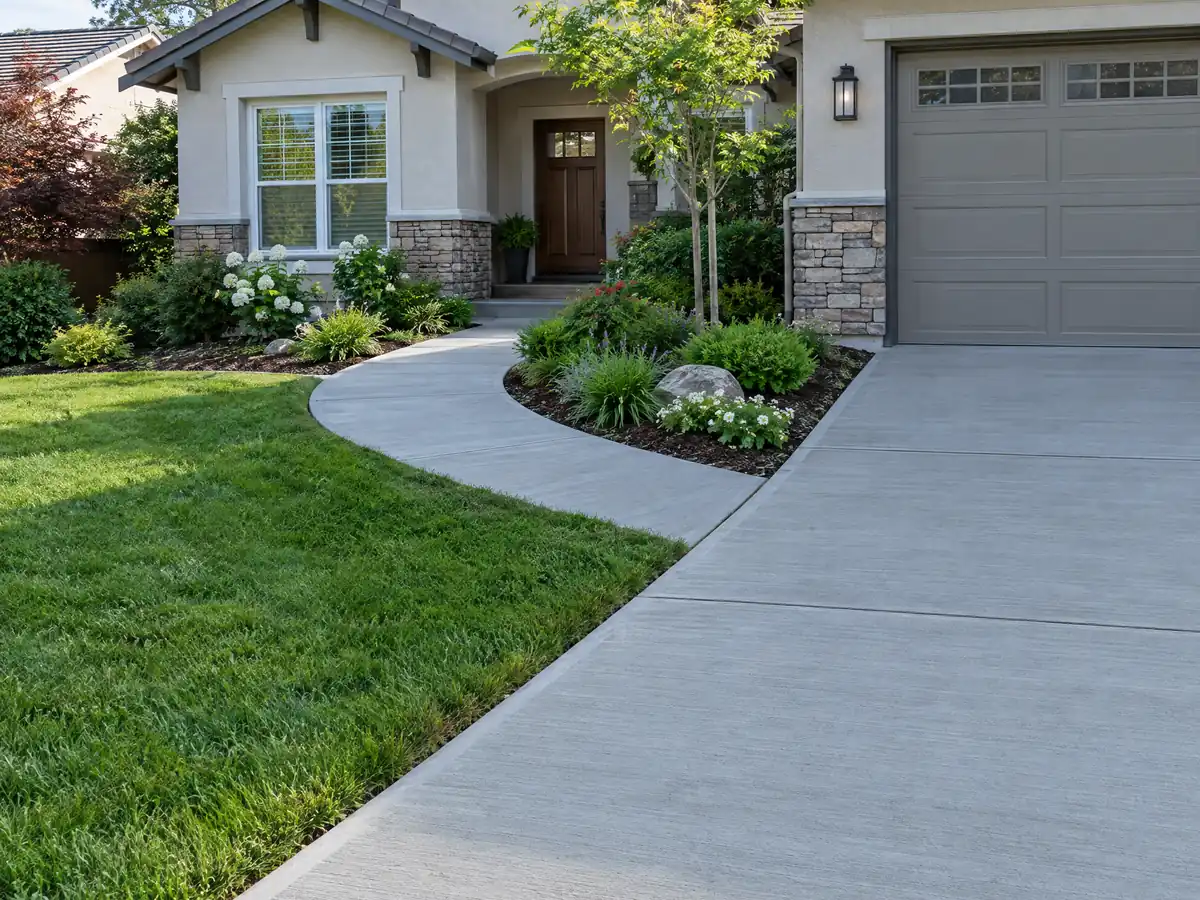
No more than 40 percent of a front or side yard. Municipal Code 17.04.040.B, read in GoCodebook's third-party copy, says the required front and street-side setback areas in single-family zones must be landscaped except for driveways to garages and walkways to the house, and it caps driveways, walkways and other hardscape at 40 percent of a front or side yard. Air conditioners, meters and pool equipment must be screened from public view.
Run the arithmetic before ordering a wider apron. On a hypothetical front yard of 1,000 square feet, 400 square feet is the most that drive, walk and patio together can cover, and a pad for a trailer or an extra car competes with the front path for that allowance. We found no Upland handout explaining how the City measures it, so ask Planning at (909) 931-4130 before the forms go in.
The parking chapter sets a surface standard too. Municipal Code 17.11.100.C accepts asphalt, concrete or another all-weather surface, permits and encourages permeable options such as porous concrete, open-jointed pavers and turf or gravel grids, and encourages light-colored materials that run cooler. Homeowner yards under 5,000 square feet fall outside the water-efficient landscape chapter, Chapter 17.12.
Why can an Upland fence reach 6 feet without a permit when a block wall stops at 2?
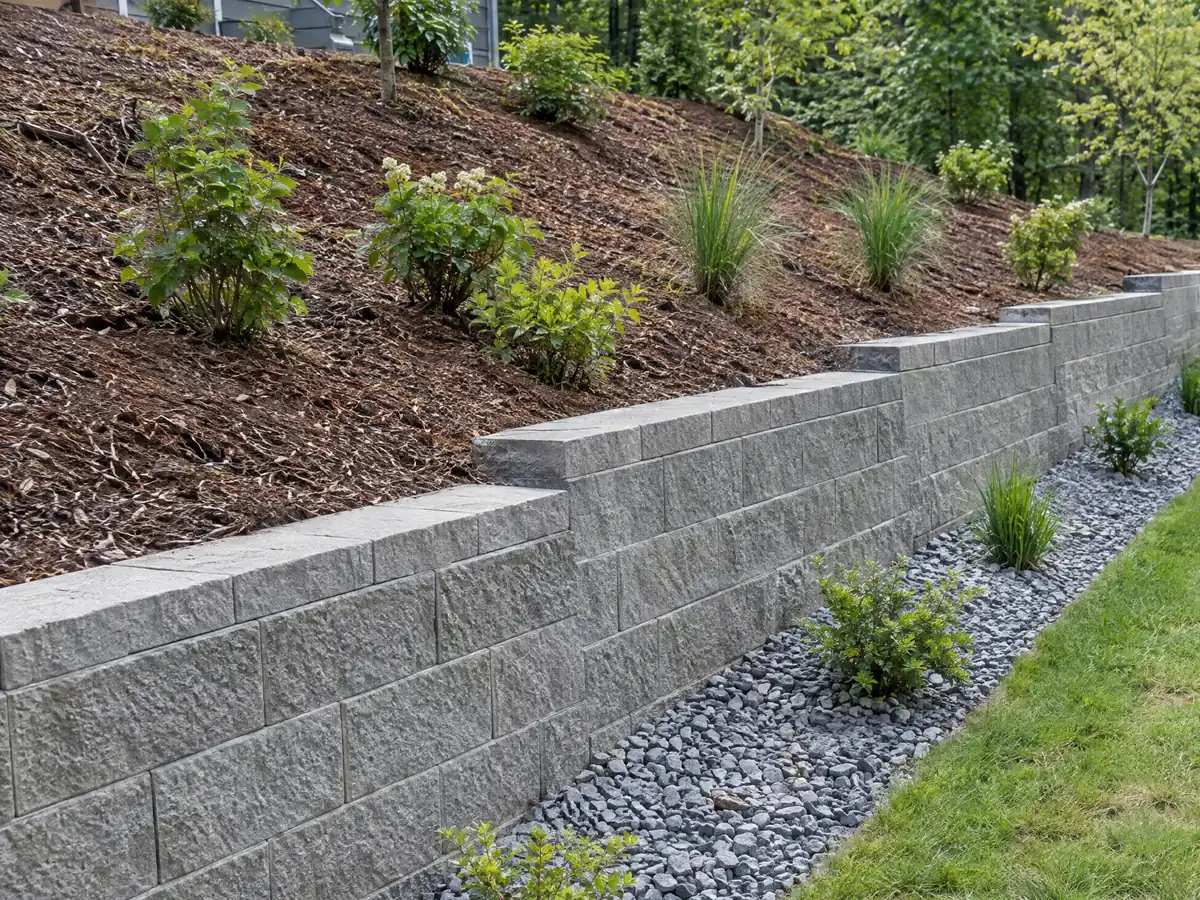
Because the City's exemption list treats them differently. Municipal Code 15.04.050 exempts wood fencing not over 6 feet and block walls or similar not over 2 feet, and the Building and Safety FAQ repeats the fence line. Masonry walls over 2 feet are not on the list, and the Land Development page names block walls among the projects that need a Waste Management Plan.
Zoning sits on top of the permit rule. Any fence or wall in the front or street-side setback is capped at 3.5 feet and may reach 6 feet in the rear or interior side setback, measured from the finished grade at the base (Municipal Code 17.13.040). Walls must be decorative masonry, ornamental steel or iron, or wood that fits the house, and chain-link, barbed wire, razor wire and wire mesh are banned in residential zones and wherever a street can see them (17.13.060). Nothing over 3 feet may stand inside the 25 foot corner vision triangle or the 10 foot alley and driveway triangle.
Retaining walls stop at 3 feet. The exemption measures from the bottom of the footing to the top of the wall and does not apply when the wall holds a surcharge such as a driveway or a neighbor's slope. CSLB's C-29 class covers concrete block walls for structures and fences, so ask the subcontractor which license covers a given wall.
Does an Upland driveway, apron or sidewalk pour need a permit?
Private flatwork usually does not; the street side does. Municipal Code 15.04.050 exempts sidewalks, driveways, platforms and walks not more than 30 inches above grade, not over a basement or story below and not part of an accessible route. A patio slab on grade is not named, so ask before assuming, and a pool or spa project brings a Waste Management Plan of its own.
The apron, curb and sidewalk sit in the public right-of-way. The Land Development page says an Encroachment and Construction Permit is needed to work or place items there, and it lists a Driveway Approach Information sheet that we could not open, so we state no apron width. Once that permit issues, a pre-construction meeting can be scheduled from three business days later.
Public Works inspects Monday through Friday, 7:00 a.m. to 3:30 p.m., which is a different calendar from Building and Safety. Outside those hours the City charges its overtime inspection rate. Ask the subcontractor who is booking which inspector, because a forms inspection on the lot and a street inspection are separate calls.
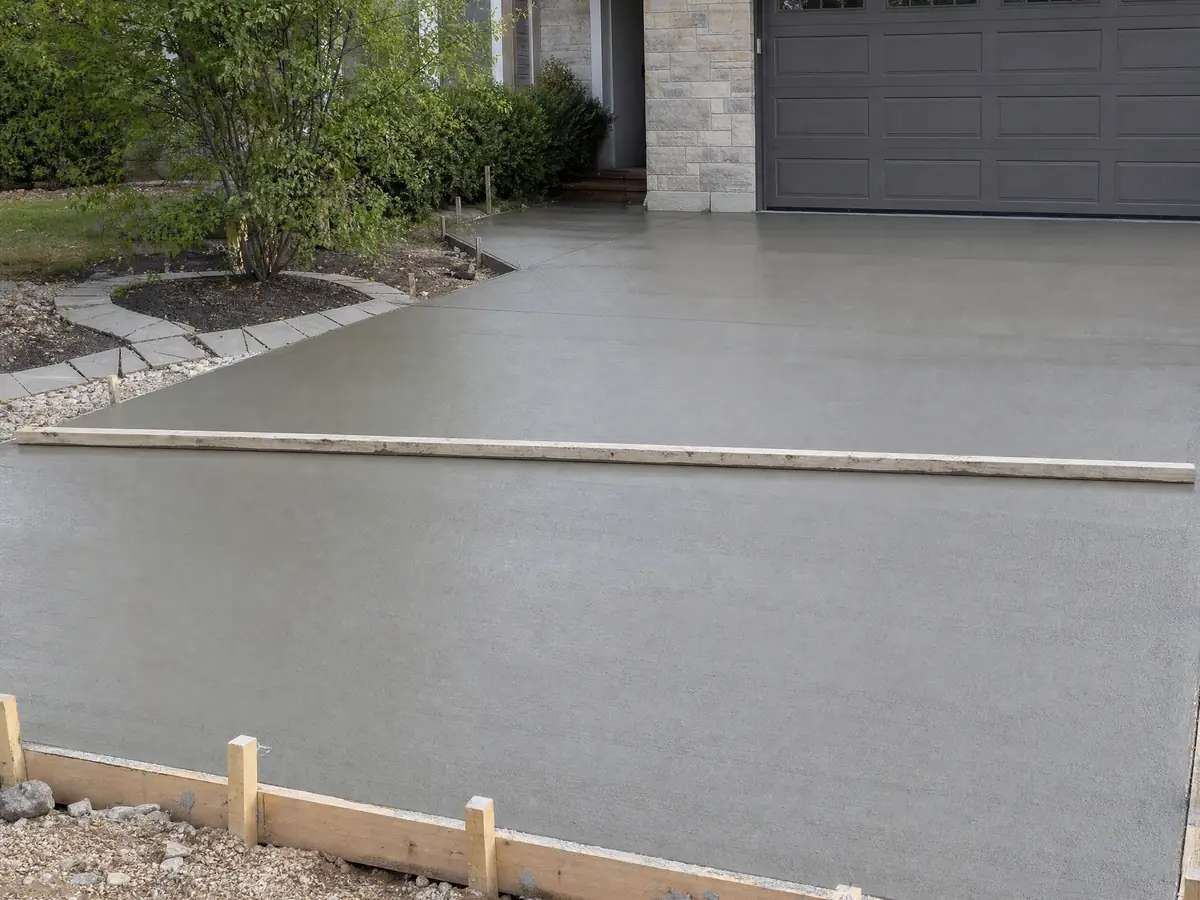
Can you fix an Upland sidewalk lifted by a street tree, or repave a historic home's front walk?
Street trees belong to the City. Municipal Code 12.26.070 says only City staff or its contractor care for them and no permit is issued for private pruning or removal. Removal is approved for dead, diseased or hazardous trees or trees causing chronic hardscape damage, a healthy tree never comes out for debris or because roots entered a private sewer lateral, and where repair would need root pruning that could destabilize a tree the City considers alternatives, including not making the improvement (12.26.060 and 12.26.080).
Euclid Avenue has its own policy. The avenue is registered with the State Office of Historic Preservation from 24th Street in Upland to Philadelphia Street in Ontario, a 3-mile bridle path runs down its median, and tree removal there follows City Council Resolution No. 1452. Everything within 250 feet of the centerline is also in the Scenic Corridor overlay, which governs the home more than the walk, so ask Planning what applies at a given address.
In a local historic district, paving counts. The alteration definition in Municipal Code 17.26.110 includes paving, the cutting of trees and the placement or removal of fences, walls and steps on registered, surveyed or contributing properties, while ordinary repair that changes no design, material or appearance is not prevented. Replacing a cracked 1920s walk at the same width, color and finish is the easy case, and a new stamped pattern is the one to describe to Planning first.
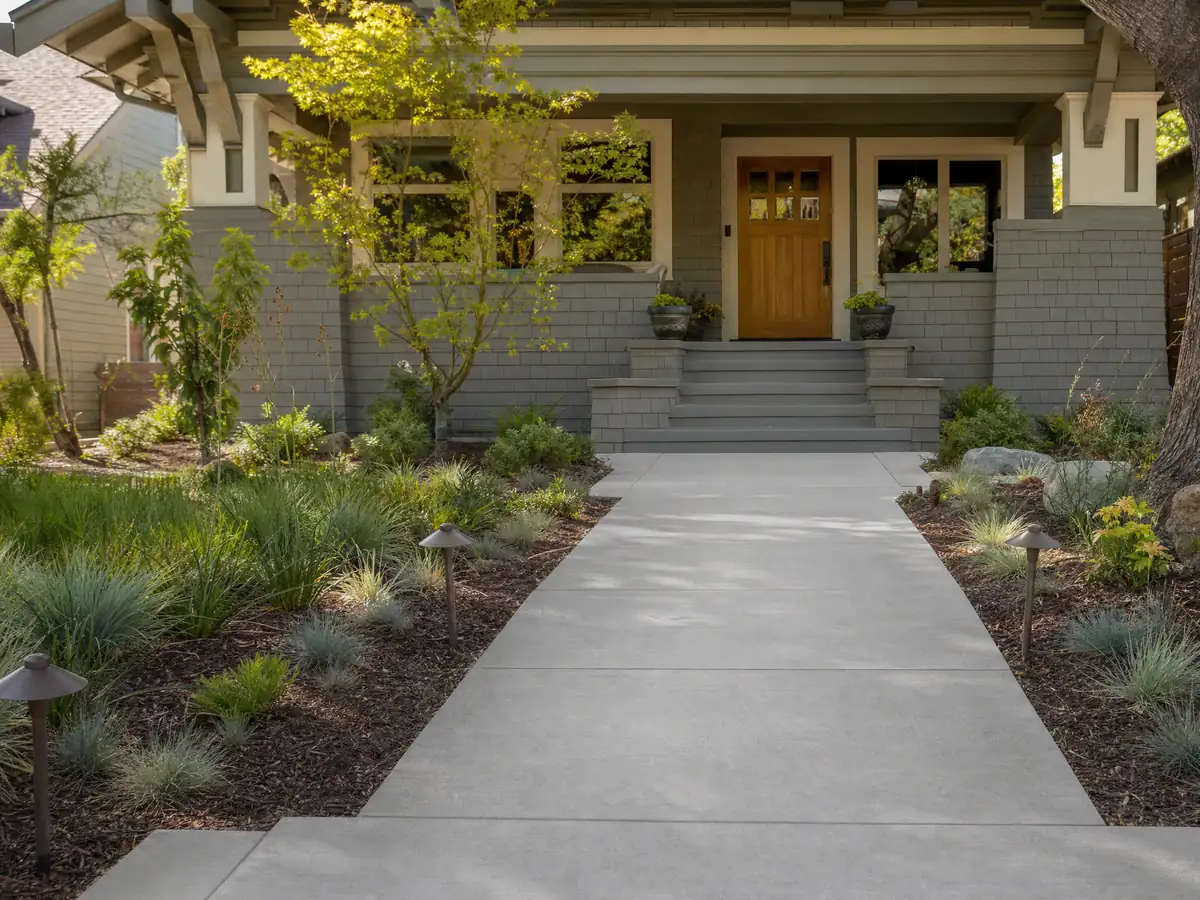
Do Upland's grading limits, faults and flood zones change how a slab or wall is built?
Grading comes first. Municipal Code Chapter 15.52, run by the City Engineer, requires a grading permit except for an excavation under 18 inches deep that is at least 5 feet from any property line and does not change drainage, or a fill under 12 inches deep on natural terrain that carries no structure and blocks no drainage course. Grading plans must be certified by an approved professional firm, imported topsoil is limited to 2 cubic yards per 100 square feet unless the plan says more, and work not corrected within 30 days of written notice is an infraction.
The ground moves. The General Plan Safety Element says Upland is susceptible to seismic and geologic hazards, its fault map labels the San Antonio, Stoddard Canyon, Indian Hill, San Jose and Red Hill-Etiwanda Avenue faults, and the City's seismic design category is D-2 or E depending on the site. The February 28, 1990 Upland earthquake, magnitude 5.7, injured thirty people according to Wikipedia. Policy SAF-3.3 calls for a site-specific soils or geology report where serious risk exists, and we found no slab-size trigger for one.
Water moves too. Chapter 15.56 requires a development permit check on every construction project against FEMA's August 28, 2008 flood study, work in a flood zone must be anchored and use flood-resistant materials, and Policy SAF-2.10 bars new development in the 100-year zone unless it can be shown not to worsen flooding. Slope adds drainage: the city rises about 825 feet over 4.25 miles toward the mountains, and we opened no separate hillside ordinance.
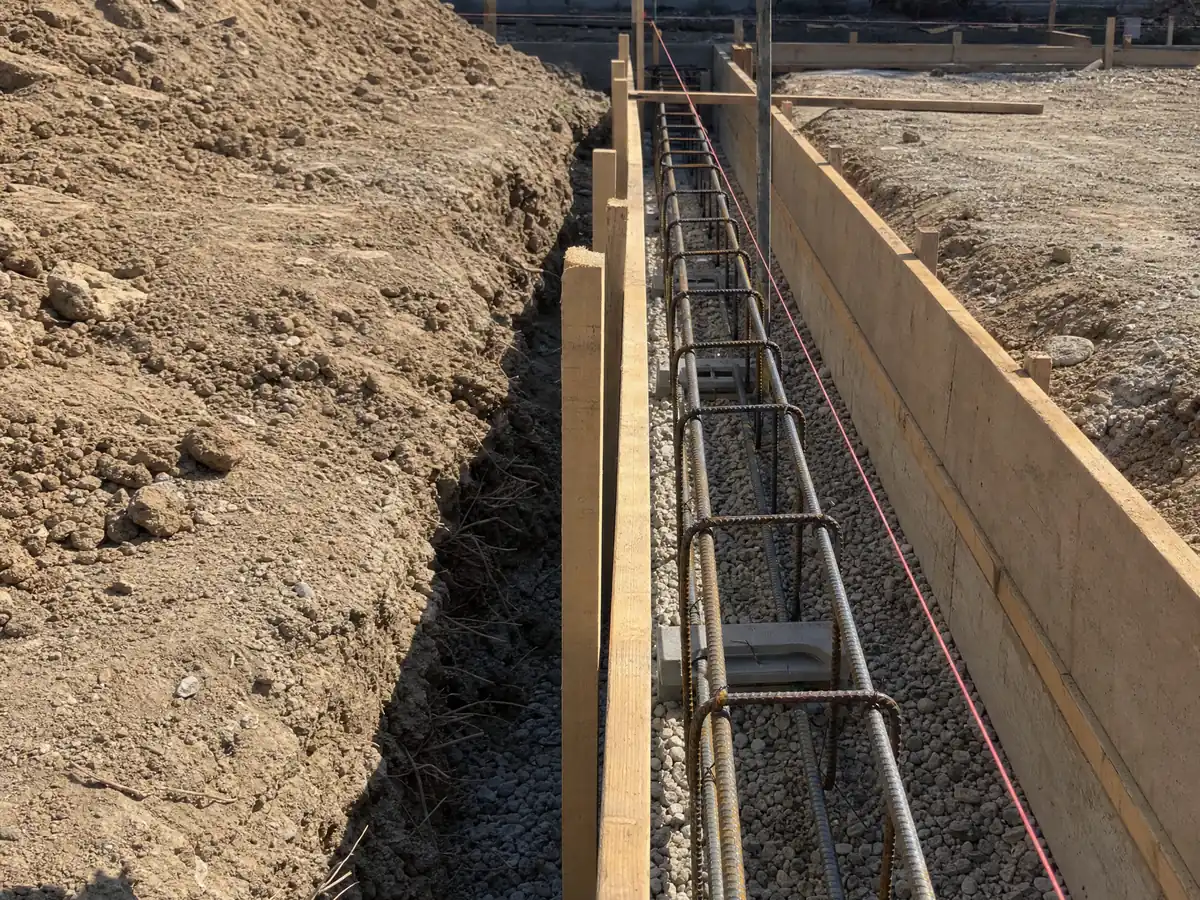
What do dust, washout and Monday to Thursday inspections mean for an Upland pour?
Dust is the first rule. South Coast AQMD Rule 403, last amended June 3, 2005, covers any activity that can raise fugitive dust, including earth-moving, construction and demolition, requires the best available control measures from its Table 1 and bars PM10 from exceeding 50 micrograms per cubic meter as the difference between upwind and downwind samples. In practice that means water for the saw-cutting and a plan for the broken pieces.
Washout is a City rule too. Municipal Code 13.16.030 bans hosing a driveway, sidewalk or other hard surface when the runoff reaches a gutter or storm drain, so slurry and rinse water stay on the lot. The Waste Management Plan form applies when a project includes demolition or a block wall, and the page lists no diversion percentage or deposit.
Hours shape the calendar. Building work is limited to 7:00 a.m. to 6:00 p.m. on weekdays under Municipal Code 9.40.M, which has no Saturday hours, and Building and Safety inspects Monday through Thursday only, with requests due to the voicemail line, (909) 931-4129, by 4:00 p.m. the business day before. Request a footing or rebar inspection early in the week, since Friday has no Building inspector and City Hall is closed.
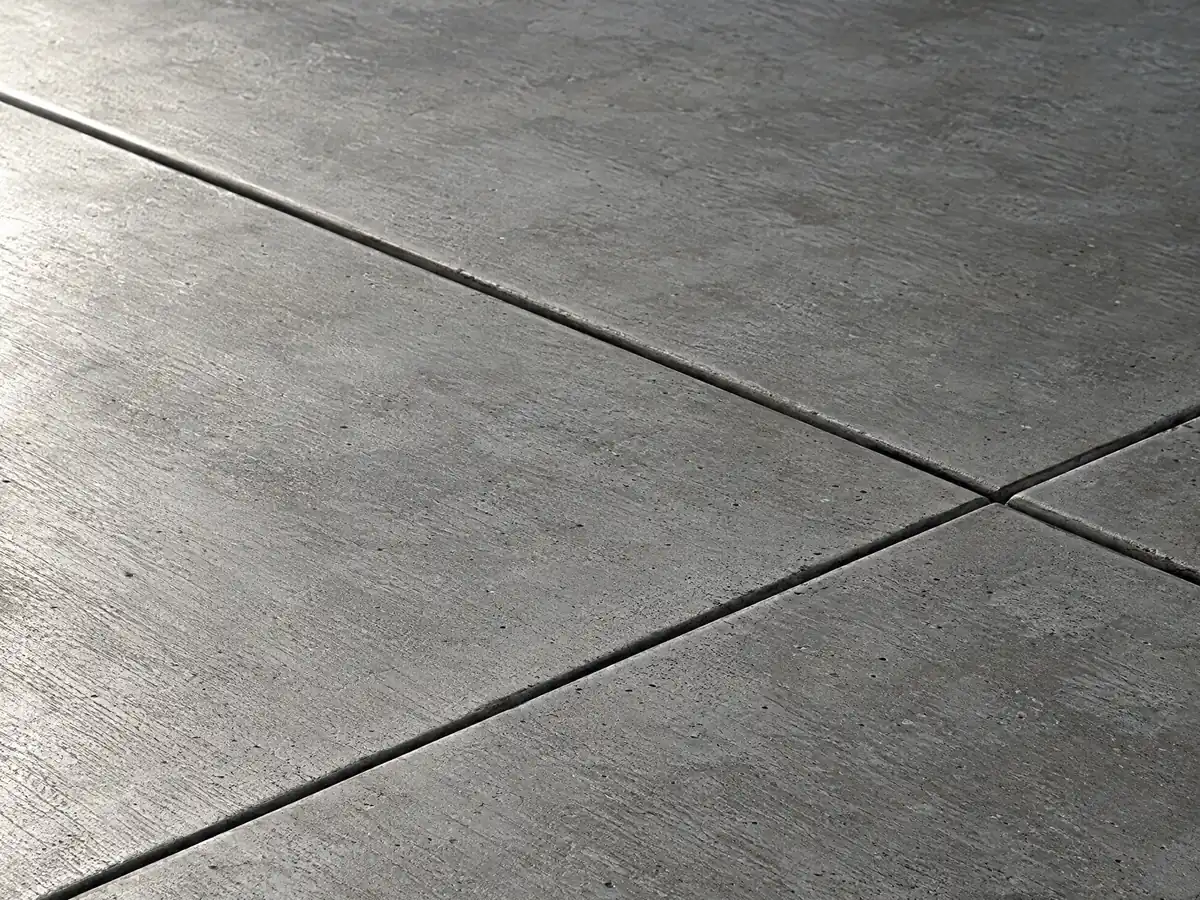
How much does concrete work cost in Upland, and who needs which license?
We found no Upland concrete study with a stated method, so the figures borrow Angi's Los Angeles pages, which we rate medium confidence for plain flatwork and lower for walls and graded driveways. Angi's August 4, 2026 patio page lists $4 to $13 per square foot and $1,600 to $5,200 for a 20 by 20 slab, its May 5, 2026 driveway page lists $8 to $20, and its July 20, 2026 stamped page lists $15 to $30.
Our planning range from those pages and HomeGuide's is $8 to $14 per square foot for a 4 inch broom-finish slab of 300 square feet or more on a flat, reachable lot, and small jobs run higher because of minimum charges. A 20 by 20 slab at that range is $3,200 to $5,600. Federal wage data put cement masons in the Los Angeles area at a mean $33.67 an hour in May 2025, and we print no per-foot price for retaining walls because they are priced by height, drainage and engineering.
License follows the material. CSLB's C-8 class covers forming, pouring, placing and finishing flat and pavement concrete, and rebar-only work is a separate class. Business and Professions Code 7048 allows unlicensed work only under $1,000 including materials and never where a permit is required, and Upland's code requires a license of the correct classification to pull a permit unless the Building Official approves an owner-builder permit. Our license check guide shows how to read a CSLB record.
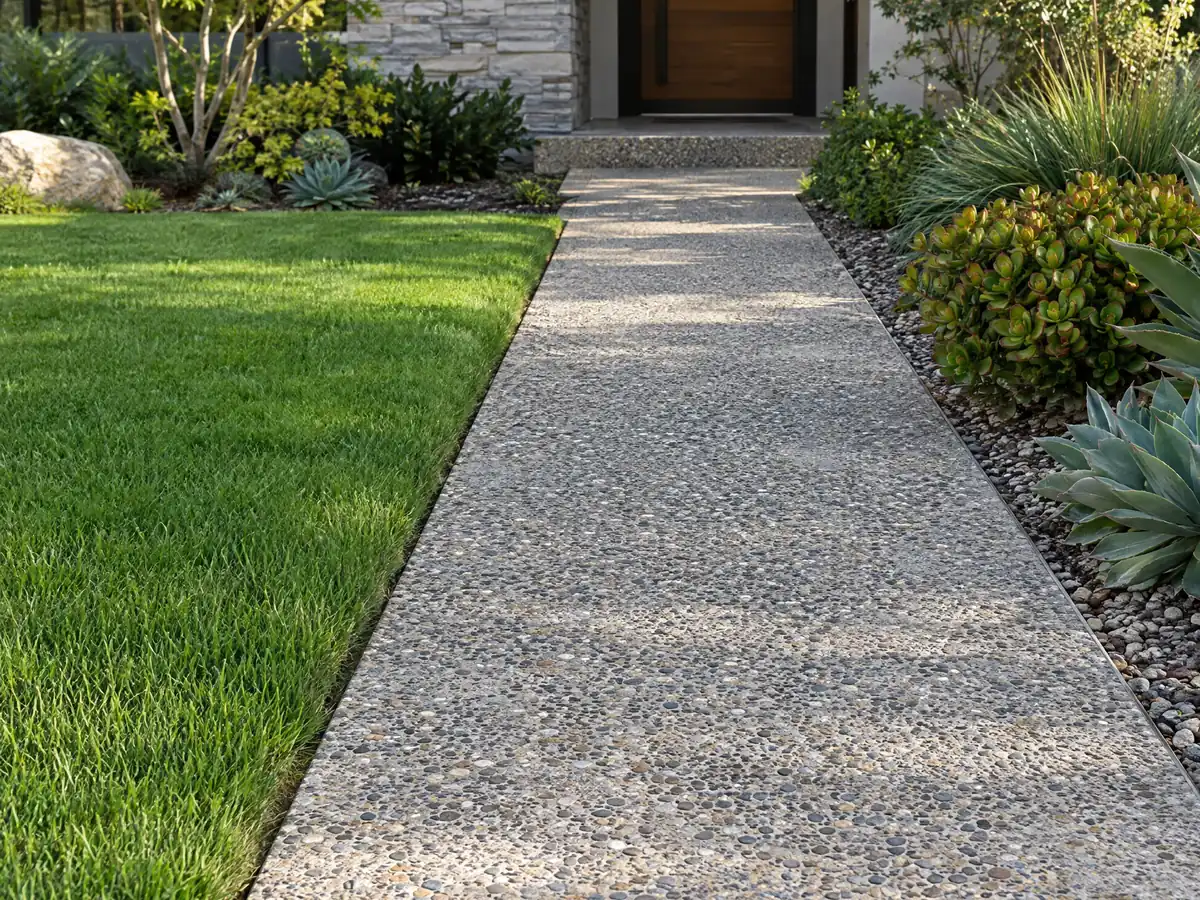
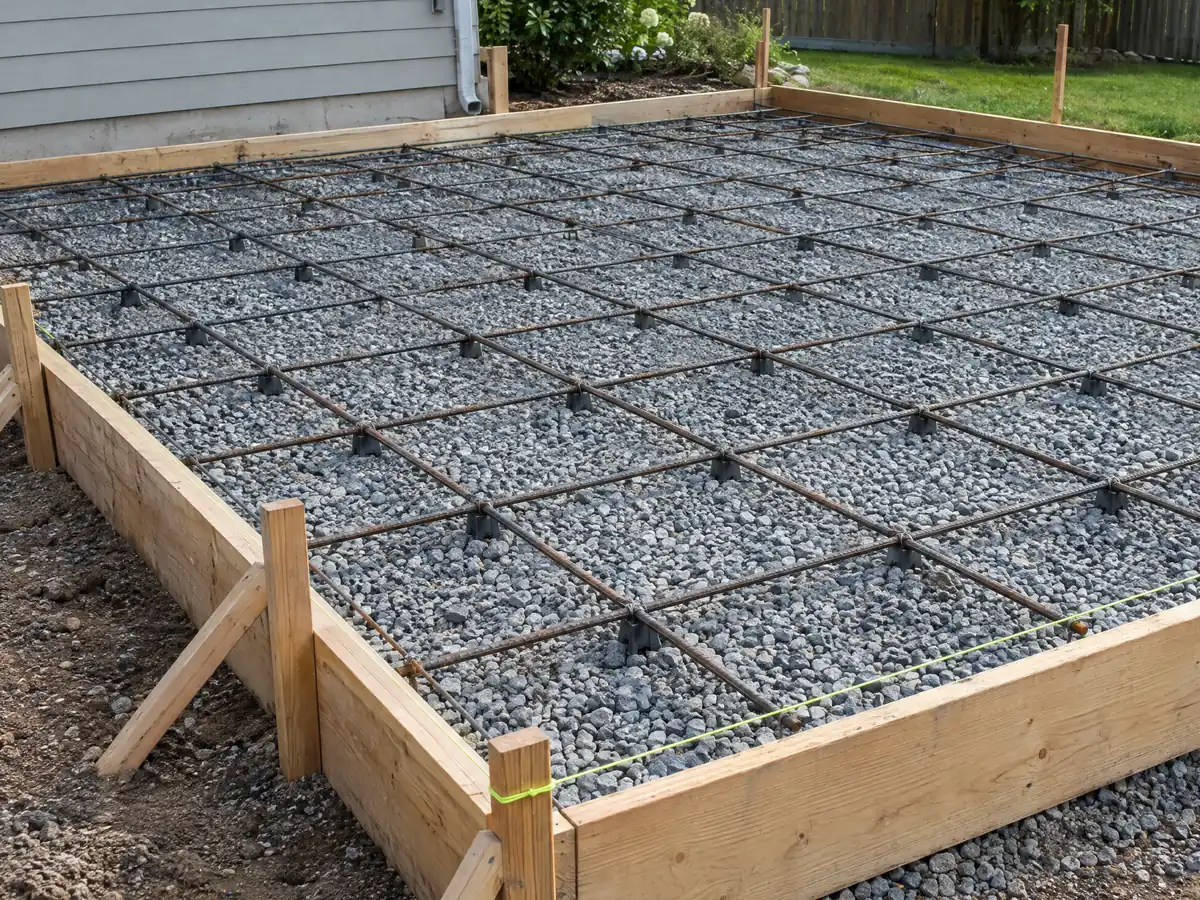
Concrete photos from Upland and nearby communities
Forms, rebar, screeded slabs and finished walks and patios from Upland and the neighborhoods around it, shown at the steps where the local rules bite. Tap any photo to enlarge it.
What concrete costs around Upland
Dollar figures on this page are Los Angeles planning ranges, not an Upland bid, so ask for demolition, haul-off, rebar, grading and any wall permit as separate proposal lines. For nearby cities in San Bernardino County, read concrete in Rancho Cucamonga, concrete in Ontario and concrete in San Bernardino, with concrete in Los Angeles as the big-city benchmark. A patio or driveway often travels with a deck in Upland. The subcontractor guide shows who forms a slab and who finishes it, and the flooring cost guide prices what goes on top.
| What it covers | Typical range |
|---|---|
| Patio, walkway or slab, broom finish, 300 sq ft or more | $8 to $14 per square foot |
| Decorative: stained, stamped or exposed aggregate | $15 to $30 per square foot |
| Driveway replacement, with demolition of the old slab | $9 to $20 per square foot |
| 20 by 20 foot plain patio (400 sq ft) | About $3,200 to $5,600 |
| 20 by 20 foot decorative patio (400 sq ft) | About $6,000 to $12,000 |
| Small jobs under 300 sq ft | Usually above the per-foot range |
| Retaining walls | Set by the written proposal |
Upland concrete questions, answered
Can I pour a concrete patio without a permit in Upland?
Possibly. Upland exempts sidewalks, driveways, platforms and walks not more than 30 inches above grade, not over a story below and not part of an accessible route, but a patio slab on grade is not named, so ask Building and Safety at (909) 931-4110. Zoning still applies, and no more than 40 percent of a front or side yard may be hardscape.
How much should a 20x20 concrete patio cost?
Angi's Los Angeles patio page of August 4, 2026 lists $1,600 to $5,200 for a 20 by 20 slab, and our planning range of $8 to $14 per square foot gives $3,200 to $5,600 for 400 square feet. Decorative finishes cost more, and these are Los Angeles ranges, not an Upland bid.
Can I expand my driveway without a permit in Upland?
Not freely. Flatwork up to 30 inches above grade is exempt from a building permit, but no more than 40 percent of a front or side yard may be driveway, walkway or hardscape, and a wider apron at the curb needs an Encroachment and Construction Permit. Ask Planning to confirm the yard measurement before the forms go in.
What is the maximum height of a retaining wall without a permit in Upland?
Three feet, measured from the bottom of the footing to the top of the wall, and only if the wall does not support a surcharge. That is Upland's own exemption in Municipal Code 15.04.050, read in a third-party copy of the code, and it is lower than the 4 feet in the model state code. Confirm it with Building and Safety.
How tall can a block wall be in Upland without a permit?
Two feet. Upland's exemption list allows wood fencing up to 6 feet but block walls or similar only up to 2 feet, and the Land Development page lists block walls among the projects that need a Waste Management Plan. Zoning separately caps any wall in a front or street-side setback at 3.5 feet.
Do I need a permit to replace a driveway approach or sidewalk in Upland?
Yes, for the part in the public right-of-way. The City's Land Development page says an Encroachment and Construction Permit is needed to work in the street, sidewalk or other City property, and Public Works inspects Monday through Friday, 7:00 a.m. to 3:30 p.m. We did not open the Driveway Approach sheet, so ask the City for the apron dimensions.
Can I remove a street tree to fix a lifted sidewalk in Upland?
Not on your own. Municipal Code 12.26.070 says only City staff or its contractor prune or remove street trees and no permit issues for private removal, and the City removes only dead, diseased or hazardous trees or trees causing chronic hardscape damage. Ask the City to evaluate the tree before breaking up the walk.
Can you wash a driveway with a hose in Upland?
Not if the runoff reaches a gutter or storm drain. Municipal Code 13.16.030 bans hosing driveways, sidewalks, parking areas and other hard surfaces year-round, except to clear flammable liquids or a spill that is a trip hazard. A concrete crew should keep slurry and rinse water on the lot, and saw-cutting dust falls under SCAQMD Rule 403.
How much do contractors charge for concrete?
Angi's Los Angeles pages list $4 to $13 per square foot for patios, $8 to $20 for driveways and $15 to $30 for stamped work, and our planning range for a plain 4 inch slab is $8 to $14. Small jobs cost more per foot because of minimum charges, and walls and graded driveways are priced by site visit.
What license does a concrete company need for concrete work in Upland?
A concrete company needs a current California license, usually C-8 for flat and pavement concrete or C-29 for block walls, and Upland's code says no permit issues without a license of the correct class unless the Building Official approves an owner-builder permit for a single-family home. Check the number on the CSLB site and ask each subcontractor for a license and certificate of insurance.
Tell us the lot, the slab size and any walls, trees or slopes
Describe what you want poured, roughly how large it is, how much of the front yard it covers and whether it touches a wall, the curb, a street tree or the sidewalk. The yard-coverage and right-of-way questions come with us to the first visit.