
Fence Companyin San Bernardino, CA
A San Bernardino fence up to 6 feet is exempt from a building permit under the Municipal Code, though the City's web page says 7 feet, and Planning must still approve every fence plan. Front and street side yards cap solid fences at 3 feet and open ones at 4. Masonry over 3 feet needs a permit.
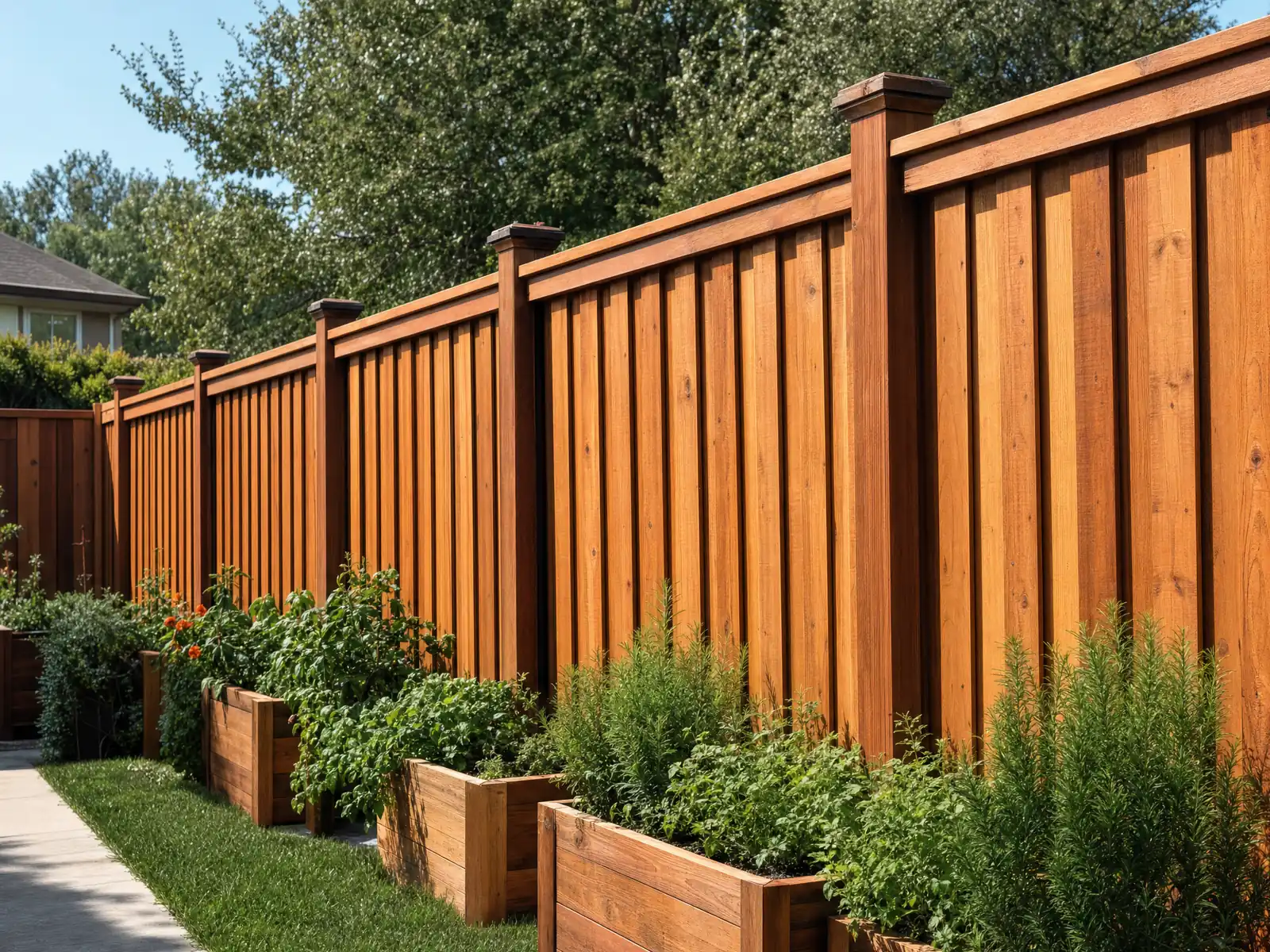
Fences in San Bernardino sit on a very mixed map. A railroad hub by the 1880s, the city reached 63,058 people in 1950 and 164,164 in 1990, according to Wikipedia's census table, and ACS 2024 one-year estimates count 68,594 housing units, 64.2 percent of them single-family detached. About 63 percent were built before 1980, so many lots carry a fence older than the Development Code that now governs it, which the City's index dates to May 1991.
On a fence job, MDG Builders (CSLB #1040337) reads the zoning table before it prices anything, handles what the City requires and sequences the crews, while a licensed C-13 fencing subcontractor sets the posts and a masonry-licensed subcontractor builds any block. The fencing page lists our sourced prices, the San Bernardino overview covers every trade here, and the guides for Riverside and Corona show how two other Inland Empire cities set fence limits. Colton, Rialto, Highland and Redlands keep their own rules. The City's Planning Division and Building & Safety Division share the counter at 201 North E Street. The City's Municipal Code host returned an HTTP 403 error to us, so code text below is from GoCodebook, a third-party mirror, and the City should confirm each section.
What San Bernardino's exemption list, Development Code and fire chapters say about fences
Where fencing permits come from in San Bernardino: City of San Bernardino Community Development & Housing Department, Building & Safety Division.
- Building permit exemption for fences: Municipal Code 15.04.070 amends CBC 105.2 so fences not over 6 feet high are exempt, except concrete and masonry fences more than 3 feet above grade, which need a permit and follow a standard design or an engineered one; the exemption never waives Development Code limits on materials or height. The City's Building & Safety page summarizes the exemption as fences not over 7 feet except masonry, so the municipal code's 6 foot figure is the one quoted here. (read in GoCodebook's mirror, text as of 2026-10-04)
- Fence height table (Development Code 19.20.030(8), Table 20.01): in residential zones the front yard and street side yard limit is 3 feet for solid structures and 4 feet for open-work structures that pass at least 90 percent of light; the table lists 6 feet outside required yards and 8 feet where the lot abuts a non-residential district (the table layout is scrambled in the PDF), and traffic safety sight areas are limited to 2 feet 6 inches.
- Retaining walls and hillside fences: the Hillside Management overlay entries in Table 20.01 list retaining walls at 3 feet 6 inches on the uphill side, 8 feet on the down slope and 5 feet for lots sloping with the street, and call for natural, indigenous materials adjacent to driveways and facing streets, while the Foothill Fire Zones Overlay entry limits fences and walls to noncombustible materials (the table layout is scrambled in the PDF). Municipal Code 15.04.240 puts slopes on the downhill lot unless the City Engineer waives it. (read in GoCodebook's mirror, text as of 2026-10-04)
- Foothill fences: Municipal Code 15.10.080 requires fencing in the foothill and very high fire zones to be approved noncombustible or ignition-resistant material, and Development Code 19.15.040 requires walls, garage doors and fences to be free of exposed wood in Zones A and B (and C abutting wildlands), with fences listed as an element retrofitted when more than 25 percent is replaced. (read in GoCodebook's mirror, text as of 2026-10-04)
- Building Safety Enhancement Areas: where wood or vinyl fencing is used there must be at least five feet between that fencing and the wall of the nearest structure, except where earlier construction followed a previous code, and fencing inside that five foot band must be noncombustible or one-hour fire-resistance-rated (15.11.080(H)). (read in GoCodebook's mirror, text as of 2026-10-04)
- Pool barriers: Municipal Code 15.48 requires a fence or wall at least 4 feet high around any pool or body of water deeper than 18 inches, with no gaps larger than 4 inches (picket gaps no more than 4 inches horizontally and at least 36 inches vertically), a non-climbable design, and gates and pedestrian doors from the garage to the yard that self-close and self-latch with the latch within 3 inches of the required height; new pools must sit at least 5 feet from side and rear lot lines, and CBC 3109 applies to single-family pool barriers under 15.04.100. (read in GoCodebook's mirror, text as of 2026-10-04)
- Special fences: barbed, razor and concertina wire fences need a Fence Permit from Community Development and are allowed only in non-residential zones in approved locations, and electric fences are likewise limited to non-residential zones and must sit behind a non-electric fence or wall, so neither is an option for a typical house lot (Development Code 19.20.030(8)(E) and (F)).
- Shared boundary fences: California Civil Code 841 (opened via FindLaw) presumes adjoining owners share the reasonable cost of a boundary fence equally and requires a landowner who plans to spend money on it to give each affected neighbor 30 days' prior written notice with the proposed solution, estimated costs and timeline.
Sources for these rules
- gocodebook.com: chapter 15.04 building codes
- sanbernardino.gov: 1920 Property Development Standards PDF
- sanbernardino.gov: 1915 FF Foothill Fire Zones Overlay Zone PDF
- gocodebook.com: chapter 15.11 building safety enhancement area building stan
- gocodebook.com: chapter 15.48 swimming pools
- codes.findlaw.com: civ sect 841
A fence up to 6 feet is exempt, but the City's page says 7 feet: which is it?
Municipal Code 15.04.070 amends California Building Code section 105.2 so that fences not over 6 feet high need no building permit. The City's Building & Safety page summarizes the same exemption as fences not over 7 feet, and until the Division says otherwise we design to the code's 6 feet. Both versions carve out concrete and masonry fences more than 3 feet above grade, which need a permit and either a standard or an engineered design.
An exempt fence is still reviewed. The Building page says the Planning Division must approve every fence and wall plan for zoning compliance, and the exemption never waives the Development Code's limits on height and materials. Plan on a Planning check first, then a building permit only if the wall is masonry, a pool barrier or taller than the exemption line.
Ask the counter in writing whether 6 or 7 feet is the working number.
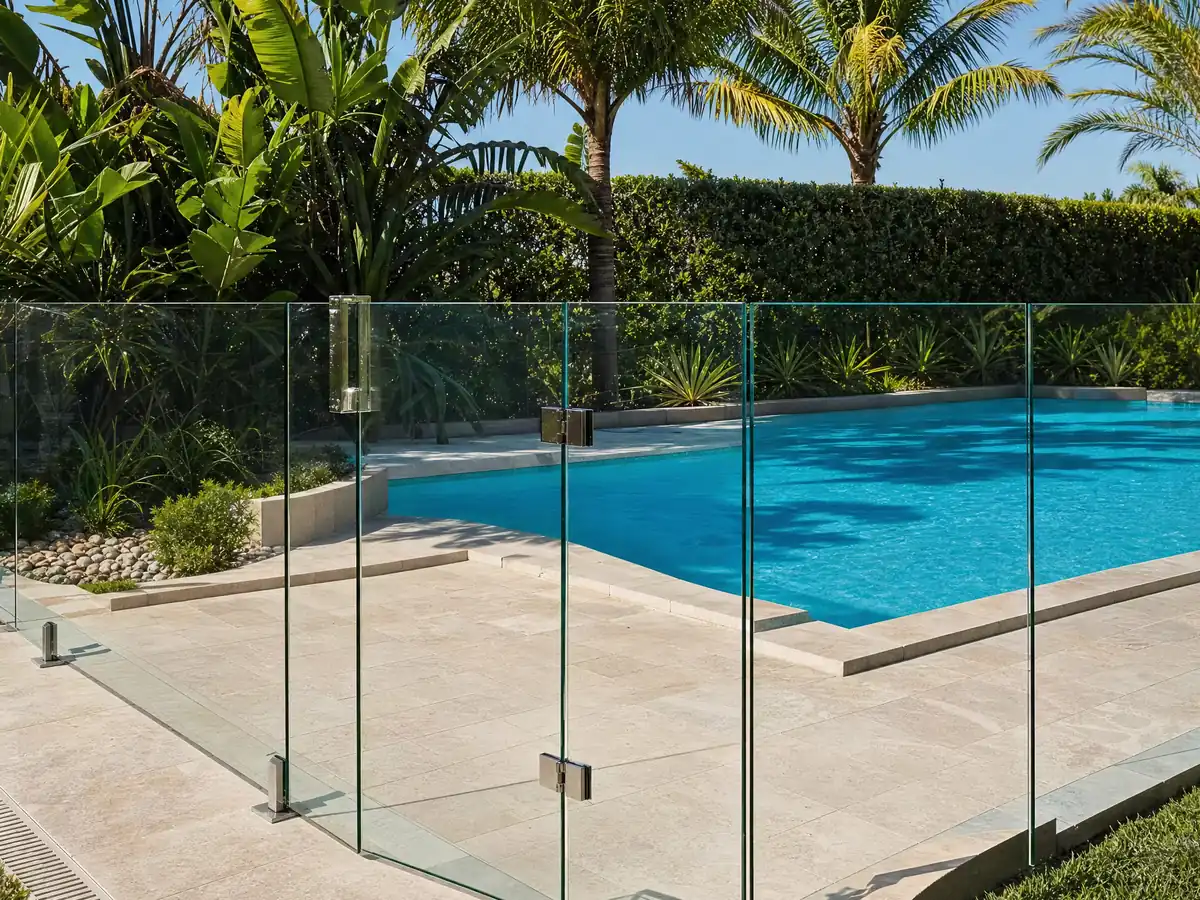
How tall can a fence be in a San Bernardino front yard?
In residential zones, Development Code 19.20.030(8) limits a front yard or street side yard fence to 3 feet when it is solid and 4 feet when it is open work that passes at least 90 percent of light, such as wrought iron. A corner lot therefore has two limits, because its street side is held to the front yard number.
Traffic safety sight areas, the triangle at a driveway or corner, are limited to 2 feet 6 inches, which can rule out a tall hedge or a solid gate pillar set close to the curb. The table is scrambled in the PDF, so we read those two rules clearly and would not trust another row without Planning. Wire is a separate question: barbed, razor and concertina wire need a Fence Permit and are allowed only in non-residential zones, and electric fences are limited to non-residential zones behind a non-electric wall, so neither fits a house lot.
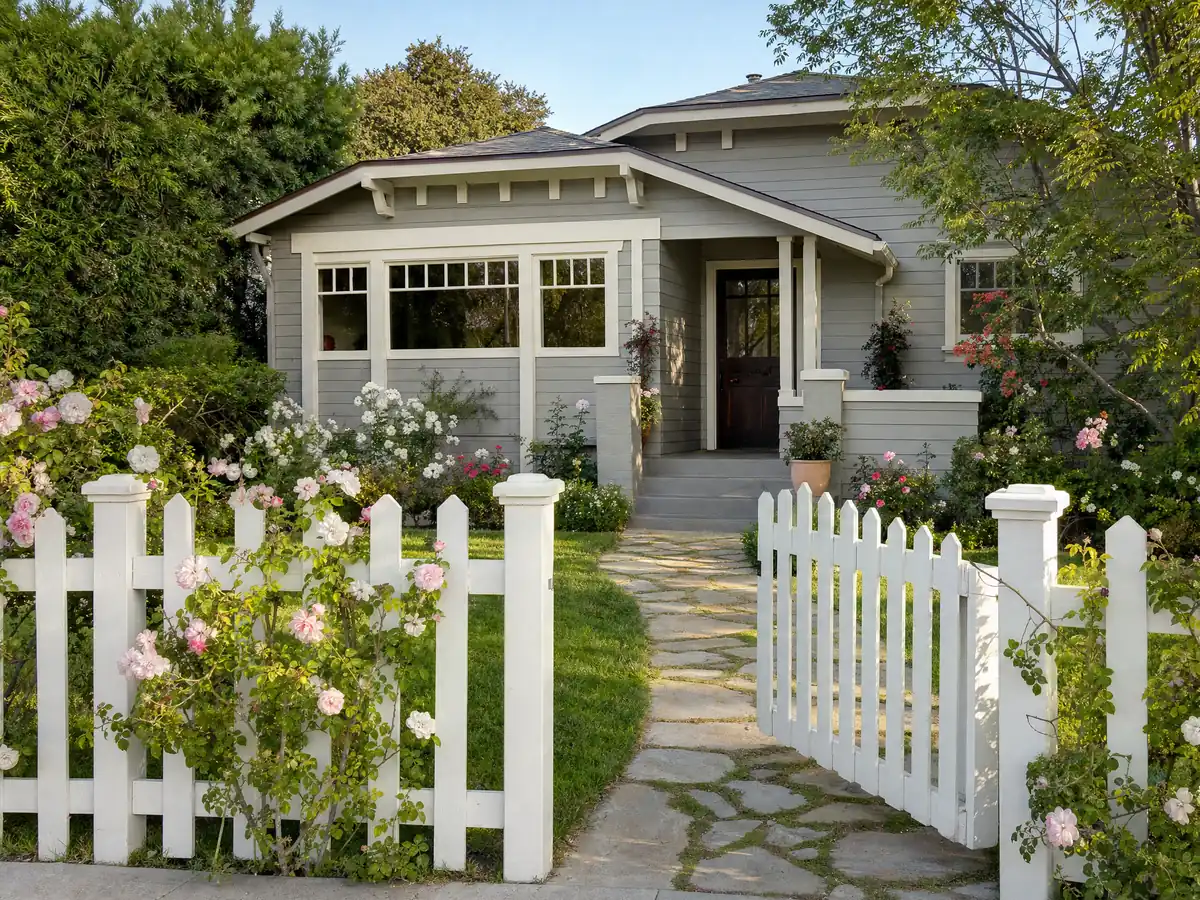
How tall can a backyard fence be in San Bernardino, 6 feet or 8?
The same table lists 6 feet outside the required front and street side yards and 8 feet where a lot abuts a non-residential district. Because the PDF layout is scrambled, treat those two rows as a reading to confirm with Planning, ideally in writing with the neighboring zone named. A six foot back fence also matches the building permit line in 15.04.070, which keeps the permit question simple.
Material is a second limit. In the foothill areas, fencing must be approved noncombustible or ignition-resistant material, so a redwood or cedar privacy run is not a given on a hillside lot. For an ordinary valley lot, the City pages we read do not restrict the material, so the choice comes down to budget, wind exposure and how the fence meets the neighbor's.
Have the fence subcontractor mark the proposed height on the proposal for each yard, front, side and rear.
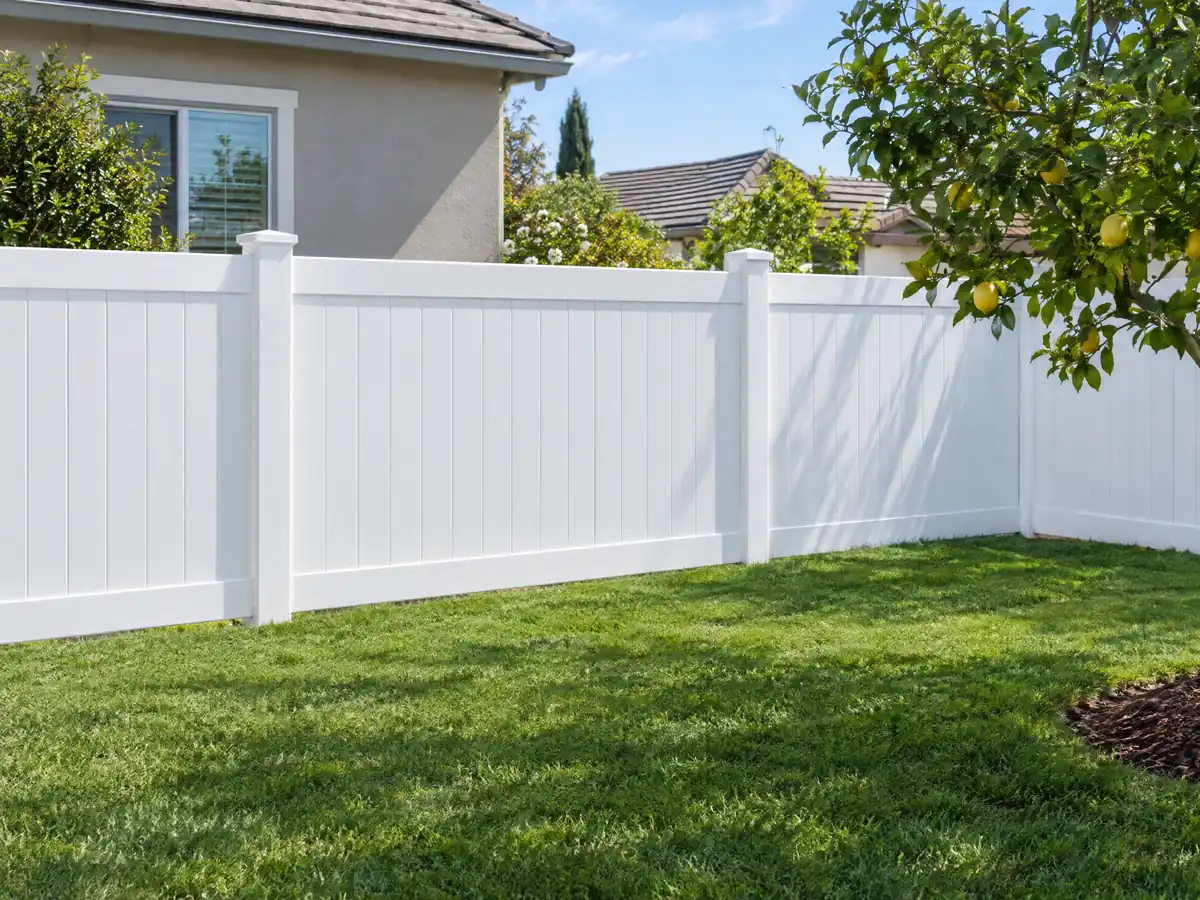
Can I build a wood fence in the San Bernardino foothills?
Probably not a plain wood one. Development Code 19.15.040 requires walls, garage doors and fences to be free of exposed wood in Foothill Fire Zones A and B, and in Zone C where it abuts wildlands, and Municipal Code 15.10.080 requires approved noncombustible or ignition-resistant fencing in the foothill and Very High zones. The Development Code lists fences among the elements that must be upgraded once more than 25 percent is replaced, but Municipal Code 15.10.040 says 60 percent, so a long fence replaced in stages can cross a line.
Chapter 15.11 adds a rule outside the foothills, in Building Safety Enhancement Areas: wood or vinyl fencing needs at least 5 feet between it and the wall of the nearest structure, and anything inside that band must be noncombustible or one-hour fire-resistance rated, unless earlier construction followed a previous code. Foothill structures also carry a fuel modification plan with a 50 foot wet zone and a 100 foot thinning zone, so ask whether a fence line touches it.
Get the Building Division's answer on 25 versus 60 percent before a foothill fence is replaced in sections.
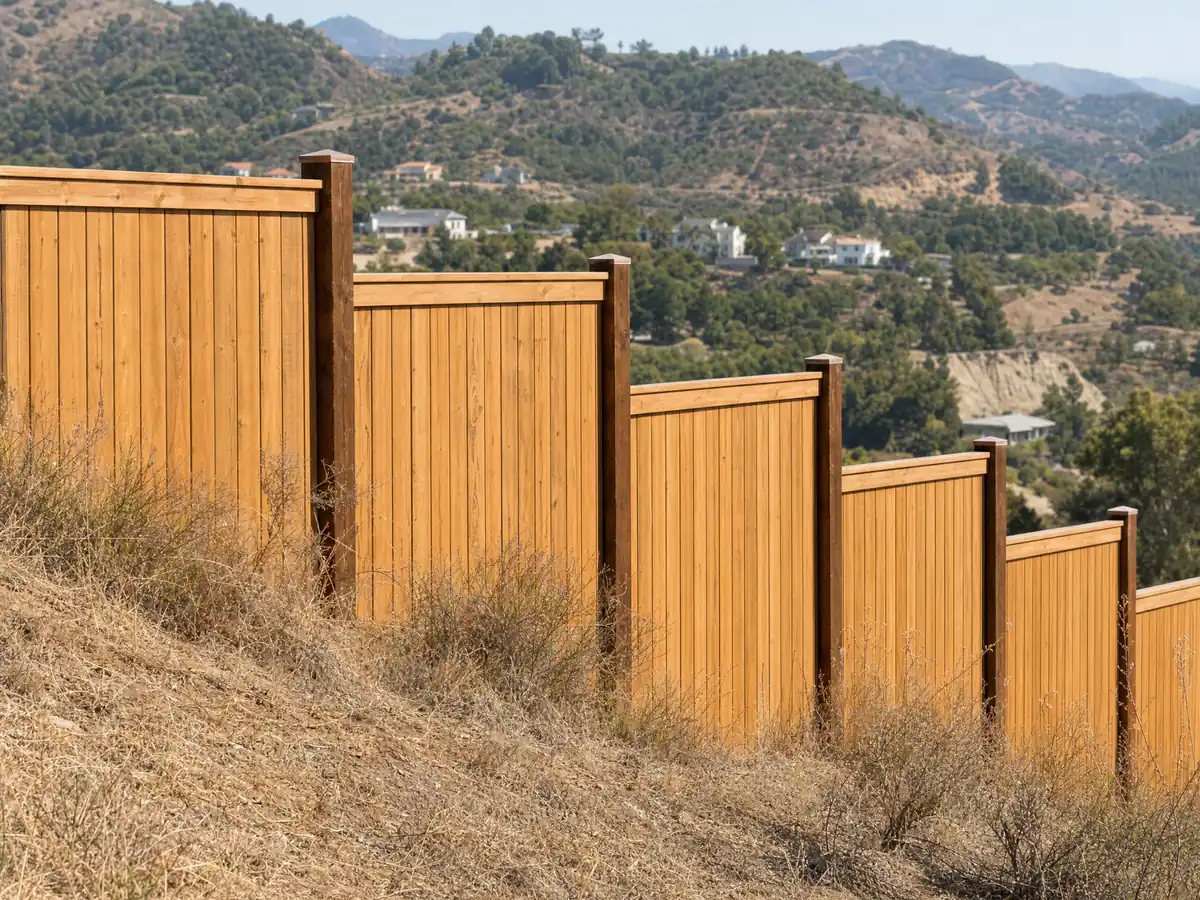
What changes when the fence is a block wall or sits on a slope?
Masonry is its own trade. CSLB class C-13 covers fencing but excludes masonry walls, which are class C-29, so a block wall means a second licensed subcontractor. The City's exemption list covers retaining walls not over 4 feet from the bottom of the footing to the top, unless they hold a surcharge, while a concrete or masonry fence above 3 feet needs a permit under 15.04.070.
On the foothill slopes, the Hillside Management overlay lists retaining walls at 3 feet 6 inches on the uphill side, 8 feet on the down slope and 5 feet where a lot slopes with the street, and asks for natural materials next to driveways and street frontage. That table is scrambled in the PDF, so confirm each figure. Municipal Code 15.04.240 puts a slope on the downhill lot unless the City Engineer waives it, and grading over 50 cubic yards needs a civil engineer's plan and a grading permit under 15.04.140.
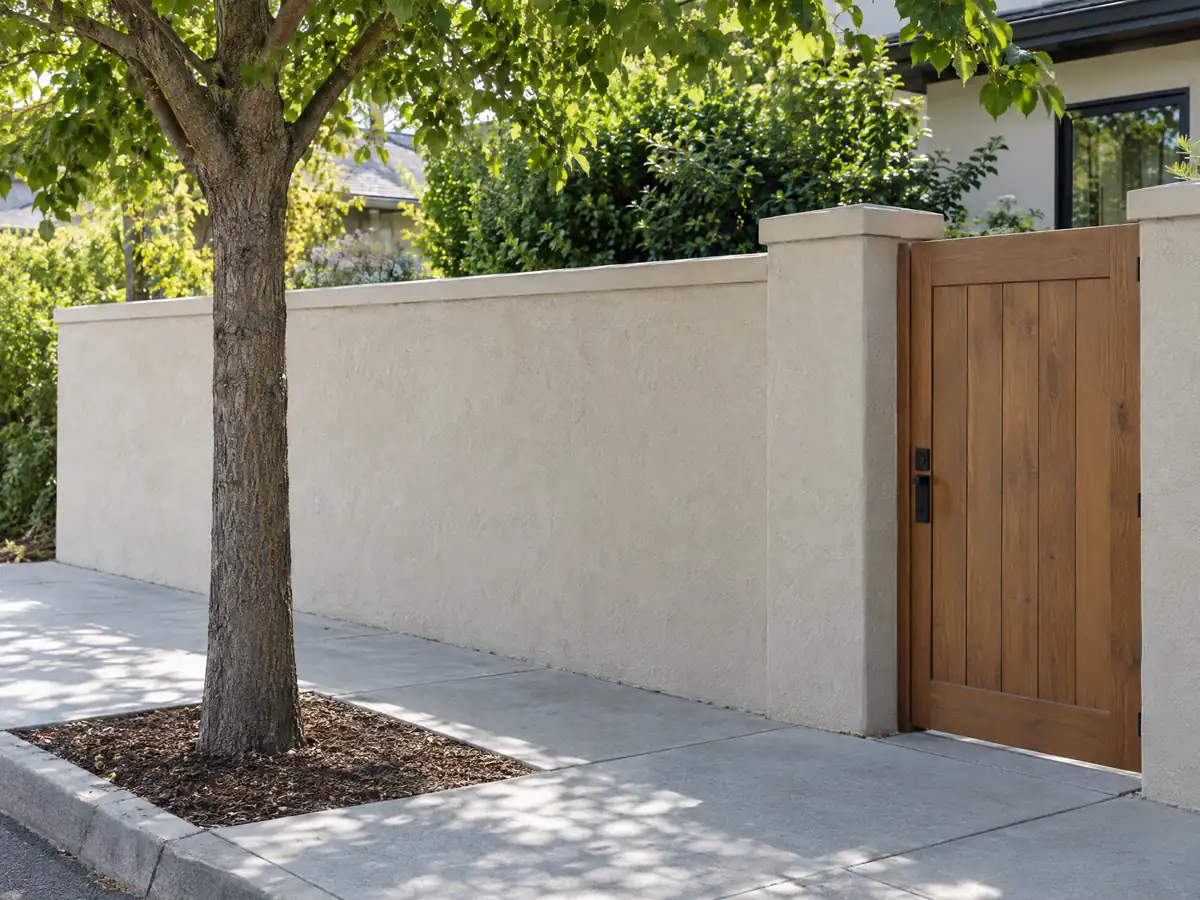
What does the pool barrier rule mean for a gate or fence replacement?
Municipal Code 15.48 requires a fence or wall at least 4 feet high around any pool or body of water deeper than 18 inches, with no gap larger than 4 inches and a design that cannot be climbed. The chapter also sets picket and rail spacing limits, 4 inches horizontally and 36 inches vertically. Gates, and the pedestrian door from the garage to the yard, must self-close and self-latch.
New pools must sit at least 5 feet from side and rear lot lines, and California Building Code section 3109 applies to single-family pool barriers through 15.04.100. Swapping a pool gate is therefore not a like-for-like job: ask whether the barrier needs a permit and an inspection, and have the fence subcontractor price a self-latching gate. The Building Official may also ask for a soils engineer's review of pool plans under 15.48.070, which matters over the Bunker Hill groundwater basin.
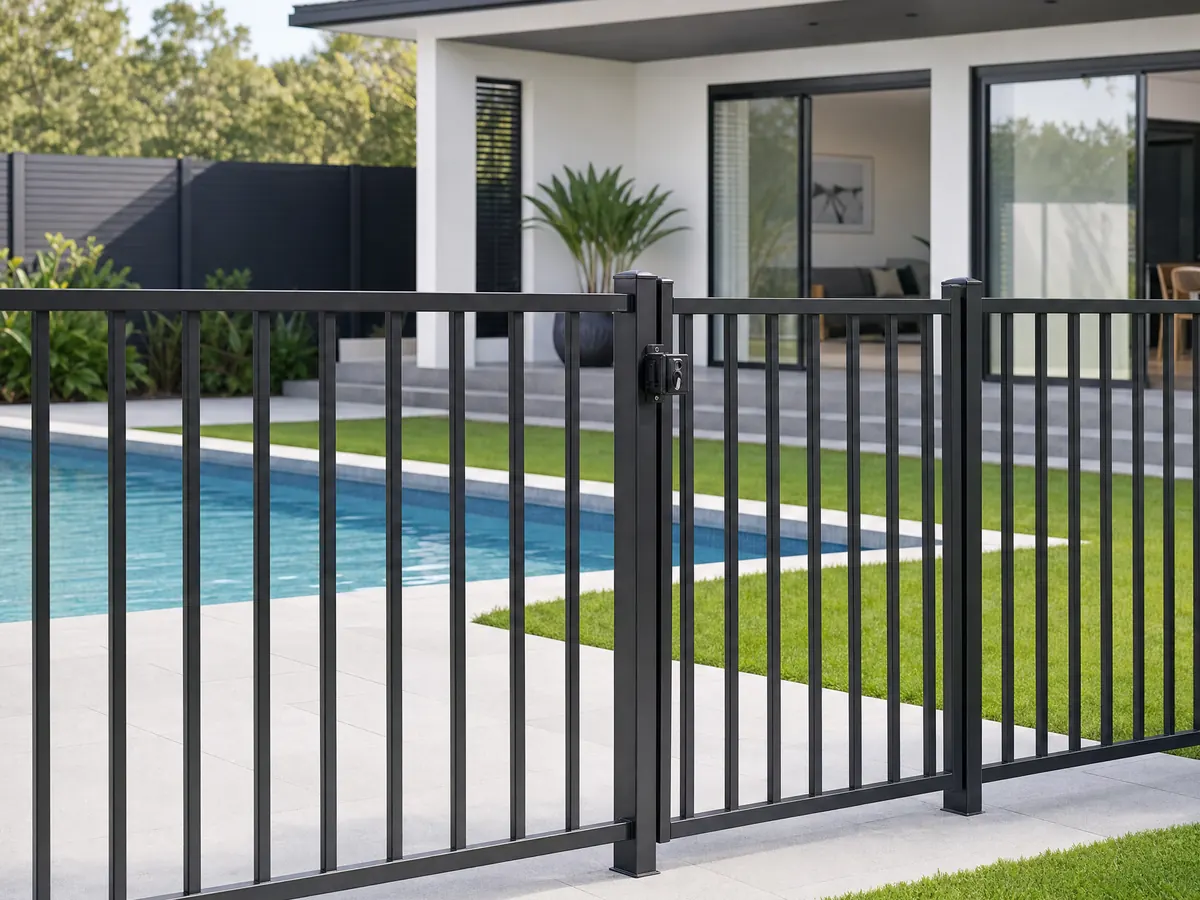
How much does fence installation cost in San Bernardino, and who pays for a shared fence?
No San Bernardino price survey turned up, so we use Los Angeles figures. Angi's Los Angeles page, updated August 4, 2026, lists a $3,051 average inside a $1,734 to $4,422 range, wood at $1,600 to $2,500 and vinyl at $1,850 to $3,400 for a standard job, and $15 to $60 a foot overall. Its national page puts a gate at $150 to $2,000 and removal of an old fence at $3 to $5 a foot. No independent per-foot source exists for block walls that we could find, so none is printed. For planning we use $25 to $55 a foot for wood or vinyl privacy runs, $12 to $30 for chain-link and $35 to $85 for aluminum or ornamental iron.
California Civil Code 841 presumes that neighbors share the reasonable cost of a boundary fence equally, and a landowner who plans to spend money on it must give each affected neighbor 30 days' written notice with the proposed solution, estimated costs and timeline. A survey or a marked property line settles where the fence goes before a crew digs. Read our license guide before choosing a company and how general contractors use subcontractors to see who does what.
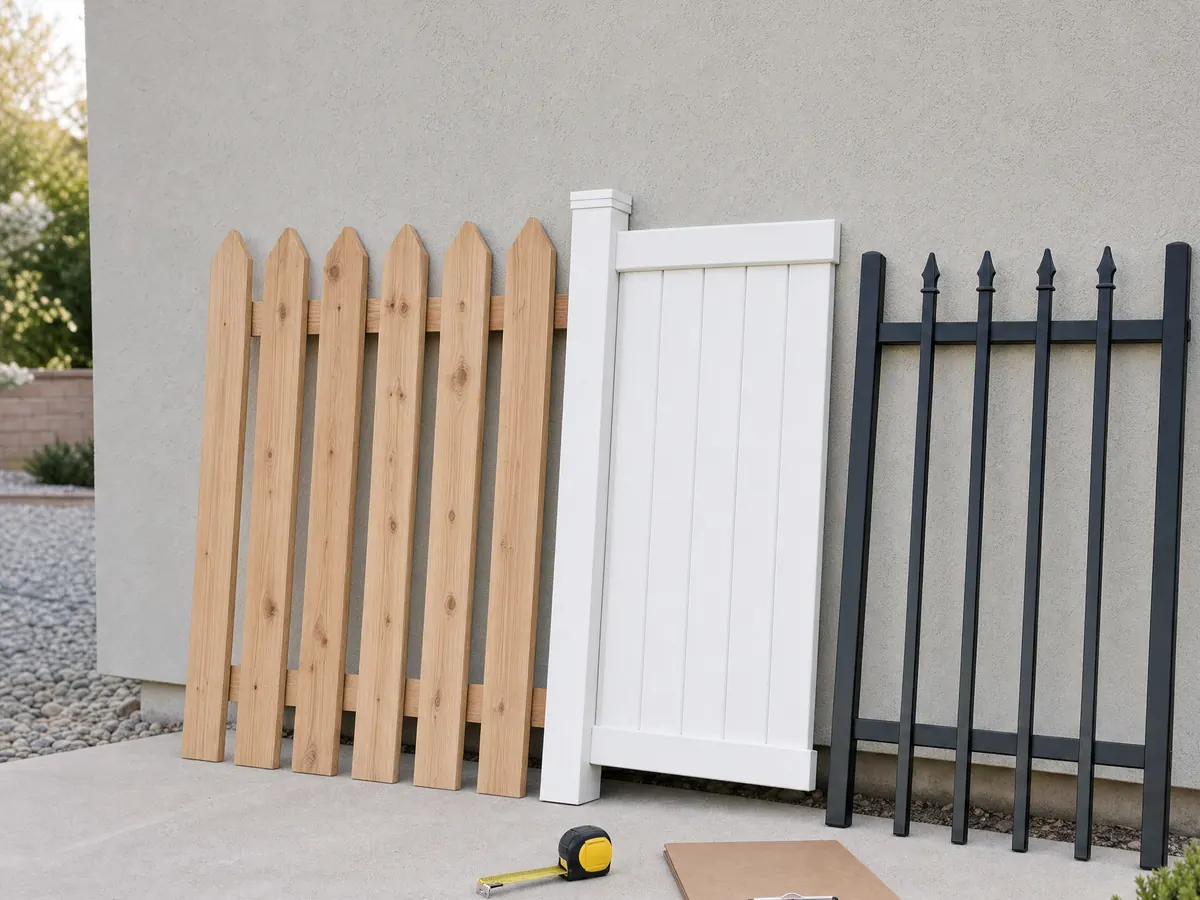
Fencing photos from San Bernardino and nearby communities
Fence scenes tied to San Bernardino places such as Perris Hill, Del Rosa, Verdemont and Shandin Hills, and to nearby communities such as Colton, Rialto, Highland and Redlands, from wood privacy runs and block walls to gates and pool barriers.
Where these San Bernardino fence figures come from
Prices for every fence material, each with a source and a date, are in the table on the fencing page, along with the figures that conflict. Fence work often pairs with a new roof or a repaint, and the San Bernardino rules for those are on the roofing page and the painting page. For a city that sets fence heights by zone and by street view, read the guide for Glendale.
| What it covers | Typical range |
|---|---|
| Wood or vinyl privacy fence, 6 feet | $25 to $55 per linear foot |
| Chain-link | $12 to $30 per linear foot |
| Aluminum or ornamental iron | $35 to $85 per linear foot |
| Typical 100-foot backyard run | $2,500 to $5,500 total |
| Block walls, horizontal slat fences, gates and openers, hillside lots | Set by the written proposal |
Other work we manage in San Bernardino
San Bernardino fencing questions, answered
Do I need a permit to build a fence in San Bernardino?
Not a building permit, for a fence up to 6 feet: Municipal Code 15.04.070 exempts it, though the City's web page says 7 feet. Masonry or concrete fences over 3 feet need a permit, and Planning must approve every fence plan. Pool barriers and tall runs are outside the exemption.
How tall can a fence be in a San Bernardino front yard?
In residential zones, 3 feet when the fence is solid and 4 feet when it is open work that passes at least 90 percent of light, under Development Code 19.20.030(8). The same limit holds on a street side yard, and the sight area at corners and driveways is limited to 2 feet 6 inches.
How tall can a backyard fence be in San Bernardino?
The Development Code table we read lists 6 feet outside the required front and street side yards and 8 feet where the lot abuts a non-residential district, but the PDF layout is scrambled. Confirm the figure with Planning for your lot, and remember foothill lots add material limits.
Do I need a permit for a block wall in San Bernardino?
Yes, when the concrete or masonry fence is more than 3 feet above grade, under Municipal Code 15.04.070, and it follows a standard or an engineered design. Retaining walls not over 4 feet from footing bottom to top are on the exempt list unless they carry a surcharge. Planning still reviews the wall.
What is the difference between a fence company and a masonry contractor in California?
A fence company holds CSLB class C-13, which excludes masonry walls, while block and stucco walls fall under class C-29 masonry. A project with both uses two licensed subcontractors. We manage the pair under one contract, and each license can be checked on the CSLB site.
How much does fence installation cost in San Bernardino?
We found no San Bernardino survey. Angi's Los Angeles page shows a $3,051 average, $1,734 to $4,422 typical and $15 to $60 a foot, while our planning range is $25 to $55 a foot for wood or vinyl privacy fence. A measured written proposal is the real price.
Who pays for a shared fence in California?
Civil Code 841 presumes neighbors share the reasonable cost of a boundary fence equally, and a landowner planning to spend money must give 30 days' written notice with the proposed solution, cost and timeline. The presumption can be rebutted, so settle height, material and cost in writing before booking a crew.
Can I build a wood fence in the San Bernardino foothills?
In Foothill Fire Zones A and B, and Zone C next to wildland, fences must be free of exposed wood under Development Code 19.15.040, and Municipal Code 15.10.080 asks for noncombustible or ignition-resistant fencing in the foothill and Very High zones. Ask the Building Division about your parcel before choosing wood.
Do I need a permit to replace a pool gate or pool fence in San Bernardino?
Ask the counter first, because the pool barrier rules in Municipal Code 15.48 apply: at least 4 feet high, gaps no larger than 4 inches and gates that self-close and self-latch. We did not find a City page that exempts a barrier swap, so assume review until the Division says otherwise.
Does Planning have to approve a fence that is exempt from a building permit?
Yes. The City's Building & Safety page says Planning Division approval is required for all fence and wall plans, even where a fence is exempt from a building permit, to confirm zoning compliance. Bring the height, material and yard location to the counter at 201 North E Street.
Ask for a fence estimate in San Bernardino
Name your part of town, the material you prefer, which side of the lot faces the street and whether a pool, slope or foothill fire zone is involved. We read the limit for that yard before we call back.