
Flooring Installationin Chino, CA
Flooring installation in Chino needs no permit for carpet or tile, but the City's exempt lists do not name hardwood, laminate or floor coatings, so call the Building Division before work starts. Former dairy ground adds a slab question, since the City's methane handout sets a 10 mil moisture barrier as its minimum. About 38 percent of homes predate 1980.
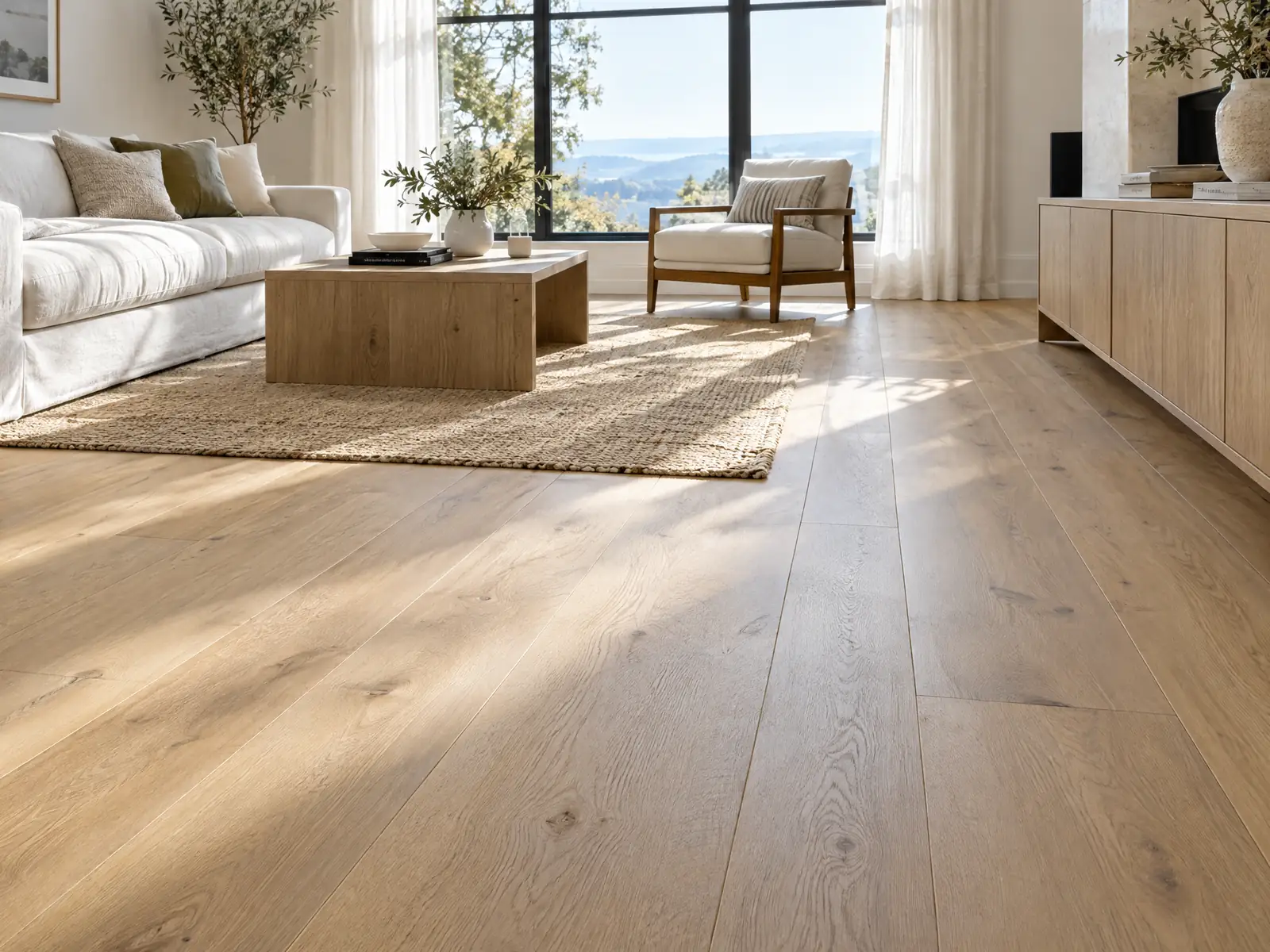
Chino's floors tell two stories. North of Schaefer Avenue, the City's Housing Element describes tracts built when Chino was known for agriculture, dairies, the airport and the California Institution for Men, while the 1970s doubled the housing stock once the SR 60 location pulled families out of Los Angeles County. The Census Bureau's 2024 five-year estimates count 28,188 homes with a median build year of 1987, and 10,608 of them, about 38 percent, went up before 1980, so plenty of carpet, vinyl and tile is now 35 to 55 years old.
MDG Builders (CSLB #1040337) is a general contractor in Tarzana. We write the scope, ask the permit questions and schedule licensed flooring and tile subcontractors, and we do not lay the boards ourselves. Start with the City of Chino Building Division, read the flooring page for materials, and see the Chino overview for the other trades we manage in the city.
What Chino's Building Division, the Chino Valley Independent Fire District, South Coast AQMD and state law say about flooring work
Where flooring permits come from in Chino: City of Chino Development Services Department, Building Division.
- Permit status: carpeting, tiling and similar finish work are exempt (15.04.180 and 15.06.030); the lists do not name hardwood, laminate or concrete floor coatings, so confirm at the counter if subfloor, structural, plumbing or electrical work is part of the job.
- Floor coatings: SCAQMD Rule 1113 defines Floor Coatings as opaque coatings for flooring including garages, decks and porches, plus clear coatings for concrete flooring, with VOC limits in its Table of Standards 1; any garage floor coating job in Chino is subject to it.
- Slabs on former dairy and farm land: under the City's Methane handout, sites flagged by the Phase 1 assessment as former dairy, poultry or hog ranch or manure sites need a moisture barrier at least 10 mil thick with sealed utility penetrations as the minimum mitigation concept, with the report and mitigation approved before permit issuance, so finish flooring over slabs on such sites should be planned around that barrier.
- Garage conversions and parking: Municipal Code 20.18.030 requires two garage spaces per single-family dwelling and 20.18.040 requires replacement garage parking when an attached garage becomes habitable space (other than an ADU or JADU), so converting a garage floor to living space is not a flooring-only decision.
- Renovation dust and asbestos: SCAQMD Rule 1403 (amended October 5, 2007) covers asbestos surveys, notification, removal procedures and waste handling for building demolition and renovation, which applies when old flooring or underlayment may contain asbestos.
Does a former dairy site change what goes under a Chino floor?
Sometimes, and Chino writes the question into a handout. The City's Methane Assessment and Mitigation handout asks for a Phase 1 report on whether a site was ever a dairy, poultry or hog ranch, a manure stockpile or burial site or an agricultural pond. It caps organics at 2 percent in soils reports and ties mitigation to measured methane: a moisture barrier at least 10 mil thick with sealed penetrations below 15,000 ppm, and special remediation above that or on burial sites, ponds and lowlands.
The history explains the paperwork. The EPA's Santa Ana Region summary says the Chino Basin once held about 350 dairies and more than 300,000 cows across roughly 20 square miles, and that dairies had dropped to 86 by 2015. A 2000 UC farm advisor paper had named residual methane in vacated dairy soil as a homebuyer worry.
For a floor, the handout is a permit-time rule for new development, with test reports and mitigation approved by the Building Division before a permit issues. We found no rule that reaches a floor swap in an older house. If your lot was farm or dairy ground, ask the Building Division whether a methane report or barrier is on file, and choose underlayment and adhesive around the answer. Rule 1127 is the air district's livestock waste rule, not a building rule.
- Was the lot ever a dairy, poultry or hog ranch?
- Is a methane report or barrier on file with the Building Division?
- What did the slab moisture test read before the adhesive was chosen?
Do you need a permit to replace flooring in Chino?
For carpet and tile, no. For everything else, ask. Chino's exempt-work lists in Municipal Code 15.04.180 and 15.06.030 name painting, papering, tiling, carpeting, cabinets, counter tops and similar finish work, but they never mention hardwood, laminate, vinyl plank or concrete floor coatings. We read that code on the gocodebook.com mirror, a third party, because the City's official Municode copy blocked our request, so confirm the wording with the City.
The Building Division's FAQ says almost all work needs a permit unless the code exempts it, and it invites homeowners to call 909-334-3251 or send a sketch to find out. That FAQ was revised in January 2020, so its details may be dated. It says a permit lapses 180 days after issuance or after work stops, with one free 180-day extension when requested in writing before expiry. Subfloor, plumbing or electrical work under the covering is a separate question from the covering itself.
Starting early is expensive. Section 15.04.185 lets the Building Official charge a penalty equal to double the permit cost, and the $1,000 ceiling for work without a license in Business and Professions Code 7048 ends once a permit is required. The City's fee schedule effective July 1, 2026 lists $67.94 to issue each electrical, plumbing or mechanical permit.
Can you refinish old hardwood in an older Chino tract house or downtown home?
Often, once you know how much wear layer is left. The Census estimates count 461 homes from 1939 or earlier, 502 from the 1940s and 1,403 from the 1950s, which is 2,366 homes before 1960, about 8 percent of Chino. Original boards exist, but they are a small share in a city where the 1970s alone built 5,970 homes. A cut edge at a floor register shows how many sandings are left.
Chino's old center is the Downtown Overlay around Central Avenue and Riverside Drive, which sets its own lot, setback and compatibility rules for residential lots. We found no historic preservation chapter in Title 20, and the code mentions historic districts only as an exception in the ADU parking rule, so we cannot name a house that carries a review duty for interior work. The General Plan was not read and could say more.
North of Schaefer Avenue, the Housing Element says much of the pre-1970 housing built for farms, dairies and the airport is several decades old and now sits in low and moderate income CDBG target areas. Old wood there can hide uneven joists and patched boards, so ask the installer to walk the floor with a level before anyone prices a sand and finish.
- Is any wear layer left above the nail heads?
- Is the house downtown or in an older tract north of Schaefer Avenue?
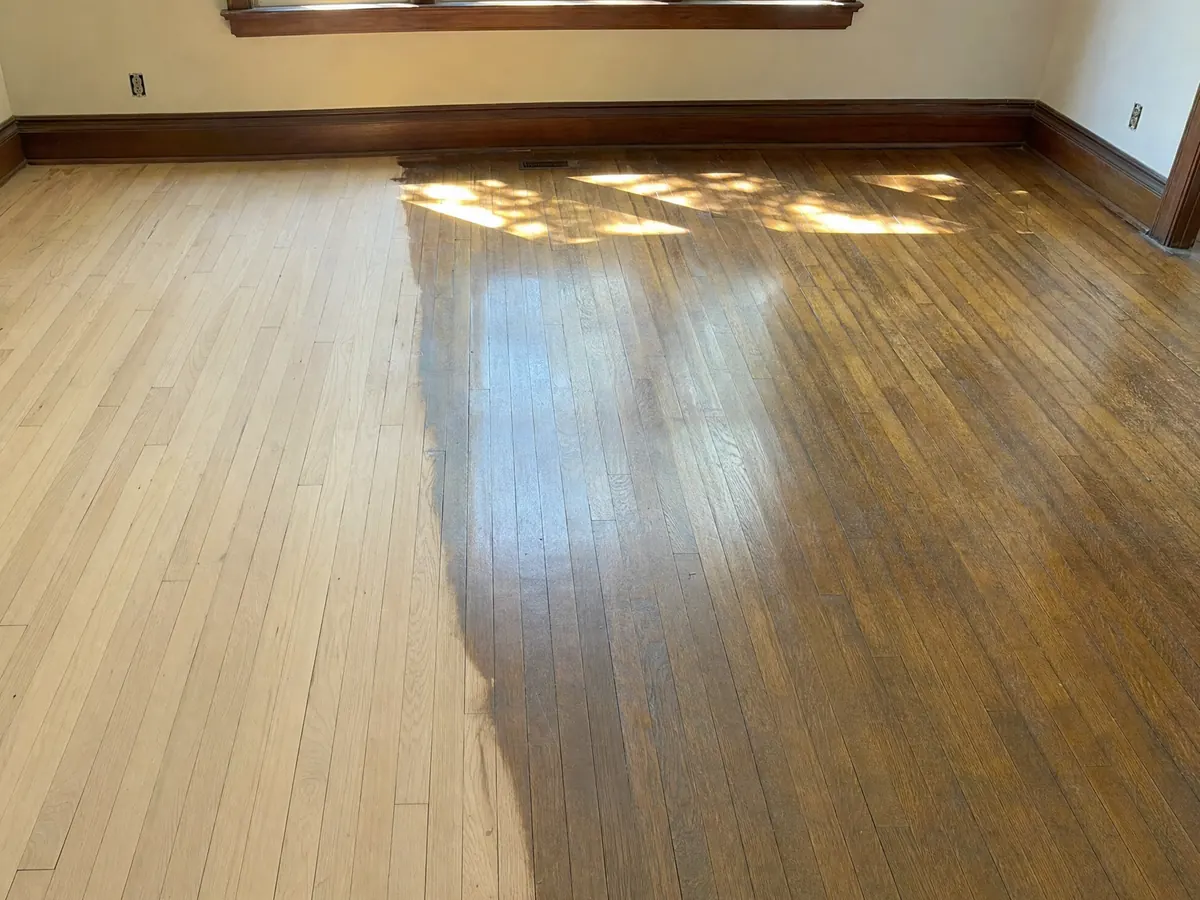
What is under the old floor in a 1970s or 1980s Chino house?
Layers, possibly asbestos, and a lot of dust. Chino's biggest decade is the 1970s with 5,970 homes (21.2 percent), followed by 4,681 from the 1980s and 2,272 from the 1960s, so a tear-out often meets resilient tile, sheet vinyl and black adhesive from those years. South Coast AQMD Rule 1403, with a header date of October 5, 2007, covers asbestos surveys, notification, removal procedures and waste handling for demolition and renovation. Send a sample of suspect tile or adhesive to a lab before anyone sands or scrapes.
Dust has its own rule. Rule 403 on fugitive dust applies to grading, demolition and slab work in this air district, and the City's Air Quality Permit Checklist says that producing dust, fumes or strong odors means calling the District at 800-388-2121 before an occupancy permit. For a home floor, the useful question is how the crew contains grinding dust and who disposes of the waste.
Debris is a City matter too. Municipal Code 8.50.040 calls construction debris or materials left in a yard for more than seven days a nuisance unless a five-foot wall or opaque fence screens them, with materials stacked six inches off the ground. Put the bin location and the haul date in the proposal.
- Does the house predate 1980?
- Who removes a layer that tests positive?
- Where does the bin sit, and for how many days?
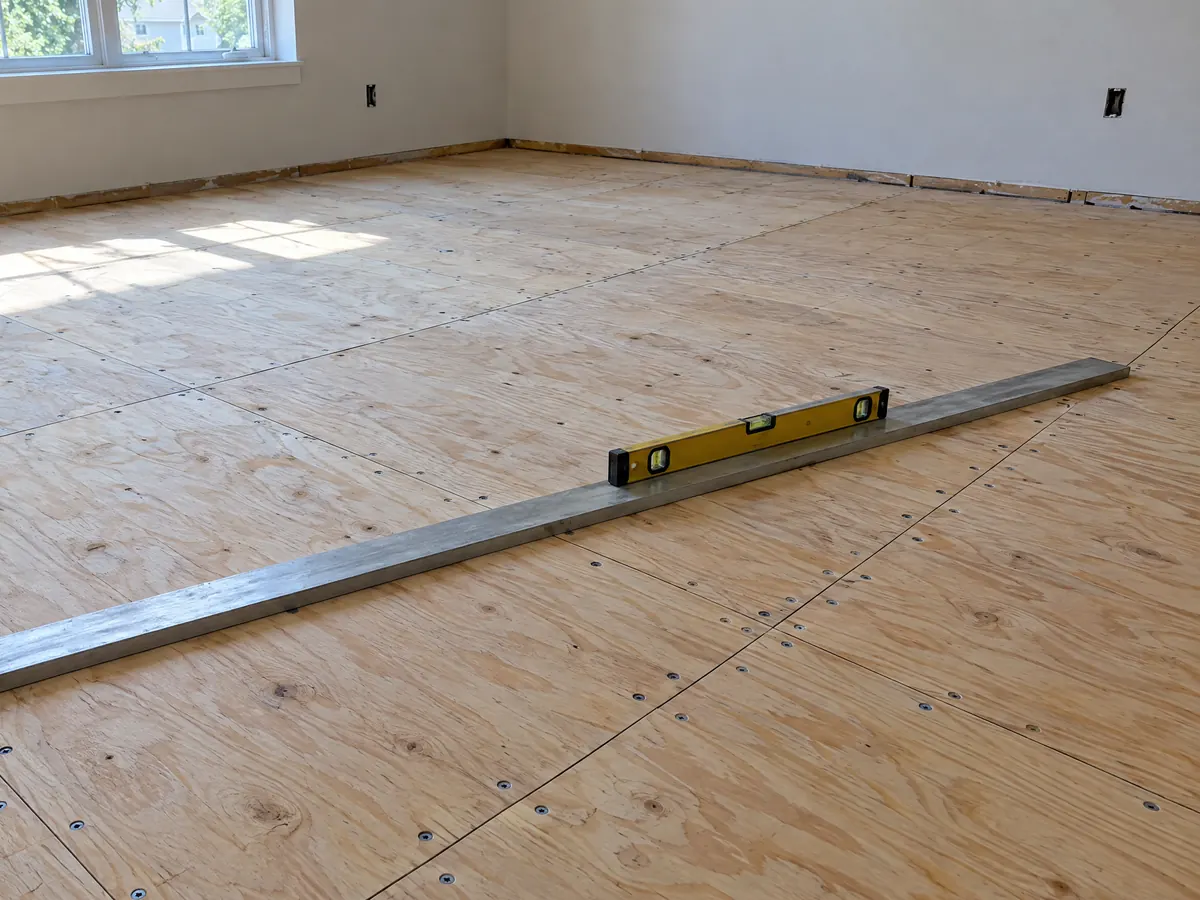
Do Chino's heat, rain and termites change how a floor goes in?
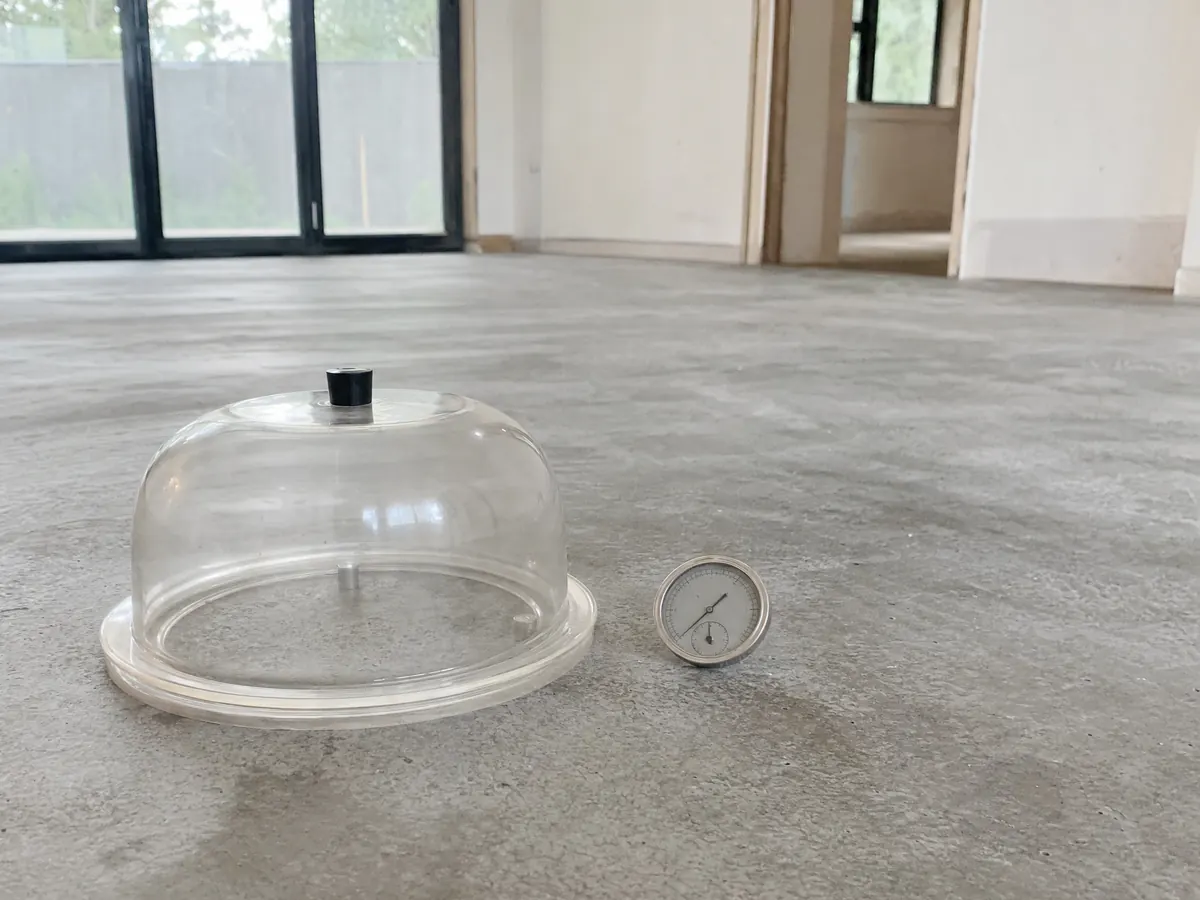
They set the tests and the schedule. NOAA's 1991 to 2020 normals for Chino Airport give 9.98 inches of rain a year, 7.97 of it from December through March, with August highs of 96.3 F, about 98.9 days at 90 F or hotter and 23.3 days at 100 F or hotter. A dry August proves nothing about a slab, so have the installer measure before choosing plank, vinyl or adhesive, using ASTM F2170 probes or an F1869 calcium chloride dish. The flooring or adhesive maker sets the limit, and for wood over concrete the NWFA's concrete subfloor guide strongly recommends a vapor retarder rated 0.13 perms or less.
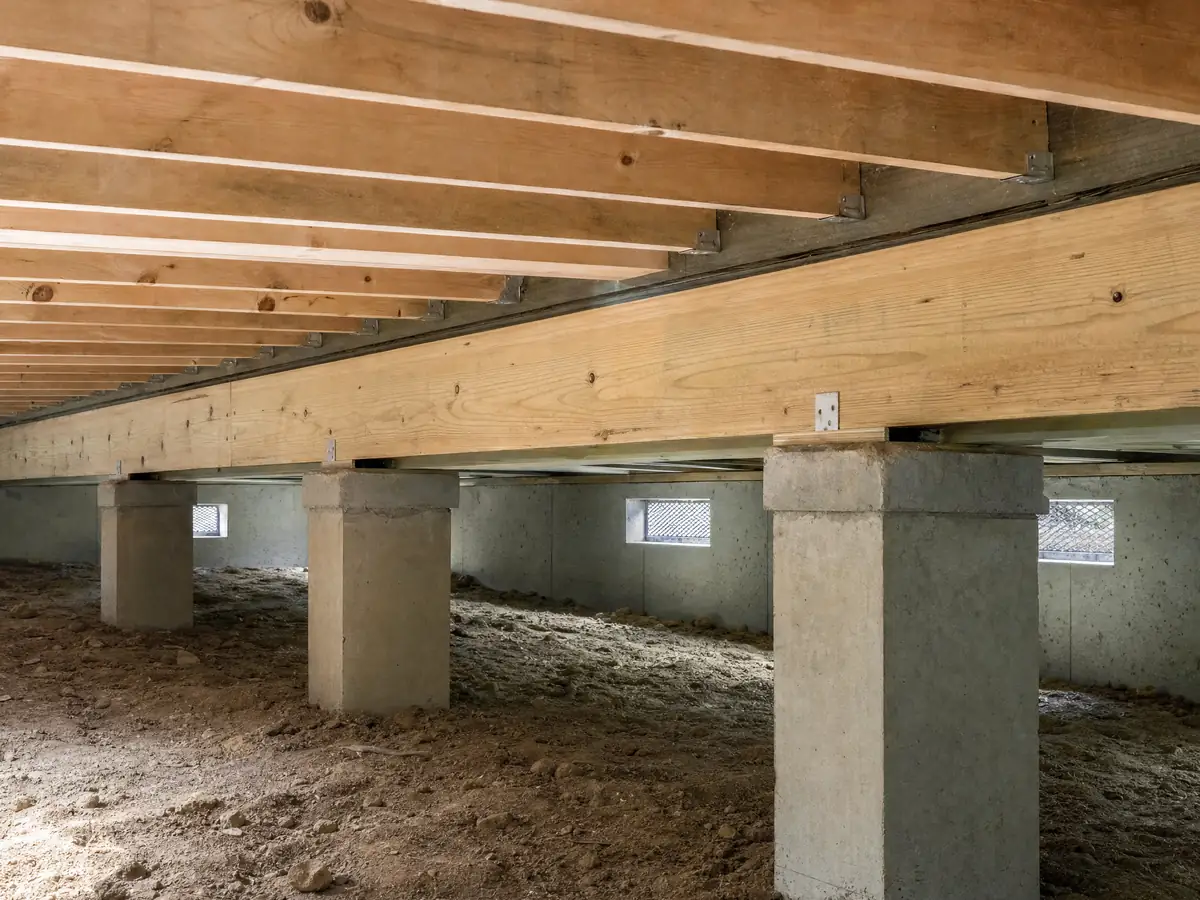
Wood is the other exposure. The City's residential design table rates termite damage Very Heavy and lists a frost line of 12 to 24 inches, so sill plates, raised-floor framing and the subfloor under a bathroom deserve a probe before new boards go down. The sources we read do not say how many Chino homes sit on raised floors instead of slabs, so lift a register cover or a closet corner on the first visit.
Sun through a west-facing slider can heat boards and adhesive. We found no Chino source on particular products, so the maker's installation sheet decides.
Can you put hard flooring in a Chino condo, apartment or rental?
Only with the building's permission and the maker's sheet on your side. The estimates count 4,097 homes in buildings of five or more units (14.5 percent), 1,733 in buildings of two to four units and 422 mobile homes, and the renter share runs from about 28 to 36 percent depending on which Census file you read. Many Chino floors have a neighbor underneath or an owner who must say yes.
Civil Code section 4765 gives an owner a written decision on an architectural request to an association, and a tenant needs the owner's written consent before anything comes out. The code requires a property owners association and City-reviewed CC&Rs only for new common interest subdivisions, and we found no count of HOA tracts in Chino, so ask your own management for the documents.
Hours matter in a shared building. Municipal Code 15.44.030 allows construction from 7:00 a.m. to 8:00 p.m. Monday through Saturday and none on Sundays or federal and state holidays unless the Director approves an exception. Construction noise is exempt from the noise chapter only inside those hours and within 65 dBA on residential property, and an association may set shorter hours.
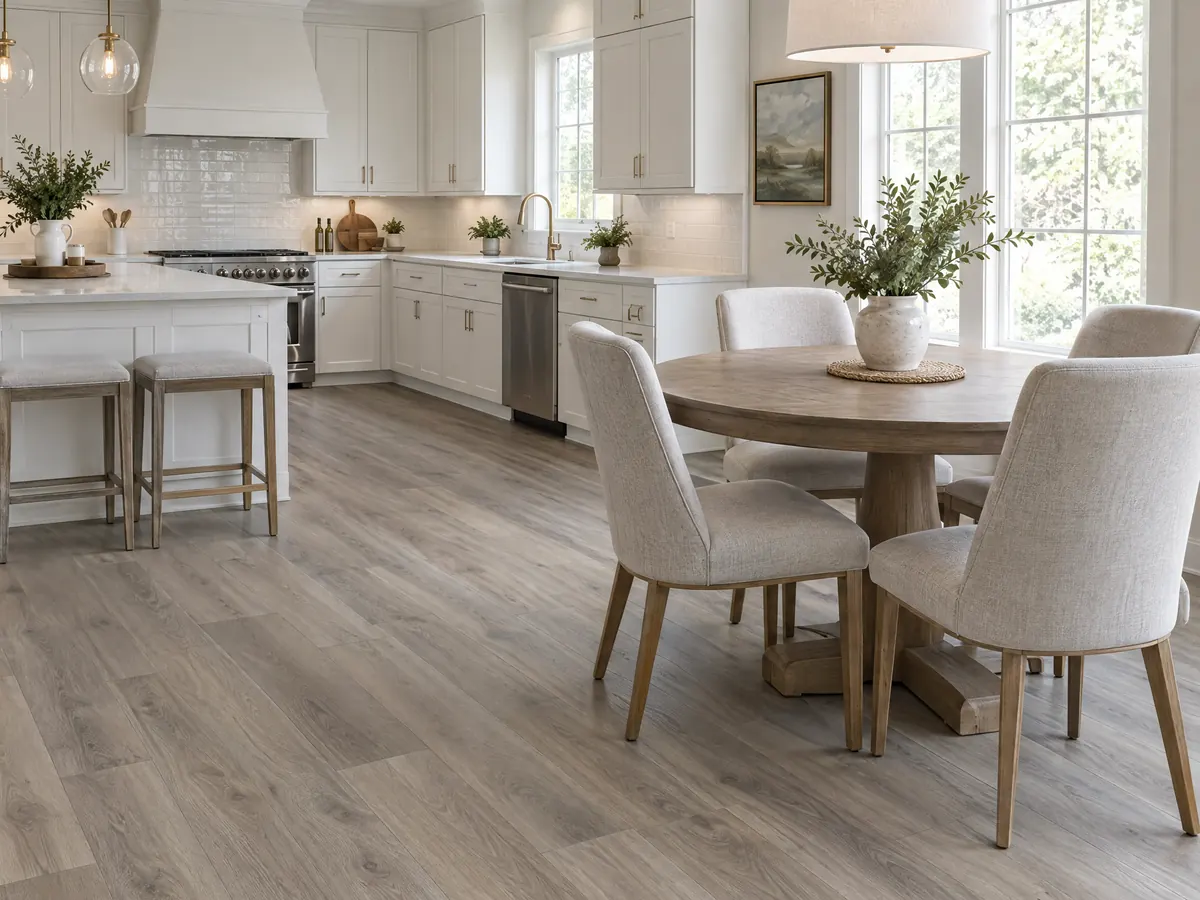
What does a flooring contractor charge in Chino, and who needs which license?
No Chino price study with a stated method turned up, so our anchor is Angi's Los Angeles pages (July 8, 2026), which we rate medium to low in confidence and which may differ from Inland Empire bids. Those pages show labor of $3 to $9 per square foot, with installed engineered hardwood at $10 to $18, installed solid hardwood at $12 to $22 and refinishing at $4 to $8.
Angi's laminate page of September 15, 2026 lists $455 to $685 per 200 square feet to remove an old floor, so haul-off deserves its own line, along with slab testing, leveling, stairs and transitions. Chino's energy rule bites only on bigger jobs: an alteration valued at $65,000 or more triggers an extra spend of 10 percent of valuation on energy upgrades, capped at $20,000, so flooring bundled with a kitchen and bathroom can cross it.
Contracts follow state law: Business and Professions Code 7159.5 limits a home improvement down payment to $1,000 or 10 percent of the price, whichever is less. CSLB's C-15 class covers carpet, resilient flooring and wood floors, ceramic tile belongs to C-54, and our guide to checking a contractor license walks through the CSLB record.
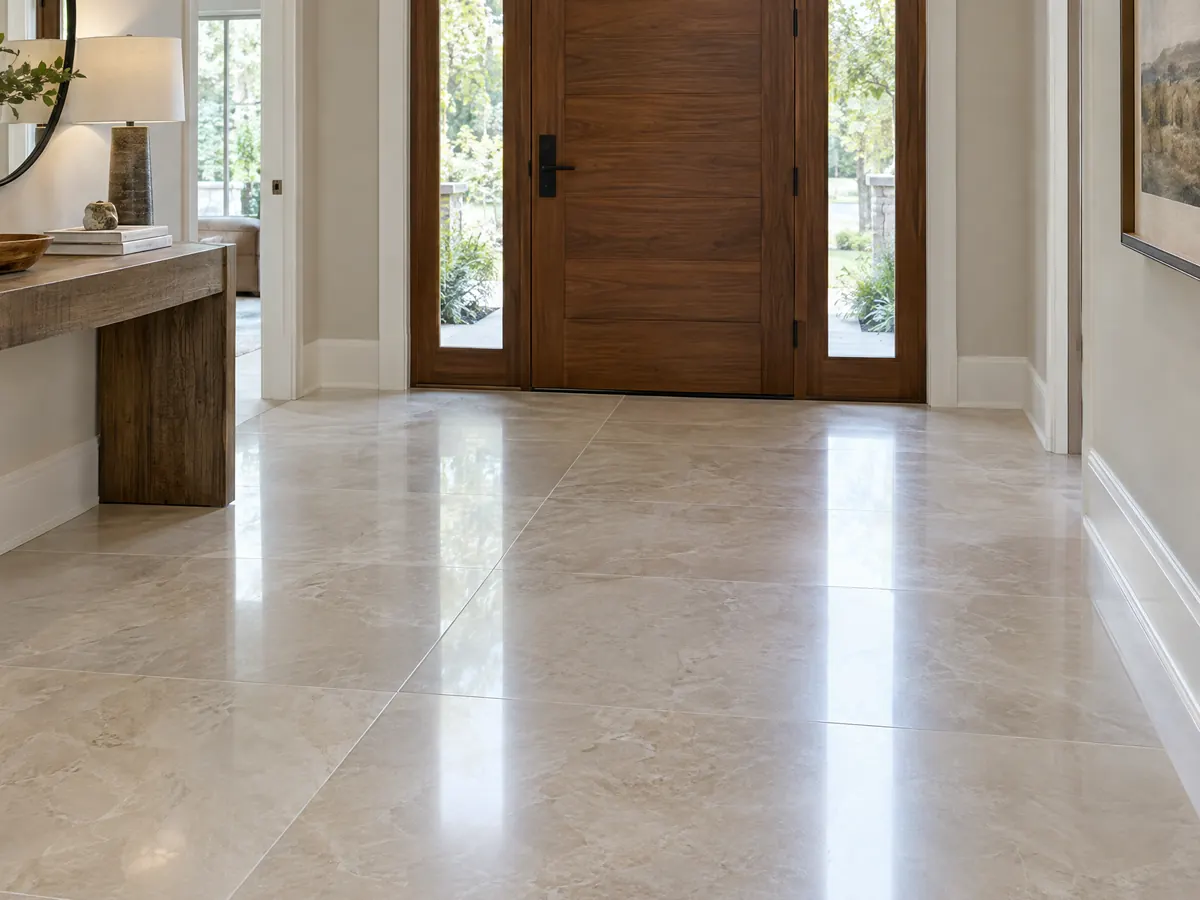
Flooring photos from Chino and nearby communities
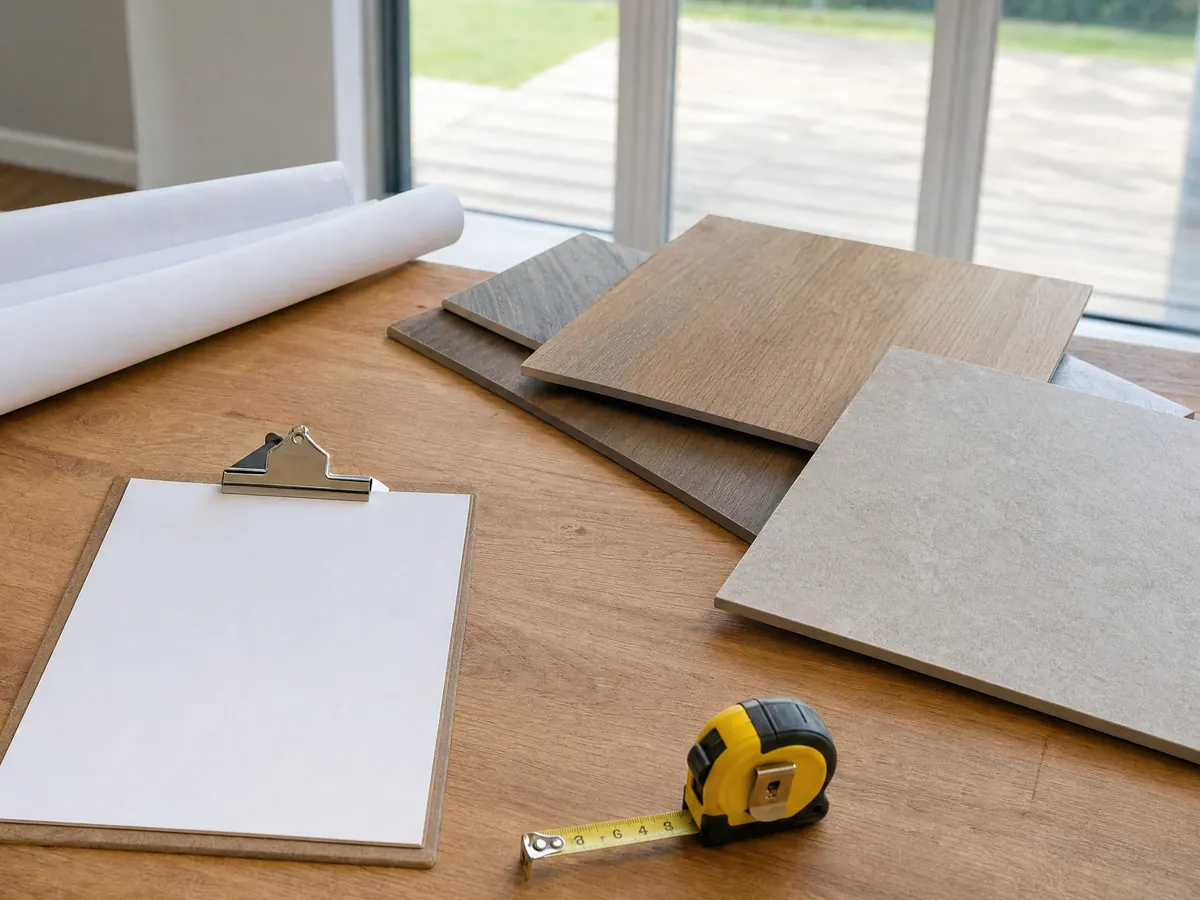
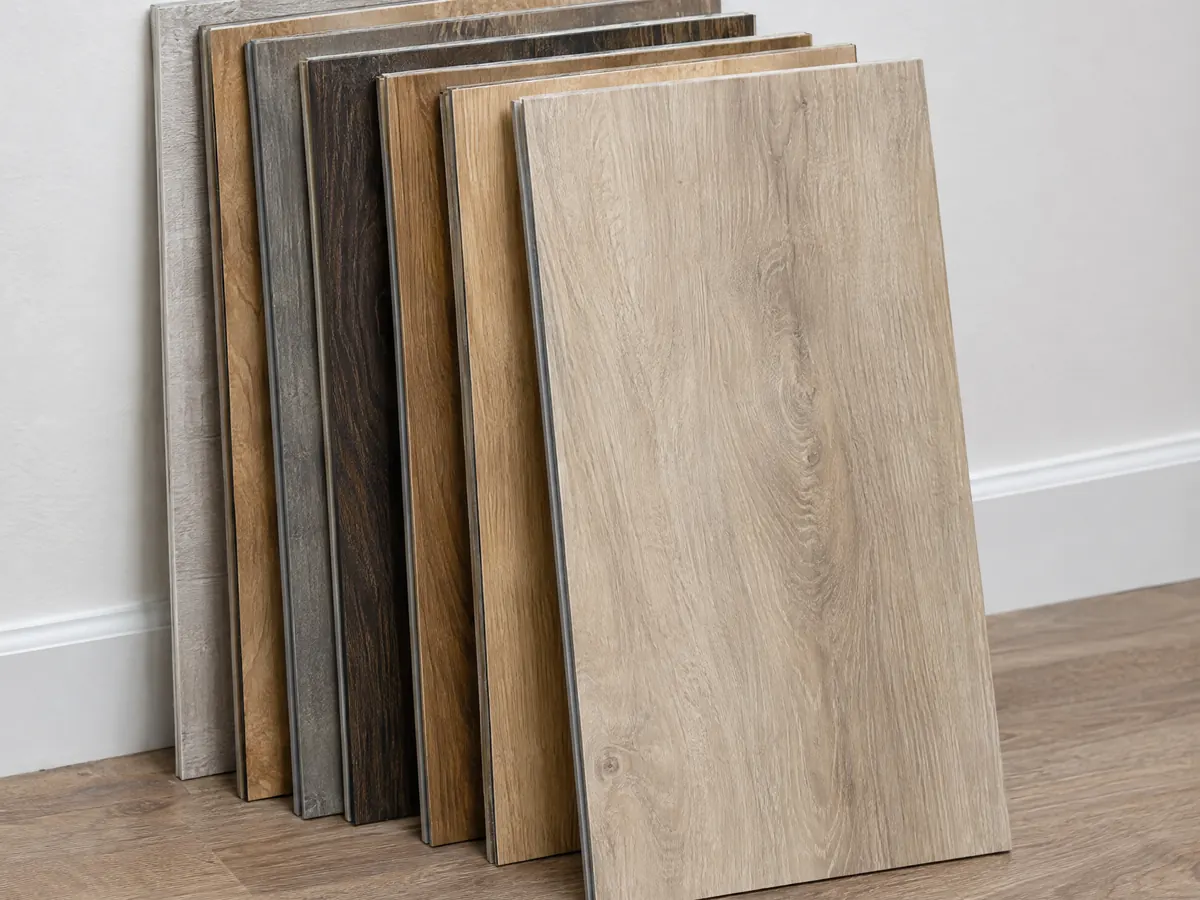
Plank samples, slab moisture tests, tile and finished rooms from Chino and the communities around it, shown at the steps where the decisions get made. Tap any photo to enlarge it.
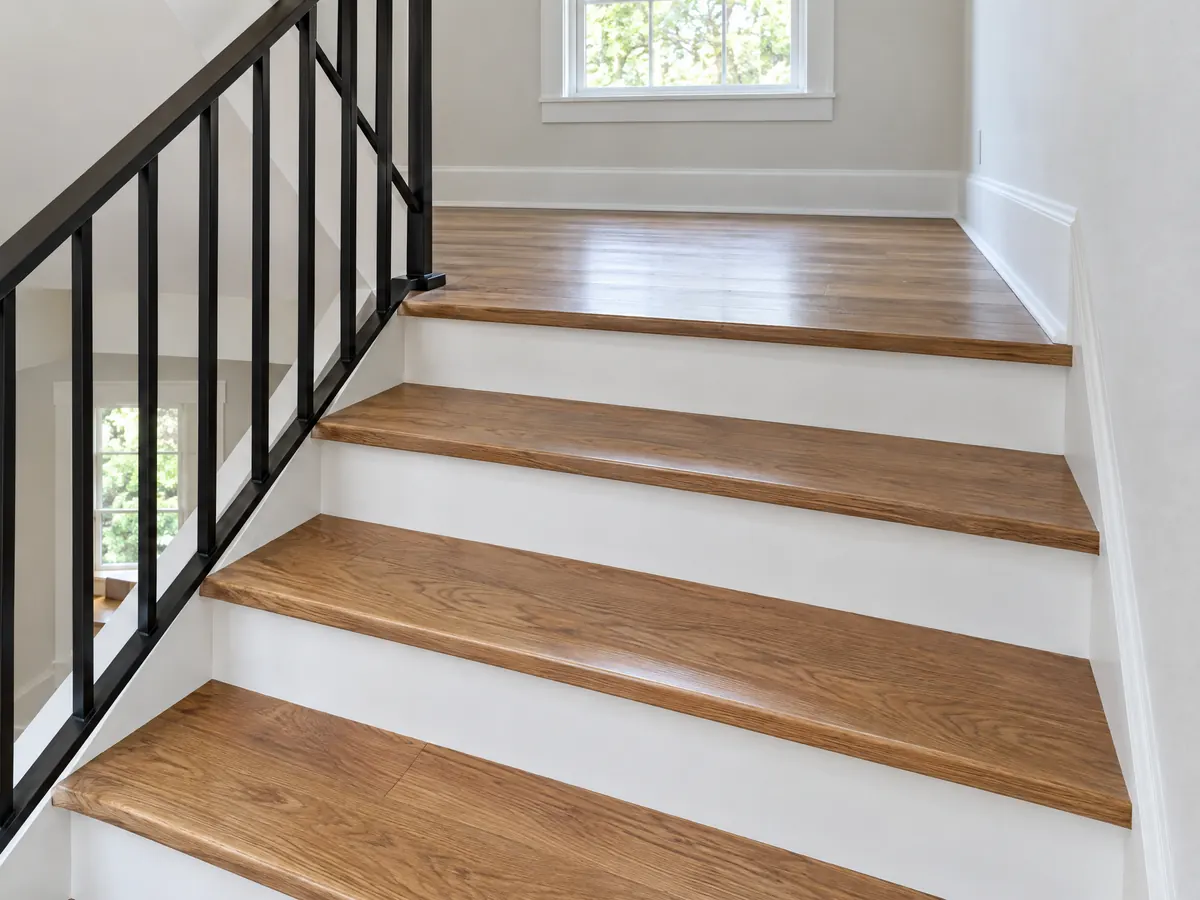
What flooring costs around Chino
The dollar figures on this page are Los Angeles planning ranges from our flooring page, not a Chino bid, so ask for a written proposal that prices hauling, slab testing, leveling and any subfloor repair on separate lines. New floors often go with concrete work in Chino or decks in Chino. Neighbors to compare are flooring in Ontario, flooring in Eastvale, flooring in Pomona and flooring in Norco, with flooring in Los Angeles as the big-city benchmark. The flooring cost guide weighs refinishing against replacement, and the subcontractor guide explains who does which layer.
| What it covers | Typical range |
|---|---|
| Installation labor only | $3 to $9 per sq ft |
| Solid hardwood, installed | $12 to $22 per sq ft |
| Engineered hardwood, installed | $10 to $18 per sq ft |
| Refinishing existing hardwood | $4 to $8 per sq ft |
| Laminate, whole project | $2,000 to $5,500 |
| Hardwood, whole project | $3,153 to $8,496 |
| Removing the old floor | $455 to $685 per 200 sq ft |
| Tile | No sourced Los Angeles range |
Chino flooring questions, answered
Do I need a permit to replace flooring in Chino?
Not for carpet or tile, which Chino's exempt lists name. Hardwood, laminate, vinyl and floor coatings appear on neither list, so call the Building Division at 909-334-3251 with your scope, especially if subfloor, plumbing or electrical work is involved. Starting without a required permit can cost double the permit fee under Municipal Code 15.04.185.
How much does it cost to have flooring professionally installed?
On Angi's Los Angeles pages (July 2026), installer labor is $3 to $9 per square foot, engineered hardwood $10 to $18 installed and solid hardwood $12 to $22. We found no Chino study with a stated method, so treat this as medium to low confidence. Tear-out, haul-off, leveling and stairs usually arrive as separate lines.
How much to refloor a 2000 sq. ft house?
At Los Angeles ranges, labor alone for 2,000 square feet is $6,000 to $18,000, installed engineered hardwood is $20,000 to $36,000 and installed solid hardwood is $24,000 to $44,000. None of that is a Chino bid. Furniture moves, stairs and subfloor repair change the total, so each needs its own line.
Can you put flooring over concrete?
Yes, once the slab has been tested and prepared. The flooring or adhesive maker sets the moisture limit, so the installer should record ASTM F2170 probe readings or an F1869 dish result first. About 38 percent of Chino homes predate 1980, and old adhesive on those slabs may need a lab check before it is sanded.
Why does moisture come through a concrete floor?
Water vapor rises from damp ground under the slab. Chino Airport's NOAA normals show 9.98 inches of rain a year, nearly 8 of them from December through March, and irrigation adds more, so a dry summer tells you little. Only a reading on your own slab, taken before you pick plank, vinyl or adhesive, answers the question.
Does former dairy land affect a floor in Chino?
It can affect the slab, though we found no rule aimed at floor replacement. The City's methane handout asks for a Phase 1 dairy history, a 2 percent organics cap and a moisture barrier of at least 10 mil, and it applies at permit time for new development. Ask the Building Division what is on file for your address.
Can I install hardwood flooring in a Chino condo or apartment?
Only with written approval from the association or the owner, and the building's sound rule decides. About 5,800 Chino homes sit in buildings of two or more units, by our addition of the Census counts. We found no City sound standard for replacement floors, so ask management for the required underlayment and keep the approval.
Is refinishing hardwood floors worth it?
Often, when the boards still have a wear layer for another sanding, which a cut edge at a register will show. Angi's Los Angeles pages put a refinish at $4 to $8 per square foot against $12 to $22 for new solid boards. Check for termite damage and uneven joists first, since both change the plan.
What license does a flooring contractor need in California?
A current California contractor license, usually C-15 for carpet, resilient floors and wood, or C-54 for ceramic and stone tile. Look the number up on the CSLB site and ask every subcontractor for a license number and a certificate of insurance. Unlicensed work is capped at $1,000 and ends once a permit is required.
Can I turn my Chino garage floor into living space?
Not as a flooring-only job. Municipal Code 20.18.030 requires two garage spaces per single-family home, and 20.18.040 requires replacement parking when an attached garage becomes habitable space, unless it becomes an ADU or JADU. Garage floor coatings also fall under South Coast AQMD Rule 1113, so ask for the product's VOC figure.
Tell us the home age, the rooms and what is under the floor now
Say whether it is a house, condo or rental, roughly when it was built, which rooms you want done and what covers the floor today. Slab tests, old adhesive, haul-off and association approval all come up at the first visit.