
Flooring Installationin Chino Hills, CA
Flooring installation in Chino Hills usually needs no building permit for the covering alone, because the City's exempt list names tiling, carpeting and similar finish work. A floor that is part of a remodel, or that moves plumbing or framing, is permitted with that work. About 53.5 percent of homes date from 1980 to 1999, so test the slab first.
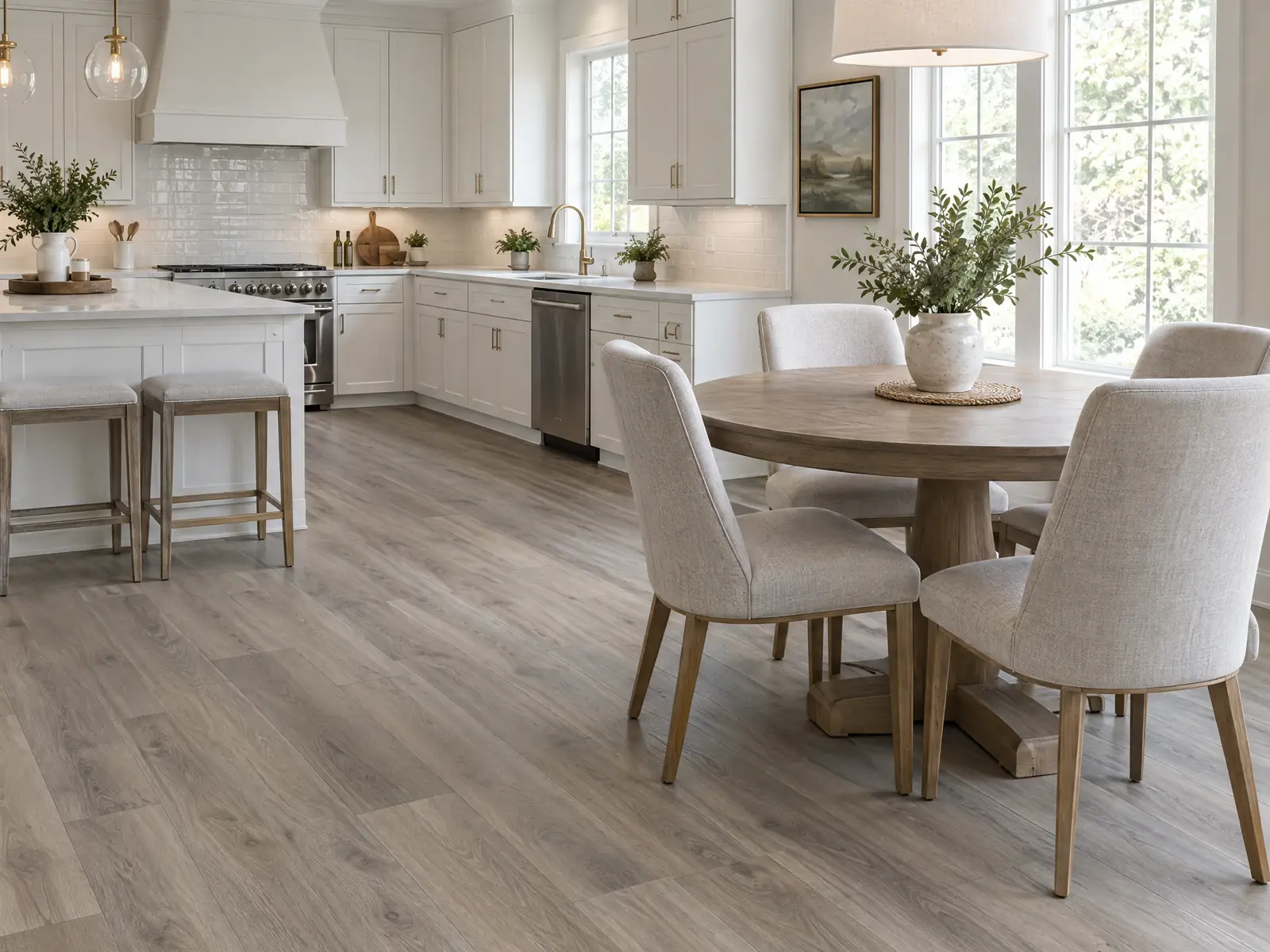
Chino Hills is a young city on old ranch land. The General Plan traces the area from Rancho Santa Ana del Chino through Gird's Chino Ranch to Boys Republic in 1909 and the Sleepy Hollow cabin resort of 1922, and the City's own page says it incorporated on December 1, 1991. The Census Bureau's 2024 estimates count 24,121 homes, about 53.5 percent of them (12,903) built from 1980 through 1999, so most floors here are between roughly 25 and 45 years old.
MDG Builders (CSLB #1040337) is a general contractor based in Tarzana. On a Chino Hills floor we write the scope, bring the permit questions to the City's Building and Safety Division and manage the schedule, while licensed flooring and tile subcontractors do the laying. The flooring page covers products, and the Chino Hills overview lists the other trades we coordinate in the city.
What Chino Hills' Building and Safety Division, South Coast AQMD and state law say about flooring work
Where flooring permits come from in Chino Hills: City of Chino Hills Building and Safety Division (Community Development Department).
- Tiling and carpeting are on the exempt-from-permit list, while the City names interior remodels as permit work; so new floor finishes alone need no building permit in Chino Hills, but a flooring job that is part of a remodel is permitted with that remodel (permit page and exempt-work handout).
- SCAQMD Rule 1113's Table of Standards (page headed 'VOC Limits as of February 5, 2016') lists 50 grams per liter for floor coatings, 100 for waterproofing concrete and masonry sealers and 100 for tile and stone sealers, which is the limit that applies to epoxy or sealer products applied in Chino Hills garages and floors (current limits should be confirmed; the rule text was not opened).
- Garage conversion floors: when a garage becomes an ADU the garage door must be removed and replaced with a wall containing a window or door that matches the house front, and the unit must meet CBC requirements for converting a garage to habitable space (CHMC 16.10.140(Q), third-party mirror); replacement parking is not required.
Does replacing flooring in Chino Hills need a building permit?
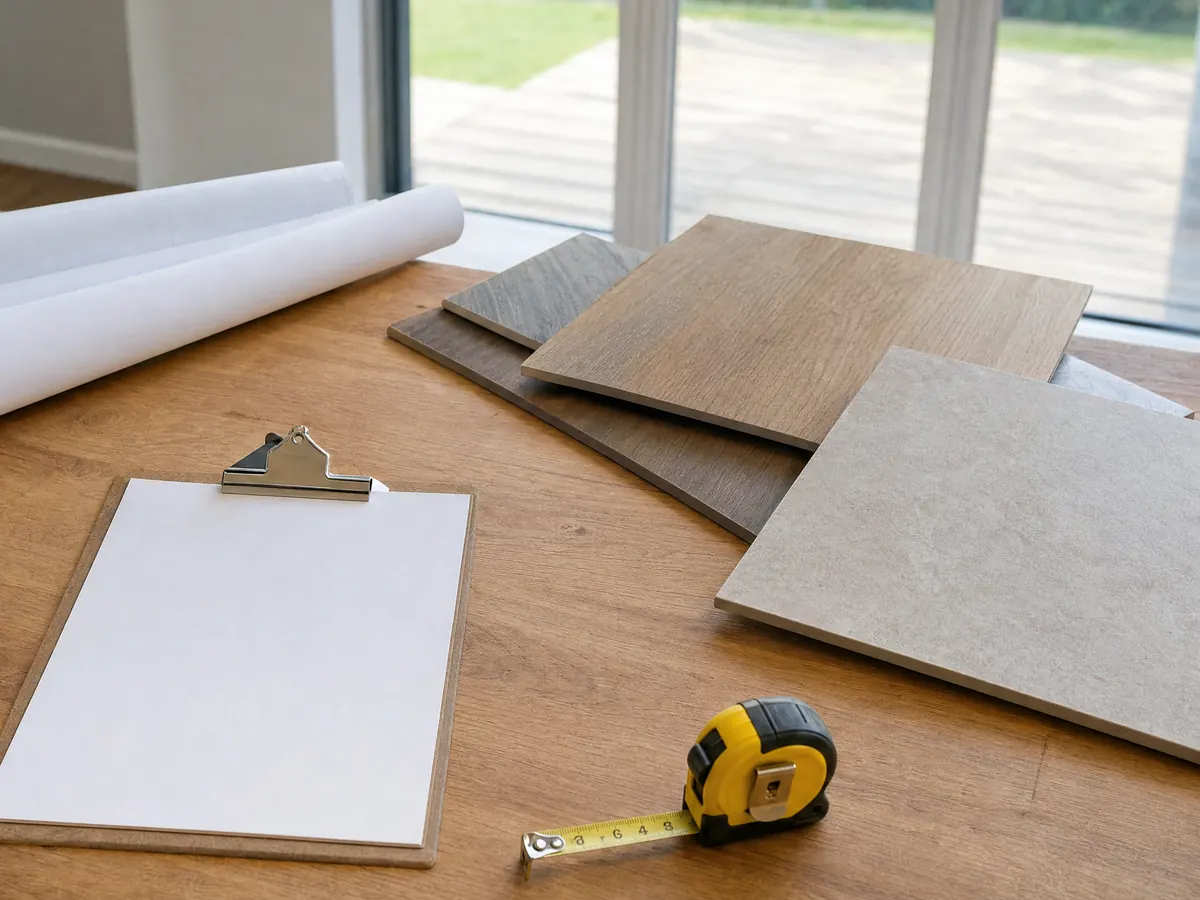
Usually not for the covering alone. The City's Work Exempt From Permits handout, revised August 5, 2026, lists painting, papering, tiling, carpeting, cabinets, counter tops and similar finish work under Section 105.2 of the Building Code, and it adds that exempt work still has to meet the Fire Code and the Wildland Urban Interface Code. Wood and vinyl planks are not named on that handout, so ask the counter whether they count as similar finish work.
The City's page on when a permit is required names interior remodels, water heater replacements, re-roofs, window replacements, patio covers and second-story decks as permit work. A floor laid as part of a remodel is therefore permitted with the remodel, and moving plumbing or repairing framing underneath is new work of its own. A residential permit on a project valued at $1,000 or more also needs the City's Smoke Detector and Carbon Monoxide form before it issues.
Applications, plan review and inspection requests run through the Virtual Development Services portal, and an inspection requested by 2:00 p.m. is scheduled for the next day. Card payments add a 3.75 percent convenience fee, and Building and Safety answers at 909-364-2780. Under Business and Professions Code 7048, the $1,000 limit below which no contractor license is needed does not reach any job that requires a permit.
What is under the carpet or tile of a 1980s or 1990s Chino Hills home?
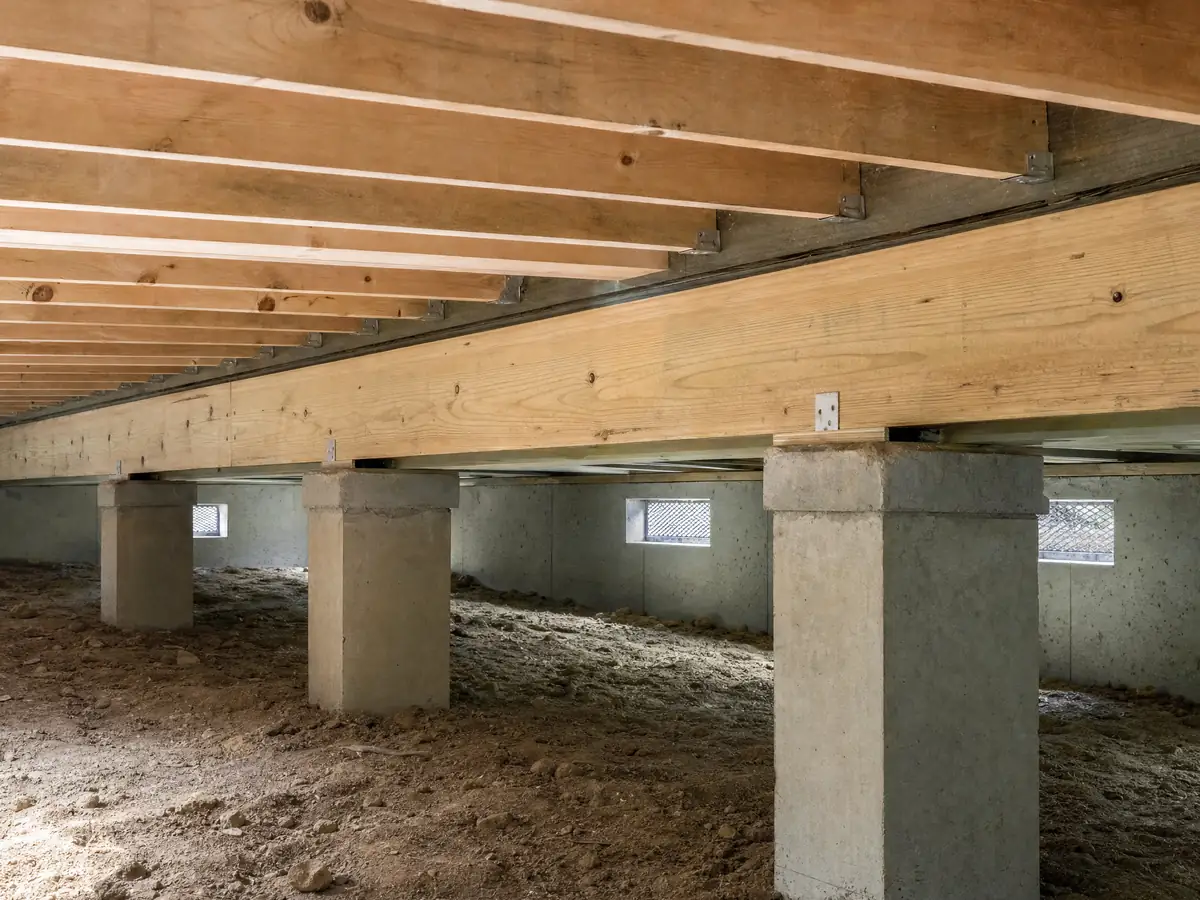
Most likely the builder's original covering, or one layer on top of it. The Census table counts 7,369 Chino Hills homes from the 1980s and 5,534 from the 1990s, against 3,128 from the 2000s, and the Housing Element says about 53 percent of all housing is 30 years or older. That first-generation carpet, vinyl and tile has had decades to wear, and many houses have been refloored once already. The sources we read do not say how many of these homes stand on slabs and how many on raised floors, so the first visit lifts a vent cover or a closet corner and looks.
The planned communities arrived in waves. The General Plan names Carbon Canyon, The Oaks, Woodview and Los Serranos for the 1980s, then Butterfield Ranch, Rincon, Gordon Ranch, Laband and Rolling Ridge Estate in the late 1990s, and the Specific Plan behind them was approved by 1982. At a median owner-occupied value of $890,200 in the 2024 estimates, the floor is a real share of the house's worth, so ask for demolition, leveling and trim as separate lines in the proposal.
- When was the house built, and has the floor been covered before?
- Is the room on a slab or a raised wood floor?
- Where do drain and water lines run under or beside it?
Do clay soil and rain under a Chino Hills slab affect new flooring?
They can, and the General Plan's Safety Element explains why. It says soils weathered from the clay-rich Puente Formation, including volcanic ash layers, can be highly expansive, that sandy canyon alluvium can settle, and that soils are generally severely corrosive to concrete because of sulfates. Movement and moisture are different problems that both show up under a floor: swelling clay can crack a slab, and a damp slab can lift glue or cup a plank.
Rain is modest but concentrated. The nearest NOAA normals station, Chino Airport about 5.6 miles east-northeast, records 9.98 inches a year, 7.97 of them from December through March and almost none from July through September. Hill sites can differ, because the highest knolls and ridges reach 1,600 to 1,700 feet while the airport sits near 650 feet.
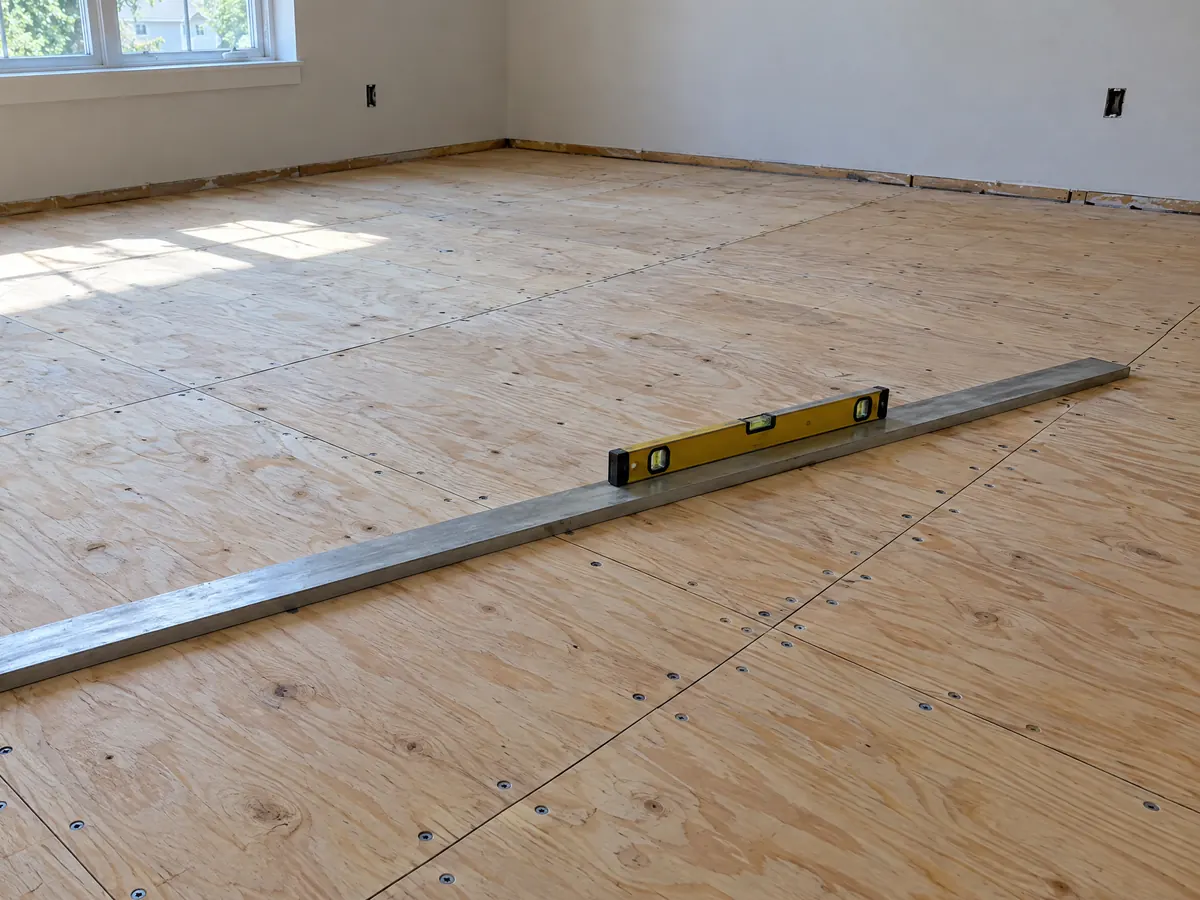
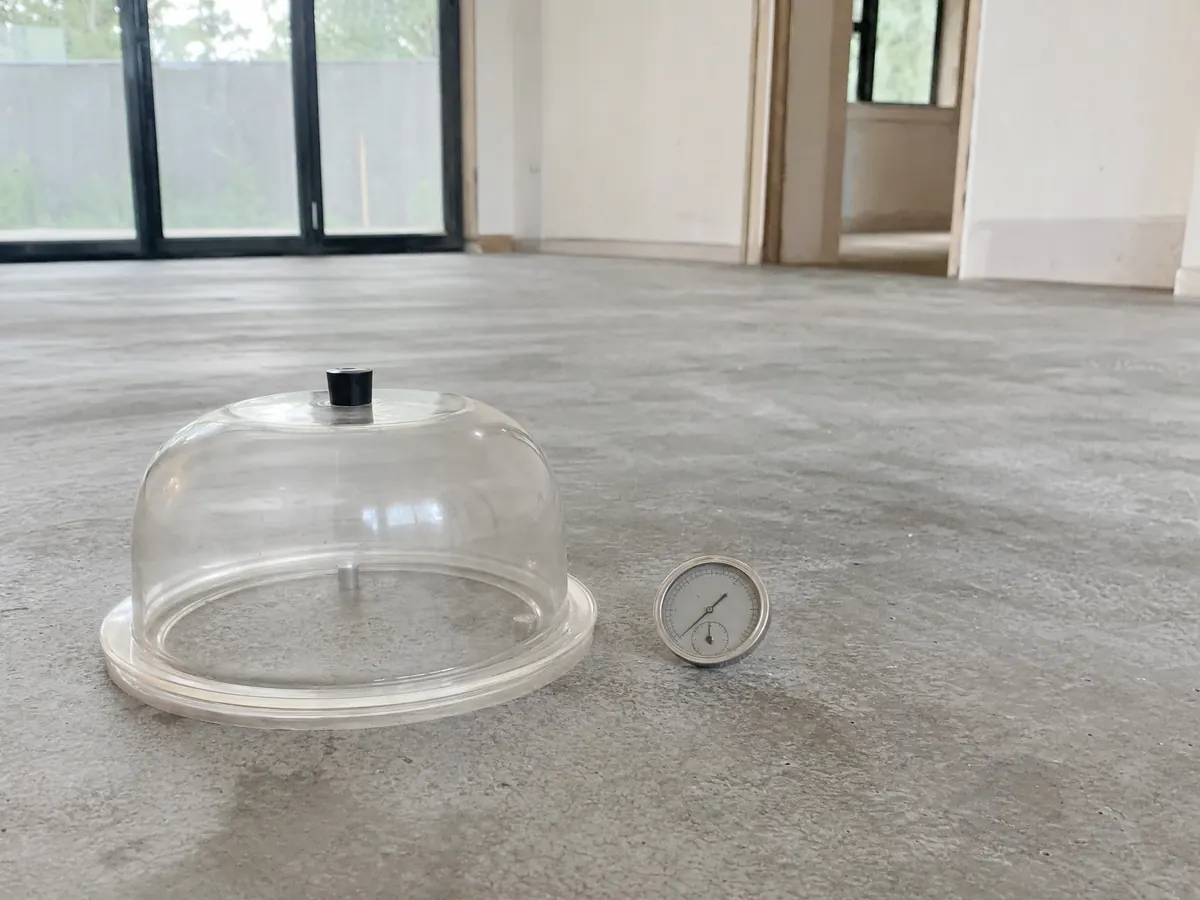
Two standard tests give numbers. ASTM F2170 uses humidity probes in drilled holes, and ASTM F1869 weighs the vapor trapped under a calcium chloride dish, but neither has a pass mark because the maker of the plank, vinyl or adhesive sets the limit. The NWFA's concrete subfloor guide strongly recommends a vapor retarder rated at 0.13 perms or less, such as 6-mil polyethylene, under wood on a slab. If a slab crack is still moving, ask how the installer isolates it before a rigid floor goes over it.
Can you refinish old hardwood in a Los Serranos or Sleepy Hollow house?
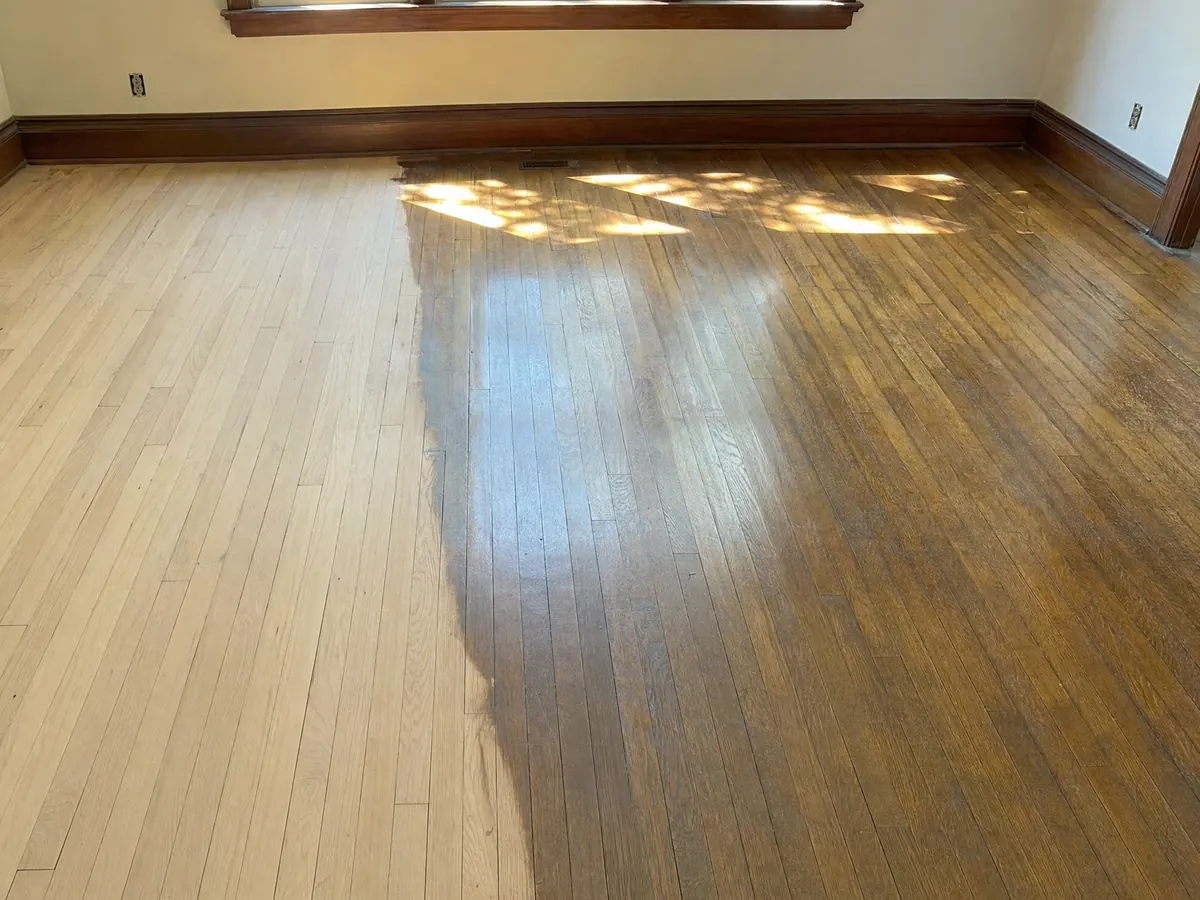
Possibly, once you know what the boards are and what lies beneath them. The Housing Element says most homes older than 1970 are in Los Serranos and the Sleepy Hollow area of Carbon Canyon, and that about 5 percent of Los Serranos homes pre-date 1945. Sleepy Hollow began as a summer cabin resort of about 90 cabins by 1928, and the cabins became permanent homes after World War II, so floors there may be original boards, later layers or a mix of both.
Across the whole city, 4,762 homes (19.7 percent) predate 1980, 2,398 (9.9 percent) predate 1970 and 153 date to 1939 or earlier. The table cannot split 1978 from 1979, so we state no pre-1978 count, and we did not read a City or federal page on asbestos or lead testing. Ask a lab to test a sample of old resilient tile, sheet vinyl and black adhesive before anything is sanded, and ask the proposal to say who removes a layer that tests positive and who pays.
Check the wear layer before choosing to refinish, because a floor register or a cut edge shows how much sanding the boards can take. The General Plan names only two officially recognized historic sites, the Rancho Chino Adobe site and the Battle of Chino site, both marked at 4040 Eucalyptus Avenue, and we found no locally adopted historic district, so we saw no preservation review that would touch an interior refinish.
Can you install hard flooring in a Chino Hills condo, townhome, rental or mobile home park?
Yes, with written approval and a rule check first. The 2024 estimates show about 34.8 percent of occupied homes (8,347) rented, about 12.3 percent (2,959) in buildings of five or more units, about 6.2 percent (1,502) in buildings of two to four units and about 5.0 percent (1,197) mobile homes, so many floors have a neighbor below or an owner who must consent.
Homeowner associations are the other gate. The City's custom home design review form asks for the HOA board's approval letter and exempts the Vellano and Western Hills tracts from that review, but we did not find which neighborhoods have associations or what their flooring or sound rules say. Ask management for the underlayment specification and keep the answer in writing, since Civil Code section 4765 gives an owner a written decision on an architectural request.
The Housing Element lists three mobile home parks, Lake Los Serranos (55 and older), Rancho Monte Vista and Western Hills Estates, so ask the park manager which rules apply before a floor goes in. The City's construction hours sit in Title 8 of the Municipal Code, which we did not open, so ask Building and Safety before scheduling saw cuts and deliveries in a shared building.
What about garage floor coatings, tile entries and garage conversions in Chino Hills?
A coating is a floor job with an air-quality rule attached. Chino Hills is inside the South Coast Air Quality Management District, which the District's jurisdiction map and its regional contacts page both show, and the Rule 1113 table of standards lists 50 grams per liter for floor coatings and 100 for waterproofing concrete and masonry sealers and for tile and stone sealers. The table page is headed February 5, 2016 and we did not open the current rule text, so ask the installer for the product's VOC number and proof that it complies.
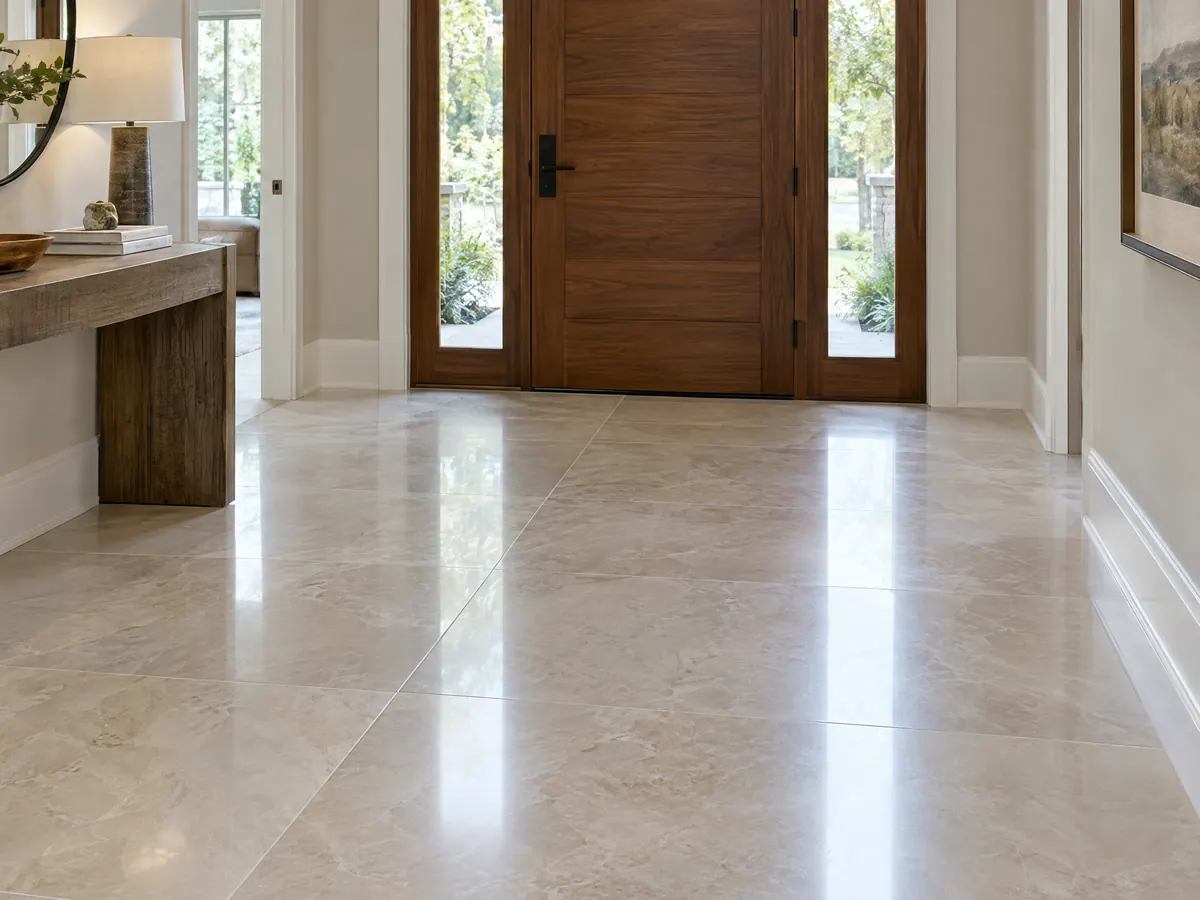
Tile is exempt as finish work, but a rigid surface over a slab on moving clay deserves a question about crack isolation and movement joints. Ask the tile subcontractor, who needs the C-54 class, to say how an entry or garage-to-house transition will be handled.
Garage conversions change what the floor does. When a garage becomes an ADU, the garage door comes out and a wall with a window or door that matches the house front goes in, the unit must meet the Building Code for habitable space, and replacement parking is not required. The slab then becomes a living floor, so the moisture test above applies. An ADU Ineligibility District bars them in a mapped area with narrow Carbon Canyon Road exceptions, so read the City's ADU page first.
What does a flooring contractor charge in Chino Hills, and who needs which license?
No Chino Hills price study with a stated method turned up, so the anchor is Angi's Los Angeles pages, which we rate medium to low in confidence and which may differ from San Bernardino County bids. The July 8, 2026 page puts installer labor at $3 to $9 a square foot, engineered hardwood at $10 to $18 installed, solid hardwood at $12 to $22 and refinishing at $4 to $8, with a $4,011 average project. Angi's laminate page of September 15, 2026 lists removal of an old floor at $455 to $685 per 200 square feet.
In the federal May 2025 wage survey, floor layers in the Los Angeles metro area averaged $33.48 an hour, which is a wage and not a billing rate. Ask the proposal to price demolition, moisture testing, leveling, stairs and transitions separately, and note that Business and Professions Code 7159.5 holds the down payment on a home improvement contract to $1,000 or 10 percent of the price, whichever is less.
CSLB's C-15 class covers preparing a surface for carpet, resilient sheet goods, resilient tile and wood floors, and tile goes to C-54. Look each subcontractor up and ask for a certificate of insurance, which our license check guide shows how to read. We did not confirm whether the City asks for a business license, so ask Building and Safety.
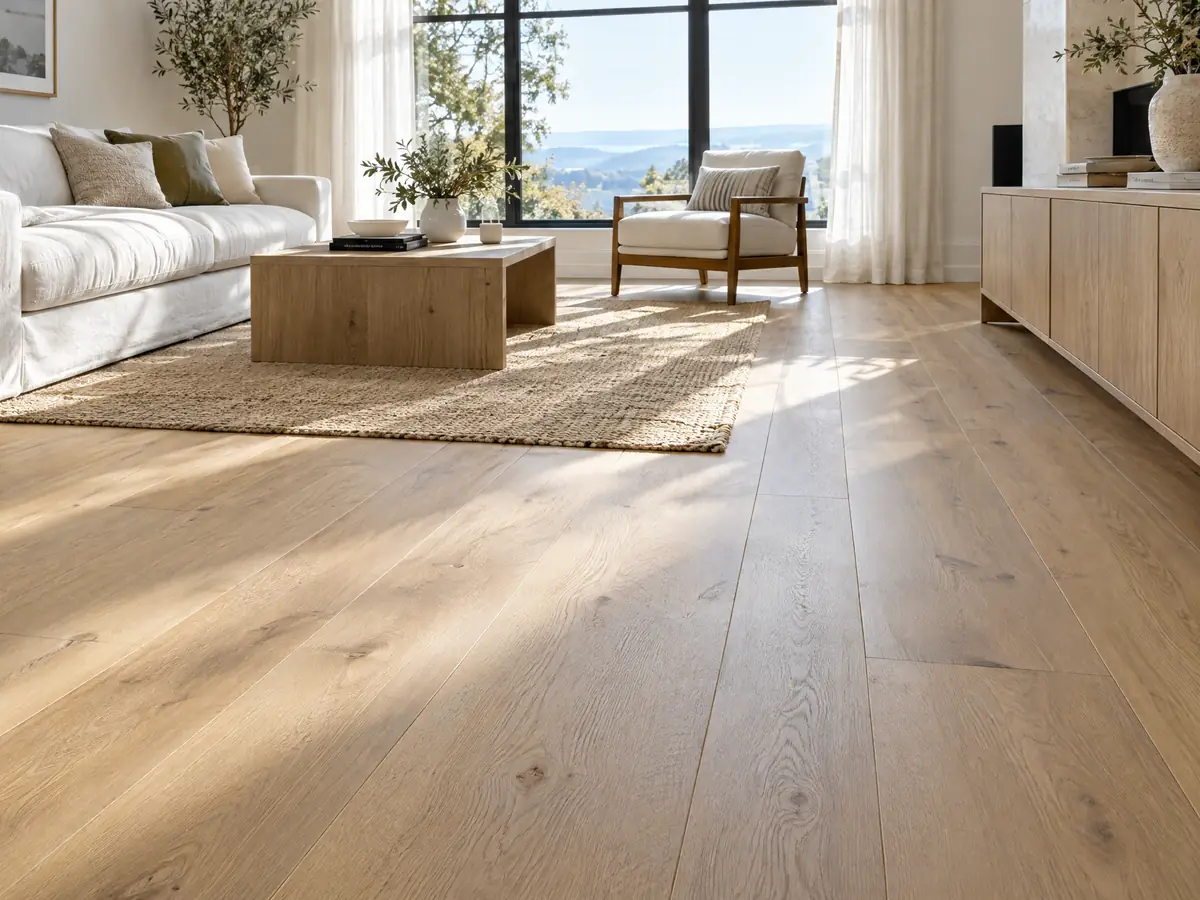
Flooring photos from Chino Hills and nearby communities
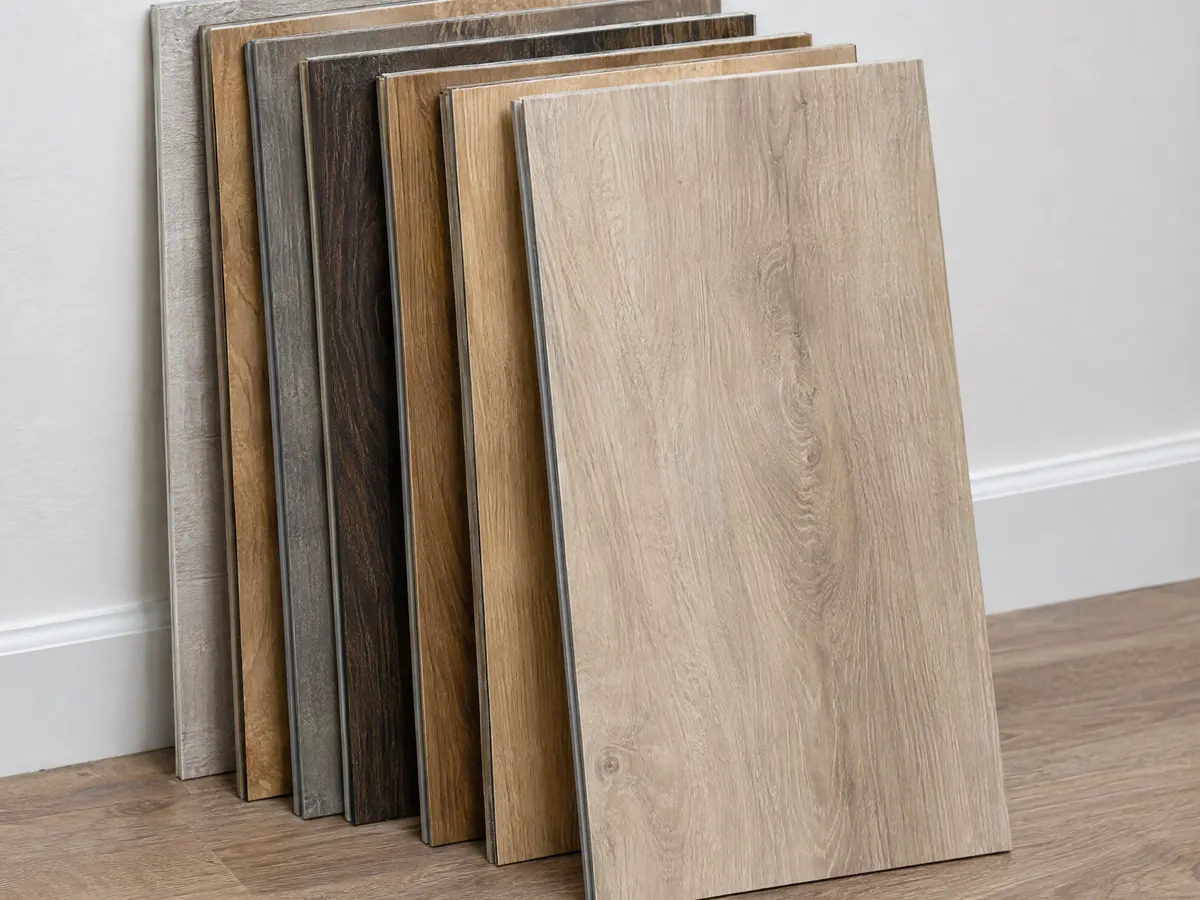
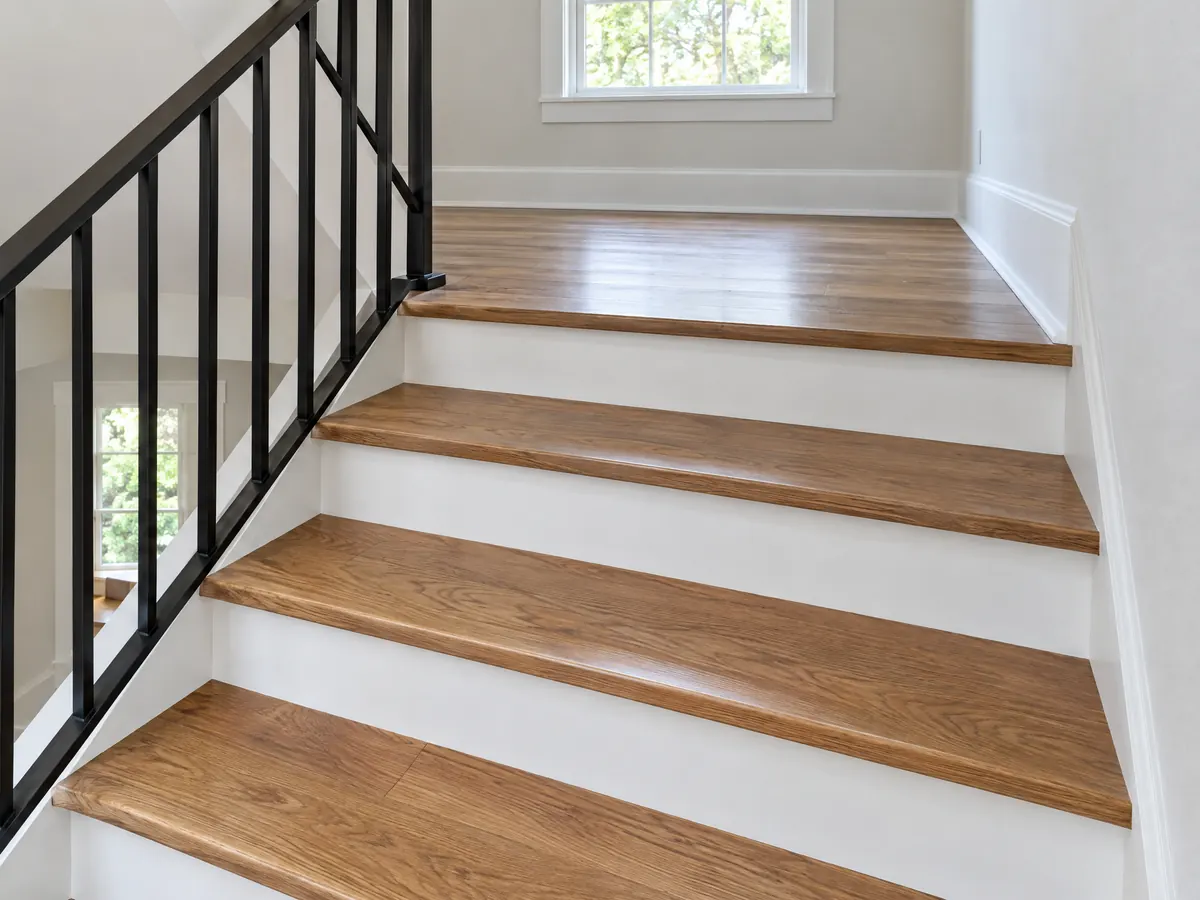
Plank samples, slab moisture tests, tile entries and finished rooms from Chino Hills and the communities around it, shown at the steps where flooring decisions get made. Tap any photo to enlarge it.
What flooring costs around Chino Hills
These figures are Los Angeles planning ranges from our flooring page, not a Chino Hills bid, so the written proposal should price demolition, drying, testing and subfloor repair on their own lines. The same property may need concrete work in Chino Hills or decks in Chino Hills. For comparison, read flooring in Yorba Linda, flooring in Diamond Bar and flooring in Brea, with flooring in Los Angeles as the benchmark. Our flooring cost guide weighs refinishing against replacement, and the guide to subcontractors shows who lays each layer of a floor.
| What it covers | Typical range |
|---|---|
| Installation labor only | $3 to $9 per sq ft |
| Solid hardwood, installed | $12 to $22 per sq ft |
| Engineered hardwood, installed | $10 to $18 per sq ft |
| Refinishing existing hardwood | $4 to $8 per sq ft |
| Laminate, whole project | $2,000 to $5,500 |
| Hardwood, whole project | $3,153 to $8,496 |
| Removing the old floor | $455 to $685 per 200 sq ft |
| Tile | No sourced Los Angeles range |
Other work we manage in Chino Hills
Chino Hills flooring questions, answered
Do I need a permit to replace flooring in Chino Hills?
Usually not for the covering alone, because the City's exempt list names tiling, carpeting and similar finish work. A floor installed as part of an interior remodel is permitted with it, and moved plumbing or repaired framing is its own permit item. Plank and vinyl products are not named, so call Building and Safety at 909-364-2780 with the scope.
How much does it cost to have flooring professionally installed?
On Angi's Los Angeles pages, updated July 2026, installer labor runs $3 to $9 per square foot, engineered hardwood $10 to $18 installed and solid hardwood $12 to $22. We found no Chino Hills study with a stated method, so treat these as medium to low confidence. Demolition, leveling and stairs come as separate lines.
How much does it cost to install 1000 sq. ft of hardwood flooring?
At Angi's Los Angeles range of $12 to $22 a square foot installed, 1,000 square feet of solid hardwood runs roughly $12,000 to $22,000, and engineered hardwood at $10 to $18 runs $10,000 to $18,000. Those are not Chino Hills bids. Subfloor repair, stairs and moving furniture change the total, so ask for each as its own line.
Can you put flooring over concrete?
Yes, after the slab is tested and prepared. Each plank, vinyl or adhesive maker publishes its own moisture limit, and an installer can read the slab with ASTM F2170 probes or an F1869 calcium chloride dish before patching and leveling. Because Chino Hills clay can move a slab, ask how existing cracks will be treated before a rigid floor goes over them.
Why does moisture come through a concrete floor?
Water vapor rises from damp soil under the slab, and a missing or damaged vapor retarder lets it through. Chino Airport's normals show 9.98 inches of rain a year, most of it from December through March, and irrigation adds more, so a dry August proves little. Only a slab reading taken before the flooring is chosen gives a dependable answer.
How long does moisture stay in a concrete slab?
There is no fixed number we can source. Drying depends on slab thickness, the mix, the weather and what sits on top, so installers compare a slab test with the flooring maker's limit instead of waiting a set time. We did not find a Chino Hills rule or study that sets a drying period.
Can I refinish hardwood floors in an older Los Serranos or Sleepy Hollow home?
Often, if the boards have enough wear layer left for one more sanding, which a floor register or cut edge shows. Refinishing runs $4 to $8 a square foot on Angi's Los Angeles pages, while new solid hardwood runs $12 to $22. Have old adhesive and resilient layers tested for asbestos or lead before sanding, since the oldest Chino Hills homes are in those neighborhoods.
Can I install hard flooring in a Chino Hills condo, townhome or rental?
Only once the association or owner approves in writing, and the building's own sound rule is the one that counts. About 12.3 percent of Chino Hills homes sit in buildings of five or more units and about 34.8 percent are rented. We found no City sound standard for replacement floors and no HOA rules, so ask management for the underlayment specification.
Do garage floor coatings in Chino Hills have to meet South Coast AQMD limits?
Yes, because Chino Hills is inside the South Coast Air Quality Management District, whose Rule 1113 table lists 50 grams per liter for floor coatings. That page is headed February 5, 2016 and we did not open the current rule, so ask the installer for the product's VOC rating and its compliance paperwork before application.
What license does a flooring contractor need in Chino Hills?
A current California contractor license is required for most paid work, typically C-15 for carpet, resilient floors and wood, or C-54 for ceramic and stone tile. Look the number up on the CSLB site and ask each subcontractor for its license number and proof of insurance. We did not confirm a City business license rule, so ask Building and Safety.
Tell us the house, the rooms and the floor you have today
Mention the neighborhood, whether the house sits on a slab, a raised floor or a hillside lot, which rooms you want done and what covers the floor now. Old adhesive, slab readings and any association approval are the first things we check at the visit.