
Flooring Installationin Brea, CA
Flooring installation in Brea is usually a like-for-like swap that the City's permit handout treats as exempt finish work, but subfloor, structural or slab work is a separate question for Building and Safety. Test the slab for moisture, test floors from before 1980 for asbestos, and ask about methane if the home sits over the old oil field.
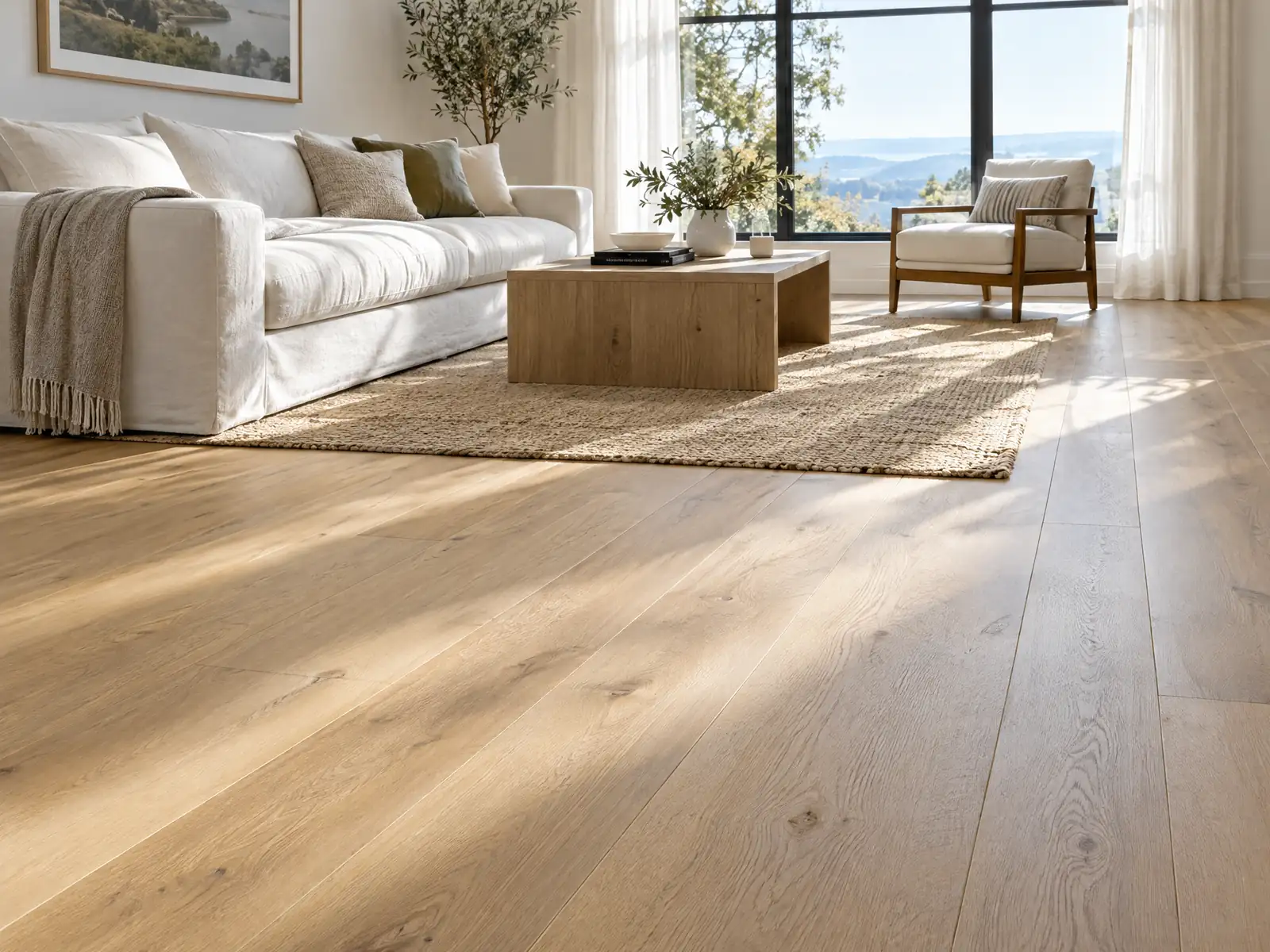
Brea, California, in Orange County, grew on an oil town's timeline. The City's own history says Basque sheep ranching came first in the 1870s, drilling in the Brea-Olinda field began in 1896, and voters approved incorporation on February 15, 1917, by 245 to 45. Union Oil set aside streets near the center for efficient tract homes in the early years, and citrus orchards gave way to residential tracts from the 1950s. Census estimates for 2024 put the median year built at 1978, so the typical Brea floor is about 48 years old and 9,469 of the city's 17,373 homes predate 1980.
MDG Builders, CSLB #1040337, is a Tarzana general contractor. We write the flooring scope, put the permit and soil gas questions to Brea's Building and Safety Division and bring in licensed flooring or tile subcontractors for the install. Material ranges are on the flooring page, and the Brea overview lists the other trades we manage in town.
What Brea's Building and Safety Division, Fire Code and state law say about flooring work
Where flooring permits come from in Brea: City of Brea Community and Economic Development Department, Building and Safety Division.
- The City's Building Permits 101 handout and Brea's Building Code amendment exempt tiling, carpeting, cabinets, counter tops and similar finish work from a permit, so a like-for-like floor covering swap is exempt. Subfloor, structural or slab work is not covered by that exemption and should be confirmed with Building and Safety.
- CSLB defines the C-15 Flooring and Floor Covering classification as preparing a surface for and installing carpet, resilient sheet goods, resilient tile, wood floors (including finishing and repair) and similar flooring materials, except ceramic tile.
- The South Coast AQMD Rule 1113 standards table (version dated February 5, 2016) lists floor coatings at a VOC limit of 50 grams per liter, relevant to garage and slab coating work in Brea.
Sources for these rules
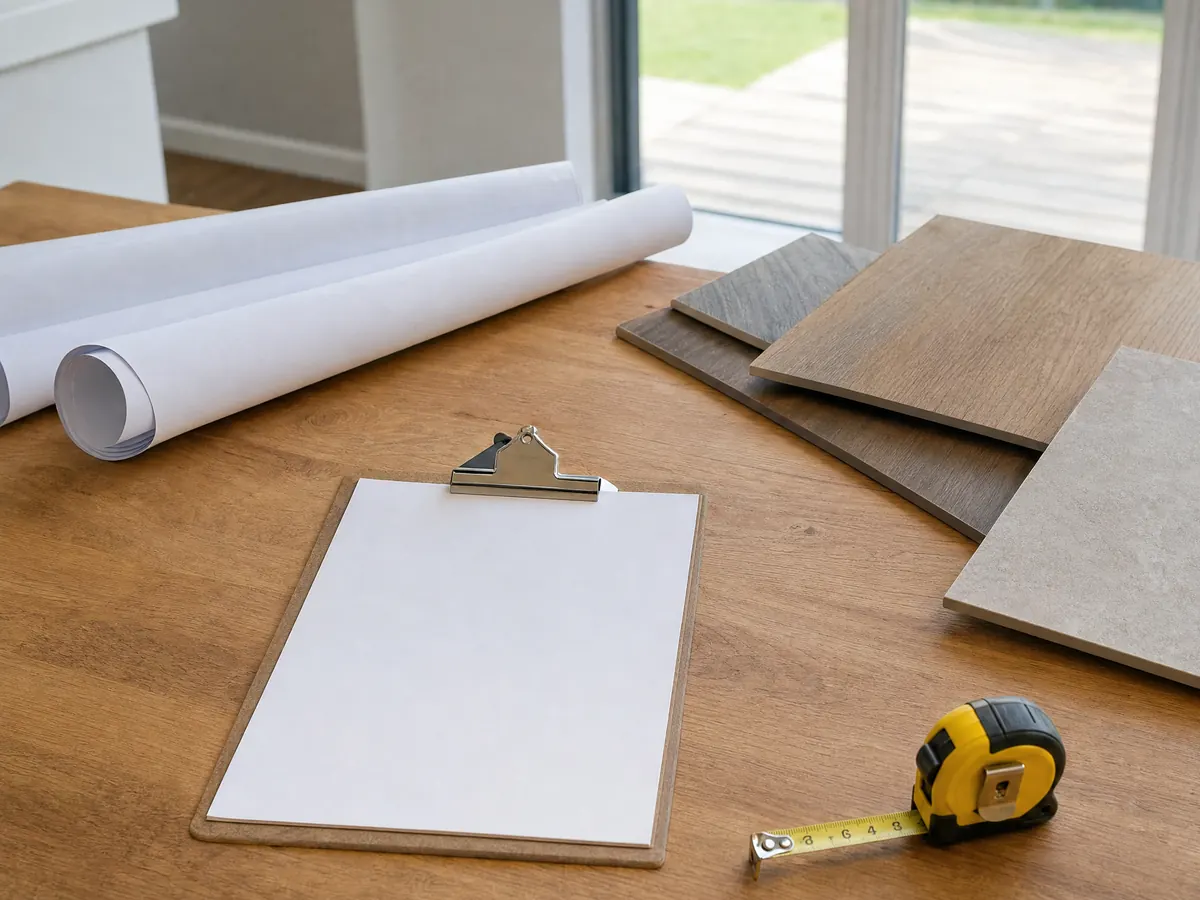
Does Brea's methane rule affect a new floor over a concrete slab?
Only in an identified methane area, and even there the rule was written for buildings, not for floor coverings. The Brea Fire Code adds Section 326, which subjects projects with combustible soil gas to methane testing, passive or active mitigation, and detection alarms under a Fire Department guideline. We found no sentence in it that mentions flooring, so read what follows as questions to ask, not rulings.
Ask three things before a crew drills or grinds the slab. Is the address in an identified methane area? Does the mitigation run under the slab, in it or beside it? And does the guideline want an alarm or a vent left uncovered by the new floor? The Fire Prevention Bureau answers at 714-990-7655, and the Fire Code text we read came from the GoCodebook mirror of the Municipal Code, so confirm it with the City.
The oil legacy is real across town. The Olinda Ranch plan required special venting for homes within 10 feet of an abandoned oil well. Few flooring jobs touch that, but a crew that saw-cuts a slab for a transition strip or a floor drain should know it before the blade goes in.
- Is the address in an identified methane area?
- Where does the mitigation run, and is the slab open to drilling?
- Does an alarm or a vent need to stay uncovered?
Do you need a permit to replace flooring in Brea?
Usually not for a like-for-like swap. The City's Building Permits 101 handout and Brea's Building Code amendment both exempt tiling, carpeting, cabinets, counter tops and similar finish work. That exemption does not stretch to subfloor, structural or slab work, so a job that opens the floor system belongs in a call to the City's main line at 714-990-7600 or an email to building@cityofbrea.gov.
Permitted work carries paperwork. The City's building permit application asks for the contractor's state license number and class, a Brea Business License number and workers' compensation details, and the Permits and Forms Center adds an Out of City Contractor's Business License Tax for contractors who do not live in Brea. The handout puts a typical plan check at 10 to 14 working days, and City offices close every other Friday in 2026, so plan any counter visit around that calendar.
One plumbing rule can follow a bathroom floor. The City's SB 407 notice says that when a permit is needed for work on a single-family home built on or before January 1, 1994, noncompliant toilets, showerheads and faucets must be replaced before the permit is finaled. Lifting a toilet for tile and setting it back is not a permit job if no valves, pipes or fixtures change, per the handout.
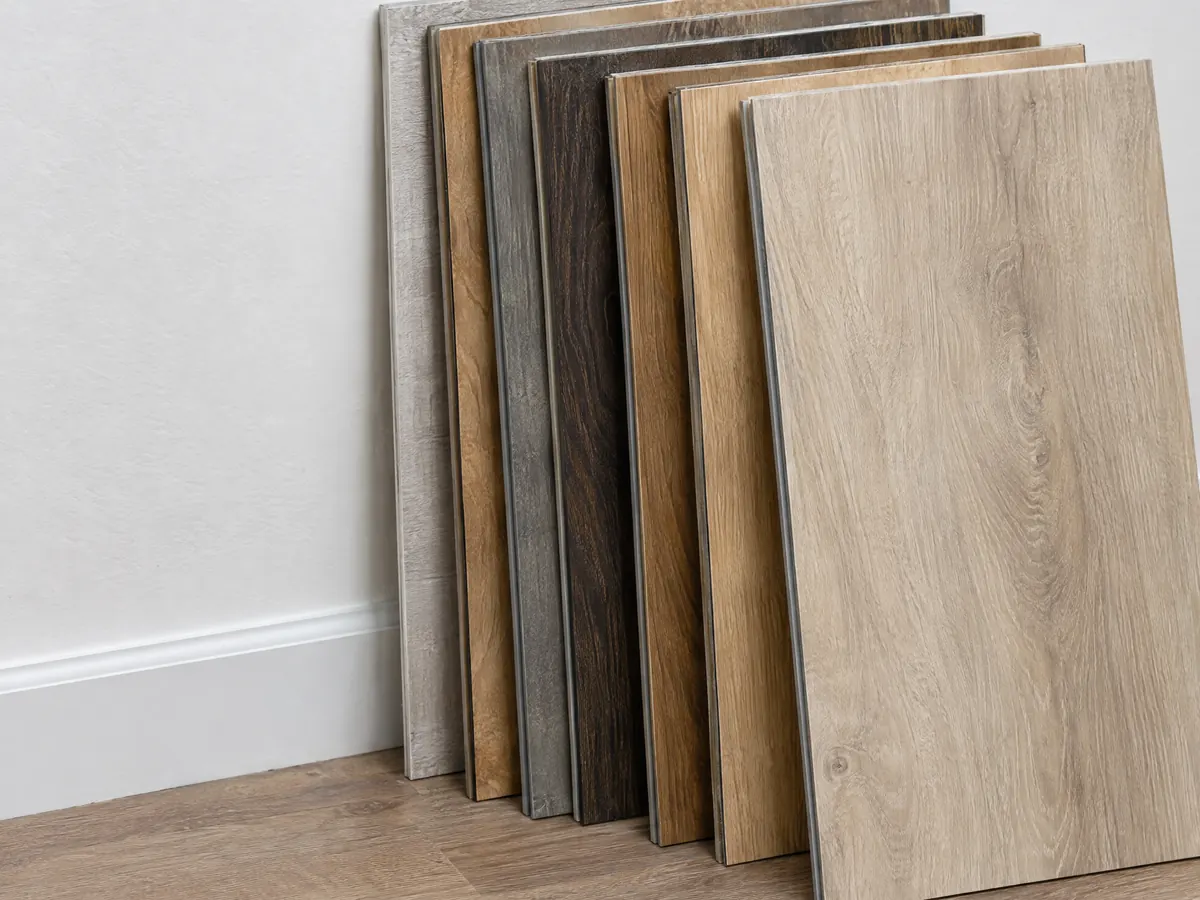
Is there asbestos or lead under the old floors in Brea homes built before 1980?
Possibly, in more than half the city. The 2024 Census estimates count 9,469 of Brea's 17,373 housing units, about 54.5 percent, from before 1980, with 4,740 of them from the 1970s alone and about 27 percent from before 1970. Old resilient tile, sheet vinyl and the black adhesive under them can contain asbestos, and only a lab result settles it.
The federal OSHA asbestos rule for construction presumes that old resilient flooring and its adhesive contain asbestos until a test shows otherwise, so a careful crew samples before sanding, ripping sheet goods or scraping glue. We found no Brea rule on sampling for a homeowner's own floor, so ask the contractor how it is handled and who removes a layer that tests positive.
Lead is a separate check. EPA's Renovation, Repair and Painting rule covers paid work that disturbs paint in housing built before 1978, and baseboards and door casings removed for a new floor can disturb painted surfaces. Census tables lump 1978 and 1979 in with the other 1970s years, so the exact share of Brea homes under the rule is not something we can print.
- Was a sample of the old tile and adhesive sent to a lab?
- Who removes a layer that tests positive?
- Is the crew certified for lead-safe work?
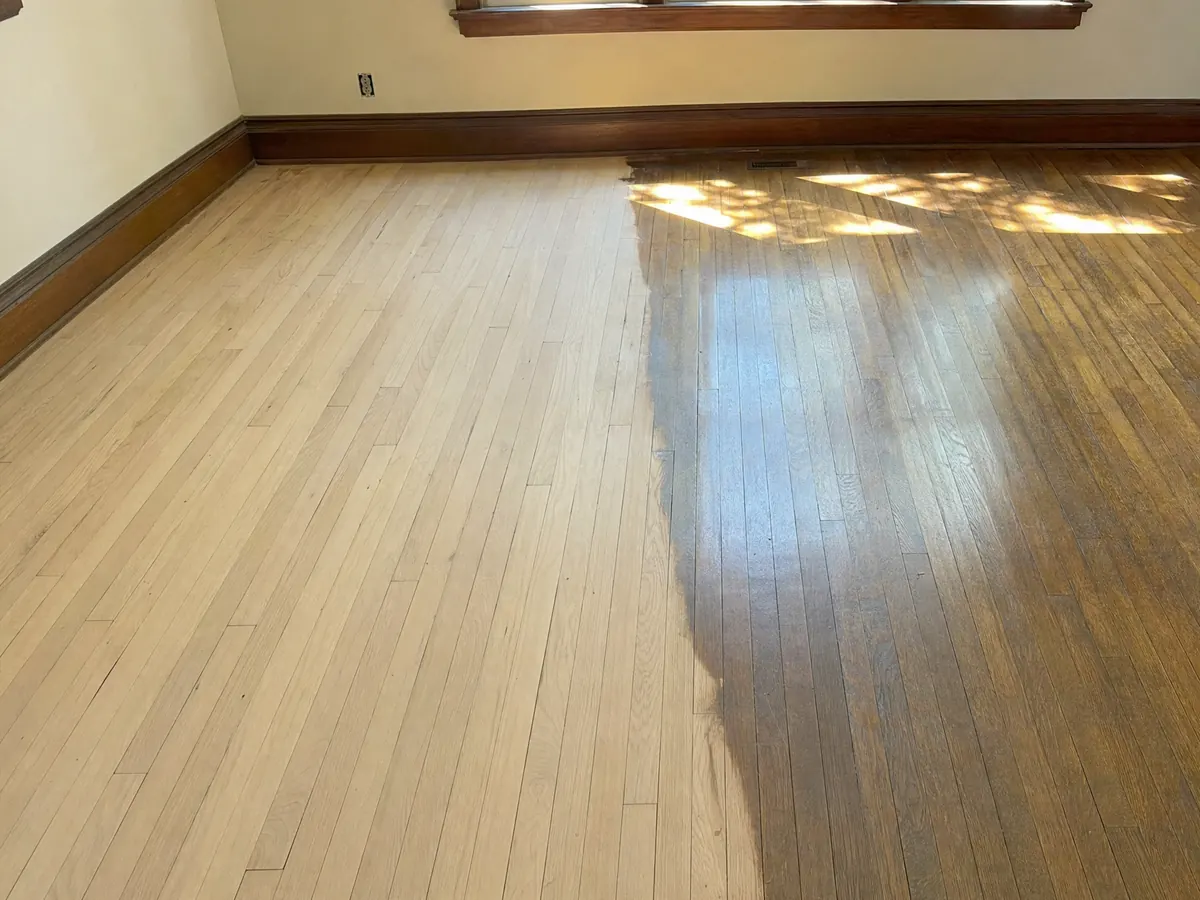
Can the oak floors in a 1910s or 1920s Brea house be refinished instead of replaced?
Often, when enough wood stands above the tongue to take a sander, which a floor register or a cut edge at a doorway shows. Brea's oldest houses date from the years when Union Oil set aside streets near the center for efficient tract homes, and the Brea Historic Resource Register lists 58 sites, mostly houses built from 1911 to 1938 on South Madrona, South Redwood and South Walnut Avenues. Census estimates count only 290 homes from 1939 or earlier, so original wood floors are a small but real group.
The register matters for exterior work more than for floors. Zoning Section 20.60.060 requires plan review against the Secretary of the Interior's Standards for exterior alterations of a designated resource, and Section 20.60.070 offers the State Historic Building Code as a lower-cost option. We read nothing there about interior floor finishes, and the City's handout says a historic designation can lengthen plan check, so ask the Planning Division at 714-990-7674 before any job that touches the exterior or the structure.
Refinishing and replacing differ in dust, cure time and coatings. South Coast AQMD, which regulates air quality in Brea, limits the VOC content of architectural coatings, so ask the finisher for the product name and the grams-per-liter figure printed on the can. Our flooring cost guide sets refinishing beside replacement.
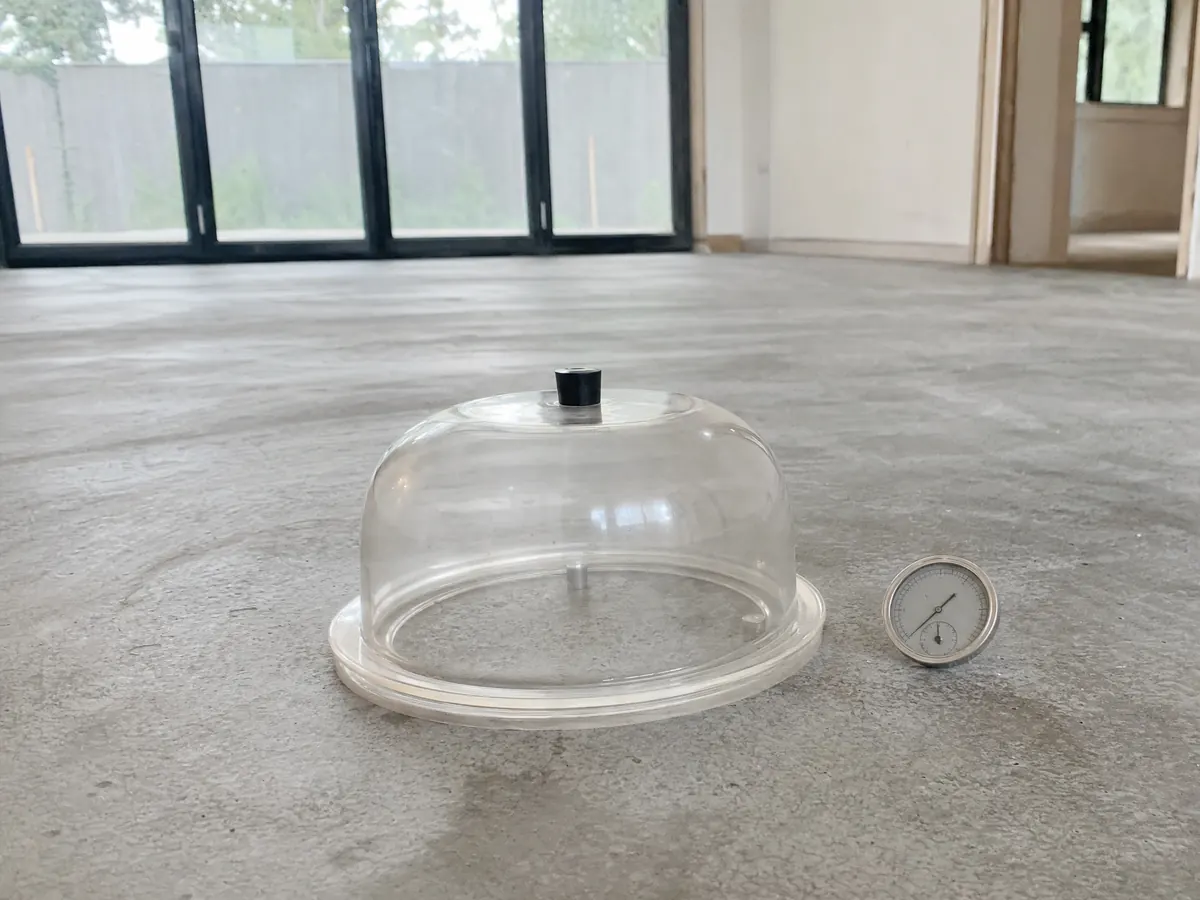
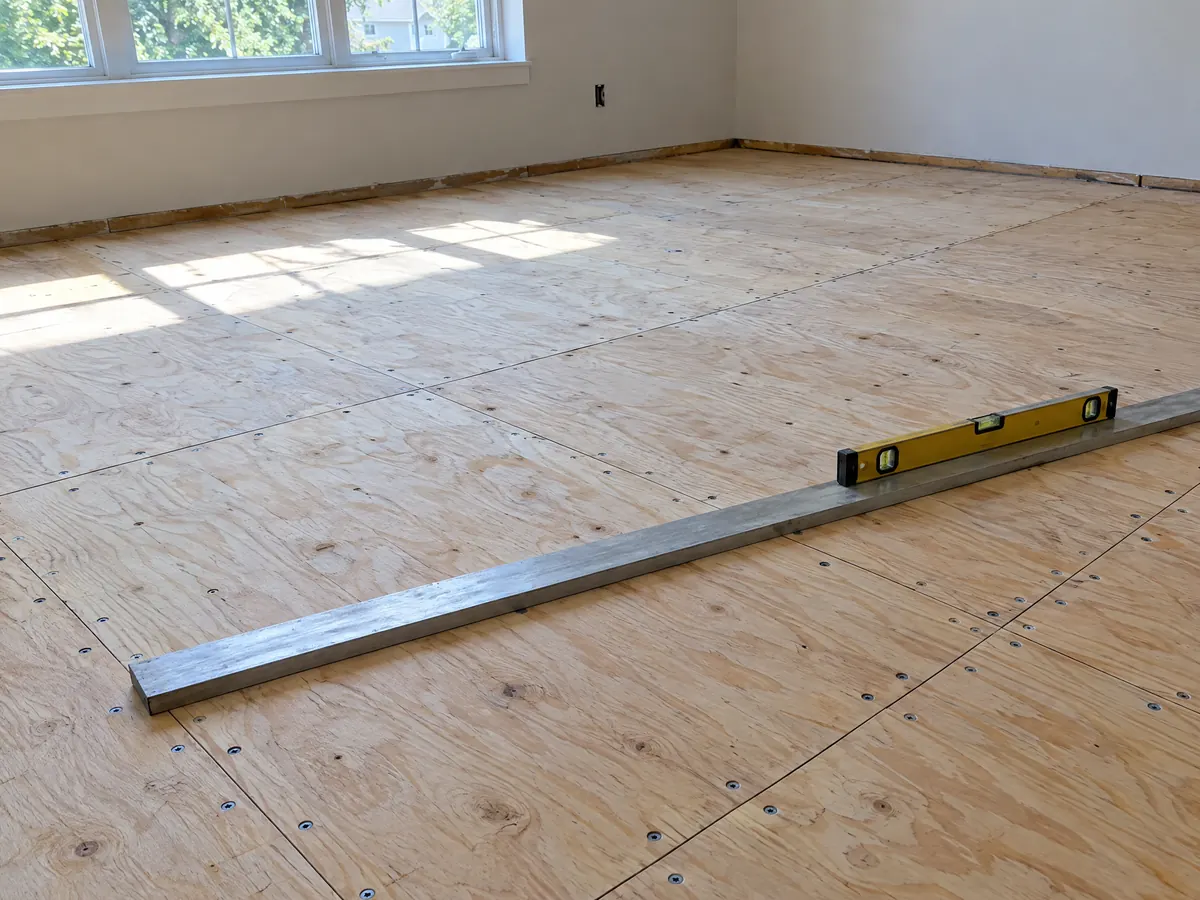
How do you test a Brea concrete slab for moisture before laying LVP or hardwood?
Two standard tests do it. ASTM F2170 reads relative humidity inside holes drilled into the slab, while ASTM F1869 measures the vapor that leaves the surface beneath a calcium chloride dish. Neither carries a pass mark, because the maker of the plank, vinyl or adhesive sets the limit, so ask for the readings in writing beside that number.
Brea's dry months can fool you. NOAA's 1991 to 2020 normals for the Anaheim station give 13.52 inches of rain a year, 10.40 of them from December through March and 0.11 inch in July, and the Fullerton airport station reads drier at 11.86 inches. A slab answers to sprinklers, planters and hillside runoff, not the calendar, and the City's 2025 foundation policy notes expansive soil in some areas and liquefaction in others.
New slabs follow a recipe. For the projects its foundation policy excepts from a soils report, the City prescribes a 5 inch slab with #4 bars at 18 inches each way over 4 inches of base and a 10 mil vapor retarder. We found no source on what lies under any particular older slab, so ask for readings along exterior walls and near bathrooms, and keep them with the house records.
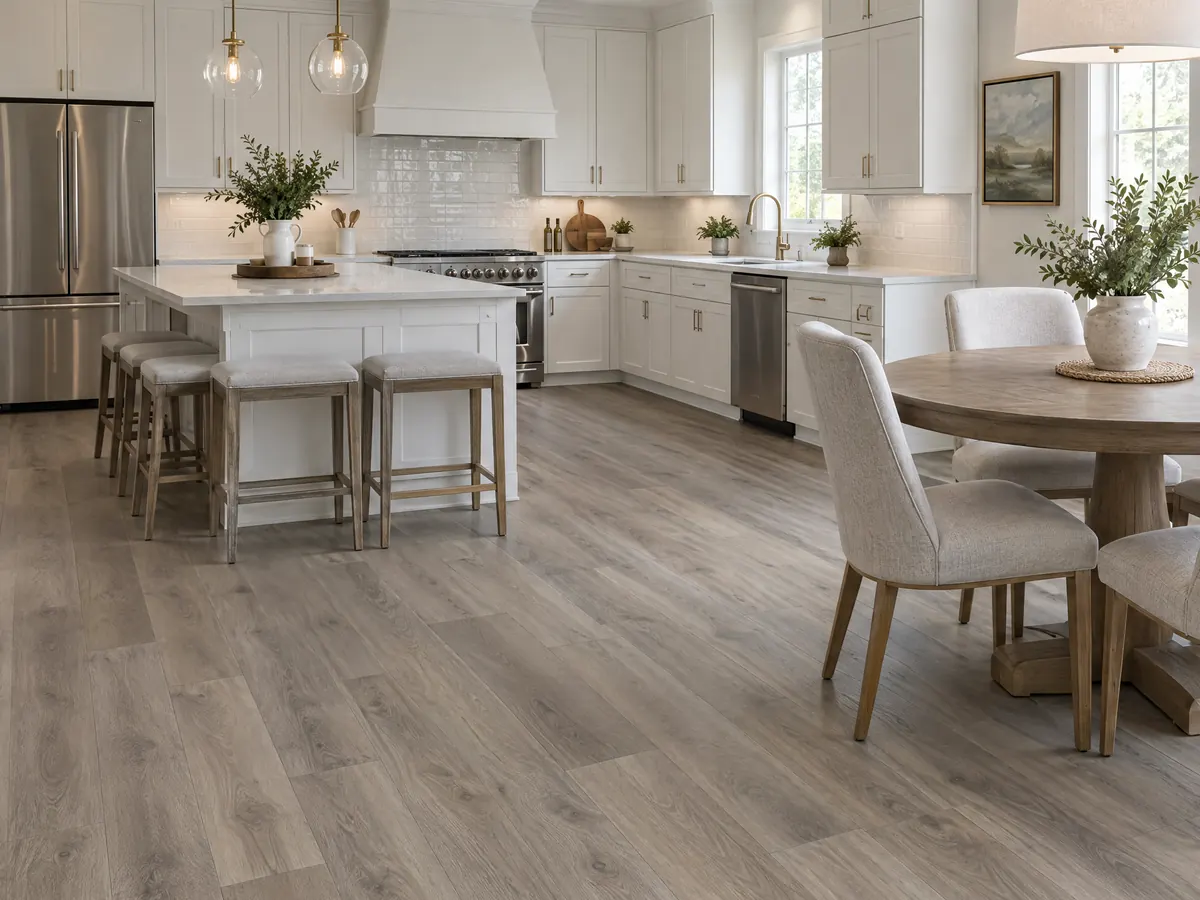
Does a Brea condo, apartment or rental need approval before new flooring?
Often, yes. Census estimates count 4,610 Brea homes, 26.5 percent, in buildings of five or more units, 2,651 of them in buildings of 50 or more, and 40.3 percent of occupied homes are rented. A condo owner should read the association's governing documents and ask the management company what it wants for hard floors above a neighbor. We found no sound-rating number we could verify, so we print none.
A tenant needs the owner's written consent before anything is pulled up. Civil Code section 4765 spells out the written decision an association must give on an architectural request and how an owner can ask it to reconsider.
On a rental the owner picks the contractor, and the City's Owner Builder page limits the exemption to an owner who does the work personally, uses employees on wages or hires properly licensed subcontractors or a general building contractor. An unlicensed handyman paid by the job is not part of that exemption when a permit applies.
- Which document names hard flooring, and what does it require?
- Does the board want an underlayment specification?
- Who signs the approval, and how long does it take?
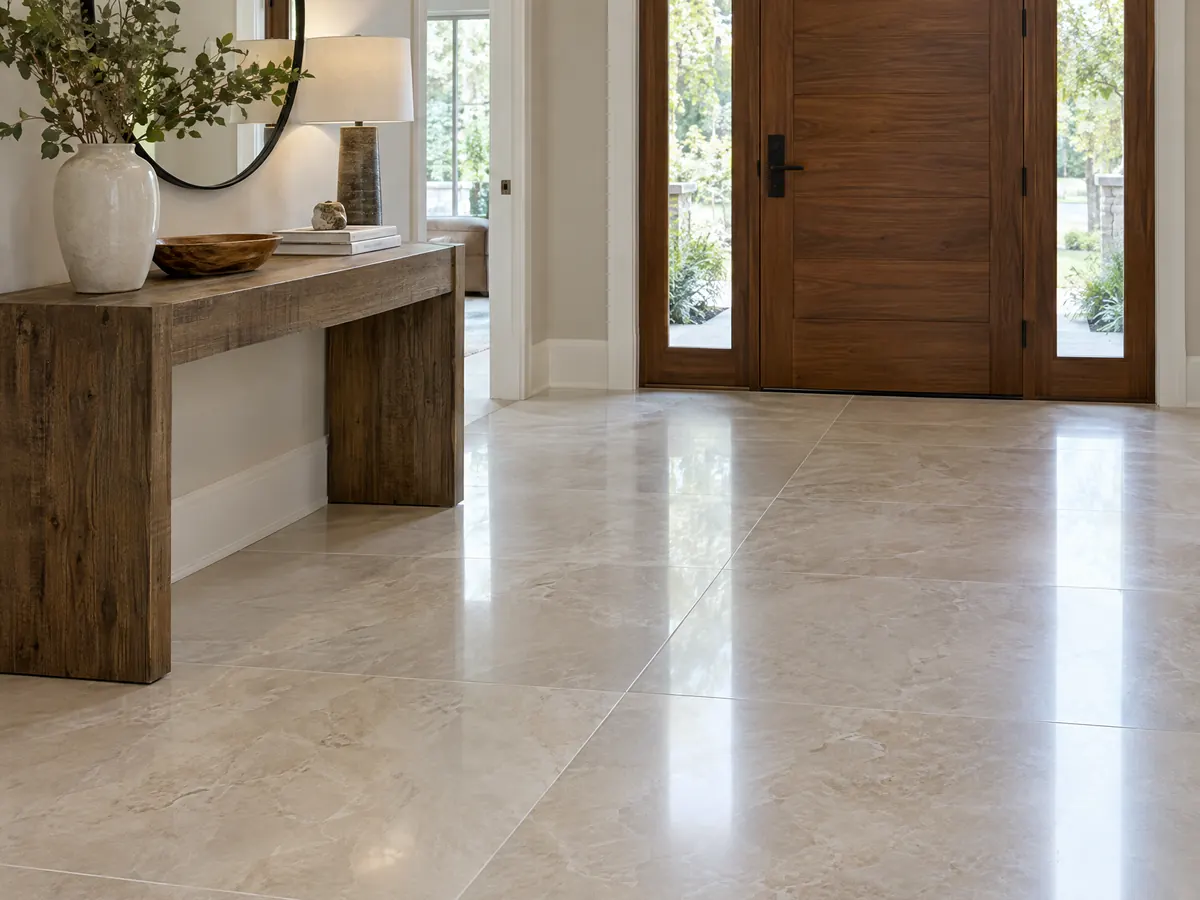
What does a flooring contractor charge in Brea, and which license applies?
No Brea price study with a stated method turned up, so these are Los Angeles figures from Angi's 2026 pages, which we rate medium to low in confidence, and Orange County prices can differ. Its flooring page shows $3 to $9 per square foot for installer labor, $12 to $16 per square foot installed overall and a $4,011 average project, while its hardwood page averages $5,566 with a range of $3,153 to $8,496. Its September laminate page puts a project at $3,626 on average.
Wage data does cover the county. Federal estimates for May 2025 in the Los Angeles-Long Beach-Anaheim area show floor layers averaging $33.48 an hour, tile and stone setters $30.72 and carpet installers $27.54, which are wages, not billing rates. Demolition, subfloor repair, moisture tests and stair work each deserve a separate line in the proposal.
CSLB's C-15 class covers carpet, resilient sheet goods, resilient tile and wood floors, and ceramic tile sits under C-54. Our license check guide shows how to look a number up, and the CSLB bulletin on AB 2622 explains that the $1,000 limit for unlicensed work no longer applies once a job needs a permit.
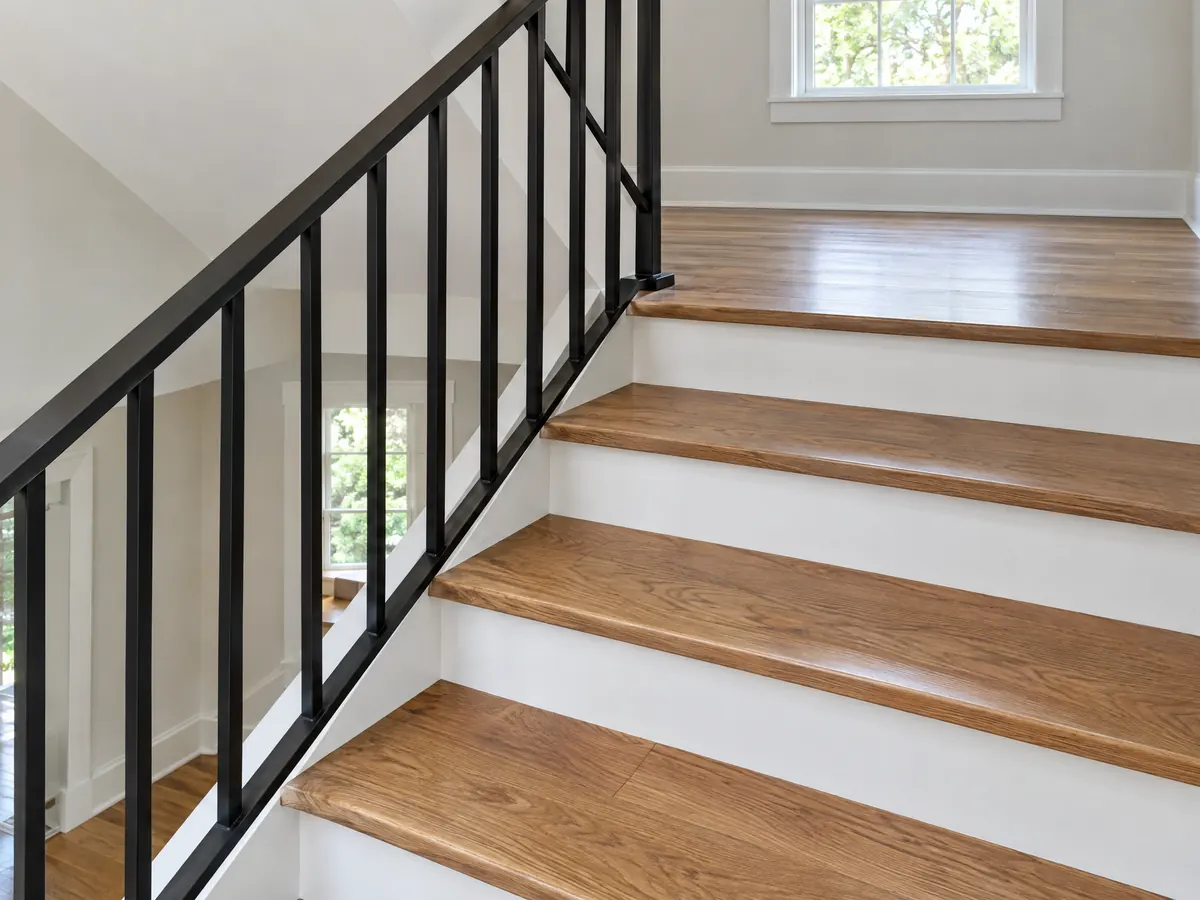
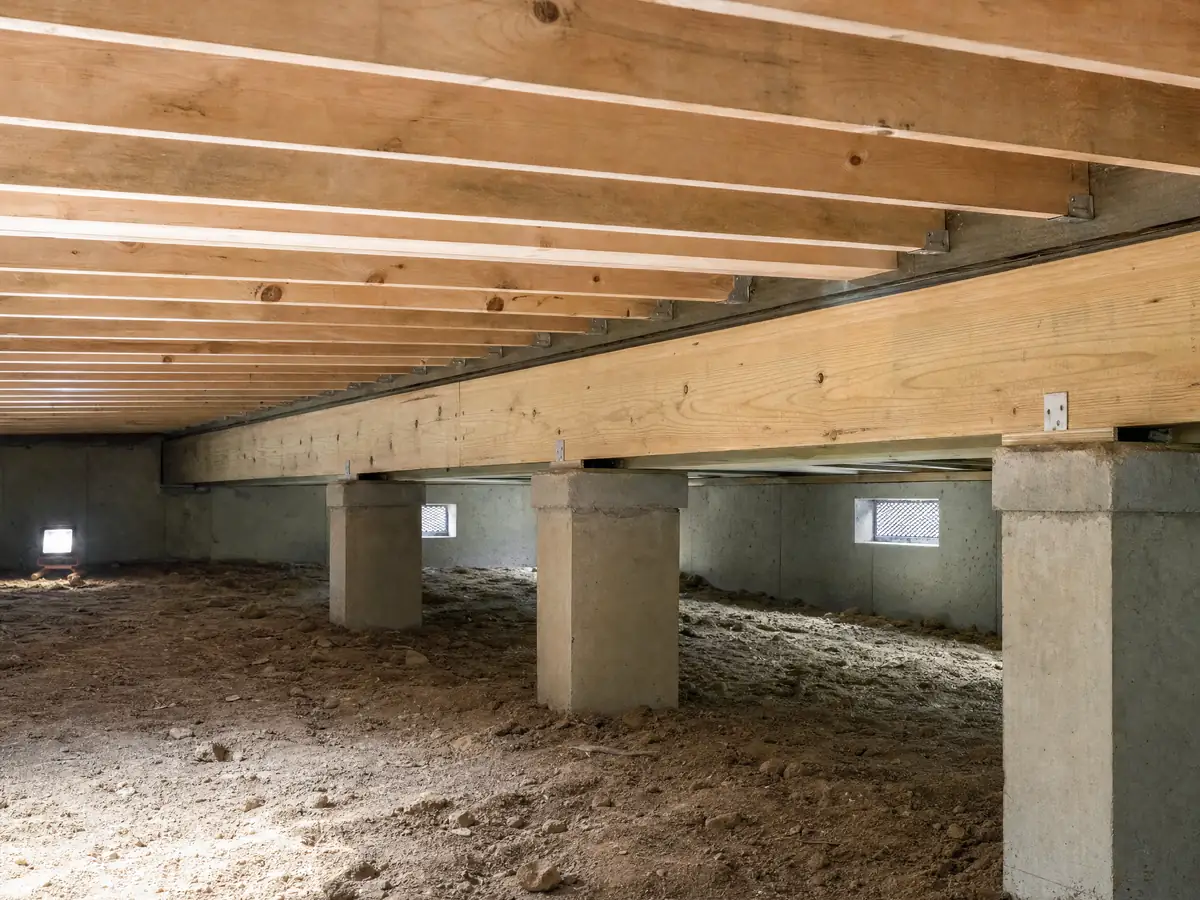
Flooring photos from Brea and nearby communities
Subfloors, plank samples, slab tests and finished floors from Brea and neighboring towns, shown at the steps that matter. Tap any photo to enlarge it.
What flooring costs around Brea
Dollar figures on this page are Los Angeles planning ranges from Angi and federal wage data, not a Brea bid, and a written proposal should list demolition, testing, subfloor work and stairs separately. For the same property, see concrete work in Brea and decks in Brea. Nearby, compare flooring in Fullerton, flooring in Placentia and flooring in Anaheim.
| What it covers | Typical range |
|---|---|
| Installation labor only | $3 to $9 per sq ft |
| Solid hardwood, installed | $12 to $22 per sq ft |
| Engineered hardwood, installed | $10 to $18 per sq ft |
| Refinishing existing hardwood | $4 to $8 per sq ft |
| Laminate, whole project | $2,000 to $5,500 |
| Hardwood, whole project | $3,153 to $8,496 |
| Removing the old floor | $455 to $685 per 200 sq ft |
| Tile | No sourced Los Angeles range |
Brea flooring questions, answered
Do I need a permit to replace flooring in Brea?
Usually not for a like-for-like swap. The City's permit handout exempts tiling, carpeting and similar finish work. Subfloor, structural or slab work is a separate question, so confirm with Building and Safety at 714-990-7600 or building@cityofbrea.gov, and ask your condo association for its own approval if you have one.
How much does it cost to have flooring professionally installed in Brea?
Expect $3 to $9 per square foot for installer labor on Angi's 2026 Los Angeles pages, or $12 to $16 per square foot installed overall, plus material. We found no Brea study and rate these medium to low in confidence. Demolition, moisture testing and subfloor repair are separate lines.
How much does it cost to refloor a 2,000 square feet house in Brea?
Installed pricing of $12 to $16 per square foot multiplies to $24,000 to $32,000 for 2,000 square feet, and labor alone at $3 to $9 gives $6,000 to $18,000 before material. These multiply Los Angeles ranges from Angi and are not a bid, so a site visit sets the number.
Can you put flooring over a concrete slab in Brea?
Yes, after the slab is tested and prepared. The flooring or adhesive manufacturer sets the moisture ceiling, so the installer should take F2170 probe readings or place an F1869 calcium chloride dish, then patch cracks and flatten the surface. Request the results in writing next to that ceiling.
Why does moisture come through a concrete floor in Brea homes?
Concrete is porous, and the ground under a slab holds water. Rain, sprinklers, a downspout, hillside runoff or a leaking pipe can wet the soil and push vapor upward. The City prescribes a 10 mil vapor retarder under its excepted new slabs, but we cannot say what lies under an older one.
Does the methane rule change flooring work in Brea?
Possibly, but only in an identified methane area, and we found no Fire Code sentence that names flooring. Section 326 requires testing, mitigation and alarms where combustible soil gas exists. Before anyone drills or saw-cuts a slab, ask the Fire Prevention Bureau at 714-990-7655 where the mitigation runs.
Is there asbestos under old vinyl flooring in Brea homes built before 1980?
Possibly, and nobody can tell by eye. About 54.5 percent of Brea's homes, 9,469 units, predate 1980, and OSHA presumes old resilient flooring and its adhesive contain asbestos until tested. Get a lab sample first, before any sanding or demolition, and find out who removes a layer that comes back positive.
Can I refinish hardwood floors instead of replacing them in an older Brea house?
Often, when enough wood stands above the tongue to take a sander. Angi's Los Angeles pages put refinishing at $4 to $8 per square foot and new solid hardwood at $12 to $22 installed, both medium to low in confidence. Ask the finisher for the coating's VOC figure and for a lead-safe plan in a pre-1978 house.
What license does a flooring contractor need in Brea?
Carpet, resilient flooring and wood floors fall under CSLB's C-15 class, and ceramic tile under C-54. For permitted work the City's application asks for the state license number and class, a Brea Business License number and workers' compensation details. Look the license up on the CSLB site before accepting a quote.
Send the rooms, the year built and the slab questions
Say which rooms you want done, roughly when the house was built, whether you know of a methane alarm or a historic listing, and what the floor is today. The permit, asbestos and moisture questions go with us to the first visit.