
House Paintingin Chino Hills, CA
House painting in Chino Hills needs no building permit, because painting is on the City's exempt-work list. The rules that bite are different: hillside areas ask for integrated earth-tone stucco and minimal contrast trim, South Coast Rule 1113 caps coating VOCs, and EPA lead-safe work applies to paid jobs in homes built before 1978.
Most Chino Hills paint goes onto stucco on a 1980s or 1990s house. ACS 2024 one-year estimates count 24,121 housing units, about 53.5 percent built from 1980 through 1999 as planned communities named Carbon Canyon, The Oaks, Woodview and Los Serranos, then Butterfield Ranch, Rincon and Rolling Ridge Estate in the late 1990s. Only about 19.7 percent (4,762) predate 1980. The oldest homes are in Los Serranos and the Sleepy Hollow cabin colony, which began in 1922. The Housing Element says homes 30 years and older commonly need roofs, plaster and stucco, and its late-2021 survey of 2,189 homes found 72 needing minor repair such as stucco and eave paint.
On a painting job MDG Builders (CSLB #1040337) writes the scope, checks the paint and surface rules for your address and keeps the schedule, while licensed painting subcontractors do the prep, priming and coating. The painting page has sourced prices, the Chino Hills overview lists every trade we manage here, and the guides for Yorba Linda, Diamond Bar and Corona cover three neighbors. Paint itself needs no permit, but window replacements do, so the City's Building and Safety Division is the place to ask when paint arrives with repairs. The City's code library blocked our researcher with a 403 error, so section numbers below come from GoCodebook, a third-party mirror, and need confirming with the City.
What Chino Hills' exempt-work list, hillside color code and South Coast rules say about paint
Where painting permits come from in Chino Hills: City of Chino Hills Building and Safety Division (Community Development Department).
- Painting, papering, tiling, carpeting, cabinets, counter tops and similar finish work are on the City's exempt-from-permit list, so repainting a house does not need a building permit in Chino Hills (handout rev. 8/5/2026), and the hillside color rules in the separate entry below apply where they cover the property.
- SCAQMD Rule 1113 sets VOC limits for architectural coatings applied in the District; the District's Table of Standards page (headed 'VOC Limits as of February 5, 2016') lists 50 grams per liter for flat coatings, 50 for nonflat coatings and 100 for primers, sealers and undercoaters, so the coating a painter specifies must be a District-compliant product (the page may lag later amendments; the rule text itself was not opened).
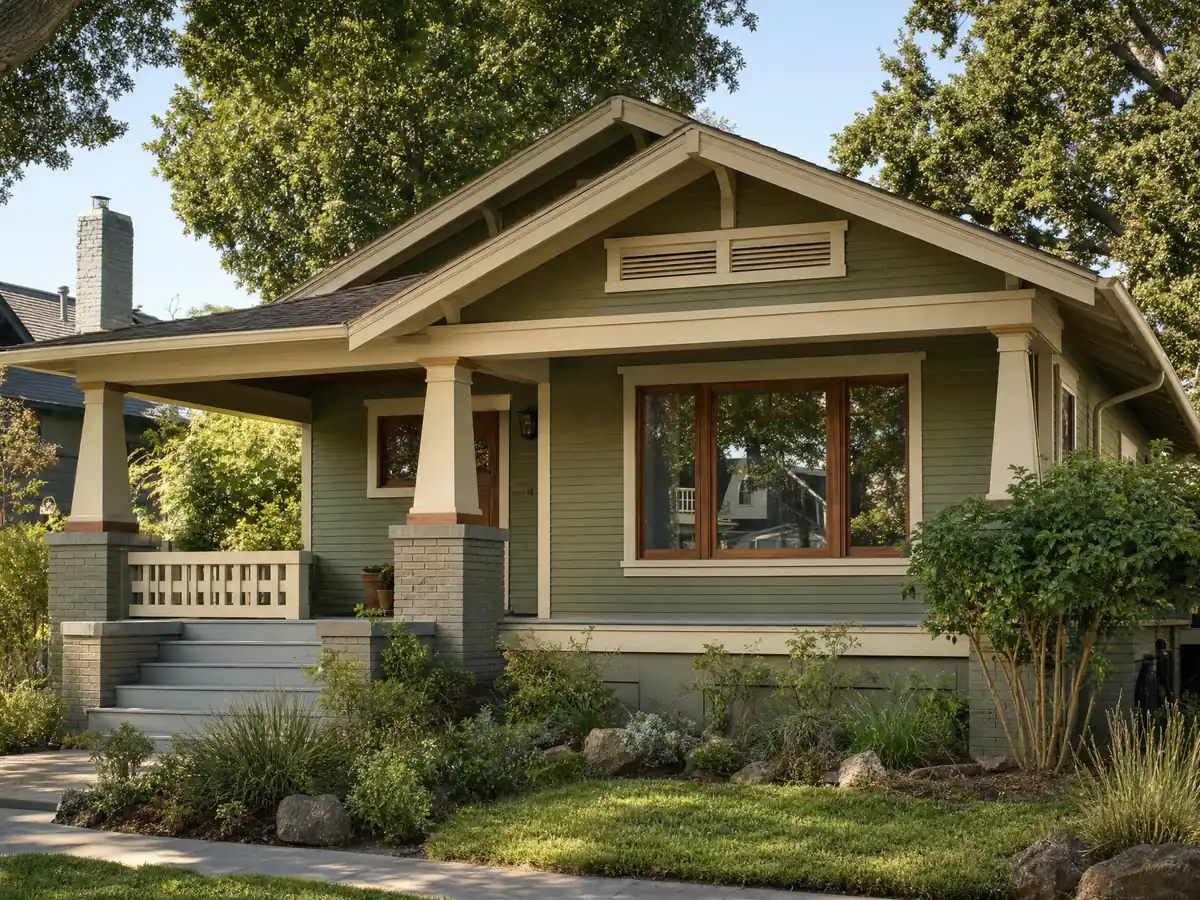
- In the hillside adaptive areas (Carbon Canyon Road corridor, Canon Lane, Sleepy Hollow, ridgelines; CHMC 16.08.060, third-party mirror) exterior stucco must have a final coat of integrated muted earth-tone color, contrast accents are to be minimal especially on the view side, and roof colors are earth tones.
Sources for these rules

Do I need a permit to paint my house in Chino Hills, and does my HOA still have a say?
No building permit, according to the City's exempt-work handout, revised August 5, 2026, which lists painting, papering, tiling, carpeting, cabinets and counter tops as finish work that needs none. The handout adds that exempt work must still meet the Fire Code and the Wildland Urban Interface Code and that an exemption does not authorize anything that violates another law. The permit page does name window replacements and re-roofs as permit items, so paint that comes with window work is a permit job.
An HOA is a separate gate. The City's design review form for custom homes asks for the HOA board's approval letter where an HOA exists, and the Housing Element says private streets and infrastructure costs are passed to residents through homeowners associations. We could not find which Chino Hills tracts have HOAs or what their paint rules say. The City exempts Vellano (Tract 13627-1) and Western Hills (Tract 15164) from that design review process. If you live in a planned community, ask the board for its color list before you buy paint.
Do Chino Hills' hillside rules limit stucco and trim colors in Carbon Canyon and on ridgelines?
Yes, in the areas the rule covers. The hillside architectural guidelines (CHMC 16.08.060, in the mirror) apply to mapped ridgelines and knolls, land within 600 feet of the centerline of Carbon Canyon Road, the Canon Lane area and the Sleepy Hollow area. There, exterior stucco must have a final coat of integrated muted earth-tone color, contrast accents should be minimal, especially on the view side, and roof colors should be earth tones.
The wording changes what a repaint means. If your stucco carries integral color, painting over it alters what the guideline is protecting, and we found no process for approving a repaint in those areas. The overlay maps were not readable, so ask Community Development whether your parcel is inside and send a color sample. Elsewhere in the city we found no color restriction in the pages we read, which describes our reading and is not a guarantee.
Ask the City whether your parcel sits inside the hillside area before choosing a darker or bolder color.
What does Rule 1113 limit for a Chino Hills painting company, and how do I verify the paint?
South Coast Air Quality Management District Rule 1113 caps the volatile organic compound content of architectural coatings applied inside the District, and Chino Hills is inside it, not in the Mojave Desert district. The District's map of jurisdiction prints Chino Hills in the San Bernardino County portion, and its regional contacts page lists the city alongside Chino, Fontana and Ontario. The Table of Standards page, headed 'VOC Limits as of February 5, 2016', lists 50 grams per liter for flat and nonflat coatings, 100 for primers, sealers and undercoaters, and 100 for waterproofing concrete and masonry sealers.
That page may lag later amendments, and we did not open the rule text, so treat the numbers as questions to ask rather than a final answer. The practical check is simple: request the product data sheet for each paint, primer and sealer, find the VOC line and compare it with the District's current table. The rule covers anyone who applies or stores coatings at a worksite, so the duty rests on the painter and not only on the store. Ask whether the paint was bought for use in the South Coast District.
Does lead paint matter when 53.5 percent of Chino Hills homes were built from 1980 to 1999?
For most homes probably not, though for some it matters a great deal. EPA's Renovation, Repair and Painting Rule covers paid work that disturbs paint in housing built before 1978. ACS cannot separate 1978 from 1979, so the closest counts are 4,762 homes before 1980 (19.7 percent) and 2,398 before 1970 (9.9 percent). The Housing Element says most homes older than 1970 are in Los Serranos and the Sleepy Hollow area, and that about 5 percent of Los Serranos homes predate 1945.
On a pre-1978 house, firms must be EPA lead-safe certified, even sole proprietors, unless a certified inspector's written determination or a certified renovator's negative test-kit result clears each component. Minor repair, 6 square feet or less of painted surface per room inside or 20 square feet or less outside, falls outside the rule when no windows are replaced and jobs in one room within 30 days are added together. Open-flame burning, high-speed sanding without a shroud and HEPA vacuum, and heat guns at 1,100 F or more are prohibited. Because California does not appear on EPA's list of authorized states, the federal agency itself administers the rule here.
Give the painter the year the house was built before the first quote.
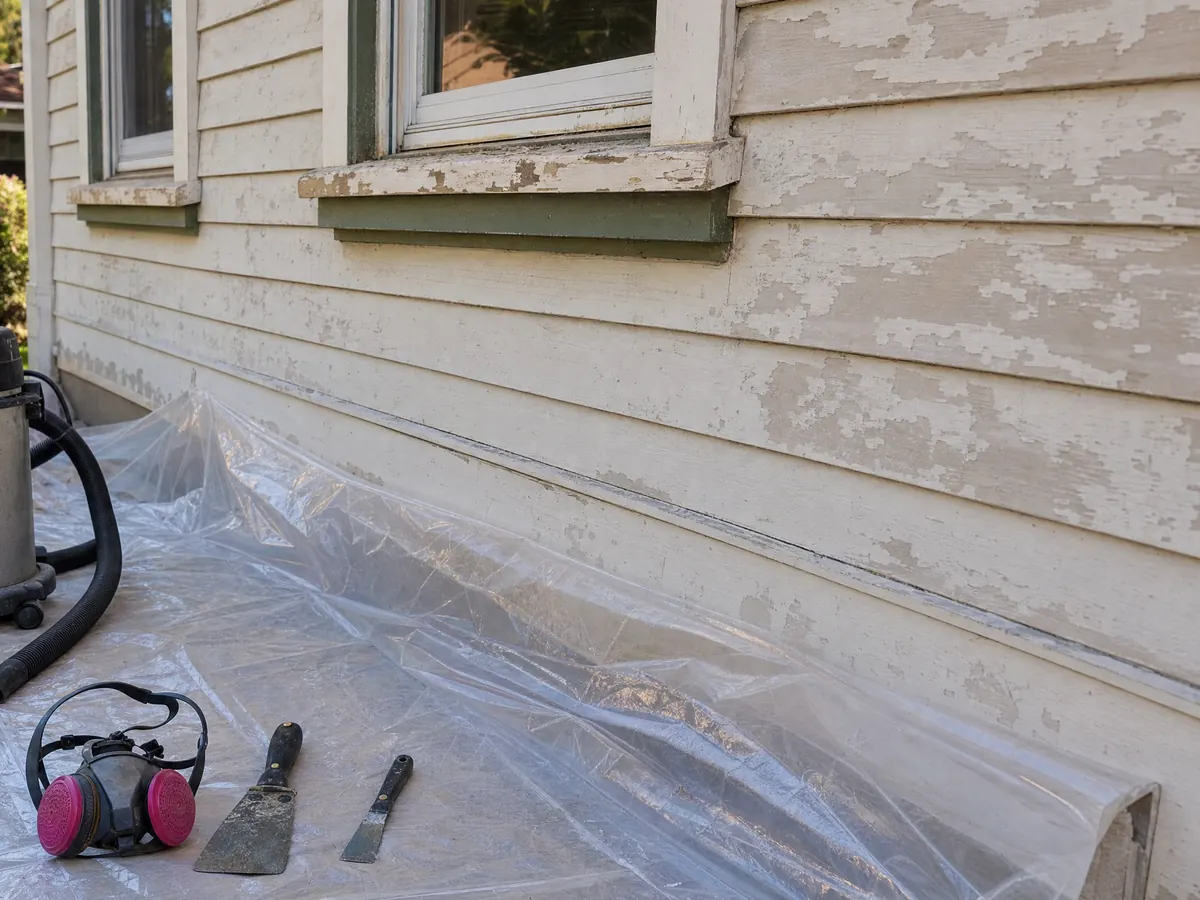
How do I repaint stucco that is 25 to 45 years old in Chino Hills?
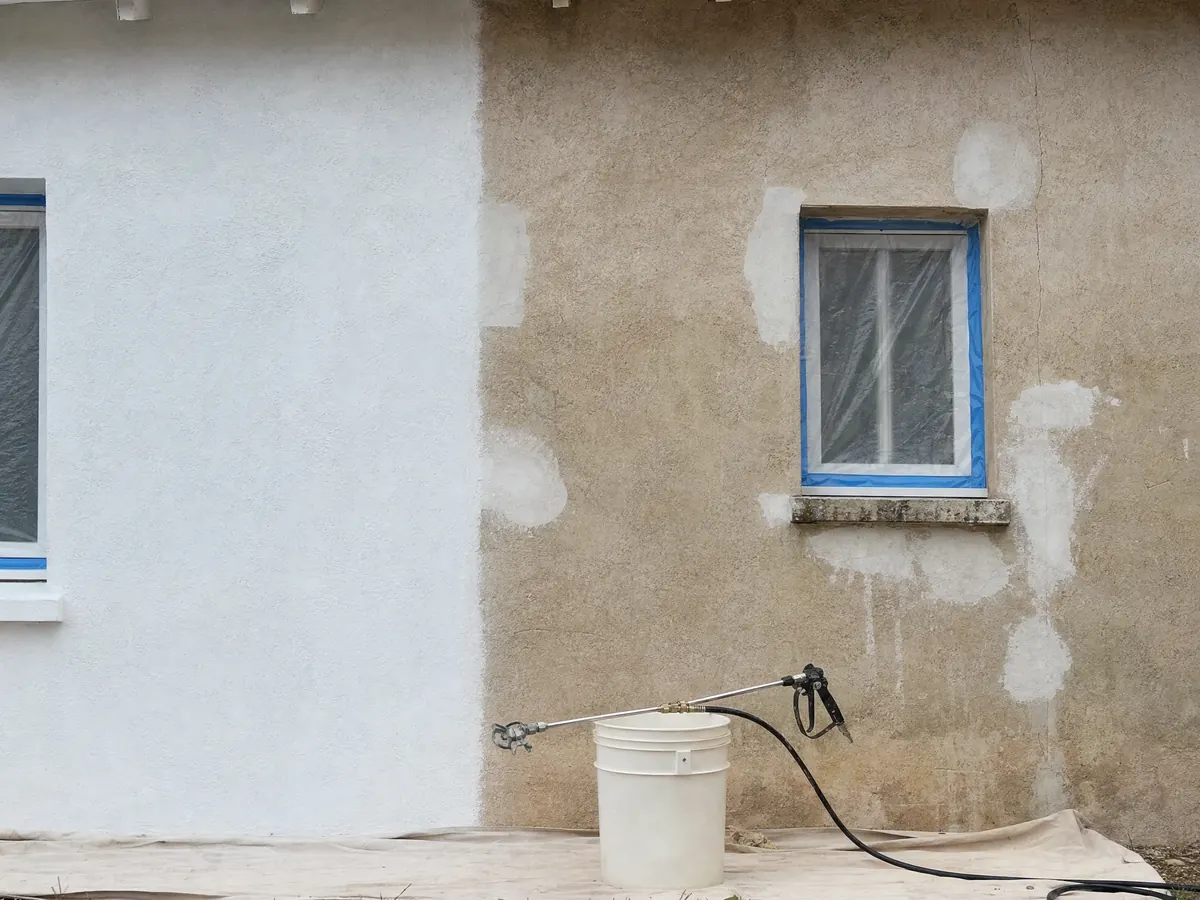
Repair first, then prime, then coat. The Housing Element's survey lists stucco, eave paint and roof tiles as the minor repairs it found, and says homes 30 years and older commonly need plaster and stucco work. Hairline cracks, spalled patches and failed caulk at windows should be fixed before any primer goes on. Stucco repair is plastering work, state class C-35, while painting is class C-33. Angi's Los Angeles page says stucco costs more to paint because of specialized prep, and Houzz homeowners advise a masonry-rated primer and topcoat.
One local caution: clay-rich hillside soils can be highly expansive, according to the Safety Element, so a crack that reopens after repair may be ground movement rather than paint failure. A painter cannot cure that, and it is a question for a geotechnical engineer. In Carbon Canyon and ridgeline areas, ask the City before covering integral earth-tone color, since the guideline calls for it there.
Are the old Sleepy Hollow and Canon Lane cabins historic, and does repainting one need review?
Not on anything we could find. The General Plan's cultural resources study names only two officially recognized historic sites in the city: the site of the Rancho Chino Adobe, a California Historical Landmark, and the site of the Battle of Chino, a California Point of Interest, both marked at 4040 Eucalyptus Avenue. We found no locally adopted historic district, so a cabin repaint is not reviewed as a historic one in the pages we read. Ask the City if your house is listed somewhere we missed.
That does not make the canyon free of rules. The canyon colony started as a 1922 weekend retreat, and the City's own history page says about 90 cabins stood there by 1928 before families moved in for good after the war. Today the area sits under the hillside color rules, the Small Lot Overlay (15 foot front yards, 40 percent building coverage) and many septic systems. A cabin built before 1978 is where the lead question is most likely to apply.
How much does house painting cost in Chino Hills, and what should the quote list?
We found no Chino Hills painting survey, so the figures come from Los Angeles. Angi's Los Angeles page for outside work, updated November 13, 2025, puts the average at $4,692 within a $2,947 to $6,484 range and $2.20 to $5.90 per square foot of home, adding about 50 percent for each extra story. Its interior page, updated August 4, 2026, reports a $2,525 average within $1,282 to $3,784 and $2 to $6 per square foot of floor area, plus $0.50 to $0.75 per square foot of prep in older homes. The two units differ, so a quote should say what it measures. The Bureau of Labor Statistics put the mean wage for painters in the Los Angeles area at $29.71 an hour in May 2025, a wage and not a billing rate.
A quote should name the surfaces and areas, the repair scope, the number of coats, each product with its VOC line, who protects furniture and floors, and which lead-safe steps apply. Painting is state class C-33, and Business and Professions Code 7048 requires a license for work of $1,000 or more under its 2026 amendment. Our license guide shows the lookup, and how general contractors use subcontractors explains how MDG manages licensed painters.
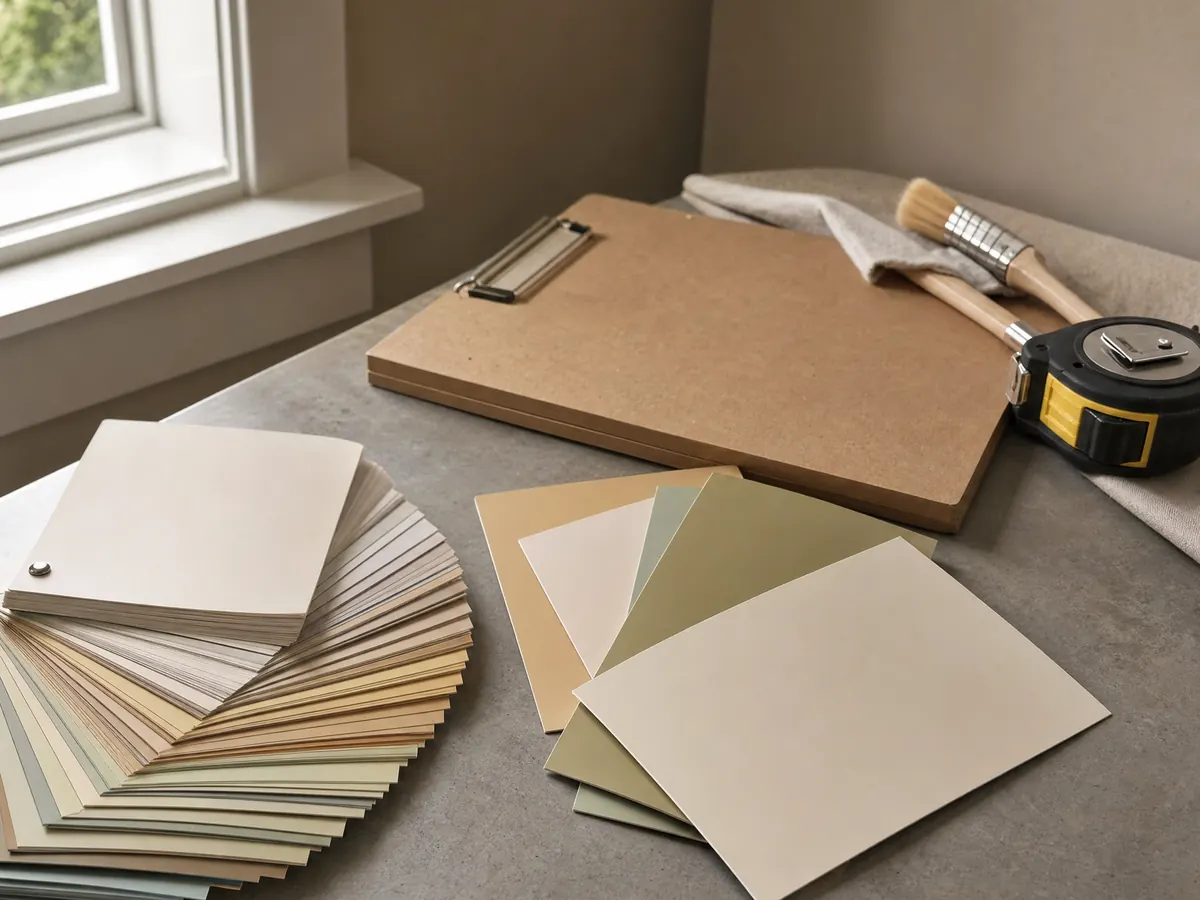
Painting photos from Chino Hills and nearby communities
Painting scenes tied to Chino Hills places such as Los Serranos, The Oaks, Woodview and Sleepy Hollow, and to nearby communities such as Chino, Yorba Linda and Diamond Bar, from prep and masking to stucco primer and finished trim.
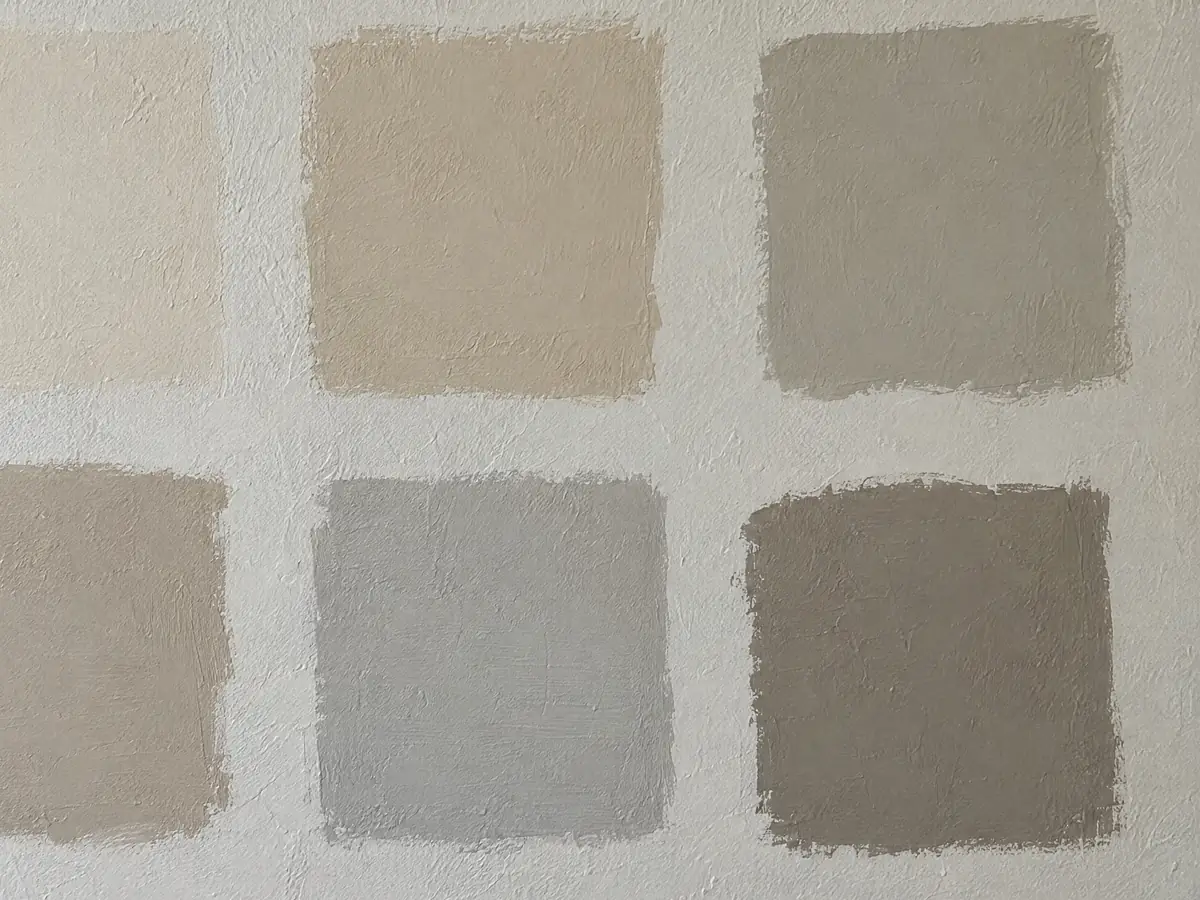
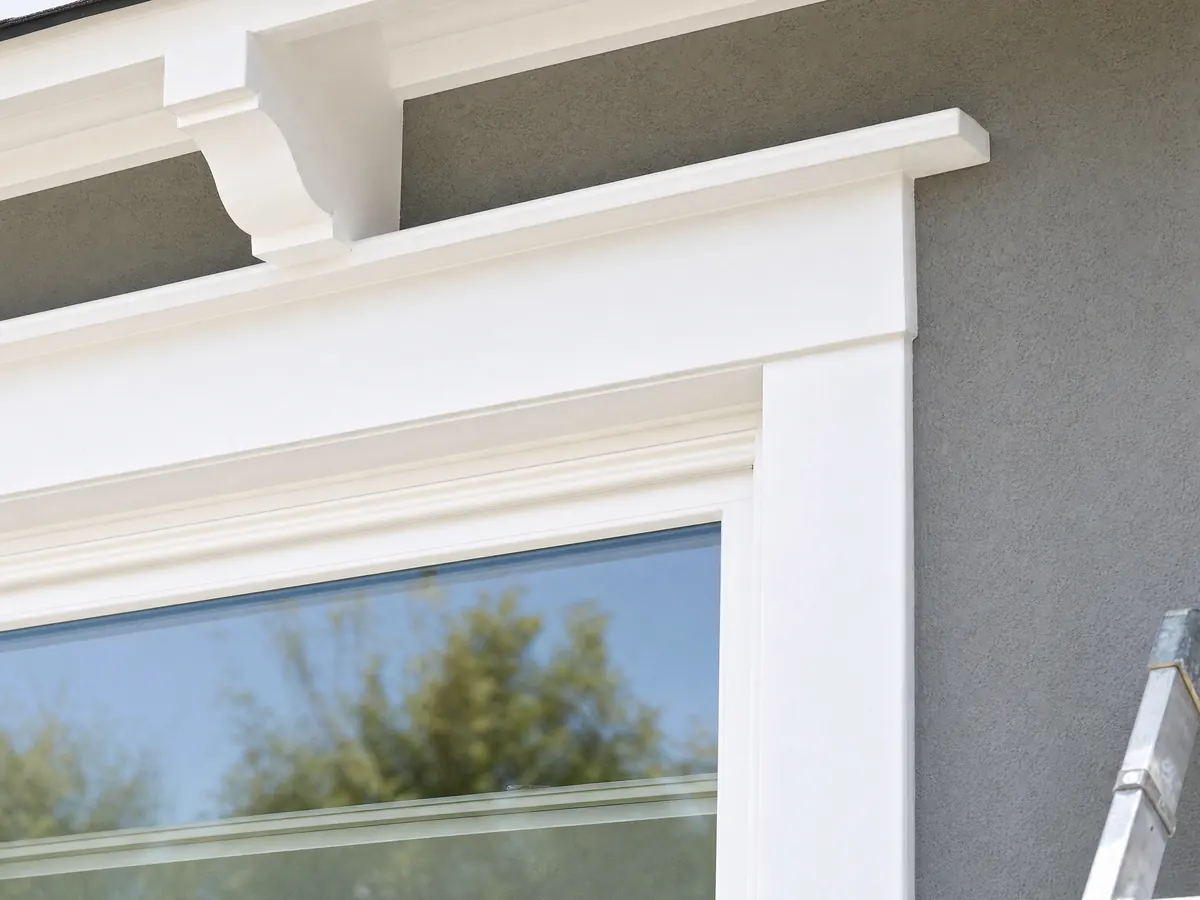

Where these Chino Hills paint figures come from
Each painting price, with its source, date and the figures that disagree, is on the painting page. Paint often follows other outside work, and the Chino Hills rules for those jobs are on the roofing page, the fencing page and the kitchen remodeling page. For a Los Angeles County neighbor with its own paint rules, see Pomona.
| What it covers | Typical range |
|---|---|
| Exterior, whole house | $2,947 to $6,484 |
| Exterior, per square foot of home | $2.20 to $5.90 |
| Interior, per square foot of floor area | $2 to $6 |
| Interior, Angi's Los Angeles project range | $1,282 to $3,784 |
| Extra prep in older homes | $0.50 to $0.75 per sq ft more |
| UV-resistant paint | $10 to $20 more per gallon |
Other work we manage in Chino Hills
Chino Hills house painting questions, answered
Do I need a permit to paint the outside of my house in Chino Hills?
No. Painting, papering, tiling, carpeting, cabinets and counter tops are on the City's exempt-work list (handout revised August 5, 2026), so repainting needs no building permit. Window replacements and re-roofs do, and an HOA or a hillside color rule can still apply. Call Building and Safety at 909-364-2780 if repairs come with the paint.
How much does it cost to paint a house in Chino Hills?
We found no Chino Hills survey. Angi's Los Angeles pages put an outside job at an average of $4,692 and an interior at $2,525, with ranges of $2,947 to $6,484 and $1,282 to $3,784. House size, stories, stucco repair and prep drive the difference, and a written proposal sets the real price.
How much does it typically cost to paint a 2,000 square foot house?
Angi's Los Angeles page lists $4,450 to $11,850 for the outside of a 2,000 square foot house at $2.20 to $5.90 per square foot. Inside, $2 to $6 per square foot of floor area works out to $4,000 to $12,000 by our arithmetic. Added stories, repairs and older-home prep move the range.
How much should it cost to paint the exterior of a 1,500 square foot house?
Multiplying Angi's Los Angeles range of $2.20 to $5.90 per square foot by 1,500 gives about $3,300 to $8,850, our arithmetic. Angi's own table prints $2,225 to $5,925 for 1,000 square feet and $4,450 to $11,850 for 2,000, which brackets that figure. Stucco prep and a second story push it higher.
Is $50 an hour good for a painter?
It sits at the top of the common billing range. The Bureau of Labor Statistics put the mean wage for painters in the Los Angeles area at $29.71 an hour in May 2025, and Angi's national page lists $20 to $50 an hour. An hourly rate says little without the hours, so compare written quotes by scope instead.
Does lead paint matter in an older Chino Hills house?
Only for homes built before 1978. EPA's rule requires lead-safe certified firms and practices for paid work that disturbs paint there, with a minor repair exception. About 19.7 percent of Chino Hills homes (4,762) predate 1980, mostly in Los Serranos and Sleepy Hollow. Tell the painter the year built before the first quote.
Can this stucco be painted?
Yes, once cracks and failed caulk are repaired and a masonry-rated primer goes on. Stucco repair is plastering work (class C-35) and painting is class C-33. In Carbon Canyon and ridgeline areas the code asks for integrated earth-tone final-coat stucco, so ask the City before painting over integral color there.
What VOC limit applies to house painting in Chino Hills?
South Coast Rule 1113 applies. The District's Table of Standards page, headed February 5, 2016, lists 50 grams per liter for flat and nonflat coatings and 100 for primers, sealers and undercoaters. The page may lag later amendments and we did not open the rule text, so ask the painter for each product's data sheet.
Do hillside color rules apply to my Chino Hills house?
Only in the hillside areas: mapped ridgelines and knolls, land within 600 feet of the Carbon Canyon Road centerline, Canon Lane and Sleepy Hollow. There stucco should carry an integrated muted earth-tone final coat, contrast accents should be minimal and roof colors should be earth tones. The maps were not readable, so ask Community Development about your parcel.
Do you need a contractor's license to paint in California?
Yes once the job reaches $1,000, under Business and Professions Code 7048 as amended effective January 1, 2026, and always when a permit is required. Painting is state class C-33. MDG (CSLB #1040337) hires licensed painting subcontractors, and you can confirm any license on the state contractor board's website.
Ask for a painting estimate in Chino Hills
Tell us your neighborhood, the year the house was built, whether the walls are stucco or wood and what you want painted. We check lead, hillside color rules and coating limits before calling you back.