
Bathroom Remodelingin Corona, CA
Bathroom remodeling in Corona needs a City building permit when the job moves concealed drain, water or vent pipe, and the Building Division takes applications through eTRAKiT. Like-for-like fixtures, tile and cabinets are exempt. About 52 percent of Corona homes were built from 1980 through 1999, so many baths are 27 to 46 years old.
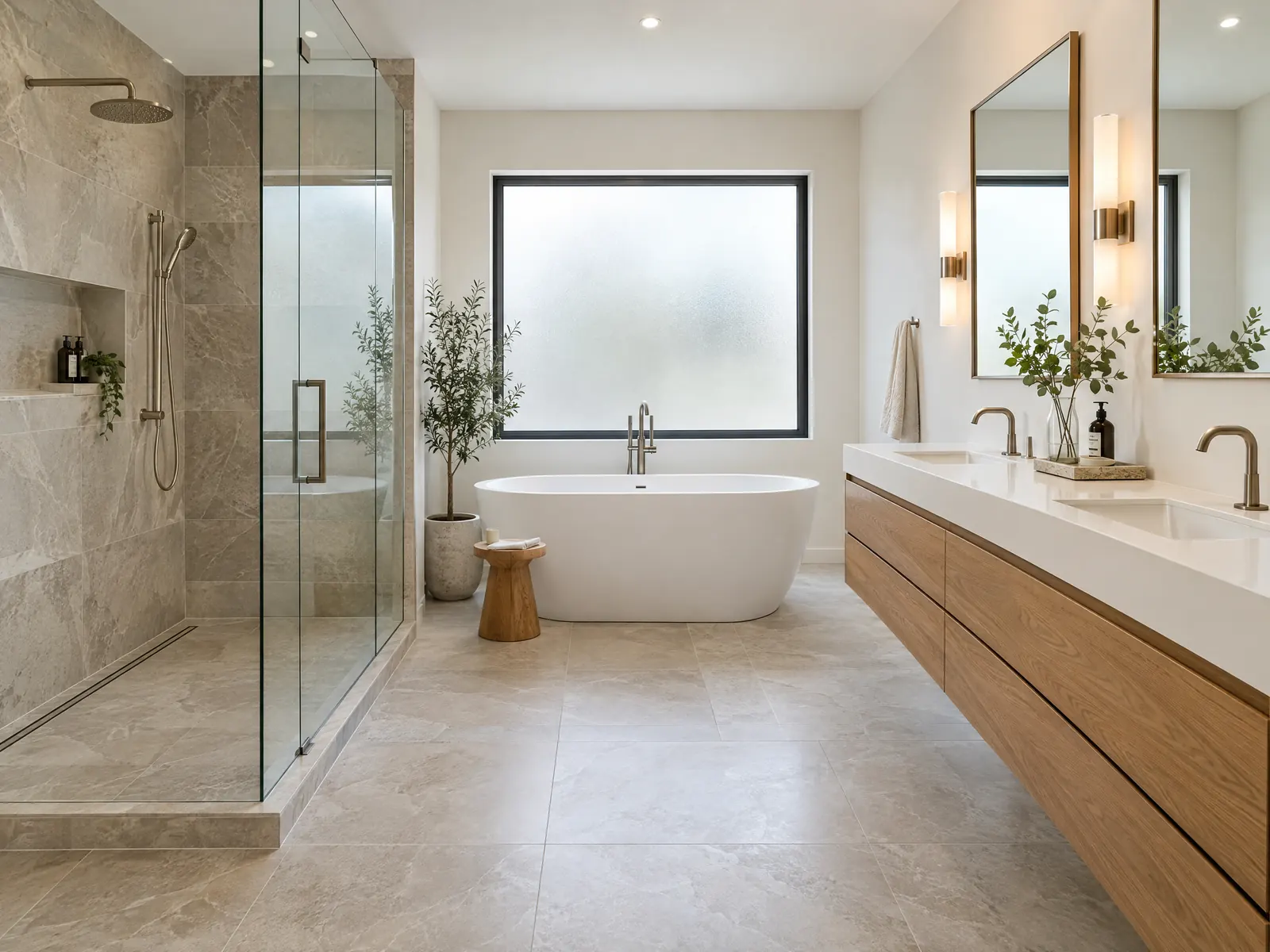
Corona's bathrooms are mostly the product of one boom. The Census Bureau's 2024 one-year estimates count 52,505 homes in the city (plus or minus 2,023), and about 52 percent of them, 27,400, went up between 1980 and 1999. Another 24 percent, 12,695, predate 1980, and the median owner-occupied home is worth $746,500, plus or minus $32,758. The City Library's history says South Riverside took the name Corona on July 13, 1896, and that as citrus gave way to subdivisions the population rose 110 percent between 1980 and 1989.
This page covers the tract-era bath, the permit line, plan check for moved fixtures, condos, mobile homes and rentals, heat and waterproofing, and the schedule. Corona's Municipal Code text comes from the third-party GoCodebook mirror, because the official code site refused our tools, so confirm each rule with the Building Division before relying on it. Price tiers and phases are on our bathroom remodeling page.
Corona Building Division rules that apply to bathroom work
Where bathroom remodeling permits come from in Corona: City of Corona Building Division (Planning and Development Department).
- Corona's bathroom jobs follow the same split as kitchens: like-for-like replacement of water-conserving fixtures is exempt from permit or inspection and must meet CMC Chapters 15.05 and 15.20, tiling and finish work are exempt, but moving or replacing concealed drain, water or vent pipe is permitted new work.
- Corona's tract and room-addition handouts require plumbing isometrics for all water, drainage and gas piping with water and drainage fixture-unit calculations for sizing the water service, meter and branches, and two sets of Title 24 energy calculations, so a new or relocated bathroom in an addition goes through plan check rather than over the counter.
- Corona's Residential Code table lists termite damage as very heavy (third-party mirror of the code).
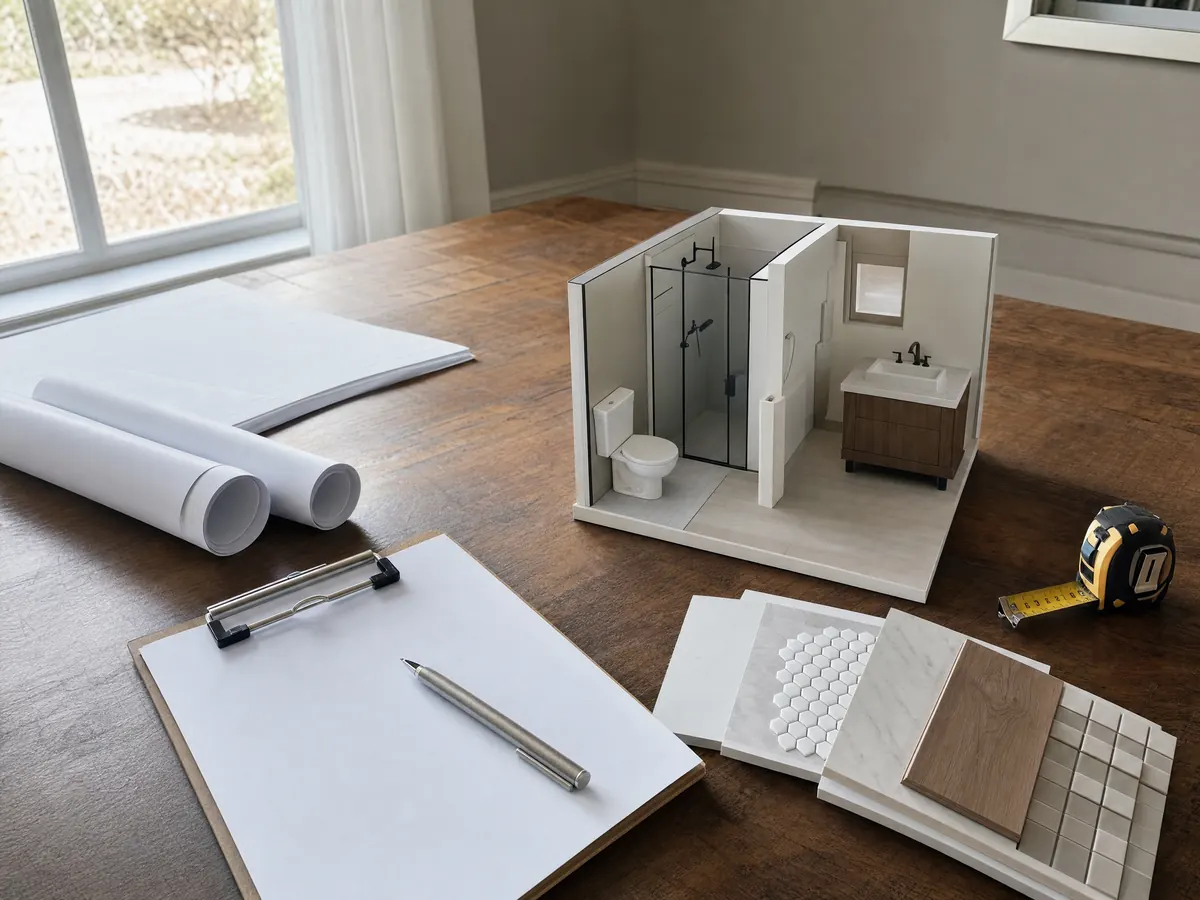
What is behind the walls of a Corona bathroom built in the 1980s or 1990s?
Most likely a tub or shower surround that has outlived its first finish, in a house between 27 and 46 years old. The Census table puts 26.2 percent of Corona homes in the 1980s and 26.0 percent in the 1990s, and the City's specific plan files show how it happened: Sierra Del Oro, approved by the Council on September 18, 1985, planned 3,592 units on 1,374 acres, and Eagle Glen, first approved October 2, 1991, annexed 1,135 acres of Bedford Canyon.
We found no City or state source that dates drain, supply or waterproofing materials by decade, so we cannot say what your walls hold. A licensed plumber can tell you once the surround is off. Corona's code table rates termite damage as very heavy, so the sill plate and the framing at the tub wall get probed too. The Census table cannot separate 1978 from 1979, so your own build year decides the lead question. We did not open EPA's lead-safe rule for this page, so ask any firm about federal certification before it disturbs paint in a pre-1978 house.
- Does the firm hold lead-safe certification if the house predates 1978?
- Who probes the sill plate and tub wall for termite damage?
- Who camera-checks the drain before the floor is closed?
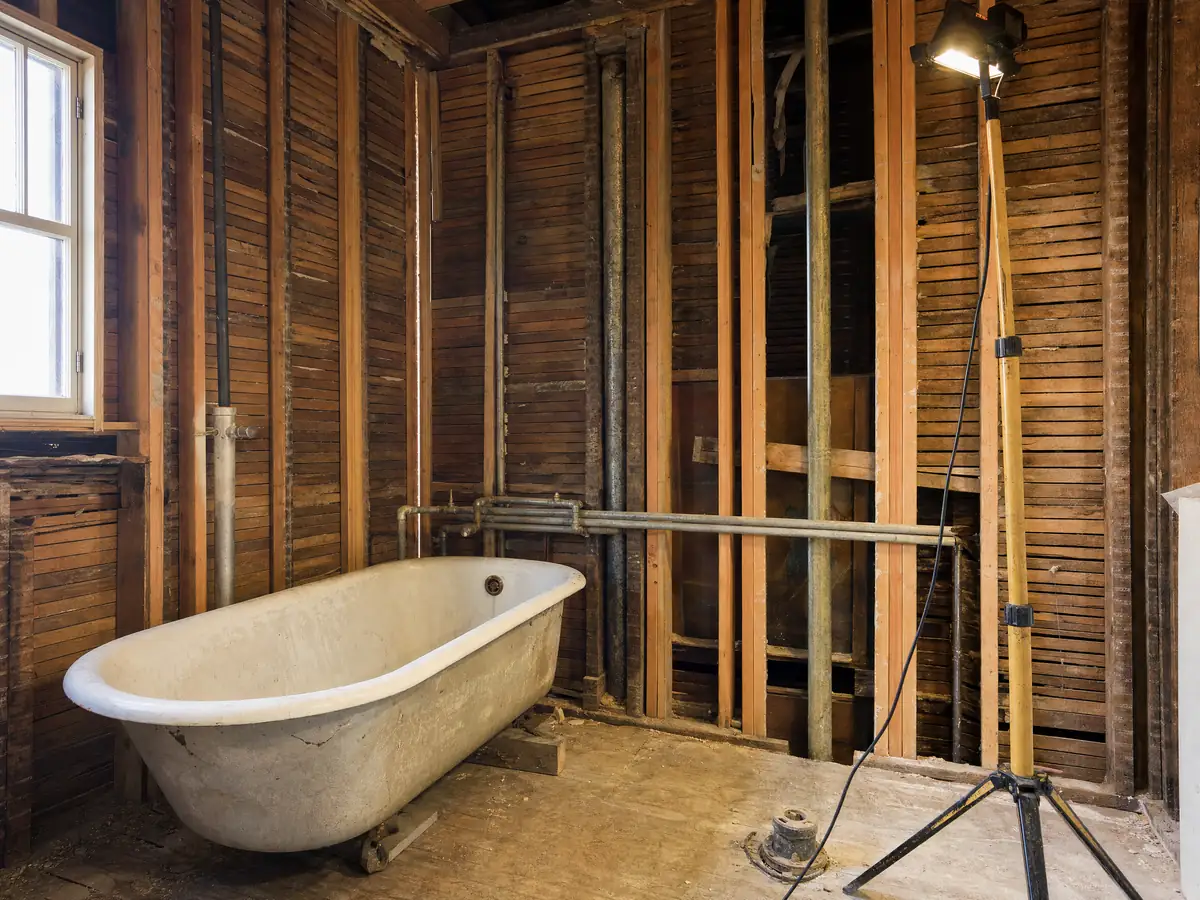
Do you need a permit to remodel a bathroom in Corona?
It depends on whether the pipes move. Corona's exempt-work list, as read on the mirror, says tiling, cabinets, countertops, painting and similar finish work need no building permit, and water-conserving fixtures are exempt only when they replace existing fixtures. Replacing or rearranging concealed drain, water or vent pipe is new work that needs a permit and an inspection. A like-for-like toilet, vanity or faucet swap is therefore a different job from relocating a drain.
The City's Plan Check FAQ lists permits issued over the counter with no plan check wait, among them a water heater changeout, an electrical panel upgrade and a water repipe. It tells owners to phone and confirm that a specific job qualifies, so call the Building Division at 951-736-2250 with your scope in hand. Applications, payments and inspection requests run through the eTRAKiT portal.
Fees are a small unknown. Table B, effective October 4, 2026, sets a $164 minimum building fee, and the City publishes a fee estimator and separate plumbing and electrical schedules that we did not open, so anything above the minimum shows up as its own line in a written proposal. The license check guide shows how to verify a contractor before a deposit.
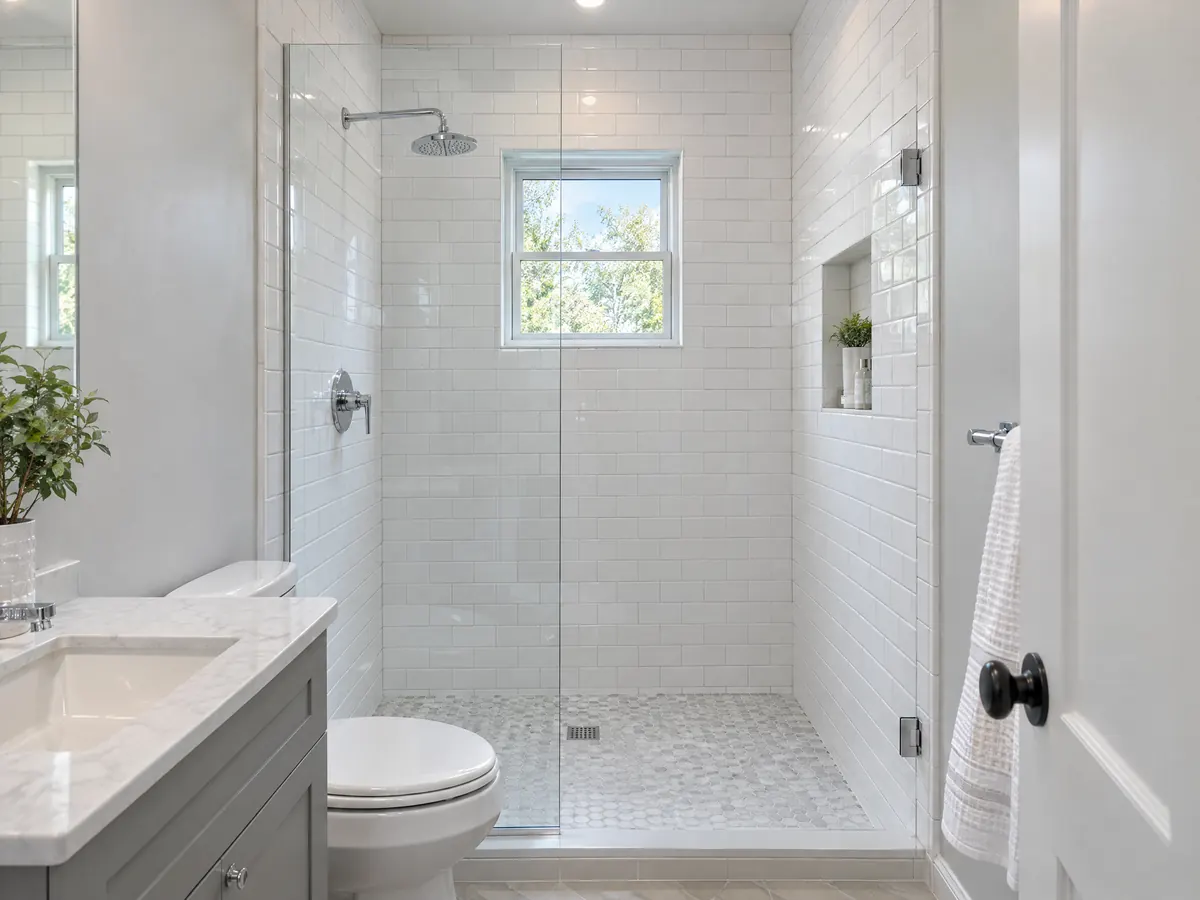
What does Corona plan check ask for when a bathroom moves or grows?
Moving fixtures, or adding a bathroom inside an addition, puts the job in plan check instead of over the counter. The City's tract and room-addition handouts ask for plumbing isometrics showing every water, drain and gas line, fixture-unit calculations that size the water service, meter and branches, and two sets of Title 24 energy calculations. First submittals are reviewed in 10 business days and later ones in 5. Plans go in through eTRAKiT or in person, never by mail, and the ProjectDox prescreen can take up to 5 days before that clock starts.
The Plan Check FAQ also names corrections that repeat. Smoke and carbon monoxide alarms must appear on plans when a permitted alteration removes wall or ceiling finishes, hardwired and interconnected, and gas appliances need combustion air sized to the room and the BTU rating. An attic with more than 30 inches of clear height needs a 22 by 30 inch access, and the City wants a CPVC and PEX piping certification form. A plan check expires 180 days after submittal unless resubmittals keep it alive.
Who has to approve a bathroom remodel in a Corona condo, rental or mobile home?
Corona is not only single-family. The Census estimates count 11,170 homes, 21.3 percent, in buildings of five or more units, and 37.9 percent of occupied homes are rented. A bath in an apartment or condo shares a stack or a ceiling with a neighbor, so the first question is who owns the pipe. A tenant should ask the landlord who is pulling the permit, and a condo owner should ask the association whether the drain stack, shower valve and exhaust duct are common area. We read no association rules.
Mobile homes make up 3.4 percent of the stock, 1,768 units. The zoning code has an MP mobile home park zone in Chapter 17.30 and a manufactured housing chapter, 17.81, so work inside a park follows state and park rules as well as the City's. Addresses in Coronita, El Cerrito, Home Gardens and Temescal Valley are unincorporated and are not governed by the City's building code, so confirm the jurisdiction first. Inside the city, construction noise is barred from 8 p.m. to 7 a.m. Monday through Saturday and from 6 p.m. to 10 a.m. on Sundays and federal holidays, and delivery trucks count.
How do Corona's summer heat, shower waterproofing and the 2025 energy code shape a bath?
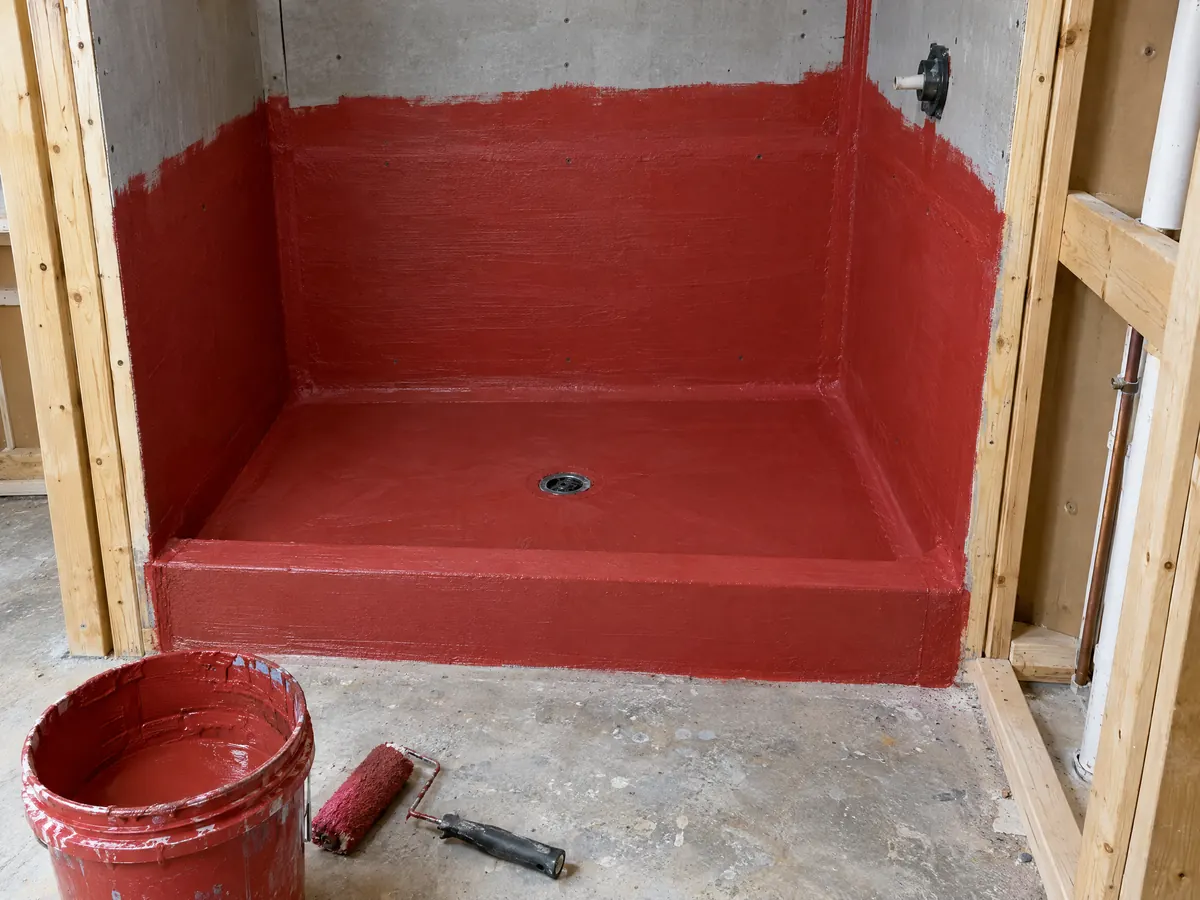
Corona is a dry-summer city, so the water in a bath comes from the shower, not the weather. The city's own stations have no 1991 to 2020 normals, so we used Chino Airport, about 8.8 miles northwest: 9.98 inches of rain a year, 99.0 days at or above 90 F and 23.3 at or above 100 F. A sound shower still needs a sloped pan, backer board and one continuous membrane over the curb and up the walls. We ask for a flood test and photographs before tile. That is our own practice, and we did not find the City requiring it.
Ventilation is code. The Energy Commission's 2025 residential summary calls for local exhaust that runs continuously or on demand, at least one bathroom light on an occupancy or vacancy sensor with automatic off, and a fan light that switches apart from the fan. The City's plan check page sets climate zone 10, and Corona adopted the 2025 California Building Code by Ordinance 3421, per the mirror, so plans should show the duct ending outdoors. Part of the city takes power from Corona Utilities and the rest from Southern California Edison, which matters when a new circuit or a panel is involved.
How long does a bathroom remodel take in Corona, and who does the work?
Plan on 2 to 6 weeks of design and selections, a few days of demolition and rough plumbing, 3 to 5 days of waterproofing and cure, 1 to 2 weeks of tile and fixtures, and about a week for glass and the final inspection. Corona books inspections online Monday through Thursday, and City Hall is closed on Fridays, so a hardship inspection that day needs a call by 5 p.m. Wednesday. A permit lapses 12 months after issuance unless approved inspections keep it active, and each approved inspection extends it 180 days.
MDG Builders, CSLB #1040337, is the general contractor that draws the layout, files with the Building Division and schedules the trades, and it does not set the tile or run the drain itself. A licensed plumber, tile setter and electrician do that work, and you can ask each for a license number and a certificate of insurance. CSLB's C-54 class covers tile for tubs and showers. A down payment is capped at $1,000 or 10 percent of the price, whichever is less.
Bathroom photos from Corona and nearby homes
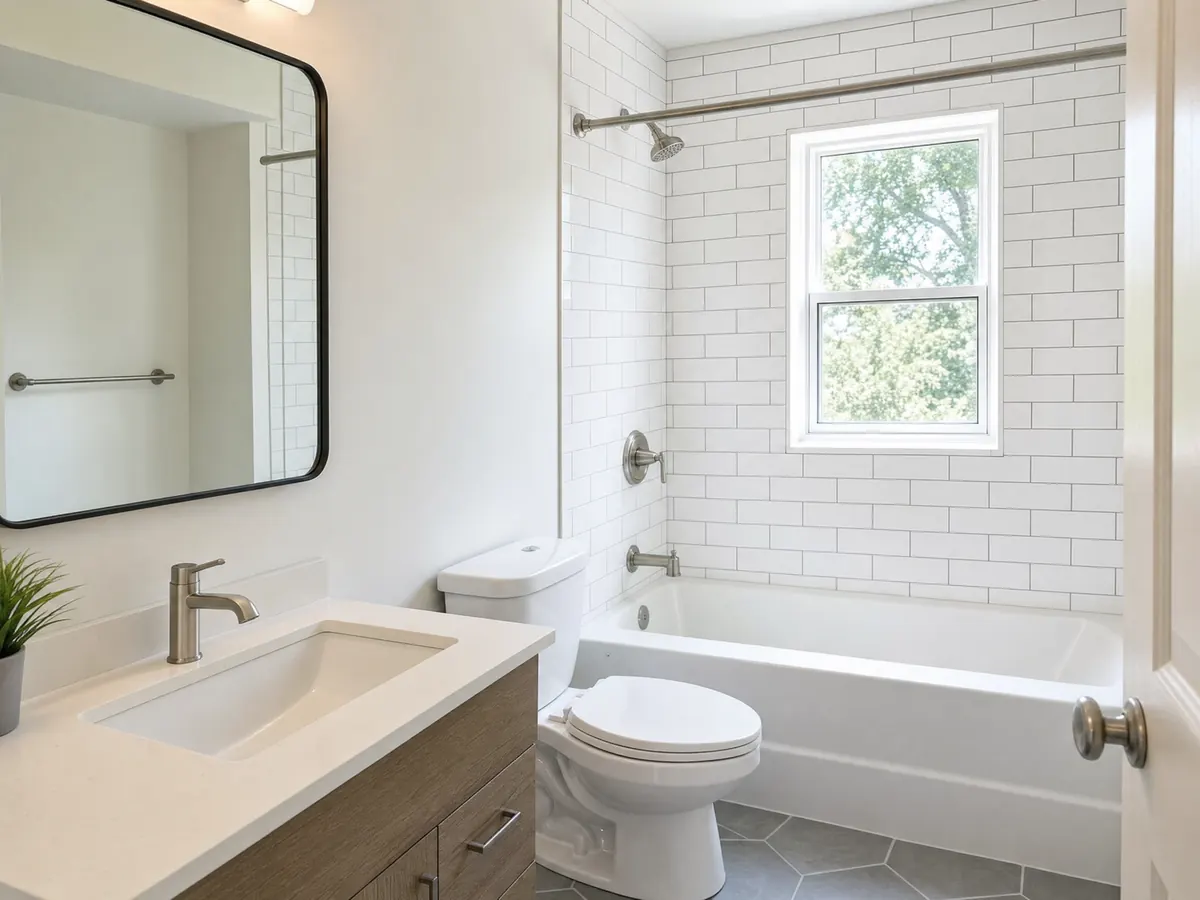
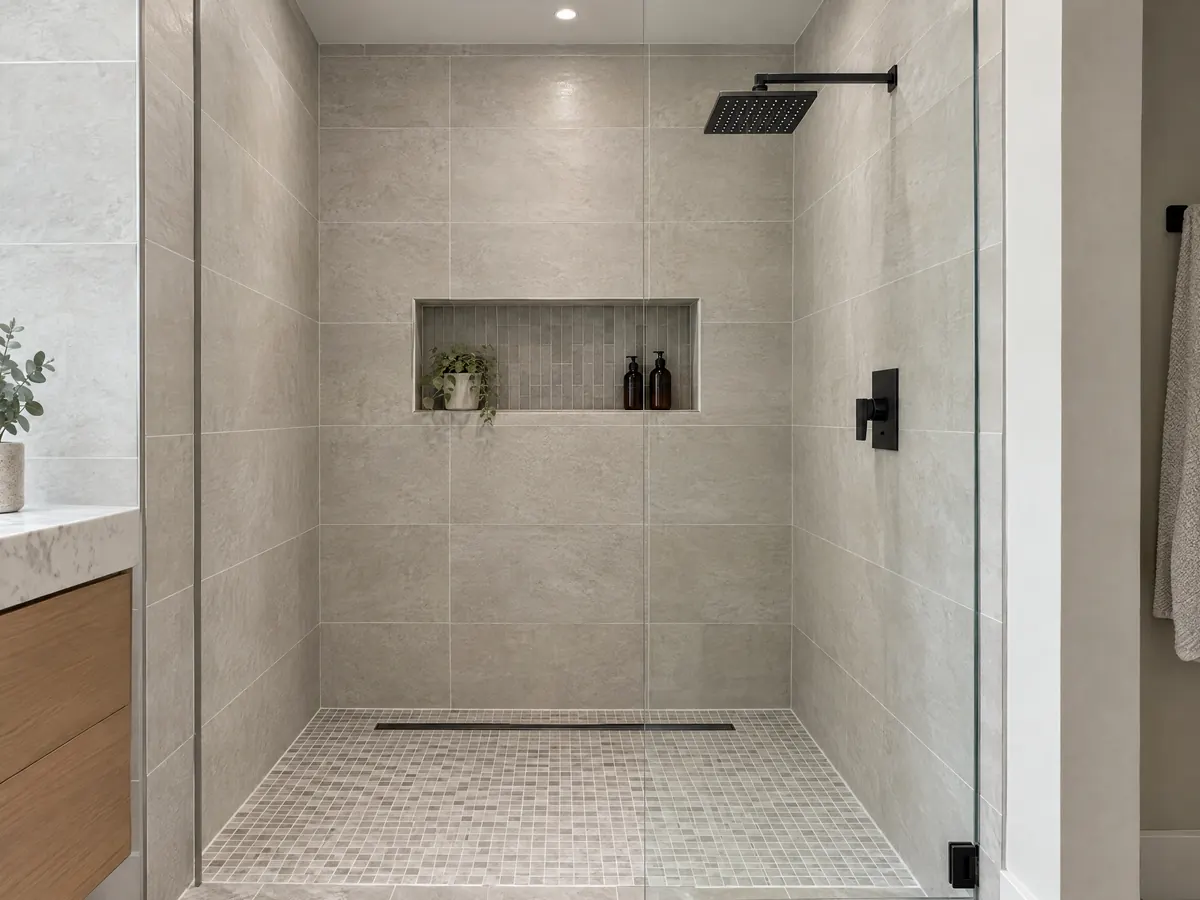
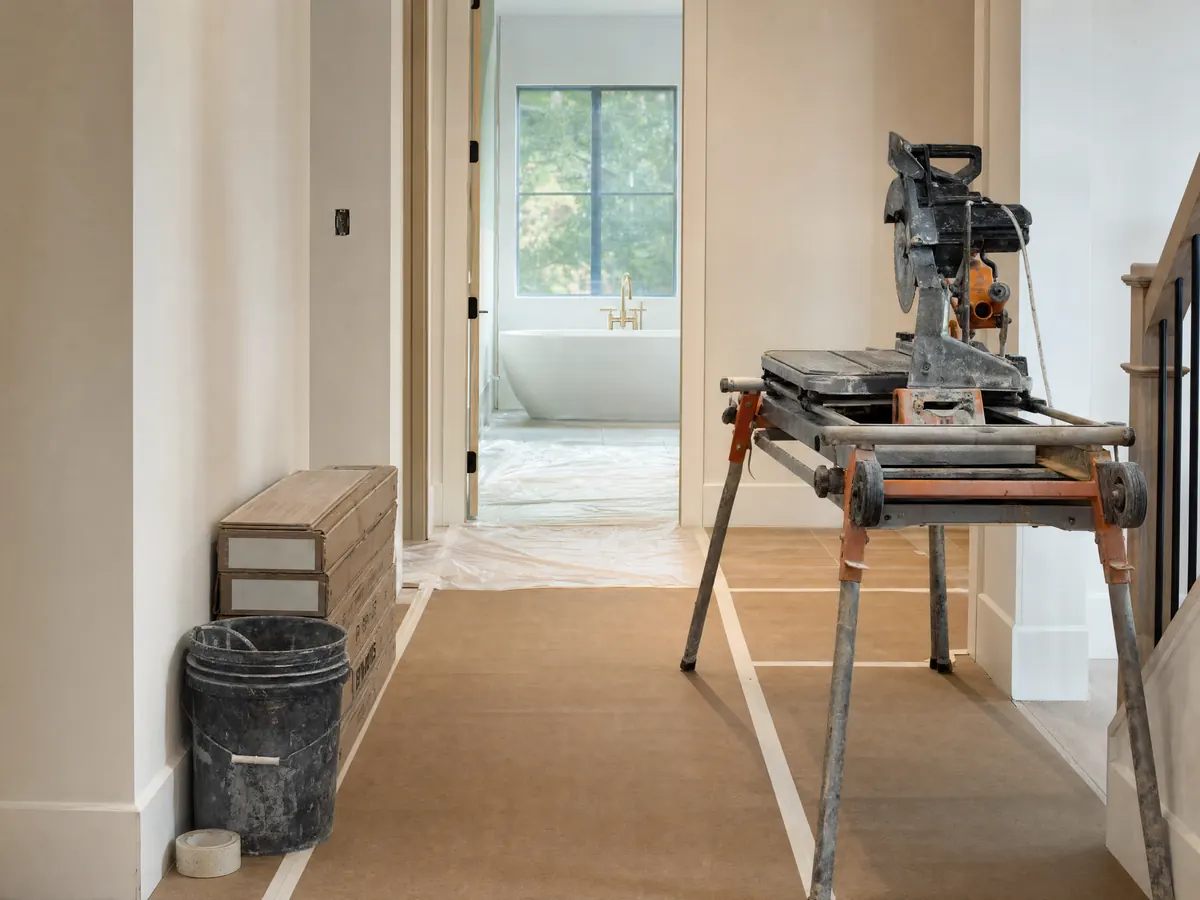
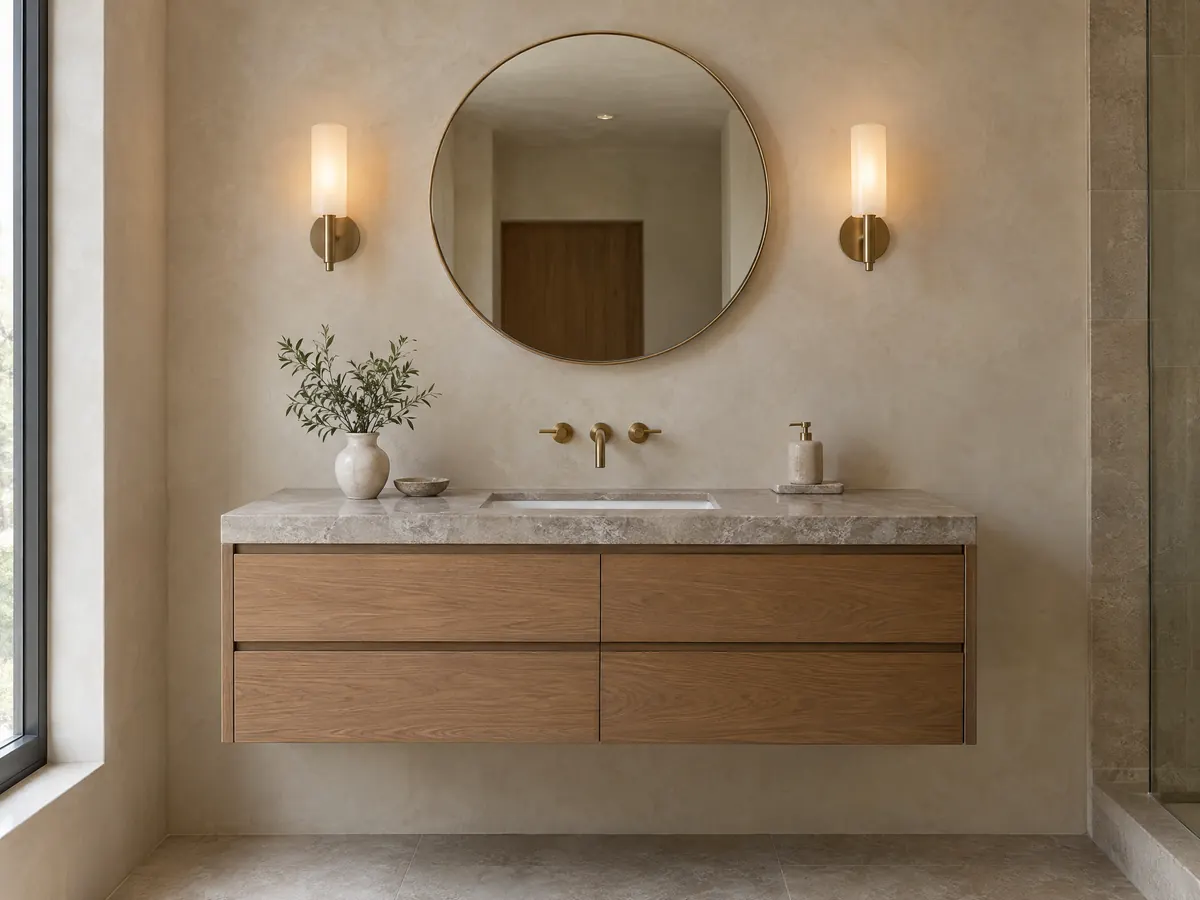
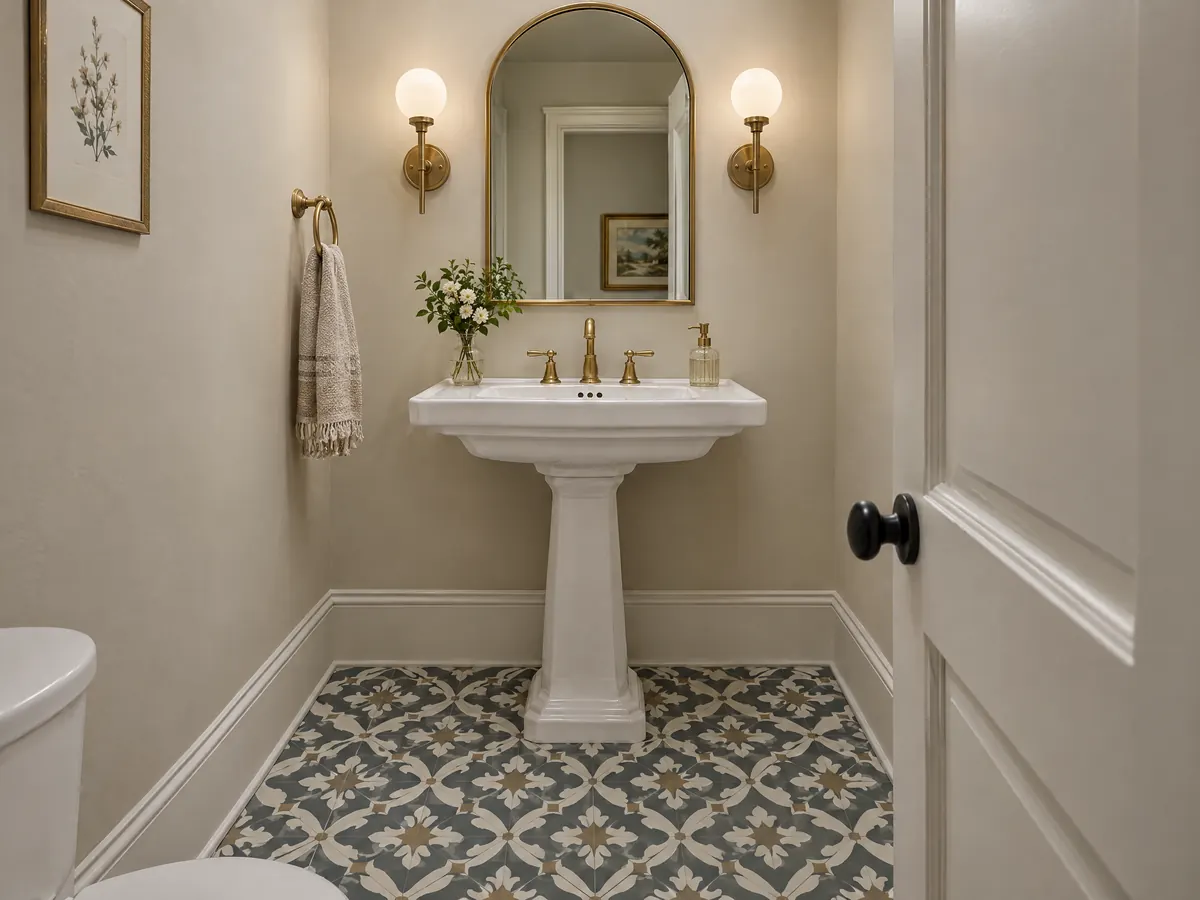
Bathroom scenes tied to Corona, from opened walls and waterproofing to finished tile, in tract homes across the Inland Empire foothills. Tap a photo to enlarge it.
What bathroom remodeling costs around Corona
The tiers on our bathroom remodeling page assume a bath of roughly 35 square feet: a refresh near $9,000 to $18,000, a midrange remodel in the same layout near $25,000 to $40,000, a primary bath near $50,000 to $85,000 and up, and an added bath near $60,000 to $120,000. They lean on Los Angeles sources because we found no Corona survey. Two reads bracket them: the 2025 Cost vs. Value report from Remodeling magazine lists a Los Angeles midrange bath at $27,143 and an upscale one at $85,055, while Thumbtack's July 2026 Los Angeles page shows $8,495 to $26,582. Inland Empire labor and materials may differ, and permit charges above the City's $164 minimum stay on their own lines in a written proposal. The bathroom cost guide explains what moves a bath between tiers. For nearby work see Orange County's Yorba Linda and Brea, and Los Angeles. A bath inside a backyard unit is on the Corona ADU page, a bath added to the house on the Corona room addition page, bath windows on the Corona window page, and the Corona area page lists every trade we cover in the city.
| What it covers | Typical range |
|---|---|
| Refresh in the same layout: new vanity, toilet, fixtures, lighting, paint, limited tile | $9,000 to $18,000 |
| Mid-range full remodel in the same layout: new shower or tub, tile, vanity, fixtures, lighting and fan | $25,000 to $40,000 |
| Upscale or primary bath: stone, custom glass, freestanding tub, double vanity, heated floor | $50,000 to $85,000 and up |
| Adding a new bathroom | $60,000 to $120,000 |
Corona bathroom remodel questions, answered
Do I need a permit for a bathroom remodel in Corona?
Yes, when the work moves concealed drain, water or vent pipe. Corona's exempt list, read on a third-party code mirror, covers tile, cabinets, countertops, painting and fixtures that replace existing ones. Relocating a drain or adding a bathroom is permit work, so call the Building Division at 951-736-2250 with your scope before you sign.
Do I need a permit for a shower remodel?
Usually, if the valve, drain or framing changes. Retiling an unchanged shower is finish work and is exempt on the mirror's list, but converting a tub to a shower reaches the pipe behind the wall. Corona's over-the-counter list does not name showers, so confirm the job with the Building Division before demolition.
How much does a bathroom remodel cost in California?
A refresh of a roughly 35 square foot bath lands near $9,000 to $18,000 in our tiers, a midrange remodel that keeps the layout near $25,000 to $40,000, and a primary bath near $50,000 to $85,000 and up. Los Angeles data supports those tiers, not a Corona survey, so a site visit and a written proposal set the price you pay.
Can a handyman do a bathroom remodel?
Only a very small one. California lets an unlicensed person take work of $1,000 or less, but not when a permit is required or when the person hires help. A Corona drain move or tub conversion needs a permit, so check any license on the CSLB website and ask for proof of insurance before paying a deposit.
What is the difference between a bathroom remodel and a bathroom renovation?
Renovation usually means new fixtures and finishes where the old ones stood, and remodel suggests the layout, pipes or wiring change. Corona's permit line ignores the label and follows what you touch: a swapped faucet is exempt, a relocated drain is not. Describe the moves when you call the City.
How long does a bathroom remodeling take?
Expect 2 to 6 weeks of design, then about a week of demolition and rough plumbing, a few days of waterproofing and cure, 1 to 2 weeks of tile and fixtures, and a few more days for glass and the final inspection. Waiting on tile or shower glass causes most delays, and the permit rarely does.
Do I need a permit to change a toilet?
Probably not for a like-for-like swap, but confirm it. Corona's exempt list on the mirror covers water-conserving fixtures installed as replacements for existing ones. Moving a toilet, adding a bathroom or replacing buried drain pipe is permit work. The City published no fixture checklist we could read, so a call to 951-736-2250 settles it.
Is remodeling a bathroom worth it?
Partly, and less as the finish level rises. In the Los Angeles table of the 2025 Cost vs. Value report, a midrange bath recoups about 89.6 percent of its cost at resale and an upscale bath about 42.3 percent. We found no Corona resale study, so treat those as a regional guide rather than a forecast.
Do bathroom remodels in older Corona homes need lead-safe work?
Possibly, if the house predates 1978 and a paid contractor disturbs painted surfaces. We did not open EPA's rule for this page, so confirm the details with EPA and ask the firm for its certification. About 24 percent of Corona homes predate 1980, and the Census cannot separate 1978 from 1979, so check your own build year.
Tell us about your Corona bathroom
Share the neighborhood, roughly what year the house was built, whether it is a condo, a rental or a detached home, and whether the shower, tub or toilet is moving, and the first visit starts with the permit line and any lead-safe or termite question.