
Fence Companyin Poway, CA
A fence of 6 feet or less needs no Poway building permit, but zoning still sets the limits: solid fences over 4 feet cannot sit in the front yard setback, and the top 2 feet of a 6 foot front fence must be open. Retaining walls, slopes and fire zones add steps, so check before you order.
Poway grew from ranches into a suburb. The City's history page names Philip Crosthwaite's adobe and ranch of 1859, describes peaches, vineyards, grain and dairying in the 1800s and dates the first subdivision to the late 1950s. A City newsletter says a primary motive for incorporating in 1980 was keeping the country lifestyle, with a General Plan in 1983 that called for severe restrictions on hillside development. The Census Bureau's ACS 2024 estimates count 12,795 detached single-family homes among 16,936 housing units, 75.5 percent, and land zoned for one-acre lots cannot be made denser without a vote of the people, so many lots are large and many fence lines run long.
A fence job here starts with the zoning tables, not the lumber yard. MDG Builders (CSLB #1040337) measures the lot, checks the City's limits and manages the schedule, and licensed subcontractors build: a C-13 fencing contractor for wood, vinyl and metal and a masonry contractor for block, because the state's fencing class excludes masonry walls. Our fencing page holds the sourced prices and the Poway overview covers our other trades. Poway writes its own height limits, so the guides for San Diego and El Cajon show how neighbors differ. The City's Building Services page lists exempt work. The City's pages reached us only through Internet Archive copies and its code only through the GoCodebook mirror, so call the City before you rely on any figure here.
What Poway's Building Services page, fence bulletin and zoning code say about fences
Where fencing permits come from in Poway: City of Poway Development Services Department, Building Division.
- Poway amended the state exemption list so that fences not over 6 feet high are exempt from a building permit in both the Building Code (Section 105.2, exemption 2) and the Residential Code (Section R105.2, exemption 2); the same R105.2 amendment exempts one-story detached accessory structures of 120 square feet or less other than storm shelters.
- Building Services lists fences and non-retaining walls not more than 6 feet tall as exempt from a building permit and adds that solid fences and walls over 4 feet in height cannot be located within the front yard setback area; its list also exempts retaining walls 3 feet or less in height measured from the top of the footing with no surcharge.
- Poway's zoning code limits a wall, fence, retaining wall or driveway entry gate with pilasters to 6 feet in height in residential zones, and where a retaining wall is used to increase usable lot area the combined fence and retaining wall height cannot exceed 6 feet unless a 5 foot landscape area is provided between them; in the required front yard the top 2 feet of a 6 foot fence or wall must be open fencing, except for retaining walls, entry gates and pilasters, or extra height approved for noise attenuation.
- Poway's fence code limits a fence or wall next to a driveway or street that gives access to a neighboring lot to 3 feet within 15 feet of where the driveway meets the street right-of-way (or Caltrans sight standards), allows driveway entry gates up to 7 feet on lots of one acre or more zoned RR-A, RR-B, RR-C or RS-1 if set back 20 feet from the street edge, and lets the Director approve walls up to 8 feet where needed for noise from arterial streets.
- Poway's fence code bans fiberglass sheeting, bamboo sheeting and similar temporary materials as fencing on street frontages, requires barbed, razor or concertina wire at the top of a wall or fence to stay at least 6 feet above grade and extend no more than one foot above the top, makes razor and concertina wire on a rooftop unlawful, and treats unmaintained wire fencing as a public nuisance. Fences must be built to code and kept in good repair, and a retaining wall with a walking surface at the top may need an open decorative metal railing.
- The City's Wood and Masonry Fences bulletin (handout revised 03/14) says wood or masonry fences of 6 feet or less that carry no other load need no construction permit but are regulated by the building code and zoning, with fence height measured from the lowest grade abutting the fence (from the higher side's grade when on a retaining wall), design assumptions of 85 mph wind Exposure C and Seismic Design Category D, wood posts of foundation grade redwood or pressure-treated Douglas fir-larch No. 2 set in 12 inch diameter footings at least 24 inches into undisturbed ground, and no plastic (stucco) cement in Seismic Design Category D.
- The same fence bulletin warns that structures in Very High Fire Hazard Severity Zones governed by Chapter 7A of the California Building Code may need additional fire protection, and the Wildland-Urban Interface chapter lets the fire code official reduce building setbacks where metal or precast fire-rated fencing, a CMU fire wall or extended hardscape is used.
- Retaining walls: the City's Level Backfill retaining wall bulletin (revised 03/21) says walls under 3 feet from top of footing to top of wall with no surcharge are the exception, so other retaining walls need a permit and are regulated by zoning, a Cal/OSHA permit is required for trenches or excavations 5 feet or deeper that a person must enter, and no foundation, driveway, parking, fence or other load may sit within a distance equal to the wall height on the upper level. The 2019 Permits Required handout (revised 03/14) says 4 feet from the bottom of the footing and that new walls may need a grading permit; the shorter 3 foot figure is on the current Building Services page.

How tall can a fence be in Poway, and does it need a permit?
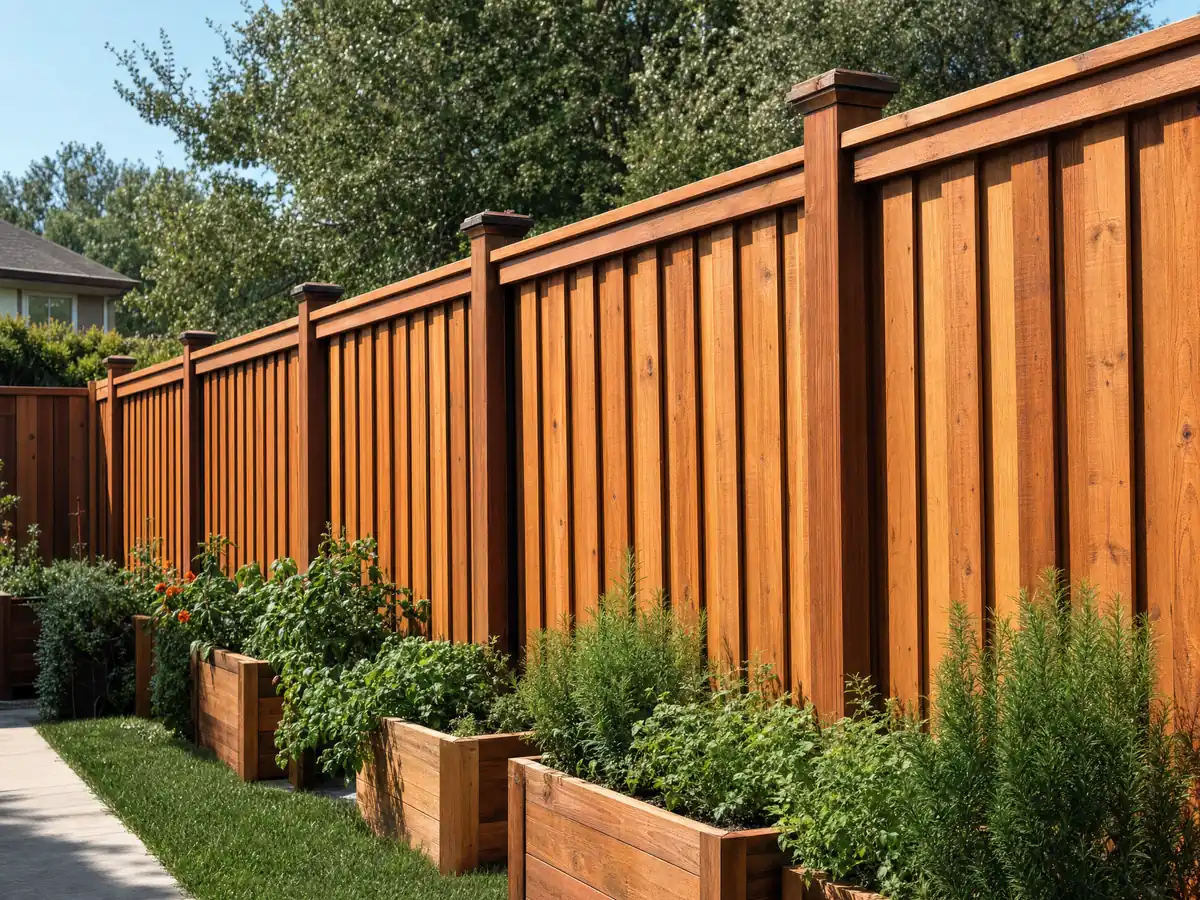
Up to 6 feet, with no building permit. Poway amended the state exemption list so that fences not over 6 feet high are exempt in both the Building Code and the Residential Code, and the Building Services page lists fences and non-retaining walls up to that height as exempt too. Zoning then caps a wall, fence, retaining wall or driveway entry gate with pilasters at 6 feet in residential zones, and the Director can approve walls up to 8 feet where needed against noise from arterial streets. A 7 foot privacy fence is therefore a question for Planning.
The City's Wood and Masonry Fences bulletin, revised in March 2014, says exempt fences are still regulated by the building code and zoning, and that height is measured from the lowest grade abutting the fence, or from the higher side's grade when the fence sits on a retaining wall. Under Civil Code 841, neighbors presumptively split the reasonable cost of a dividing fence, and the owner planning the work gives each affected neighbor 30 days' written notice with the problem, the fix, the estimate and the timeline.
Measure from the lowest grade next to the fence, then check the height against zoning.
Can I put a solid privacy fence in my Poway front yard?
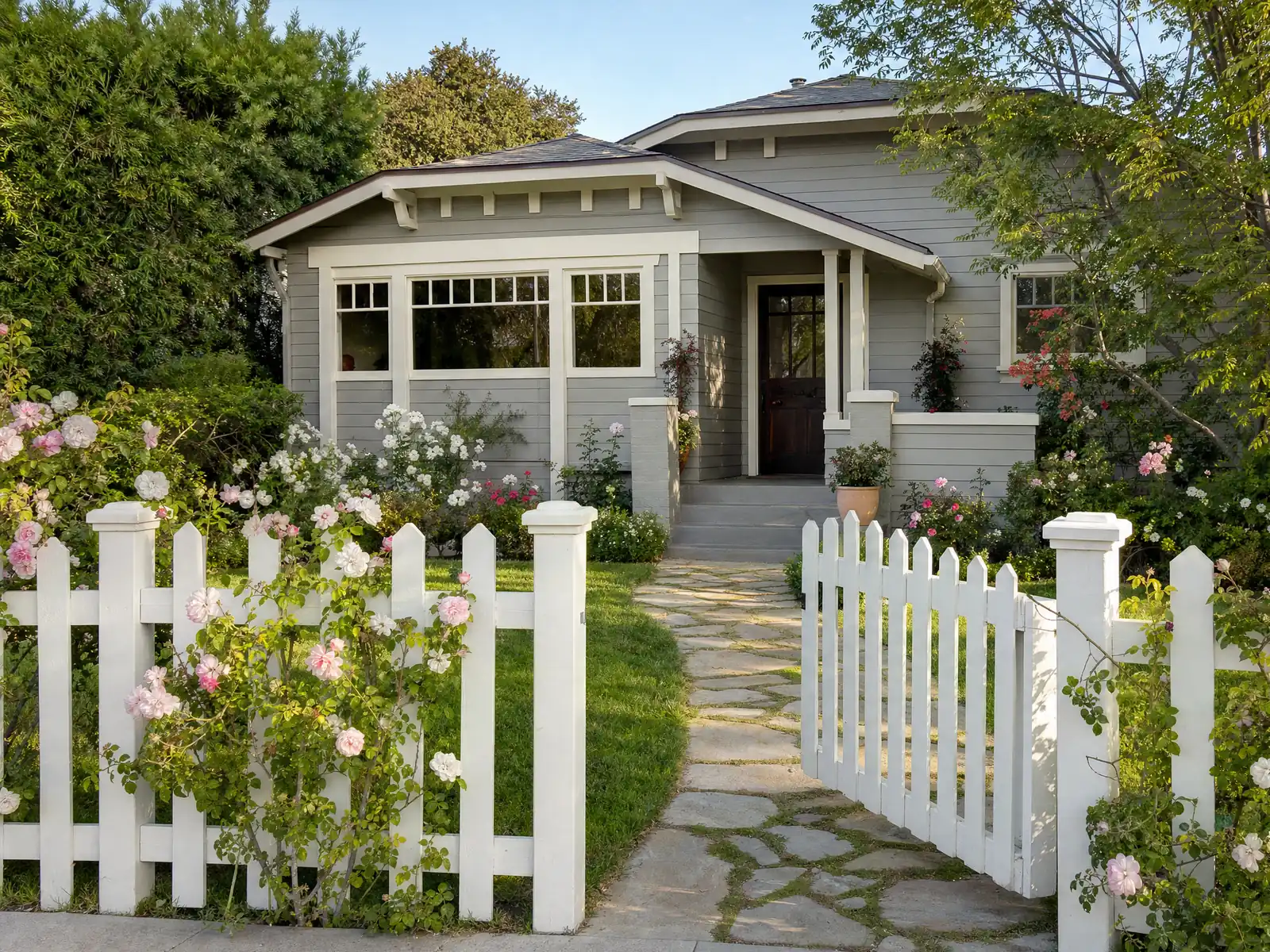
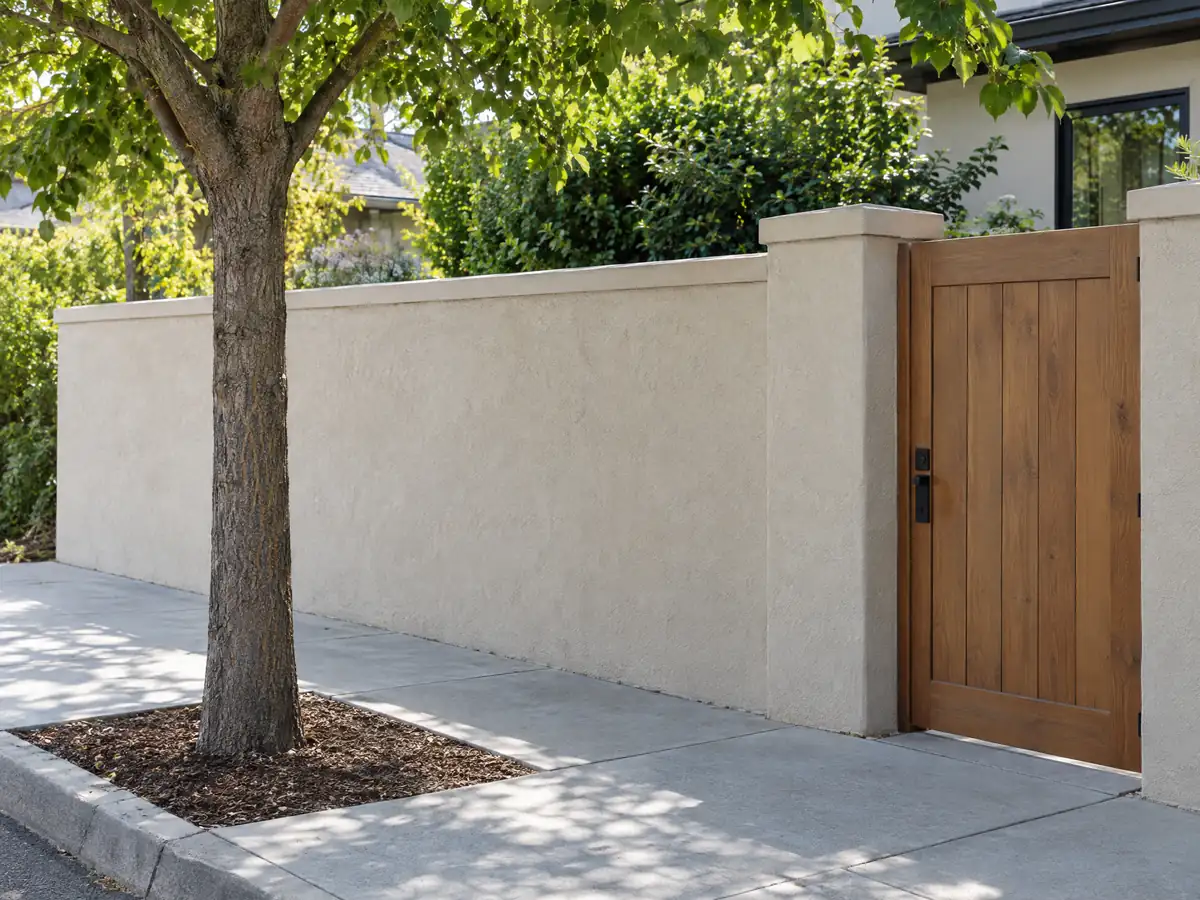
Not a tall solid one. The Building Services page says solid fences and walls over 4 feet cannot be located within the front yard setback area, and the zoning code adds that in the required front yard the top 2 feet of a 6 foot fence or wall must be open fencing. Retaining walls, entry gates and pilasters, and extra height approved for noise attenuation are the listed exceptions. A 6 foot front fence is therefore built with an open top, and a solid one stops at 4 feet.
Materials matter on the street side too. The code bans fiberglass sheeting, bamboo sheeting and similar temporary materials as fencing on street frontages, treats unmaintained wire fencing as a public nuisance, and requires barbed, razor or concertina wire at the top of a wall to sit at least 6 feet above grade and extend no more than one foot above the top. Residential standards also ask that front and street side yards be landscaped predominantly with trees, plants, ground cover and decorative rock and kept free of weeds and debris.
Ask Planning whether your yard counts as front or street side before choosing a style.
What is the driveway sight rule, and how tall can a gate be?
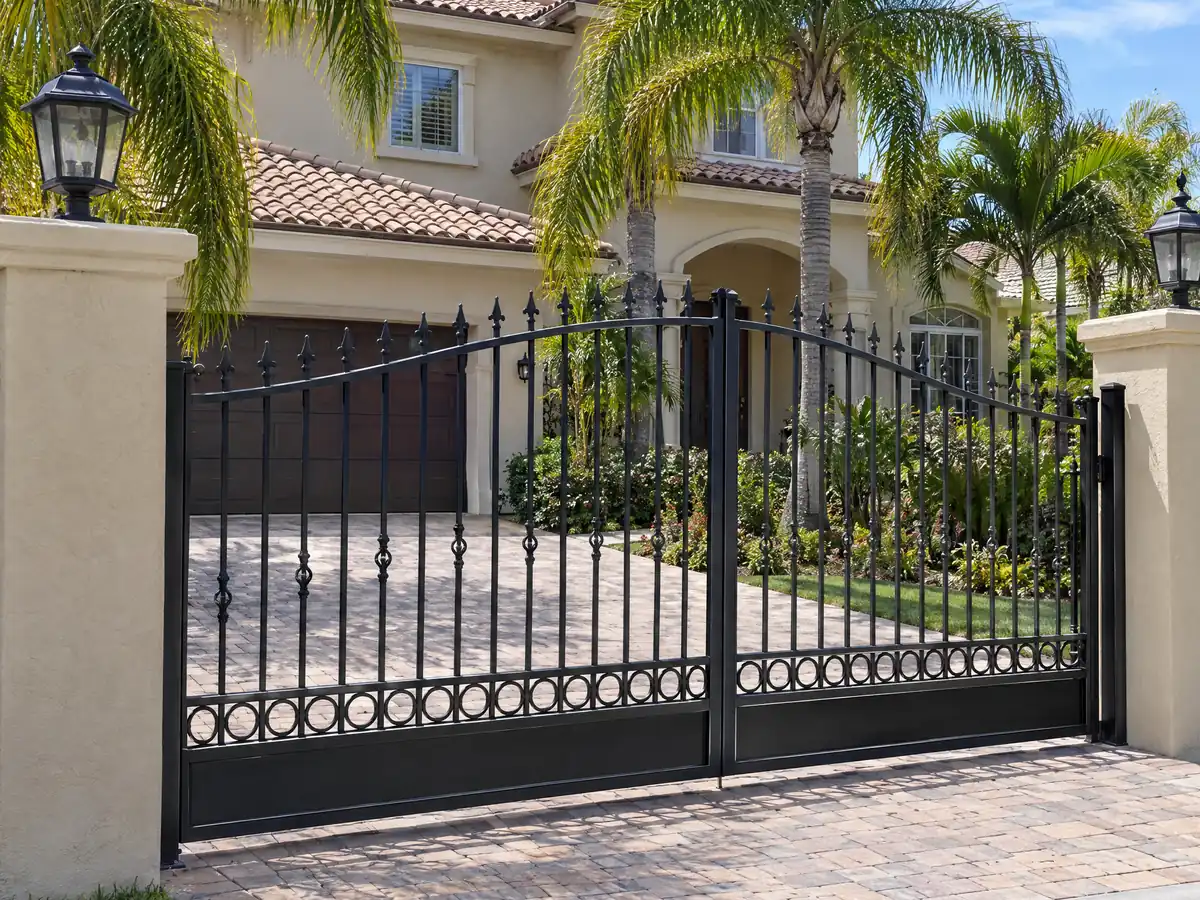
Keep fences low at the driveway mouth. The code limits a fence or wall next to a driveway or street that serves a neighboring lot to 3 feet within 15 feet of where the driveway meets the street right-of-way, or to Caltrans sight standards. Driveway entry gates may reach 7 feet on lots of one acre or more zoned RR-A, RR-B, RR-C or RS-1, if set back 20 feet from the street edge, which suits the rural lots Poway protects.
Gates add trades. The gate itself is fence work, but an operator is electrical, and which license class covers operators is a question we could not settle from the sources we read, so ask the subcontractor to name its license and who pulls any electrical permit. Building Services also says flatwork may need a Right-of-Way Permit from the Engineering Division and that front yard driveways and parking cannot exceed 50 percent of the front yard setback area, which matters when a new gate comes with new concrete.
Ask where the 15 foot sight distance starts on your driveway.
Is a Poway retaining wall exempt at 3 feet or 4 feet?
The City's own documents disagree, and the current page says 3 feet. Building Services and the Level Backfill bulletin, revised in March 2021, exempt retaining walls of 3 feet or less measured from the top of the footing with no surcharge. An older handout, the 2019 Permits Required sheet with a first page revised in March 2014, gives 4 feet from the bottom of the footing and says new walls may need a grading permit. The two also measure from different points on the footing, so plan to the stricter figure and confirm with the Building Division. Block walls fall under the state's masonry class, C-29, not fencing class C-13.
Other rules travel with a wall. A Cal/OSHA permit is required for trenches or excavations 5 feet or deeper that a person must enter, and nothing may sit within a distance equal to the wall height on the upper level, whether a foundation, driveway, parking, fence or other load. Where a retaining wall adds usable lot area, the combined fence and wall height cannot exceed 6 feet unless a 5 foot landscape strip separates them, and a wall with a walking surface at the top may need an open decorative metal railing.
Ask which measurement the plan checker uses before the wall is designed.
How should a wood fence be set in Poway, and what changes in a fire zone?
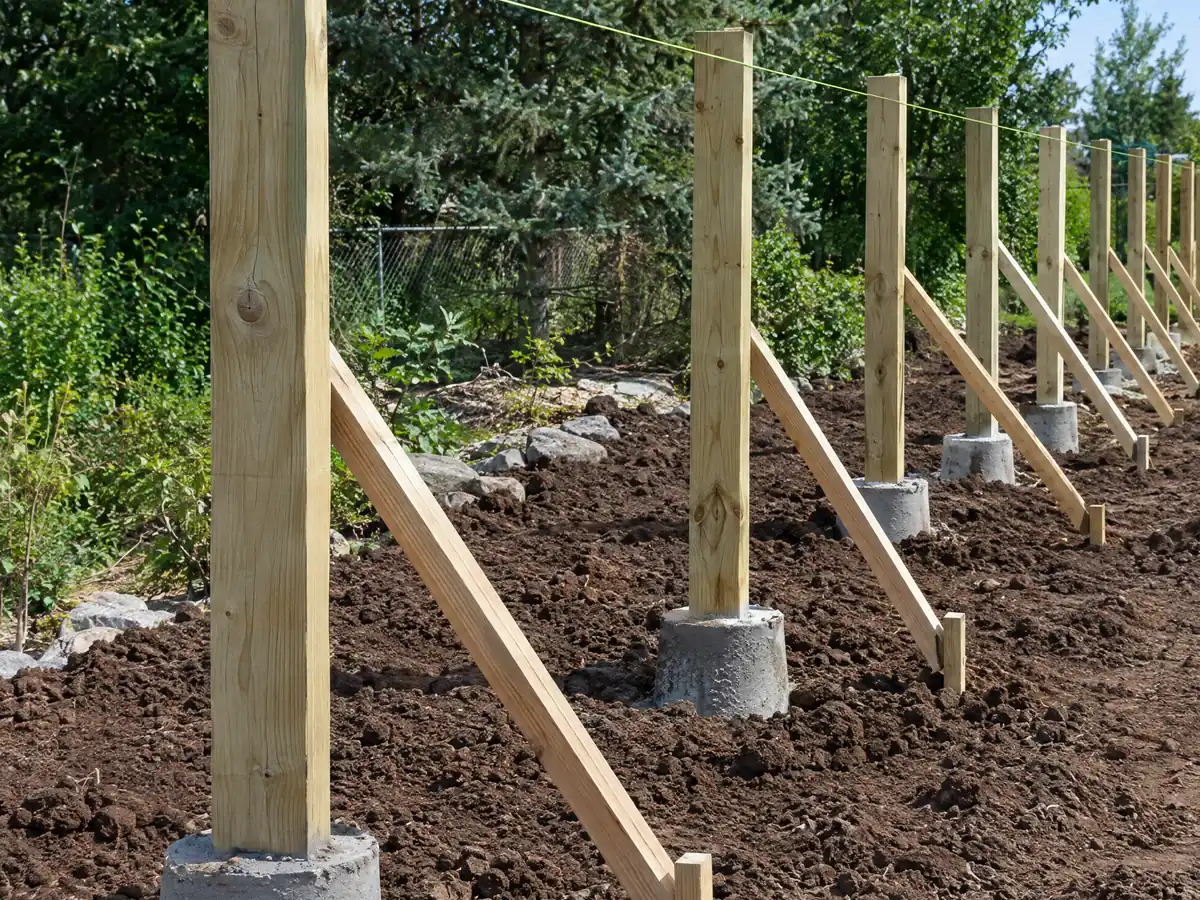
The fence bulletin spells out the basics for wood. It assumes 85 mph wind, Exposure C and Seismic Design Category D, an older design assumption from a handout revised in March 2014, and calls for foundation-grade redwood or pressure-treated Douglas fir-larch No. 2 posts set in 12 inch diameter footings at least 24 inches into undisturbed ground. For masonry it bars plastic stucco cement in Seismic Design Category D.
Fire zones add a layer. The bulletin warns that structures in Very High zones governed by Chapter 7A of the California Building Code may need extra fire protection, and Chapter 15.05 lets the fire code official reduce building setbacks where metal or precast fire-rated fencing, a CMU fire wall or extended hardscape is used. Its Zone 0, the first 5 feet from a combustible building, calls for noncombustible hardscape. We did not read a rule on fences attached to the house, so ask the Fire Department about any fence that touches a wall.
Ask whether the post specification on your proposal matches the City's bulletin or beats it.
Does a fence near a slope, creek or historic landmark need extra approval?
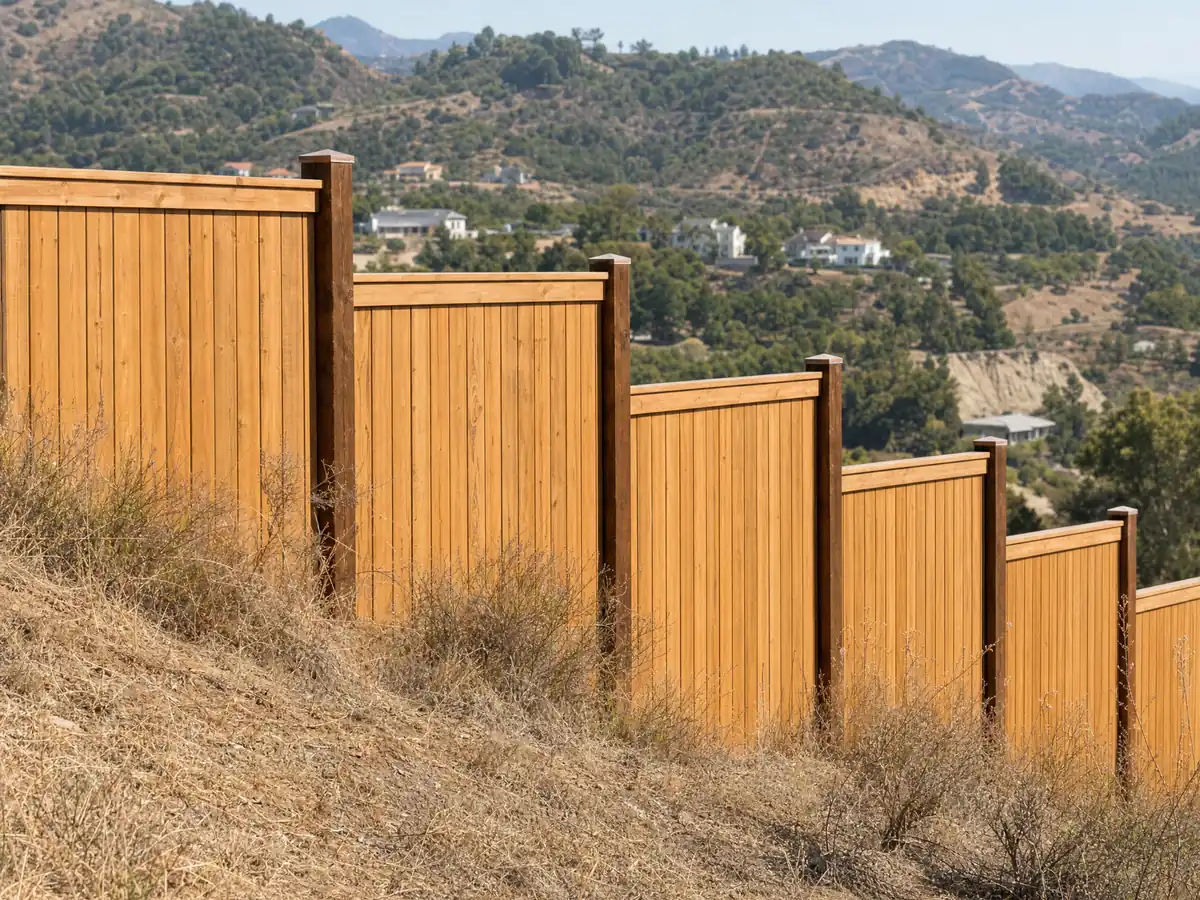
It can. Poway's grading ordinance requires a City grading or administrative clearing permit for grading, clearing, brushing and grubbing unless an exemption applies, and none of the exemptions apply in open space, sensitive areas, waterways or any floodplain. Grading on a significant portion of natural grade steeper than 45 percent is prohibited with narrow exceptions. Projects that could harm sensitive species must follow the City's Subarea Habitat Conservation Plan, which a City newsletter says protects about 13,300 acres, 53 percent of the city.
Creeks matter too: the County's 2023 hazard annex says Poway Creek, Rattlesnake Creek, Beeler Creek and Green Valley Creek have flooded locally and that the City does not allow new structures in the floodway, so ask whether a fence near water counts. Designated historic landmarks need a certificate of historical significance before any change, fences and walls included, and the City's survey inventoried 33 sites from 1887 to 1940, though the pages we read do not list them. We could not read the scanned Old Poway Specific Plan, so we state no Old Poway fence standard.
Ask Engineering whether your fence line needs a clearing permit before any brush is cut.
How much does fence installation cost in Poway?
We found no San Diego County fence price survey, so these are Los Angeles sources. Angi's Los Angeles page, dated August 4, 2026, shows an average job of $3,051 with a typical range of $1,734 to $4,422, $15 to $60 per foot and about $2,100 to $2,350 for 100 feet, with wood listed at $1,600 to $2,500 and vinyl at $1,850 to $3,400. Angi's national page puts removal of an old fence at $3 to $5 a foot and gates at $150 to $2,000, and a federal wage survey puts the Los Angeles area fence erector's mean pay at $28.00 an hour.
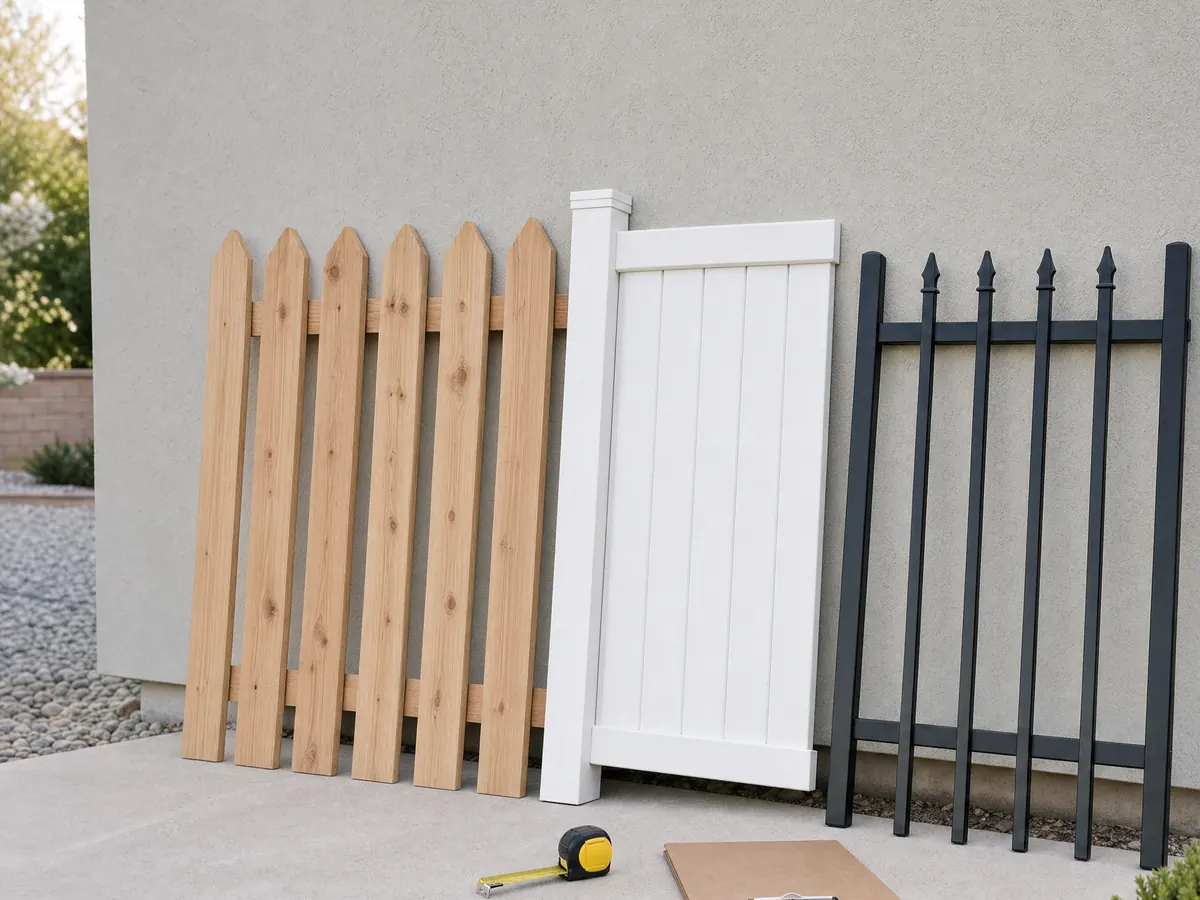
Where Angi, HomeGuide, Thumbtack and Fixr overlap, we plan around $25 to $55 a linear foot installed for a 6 foot wood or vinyl privacy fence, $35 to $85 for aluminum or ornamental iron and roughly $2,500 to $5,500 for a 100 foot backyard run. We found no independent per-foot source for block walls, so we print none. Slopes, tear-out, gates and retaining walls move the total, no permit fee is printed because we could not open the City's fee schedule, and a written proposal is the price.
Check that the proposal says who removes the old fence and how deep the posts go.
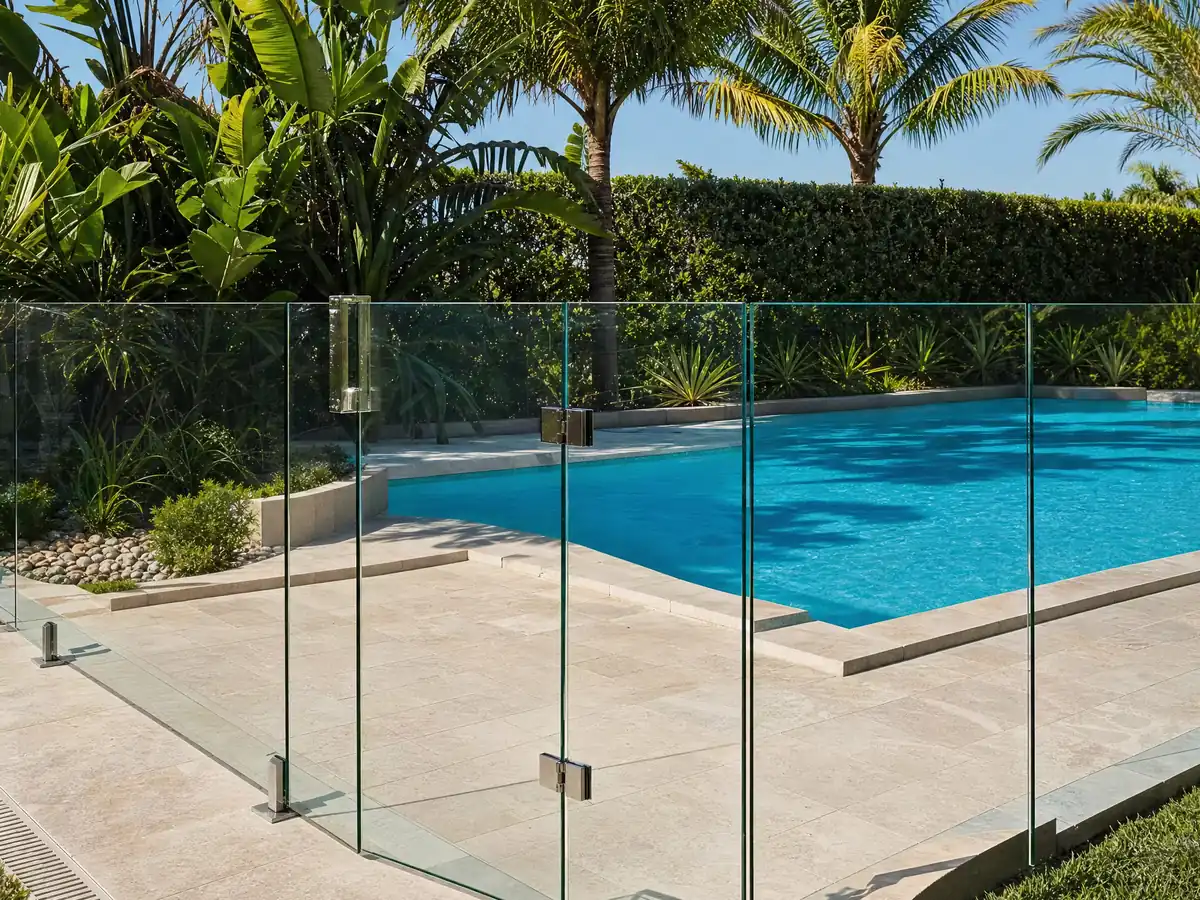
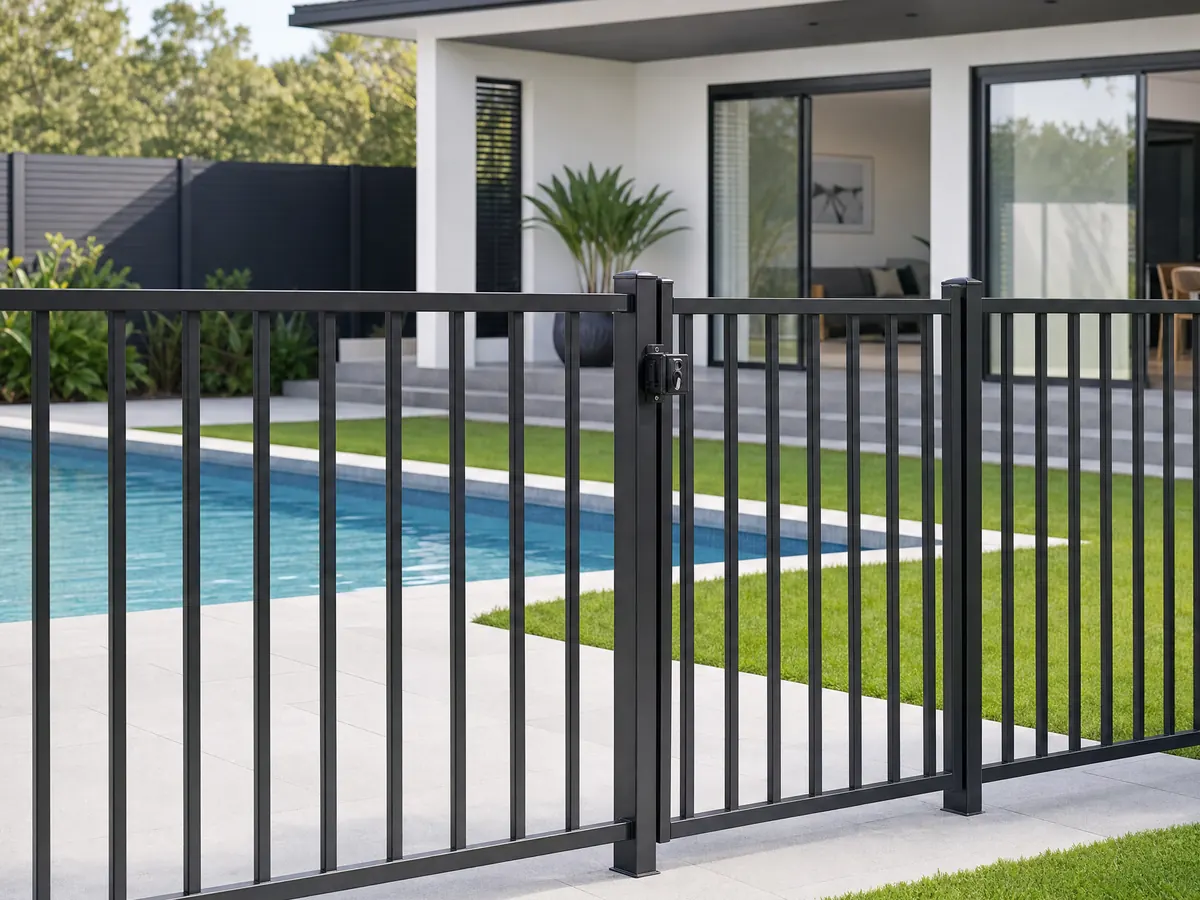
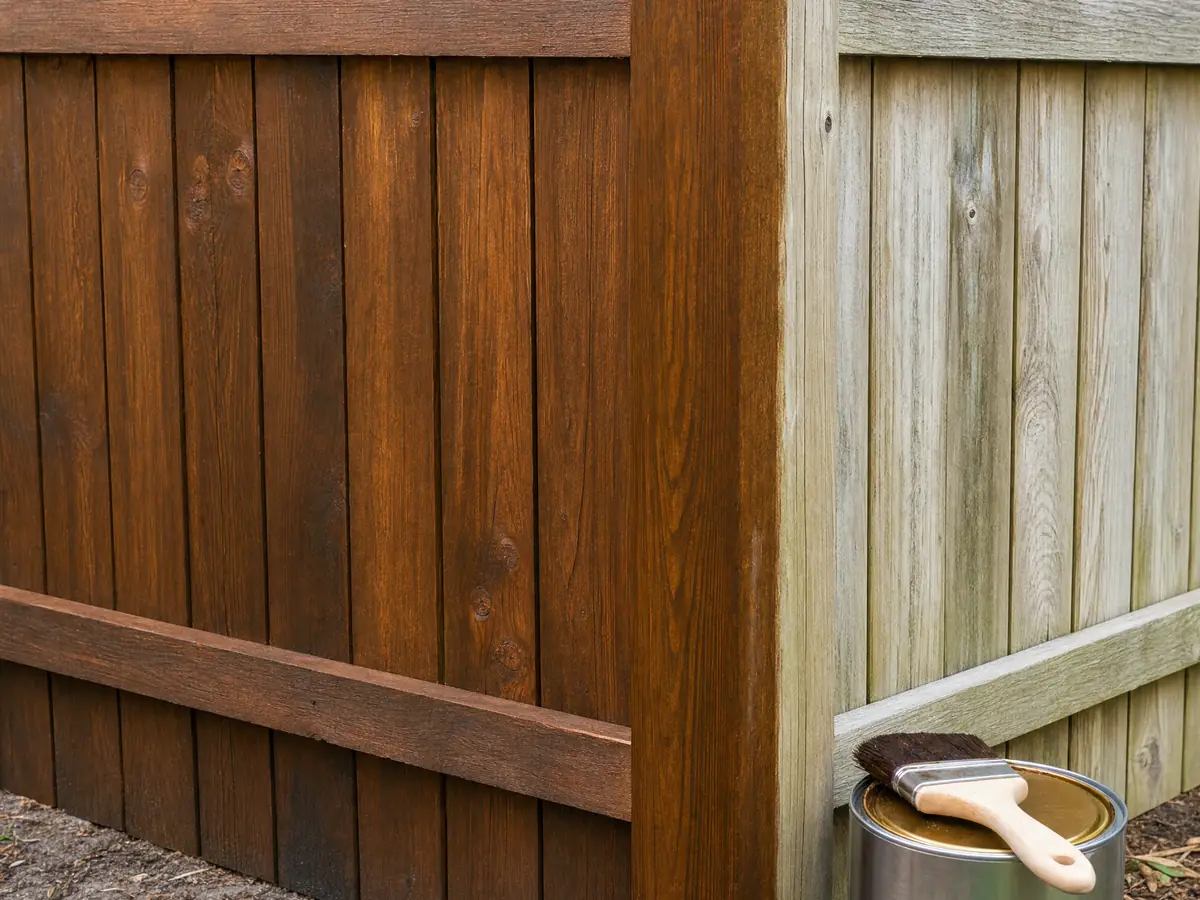
Fence photos from Poway and nearby communities
Fence scenes tied to Poway places such as Old Poway, Green Valley and Avocado Glen, and to nearby communities like Rancho Bernardo, Sabre Springs and Rancho Penasquitos, from footings and gates to hillside runs.
Where these Poway fence figures come from
Every fence price and its source sit in the table on our fencing price page, and the contractor license guide shows how to verify a fence contractor, while how general contractors use subcontractors explains who answers for what. Fences often go up with other work, and the Poway rules for those jobs are on the roofing page, the painting page and the kitchen remodeling page. For comparison, see the fence guides for Escondido and Carlsbad.
| What it covers | Typical range |
|---|---|
| Wood or vinyl privacy fence, 6 feet | $25 to $55 per linear foot |
| Chain-link | $12 to $30 per linear foot |
| Aluminum or ornamental iron | $35 to $85 per linear foot |
| Typical 100-foot backyard run | $2,500 to $5,500 total |
| Block walls, horizontal slat fences, gates and openers, hillside lots | Set by the written proposal |
Poway fence questions, answered
Do I need a permit to build a fence in Poway?
Not a building permit for a fence of 6 feet or less. Poway amended its codes to exempt fences up to 6 feet and Building Services lists them as exempt, but zoning still applies, and retaining walls above the exemption need permits. Call Building Services at 858-668-4645 if your design mixes a fence with a wall.
How tall can a front yard fence be in Poway?
A solid fence stops at 4 feet inside the front yard setback, and a 6 foot front fence must have an open top 2 feet. Entry gates, retaining walls and pilasters are listed exceptions. Confirm with Planning which line your yard counts as front or street side before you order.
Can I put up a 7 foot fence in Poway?
Probably not without City approval. Poway's zoning caps residential walls and fences at 6 feet, with 7 foot driveway entry gates allowed only on lots of one acre or more in listed zones and a Director-approved 8 foot wall possible for arterial street noise. Ask Planning before you commit to extra height.
What is the maximum height of a retaining wall without a permit in Poway?
Three feet from the top of the footing with no surcharge, per Building Services, though an older City handout says 4 feet from the bottom of the footing. Because the City's documents conflict, treat 3 feet as the line, confirm with the Building Division and remember that new walls may also need a grading permit.
Does my neighbor have to pay for half the fence in California?
Usually, as a starting presumption. Civil Code 841 presumes adjoining owners share equally in the reasonable cost of a dividing fence unless they agree otherwise in writing. The owner planning the work gives each affected neighbor 30 days' written notice, and a neighbor can overcome the presumption by showing an equal split would be unjust.
How much does it cost to have 100 feet of fence installed?
Angi's Los Angeles page shows about $2,100 to $2,350 for 100 feet, while our planning range for a 6 foot wood or vinyl privacy fence is roughly $2,500 to $5,500. We found no Poway survey, and slopes, gates and tear-out change the total, so use a measured written proposal.
Is it cheaper to install a wood or vinyl fence?
Wood is usually cheaper in the sources we read. Angi's Los Angeles page lists wood at $1,600 to $2,500 and vinyl at $1,850 to $3,400, though other surveys overlap widely. Poway's bulletin sets post and footing specifications for wood, so ask the installer to match them.
Does a fence need anything extra in a Poway fire zone or on a slope?
Sometimes. The City's fence bulletin warns that Very High zone structures under Chapter 7A of the California Building Code may need extra fire protection, and clearing or grading for a fence line on a slope can need a City permit. Ask the Fire Department and Engineering about your lot.
Describe your Poway fence project
Tell us your street, the fence height you want, where it will sit on the lot and whether a slope or creek is nearby. We check the front yard, driveway and grading questions before the first visit.