
Fence Companyin San Diego, CA
A fence company in San Diego builds to a 7 foot permit line, but the City's documents conflict: the exempt list says 7 feet or less, while the fence table says 7 feet or more needs a Building Permit, so confirm that exact height with DSD. Front yards, corner visibility areas, coastal lots and canyon lots each add limits.
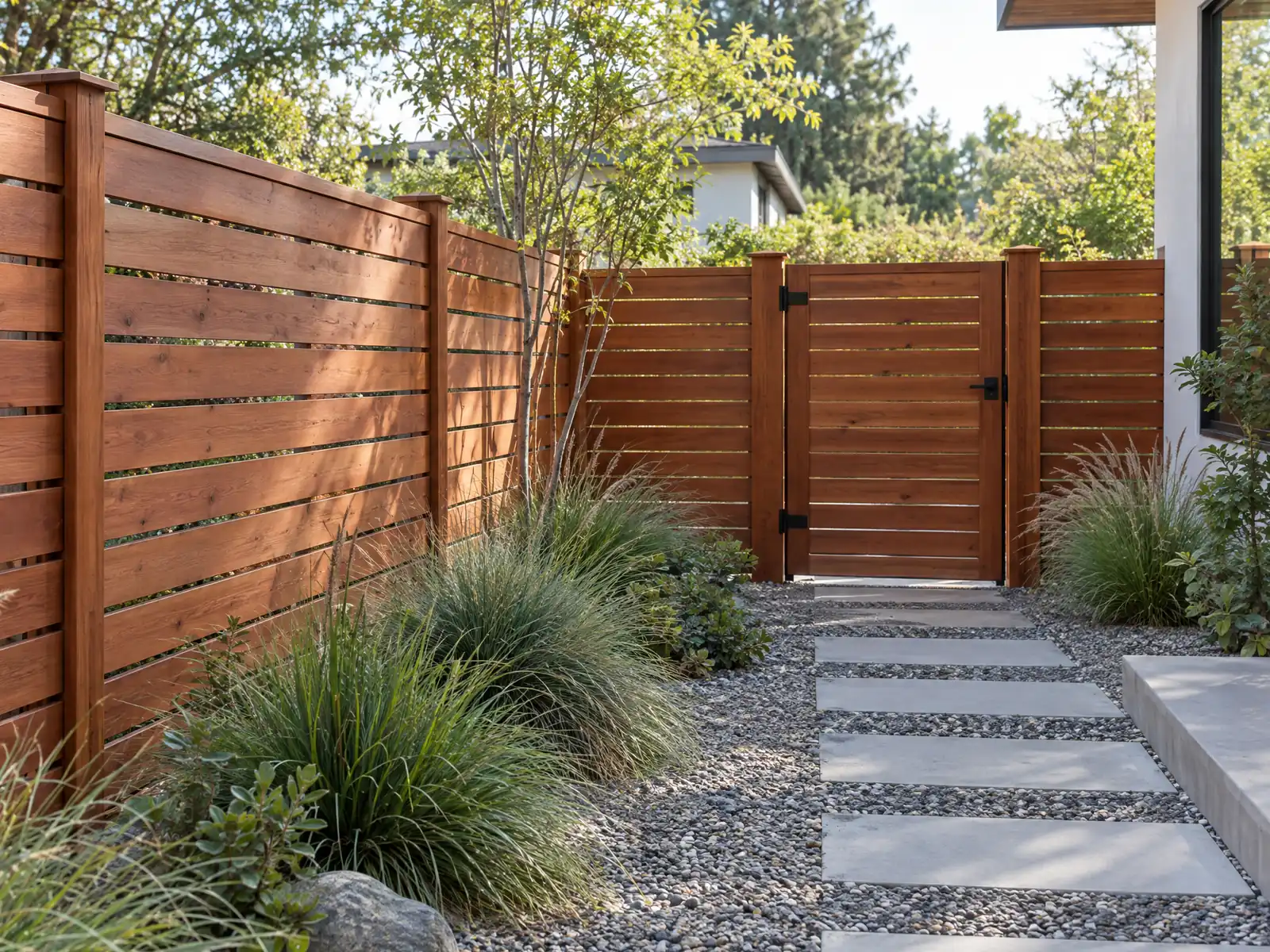
A San Diego fence has to respect a code written for a very large city. The Census Bureau's ACS 2024 one-year estimates count 588,866 housing units, with 42.5 percent single-family detached and 10.2 percent single-family attached, and 53.5 percent of occupied units are rented, so a fence request often runs through a landlord before it reaches a contractor. About half of the units, 49.8 percent, were built before 1980, and the 45 year historic screen can reach those lots when a permit is filed.
On a fence job, MDG Builders (CSLB #1040337) checks the height rules, files any permit and keeps the schedule, while a licensed C-13 fencing subcontractor, or a masonry specialist for a block wall, does the building. Our fencing page holds the sourced prices, the San Diego overview lists every trade we manage here, and the guides for Chula Vista and El Cajon show how neighbors treat fences. La Mesa, Santee, Poway, National City and Coronado run their own counters. The City's Development Services Department and its zoning page are the two places that matter. Our research file for San Diego lists 12 conflicts between City documents, and a few of them concern fences and walls.
What San Diego's exempt list, fence table and coastal code say about fences
Where fencing permits come from in San Diego: City of San Diego Development Services Department (DSD).
- DSD's handout says fences up to seven feet tall do not require a permit, but that fences over six feet are prohibited in the front yard setback and fences over three feet are prohibited in visibility areas.
- San Diego Municipal Code 129.0203(a)(2) exempts fences 7 feet in height or less (other than swimming pool barriers) from a building permit, but the Land Development Code's fence table (142-03A) says a fence with a height less than 7 feet needs no permit and one of 7 feet or more needs a Building Permit (Process One), so a fence at exactly 7 feet should be confirmed with DSD.
- In a required front or street-side yard a solid fence may be 3 feet high at the property line and rise to 6 feet at the setback line (a line from 3 feet at the property line to 6 feet at the setback). An open fence may be 6 feet at the property line and rise to 9 feet at the setback line, a standard all-metal chain link fence at the front or street-side line is capped at 3 feet, and fences in visibility areas at corners and driveways may not exceed 3 feet.
- San Diego allows fences up to 9 feet in required side and rear yards, with any part above 6 feet required to be an open fence, and up to 10 feet outside required yards in residential zones. Up to 30 percent of a fence's length may exceed a height limit by up to 6 inches, and open fences must be at least 35 percent open to light (75 percent open in the Coastal Overlay Zone).
- A fence or retaining wall taller than the Land Development Code allows needs a Neighborhood Development Permit (Process Two), and any fence or retaining wall on a premises between the shoreline and the first public roadway (the City's Map C-731) needs an appealable Coastal Development Permit (Process Three).
- San Diego's fence material rules: plywood is not a permitted fence material, PVC or similar fences are allowed only if prefabricated and manufactured as a fence, metal fences in required front and street-side yards must have a colored finish other than galvanized (except in certain industrial and agricultural zones), electrically charged and sharp-pointed metal fences are limited to agricultural uses, and owners must keep fences and retaining walls free of dilapidated, dangerous or graffiti conditions.
- No part of a San Diego fence may extend past the property line into the public right-of-way without a Public Right-of-Way Permit, and fence height is measured under Municipal Code section 113.0270(b).
- Municipal Code 129.0203(a)(5) exempts retaining walls 3 feet in height or less, measured from the top of the footing to the top of the wall, unless they support a surcharge or impound flammable liquids.
Does a San Diego fence need a building permit, and what happens at exactly 7 feet?
Under 7 feet, no. Municipal Code 129.0203(a)(2) exempts fences 7 feet in height or less from a building permit, except swimming pool barriers, and DSD's handout says fences up to seven feet need none. The Land Development Code's fence table, 142-03A, reads differently: a fence with a height less than 7 feet needs no permit, and one of 7 feet or more needs a Building Permit under Process One.
That is a conflict between City documents, and it matters only at exactly 7 feet. We cannot tell you which one DSD would apply, so get the answer in writing, or design the fence clearly under the line. A fence taller than the Land Development Code allows needs a Neighborhood Development Permit, and no part of any fence may cross the property line into the public right-of-way without a Public Right-of-Way Permit.
Ask for DSD's written height answer before the posts are ordered.
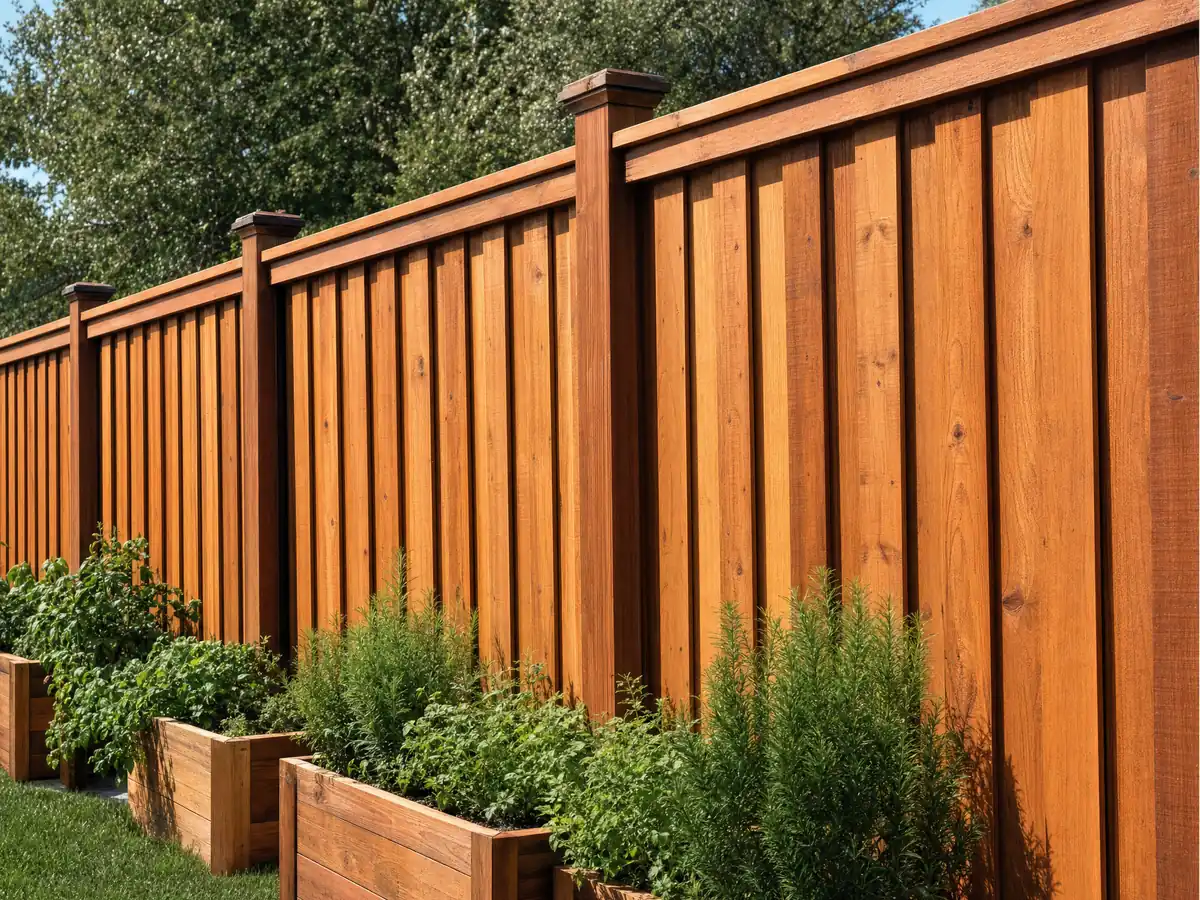
How tall can a front yard fence be in San Diego?
The limit slopes. In a required front or street-side yard, a solid fence may be 3 feet high at the property line and rise in a straight line to 6 feet at the setback line, while an open fence may start at 6 feet at the property line and climb to 9 feet at the setback line. A standard all-metal chain link fence on the front or street-side line is capped at 3 feet.
Corners and driveways have their own cap. In visibility areas a fence may not pass 3 feet, and DSD's handout says fences over 3 feet are prohibited there and fences over 6 feet are prohibited in the front yard setback. Metal fences in required front and street-side yards must carry a colored finish other than galvanized, except in certain industrial and agricultural zones. Electrically charged and sharp-pointed metal fences are limited to agricultural uses.
Have the plan show the setback line and the visibility area before a gate is placed.
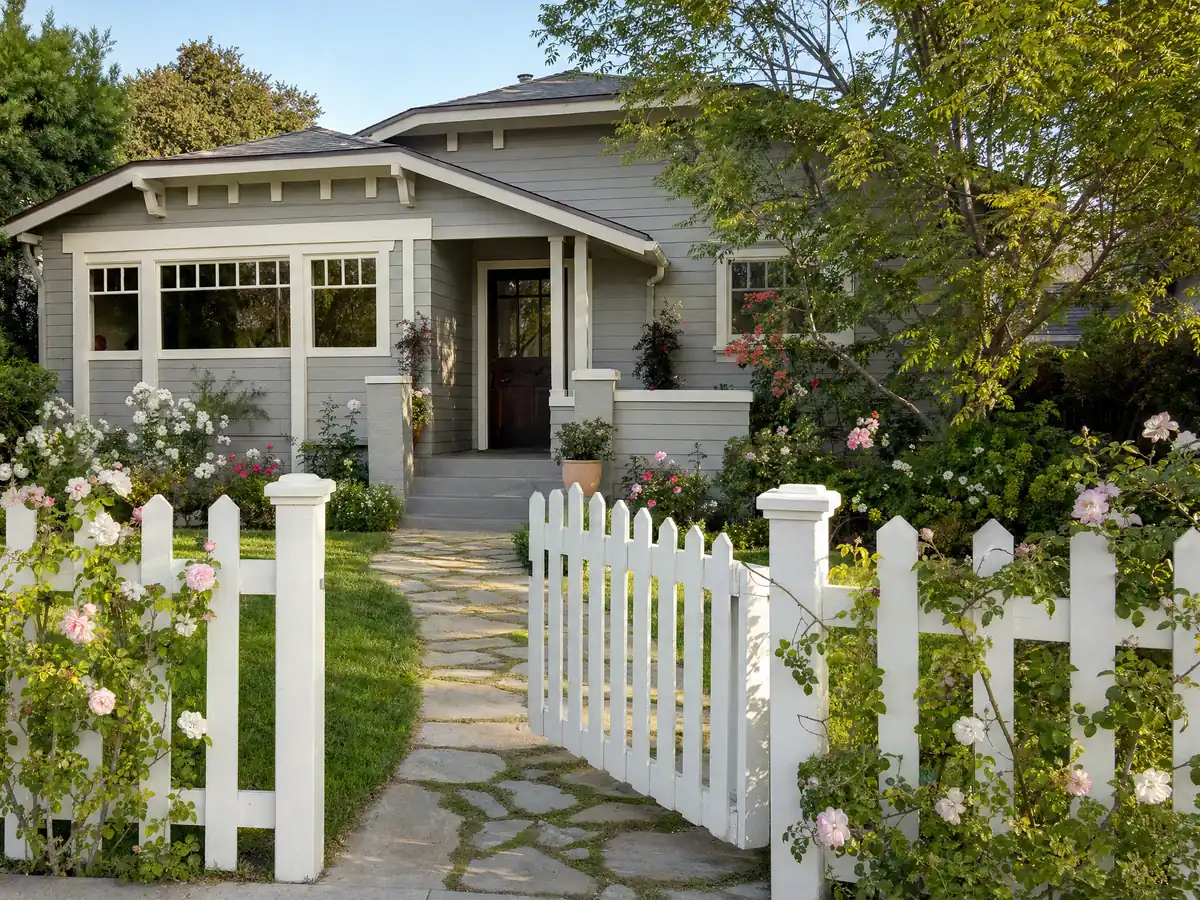
How tall can a backyard fence be in San Diego, and does my neighbor pay half?
San Diego allows fences up to 9 feet in required side and rear yards, with any part above 6 feet required to be open, and up to 10 feet outside required yards in residential zones. Up to 30 percent of a fence's length may exceed a height limit by up to 6 inches, and open fences must be at least 35 percent open to light. Plywood is not a permitted fence material, PVC fences are allowed only if prefabricated and manufactured as a fence, and owners must keep fences free of dilapidated, dangerous or graffiti conditions.
A shared boundary fence follows California Civil Code 841. Adjoining owners are presumed to share the reasonable cost of building, maintaining or replacing it equally unless they agree otherwise in writing, and the owner who plans the work must give each affected neighbor at least 30 days' prior written notice describing the problem, the fix, estimated costs, the split and the timeline.
Send the Civil Code 841 notice by a method that proves delivery.
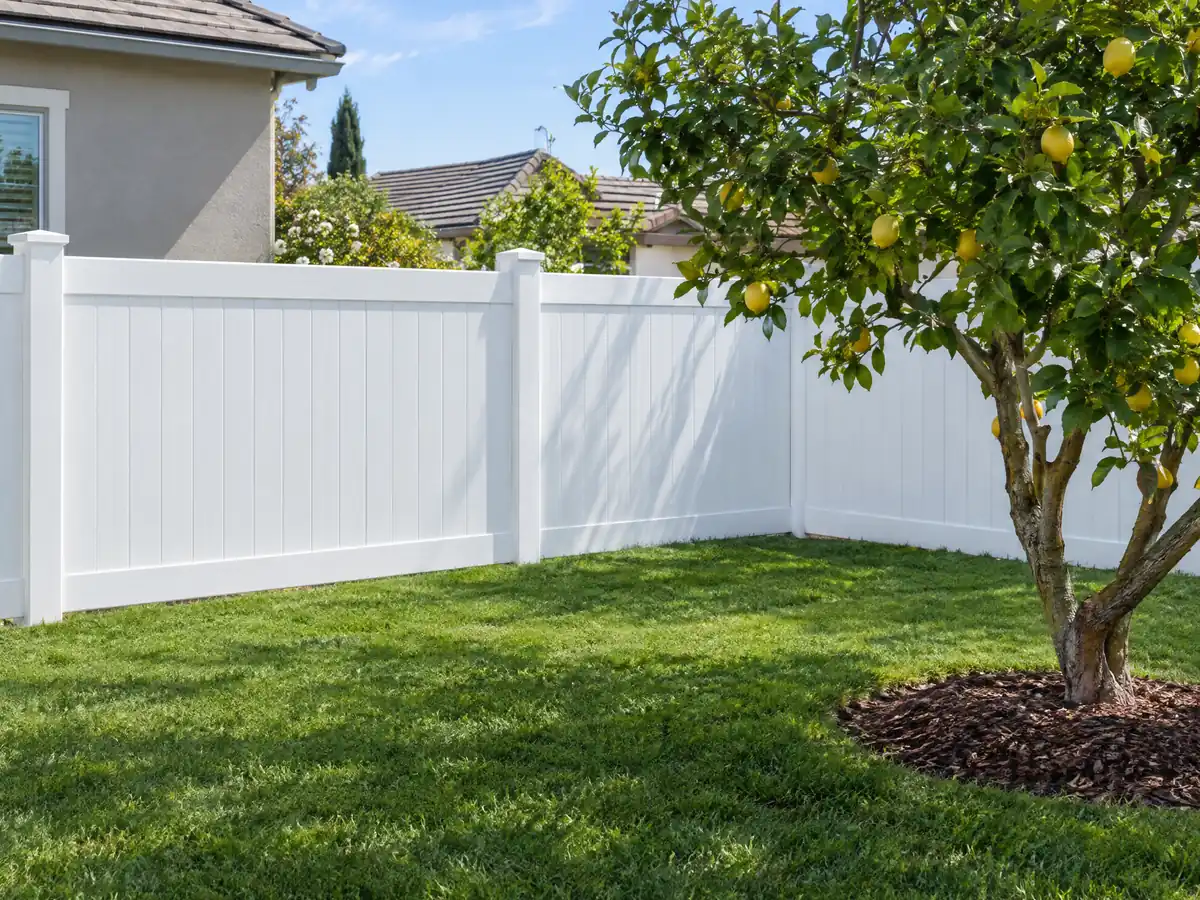
Does a fence near the beach or a bluff need a Coastal Development Permit in San Diego?
Sometimes, and the fence design changes the answer. Inside the Coastal Overlay Zone, open fences must be 75 percent open to light, not the 35 percent that applies elsewhere in the city. Any fence or retaining wall on a premises between the shoreline and the first public roadway, shown on the City's Map C-731, needs an appealable Coastal Development Permit under Process Three.
The exemption for improvements to existing structures has its own exceptions: work within 50 feet of a coastal bluff edge, work that adds 10 percent or more interior floor area, and significant detached structures such as garages or fences between the sea and the first public road or within 300 feet of the beach. Projects wholly inside the Coastal Commission's permit jurisdiction or the Deferred Certification Area need the Commission's own approval. We did not read the City's coastal maps, so look your parcel up in the City's ZAPP layers and ask DSD about the appealable area.
Ask whether your lot is in the Coastal Commission's jurisdiction before drawing a solid wall.
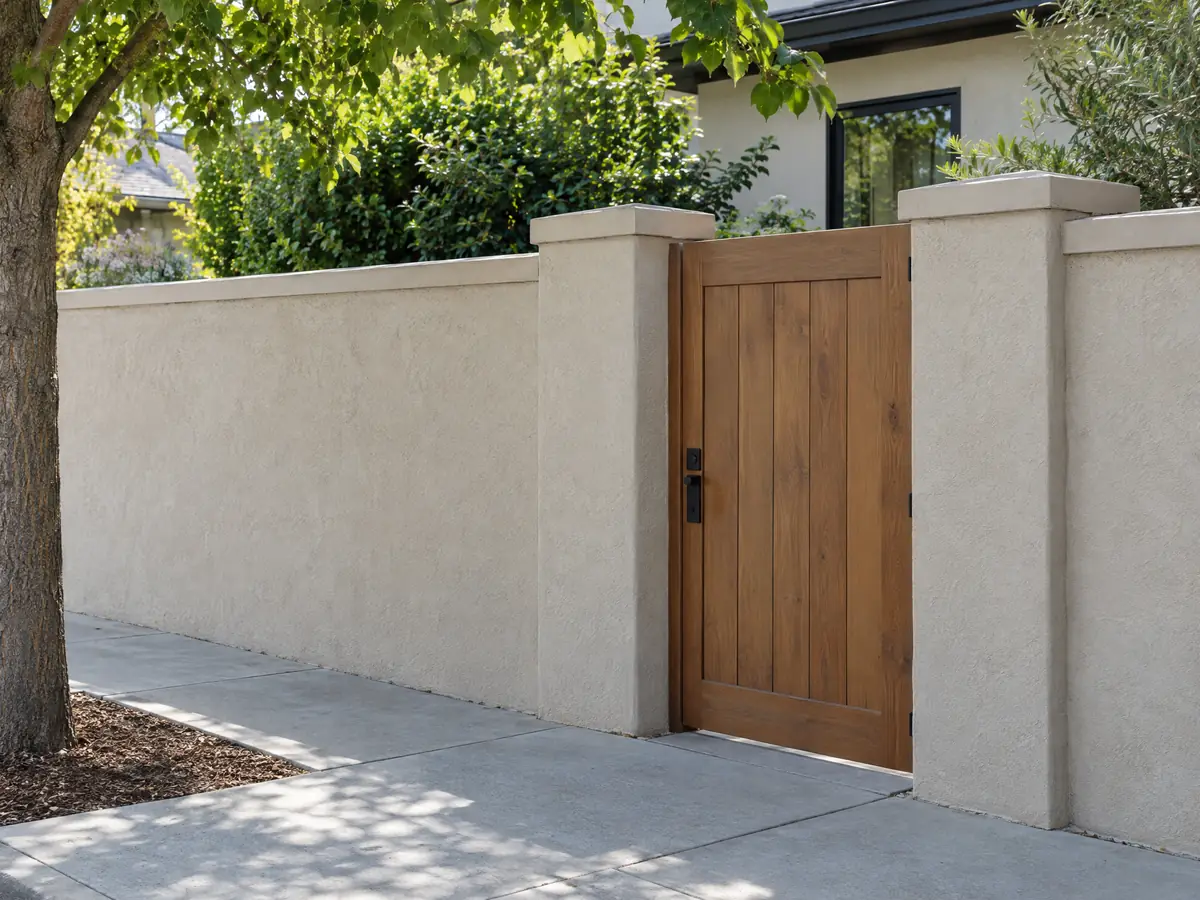
What does a fence or retaining wall on a San Diego canyon or hillside lot need?
Check for environmentally sensitive lands first. DSD's grading page warns owners to look before building a fence, patio or deck, because steep hillsides, sensitive biology, coastal beaches and bluffs and Special Flood Hazard Areas can require a development permit, and it says residences next to canyons are highly likely to have those conditions. The code counts a natural slope of 25 percent with at least a 50 foot elevation change as a steep hillside. Wikipedia, a third-party source, counts about 200 deep canyons and hills across the city.
Retaining walls have a second conflict. Municipal Code 129.0203(a)(5) exempts walls 3 feet or less, measured from the top of the footing, but the fence table says less than 3 feet needs no permit and 3 feet or more needs a Building Permit, and DSD's handout says more than three feet. Confirm a wall at exactly 3 feet. DSD's Rapid Review covers a retaining wall of one wall type up to 6 feet high.
Ask the fence company to price the footing depth and the wall type on separate lines.
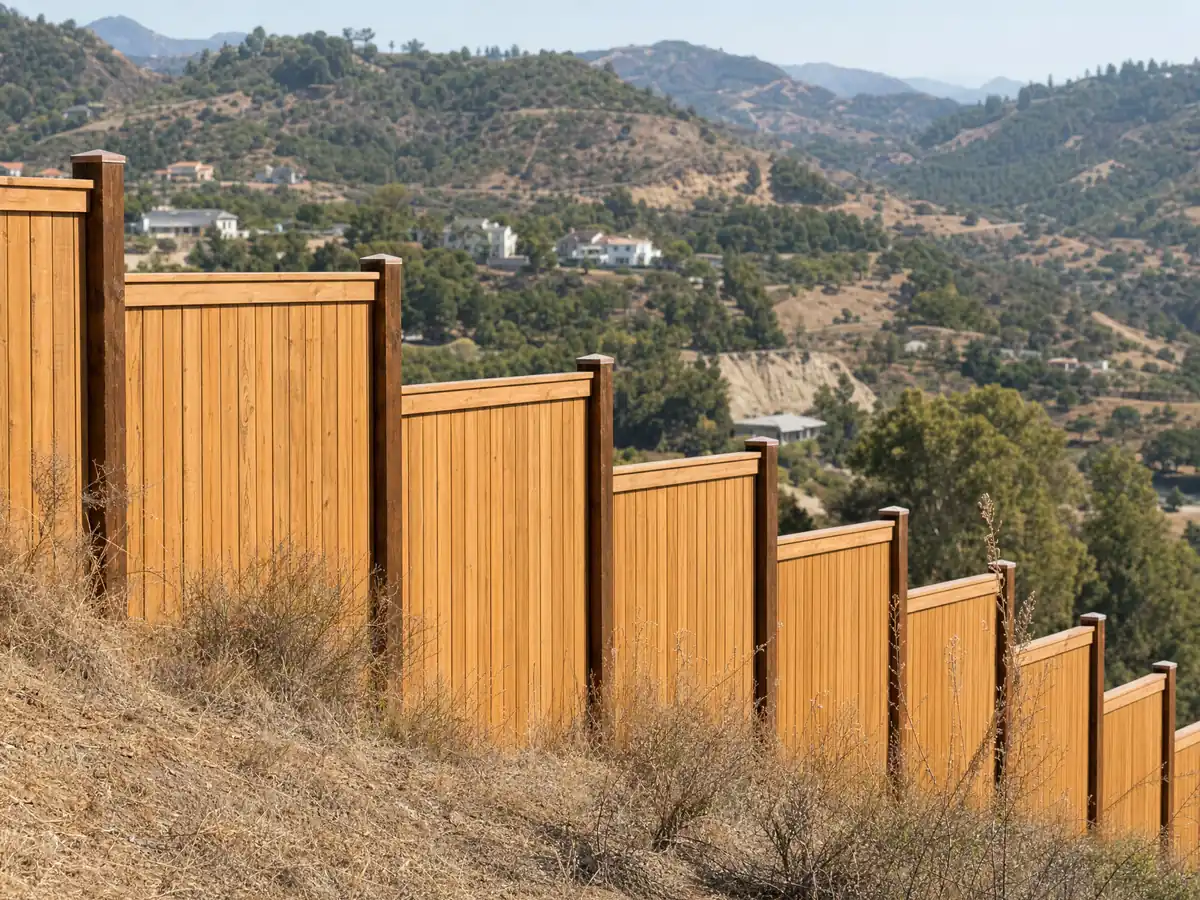
Can I build a wood fence next to my house in a San Diego fire zone?
Not freely. Where a lot has brush management Zone One, Municipal Code 142.0412(g) requires fences, walls, palapas, play structures and non-habitable gazebos in that zone to be non-combustible, one-hour fire-rated or Type IV heavy timber. Fire-Rescue's Zone 0 guidance for Very High Fire Hazard Severity Zones tells owners to replace combustible fencing, gates and arbors in the first 5 feet from a structure with non-combustible alternatives.
The WUI Code's Zone 0 text names trellises and window boxes among the ember-prone items it prohibits, and KPBS said the State Board of Forestry was still expected to finalize the exact rules. Fire-Rescue says existing owners should aim to comply by February 2027, while the WUI Code reaches existing structures one year after February 28, 2026. Where a recorded brush management easement exists from the original approval, it can make the owner responsible for maintaining that area.
Ask the fire zone question before any wood gate or arbor is attached to the house.
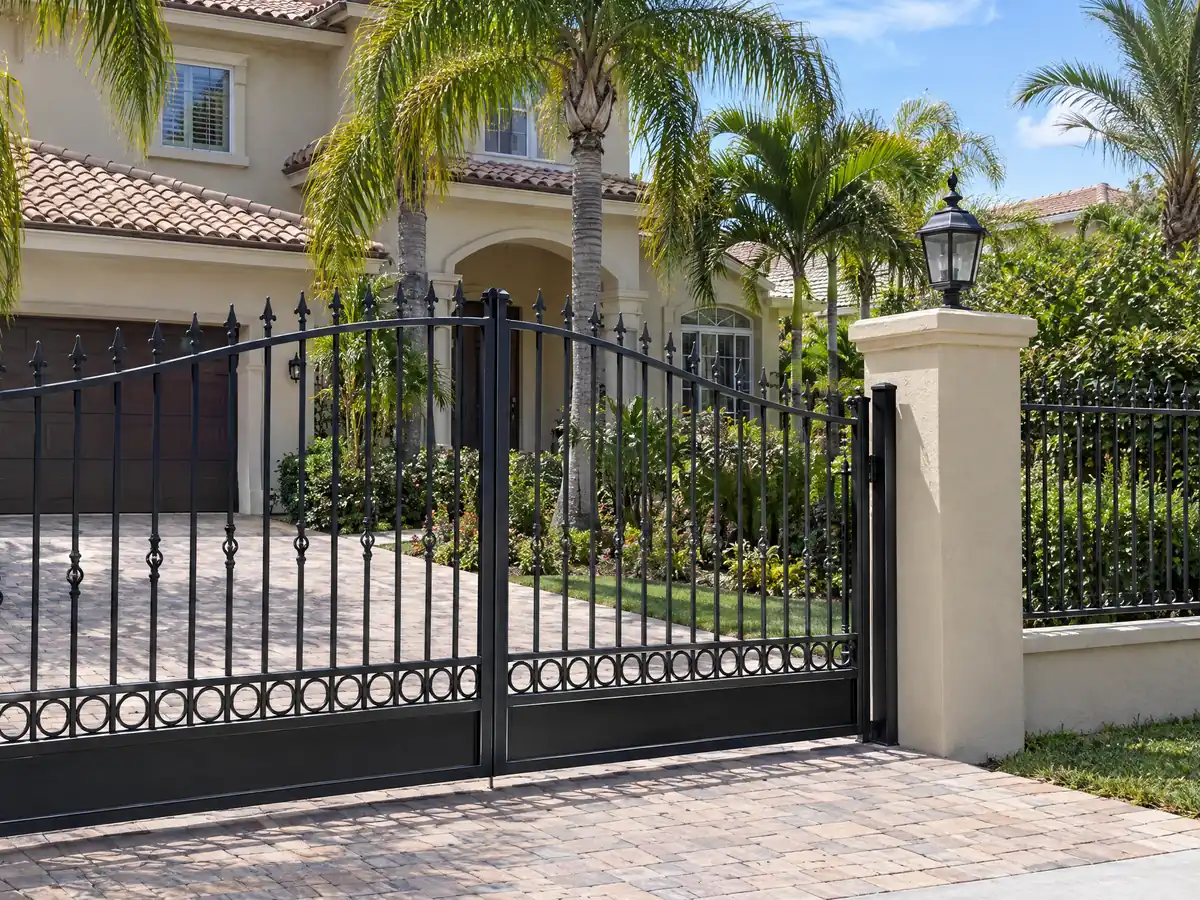
How much does fence installation cost in San Diego, and who builds it?
We found no San Diego price survey, so the figures below come from Los Angeles and a San Diego bid may differ. Angi's Los Angeles guide, updated August 4, 2026, puts a typical fence project at $1,734 to $4,422, or $15 to $60 a linear foot, and shows 100 feet at about $2,100 to $2,350. A federal wage survey listed fence erectors in the Los Angeles area at a mean $28.00 an hour for May 2025. Our planning ranges are $25 to $55 a foot for a wood or vinyl privacy fence, $12 to $30 for chain-link and $35 to $85 for aluminum or iron.
CSLB class C-13 covers fences, railings and gates but excludes masonry walls, so a block wall goes to a masonry specialist. Under Business and Professions Code 7159 a home improvement contract may collect no more than $1,000 or 10 percent of the price up front, whichever is smaller. Use our contractor license guide to confirm a license and how general contractors use subcontractors to see who answers for the crew.
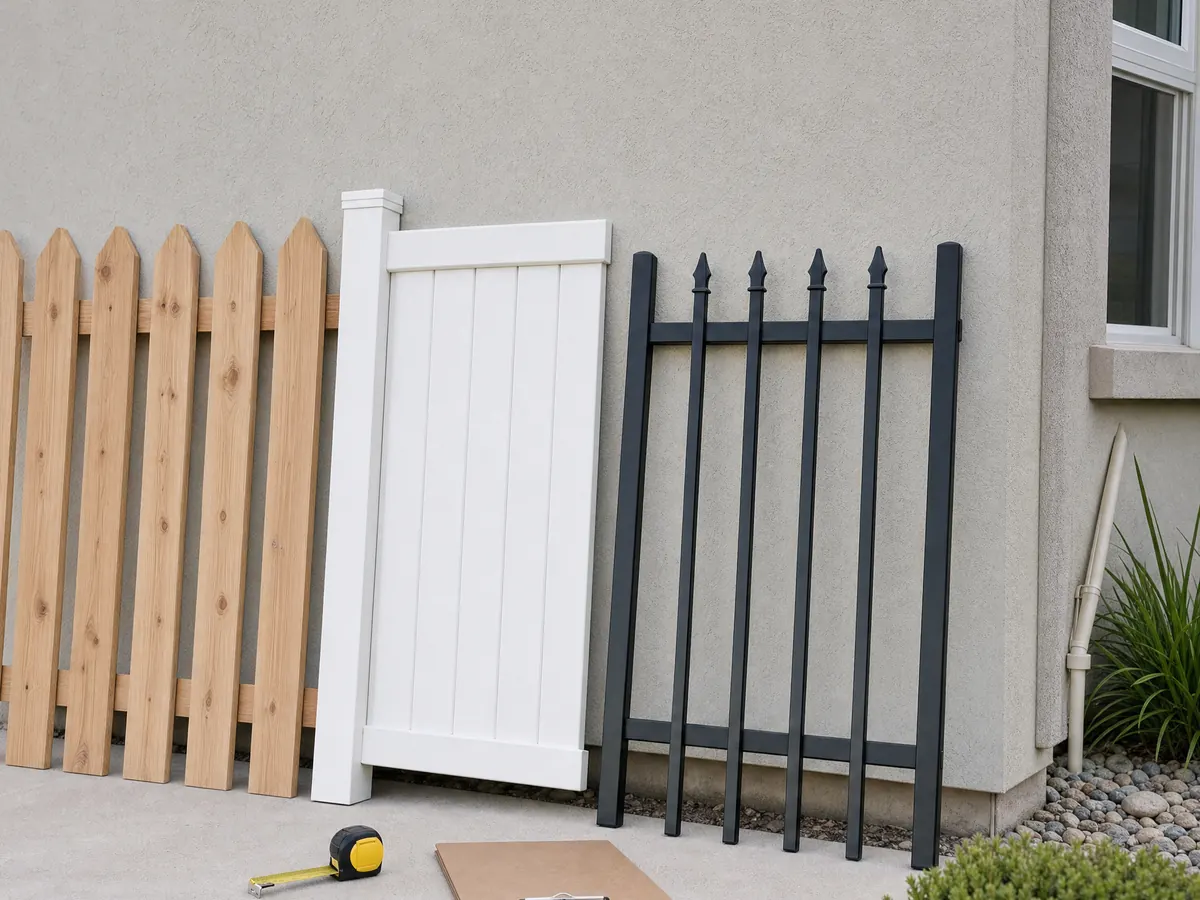
Fence photos from San Diego and nearby communities
Fence scenes tied to San Diego places such as La Jolla, Pacific Beach, Scripps Ranch and North Park, and to nearby communities like Coronado, Lemon Grove, La Mesa and Santee, from picket fronts to block walls and canyon runs.
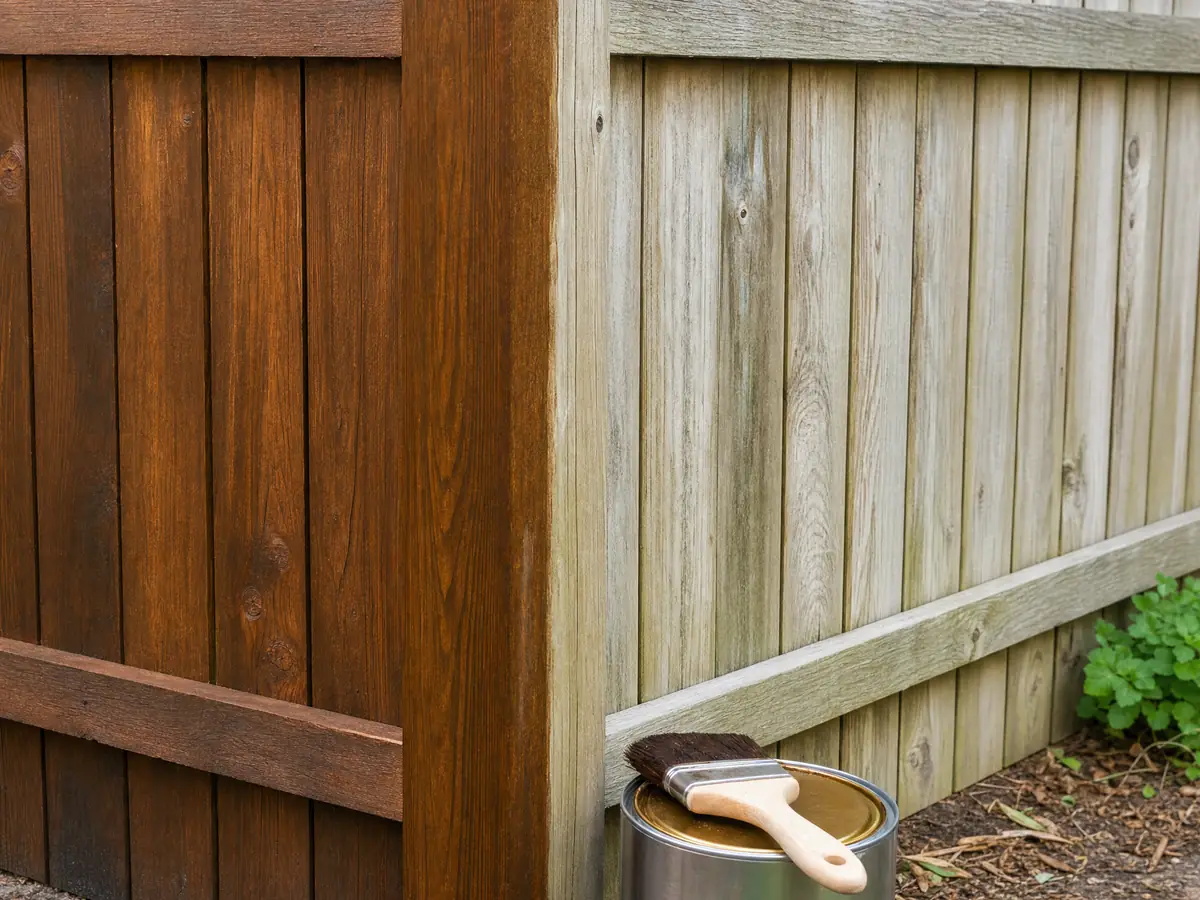
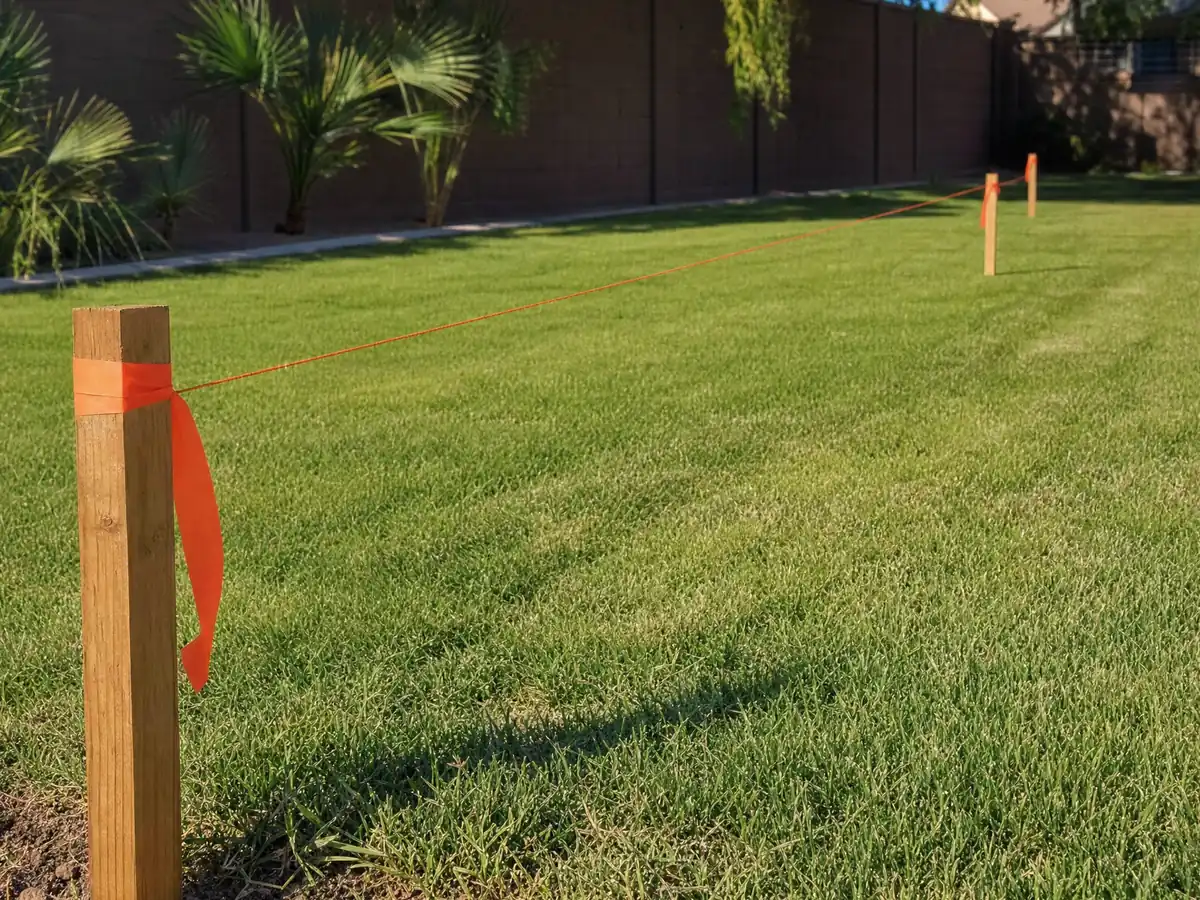

Where these San Diego fence figures come from
The fencing page has the fence price table, each line with its source and date. A new fence often comes with other outside work, and the San Diego rules for it are on the roofing page, the painting page and the kitchen remodeling page. For how a Los Angeles County city handles fence height, compare the guide for Glendale.
| What it covers | Typical range |
|---|---|
| Wood or vinyl privacy fence, 6 feet | $25 to $55 per linear foot |
| Chain-link | $12 to $30 per linear foot |
| Aluminum or ornamental iron | $35 to $85 per linear foot |
| Typical 100-foot backyard run | $2,500 to $5,500 total |
| Block walls, horizontal slat fences, gates and openers, hillside lots | Set by the written proposal |
San Diego fence questions, answered
Do I need a permit to build a fence in San Diego?
Not for most fences under 7 feet. Municipal Code 129.0203(a)(2) exempts fences of 7 feet or less, except swimming pool barriers, though the fence table says 7 feet or more needs a Building Permit. Front yards, visibility areas, the coast and canyon lots can add approvals, so ask DSD about your lot.
How tall can a front yard fence be in San Diego?
A solid fence may be 3 feet at the property line and rise to 6 feet at the setback line, and an open fence may go from 6 feet to 9 feet across the same span. Chain link on the front line is capped at 3 feet, and corner visibility areas stop at 3 feet.
Can I put up a 7ft fence?
In San Diego, only with care. The exempt list covers fences of 7 feet or less, but the fence table says 7 feet or more needs a Building Permit, a conflict between City documents. Backyard height limits are higher, up to 9 feet with the part above 6 feet open, so ask DSD to confirm in writing.
Does your neighbor have to pay for half the fence in California?
Usually yes, if the fence sits on the boundary. Civil Code 841 presumes adjoining owners share the reasonable cost equally unless they agree otherwise in writing, and the owner starting the work must give each affected neighbor 30 days' written notice with the problem, the plan, estimated costs, the split and the timeline.
What is the maximum height of a retaining wall without a permit?
San Diego's exempt list covers walls 3 feet or less, measured from the top of the footing, unless they support a surcharge. The fence table says less than 3 feet and DSD's handout says more than three feet, so a wall at exactly 3 feet needs a written answer. Rapid Review covers one wall type up to 6 feet.
Does a pool fence need a permit in San Diego?
Yes. Swimming pool barriers are carved out of the fence exemption in Municipal Code 129.0203(a)(2), and DSD's handout says every in-ground pool needs a permit. Prefabricated above-ground pools of 5,000 gallons or less do not. Ask DSD how the barrier is reviewed with the pool permit.
Does fence installation near the beach need a coastal development permit?
It can. A fence on a premises between the shoreline and the first public roadway needs an appealable Coastal Development Permit, and open fences in the Coastal Overlay Zone must be 75 percent open to light. Fences within 300 feet of the beach can count as significant detached structures that lose the exemption.
How much does fence installation cost for 100 feet?
Angi's Los Angeles guide shows 100 feet at about $2,100 to $2,350, and our planning range of $25 to $55 a foot puts a wood or vinyl privacy run near $2,500 to $5,500. A San Diego bid may differ, and gates, slopes and old fence removal add to it. The written proposal is the real price.
Is it cheaper to install a wood or vinyl fence?
Wood is usually cheaper up front. Angi's Los Angeles guide shows a wood fence at $1,600 to $2,500 and vinyl at $1,850 to $3,400, and national per-foot ranges overlap. Vinyl must be prefabricated and made as a fence in San Diego, and wood in a fire zone has limits near the house.
Describe your San Diego fence
Tell us your neighborhood or street, whether the fence faces the street, a corner, a canyon or the coast, and roughly how many feet it runs. We check the height rules and the exemptions before we call back.