
Deck Builderin San Diego, CA
A deck builder in San Diego starts with four tests: a deck needs a building permit if it exceeds 200 square feet, sits more than 30 inches above grade at any point, attaches to the house or serves the main exit door. Fire zones, canyon lots and the Coastal Overlay Zone then add rules of their own.
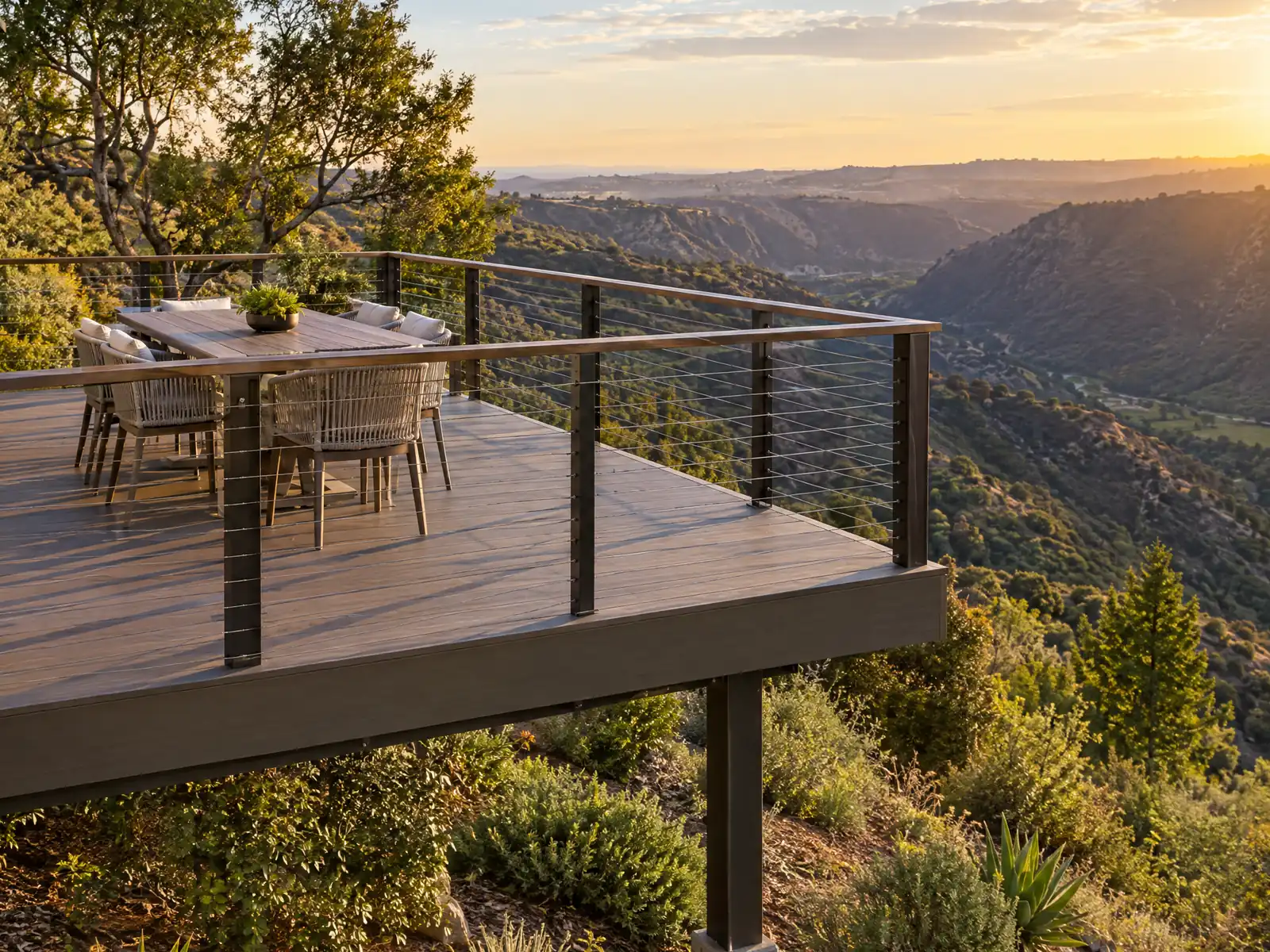
San Diego is a city of houses on mesa tops: ACS 2024 counts 250,408 single-family detached homes, 42.5 percent of the 588,866 total, with a median owner-occupied value of $980,700. The city is cut by about 200 canyons, per Wikipedia, and DSD warns that residences next to canyons are highly likely to have environmentally sensitive land conditions. The City adopted the State's 2025 fire hazard map by Ordinance O-21992, effective August 30, 2025, so a rear deck here is also a fire question.
MDG Builders, CSLB #1040337, is a Tarzana general contractor that designs, permits and manages rather than swinging the hammer. We draw the deck, take the fire and permit questions to the City's Development Services Department and send licensed carpentry subcontractors to build it. The decks page covers materials, and the San Diego overview lists our other trades in the city.
What San Diego's Development Services Department, Fire-Rescue, its Wildland-Urban Interface Code and state law say about decks
Where decks permits come from in San Diego: City of San Diego Development Services Department (DSD).
- Under Municipal Code 129.0203(a)(15) a deck is exempt from a building permit only if it is 200 square feet or less, no more than 30 inches above grade at any point, not attached to a dwelling and not serving the required exit door. DSD's Information Bulletin 211 (April 2026) says a permit is required for any residential deck that exceeds 200 square feet, is more than 30 inches above grade at any point, is attached to a dwelling or serves the main exit door.
- IB 211 says its prescriptive deck guide cannot be used for a deck closer than 5 feet to a property line or one carrying heavy concentrated loads such as a hot tub; those fall outside the bulletin and need project-specific design. It requires guards at least 42 inches high with openings that block a 4-inch sphere where the deck is more than 30 inches above grade, a handrail on stairs with four or more risers, and smoke and carbon monoxide alarms inside the house when a deck attaches to it.
- Decks in a Very High Fire Hazard Severity Zone must use materials and methods that comply with the California Wildland-Urban Interface Code, and a deck within a Brush Management Zone must comply with Municipal Code 142.0412 (IB 211).
- San Diego's WUI Code measures Zone 0 as the 5 feet from the exterior wall surface or from a patio, deck or attachment to a structure, and requires the area under decks, balconies and stairs to be kept free of vegetation and combustible items.
- In brush management Zone One, Municipal Code 142.0412 allows no habitable structures or combustible construction directly attached to habitable structures, and requires fences, walls, palapas, play structures and non-habitable gazebos to be non-combustible, one-hour rated or Type IV heavy timber; Zone One widths in the code's table are 35 feet (Zone One) and 65 feet (Zone Two),.
- San Diego exempts patio covers attached to or detached from single dwellings in the RS and RX zones when they are 300 square feet or less of projected roof, do not encroach into any yard and are 12 feet or less above grade, except in the appealable area of the Coastal Overlay Zone or in Planned Developments (DSD's handout drops the 'appealable' qualifier and says Coastal Overlay Zone).
- On environmentally sensitive steep hillsides outside the Coastal Overlay Zone, Municipal Code 143.0110(c)(3) lets minor improvements to existing structures skip the hillside development permit, including residential decks up to 500 square feet attached to the building and no more than 12 feet above existing grade, if clearing stays under 100 square feet per acre, foundation excavation totals under 10 cubic yards and there is no encroachment into sensitive biology.
- A San Diego ADU's exterior staircases, decks and balconies must conform to the base zone setback even though the ADU itself can build to the side and rear lines (IB 400).
Do you need a permit to build a deck in San Diego, and how big can one be without it?
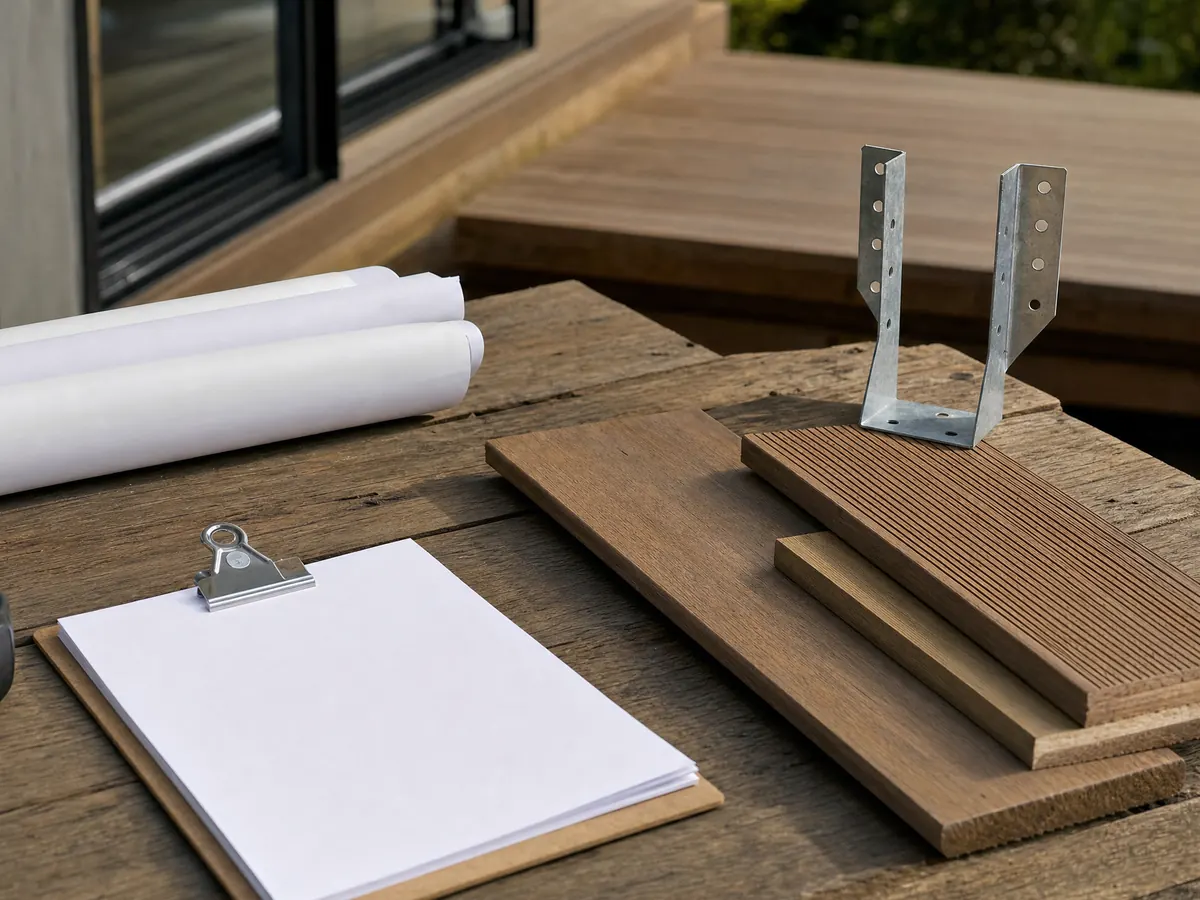
Not if it is small, low and free-standing. Municipal Code 129.0203(a)(15) exempts a deck of 200 square feet or less that is no more than 30 inches above grade at any point, is not attached to a dwelling and does not serve the required exit door. DSD Information Bulletin 211 (April 2026) turns that around: a permit is required for any residential deck over 200 square feet, over 30 inches above grade at any point, attached to a dwelling or serving the main exit door.
Every exemption is lifted for a historical resource and for lots with environmentally sensitive lands that need a development permit. The code also says exemptions do not cover electrical, plumbing or mechanical permits, so a deck with lighting circuits or a gas line for a grill can still need those.
Permits are filed online and issuance queues are posted weekly: the snapshot dated November 6, 2026 showed about 7 business days for a Building Permit and 3 for Rapid Review, which the City labels as estimates. A homeowner who acts as the general contractor files Owner-Builder Verification Form DS-3042, and the state's $1,000 unlicensed work limit never applies once a permit is required.
Can you repair an old deck in San Diego without a permit?
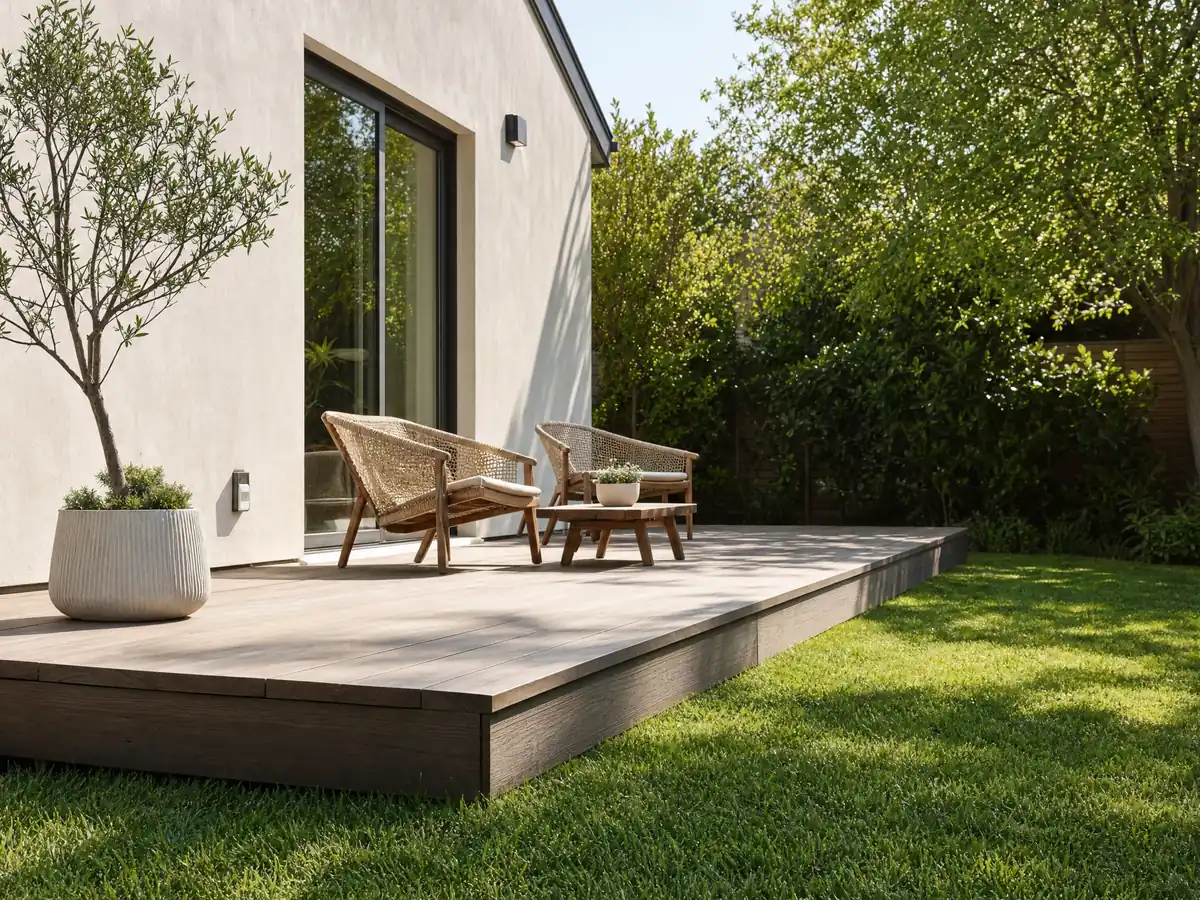
Swapping a few boards often can be done without one. DSD's handout says maintenance repairs under $1,000 involving like-for-like replacements are exempt, and the Municipal Code says other repairs are exempt only when they total $1,000 or less, do not touch electrical or mechanical installations and add no change to construction, exits or permanent fixtures. New framing, a ledger, stairs or a taller guard goes beyond that. Rapid Review lists deck or stair repairs in buildings with fewer than three attached dwelling units, so a repair that needs a permit may qualify.
Old houses add steps. A building 45 or more years old can be screened for historical significance when a permit is filed, and DSD's building permit page says modifications to such buildings must include a photographic survey and the County Assessor's building record. EPA's lead-safe renovation rule covers paid work that disturbs paint in housing built before 1978, and about 49.8 percent of San Diego homes date before 1980.
Wood is also food for insects. University of California guidance says drywood termites are most common in Southern California and infest decks and fences, so a repair should fix whatever keeps the wood damp and the exposed ends sealed.
What does a San Diego deck need in a Very High Fire Hazard Severity Zone, and what is Zone 0?
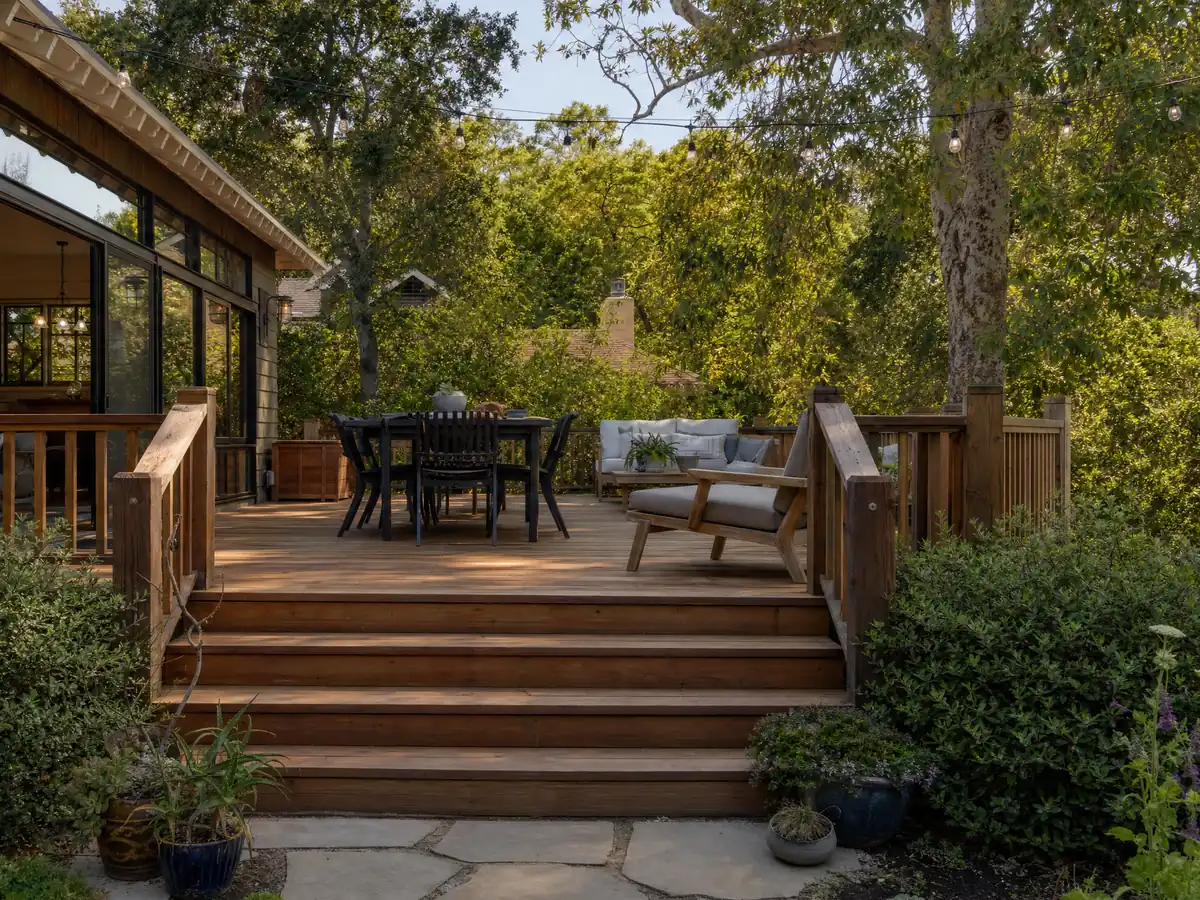
It must meet the wildfire code. IB 211 says decks in a Very High Fire Hazard Severity Zone use materials and methods that comply with the California Wildland-Urban Interface Code, and a deck inside a brush management zone follows Municipal Code 142.0412, where Zone One allows no combustible construction directly attached to habitable structures. KPBS reported in January 2026 that the zones cover roughly two-thirds of the city, so check the parcel on the City's map first.
San Diego's own WUI Code, effective February 28, 2026, measures Zone 0 as the 5 feet from the wall or from a patio, deck or attachment, and requires the area under decks, balconies and stairs to be free of vegetation and combustible items. It applies to new permits now and to existing structures one year later, Fire-Rescue says owners should aim for February 2027, and KPBS said the State Board of Forestry was still finalizing details.
The Residential Code's wildfire section (R337.9.3) lists allowed decking surfaces: products tested to ASTM E2632 or E2726, ignition-resistant, fire-retardant-treated or noncombustible. We did not confirm which composite brands qualify, so ask for the State Fire Marshal listing behind any board before ordering.
- Is the parcel in a Very High zone on the City's map?
- Does the deck sit inside a brush management zone?
- Which listing backs the decking and the framing?
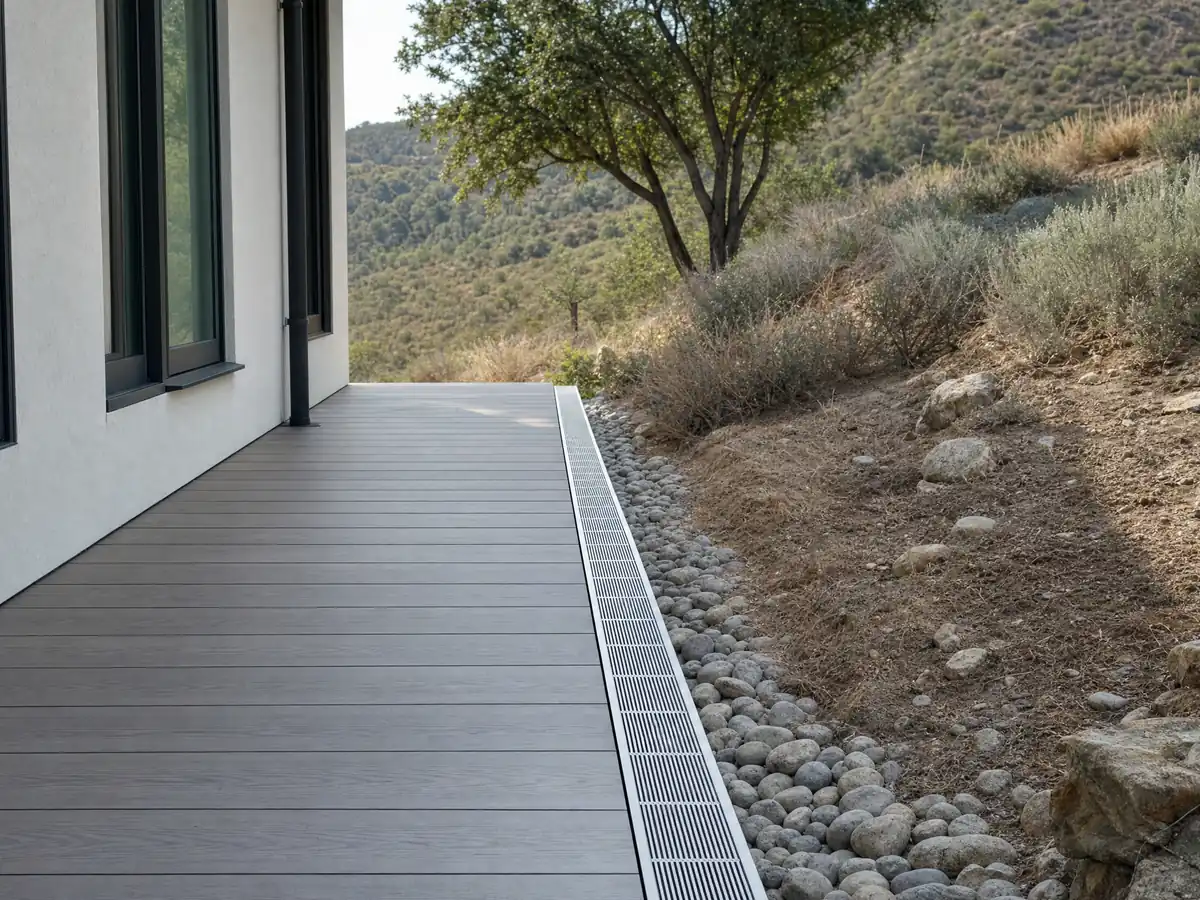
Can you build a deck on a San Diego canyon lot or steep hillside?
Often, with extra review. On environmentally sensitive steep hillsides outside the Coastal Overlay Zone, Municipal Code 143.0110(c)(3) lets minor improvements skip the hillside development permit, including residential decks up to 500 square feet attached to the building and no more than 12 feet above existing grade. The conditions are clearing under 100 square feet per acre, foundation excavation under 10 cubic yards in total and no encroachment into sensitive biology.
Distances matter. IB 211's prescriptive guide cannot be used for a deck closer than 5 feet to a property line or one carrying a heavy concentrated load such as a hot tub, which need project-specific design. In the wildfire interface area the WUI Code's default is a 30 foot setback for buildings, with 15 feet (one story) or 30 feet (two stories) from the top of a slope steeper than 25 percent and 50 feet or more high.
Soil is a third check. The Municipal Code requires a geotechnical report where its table or the Building Official calls for it, and a suspected fault can bring a recorded Notice of Geologic and Geotechnical Conditions. Zone 2 brush management allows no structures, so a deck near native vegetation needs the fire map and a site visit.
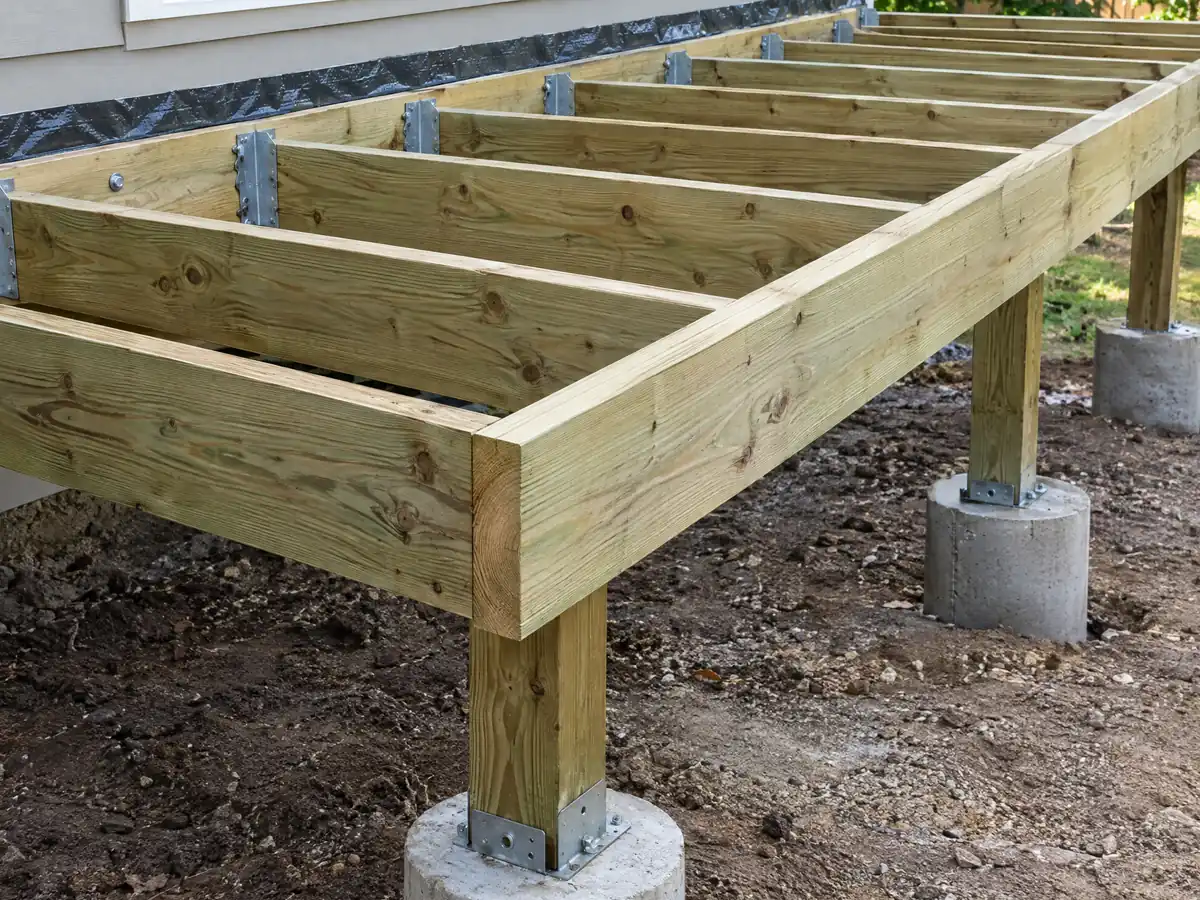
Is a deck railing 36 or 42 inches in San Diego, and how does a deck attach to the house?
Forty-two inches. IB 211 requires guards at least 42 inches high with openings that stop a 4-inch sphere wherever the deck is more than 30 inches above grade, and a handrail on stairs with four or more risers. When a deck attaches to the house, smoke and carbon monoxide alarms must be inside the house. A deck 30 inches or lower needs no guard under that threshold, though it can still need a permit if it is attached.
The ledger is where attached decks often fail. The 2022 California Residential Code in the ICC copy we read asks for a pressure-treated ledger of at least 2 by 8 that carries no beam loads and is never fastened to stone or masonry veneer (R507.9.1.1), with hot-dipped galvanized or stainless fasteners and flashing. San Diego's 2025 code cycle applies to projects submitted from January 1, 2026, so confirm each number with the plan checker.
Lateral hold-downs are two 1,500 pound devices within 24 inches of each end or four 750 pound devices (R507.9.2). A free-standing deck still needs footings sized for its load, and one closer than 5 feet to a property line falls outside IB 211's standard details.
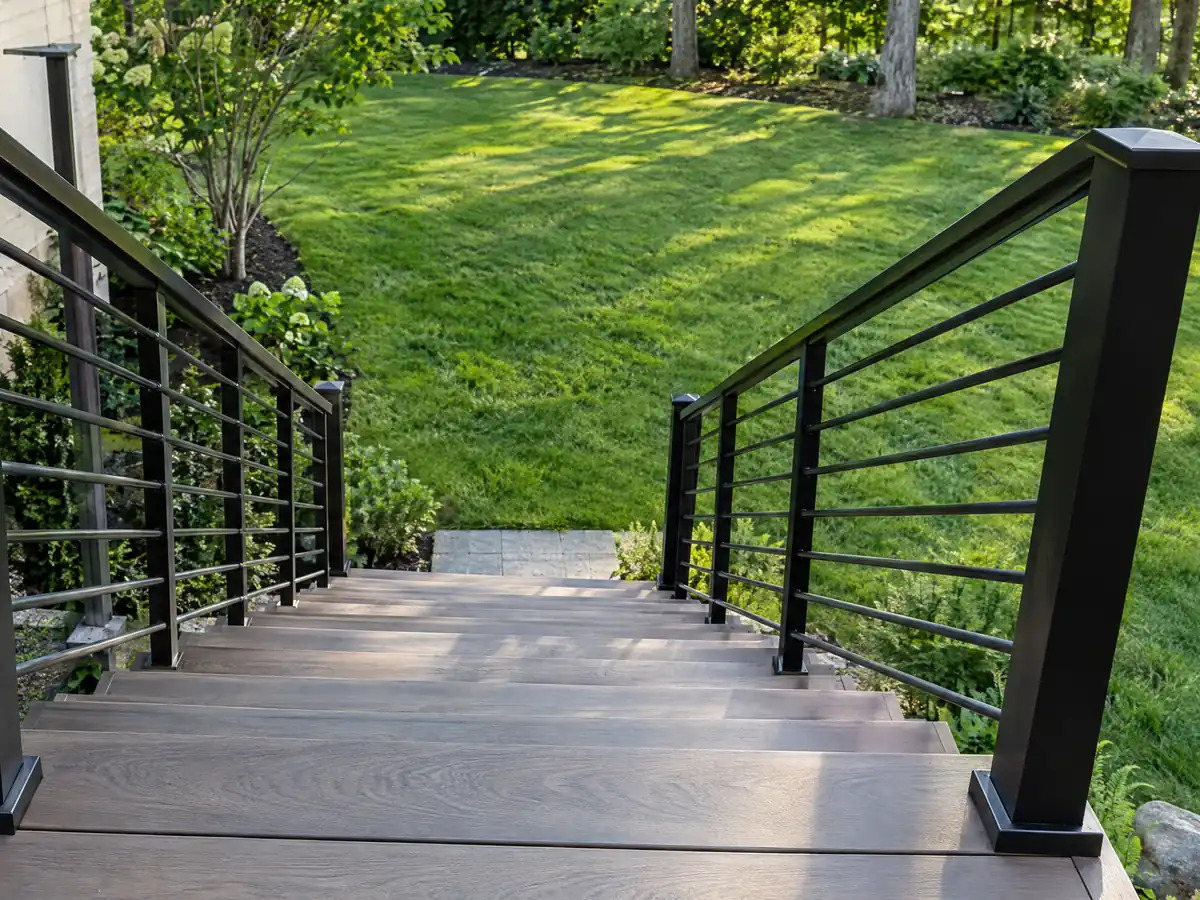
What changes for a deck, patio cover or pergola in San Diego's Coastal Overlay Zone?
More approvals. A Coastal Development Permit is required unless the work is exempt, and improvements to existing structures lose the exemption within 50 feet of a coastal bluff edge, when they add 10 percent or more interior floor area, or when they are significant detached structures between the sea and the first public road or within 300 feet of the beach. The hillside deck exemption in 143.0110(c)(3) applies only outside the zone.
Patio covers carry two readings. The code exempts covers on single dwellings in the RS and RX zones when they are 300 square feet or less of projected roof, do not encroach into any yard and stand 12 feet or less above grade, except in the appealable area of the Coastal Overlay Zone or in Planned Developments. DSD's handout says the Coastal Overlay Zone without the word appealable, so ask which one governs.
Bulletin 123 requires listed patio covers to be Class A roof assemblies, and Rapid Review handles standard-design patio covers. An ADU's stairs, decks and balconies must follow the base zone setback even though the ADU itself can build to the side and rear lines.
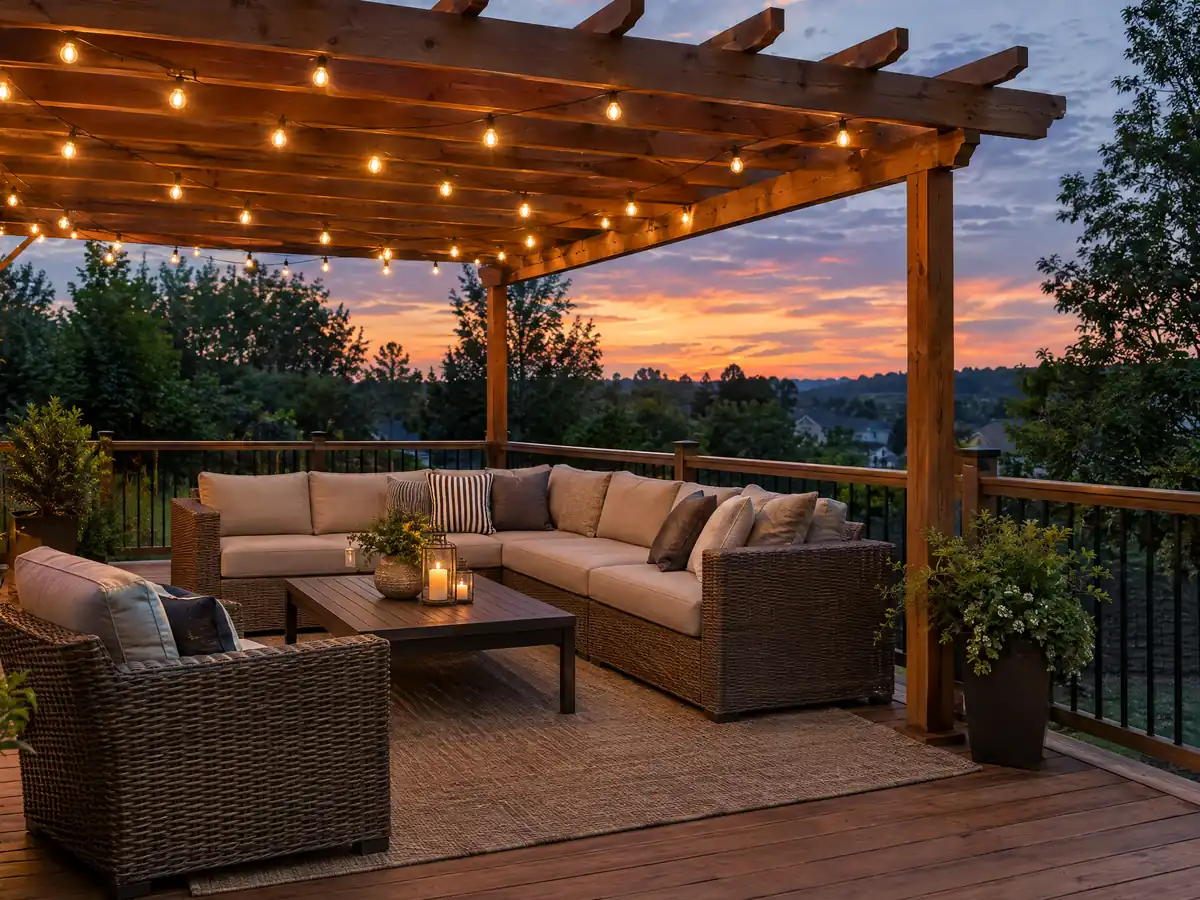
What does a deck builder charge in San Diego, wood or composite?
We found no San Diego price study, so the anchor is Remodeling magazine's 2025 Cost vs. Value report for Los Angeles, whose 16 by 20 foot spec (bench, planter, three steps, full railing) costs $18,419 in wood with 99.6 percent recouped and $26,872 in composite with 73.9 percent. Angi's Los Angeles page of October 28, 2025 gives a $13,570 average inside a $6,335 to $20,871 spread. Resale percentages belong to Los Angeles.
Our planning figures are $45 to $75 per square foot for treated wood and $65 to $110 for composite, so a 16 by 20 deck falls near $14,500 to $24,000 in wood or $21,000 to $35,000 in composite, and a 20 by 20 near $18,000 to $30,000 or $26,000 to $44,000. Permits and engineering are extra, and canyon, fire zone and engineered decks are priced after a site visit.
CSLB's C-5 framing class covers framing and rough carpentry. Our license check guide shows how to read a CSLB record.
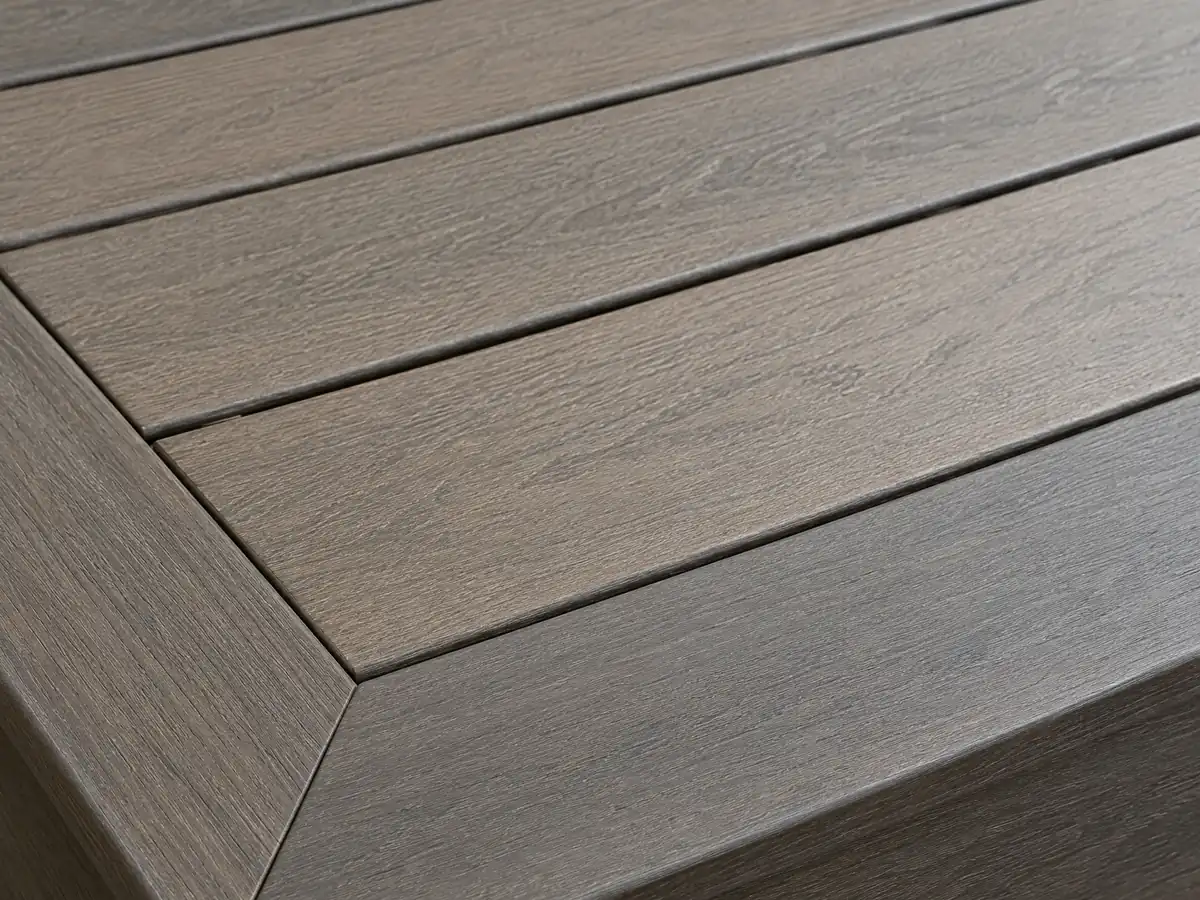
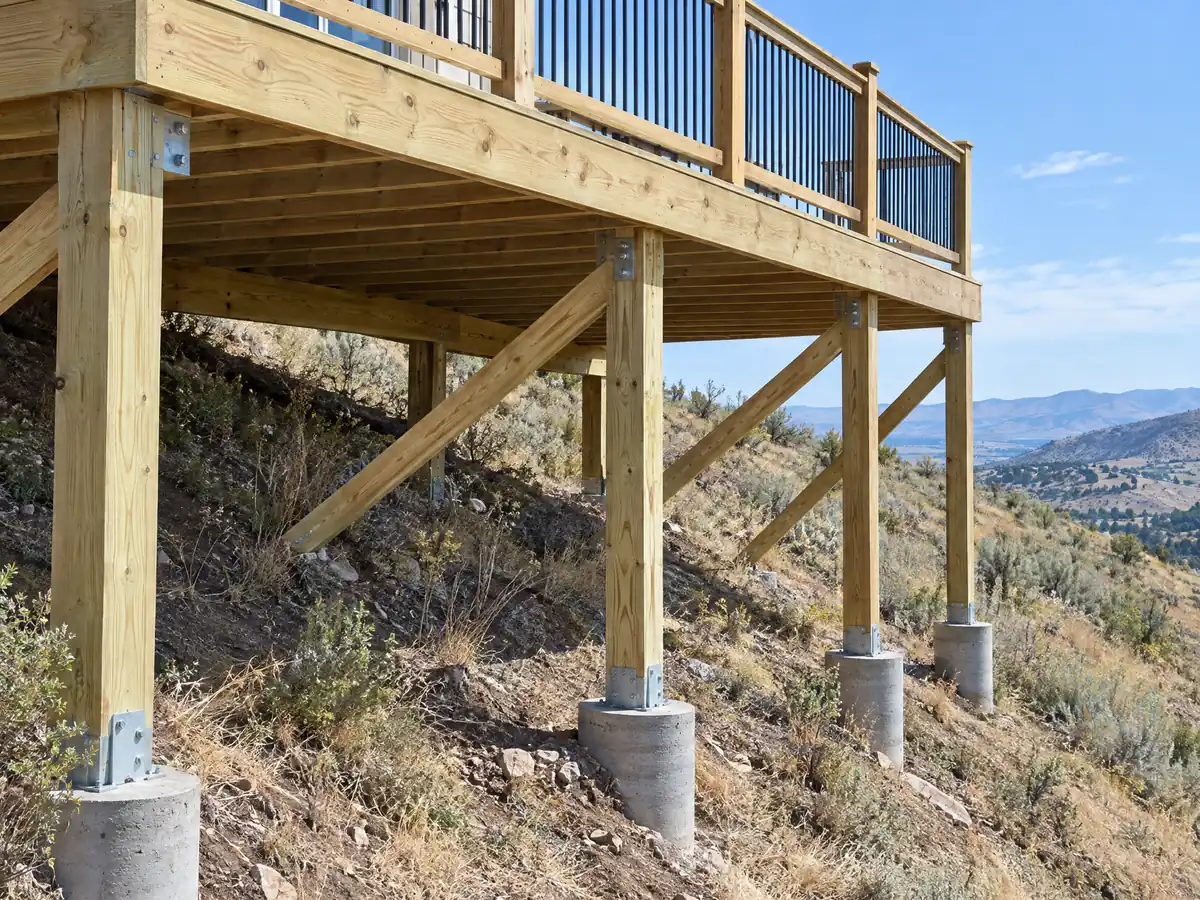
Deck photos from San Diego and nearby communities
Framing, footings, ember-resistant boards and finished decks from San Diego and the communities around it, shown at the steps where the rules matter. Tap any photo to enlarge it.
What decks costs around San Diego
Dollar figures here are Los Angeles planning ranges, not a San Diego bid, and permits, engineering, soils work and any fire plan review belong on separate proposal lines. The same property may need flooring in San Diego or concrete in San Diego. For comparison, read decks in Chula Vista, decks in Carlsbad and decks in El Cajon, and decks in Los Angeles for the benchmark city. The subcontractor guide shows who frames and who finishes, and the kitchen remodel cost guide shows how we explain sourced price ranges.
| What it covers | Typical range |
|---|---|
| Pressure-treated wood deck | $45 to $75 per square foot |
| Composite deck | $65 to $110 per square foot |
| 16 by 20 foot wood deck (320 sq ft) | About $14,500 to $24,000 |
| 16 by 20 foot composite deck | About $21,000 to $35,000 |
| Hillside, second-story, rooftop and ipe decks | Priced by site visit |
| Permits and engineering | Quoted as separate lines |
San Diego deck questions, answered
Do you need a permit to build a deck in California?
In San Diego, yes, if the deck exceeds 200 square feet, sits more than 30 inches above grade at any point, attaches to a dwelling or serves the main exit door. A deck that meets none of those can skip the building permit unless it is on a historical resource or sensitive land. Other cities set their own lines.
How much should a 16x20 deck cost?
For Los Angeles, our planning figures give about $14,500 to $24,000 in treated wood and $21,000 to $35,000 in composite, before permits and engineering. Cost vs. Value 2025 priced a fuller version with bench, planter and steps at $18,419 in wood and $26,872 in composite. We found no San Diego study.
Is it cheaper to build a wood deck or composite deck?
Wood costs less to build. Cost vs. Value 2025 for Los Angeles shows $18,419 for the wood version and $26,872 for composite, and wood recouped 99.6 percent against 73.9 percent. Composite avoids some upkeep, but in a fire zone the boards also need a listing that proves they qualify.
Is railing height 36 or 42 for decks?
Forty-two inches in San Diego. DSD's bulletin 211 requires guards at least 42 inches high with openings that stop a 4-inch sphere where a deck is more than 30 inches above grade. A handrail is also required on stairs with four or more risers. Ask the plan checker about the code edition on your submittal.
How high can a deck be without a railing in California?
Thirty inches is the usual threshold: the Residential Code asks for a guard where a walking surface is more than 30 inches above grade, and San Diego's bulletin says the same. Below that, no guard is required, but a deck attached to the house or serving the exit door can still need a permit.
Do freestanding decks need footings?
Yes, they need footings sized for the load and the soil, even when they do not touch the house. In San Diego the standard details in bulletin 211 cannot be used for a deck within 5 feet of a property line or one carrying a hot tub. Those cases need project-specific design.
What is the downside of composite decking?
The main downsides we can document are price and resale. Los Angeles Cost vs. Value 2025 shows composite costing about $8,450 more than wood on the same 16 by 20 deck and recouping 73.9 percent. In San Diego's fire zones the boards must also meet the State Fire Marshal listing, and we did not verify heat or fading claims.
Can you repair an old deck in San Diego without a permit?
Sometimes. DSD's handout exempts maintenance repairs under $1,000 that replace like for like, such as a few boards. New framing, a ledger, stairs or a taller guard is beyond that. Rapid Review lists deck or stair repairs in buildings with fewer than three attached dwelling units, and homes 45 or more years old can be screened for historic review.
Does a deck next to the house have to meet San Diego's Zone 0 rule?
It can, because the WUI Code measures Zone 0 as 5 feet from the wall or from a deck or attachment and requires the area under decks and stairs to be clear of vegetation and combustible items. The code took effect February 28, 2026, existing homes get a year, and the State's final Zone 0 details were still pending.
Tell us the lot, the height and the fire zone question
Say how high the deck will sit, whether the lot is flat, on a canyon edge or near the coast, and what the deck or repair should do. The permit, fire map and soil questions come with us to the first visit.