
Deck Builderin Santee, CA
A deck builder in Santee works with two approvals, the City's building permit and Padre Dam Municipal Water District's easement check, and the City's exemption list has no deck item, so treat a raised deck as permit work. Wildfire rules govern boards near the house, and a deck can also need a soils report.
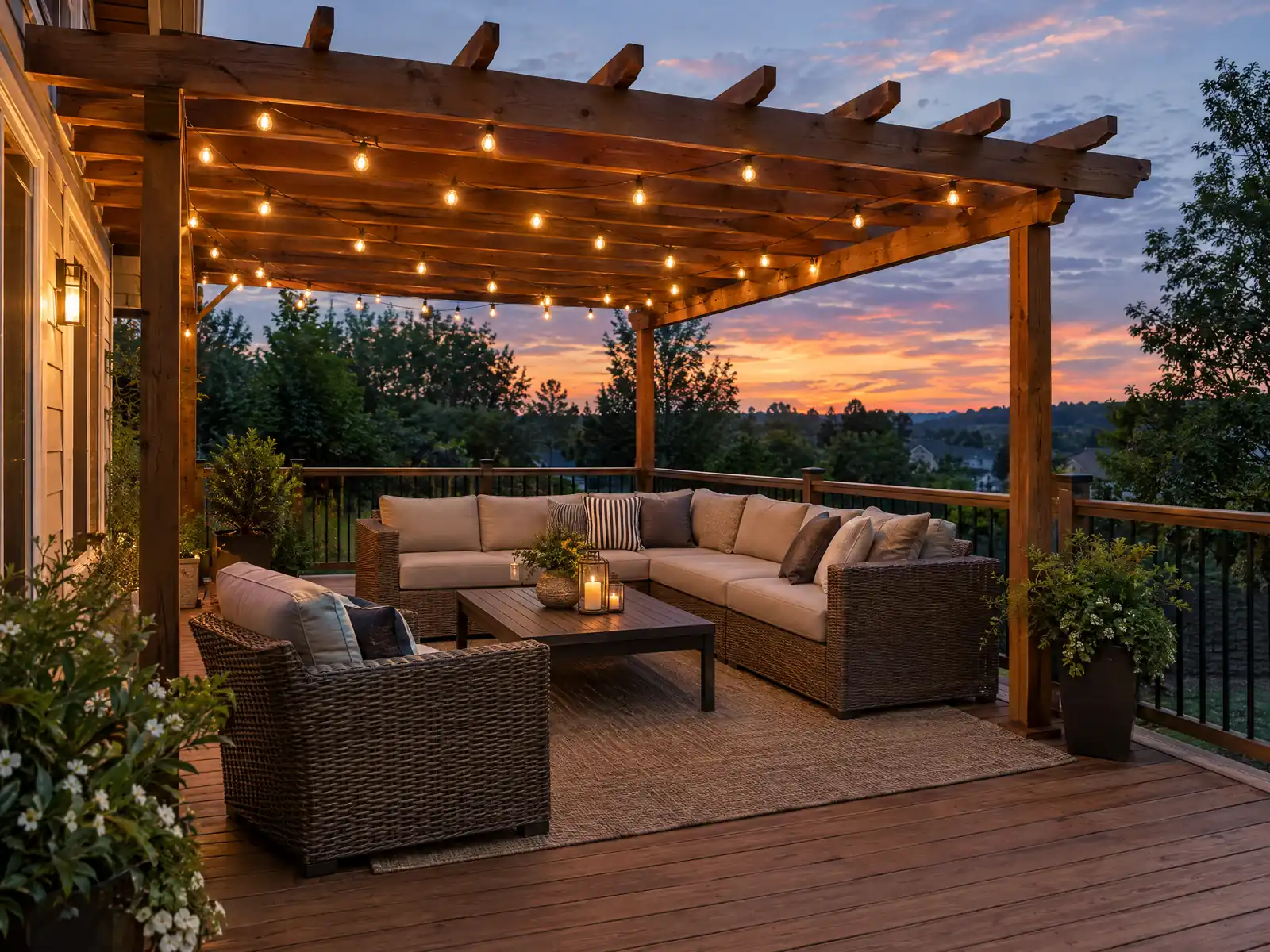
Santee grew up around its backyards. The City's history page says the town went from under 2,000 residents in 1950 to 25,750 in 1970, and the Census Bureau's 2020 to 2024 estimates count 11,700 of 21,851 homes, 53.5 percent, as built before 1980. Many of those lots back onto brush or slopes, so decks here sit closer to fire, soil and utility questions than decks in a flat coastal grid.
MDG Builders, CSLB #1040337, is a general contractor in Tarzana. We design the deck, submit the plans through Santee's Building Division and Padre Dam, and manage the licensed carpentry and finish subcontractors who build it. The deck page covers boards and framing, and the Santee overview lists the other trades we handle in the city.
What Santee's Building Division, Padre Dam, the zoning code and the wildfire amendments say about decks
Where decks permits come from in Santee: City of Santee Planning & Building Department, Building Division.
- The City lists decks and patio covers under Residential Alteration, and its exemption list has no deck item (the only accessory exemption is a one-story detached shed up to 120 square feet). SMC 11.06.010(B) adds an exemption for attached open residential patio covers up to 120 square feet of projected roof area attached to an R-3 occupancy. A raised deck or larger patio cover should be treated as permit work, with Padre Dam approval and possibly a soils report and structural engineering per the City's plan matrix.
- SMC 13.10.050(D) says uncovered decks, platforms and landings that do not extend above the first floor level and are not more than 32 inches above grade may project into a front or corner side yard up to 10 feet and into a rear or interior side yard up to the property line; where more than 32 inches above grade they must be at least 5 feet from all side property lines and 10 feet from the rear and front lines. A structure projecting over a slope and visible from a public street must have its underside enclosed or screened with landscaping.
- SMC 13.10.050(B) allows front yard and exterior side yard accessory structures such as covered patios, carports, pergolas and arbors up to 16 feet or the single-story roofline (whichever is lower), at most 170 square feet each and two in total, with a 10-foot front setback (5 feet for a carport over an existing driveway), 5-foot side setbacks, anchored and bolted with no weighted anchoring, and posts that do not block garage access.
- In the City's amendments to the Wildland-Urban Interface Code (SMC 11.17.020(L), section 603.5.7.1), Zone 0 is the area extending 5 feet from the exterior wall or from a patio, deck or attachment to the building and must be continuous hardscape or noncombustible material, with mulch and other combustible materials prohibited unless the code official approves; Zones 1 and 2 extend 50 feet each beyond that. Deck and patio materials and the planting next to them in Santee's brush-edge neighborhoods are therefore regulated.
- Santee's fire code amendment 307.4.3 says portable outdoor fireplaces must be operated at least 15 feet from combustible materials or structures and not under eaves, patio covers or other shade structures, may not be used during a red-flag warning or fire weather watch (307.4.4), and washing machine tub fireplaces are prohibited, which matters for outdoor living space design on decks and patios.
Does a Santee deck need Padre Dam approval and a soils report as well as a City permit?
Plan for all three. The City lists decks and patio covers under Residential Alteration, and its 2026 plan submittal checklist says a balcony, deck or patio cover may need a soils report and structural engineering and needs Padre Dam site plan approval, requested by emailing the site plan to development@padre.org.
Padre Dam's check is about easements. The district confirms that no structure sits in one of its easements and sends a stamped plot plan to the applicant and the City, and the City's guidance wants it in hand before the permit is submitted. Posts and footings go into the ground, so they are the part of a deck that can collide with an easement.
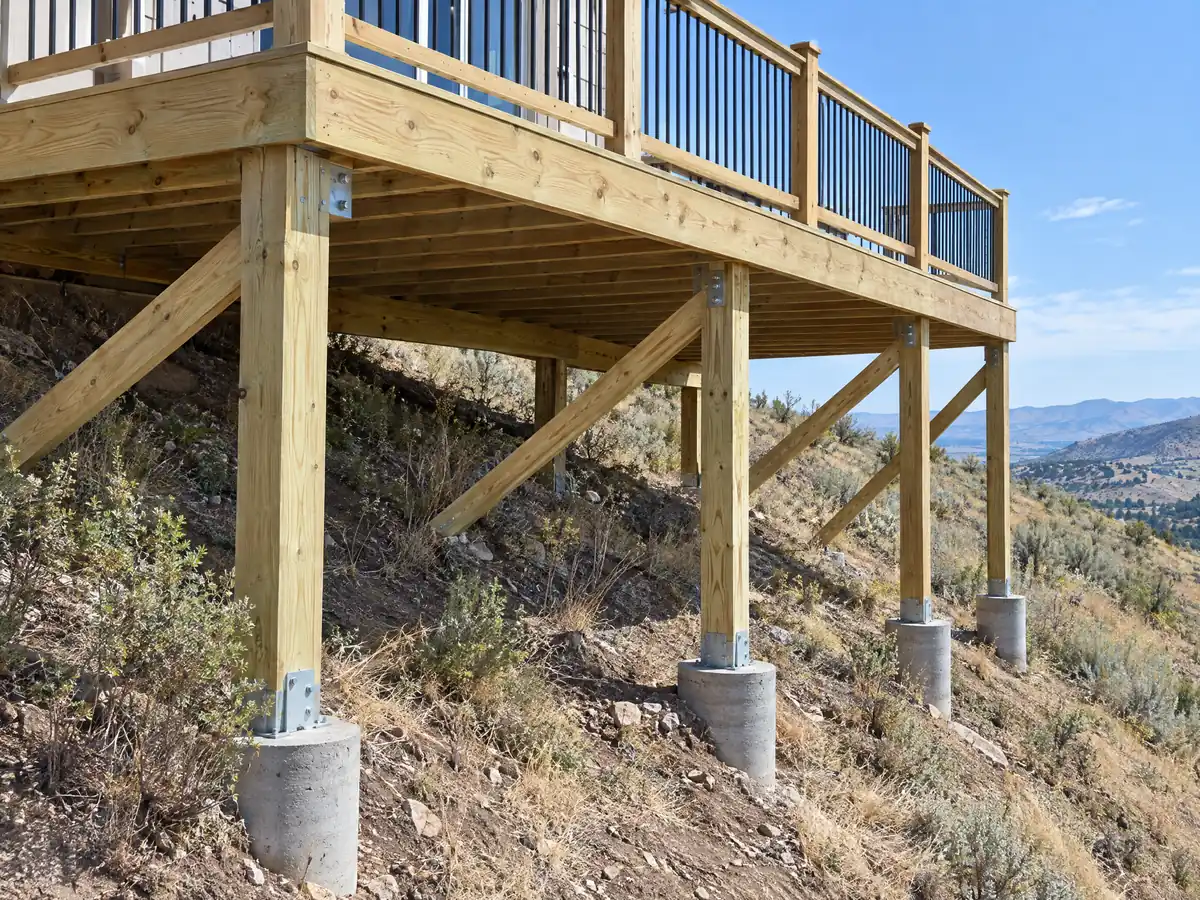
A soils report is the other trigger. Soils Types C and D on the City's map flag expansive soils or moderate to high landslide susceptibility, and hillside overlay lots add geologic or soils investigation and Fire Department review of access. The City's map shows which parcel is affected, and we verified no parcel list.
Do you need a permit for a deck in Santee, and how far can one reach into the yard?
Treat any raised deck as permit work. The City's exemption page has no deck item, its only accessory exemption is a one-story detached shed up to 120 square feet, and Santee's code amendments add attached open patio covers up to 120 square feet but nothing for decks. The model residential code exempts a detached deck of 200 square feet or less, under 30 inches and not serving the exit door, but we did not find that line on the City's list, so ask the Building Division at 619-258-4100, extension 154.
Zoning sets the reach. Municipal Code 13.10.050(D) lets an uncovered deck that stays at first floor level and no more than 32 inches above grade extend up to 10 feet into a front or corner side yard and up to the property line in a rear or interior side yard. Above 32 inches the deck must stay 5 feet from every side line and 10 feet from the rear and front lines.
Skipping the permit is costly. Santee's amendments, published on the third-party GoCodebook mirror, charge an investigation fee equal to the permit fee for work started without one and make a violation a misdemeanor with a fine up to $500 or up to six months in county jail.
How big can a patio cover or pergola over a Santee deck be?
An attached open patio cover up to 120 square feet of projected roof area attached to a house is exempt from a building permit under Santee's amendment to section 11.06.010(B). Anything larger is permit work, and the City's plan matrix adds Padre Dam approval and a possible soils report and structural engineering.
Front and exterior side yards have a separate cap. Section 13.10.050(B) allows covered patios, carports, pergolas and arbors there up to 16 feet or the single-story roofline, whichever is lower, at most 170 square feet each and two in total, with a 10 foot front setback, 5 foot side setbacks and anchoring that is bolted, with no weighted anchoring.
Elsewhere, section 13.10.050(A) lets accessory structures, including unenclosed patio covers, stand 5 feet from the rear and interior side lines at one story and 16 feet, and a wet bar or sink needs a recorded City deed restriction. Under the fire code amendment a portable fireplace may not run beneath a patio cover or any shade structure.
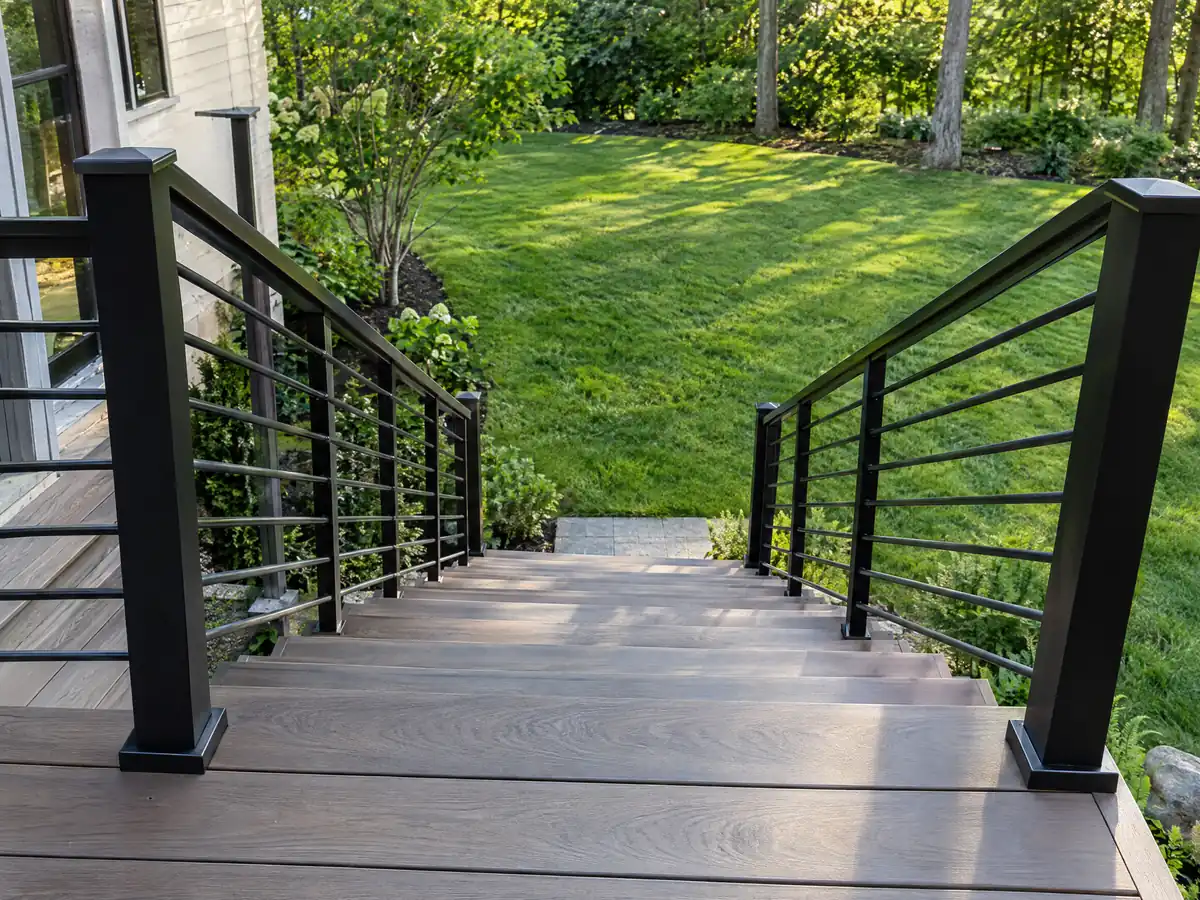
What does Santee's wildfire code mean for deck boards and the 5 feet beside the house?
Look up the address first. The City's fire hazard map for its Local Responsibility Area, dated March 24, 2025, has Very High, High and Moderate tiers with an address search. A Very High zone new building needs 100 feet of defensible space and ignition-resistant materials, and High zone new construction follows wildfire-resistant rules. We found no adopting ordinance and no street list for each tier.
The City's own pages disagree on the chapter: the wildfire page cites Chapter 5 of the Wildland-Urban Interface Code and the hazard zone page cites Chapter 7A of the Building Code. Treat that as a conflict and ask Fire Prevention which governs your deck. The 2022 residential code text we read lists allowed decking surfaces in these areas as tested, ignition-resistant, fire-retardant treated or noncombustible, and Santee has adopted the 2025 edition.
Zone 0 covers 5 feet from the wall or from a deck attached to the house, where the ground must be hardscape or noncombustible with no mulch. A UC Extension summary noted that some tested composites missed the ignition-resistant definition, so check any brand against the State Fire Marshal listing. The City's findings cite Santa Ana winds on brush-covered hillsides.
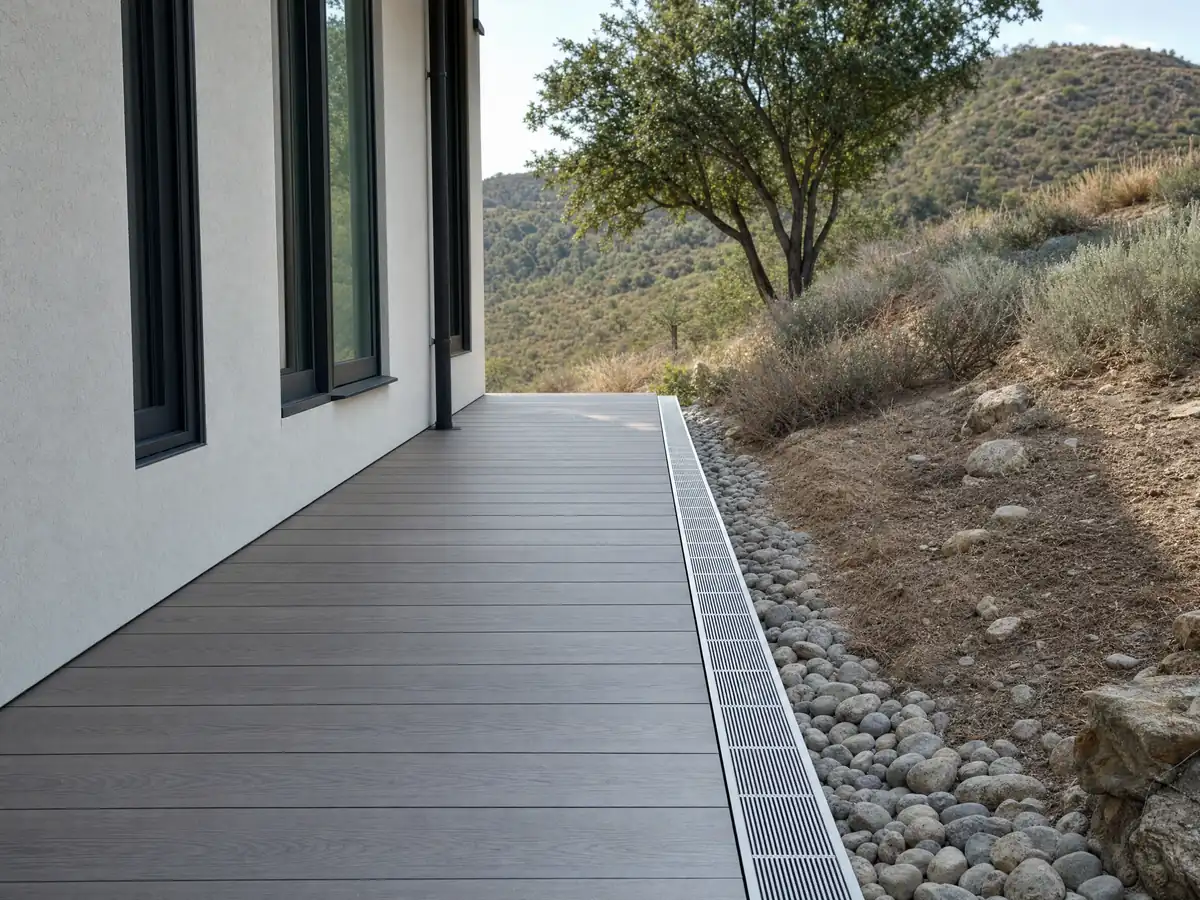
How tall must a Santee deck guard be, and which pool barrier rule applies beside a deck?
Forty-two inches. The residential code text we read requires a guard where the walking surface is more than 30 inches above grade within 36 inches of the edge (R312.1.1), sets the minimum at 42 inches (R312.1.2) and asks openings to stop a 4 inch sphere (R312.1.3). That is the 2022 edition, Santee adopted the 2025 one, and the Building Division can confirm any change.
Pool barriers are where Santee's own papers disagree. Municipal Code 11.32.050, from 2019, says openings must not pass a 4 inch sphere and bars sit no more than 2 inches apart, while the Building Division's handout of December 18, 2023 says no gap may pass a 1-3/4 inch sphere and chain link mesh may be no larger than 1-3/4 inch. We state it as a conflict and would build to the stricter handout unless the Division says otherwise.
Both documents call for a barrier at least 60 inches high, and the handout adds self-closing, self-latching gates and inspection before plastering or filling. Section 13.10.050(H) keeps pools and spas out of a required front yard and 3 feet from rear, side and corner side lines.
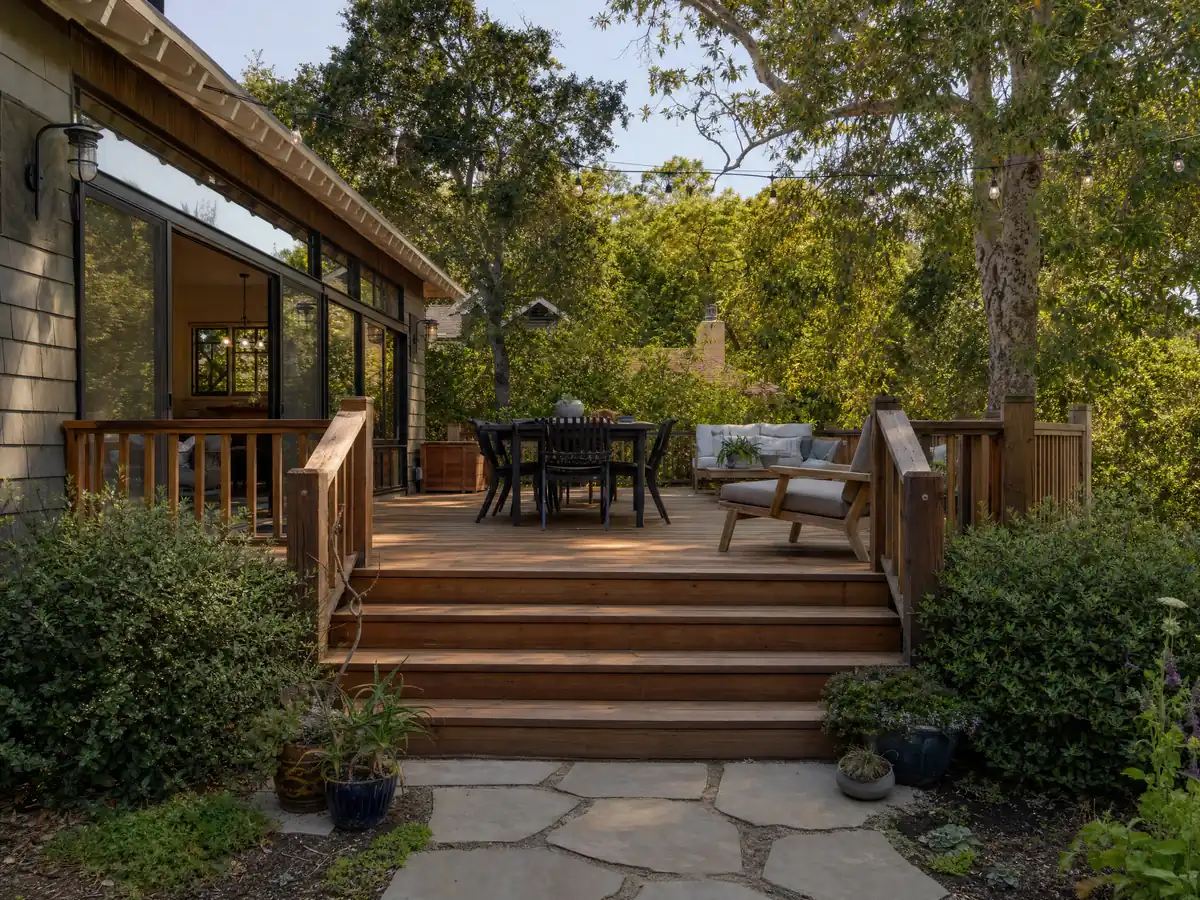
Do you need a permit for deck repair in Santee, and what goes wrong on 1970s decks?
Small like-for-like repair may not. Santee's amendments exempt repairs to component parts up to $750 in value when they change no construction, egress or permanent fixture, so swapping a few boards could qualify, though we did not find the City saying so. Replacing joists, posts, stairs or the ledger changes construction, so call the Building Division first.
The ledger is where a repair meets the code. The residential code text we read asks for a ledger of at least 2x8 pressure-treated lumber, no concentrated loads from beams on it and none on masonry veneer, hot-dipped galvanized or stainless fasteners, and flashing. It also asks for lateral hold-downs, two devices of 1,500 pounds within 24 inches of each end or four of 750 pounds (R507.9.2). A deck on one of Santee's 11,700 pre-1980 homes may predate those details.
UC Integrated Pest Management says drywood termites are most prevalent in Southern California and infest decks and fences, and recommends fixing moisture and sealing exterior wood. Probe the ledger and the post bases before pricing new boards, because a repair quote that skips them is a boards-only quote.
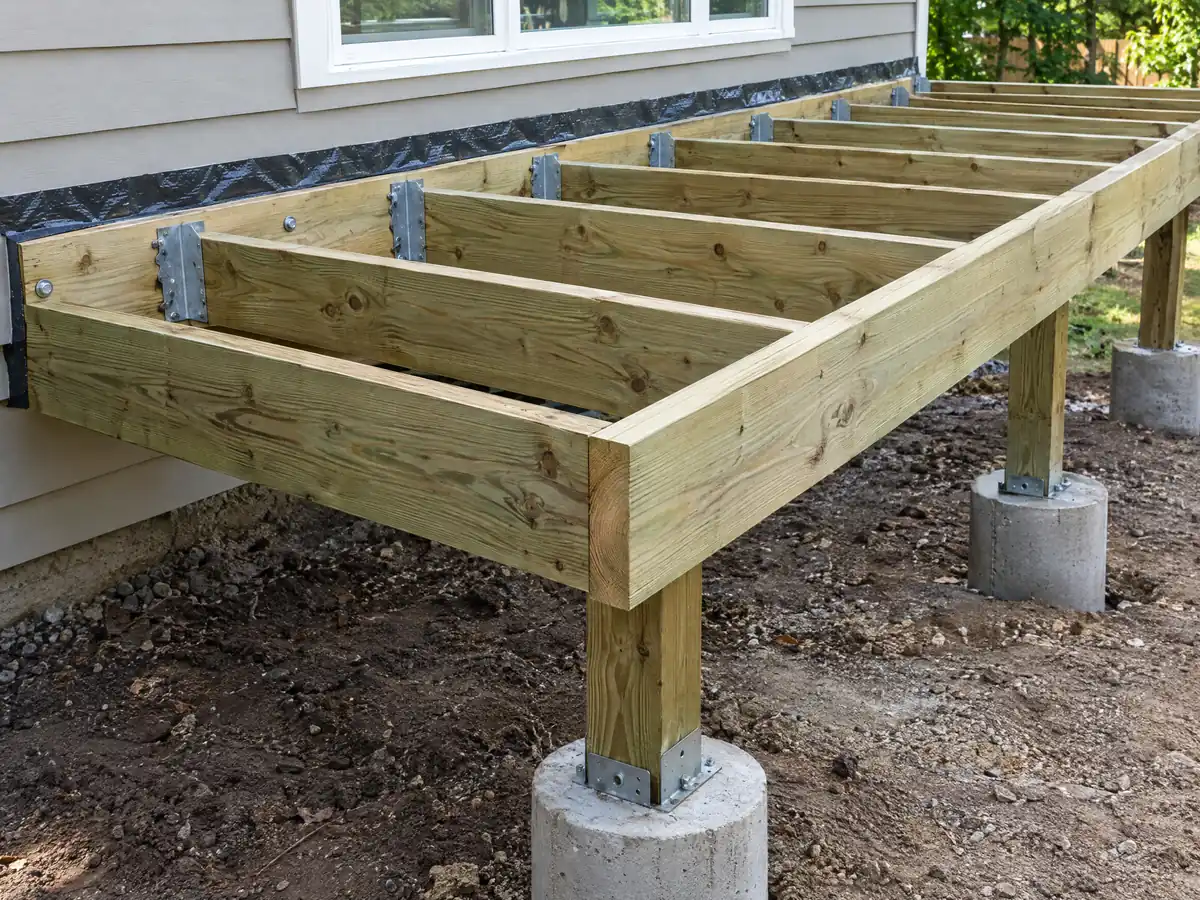
What does a deck builder charge in Santee, wood or composite?
No Santee price study turned up, so we start with the 2025 Cost vs. Value report for Los Angeles. Its test deck is 16 by 20 feet with treated posts and joists, a built-in bench and planter, three steps and full railing: wood cost $18,419 and resold for $18,341, recouping 99.6 percent, while composite cost $26,872 and recouped 73.9 percent. The report compares average costs for 28 projects across 119 markets.
Angi's Los Angeles page, updated October 28, 2025, shows an average of $13,570, a 16 by 20 range of $19,072 to $28,608 and permits at $500 to $3,000. Our planning figures for a standard flat-lot attached deck are $45 to $75 per square foot for pressure-treated wood, about $14,500 to $24,000 at 16 by 20, and $65 to $110 for composite, about $21,000 to $35,000, with permits and engineering extra.
Framing falls under CSLB's C-5 class, and we could not confirm which class covers composite surfacing, so ask each subcontractor. Padre Dam, the soils report and Santee's engineering belong on separate lines, and our subcontractor guide explains who builds what.
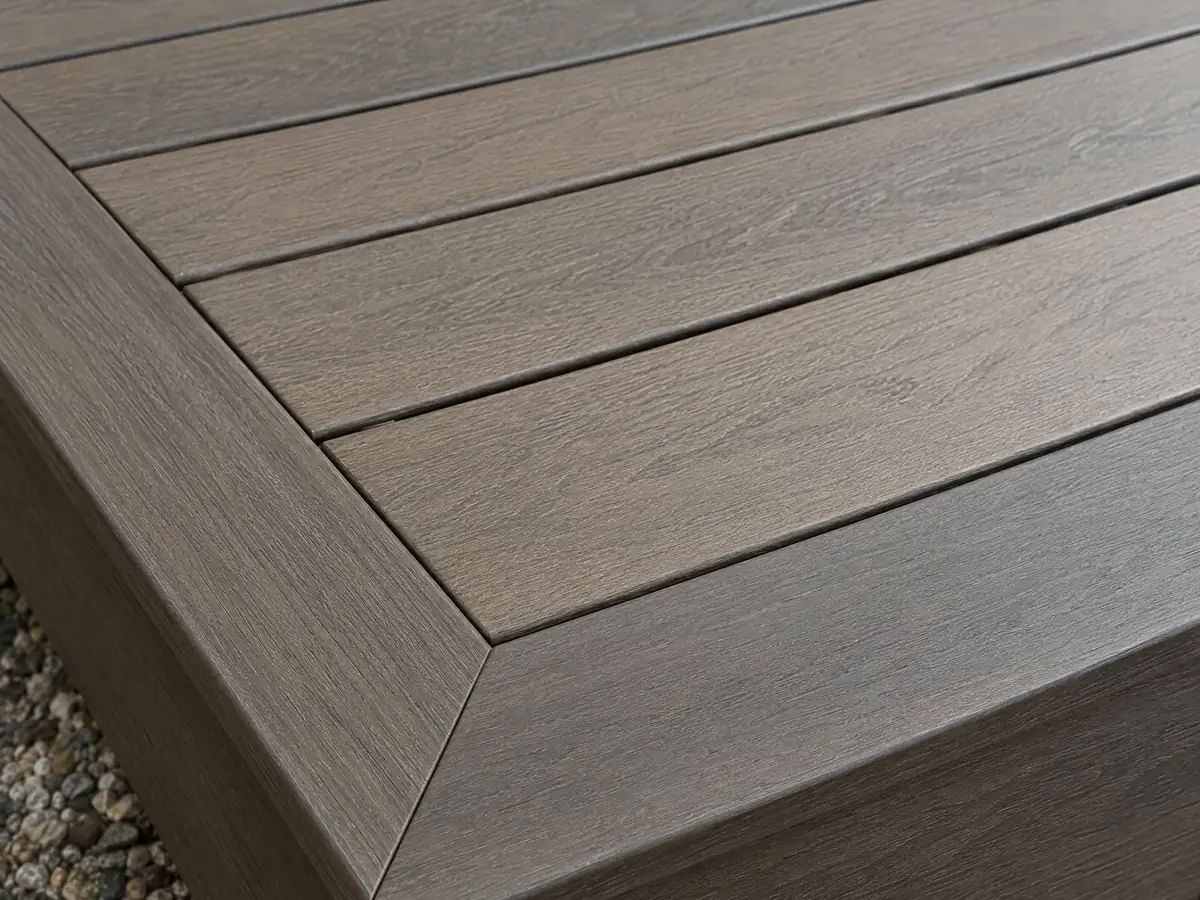
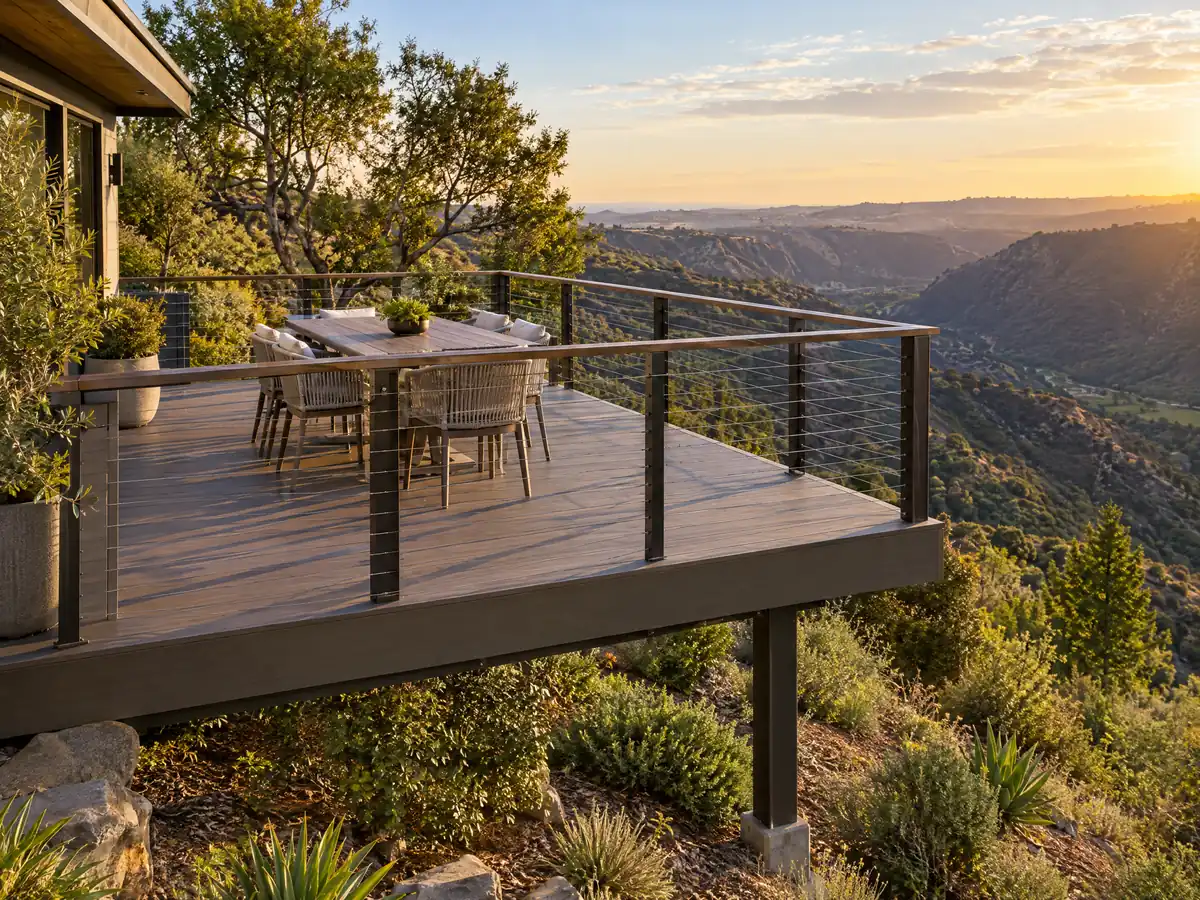
Deck photos from Santee and nearby communities
Footings, framing, fire-resistant boards, rails and finished decks from Santee and the East County towns around it, shown at the steps where the rules matter. Tap any photo to enlarge it.
What decks costs around Santee
These dollar figures are Los Angeles planning ranges from our deck page, not a Santee bid, and the proposal should price footings, permits, engineering and fire-rated boards on their own lines. The same yard may need concrete in Santee or flooring in Santee. For comparison, read decks in El Cajon next door, decks in San Diego and decks in Los Angeles as the benchmark city. Our license check guide shows how to verify a CSLB record before a contract is signed.
| What it covers | Typical range |
|---|---|
| Pressure-treated wood deck | $45 to $75 per square foot |
| Composite deck | $65 to $110 per square foot |
| 16 by 20 foot wood deck (320 sq ft) | About $14,500 to $24,000 |
| 16 by 20 foot composite deck | About $21,000 to $35,000 |
| Hillside, second-story, rooftop and ipe decks | Priced by site visit |
| Permits and engineering | Quoted as separate lines |
Santee deck questions, answered
Can I build a deck without a permit in California?
Only a small detached deck, under the model code, and Santee's exemption list does not repeat that line. Treat any attached or raised deck in Santee as permit work and add Padre Dam's easement check. The City lists decks under Residential Alteration, so call the Building Division at 619-258-4100, extension 154, and describe the size, height and distance from the house.
What is the largest deck without a permit?
The model residential code names a detached deck of 200 square feet or less, under 30 inches above grade and not serving the exit door, but we did not find that line on Santee's list. The City's own exemptions cover an attached open patio cover and a detached shed, each up to 120 square feet. Ask before building.
What happens if a deck is built without a permit?
In Santee the amended code charges an investigation fee equal to the permit fee and makes a violation a misdemeanor, with a fine up to $500 or up to six months in county jail. Permit the work first and avoid the fee.
Can I get a permit after work is done?
Possibly, but the cost is higher and the outcome uncertain. Santee charges an investigation fee equal to the permit fee for work started without a permit, and we did not read the City's process for approving finished work. An inspector may need footings or the ledger exposed, so ask the Building Division before you assume anything.
Do I need Padre Dam approval to build a deck in Santee?
Yes, the City's 2026 plan submittal checklist says a balcony, deck or patio cover needs Padre Dam site plan approval. Email the site plan to development@padre.org and request an Easement Check, then wait for the stamped plot plan. The district checks that no structure sits in one of its easements before the City permit goes in.
Is railing height 36 or 42 for decks?
Forty-two inches is the residential code minimum for guards, with openings that stop a 4 inch sphere. We read the 2022 edition, and Santee adopted the 2025 one, so confirm with the Building Division. A guard is required where the surface is more than 30 inches above grade.
How high can a deck be without a railing in California?
Up to 30 inches above grade within 36 inches of the edge, under the residential code text we read (R312.1.1). Above that a guard at least 42 inches high is required. A deck at 32 inches also changes Santee's setback rules, because decks over 32 inches must stay 5 feet from side lines and 10 feet from rear and front lines.
How much should a 16x20 deck cost?
Our planning range for a standard flat-lot attached deck is about $14,500 to $24,000 in pressure-treated wood and $21,000 to $35,000 in composite, before permits and engineering. The 2025 Cost vs. Value report for Los Angeles shows $18,419 for wood and $26,872 for composite on its test deck. Neither is a Santee bid.
Is it cheaper to build a wood deck or composite deck?
Wood is cheaper up front: the 2025 Cost vs. Value report for Los Angeles puts a 16 by 20 wood deck at $18,419 and the same deck in composite at $26,872. In a Santee fire zone the boards must also meet ignition-resistant rules, so either material needs a check against those rules.
Do you need a permit for deck repair in Santee?
Small like-for-like repairs up to $750 that change no construction may be exempt under Santee's amendments, though the City does not say so for decks. Replacing joists, posts, stairs or the ledger is structural and should be treated as permit work. Call the Building Division with a photo and a description before ordering lumber.
Tell us the lot, the deck size and how high it will sit
Say whether the lot backs onto brush or a slope, how big and how high the deck will be and whether you want a cover or a repair. The Padre Dam, soils report and fire zone questions come with us to the first visit.