
Roof Repairin Santee, CA
Roof repair in Santee starts with a question the City's own documents answer two ways: its re-roof form asks for a Class A listing and a cool roof before a permit, yet the municipal code lists roof covering renewal as exempt. Ask the Building Division which applies to your roof, then ask Fire Prevention about your zone.
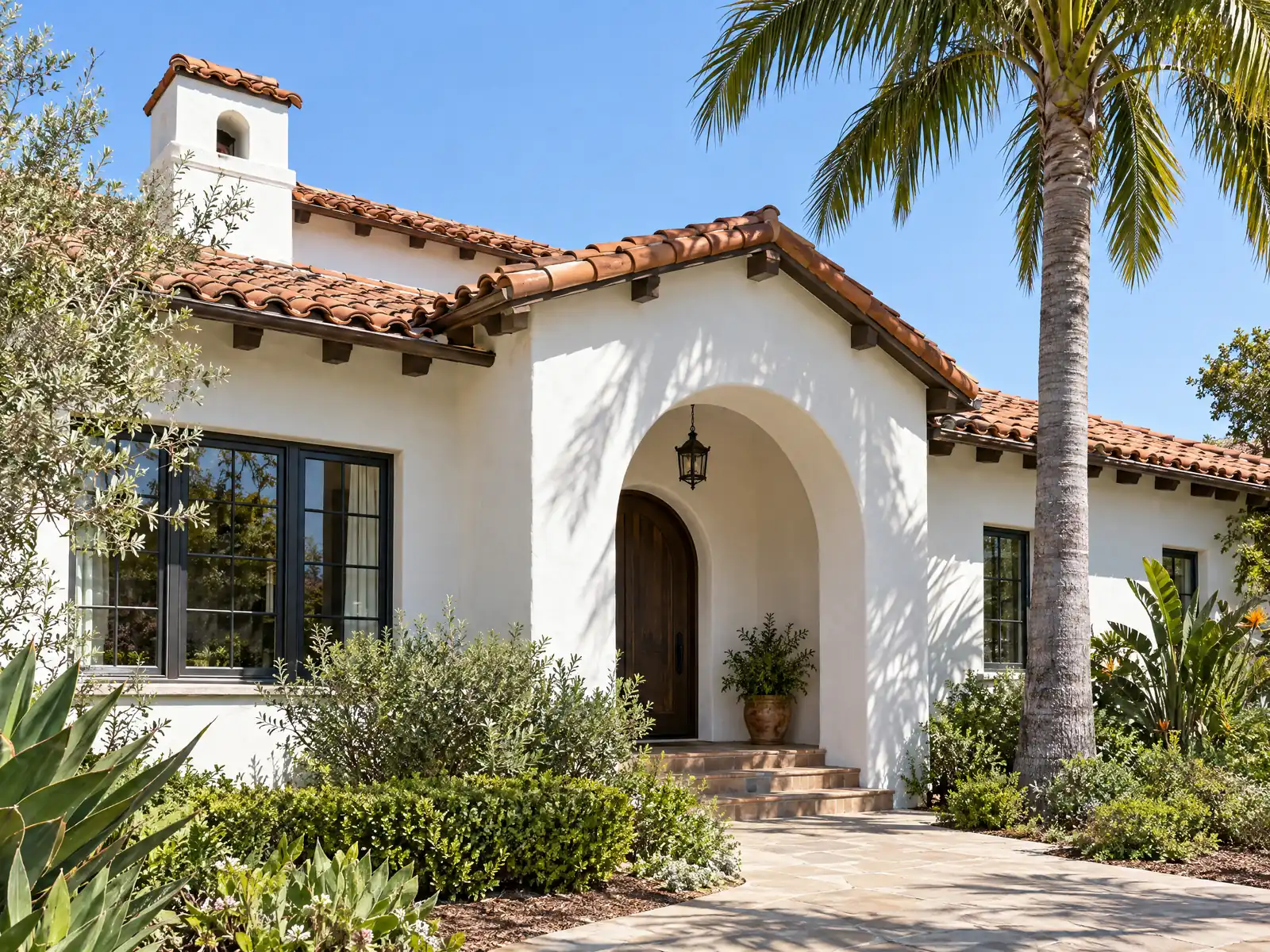
Most Santee roofs belong to one burst of building. The City's history page, drawn from the Santee Historical Society, says a development firm bought 4,300 more acres of Fanita Ranch in 1958 and that the population grew from under 2,000 in 1950 to 25,750 in 1970. The Census Bureau's ACS 2024 five-year estimates for 2020 to 2024 count 21,851 housing units: about 34 percent date from the 1970s, 19.7 percent from the 1980s, 53.5 percent were built before 1980 and roughly 19 percent came after 2000. A city this size has no one-year table and the counts carry margins of error, so treat them as approximate.
On a re-roof, MDG Builders (CSLB #1040337) is the general contractor that writes the scope, handles the City paperwork and keeps the calendar, while a licensed C-39 roofing subcontractor does the tear-off and the installation. Our roofing page holds the sourced prices and the Santee overview lists every trade we manage here. Santee runs its own permit counter, so the guides for El Cajon and San Diego describe different forms. Start with the City's Building Division page. Its official code host refused our tools, so code text below comes from GoCodebook, a third-party mirror dated October 4, 2026. Confirm anything you rely on with the City.
What Santee's re-roof form, municipal code and fire pages say about roofs
Where roofing permits come from in Santee: City of Santee Planning & Building Department, Building Division.
- Santee's permit page lists reroofs under Residential Alteration (and under Commercial Alteration), and the City publishes a Re-Roofing Information Sheet and Application (revision date 3/12/26) that must be provided 'for city review and approval prior to issuing a building permit' for a steep-slope (2:12 or greater) re-roof of an existing single family residence, with a copy of the listing for a Class 'A' roof assembly attached.
- The re-roof application says the City of Santee is in climate zone 10 and that single-family steep-slope roofs there need a cool roof with minimum aged solar reflectance of 0.20 and thermal emittance of 0.75 (or an SRI of 16), certified by the Cool Roof Rating Council (CRRC), unless an exemption applies: less than 50 percent of the roof area replaced, R-38 insulation, a radiant barrier in the attic, no ducts in the attic, at least R-2 insulation above the deck, integrated photovoltaic panels, or thermal mass of at least 25 pounds per square foot over the membrane.
- The same application asks whether the building is in a High or Very High Fire Hazard Severity Zone and notes that altering roof sheathing requires valley flashing, altering rain gutters requires gutter screens, and altering the venting system requires vents that meet section 504.2.2 of the Wildland Urban Interface Code. It also asks whether there is more than one existing roof and whether the existing structure can carry the weight of the new roof.
- Santee's own code does not read the same as its re-roof form. SMC Chapter 11.06 (as published by GoCodebook, citing Ordinance 629 of Dec 10, 2025) amends R105.2 to add 'Renewal of roof coverings on any buildings' to the work exempt from permit, and Chapter 11.04 adds the same item for the Building Code, while the City's permit page lists reroofs as a permit type and its re-roof form precedes issuing a building permit. Do not tell an owner flatly that a Santee re-roof needs or does not need a permit: ask the Building Division (619-258-4100 ext. 154 or 155) which applies to the specific roof.
- SMC R902.1.2 (Ord. 629) says that outside fire hazard severity zones and the WUI, the entire roof covering of a structure where more than 50 percent of the roof area is replaced within any one-year period, of every new structure, and any roof covering applied in the alteration, repair or replacement of an existing roof, must be at least Class B fire classification. SMC 11.04.040 also amends Table 1505.1 of the Building Code, and the table entries all read B.
- SMC 11.04.020 states the City Council's finding that Santee 'has many large, brush-covered hillsides' and is 'subject to frequent Santa Ana conditions consisting of dry gusting winds', which justify more fire-retardant roof coverings than the state code; SMC 11.04.030(H) adds that wood shingle or shake re-roofing or repair that exceeds 25 percent of the projected roof area in any 12 months must be a minimum Class B assembly.
- Santee's Roof Covering Installation Certificate must be completed by the roofing contractor (manufacturer, listing agency and approval number, roof slope, fire-retardant rating, aged solar reflectance, thermal emittance and SRI) and posted with the Inspection Record Card before the final inspection, certifying the roof complies with the approved plans and manufacturer's installation requirements.
- The City's wildfire page says that in a Very High Fire Hazard Severity Zone new buildings need at least 100 feet of defensible space and ignition-resistant materials, that High zone construction also follows wildfire-resistant rules while defensible space is not currently required by code, that Moderate zone has no additional wildland-urban interface requirements, and that sellers in Very High and High zones must give a Natural Hazard Disclosure Report and have a vegetation management inspection by the fire department.

Does a re-roof need a permit in Santee when the City's form and its code disagree?
Nobody can promise you either answer without asking, and we say so plainly. The City's permit page lists reroofs under Residential Alteration, and its Re-Roofing Information Sheet and Application, revised March 12, 2026, must go to the City for review and approval before a permit is issued for a steep-slope re-roof of an existing single family house. The municipal code reads differently. Chapters 11.04 and 11.06, as the mirror shows them after Ordinance 629 of December 10, 2025, add renewal of roof coverings on any building to the list of work that needs no permit.
We cannot reconcile those two documents, and we will not guess for you. Call the Building Division at 619-258-4100, extension 154 or 155, describe the roof and ask in writing which path applies. All submittals go through the Santee Permitting and Licensing Portal, paper plans are not accepted and the City says it offers no expedited review, so a paid fast track is not an option. A re-roof will almost always cost more than the state's $1,000 limit on unlicensed work, so hire a licensed contractor either way.
Ask the Building Division to confirm in writing whether your roof needs the form and a permit.
Does Santee require a Class A roof, or is Class B enough?
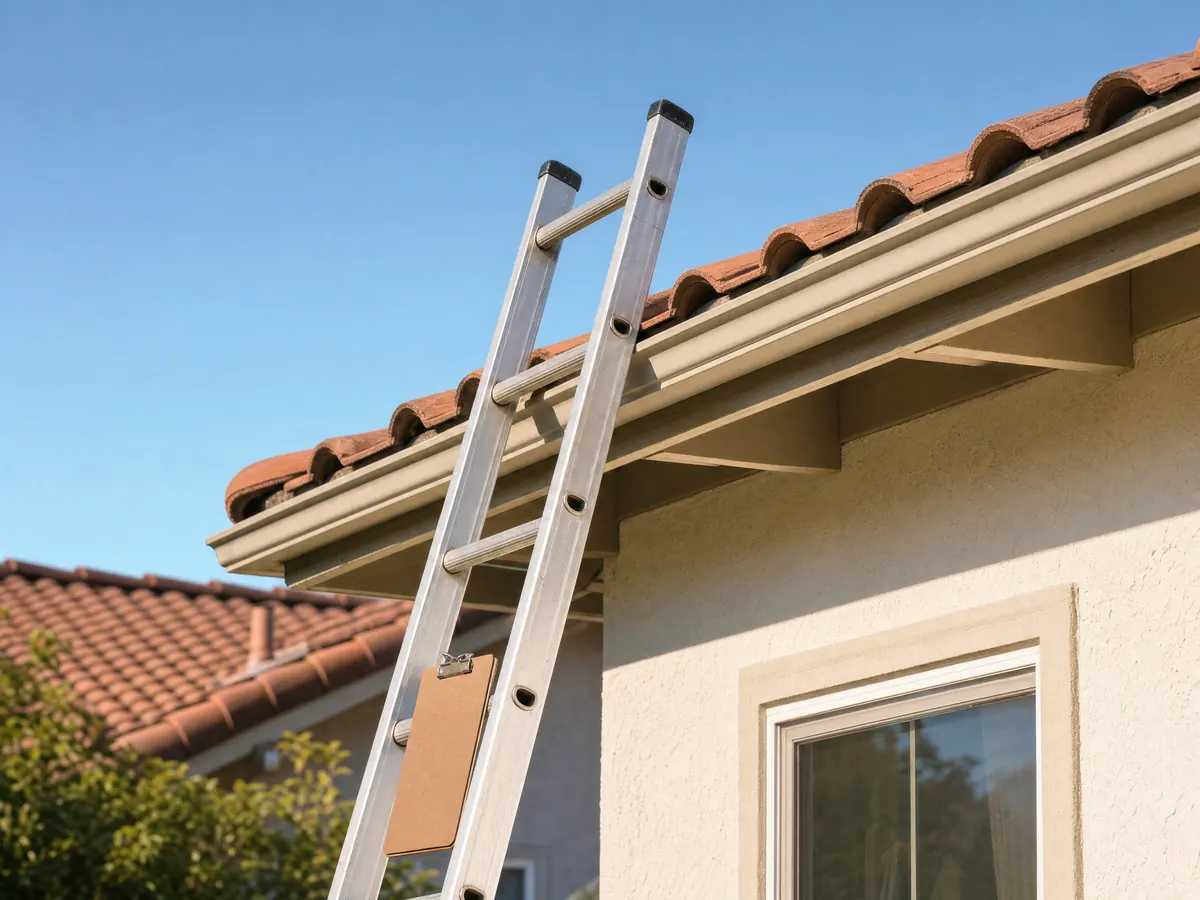
The City's documents set two different bars. The re-roof application asks you to attach the listing for a Class A roof assembly. The code, in section R902.1.2, sets Class B as the minimum outside fire hazard severity zones for any covering applied in an alteration, repair or replacement, for every new structure and for any roof where more than 50 percent is replaced in a year, and the amended Table 1505.1 reads B in every row.
Section 11.04.030(H) adds a separate 25 percent trigger: re-roofing or repairing a wood shingle or shake roof beyond 25 percent of its projected area in 12 months must be at least a Class B assembly. The City Council's findings in section 11.04.020 explain why Santee goes beyond the state code, citing large brush-covered hillsides and frequent dry, gusting Santa Ana winds. We cannot tell you which bar controls your address. A Class A assembly clears a Class B minimum, so ask the roofer to price a listed Class A product and to hand you the listing sheet.
Keep the product listing sheet with your contract and give a copy to the inspector.
Is my Santee house in a fire hazard severity zone, and does it change the roof?
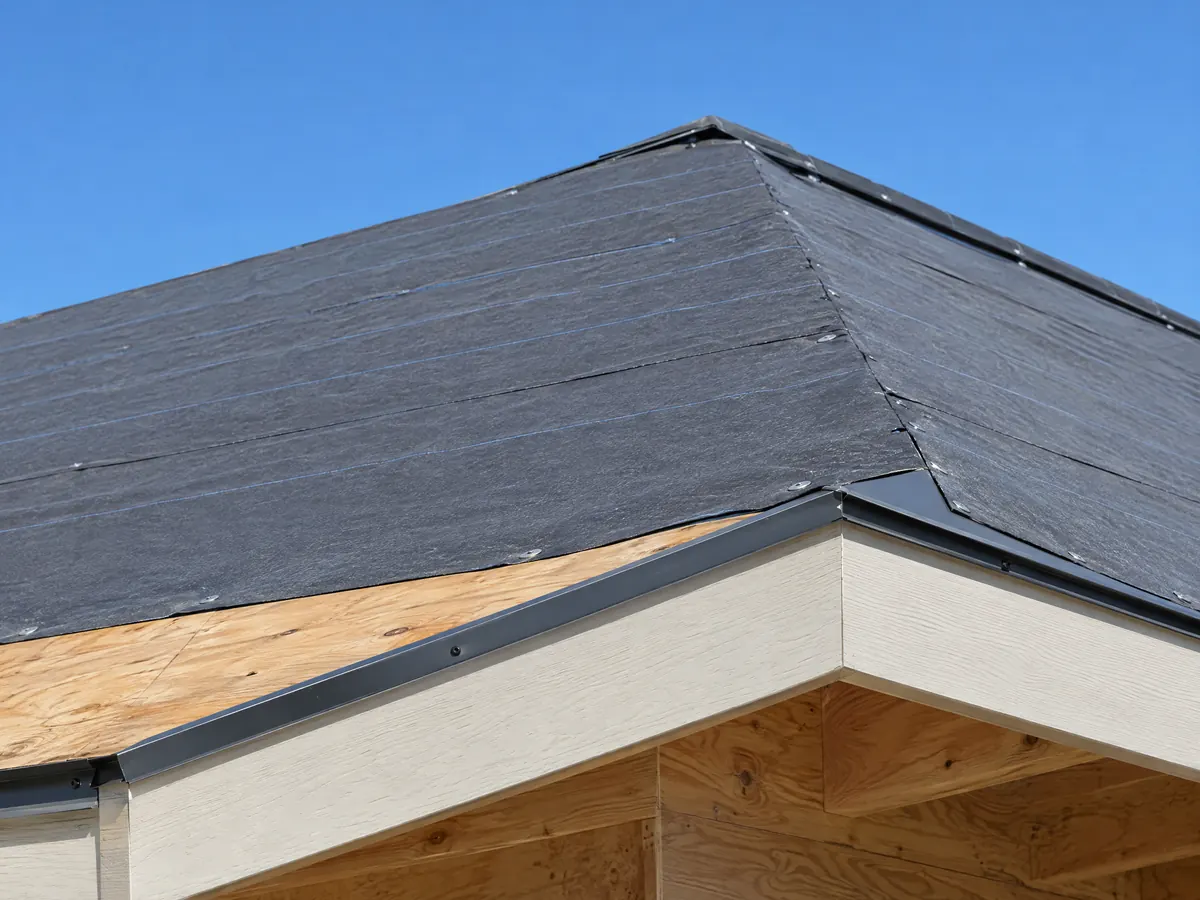
Possibly, and the City has to answer for your parcel. Its Fire Hazard Severity Zones page links an address search and a Local Responsibility Area map dated March 24, 2025, with three tiers: Very High, High and Moderate. New buildings in a Very High zone need 100 feet of defensible space and ignition-resistant materials, High zone construction follows wildfire-resistant rules, and the Moderate tier adds no wildland-urban interface requirements. Sellers in Very High and High zones owe a Natural Hazard Disclosure Report and a fire department vegetation inspection.
We could not find the ordinance that adopted this map or any list of streets in each tier, so we name no neighborhood. The City's two pages also cite different chapters for the construction rules, Chapter 5 of the Wildland-Urban Interface Code on one and Chapter 7A on the other, so ask Fire Prevention which governs a re-roof. The re-roof application asks whether the house sits in a High or Very High zone and says altering sheathing calls for valley flashing, altering gutters calls for gutter screens and altering vents calls for vents that meet section 504.2.2 of the Wildland-Urban Interface Code.
Run the City's address lookup before you compare quotes, and put the result on the proposal.
What is the cool roof rule for a Santee re-roof?
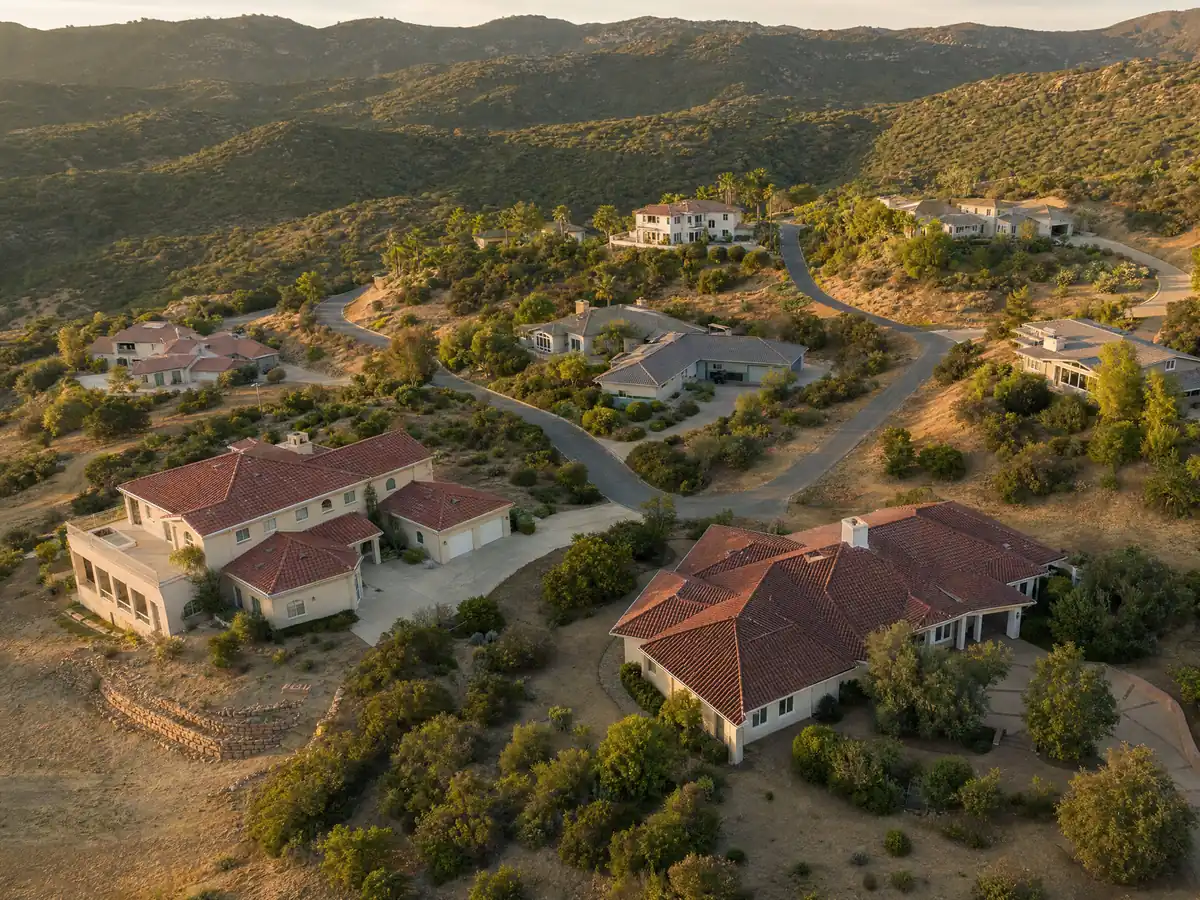
The City's form puts Santee in California climate zone 10 and says a steep-slope single-family roof there needs a cool roof certified by the Cool Roof Rating Council. The numbers are an aged solar reflectance of at least 0.20 and a thermal emittance of at least 0.75, or a solar reflectance index of 16. Dark shingles that miss those numbers are the usual reason a quote has to change.
The form lists exemptions: replacing less than 50 percent of the roof area, R-38 insulation, a radiant barrier in the attic, no ducts in the attic, at least R-2 insulation above the deck, integrated photovoltaic panels, or at least 25 pounds per square foot of thermal mass over the membrane. A City permit page also lists solar systems and batteries as their own permit type, and SolarAPP+ handles simple roof-mounted panels. If panels will come off for the new roof, ask who removes and resets them and whether that is on the proposal.
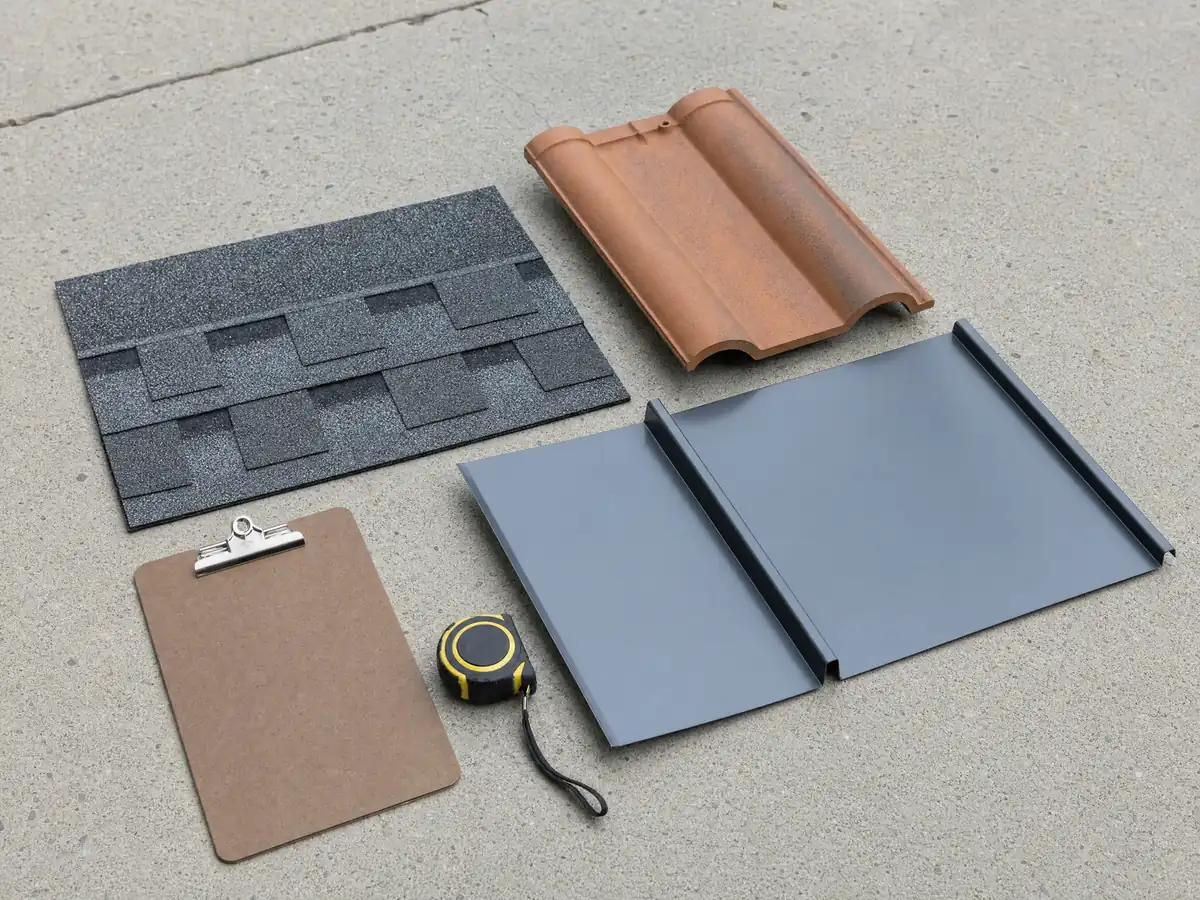
What is the Roof Covering Installation Certificate, and who fills it out?
The roofing contractor completes it, and it has to be posted with the inspection record card before the final inspection. The form asks for the manufacturer, the listing agency and approval number, the roof slope, the fire-retardant rating, the aged solar reflectance, the thermal emittance and the solar reflectance index. By signing, the contractor certifies that the roof matches the approved plans and the maker's installation instructions.
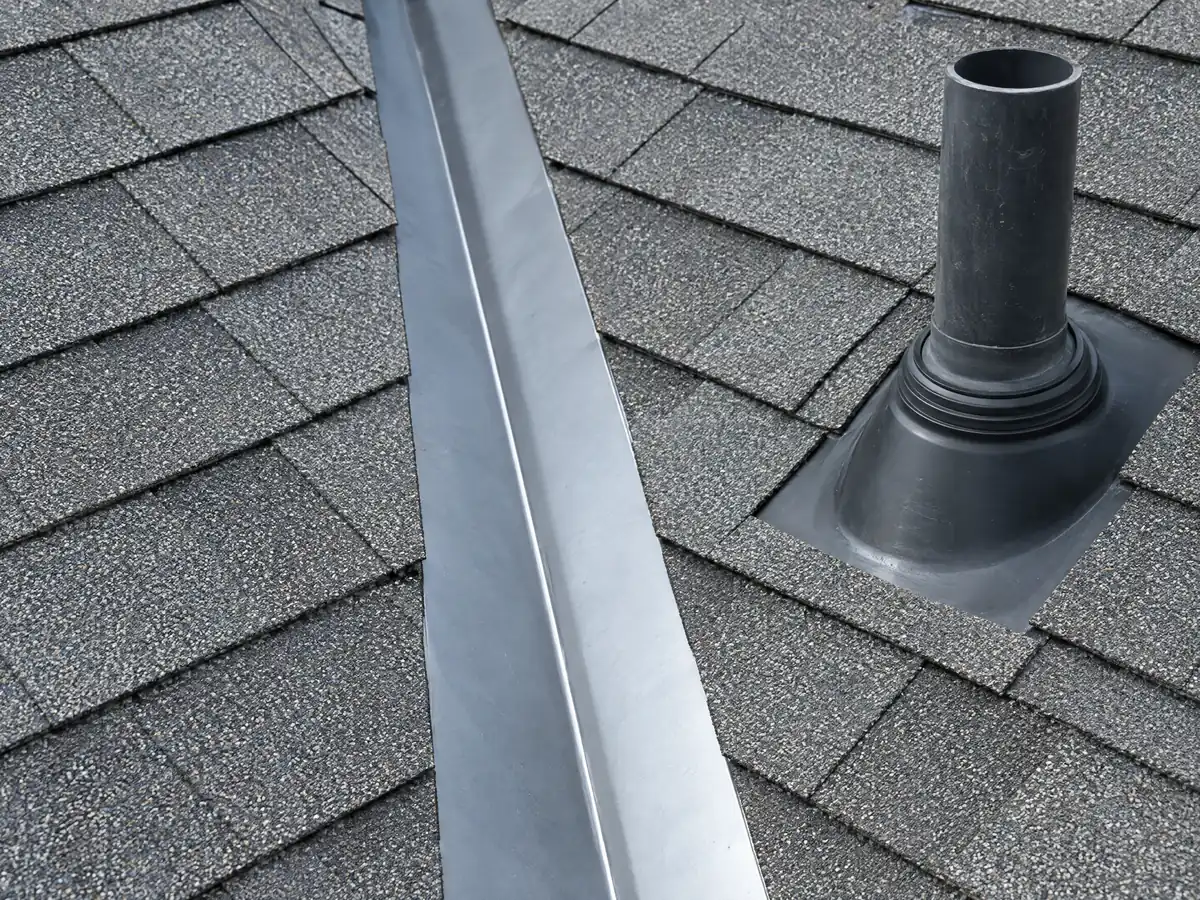
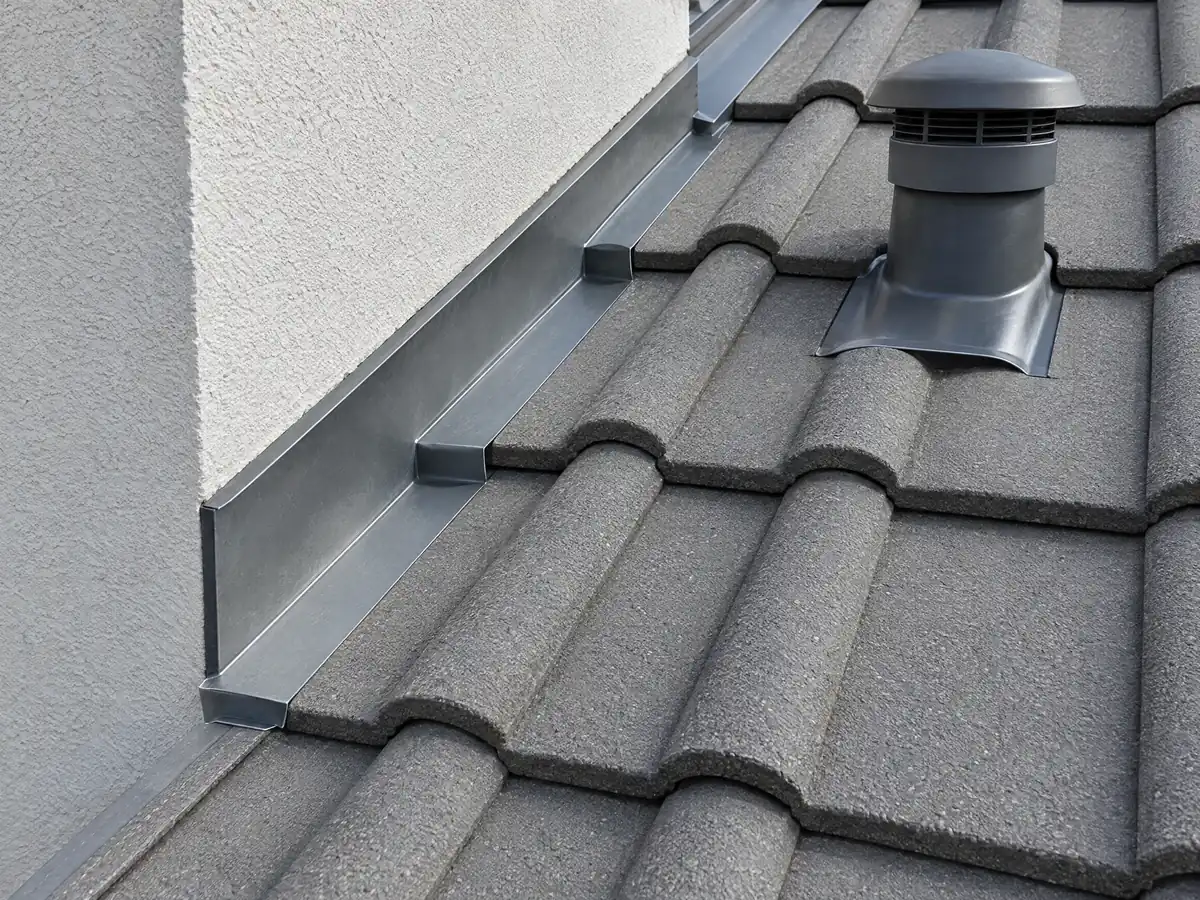
The re-roof application raises two more checks. It asks whether the house already carries more than one roof layer and whether the existing structure can support the weight of a new covering. Valleys, walls and vents are where most leaks begin, so read the proposal for the underlayment, the flashing metal and the name of the person who signs the certificate.
- Manufacturer, listing agency and approval number
- Roof slope and fire-retardant rating
- Aged solar reflectance, thermal emittance and index
- Contractor signature before the final inspection
How old are Santee roofs, and what about mobile home and low-slope roofs?
A house finished in the 1970s has either had its roof replaced at least once or carries a covering far older than any shingle warranty, and over half of Santee's units predate 1980. The City cites the 2003 Cedar Fire on its wildfire page, and the nearest long-record weather station, in El Cajon, averages 56.8 days a year at 90 F or higher and 6.9 at 100 F, with 11.63 inches of rain, 8.68 of it from December through March. Sun, more than rain, wears out roofs here.
About 9.2 percent of units, 2,014 homes, are mobile homes, and the City's 2011 list names 12 parks with 2,302 spaces. The re-roof form speaks to steep roofs of 2:12 or greater on existing single family houses, so whether it applies to a low-slope or mobile home roof is a question for the Building Division. Park rules and the City's Manufactured Home Fair Practices Commission framework come first.
Ask the park office about its roofing rules before a mobile home roof is quoted.
How much does roof replacement cost in Santee, and how do I compare quotes?
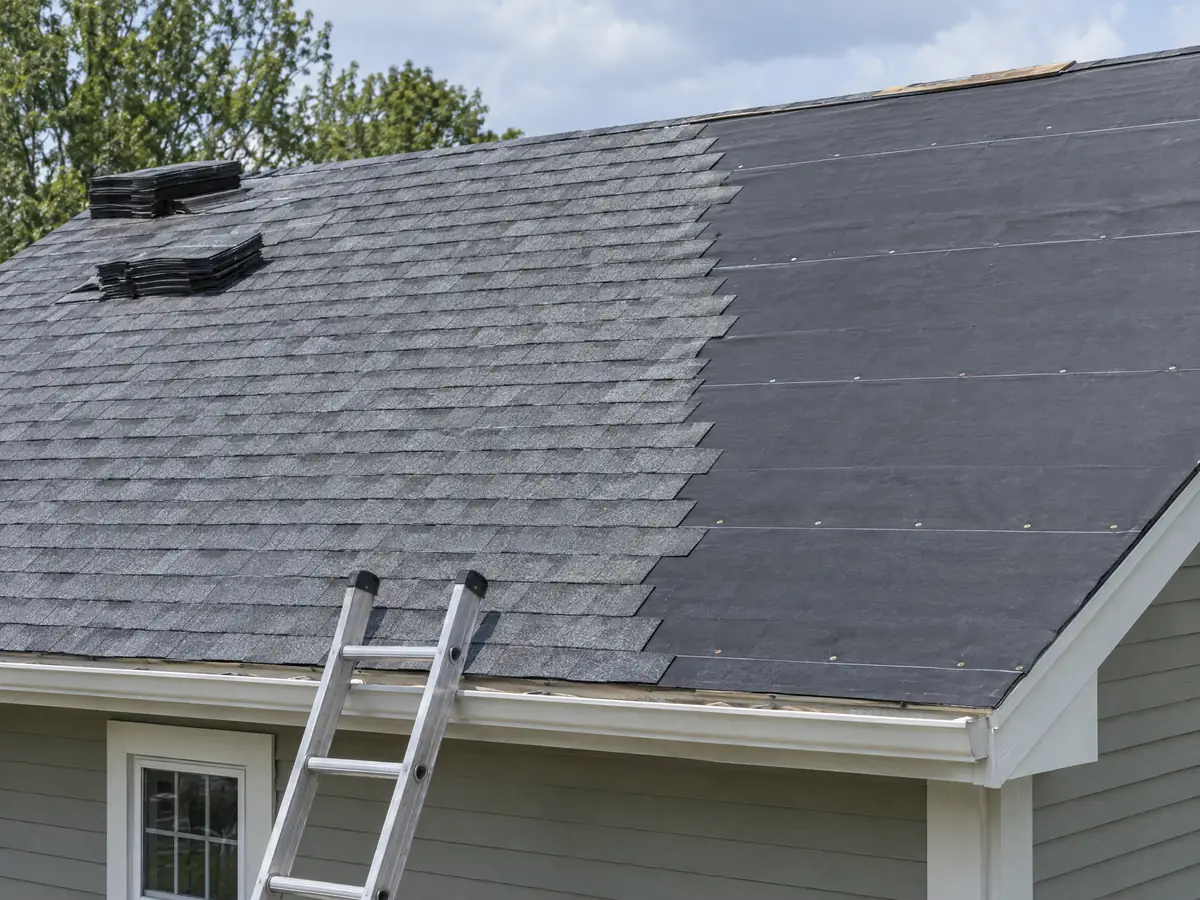
We found no Santee price survey, so the numbers come from Los Angeles and a San Diego County bid may differ. Angi's Los Angeles guide, updated July 31, 2026, shows asphalt at $4 to $12 a square foot, tile at $7 to $15 and metal at $7 to $16, with tear-off at $1,000 to $3,000 and panel removal and reset at $500 to $1,000. Remodeling magazine's Cost vs. Value 2025 report priced an asphalt replacement at $36,417 and metal at $62,069 on its fixed reference roof, which explains why the surveys disagree. Our planning ranges are about $10,000 to $25,000 for asphalt, $15,000 to $37,000 for tile and from $20,000 up for metal.
Compare proposals line by line: area measured, tear-off, decking repair as a priced extra, underlayment, flashing, the Class A listing, the cool roof product and cleanup. California Business and Professions Code 7159 caps a down payment at $1,000 or 10 percent of the price, whichever is less. Our California roofing cost guide explains the survey gaps and the contractor license guide shows how to look up a C-39 license.
Roofing photos from Santee and nearby communities
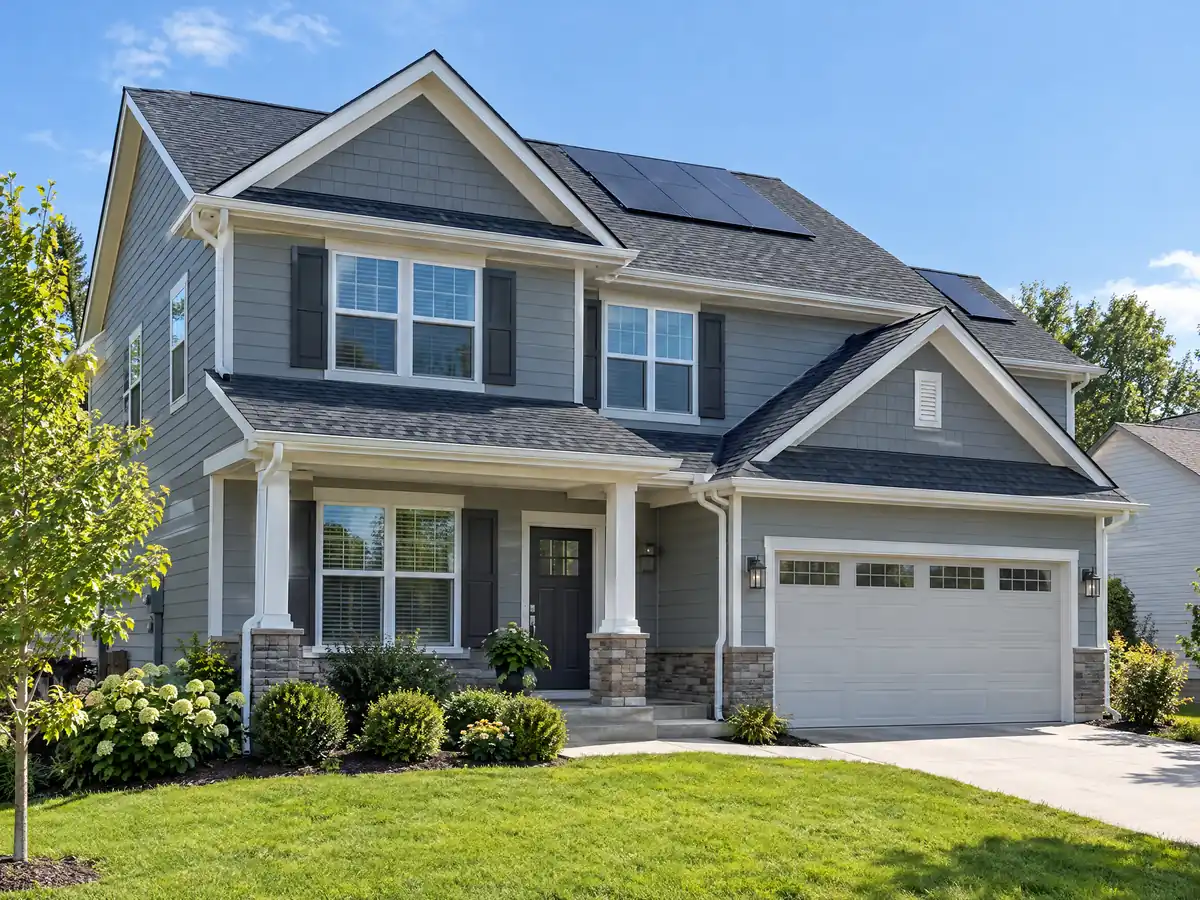
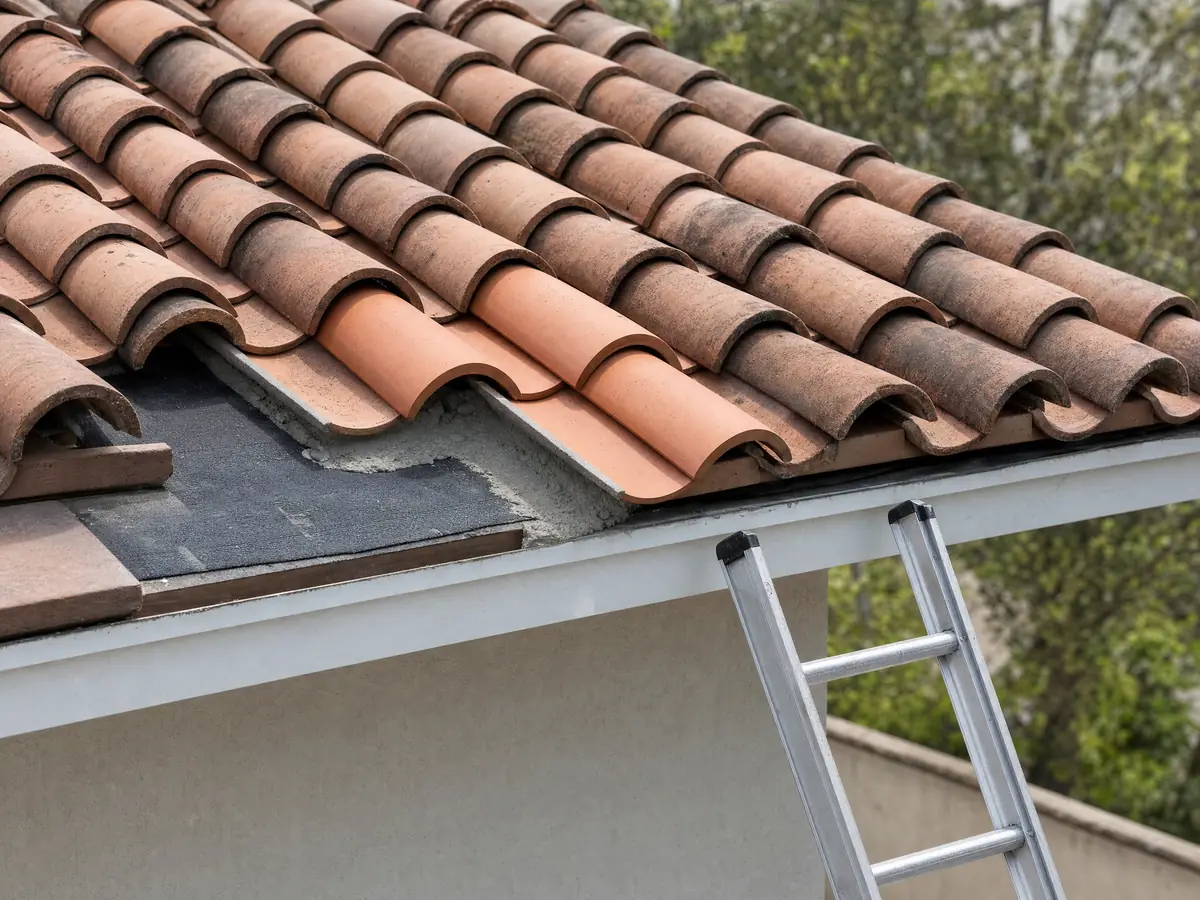
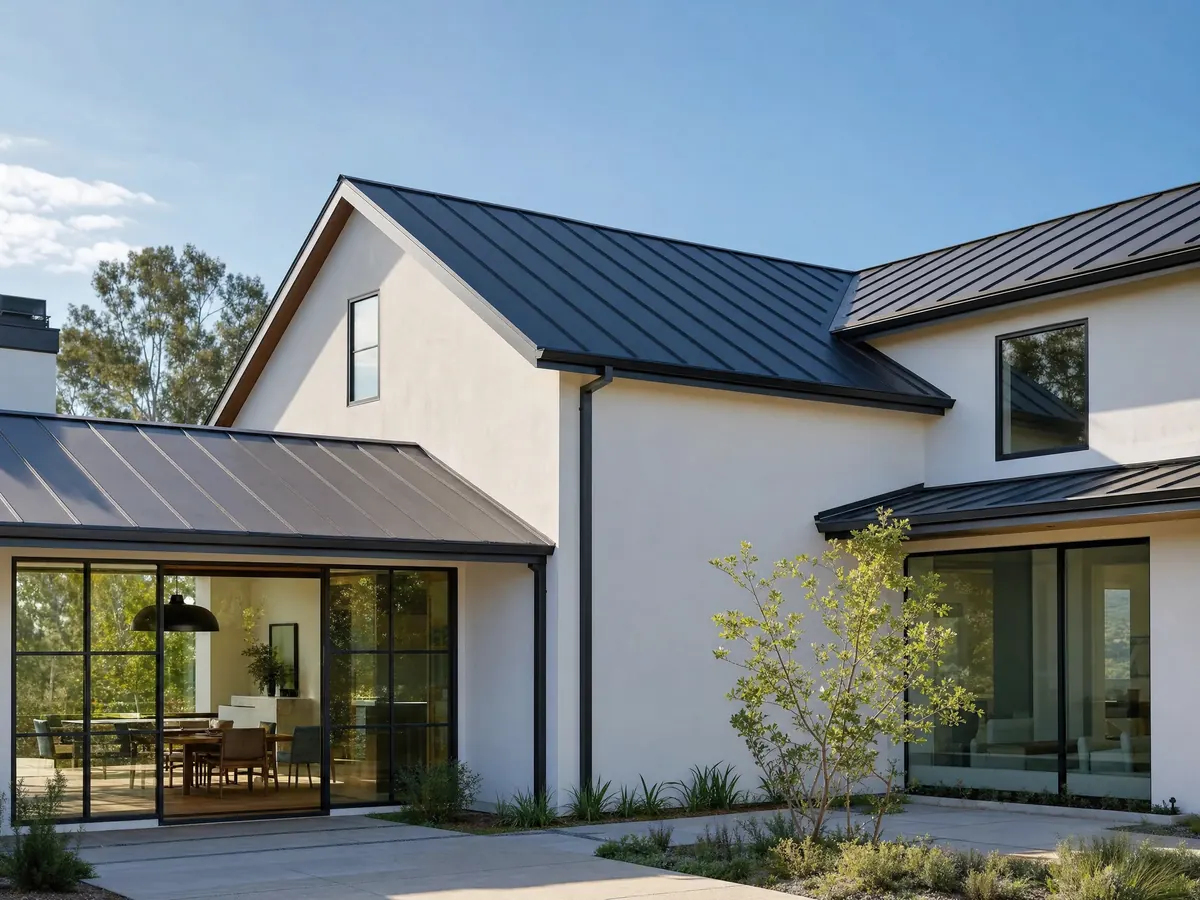
Roofing scenes tied to Santee places such as Town Center, Carlton Hills, Sky Ranch and Woodglen Vista, and to nearby communities like El Cajon, Lakeside and Fletcher Hills, from tear-offs to flashing, vents and eaves.
Where these Santee roof figures come from
Every roofing price, with its source and date, sits in the table on our roofing page, and how general contractors use subcontractors explains who answers for the crew. Roof work often travels with other exterior jobs, and the Santee rules for them are on the fencing page, the painting page and the kitchen remodeling page. To see how a neighboring city treats the same job, read the guide for El Cajon.
| What it covers | Typical range |
|---|---|
| Asphalt shingle, typical single-family roof | $10,000 to $25,000 |
| Concrete or clay tile | $7 to $15 per sq ft |
| Metal | $7 to $16 per sq ft |
| Remodeling Cost vs. Value 2025, Los Angeles | Asphalt $36,417. metal $62,069. |
| Extras | Tear-off $1,000 to $3,000. solar detach and reset $500 to $1,000. |
Santee roofing questions, answered
Do I need a permit to replace my roof in Santee?
It depends on which City document you read. The re-roof application is reviewed before a permit issues, while the municipal code lists renewal of roof coverings as exempt. Call the Building Division at 619-258-4100, extension 154 or 155, describe the roof and get the answer in writing before ordering materials.
What is a Class A roof in California?
Class A is the highest fire rating for a roof assembly, tested under standards such as ASTM E108 or UL 790. Santee's re-roof application asks for a Class A listing, and its code sets Class B as the floor outside fire zones. Ask for the product listing sheet and keep it with the contract.
Is my Santee roof in a fire hazard zone?
Possibly. The City's map, dated March 24, 2025, shows Very High, High and Moderate tiers with an address lookup on its Fire Hazard Severity Zones page. We could not confirm which streets fall in which tier, so check your address and ask Fire Prevention, then write the result into your contract.
How much does it cost to replace a roof in Santee?
We found no Santee survey, so price by roof area. Angi's Los Angeles guide shows asphalt at $4 to $12 a square foot, tile at $7 to $15 and metal at $7 to $16, and our planning range for asphalt is $10,000 to $25,000. A measured written proposal sets the real price.
How much should a 2000 sq ft roof cost?
Roof area matters more than house size, and a 2,000 square foot house can have a much larger roof surface because of eaves, pitch and garages. Multiply the measured roof area by the per-square-foot ranges above, then add decking repair, solar reset and the cool roof product. Ask for the measurement on paper.
What is the 25% rule for roofing?
Santee has a real 25 percent line, but only for wood roofs. Section 11.04.030(H) says re-roofing or repairing a wood shingle or shake roof beyond 25 percent of its area in 12 months must be at least a Class B assembly. The 50 percent trigger applies to the cool roof and the Class B rule for other coverings.
Do I need a cool roof in Santee?
Usually, for a steep-slope single-family re-roof, unless an exemption applies. The City's form puts Santee in climate zone 10 and asks for a Cool Roof Rating Council certified product with 0.20 aged reflectance and 0.75 emittance. Exemptions include replacing under half the roof and integrated solar panels, so ask the roofer to name one.
How do I know if I need a roof repair or a full replacement?
Look at where the damage sits and how old the covering is. One damaged patch on a firm deck points to repair, but a leak that wanders, spongy decking or tired slopes point to replacement. Ask the roofer to price the repair and the replacement as separate lines and to explain what a repair cannot fix.
Who signs the roof certificate in Santee?
The roofing contractor does. The Roof Covering Installation Certificate lists the manufacturer, listing agency, approval number, slope, fire rating, reflectance, emittance and index, and it must be posted with the inspection record card before final. Ask who will complete it and whether it appears in the proposal.
Ask for a roof inspection in Santee
Give us your street, the roof material and where water has come in. Before we call back we look up the fire map, the re-roof form and whether a cool roof exemption could apply.