
Roof Repairin La Mesa, CA
Roof repair in La Mesa starts with the street, because the code pages we read set no single roof class for the whole city. Eastridge's Hillside Overlay H requires Class B roofs, a re-roof is a permit job, and a tear-off must post a construction debris diversion deposit before the permit issues.
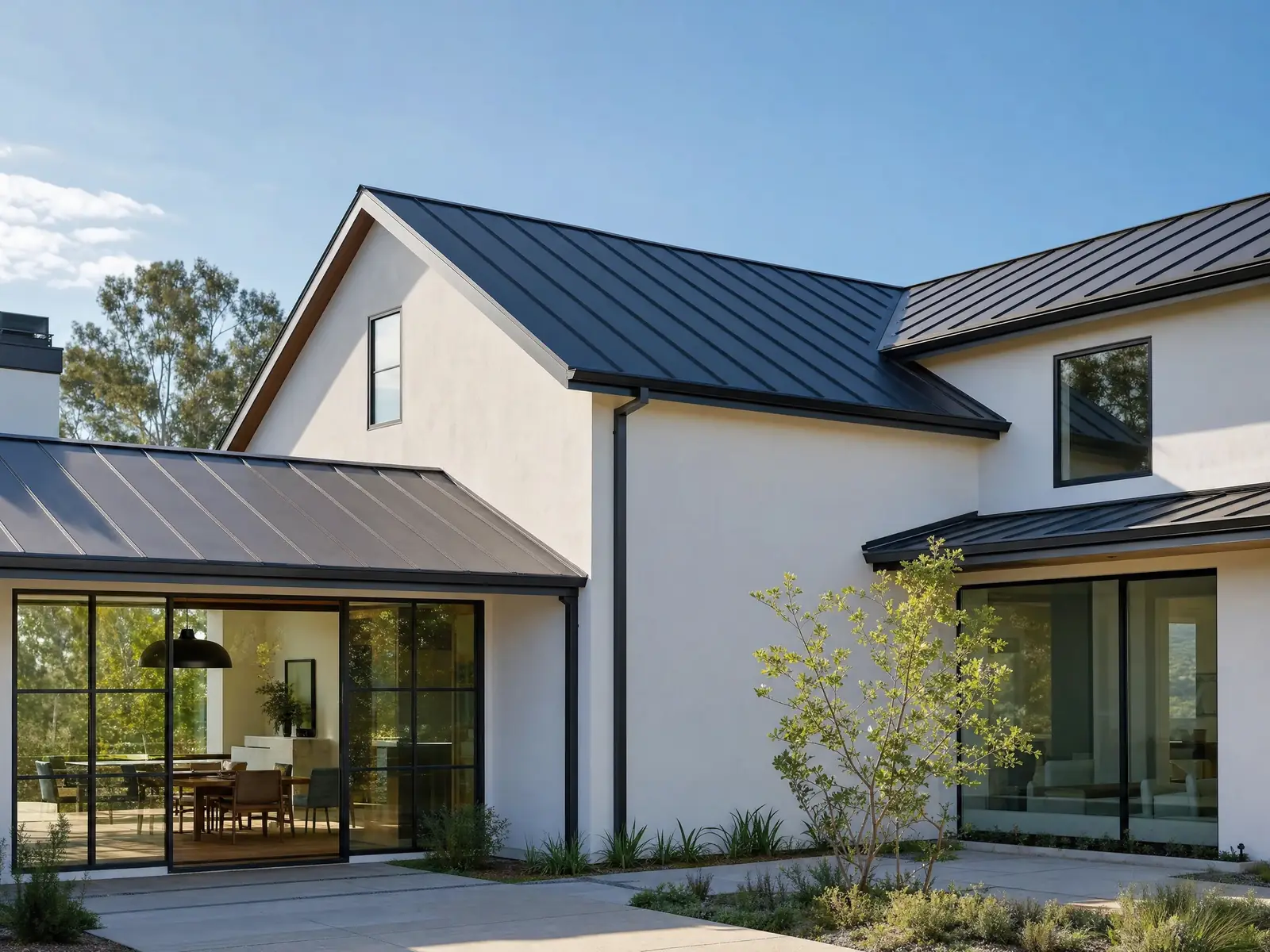
La Mesa is a hilly inland suburb with 26,212 housing units, and the building boom that shaped it is now 50 to 70 years old. The Census Bureau's ACS 2024 five-year estimates count 6,489 units from the 1970s, 5,533 from the 1950s and 3,909 from the 1960s, about 73 percent of all units predate 1980, 52.3 percent of occupied homes are rented and the median owner-occupied home is worth $812,000. The City's General Plan says La Mesa was founded in 1869, incorporated in 1912 and became one of the region's fastest growing suburbs after World War II.
On a roofing job, MDG Builders (CSLB #1040337) works as the general contractor: we write the scope, deal with the permit counter and hold the calendar, while a licensed C-39 roofing subcontractor does the tear-off and the new covering. Our roofing page holds the sourced prices and the La Mesa overview lists every trade we manage here, while the guides for El Cajon and San Diego cover the neighboring counters. La Mesa issues its own permits through the City's Building Division, and the municipal code text we cite was read on the GoCodebook mirror, a third-party copy, so confirm each section with the City before you rely on it.
What La Mesa's overlay chapters, debris ordinance and historic code say about roofs
Where roofing permits come from in La Mesa: City of La Mesa Community Development Department, Building Division.
- The City's FAQ lists reroofs among the projects that require a permit (alongside additions, remodels, patio covers, decks, garden and retaining walls, pools and spas, and all electrical, mechanical or plumbing alterations), so a like for like re-roof in La Mesa is a permit job.
- Municode 14.27.060(a)(4) makes every roofing project that tears off all or part of an existing roof a covered project under the construction and demolition debris diversion ordinance: a diversion deposit must be posted before the permit is issued and is refunded on proof of recycling. Section 14.27.110 sets the diversion rate at 50 percent by weight until a mixed C&D recycling facility is operating in the San Diego region and 75 percent after that, and the deposit amounts are set by City Council resolution (14.27.030).
- The City's C&D recycling handout (marked 'Updated Feb/07', so the dollar figures may be stale) lists a $100.00 flat fee for a roofing tear-off, says the City requires 75 percent diversion, and says a full refund is given when 75 percent is diverted and documented with printed (not handwritten) receipts showing weight or volume, facility name and material type, with the refund request due within 60 days of final inspection.
- Zoning Chapter 24.13 (Hillside Overlay Zone H), tied to the Eastridge subdivisions (Eastridge Drive, Tungsten Drive, Highwood Drive and Tentative Map 78-17), requires roofs on all buildings in that zone to meet Class B, tells the Planning Commission to look at roofs for non-glare materials and to avoid rooftop mechanical equipment such as air conditioners, and bars a building permit until the Fire Marshal or Helix Water District certifies that water supply and fire hydrants are in service.
- Municode Chapter 11.05 adopts the 2025 California Wildland-Urban Interface Code as the City's WUI code (Ordinance 2025-2925, December 9, 2025), and 11.04.090 defines a 'hazardous fire area' as any area mapped by the State or the City as a high or very high fire hazard area.
- The City's rooftop solar page offers three routes: Instant Review (SB 379, systems up to 38.4 kW AC plus paired battery storage, through Symbium, with a $25 expedited fee), Regular Expedited Review (AB 2188, 10 kW or less of PV and 30 kW or less of solar water heating on one or two family homes, at no extra fee, with the Eligibility Checklist uploaded in MaintStar), and a full plan submittal; the plan set must show roof access points, code compliant access pathways, PV fire classification and required labels, and structural calculations stamped by a California licensed engineer if the expedited structural checklist is not met.
- CSLB defines the C-39 Roofing classification as installing products and repairing surfaces that seal, waterproof and weatherproof structures, using asphaltum, pitch, tar, felt, glass fabric, urethane foam, metal roofing systems, flax, shakes, shingles, roof tile, slate or other membrane materials.
- The City's Historic Resources Inventory rule (Municode 25.02.020) sends every building or demolition permit for an inventoried cultural resource from the Building Department to Planning; if Planning finds the work inconsistent with the ordinance it goes to the Historic Preservation Commission and no permit is issued for 30 days while the Commission can start a landmark designation. A roof on an inventoried or landmark home therefore may not be a counter permit.
Sources for these rules
- cityoflamesa.us
- gocodebook.com: chapter 14.27 construction and demolition debris diversion d
- cityoflamesa.gov: Construction Demolition Recycling Handout
- gocodebook.com: chapter 24.13 hillside overlay zone h
- gocodebook.com: chapter 11.05 california wildland urban interface code
- cityoflamesa.us: Residential Rooftop Solar
- cslb.ca.gov: Licensing Classifications Detail
- gocodebook.com: chapter 25.02 la mesa historic resources inventory

Does La Mesa require a Class A or Class B roof, or does it depend on the street?
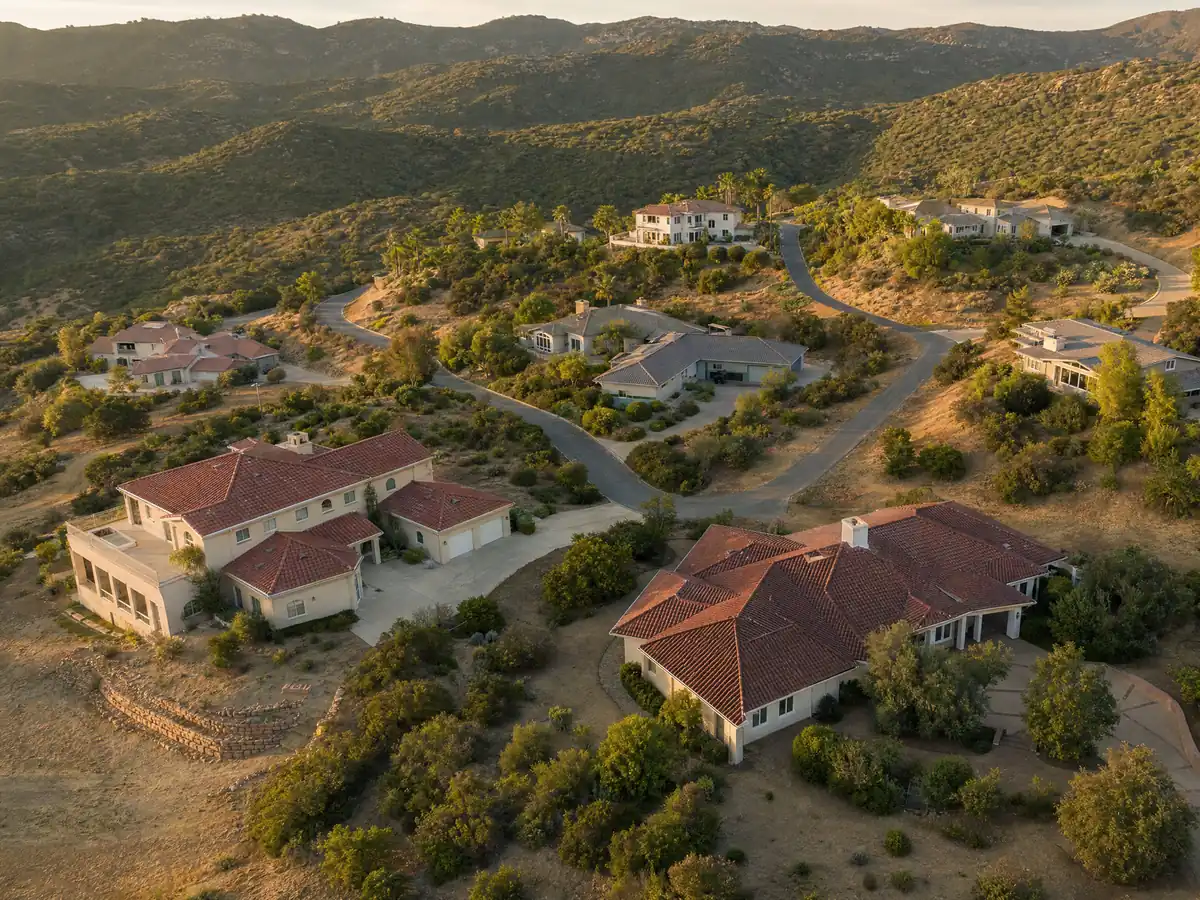
It depends on the street. On the City pages and code chapters we read, we found no citywide roof class rule, so we do not state one. The one roof class we did find sits in Zoning Chapter 24.13, the Hillside Overlay Zone H tied to the Eastridge subdivisions (Eastridge Drive, Tungsten Drive, Highwood Drive and Tentative Map 78-17), which requires every roof there to meet Class B.
That chapter also tells the Planning Commission to look for non-glare roofing and to avoid rooftop equipment such as air conditioners, and it holds back a building permit until the Fire Marshal or Helix Water District certifies that water supply and hydrants are in service. Which parcels carry the H overlay is on the City's Interactive Zoning Map, which we did not read, so ask Planning at 619.667.1177 about your address.
Fire is a second layer. The City adopted the 2025 California Wildland-Urban Interface Code as Municipal Code Chapter 11.05 and defines a hazardous fire area as any area the State or the City maps as high or very high. Our own reading of the State Fire Marshal's March 2025 map, laid over the Census city boundary, finds about 94.5 percent of La Mesa outside any wildland zone, 4.3 percent High and none Very High. That is our calculation, not a City statement, and we found no ordinance adopting the map.
Get the roof class for your address from Planning or the Building Division by email before the roofer orders material.
Does a roof replacement need a permit in La Mesa?
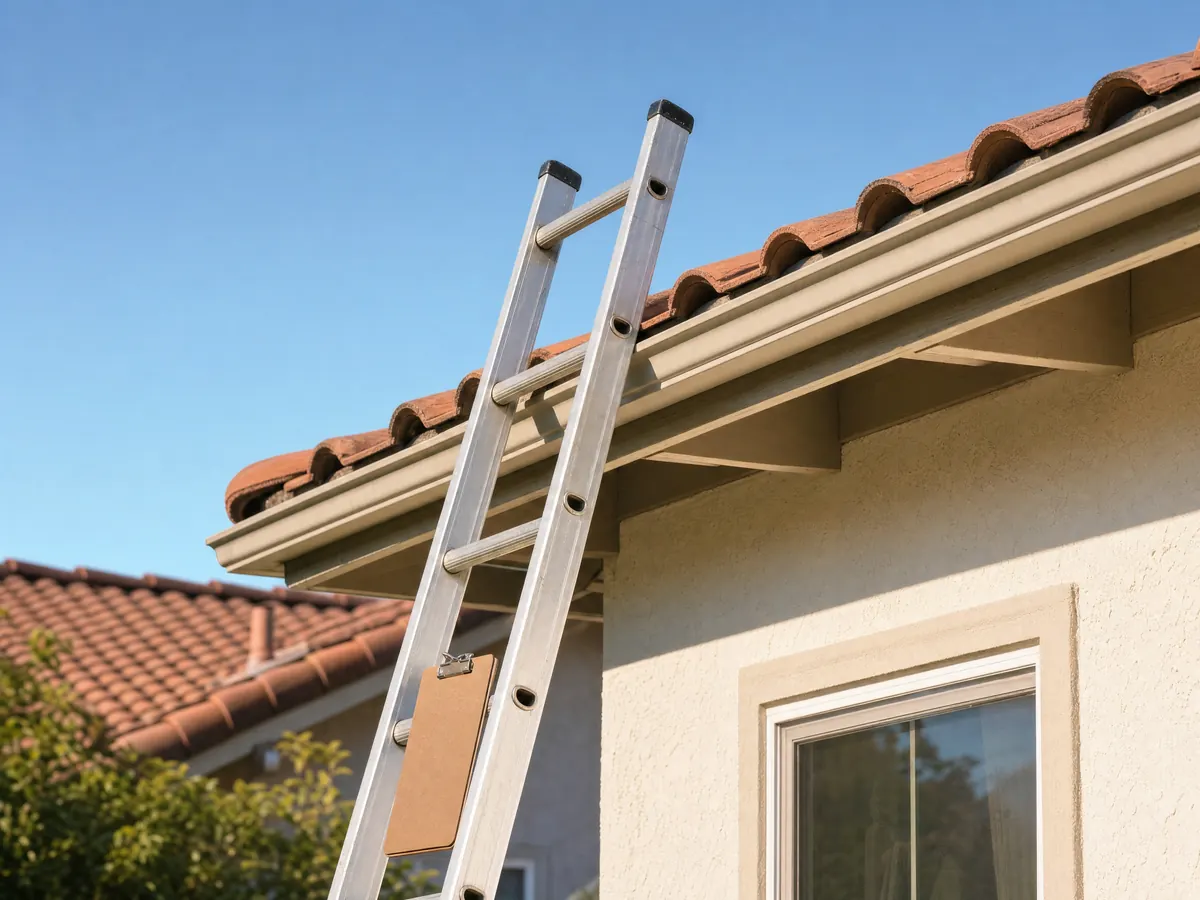
Yes. The City's FAQ lists reroofs among the projects that require a permit, beside additions, patio covers, decks, retaining walls and pools, so a like for like re-roof is permit work here. The exemptions on the Permits for Homeowners page name painting, fences six feet or lower and low platforms, and roofing is not among them. The State's $1,000 unlicensed limit does not help either, because it applies only to work that needs no permit and uses no hired workers.
The application runs through MaintStar, the City's permit portal, and an Owner/Builder Addendum is needed only when the owner signs as the builder. An owner who hires anyone may need Workers' Compensation insurance or must sign a statement that no one will be hired. A permit lapses if work does not start or the first City inspection is not received within one calendar year, if no inspection comes for six months after work starts, or if work runs past three calendar years. Inspections book only on issued permits, only by a contact listed on the permit, and by 4 p.m. for the next business day.
Ask for the permit number and the inspection contact in writing before the crew mobilizes.
What is the construction debris deposit on a La Mesa roof tear-off?
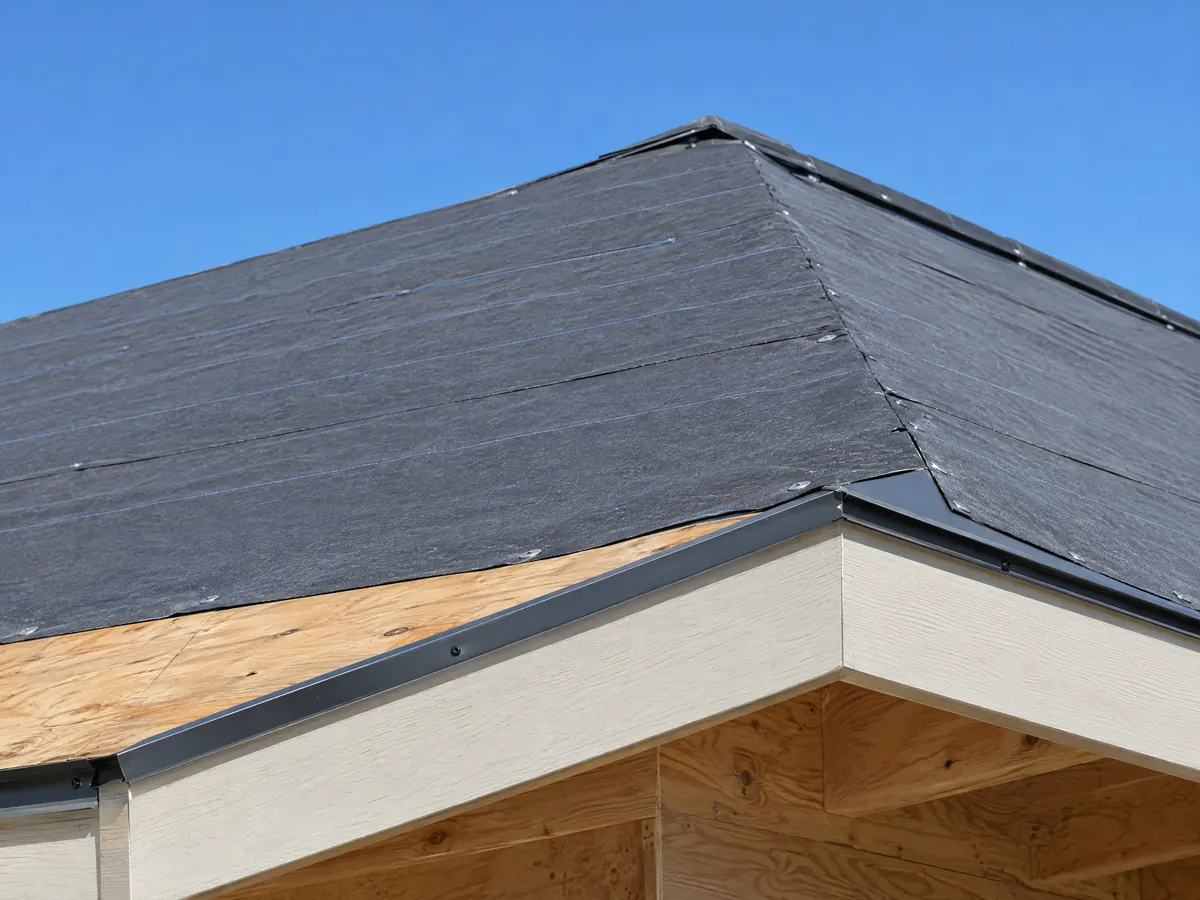
It is a refundable deposit, and a tear-off cannot get its permit without it. Municipal Code 14.27.060(a)(4) makes every roofing project that tears off all or part of an existing roof a covered project under the construction and demolition debris diversion ordinance. The deposit is posted before the permit issues and refunded when recycling is proved. Council sets the amounts by resolution, and we did not read the current resolution, so we print no current figure.
Section 14.27.110 sets the diversion rate at 50 percent by weight until a mixed C&D recycling facility operates in the San Diego region and 75 percent after that. A City handout marked 'Updated Feb/07' lists a $100 flat fee for a roofing tear-off, says the City requires 75 percent, and asks for printed receipts showing weight or volume, facility name and material type, with the refund request due within 60 days of final inspection. The handout is old, so treat its dollar figure as stale and its paperwork list as a guide.
- Ask which facility takes the shingles or tile
- Keep every printed weight ticket
- File the refund request within 60 days of final inspection
Ask whether the proposal says who posts the deposit and who receives the refund.
Does a roof on a Date Avenue or other inventoried home get a 30 day hold?
It can, because a roof on a listed home is not always a counter permit. Municipal Code 25.02.020 sends every building permit for a Historic Resources Inventory property from the Building Department to Planning. When Planning finds the work inconsistent with the ordinance, the file goes to the Historic Preservation Commission, no permit issues for 30 days and the Commission can start a landmark designation. The Potential Landmark Registry in 25.02.022 applies the same 30 day hold to registered resources.
The City recognized the Date Avenue Historic District in its first Historic Preservation Element in 1984, and the Inventory was first adopted on May 10, 1983. A designated landmark or district home also needs a Certificate of Appropriateness for exterior alterations under 25.03.040, and 25.03.050 excludes ordinary maintenance that alters no exterior feature. We could not read the district boundary map or the landmark list, so ask Planning whether your address is on either before you choose a material.
Ask Planning at 619.667.1177 whether your address is on the Inventory, the Potential Landmark Registry or inside the district.
How old are La Mesa's roofs likely to be, and how hot do they get?
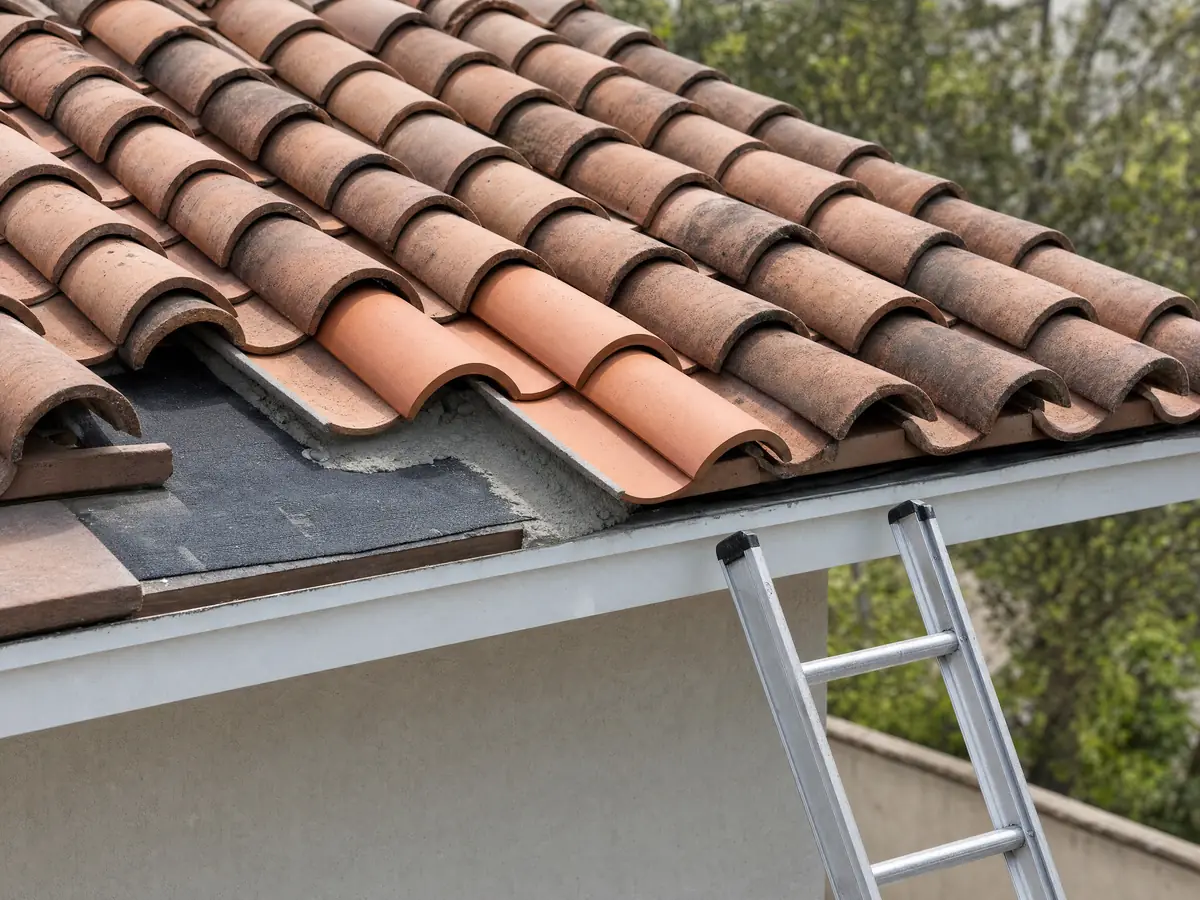
The housing count points to an older stock. About 4 percent of units, 1,079, date from 1939 or earlier, and the General Plan says the population was about 11,000 in 1950 and over 30,000 by 1960 as Ranch style tracts such as Rasonia, Rolando Knolls and Vista La Mesa filled the hills. We found no La Mesa roof survey, so we print no roof lifespan in years.
Heat matters more than the coast's reputation suggests. La Mesa sits about 10 miles from the Pacific, and Wikipedia, a third-party source, lists its elevation at 528 feet. NOAA's 1991 to 2020 normals for the El Cajon station, 5.9 miles east-northeast and in a neighboring city, show an August average high of 88.6 F, 56.8 days a year at or above 90 F and 6.9 at or above 100 F, while Lindbergh Field on the coast has 3.0 days at or above 90 F. The same El Cajon normals give 11.63 inches of rain a year, 8.68 of it from December through March, and only 0.02 to 0.16 inch in each of June, July and August.
- Water stains on ceilings below the roof deck
- Cracked or slipped tile and curled shingles
- Flashing lifting at walls, vents and chimneys
Ask the roofer to photograph the deck once the old covering is off.
Who manages roofs on La Mesa's rentals, and what changes when solar is on the roof?
A large share of roof work here belongs to landlords. ACS 2024 counts 13,105 renter-occupied units out of 25,038 occupied, and 36.0 percent of all units sit in buildings of five or more units. The City's permit pages, as we read them, do not split roofs by building type, so ask the Building Division whether a multifamily re-roof follows any extra step.
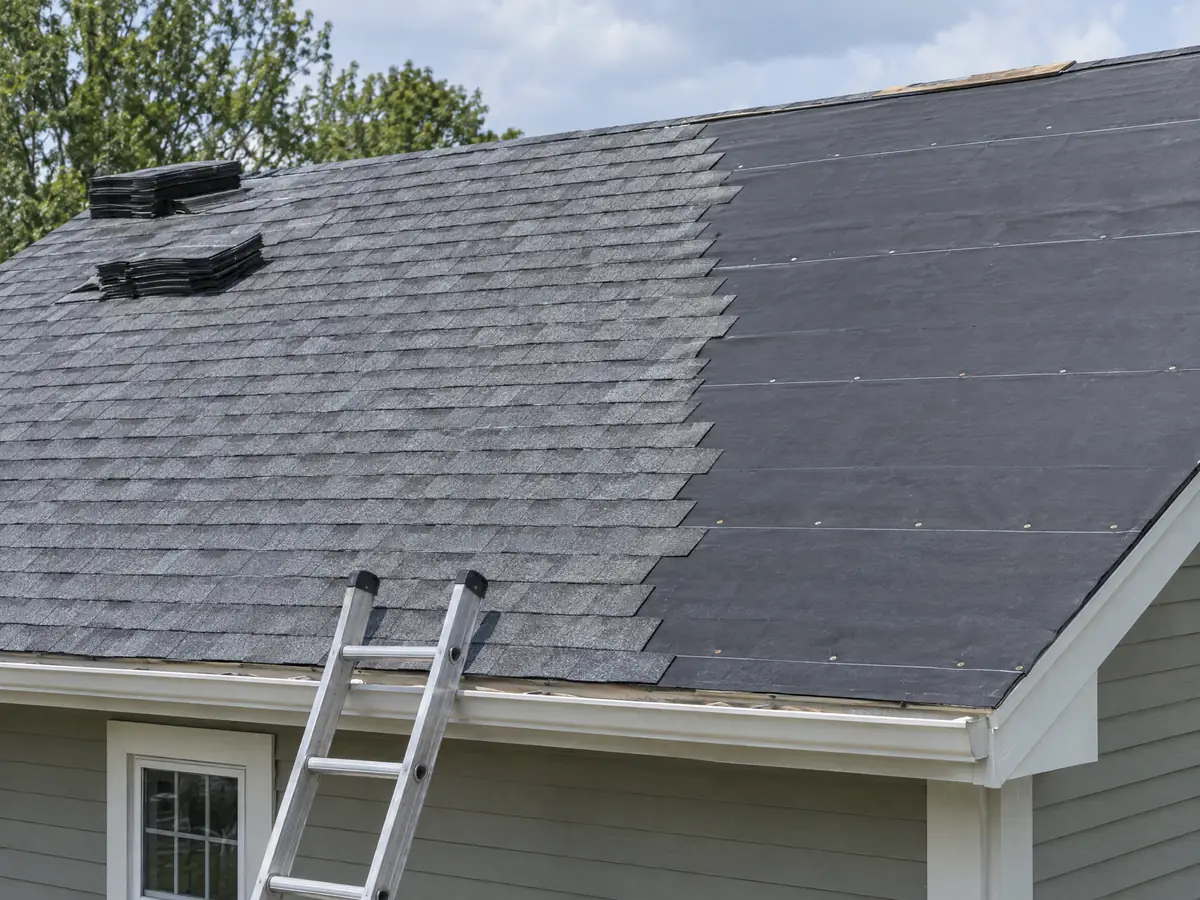
Rooftop solar has its own path. The City's solar page offers Instant Review under SB 379 for systems up to 38.4 kW AC plus paired batteries through Symbium with a $25 expedited fee, Regular Expedited Review under AB 2188 for 10 kW or less of PV on one or two family homes at no extra fee, and a full plan submittal. The plan set must show roof access points, code compliant pathways, the PV fire classification and labels, and a California engineer's stamp when the expedited structural checklist is not met. If a re-roof means lifting panels, ask whether putting them back needs its own permit.
How much does roof replacement cost in La Mesa, and what should a proposal say?
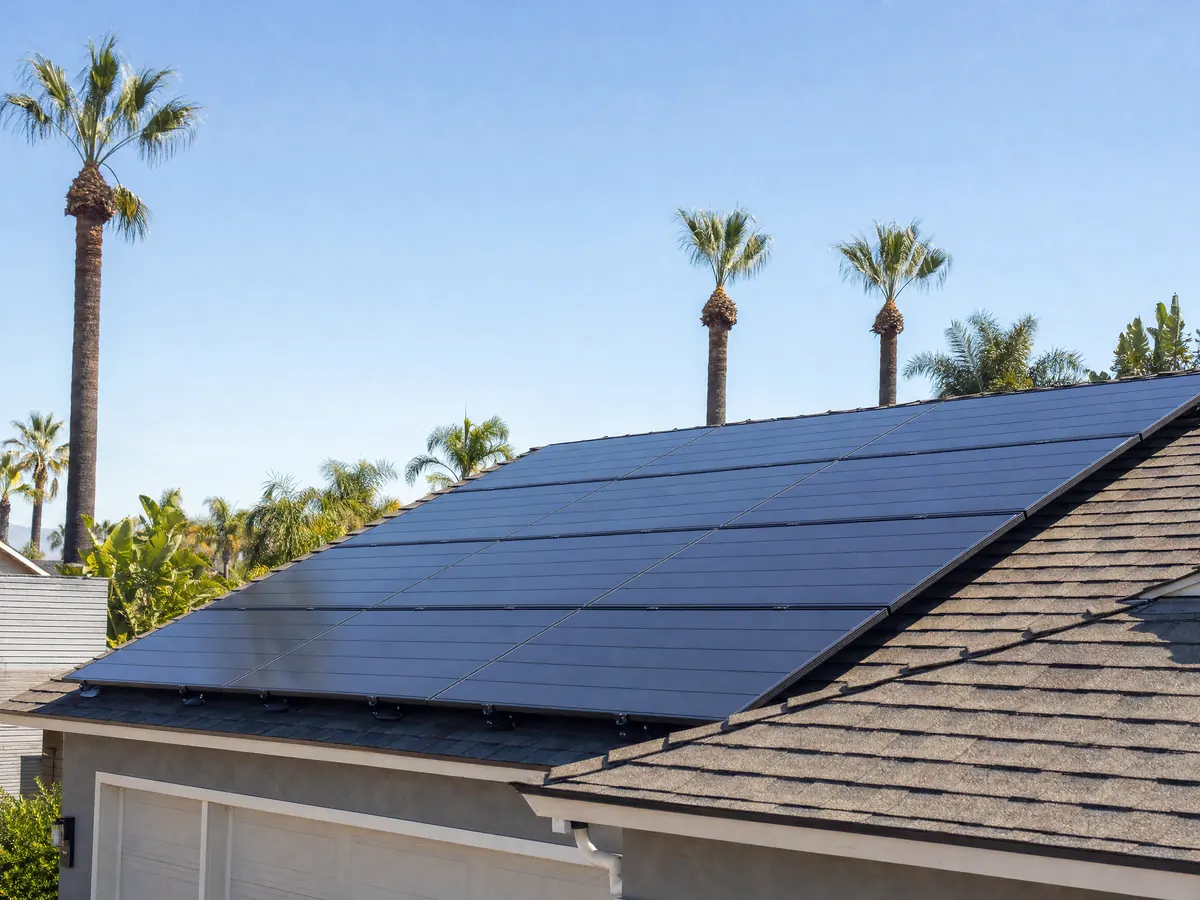
We found no La Mesa price survey, so these figures come from Los Angeles and a La Mesa bid can land elsewhere. Angi's Los Angeles guide, updated July 31, 2026, shows asphalt at $4 to $12 per square foot, tile at $7 to $15 and metal at $7 to $16, plus $1,000 to $3,000 for tear-off and $500 to $1,000 to detach and reset solar panels. Remodeling magazine's 2025 Cost vs. Value report prices a Los Angeles asphalt replacement at $36,417 and a metal roof at $62,069 without stating the roof size. We plan with about $10,000 to $25,000 for asphalt, $15,000 to $37,000 for tile and from about $20,000 for metal, and we ask who posts the debris deposit while the City holds it.
Roofing is CSLB class C-39, and Business and Professions Code 7159 limits a down payment to $1,000 or 10 percent of the price, whichever is smaller. Read the California roofing cost guide, our contractor license guide and how general contractors use subcontractors before you sign.
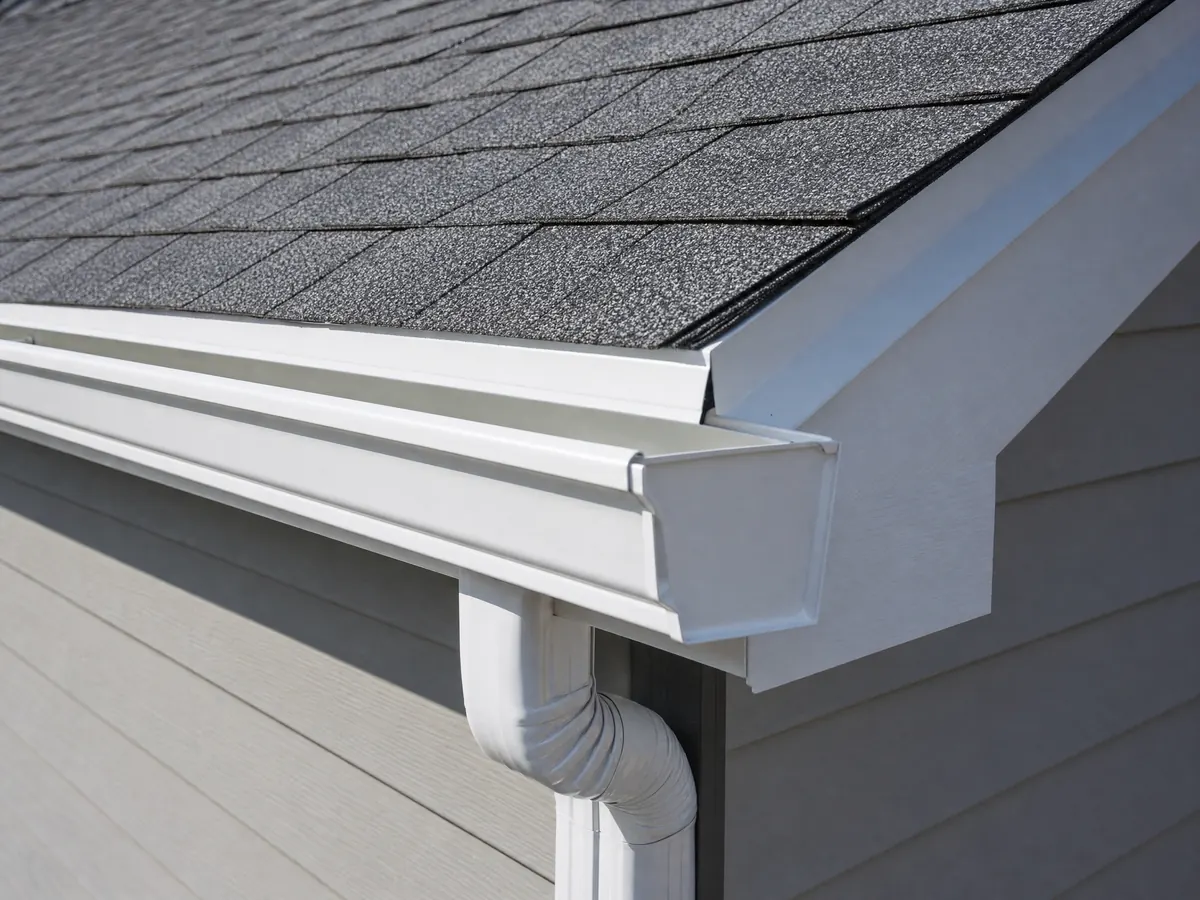
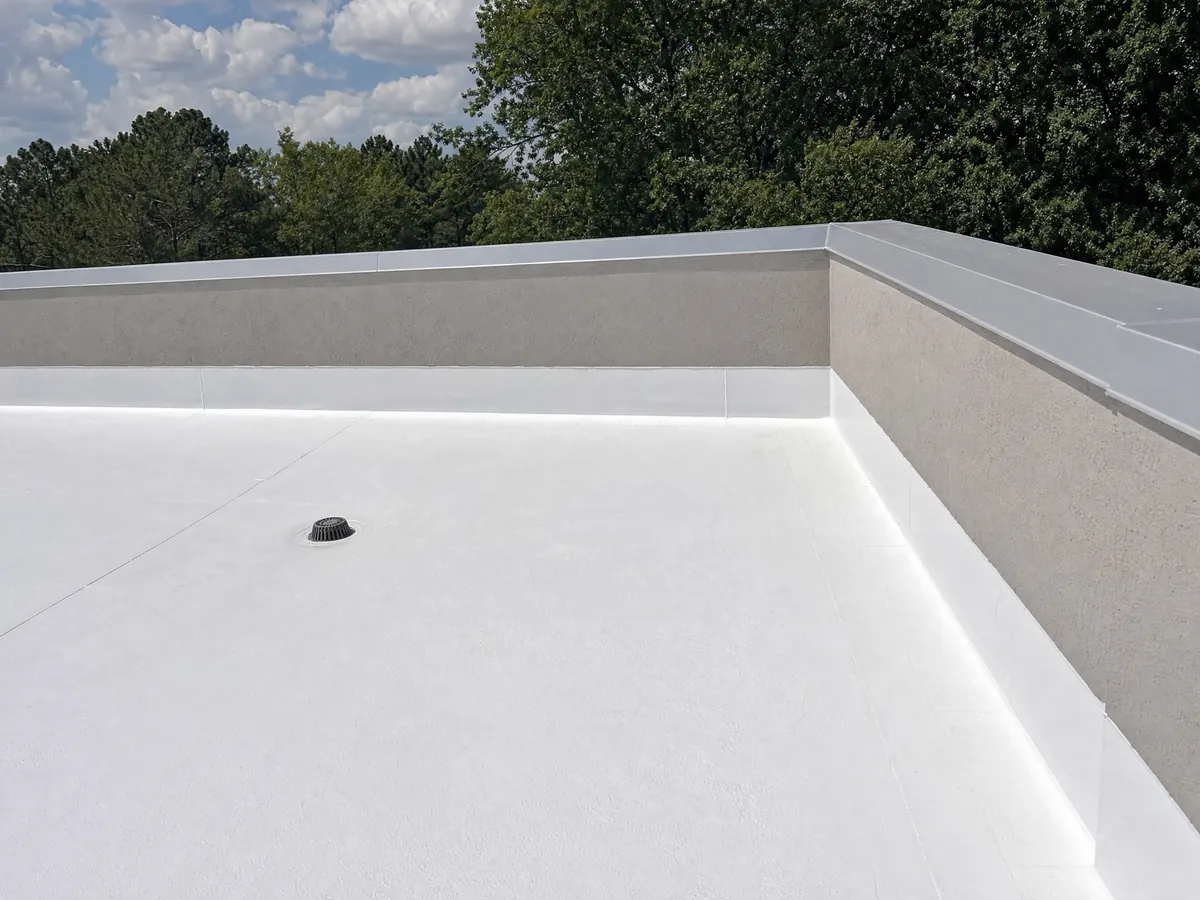
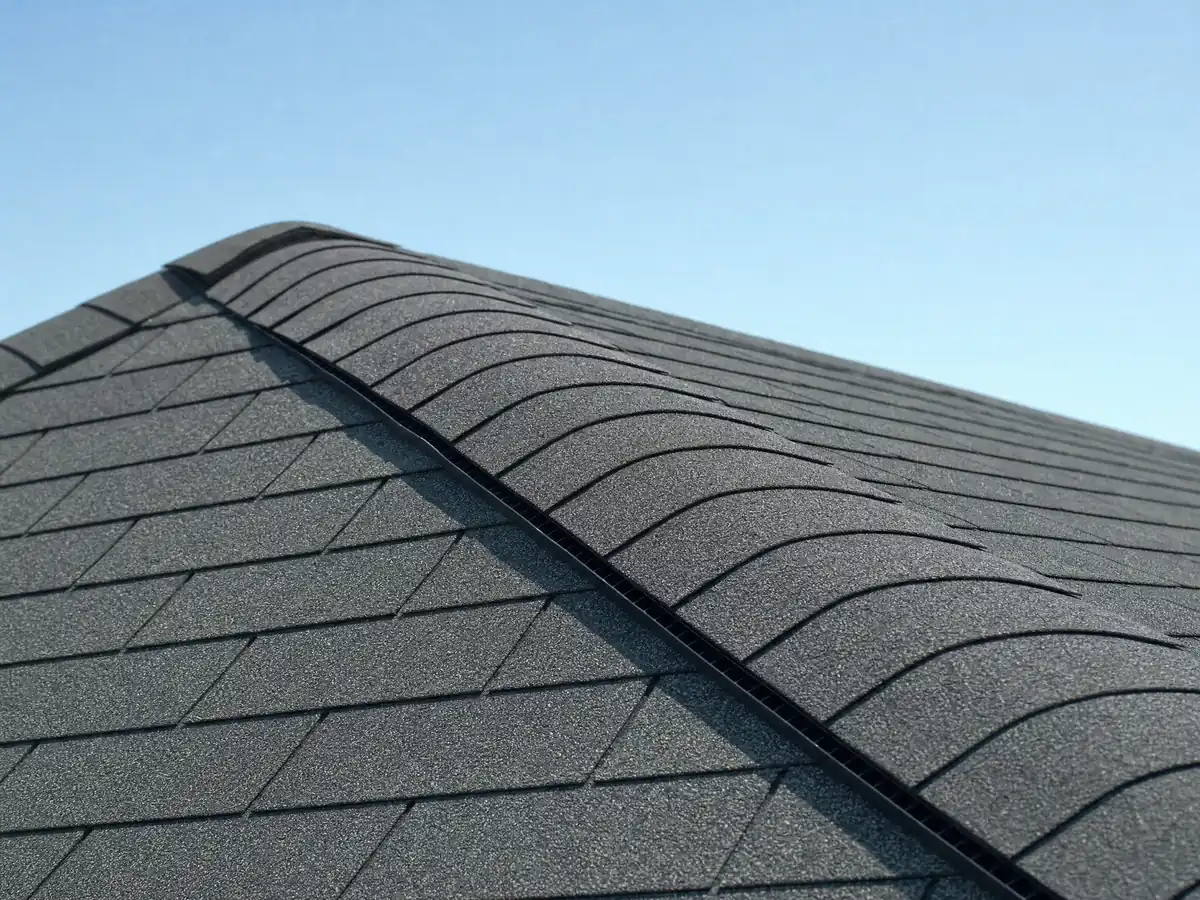
Roofing photos from La Mesa and nearby communities
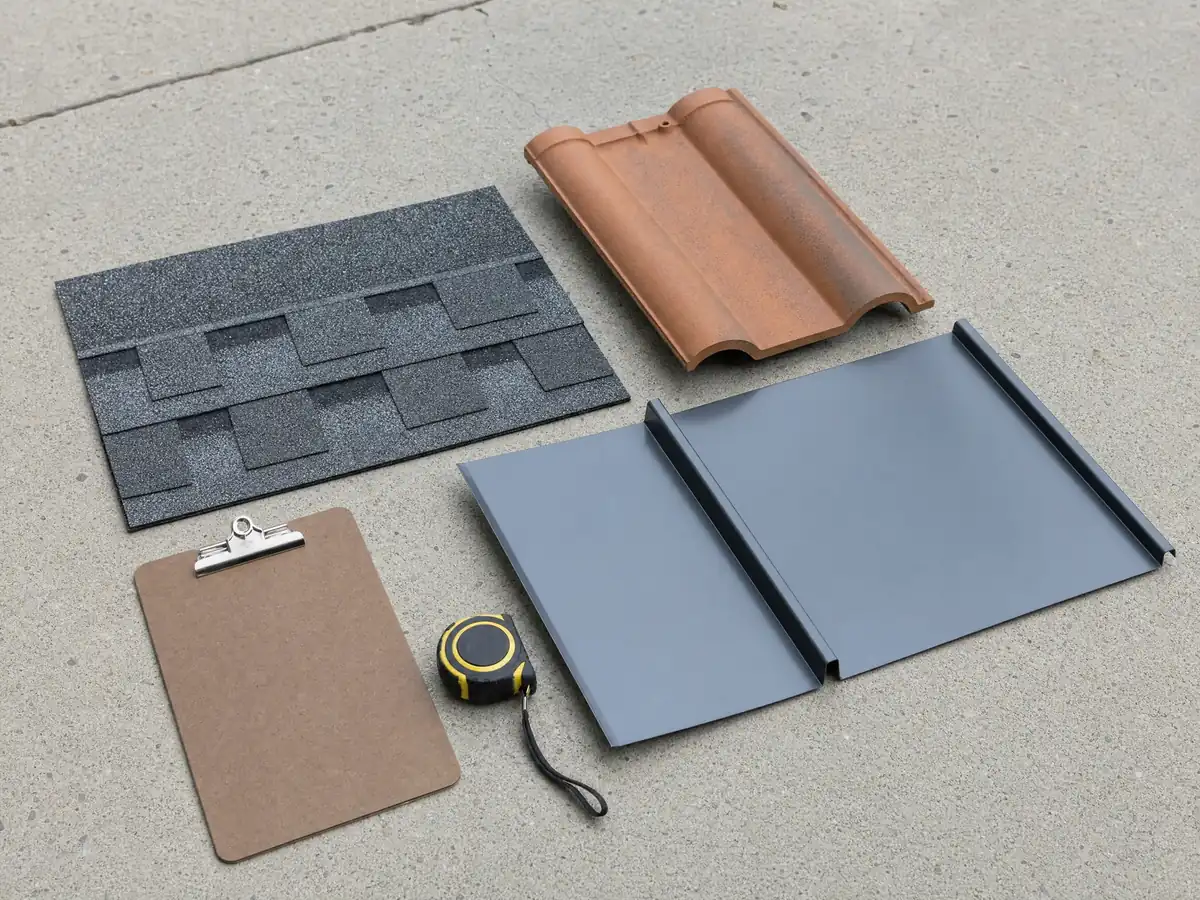
Roofing scenes tied to La Mesa places such as the Downtown Village, Grossmont, Murray Hill and Eastridge, and to nearby communities like Lemon Grove, El Cajon, Casa de Oro and Santee, from tile repair and tear-offs to hillside roofs.
Where these La Mesa roof figures come from
Our roofing page lists every roofing price with its source and date. Roof work often comes with fence, paint or kitchen work, and the La Mesa rules for those are on the fencing page, the painting page and the kitchen remodeling page. For another county city with its own counter, compare Chula Vista.
| What it covers | Typical range |
|---|---|
| Asphalt shingle, typical single-family roof | $10,000 to $25,000 |
| Concrete or clay tile | $7 to $15 per sq ft |
| Metal | $7 to $16 per sq ft |
| Remodeling Cost vs. Value 2025, Los Angeles | Asphalt $36,417. metal $62,069. |
| Extras | Tear-off $1,000 to $3,000. solar detach and reset $500 to $1,000. |
La Mesa roofing questions, answered
Does roof replacement need a permit in La Mesa?
Yes. The City's FAQ lists reroofs among the projects that require a permit, and the exemptions on its homeowner page do not include roofing. Your roofer applies through the MaintStar portal, and a tear-off also posts a construction debris deposit before the permit issues. Call the Building Division at 619.667.1176 to confirm the steps for your scope.
What is the 25% rule for roofing?
We found no 25 percent rule in the La Mesa pages and code chapters we read, so we do not apply one here. Some cities set a share of the roof that, once replaced, forces the whole roof to the current standard. Ask the Building Division whether any such threshold applies to your repair, and get the answer in writing.
Does La Mesa require a Class A roof?
We found no citywide roof class rule. The only roof class in the code we read is Class B inside the Eastridge Hillside Overlay H. Fire rules and your parcel's overlay can change that, so ask Planning or the Building Division which class applies to your address before the roofer orders material.
Does a roof tear-off in La Mesa need a debris deposit?
Yes. Municipal Code 14.27.060(a)(4) covers every roofing project that tears off all or part of a roof, and the deposit is posted before the permit issues and refunded on proof of recycling. The rate is 50 percent by weight until a regional mixed facility opens, then 75 percent. Ask the Building Division for the current amount.
Is my La Mesa roof in a fire hazard zone?
Probably not, but we cannot say for your lot. Our own reading of the State Fire Marshal's March 2025 map puts about 94.5 percent of the city in NonWildland, 4.3 percent High and none Very High, and we found no ordinance adopting it. The General Plan names Keeney Street Canyon, Eastridge open space and Mount Helix as wildland pockets.
How much should a 2000 sq ft roof cost?
Roughly $8,000 to $24,000 for asphalt, $14,000 to $30,000 for tile and $14,000 to $32,000 for metal, if you apply Angi's Los Angeles rates of $4 to $12, $7 to $15 and $7 to $16 per square foot to 2,000 square feet of roof. Tear-off, deck repair and solar reset come extra, and roof area differs from floor area.
How long does a roofing permit take in La Mesa?
We found no posted review time for re-roofs. The City says a plan check fee based on valuation is due before plan review starts, and a plan review application expires if no permit issues within one year. Ask the Building Division for the current turnaround on your scope and whether Planning must see the file first.
Do I need historic review to replace a roof on an older La Mesa house?
Only if the home is on the Historic Resources Inventory or the Potential Landmark Registry, is a designated landmark or sits in the Date Avenue Historic District. Then Planning reviews the permit, a 30 day hold can apply and a landmark needs a Certificate of Appropriateness. Ask Planning to check your address.
What is the best time of year to replace a roof?
Late spring through early fall is driest. NOAA normals for El Cajon show 8.68 of 11.63 yearly inches falling from December through March and only 0.02 to 0.16 inch in each summer month. Heat is the tradeoff, with 56.8 days a year at or above 90 F, so ask the crew how it handles hot decks.
Can a general contractor do roofing in California?
MDG Builders manages roofing but does not install it. The field work is CSLB class C-39, so a licensed roofing subcontractor does the tear-off and covering under our contract, and you can ask for that subcontractor's license number and certificate of insurance before the work starts.
Ask for a roof inspection in La Mesa
Tell us your street or neighborhood, the roof material, roughly when the house was built and where water shows inside. We check for the Eastridge overlay, a historic listing and the debris deposit before we call you back.