
Deck Builderin Chula Vista, CA
A deck builder in Chula Vista should treat a deck as permit-required until Building Division staff say otherwise, because decks are not named on the City's exempt list. The nearest item covers platforms up to 30 inches above grade. Fire hazard zones, patio cover limits and hillside rules then decide the materials and the footprint.
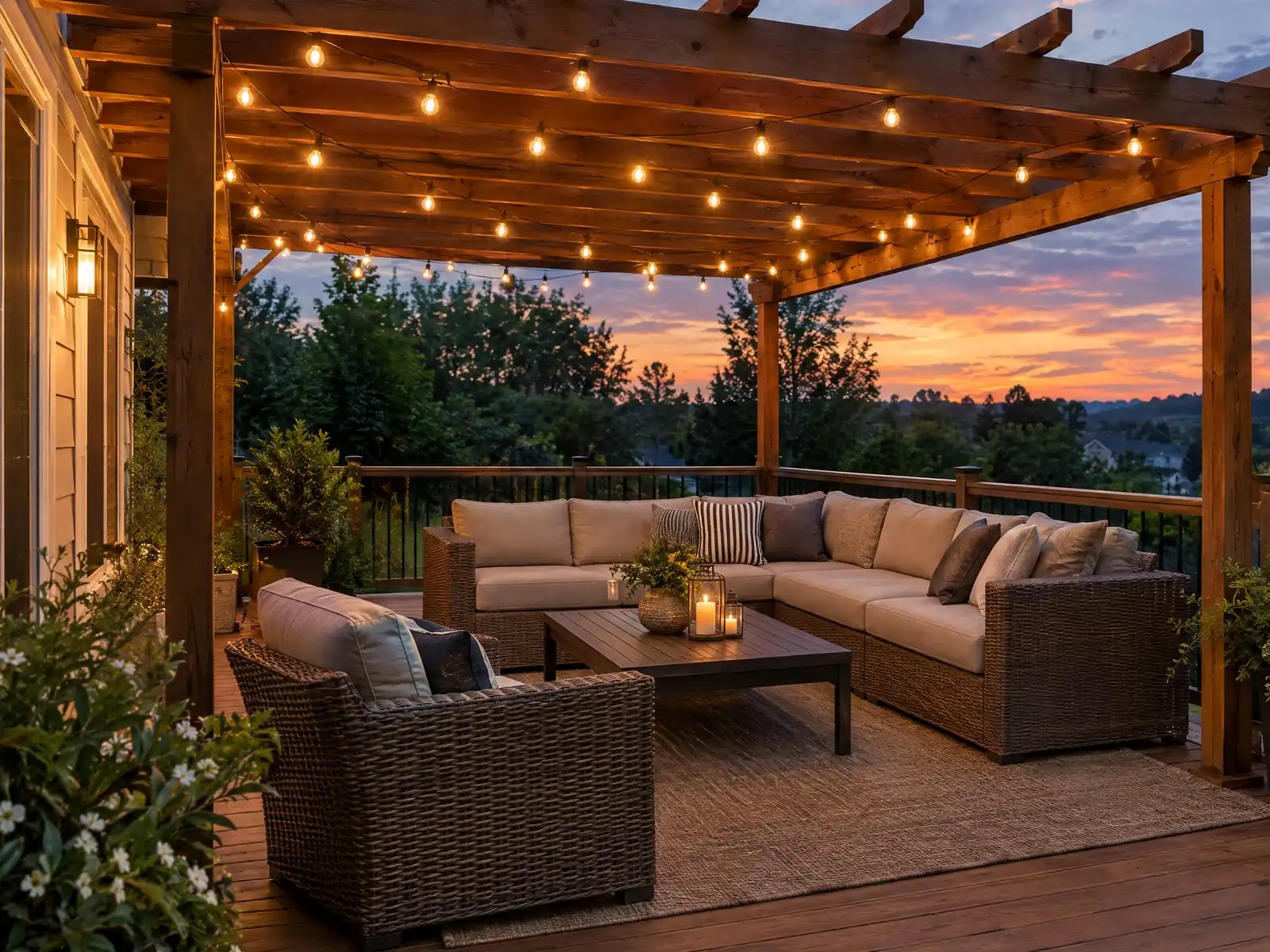
Chula Vista's decks sit in two different cities. West of Hilltop Drive the homes are older, with 7,799 built in the 1950s and 11,523 in the 1960s, and there is no Mello-Roos, while Eastlake, started in 1986, Rancho del Rey, established in 1989, and Otay Ranch, begun in 1999, were built later under their own planning documents. Census estimates for 2024 count 46,555 detached and 11,231 attached single-family homes among 91,470 units, and the State Fire Marshal's 2025 map lists about 2.4 times as much Very High area as the 2011 one.
MDG Builders, CSLB #1040337, is a general contractor in Tarzana. We draw the deck, take the permit and fire questions to Development Services and book a licensed carpentry subcontractor to build it. Because the City's own code site refused our tools, every code citation here comes from a third-party copy at gocodebook.com and need the City's confirmation. Materials and ranges are on the decks page, and the Chula Vista overview shows our other trades here.
What Chula Vista's Building Division, Fire Department, zoning rules and state law say about decks and patio covers
Where decks permits come from in Chula Vista: City of Chula Vista Development Services Department, Building Division.
- CVMC 15.06.080(B)(1)(b) exempts detached patio covers not exceeding 12 feet in height with a projected roof area of no more than 144 square feet, and two or more covers on one property must be separated by at least six feet to count separately. The same list exempts one-story detached tool and storage sheds, playhouses and similar structures with a floor area of 120 square feet or less that comply with CVMC 19.58.020, and awnings up to 54 inches.
- A deck is not named on Chula Vista's exempt list. The closest item is platforms, walks and driveways not more than 30 inches above grade and not part of an accessible route (15.06.080(B)(1)(h)), so a deck higher than 30 inches or attached to the house should be confirmed with the Building Division before assuming it is exempt.
- A covered patio that is open on two sides counts toward R-1 floor area only above 300 square feet when combined with porches (CVMC 19.24.180) and toward the 40 percent lot coverage limit (19.24.070.A), and a covered patio in the rear 30 percent of the lot may sit on the property line or at least three feet from it (19.58.020).
Sources for these rules
Is a deck exempt from a building permit in Chula Vista?
Not by name. A deck does not appear on the exempt list in CVMC 15.06.080(B)(1). The closest item is platforms, walks and driveways not more than 30 inches above grade, not over a basement or story below and not part of an accessible route, so a low freestanding platform may qualify while a taller or house-attached deck should be treated as needing a permit.
We found no City deck handout, so we cannot give a square foot threshold. The same section says exempt work must still meet the technical codes, and separate plumbing, electrical and mechanical permits apply to any gas line, lighting circuit or outlet added to the deck unless those trades are exempt too.
Skipping the permit costs more later. Under CVMC 15.06.095, work started without a permit draws an investigation fee equal to the permit fee whether or not a permit is later issued, and refunds are limited to 80 percent of the permit fee. A permit also expires if work does not begin within 12 months of issue or stops for 180 days.
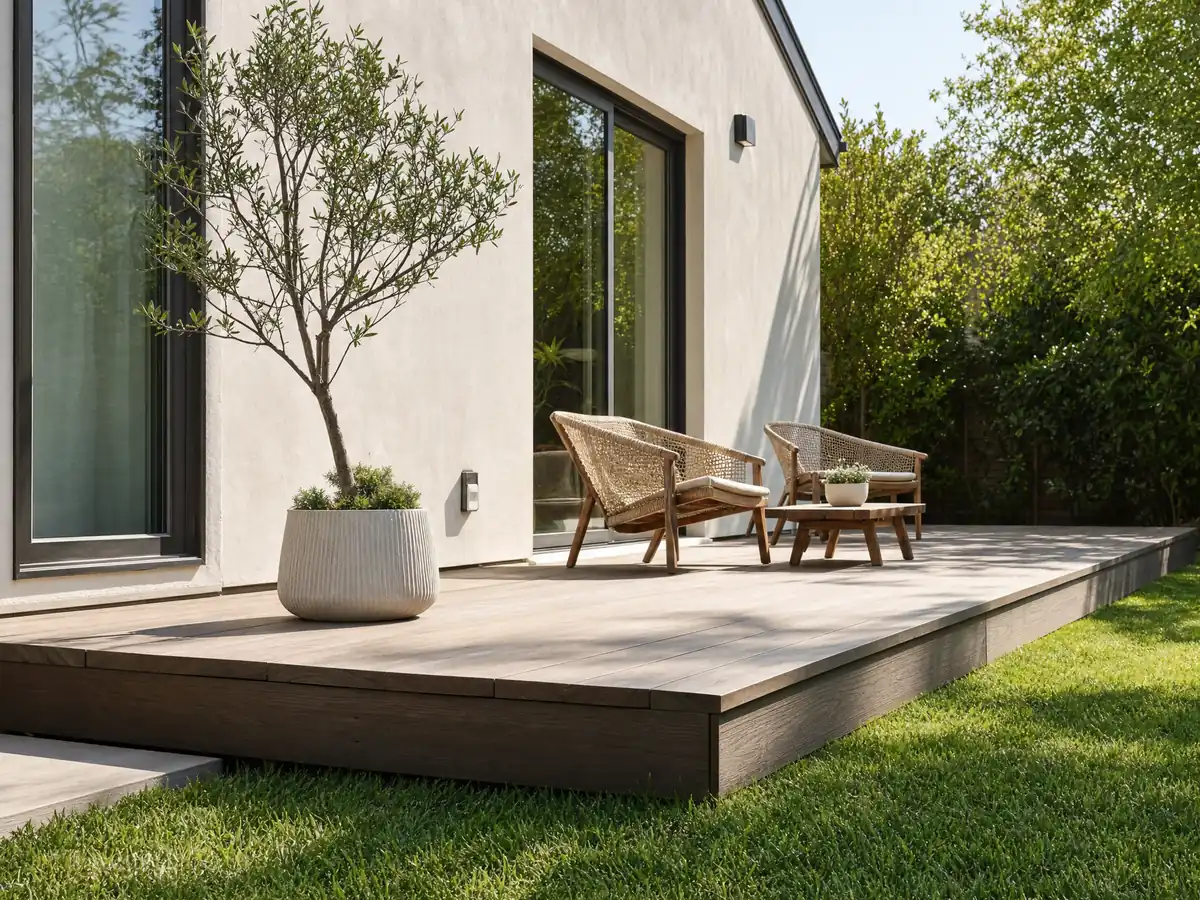
How big can a patio cover be, and how close to the fence can a deck go?
A detached patio cover up to 12 feet high with no more than 144 square feet of projected roof is on the exempt list, and two covers on one property must sit at least six feet apart to count separately. Larger or attached covers need a permit review, and an awning is exempt up to 54 inches.
Zoning is the second test. An R-1-7 lot asks for 15 feet in front, 10 feet on the exterior side, 10 feet on one side with 13 feet on both sides combined, and 20 feet at the rear, while R-1-5 asks for 15 feet in front, 5 feet on one side with 10 combined, and 15 feet at the rear (19.24.070.B). The lot's classification, which we could not look up from here, decides which column applies.
Covers get some relief. A single story attached structure may come within 10 feet of the rear line and cover up to 30 percent of the rear yard (19.24.120), and a covered patio open on no more than two sides in the rear 30 percent of the lot may sit on the property line or at least three feet from it (19.58.020). We could not confirm that a roofed deck counts as such a structure, so ask Planning before ordering posts.
What changes when the deck sits on a Chula Vista hillside lot?
The H Hillside modifying district (CVMC 19.56.210 to 19.56.290) limits density and grading by average natural slope, computed by a registered civil engineer, and requires annual fire hazard clearing in open space, garage plus guest parking for single family homes and a presubmission meeting. The slope graph was not reproduced on the page we read, and we could not find which parcels carry the H designation.
Grading rules reach decks too. A land development permit is needed for grading unless every exemption condition is met, including a cut of no more than 3 feet at any point and 18 inches on average. The rear setback relief for a single story attached structure also stops short of a retaining wall or toe of slope by 5 feet.
Soil reports on slopes need a seepage statement or study (15.04.175(B)), and the City may require a soil investigation. For footings and posts on a slope, the practical question for each bidder is who stamps the plans and who pays for the soils report.
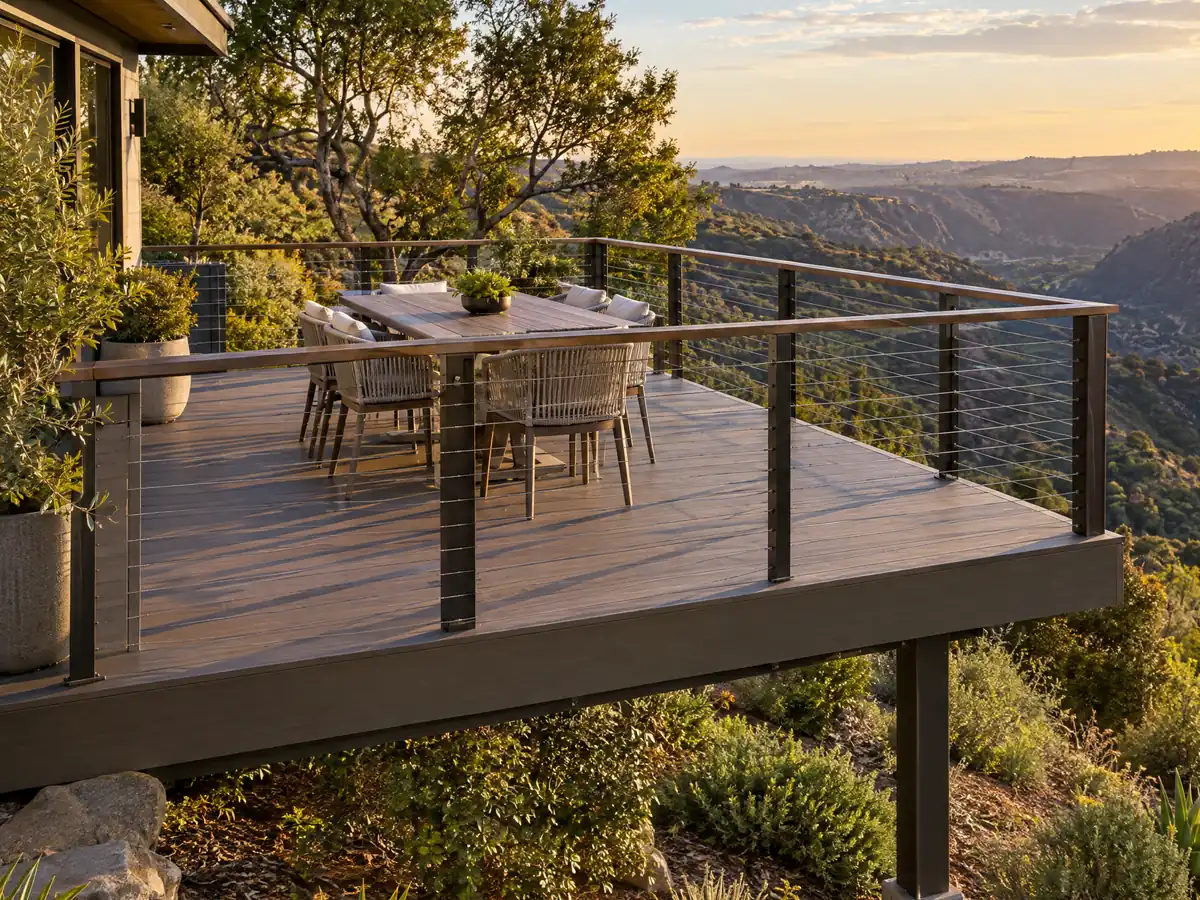
Does Chula Vista's 2025 fire hazard map change what a deck can be made of?
It can. The City Council designates Moderate, High and Very High zones from the State Fire Marshal's March 24, 2025 map (CVMC 15.34.005), and the whole parcel takes the highest zone found on any part of it (15.34.020). The State Fire Marshal's Phase 4 table lists Very High at 8,939 against 3,717 under the 2011 map, about 2.4 times larger, but the unit is not printed on the page we read.
New construction in the Moderate zone and in the Special Designated Vegetation Management Area must use the ignition-resistant materials of Chapter 7A and the Wildland-Urban Interface Code (15.34.015). We could not confirm that a new deck counts as construction under that rule, so ask the Fire Department and the Building Division, and check the parcel with the Fire Department because we could not open the City's zone lookup.
Material choice follows. The California Residential Code section on decking in wildland-urban interface areas, R337.9.3 in the 2022 edition we read, lists allowed surfaces such as products tested to ASTM E2632 or E2726, ignition-resistant, fire-retardant-treated or noncombustible materials. A UC Extension summary said some tested composites did not meet the ignition-resistant definition, so confirm any product against the State Fire Marshal listing and the numbering in the 2025 edition.
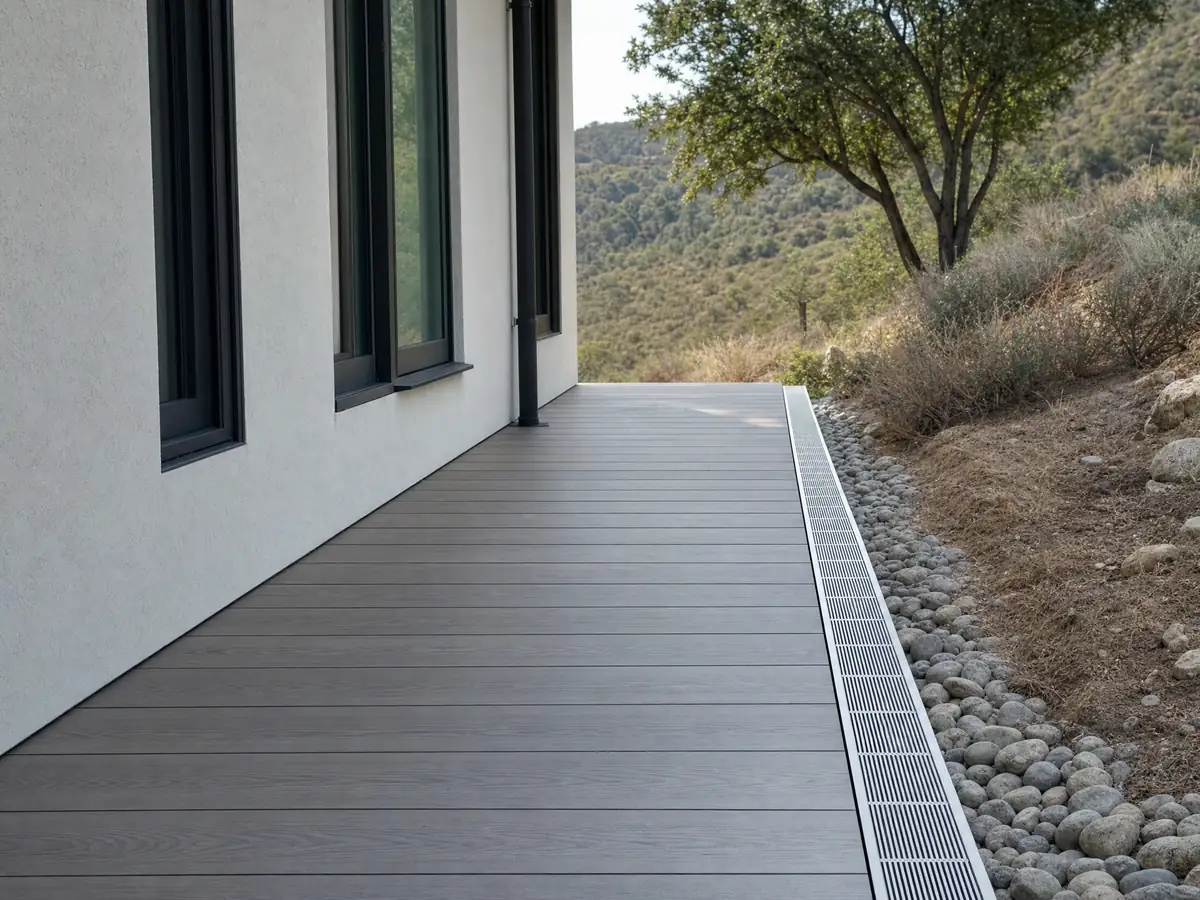
How is a deck attached to a house, and what holds it up in an earthquake?
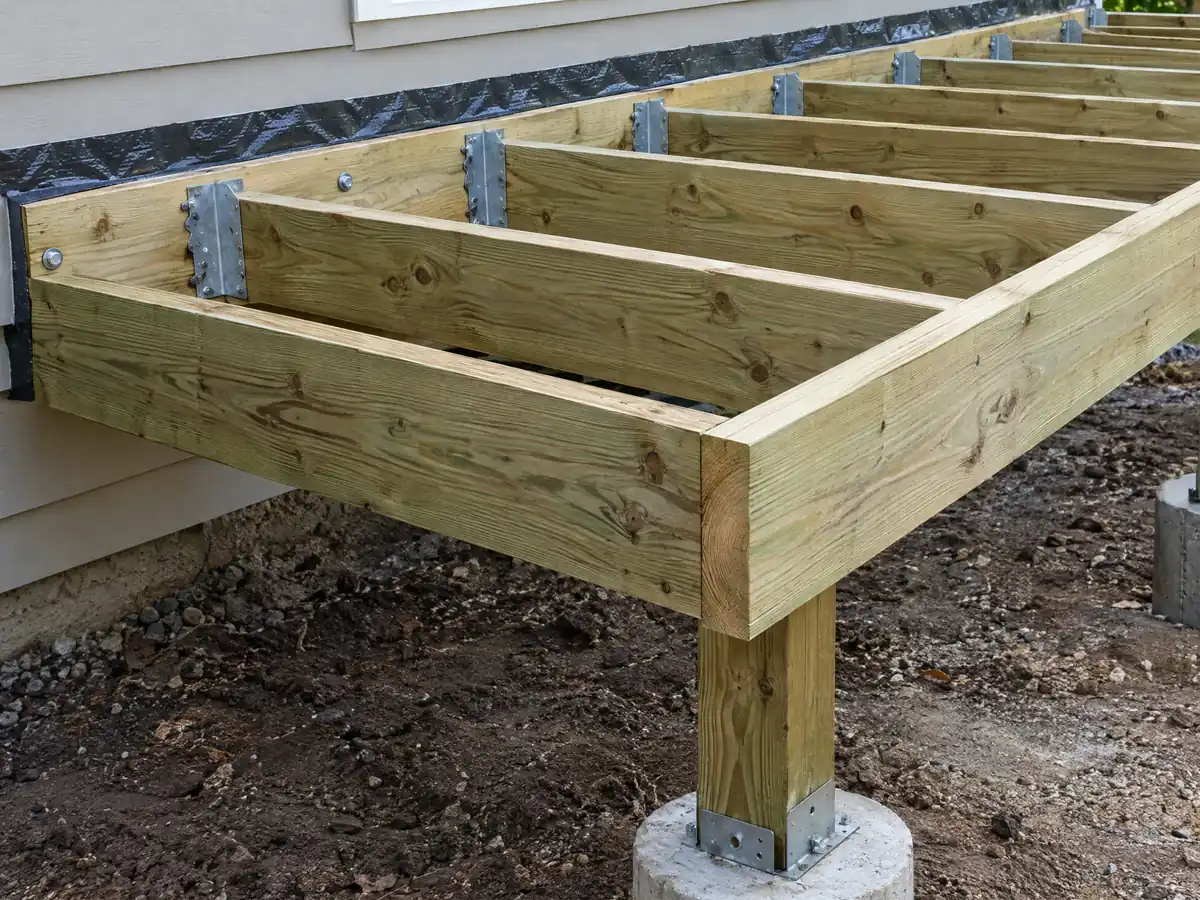
The ledger is the board fixed to the house wall that carries one edge of the deck. In the 2022 California Residential Code it is at least a 2x8 pressure treated board, takes no concentrated loads from beams or girders and cannot sit on stone or masonry veneer (R507.9.1.1). Fasteners must be hot dipped galvanized or stainless per the table, and the ledger is flashed per R703.4.
Lateral loads get their own hardware. R507.9.2 calls for two hold-down devices of 1,500 pounds within 24 inches of each end of the deck, or four devices of 750 pounds. Those numbers are from the 2022 edition, and the City adopted the 2025 California Residential Code as CVMC 15.09.010 with no local amendment text in that chapter, so confirm the numbering with plan check.
A freestanding deck skips the ledger but not the footings. We found no Chula Vista rule that changes footing depth, so size and depth come from the plans and the soil. Wikipedia names the La Nacion and Rose Canyon fault zones as affecting the city, which is a reason to ask for the hold-down detail in writing.
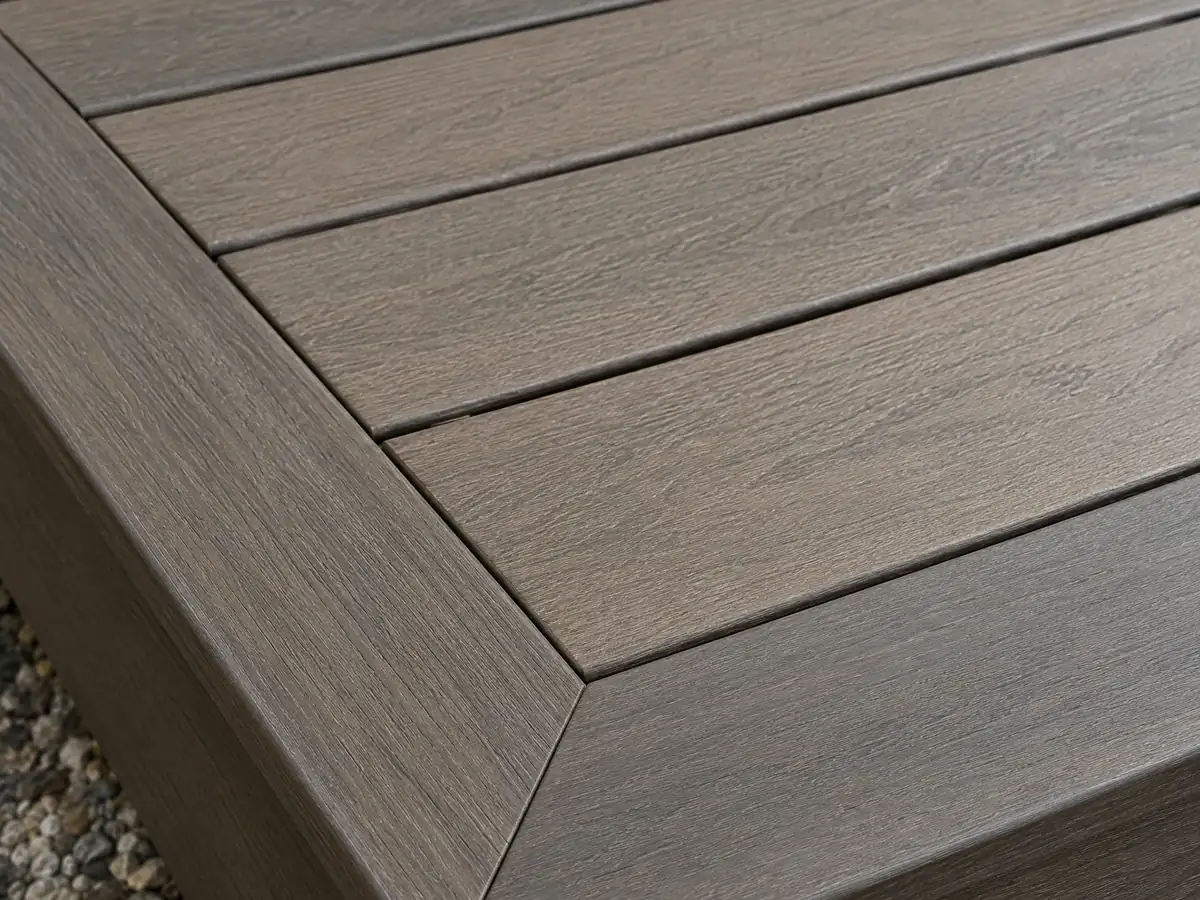
Do you need a permit for deck repair in Chula Vista, and what about the railing?
It depends on the repair. Chula Vista's list does not name decks, and we read no City handout on repairs, so replacing a few boards is a different question from replacing a ledger, posts or stair stringers. Describe the work to Building Division staff and ask in writing. Repair can also sit under the California Existing Building Code, which the City adopted in CVMC 15.14.010.
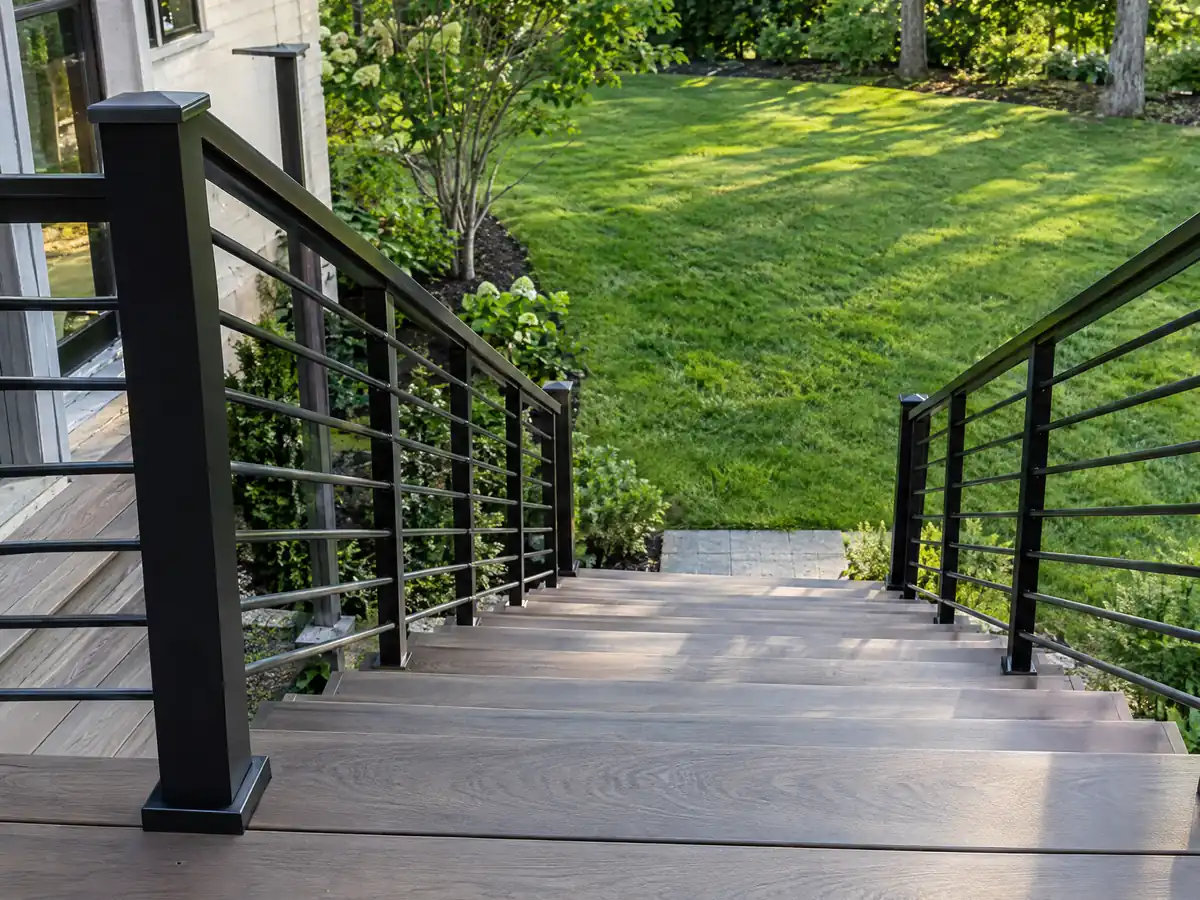
Guards are the code item people ask about. The 2022 California Residential Code requires a guard where the walking surface is more than 30 inches above grade within 36 inches of the edge (R312.1.1), sets the minimum height at 42 inches (R312.1.2) and requires openings that stop a 4 inch sphere (R312.1.3). So the answer to 36 or 42 is 42 inches for a deck.
Wood decks also fail from the inside. The University of California's IPM program says drywood termites are most prevalent in southern California and infest decks and fences, and it advises fixing moisture and sealing exterior wood; see its drywood termite guide. If the deck sits beside a pool, the City's pool barrier chapter (15.48) was last amended in 1998, so ask which barrier rule is current.
What does a deck builder charge in Chula Vista, wood or composite?
No Chula Vista price study turned up, so the anchor is Remodeling magazine's 2025 Cost vs. Value report for Los Angeles. It prices a defined 16 by 20 foot deck with a bench, a planter, three steps and full railing: wood runs $18,419 and returns 99.6 percent at resale, while composite runs $26,872 and returns 73.9 percent. Angi's Los Angeles deck page, updated October 28, 2025, shows a $13,570 average inside a range of $6,335 to $20,871.
Chula Vista's median owner-occupied home value is $839,000 on the Census estimate, give or take $20,594, but the resale percentages belong to Los Angeles and may not carry over. We plan around $45 to $75 per square foot for treated wood and $65 to $110 for composite, so a 16 by 20 deck lands near $14,500 to $24,000 in wood and $21,000 to $35,000 in composite, permits and engineering extra. Second story and engineered decks have no independent price source and are priced after a site visit.
CSLB's C-5 framing class covers framing and rough carpentry, and we could not confirm which class covers composite surfacing or waterproof decks, so ask each bidder which license it bids under. Our license check guide shows how to verify a number, and how general contractors use subcontractors explains MDG's role on a managed build.
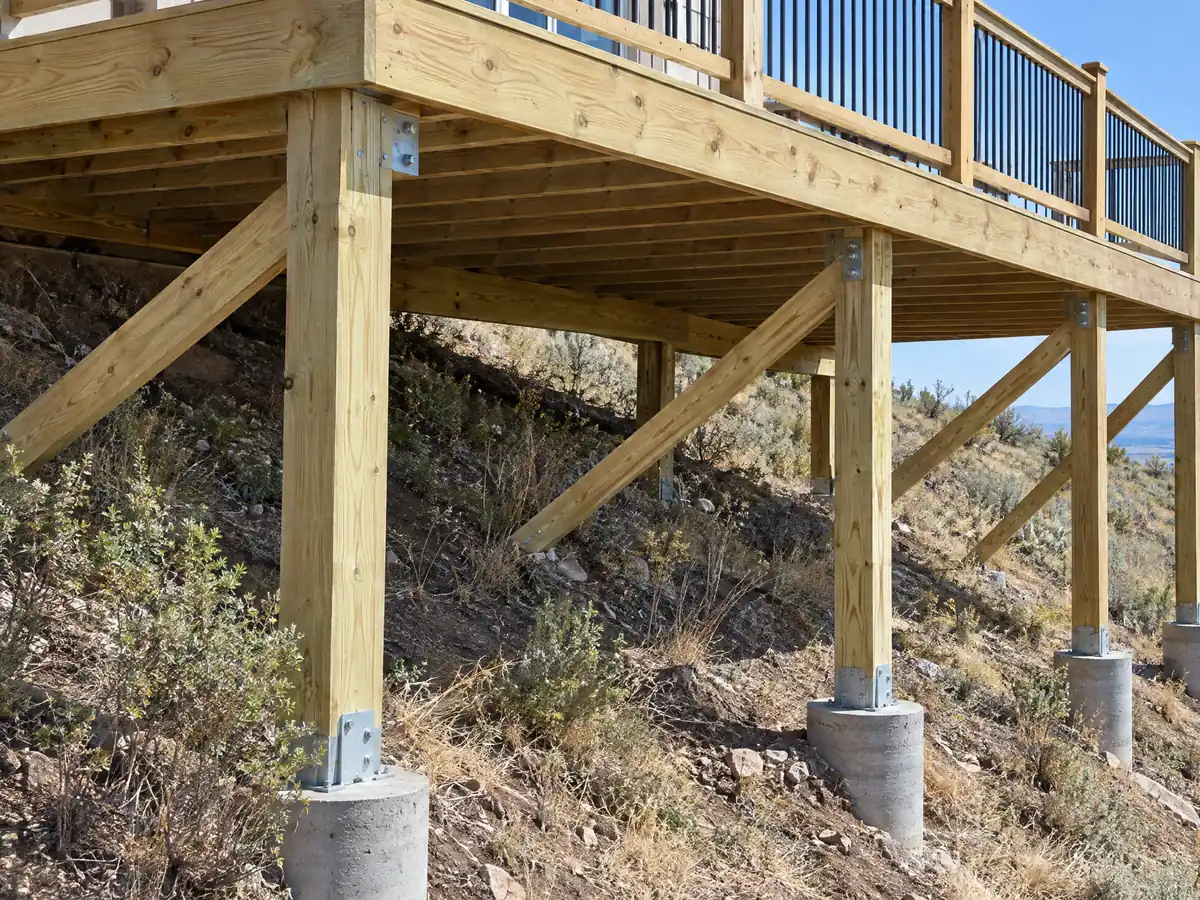
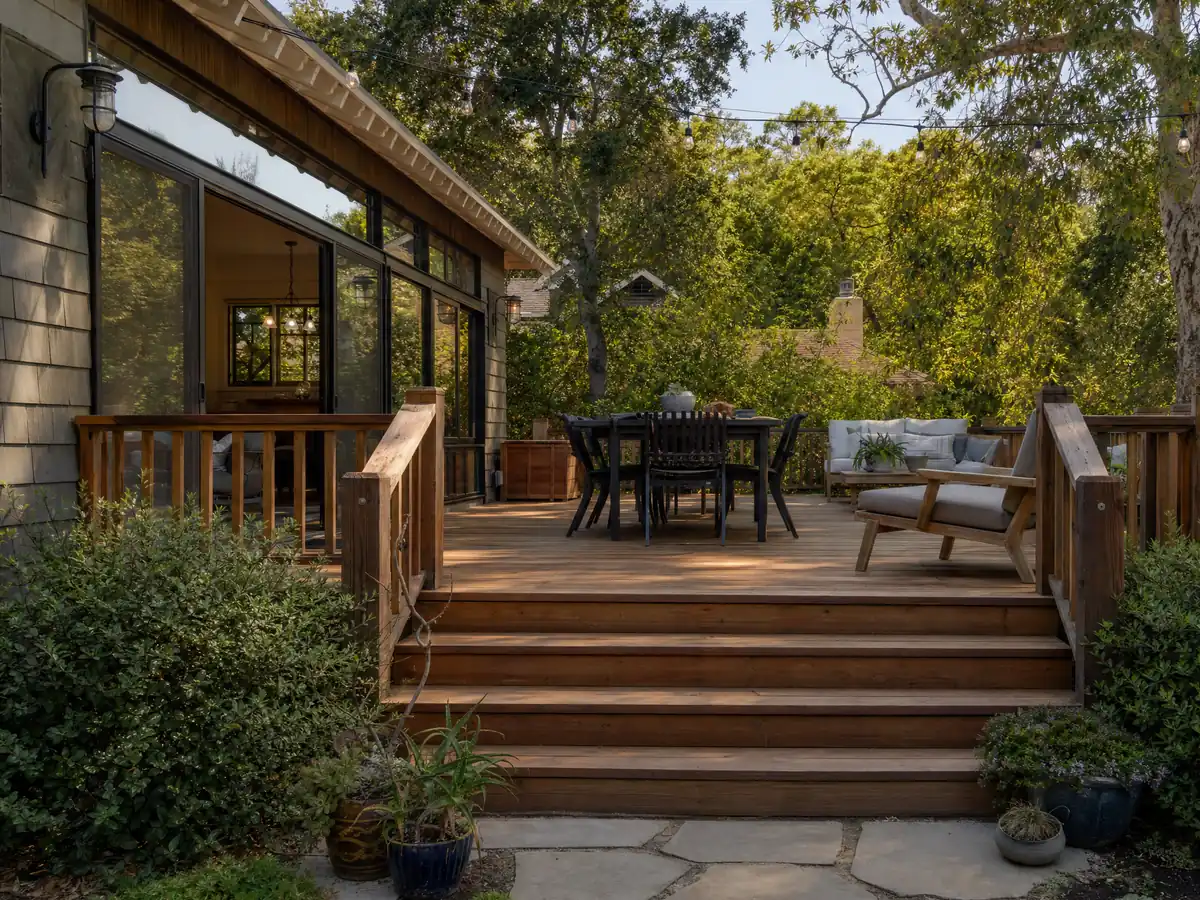
Deck photos from Chula Vista and nearby communities
Footings, framing, railings and finished boards from Chula Vista and nearby towns, shown at the stages that matter. Tap any photo to enlarge it.
What decks costs around Chula Vista
Dollar figures on this page are Los Angeles planning ranges from our decks page, not a Chula Vista bid, and permits, engineering and any Fire Department plans belong on separate proposal lines. For the same property, see flooring in Chula Vista and concrete in Chula Vista. For comparison outside San Diego County, see deck building in Dana Point and decks in Los Angeles.
| What it covers | Typical range |
|---|---|
| Pressure-treated wood deck | $45 to $75 per square foot |
| Composite deck | $65 to $110 per square foot |
| 16 by 20 foot wood deck (320 sq ft) | About $14,500 to $24,000 |
| 16 by 20 foot composite deck | About $21,000 to $35,000 |
| Hillside, second-story, rooftop and ipe decks | Priced by site visit |
| Permits and engineering | Quoted as separate lines |
Other work we manage in Chula Vista
Chula Vista deck questions, answered
Can I build a deck without a permit in Chula Vista?
Not by the City's list: decks are not named, and the nearest exempt item covers platforms, walks and driveways up to 30 inches above grade that are not part of an accessible route. A taller deck, or one attached to the house, should be treated as needing a permit until the Building Division says otherwise.
What is the largest deck you can build without a permit?
We found no Chula Vista deck handout, so no square foot threshold can be printed. The model residential code exempts a detached deck of 200 square feet or less and 30 inches or less above grade, but the City's own list does not repeat it, so confirm with the Building Division before relying on that number.
Is railing height 36 or 42 for decks?
Use 42 inches. The 2022 California Residential Code sets the minimum guard height at 42 inches (R312.1.2) where the walking surface is more than 30 inches above grade within 36 inches of the edge, and openings must stop a 4 inch sphere. Confirm the section number in the 2025 edition the City adopted.
How much should a 16x20 deck cost?
In Remodeling magazine's 2025 Cost vs. Value report, a Los Angeles 16 by 20 foot deck with bench, planter, steps and railing costs $18,419 in wood and $26,872 in composite. Our planning range is $14,500 to $24,000 for wood and $21,000 to $35,000 for composite, permits and engineering extra. These are Los Angeles figures, not a Chula Vista bid.
Is it cheaper to build a wood deck or composite deck?
Wood is cheaper to build, and composite costs more up front. In the Los Angeles Cost vs. Value report, wood costs $18,419 and recoups 99.6 percent, while composite costs $26,872 and recoups 73.9 percent. In a fire zone, composite must also be a listed ignition-resistant product, so check the State Fire Marshal listing before choosing one.
Do I need a permit for deck repair in Chula Vista?
It depends on the repair, and the City's list does not name decks. Replacing a few boards is a different question from replacing a ledger, posts or stair stringers, so describe the work to the Building Division in writing. Anything structural deserves a permit question before the work starts.
Do freestanding decks need footings?
Yes, usually: a freestanding deck has no house wall to carry one edge, so its posts need footings sized by the plans and the soil. We found no Chula Vista rule that sets footing depth, and a deck on a hillside lot may also need a soils report with a seepage statement. Ask the builder for the footing detail in writing.
Does Chula Vista's new fire hazard map affect my deck?
It may, depending on the parcel. The 2025 map lists about 2.4 times as much Very High area as the 2011 map, the whole parcel takes the highest zone on any part of it, and new construction in the Moderate zone must use ignition-resistant materials. Ask the Fire Department which zone your address is in.
Can I put a patio cover over my deck in Chula Vista?
Often yes, within limits. A detached cover up to 12 feet high with 144 square feet of roof or less is exempt, and a covered patio open on two sides counts toward floor area only above 300 square feet combined with porches. Setbacks and the 40 percent lot coverage cap still apply, and a larger cover needs a permit review.
What happens if a deck is built without a permit?
Expect an investigation fee equal to the permit fee, whether or not a permit is later issued. CVMC 15.06.095 sets that charge, and a permit issued in error or on incorrect information can be suspended or revoked. Ask the Building Division whether an unpermitted deck can be permitted after the fact.
Say how high the deck sits and whether it touches the house
Tell us the height off the ground, whether the deck attaches to the house and which part of Chula Vista the lot is in. The fire zone, setback and slope questions come with us to the first visit.