
Flooring Installationin Chula Vista, CA
Flooring installation in Chula Vista usually needs no building permit for carpet or tile, because the City's code lists both as exempt finish work. It does not name subfloor, slab or structural changes, so confirm those with the Building Division. Test the slab for moisture, test floors from before 1980 for asbestos, and get written approval from a condo association.
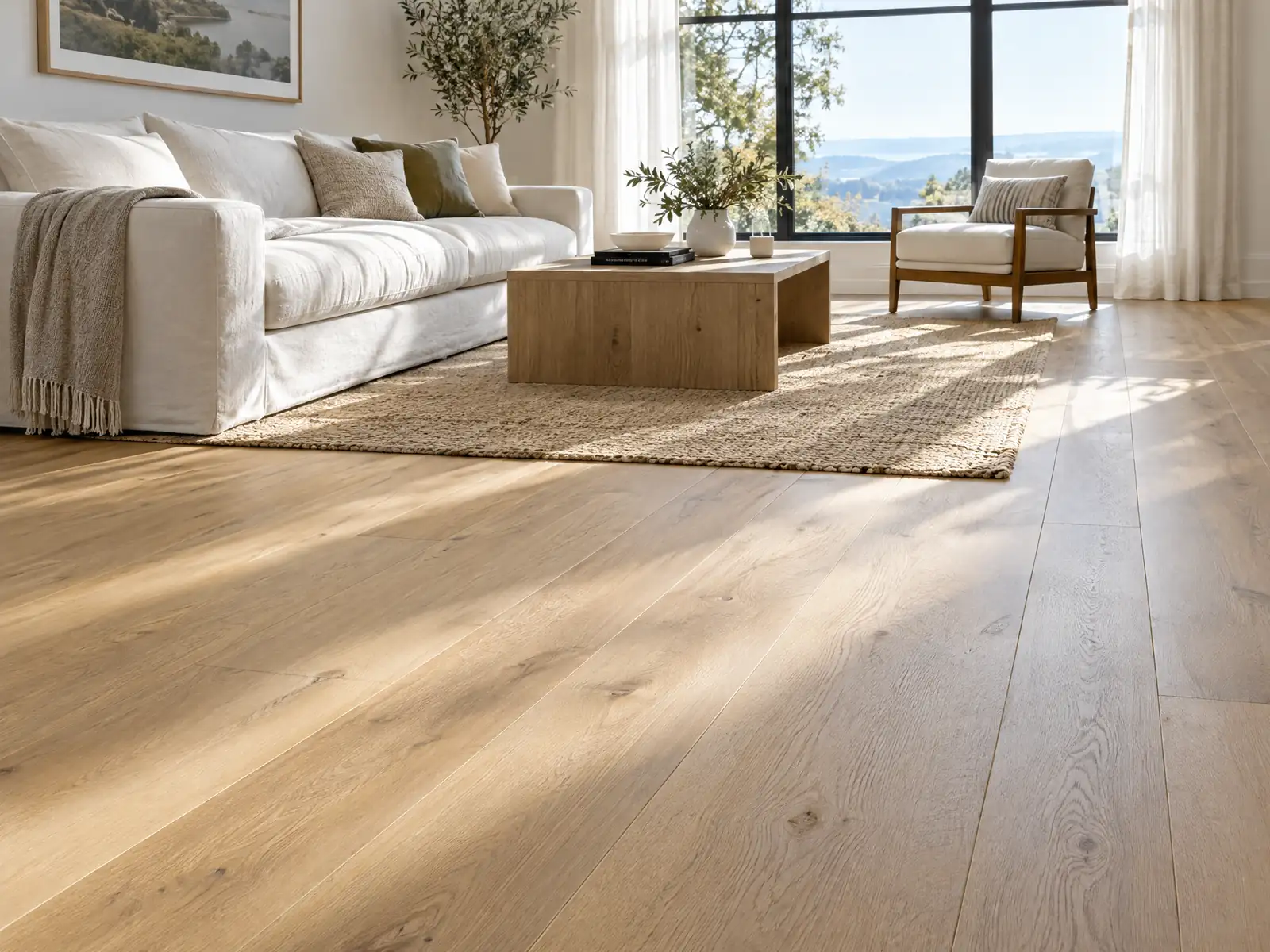
Chula Vista has two floor ages. The San Diego Land and Town Company began a settlement in 1887, voters approved incorporation on October 17, 1911, and Rohr Aircraft arrived in early 1941, which lifted the population from about 5,000 in 1940 to more than 16,000 by 1950. Census estimates for 2024 count 91,470 homes, about 41 percent built before 1980 and about 36 percent in 2000 or later, so a 1950s west side house and an Otay Ranch home start from very different floors.
MDG Builders, CSLB #1040337, is a general contractor based in Tarzana, so we write the scope, put the permit questions to Development Services and book licensed flooring or tile subcontractors to do the install. The City's website blocked our tools, so the code lines below come from a third-party copy of the Municipal Code at gocodebook.com and need the City's confirmation. Materials and ranges are on the flooring page, and the Chula Vista overview lists the other trades we manage here.
What Chula Vista's Building Division, the Municipal Code and state law say about flooring work
Where flooring permits come from in Chula Vista: City of Chula Vista Development Services Department, Building Division.
- Carpeting and tiling are named in the exempt finish work list in CVMC 15.06.080(B)(1). Subfloor, slab or structural changes are not named, so a floor job that touches framing or a slab should be confirmed with the Building Division.
- CSLB defines the C-15 Flooring and Floor Covering classification as a contractor who prepares any surface for the installation of flooring and floor coverings, except ceramic tile.
Sources for these rules
What is under the floors of a 1950s west side house compared with an Eastlake home?
It depends on the decade, and the Census table shows the split. Chula Vista has 14,428 homes from the 1970s, 11,523 from the 1960s, 7,799 from the 1950s and 3,494 from before 1950, against 20,136 from the 2000s alone. West Chula Vista, west of Hilltop Drive and north of L Street, is the original city. The 1985 annexation then added Castle Park and Otay, Eastlake construction began in 1986, Rancho del Rey was established in 1989 and Otay Ranch followed in 1999.
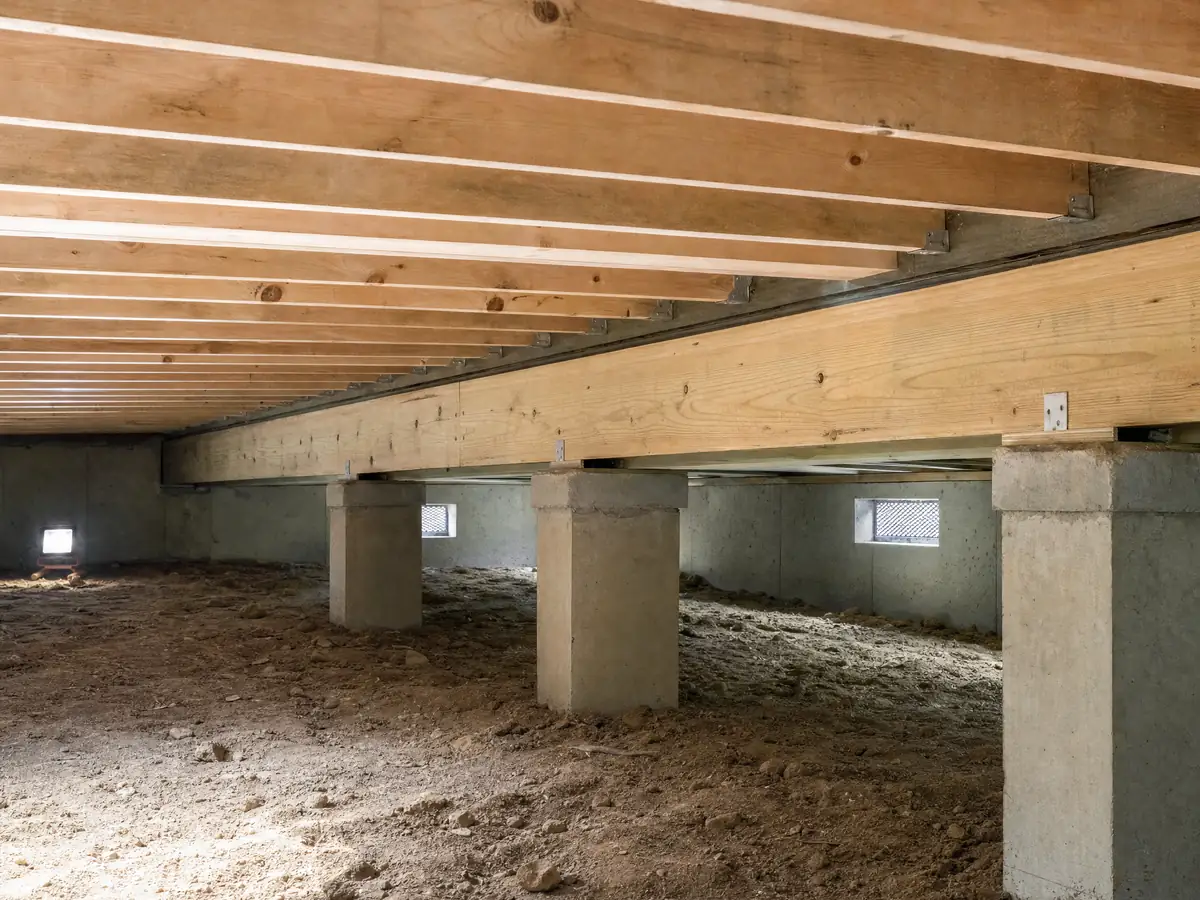
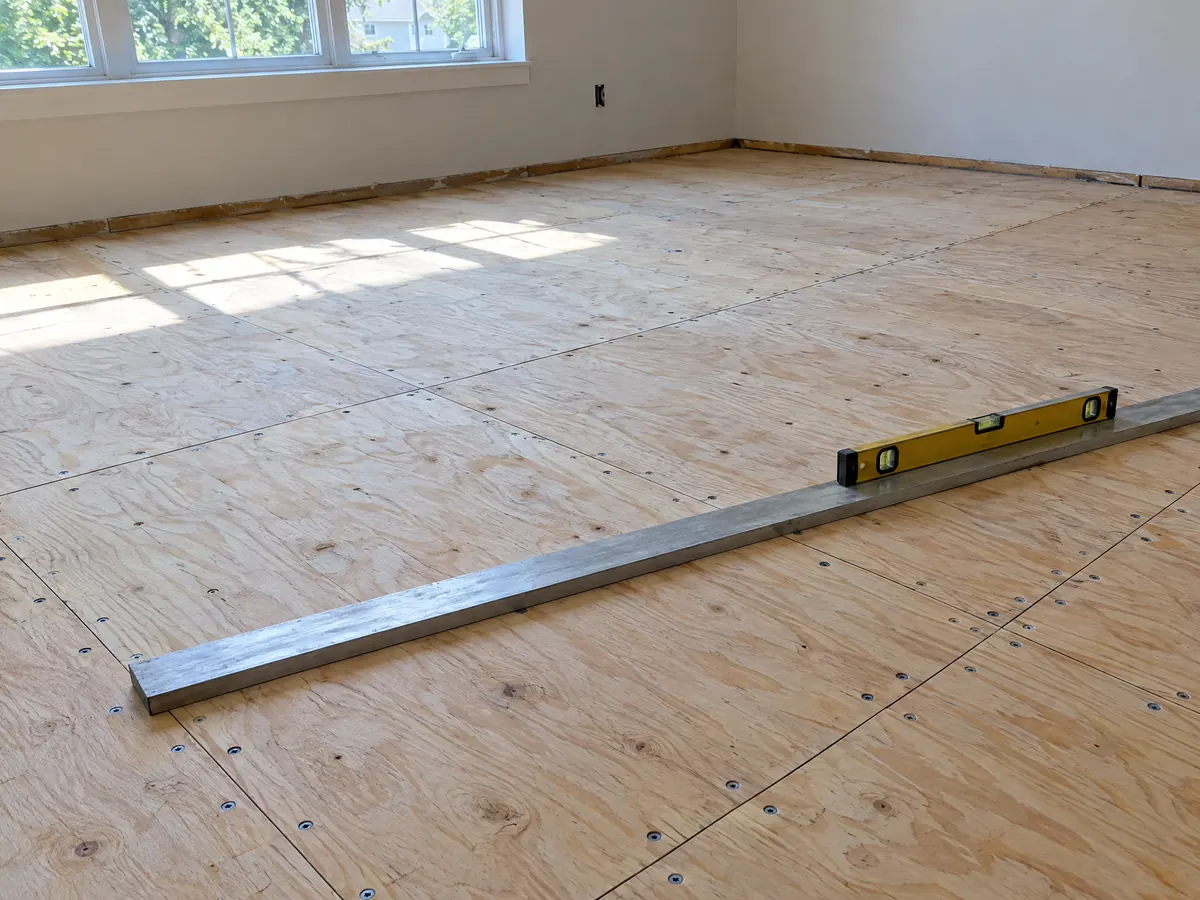
We found no count of Chula Vista homes on slabs versus raised wood floors, so look before ordering anything. A crawlspace vent or a hollow sound underfoot points to framing, and a cold, hard floor points to a slab. Framing means checking the subfloor for sag, soft spots and moisture first.
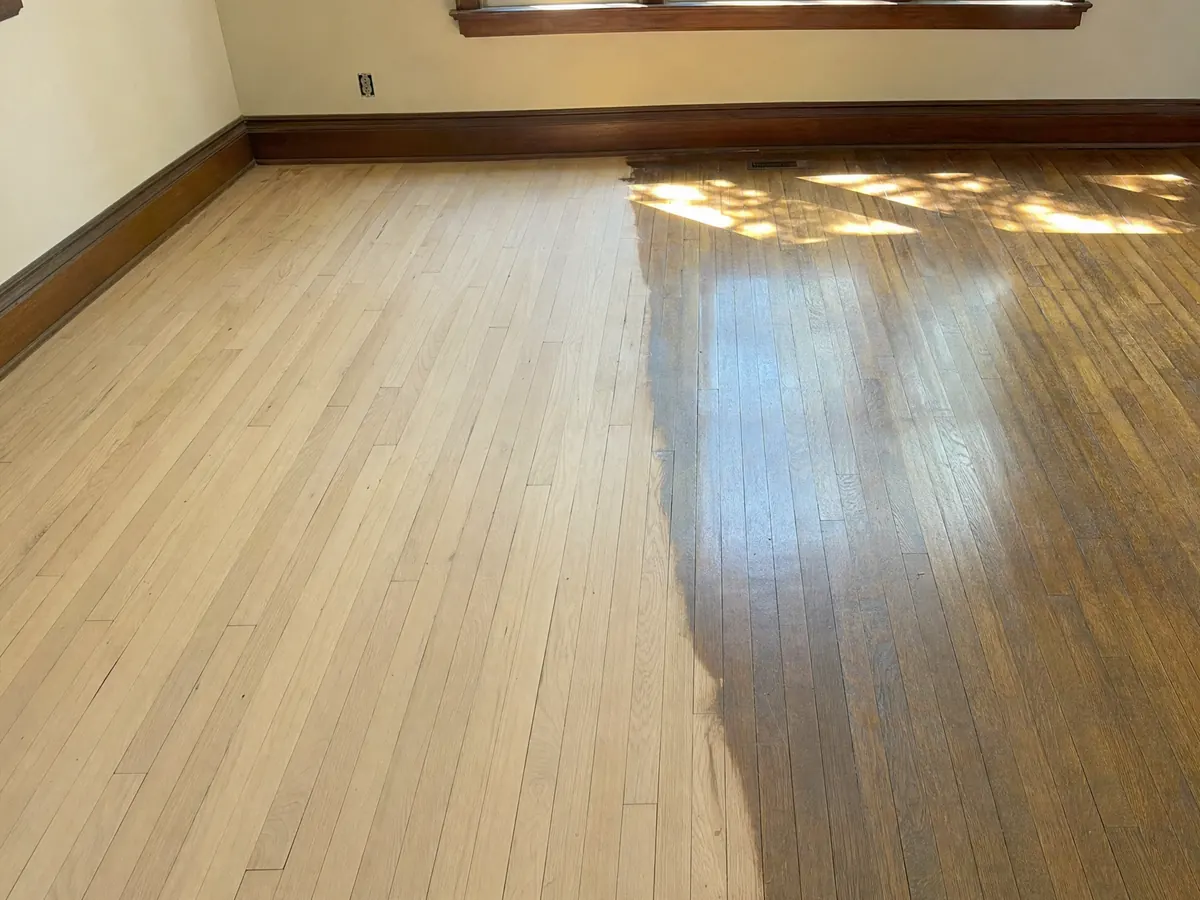
Original wood in an older west side house can sometimes be refinished instead of replaced, and a floor register or a cut edge shows how much wood stands above the tongue. Our flooring cost guide sets refinishing beside replacement.
Does a Chula Vista condo or apartment need approval before new flooring goes in?
Often yes, and from someone other than the City. Census estimates put 24,176 of Chula Vista's 91,470 homes (26.4 percent) in buildings of five or more units, 10,777 of them in buildings of 50 or more, and 42.7 percent of occupied homes are rentals. We read no Chula Vista association rule, so we print none; the governing documents of a condo or townhome community are where the answer sits.
Hard floors above a neighbor are where associations push back. We found no sound-rating number we could verify, so ask the management company in writing what it wants, such as an underlayment specification or a field sound test. A tenant needs the owner's consent first, and Civil Code section 4765 sets out how an association must answer an architectural request in writing and when an owner can ask it to reconsider.
- Does the governing document name hard flooring?
- Does the association want an underlayment spec in writing?
- Who signs the approval, and how long does it take?
Do you need a permit to replace flooring in Chula Vista?
For carpet and tile, the City's own list says no. CVMC 15.06.080(B)(1) names painting, papering, tiling, carpeting, cabinets, counter tops and similar finish work among the items that need no building permit. Wood, vinyl and laminate are not named, but they are the same kind of finish work, so a like-for-like swap probably falls on the exempt side. Only Development Services can confirm that.
Structure is a separate question. Subfloor, slab and framing changes are not on the list, so a job that cuts into any of them belongs in your question to the Building Division. The same section says separate plumbing, electrical and mechanical permits are still required unless those trades are exempt too, which matters when a bathroom floor job moves a drain.
Permits have clocks and penalties. Under CVMC 15.06.095, work that starts without a required permit draws an investigation fee equal to the permit fee, and a permit expires if work does not begin within 12 months or stops for 180 days. Fees sit in the City's Master Fee Schedule, which we could not read, so no dollar figure is printed here.
Is there asbestos or lead under the old floors of Chula Vista homes built before 1980?
Possibly, in roughly four homes out of ten. Census estimates count about 37,000 Chula Vista homes, about 41 percent, from before 1980, and about 22,800 of them from before 1970. Resilient tile, sheet vinyl and the dark adhesive beneath can contain asbestos, and only a lab result settles it.
Under the federal OSHA asbestos standard for construction, old resilient flooring and the adhesive under it are presumed to contain asbestos until a sample says otherwise. A careful crew therefore tests before it sands, lifts sheet goods or dry-scrapes glue. We read no San Diego County air district notification rule for asbestos, so ask the removal contractor which one applies.
Lead is a different test. The EPA Renovation, Repair and Painting rule applies to paid work that disturbs paint in a house built before 1978, which includes baseboards and door casings removed to fit a new floor. Census age bands cannot separate 1978 and 1979 from the earlier 1970s, so no count of covered Chula Vista homes exists here; ask whether the firm is certified.
- Was a sample of the old tile and adhesive sent to a lab?
- Who removes a layer that tests positive?
- Is the crew certified for lead-safe work?
How do you test a Chula Vista concrete slab for moisture before laying flooring?
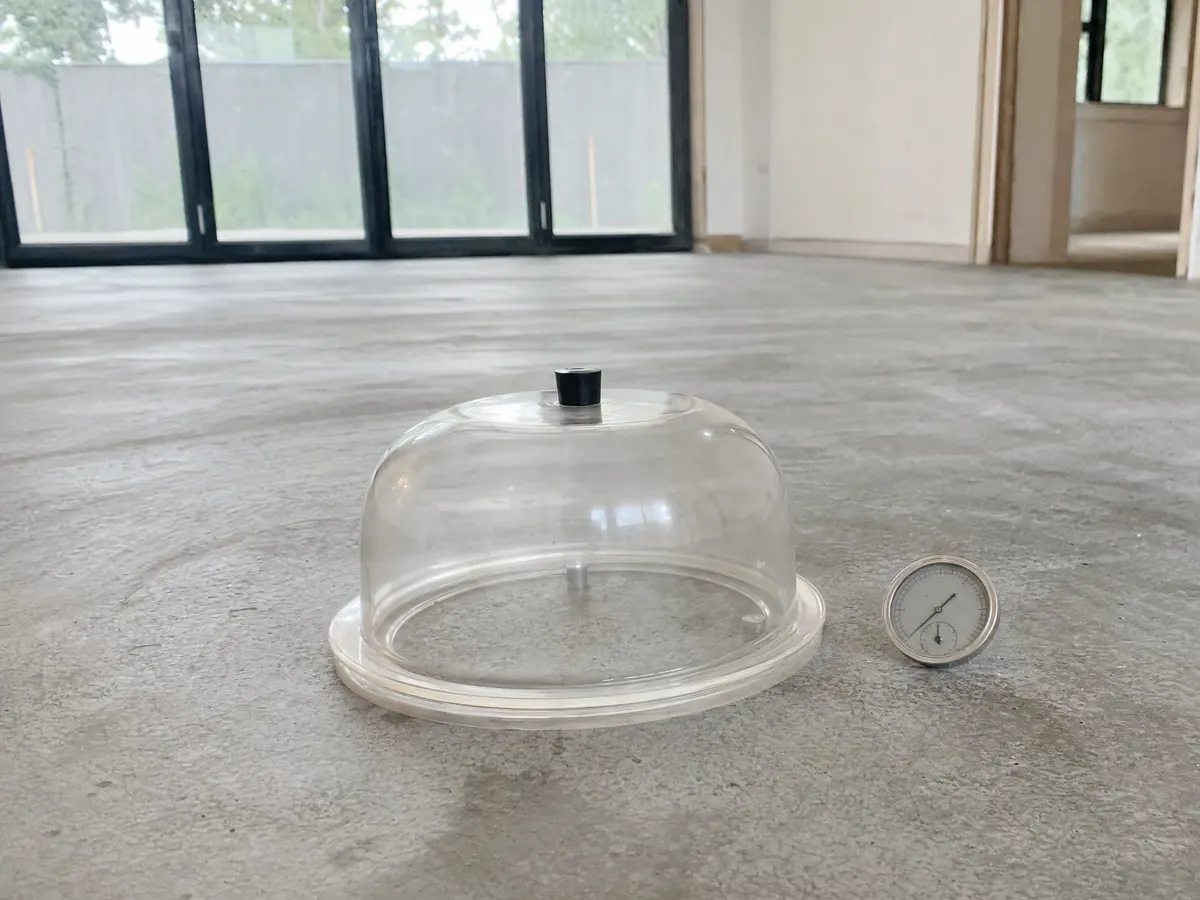
Two ASTM tests are the usual answer. F2170 puts probes into drilled holes to read the slab's internal relative humidity, and F1869 sets a calcium chloride dish under a cover to catch vapor leaving the surface. Neither standard sets a pass mark, because the plank, vinyl or adhesive maker sets the limit, so ask for the readings printed next to that number.
A dry-looking climate can mislead. NOAA's 1991 to 2020 normals for the Chula Vista station, near the bay at 17 feet, show 9.20 inches of rain a year, 7.12 of it from December through March, and 0.06 inch in July and 0.01 in August, over 32.5 days of measurable rain. Lindbergh Field, about 12 miles northwest, logs 9.79 inches. A slab does not follow that calendar, since an irrigation line, planter or downspout beside a wall can wet one corner while the rest reads dry.
Newer east side homes need the question too. About 36 percent of Chula Vista homes date from 2000 or later, yet we found no source on what vapor barrier lies under any given slab. The station is near the bay, so the inland Eastlake and Otay Ranch hills are not measured and can run hotter and drier. Take readings along exterior walls and near bathrooms, and keep them with the house records.
Does tile need a different contractor and waterproofing than other Chula Vista floors?
Yes, a different license class. CSLB assigns ceramic tile to C-54, while its C-15 class prepares surfaces for flooring and floor coverings except ceramic tile. A flooring subcontractor and a tile setter can both appear on one job, which is why the proposal should name each.
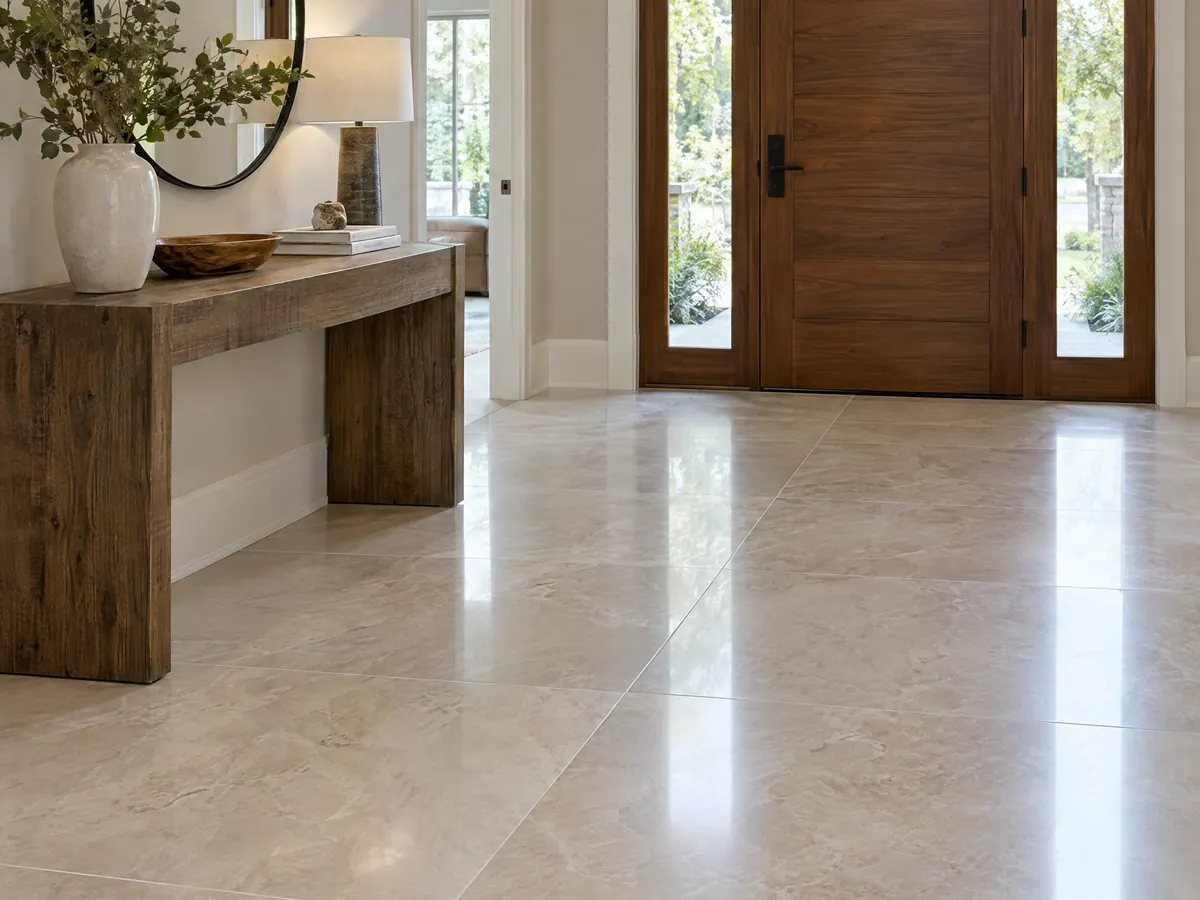
Wet rooms need waterproofing under the tile, shown as its own line. Tiling is on the exempt list, but moving a shower drain or a toilet flange brings in the separate plumbing permit named in the same section. The City adopted the 2025 California Plumbing Code in CVMC 15.28.010, and we saw no local fixture amendment, so state code governs fixtures and venting.
Older west side houses add one more check. Demolition of painted surfaces in a pre-1978 house falls under the EPA lead-safe rule with no minimum amount, so a bathroom floor job that opens walls should be priced with that in mind.
What does a flooring contractor charge in Chula Vista, and which license applies?
No Chula Vista price study with a stated method turned up, so these are Los Angeles figures from Angi's July 2026 pages, which we rate medium to low in confidence, and San Diego County prices can differ. On Angi's pages, installer labor is $3 to $9 per square foot, while solid hardwood runs $12 to $22 installed, engineered hardwood $10 to $18 and refinishing $4 to $8. Angi's laminate page, from September 2026, prices removal of an old floor at $455 to $685 for every 200 square feet.
Federal wage data for May 2025 cover the Los Angeles-Long Beach-Anaheim metro area and not San Diego, which we did not read, so treat them as a rough anchor: floor layers averaged $33.48 an hour, tile and stone setters $30.72 and carpet installers $27.54. These are wages and not billing rates. Put demolition, subfloor repair, moisture tests and stairs on separate proposal lines, not inside one square foot price.
A flooring contractor should hold CSLB's C-15 class for wood, resilient and carpet work. Our license check guide shows how to look up a number, and how general contractors use subcontractors explains who holds which license on a managed job. Per the CSLB bulletin on AB 2622, the $1,000 unlicensed limit does not apply to work that needs a permit.
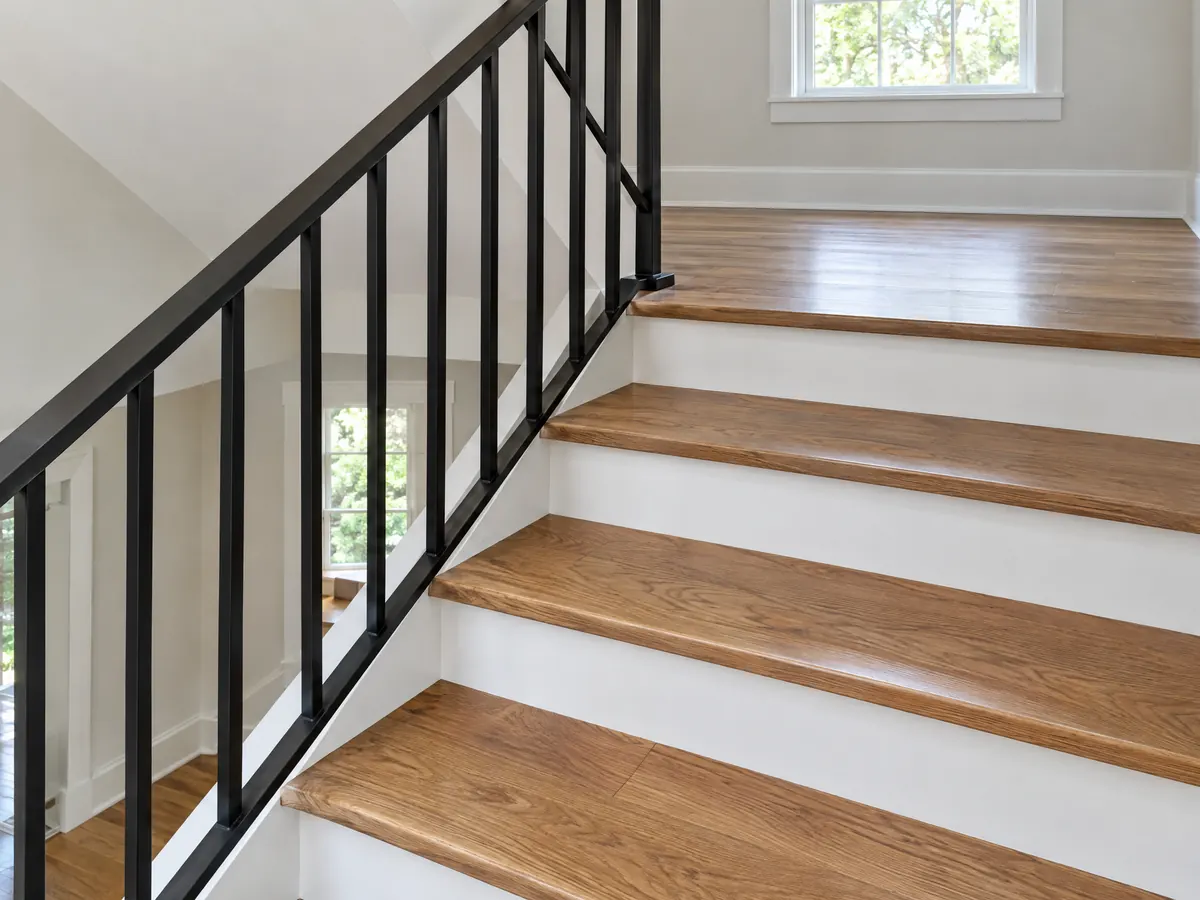
Flooring photos from Chula Vista and nearby communities
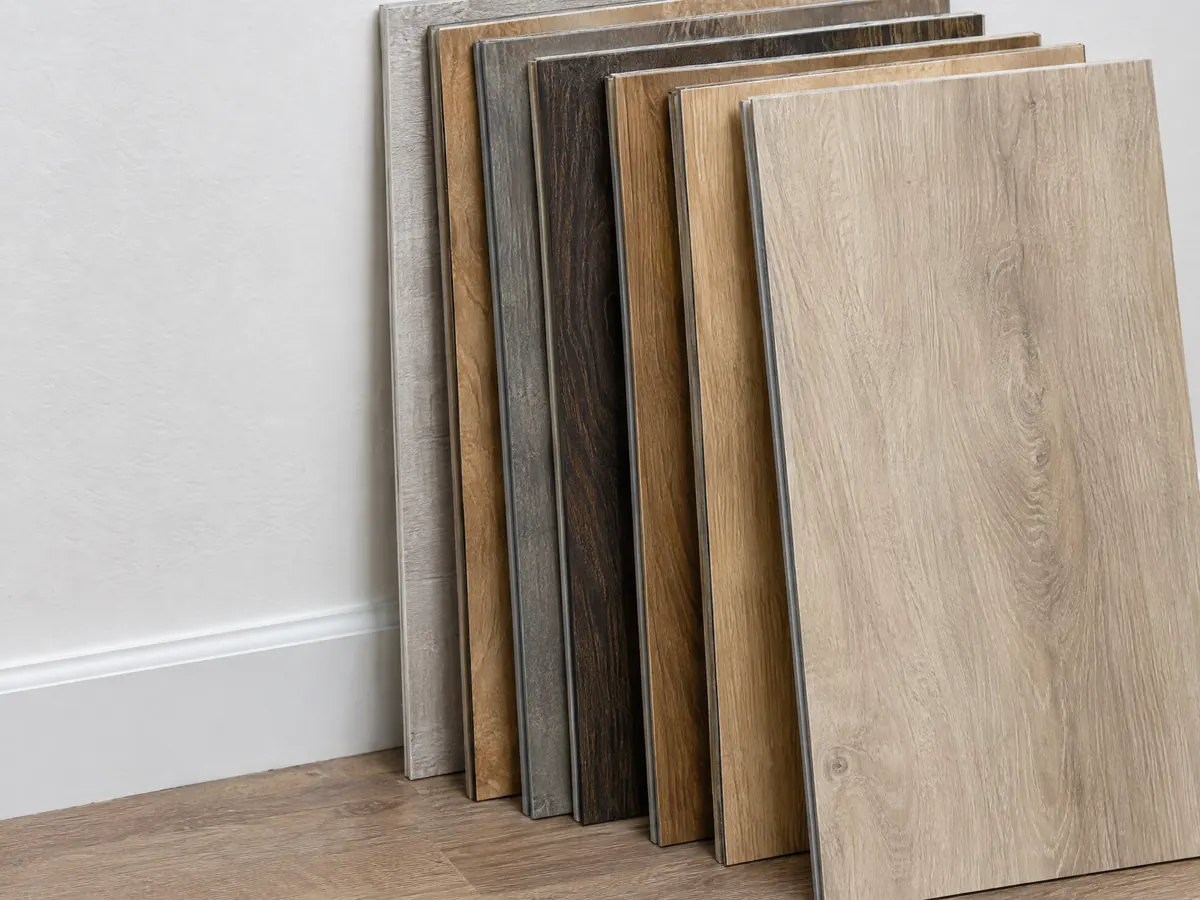
Raised-floor framing, plank samples, slab tests, tile and finished floors from Chula Vista and nearby towns, shown at the steps that matter. Tap any photo to enlarge it.
What flooring costs around Chula Vista
Dollar figures on this page are Los Angeles planning ranges from our flooring page, not a Chula Vista bid, and a written proposal should list demolition, testing, subfloor repair and stairs on separate lines. For the same property, see concrete work in Chula Vista and deck building in Chula Vista. For comparison outside San Diego County, see flooring in Dana Point and flooring in Los Angeles.
| What it covers | Typical range |
|---|---|
| Installation labor only | $3 to $9 per sq ft |
| Solid hardwood, installed | $12 to $22 per sq ft |
| Engineered hardwood, installed | $10 to $18 per sq ft |
| Refinishing existing hardwood | $4 to $8 per sq ft |
| Laminate, whole project | $2,000 to $5,500 |
| Hardwood, whole project | $3,153 to $8,496 |
| Removing the old floor | $455 to $685 per 200 sq ft |
| Tile | No sourced Los Angeles range |
Other work we manage in Chula Vista
Chula Vista flooring questions, answered
Do I need a permit to replace flooring in Chula Vista?
Usually not for carpet or tile, because the City's code lists tiling and carpeting as exempt finish work. Wood, vinyl and laminate are not named, and subfloor, slab or structural changes are not on the list at all, so confirm them with the Building Division. A condo also needs its association's approval.
How much does it cost to have flooring professionally installed?
Angi's July 2026 Los Angeles pages show $3 to $9 per square foot for labor, plus material at $10 to $18 installed for engineered hardwood and $12 to $22 for solid. We found no Chula Vista study and rate these medium to low in confidence. Removal, testing and subfloor repair come as separate lines.
How much to refloor a 2000 sq. ft house?
Labor alone runs $6,000 to $18,000 for 2,000 square feet at Angi's $3 to $9 rate. Adding installed engineered hardwood at $10 to $18 per square foot gives $20,000 to $36,000 for the house. Both multiply Los Angeles ranges rather than quote a Chula Vista bid, so a site visit sets the real number.
Can you put flooring over concrete?
Yes, once the slab is tested and prepared. The maker of the flooring or adhesive sets the moisture limit, so a good installer drills for ASTM F2170 readings or sets an F1869 dish, fills cracks, then levels. Ask for the numbers in writing beside that limit.
Can I install hardwood flooring in a Chula Vista condo?
Only with the association's written approval where its documents require it. About 26 percent of Chula Vista homes are in buildings of five or more units, and sound rules for hard floors usually sit in the governing documents. We found no verified sound-rating number, so ask the management company what it requires first.
Is there asbestos under old vinyl flooring in homes built before 1980?
Possibly, and nobody can tell by eye. About 41 percent of Chula Vista's homes predate 1980, and OSHA presumes old resilient flooring and its adhesive contain asbestos until tested. Have a sample tested at a lab before anyone sands or rips it up, and ask who removes a layer that comes back positive.
Can I refinish hardwood floors instead of replacing them?
Often, if enough wood is left above the tongue to survive a sander, and a floor register or cut edge shows how much. Angi's Los Angeles figures are $4 to $8 per square foot to refinish and $12 to $22 for new solid hardwood. Ask the finisher for the coating's VOC number and which district rule category it falls under.
Do I need lead-safe practices to replace floors in an older Chula Vista house?
Only if paint gets disturbed in a house built before 1978, such as baseboards pulled or scraped. EPA's rule then requires a certified firm using lead-safe work practices, and demolition of painted surfaces is always covered. Ask whether the flooring crew holds the certification before the first board comes up.
What license does a flooring contractor need in Chula Vista?
Carpet, resilient flooring and wood floors fall under CSLB's C-15 class, and ceramic tile under C-54. We could not read the City's business license rules, so ask Development Services what it requires on a permitted job. Look the CSLB number up before accepting a quote.
Send the rooms, the building type and what is on the floor today
Say whether it is a condo, an apartment or a house, roughly when it was built and which rooms you want done. The slab, lead and association questions come with us to the first visit.