
Deck Builderin National City, CA
A deck builder in National City works with the Building Division, whose exempt list does not name decks, and whose fee schedule has separate lines for a deck, covered porch and patio cover. Treat any deck as a permit item and ask about low platforms. Setbacks, flood overlays and the coastal zone can add review.
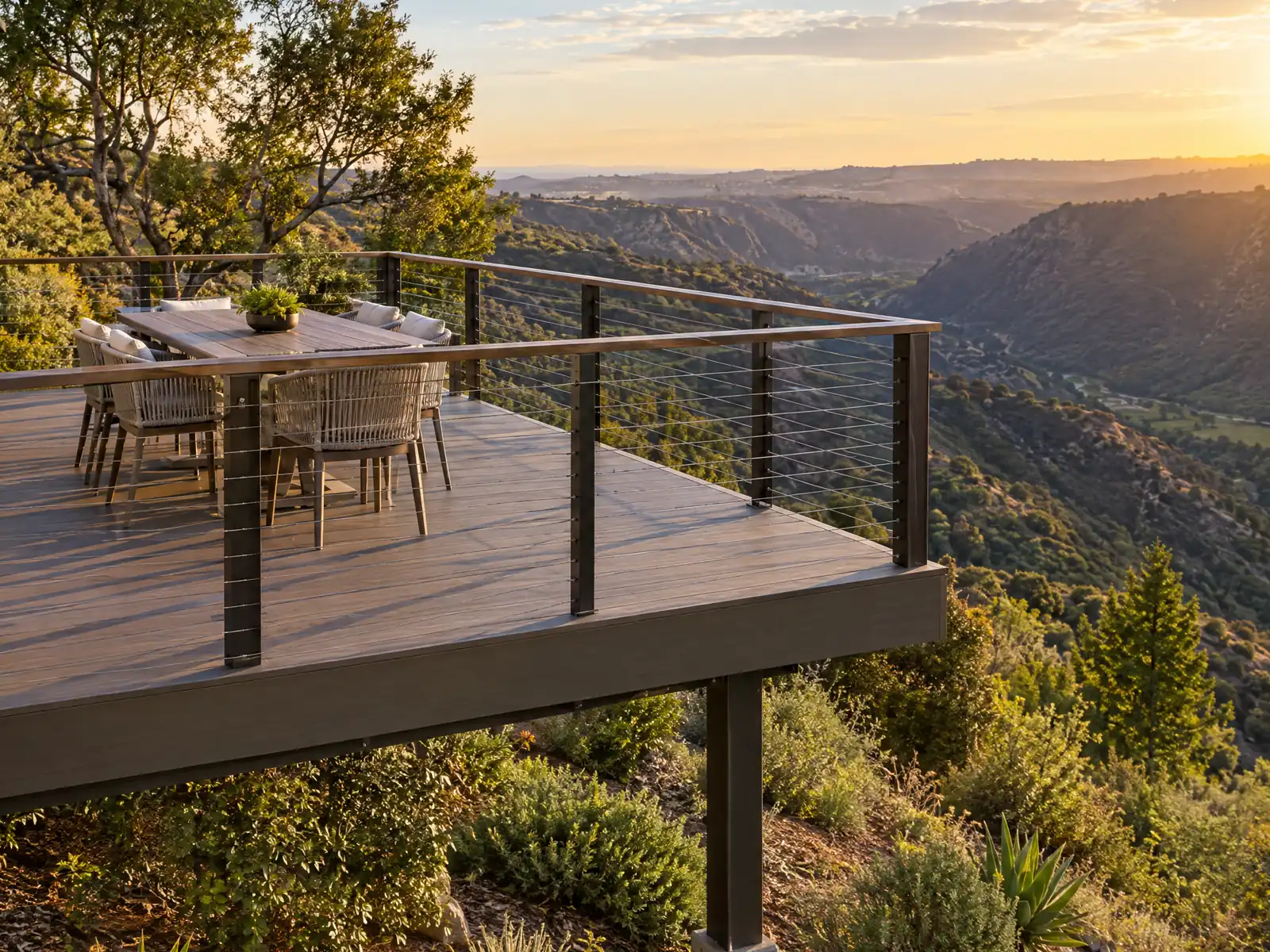
National City's decks sit on old ground. Frank Kimball and his brothers bought El Rancho de la Nacion in 1868, the city incorporated on September 17, 1887, and the Census Bureau's 2024 estimates say 52.0 percent of its 19,414 homes went up between 1950 and 1979, with only 12.3 percent from 2000 on. Just 40.4 percent are single-family detached houses and 65.3 percent of occupied homes are rented, so a deck job here is as likely to involve a landlord as an owner.
MDG Builders, CSLB #1040337, is a Tarzana general contractor that draws the deck, takes the permit and setback questions to the City's Building Division and hires a licensed carpentry subcontractor to build it. Materials and ranges are on the decks page, and the National City overview shows our other trades here.
What National City's Building Division, its zoning code and state model codes say about decks
Where decks permits come from in National City: City of National City Community Development Department, Building Division.
- The Info Guide's exempt list names sheds up to 120 square feet, fences not over 7 feet, retaining walls not over 3 feet and sidewalks and driveways under 30 inches, but it does not name decks, so treat a deck, porch or patio cover as a permit item and ask the Building Division (619-336-4210) about low ground-level platforms.
- The Building Department fee schedule has separate line items for a deck, a covered porch and a patio cover, which supports treating them as permit items.
- Open, unenclosed porches, platforms and landings, with access stairs, that are not covered by a roof or canopy, do not rise above the first floor level and are no more than 4 feet above natural grade may project up to 4 feet into a required setback; open unenclosed stairways or balconies not under a roof may project up to 4 feet into a required rear setback and 30 inches into a front or exterior side setback (Section 18.42.020, GoCodebook mirror).
- Detached patio covers and other accessory structures may not sit in the front setback (except porches and stoops); the accessory structure setbacks are 5 feet side and rear in RS-1 to RS-3 (3 feet in RS-4) with a 5 foot separation between detached buildings (6 feet in RS-4), accessory structures are limited to 10 percent of lot area in RS-1 to RS-3 (excluding up to 400 square feet of covered parking and ADU area), and no single accessory structure may exceed half the footprint of the primary structure (Table 18.21.040).
- Awnings and canopies attached to a house may extend up to 4 feet into a required front setback (no vertical support in the setback) and up to 30 inches into side and rear setbacks (not closer than 30 inches to an interior lot line), only over the windows or doors they protect plus 12 inches on each side (Section 18.42.020, GoCodebook mirror).
- In a mapped flood zone the City requires a development permit before any building or grading permit is issued (Section 18.29.070), so check the flood overlay symbol -FW, -FF-1 or -FF-2 on the zoning map before designing a raised deck or a slab-on-grade patio.
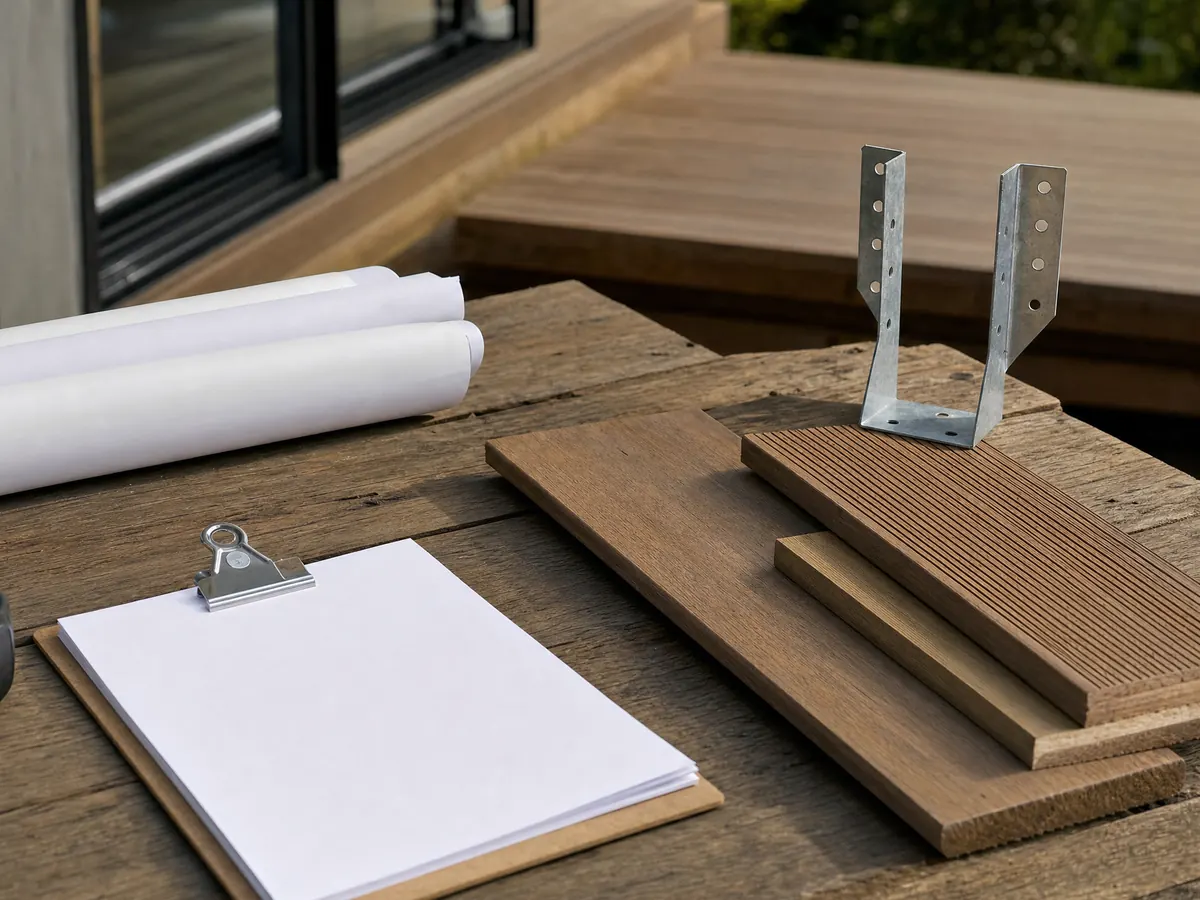
Does a deck need a permit in National City?
Treat it as a permit item. The City's Info Guide from July 2023 names sheds up to 120 square feet, fences not over 7 feet, retaining walls not over 3 feet and low sidewalks and driveways as exempt, but it does not name decks, and the Building Department fee schedule carries separate lines for a deck, a covered porch and a patio cover.
The state model residential code exempts a deck of 200 square feet or less, not more than 30 inches above grade at any point, not attached to a dwelling and not serving the required exit door (IRC R105.2). We did not find National City's amended text confirming that exemption, so ask the Building Division at (619) 336-4210 about low ground-level platforms before assuming it applies.
Starting early costs more. Under Ordinance 2025-2551 the City adds an administrative penalty equal to the inspection-fee portion of the permit fee on top of the permit fee, and may refuse a new building permit on a property with unlawful construction. The City's website refused automated reading, so the City text here comes from Internet Archive copies and the GoCodebook mirror; confirm it with the City.
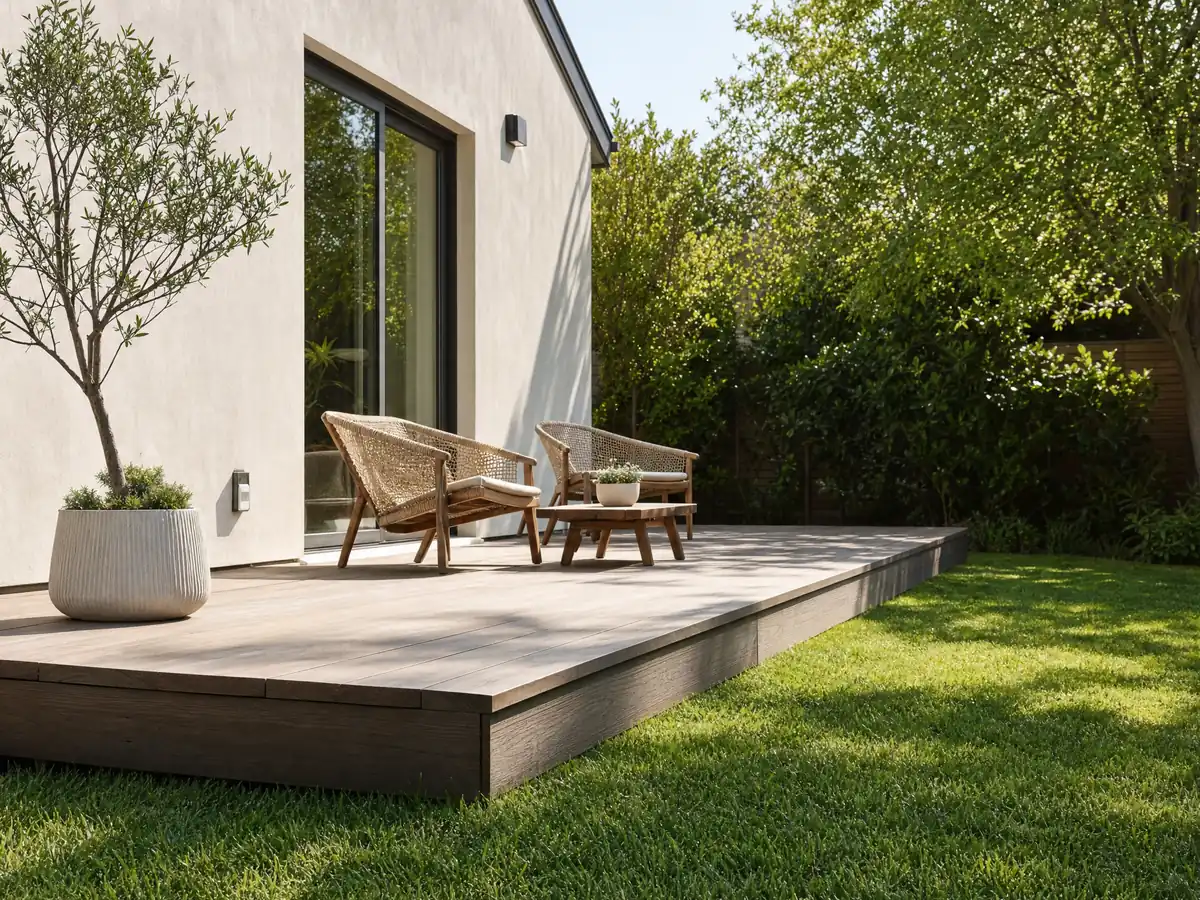
Can you repair an old deck in National City without a permit?
Swapping a few worn boards one for one is the safest case, but no National City text we read names deck repair as exempt. The amended Residential Code exempts maintenance repairs to lawfully built homes only when they do not affect structural, plumbing, mechanical or electrical work, and the Info Guide's ordinary repairs exception excludes cutting a structural beam or bearing support.
Posts, joists, beams and the ledger are structure. If the crew finds rot or termite damage when the boards come up, stop and describe it to the Building Division. A permit here lapses if work is not started within twelve months, stops for six months or runs past three years, and an approved inspection is what counts as work.
Old decks tell you about the house. The University of California's pest guide says drywood termites are the most common in southern California and infest decks and fences, and it advises fixing moisture sources and sealing exterior wood. Where the house predates 1978, scraping or sanding painted trim falls under EPA's lead-safe rule for paid work, and 70.1 percent of the city's homes date before 1980.
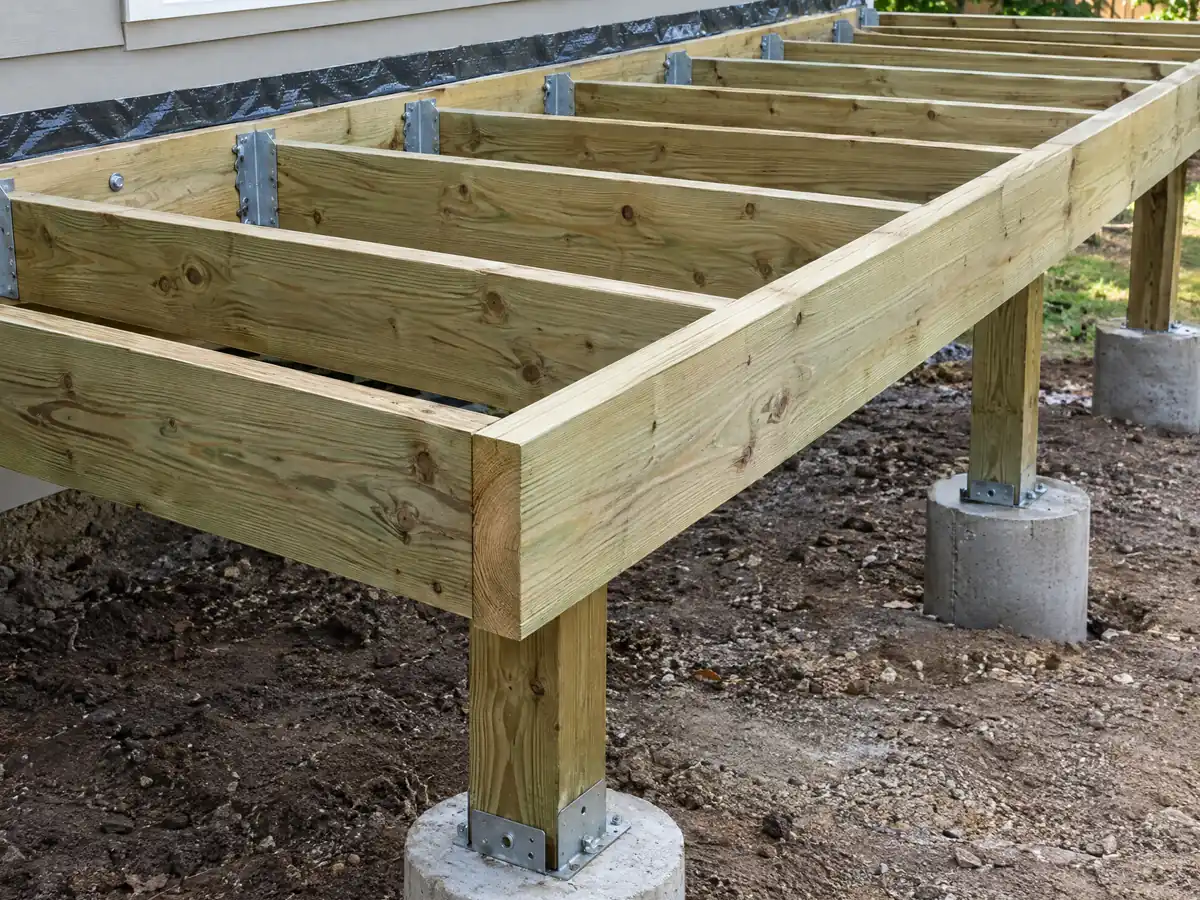
How close to the property line can a National City deck or porch go?
Open, unenclosed porches, platforms and landings with access stairs may project up to 4 feet into a required setback if they have no roof, do not rise above the first floor level and stay within 4 feet of natural grade (Section 18.42.020). Open stairways or balconies without a roof may project up to 4 feet into a required rear setback and 30 inches into a front or exterior side setback.
The setbacks themselves come from the zone in Table 18.21.040. RS-1 and RS-2 require 20 feet in front, 5 on an interior side, 10 on an exterior side and 25 at the rear. RS-3 requires 15, 5, 5 and 10 feet, and RS-4 requires 10 to 15, 3, 10 and 15, with primary structures capped at 35 feet.
A deck higher than 4 feet or covered by a roof falls outside that projection allowance. When a building will sit at a minimum setback and no monuments exist, the City wants a licensed surveyor's survey with the plan review submittal, so budget for stakes before footings.
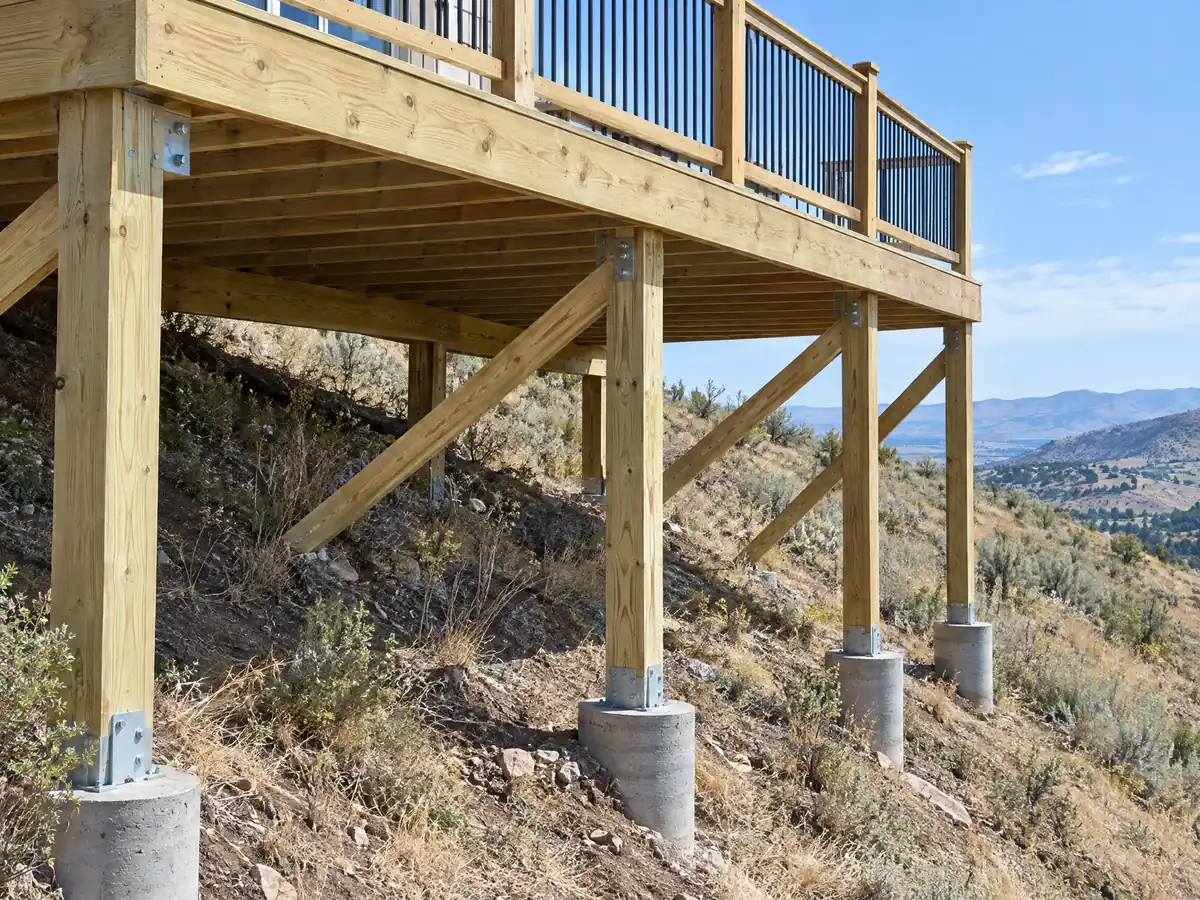
What are the rules for a patio cover or pergola over a National City deck?
Detached patio covers and other accessory structures may not sit in the front setback, except porches and stoops. Accessory setbacks are 5 feet on the side and rear in RS-1 to RS-3 and 3 feet in RS-4, with 5 feet between detached buildings (6 in RS-4).
Accessory structures are capped at 10 percent of lot area in RS-1 to RS-3, excluding up to 400 square feet of covered parking and ADU area, and no single accessory structure may exceed half the footprint of the primary structure. The fee schedule lists patio covers on their own line, which supports treating a roof over a deck as a permit item.
Awnings attached to a house may reach 4 feet into a front setback with no vertical support in it, and 30 inches into side and rear setbacks, never closer than 30 inches to an interior lot line, and only over the windows or doors they protect plus 12 inches each side.
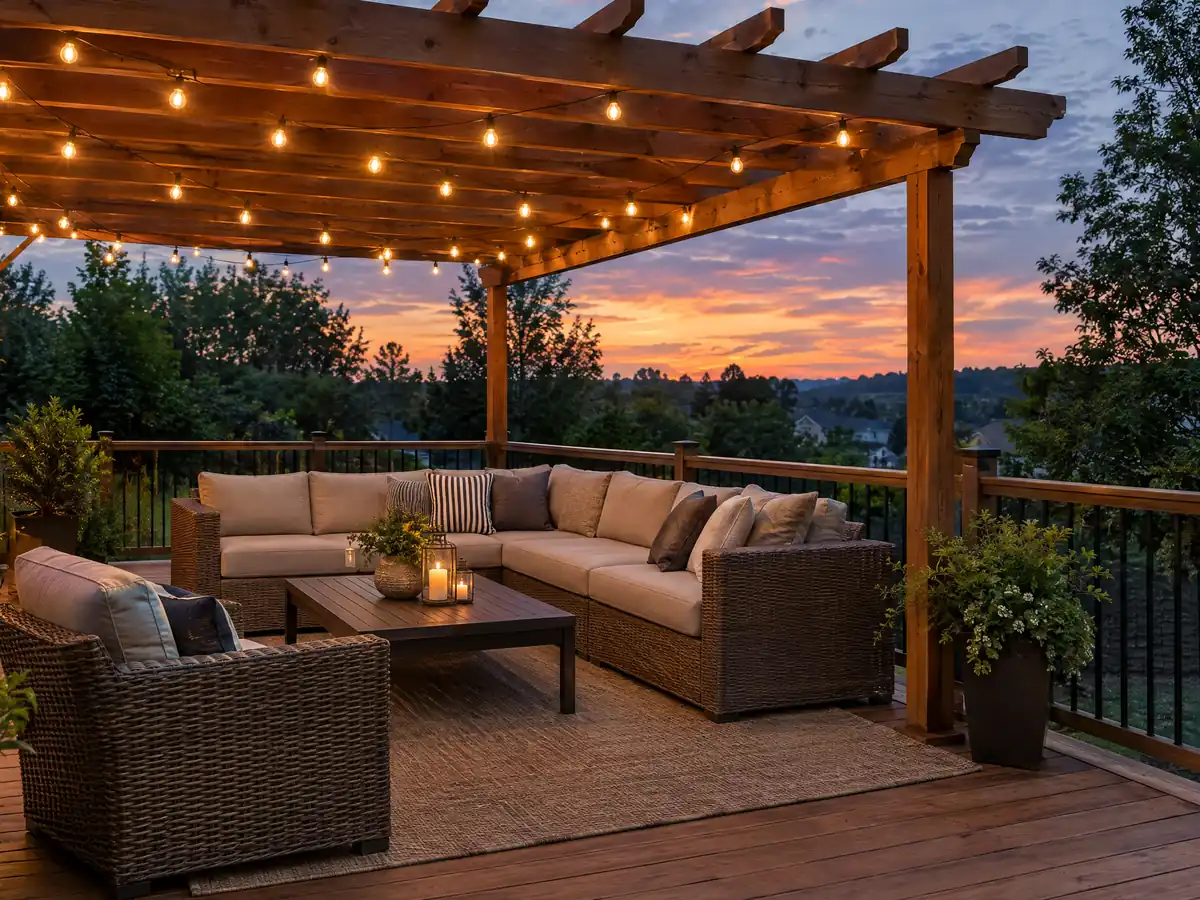
How tall must a deck railing be, and how is the ledger fixed to a National City house?
In the 2022 California Residential Code, a guard is required where the walking surface is more than 30 inches above grade within 36 inches of the edge (R312.1.1), must be at least 42 inches high (R312.1.2) and may not have openings that pass a 4 inch sphere (R312.1.3). National City says it uses the 2025 codes, so we read the 2022 text only as a guide and the Building Division confirms the edition.
The floors chapter sets the attachment rules. R507.9.1.1 calls for a pressure-treated ledger at least 2x8, with no concentrated loads from beams or girders and no fixing to stone or masonry veneer. R507.9.1.3 wants hot-dipped galvanized or stainless fasteners and a flashed ledger, and R507.9.2 requires lateral hold-downs: two devices of 1,500 pounds within 24 inches of each end, or four of 750 pounds.
Inspections are requested online at least 24 hours ahead and run Monday to Thursday, so schedule the footing and framing visits before anything is covered. The Info Guide predates the 2025 codes, so ask the inspector which hold-down table applies.
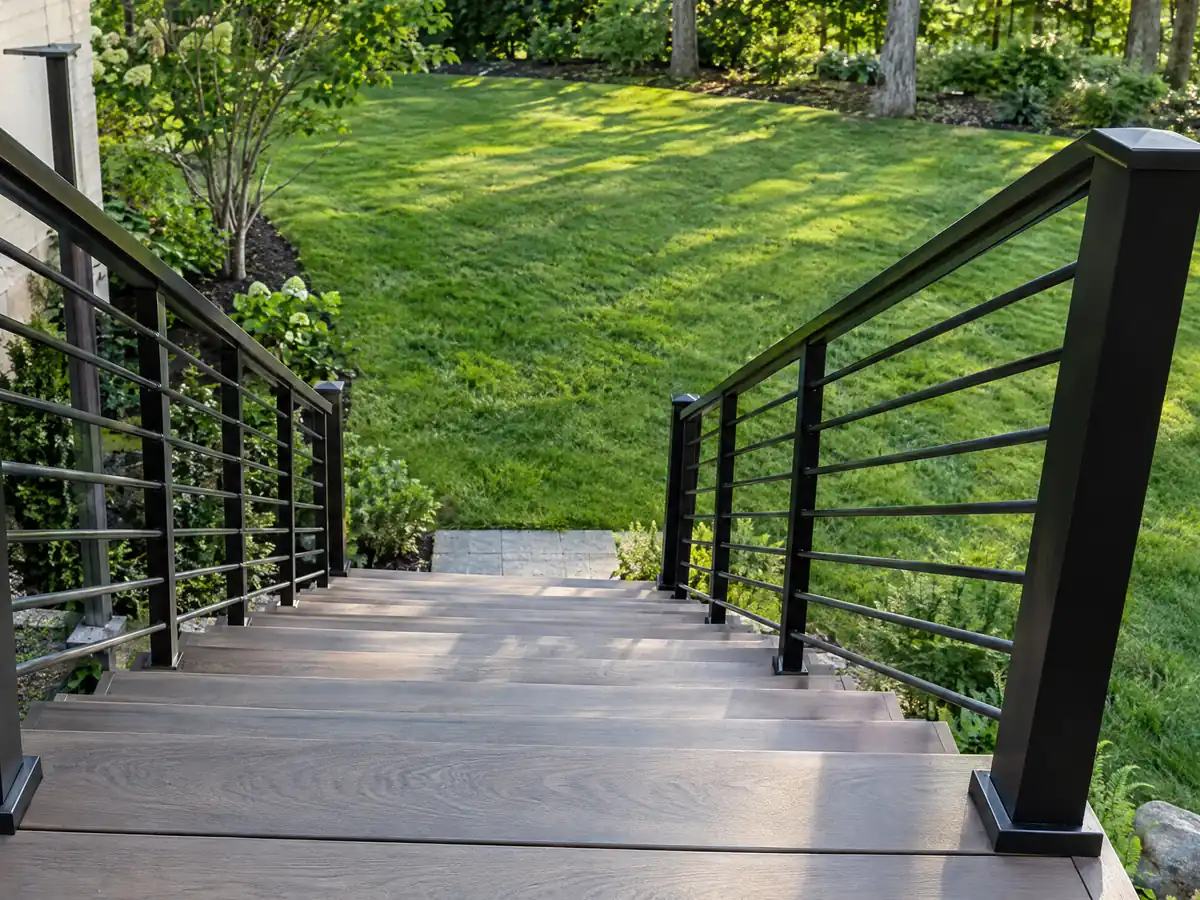
Do flood, coastal or fire rules change a National City deck?
Flood can. In a mapped flood zone the City requires a development permit before any building or grading permit is issued (Section 18.29.070), so check the -FW, -FF-1 or -FF-2 symbol on the zoning map before designing a raised deck or a slab-on-grade patio. Properties marked CZ also fall under the Local Coastal Program, which covers land west of Interstate 5, and we could not read its text, so ask Planning at (619) 336-4310.
Fire is a smaller factor than in the hills. The City's draft Safety Element calls the planning area urban unzoned and says the greatest wildfire risk lies east of the city near Bonita, but it stresses structure fire in an old housing stock, with about 92 percent of homes over 30 years old. The Building Code sets Class B as the minimum roof citywide.
We did not open a CAL FIRE map, so whether wildland-urban interface decking rules reach a specific lot is unverified. Ask the Fire Marshal at (619) 336-4550 before ordering boards.
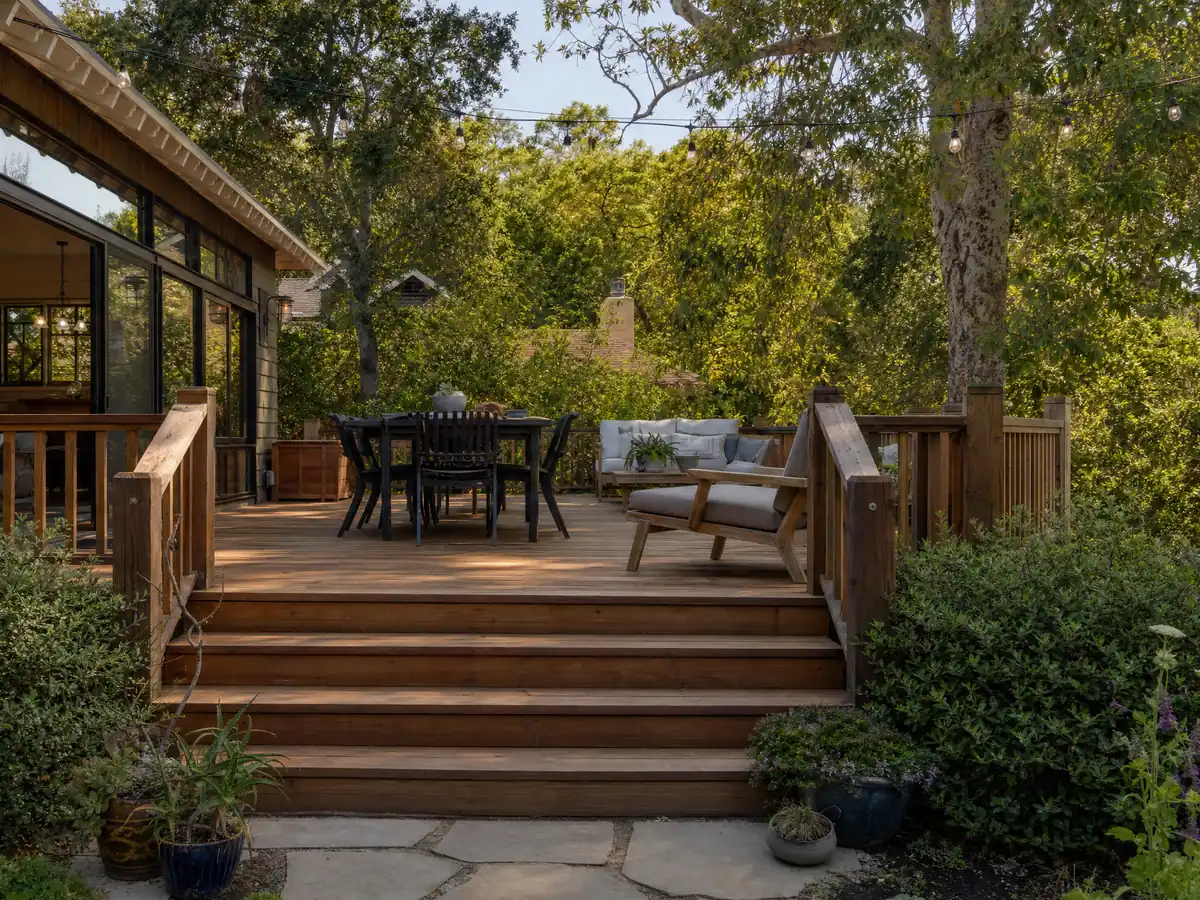
How much does a deck builder charge in National City, wood or composite?
No National City study with a stated method turned up. The 2025 Cost vs. Value report for Los Angeles prices a defined 16 by 20 foot deck with a bench, planter, three steps and full railing at $18,419 in treated wood, which resold for $18,341, or 99.6 percent. The composite version costs $26,872 and recoups 73.9 percent. Angi's October 28, 2025 Los Angeles page shows an average of $13,570 with a spread from $6,335 to $20,871.
Our planning ranges are $45 to $75 per square foot for pressure-treated wood and $65 to $110 for composite, so a 16 by 20 deck runs about $14,500 to $24,000 in wood and $21,000 to $35,000 in composite. Permits and engineering are extra, and decks on unusual sites are priced after a visit.
A wood deck fits a general contractor's license, and CSLB's C-5 class covers framing and rough carpentry. Business and Professions Code 7159.5 limits the deposit on a home improvement contract to the smaller of $1,000 or 10 percent of the price. Our license check guide shows how to read a record.
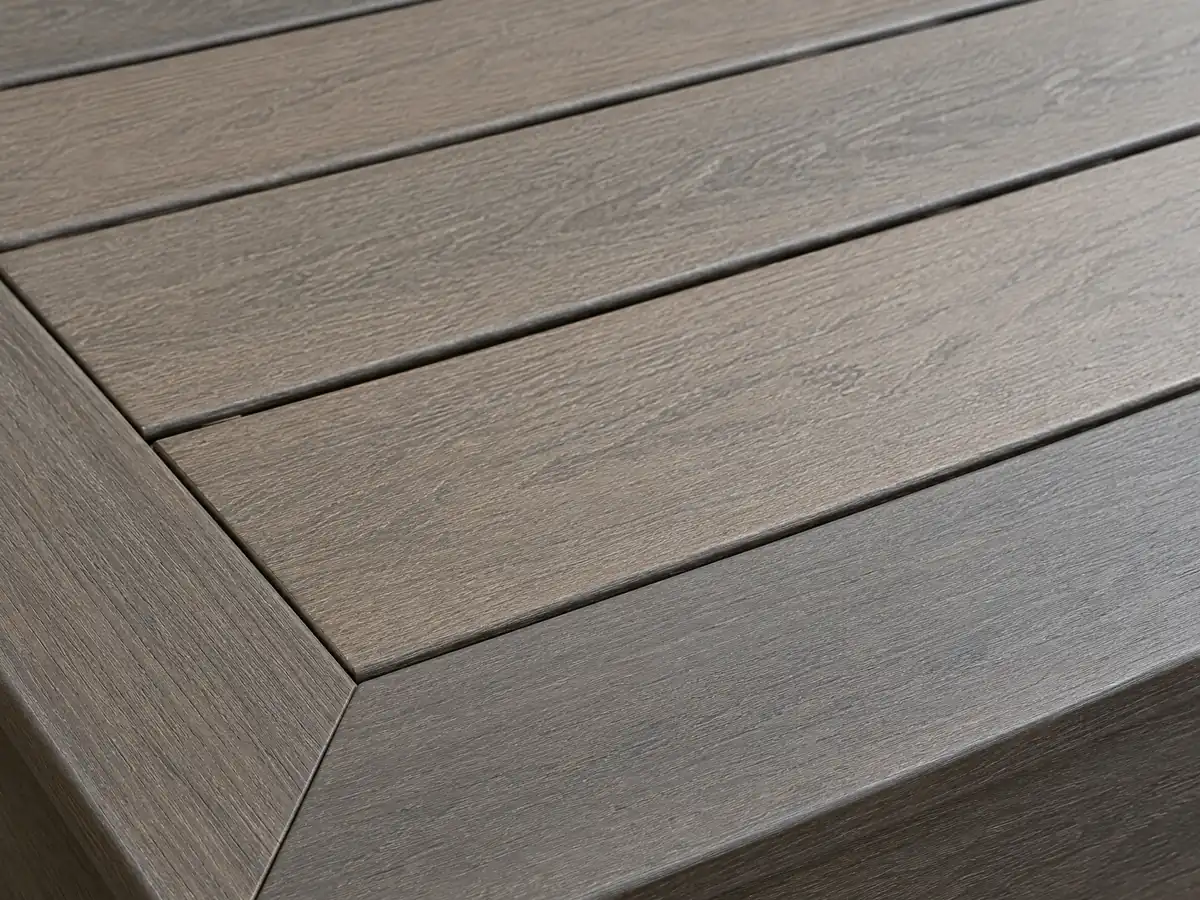
Deck photos from National City and nearby communities
Posts, framing, rails and finished decks from National City and the neighborhoods around it, shown at the steps where the rules bite. Tap any photo to enlarge it.
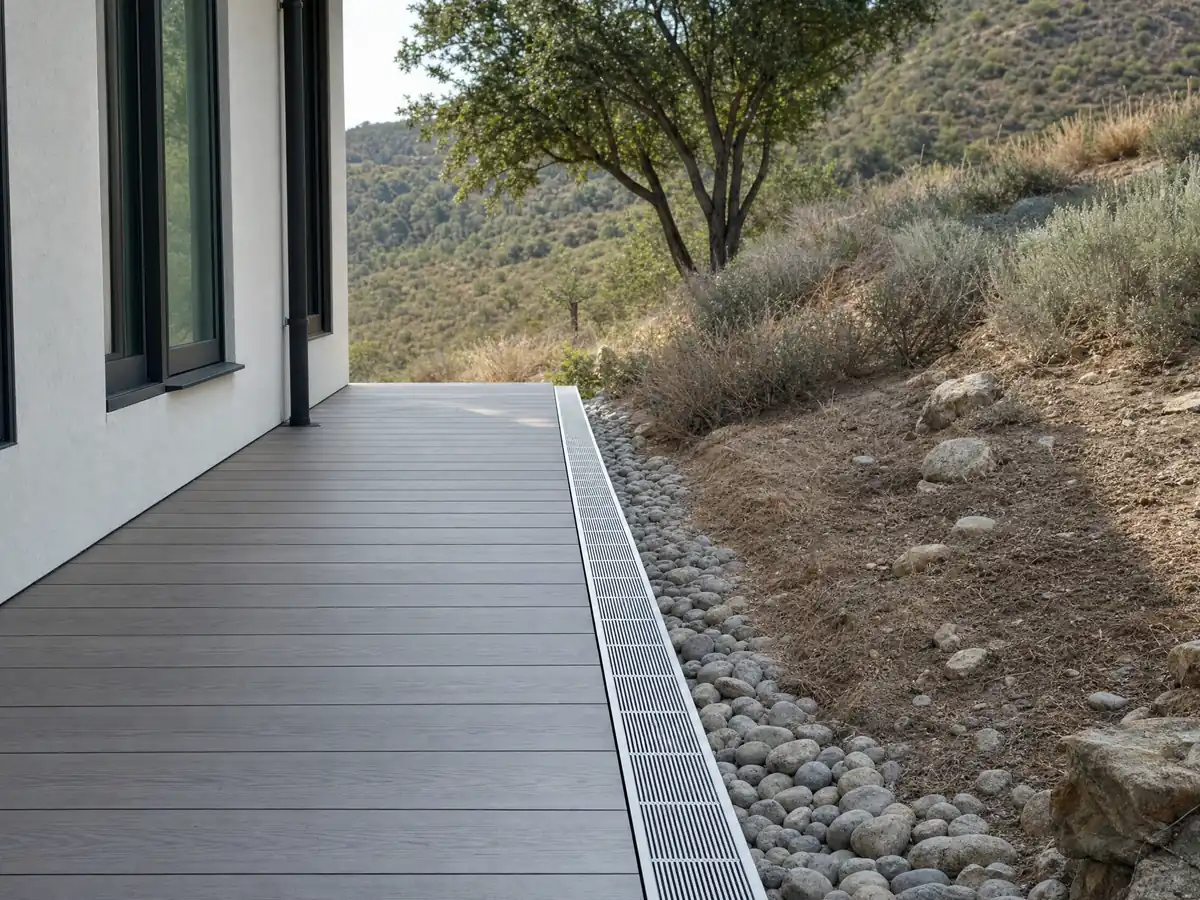
What decks costs around National City
Dollar figures here are Los Angeles planning ranges from our decks page, not a National City bid, and permits, engineering and any flood or coastal review belong on separate proposal lines. For the same property, see flooring in National City and concrete in National City. For comparison, read decks in Chula Vista, decks in San Diego and decks in La Mesa, and decks in Los Angeles for a big-city benchmark. Our subcontractor guide explains who does what.
| What it covers | Typical range |
|---|---|
| Pressure-treated wood deck | $45 to $75 per square foot |
| Composite deck | $65 to $110 per square foot |
| 16 by 20 foot wood deck (320 sq ft) | About $14,500 to $24,000 |
| 16 by 20 foot composite deck | About $21,000 to $35,000 |
| Hillside, second-story, rooftop and ipe decks | Priced by site visit |
| Permits and engineering | Quoted as separate lines |
Other work we manage in National City
National City deck questions, answered
Can I build a deck without a permit in National City?
Treat a deck as a permit item, because the City's exempt list does not name decks and its fee schedule has separate lines for a deck, covered porch and patio cover. A low platform may be exempt under the model code, but we found no City text saying so. Call the Building Division at (619) 336-4210 first.
What is the largest deck without a permit in National City?
We found no National City figure. The state model residential code exempts decks of 200 square feet or less, not over 30 inches above grade, not attached to a dwelling and not serving an exit door, but the City's own exempt list does not name decks. Ask the Building Division before building anything and expect permit review for attached decks.
Is railing height 36 or 42 inches for decks?
Forty-two inches is the figure in the 2022 California Residential Code, section R312.1.2, for guards on a deck more than 30 inches above grade, and openings may not pass a 4 inch sphere. National City says it uses the 2025 codes, so confirm with the Building Division.
How much should a 16x20 deck cost?
Our planning range works out to about $14,500 to $24,000 in pressure-treated wood and $21,000 to $35,000 in composite for 320 square feet. The 2025 Cost vs. Value report for Los Angeles prices a fuller 16 by 20 deck at $18,419 in wood and $26,872 in composite. Permits and engineering are extra.
How much would a 20x20 deck cost?
At our planning range of $45 to $75 per square foot in treated wood, 400 square feet runs $18,000 to $30,000, and composite at $65 to $110 runs $26,000 to $44,000. These are Los Angeles planning ranges, not a National City bid, and permits, engineering and stairs are extra.
Is it cheaper to build a wood deck or composite deck?
Wood is cheaper to build. The 2025 Cost vs. Value report for Los Angeles shows $18,419 for a treated-wood deck and $26,872 for composite, though wood recouped 99.6 percent at resale against 73.9 percent for composite. Termites and moisture are the maintenance risks for wood in southern California.
Do I need a permit for deck repair in National City?
Not necessarily for like-for-like board replacement, but no City text we read names deck repair as exempt. Repairs that touch posts, joists, beams or the ledger are structural, and the City's exemption covers only maintenance that does not affect structure. Describe the damage to the Building Division at (619) 336-4210 before work starts.
How close to the property line can a deck go in National City?
An open, unroofed platform no more than 4 feet above grade may project up to 4 feet into a required setback, and open stairs may project 4 feet into the rear setback and 30 inches into a front or exterior side setback. Otherwise the zone's setback applies: 5 feet on an interior side in RS-1 to RS-3.
Does a deck need fire-rated boards in National City?
We could not confirm that. The City's draft Safety Element calls the planning area urban unzoned for wildfire, with the greatest risk east near Bonita, but we did not open a CAL FIRE map. Ask the Fire Marshal at (619) 336-4550 whether a specific lot falls under wildland-urban interface decking rules.
What license does a deck builder need in National City?
A deck builder needs a current California license, either a general building license or the C-5 framing and rough carpentry class, plus a National City business license to pull a permit. Check the number on the CSLB site and ask each subcontractor for a license number and certificate of insurance.
Send the lot, how high the deck sits and whether it touches the house
Say how high the deck sits, whether it attaches to the house and whether the lot is near the bayfront, west of I-5 or inside a flood overlay. The permit, setback and rail questions come with us to the first visit.