
Concrete Companyin National City, CA
A concrete company in National City can pour outside paving on private property without a building permit, but anything touching the public right-of-way goes through Engineering. Masonry walls need a permit under the zoning code, additions of 500 square feet or more need a soils report, and flood and coastal overlays add review.
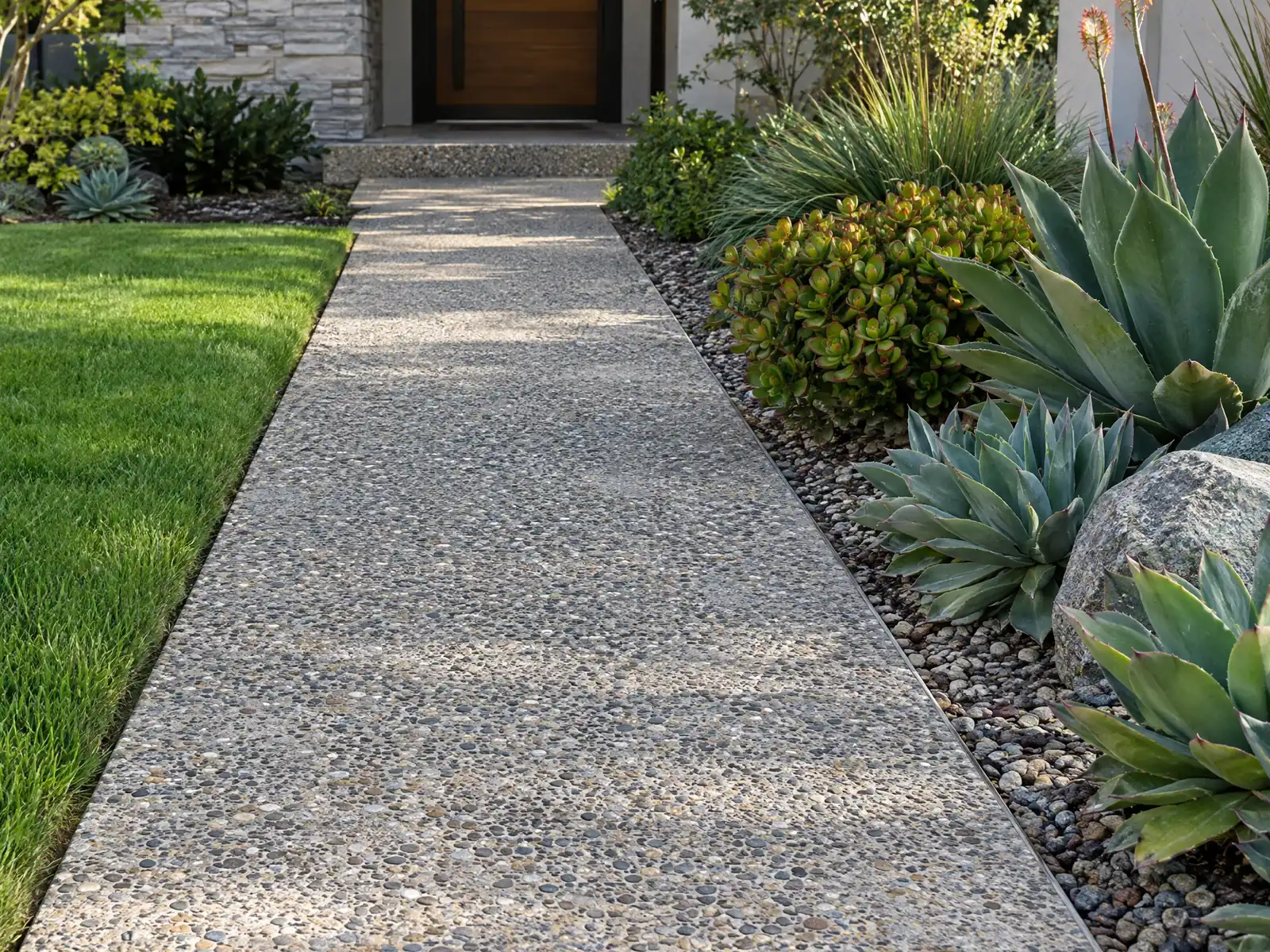
National City was a rail and port town before most of its concrete went down. Frank Kimball and his brothers bought El Rancho de la Nacion in 1868, the Santa Fe depot opened in 1882 and the first train left on November 14, 1885. Population then climbed from 10,344 in 1940 to 32,771 in 1960, and the Census Bureau's 2024 estimates say 51.7 percent of the city's 19,414 homes predate 1970, which puts the driveways and walks of half the housing stock past 50 years if they are original.
MDG Builders, CSLB #1040337, is a Tarzana general contractor. We write the scope, take the permit and right-of-way questions to the City's Building Division and Engineering, and bring in a licensed concrete subcontractor to form, pour and finish. The concrete page covers materials and finishes, and the National City overview lists the other trades we manage here.
What National City's Building Division, Engineering and the zoning code say about concrete work
Where concrete permits come from in National City: City of National City Community Development Department, Building Division.
- National City exempts 'outside paving on private property, not within the public right-of-way' and sidewalks and driveways less than 30 inches above adjacent grade that are not over a basement or story below and are not part of an accessible route (Info Guide, July 2023). Work in the public right-of-way (driveway approach, curb, gutter, sidewalk) is handled by Engineering with a construction permit and bond.
- Parking facility improvements, including driveways, access to streets and alleys, stalls, striping and surfacing, are subject to site plan review (Section 18.45.040), and a driveway serving a single-family home must be at least 12 feet wide unless the City Manager's designee allows less for a one-car garage (Section 18.45.100, GoCodebook mirror).
- Grading rules in Chapter 15.70 (Ordinance 2019-2471, GoCodebook mirror): the City Engineer may waive a grading permit for single-lot work that entails no hazard to adjoining property; exempt items include a fill under 1 foot on slopes flatter than 20 percent, or under 3 feet that is not meant to support structures, does not exceed 50 cubic yards on a lot and does not block a drainage course, and utility trenches on private property; grading and retaining wall permits expire six months after issue (renewable, with extensions up to 180 days); and dumping and stockpiling of dirt and rubble is strictly prohibited in National City.
- Every grading, drainage and retaining wall permit is conditioned on compliance with the City's storm water ordinance (Chapter 14.22) and its minimum best management practices, and Chapter 15.70 defines the rainy season as October 1 through April 30 (Ordinance 2019-2471, GoCodebook mirror).
- The Building Division's Document Library lists a construction and demolition debris conversion rate table and a construction and demolition waste diversion form, which apply to jobs that haul concrete away.
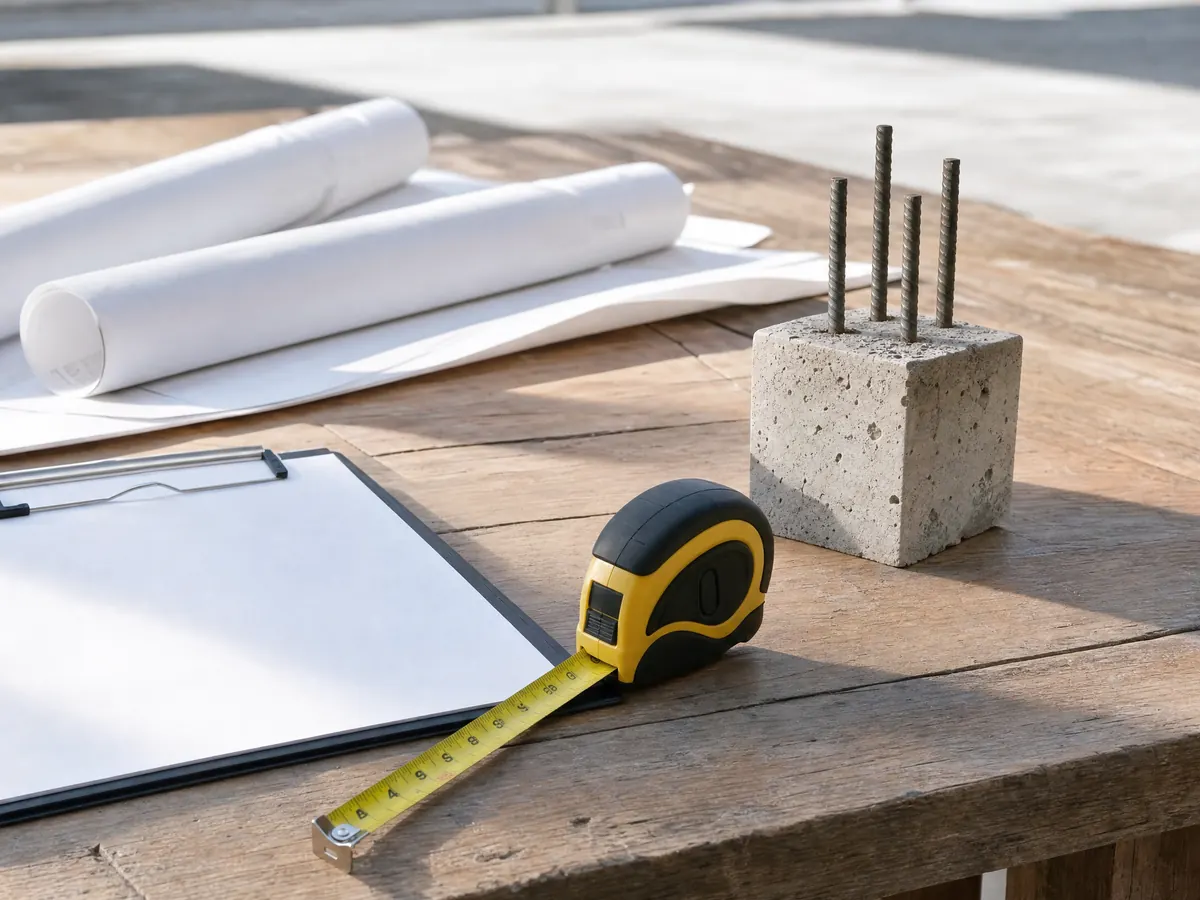
Do you need a permit to pour a driveway, patio or walk in National City?
Usually not on private ground. The City's Info Guide from July 2023 exempts outside paving on private property that is not in the public right-of-way, and exempts sidewalks and driveways less than 30 inches above adjacent grade that are not over a basement or story below and not part of an accessible route. The adopted Residential Code lists outside paving among its maintenance exemptions as well.
The line that matters is the property edge. Driveway approaches, curb, gutter and sidewalk belong to Engineering, which wants plan review, a construction permit and a performance bond posted by the owner, so call (619) 336-4380 before starting. Sewer lateral or trench work must be done by a contractor holding a Class A license and a National City business license.
Zoning still reaches paving. Parking improvements, including driveways, stalls and surfacing, are subject to site plan review under Section 18.45.040, and a driveway serving a single-family home must be at least 12 feet wide unless the City Manager's designee allows less for a one-car garage. The City's website refused automated reading, so these rules come from Internet Archive copies and the GoCodebook mirror; confirm them with the City.
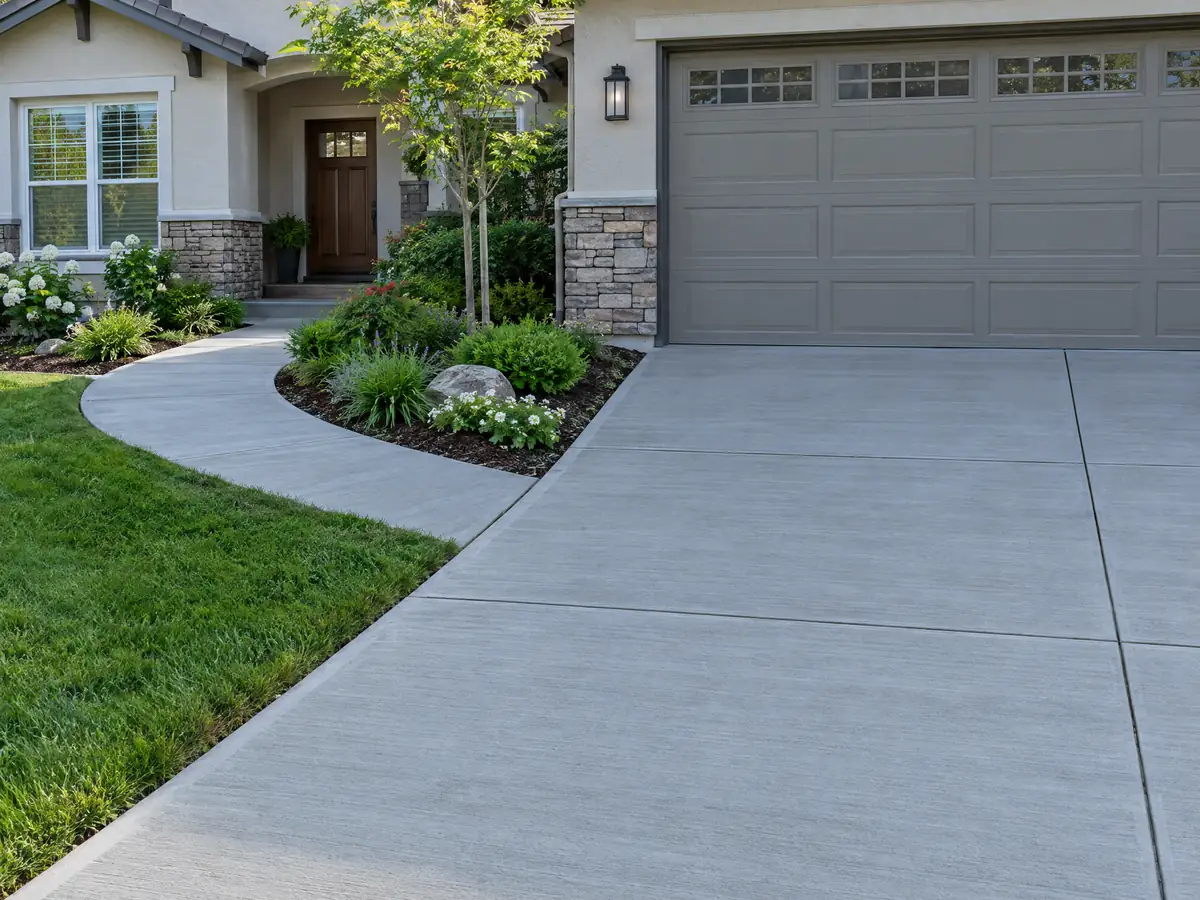
Does a block wall need a permit in National City?
Treat it as yes, because two City documents disagree. The Info Guide exempts fences not over 7 feet but exempts concrete block fences only under 4 feet, while Land Use Code Section 18.43.040 says all masonry walls must meet the California Building Code and all masonry walls require a building permit. The fee schedule effective August 11, 2025 also has a line for masonry fences over 4 feet.
Height limits come from Section 18.43.050. Up to 8 feet is allowed in setback areas, but a front setback or the exterior side setback of a corner lot is limited to 4 feet, with 6 feet allowed for a residential property in a residential zone. Masonry may not exceed 8 feet in total, or 6 feet of masonry on top of a 2 foot 8 inch retaining wall.
In the Westside (Old Town) plan area, chain link, barbed wire and razor wire are banned outright under Section 18.43.060, which pushes owners toward block, wood or vinyl. Block is CSLB's C-29 class work, and we print no per-foot price for walls because no independent source exists.
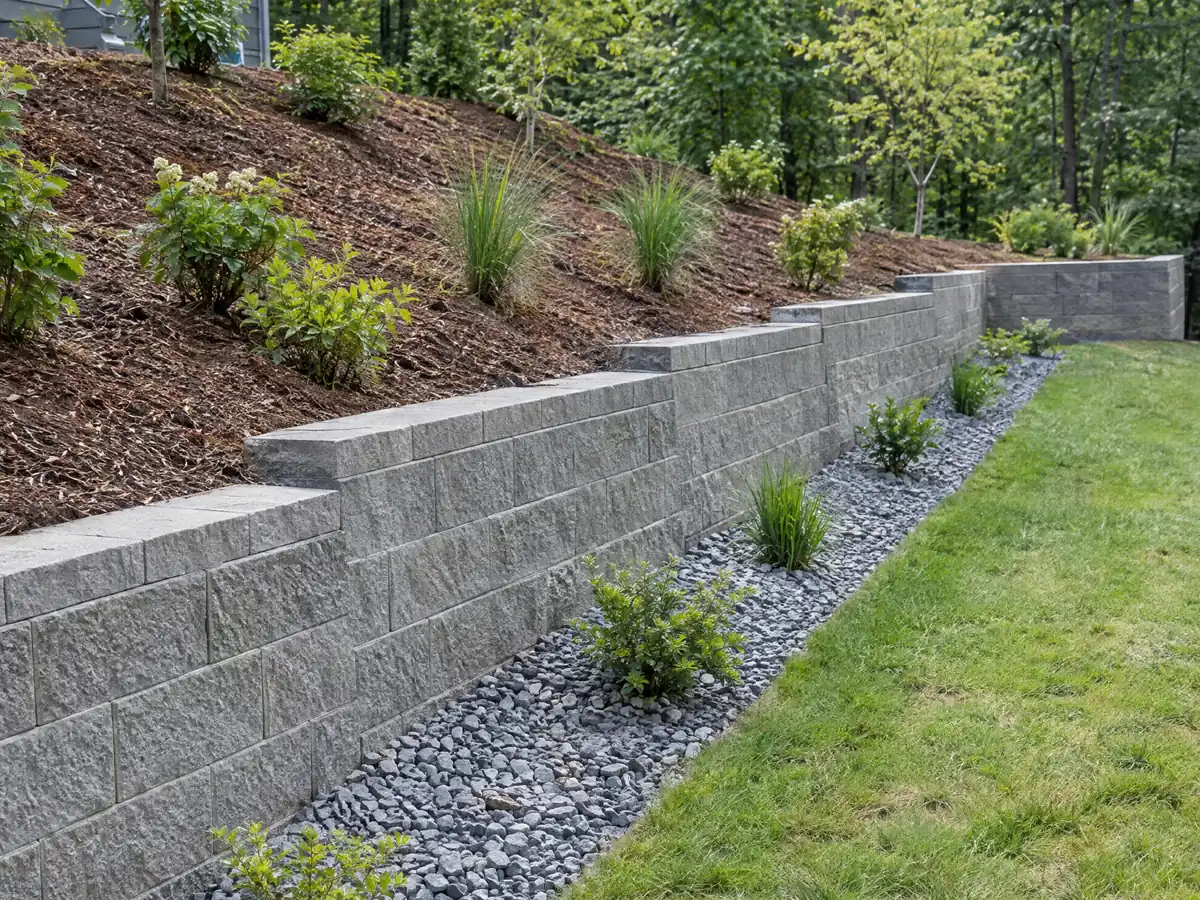
How tall can a retaining wall be in National City, and when does grading need a permit?
The Info Guide's exempt list runs to retaining walls not over 3 feet, a lower line than the 4 feet in the state model code. Chapter 15.70 adds detail: a retaining wall plan is required for walls over 3 feet from footing to top and for lower walls that carry a surcharge or sloped backfill. A level-backfill wall of 3 feet or less that is not part of a building skips the grading permit but must follow the Regional Standard Drawings and stays subject to City inspection.
Engineering handles these walls. The City Engineer may waive a grading permit for single-lot work that poses no hazard to neighbors, and fill under 1 foot on slopes flatter than 20 percent is exempt, as is fill under 3 feet that does not support structures, stays within 50 cubic yards on the lot and does not block a drainage course. Grading and retaining wall permits expire six months after issue and can be extended up to 180 days.
Every such permit is conditioned on the storm water ordinance in Chapter 14.22 and its best management practices, and the code forbids dumping or stockpiling dirt and rubble anywhere in National City. Ask where excavated soil will go before the crew arrives.
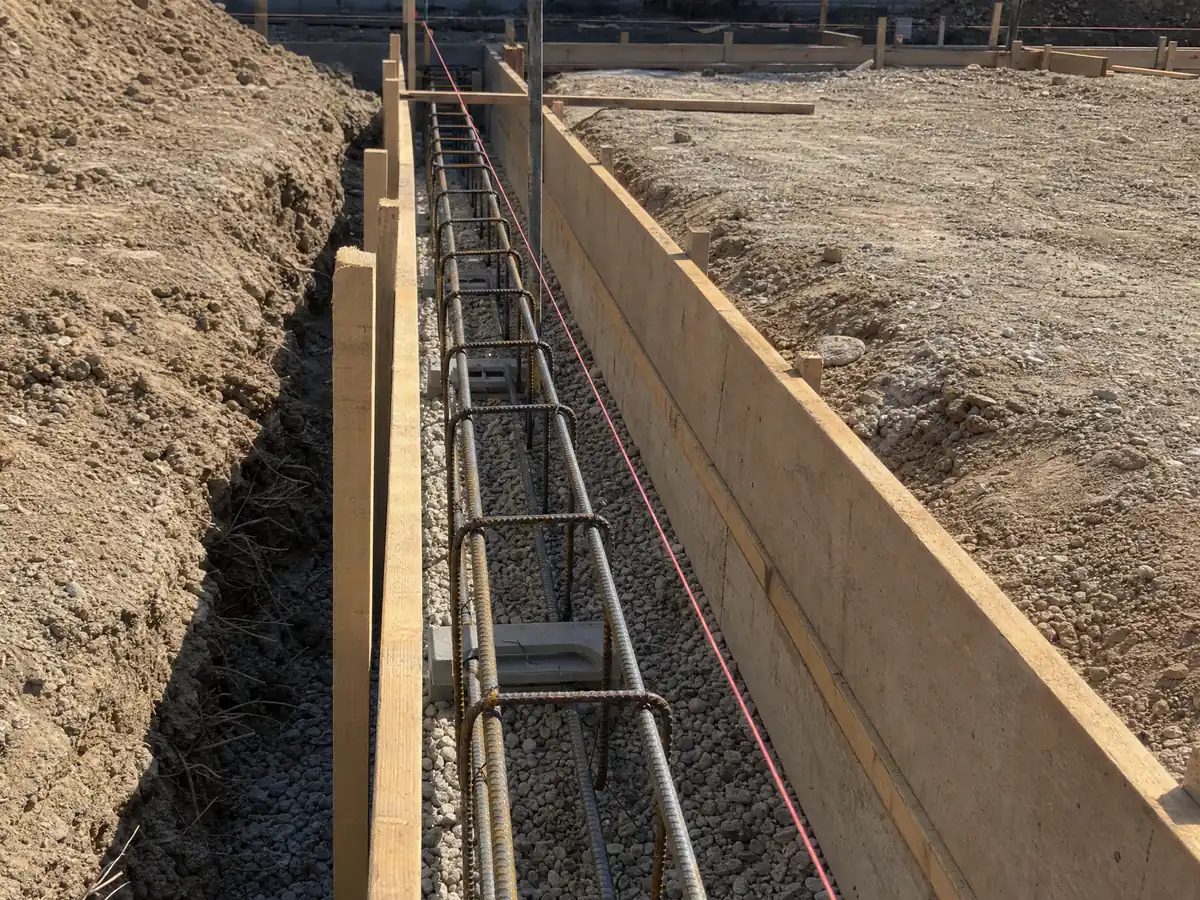
Does a new slab, footing or addition in National City need a soils report?
For a building, yes. The amendment in Ordinance 2025-2551 (Section 1803.1.1.1) requires a geotechnical investigation with every permit application for a new building or an addition of 500 square feet or more, and a survey by a licensed California surveyor when a building will sit at a minimum setback and no monuments exist. A detached garage slab is a new building, and we do not know whether the City applies the 500 square foot line to smaller structures, so ask.
The City's draft Safety Element names the La Nacion Fault Zone as the greatest earthquake threat in the planning area, rates shaking potential medium-low to low and liquefaction risk low to medium, and notes Class D soils in the west that can amplify shaking. On any pour the City's inspection list starts with a footings, reinforcing and setbacks inspection before concrete goes in.
The same draft stresses older masonry, saying about 53 percent of structures predate 1970 against 31 percent countywide. If a new slab or wall will tie into an old block building, tell the designer so the connection gets looked at.
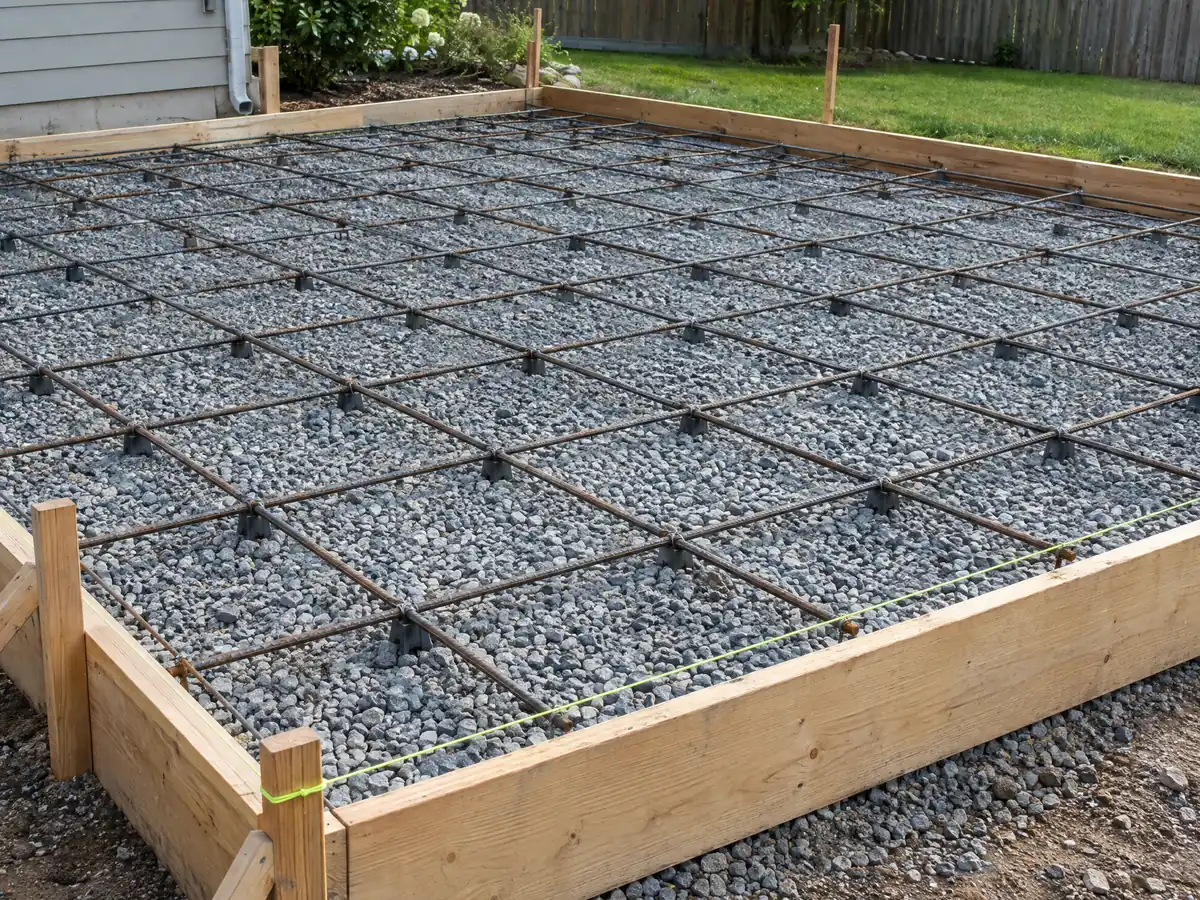
Can you pour concrete in a National City flood overlay or the coastal zone, and what about winter rain?
Maybe, with an extra permit first. The -FW, -FF-1 and -FF-2 flood overlays follow FEMA's 1988 flood study, and a development permit must be obtained with or before any building, grading or similar permit in a special flood hazard area. The City Engineer is the floodplain administrator, and a rebuild or addition costing 50 percent or more of a structure's value counts as a substantial improvement.
Properties marked CZ on the zoning map must also meet the City's Local Coastal Program. The Land Use Element puts the coastal zone at all land west of Interstate 5 plus a small area east of I-5 south of 30th Street. We could not read the program's text, so which residential pours need a coastal permit or are exempt is a question for Planning at (619) 336-4310.
Timing matters too. The grading chapter calls October 1 through April 30 the rainy season, and NOAA's normals for Chula Vista show 9.20 inches a year with 7.12 from December through March. Summer heat is modest, 4.9 days a year at or above 90 F, so plan forms, curing and erosion control around winter storms.
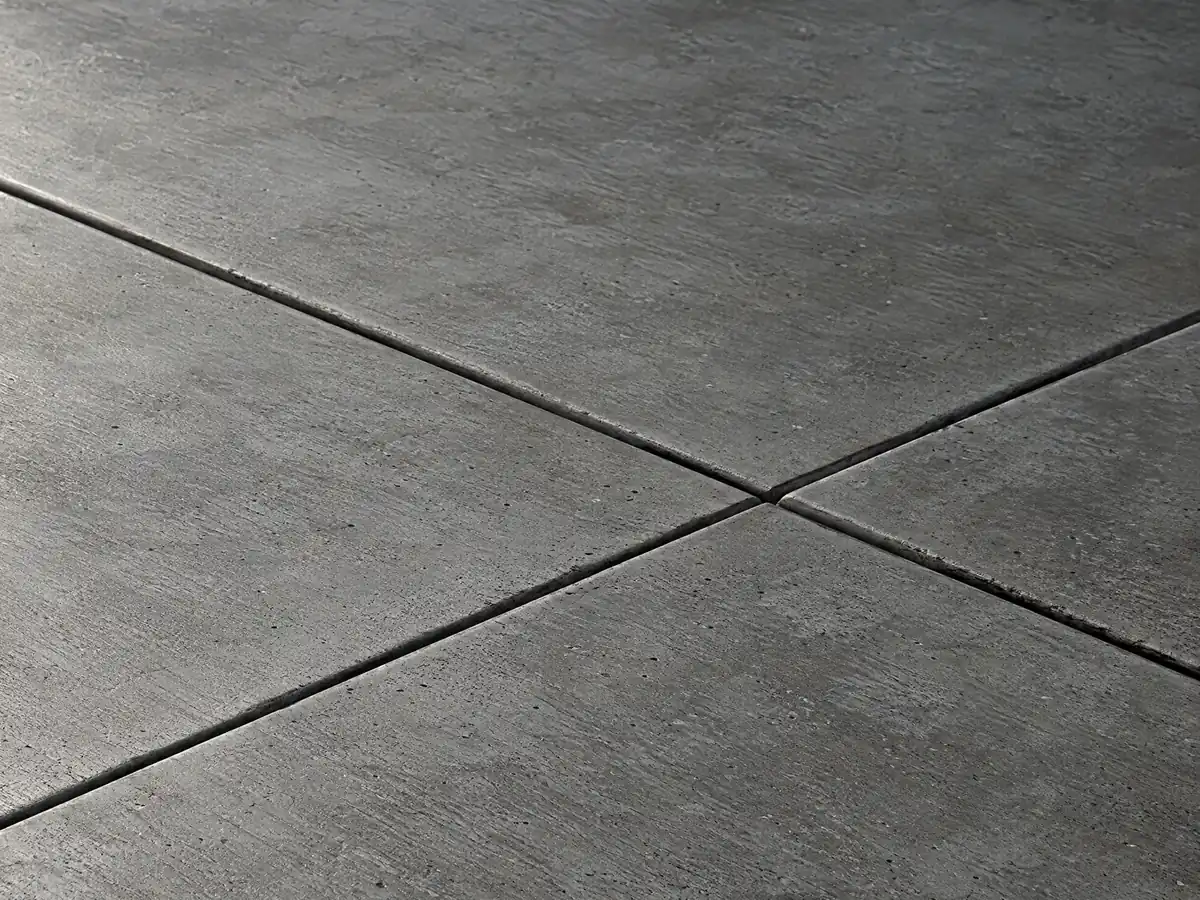
Do concrete walks and walls in Old Town or on a listed National City property need historic review?
We found no City review rule for flatwork. Chapter 18.29 has no historic overlay zone, and the letter H on the zoning map means a building height cap. The City does list four National Register properties and 56 locally designated significant buildings, and Brick Row's ten privately owned units carry a covenant that keeps the facade in character, but nothing we read reaches paths or driveways.
The Westside mixes old houses with auto services, light manufacturing and warehouses, and where a commercial or industrial side or rear setback meets a residential zone, Section 18.43.020 requires an opaque fence or wall 6 to 8 feet high. That makes screening walls a common concrete and block job near Old Town, and the same section applies where a multifamily use abuts a single-family zone.
Of the city's homes, 1,545 date from 1939 or earlier and 1,975 from the 1940s. Before cutting into old walks, ask the crew to locate sewer laterals, which need a Class A contractor, and meters.
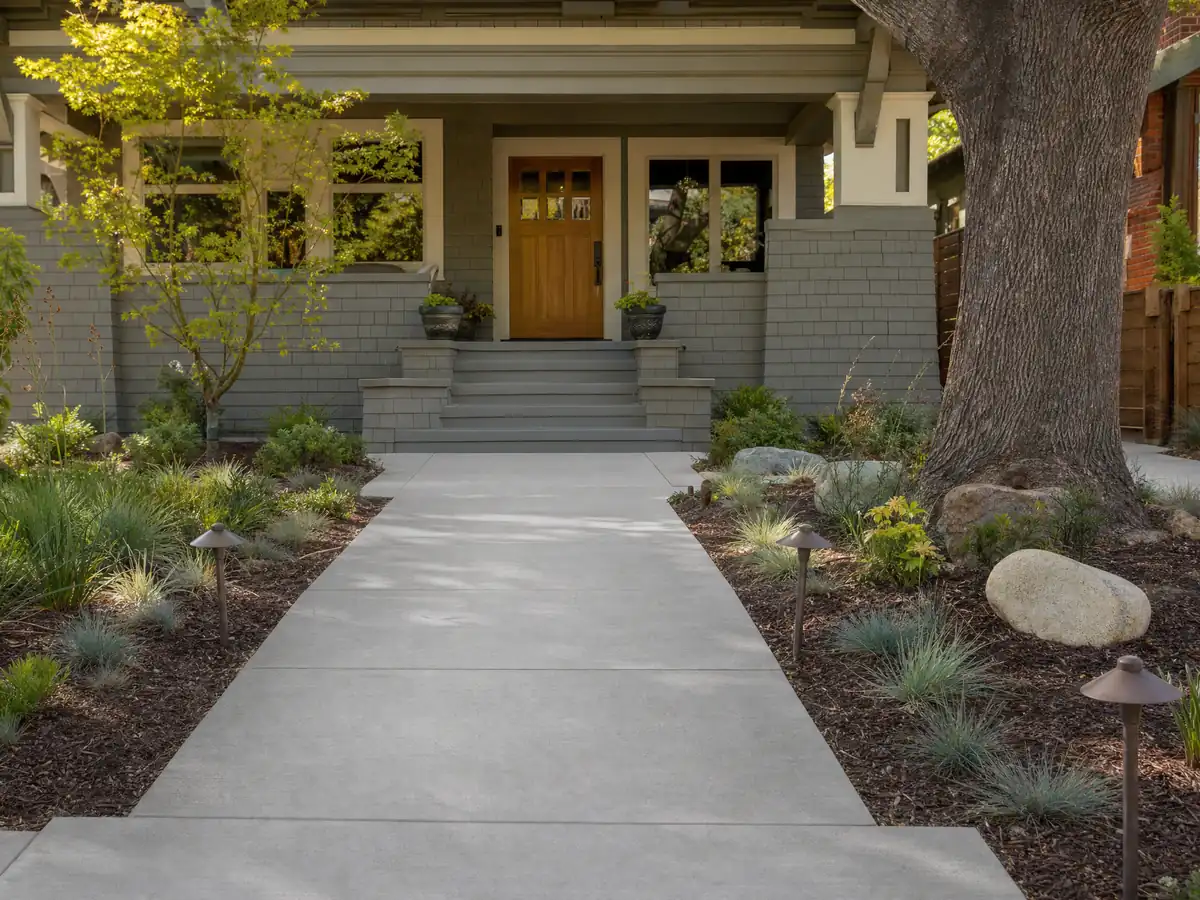
How much does concrete work cost in National City, and what license does a concrete company need?
No National City price study with a stated method turned up, so the anchors are Angi's Los Angeles pages, which may differ from San Diego County bids. Its August 4, 2026 patio page shows $4 to $13 per square foot and an average of $5,248. Its July 20, 2026 stamped page shows $15 to $30, and its May 5, 2026 driveway page shows $8 to $20 with an average of $7,270.
Our planning figures are $8 to $14 per square foot for patios, walks and slabs of 300 square feet or more, $15 to $30 for stained, stamped or exposed aggregate and $9 to $20 for a driveway replacement including demolition. The federal wage survey puts cement masons in the Los Angeles metro at a mean $33.67 an hour in May 2025. Small jobs run above the averages, and walls are priced after a site visit.
Pouring and finishing flat concrete falls under CSLB's C-8 class. A contractor who pulls a permit here also needs a National City business license and proof of workers' compensation, and our license check guide shows how to verify each number.
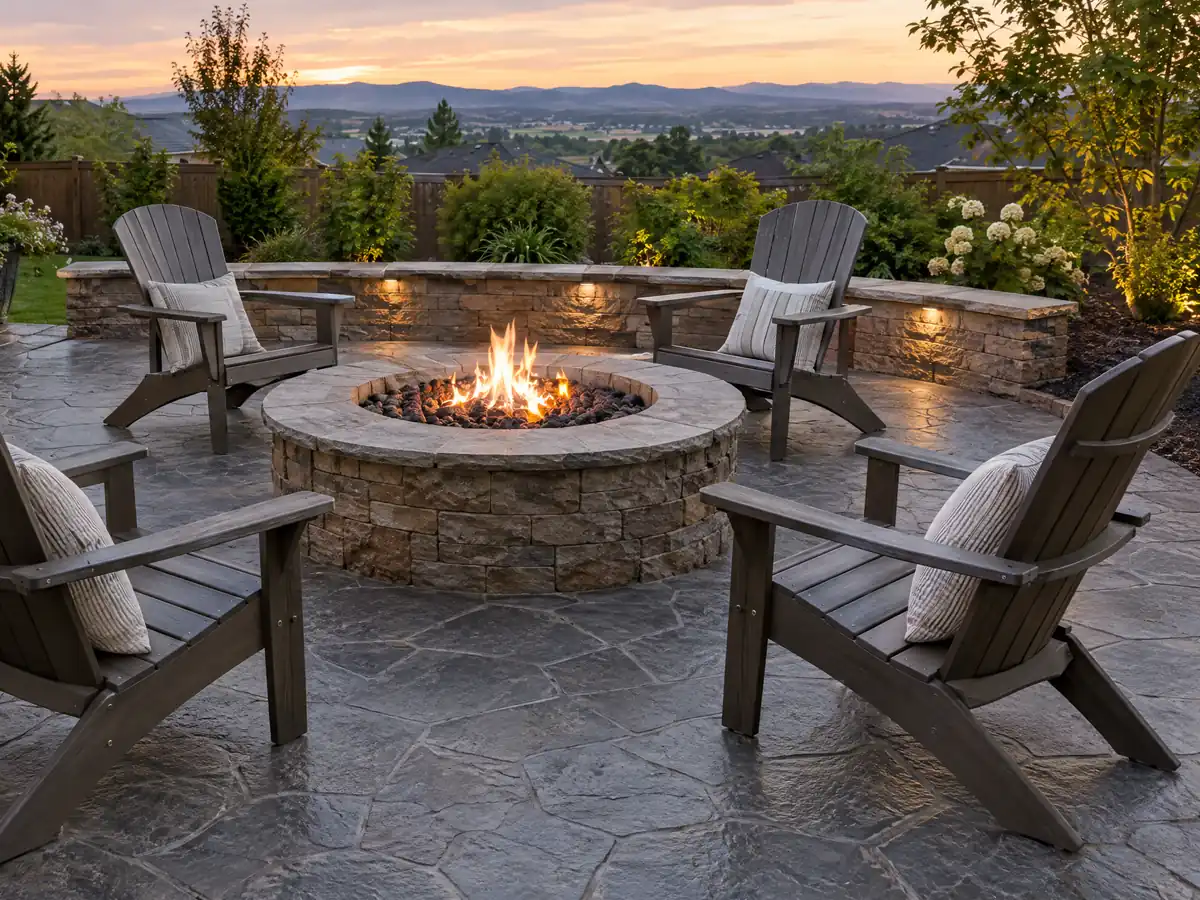
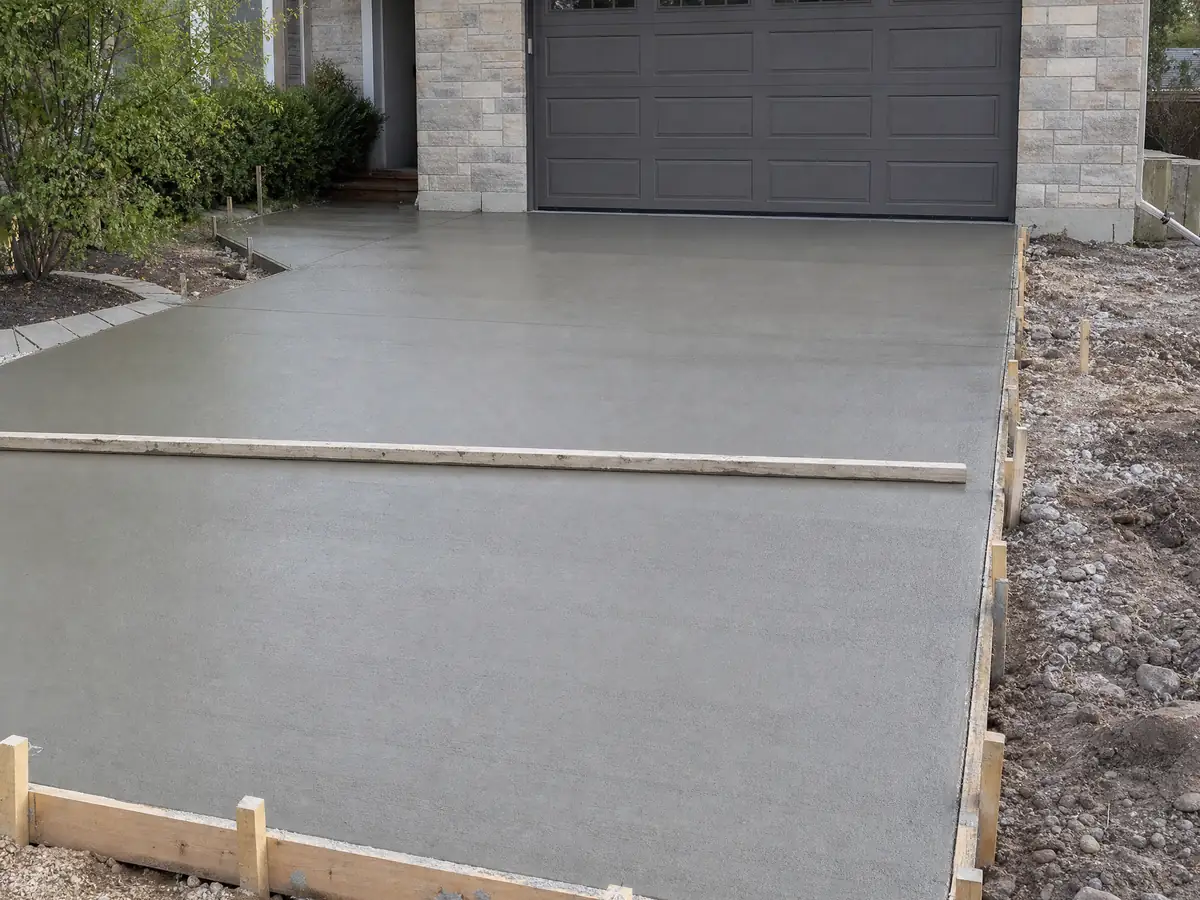
Concrete photos from National City and nearby communities
Forms, rebar, finished flatwork and block walls from National City and the neighborhoods around it, shown at the steps where the rules matter. Tap any photo to enlarge it.
What concrete costs around National City
Dollar figures here are Los Angeles planning ranges from our concrete page, not a National City bid, and the proposal should show demolition, base, rebar, engineering and any Engineering permit on separate lines. The same lot may need flooring in National City or decks in National City. For comparison, read concrete in Chula Vista, concrete in San Diego and concrete in Imperial Beach, and concrete in Los Angeles for the big-city benchmark. The subcontractor guide explains who forms and who pours, and the ADU cost guide shows where slabs enter a backyard build.
| What it covers | Typical range |
|---|---|
| Patio, walkway or slab, broom finish, 300 sq ft or more | $8 to $14 per square foot |
| Decorative: stained, stamped or exposed aggregate | $15 to $30 per square foot |
| Driveway replacement, with demolition of the old slab | $9 to $20 per square foot |
| 20 by 20 foot plain patio (400 sq ft) | About $3,200 to $5,600 |
| 20 by 20 foot decorative patio (400 sq ft) | About $6,000 to $12,000 |
| Small jobs under 300 sq ft | Usually above the per-foot range |
| Retaining walls | Set by the written proposal |
Other work we manage in National City
National City concrete questions, answered
Can I pour a concrete patio without a permit?
In National City, yes for outside paving on private property, because the City's Info Guide exempts it when it is not in the public right-of-way. A cover, a raised slab or anything near a flood overlay is a different question. Call the Building Division at (619) 336-4210 with the dimensions before you order concrete.
Can I replace my driveway without a permit in National City?
On your own lot, usually yes, since driveways less than 30 inches above grade are exempt. The apron, curb, gutter and sidewalk in the public right-of-way are not: Engineering requires plan review, a construction permit and a bond, and a driveway must be at least 12 feet wide unless the City allows less. Call Engineering at (619) 336-4380.
What is the maximum height of a retaining wall without a permit in California?
The state model code exempts walls not over 4 feet from the bottom of the footing to the top unless they carry a surcharge, but National City's Info Guide lists walls not over 3 feet, and its grading chapter requires a plan for walls over 3 feet. Use 3 feet as the working line and confirm with Engineering.
How much should a 20x20 concrete patio cost?
At our planning range of $8 to $14 per square foot, a 20x20 patio of 400 square feet comes to $3,200 to $5,600. Angi's Los Angeles patio page, dated August 4, 2026, shows $4 to $13 per square foot, so the ranges overlap. These are not National City bids, and demolition, base and any permit are extra lines.
How much does a stamped concrete patio cost?
Angi's Los Angeles stamped concrete page, dated July 20, 2026, shows $15 to $30 per square foot with an average of $5,948, and our planning range for stained, stamped or exposed aggregate is the same $15 to $30. Pattern, color and sealer move the price. We found no National City study with a stated method.
How much does a concrete driveway cost?
Angi's Los Angeles driveway page, dated May 5, 2026, shows $8 to $20 per square foot and an average of $7,270, and our planning range for a replacement including demolition is $9 to $20. The apron in the right-of-way, grading and the width the City allows can change the number, so get a written proposal.
Does a concrete block wall need a permit in National City?
Treat it as yes. Land Use Code Section 18.43.040 says all masonry walls require a building permit, while the Info Guide exempts block fences under 4 feet, and the two conflict. Confirm with the Building Division at (619) 336-4210, and note that walls in a front setback are limited to 4 feet.
Do I need a soils report for a slab or addition in National City?
For a new building or an addition of 500 square feet or more, yes: the City's building code amendment requires a geotechnical investigation with the permit application. A patio slab on private ground is exempt paving, and we do not know how the City treats smaller structures such as a garage slab, so ask the Building Division.
Does concrete work west of I-5 in National City need a coastal permit?
It may, because properties marked CZ on the zoning map must meet the City's Local Coastal Program, and the coastal zone covers all land west of Interstate 5. We could not read the program's text, so ask Planning at (619) 336-4310 whether a given residential pour is exempt before you schedule the crew.
What license does a concrete company need in National City?
A concrete company needs a current California license, usually C-8 for poured flatwork or C-29 for block walls, plus a National City business license to pull a permit. Check the number on the CSLB site and ask each subcontractor for a license number and certificate of insurance.
Tell us what you want poured, its size and the lot type
Describe the patio, driveway or wall, the rough size and whether the lot is flat, near the bay, west of I-5 or in Old Town. The permit, soils and right-of-way questions come with us to the first visit.