
Concrete Companyin Lemon Grove, CA
A concrete company in Lemon Grove can pour most private patios and walks without a building permit under state code, but the apron, curb and sidewalk in the public right-of-way need a City encroachment permit. A larger permitted job on a street-facing lot can also trigger half-street dedication and improvements under Municipal Code 12.10.
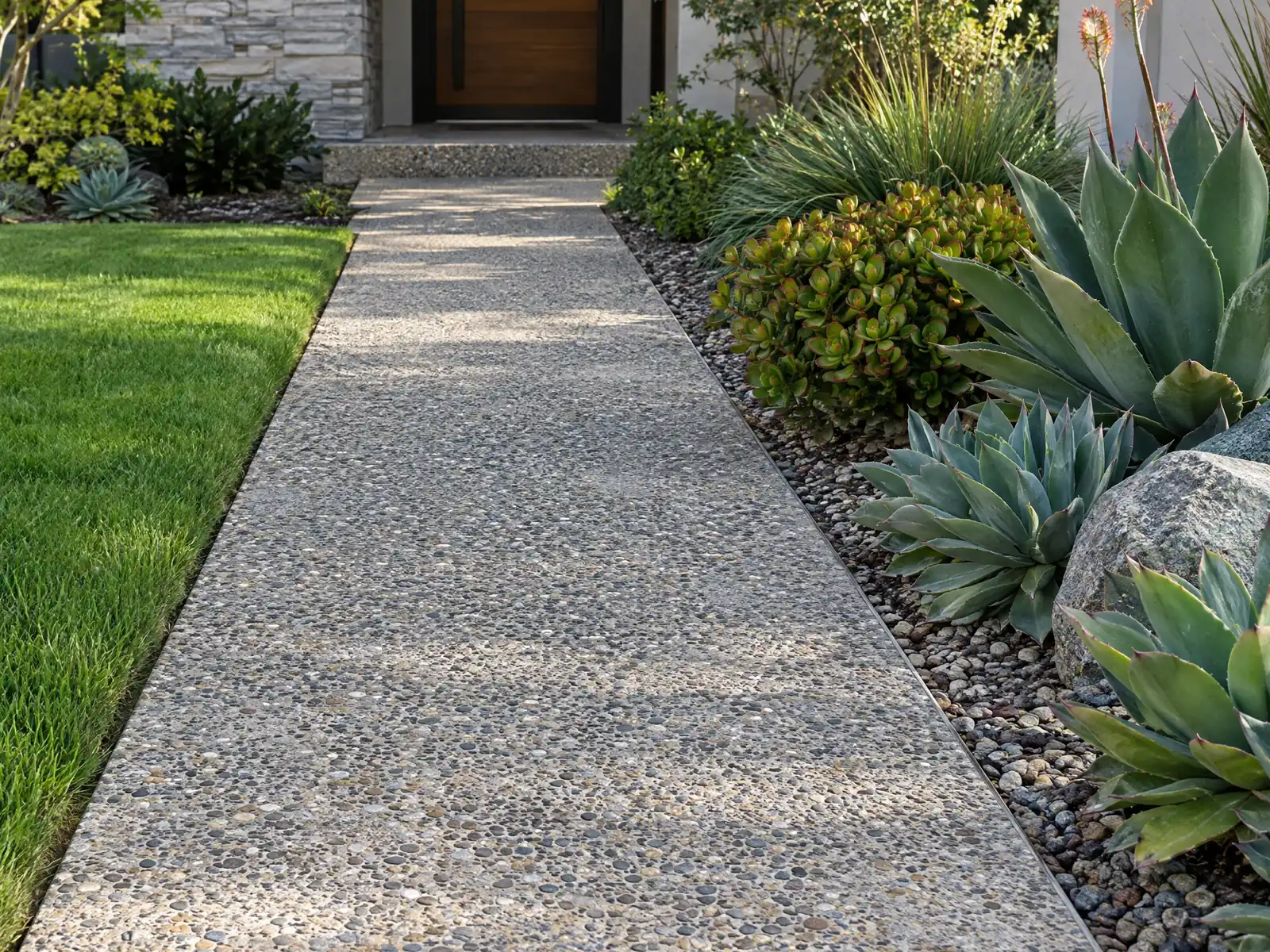
Lemon Grove's concrete tells the town's growth in layers. After World War II the orchards gave way to tract streets, the 1996 General Plan says the boom ran until about 1970, and by the mid-1970s most vacant land was built on. The City incorporated on July 1, 1977 as California's 414th city and inherited narrow streets without sidewalks, curbs or gutters, so frontage work is part of many permits here. Census estimates put 26.4 percent of homes in the 1950s and 20.6 percent in the 1970s, which makes many original walks and slabs half a century old or more.
MDG Builders, CSLB #1040337, is a Tarzana general contractor that plans and permits the job and manages the schedule, while a licensed concrete subcontractor forms, places and finishes the work. Our concrete page explains finishes, the Lemon Grove overview lists the rest of our trades in town, and permit questions go to the Building Division and the Engineering Division.
What Lemon Grove's Building Division, Municipal Code 12.10 and state law say about concrete work
Where concrete permits come from in Lemon Grove: City of Lemon Grove Community Development Department, Building Division.
- Work in the public right-of-way such as curb cuts for a driveway, new sidewalks and pedestrian ramps, and removal and replacement of curb, gutter or sidewalk needs an encroachment permit from the Engineering Division. State law exempts sidewalks and driveways on private property from a building permit (R105.2), but the apron in the right-of-way is a City permit.
- A grading permit from the City Engineer is required unless the grading moves no more than 50 cubic yards cumulatively, cuts or fills no more than 3 feet deep, does not support structures, keeps slopes no steeper than 2:1, does not alter drainage, stays 5 feet from the adjacent ownership and is not on ground steeper than 5:1; excavation for footings, foundations and retaining walls under a building permit is exempt.
- Residential development must keep at least 15 percent of the lot area in landscaping with drought-tolerant plants and a water-conserving irrigation system with a rain sensor, which limits how much of a lot can be paved or hardscaped.
- A building permit is required to remove any swimming pool or spa in Lemon Grove: holes or a 24 by 24 inch opening must be inspected before backfill, the sides are demolished at least 2 feet down, and a licensed geotechnical or civil engineer must certify backfill materials and compaction, with a compaction report required for final.
- New refuse enclosures must have a 10 by 30 foot reinforced Portland cement concrete pad in front of them, and masonry enclosures are required for residential developments with five or more dwelling units.
- The City's 2023 Sidewalk Master Plan counts 60 miles of sidewalks and 65 miles of sidewalk gaps and 4,237 sidewalk defects with a probable repair cost of $4.7 million, which is why concrete frontage work is often tied to a permit.
- CSLB defines the C-8 Concrete classification as forming, pouring, placing, finishing and installing mass, pavement, flat and other concrete work, and placing and setting screeds for pavements or flatwork.
- Retaining walls up to 4 feet high (bottom of footing to top of wall, unless supporting a surcharge) are exempt from a permit under the state residential code (R105.2), and the City fee schedule's valuation table has separate lines for concrete or masonry retaining walls.
Sources for these rules
- lemongrove.ca.gov: encroachment permit
- gocodebook.com: article ii permits and fees
- gocodebook.com: chapter 17.24 district regulations
- lemongrove.ca.gov: pool demo requirements
- lemongrove.ca.gov: item 3 2nd reading lgmc amend public dedication improv thres
- cslb.ca.gov: Licensing Classifications Detail
- gocodebook.com: section r105 permits
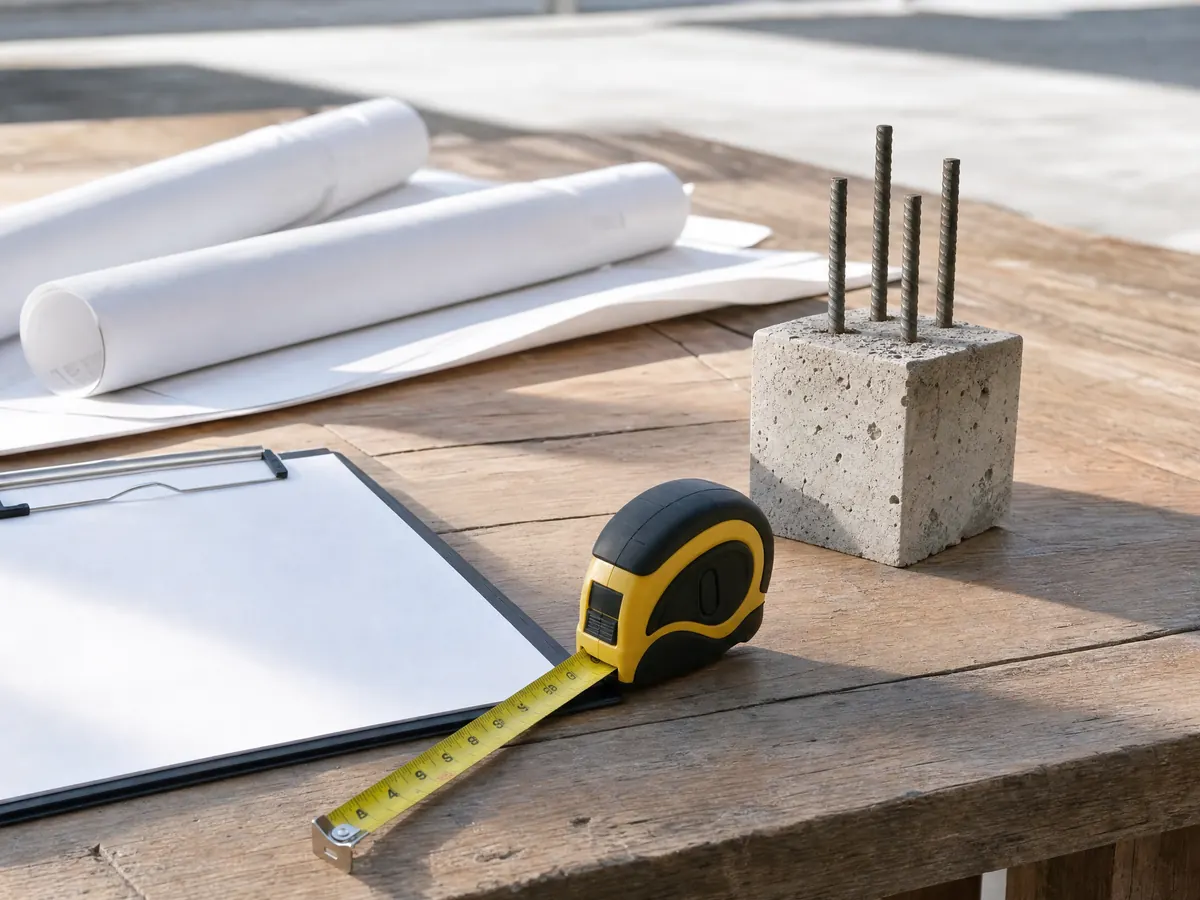
When does a concrete job in Lemon Grove trigger half-street dedication and improvements?
When it belongs to a permitted project whose valuation reaches the City's lines, not because concrete is poured. Municipal Code 12.10, amended by Ordinance 467 on April 1, 2025, asks for dedication of half the abutting street right-of-way at $85,000 of building permit valuation and half-street improvements at $100,000, and both dollar figures are adjusted each year from 2026 by the California Construction Cost Index. In practice the improvements are the sidewalk, curb and gutter that many streets here still lack.
The rule has exits. Roofing, decks and patio covers, pools, sheds, garages and carports, solar and ADUs are exempt, valuations of non-exempt permits on one property within five years are added together, and homes in the RL and RLM zones are exempt from the improvement requirement unless they build a new single-family house. As we read it, that zone exemption does not reach dedication. A plain private pour has no building permit valuation to count, because state code exempts low driveways and sidewalks on private property.
We read the code through GoCodebook, a third-party mirror, since the City's official code site refused automated access, and the thresholds move every year. Ask Planning for the current dollar figures and whether your lot touches a public street before a remodel and a concrete scope are bundled together.
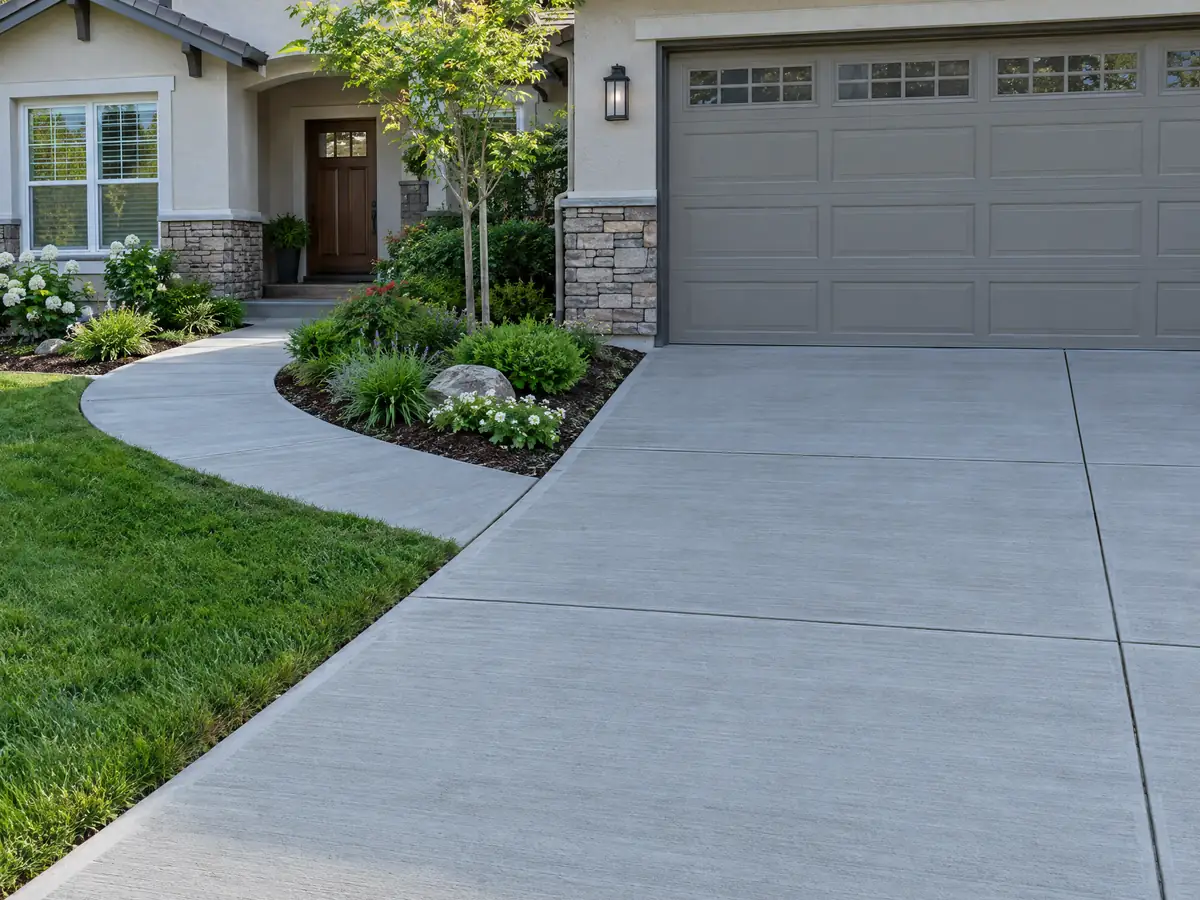
Do you need a permit to replace a driveway apron or sidewalk in Lemon Grove?
Yes for anything in the public right-of-way. The Engineering Division's encroachment permit covers driveway curb cuts, new sidewalks and pedestrian ramps, and removal and replacement of curb, gutter or sidewalk, with initial fees or deposits paid in person at City Hall. State code exempts low sidewalks and driveways on private property from a building permit (R105.2), but the apron is City ground, so one driveway job has a private half and a public half.
Demolition can trigger the same permit. A roll-off container set in the street needs an encroachment permit, and so does trenching for water and sewer laterals. Ask whether the subcontractor or MDG pulls it. The City's 2023 Sidewalk Master Plan, quoted in the April 2025 staff report, counts 60 miles of sidewalk, 65 miles of gaps and 4,237 defects with a probable repair cost of $4.7 million, so a cracked or missing panel is a known item.
On permitted work, no building permit issues until a debris diversion deposit is posted, and the City requires at least 75 percent of debris by weight to be diverted, plus all land clearing debris. Ask where the old slab is going before the truck backs in.
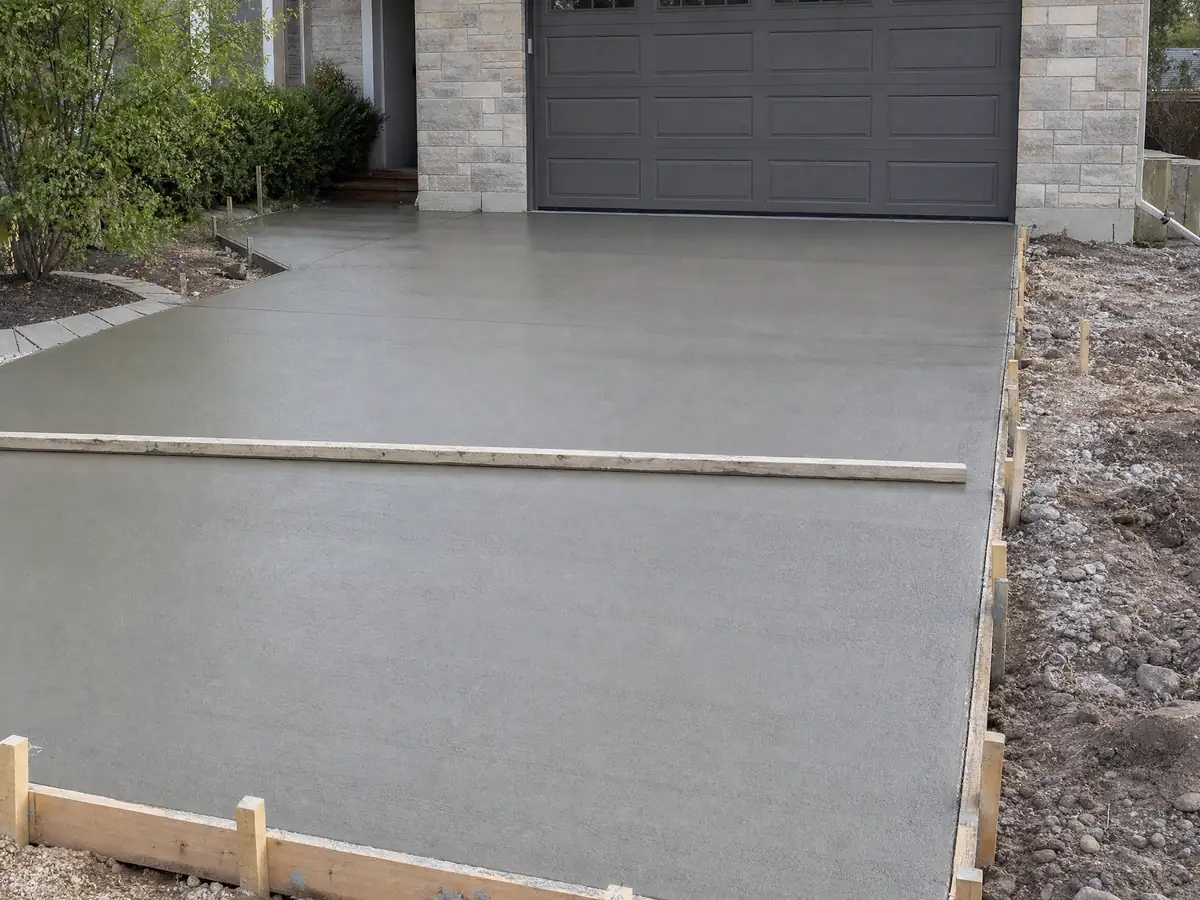
How much of a Lemon Grove lot can be paved, and what does a patio slab need?
Less than all of it. Residential development must keep at least 15 percent of the lot in drought-tolerant landscaping with a water-conserving irrigation system and rain sensor, which caps the hardscape. Where more than half the lots on a block face are developed, the required front yard is the lesser of the zone standard or the average of the lots on both sides, and the driveway still has to stay at least 19 feet deep from the garage door.
A grading permit from the City Engineer is needed unless the work moves no more than 50 cubic yards, cuts or fills no more than 3 feet, keeps slopes no steeper than 2:1, leaves drainage alone and stays 5 feet from the neighbor's ground. A patio on a flat lot often fits inside that list, and a bench cut into a slope does not. Washout counts as pollution too, since the Stormwater Division bars rinse water and irrigation runoff from the storm drain.
Owners of five-unit properties have one more slab rule: new refuse enclosures need a 10 by 30 foot reinforced Portland cement concrete pad in front, and masonry enclosures are required for developments of five or more dwelling units.
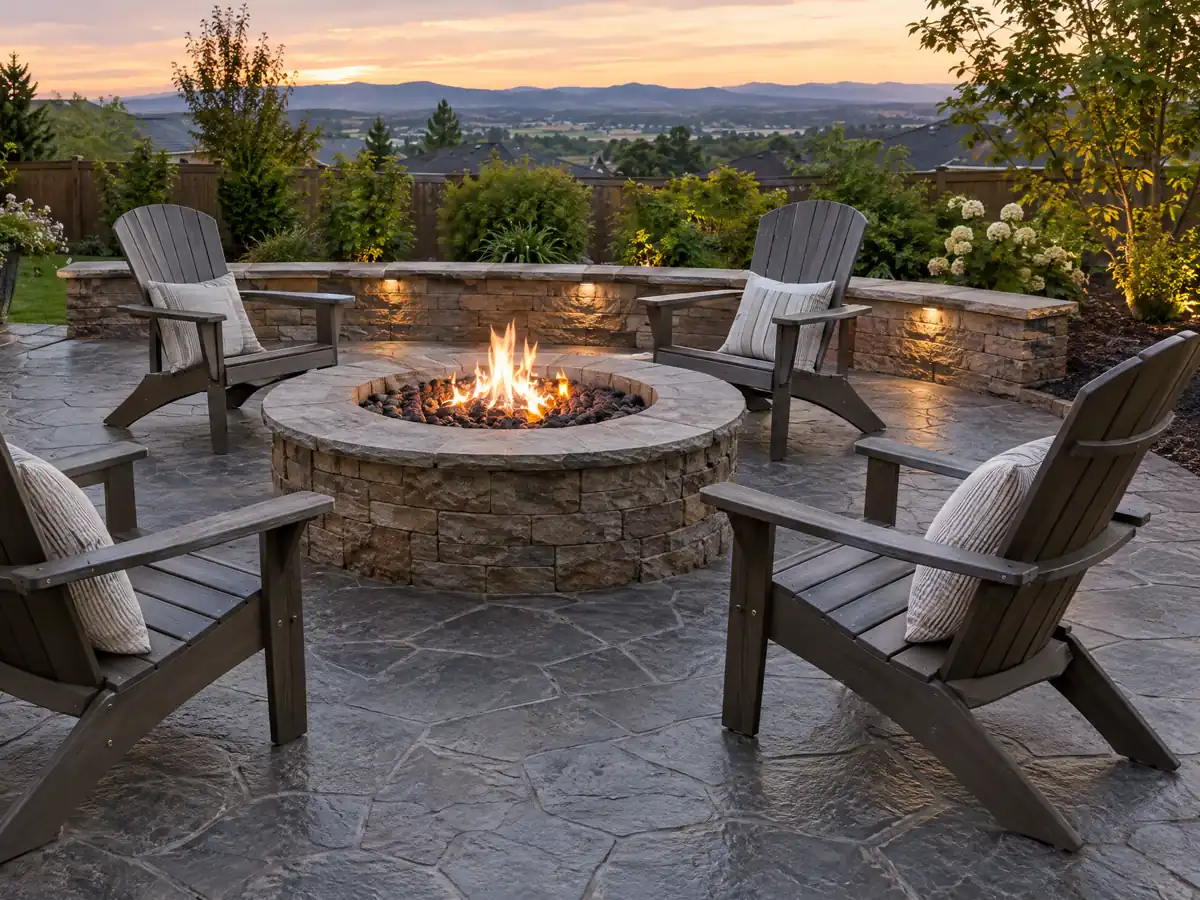
Will clay soil crack a new slab, and what changes on slopes or near Federal Boulevard?
Clay swells when wet and shrinks when dry, and the General Plan says nearly all soils here, except those in the east Broadway area, have that high shrink-swell potential. Steeper slopes lie south of Federal Boulevard, north and east of Golden Avenue, east of Lawton Drive and Camino de las Palmas and around parts of Lemon Grove Avenue, and geotechnical studies are required for grading projects. We found no Lemon Grove code number for flatwork thickness, so ask for thickness, reinforcement, joint layout and base preparation in writing.
Water is the other variable. The General Plan says the primary flood zone runs along Federal Boulevard with significant flooding nearly every year, and Chapter 15.50 requires a floodplain development permit inside FEMA special flood hazard areas. The nearest rainfall normals, from La Mesa 0.9 SW, show 11.96 inches a year with 9.14 of them from December through March.
Filling a pool is concrete work too. Lemon Grove requires a building permit to remove any pool or spa, with holes or a 24 by 24 inch opening inspected before backfill, the sides demolished at least 2 feet down and a licensed geotechnical or civil engineer certifying the backfill, and a compaction report is required for final.
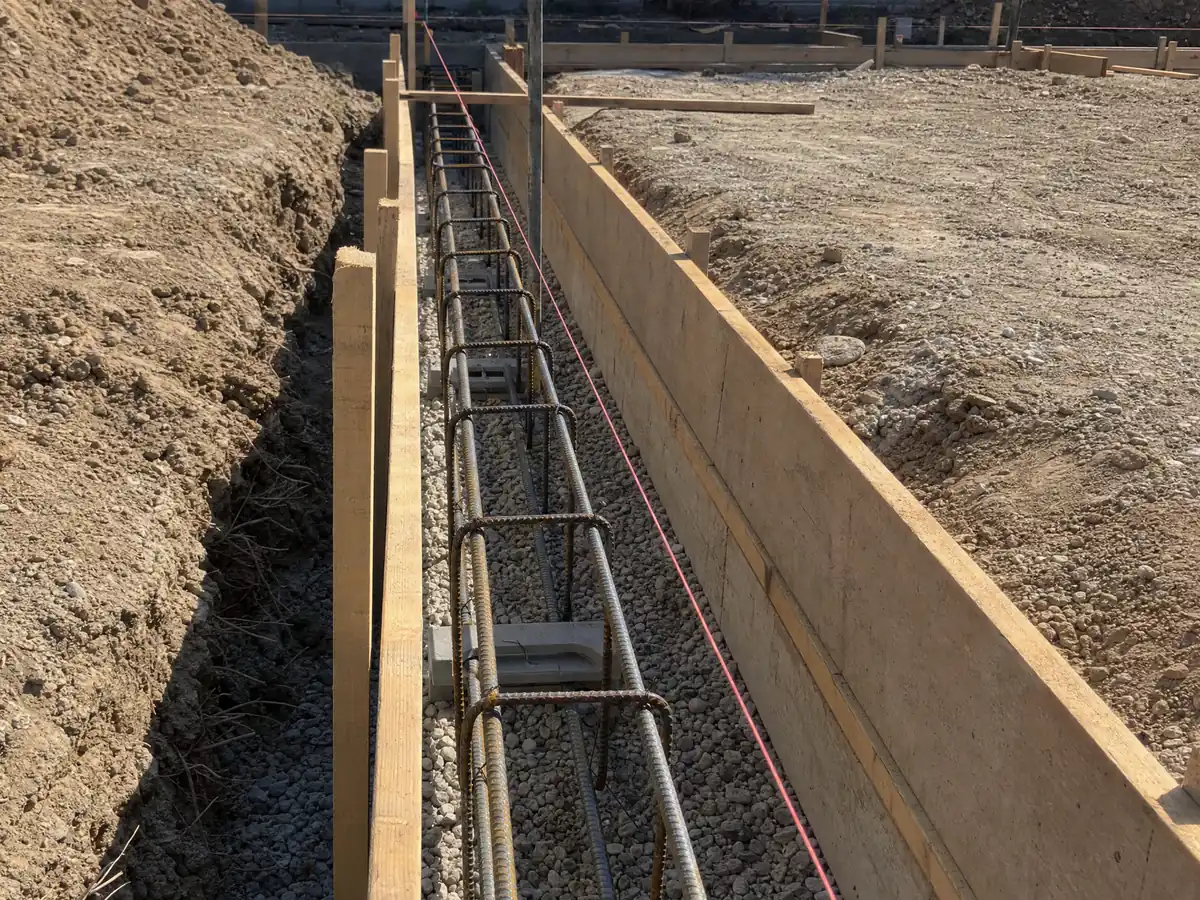
How tall can a retaining wall or block wall be in Lemon Grove without a permit?
For a retaining wall the state line is 4 feet. R105.2 exempts walls up to 4 feet from the bottom of the footing to the top of the wall unless they support a surcharge, and the City pages we read do not change that, though its fee schedule prices concrete and masonry retaining walls on their own lines. A taller or surcharged wall is permit work with engineering.
A wall that doubles as a fence meets a different number. Lemon Grove exempts fences and walls up to six feet from a building permit in the RL, RLM, RM, RMH and RP zones when they meet the code, while the state exemption reaches seven feet, so the stricter local line governs. Residential fences over six feet are prohibited unless the community development director approves them, and a fence may sit on a retaining wall that holds earth to its full height.
Poured walls fall under CSLB's C-8 concrete class, and whether a block wall is masonry is a question for the subcontractor. For retaining walls we publish no per-foot price, since none of the sources we checked showed one with a method.
- Front yard and street side setback: solid walls stop at 42 inches unless a variance is approved.
- Corner lots: nothing in the 20 foot triangle may exceed three and one-half feet.
- Block walls: painted or covered with neutral stucco that matches the buildings.
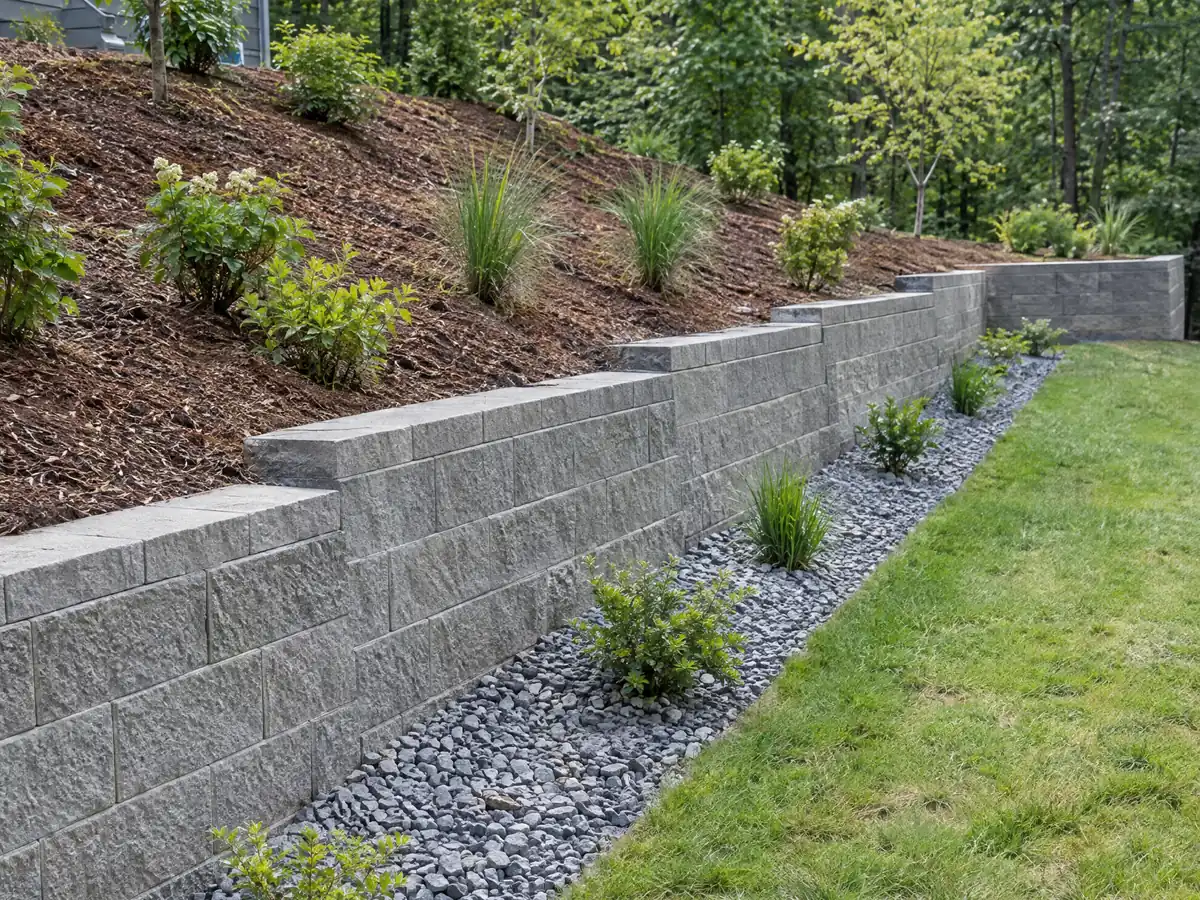
How much does concrete work cost in Lemon Grove, and who needs which license?
We found no Lemon Grove price study that shows its method, so the anchor is Angi's Los Angeles pages, which may differ from local bids. The August 4, 2026 patio page lists $4 to $13 per square foot and a $5,248 average, the July 20, 2026 stamped page lists $15 to $30, and the May 5, 2026 driveway page lists $8 to $20. The Bureau of Labor Statistics put Los Angeles metro cement mason pay at a mean $33.67 an hour in May 2025. No City fee amounts appear on this page, since the one fee schedule we could open is from 2022.
For planning, we use $8 to $14 per square foot in Los Angeles for plain flatwork of 300 square feet or more, $15 to $30 for stained, stamped or exposed aggregate work, and $9 to $20 for driveway replacement with demolition included. A 20 by 20 foot plain slab lands near $3,200 to $5,600. Minimum charges push small jobs above the per-foot averages.
A job that needs a permit needs a licensed contractor even under $1,000. Under Business and Professions Code 7159.5 the down payment cannot exceed $1,000 or 10 percent of the price, and our license check guide shows how to read a CSLB record.
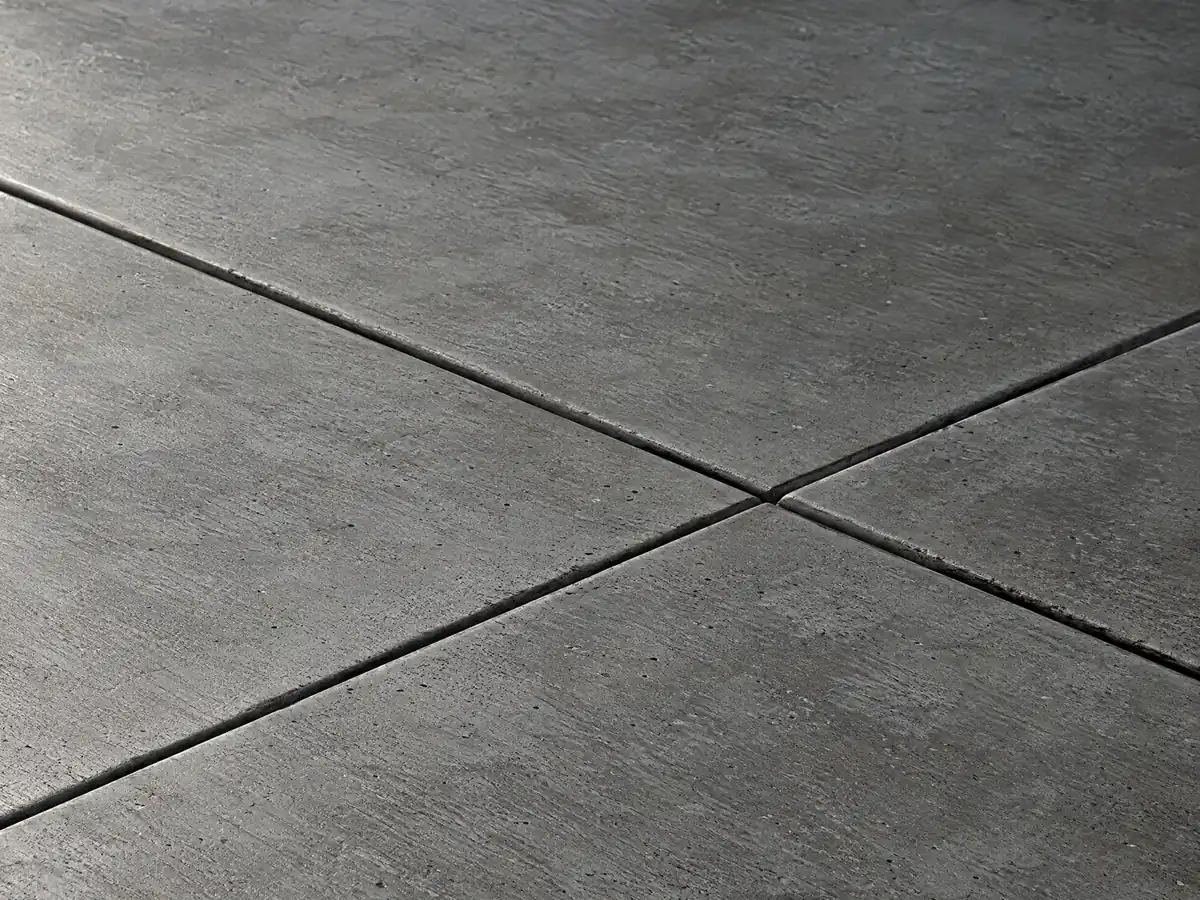
Concrete photos from Lemon Grove and nearby communities
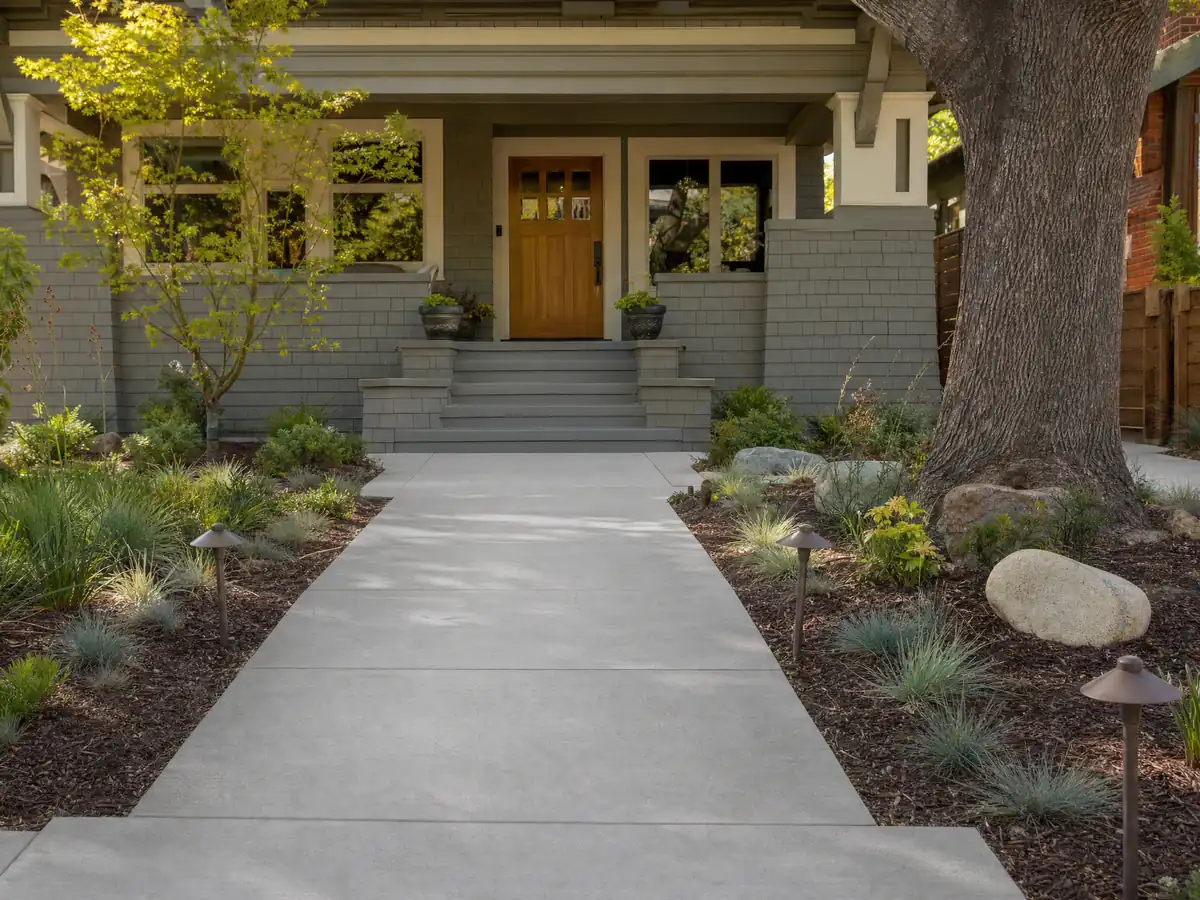
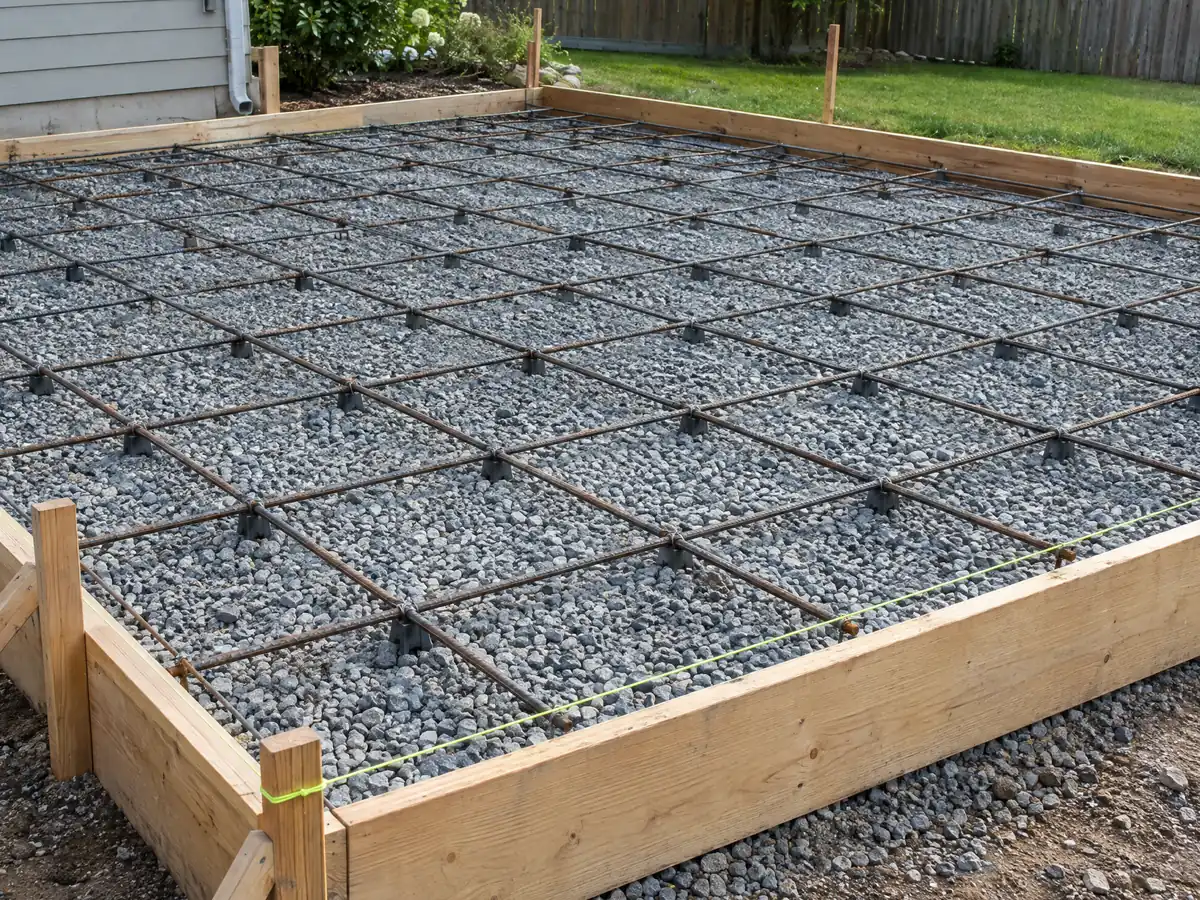
Forms, rebar, screeded slabs and finished walks, patios and walls from Lemon Grove and the communities around it, shown at the steps where the rules bite. Tap any photo to enlarge it.
What concrete costs around Lemon Grove
Dollar figures here are Los Angeles planning ranges, not a Lemon Grove bid, and demolition, haul-off, rebar, any encroachment permit and slope work should be separate lines on the written proposal. The same property may need flooring in Lemon Grove or decks in Lemon Grove. Nearby, read concrete work in La Mesa, concrete work in San Diego, concrete work in El Cajon and concrete work in Chula Vista, plus concrete in Los Angeles for the large-city benchmark. To see which sub forms and which one finishes, read the subcontractor guide, and for floor coverings over a slab, our flooring cost guide.
| What it covers | Typical range |
|---|---|
| Patio, walkway or slab, broom finish, 300 sq ft or more | $8 to $14 per square foot |
| Decorative: stained, stamped or exposed aggregate | $15 to $30 per square foot |
| Driveway replacement, with demolition of the old slab | $9 to $20 per square foot |
| 20 by 20 foot plain patio (400 sq ft) | About $3,200 to $5,600 |
| 20 by 20 foot decorative patio (400 sq ft) | About $6,000 to $12,000 |
| Small jobs under 300 sq ft | Usually above the per-foot range |
| Retaining walls | Set by the written proposal |
Other work we manage in Lemon Grove
Lemon Grove concrete questions, answered
Do I need a permit for a concrete slab in my backyard?
Often not, because state code exempts low sidewalks and driveways on private property and the City pages we read set no separate patio rule. Anything in the public right-of-way needs an encroachment permit, and a grading permit applies past 50 cubic yards or a 3 foot cut or fill. Describe the slab to the Building Division before forming.
How much should a 20x20 concrete patio cost?
On our Los Angeles planning range of $8 to $14 per square foot, 400 square feet of plain concrete comes to about $3,200 to $5,600. Angi's August 2026 Los Angeles patio page shows a 20 by 20 slab at $1,600 to $5,200. We found no Lemon Grove study, and stamped finishes cost more.
Can I expand my driveway without a permit?
Not safely without asking. A new curb cut or apron is an encroachment permit through Engineering, residential lots must keep 15 percent in landscaping, and the driveway must stay at least 19 feet deep from the garage door where the block's average setback applies. Send Planning a sketch showing the old and new edges.
What is the maximum height of a retaining wall without a permit in California?
The state residential code exempts retaining walls up to 4 feet, measured from the bottom of the footing to the top of the wall, unless they support a surcharge. In Lemon Grove the City pages we read do not change that line, though a wall that also serves as a fence is limited to six feet without a permit.
Is 4 inches of concrete thick enough for a driveway?
Contractors commonly pour 4 inches for walks and light-duty slabs, but we found no Lemon Grove code number for flatwork thickness. Clay soil here has high shrink-swell potential, so thickness, reinforcement, joints and the base matter as much as the inches. Ask the finisher to state all four in the written proposal.
How much does a 300 sq ft stamped concrete patio cost?
Angi's Los Angeles stamped range of $15 to $30 per square foot works out to roughly $4,500 to $9,000 for 300 square feet, and the same page shows a $5,948 average. No Lemon Grove study turned up. Sealer, color and tearing out an old slab shift the total, so a site visit sets the price.
Do I need a permit to replace a sidewalk in front of my Lemon Grove house?
Yes. Removal and replacement of sidewalk, curb or gutter in the public right-of-way needs an encroachment permit from the Engineering Division, with initial fees or deposits paid in person at City Hall. The sidewalk is City ground even though it fronts your lot, and the City's 2023 master plan counts 4,237 defects citywide.
Do concrete contractors need to be licensed in California?
Yes, for any job over $1,000 including materials, and for any job that needs a permit at any price. The concrete work itself falls under CSLB's C-8 classification. Check the license number on the CSLB site, and ask a subcontractor for a license number and certificate of insurance before the forms go up.
Does a big remodel in Lemon Grove require a new sidewalk and curb?
Possibly. Municipal Code 12.10 asks for half-street improvements at $100,000 of building permit valuation and dedication at $85,000, adjusted yearly from 2026. Decks, roofing, pools, garages, solar and ADUs are exempt, and RL and RLM homes are exempt from the improvement rule unless they build a new house. Ask Planning first.
Tell us the lot, the slab size and whether it touches the street
Say what you want poured, how big it is, whether the lot is flat or sloped, and whether any of it reaches the sidewalk, curb or driveway apron. The frontage, soil and permit questions come with us to the first visit.