
Concrete Companyin El Cajon, CA
A concrete company in El Cajon meets rules that a pour elsewhere may not: driveways are written for asphalt unless Public Works approves another surface, paving may cover only half the required front setback, and hillside lots need grading plans. Flat walks and driveways up to 30 inches above grade are exempt on the state list.
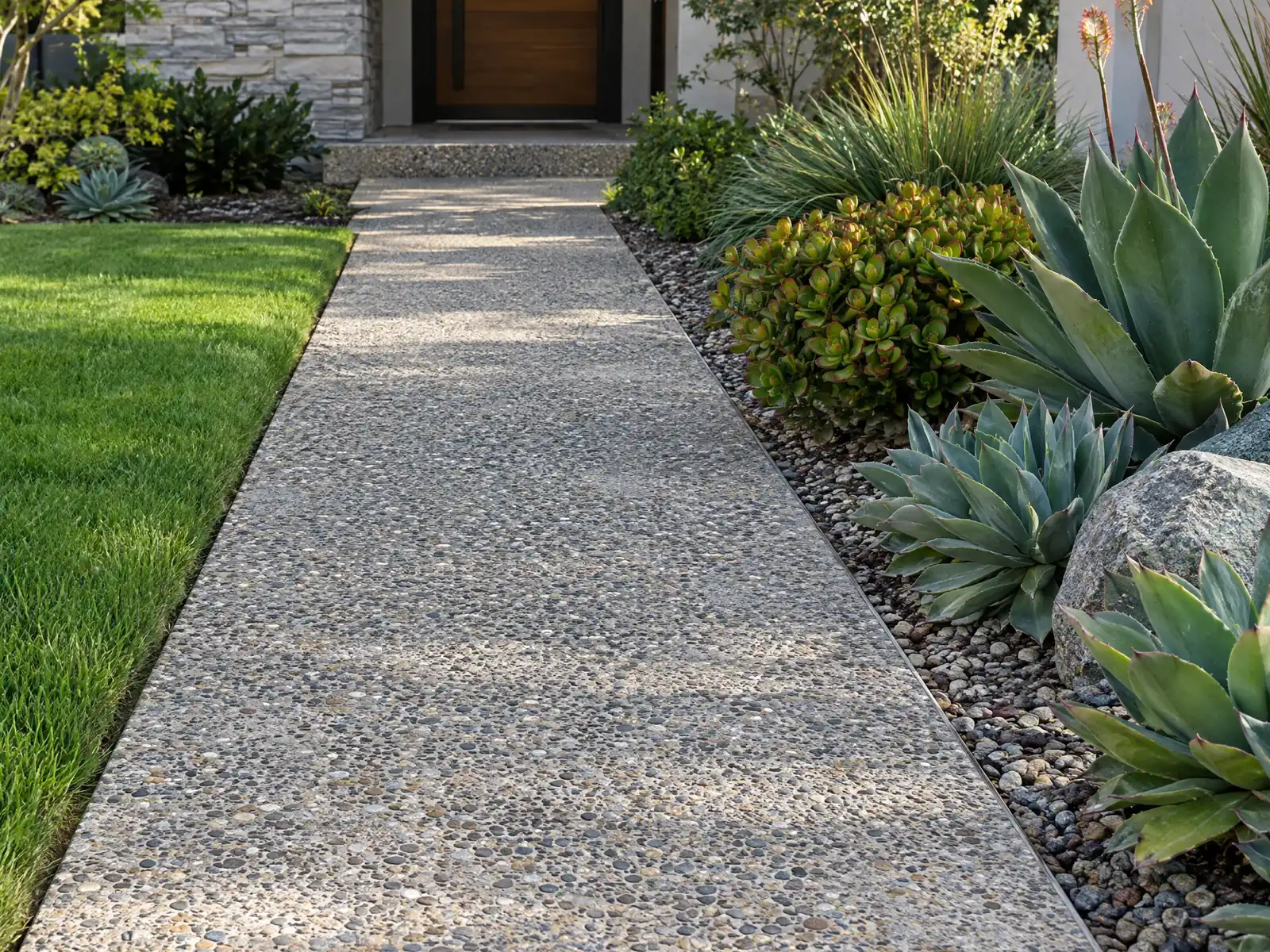
El Cajon began as ranch land. Governor Pio Pico granted about 48,800 acres of the valley to Maria Antonio Estudillo in 1845, Isaac Lankershim bought most of Rancho El Cajon in 1868, and the city incorporated on November 12, 1912. The housing boom followed the war, with the population rising from 5,600 in 1950 to 37,618 in 1960. A driveway or front walk poured with the original house is therefore about 45 to 75 years old, and the City's code decides how it may be replaced.
MDG Builders, CSLB #1040337, is a Tarzana general contractor that plans the pour, takes the paving, grading and drainage questions to the City, and books a licensed concrete subcontractor for forms, pour and finish. Finishes and ranges are on the concrete page, and the El Cajon overview covers the other trades we manage here.
What El Cajon's Building and Fire Safety Division, Public Works rules and Zoning Code say about concrete work
Where concrete permits come from in El Cajon: City of El Cajon Community Development Department, Building and Fire Safety Division.
- El Cajon's driveway code (section 17.185.070) requires driveways and parking areas to be paved with at least 2 inches of asphaltic concrete on a prepared base unless the Director of Public Works approves another surface, and runoff from new or replaced pavement must drain to a landscaped or pervious area that meets Low Impact Development rules before it reaches the public right-of-way. The Director of Public Works also approves the location and design of driveway entrances (17.185.050).
- In single-family zones, driveways and paved parking may not exceed 50 percent of the required front setback (Municipal Code 17.140.160), and the driveway for one or two units in RS zones is 10 feet wide minimum (Table 17.185.180).
- Under the state exempt list (Residential Code R105.2, as excerpted by the City of Albany), sidewalks and driveways not more than 30 inches above grade are exempt from a building permit, and El Cajon's residential code chapter does not amend that item; zoning and public works paving rules still apply.
- El Cajon's lot grading chapter (15.64.020) says no grading, including clearing of vegetative matter, may start until a grading and drainage plan prepared by a California-registered civil engineer is reviewed by the City, and exempts excavation under 2 feet deep and fill under 12 inches deep only when the slope is no steeper than 2:1, the volume is 50 cubic yards or less on any one lot, and no drainage course is obstructed or altered.
- CSLB defines the C-8 Concrete classification as forming, pouring, placing, finishing and installing mass, pavement, flat and other concrete work, and excludes firms whose only business is plaster coatings or placing reinforcing steel.
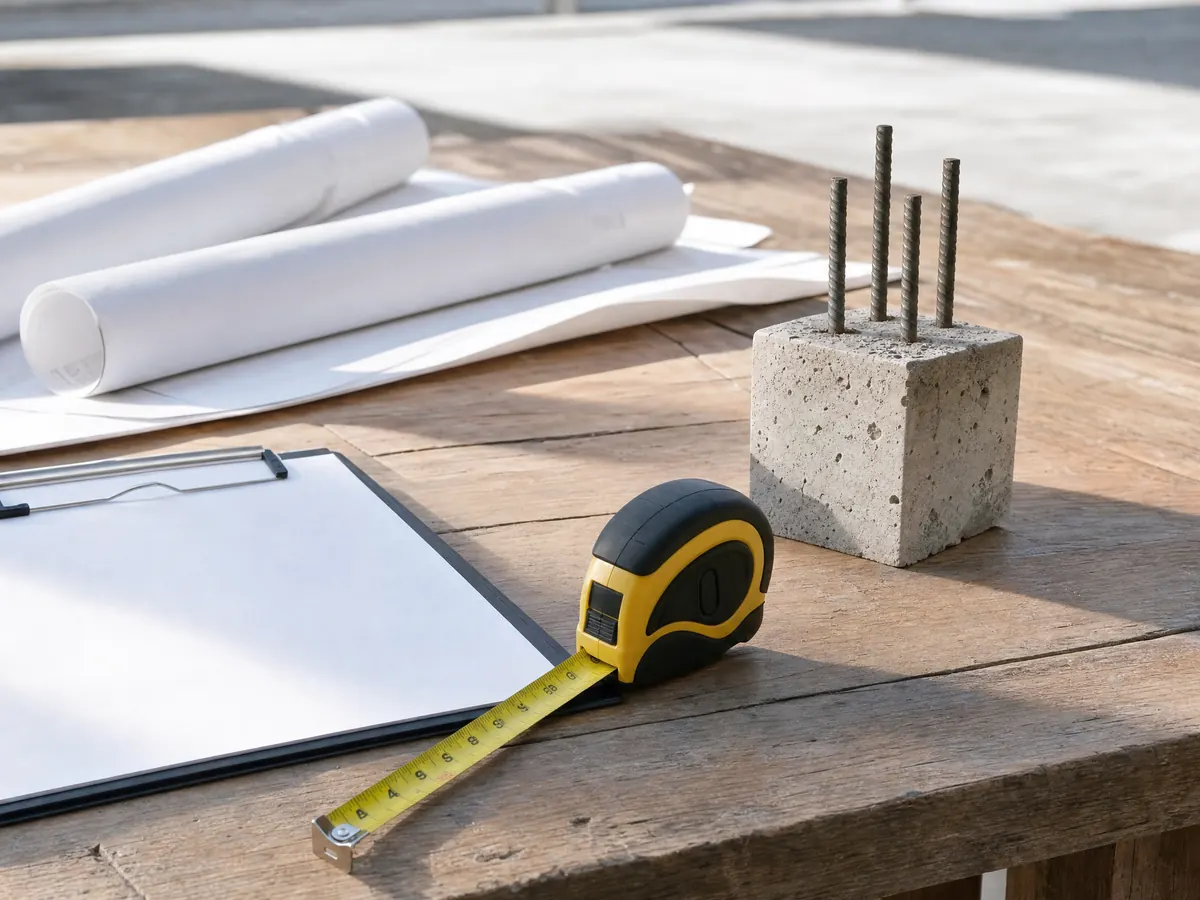
Can you pour a concrete driveway in El Cajon, or does the code call for asphalt?
You can ask, but read the paving rule first. Section 17.185.070, as a third-party code mirror summarizes it, says driveways and parking areas are to be paved with at least 2 inches of asphaltic concrete on a prepared base unless the Director of Public Works approves another surface. Portland cement concrete is a different material from asphaltic concrete, so ask Public Works whether a concrete driveway on your lot is routine or needs that approval, and what thickness and base it expects.
Drainage is part of the rule. Runoff from new or replaced pavement must drain to a landscaped or pervious area that meets Low Impact Development requirements before it reaches the public right-of-way, which can mean a planter strip, a swale or a regrade beside the drive. The Director of Public Works also approves where a driveway entrance sits and how it is built (17.185.050).
We read the chapter through a summary layer and the City's own pages blocked our tools, so get the exact text, any exception and the current standard drawing from the City before a bid is signed.
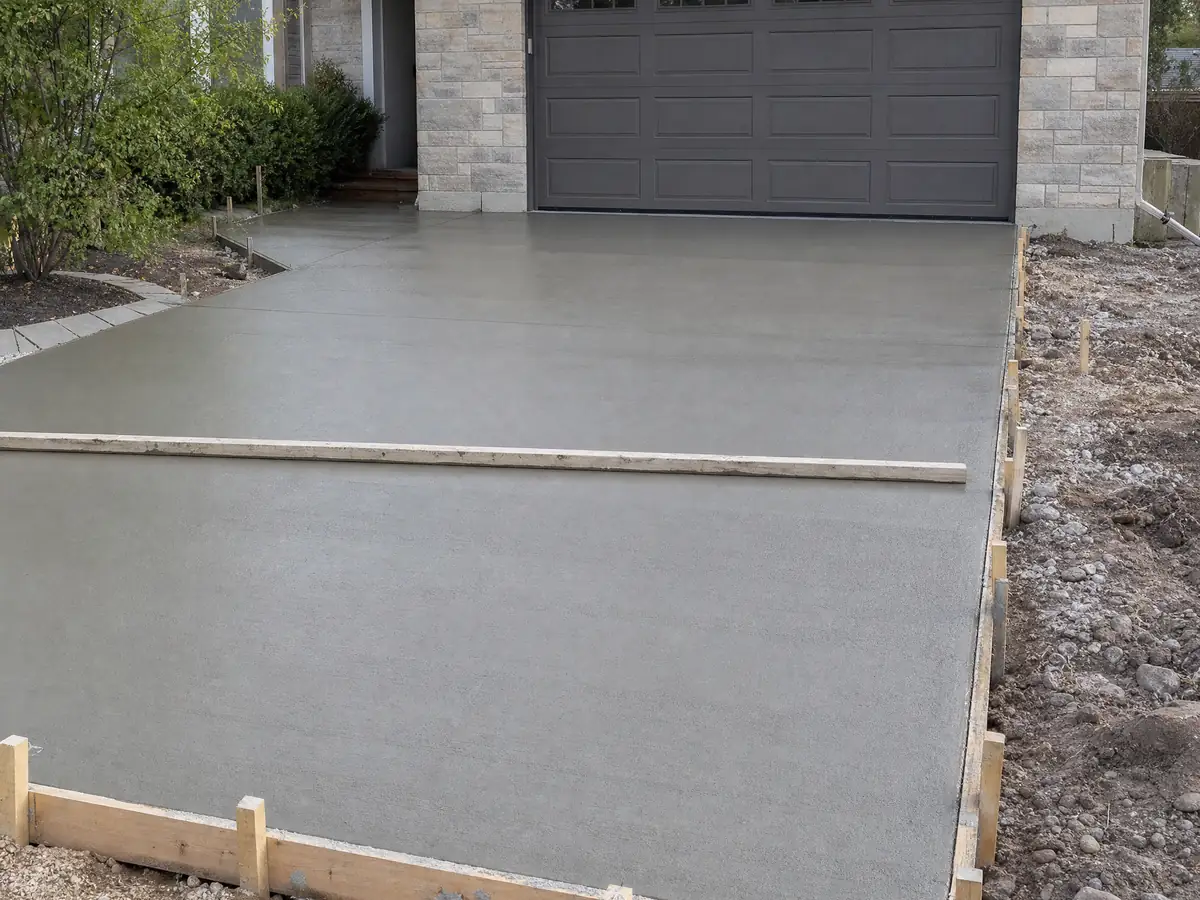
How much of an El Cajon front yard can be paved, and how wide must a driveway be?
Half of the required front setback is the ceiling for driveways and paved parking in single-family zones (Municipal Code 17.140.160), and the driveway for one or two units in an RS zone is at least 10 feet wide under Table 17.185.180. On an RS-6 lot, where the front setback is 20 feet, half of that strip is the most that may be paved. A parking pad added in front of a 1950s house can reach the limit quickly.
Long driveways bring a fire rule. Section 15.56.070 requires fire apparatus access roads at least 20 feet wide, or 16 feet for a single-family driveway up to 150 feet long that serves no more than two dwellings, with 13 feet 6 inches of vertical clearance. That matters on flag lots and long hillside drives, where Heartland Fire & Rescue, the joint El Cajon, La Mesa and Lemon Grove agency, is the office to ask.
Before anyone draws a wider drive, settle the three facts the numbers depend on.
- Is the lot zoned RS-6, RS-9 or larger?
- How deep is the required front setback?
- Does the drive serve more than two dwellings?
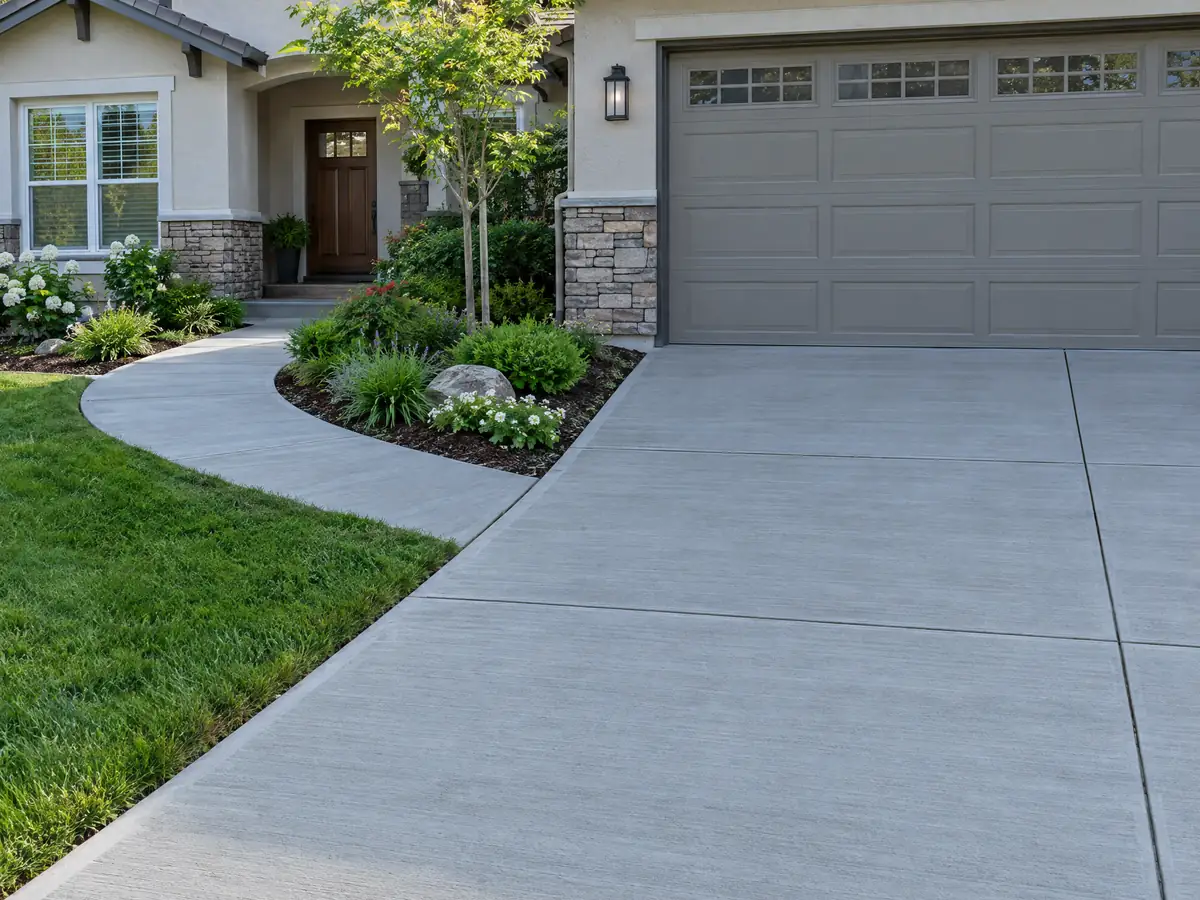
Do you need a permit for a concrete patio, walkway or slab in El Cajon?
Often not for the slab itself. The state model list in Residential Code R105.2 exempts sidewalks and driveways not more than 30 inches above adjacent grade, and El Cajon's residential chapter does not amend that item, though zoning and Public Works paving rules still apply. The copy we read, from another city's website, does not name a patio slab on grade, so ask the Building and Fire Safety Division before assuming one is covered.
Grading is the other trigger. Section 15.64.020 says no grading, including clearing vegetation, may start until a grading and drainage plan by a California-registered civil engineer has been reviewed. It exempts excavation under 2 feet deep and fill under 12 inches deep only when the slope is no steeper than 2:1, the volume is 50 cubic yards or less on the lot and no drainage course is obstructed or altered. A 400 square foot patio dug 4 inches deep moves about 5 cubic yards, but a lot with a swale or a slope can lose the exemption on the last condition.
In a special flood hazard area, section 15.14.050 requires a development permit before any construction, so a patio or wall in a mapped floodplain should be cleared with the City first.
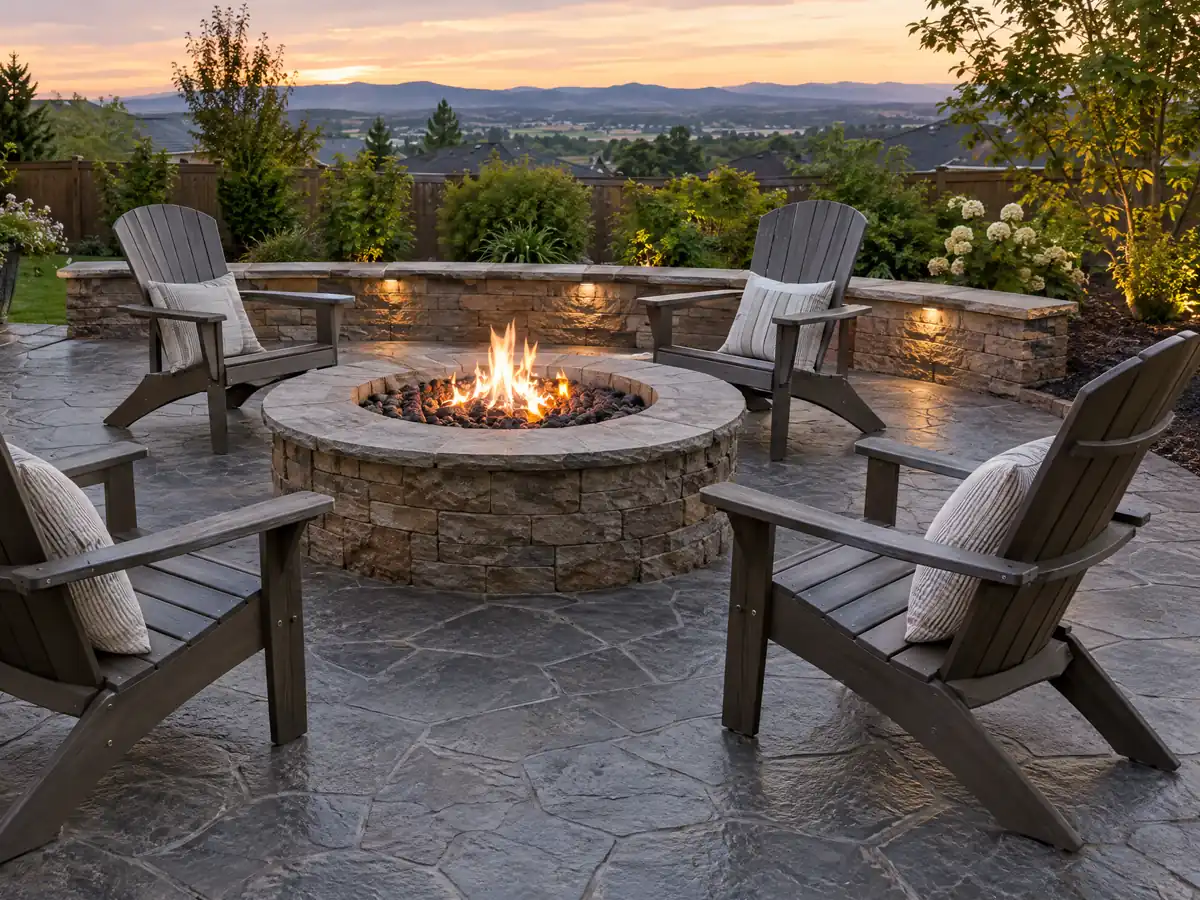
How tall can a retaining wall be in El Cajon before the City wants plans?
Four feet, measured from the bottom of the footing, is the height at which the state list stops exempting a retaining wall, and the exemption is lost if the wall carries a surcharge such as a slope, a driveway or a building. El Cajon's residential chapter does not amend that item. Zoning adds its own rules in section 17.130.200: multiple walls need at least 3 feet of horizontal separation, a fence of the normally allowed height may top a wall at a cut, and at a fill the wall's height counts toward the fence limit, except for an open fence up to 42 inches.
Front yards are tighter than back yards. The fence code allows 42 inches anywhere on a lot and 6 feet behind the front yard line, so a stepped wall with a fence above it can add up to more than a plain fence would be allowed.
Material changes the crew. CSLB's C-29 masonry class covers concrete block walls, so a finished block wall may come from a different subcontractor than the slab, as how general contractors use subcontractors explains.
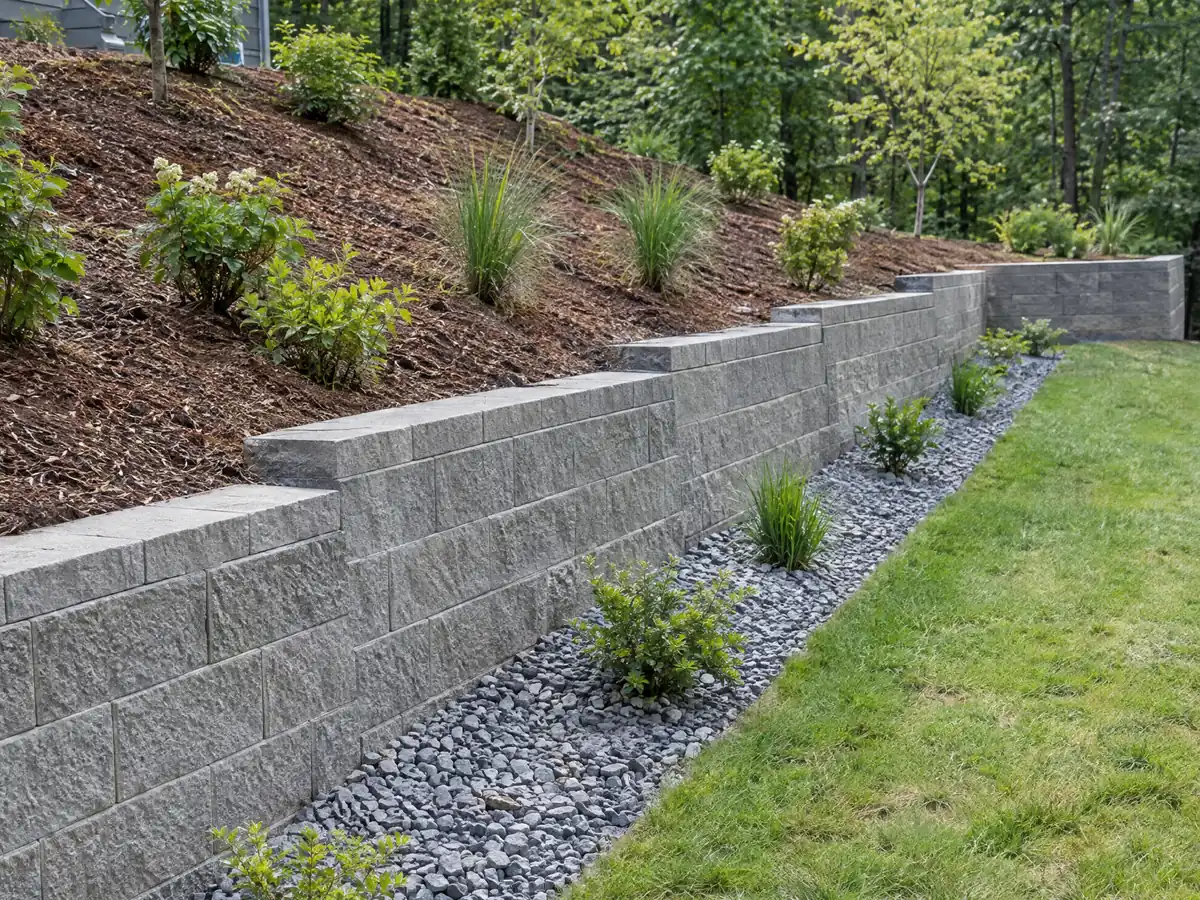
What changes for concrete on a hillside lot under El Cajon's H overlay?
Where the Hillside Overlay (H) zone applies, section 17.170.040 limits cut and fill slopes to 2:1 and 30 feet in height, limits natural terrain changes to 30 feet and requires fill to be compacted to at least 90 percent. Section 17.170.070 requires a detailed geotechnical report by a certified engineering geologist or licensed geotechnical engineer, including for retaining walls in areas of known geological hazard. The chapter exempts excavations of 50 cubic yards or less that are less than 1 foot deep.
That makes the first question on a hillside patio or wall a question about the lot. We found no list of which streets carry the overlay, so ask Planning. El Cajon's Fletcher Hills and Bostonia areas straddle the city line, and unincorporated communities nearby, including Granite Hills and Rancho San Diego, answer to the County and not to the City.
Fire designations come from a separate City map, dated March 25, 2025 and adopted by Ordinance 5167. We could not open it, so we name no parcel or tier.
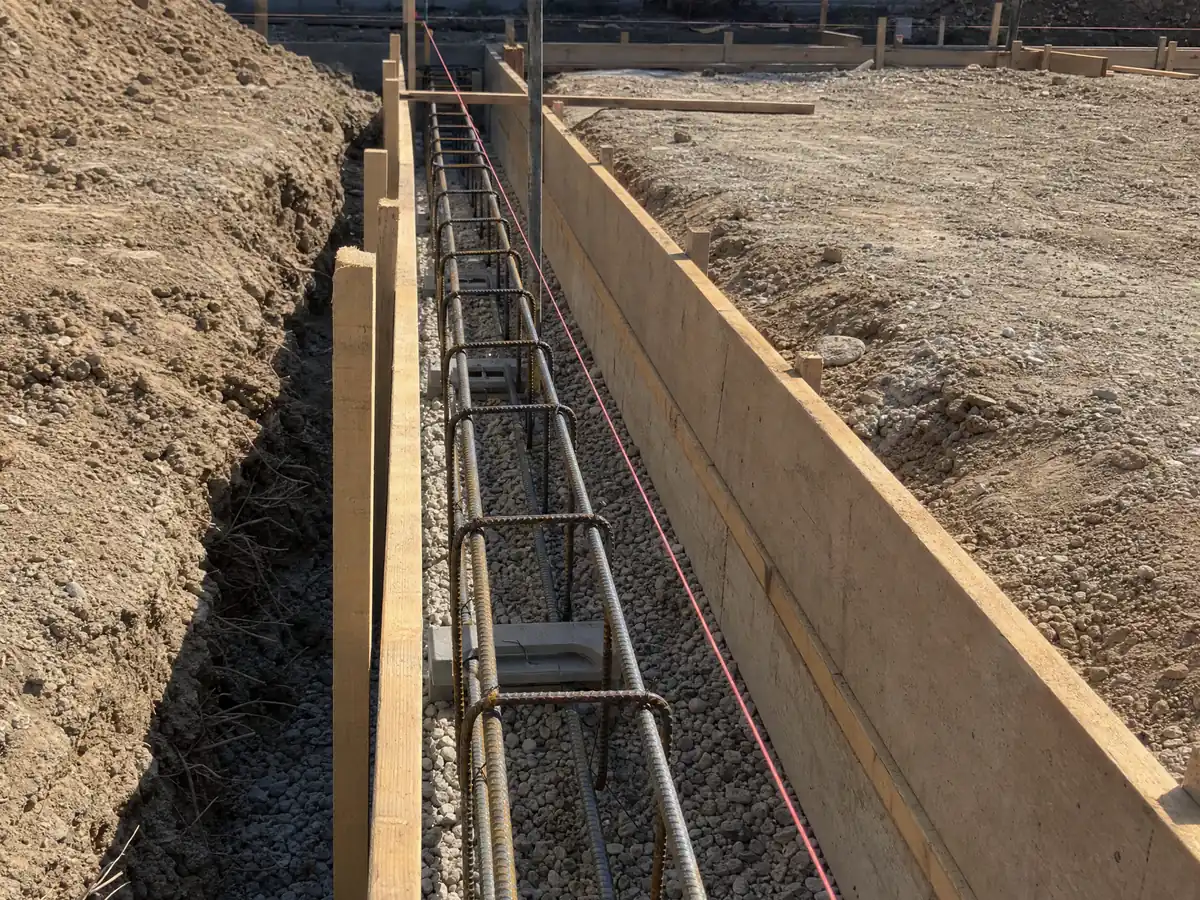
Is it a bad idea to pour concrete in El Cajon's summer heat or a winter storm?
Heat is the bigger risk. The El Cajon NOAA station averages 56.8 days a year at or above 90 F and 6.9 at or above 100 F, with August highs averaging 88.6 F, so a summer afternoon pour can stiffen before the finisher is done. Ask how the crew will keep the slab damp and cured and who will be on site to finish it. The station sits on the valley floor, and the hillside neighborhoods can differ.
Rain is a winter event. Of the station's 11.63 inches a year, 8.68 fall from December through March and only 0.18 inch in July and August combined, so a pour in the wet months needs covers and a fallback date. The station also logs 2.5 days a year at or below 32 F, which can matter for a very early morning start.
Cracks are a separate topic. A 1950s walk with a few cracks is ordinary at its age. Joint spacing and thickness are industry practice and we found no El Cajon code that sets them, so ask the crew for the joint layout on the drawing.
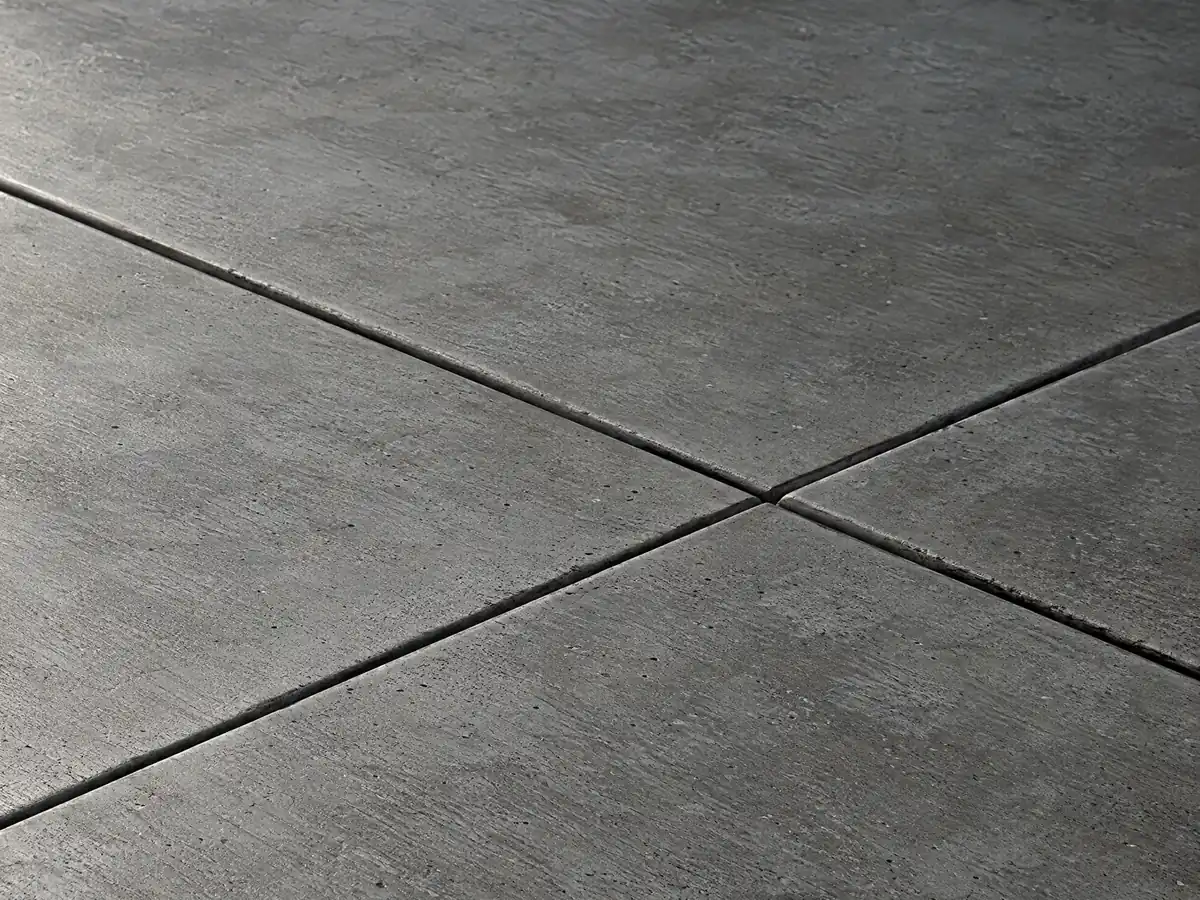
What does concrete work cost in El Cajon, and what license should the crew hold?
No El Cajon price study turned up, so these are Los Angeles figures from Angi's 2026 pages, built from customer surveys and pro data, and San Diego County prices may differ. A patio runs $4 to $13 per square foot and averages $5,248, a 20 by 20 foot patio $1,600 to $5,200, stamped work $15 to $30 and a driveway $8 to $20, averaging $7,270. Angi's retaining wall page for Los Angeles shows an average of $7,140 and a spread from $2,674 to $11,842, and we print no per-foot wall price because height and drainage drive it.
Our planning ranges are $8 to $14 per square foot for typical patios, walks and slabs of 300 square feet or more, $15 to $30 for decorative finishes and $9 to $20 for a driveway including demolition of the old slab. Small jobs run higher per foot because of minimum charges. Cement masons in the Los Angeles-Long Beach-Anaheim metro area averaged $33.67 an hour in May 2025, which is a wage and not a billing rate.
CSLB's C-8 class covers forming, pouring, placing and finishing concrete work and excludes firms that only place reinforcing steel or apply plaster coatings. Anything that needs a permit must go to a licensed contractor even when it costs under $1,000, and our license check guide shows how to verify a number.
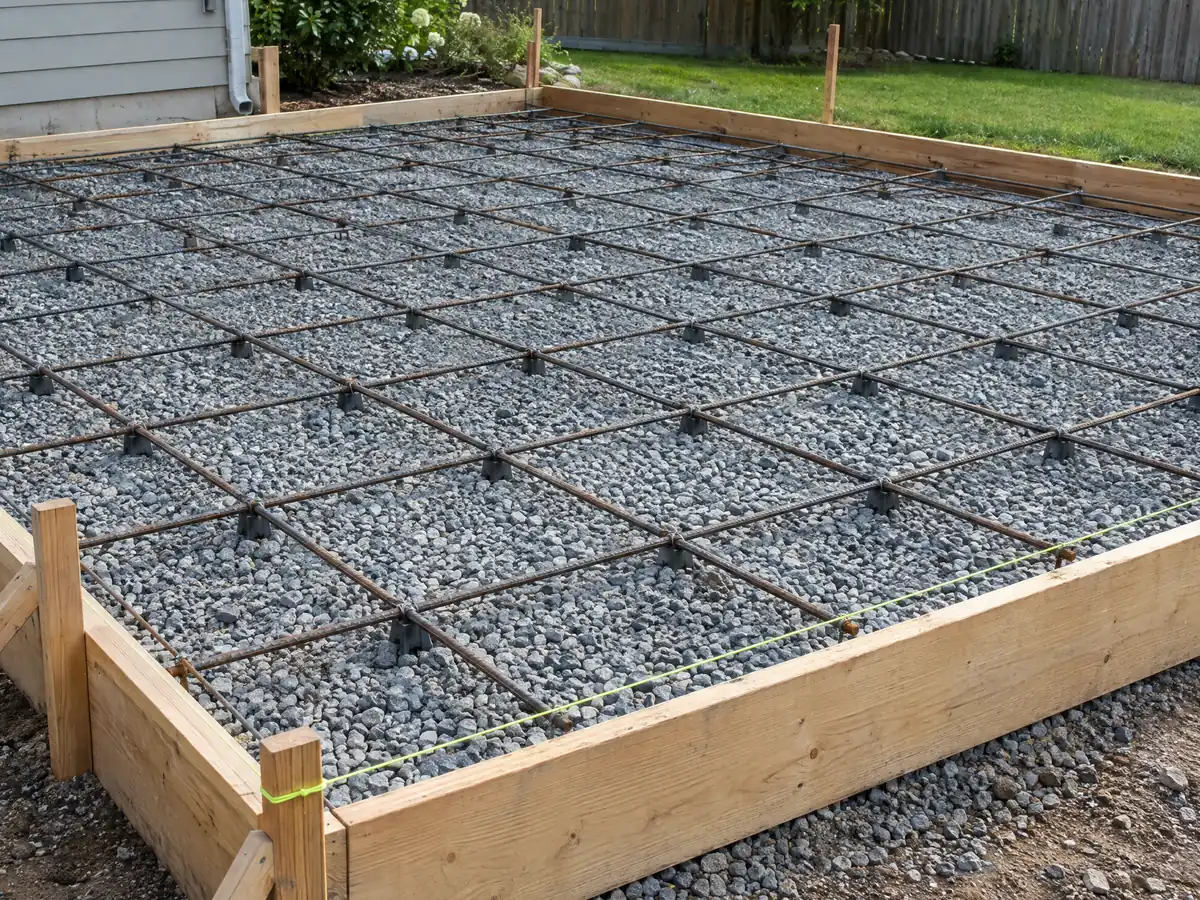
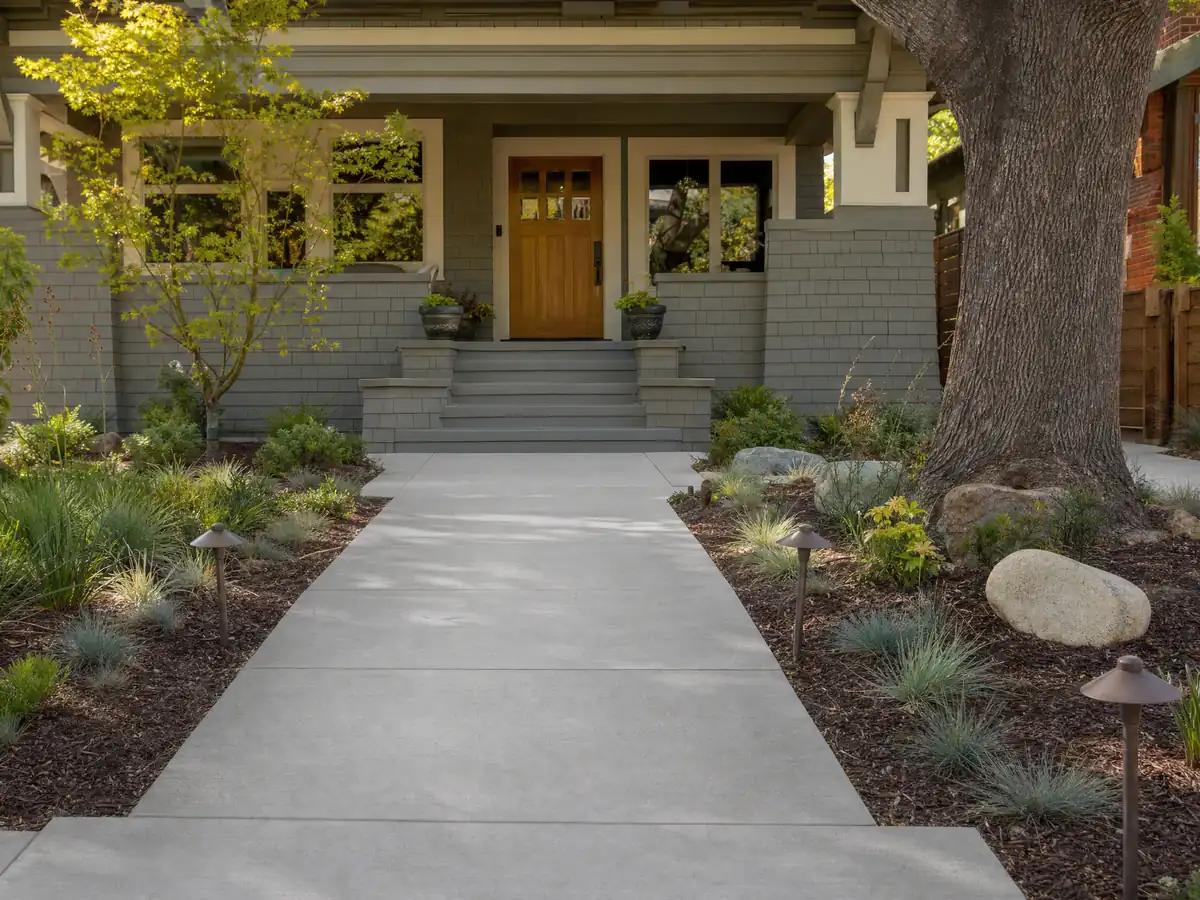
Concrete photos from El Cajon and nearby communities
Forms, rebar, finished flatwork and block walls from El Cajon and the communities around it, shown at the stages that matter. Tap any photo to enlarge it.
What concrete costs around El Cajon
Dollar figures here are Los Angeles planning ranges from our concrete page, not an El Cajon bid, and the proposal should show demolition, base, drainage and any City fees on their own lines. For the same property, see flooring in El Cajon and decks in El Cajon. For other Southern California comparisons, read concrete in Anaheim, concrete in Lancaster and concrete in Los Angeles.
| What it covers | Typical range |
|---|---|
| Patio, walkway or slab, broom finish, 300 sq ft or more | $8 to $14 per square foot |
| Decorative: stained, stamped or exposed aggregate | $15 to $30 per square foot |
| Driveway replacement, with demolition of the old slab | $9 to $20 per square foot |
| 20 by 20 foot plain patio (400 sq ft) | About $3,200 to $5,600 |
| 20 by 20 foot decorative patio (400 sq ft) | About $6,000 to $12,000 |
| Small jobs under 300 sq ft | Usually above the per-foot range |
| Retaining walls | Set by the written proposal |
El Cajon concrete questions, answered
Can I pour a concrete patio without a permit in El Cajon?
Possibly. The state list exempts sidewalks and driveways up to 30 inches above grade but does not name a patio slab, and grading and flood rules can still apply. Call the Building and Fire Safety Division with the size, the height above grade and the distance to each property line before you order a truck.
Can I expand my driveway without a permit in El Cajon?
Only within the limits. Paving may not exceed 50 percent of the required front setback, a one or two unit driveway is at least 10 feet wide, and Public Works approves the entrance and design. The slab may be permit-exempt on the state list, but zoning and Public Works still decide how wide it can go.
What is the maximum height of a retaining wall without a permit in El Cajon?
Four feet from the bottom of the footing is the state limit, lost if a slope, a driveway or a building loads the wall. Zoning heights and the hillside overlay's geotechnical report still apply, so ask the City before you dig, especially on a sloped lot.
How much should a 20x20 concrete patio cost in El Cajon?
Angi's 2026 Los Angeles page puts a 20 by 20 foot concrete patio at $1,600 to $5,200, and our planning range of $8 to $14 per square foot would give $3,200 to $5,600 for 400 square feet. We found no El Cajon study, and demolition, base and drainage are extra.
How much does a concrete driveway cost in El Cajon?
Angi's 2026 Los Angeles page gives $8 to $20 per square foot and an average of $7,270, and our planning range is $9 to $20 including demolition of the old slab. We found no El Cajon price study, and Public Works approval, drainage work and apron repair can add separate lines.
Is 4 inches of concrete thick enough for a driveway in El Cajon?
A 4 inch slab is common industry practice for patios and walks, but we found no El Cajon code that sets a driveway thickness. The paving section reads as 2 inches of asphaltic concrete unless Public Works approves another surface, so ask what thickness and base it expects.
Can I use asphalt for a driveway in El Cajon?
Yes, and asphalt is the default the code describes: at least 2 inches of asphaltic concrete on a prepared base unless the Director of Public Works approves another surface. Runoff from the new pavement must drain to a landscaped or pervious area, so a drainage plan belongs in the bid.
How much does a stamped concrete patio cost in El Cajon?
Angi's 2026 Los Angeles page puts stamped work at $15 to $30 per square foot, and our planning range for decorative finishes is the same. For 400 square feet that multiplies to $6,000 to $12,000. We found no El Cajon study, and small jobs run higher per foot.
What license does a concrete company need for concrete work in El Cajon?
CSLB's C-8 Concrete class covers forming, pouring, placing and finishing flatwork and pavement. Block walls fall under C-29 masonry instead. Work that needs any permit must go to a licensed contractor even when it costs under $1,000, so look the number up on the CSLB site first.
Send the address and a photo of the yard
Describe what you want poured, its rough size and the surface there now, whether a cracked drive or a bare side yard. The paving, setback and grading questions come with us to the first visit.