
Concrete Companyin San Diego, CA
A concrete company in San Diego can pour most patios and walks without a building permit, because the Municipal Code exempts low sidewalks, driveways and outside paving, but anything in the public right-of-way needs a City permit. Retaining walls, canyon and coastal lots and historic sites add review. Confirm each before a truck is booked.
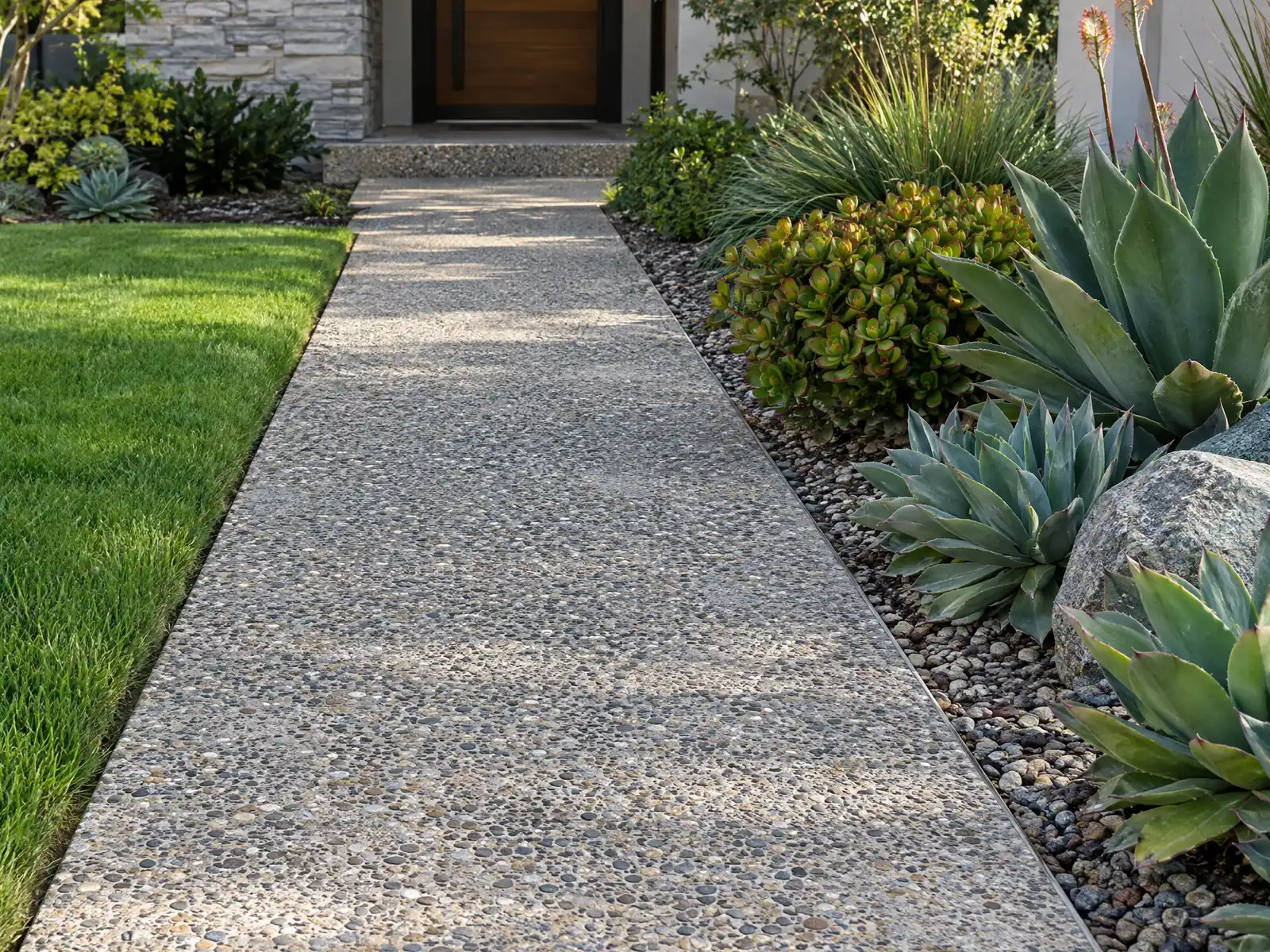
San Diego is built around about 200 deep canyons and hills that divide its mesas, according to Wikipedia, and concrete here is poured to fit that ground. The population rose from 147,995 in 1930 to 333,865 in 1950 as military and defense work boomed, later growth annexed large areas to the north, and the City now has 49 community plans covering 52 planning areas. Since the 1970s is the biggest decade of the 588,866 homes counted in 2024 (20.0 percent), many original walks, driveways and patio slabs are now around half a century old.
MDG Builders, CSLB #1040337, is a general contractor in Tarzana. On a San Diego pour we draft the scope, put the permit and right-of-way questions to the City's Development Services Department and hire a licensed concrete subcontractor to form, place and finish the work. The concrete page explains finishes, and the San Diego overview shows the other trades we manage here.
What San Diego's Development Services Department, its Land Development Code and state law say about concrete work
Where concrete permits come from in San Diego: City of San Diego Development Services Department (DSD).
- San Diego exempts sidewalks and driveways 30 inches or less above adjacent grade that are not over a basement or story and are not part of an accessible route, and exempts 'outside paving' under the repair provisions, in Municipal Code 129.0203(a)(7) and (a)(17)(D). A carve-out in (a)(22) excludes parking for single dwelling unit uses on a single lot in single-unit residential zones from the small-parking exemption, so ask DSD about a new driveway parking pad.
- DSD's permit list says a Right-of-Way Permit is required for any new construction or above-ground or underground improvement in the public right-of-way, which lies outside the private property lines, and offers a Sidewalk Panel Replacement Expedite Program as a self-certification option to replace damaged sidewalks in the public right-of-way for owners who received a Notice of Responsibility letter from the Transportation Department or a Project Issues Report.
- A San Diego grading permit is required for grading and right-of-way improvements. DSD says a Site Development Permit is needed for any grading that creates a slope steeper than 25 percent (4 horizontal to 1 vertical) and 25 feet or more high, and a grading permit has an initial duration of two years, with two 6-month extensions available. Even when no permit is required, owners must keep sediment from entering the storm drain system.
- Fire-Rescue's Zone 0 guidance for Very High Fire Severity Zones tells owners to use hardscape such as concrete, gravel, pavers or bare soil within 5 feet of a home, so concrete is one of the surfaces the City names for that zone.
- CSLB defines the C-8 Concrete classification as forming, pouring, placing, finishing and installing mass, pavement, flat and other concrete work, excluding contractors whose sole business is plaster coatings or placing reinforcing steel.
- San Diego's Environmentally Sensitive Lands rules apply to a premises with steep hillsides (a natural gradient of 25 percent or more with at least a 50 foot elevation change, or 200 percent or more with at least 10 feet), sensitive biological resources, coastal beaches, sensitive coastal bluffs or Special Flood Hazard Areas, and when they apply they cover the entire premises.
Can you pour a concrete patio or widen a driveway in San Diego without a permit?
Often yes for flatwork on the ground. Municipal Code section 129.0203 exempts sidewalks and driveways 30 inches or less above adjacent grade that are not over a basement or story and not part of an accessible route, and its repair provisions exempt outside paving. The exemptions are lifted for historical resources and for premises with environmentally sensitive lands that need a development permit.
Parking is the catch. A carve-out in the same section excludes parking for single dwelling unit uses on a single lot in single-unit residential zones from the small-parking exemption, so a new driveway pad or an added parking space is a question for DSD before forms go up. DSD takes questions at 619-446-5000.
Even a job that needs no permit has a duty. DSD says owners must keep sediment from entering the storm drain system, so washout, saw-cut slurry and loose soil need a plan on the day of the pour.
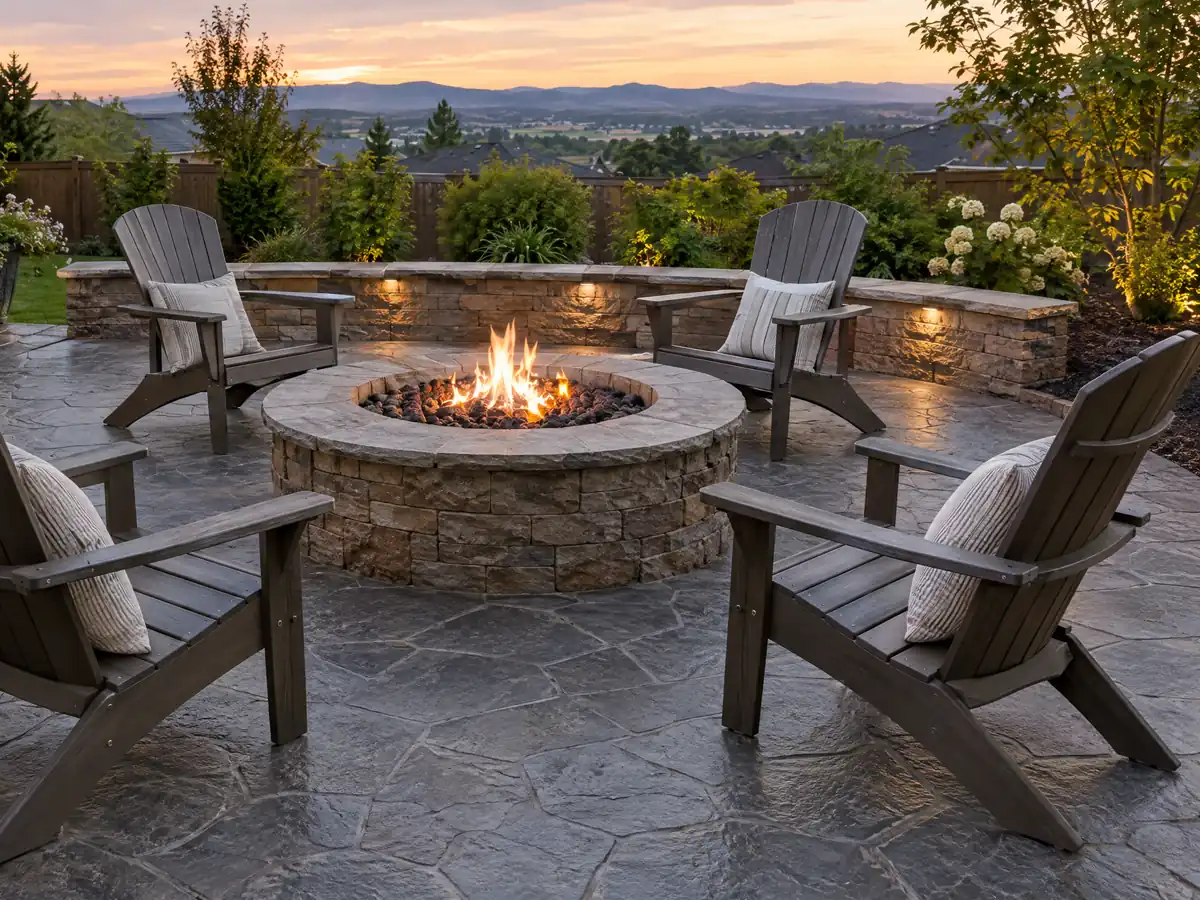
Do you need a permit to replace a sidewalk or driveway approach in San Diego?
Yes, if the concrete sits in the public right-of-way. DSD's permit list says a Right-of-Way Permit is required for any new construction or above-ground or underground improvement outside the private property lines and the property line is not always where owners assume, so confirm it before pricing.
San Diego also offers a self-certification route for damaged walks. The Sidewalk Panel Replacement Expedite Program lets owners who received a Notice of Responsibility letter from the Transportation Department, or a Project Issues Report, self-certify the replacement of the damaged panels through DSD. Keep the letter, because the program is tied to it.
Other projects can force the issue. Under the City's ADU bulletin, if a new ADU makes an existing driveway curb noncompliant, the driveway must be closed to the City Engineer's satisfaction. Fences and walls cannot reach past the property line into the right-of-way without a Public Right-of-Way Permit.
- Is any part of the new concrete past the property line?
- Did the Transportation Department send a Notice of Responsibility letter?
- Will an ADU or driveway change alter the curb cut?
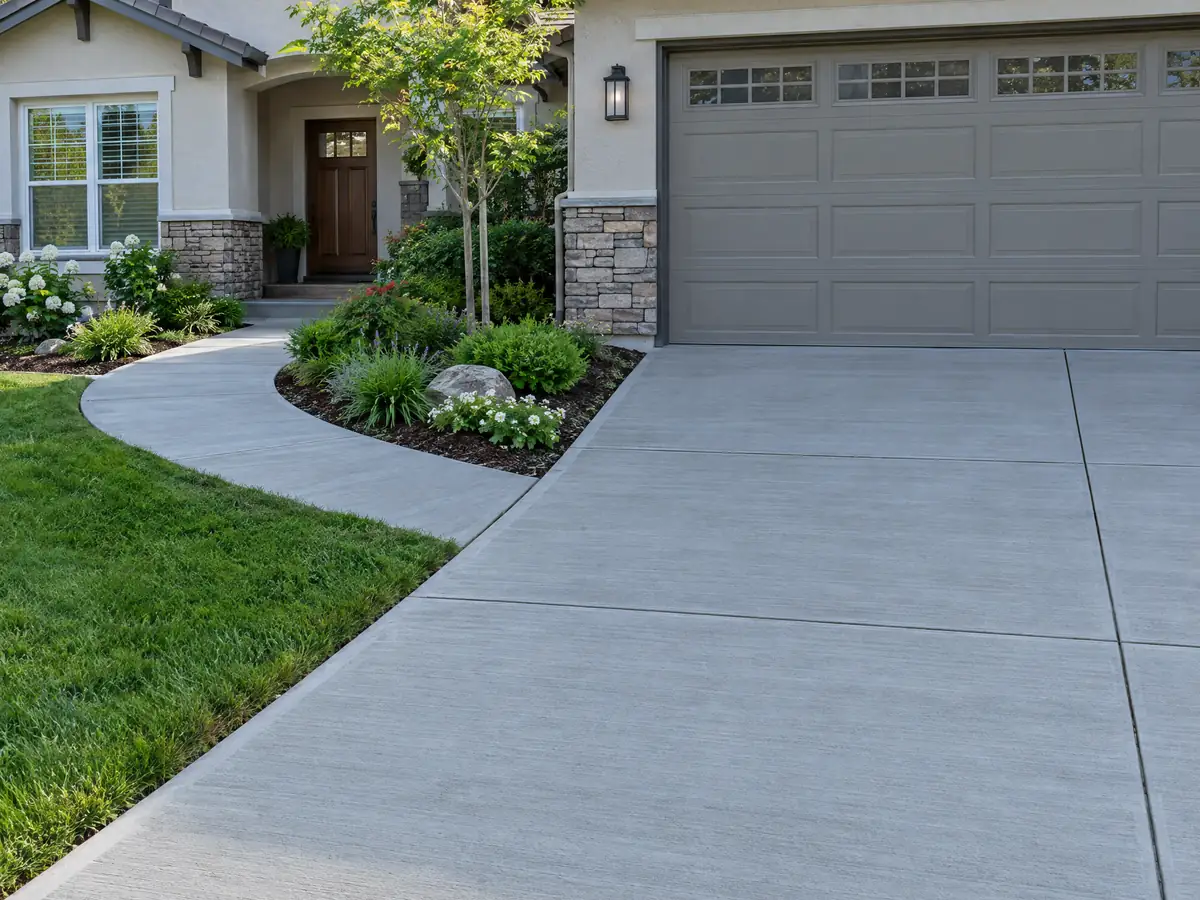
How tall can a retaining wall be in San Diego before it needs a permit?
Three feet is the line, and the City's documents disagree about exactly three. Municipal Code 129.0203(a)(5) exempts a wall 3 feet or less from the top of the footing to the top of the wall unless it supports a surcharge or impounds flammable liquids. The fence table in the Land Development Code says less than 3 feet needs no permit and 3 feet or more needs a Building Permit, and DSD's handout says more than three feet above the footing or supporting loads, so a wall planned at 36 inches should be confirmed with DSD.
Rapid Review covers a single-type wall up to 6 feet high built to the City's standard bulletins. Taller than the Land Development Code allows needs a Neighborhood Development Permit, and a fence or wall on a premises between the shoreline and the first public roadway needs an appealable Coastal Development Permit.
Poured walls sit in CSLB's C-8 concrete class, which excludes contractors whose sole business is placing reinforcing steel. A block wall is masonry, so ask the subcontractor which class applies. We print no per-foot wall price because no independent source gave one.
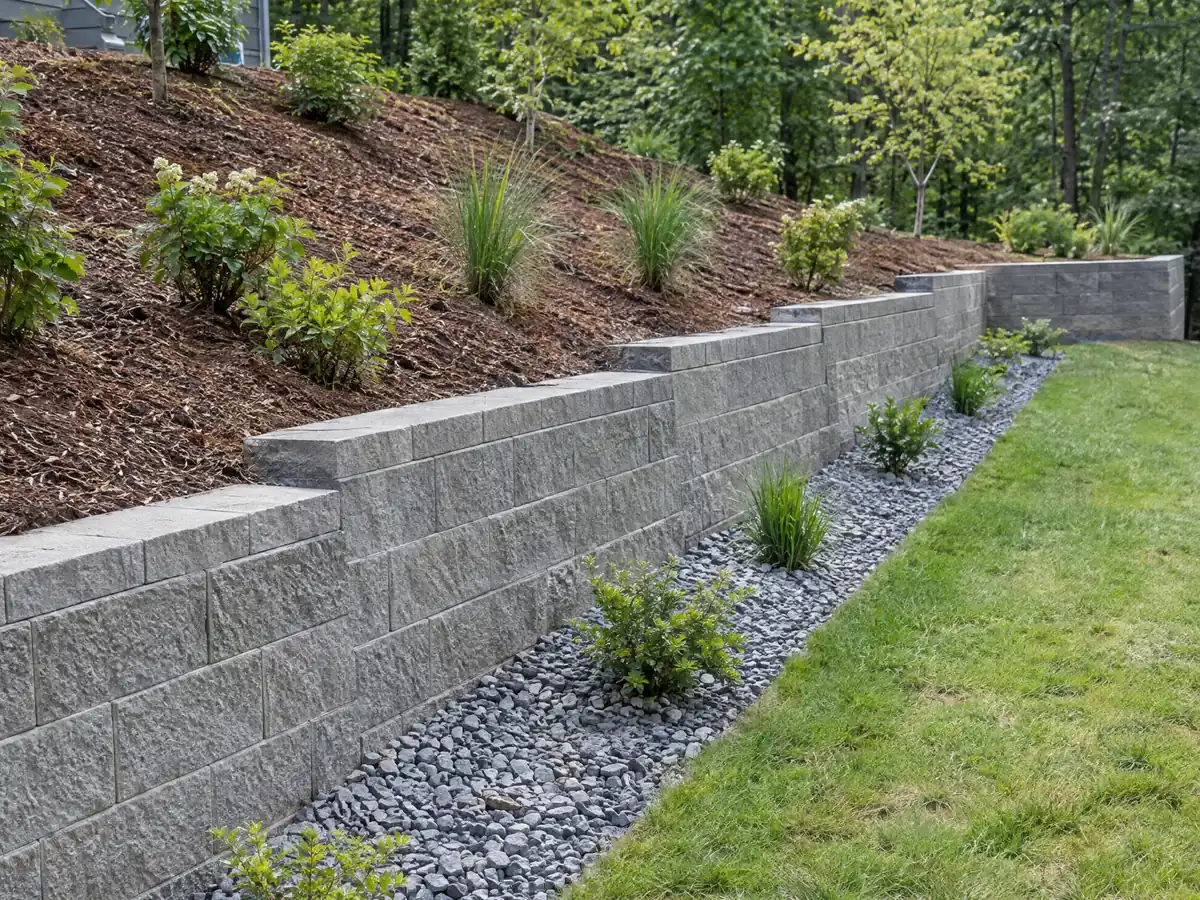
What changes for concrete on a canyon, hillside or coastal lot in San Diego?
A lot of approvals can attach, and they cover the entire premises. Environmentally Sensitive Lands rules apply where there are steep hillsides (a natural gradient of 25 percent or more with at least a 50 foot elevation change), sensitive biology, coastal beaches, sensitive coastal bluffs or Special Flood Hazard Areas. DSD's grading page warns that residences next to canyons are highly likely to be affected, and a Site Development Permit is needed for grading that makes a slope steeper than 25 percent and 25 feet or more high.
On the coast, a Coastal Development Permit is required unless the work is exempt. Improvements to existing structures are exempt unless they sit within 50 feet of a coastal bluff edge, add 10 percent or more interior floor area, or are significant detached structures such as garages or fences between the sea and the first public road. Inside the zone, development on certain steep hillsides is limited to 25 percent of the lot, or 20 percent where 91 percent or more is steep.
Ground matters too. The Municipal Code calls for a geotechnical report where its table or the Building Official requires one, and lets the City record a Notice of Geologic and Geotechnical Conditions over a suspected fault. Wikipedia notes the Rose Canyon and Point Loma fault zones in the area.
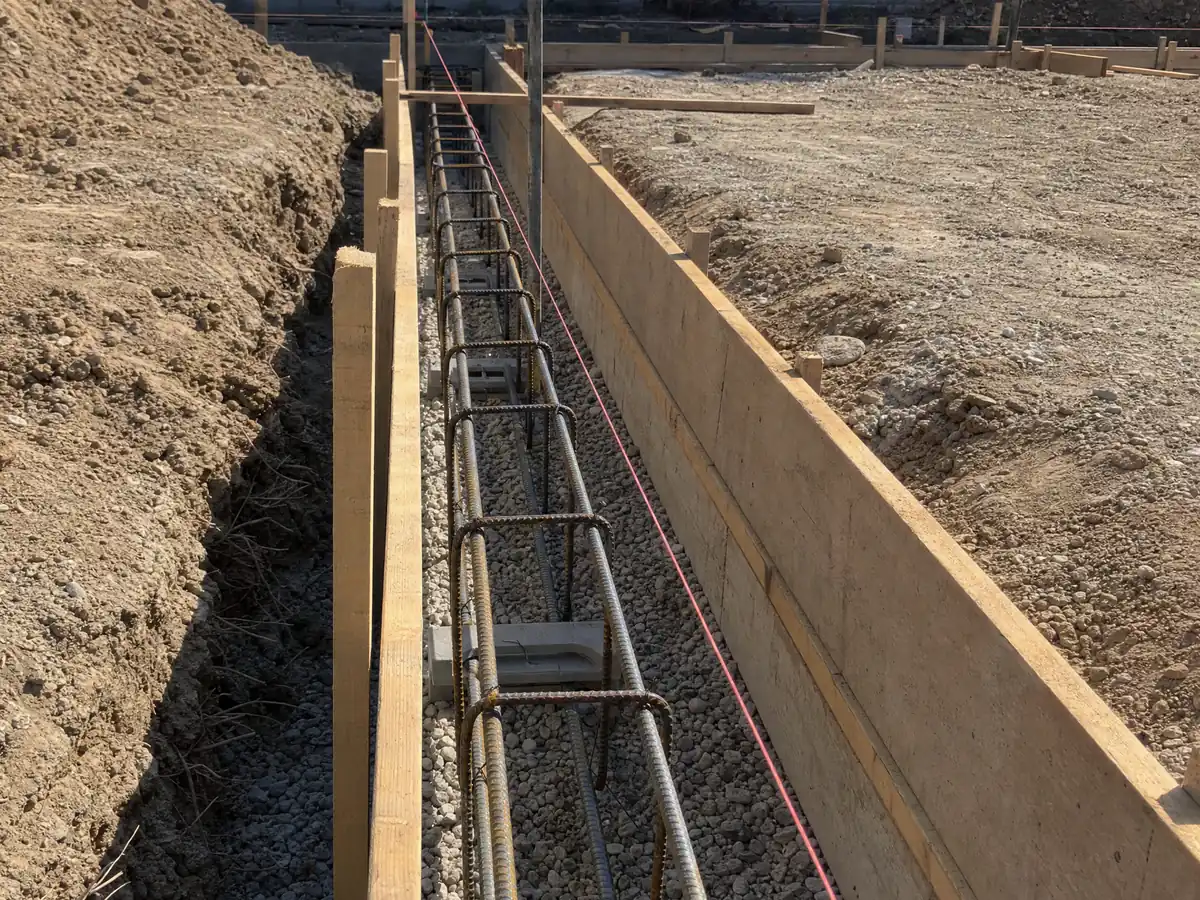
Does San Diego's new wildfire code make concrete the safer choice next to the house?
For the first five feet, the City itself names concrete. Fire-Rescue's Zone 0 guidance for Very High Fire Severity Zones tells owners to use hardscape such as concrete, gravel, pavers or bare soil within 5 feet of a home. San Diego's Wildland-Urban Interface Code, effective February 28, 2026, sets Zone 0 at 0 to 5 feet, Zone 1 at 5 to 30 feet and Zone 2 at 30 to 100 feet, and bars ember-prone plants, mulch and firewood in Zone 0.
Timing is not settled. The WUI Code applies Zone 0 to existing homes one year after its effective date, Fire-Rescue's page says owners should aim for February 2027, and KPBS reported that the State Board of Forestry was still expected to finalize details. KPBS also reported that the fire zones cover roughly two-thirds of the city. Check the parcel on the City's map.
Hardscape earns more than a plant-free strip. The WUI Code's default 30 foot setback in the interface area can be reduced using 5 feet of non-combustible material or hardscape, and brush management Zone One is described as typically pavement and irrigated ornamental planting, so a poured apron or path often belongs in the fire plan.
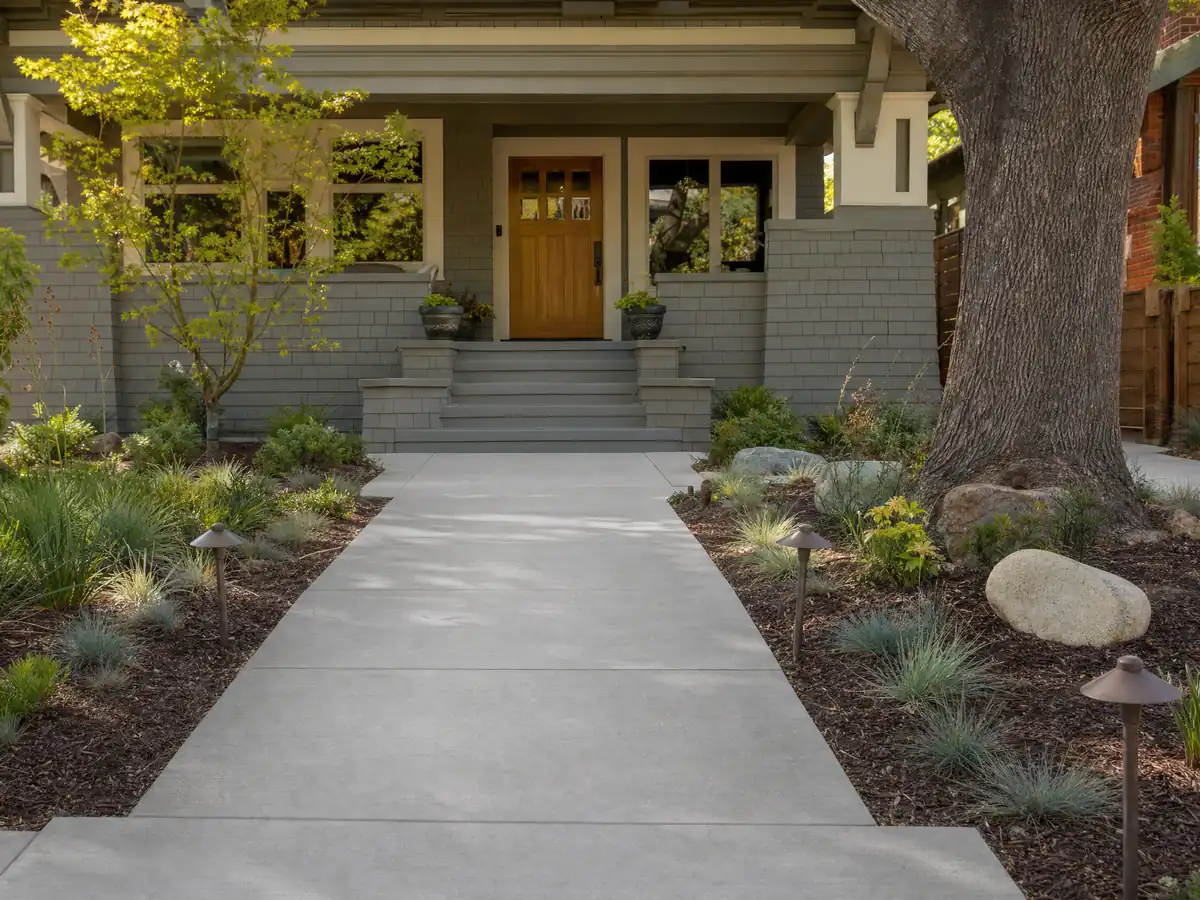
When should you schedule a pour in San Diego, and what do night and weekend pours need?
Winter is the rain risk and August is the dry month. NOAA's 1991 to 2020 normals show Lindbergh Field averaging 9.79 inches of rain a year (7.31 from December through March) and Montgomery Field 11.02 (8.21), with 0.01 inch in August at both. Heat varies by location: 3.0 days a year at or above 90 F at Lindbergh, 16.0 at Montgomery Field, 1.3 at or above 100 F there, and 20.4 at or above 90 F at Miramar NAS.
We did not collect a source for rain, heat or curing limits on a pour, so ask the finisher how the slab is protected and cured at your address. A coastal driveway and an inland one can need different plans in the same week.
Hours are regulated. San Diego requires a Construction Noise Permit for construction between 7 p.m. and 7 a.m. on weekdays and all day on weekends and holidays, though a different DSD page lists only weekdays, Sundays and holidays, so confirm Saturday. The fee shown is $529.71, and residents and night-operating businesses within 500 feet must be told at least 72 hours before.
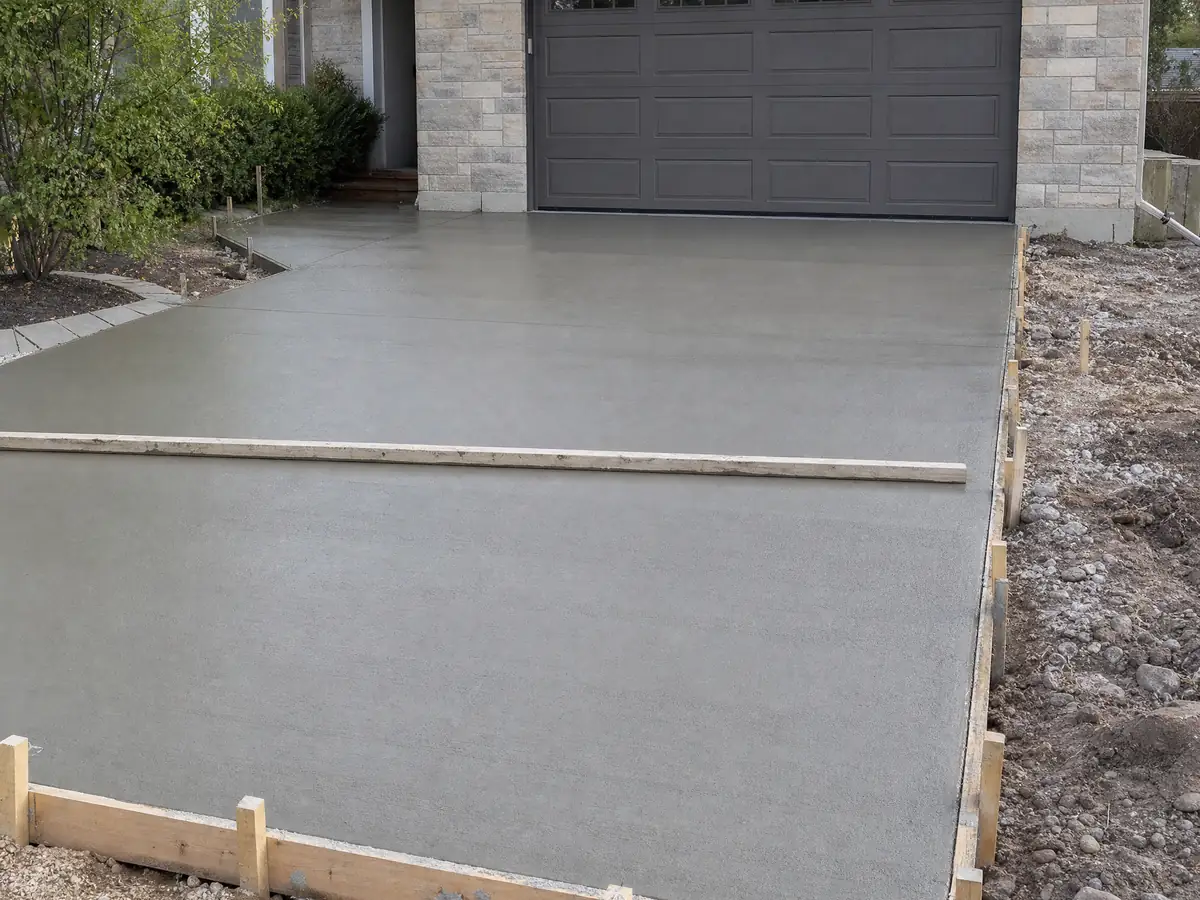
How much does concrete work cost in San Diego, and who needs which license?
We found no San Diego price study that shows its method, so the anchor is Angi's Los Angeles pages, which may differ from San Diego bids. Its patio page of August 4, 2026 gives $4 to $13 per square foot with a $5,248 average, the stamped page of July 20, 2026 gives $15 to $30, and the driveway page of May 5, 2026 gives $8 to $20. The Bureau of Labor Statistics put Los Angeles metro cement mason pay at a $33.67 hourly mean in May 2025.
Our planning figures for Los Angeles are $8 to $14 per square foot for plain flatwork of 300 square feet or more, $15 to $30 for stained, stamped or exposed aggregate, and $9 to $20 for driveway replacement including demolition. A 20 by 20 foot slab therefore lands near $3,200 to $5,600 plain. Small jobs run above the per-foot average because of minimum charges.
A permitted job needs a licensed contractor at any price, because the state's $1,000 limit on unlicensed minor work ends once a permit is needed. Under Business and Professions Code 7159.5 a down payment may not exceed $1,000 or 10 percent of the price, and our license check guide shows how to verify the number.
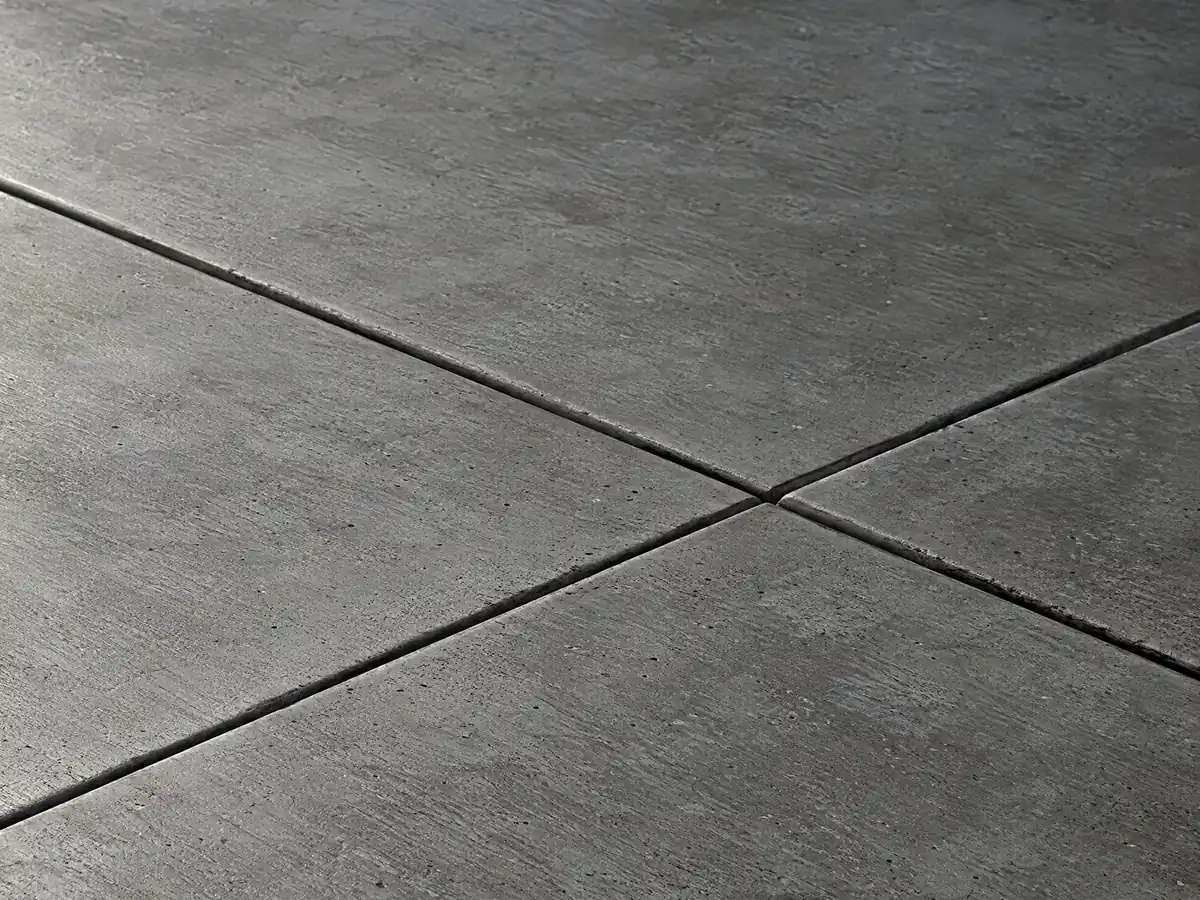
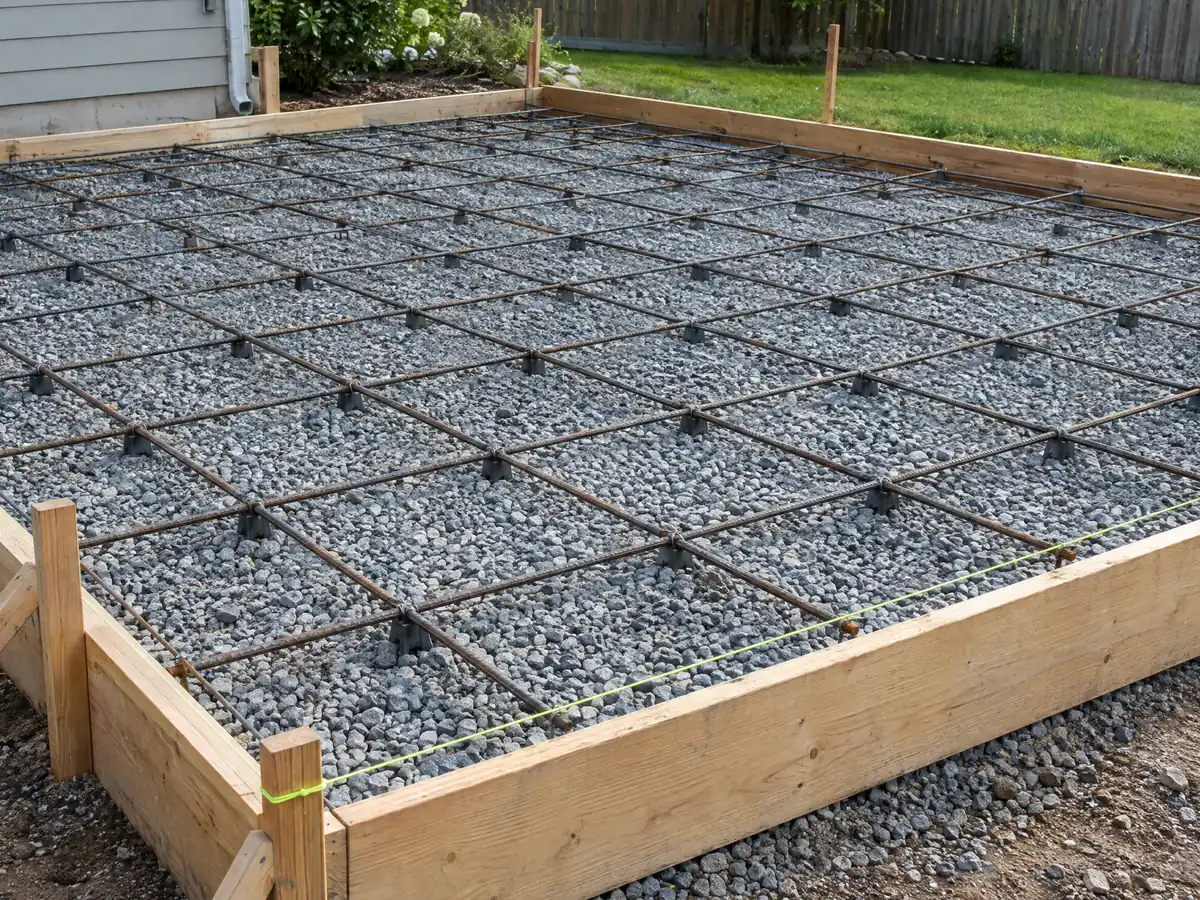
Concrete photos from San Diego and nearby communities
Forms, rebar, screeded slabs and finished walks and patios from San Diego and the communities around it, shown at the steps where the rules bite. Tap any photo to enlarge it.
What concrete costs around San Diego
Dollar figures here are Los Angeles planning ranges, not a San Diego bid, and demolition, haul-off, rebar, any right-of-way permit and hillside work should be separate lines on the written proposal. The same property may need flooring in San Diego or decks in San Diego. For comparison, read concrete work in Chula Vista, concrete work in Carlsbad and concrete work in El Cajon, and concrete in Los Angeles for the benchmark city. The subcontractor guide shows who forms and who finishes, and our flooring cost guide covers what goes on top of a slab.
| What it covers | Typical range |
|---|---|
| Patio, walkway or slab, broom finish, 300 sq ft or more | $8 to $14 per square foot |
| Decorative: stained, stamped or exposed aggregate | $15 to $30 per square foot |
| Driveway replacement, with demolition of the old slab | $9 to $20 per square foot |
| 20 by 20 foot plain patio (400 sq ft) | About $3,200 to $5,600 |
| 20 by 20 foot decorative patio (400 sq ft) | About $6,000 to $12,000 |
| Small jobs under 300 sq ft | Usually above the per-foot range |
| Retaining walls | Set by the written proposal |
San Diego concrete questions, answered
Can I pour a concrete patio without a permit?
Usually yes in San Diego, because Municipal Code 129.0203 exempts sidewalks and driveways 30 inches or less above grade and outside paving. It does not apply to historical resources or environmentally sensitive lands that need a development permit, and a new parking pad is carved out in single-unit zones. Send DSD your dimensions before forming.
How much should a 20x20 concrete patio cost?
For Los Angeles, our planning range of $8 to $14 per square foot gives about $3,200 to $5,600 for 400 square feet of plain concrete. Angi's Los Angeles patio page of August 2026 shows a 20 by 20 slab at $1,600 to $5,200. We found no San Diego study, and stamped finishes cost more.
Can I expand my driveway without a permit?
Not safely without asking, because San Diego carves parking for single dwelling units in single-unit zones out of the small-parking exemption. Any work past the property line needs a Right-of-Way Permit. In historic or sensitive-lands cases the exemption disappears. Send DSD a sketch showing the old and new edges.
What is the maximum height of a retaining wall without a permit in California?
In San Diego the working limit is 3 feet from the top of the footing to the top of the wall, with no surcharge. The City's own documents split on a wall of exactly 3 feet, so confirm that with DSD. Rapid Review covers a single-type wall up to 6 feet built to City standards.
Is 4 inches of concrete thick enough for a driveway?
Contractors commonly pour 4 inches for walks and light-duty slabs, but we found no San Diego code number for flatwork thickness. DSD's bulletin for additions asks for at least a 3.5 inch slab and 2,500 psi concrete under a house, which is a different job. Ask the finisher to state thickness, mesh and joints in writing.
How much does a 300 sq ft stamped concrete patio cost?
At Angi's Los Angeles range of $15 to $30 per square foot, 300 square feet of stamped concrete costs roughly $4,500 to $9,000. The same page lists a $5,948 average. We found no San Diego study, and sealing, color and demolition of an old slab change the total, so the number comes from a site visit.
Do I need a permit to replace a sidewalk in front of my San Diego house?
Yes, a Right-of-Way Permit is required for improvements in the public right-of-way, which lies outside your private property lines. Owners who received a Notice of Responsibility letter from the Transportation Department, or a Project Issues Report, can use the Sidewalk Panel Replacement Expedite Program, a self-certification route through DSD.
Does concrete work change on a canyon lot or near the coast?
Yes. Environmentally Sensitive Lands rules can require a Neighborhood or Site Development Permit, and DSD warns that homes next to canyons are highly likely to be affected. In the Coastal Overlay Zone a Coastal Development Permit is needed unless exempt, and bluffs, floor area and detached structures can remove the exemption.
Does concrete help meet San Diego's Zone 0 wildfire rule?
It can help, because Fire-Rescue's guidance names concrete among the hardscape choices within 5 feet of a home. The WUI Code, effective February 28, 2026, bans ember-prone plants and mulch in that strip. Whether a particular parcel is in a Very High zone depends on the City's map, and the timing for existing homes is still stated differently.
Tell us the lot, the slab size and the slope
Say what you want poured, how big it is, whether the lot is flat, on a canyon edge or near the coast, and whether any of it reaches the sidewalk. The permit, drainage and fire-zone questions come with us to the first visit.