
ADU Constructionin Coronado, CA
ADU construction in Coronado follows Municipal Code 86.56.105: the Community Development Director reviews an ADU ministerially and must decide a complete application within 60 days. A unit is capped at 850 or 1,000 square feet, must match the main house, and can be rented only for six months or more. Confirm details with the City.
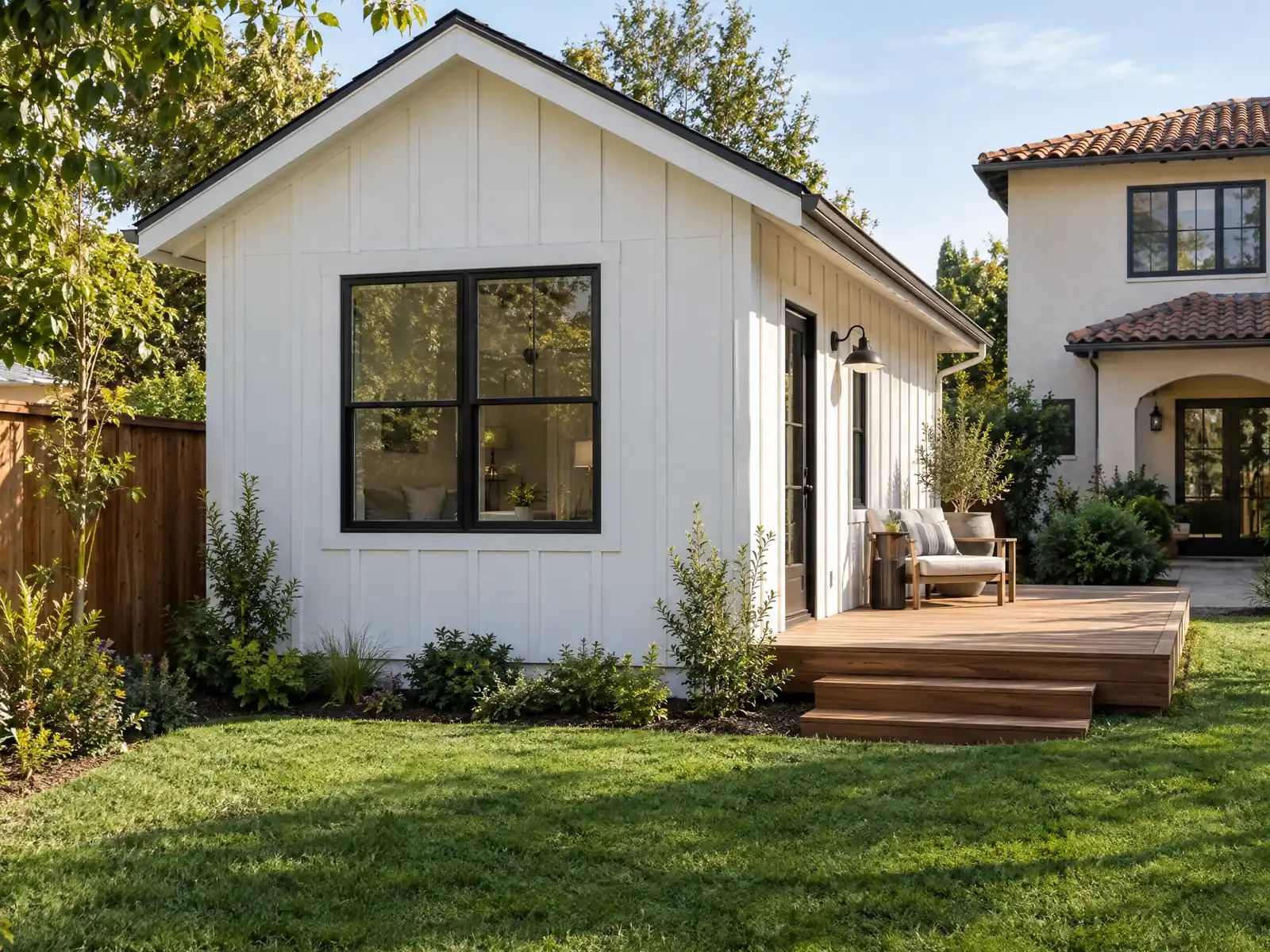
Coronado wrote its ADU rules for an island. The City's own ordinance describes a dense community laid out in a tight grid more than 100 years ago, bordered almost entirely by San Diego Bay and the Pacific Ocean, reached only by State Route 75 or the Coronado Bridge and visited by over 2,000,000 people a year. The Census Bureau counts 4,534 single-family detached homes among 9,896 units, and the stock is old: about 67 percent of units went up before 1980. Coronado's 2021 to 2029 Housing Element assigned 912 new units, and the Coastal Commission approved the matching code changes on December 12, 2024.
This page covers the City's size and height limits, the 2020 handout against the 2024 code, parking, rental and design rules, the Coastal Zone and historic review, carriage houses and SB 9, and what slows a build on filled land. The City's website returned HTTP 403 to automated requests, so we read its handouts in Internet Archive copies from 2026 and the ordinance in GoCodebook, a third-party mirror. We found no ADU page on the City's site. Confirm every figure with Building Services, and see price ranges and phases on our ADU construction page.
Coronado Community Development rules that apply to ADU construction
Where adu construction permits come from in Coronado: City of Coronado Community Development Department, Building Services Division.
- Municipal Code 86.56.105 (read in the third-party gocodebook mirror, current through Ordinance 2026-05 of June 16, 2026): ADUs and junior ADUs are allowed in zones that allow residential use and are reviewed ministerially by the Community Development Director, who must approve or deny a complete application within 60 days; a separate application is required for each unit, and a covenant must be recorded before the building permit.
- Coronado ADU size and height: an attached or detached ADU is limited to 850 square feet (studio or one bedroom) or 1,000 square feet (more than one bedroom), a junior ADU to 500 square feet, a new detached ADU to 16 feet in height (18 feet near major transit or on a multifamily multistory lot, plus two feet for matching roof pitch), with a baseline right to an 800-square-foot, 16-foot ADU with 4-foot side and rear setbacks; no setback is required for a conversion of existing space or an existing structure.
- Coronado ADU parking: because the whole city is in the Coastal Zone the ordinance keeps parking rules, requiring a maximum of one space per ADU (none for deed-restricted affordable ADUs and none for a junior ADU), replacement spaces when an ADU replaces a garage or required parking, tandem parking allowed, and ADU parking in the front yard limited to an existing driveway.
- Coronado ADU use and design: ADUs and junior ADUs may be rented only for terms of six consecutive months or more (no short-term vacation rentals), cannot be sold separately from the main home, must use the same architectural style, exterior materials and colors as the main dwelling at equal or better quality, and need not have fire sprinklers unless the primary residence does; impact fees are not charged on units under 750 square feet.
- Handout 721 (ADU application, June 2020) lists the project data the City asks for, says ADUs and JADUs may not be rented as short-term vacation rentals, says the Community Development Director decides the permit, and says the City has 60 days to determine an application complete; the handout predates the 2024 code update (Ordinance 2024-02), so the Municipal Code text controls.
- Municipal Code 86.56.110 allows one carriage house on single-family lots that have both street and alley access, with limits such as 600 square feet on the first story and 400 square feet on the second, a minimum 25-foot open space from the main dwelling and a 5-foot rear setback at the first story, and a carriage house meeting those standards may be converted into an ADU.
- SB 9 in Coronado (Municipal Code 86.56.180, Handout 724A and checklist 724B): two-unit developments are ministerial in the single-family R-1A and R-1B zones, new units are limited to 800 square feet, 16 feet and one story, side and rear setbacks are four feet or the zone setback if less, demolition may not exceed 25 percent of existing exterior structural walls, historic structures need a Determination of Historic Significance first, a recorded covenant applies, and the project must not be in the airport influence area unless the airport authority clears it.
- Coronado's 2021 to 2029 Housing Element assigned 912 planned new housing units (SANDAG regional allocation), the City Council adopted the update on April 9, 2024, HCD certified it on August 29, 2024, the Coastal Commission approved the matching Municipal Code amendments on December 12, 2024, and the City Council adopted those amendments on May 6, 2025.
How big and how tall can an ADU be in Coronado?
Municipal Code 86.56.105 lets ADUs and junior ADUs go on any lot in a zone that allows residential use, and the Community Development Director reviews them ministerially, with no hearing. A separate application is required for each unit, and a covenant must be recorded before the building permit. An attached or detached ADU is limited to 850 square feet for a studio or one bedroom and 1,000 square feet for more than one bedroom, and a junior ADU to 500 square feet.
A new detached ADU may be 16 feet tall, or 18 feet near major transit or on a multifamily multistory lot, plus two feet to match the roof pitch of the main house. The code also keeps a baseline right to an 800-square-foot, 16-foot ADU with 4-foot side and rear setbacks, and a conversion of existing space or an existing structure needs no new setback. That matches the floors in California's ADU statute, Government Code section 66321, which bars a local cap below 850 square feet.
Which Coronado ADU document is current: the 2020 handout or the 2024 code?
The code, and only the code. Handout 721, the City's ADU application form, is dated June 2020 and predates the 2024 update, Ordinance 2024-02. The handout bars short-term vacation rentals and says the City has 60 days to decide whether an application is complete. The code says the Director must approve or deny a complete application within 60 days, and California's statute now gives an agency 15 business days to call an application complete. Where the handout and code differ, we follow the code, and where the code and the statute differ, the statute controls.
Two more City conflicts matter to anyone planning a schedule. Municipal Code 70.20.030 says a building application with no permit issued within 180 days expires, with one written extension of up to 180 days, while Handout 302 quotes model-code wording with 90-day extensions. We read the code in a mirror and the handouts in archive copies, so ask Building Services at 619-522-7331 which extension applies.
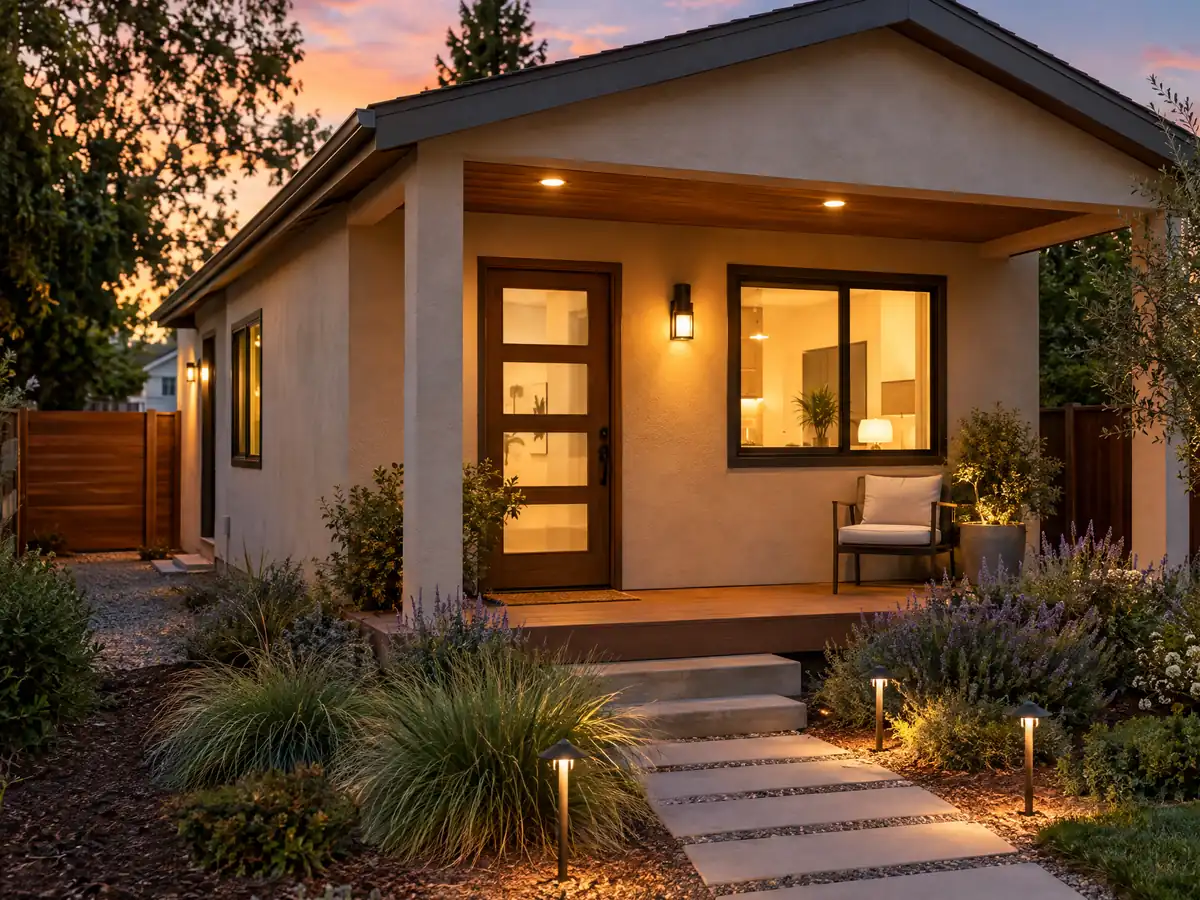
Does a Coronado ADU need parking, and what happens to a converted garage?
At most one space per ADU, and none for a junior ADU or a deed-restricted affordable ADU. Tandem parking is allowed, and ADU parking in the front yard is limited to an existing driveway. The ordinance ties these rules to the Coastal Zone and to the City's finding that visitor traffic and the historic development pattern press hard on limited parking.
The catch is the garage. Coronado's code requires replacement spaces when an ADU replaces a garage or required parking, while California's statute, section 66314, says a city cannot require replacement parking when a garage is converted or demolished. We flag that as a conflict and not a settled answer. A conversion on a street-only lot can lose the spot the house depends on, so ask Community Development how the City applies its rule before you price the job.
Our garage conversion permit steps guide shows the sequence of the work in Los Angeles, where the technical bulletin differs from anything Coronado has published.
Must a Coronado ADU match the main house, and can it be a vacation rental?
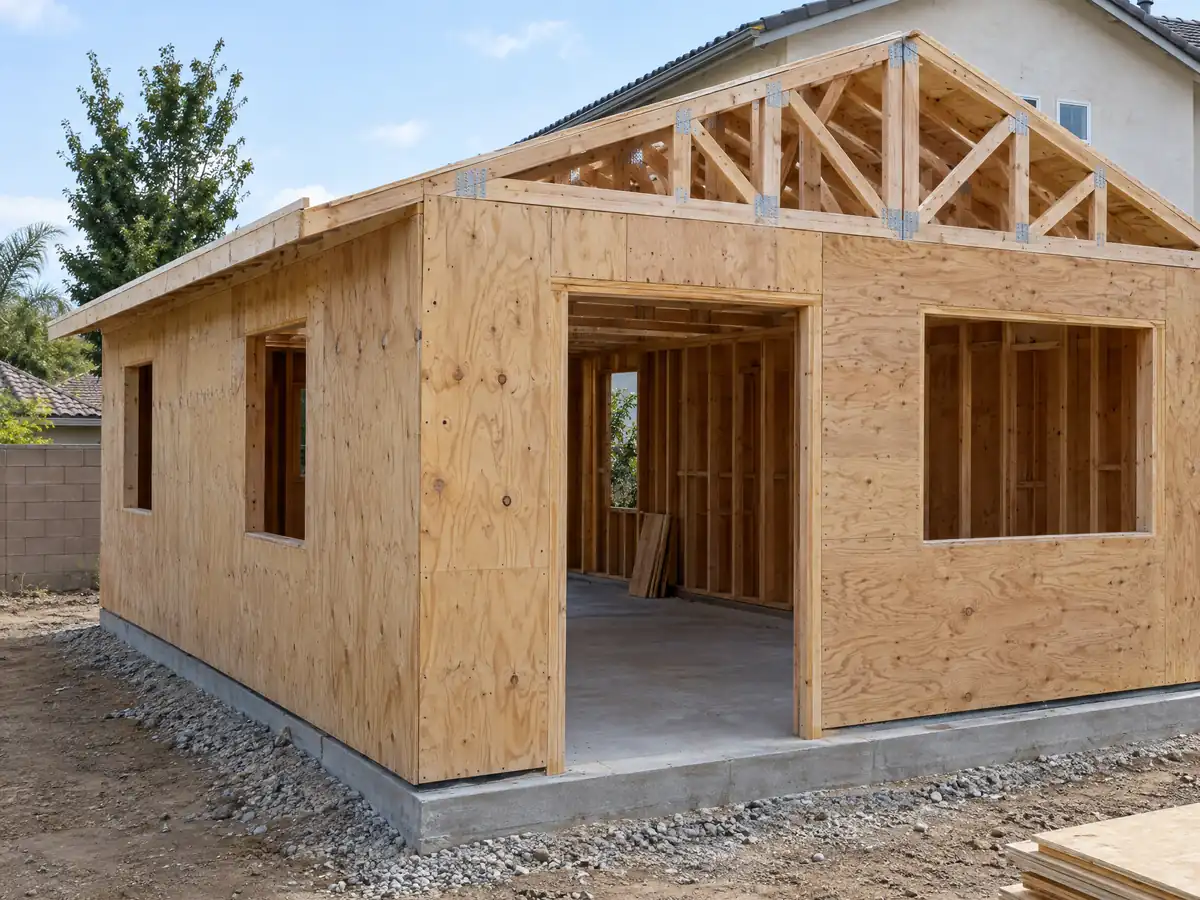
It must match, and it cannot be a vacation rental. The ordinance requires the same architectural style, exterior materials and colors as the main dwelling, at equal or better quality. Units may be rented only for terms of six consecutive months or more, and cannot be sold separately from the main home. State law lets a city require rentals of 30 days or longer, so Coronado's six months is stricter than that floor, and we cannot say how the two fit together. Ask the City before you underwrite short stays.
The unit does not need fire sprinklers unless the primary residence has them, and impact fees are not charged on units under 750 square feet. Utility connection charges are a separate matter, and the City's building and planning fee schedules are documents we could not open, so no fee amount is printed here.
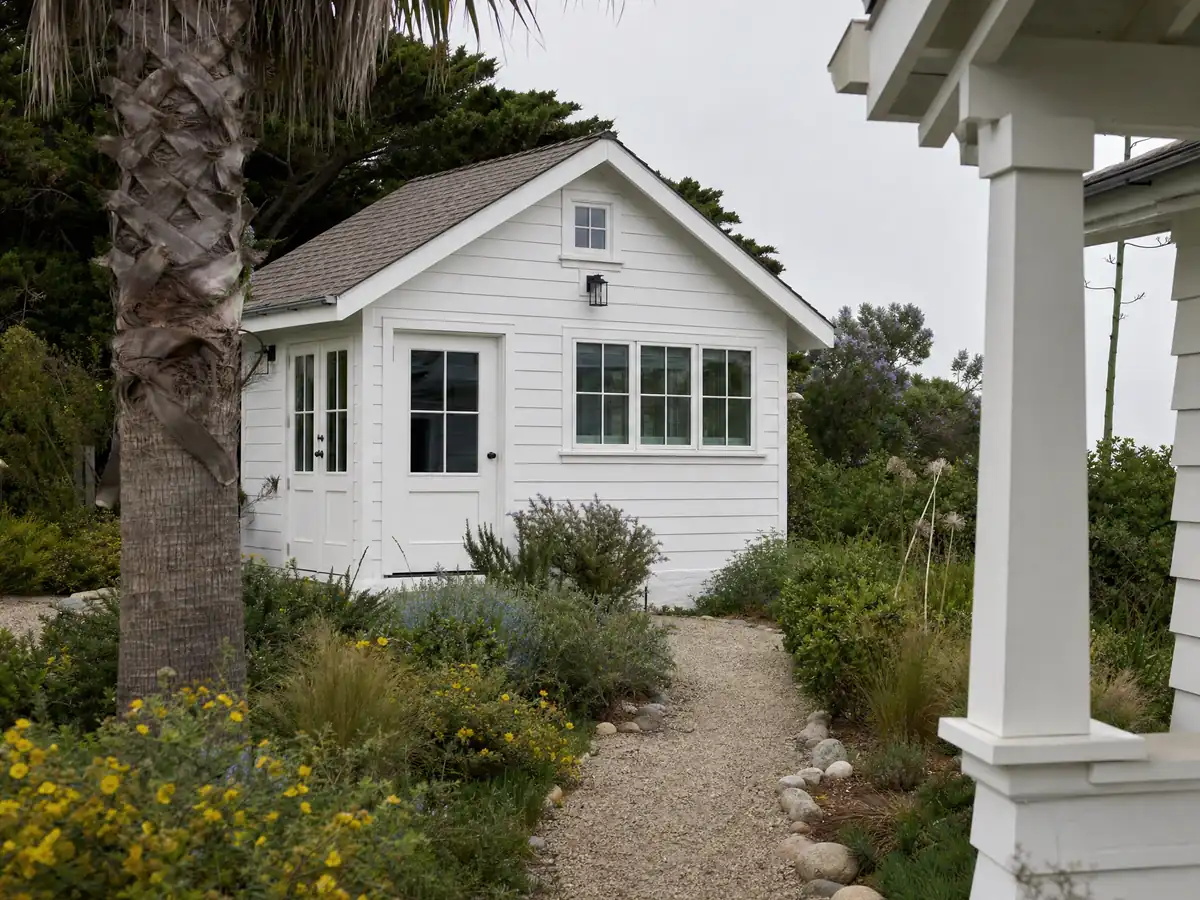
Matching a house that is 80 or 100 years old is a design job in itself, since roof pitch, window proportions and siding all need to read as the same family. Our ADU versus JADU guide compares the two unit types.
Does an ADU in Coronado need a coastal permit or historic review?
Possibly both questions apply, and we could not close either from the sources we read. The whole city is in the Coastal Zone under a Local Coastal Program certified in December 1983, and Municipal Code 86.70.052 exempts improvements to existing single-family dwellings and duplexes and construction of a single-family dwelling or duplex on a legal lot. It does not name ADUs. State law says the City or the Coastal Commission must act on a coastal permit for an ADU within 60 days, so ask whether yours is exempt.
Historic review turns on demolition. Under rules effective December 4, 2025, the City wants a Determination of Historic Significance before original street-visible features come off a structure that is 75 or more years old and not Tier 3. A new rear unit removes nothing from the street, but converting a street-facing garage might. We did not open the Designated Historic Resources Register or the Tier map, and the Historic Resource Alteration Permit applies to designated resources and contributing buildings in a Historic District.
Carriage house, ADU or SB 9 two-unit project: which fits a Coronado lot?
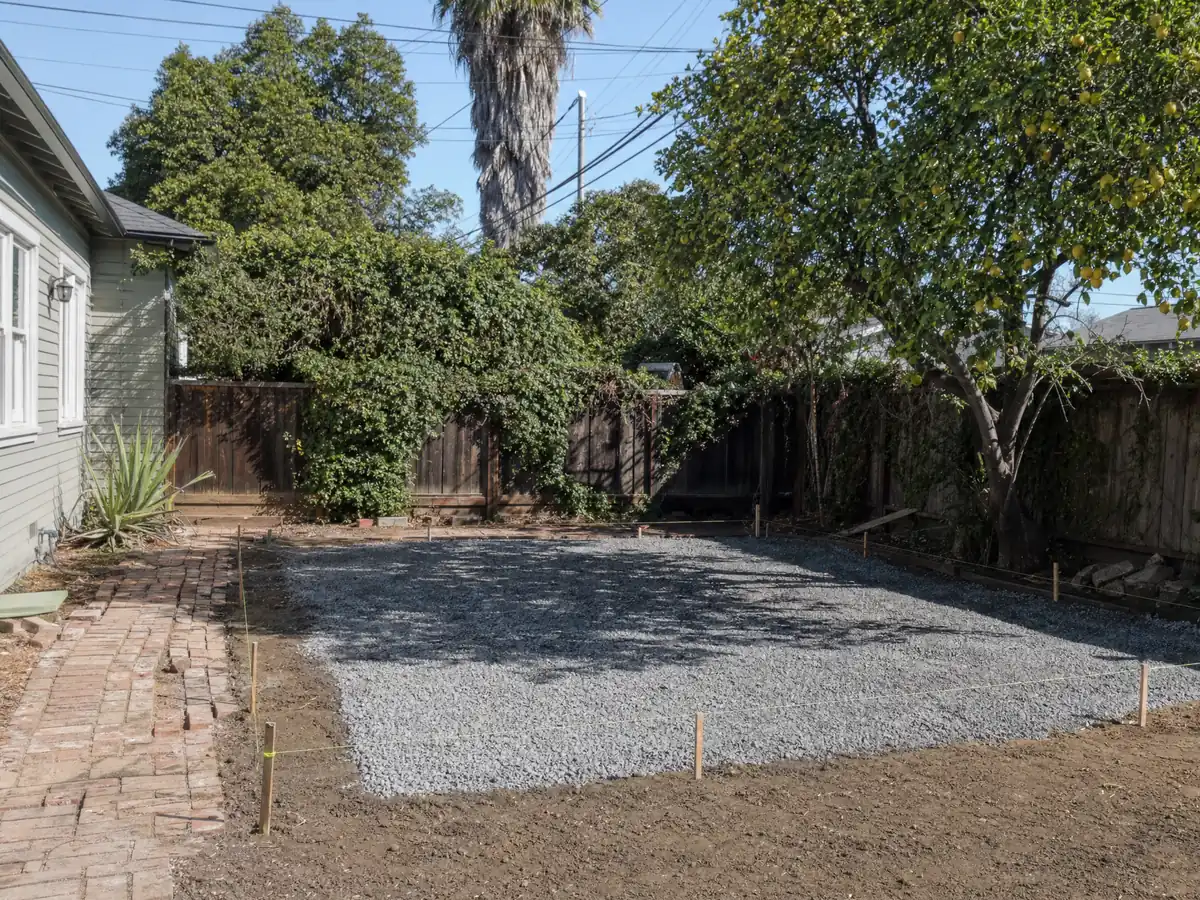
Coronado has a category most cities lack. Municipal Code 86.56.110 allows one carriage house on a single-family lot with both street and alley access, with limits such as 600 square feet on the first story, 400 on the second, a 25-foot open space from the main dwelling and a 5-foot rear setback at the first story. A carriage house that meets those standards can later be converted into an ADU.
SB 9 is the third route. Under Municipal Code 86.56.180 and Handouts 724A and 724B, two-unit developments are ministerial in the single-family R-1A and R-1B zones, new units are limited to 800 square feet, 16 feet and one story, side and rear setbacks are four feet or the zone setback if less, and demolition may not exceed 25 percent of existing exterior structural walls. A historic structure needs a Determination of Historic Significance first, a covenant is recorded, and a project in the airport influence area needs airport authority clearance. We did not research where that area lies, so ask.
The room addition versus ADU guide helps when an attached room is the alternative.
What slows an ADU build on Coronado's filled land, flood maps and tight blocks?
Wikipedia lists the Country Club area, the Glorietta area and golf course, most of the Naval Amphibious Base, most of the Strand naval housing and most of Coronado Cays as built on dredged bay material. We opened no liquefaction or geotechnical map, and the City handouts we read name no soils rule, so treat that as context and ask your engineer what the site needs. The City's FEMA page says a revised flood map for the Cays took effect January 17, 2013, and that a newer county-wide re-evaluation is complete. Sea level rise planning also exists, so ask Community Development whether your parcel is mapped.
Handout 111 adds a courtesy notice for new construction of 200 square feet or more in most residential zones: adjacent residents are notified and no permit issues for at least 10 calendar days. Handout 106 requires special inspectors, on the City of San Diego approved list, for items such as structural concrete over 2,500 psi, and they cannot be employed by the general contractor. Handout 302 puts garages and single-story additions in an internal review track averaging 10 to 12 business days to first comments.
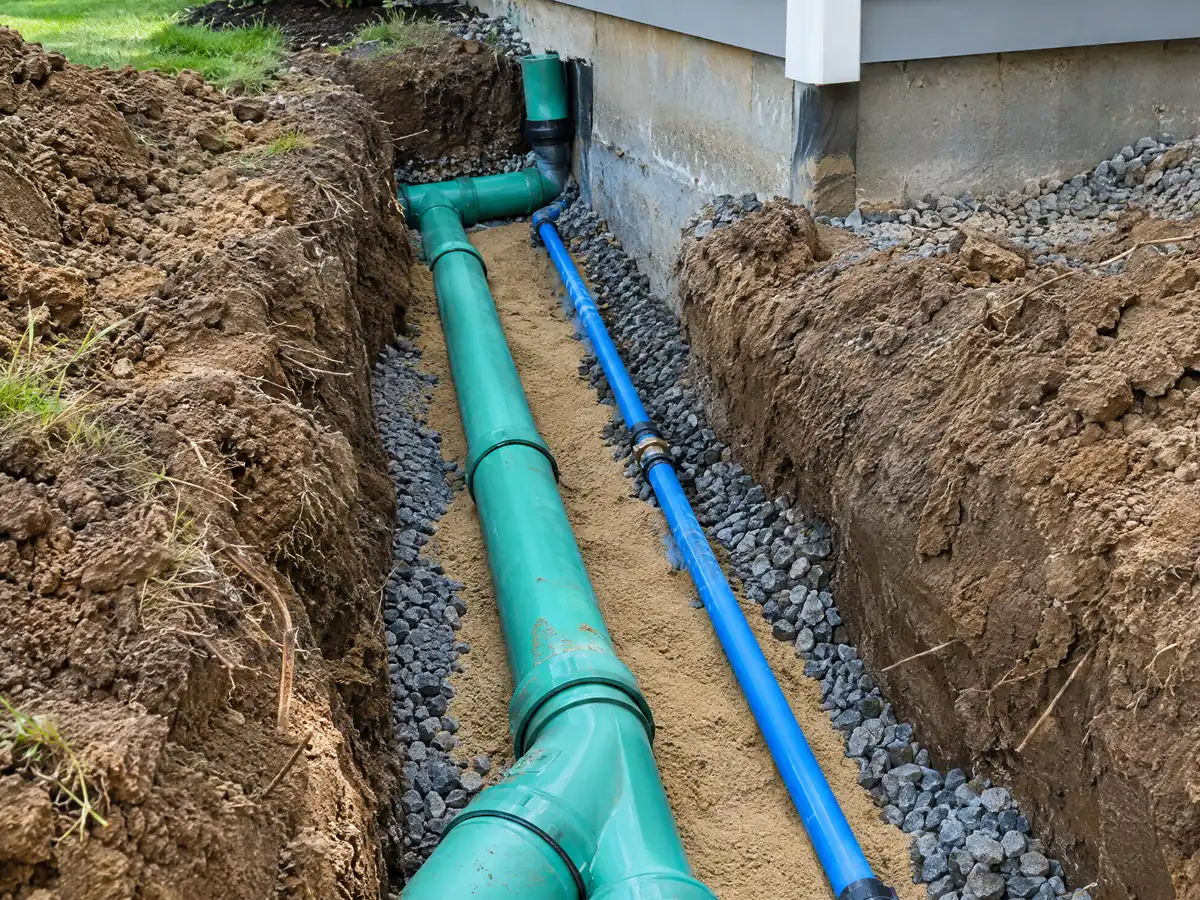
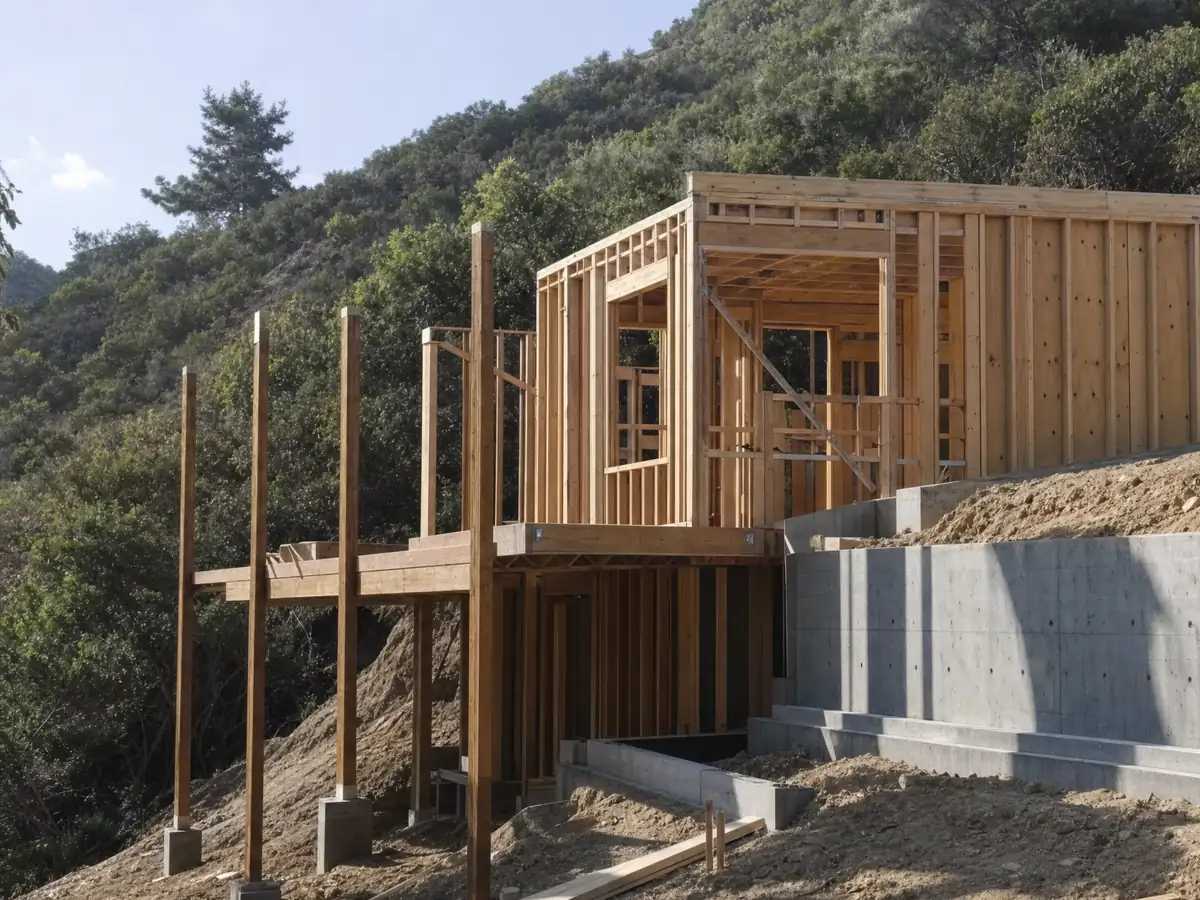
ADU photos from Coronado and nearby homes
ADU scenes tied to Coronado, from garage conversions and slabs to finished cottages that match the house beside them. Tap a photo to enlarge it.
What adu construction costs around Coronado
The working ranges on our ADU construction page are about $100,000 to $200,000 to convert a garage into a studio or one-bedroom unit and about $200,000 to $400,000 to build a detached unit of 400 to 800 square feet. Three outside reads sit under those ranges. A UC Berkeley survey of 2018 and 2019 projects found a Los Angeles County median of $100,000, the Terner Center estimated $148,000 for Los Angeles in 2020, and Remodeling magazine's 2025 Cost vs. Value report lists one Los Angeles ADU job at $178,536, of which 39.9 percent came back at resale. None is a Coronado quote, and San Diego County costs may differ. The ACS median home value here is the Census top code, so read it as $2 million or more. Permit, plan check and utility connection charges each appear as their own line in a written proposal. The ADU cost guide explains how the ranges are built. For other cities' rules see ADU construction in Chula Vista, San Diego, Carlsbad and Los Angeles. A bath inside the unit is on the Coronado bathroom page, an attached project on the Coronado room addition page, windows on the Coronado window page, and the Coronado area page lists every trade we cover in the city.
| What it covers | Typical range |
|---|---|
| Garage conversion to a studio or one bedroom | $100,000 to $200,000 |
| New detached ADU, 400 to 800 sq ft | $200,000 to $400,000 |
| UC Berkeley survey, Los Angeles County median, 2018 and 2019 projects | $100,000 overall. $90,000 garage. $180,000 detached. |
| Terner Center and Berkeley CCI, 2020 | $148,000 Los Angeles estimate. $167,000 statewide average. |
| Remodeling Cost vs. Value 2025, Los Angeles | $178,536 job cost |
| Electrical and plumbing, Angi Los Angeles, January 2026 | Electrical $2,600 to $7,800. plumbing $3,900 to $10,400. |
| City permit and plan check fees | Not priced here |
Coronado ADU questions, answered
How do I build an ADU in Coronado?
File a separate application for each unit under Municipal Code 86.56.105, and the Community Development Director reviews it ministerially, deciding a complete application within 60 days. A covenant is recorded before the building permit, and the plans go through Building Services plan check. Use the design to match the main house, and confirm the current steps with the City.
How big can an ADU be in Coronado?
Up to 850 square feet for a studio or one bedroom and 1,000 square feet for more than one bedroom, with a junior ADU limited to 500. A new detached unit may be 16 feet tall, with 18 feet near major transit. The code keeps a baseline right to 800 square feet and 16 feet with 4-foot side and rear setbacks.
How much does it cost to build an ADU in California?
We plan around $100,000 to $200,000 for a garage conversion and $200,000 to $400,000 for a new detached unit of 400 to 800 square feet. Those ranges come from Los Angeles studies by UC Berkeley and the Terner Center plus Cost vs. Value, not a Coronado survey, so a site visit and written proposal fix your real price.
Do I need to provide parking for my ADU?
Coronado requires at most one space per ADU and none for a junior ADU or deed-restricted affordable unit. Tandem parking is allowed, and front-yard ADU parking is limited to an existing driveway. The code requires replacement spaces when an ADU replaces a garage, which conflicts with the state statute, so ask Community Development how it applies.
Can I rent my ADU on Airbnb or only for long-term rentals?
Only for long terms. Coronado's ordinance allows ADUs and junior ADUs to be rented only for terms of six consecutive months or more, and bars short-term vacation rentals. State law lets a city require terms of 30 days or longer, so the City's rule is stricter. Ask the City before you plan any shorter stay.
What is the difference between an ADU and a JADU?
A JADU is a smaller unit, up to 500 square feet in Coronado, built inside the existing house, while an ADU is up to 850 or 1,000 square feet and may be attached or detached. Coronado requires no parking for a JADU. State law adds owner-occupancy and deed restriction rules for JADUs, so check which applies to your plan.
How long does it take to get an ADU permit?
The City has 60 days to approve or deny a complete application under its code, and state law gives 15 business days to call it complete. Plan review in Handout 302's internal track averages 10 to 12 business days to first comments. An application expires if no permit issues within 180 days, so answer corrections promptly.
Does an ADU have to match the main house in Coronado?
Yes. The ordinance requires the same architectural style, exterior materials and colors as the main dwelling, at equal or better quality. That makes an ADU beside an older Village house a design exercise in roof pitch, window proportions and siding. Ask the City what drawings it expects to show the match before you finalize plans.
Can I convert my garage to an ADU in Coronado?
Yes, a garage can become an ADU, and a conversion of existing space needs no new setback. The sticking point is parking, since Coronado's code requires replacement spaces when an ADU replaces a garage, and the state statute says a city cannot. Ask Community Development how it applies the rule to your lot.
Tell us about your Coronado ADU plans
Tell us whether you are weighing a garage conversion, a rear unit or a carriage house, whether the lot has alley access, roughly when the main house was built and how you hope to use the unit, and we will plan the first visit around the City's size, parking and rental rules.