
Deck Builderin Yucca Valley, CA
A deck builder in Yucca Valley should start with the Fire Safety overlay map, because decks on mapped parcels need thicker or protected decking, and every ground-disturbing permit needs a Native Plant Permit. Plan on a building permit until Building and Safety says otherwise, and on Class A roofing over any cover.
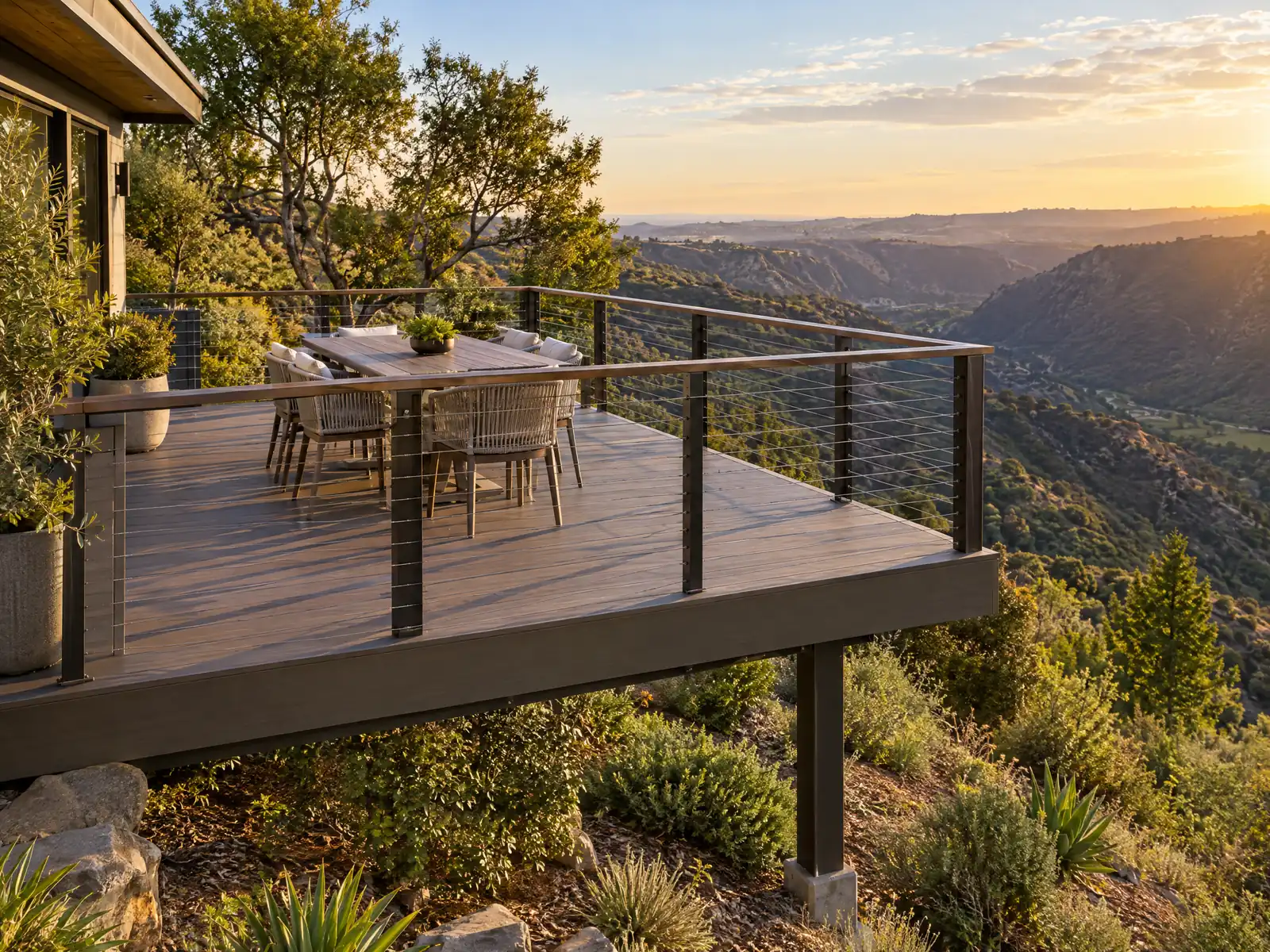
Yucca Valley decks look toward the Little San Bernardino Mountains and Joshua Tree National Park. Wikipedia says Norman Essig worked in the late 1950s to make the town a private retreat for entertainment celebrities and helped put in the main roads off Highway 62. Of the 10,204 homes in the Census Bureau's 2024 five-year estimates, 8,145 are single-family detached, and the median year built is 1978, so a deck original to a median house is about 48 years old, the age when ledger flashing, posts and stairs deserve a hard look.
MDG Builders (CSLB #1040337) builds decks as a Tarzana general contractor: we draw the design, bring permit and fire questions to the Town's Building and Safety Division and hire a licensed carpentry subcontractor to frame the structure. The decks page has materials and ranges, and the Yucca Valley overview lists our other trades in town.
What the Town of Yucca Valley, San Bernardino County fire service and state law say about decks
Where decks permits come from in Yucca Valley: Town of Yucca Valley Community Development Department, Building and Safety Division.
- In the FS overlay decks must use decking at least 1-1/2 inches thick, be protected on the underside with one-hour rated materials, or be noncombustible; exposed piping must be noncombustible; and buildings need 30 feet of exterior wall separation, or noncombustible or one-hour exterior walls when buildings are closer than 30 feet or walls are within 15 feet of a side or rear lot line (Municipal Code 9.17.050D and E, third-party mirror).
- Accessory buildings (Municipal Code 9.07.060, third-party mirror): a single accessory building may be up to 100 percent or 50 percent of the primary building depending on district (the mirror's merged table does not show which zone gets which), no more than four accessory buildings (three if there is an ADU; structures under 120 square feet, pool houses under 200, covered patios tied to pools and gazebos under 200 do not count), height up to 25 feet, setbacks as for the house with a 3-foot rear-line allowance up to 25 percent of the rear yard, cumulative building and impervious area (driveways, patios, pools) counted toward lot coverage, buildings over 120 square feet matching the house's roof color or material, and cargo containers not allowed except during construction (with an exception on parcels of 2.5 acres or more).
- Patios, pools and covered structures count as 'accessory structures' for Joshua tree purposes: the Town's code defines accessory structure to include an ADU, addition, garage, carport, swimming pool, patio, greenhouse, storage shed, gazebo, septic tank, sewer connection, solar panels and gravel or paved driveway (Municipal Code 9.56.020, third-party mirror), so a deck or patio site with a Western Joshua tree within 75 feet needs the specialist report under the Town handout.
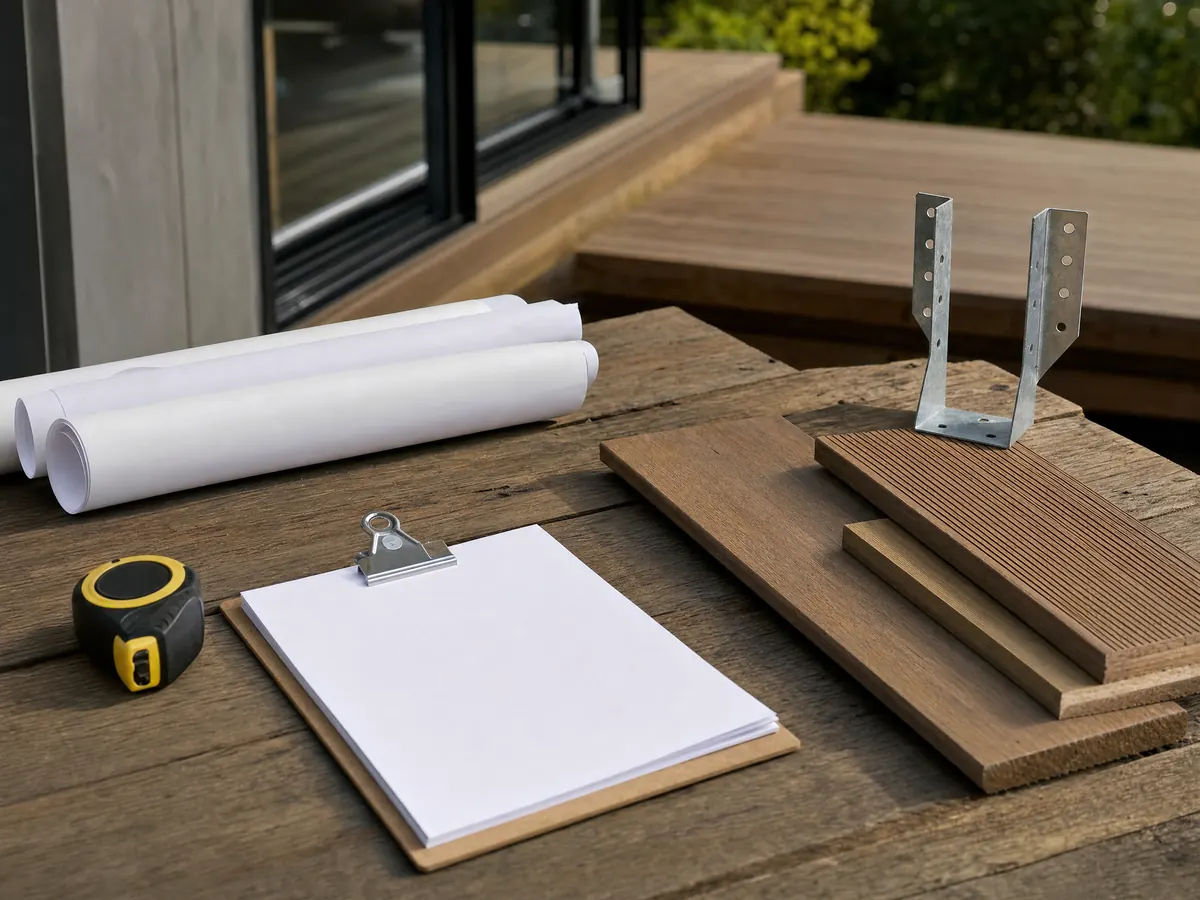
Does the Fire Safety overlay change how a deck is built in Yucca Valley?
Yes, if the parcel is inside the overlay. Chapter 9.17 of the Municipal Code, read in GoCodebook's third-party mirror, sets construction rules in mapped high fire hazard areas and routes applications to San Bernardino County fire service. For decks it calls for decking at least 1-1/2 inches thick, one-hour rated protection on the underside or noncombustible construction, and noncombustible exposed piping. Buildings need 30 feet of exterior wall separation, or noncombustible or one-hour exterior walls when closer than 30 feet or within 15 feet of a side or rear lot line.
Other overlay standards reach a deck yard: a permanent fuel modification area of at least 100 feet around projects next to hazardous areas, firewood and flammables 30 feet from structures, propane tanks 10 feet away, two hose faucets per habitable structure, and wood or vinyl fences kept 5 feet from a wall. The Town's Wild Fire Guide separately advises at least 30 feet of defensible area around the house, as advice and not as an overlay rule.
Which parcels are inside the overlay is the open question. CAL FIRE updated its Southern California hazard map on March 24, 2025, and the County adopted Ordinance No. 4489 on June 10, 2025 for Local Responsibility Areas. We did not check either map parcel by parcel, so no address is called Moderate, High or Very High here. Open the Town's overlay map or the County's hazard map viewer and ask the counter. A lightning fire in July 2006 burned into Yucca Valley, which is reason enough to ask.
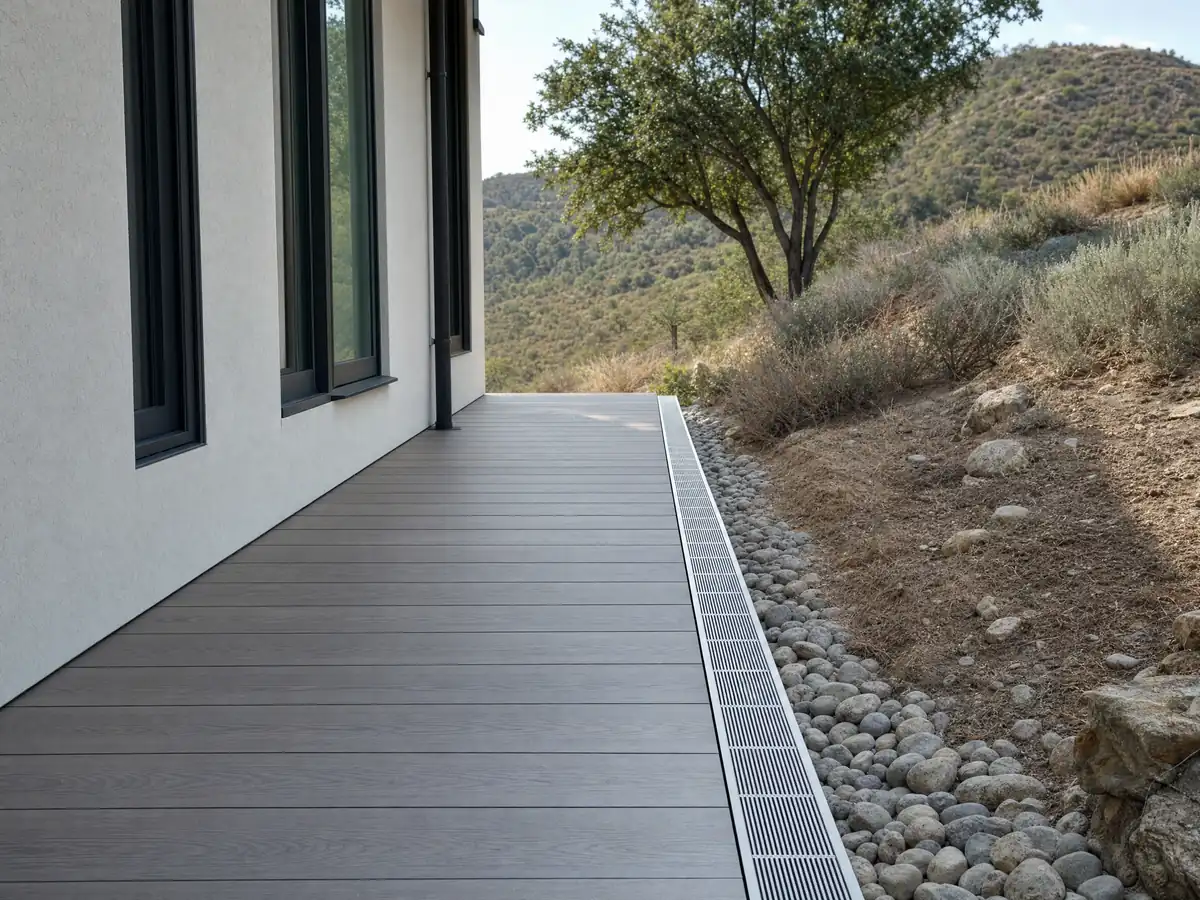
Does a deck in Yucca Valley need a building permit?
Plan on one until the counter says otherwise. The Town pages we read publish no deck exemption and no deck fee line, and they list a residential building permit application for single-family homes and multi-family buildings up to three units. Applications go in person only, by appointment, at the Monterey Business Center, with a Native Plant Permit and photos for any ground-disturbing project, and a deck's footings disturb ground. We read Wayback copies of those pages dated 2025 because yucca-valley.org returns Access Denied to ordinary requests.
Plan submittal and permit issuance run Monday to Thursday, 7:30 a.m. to noon and 1:00 to 4:30 p.m., and the Building and Safety page gives (760) 365-0099, extension 302, and building@yucca-valley.org. Same-day inspections are requested at (760) 365-1339 by 7:00 a.m. A permit becomes invalid if work does not start within 365 days or stops for 365 days, and one extension of up to 180 days can be granted on written request.
Codes and debris carry their own notes. Chapter 8.02, read in the mirror, adopts the 2025 California codes while the Town's permit pages still show the 2022 edition, so ask which governs. Every construction site must hold trash in a lidded roll-off bin or a staked, fenced enclosure of at least 100 cubic feet with 4 foot walls and a wire lid, and a Construction Waste Management Plan is filed with the permit, so plan for the old deck's boards.
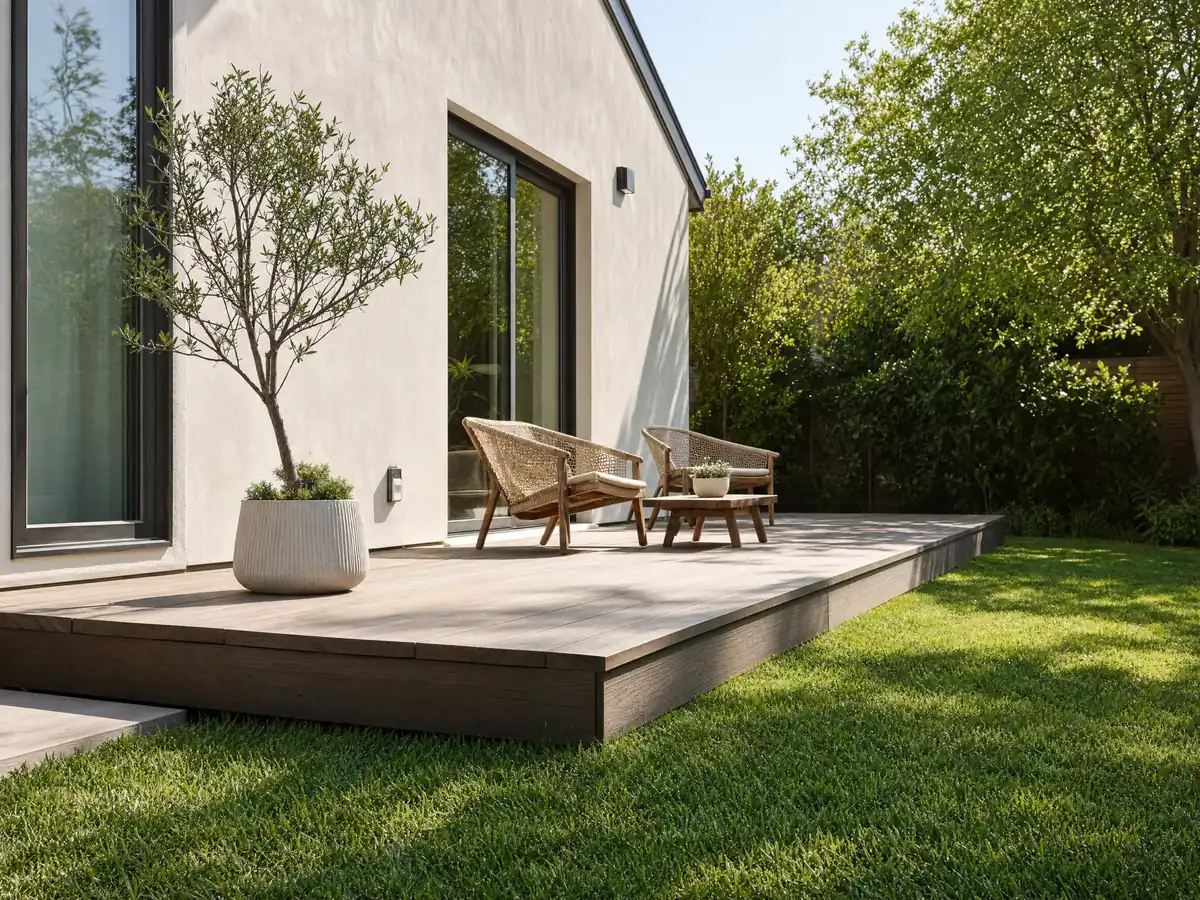
Can you dig deck footings near a Joshua tree in Yucca Valley?
Only after the Town's checks. Its Western Joshua Tree page says it cannot issue a take permit and sends inquiries to the California Department of Fish and Wildlife. The Town's handout asks for a Desert Native Plant Specialist report with every ground-disturbing permit unless photographs and a signed statement show no Western Joshua tree within 75 feet, and the code's definition of accessory structure names patios, swimming pools, gazebos and storage sheds, so a deck's post holes get the same treatment.
A project that would take a tree has to be redesigned or get an Incidental Take Permit. CDFW's FAQ says the free Hazard Management Permit covers only dead trees and trimming of living trees, that a living tree cannot be removed under it and that delegation to a city or county is limited to 10 trees on a single-family site. As of December 2023 no city or county had signed such an agreement, and each stem or trunk can count as a separate tree.
The process has two more steps. A specialist re-certifies before final inspection, and the applicant's representative attends an in-office meeting when the permit is issued. Municipal Code 9.07.130 also requires a Town permit to remove or damage Mojave yucca, Parry's nolina, California juniper, Our Lord's candle or pinyon pine, so a shade tree near the deck may be protected even when it is not a Joshua tree.
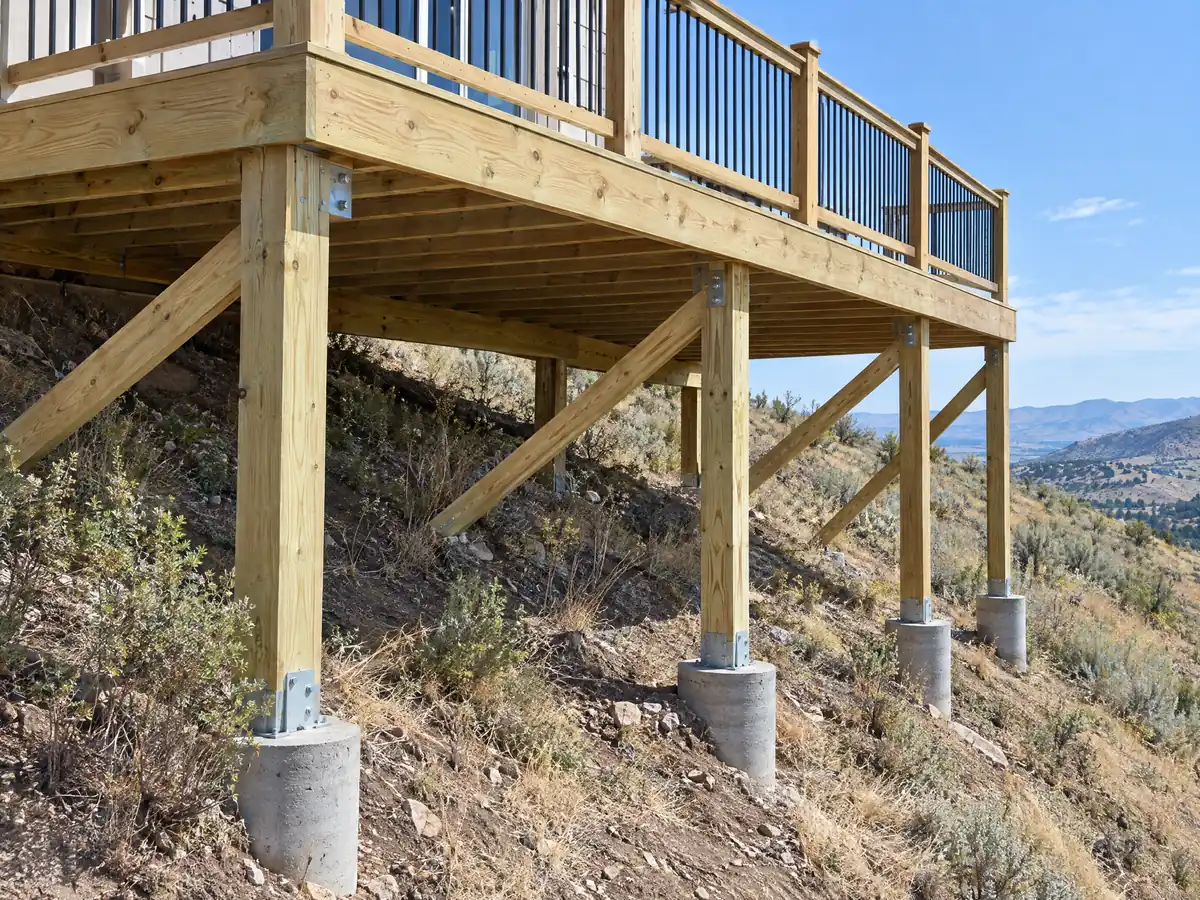
How do hillside rules, faults and septic tanks change where a Yucca Valley deck can go?
Slope is the first test. The Hillside overlay applies where the natural slope is 15 percent or more and a grading permit is needed, and it triggers a full review at 500 cubic yards of grading per lot, retaining walls or slopes over 15 feet in public view, slopes wider than 150 feet, or disturbance of more than half the site or 10,000 square feet. Its purpose names rock outcrops, and we found no rule written for boulders, so a rocky lot is judged by those slope and grading tests.
Faults and soils come next. A County study put the Burnt Mountain fault zone about 0.1 mile east and the Pinto Mountain zone about 0.6 mile north of one Joshua Lane parcel. Grading that supports a structure is engineered, with soils and engineering geology reports, and the Geologic and Seismic Hazards overlay requires a geologic study with exemptions for most one- and two-story homes. Ask whether a raised deck's footing pads count as structure-supporting grading.
Septic tanks sit in many yards. Homes outside the sewer areas still use them, and Hi-Desert Water District's Phase 2 page gives owners 180 days after notice to connect, at about $5,000 on average, with the Town issuing the permit for abandoning the tank. Ask which phase your address is in before footings are laid out, because trenching and a deck frame do not belong in the same corner of the yard.
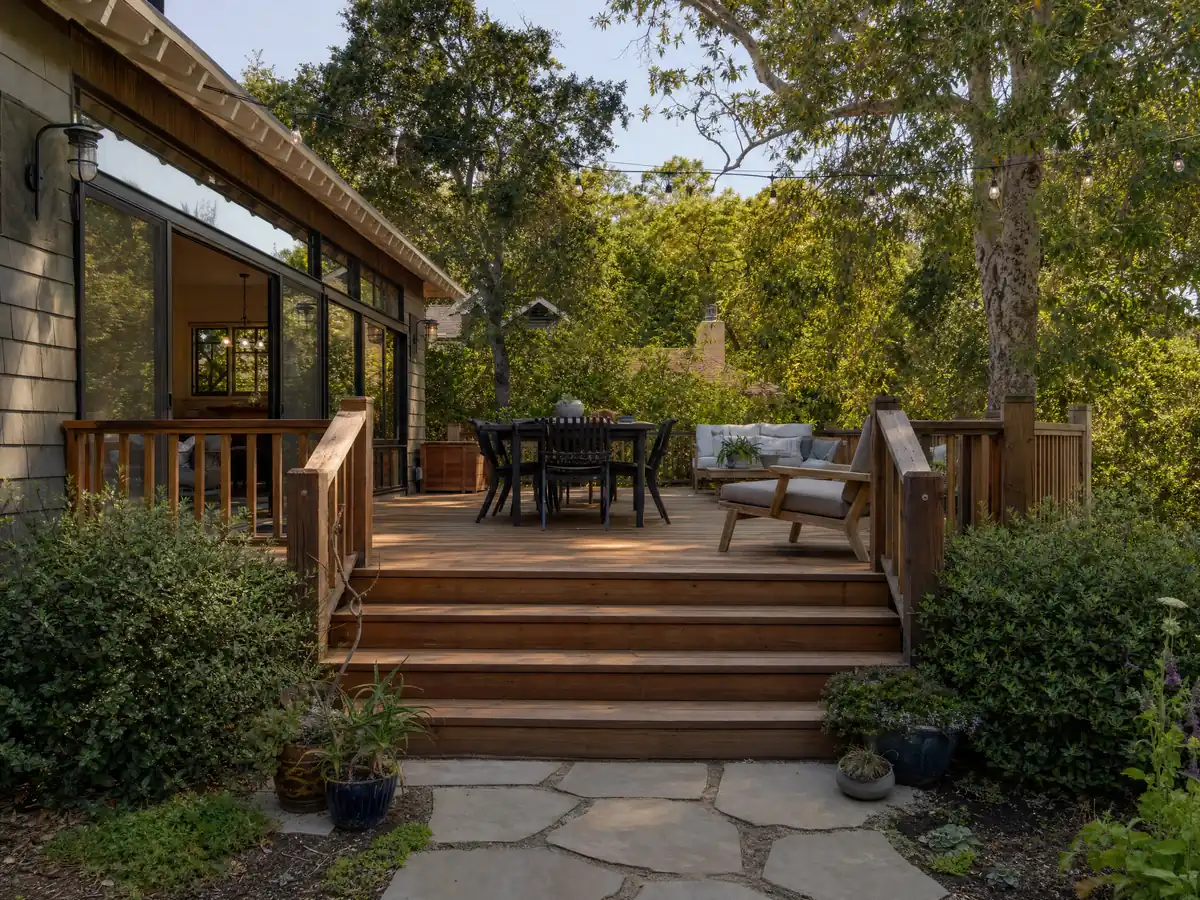
How big can a Yucca Valley deck, patio cover or pergola be?
Lot rules set the ceiling. In the Development Code's residential chapter, a lot may carry no more than four accessory buildings, or three if it has an ADU, and structures under 120 square feet, pool houses under 200, covered patios tied to pools and gazebos under 200 do not count toward that limit. Height tops out at 25 feet, setbacks follow the house with a 3 foot allowance in the rear line up to 25 percent of the rear yard, and driveways, patios and pools count toward lot coverage of 25 percent in the RL zones and 40 percent in the RS zones.
Lots differ widely. RS-5 lots start at 6,000 square feet and RL lots run from 1 to 10 acres, with front setbacks of 25 feet and rear setbacks of 15. A deck that fits a 2.5 acre lot can break coverage limits on a small one, so measure the lot before drawing the deck, and ask the Town whether its overlay maps touch the parcel.
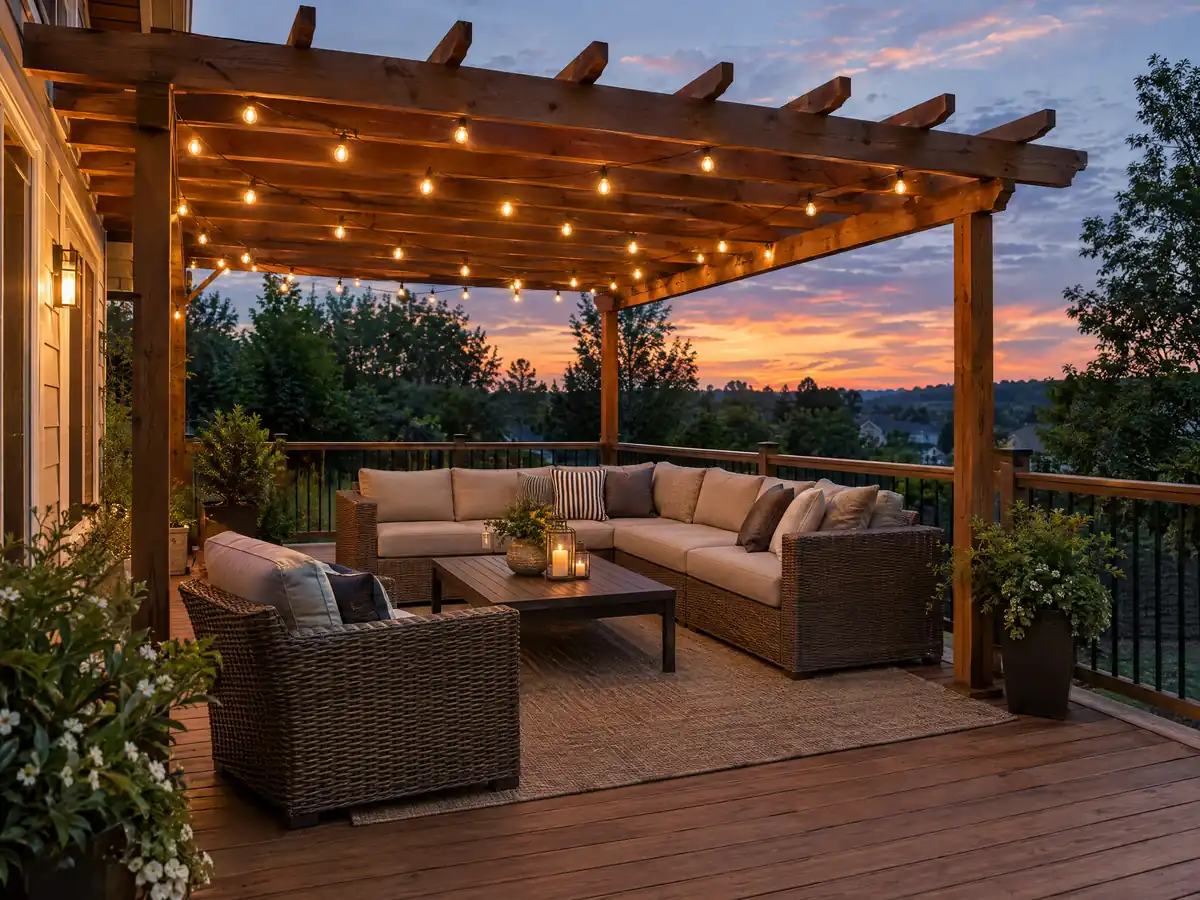
Roofs are the other test. The Town's amendment to the building code requires a Class A roof covering on any regulated structure, with an exception for repairs and additions that replace or add 25 percent or less of the roof area. Inside the Fire Safety overlay the covering must be noncombustible or Class A and eave vents are prohibited. A covered structure over 120 square feet must match the house's roof color or material, and a rated shingle or panel is the usual answer for a solid cover.
What do wind, snow, heat and age mean for deck repair in Yucca Valley?
Design values are the first unknown. The Town publishes no snow, wind or frost table among the pages we read. San Bernardino County's IB-0003 bulletin, updated January 1, 2026, uses ASCE 7-22 ground snow loads, Exposure Category C as the countywide wind minimum and an 18 inch frost depth only in its Mountain Region. We could not confirm that the Town follows it, so ask the plan checker for the design values in writing before anyone digs.
The weather is real. NOAA's normals for the Yucca Valley station, at about 3,249 feet, show 109.3 days a year above 90 F, 22.7 above 100 F, about 30.9 nights at 32 F or lower and a provisional 1.7 inches of snow, all resting on only 10 years of data. The Town's code findings cite gusts above 90 mph. We found no local source on how heat treats particular boards, so ask each maker for its warranty and surface-heat limits.
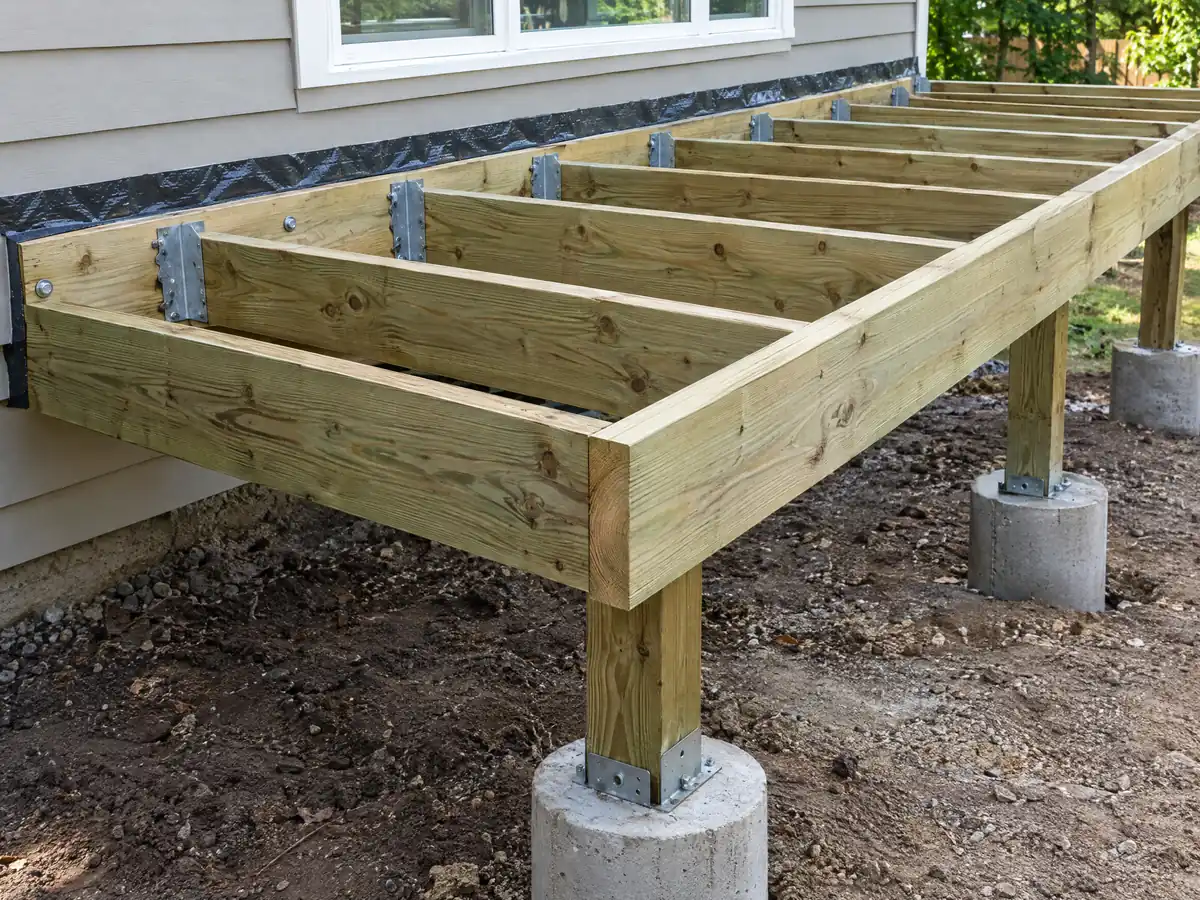
Older decks need a close look. Yucca Valley has 2,573 homes from the 1970s and 2,353 from the 1980s, so many decks have aged ledgers, fasteners and stairs. Guards are 42 inches under the California Residential Code where the walking surface is over 30 inches above grade, and the 2022 text wants a flashed, pressure-treated ledger of at least 2 by 8 with lateral hold-downs. We found no Town exemption for deck repair, so ask before replacing structure.
What does a deck builder charge in Yucca Valley, wood or composite?
No Yucca Valley deck study with a stated method turned up, so the anchor is Remodeling magazine's 2025 Cost vs. Value report for Los Angeles. Its test deck measures 16 by 20 feet with a bench, a planter, three steps and full railing, and prices at $18,419 in wood (99.6 percent recouped at resale) and $26,872 in composite (73.9 percent). Angi's October 28, 2025 Los Angeles page gives an average of $13,570, within a range of $6,335 to $20,871.
We plan with $45 to $75 a square foot for pressure-treated wood and $65 to $110 for composite, which puts a 16 by 20 deck near $14,500 to $24,000 or $21,000 to $35,000 before permits and engineering. Overlay-rated decking, sloped sites and engineered decks wait for a site visit, and a patio cover brings its own review. Ask for the specialist report, fire review and demolition as separate lines.
A wood deck is framing and rough carpentry, which falls under CSLB's C-5 class or a general building license. State law caps the down payment at the lesser of $1,000 or 10 percent of the price (Business and Professions Code 7159.5), and our license check guide shows how to read a CSLB record.
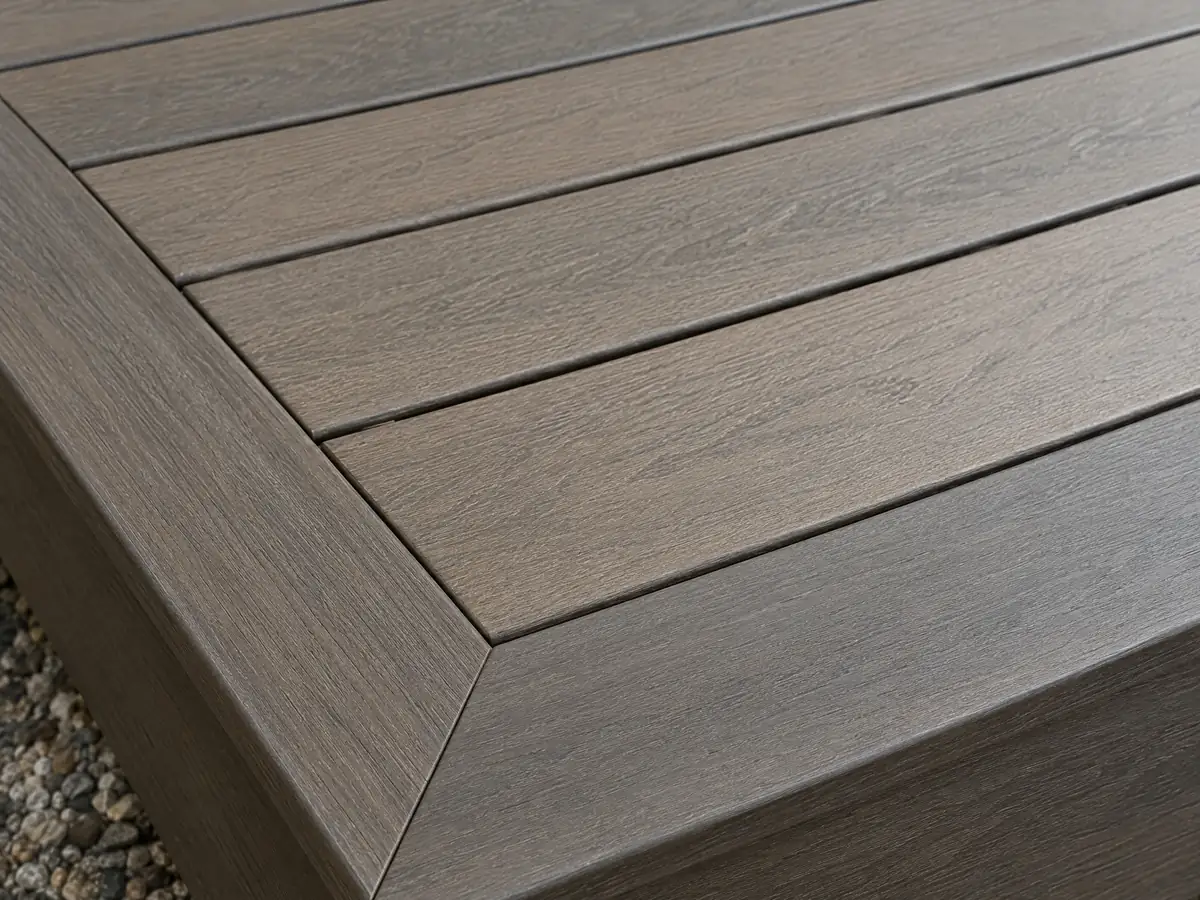
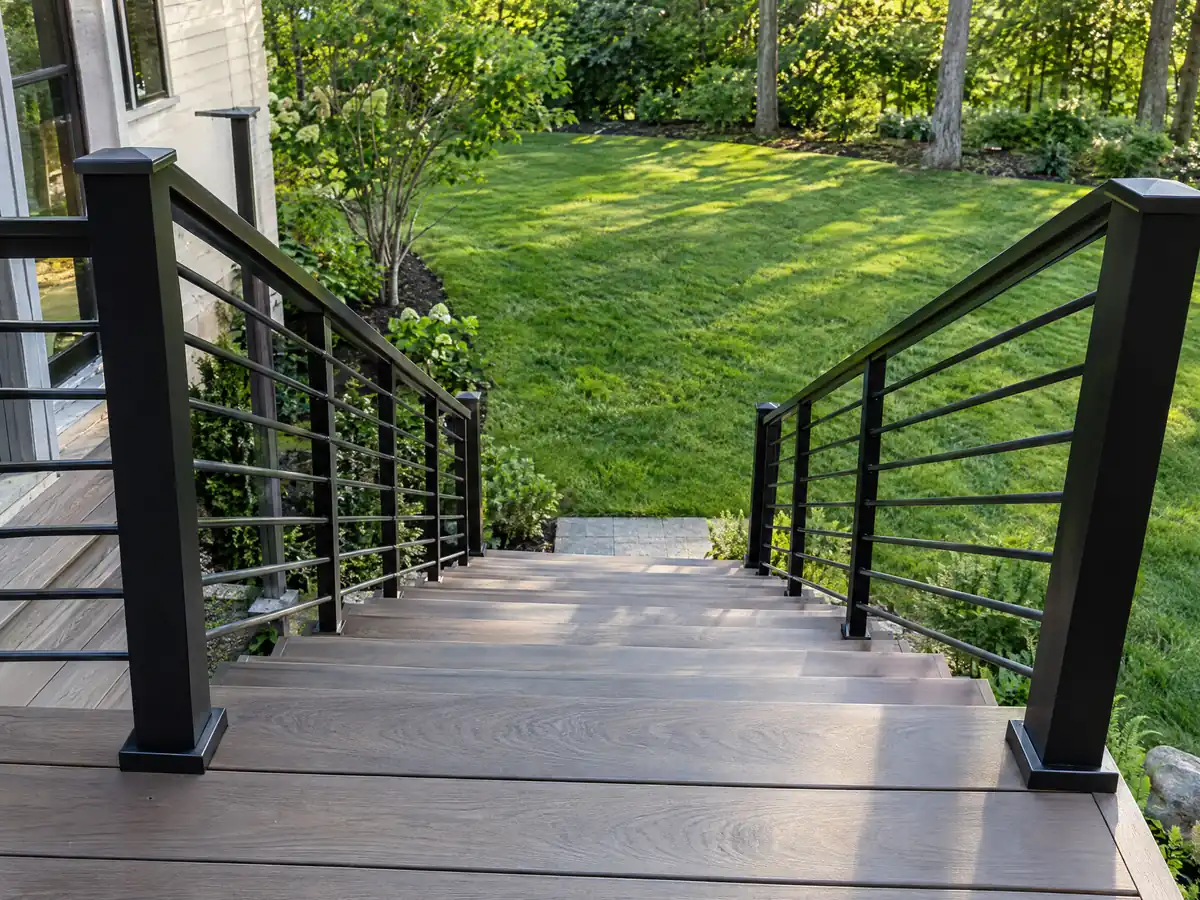
Deck photos from Yucca Valley and nearby communities
Framing, footings, guards and finished decks from Yucca Valley and the Morongo Basin communities around it, shown at the steps where the rules matter. Tap any photo to enlarge it.
What decks costs around Yucca Valley
These dollar figures are Los Angeles ranges from our decks page, not a Yucca Valley bid, so ask for permits, engineering, the Joshua tree report and any County fire review as separate lines. The same property may need flooring in Yucca Valley or concrete in Yucca Valley. For other desert decks, compare decks in Twentynine Palms, decks in Palm Springs and decks in Desert Hot Springs, or the High Desert pages for decks in Victorville and decks in Apple Valley, with decks in Los Angeles as the benchmark. A deck in Joshua Tree, Landers, Morongo Valley or Pioneertown is a County permit job, not the Town's. The subcontractor guide explains who frames and who finishes.
| What it covers | Typical range |
|---|---|
| Pressure-treated wood deck | $45 to $75 per square foot |
| Composite deck | $65 to $110 per square foot |
| 16 by 20 foot wood deck (320 sq ft) | About $14,500 to $24,000 |
| 16 by 20 foot composite deck | About $21,000 to $35,000 |
| Hillside, second-story, rooftop and ipe decks | Priced by site visit |
| Permits and engineering | Quoted as separate lines |
Other work we manage in Yucca Valley
Yucca Valley deck questions, answered
Do you need a permit to build a deck in Yucca Valley?
Plan on one. The Town pages we read publish no deck exemption, and every ground-disturbing project goes in with a Native Plant Permit and photos. Permits are taken in person by appointment, and Building and Safety answers at (760) 365-0099, extension 302. Bring the height, the size and whether the deck touches the house.
Is railing height 36 or 42 for decks?
Use 42 inches. Under the California Residential Code a guard must stand at least 42 inches high, with gaps too small for a 4 inch sphere, once the walking surface sits more than 30 inches above grade. We read the 2022 edition, and the Town's code mirror lists the 2025 codes, so confirm with the plan checker.
Can I trim a Joshua tree that leans over or shades my deck?
Not on your own. The Town cannot issue a take permit, and California Fish and Wildlife covers dead trees and trimming of living ones only through its Hazard Management Permit. Shade or appearance is not a reason we found in its FAQ, so apply first and ask CDFW before anyone cuts. Each stem or trunk can count as a separate tree.
How much would a 20x20 deck cost?
Take 400 square feet times our planning range: $45 to $75 a square foot gives $18,000 to $30,000 in treated wood, and $65 to $110 gives $26,000 to $44,000 in composite. Those are Los Angeles figures before permits, engineering and any overlay-rated decking, not a Yucca Valley bid.
How much should a 16x20 deck cost?
Remodeling magazine's 2025 Cost vs. Value report prices a 16 by 20 foot Los Angeles deck, bench and planter included, at $18,419 in wood or $26,872 in composite. We plan on roughly $14,500 to $24,000 for wood and $21,000 to $35,000 for composite, with permits and engineering on top, and no local study turned up.
Is it cheaper to build a wood deck or composite deck?
Wood costs less up front. In the 2025 Los Angeles Cost vs. Value report, wood is $18,419 and composite $26,872, although composite recoups 73.9 percent at resale against 99.6 percent for wood. We found no Yucca Valley data on heat, so ask each maker for its warranty and surface-heat limits.
What happens if a deck is built without a permit?
We found no deck-specific penalty schedule, so ask Building and Safety before you list or refinance. Expect to apply afterward, open framing for inspection and pay fees, and remember that a permit lapses after 365 days without a start and that the Town charges re-inspection fees when work is not ready. Unpermitted work can also surface at a sale.
Does the Fire Safety overlay apply to my deck in Yucca Valley?
Only if your parcel is mapped inside it. The overlay calls for decking at least 1-1/2 inches thick, one-hour rated underside protection or noncombustible construction. We did not check any parcel, so open the Town's overlay map and the County's fire hazard map viewer, or ask the counter, before choosing boards.
Can I do deck repair in Yucca Valley without a permit?
We found no Town exemption for deck repair, so ask first. New boards over sound framing raise a smaller question than a new ledger, posts, joists or stairs do. Anything that alters structure, adds a roof or builds fresh stairs is a permit item until Building and Safety says it is not.
What license does a deck builder need in Yucca Valley?
A current California license is required, usually a general building license or CSLB's C-5 class for framing and rough carpentry. Verify the number on CSLB's site and ask each subcontractor for a certificate of insurance. The Town pages we read state no separate deck-builder requirement, so ask the counter what a permit brings.
Tell us the height, the lot and whether a Joshua tree or septic tank is nearby
Say how high the deck will sit, whether a roof cover is planned, whether the lot is flat or sloped, whether the parcel may be in the Fire Safety overlay and whether this is new work or deck repair. We bring permit, fire map and tree questions to the first visit.