
Fence Companyin Lake Elsinore, CA
A fence company in Lake Elsinore works within a 36 inch front yard limit and a 6 foot side and rear minimum. The handout exempts fences up to 6 feet from a building permit, but block walls carry a fee line and R-1 fences need director approval. In fire zones, fences within 5 feet of a building must be non-combustible.
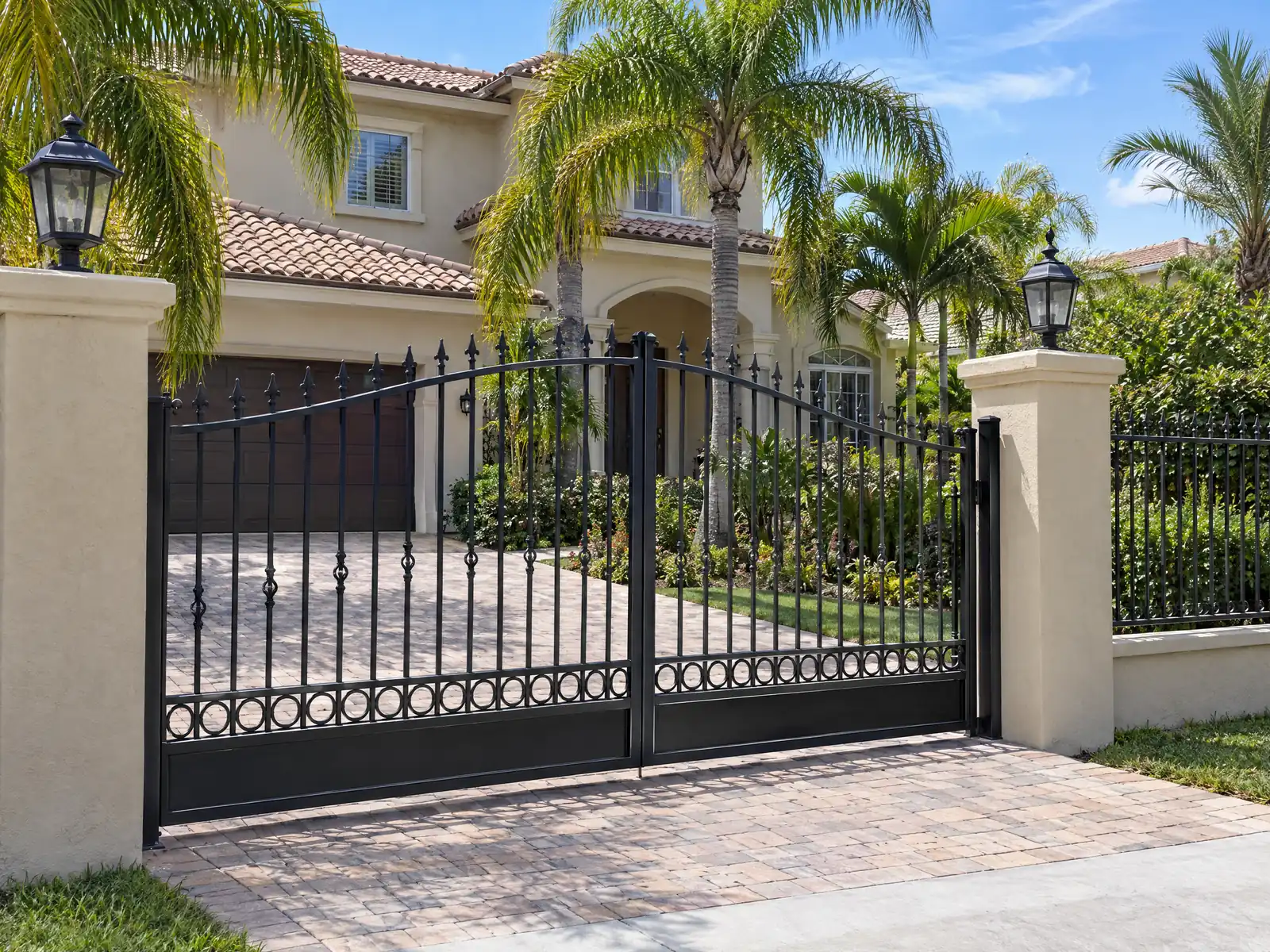
Lake Elsinore wraps around the largest natural lake in Southern California, and most of its lots are ordinary tract lots. Census Bureau ACS 2024 one-year estimates count 22,574 housing units, with 75.5 percent (17,048) single-family detached and 79.2 percent built in 1980 or later. The City's Housing Element describes the Canyon Hills and Alberhill Ranch areas as newer subdivisions with a mostly single-family character, which is where perimeter block walls and side-yard wood fences are the daily business.
On a fence job, MDG Builders (CSLB #1040337) does not set the posts ourselves. We are the licensed general contractor that scopes the run, reads the City's limits for your yard and keeps the schedule, while a licensed C-13 fencing subcontractor, or a C-29 masonry subcontractor for block, does the field work. The fencing page holds the sourced prices, the Lake Elsinore overview lists our other trades here, and the fence guides for Menifee and Perris show how two neighbors write their rules. Permits come from the Building & Safety Division. The City's pages opened normally, but its code text was read in GoCodebook, a third-party mirror, so confirm each section with the counter.
What Lake Elsinore's permit handout, residential standards and fire code say about fences
Where fencing permits come from in Lake Elsinore: City of Lake Elsinore Community Development Department, Building & Safety Division.
- Fence permits: the City's process handout exempts fences not over 6 feet high, and exempts retaining walls not over 4 feet measured from the bottom of the footing to the top (unless holding a surcharge or certain liquids). The fee schedule still lists concrete block walls at a $200 base fee and retaining walls up to 3 feet at a $200 base fee, and a ZCPC site plan must show wall and fence height and location, so check the counter for block walls and for any wall that is near the 4-foot line.
- Fence and wall heights in the residential standards (17.44.080): side and rear property-line fences or walls are required to be at least 6 feet high, front-yard fences and walls are limited to 36 inches (wrought iron may reach 5 feet), height is measured from the highest grade on either side, walls over 8 feet need Planning Commission approval, and tract perimeter walls and walls next to principal streets must be decorative masonry block unless the Design Review Board approves otherwise. Infill projects of fewer than four units use a 6-foot solid wood fence on side and rear lines, with decorative block, brick or stucco next to a street.
- In R-1, fences and walls are exempt from formal design review, but their proposed location and design still have to be approved by the Community Development Director or designee before installation.
- The City's garden wall standard (an undated handout whose notes carry 1/1/2008) lists the design basis for standard block walls: wind 85 mph exposure C, seismic design category E and site class D, allowable soil bearing 1,500 psf, passive pressure 150 psf, with footings next to slopes at least 5 feet from daylight, and an engineered design for anything else; the handout says use is at the user's risk.
- The City's retaining wall standard (also a Standard Building Handout) gives block wall and footing details for walls up to 6 feet high on level or sloping grade, and says use of the standard is at the user's risk and that alternate designs need engineered analysis. Retaining walls over 4 feet, or any wall holding a surcharge, are outside the permit exemption on the process handout.
- In a fire hazard severity zone, new fences and gates within 5 feet of a building or deck must be non-combustible. Fencing installed before January 1, 2026 may stay, but if any part of the fencing within 5 feet of the building is replaced, the whole fence run not parallel to the building (including gates) must be non-combustible. Fencing farther than 5 feet from the building is not required to change. Wood fences that attach to a home in the hills are the common case.
- Pool and spa barriers (Chapter 15.36): the barrier top must be at least 60 inches above grade, with no more than 2 inches clearance at the bottom (4 inches over a solid surface such as a concrete deck), no opening that lets a 4-inch sphere pass, and chain link no larger than 1.25-inch squares unless slatted. Gates must be lockable, and gates from a separation fence open outward away from the pool and self-close and self-latch. Doors from the house to the pool need an alarm of at least 85 dBA or another approved protection, and the City may require the barrier to be installed and inspected before plastering or filling.
Sources for these rules
- lake-elsinore.org: Building and Safety Development Process PDF
- gocodebook.com: chapter 17.44 residential development standards
- gocodebook.com: chapter 17.76 r 1 single family residential district
- lake-elsinore.org: Garden Wall Standard PDF
- lake-elsinore.org: Retaining Wall Standard PDF
- gocodebook.com: chapter 15.58 wildland urban interface code
- gocodebook.com: chapter 15.36 swimming pool spa and hot tub code
How tall can a fence be in a Lake Elsinore front yard, side yard or backyard?
Municipal Code 17.44.080 sets limits by yard. Front-yard fences and walls stop at 36 inches, although wrought iron may reach 5 feet, and height is measured from the highest grade on either side of the line. Side and rear property-line fences or walls are required to be at least 6 feet high, which is a floor and not a cap, and a wall over 8 feet needs Planning Commission approval.
Street edges get extra rules. Tract perimeter walls and walls beside principal streets must be decorative masonry block unless the Design Review Board approves something else, and infill projects of fewer than four units use a 6 foot solid wood fence on side and rear lines, with decorative block, brick or stucco beside a street. The City's districts run from R-M-R and R-R through R-E, R-H, R-1, R-2, R-3 and RMU, and we read these limits as general residential standards, so Planning should confirm your district from the address or parcel number at 951-674-3124 ext. 297.
- Which side of the lot faces a street
- Your zoning district, confirmed by Planning
- Where the highest grade sits on either side of the line
Mark the front setback and the street side on the plan the fence installer prices.
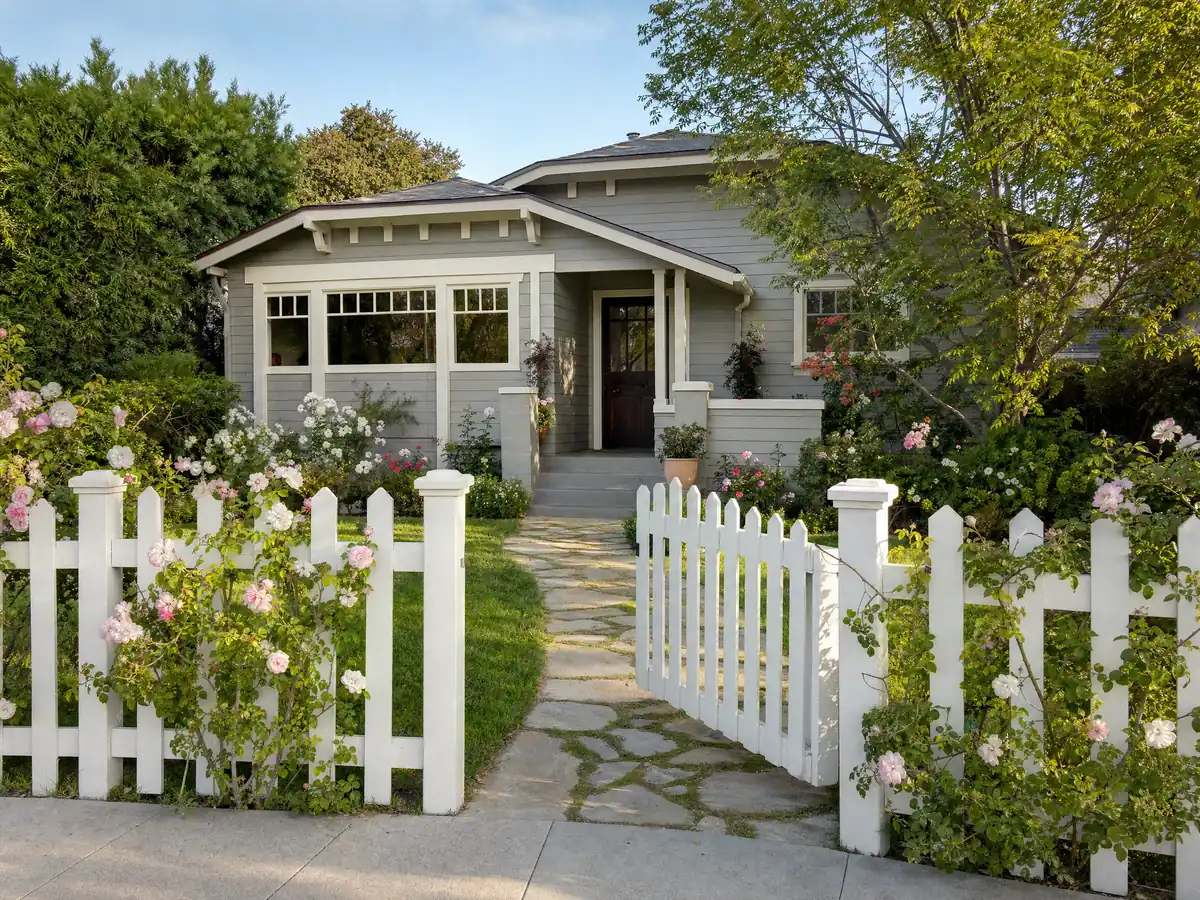
Does a fence in Lake Elsinore need a permit, and why do the handout and the fee schedule disagree?
Three City documents send three signals. The Building & Safety process handout exempts fences not over 6 feet high, and retaining walls not over 4 feet measured from the bottom of the footing to the top, unless they hold a surcharge or certain liquids. The fee schedule (Resolution 2026-032, revised July 1, 2026) still lists concrete block walls at a $200 base fee and retaining walls up to 3 feet at a $200 base fee. The Zoning Compliance Preliminary Check form, in force since January 1, 2026 for residential accessory structures and alterations, wants wall and fence height and location on the site plan.
Our reading is that a plain wood fence at or under 6 feet needs no building permit but still has to obey zoning, and that any block wall deserves a call to the counter. In R-1, fences and walls skip formal design review, yet their location and design must be approved by the Community Development Director or designee before installation. Whether the preliminary check applies to a fence standing alone is not stated on the pages we read, so ask Planning at 951-674-3124.
Get the permit answer in writing and keep it with the fence contract.
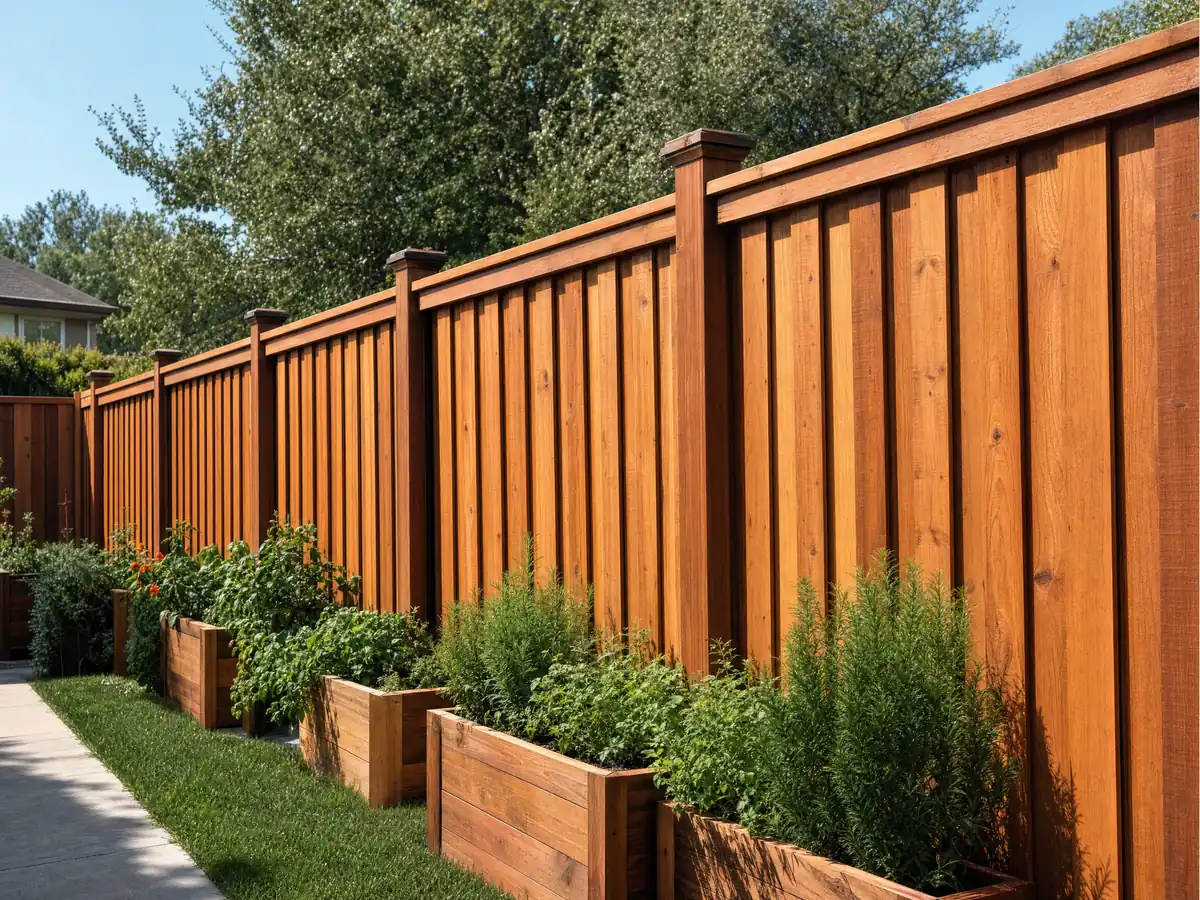
What do the City's block wall and retaining wall standards cover, and what about hillside lots?
The City publishes a garden wall standard whose notes carry 1/1/2008 and a retaining wall standard for walls up to 6 feet high on level or sloping grade. The garden wall basis is 85 mph wind exposure C, seismic design category E, site class D, allowable soil bearing of 1,500 psf and passive pressure of 150 psf, with footings beside slopes at least 5 feet from daylight. Both handouts say use is at the user's risk, so a wall outside them needs an engineer's drawing, and a retaining wall over 4 feet or holding a surcharge sits outside the handout's permit exemption.
Hillside lots add the grading chapter, written in 1987 and edited in 2010. In hillside grading, retaining walls are limited to one upslope wall up to 6 feet and one downslope wall up to 3.5 feet, walls over 2.5 feet need a 36 inch protective fence or guard, and slopes over 3 feet need irrigation and permanent plants before final inspection. In the Hillside Planned Development overlay, ground cover within 10 feet of a structure may not exceed 3 feet in height. Which parcels carry that overlay was not read from a map.
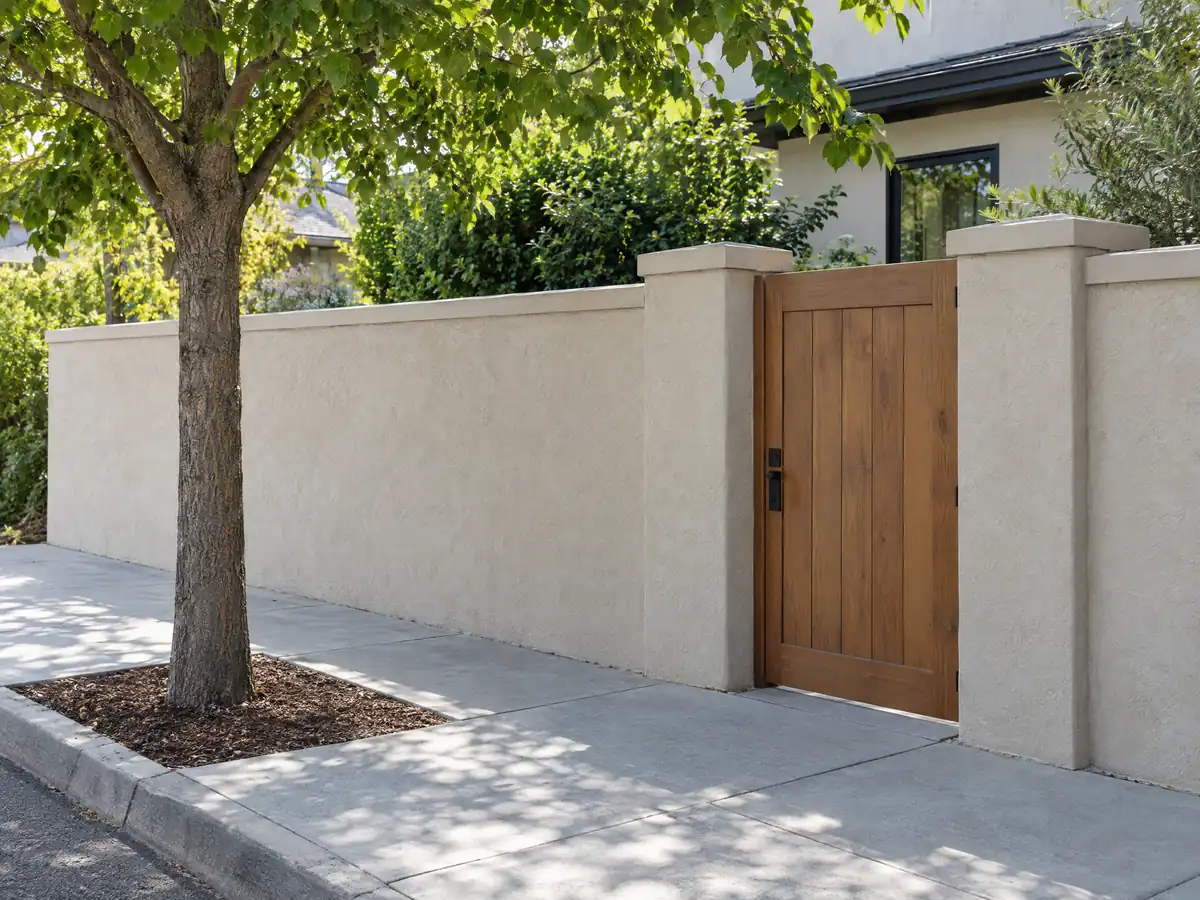
What does the City's pool barrier code require for a fence or a gate?
Chapter 15.36 sets the top of a pool barrier at least 60 inches above grade, with no more than 2 inches of clearance at the bottom, or 4 inches over a solid surface such as a concrete deck, and no opening that lets a 4 inch sphere pass. Chain link may have squares no larger than 1.25 inches unless it is slatted.
Gates must be lockable, and a gate from a separation fence opens outward away from the pool and self-closes and self-latches. Doors from the house to the pool need an alarm of at least 85 dBA or another approved protection, and the City may require the barrier to be installed and inspected before plastering or filling. The fee schedule lists a gunite pool or spa as its own $290 base line, apart from the fence. The City's pool and spa requirements handout is an image file we could not read, so ask the counter for it.
Ask for the barrier inspection to be booked before the pool is plastered or filled.
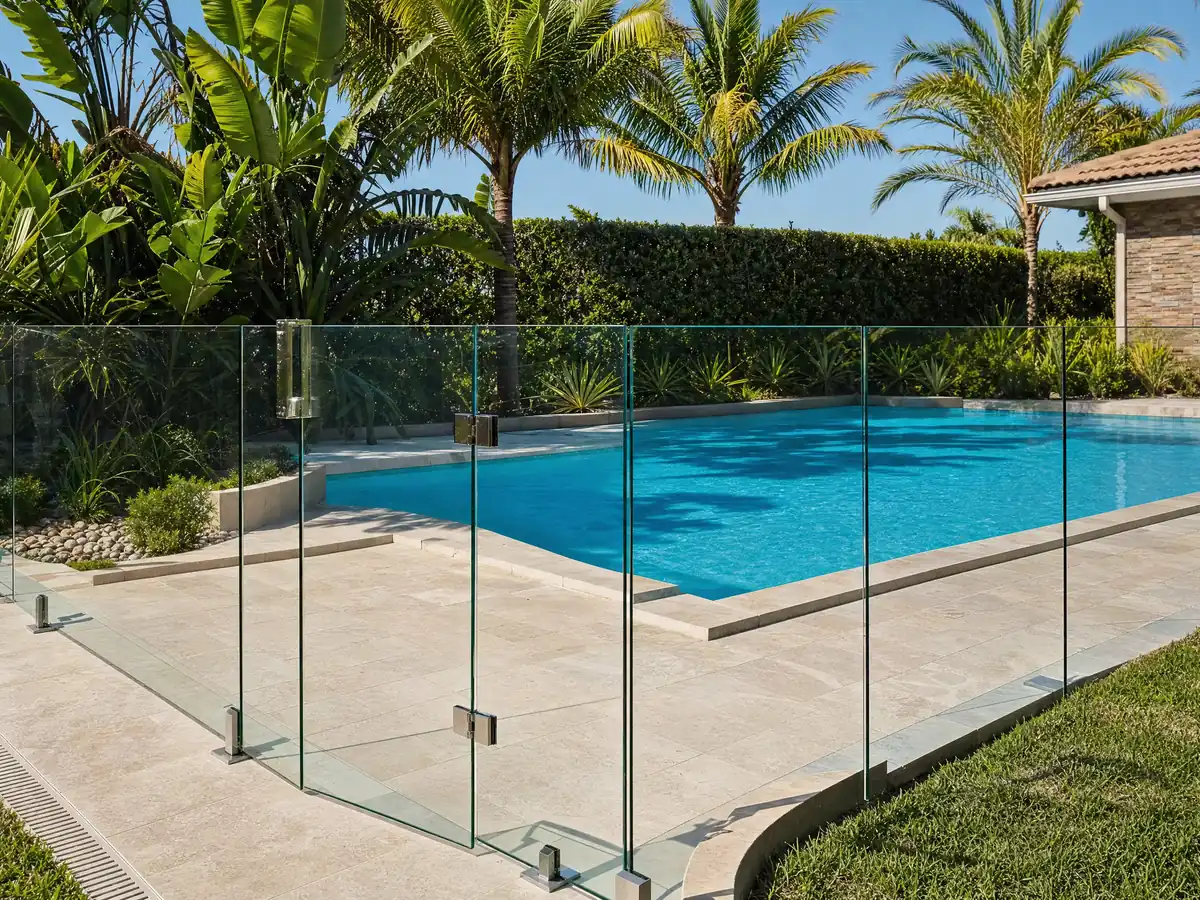
What changes for a wood fence or gate that touches the house in a fire hazard severity zone?
In a fire hazard severity zone, new fences and gates within 5 feet of a building or deck must be non-combustible. Fencing installed before January 1, 2026 may stay, but if any part of the fence within 5 feet of the building is replaced, the whole run that does not parallel the building, gates included, must be non-combustible. Fencing farther than 5 feet from the building does not have to change. The usual casualty is a wood side fence that meets the house at a gate.
The 2025 wildland-urban interface chapter, adopted November 18, 2025, also bars vines from climbing fences, decks or shade structures within 5 feet of a building and bans artificial turf and combustible mulch in that strip. It reaches existing homes with landscaping installed before January 1, 2026 as well as new work. Which streets sit in a zone was not readable from the City's image map, so get the zone in writing from the Office of the Fire Marshal at 951-381-2824 before choosing wood.
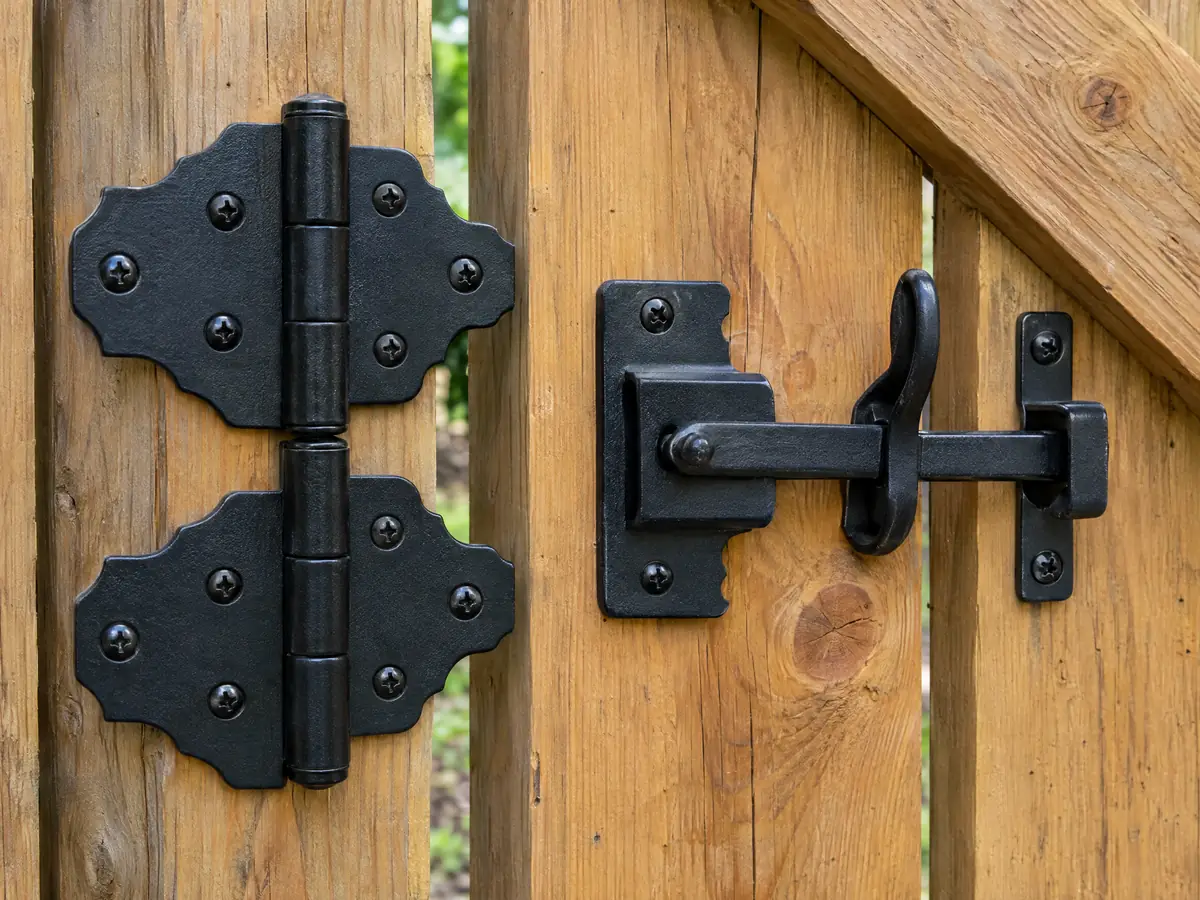
Do the lake, the creek channels, habitat areas or Historic Downtown change a fence job?
Sometimes. The City's Flood Safety page names 11 flood sources, from Wasson Canyon Creek and the San Jacinto River to the lake itself, and we found no fence-specific flood rule, so ask Engineering before running a solid wall across a drainage path. Work in the public right-of-way needs an encroachment permit first, parkway trees and shrubs may not be removed without City consent, and the zoning form tells applicants to contact Engineering about easements and street dedications.
Lots in Multiple Species Habitat Conservation Plan criteria cells need a consistency analysis through the City's LEAP process before development-related activity, and the fire code bars new structures within 100 feet of protected habitat unless the Fire Code Official approves alternate protection. Whether a fence counts as a structure there is a question for Planning. In the Historic Downtown Elsinore Overlay District, about 486 acres around Main Street, every application to construct or renovate a structure or sign goes to Planning, so show it a boundary fence plan first.
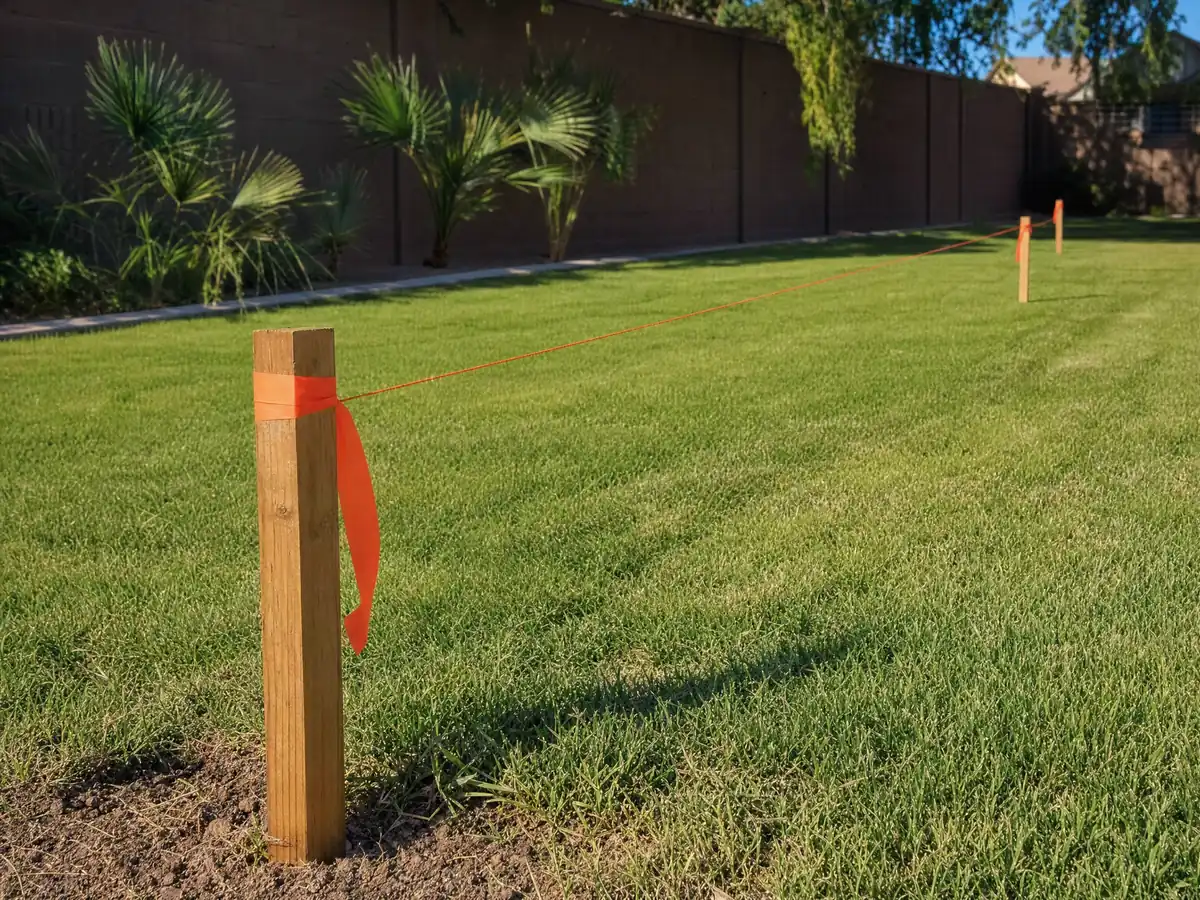
How much does fence installation cost in Lake Elsinore, and who pays for a shared fence?
No Lake Elsinore survey turned up, so these are national and Los Angeles numbers. Angi's national guide, updated October 13, 2026, shows $6 to $50 a linear foot and a $23 average, with wood at $10 to $45, vinyl at $15 to $40, chain link at $8 to $40, aluminum at $17 to $90, wrought iron at $25 to $55 and block at $10 to $30, plus $150 to $2,000 for a gate. Its Los Angeles page, dated August 4, 2026, averages $3,051 with $2,100 to $2,350 for 100 feet. HomeGuide's February 3, 2026 page says $4,000 to $12,000 for 200 feet and Thumbtack's July 1, 2026 page says $23 to $57 a foot. Federal data puts fence erectors in the Los Angeles metro at a mean $28.00 an hour for May 2025. Our planning lines are $25 to $55 a foot for a 6 foot wood or vinyl privacy fence, $12 to $30 for chain link and $35 to $85 for aluminum or iron, or $2,500 to $5,500 for a 100 foot back run. We found no independent per-foot source for reinforced block.
Neighbors split a boundary fence under Civil Code 841, which presumes equal sharing and asks for 30 days' written notice before costs are incurred. Fencing is CSLB class C-13, which excludes masonry walls, and block walls fall under C-29. Check credentials with our license guide, and read how general contractors use subcontractors for who answers to whom.
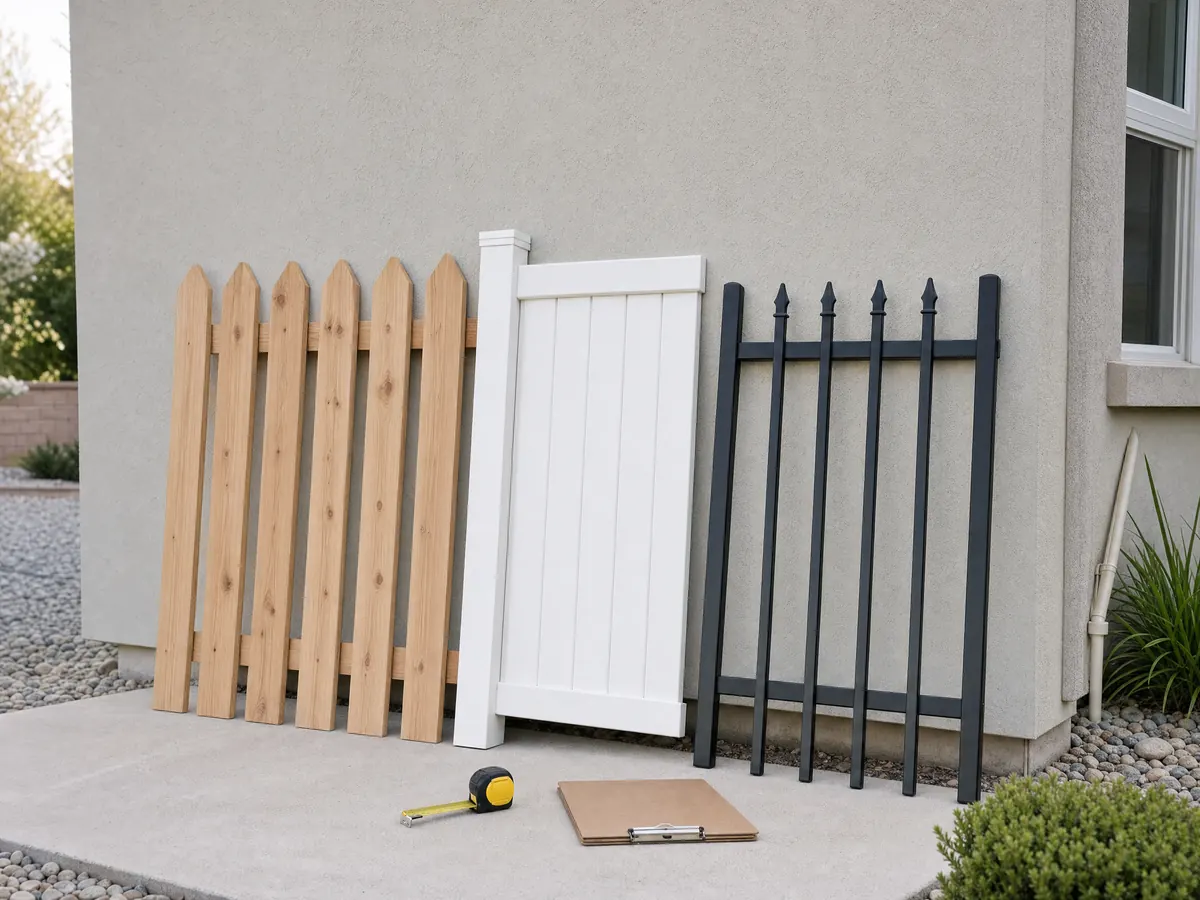
Fencing photos from Lake Elsinore and nearby communities
Fence scenes tied to Lake Elsinore places such as Historic Downtown Elsinore, Country Club Heights, Alberhill Ranch and Tuscany Hills, and to nearby communities such as Wildomar, Lakeland Village, Sedco Hills and Menifee, from wood privacy runs and block walls to gates and pool barriers.
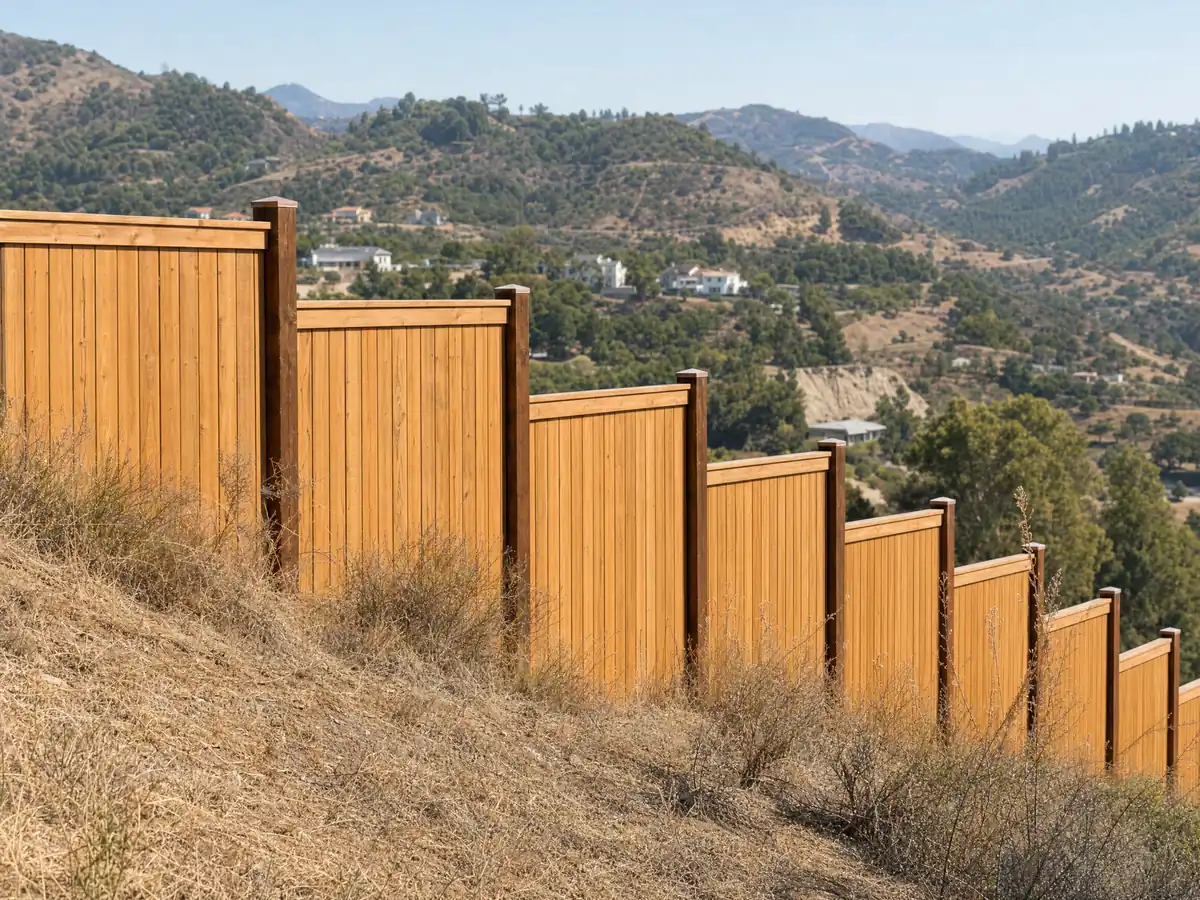
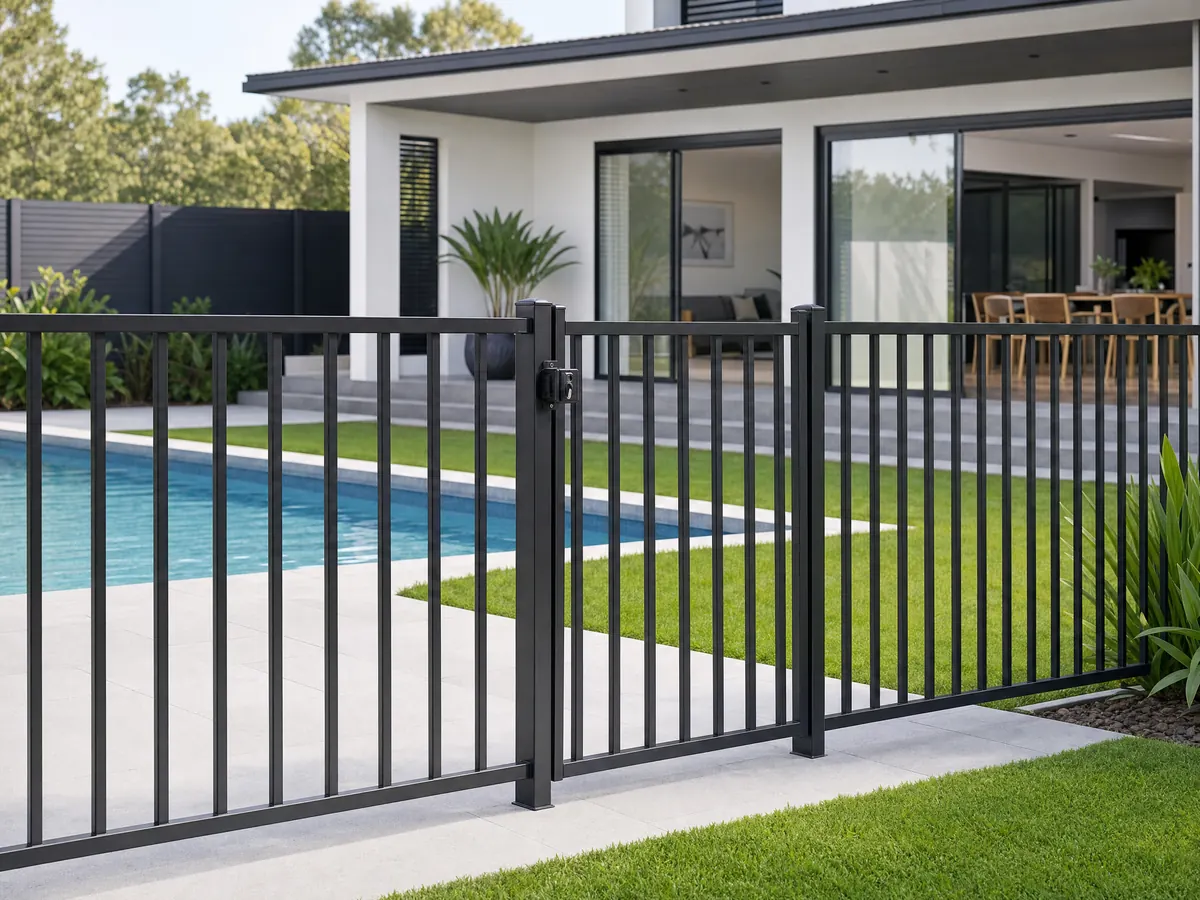
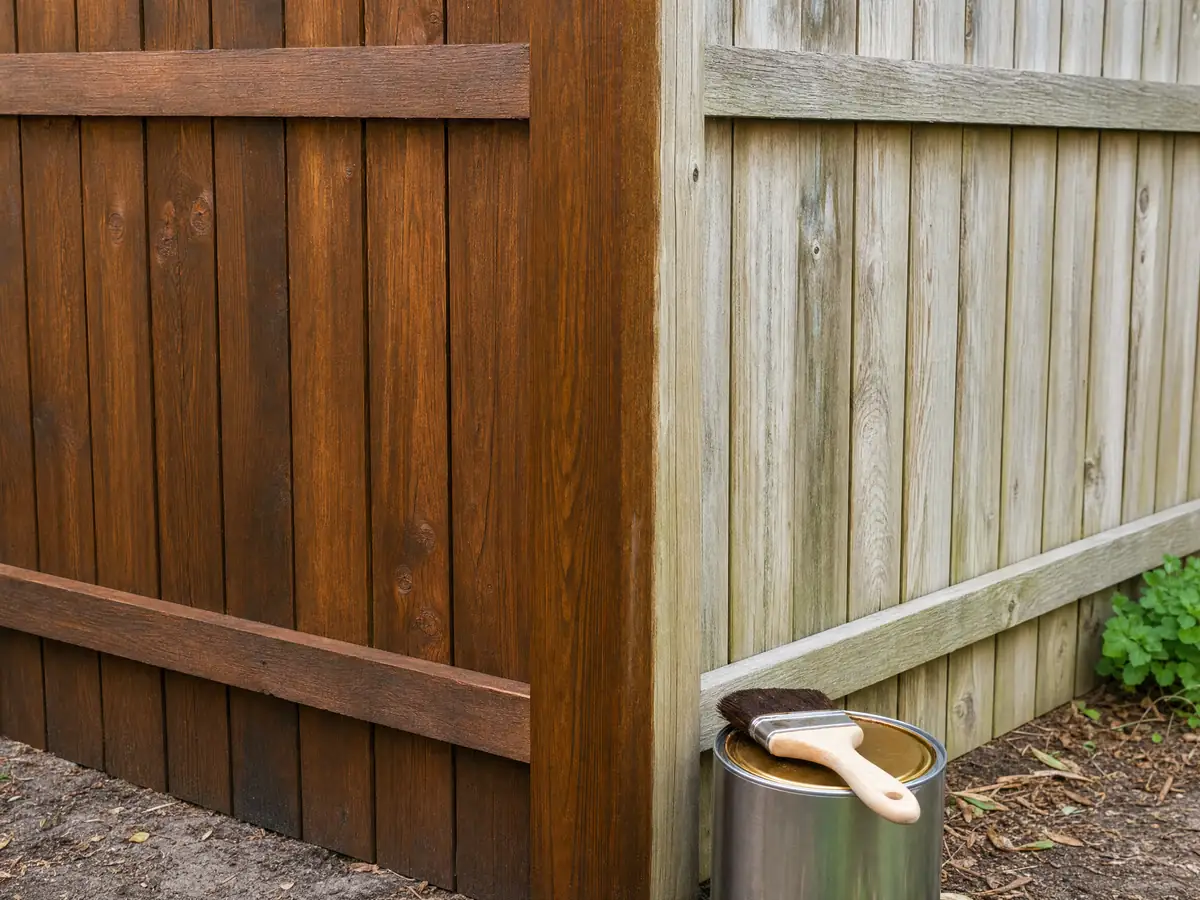
Where these Lake Elsinore fence figures come from
Each fence price, its source, its date and the numbers that disagree sit in the table on the fencing page. A new fence often goes in beside other exterior work, and the Lake Elsinore rules for it are on the roofing page, the painting page and the kitchen remodeling page. For another Riverside County city that sets yard limits in its zoning chapter, read the fence guides for Riverside and Murrieta.
| What it covers | Typical range |
|---|---|
| Wood or vinyl privacy fence, 6 feet | $25 to $55 per linear foot |
| Chain-link | $12 to $30 per linear foot |
| Aluminum or ornamental iron | $35 to $85 per linear foot |
| Typical 100-foot backyard run | $2,500 to $5,500 total |
| Block walls, horizontal slat fences, gates and openers, hillside lots | Set by the written proposal |
Other work we manage in Lake Elsinore
Lake Elsinore fencing questions, answered
Do I need a permit to build a fence in Lake Elsinore?
Usually not a building permit for a wood fence at or under 6 feet, since the City's process handout exempts it, but zoning still applies. Block walls appear on the fee schedule at a $200 base fee, and in R-1 a fence's location and design need director approval before installation. Call Building & Safety at 951-674-3124 first.
Can I put up a 7ft fence?
Possibly, but ask first. The handout's building permit exemption stops at 6 feet, and the zoning chapter requires Planning Commission approval only above 8 feet. We found no stated rule for the stretch between, so assume a permit question and get the counter's answer before the posts go in.
How tall can a front yard fence be in Lake Elsinore?
Front-yard fences and walls are limited to 36 inches, and wrought iron may reach 5 feet. Municipal Code 17.44.080 measures height from the highest grade on either side of the line. Side and rear property-line fences are required to be at least 6 feet. Ask Planning to confirm the standard for your zoning district.
What are the new fence rules in California in 2026?
We could not confirm a statewide change, and the status of the state Zone 0 rulemaking was unclear in our sources. The dated local change is Lake Elsinore's Zone 0 rule, adopted November 18, 2025: in fire hazard severity zones, new fences and gates within 5 feet of a building must be non-combustible.
What is the maximum height of a retaining wall without a permit in California?
The City's handout exempts retaining walls up to 4 feet, measured from the bottom of the footing to the top, unless they hold a surcharge. The state model list in the 2022 California Building Code also uses 4 feet. The City fee schedule still lists retaining walls up to 3 feet, so call the counter near that line.
Does your neighbor have to pay for half the fence in California?
Generally yes. Civil Code 841 presumes that adjoining owners share a boundary fence equally, and it asks for 30 days' written notice before one owner incurs costs. The presumption can be rebutted, for example when one owner wants something far costlier. Put the notice, the quote and the agreed split in writing.
Do I need a permit for a block wall in Lake Elsinore?
Ask, because the City documents disagree. The process handout exempts fences not over 6 feet, yet the fee schedule lists concrete block walls at a $200 base fee. Walls beside principal streets must be decorative masonry block unless the Design Review Board approves otherwise, and walls over 8 feet need Planning Commission approval.
Do I need a permit to replace a pool gate or pool fence in Lake Elsinore?
Treat it as regulated work. Chapter 15.36 sets a 60 inch barrier, lockable gates that open outward and self-close and self-latch, and a house door alarm of at least 85 dBA. We found no exemption for swapping a pool gate, so call Building & Safety at 951-674-3124 before ordering one.
How much does fence installation cost for 200 feet in Lake Elsinore?
At our planning rates of $25 to $55 a foot for a 6 foot wood or vinyl privacy fence, 200 feet runs about $5,000 to $11,000. HomeGuide's national page gives $4,000 to $12,000 for 200 feet. We found no Lake Elsinore survey, and gates, slopes and haul-off change the number.
What is the difference between a fence company and a masonry contractor in California?
A fence company holds class C-13, which excludes masonry walls, while block and stone walls fall under class C-29. A job with both uses two licensed trades. MDG Builders (CSLB #1040337) manages them as the general contractor, and you can ask for each subcontractor's license number.
Ask for a fence estimate in Lake Elsinore
Give us the neighborhood, the fence material, which side of the lot faces a street and whether a pool, slope or fire zone is involved. We read the yard limit and the 5 foot rule before we call back.