
Roof Repairin Thousand Oaks, CA
Roof repair in Thousand Oaks has to use a Class A covering, because the city's code drops Class B and C for every construction type. A repair of up to 100 square feet is exempt from a building permit, but a full roof replacement is not on the exempt list, so plan to permit it with the Building Division.
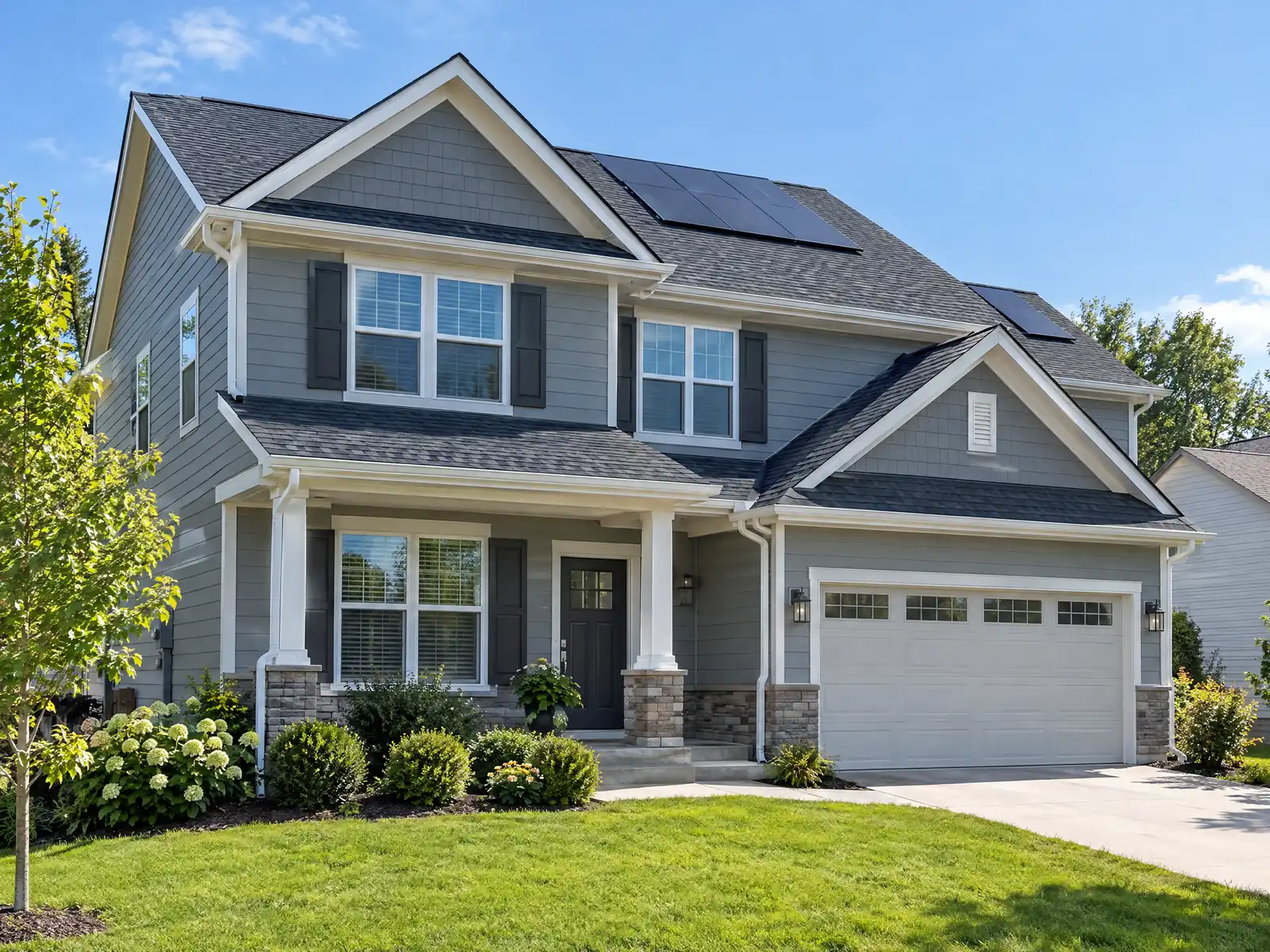
Thousand Oaks sits between two very different climates. NOAA's 1991 to 2020 normals put Camarillo Airport, about 12 miles west on the coastal plain, at 9.0 days a year at or above 90 degrees F, while Woodland Hills Pierce College, about 17 miles east in the San Fernando Valley, counts 115.3 days at or above 90. No temperature station sits inside the city, so this page quotes no single heat figure. The nearest rain gauge, 1.8 miles from the city center, shows 16.10 inches a year, 13.05 of them from December through March and under 0.1 inch in July and August.
The roofs here are mostly 1970s roofs. The Census Bureau's 2024 estimates count 46,439 housing units, about 67 percent of them single-family detached, with a median year built of 1978 and 75.8 percent of occupied homes owner-occupied. On a roof job, MDG Builders (CSLB #1040337) writes the scope, files with the City and books the inspections, while a licensed C-39 roofing subcontractor does the tear-off and installation. Our roofing page carries the sourced price table, and Agoura Hills and Calabasas, across the county line in Los Angeles County, each follow their own rules. Simi Valley shares the county but reads its own City code.
What the Thousand Oaks code, Ventura County Fire and the air district say about roofs
Where roofing permits come from in Thousand Oaks: City of Thousand Oaks Community Development Department, Building Division.
- Municipal Code section 8-1.14 amends CBC Chapter 15 so that the minimum roof covering for all construction types is Class A (Class B and C are removed from these provisions), and fire-retardant-treated wood shingles and shakes must also qualify as Class A.
- Residential Code section 8-7.06 (R902.1.2) requires fire-retardant roof coverings of at least Class A on new structures, on any covering applied during alteration, repair or replacement, and on existing structures where more than 50 percent of the roof area is replaced within one year.
- Wood shakes and shingles are allowed only as fire-retardant-treated, full-cell vacuum-pressure treated products qualified for Class A, meeting ICC-ES EG107 and the Health and Safety Code section 13132.7(j) weathering requirement, with labeled bundles (section 8-7.06, R902.2).
- Section 8-4.09(b)(4) exempts from a building permit repairs to roof coverings not exceeding a total of 100 square feet or constituting the entire portion of a particular roof type within any 12-month period; a re-roof beyond that is not on the exempt list.
- A Precise Plan of Design (design review) is not required for reroofing without a change of roof elevation on a single-family detached home (section 9-4.1803(a)(1)); a roof change that raises the roofline can fall under the second-story and addition triggers in 9-4.1802.
- Rooftop solar and building-integrated PV: the code requires Class A where the roof edge is less than 3 feet from a lot line, rooftop PV must be UL 2703 listed (section 8-7.06), and small residential rooftop systems up to 10 kW AC are reviewed on a checklist with one inspection and administrative approval (section 8-1.25).
- Ventura County APCD Rule 74.28 (adopted 5/10/94) covers anyone who runs a roofing kettle for asphalt or coal tar pitch: kettles must keep close-fitting lids on, asphalt may not exceed 500 F and coal tar pitch 400 F, and a vessel receiving hot material must be covered within 2 minutes of draining.

Which roof covering does Thousand Oaks require for roof repair and roof replacement?
Class A, on every house, inside or outside a mapped fire zone. Thousand Oaks adopted the 2025 California codes with local amendments by Ordinance 1741-NS, effective January 1, 2026, and Municipal Code section 8-1.14 rewrites the roof chapter so the minimum covering for all construction types is Class A, with Class B and C struck out of those provisions. We read the code on the third-party GoCodebook mirror, not on the City's own host, so confirm the wording with the Building Division.
The residential section, 8-7.06 (R902.1.2), applies the same Class A to new structures, to any covering applied when a roof is altered, repaired or replaced, and to existing structures where more than 50 percent of the roof area is replaced within one year. Because a repair counts, a patch cannot be made with a lower-rated product. Wood shakes and shingles survive only as fire-retardant-treated, full-cell vacuum-pressure products qualified as Class A, with labeled bundles, meeting ICC-ES EG107 and the weathering test in Health and Safety Code section 13132.7(j).
Ask each bidder to name the Class A assembly on the proposal, not only the shingle brand, and to state the roof area being replaced.
A written roof area and fire class on the proposal turn the 50 percent line into a number you can check.
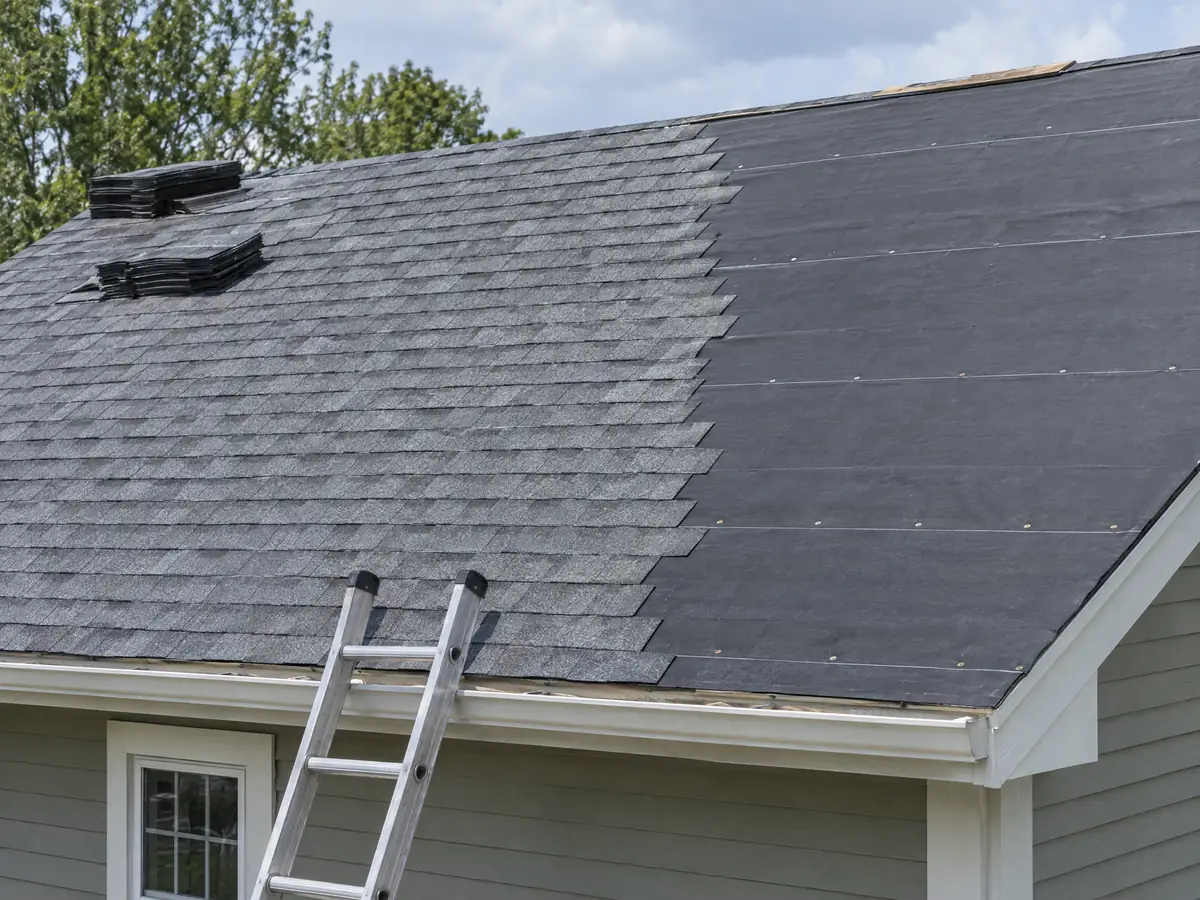
Does an oak tree or a hillside lot change a Thousand Oaks roof job?
It can, because the oak ordinance reaches the work area around the house. Under Article 42 of the zoning code, any oak of the genus Quercus is protected at any size, and the protected zone starts 5 feet outside the dripline and runs in to the trunk, never less than 15 feet from the trunk. The code lists pruning, trenching, grading, parking, material storage and construction inside that zone as encroachment, so a dumpster, a pallet of shingles or a work truck under the canopy counts.
Branches that touch the roof are covered too. Clearance pruning of live branches 2 inches or less in diameter and deadwooding are exempt, except with new construction, and anything heavier needs an oak permit from Planning at (805) 449-2323. Violations are misdemeanors, and the Director can post a stop-work notice. Sycamores over 12 inches and a few other landmark trees are protected separately, though occupied single-family parcels under 2 acres are exempt from that article.
Hillside lots add a layer. Areas averaging a 10 percent slope or more fall under Hillside Planned Development rules, and a protected ridgeline carries a 300-foot horizontal and 100-foot vertical band where new structures and additions are generally barred. A like-for-like re-roof is not a new structure, but a roof that raises the roofline can fall under the second-story and addition triggers in section 9-4.1802, so ask Planning before the design changes.
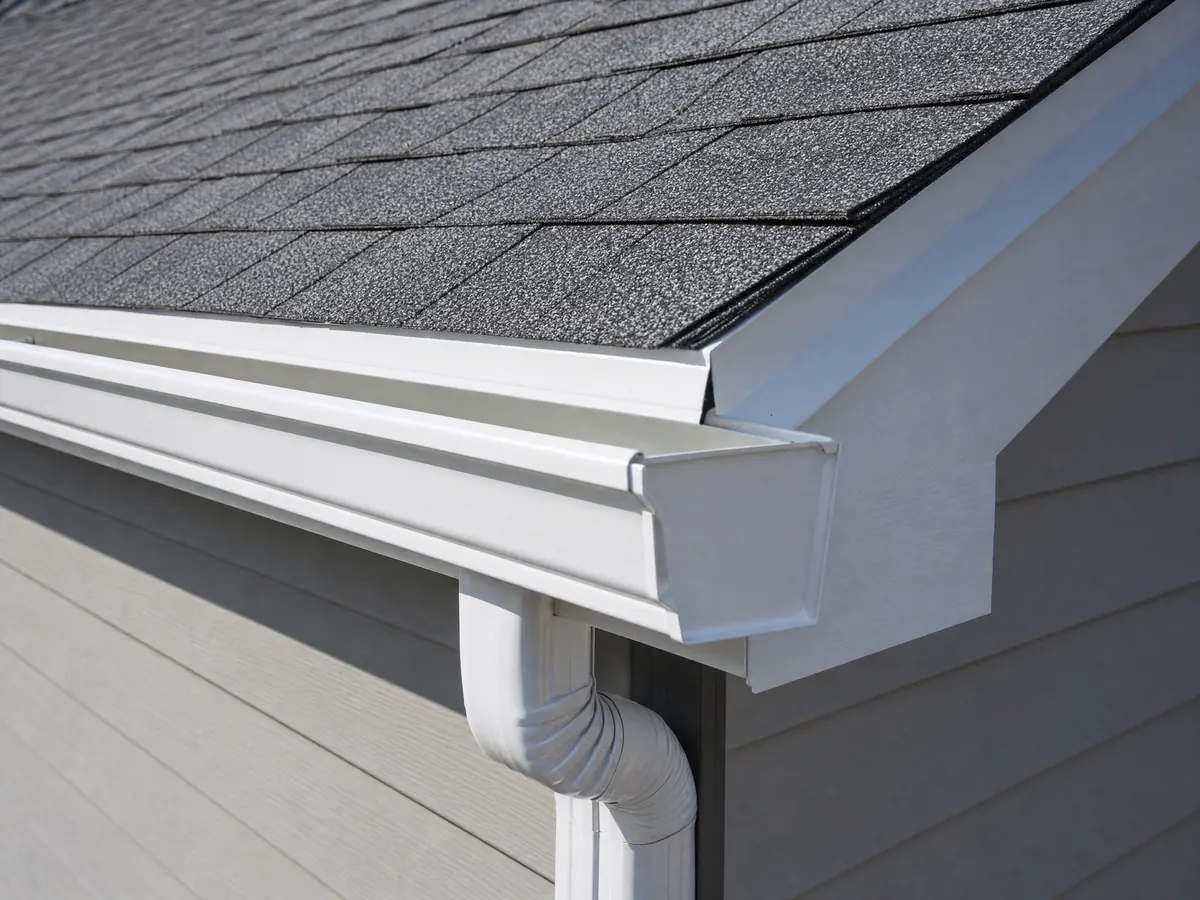
Does roof repair in Thousand Oaks need a permit, and what does a re-roof file?
Section 8-4.09 says no building or structure may be altered, repaired or improved without a permit unless the code exempts the work, and the exemption in 8-4.09(b)(4) covers roof covering repairs of up to 100 square feet. The same line also mentions the entire portion of a particular roof type within any 12 months, so get a plain answer from the counter before treating a larger repair as exempt. A full re-roof is not on the list, and even an exempt job must meet the Class A and zoning rules.
The City's archived Building page says applications, permit status and inspections run through the TO/24 portal, fees are paid before issuance and issued permits are picked up in person. We found no re-roof handout, layer limit or fee amount, since the City's site blocks automated readers, so ask the Building Division for the current sheet. Design review is not required for a re-roof on a single-family detached home when the roof elevation stays the same. An application that produces no permit within 180 days expires, and an issued permit expires if work does not start within 365 days or 365 days after the last passed inspection.
Solar often rides along with a new roof. Rooftop panels must be UL 2703 listed, Class A applies where the roof edge sits less than 3 feet from a lot line, and residential systems up to 10 kW AC get a checklist review with one inspection under section 8-1.25.
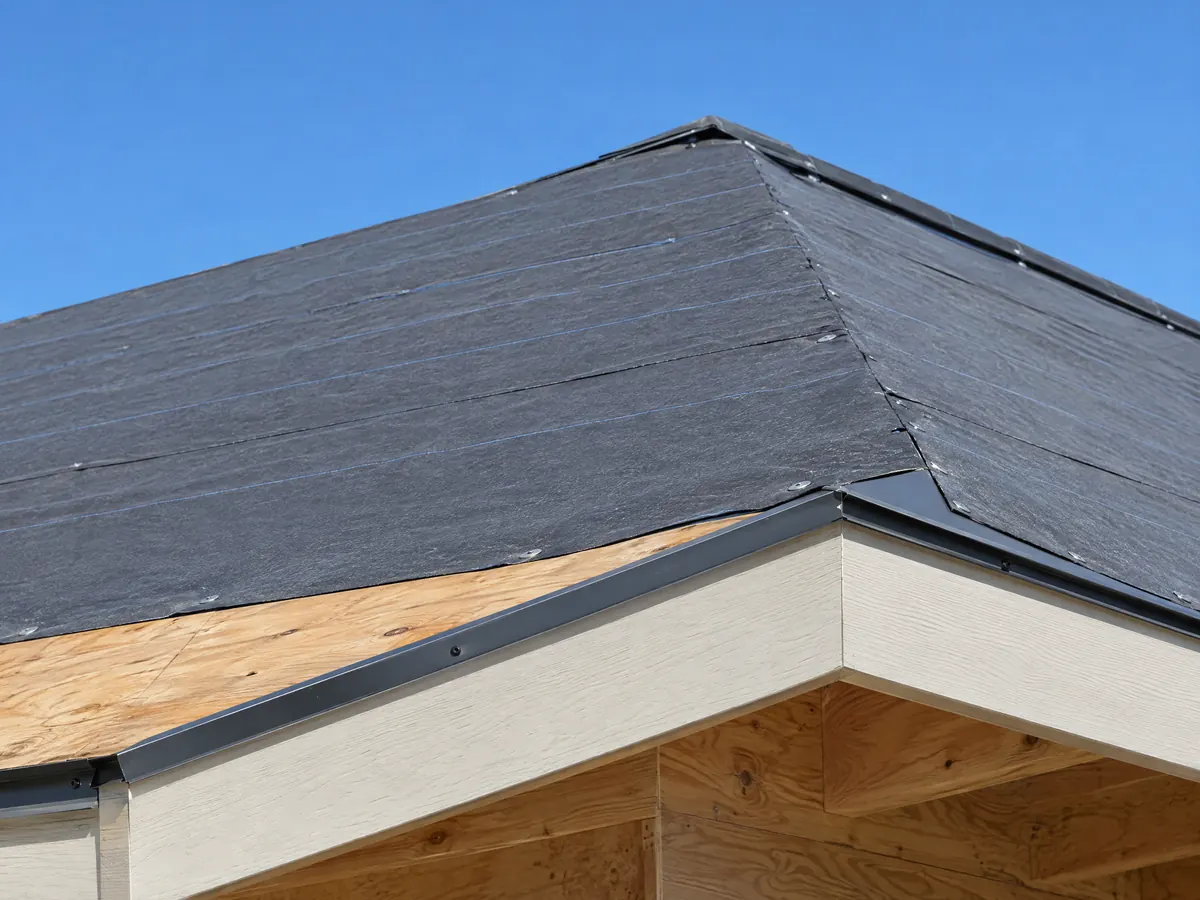
How old are Thousand Oaks roofs, and when does a 1970s tract roof need replacing?
The city is young, but its houses are not new. Thousand Oaks incorporated in 1964, and Wikipedia says the Conejo Valley grew from about 3,000 to 30,000 people between 1950 and 1970, while the city itself went from 1,243 residents in 1950 to 35,873 in 1970 and 104,352 in 1990. The Census Bureau's 2024 estimates count 14,451 homes built in the 1970s (31.1 percent) and 9,545 in the 1960s (20.6 percent), and about 56 percent of all units predate 1980.
Build dates change by neighborhood. Wikipedia says two-thirds of the Westlake community, planned from 1963, was annexed in 1968 and 1972, North Ranch joined in January 1973, most of Newbury Park came in during the late 1960s and 1970s, and the 2,350-unit Dos Vientos plan was approved in April 1988. A roof original to a median-year 1978 house is about 48 years old, while a house in a development approved in 1988 starts from a later date.
We found no sourced roof lifespan for Thousand Oaks, so age alone is a poor trigger. Ask for photos of the flashing, valleys, underlayment and deck, and for the proposal to say what is repair and what is replacement. The TO/24 permit history can show when the roof was last permitted, and whatever went on then, the new covering must be Class A.
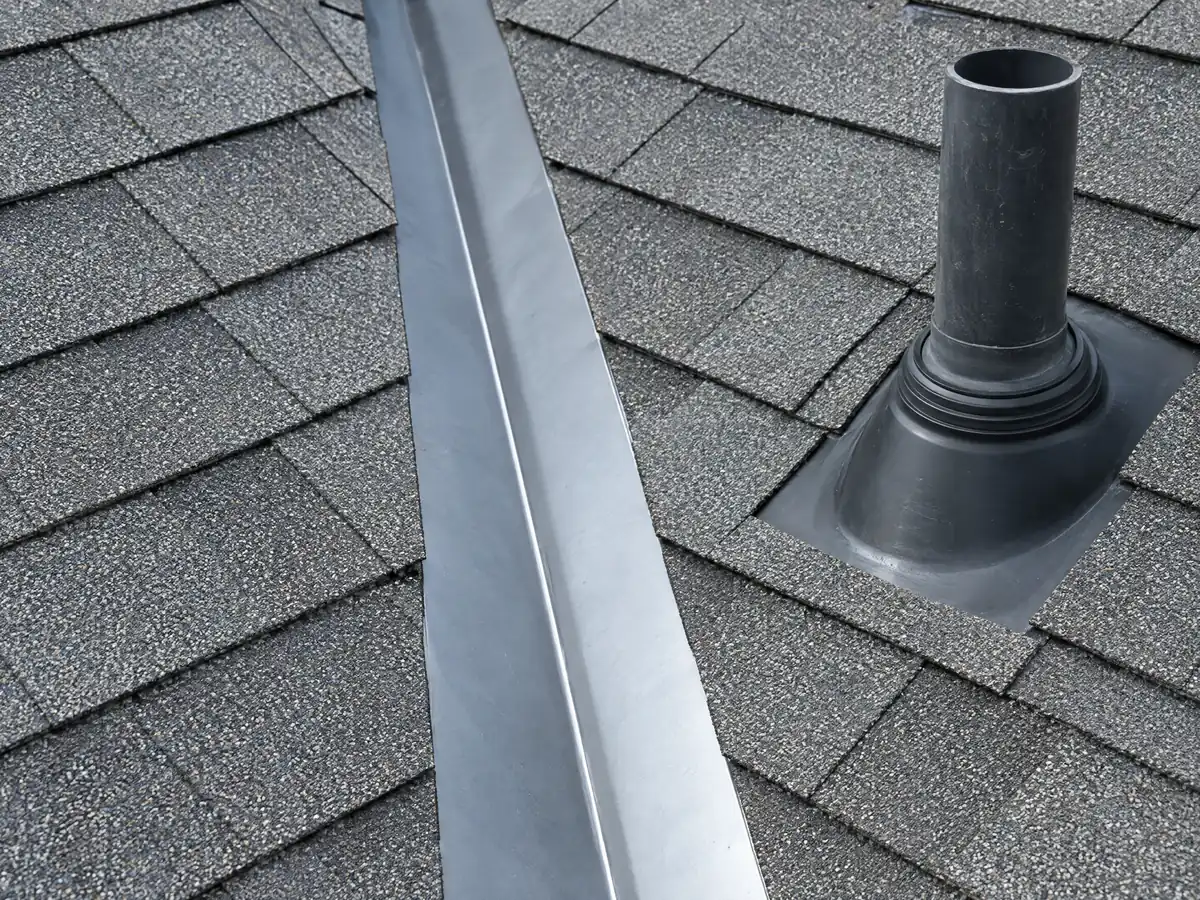
Is my Thousand Oaks house in a fire zone, and what did the Woolsey Fire change?
Which parcels sit in a mapped fire hazard severity zone could not be confirmed. The City's GIS hazard service lists layers for fire hazard risk areas and historic fire hazards, and the historic layer holds CAL FIRE's October 2010 local-responsibility recommendations, is marked internal use only and does not say whether the City adopted them. Ask the Building Division or the Ventura County Fire Department whether your address is mapped before a quote names a roof system.
The rule that applies everywhere is the Class A covering above. For new buildings in a Fire Hazard Severity Zone or a wildland-urban interface area, Title 8 chapter 18 adopts the 2025 California Wildland-Urban Interface Code, though its text does not say how the City maps those areas. A City page from the 2020 recovery period adds that Ventura County Fire Protection Form 126-B goes to the Building Division with the permit and advises talking to the Fire Department about sprinklers in a high fire hazard area. Treat that page as 2020 text.
Hillside Planned Development lots add fire-retardant roofs and exteriors, brush cleared 20 feet each side of roads and combustible vegetation removed 100 feet out before construction. The Woolsey Fire burned from November 8 to 21, 2018, covering about 96,949 acres and destroying 1,643 structures across Ventura and Los Angeles Counties, and Wikipedia says most of Newbury Park was evacuated for two to three days. Those are fire-wide totals, not a Thousand Oaks count.
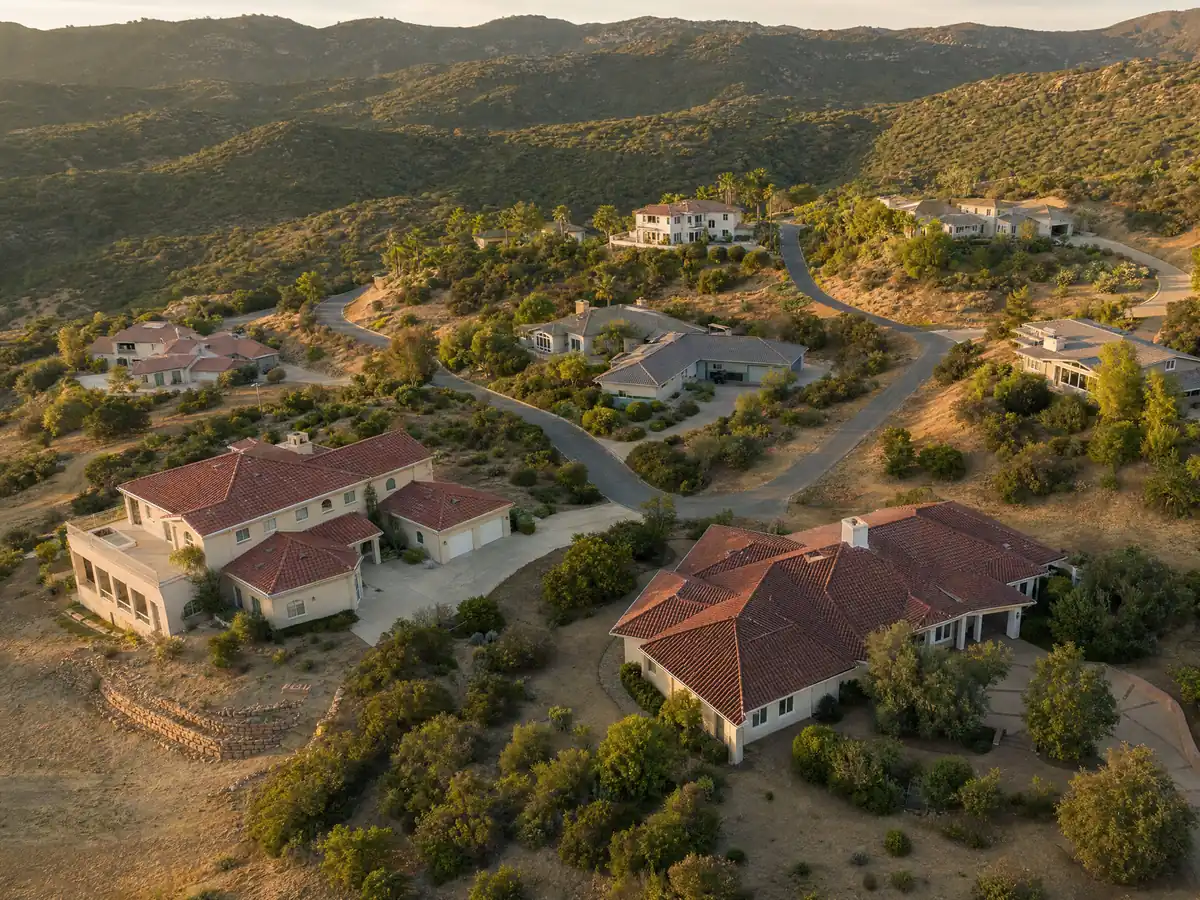
How much does roof replacement cost in Thousand Oaks?
We found no Thousand Oaks price survey and no City roofing fee we could read, so this page prints no Thousand Oaks figure. The nearest sourced numbers are for Los Angeles. Angi's July 2026 page, built from what customers actually paid, gives $10,256 to $24,963 for a typical roof, averaging $17,271, with asphalt at $4 to $12 a square foot, tile at $7 to $15 and metal at $7 to $16.
Remodeling magazine's 2025 Cost vs. Value report prices one reference roof for Los Angeles at $36,417 in asphalt and $62,069 in metal and does not publish its size, which is why it sits far above Angi's average. Angi adds tear-off at $1,000 to $3,000 and panel removal and reset at $500 to $1,000. Ask each bidder to price these items on separate lines:
- Tear-off and disposal
- Decking repair, quoted per sheet and agreed before work starts
- Flashing, vents and drip edge for the Class A assembly
- Solar panel removal and reset, if the roof carries panels
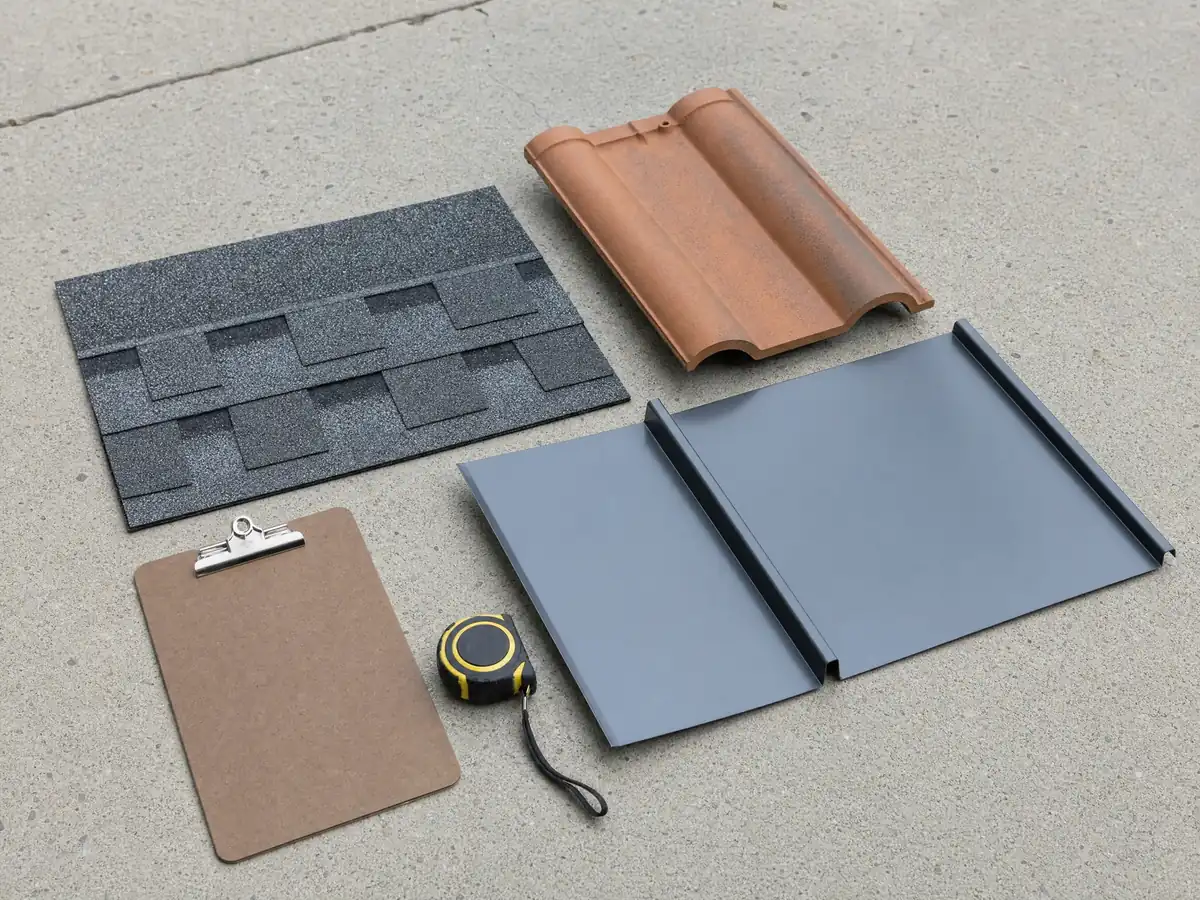
How do I choose a roofing company in Thousand Oaks for roof repair or a replacement?
Roofing is CSLB class C-39, defined as installing products and repairing surfaces that seal, waterproof and weatherproof structures. Look up the license on the CSLB site before you discuss price, and read our guide to checking a contractor license. Unlicensed work is limited to $1,000 in labor and materials combined, and the limit does not apply when the job needs a permit or the person hires a worker, so a permitted re-roof is never an unlicensed job.
The contract matters as much. Business and Professions Code section 7159, as amended effective January 1, 2026, calls for a signed written contract, caps the down payment at $1,000 or 10 percent, whichever is less, ties progress payments to finished work and gives three business days to cancel, five for seniors. With MDG, the roofing is done by a licensed subcontractor, and you can ask for that company's license number and certificate of insurance before signing. Our piece on how general contractors use subcontractors covers where each party's responsibility starts and ends.
Two local questions belong on the list. Ask whether the crew will stage materials near an oak, since the code counts material storage in the protected zone. If the plan uses a roofing kettle for hot asphalt or pitch, Ventura County APCD Rule 74.28 requires close-fitting lids and caps asphalt at 500 F and coal tar pitch at 400 F.
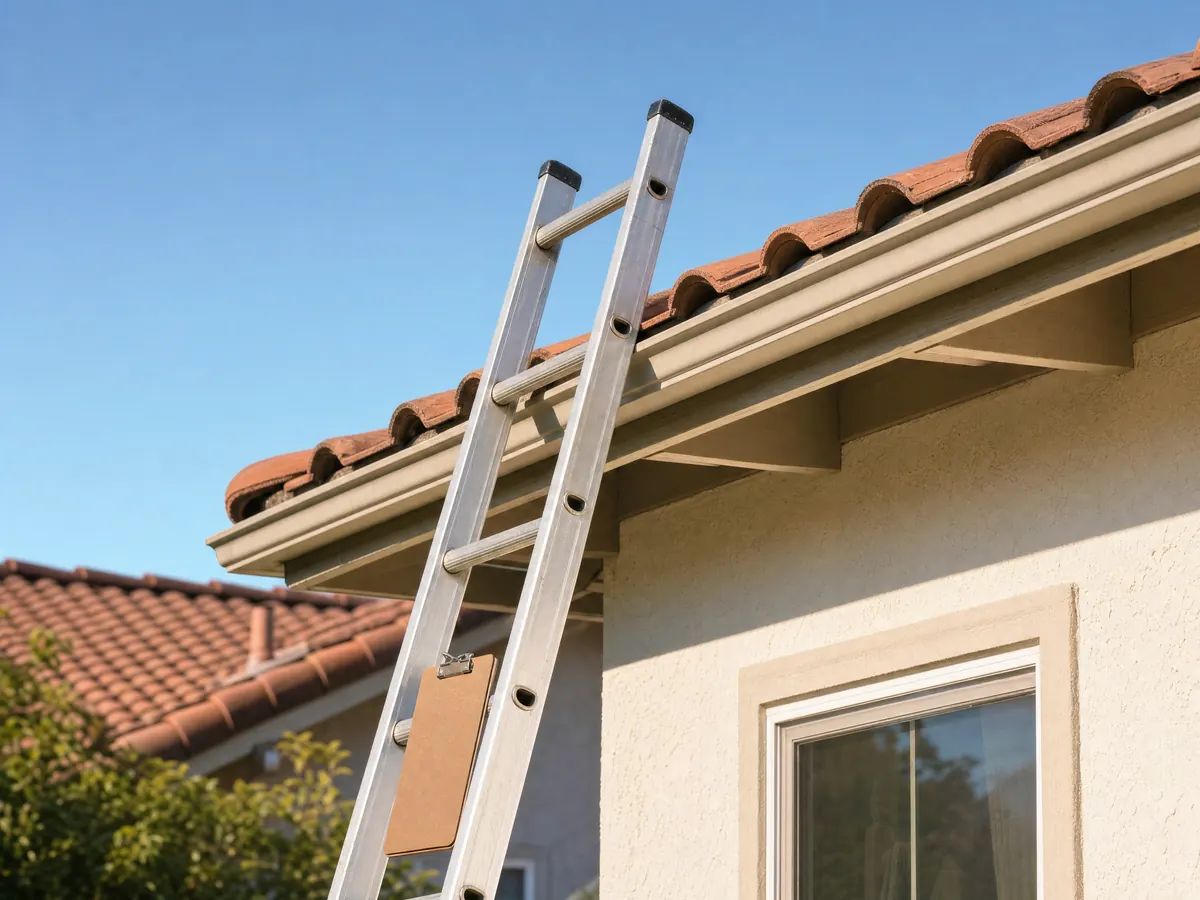
Roofing photos from Thousand Oaks and nearby communities
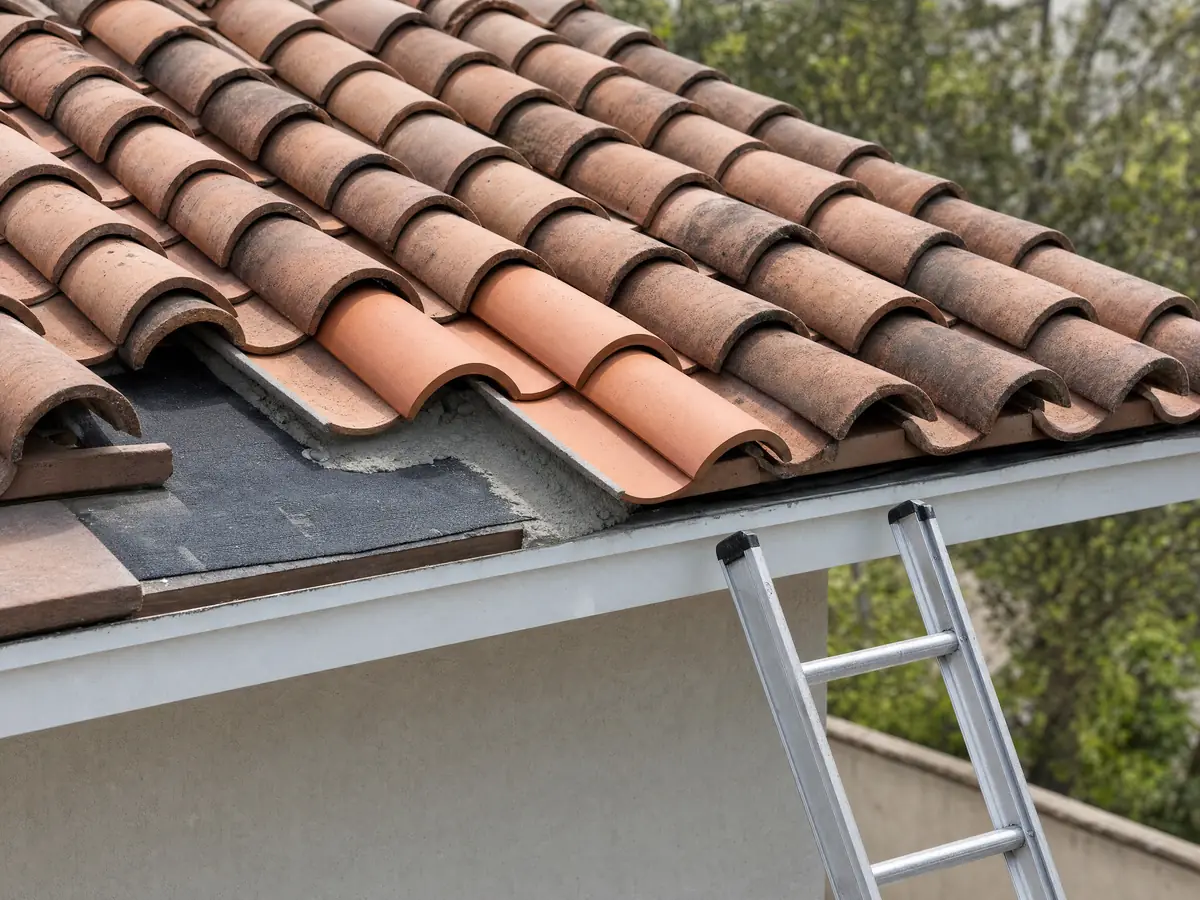
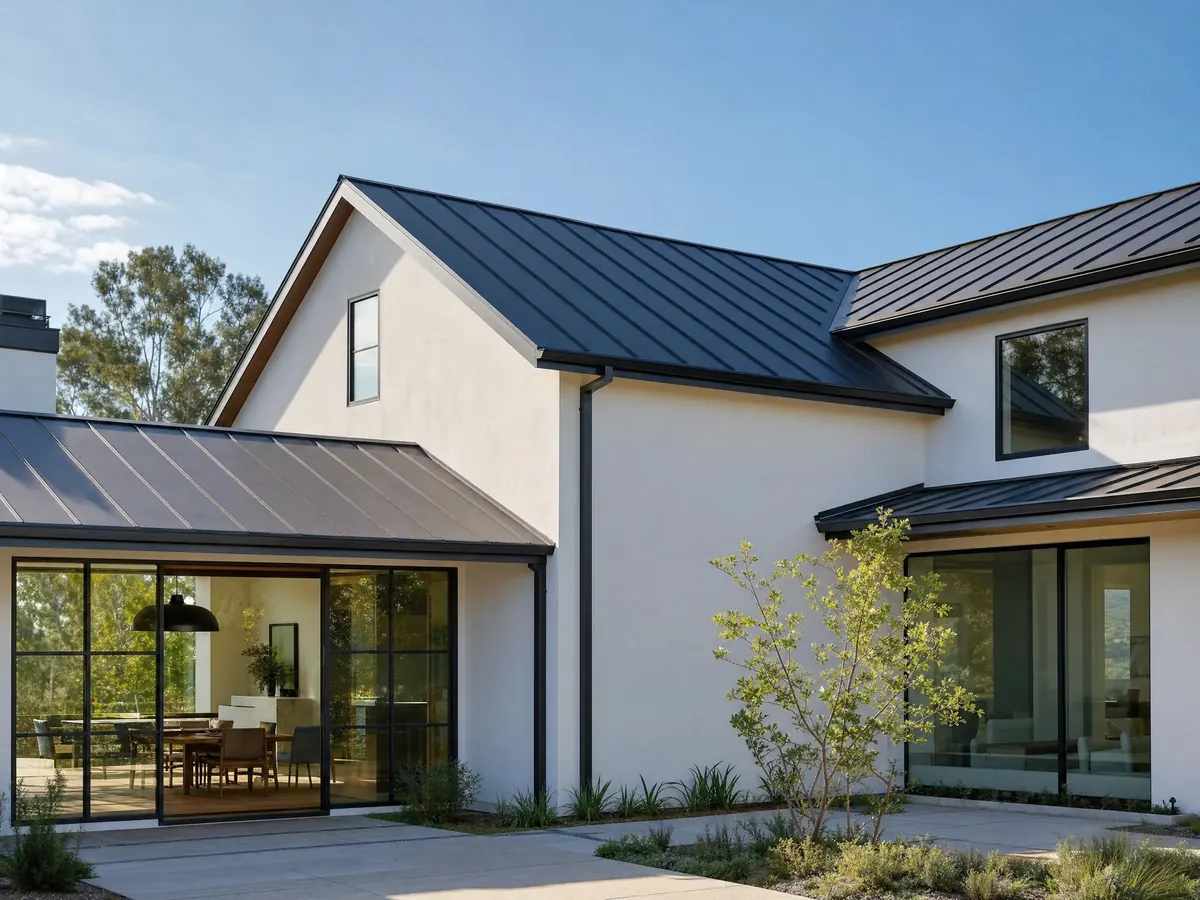
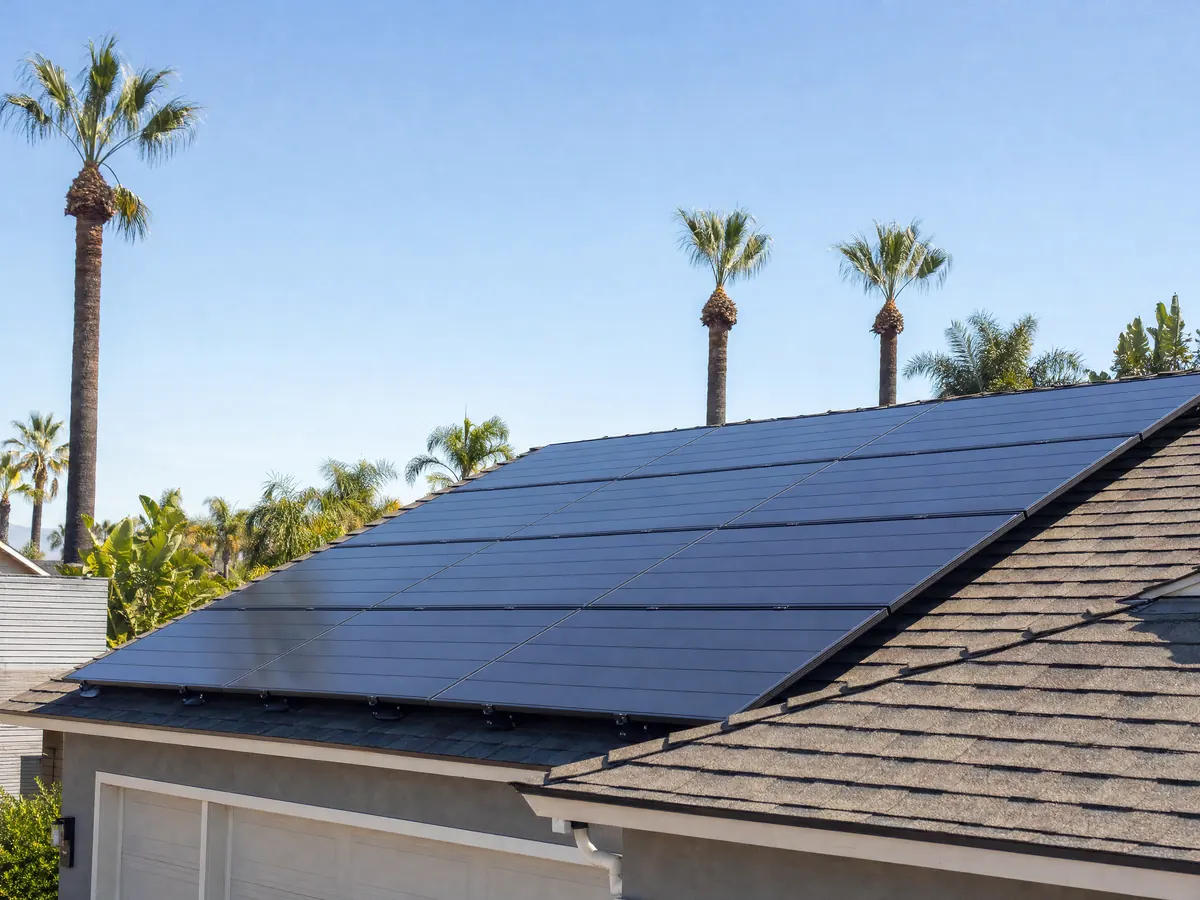
Six roofing scenes tied to Thousand Oaks areas such as Newbury Park, North Ranch and Dos Vientos and to nearby places such as Santa Rosa Valley and Westlake Village, with shingle, tile and flashing work under Conejo Valley sun.
Where the roof numbers come from
Los Angeles is the closest independent data, and each figure sits with its source in the table on our roofing price page; the roofing cost guide explains why Angi and Cost vs. Value differ. A new roof often brings other exterior work, so see the Thousand Oaks fence page and painting page, and kitchen remodeling here for the inside. Larger cities read their own codes, so compare Glendale and Pasadena, and find every trade we handle in town on the Thousand Oaks overview.
| What it covers | Typical range |
|---|---|
| Asphalt shingle, typical single-family roof | $10,000 to $25,000 |
| Concrete or clay tile | $7 to $15 per sq ft |
| Metal | $7 to $16 per sq ft |
| Remodeling Cost vs. Value 2025, Los Angeles | Asphalt $36,417. metal $62,069. |
| Extras | Tear-off $1,000 to $3,000. solar detach and reset $500 to $1,000. |
Other work we manage in Thousand Oaks
Thousand Oaks roofing questions, answered
How much should a 2000 sq ft roof cost?
Price roofs by roof area, not house size. Angi's July 2026 Los Angeles figures run $4 to $12 per square foot for asphalt, $7 to $15 for tile and $7 to $16 for metal, before tear-off at $1,000 to $3,000. Thousand Oaks has no published survey, so a measured written proposal sets the real price.
What is the 25% rule for roofing?
No Thousand Oaks or California code section we found uses that name, and contractor sites that cite it rarely name a source. The thresholds we can document are local: repairs up to 100 square feet are permit-exempt, and section 8-7.06 treats a replacement of more than 50 percent of the roof area within a year as a Class A trigger.
Do I need a permit to replace my roof in Thousand Oaks?
Plan on yes. The exemption in section 8-4.09(b)(4) covers roof covering repairs of up to 100 square feet, and a full replacement is not on that list. The City's re-roof handout and fees could not be read, so ask the Building Division, and expect to apply through the TO/24 portal.
Does a Thousand Oaks roof have to be Class A?
Yes. Section 8-1.14 sets Class A as the minimum covering for every construction type, and section 8-7.06 applies it to new roofs and to any covering added during a repair or replacement. The rule came with Ordinance 1741-NS on January 1, 2026, and it does not depend on a mapped fire zone.
Should a 20 year old roof replace?
Not automatically, because condition matters more than age. Have a roofer photograph what the flashing, valleys, underlayment and deck look like today. We found no sourced lifespan for Thousand Oaks roofs, and the median home here dates from 1978, so check the TO/24 permit history for the last re-roof. Any new covering must be Class A.
What is the cheapest month for roofing?
We found no sourced price pattern by month, so we will not name one. Weather does support scheduling: NOAA's nearest rain gauge shows 13.05 of 16.10 inches a year falling from December through March and under 0.1 inch in July and August, which makes a dry-season tear-off easier to protect.
Can roofers work near an oak tree in Thousand Oaks?
Yes, but the protected zone limits how. Material storage, parking, trenching and pruning inside the zone, which starts 5 feet beyond the dripline and stays at least 15 feet from the trunk, count as encroachment. Live branches 2 inches or less in diameter may get clearance pruning; heavier cuts need an oak permit from Planning.
How much should you pay a roofing contractor up front?
No more than $1,000 or 10 percent of the contract price, whichever is less, under Business and Professions Code section 7159 as amended effective January 1, 2026. Progress payments must follow work actually completed, so a larger deposit request is a reason to walk away.
Do solar panels change a roof replacement in Thousand Oaks?
Yes. Panels typically have to be lifted and reset, a step Angi's Los Angeles page puts at $500 to $1,000. The City reviews residential rooftop systems up to 10 kW AC on a checklist with one inspection, requires UL 2703 listed equipment and asks for Class A where the roof edge sits under 3 feet from a lot line.
Can a general contractor do roofing in California?
A general contractor can run a roof job by hiring a licensed C-39 roofing subcontractor, which is how MDG handles it. Check any company's classification on the CSLB license lookup before signing, and ask for the subcontractor's license number. Roof work that needs a permit is never unlicensed work, whatever the dollar amount.
Request a roof check for your Thousand Oaks house
Tell us the street, the year the house was built and any stains, lifted shingles or leaks, plus whether oaks overhang the roof. We look up the oak, hillside and fire questions on the parcel before we call back.