
Concrete Companyin Thousand Oaks, CA
A concrete company in Thousand Oaks has to work around the oak ordinance: the protected zone starts 5 feet outside the dripline, never under 15 feet from the trunk, and parking or material storage there counts as encroachment. Driveways within 30 inches of grade need no building permit, and small excavations are grading-exempt, but larger ones are not.
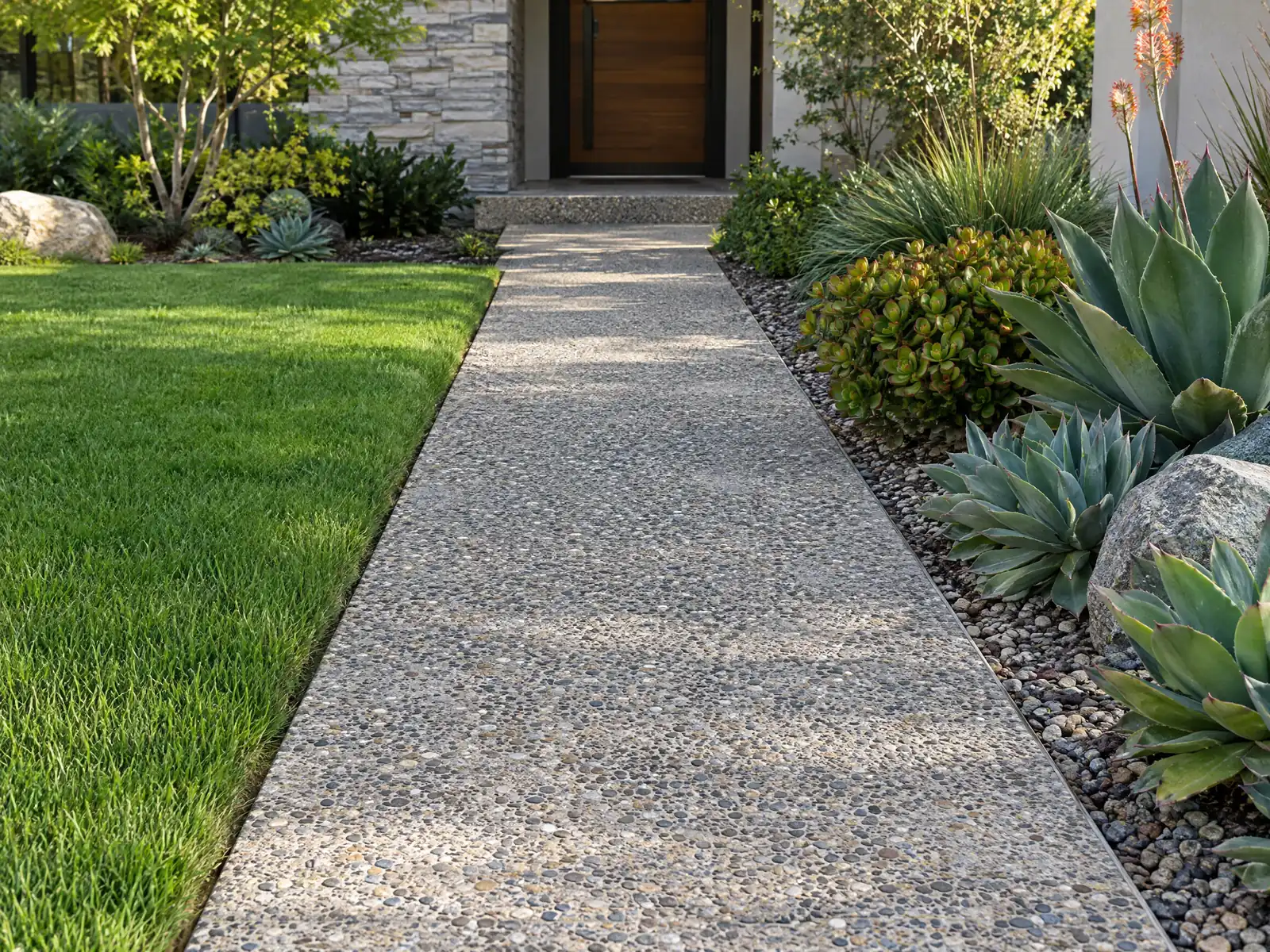
Thousand Oaks is a young city that paved itself quickly. It incorporated in 1964 on part of Rancho El Conejo and Janss Corporation land and grew from 1,243 residents in 1950 to 35,873 in 1970 and 104,352 in 1990, by Wikipedia's counts. The Census Bureau's 2024 estimates put the median home at a 1978 build date, with 67 percent of the 46,439 units single-family detached. Designated open space covers about 34 percent of the city, so many lots back onto hillside or wildland.
MDG Builders, CSLB #1040337, is a Tarzana general contractor, so we write the scope, check the rules with the Thousand Oaks Building Division and send a licensed concrete subcontractor to pour. The concrete page covers materials and finishes, and the Thousand Oaks overview lists the other trades we manage here.
What Thousand Oaks Article 42, the grading chapter and Ventura County dust Rule 55 say about concrete work
Where concrete permits come from in Thousand Oaks: City of Thousand Oaks Community Development Department, Building Division.
- Sidewalks and driveways no more than 30 inches above adjacent grade, not over a basement or story below and not part of an accessible route, need no building permit (section 8-4.09(b)(7)).
- Slab-on-ground rules (Residential Code section 8-7.05, R506.1): slabs follow Table 1809.7(1); on soil with an expansion index over 50 the slab is doweled into foundation walls with No. 3 bars (12 inches into the wall, 36 inches into the slab, 24 inches on center maximum) unless a floating slab alternative is approved.
- Amended CBC section 1809.4 sets a 12-inch minimum footing depth below undisturbed ground and a 12-inch minimum width; section 1809.16.1 requires gutters and downspouts where the expansion index is over 50, and 1809.16.3 requires Building Official approval of planter designs next to buildings before installation.
- Grading permit exemptions (section 7-3.07): excavations of 50 cubic yards or less or under 2 feet deep, and fills under 1 foot deep on terrain flatter than 5:1 (or under 3 feet that support no structures, up to 50 cubic yards per lot); anything bigger needs a grading permit, with a bond for more than 50 cubic yards and possible restrictions on grading over 250 cubic yards between November 1 and April 15.
- Ventura County APCD Rule 55 (Fugitive Dust, adopted 6/10/08) applies to construction and demolition: dust may not stay visible past the midpoint of the adjacent street, opacity may not reach 20 percent for 3 minutes in an hour, track-out must be removed by the end of each workday, and blowers may not be used to remove track-out.
- Zoning section 9-4.2503(d): vehicles may be parked in a front yard only on a driveway or City-approved parking area, and may not be parked or stored within 3 feet of a side line or 20 feet of a rear line.
Do oak trees limit where concrete can go in Thousand Oaks?
Yes, and it is the first thing to check. Article 42 protects every oak of the genus Quercus on public and private land, whatever its size, and names valley oak, California live oak and scrub oak as examples. The protected zone begins 5 feet outside the dripline and runs in to the trunk, with a floor of 15 feet from the trunk. Trenching, grading, parking, material storage and construction inside it count as encroachment, and a footing trench or a driveway widened toward a trunk is exactly that.
An oak permit is required to cut, remove, encroach on or relocate an oak. The exemptions are narrow: trees 2 inches or less across, ground plane improvements between the dripline and the zone limit, clearance pruning of live branches of 2 inches or less, deadwooding and a few public-safety cases. The article has no single-family exemption. Ask Planning whether a slab on grade counts as a ground plane improvement before assuming it does, because the answer decides whether a permit is needed.
Decisions follow size. The Community Development Director can approve removal of three or fewer oaks under 24 inches without a hearing, while an oak of 24 inches or more, or four or more trees, goes to the Planning Commission. Conditions can include replacement oaks. Fees sit in the City schedule, which we did not read.
Does pouring a patio, walkway or driveway need a permit in Thousand Oaks?
A driveway or sidewalk no more than 30 inches above adjacent grade, not over a basement or story below and not part of an accessible route, needs no building permit under section 8-4.09(b)(7). A patio slab is not on that list, so ask the Building Division before assuming. An exemption never excuses a zoning violation, and the City's 2020 permit page adds that Public Works may require grading, encroachment and on-site paving permits.
Grading is a separate gate, in section 7-3.07. Excavations of 50 cubic yards or less, or under 2 feet deep, are exempt, as are fills under 1 foot deep on ground flatter than 5:1. Anything bigger needs a grading permit, a bond applies above 50 cubic yards, and grading above 250 cubic yards between November 1 and April 15 may be restricted.
A garage slab or a large pad can cross those lines faster than owners expect, and grading on land averaging a 10 percent slope or more also needs a Hillside Planned Development permit first. We read the code on GoCodebook, a third-party mirror, and the 2020 page as a Wayback copy, because the City's own site blocked our tools. Confirm each point with the City.
What do expansive soils mean for slabs, footings and planters in Thousand Oaks?
The City's amended building code assumes expansive soil is a concern. Where the expansion index is over 20 the soil under footings and slabs must be pre-saturated before inspection, and above 50 the slab is doweled into foundation walls with number 3 bars, 12 inches into the wall and 36 into the slab, 24 inches on center at most, unless a floating slab alternative is approved. Gutters and downspouts are required above 50, and footings must be at least 12 inches deep and 12 inches wide.
Planters get their own line: section 1809.16.3 requires Building Official approval of planter designs next to buildings before installation. The City's conventional slab handout B-1, dated October 2024, draws a 4 inch minimum slab on gravel or clean sand with 3,000 psi concrete, and number 4 bars top and bottom for an expansion index of 91 to 130. Whether a freestanding patio must follow it is a question for the Building Division, but it shows what the City treats as a sound slab.
The Building Official may require a geotechnical report on any permit, and slopes steeper than 5:1 need a safety finding. The City's GIS layers cover faults, landslide and liquefaction areas, and we did not read them. Before a large pour, ask for a soils report and not a guess.
How tall can a retaining wall be before a Thousand Oaks permit is required?
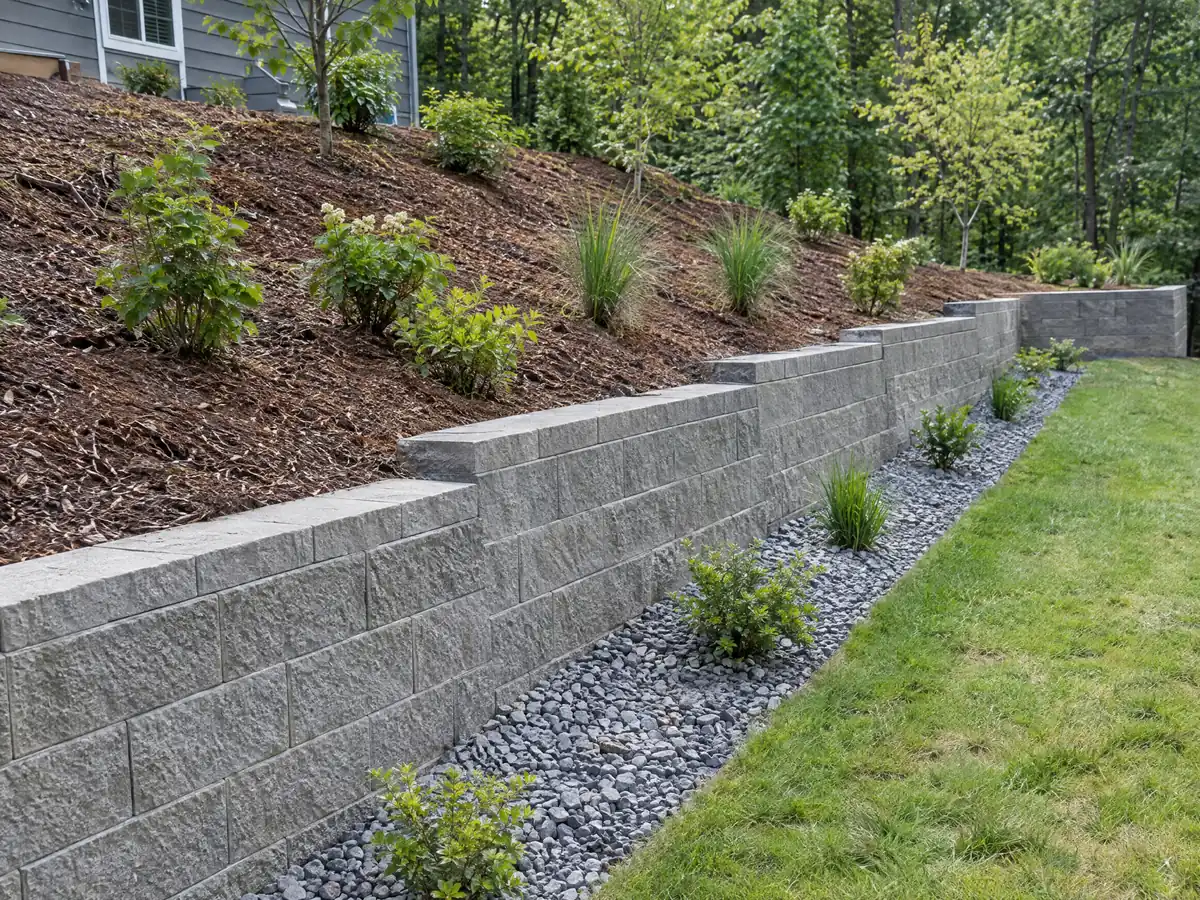
Up to 4 feet measured from the bottom of the footing to the top of the wall, with conditions. Section 8-4.09(b)(3) exempts walls retaining no more than 36 inches above grade with no surcharge, or 18 inches with a surcharge or a supported slope, and walls that do not extend a yard on a downslope. Even then, grading section 7-3.07(c) says an unsupported height over 5 feet after completion is not exempt from a grading permit.
The City publishes a Garden Wall handout (B-03) and a Retaining Wall handout (B-04). Both are drawings whose text did not copy out for us, so we cite their titles only. Ask the Building Division for the current sheets. Hillside lots add more, since land averaging a 10 percent slope or more falls under Hillside Planned Development rules and grading on slopes of 25 percent or more is tightly limited.
Hillside cut and fill slopes are limited to 25 feet in height and 2:1 steepness without approval, hillside grading is supervised by a civil engineer, a soils engineer and an engineering geologist, and slopes over 3 feet must be planted and irrigated. Near a protected ridgeline, new structures and grading are generally prohibited within 300 feet horizontally or 100 feet vertically of the crest. Asking before you stake a wall saves a stop-work notice.
What do front yard parking and Ventura County dust rules mean for a driveway pour?
Zoning section 9-4.2503(d) allows vehicles in a front yard only on a driveway or a City-approved parking area, and they may not be parked or stored within 3 feet of a side line or 20 feet of a rear line. Widening a driveway into a side strip or pouring a pad for a trailer is therefore a zoning question as well as a concrete one. We found no driveway width cap in the sections we read, so ask Planning.
Dust falls under the Ventura County Air Pollution Control District, not the South Coast district. Rule 55, adopted June 10, 2008, covers construction and demolition: dust may not stay visible past the midpoint of the adjacent street, opacity may not reach 20 percent for 3 minutes in an hour, track-out must be removed by the end of each workday and blowers may not be used to clear it.
Work hours are 7:00 a.m. to 7:00 p.m., Monday through Saturday, under section 8-11.01 of the Municipal Code, and Sunday or other hours need a written permit from the Public Works Director. A mixer truck, a saw cut and a broom finish all fit that window, but a Saturday pour that runs long does not. Ask the finisher when the last truck is due.
How old is the concrete in Thousand Oaks, and what does that mean for a replacement?
Most of it dates from the growth decades. The 2024 Census estimates say 25,935 of 46,439 homes, about 56 percent, were built before 1980, including 9,545 in the 1960s and 14,451 in the 1970s. Westlake was planned in 1963, with two-thirds annexed in 1968 and 1972, North Ranch joined in January 1973 and the 2,350-unit Dos Vientos was approved in April 1988. A 1960s walk and a 1990s pad can sit on the same street.
Age tells you where to look, not what is wrong. The Census data cannot reveal slab thickness, mix, reinforcing or why a crack opened, and we found no Thousand Oaks survey of cracked flatwork. Roots matter in a city with tens of thousands of oaks, and Wikipedia counted 50,000 to 60,000 in 2012, but a root lift is a diagnosis for the site visit. Cutting a root inside the protected zone can itself count as encroachment, so check before anyone brings a saw.
What does concrete work cost in Thousand Oaks, and who needs which license?
No Thousand Oaks price study with a stated method turned up, so we start from Angi's Los Angeles pages, updated between May and August 2026, and rate them medium for plain flatwork and medium to low for decorative work. Angi puts a concrete patio at $4 to $13 per square foot, a stamped patio at $15 to $30 and a driveway at $8 to $20, with an average driveway of $7,270. Small jobs price above those averages because of minimum charges.
Labor follows wages. The Bureau of Labor Statistics put cement masons in the Los Angeles-Long Beach-Anaheim area at a mean $33.67 an hour in May 2025, and Ventura County is outside that series. We print no per-foot figure for retaining walls because the published spread was too wide, so they are priced by height, footing and drainage after a site visit.
CSLB's C-8 concrete class covers forming, pouring and finishing concrete, and the C-29 masonry class covers block walls. Which class fits a poured wall is our reading, not a CSLB statement. Business and Professions Code 7048, as amended January 1, 2026, sets a $1,000 license threshold that does not reach work needing a permit.
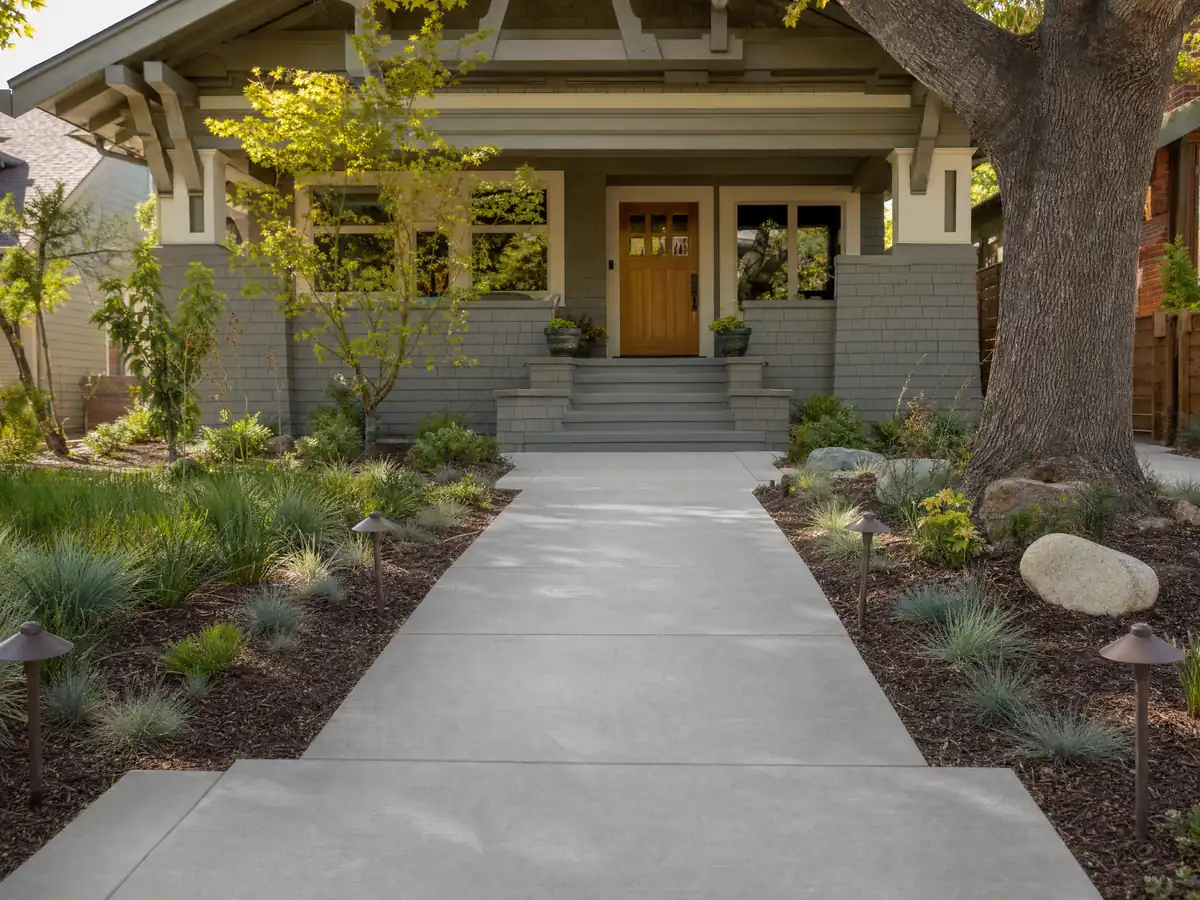
Concrete photos from Thousand Oaks and nearby communities
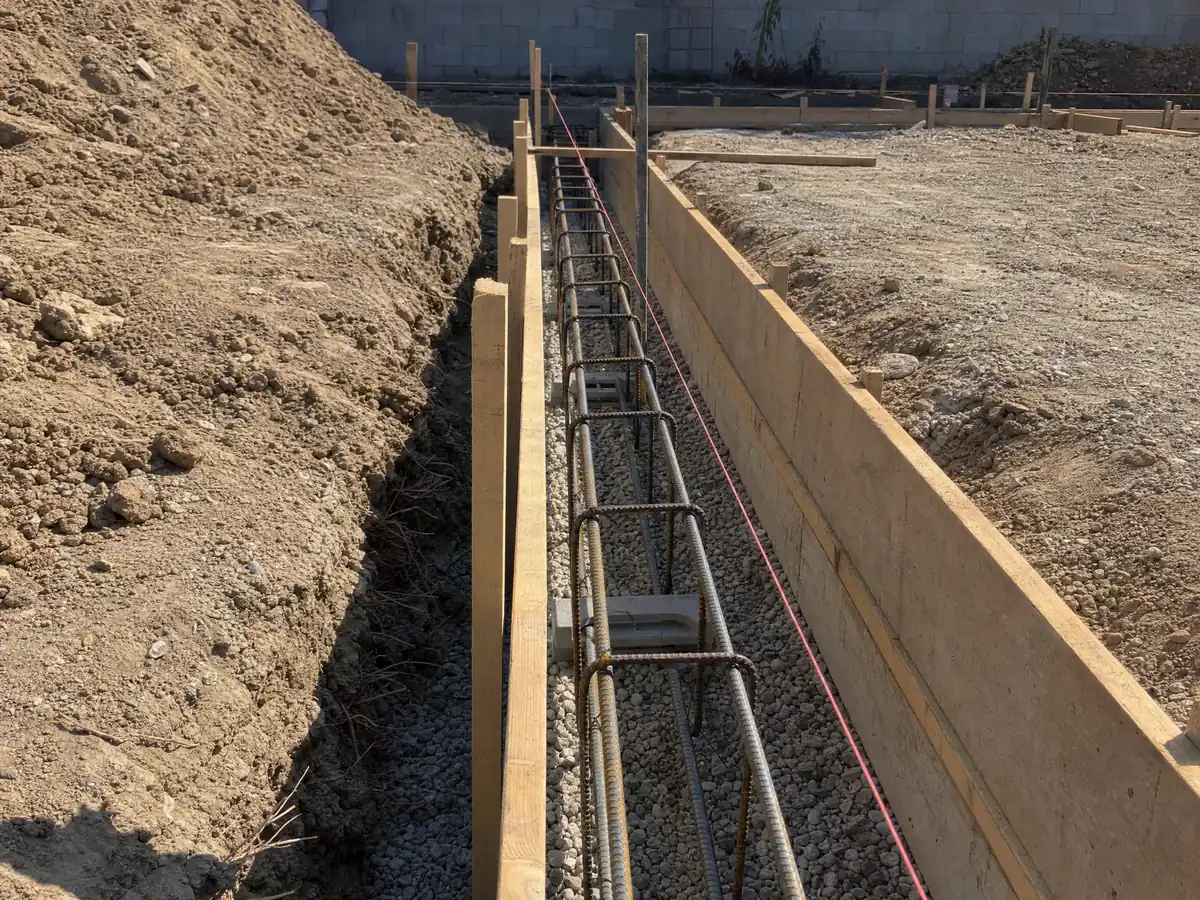
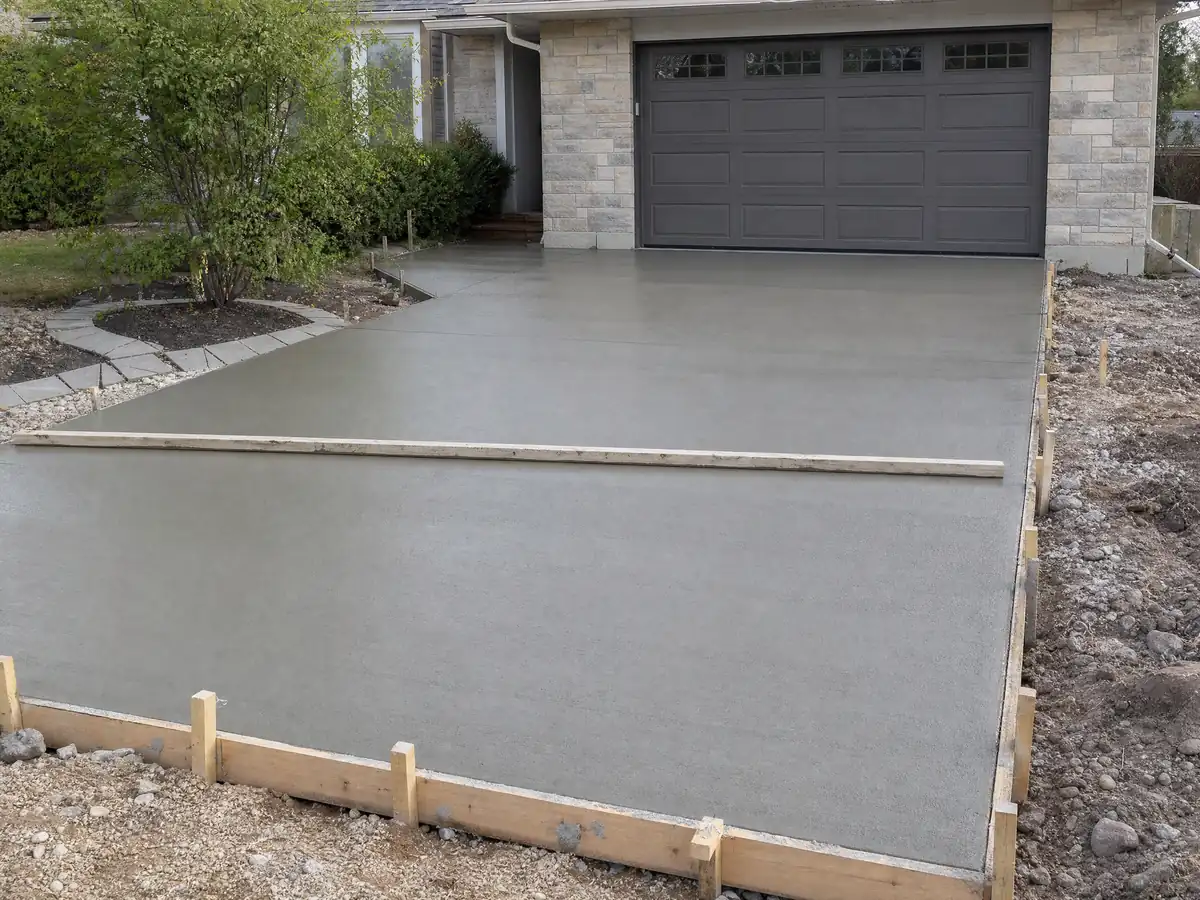
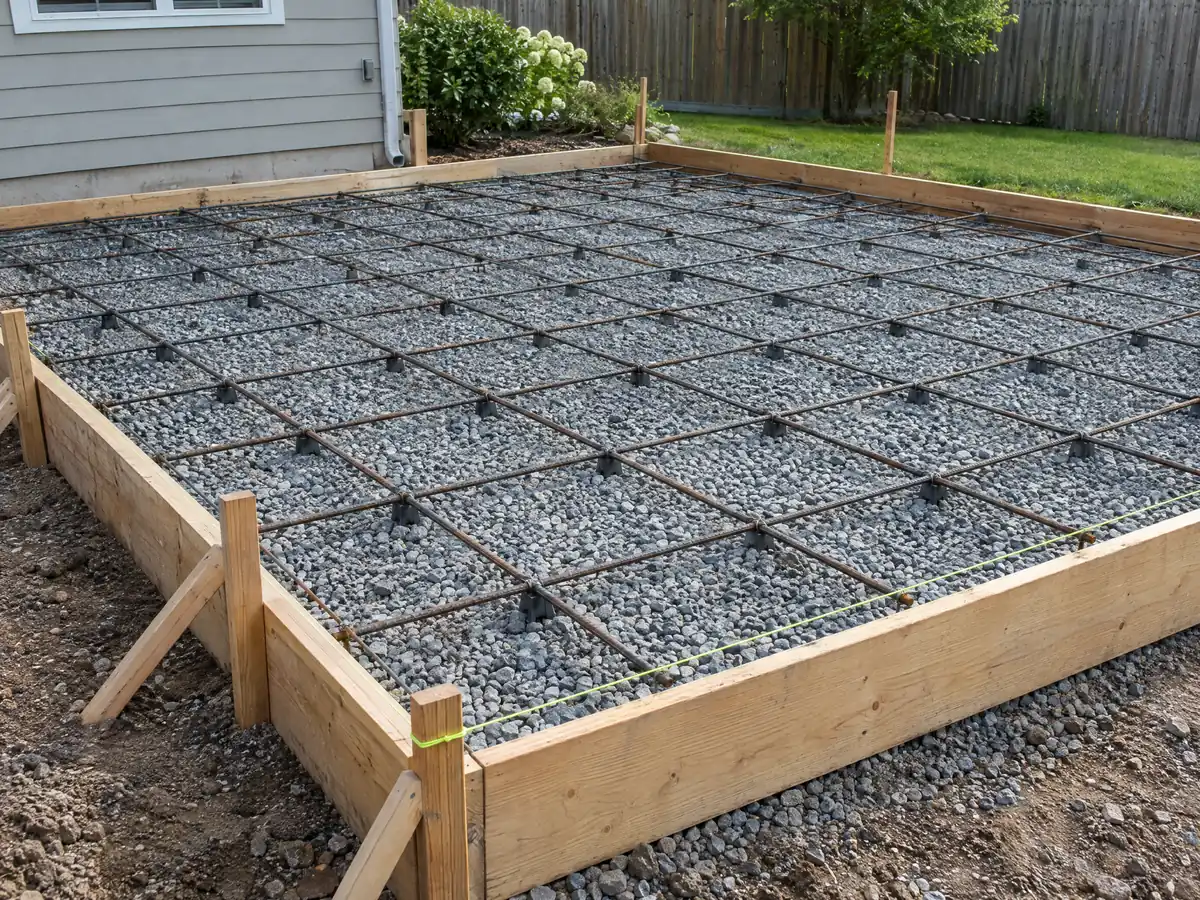
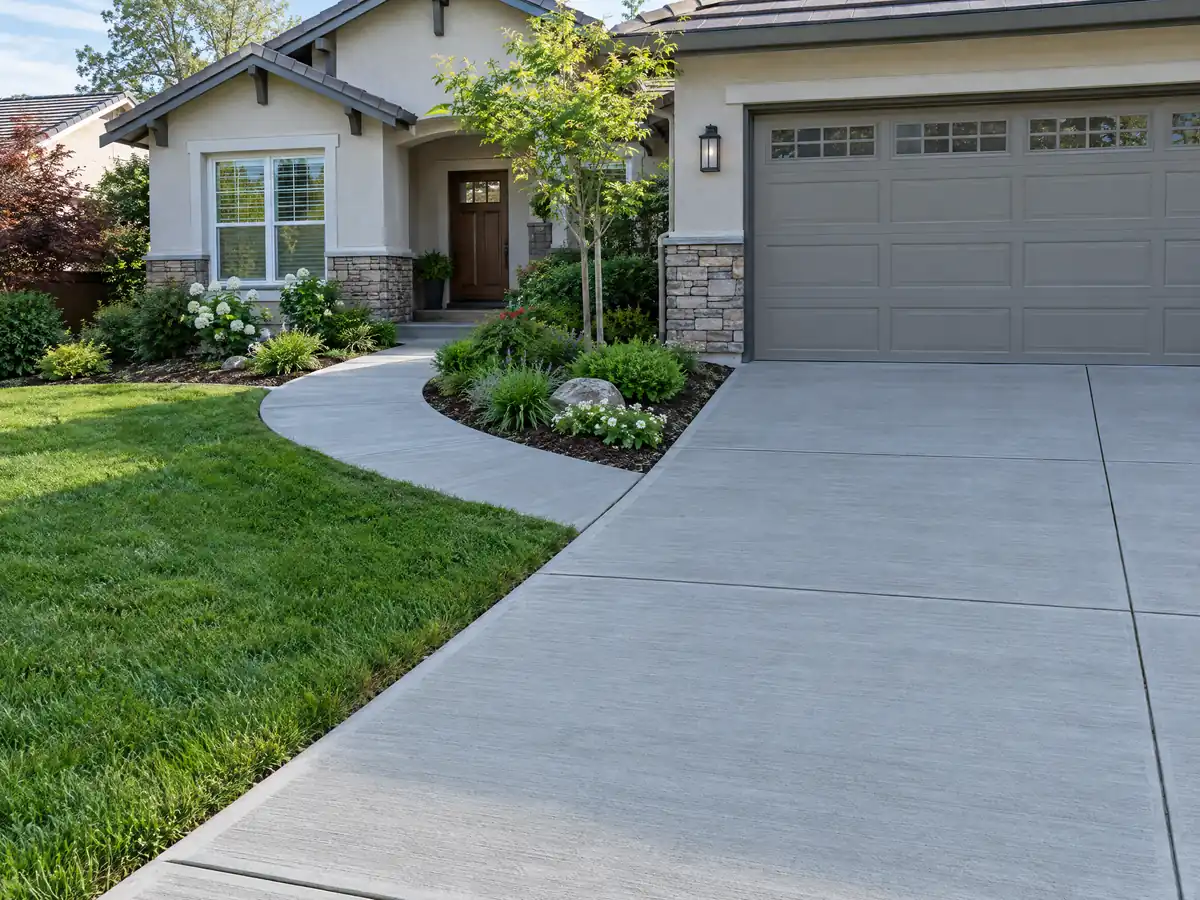
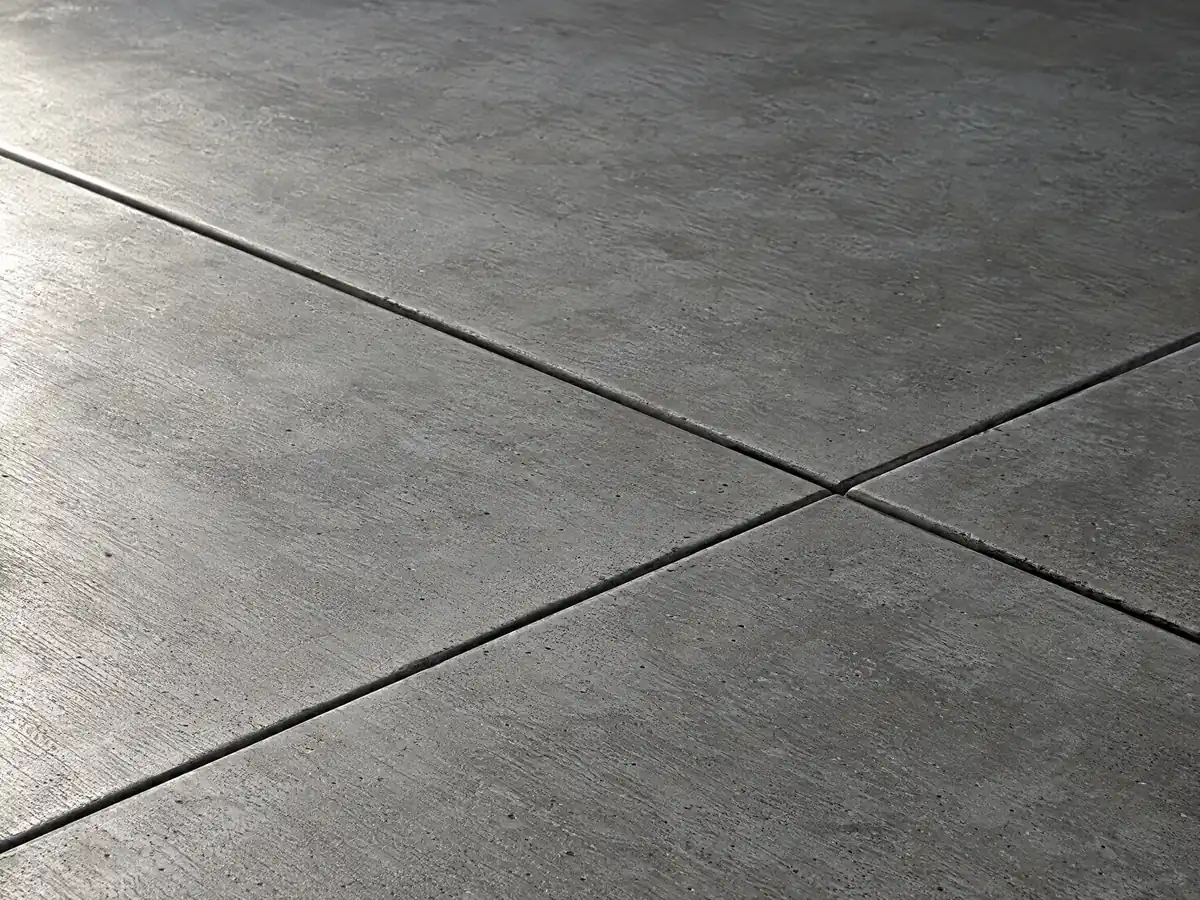
Footings, forms, screeded driveways and finished walks from Thousand Oaks and the Conejo Valley communities around it, shown at the steps where the decisions get made. Tap any photo to enlarge it.
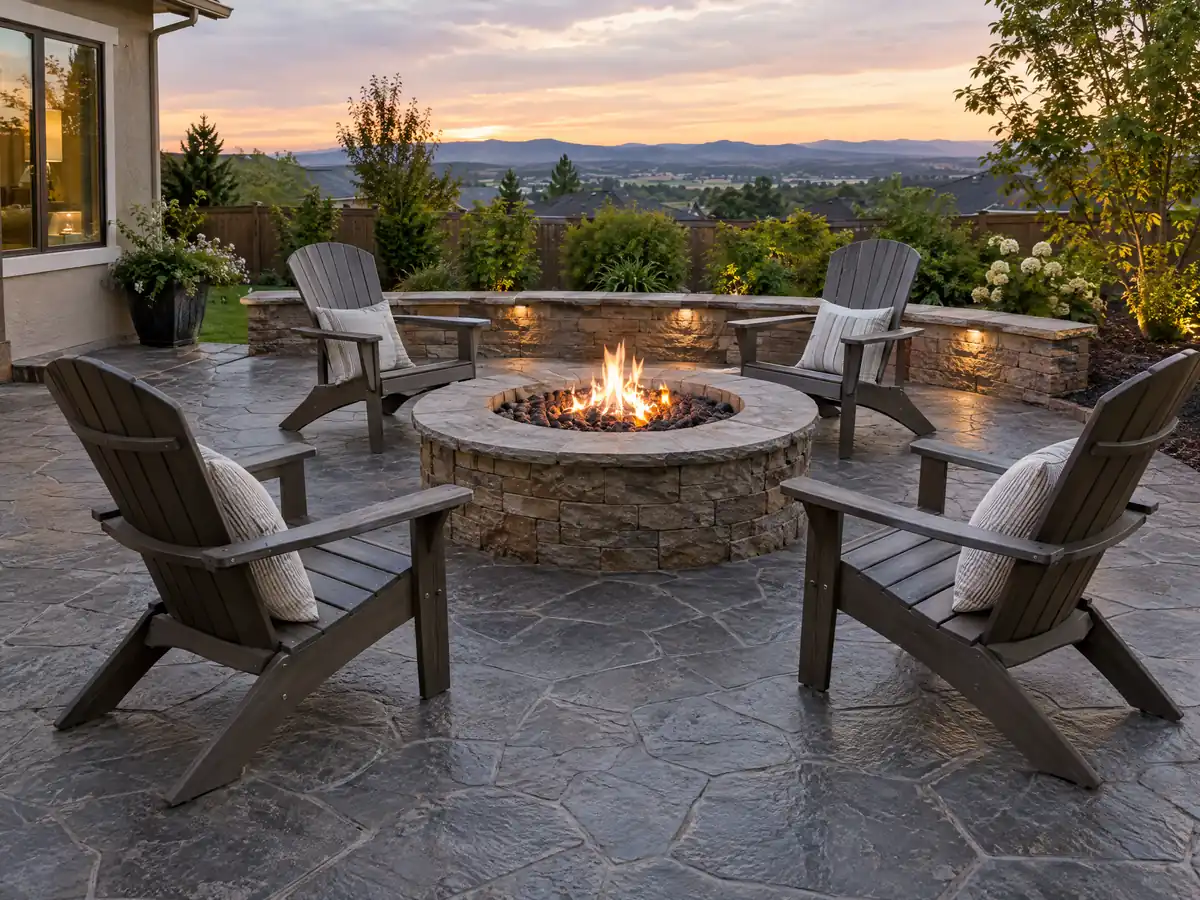
What concrete costs around Thousand Oaks
The ranges above are Los Angeles figures and a starting point, never a Thousand Oaks bid, and demolition, haul-off, root work, grading and permit fees are separate lines. Ask each bidder for thickness, base and reinforcing in writing. The same lot may need flooring installation in Thousand Oaks or a deck builder in Thousand Oaks. For comparison, read concrete in Agoura Hills, concrete in Calabasas, concrete in Oxnard and concrete in Los Angeles. Moorpark, Camarillo and Simi Valley have no concrete pages here yet. Our license check guide shows how to read a CSLB record, and the subcontractor guide explains who pours and who manages.
| What it covers | Typical range |
|---|---|
| Patio, walkway or slab, broom finish, 300 sq ft or more | $8 to $14 per square foot |
| Decorative: stained, stamped or exposed aggregate | $15 to $30 per square foot |
| Driveway replacement, with demolition of the old slab | $9 to $20 per square foot |
| 20 by 20 foot plain patio (400 sq ft) | About $3,200 to $5,600 |
| 20 by 20 foot decorative patio (400 sq ft) | About $6,000 to $12,000 |
| Small jobs under 300 sq ft | Usually above the per-foot range |
| Retaining walls | Set by the written proposal |
Other work we manage in Thousand Oaks
Thousand Oaks concrete questions, answered
Can I pour a concrete patio without a permit in Thousand Oaks?
Possibly, but the City's exemption list names driveways and sidewalks within 30 inches of grade, not patios, so call the Building Division at (805) 449-2500. Larger excavations may need a grading permit, and a pour inside an oak's protected zone can need an oak permit.
How much should a 20x20 concrete patio cost?
Angi's Los Angeles page puts a 20 by 20 concrete patio at $1,600 to $5,200 and its square-foot range at $4 to $13. A stamped finish runs $15 to $30 per square foot on Angi's stamped page. A Thousand Oaks bid can differ, and demolition, root work or grading is extra.
How much do contractors charge for concrete?
Angi's Los Angeles figures are $4 to $13 per square foot for a plain patio, $8 to $20 for a driveway and $15 to $30 for stamped work. A typical Los Angeles working range for a slab of 300 square feet or more is $8 to $14 installed. Treat all of it as medium confidence and ask for an itemized bid.
Is 4 inches of concrete thick enough for a driveway?
Usually for passenger cars, as industry practice, but we found no City thickness rule for driveways. The City's conventional slab handout draws a 4 inch minimum slab over gravel or clean sand for structures. Heavy trucks or expansive clay can call for more, so ask the finisher to state thickness, base and reinforcing in writing.
How tall can a retaining wall be without a permit in Thousand Oaks?
Up to 4 feet from the bottom of the footing to the top of the wall, if it retains no more than 36 inches above grade with no surcharge, or 18 inches with a surcharge or a supported slope, and does not extend a yard on a downslope. Grading rules can still apply, so confirm with the City.
Can I expand my driveway without a permit in Thousand Oaks?
Maybe for the concrete, since driveways within 30 inches of grade are exempt from a building permit, but zoning limits front yard parking to a driveway or City-approved area and keeps vehicles 3 feet from a side line. Oak zones and grading limits can still apply, so call Planning first.
Can I pour concrete near an oak tree in Thousand Oaks?
Not inside the protected zone without checking. The zone starts 5 feet outside the dripline and is never under 15 feet from the trunk, and grading, trenching, parking and construction there are encroachment that generally needs an oak permit. Ask Planning about ground plane work between the dripline and the zone limit, which the article exempts.
Do I need a soils report for a slab in Thousand Oaks?
Not for every pour, but the Building Official may require a geotechnical report on any permit, and expansive soil is the City's default concern. Where the expansion index is over 20 the soil must be pre-saturated, and above 50 slabs are doweled. Ask the Building Division what applies to your lot.
What license does a concrete contractor need in Thousand Oaks?
A state C-8 concrete license for poured work, or C-29 for block walls on our reading, held by the firm that does the field work. Jobs under $1,000 including materials are exempt, but not when a permit is needed. Check any license on cslb.ca.gov and keep the deposit at $1,000 or 10 percent.
What hours and dust rules apply to concrete work in Thousand Oaks?
Work runs 7:00 a.m. to 7:00 p.m. Monday through Saturday under section 8-11.01, and Sunday needs a written Public Works permit. Ventura County APCD Rule 55 also requires track-out to be removed by the end of each workday and bars using blowers to remove it.
Tell us the lot, the slope and where the oaks stand
Say what you want poured, how big it is, whether the lot slopes and whether an oak or another protected tree stands near the area. We check the grading, oak and ridgeline limits before the site visit.