
Concrete Companyin Simi Valley, CA
A concrete company in Simi Valley can pour side and rear yard paving without a City permit, but any paving in the front yard needs a Zoning Clearance from Planning, and at least half of the front yard must stay landscaped. Driveways and sidewalks no more than 30 inches above grade are exempt from a building permit.
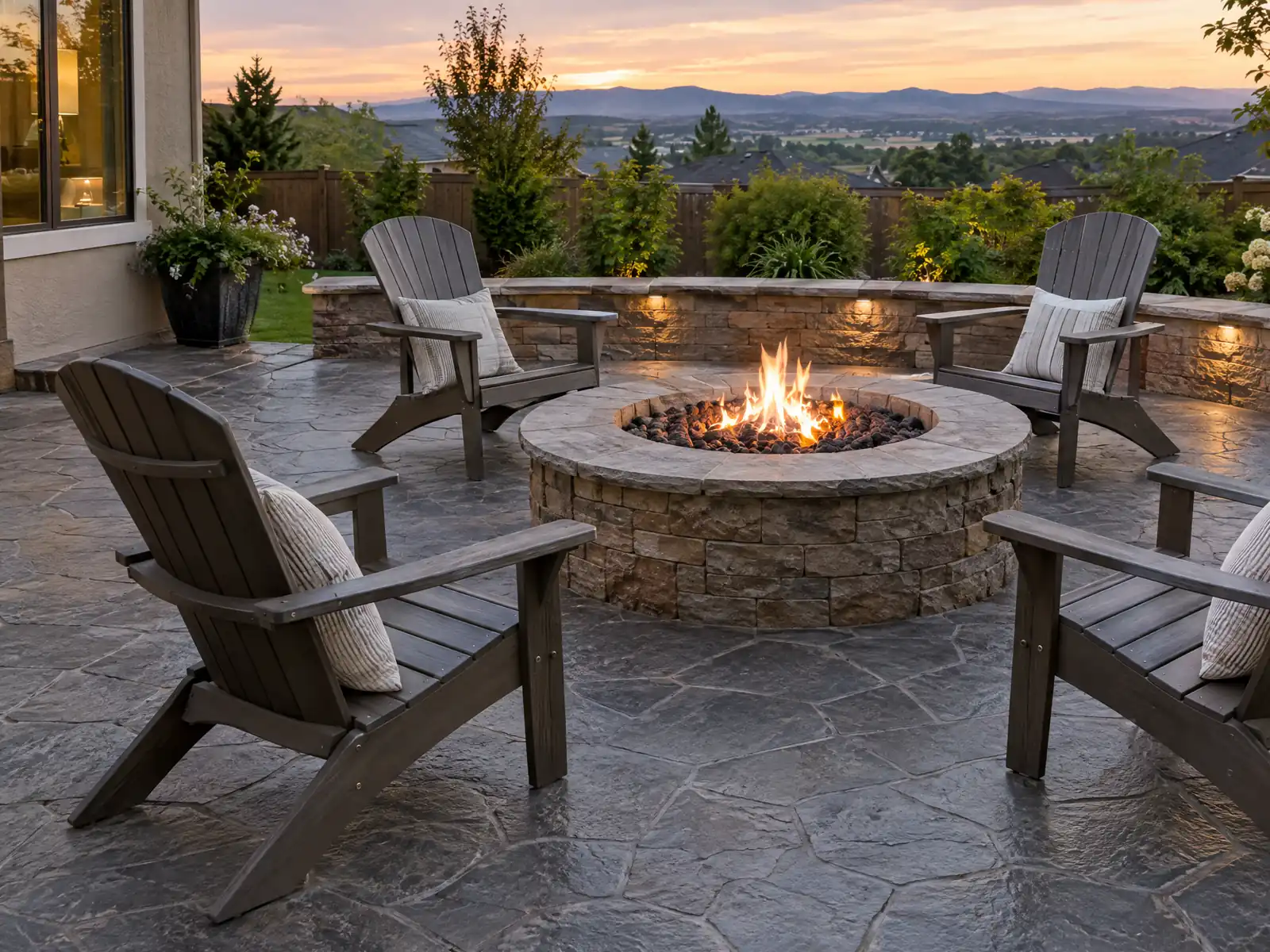
A lot of Simi Valley's concrete is old. The first tract homes went up in 1957 and 1958 on land from the 1795 Rancho Simi grant, the census count climbed from 8,110 in 1960 to 59,832 in 1970 and 100,217 in 1990, and the Census Bureau's 2024 estimates show 11,324 homes from the 1960s and 9,272 from the 1970s. If those houses never had their flatwork replaced, the driveways and patios are somewhere between 47 and 66 years old, which is when owners start asking about cracks, tear-out and widening.
MDG Builders, CSLB #1040337, is a Tarzana general contractor. We plan the pour, ask the Building & Safety Division and the Planning Division the permit questions, and hire licensed concrete and masonry subcontractors to place it. Methods and prices are on the concrete page, the Simi Valley overview lists the other trades here, and our subcontractor guide explains who does what on a job.
What Simi Valley Planning, Building & Safety and Public Works say about concrete work
Where concrete permits come from in Simi Valley: City of Simi Valley Department of Environmental Services, Building & Safety Division.
- SVMC 8-5.03(a)(7): platforms, sidewalks and driveways not more than 30 inches above adjacent grade, not over a basement or story below and not part of an accessible route are exempt from a building permit. Third-party gocodebook text.
- The City's home improvement page says paving in the side and rear yards needs no City permit, paving anywhere in the front yard needs a Zoning Clearance from Planning (no building permit), at least 50 percent of the front yard must be landscaped (up to 100 percent of that landscaping can be artificial turf), and the front yard may keep a driveway to the garage, a ten-foot paving strip along the driveway side nearest the side property line, and a sidewalk to the front door.
- A driveway curb cut or second driveway needs an Encroachment Permit from Public Works, and monolithic concrete paving may not be used in the street parkway except as part of a driveway, per the City's home improvement page (Public Works is reached at (805) 583-6786).
- SVMC 1809.7 as amended by the City: where the soil is expansive (expansion index above 50), gutters, downspouts or other non-erosive devices must carry rainwater to a street, storm drain or approved watercourse, and the City's footing table for expansive soil is 24 inches deep for one or two floors, 12 inches wide and 6 thick for one floor, 16 inches wide and 8 thick for two floors. Third-party gocodebook text.
Do you need a permit to pour concrete in Simi Valley? Zoning Clearance first, building permit second
Often only one of the two, and sometimes neither. The City says home improvements normally need Planning's Zoning Clearance first and a Building & Safety permit second. For paving, its home improvement page says side and rear yards need no City permit, while anything in the front yard needs a Zoning Clearance and no building permit. Planning answers at (805) 583-6769 and Building & Safety at (805) 583-6723.
On the building side, SVMC 8-5.03(a)(7) exempts platforms, sidewalks and driveways not more than 30 inches above adjacent grade, not over a basement or story below and not part of an accessible route. A patio slab on grade is not named there, and a cover or wall on top of it is a structure. The exemption never excuses work that breaks zoning or any other law (SVMC 8-5.02(b)). The City adds that restrictions may apply in a Special Flood Hazard Area.
Our tools could not open the City's own site, so we read its pages through Wayback Machine copies and the code through GoCodebook's third-party text dated October 4, 2026. The official text controls, so confirm your lot's answer in writing.
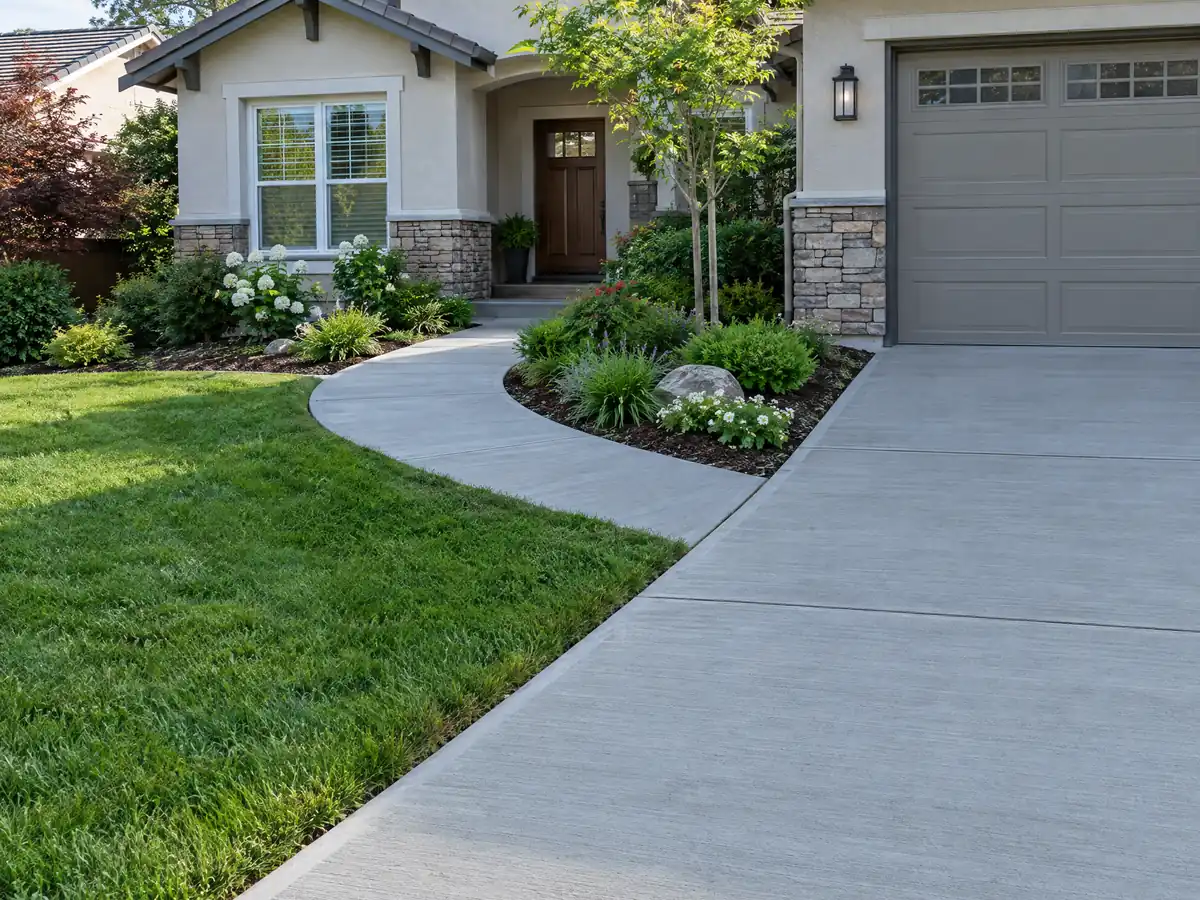
How much of a Simi Valley front yard can be paved, and what about a second driveway?
Less than half. At least 50 percent of the front yard must be landscaped, and up to all of that landscaping can be artificial turf. What the front yard may keep is a driveway to the garage, a ten-foot paving strip along the driveway side nearest the side property line, and a sidewalk to the front door. A wider apron, a second pad or a circular drive is a question for Planning before it is a question for a crew.
The street edge adds a third approval. A curb cut or second driveway needs an Encroachment Permit from Public Works at (805) 583-6786, and monolithic concrete paving may not be used in the street parkway except as part of a driveway. Permit-exempt does not mean zoning-exempt, since a driveway can clear Building & Safety and still fail on how much yard it covers.
- How wide is the garage door, and where is the side property line?
- Is a ten-foot strip, a turf area or a new apron part of the plan?
- Does the curb, gutter or parkway need work, and who applies to Public Works?
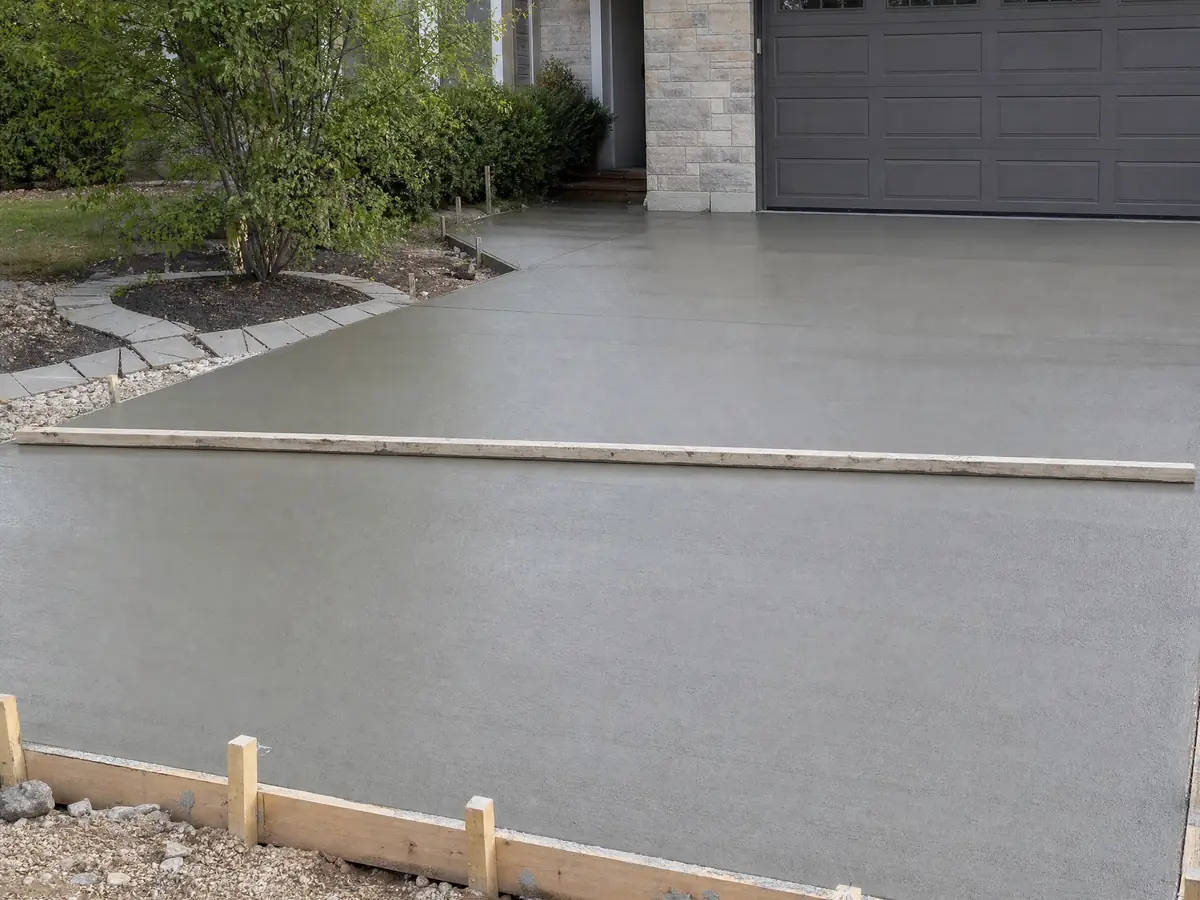
Retaining and garden walls in Simi Valley: how tall, how close and when is a soils report needed?
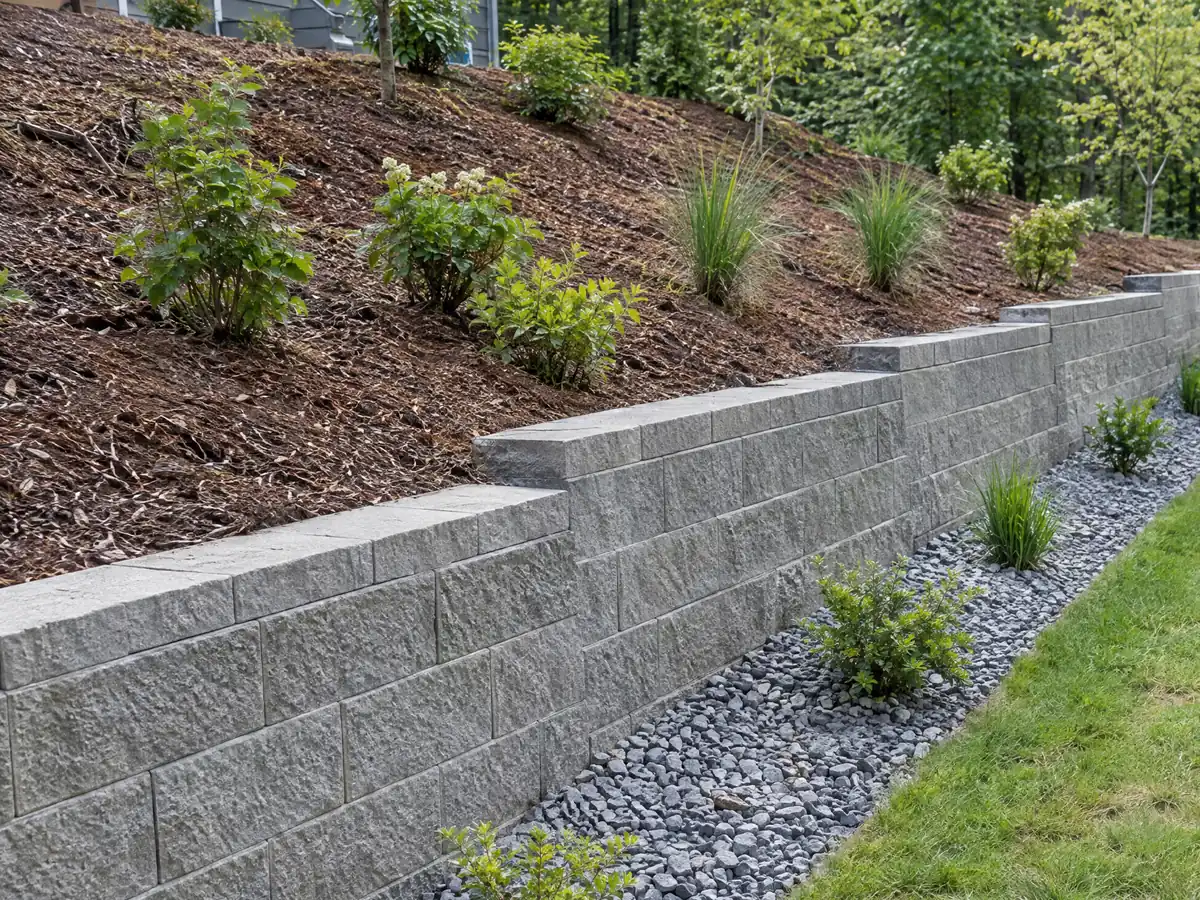
Four feet is the building permit line. SVMC 8-5.03(a)(5) exempts retaining walls not over 4 feet, measured from the bottom of the footing to the top of the wall, unless they carry a surcharge or hold back certain liquids. Zoning is tighter in the front: per the Zoneomics copy of SVMC 9-30.050.A.2.c, a retaining wall in a front or street-facing side setback may not top 36 inches, and no other garden or retaining wall may sit within 3 feet of one. That copy is undated and its latest amendment line is April 15, 2024, so confirm it with Planning.
Slopes bring engineers in. The City's amended Appendix J, section J106, requires a geotechnical report on slope stability when an excavation, pool, spa, retaining wall or similar structure reaches into the projected plane of a 3:1 or steeper slope. Parcels outside the valley floor boundary also fall under the Hillside Performance Standards, SVMC 9-32, which keep development off natural slopes of 20 percent or more except as allowed and call for a slope map signed by a civil engineer or land surveyor.
CSLB lists concrete block walls under class C-29 masonry, so ask who builds a block wall and who pours the footing.
Can you trench or pour near a protected oak tree in Simi Valley?
Ask first, because oaks are the one yard tree the City protects. Under SVMC 9-38.090, as copied by Zoneomics, trees in single-family yards are not protected except mature native oaks and historic trees. A mature native oak has major stems adding up to 20 square inches of cross-section at 4.5 feet above the root crown, roughly a 5 inch trunk, and removing, cutting down, relocating or destroying one needs a Tree Removal Permit.
The Director inspects first and must give the Council, Commission and City Manager at least seven days' written notice. Interference with an addition to a single-family house is on the list of permit criteria, along with disease, danger of collapse and nearness to a structure. Pruning that does not endanger the tree is exempt, and a violator must plant, or donate to the City, trees worth twice the value of those removed.
The text we read speaks of removal and destruction, and we did not find whether cutting roots for a footing trench counts, so describe the trench to Planning before it is dug.
How deep do footings go on Simi Valley's expansive soil, and what gets inspected before the pour?
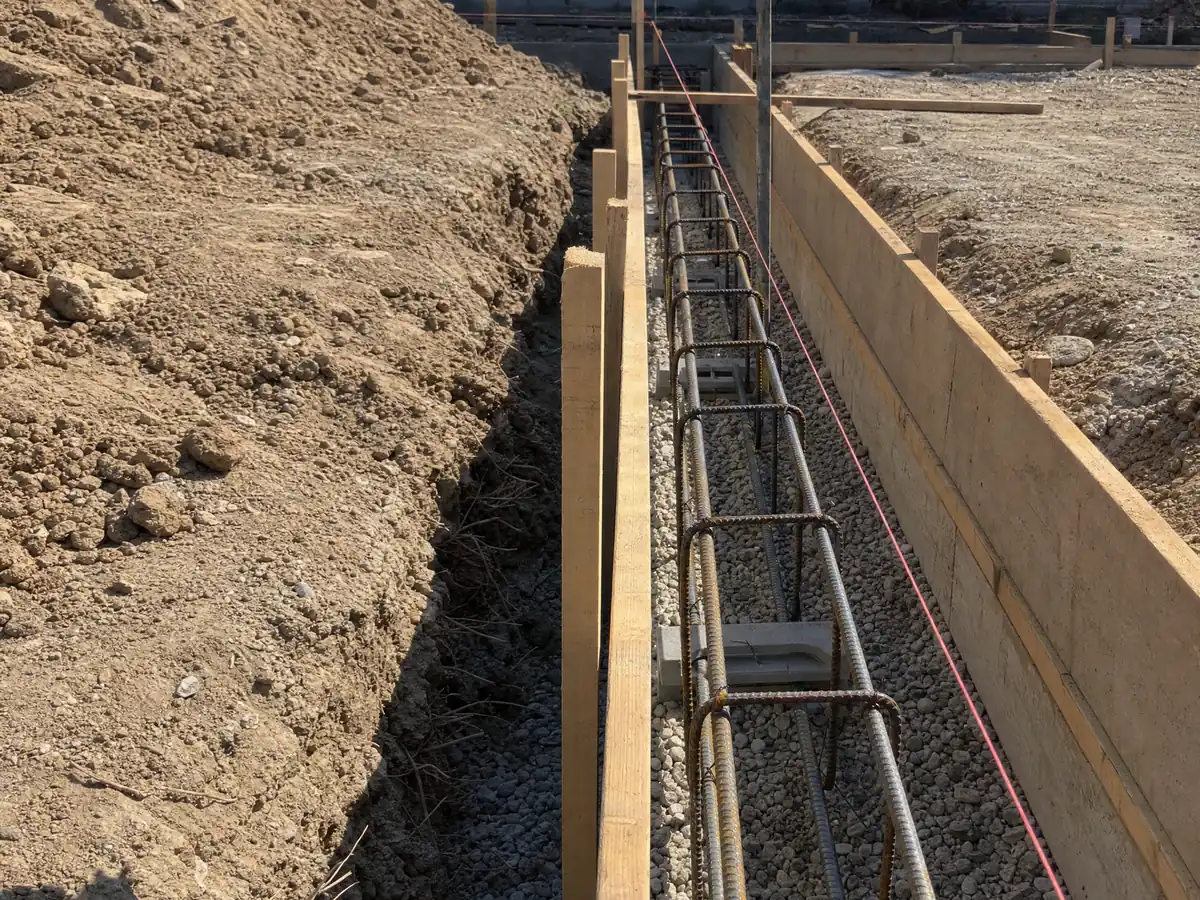
Where the soil is expansive, with an expansion index above 50, the City's amended code sets footings 24 inches deep for one or two floors, 12 inches wide and 6 thick for one floor and 16 inches wide and 8 thick for two. Gutters and downspouts must carry roof water to a street, storm drain or approved watercourse, which is why patio drainage belongs in the same conversation. The City's own code findings say Simi Valley contains flood, liquefaction and landslide hazard areas, and SVMC 8-7.10 lets the Building Official deny a permit where unstable soil or flooding makes denial necessary for safety.
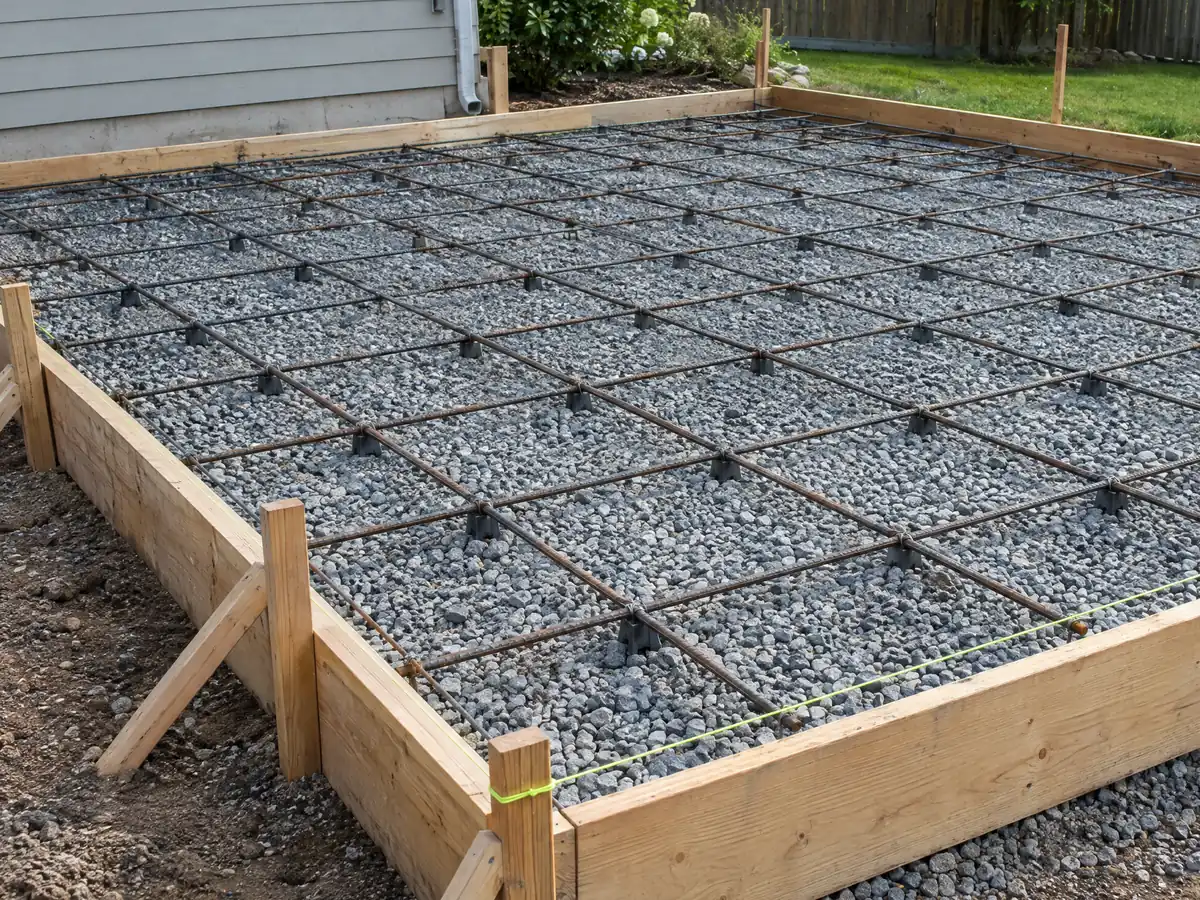
Shaking explains the steel. The City puts Simi Valley in Seismic Design Category D or E, and the USGS fault database describes the Simi fault zone along the north side of the valley with its latest surface rupture under 15,000 years ago. Before any permitted concrete is placed the City's slab inspection must pass, with the vapor barrier, sand and reinforcement in place and piping kept clear. Requests in by 4:00 p.m. are inspected the next workday.
How do winter storms, 100 degree days and frost change a Simi Valley pour?
Fresh concrete meets all three. NOAA's 1991 to 2020 normals for the Woodland Hills Pierce College station, about 11.5 miles southeast and the nearest with temperatures, show 16.41 inches of rain a year with 13.67 of them from December through March, 115.3 days at 90 F or above, 35.6 at 100 F or above and 10.6 nights at or below freezing. The station sits south of the Simi Hills, so Simi Valley's own numbers can differ.
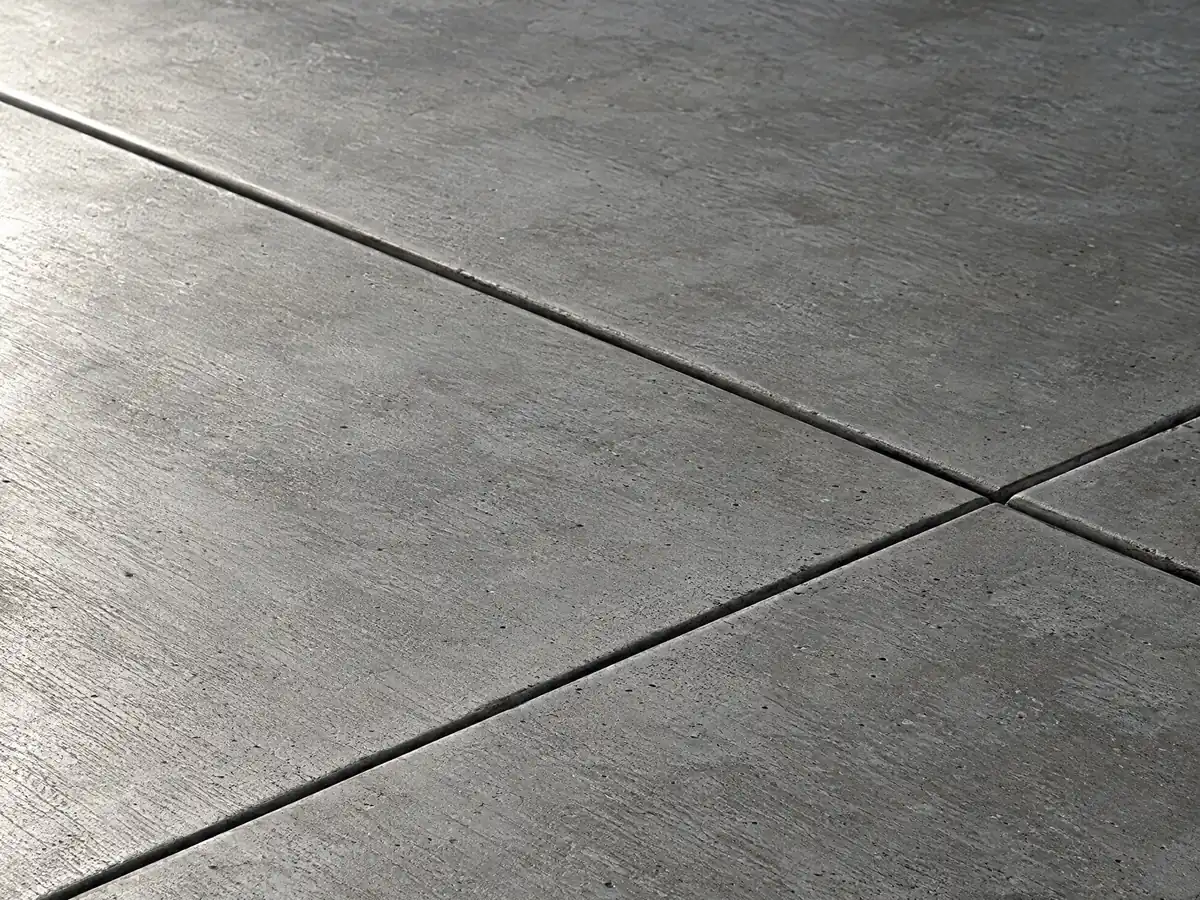
We found no local source for pour-day limits, so these are questions and not rules. Ask the concrete company how it will shelter a slab from a December storm, what happens when the forecast turns after the forms are set, how it will slow drying on a July afternoon, and how it will space and cut the joints.
Sealers are the last item. Ventura County's Rule 74.2 governs architectural coatings, and a site-applied sealer or stain may fall under it. We did not open the rule's VOC limits, so ask which product will go on and how it meets the district's rule.
How do you choose a concrete company in Simi Valley, and what does concrete work cost?
We found no Simi Valley price study with a stated method, so these are Los Angeles ranges from our concrete page: about $8 to $14 per square foot for plain patios, walks and slabs of 300 square feet or more, $15 to $30 for stained, stamped or exposed aggregate, and $9 to $20 for driveway replacement including demolition. A plain 20 by 20 foot patio lands near $3,200 to $5,600. Angi's 2026 Los Angeles pages, HomeGuide and the Concrete Network are the sources, with medium confidence for plain flatwork and medium-low for decorative, and small jobs often price above the per-foot range.
CSLB's C-8 Concrete classification covers forming, pouring, placing and finishing concrete, and the Bureau of Labor Statistics puts Los Angeles area cement masons at a mean $33.67 an hour as of May 2025, a labor anchor only. Ask each bidder for a license number, a certificate of insurance and separate lines for demolition, haul-off, rebar, drainage and permits.
Business and Professions Code 7159 puts any home improvement contract over $500 in writing before work starts.
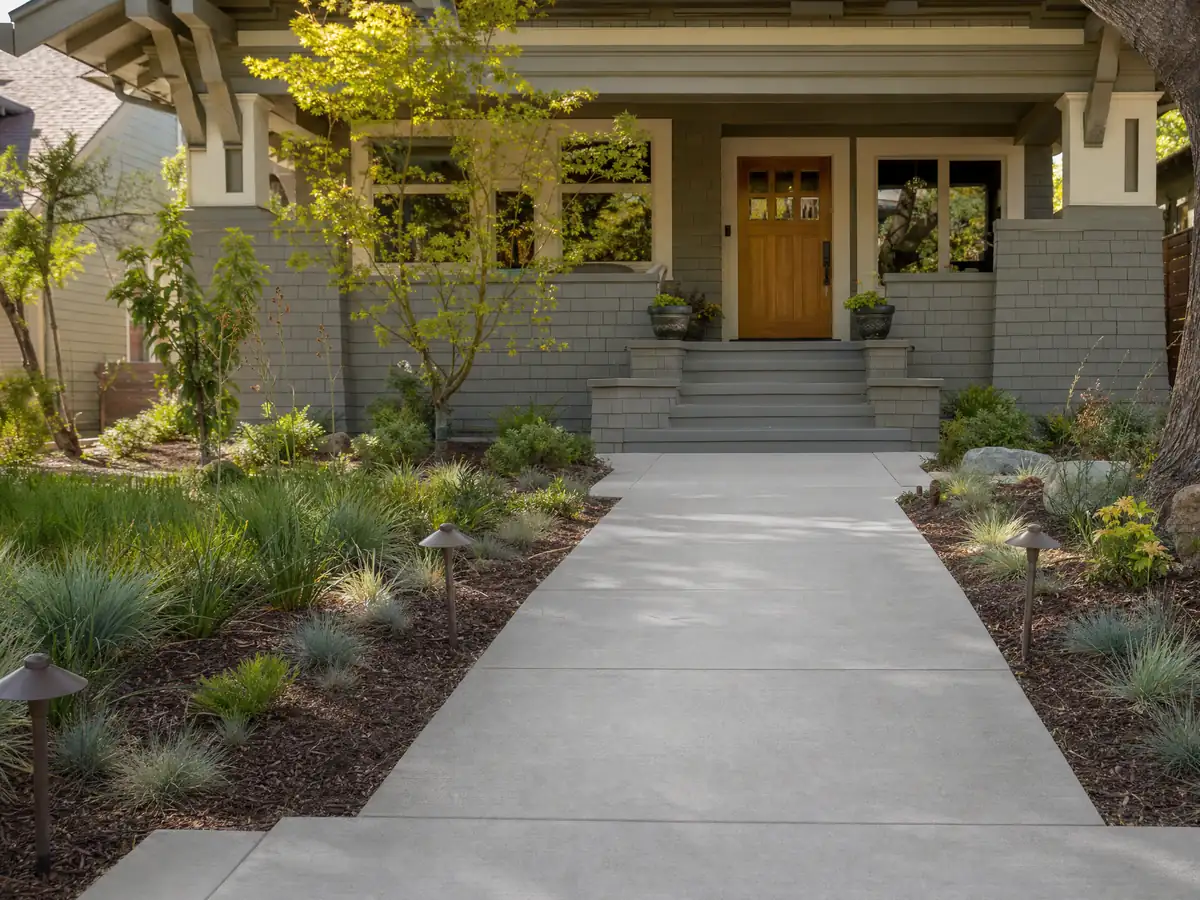
Concrete photos from Simi Valley and nearby communities
Forms, rebar, finished flatwork and block walls from Simi Valley and the Ventura County and San Fernando Valley neighborhoods around it, shown at the steps where the rules matter. Tap any photo to enlarge it.
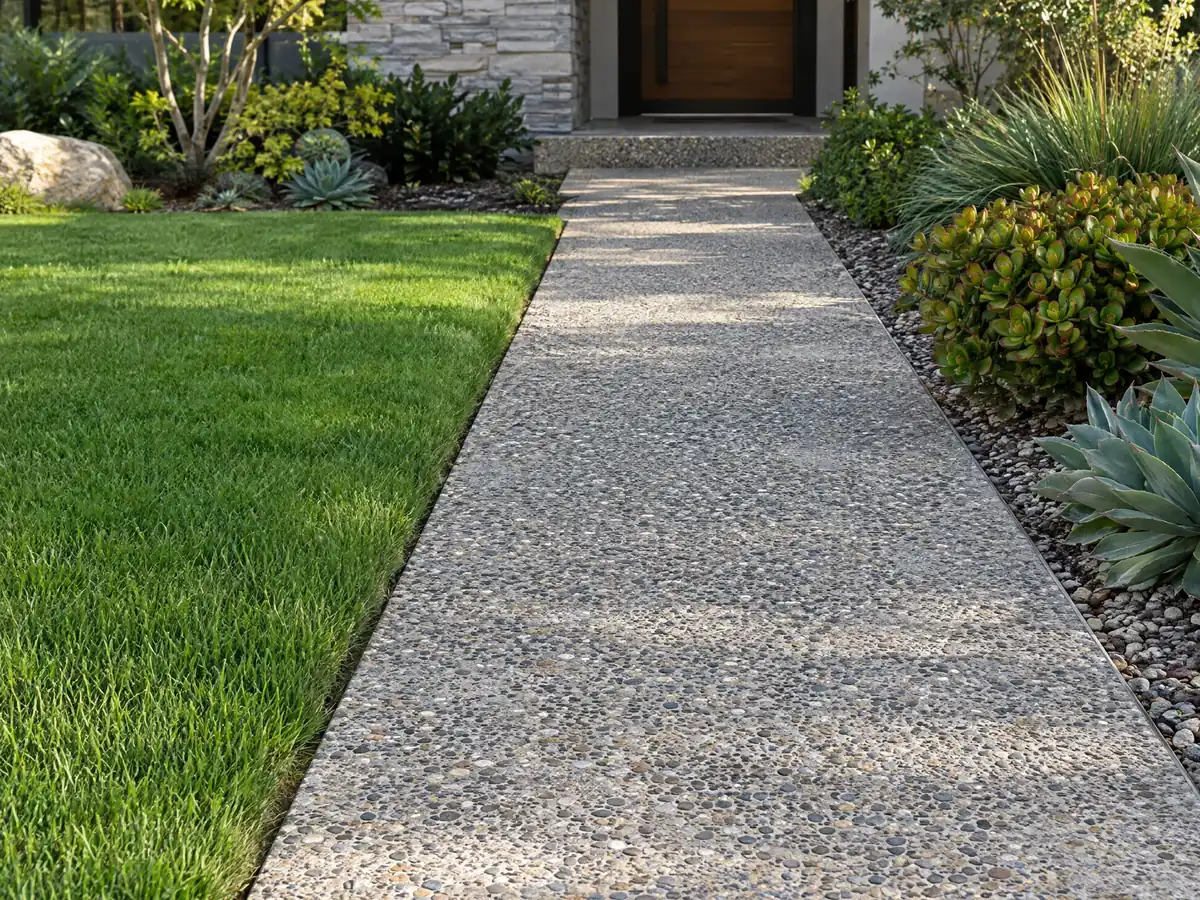
What concrete costs around Simi Valley
Dollar figures here are Los Angeles ranges and not a Simi Valley bid, and a good proposal splits out demolition, haul-off, drainage, any soils work and the Zoning Clearance. The same lot may also need flooring in Simi Valley or a deck builder in Simi Valley. For comparison, read concrete in Agoura Hills, concrete in Calabasas and concrete in Santa Clarita, with concrete in Los Angeles as the big-city benchmark and concrete in Glendale for older lots. Moorpark and Thousand Oaks have no pages here yet. The flooring cost guide covers what goes over a finished slab, and the license check guide shows how to look up a bidder.
| What it covers | Typical range |
|---|---|
| Patio, walkway or slab, broom finish, 300 sq ft or more | $8 to $14 per square foot |
| Decorative: stained, stamped or exposed aggregate | $15 to $30 per square foot |
| Driveway replacement, with demolition of the old slab | $9 to $20 per square foot |
| 20 by 20 foot plain patio (400 sq ft) | About $3,200 to $5,600 |
| 20 by 20 foot decorative patio (400 sq ft) | About $6,000 to $12,000 |
| Small jobs under 300 sq ft | Usually above the per-foot range |
| Retaining walls | Set by the written proposal |
Other work we manage in Simi Valley
Simi Valley concrete questions, answered
Can I pour a concrete patio without a permit?
In Simi Valley, side and rear yard paving needs no City permit, and SVMC 8-5.03(a)(7) exempts sidewalks and driveways up to 30 inches above grade. A patio slab on grade is not named, and a cover or wall on top is a structure. Call Building & Safety at (805) 583-6723 with the size and height first.
Can I expand my driveway without a permit?
Not necessarily. The slab may be exempt from a building permit, but any paving in the front yard needs a Zoning Clearance from Planning, and at least 50 percent of the front yard must stay landscaped. Bring a sketch of the wider area and the garage width to Planning at (805) 583-6769.
How much of my front yard can I pave in Simi Valley?
Up to half. The City requires at least 50 percent of the front yard to be landscaped, and all of that landscaping may be artificial turf. The paved part may include the driveway to the garage, a ten-foot strip beside the driveway on the side nearest the property line, and a sidewalk to the front door.
What is the maximum height of a retaining wall without a permit in California?
In Simi Valley the building permit exemption is 4 feet, measured from the bottom of the footing to the top of the wall, unless the wall carries a surcharge. Zoning limits a retaining wall in a front setback to 36 inches, and a wall near a 3:1 or steeper slope may need a geotechnical report.
How much should a 20x20 concrete patio cost?
A plain broom-finish 20 by 20 foot patio comes to roughly $3,200 to $5,600 on our Los Angeles ranges, and a decorative one to $6,000 to $12,000, before demolition, drainage and permits. Those multiply Angi and HomeGuide figures and are not a Simi Valley bid; small jobs often price above the per-foot range.
How much does a concrete driveway cost in Simi Valley?
Our Los Angeles range for driveway replacement is $9 to $20 per square foot including demolition of the old slab, so a 600 square foot driveway runs roughly $5,400 to $12,000. We found no Simi Valley study. Thickness, haul-off, grading and any curb work move the price, and a site visit settles it.
Is 4 inches of concrete thick enough for a driveway?
Four inches is the usual thickness for home slabs, yet we found no code section that sets one for driveways, so treat it as industry practice. Heavy trucks, weak soil or tree roots can justify more. Have the proposal state the thickness, the base under it and the reinforcement.
How deep should concrete footings be in Simi Valley?
On expansive soil with an expansion index above 50, the City's amended code calls for footings 24 inches deep for one or two floors. A soils report can change that, and hillside or flood sites add review. Roof water must also be carried to a street or storm drain, so ask how the plan handles it.
Do I need a permit for a second driveway or curb cut in Simi Valley?
Yes, an Encroachment Permit from Public Works, reached at (805) 583-6786. The paving behind the curb in the front yard also needs a Zoning Clearance from Planning. Monolithic concrete paving may not be used in the street parkway except as part of a driveway, so describe the full layout before you request either.
What license does a concrete company need for concrete work in Simi Valley?
A California C-8 Concrete license covers forming, pouring, placing and finishing concrete, and block walls fall under C-29 masonry. Ask any bidder for the number, check it on the CSLB site and request a certificate of insurance. MDG holds a general building license and uses licensed subcontractors for the pour.
Tell us what you want poured, its size and where it sits on the lot
Describe the patio, driveway, walk or wall, the rough size, and whether it touches the front yard, the street edge, an oak or a slope. We bring the Zoning Clearance and wall-height questions to the first visit.