
Deck Builderin Simi Valley, CA
A deck builder in Simi Valley should treat any deck more than 30 inches above grade as permit work, because the City's code exempts platforms only up to that height, and Planning's Zoning Clearance comes first. Fire hazard zones, hillside rules and protected oaks can each add a step before the first post goes in.
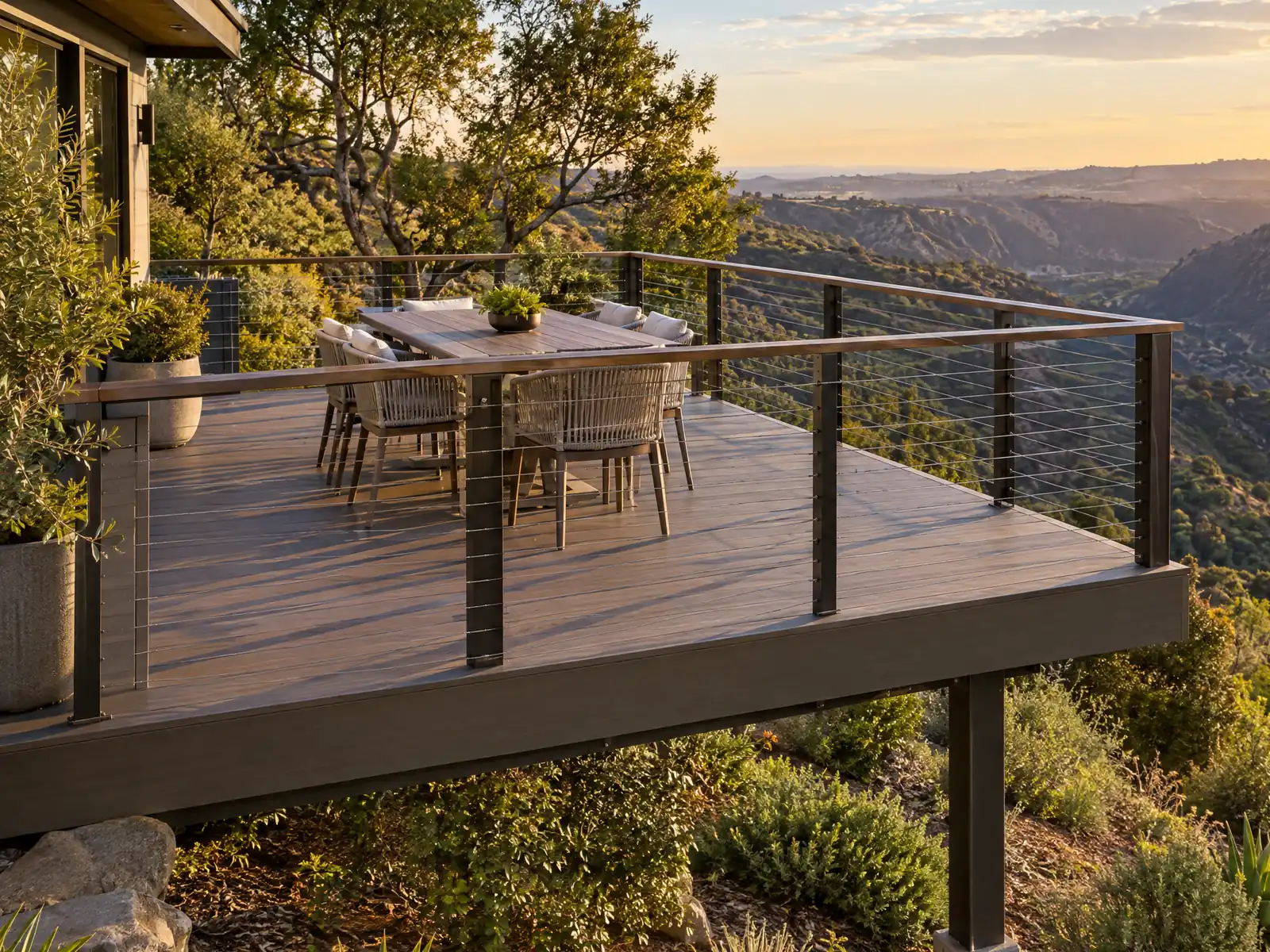
Simi Valley's decks sit under a ring of hills. The Simi Hills lie to the south and east and the Santa Susana Mountains to the north, and the Woolsey Fire, which began on the Santa Susana Field Laboratory property above the city on November 8, 2018, burned 96,949 acres, according to Wikipedia. The Easy Fire started at the valley's west end on October 30, 2019 and burned 1,806 acres. With 74 percent of the city's 45,201 homes single-family detached and a median build year of 1979, the usual job is a rear deck or patio cover on a tract house from the 1960s or 1970s.
MDG Builders (CSLB #1040337) is a Tarzana general contractor. We draw the deck, take the permit questions to Simi Valley Building & Safety and schedule licensed carpentry subcontractors for the build, and you can ask each firm for its license number and certificate of insurance. Framing, materials and prices are on our deck page, and the Simi Valley overview lists the other trades here.
What Simi Valley Building & Safety, Planning and Ventura County Fire say about decks, patio covers and slopes
Where decks permits come from in Simi Valley: City of Simi Valley Department of Environmental Services, Building & Safety Division.
- SVMC 8-5.03(a)(7) exempts platforms not more than 30 inches above adjacent grade and not over a basement or story below, so a raised deck above 30 inches needs a building permit. Third-party gocodebook text.
- The City says a free-standing, non-habitable accessory structure such as a gazebo, shed, carport or garage needs a Zoning Clearance first (height and setbacks), and a Building Permit if it is more than 120 square feet; SVMC 8-5.03(a)(1) agrees that one-story detached sheds up to 120 square feet and 14 feet high with no electrical, mechanical or plumbing work are exempt.
- The City's Patio Cover City Standard (2023) is a prescriptive sheet for attached patio covers: 2x ledger with 1/2 by 5 inch lag screws into studs or the top plate, 4x4 posts with 6 foot 8 inch minimum clearance, 12 inch deep continuous footings or 12 by 12 inch pad footings at each post, 15 psf dead and 20 psf live load for a solid cover, and a 3.5 inch slab allowed under lattice covers only if posts carry under 750 pounds. It is a reference sheet and not a substitute for plans.
- SVMC 9-44.220 (third-party Zoneomics copy, Ordinance No. 1355, effective April 15, 2024): residential accessory structures may cover no more than 40 percent of any required yard, must keep a 6 foot separation from other on-site structures, and are capped at 30 percent of the home's first-floor and attached garage area, up to 1,200 square feet on lots under one acre (2,000 square feet with an administrative action) and up to 2,000 square feet on lots of one acre or more.
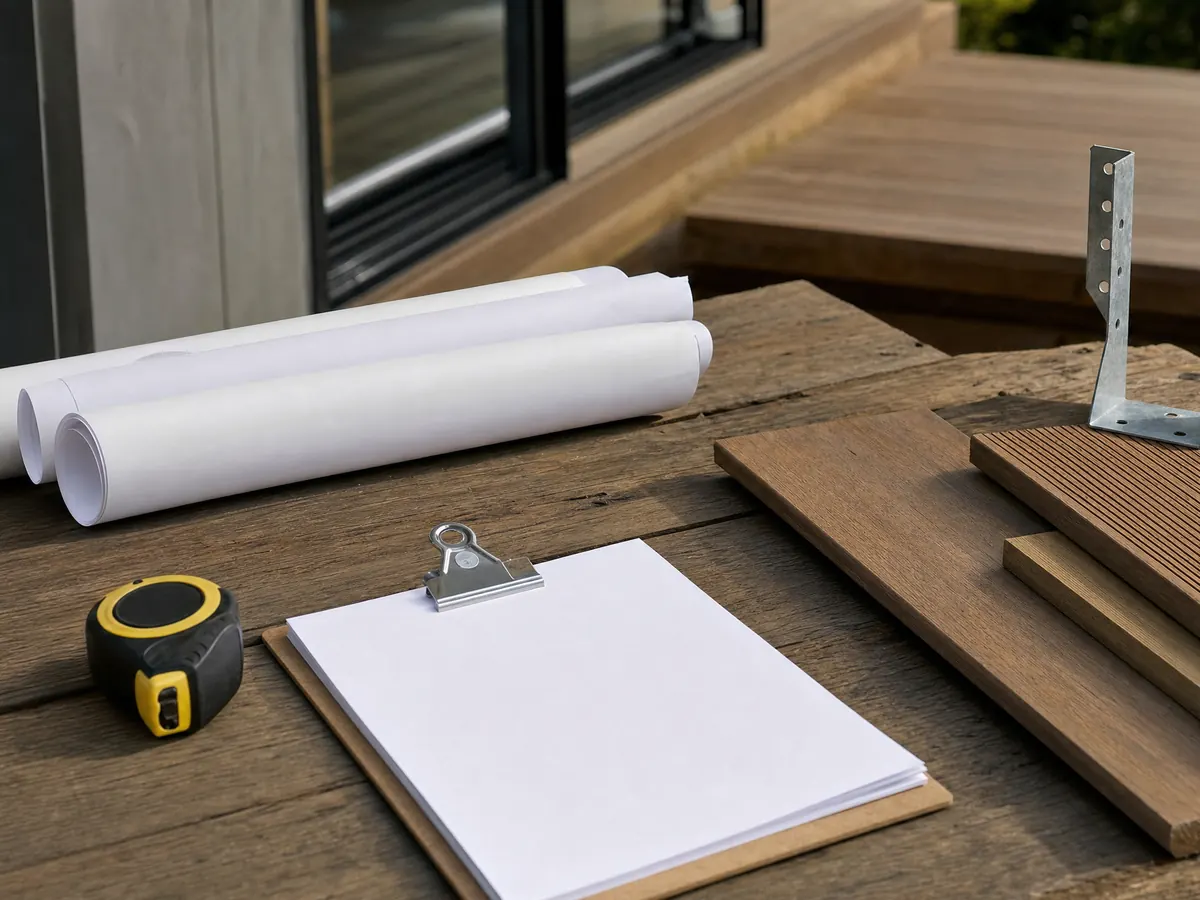
Is your Simi Valley deck in a fire hazard zone, and which deck boards are allowed?
Ask for the zone before you pick boards. Simi Valley's fire protection comes from the Ventura County Fire Protection District, and on May 20, 2025 its board adopted the State Fire Marshal's 2025 Local Responsibility Area zone maps by Ordinance 33, effective July 1, 2025. A parcel that falls in two zones takes the higher one. ABC7 named Simi Valley among the Ventura County cities with the most acres of very high hazard. We could not confirm the City's own adoption of the map or the zone for any address, so use the County's fire hazard map page and ask Building & Safety.
The City adopted the 2025 California Wildland-Urban Interface Code as its primary building code in SVMC 8-26.01, by Ordinance No. 1366, effective January 1, 2026 on the City's page and December 18, 2025 in the third-party code text. We did not open that code. The 2022 California Residential Code text we read, section R337.9.3, accepts decking tested to ASTM E2632 or E2726, ignition-resistant material, fire-retardant-treated wood and noncombustible material. Ask whether the numbering has moved.
One UC Extension summary said some tested composites did not meet the ignition-resistant definition, so confirm any product on the State Fire Marshal's list.
Do you need a permit to build a deck in Simi Valley, and who approves it first?
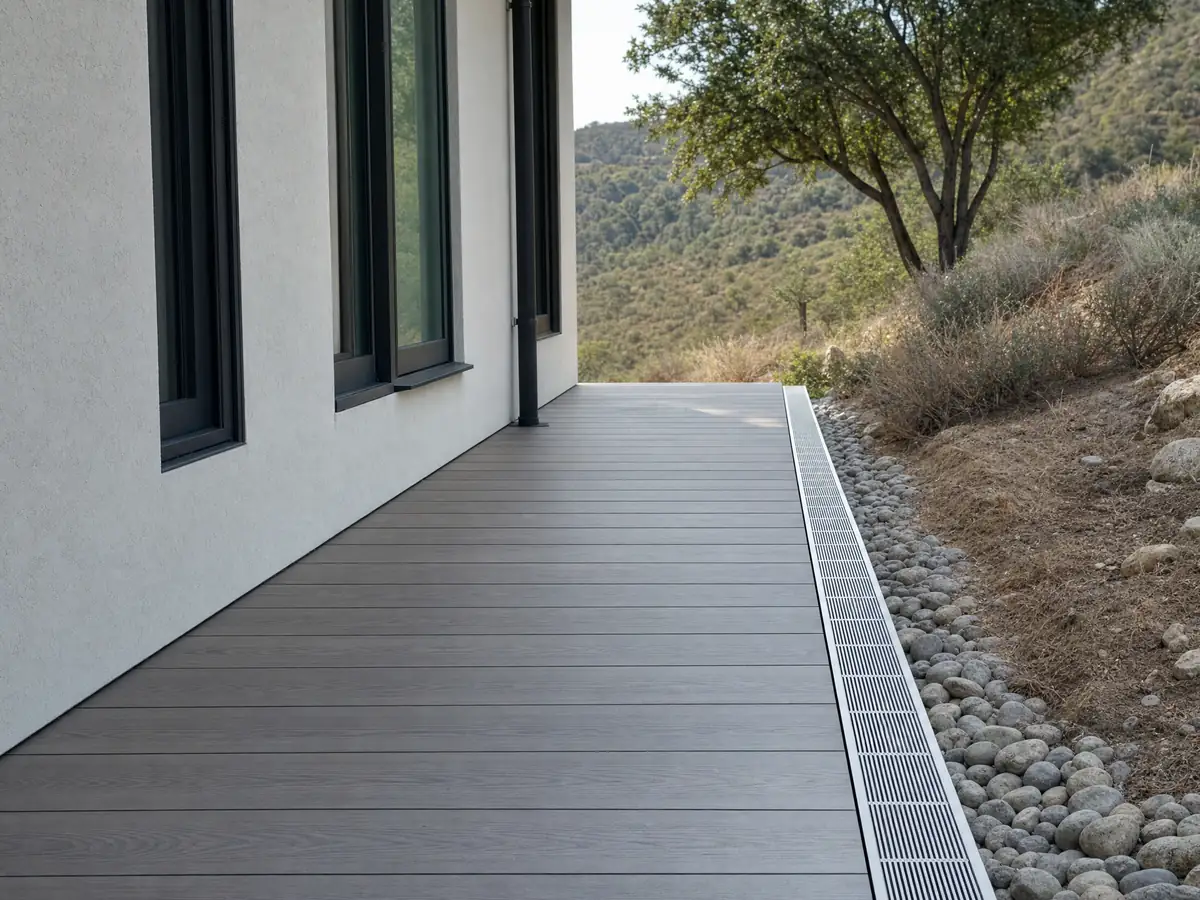
Often yes, and Planning comes before Building & Safety. SVMC 8-5.03(a)(7), as shown in GoCodebook's third-party text, exempts platforms not more than 30 inches above adjacent grade and not over a basement or story below, so a raised deck needs a permit. The model residential code adds limits of 200 square feet and detached from the house, and we could not confirm that Simi Valley repeats them, so treat an attached or larger deck as permit work until the counter says otherwise.
The City's home improvement page says a free-standing structure such as a gazebo, shed, carport or garage needs a Zoning Clearance for height and setbacks, then a building permit if it is over 120 square feet. Plans go in through the Online Customer Self Service Portal as PDFs, and the City aims to finish each plan review in 20 to 25 working days. A one-story wood-frame structure of limited complexity need not be drawn by an architect or engineer, but plans in steep hillside locations must be.
A permit expires if work does not start within 12 months or stops for 180 days (SVMC 8-7.05, third-party text). Work done without a permit draws an Investigation Fee, whether or not a permit is issued later.
How big can a patio cover, pergola or deck structure be in a Simi Valley yard?
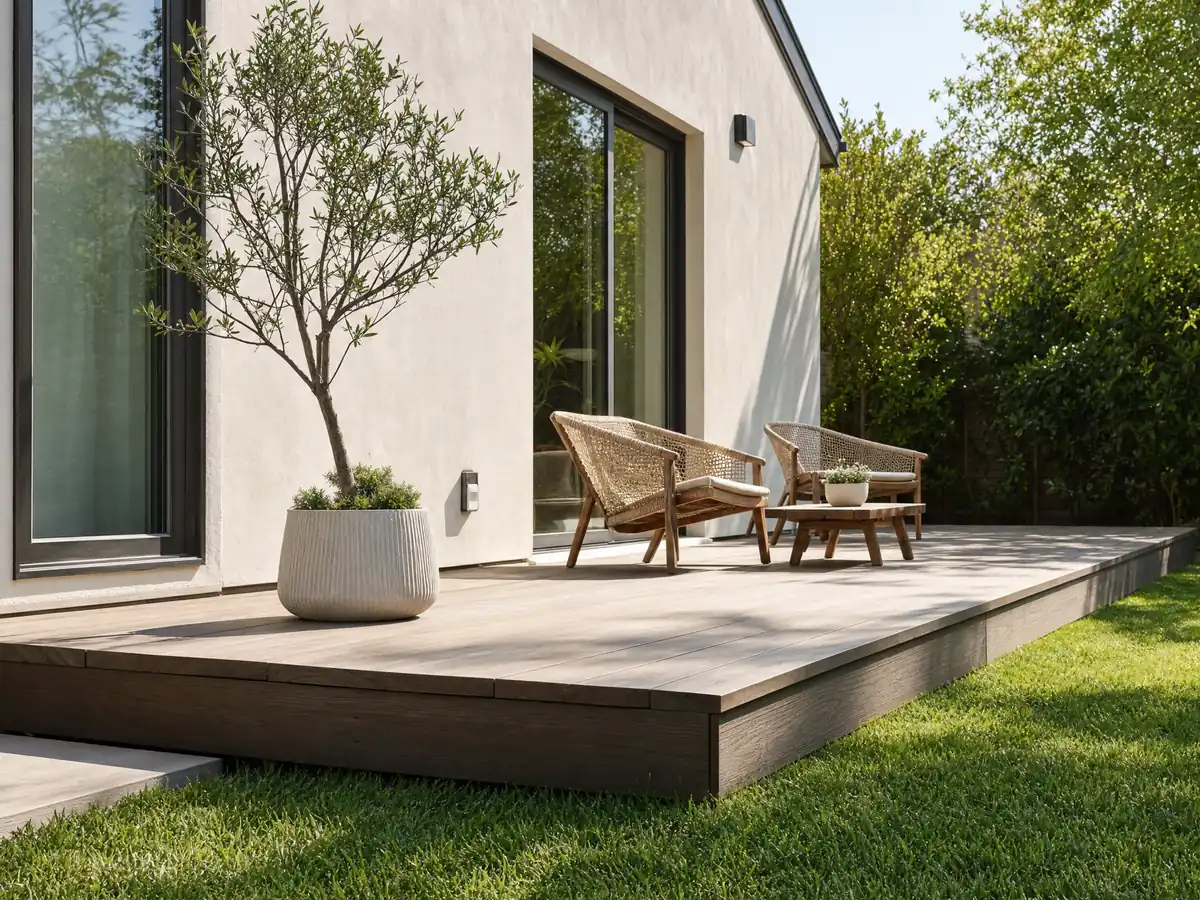
The City publishes a Patio Cover City Standard, a 2023 sheet for attached covers. It calls for a 2x ledger with 1/2 by 5 inch lag screws into studs or the top plate, 4x4 posts with 6 feet 8 inches of clearance, and 12 inch deep continuous footings or 12 by 12 inch pads at each post. A solid cover is designed for 15 pounds per square foot dead load and 20 live, and the sheet is a reference, not a substitute for plans.
Fire changes the roof. In a High Fire Hazard Area (CRC R337) the sheet wants a Class A covering over exposed 2x6 tongue and groove planks on 4x6 rafters and 6x6 beams and posts, or a lattice roof of 3x3 members spaced at least their own width apart. Elsewhere it asks for at least Class B.
Zoning sets the size. The Zoneomics copy of SVMC 9-44.220, undated beyond an April 15, 2024 amendment, lets residential accessory structures cover no more than 40 percent of a required yard and keep 6 feet from other structures, with a cap of 30 percent of the first-floor and attached garage area. Whether that governs a platform deck, and not only a cover or gazebo, is a question for Planning.
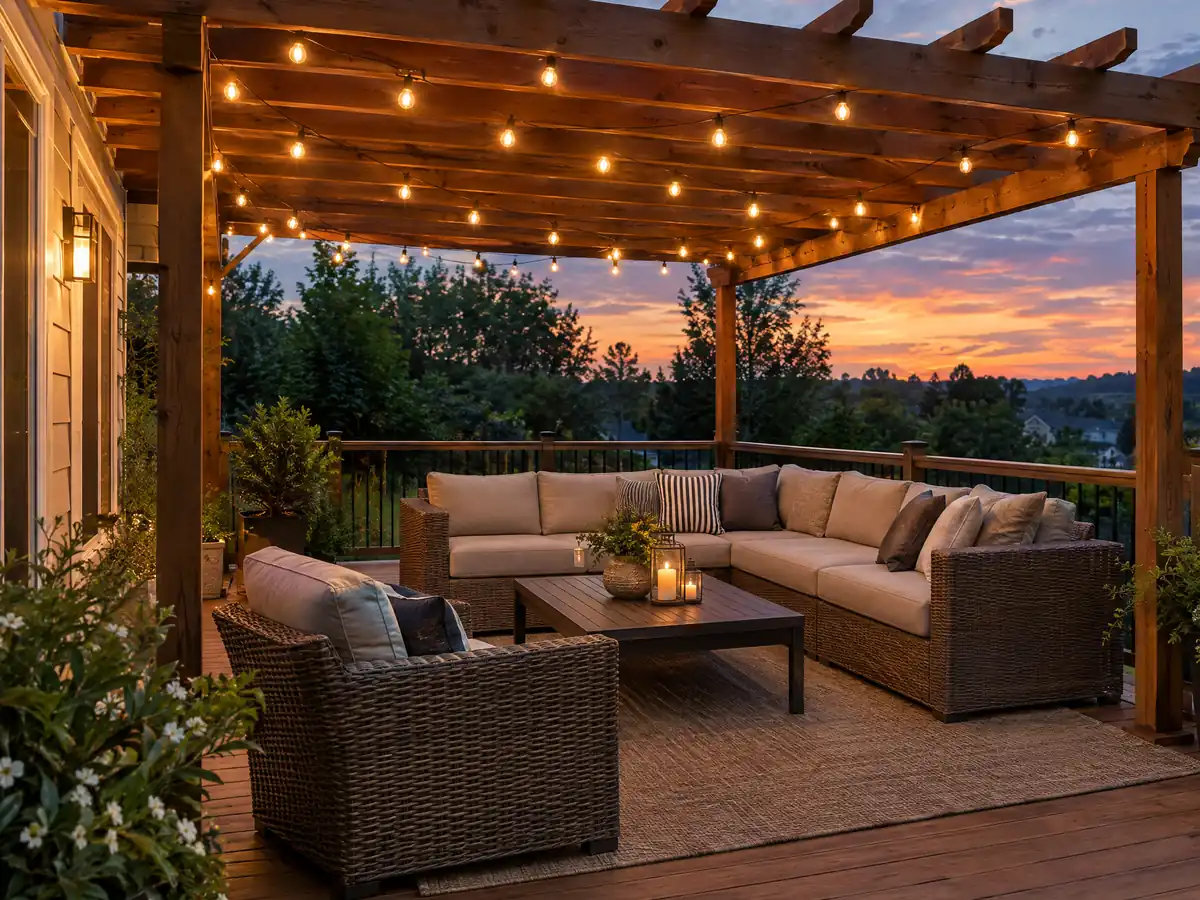
Deck repair in Simi Valley: ledgers, hold-downs and guards in Seismic Design Category D or E
Replacing a few worn boards reads as maintenance, but SVMC 8-5.01 asks for a permit when a structure is erected, enlarged, altered or repaired, except as the exemptions allow, so a new ledger, post or joist is a question for Building & Safety before the old one comes out. UC Integrated Pest Management says drywood termites are most prevalent in southern California and infest decks, so a probe of the framing comes before any quote.
The City places Simi Valley in Seismic Design Category D or E with a 110 mph basic wind speed, and the USGS describes the Simi fault zone along the valley's north side. In the 2022 residential code text we read, a ledger is at least a pressure-treated 2x8 carrying no concentrated beam loads and not fastened to masonry veneer (R507.9.1.1). Fasteners are hot-dipped galvanized or stainless with flashing at the ledger (R507.9.1.3). Lateral hold-downs are two devices of 1,500 pounds within 24 inches of each end, or four of 750 pounds (R507.9.2).
Guards belong where the walking surface is more than 30 inches above grade within 36 inches of the edge, at least 42 inches high, with openings that stop a 4 inch sphere (R312.1).
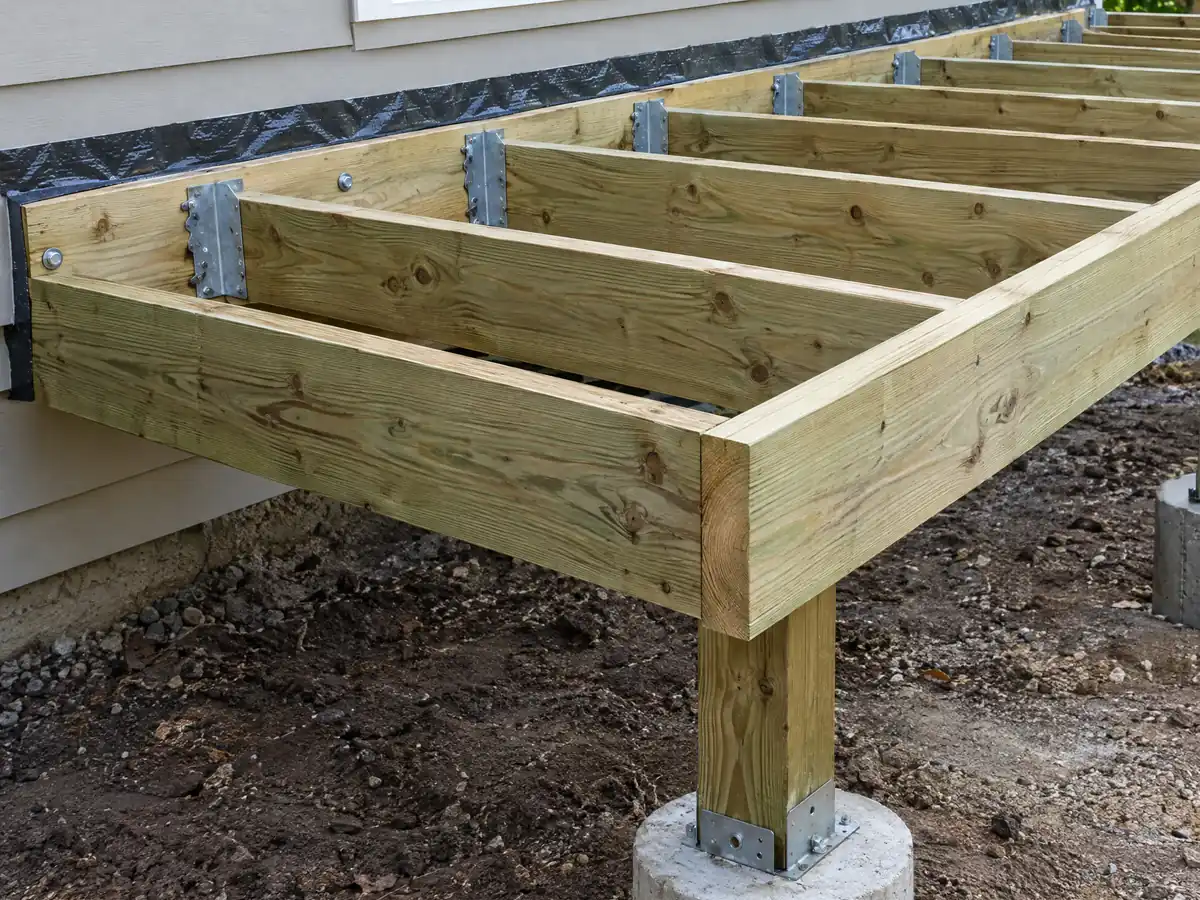
What does a hillside deck in Simi Valley have to show before it is approved?
Slope drives the file. The Hillside Performance Standards, SVMC 9-32, apply to any parcel outside the City's valley floor boundary, in any zone, and require findings that keep development off natural slopes of 20 percent or more except as allowed, keep grading to a minimum and protect the view of the hills from the valley floor. A slope map signed by a civil engineer or land surveyor, at 1 inch to 200 feet with 2 foot contours and 150 feet of the neighboring land, goes in with the application.
A narrow exemption exists for an addition or accessory building on a parcel legally subdivided and zoned residential by July 21, 1986. It holds only with no grading on visually prominent ridgelines, none on land over 20 percent slope and none over 1,000 cubic yards. We read the exemption through Zoneomics, so confirm it with Planning.
Below the code, the City's amended Appendix J, section J106, wants a geotechnical report when a pool, spa, retaining wall or similar structure reaches into a 3:1 or steeper slope. Whether a deck's footings count as a similar structure is for the plan checker, and any steep hillside plan needs an architect or engineer.
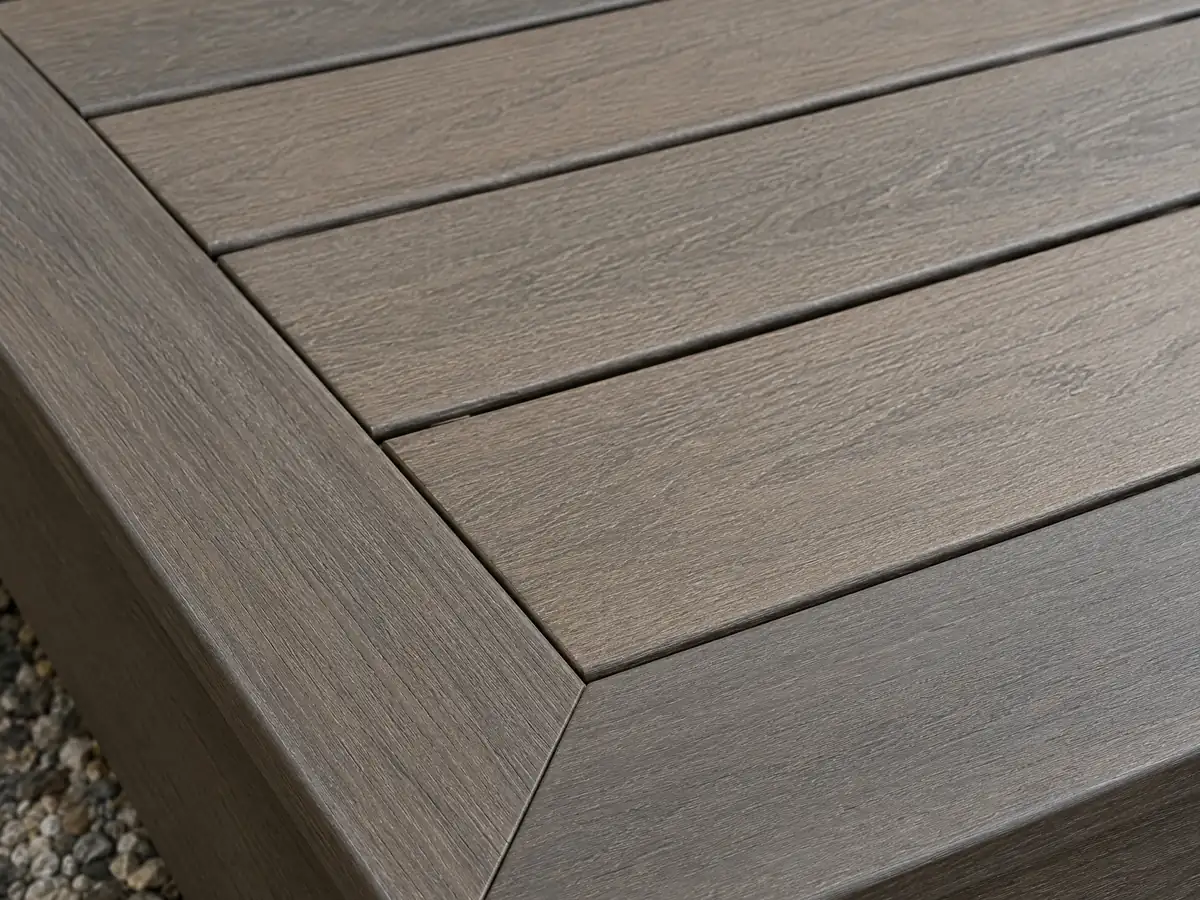
Can deck posts and footings go near a native oak in Simi Valley?
Plan around it, because the oak is protected and the rest of the yard is not. The City's tree rules, as copied by Zoneomics, exempt trees in single-family yards except mature native oaks and historic trees. A mature oak counts at 20 square inches of cross-section 4.5 feet above the root crown, roughly a 5 inch trunk, and cutting one down or destroying it needs a Tree Removal Permit after at least seven days' notice to the Council.
For a deck, the practical steps are to mark each oak on the plot plan, keep post holes off the larger roots with piers in place of a trench, and ask Planning about the footing layout. The permit criteria name interference with an addition to a single-family house, but a deck is not named, and we did not find a root-zone distance in what we read.
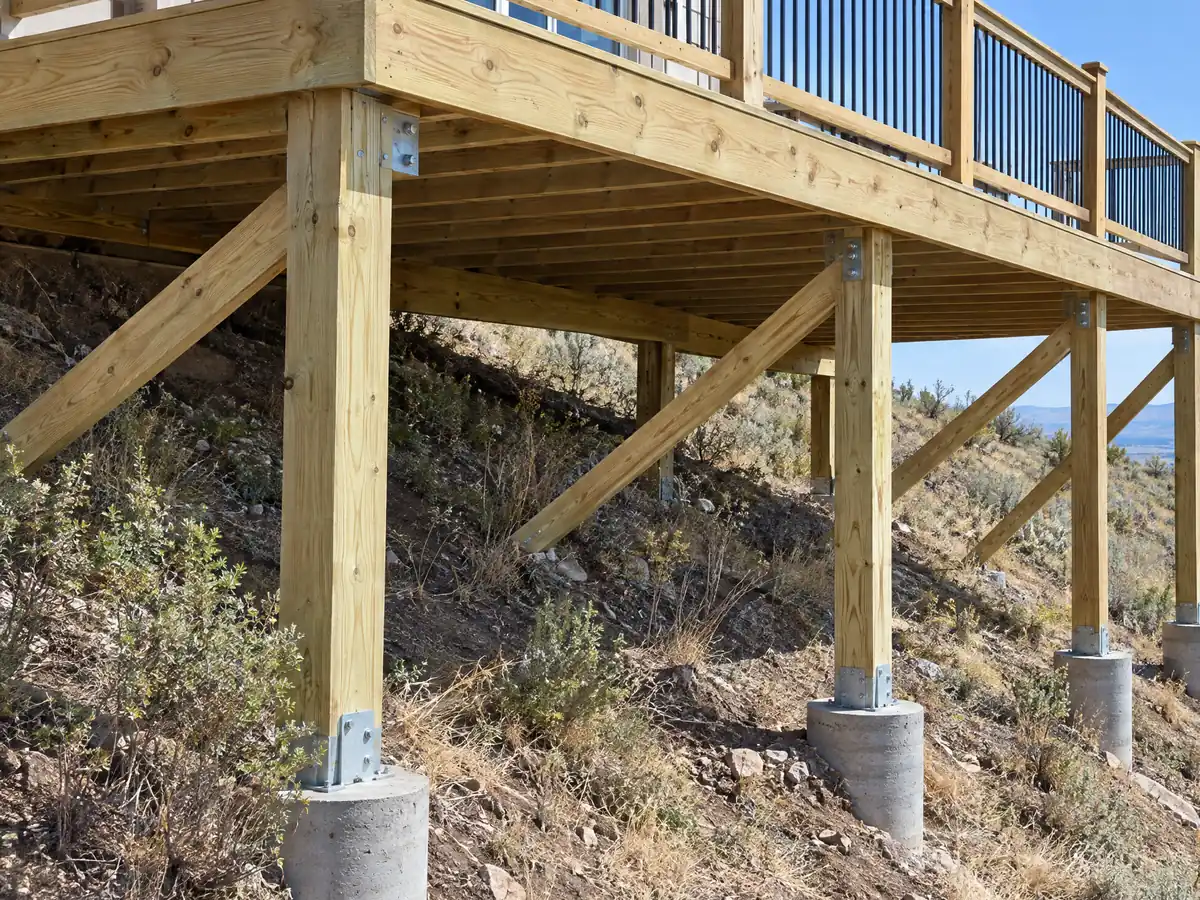
Wood or composite: what does a Simi Valley deck cost?
We found no Simi Valley deck price study, so these are Los Angeles figures from our deck page: pressure-treated wood about $45 to $75 per square foot and composite $65 to $110, before permits and engineering, which puts a 16 by 20 foot deck near $14,500 to $24,000 in wood and $21,000 to $35,000 in composite. Zonda and Remodeling magazine's 2025 Cost vs. Value report prices a defined 16 by 20 foot Los Angeles deck with bench, planter and railing at $18,419 in wood and $26,872 in composite, recouping 99.6 and 73.9 percent. Angi's October 2025 Los Angeles page shows a $13,570 average and permits at $500 to $3,000.
Confidence is medium for wood and medium-low for composite. The Bureau of Labor Statistics puts the mean wage of Los Angeles area carpenters at $37.79 an hour, which supports labor only. With 35.6 days a year at 100 F or above at the Pierce College station, ask each composite maker how hot its boards get in August sun.
CSLB's C-5 Framing and Rough Carpentry class covers framing, and a general building license can take a prime contract for it. Ask any bidder for a license number.
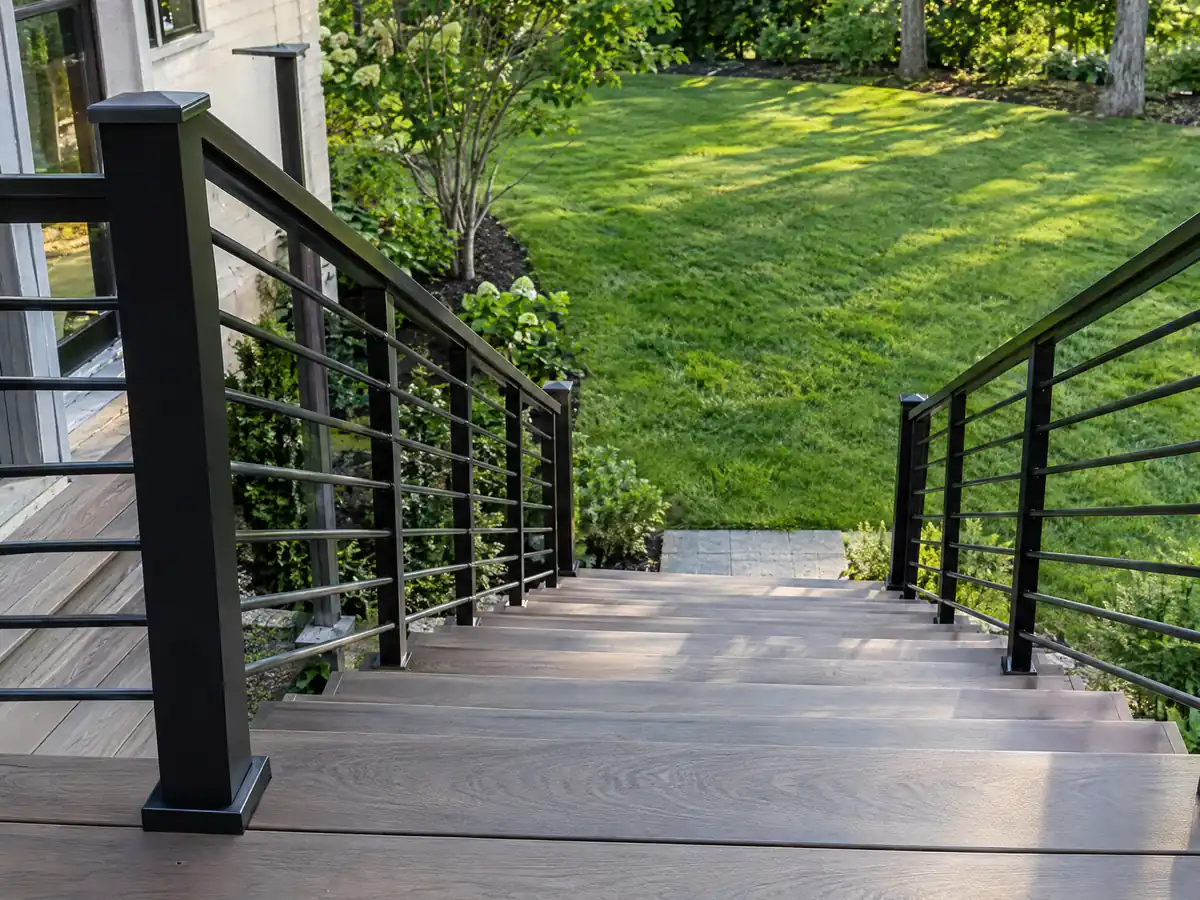
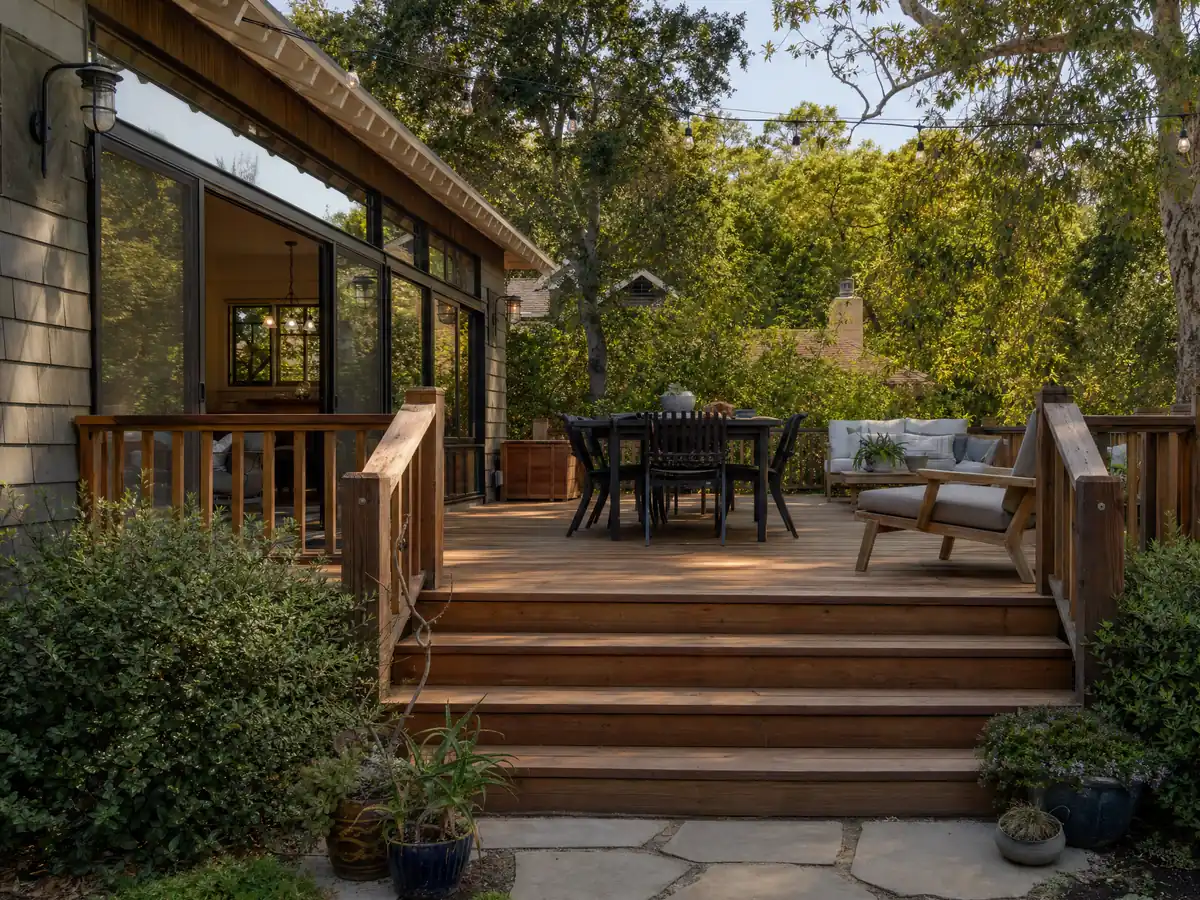
Deck photos from Simi Valley and nearby communities
Framing, footings, ember-resistant boards and finished decks from Simi Valley and the Ventura County and San Fernando Valley neighborhoods around it, shown at the steps where the rules matter. Tap any photo to enlarge it.
What decks costs around Simi Valley
Figures here are the Los Angeles ranges on our deck page, not a Simi Valley bid, and permits, engineering, fire plan review and any soils report belong on separate lines. A deck often comes with other work, so see concrete work in Simi Valley and flooring in Simi Valley. Nearby, read decks in Agoura Hills, decks in Calabasas and decks in Santa Clarita for other fire and oak rules, with decks in Los Angeles as the big-city benchmark. Decks in Glendale and decks in Pasadena are older hillside cases. Moorpark and Thousand Oaks have no pages here yet. The license check guide shows how to look up a bidder, and the subcontractor guide explains who frames and who finishes.
| What it covers | Typical range |
|---|---|
| Pressure-treated wood deck | $45 to $75 per square foot |
| Composite deck | $65 to $110 per square foot |
| 16 by 20 foot wood deck (320 sq ft) | About $14,500 to $24,000 |
| 16 by 20 foot composite deck | About $21,000 to $35,000 |
| Hillside, second-story, rooftop and ipe decks | Priced by site visit |
| Permits and engineering | Quoted as separate lines |
Other work we manage in Simi Valley
Simi Valley deck questions, answered
Do you need a permit to build a deck in California?
In Simi Valley, assume yes for anything raised. SVMC 8-5.03(a)(7) exempts platforms not more than 30 inches above adjacent grade and not over a basement or story below. Planning's Zoning Clearance comes first, then Building & Safety at (805) 583-6723. Ask before ordering lumber, especially for an attached or larger deck.
What is the largest deck without a permit?
We found no square-foot cap in the Simi Valley text we read, only the 30 inch height line. The model residential code adds 200 square feet and not attached to the house, but we could not confirm the City repeats it. Ask Building & Safety before building anything near that size or against the house.
Is railing height 36 or 42 for decks?
Forty-two inches. The 2022 California Residential Code requires guards at least 42 inches high on decks, with openings that stop a 4 inch sphere, wherever the walking surface is more than 30 inches above grade within 36 inches of the edge. Simi Valley now enforces the 2025 edition, so confirm the section numbering with the counter.
How high can a deck be without a railing in California?
Thirty inches. Under the residential code a guard is needed once the walking surface sits more than 30 inches above grade within 36 inches of the edge. That matches Simi Valley's 30 inch permit line for platforms, so a deck above it needs both a permit and a guard, built to the code edition the City enforces.
What happens if a deck is built without a permit?
Simi Valley's code, as published by GoCodebook, triggers a special investigation and an Investigation Fee on top of the permit fee, whether or not a permit is issued later. We did not open the fee schedule, so we state no amount.
Can I use composite decking in a Simi Valley fire zone?
Only if the product meets the wildland-urban interface rules, and not every composite does. The 2022 code text we read accepts boards that passed ASTM E2632 or E2726 testing, ignition-resistant products, fire-retardant-treated wood and noncombustible material. Check the State Fire Marshal's list and confirm your address on the Ventura County fire hazard map before ordering.
Is it cheaper to build a wood deck or composite deck?
Wood costs less upfront: about $45 to $75 per square foot for pressure-treated lumber on our Los Angeles ranges, against $65 to $110 for composite. In the Cost vs. Value report wood recoups 99.6 percent at resale and composite 73.9 percent. In a fire zone, composite must also meet the decking rules before it is a real option.
How much should a 16x20 deck cost?
On our Los Angeles ranges, about $14,500 to $24,000 in pressure-treated wood and $21,000 to $35,000 in composite, before permits and engineering. Zonda's 2025 Cost vs. Value report prices a defined 16 by 20 foot wood deck at $18,419. We found no Simi Valley study, so a site visit sets the real price.
Does deck repair need a permit in Simi Valley?
Replacing a few boards reads as maintenance, but SVMC 8-5.01 asks for a permit when a structure is repaired, except as the exemptions allow. A new ledger, post or joist is structural, so ask Building & Safety before the deck repair starts and photograph the framing first.
Does a hillside deck in Simi Valley need an engineer?
Often. The City says plans in steep hillside locations must be prepared by a California licensed architect or engineer, and parcels outside the valley floor boundary follow the Hillside Performance Standards, with a slope map signed by an engineer or surveyor. Planning decides, so ask before you hire a deck builder.
Tell us the deck height, the slope and whether a cover or an oak is involved
Say how high the deck will sit, whether it touches the house, whether the lot slopes or backs onto brush, and whether a patio cover or native oak shares the yard. We check the fire zone and Zoning Clearance questions before the site visit.