
Deck Builderin Agoura Hills, CA
A deck builder in Agoura Hills works under the City's Very High fire standards, which it applies to every property, so decking within 10 feet of the house must be ignition-resistant or tested. Only a detached deck of 200 square feet or less, under 30 inches and clear of the exit door is permit-exempt.
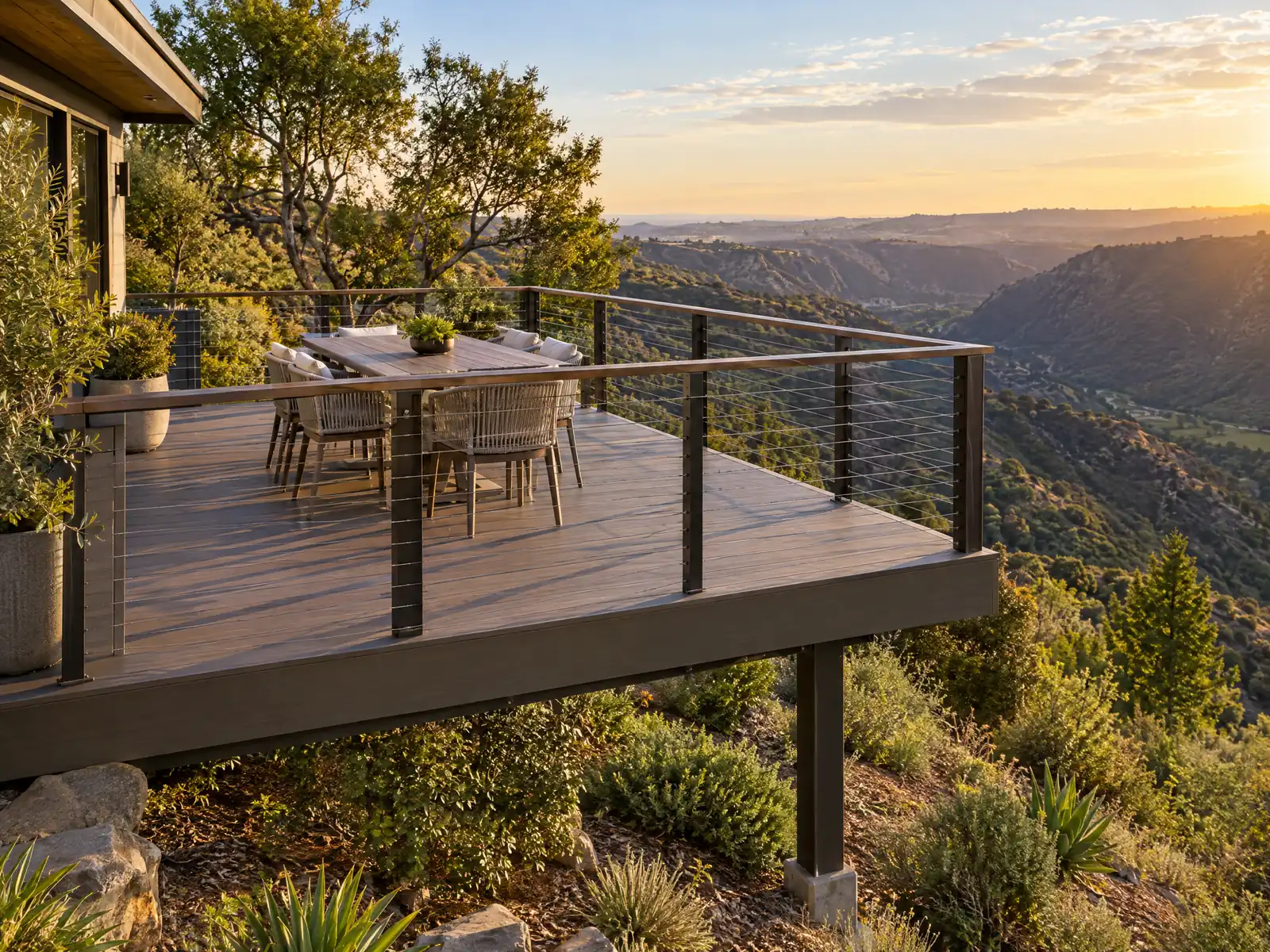
Decks in Agoura Hills sit where the suburb meets fire country. The November 2018 Woolsey Fire burned through the community, and evacuation warnings returned in January 2025 during the Kenneth Fire. Most of the housing predates today's rules: of the 7,566 homes in the Census Bureau's 2020 to 2024 estimates, 5,343 are single-family detached and 73.4 percent were built in the 1970s and 1980s, so a rear deck original to a 1985 house is about 41 years old.
MDG Builders, CSLB #1040337, is a Tarzana general contractor. We draw the deck, send the fire, tree and zoning questions to Building and Safety and Planning and hire a licensed carpentry subcontractor to build it. Materials and ranges are on the decks page, and the Agoura Hills overview shows our other trades here.
What Agoura Hills' Building and Safety Division, Zoning Code and fire standards say about decks
Where decks permits come from in Agoura Hills: City of Agoura Hills Community Development Department, Building and Safety Division.
- Residential Code 105.2 as amended exempts a deck not exceeding 200 square feet, not more than 30 inches above grade at any point, not attached to a dwelling or townhouse, and not serving the exit door required by R318.4. The building code list has no deck item, so attached or higher decks need a permit.
- Municipal Code 9605.6 lets balconies, decks over 1 foot above the ground and similar unroofed structures that stand more than 6 feet above the yard level (including railing) project up to 6 feet into a required front or rear yard and 5 feet into other required yards, never reducing a yard below 5 feet except on the street side of a corner lot, and they must be cantilevered or supported only by necessary columns.
- Municipal Code 9605.8 allows a covered patio attached to the house to extend to within 10 feet of the rear property line and within 3 feet of a side property line, covering no more than 50 percent of the required yard and staying permanently open on at least two sides apart from detachable screens; a patio cover that is not attached is an accessory structure.
- In the City's fire standards, the walking surface of decks, porches, balconies and stairs within 10 feet of the building must be ignition-resistant, fire-retardant-treated, noncombustible or tested under ASTM E2632 and E2726 or SFM Standard 12-7A-4 (R337.9), and a 6 inch vertical metal flashing is required at every deck to wall intersection.
- The City's standard trellis and patio cover handout for very high fire hazard zones describes a one story cover no higher than 12 feet whose longest wall and one more wall are at least 65 percent open below 6 feet 8 inches; it asks for preliminary Planning approval, a building permit application, an HOA approval letter if applicable, and a site plan showing setbacks and any 3:1 or steeper slopes, and a solid roof may require engineering of the existing building.
- Detached gazebos, pergolas and carports open on two or more sides and separated by at least 6 feet are exempt from the sprinkler rule, and sheds, shade structures and playhouses up to 120 square feet and 14 feet high are permit exempt but can still be regulated by the Wildland-Urban Interface Code (Sections 105.2 and 903.2.11.7).
- In the Old Agoura overlay accessory buildings may be built in the front yard if no more than one story or 14 feet and no more than 25 percent of the minimum front yard plus 40 percent of the buildable area; elsewhere accessory buildings go in the rear yard only, limited to 25 percent of the minimum rear yard plus 40 percent of the buildable area, at least 10 feet from the main building or rear lot line and 5 feet from side lines (Municipal Code 9606).
Can you build a deck without a permit in Agoura Hills?
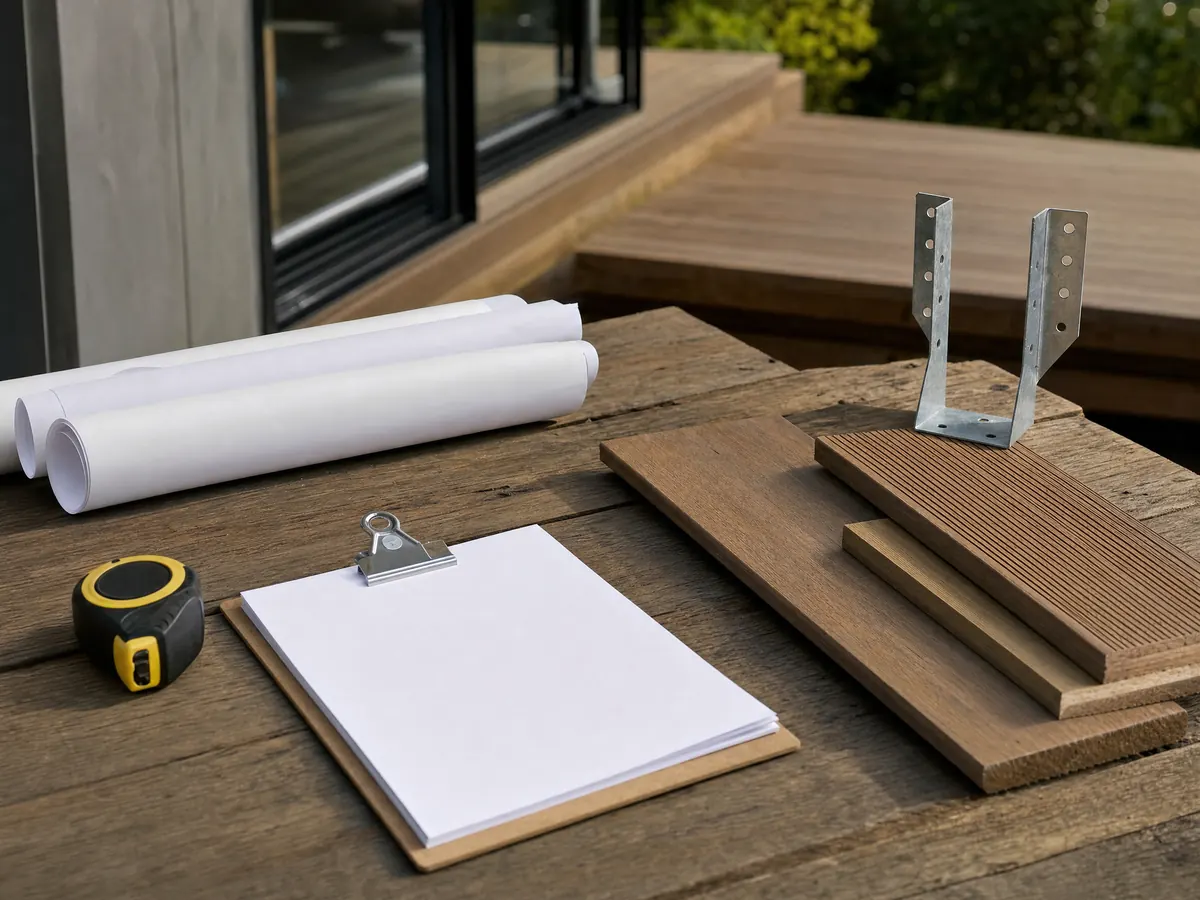
Only a small detached one. Residential Code 105.2, as the City amends it, exempts a deck of 200 square feet or less that is no more than 30 inches above grade at any point, is not attached to a dwelling or townhouse and does not serve the exit door required by R318.4. The building code's exemption list has no deck item. We read both on the GoCodebook mirror of the Municipal Code, so confirm them with Building and Safety.
Treat everything else as permit work until the counter says otherwise. The City's Policies page lists patio covers and gazebos among structures needing structural plan check, and Planning approval comes before plan check. Section 111.1.1 makes it unlawful to own or occupy a structure built without the permit it needed, and starting first draws a stop work order and an investigation fee.
Permits also expire. Under the amended Section 105.5, a residential permit dies unless a successful inspection shows 20 percent of the work done within a year, and every later 20 percent faces the same clock. The City's permits page still prints an older 180 day rule, so that handout may be out of date; ask which rule applies.
Which decking boards does Agoura Hills' fire standard allow?
The City says all Agoura Hills properties are subject to its Very High Fire Hazard Severity Zone construction standards. The County GIS copy of CAL FIRE's map returned Very High at 47 of 59 sample points, with 3 High, 6 Moderate and 3 NonWildland, but those are sample points and not parcels, so rely on the City's statement and check your parcel on CAL FIRE's viewer.
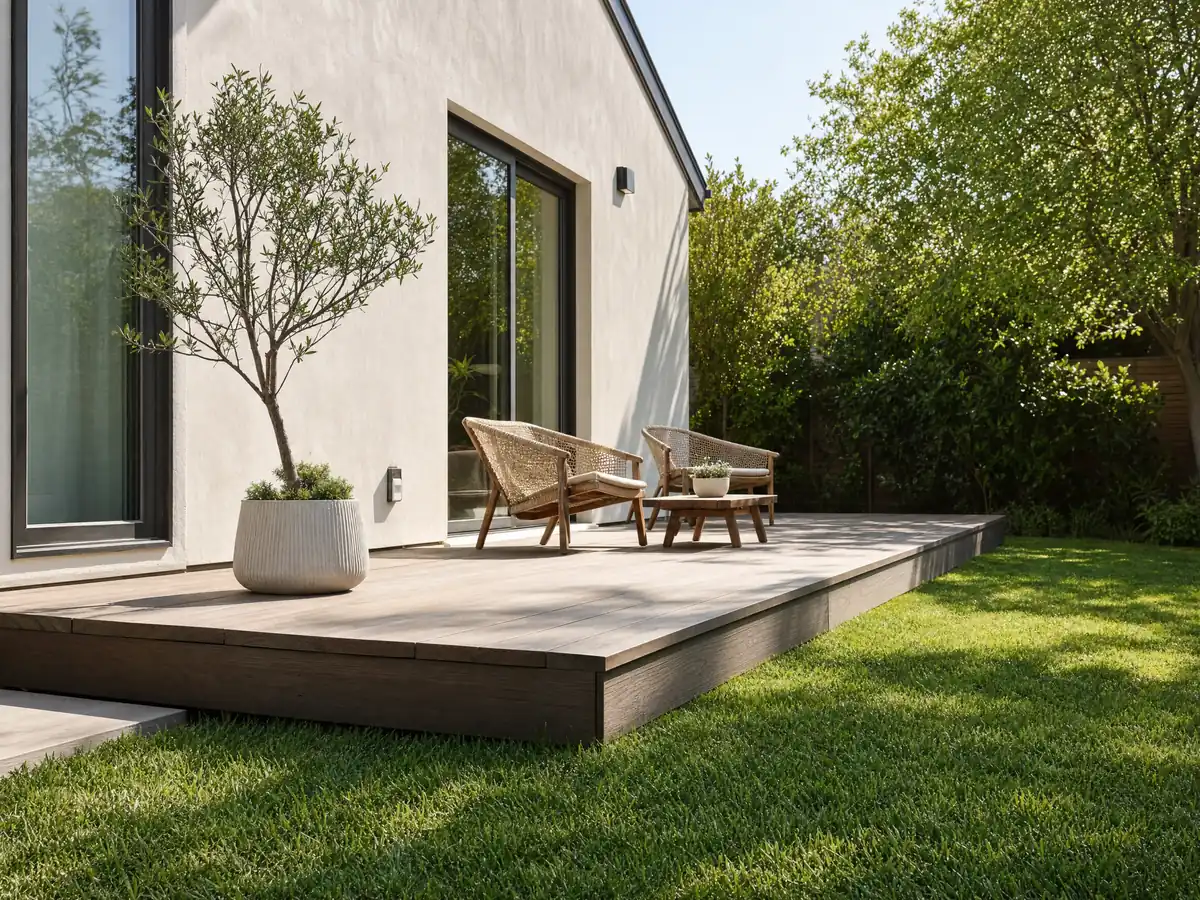
For decks, the walking surface of decks, porches, balconies and stairs within 10 feet of the building must be ignition-resistant, fire-retardant-treated, noncombustible or tested under ASTM E2632 and E2726 or State Fire Marshal Standard 12-7A-4 (R337.9). A 6 inch vertical metal flashing is also required wherever a deck meets a wall.
Brand claims need checking. One University of California summary says some tested composites did not meet the ignition-resistant definition, so we vouch for no brand and ask suppliers for the Fire Marshal listing or a test report. Paint does not fix it either: the City's standards say coatings and stains are not an approved way to provide ignition resistance.
How far can a deck reach into an Agoura Hills yard?
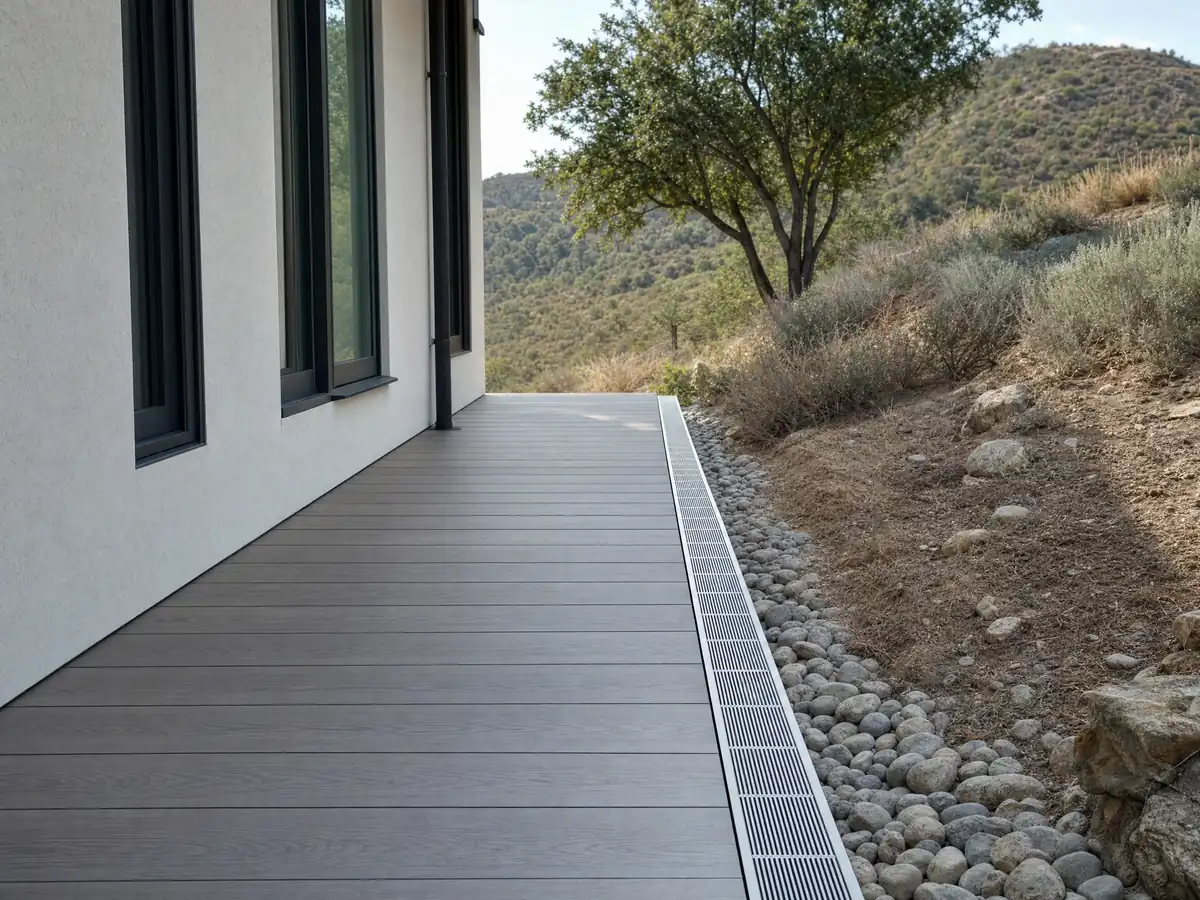
Low decks get the easy rule. Wooden decks, like driveways and patio slabs, may sit in any required yard if they rise no more than 1 foot above ground (Municipal Code 9606.1.G). Higher decks fall under Section 9605.6, which lets decks over 1 foot high project up to 6 feet into a required front or rear yard and 5 feet into other required yards, never leaving a yard narrower than 5 feet except on the street side of a corner lot, and they must cantilever or stand only on necessary columns.
If the plan includes a freestanding shed or cabana, accessory building rules apply. Outside the Old Agoura overlay those buildings go in the rear yard only, limited to 25 percent of the minimum rear yard plus 40 percent of the buildable area, at least 10 feet from the house or rear lot line and 5 feet from side lines (Section 9606). Old Agoura allows front yard accessory buildings of one story and 14 feet under tighter coverage limits.
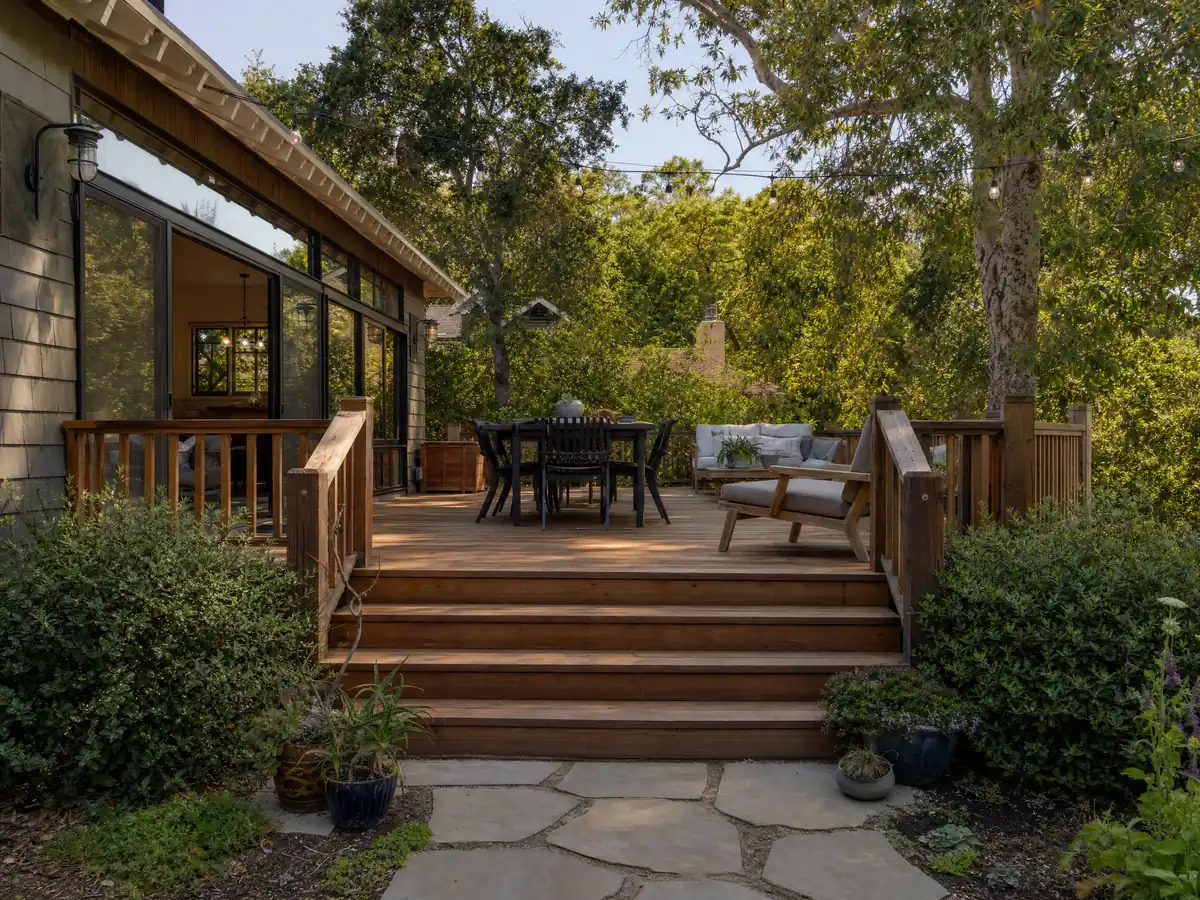
What changes for a deck on a hillside lot or under an oak?
A parcel averaging more than 10 percent slope before grading needs a conditional use permit or architectural review ahead of any building or grading permit (Municipal Code 9652), and hillside buildings are capped at 15 feet above the reference grade (9607.1). The seismic hillside rules in Section 1613.8 for slopes steeper than 1 to 3 exempt decks that neither support nor are supported by the main building, so a freestanding deck may escape them and an attached one may not.
Footings are the soils question. The City's slope setback handout applies CBC 1808.7 and R403.1.7 to footings on or near slopes steeper than 3 horizontal to 1 vertical, and a soils report must cover slope stability, erosion, drainage and debris flow before those setbacks count. County GIS sampling at 59 points, not parcels, flagged landslide zones at 13.
Under an oak, sycamore or walnut of 6 inches or more across, the Tree Protection Zone, at least 15 feet from the trunk, treats footings and trenching as encroachment, and ground disturbance within 25 feet of its edge needs a development tree permit.
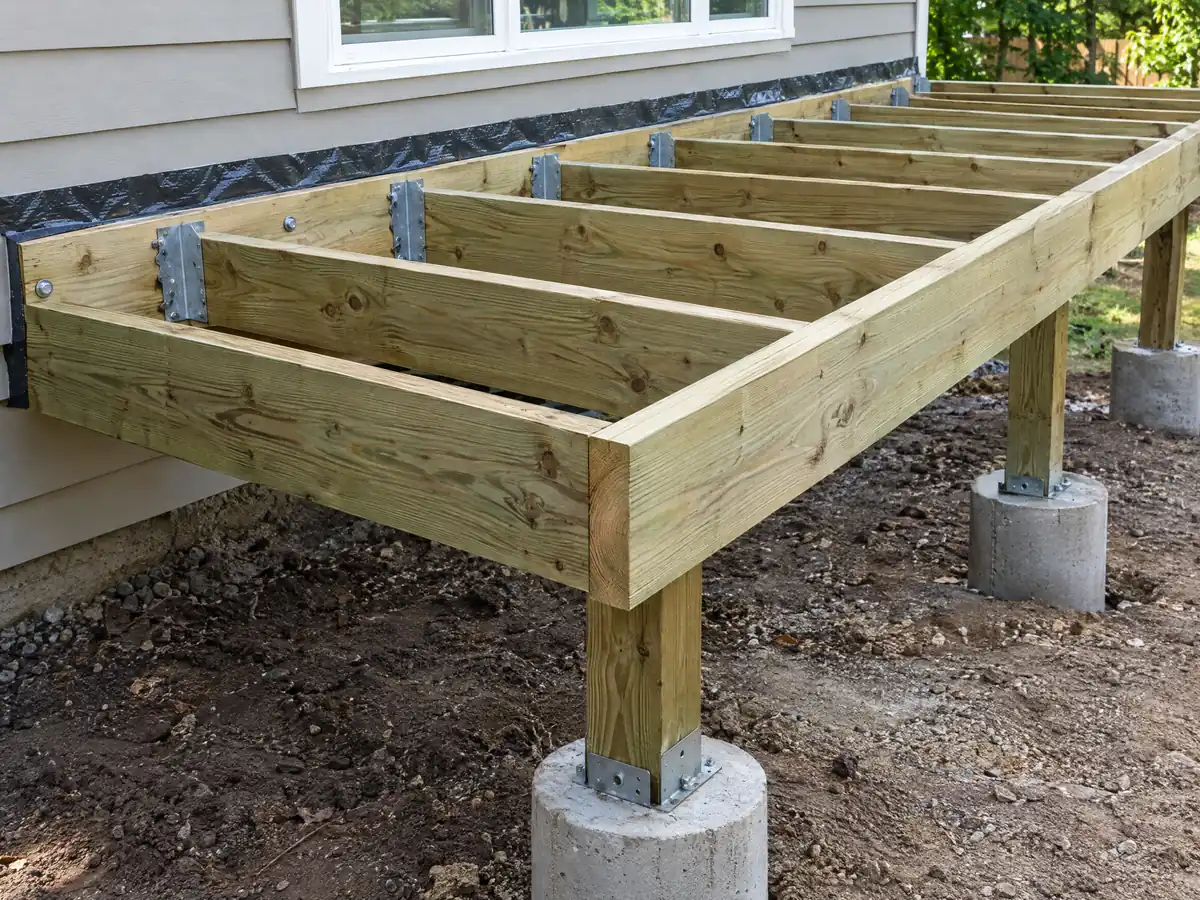
Can you roof part of a deck or add a pergola or patio cover in Agoura Hills?
Yes, within limits. The City's standard trellis and patio cover handout for very high fire zones describes a one story cover no higher than 12 feet whose longest wall and one more wall stay at least 65 percent open below 6 feet 8 inches. It asks for preliminary Planning approval, a building permit application, an HOA approval letter where one applies and a site plan showing setbacks and any 3:1 or steeper slopes, and a solid roof may call for engineering of the existing building.
Zoning (Section 9605.8) lets a covered patio attached to the house reach within 10 feet of the rear lot line and 3 feet of a side line, covering no more than 50 percent of the required yard and staying open on at least two sides apart from removable screens. A cover that is not attached is an accessory structure.
Detached gazebos, pergolas and carports open on two or more sides and 6 feet from other buildings escape the sprinkler rule that applies to additions of 50 percent or more of floor area. An attached patio cover permit also needs the City's smoke and CO alarm self-certification before final sign-off.
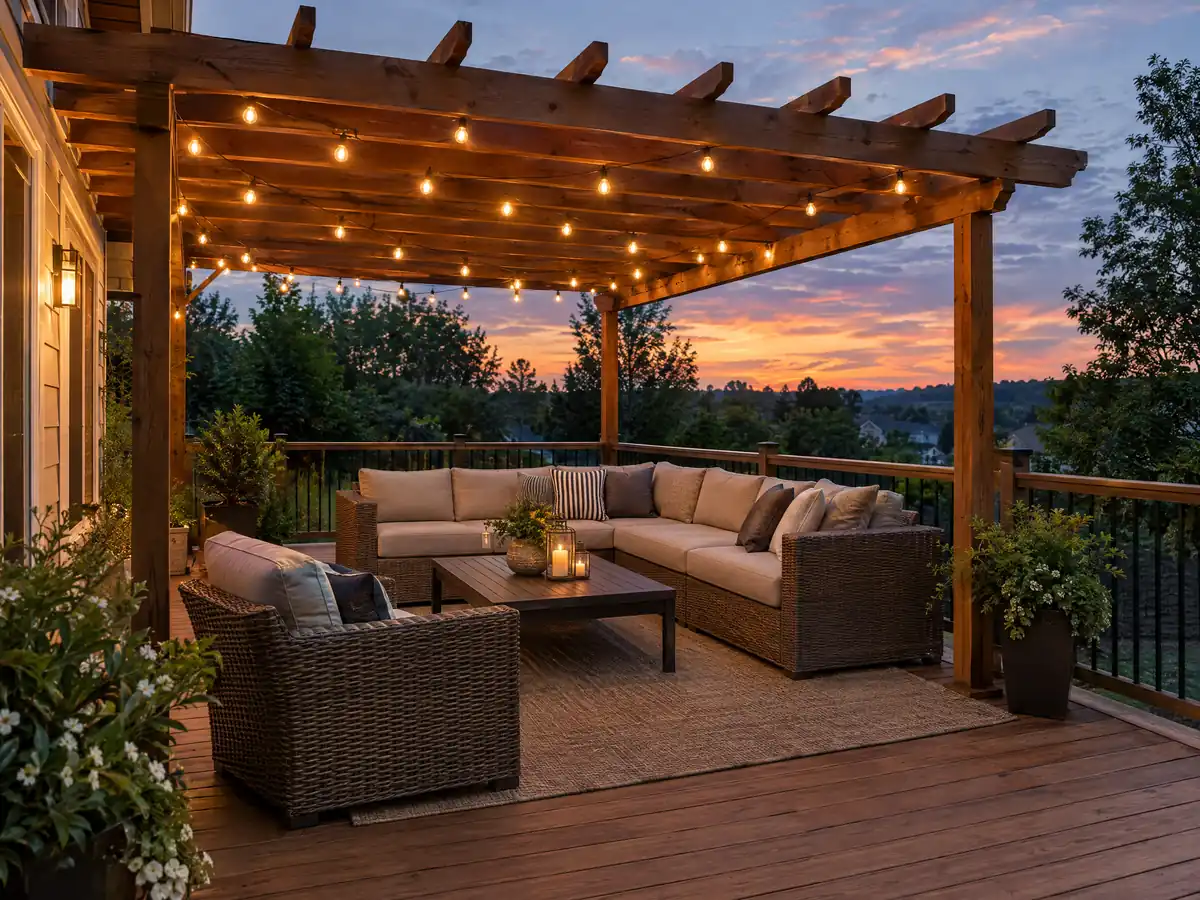
Do you need a permit for deck repair, and what do ledgers and guards require?
Swapping boards in place looks like maintenance, but we found no City sentence that says so, so ask. Rebuilding framing, a ledger, stairs or guards points toward a permit, as does any attached deck, because the exemption covers only the small detached deck described above. Drywood termites are most prevalent in southern California and infest decks, according to the University of California's pest guide, so a repair visit should look for moisture and old damage.
The model Residential Code we read, the 2022 edition (confirm against the adopted 2025 text), asks for a pressure-treated ledger of at least 2 by 8 with no concentrated beam loads, hot-dipped galvanized or stainless fasteners, flashing at the wall, and lateral hold-downs: two 1,500 pound devices within 24 inches of each end or four 750 pound devices (R507.9).
A guard is required where the walking surface is more than 30 inches above grade within 36 inches of the edge, must stand at least 42 inches high and must stop a 4 inch sphere at every opening (R312.1). The City's amendments to those sections were not compared line by line.
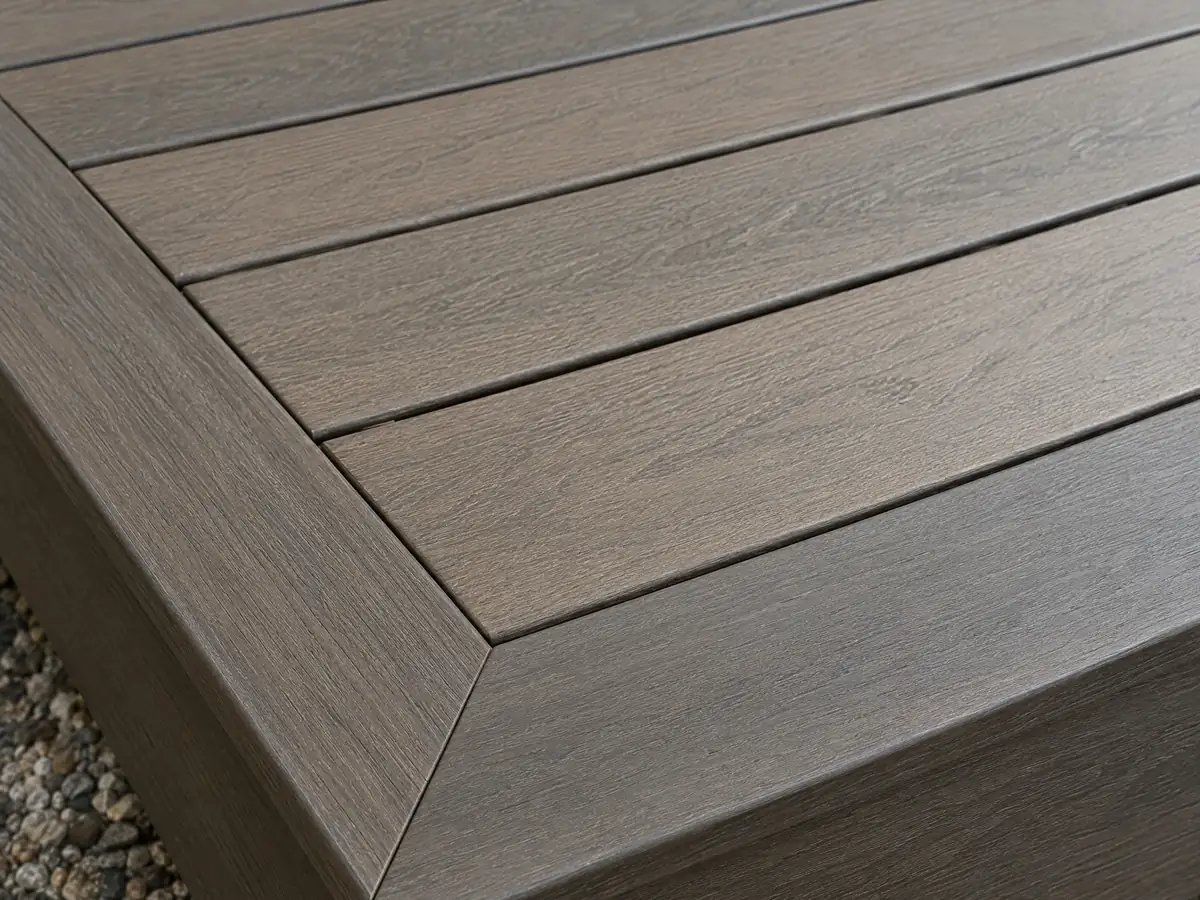
What does a deck builder charge in Agoura Hills, wood or composite?
We found no Agoura Hills price study, so the anchor is Remodeling magazine's 2025 Cost vs. Value report for Los Angeles. Its 16 by 20 foot deck, with a bench, a planter, three steps and full railing, costs $18,419 in wood and returns 99.6 percent at resale, against $26,872 and 73.9 percent for composite. Angi's Los Angeles page, updated October 28, 2025, shows an average of $13,570 across $6,335 to $20,871. Wood is well supported by both sources; composite less so.
Our planning ranges are $45 to $75 per square foot for treated wood and $65 to $110 for composite, which puts a 16 by 20 deck near $14,500 to $24,000 and $21,000 to $35,000. Fire-rated surfaces, tree reports, soils work and permits sit on top, and hillside decks are priced by site visit because no independent Los Angeles data covers them. Carpenters in the Los Angeles-Long Beach-Anaheim area averaged $37.79 an hour in the Bureau of Labor Statistics' May 2025 survey, which is pay and not a billing rate.
CSLB's C-5 framing class covers framing and rough carpentry. Our license check guide shows how to verify a number, and the subcontractor guide explains how a general contractor schedules the carpenters.
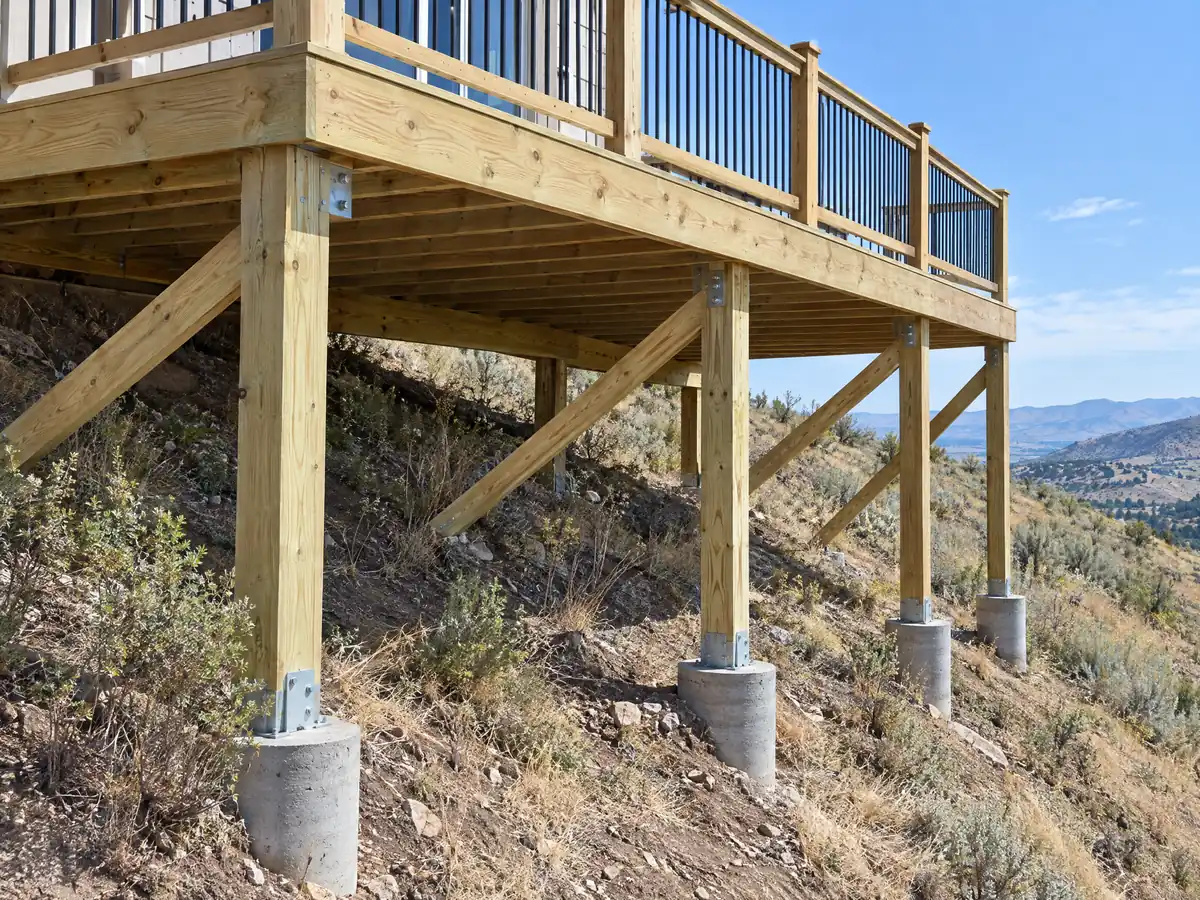
Deck photos from Agoura Hills and nearby communities
Footings, framing, railings and finished decks from Agoura Hills and neighboring communities, shown at the stages that matter. Tap any photo to enlarge it.
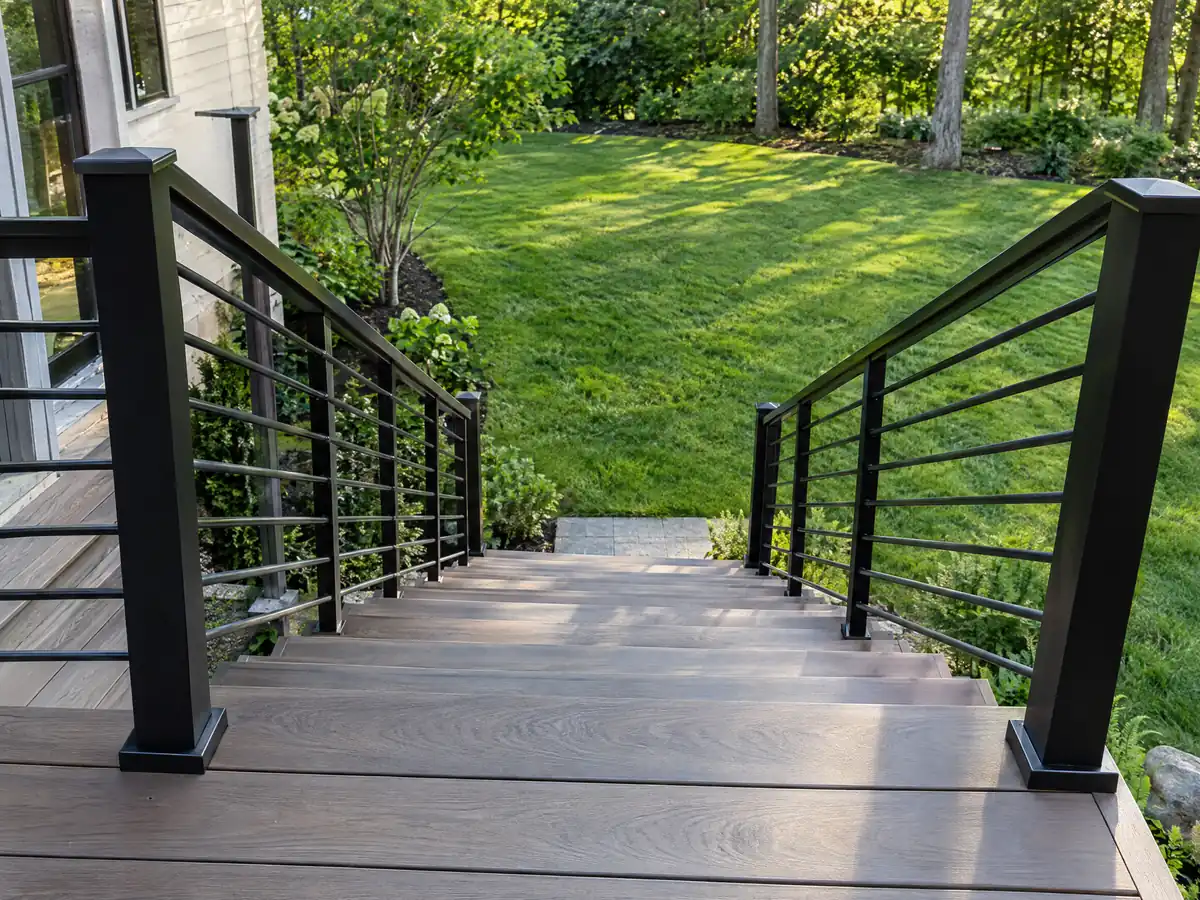
What decks costs around Agoura Hills
These dollar figures are Los Angeles planning ranges, not an Agoura Hills bid, and fire-rated surfaces, tree or soils reports and permit work belong on their own proposal lines, as the decks page describes. For the same property, see flooring in Agoura Hills and concrete in Agoura Hills. Nearby comparisons: decks in Calabasas, decks in Glendale, decks in Pasadena and decks in Los Angeles.
| What it covers | Typical range |
|---|---|
| Pressure-treated wood deck | $45 to $75 per square foot |
| Composite deck | $65 to $110 per square foot |
| 16 by 20 foot wood deck (320 sq ft) | About $14,500 to $24,000 |
| 16 by 20 foot composite deck | About $21,000 to $35,000 |
| Hillside, second-story, rooftop and ipe decks | Priced by site visit |
| Permits and engineering | Quoted as separate lines |
Other work we manage in Agoura Hills
Agoura Hills deck questions, answered
Can I build a deck without a permit in Agoura Hills?
Only a small detached one. The City's amended list exempts a deck of 200 square feet or less, no more than 30 inches above grade, not attached to a house and not serving the exit door. The text came from a third-party mirror of the Municipal Code, so confirm it with Building and Safety. Zoning and fire standards still apply.
What is the largest deck without a permit?
Two hundred square feet, provided the deck stays within 30 inches of grade everywhere, stands free of the house and is not the required exit landing. Anything larger or attached needs a permit. The building code's own exemption list has no deck item, so the residential list is the one that counts.
How much should a 16x20 deck cost?
In the 2025 Cost vs. Value report from Remodeling magazine, a 16 by 20 foot Los Angeles deck with bench, planter, steps and railing runs $18,419 in wood and $26,872 in composite, while Angi's Los Angeles page averages $13,570. We found no Agoura Hills study, and fire-rated surfaces or tree reports add cost, so a site visit sets the price.
Is it cheaper to build a wood deck or composite deck?
Wood is cheaper up front, by about $8,450 on the 2025 Cost vs. Value spec for Los Angeles ($18,419 against $26,872). Wood also returned 99.6 percent at resale in that report, and composite 73.9 percent. Composite saves staining, but in Agoura Hills the board must also meet the fire standard, so compare listed products.
Is railing height 36 or 42 for decks?
Plan on 42 inches, the minimum in the model residential code, which requires a guard where the walking surface is more than 30 inches above grade within 36 inches of the edge. Openings must stop a 4 inch sphere. We did not compare Agoura Hills' amendments line by line, so ask the inspector which text applies.
How high can a deck be without a railing in Agoura Hills?
Up to 30 inches above grade under the model code's guard rule, measured within 36 inches of the edge. A deck at or below that height needs no guard, but it may still need a permit if it is attached, larger than 200 square feet or serves the exit door. Check the City's amended text before building.
What happens if a deck is built without a permit in Agoura Hills?
The owner is exposed. The code bars anyone from owning, using or occupying an unpermitted structure, and the City can issue a stop work order and charge an investigation fee in addition to the permit fee. We found no dollar amounts. Ask Building and Safety what a late permit would require, which may include opening framing.
Can I use composite decking under Agoura Hills' fire standards?
Only a board that meets the ignition-resistant rules. The City accepts walking surfaces that are ignition-resistant, fire-retardant-treated, noncombustible or tested under ASTM E2632 and E2726 or Fire Marshal Standard 12-7A-4 within 10 feet of the building. One University of California summary says some composites do not qualify, so request the listing.
Do I need a permit for deck repair in Agoura Hills?
Replacing boards in place is often the simple case, but we found no City sentence that confirms it, so ask. Rebuilding framing, a ledger, stairs or guards points toward a permit, and so does any attached deck. On a hillside lot or near a protected tree, the review may extend beyond the building counter.
What license does a deck builder need in Agoura Hills?
Framing and rough carpentry fall under CSLB's C-5 class, and a general building contractor can take a carpentry job. At the permit counter the City wants to see a license, a business registration and workers' compensation coverage. Check the license number on the CSLB site before you sign.
Tell us the size, the height, the slope and whether it touches the house
Share the rough size, how high the deck sits above the ground, whether it joins the house, whether the yard slopes and whether a protected tree stands near. The fire, yard and tree questions travel with us to the first visit.