
Concrete Companyin Agoura Hills, CA
A concrete company in Agoura Hills works around three limits: protected oaks, sycamores and walnuts whose root zones are off limits to flatwork and trenching; lots sloping over 10 percent, which need review first; and a permit exemption that covers driveways and walks under 30 inches but not every slab or wall.
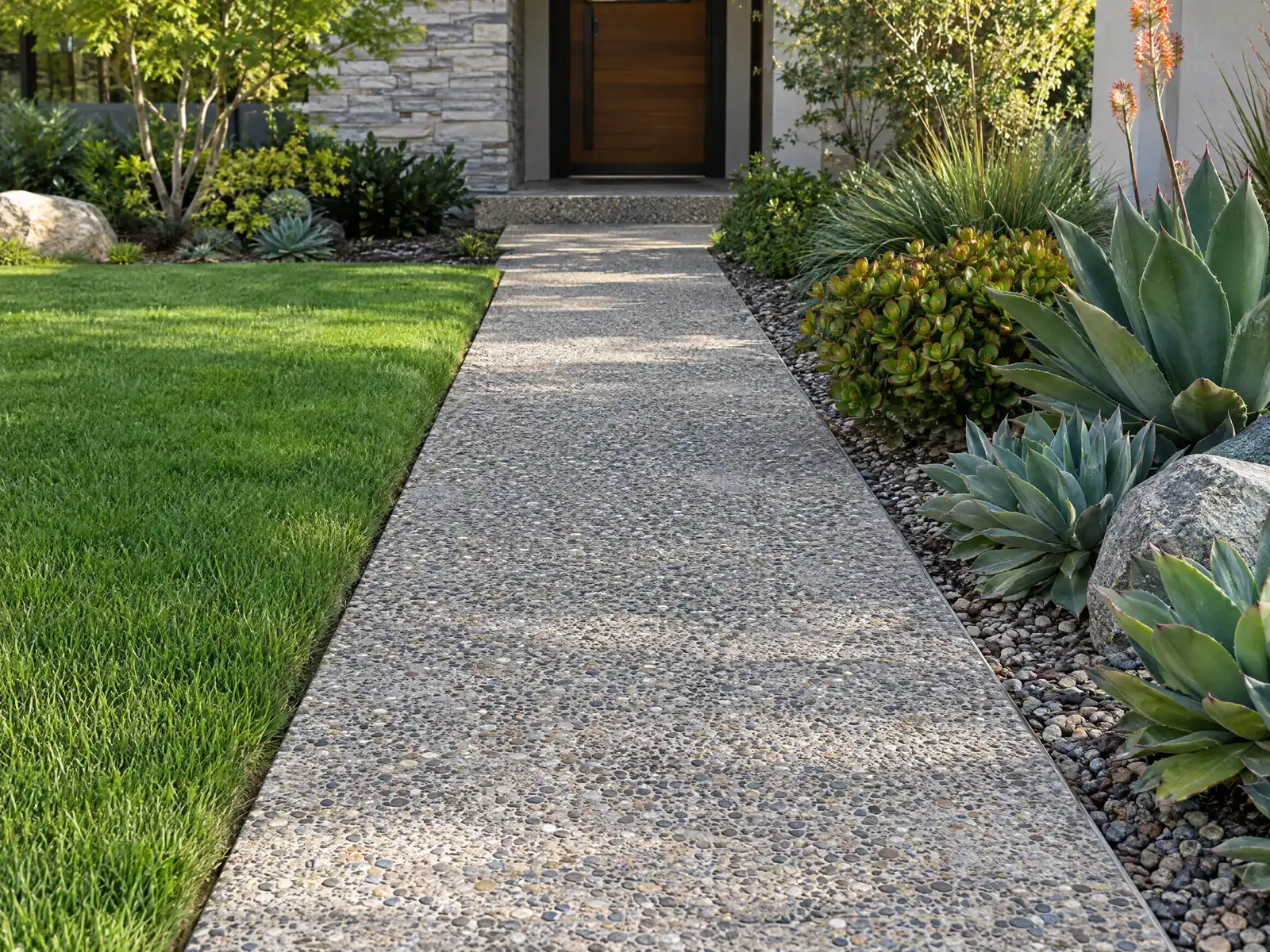
Concrete here was poured for a suburb that arrived late. The land was ranch country with a stage stop until the Ventura Freeway was built, and the first tracts, Hillrise, Liberty Canyon and Lake Lindero, followed from the late 1960s. The Census Bureau's 2020 to 2024 estimates count 7,566 homes, 5,343 of them single-family detached, with 73.4 percent from the 1970s and 1980s, so a driveway or walk that was never replaced is roughly 37 to 56 years old.
MDG Builders, CSLB #1040337, is a Tarzana general contractor. We define the pour, put the tree, slope and permit questions to the City's Building and Safety and Planning staff and book a licensed concrete subcontractor to form, pour and finish. Finishes and thickness choices are on the concrete page, and the Agoura Hills overview lists our other trades here.
What Agoura Hills' Municipal Code and Planning Division say about concrete work
Where concrete permits come from in Agoura Hills: City of Agoura Hills Community Development Department, Building and Safety Division.
- The amended exemption list exempts sidewalks, driveways, platforms and walkways at one and two family homes that are not more than 30 inches above grade at any point, not over a basement or story below, not supporting a structure and not part of an accessible route, and retaining walls or masonry or concrete walls under 2 feet that support no surcharge.
- Zoning allows driveways, walkways, patio slabs and other concrete or asphalt areas, and wooden decks, in any required yard if they do not rise more than 1 foot above ground level (Municipal Code 9606.1.G); decks over 1 foot high fall under Section 9605.6. Ground mounted equipment such as pool equipment and air conditioners may not sit in the required front yard setback and must be screened from the public right of way.
- Grading is regulated by Appendix J as amended: a grading permit is required unless the work is exempt under J103.2, and Appendix J is enforced by the director of public works. Permit holders must protect utilities, adjacent property and drainage (J101.5 to J101.7), and a 30 day excavation notice under Civil Code 829 to 834 is required where excavation is deep and close to neighboring structures.
- The City's permit handouts list a 30-Day Notice of Intent to Excavate form and a Property Line Wall Agreement form alongside the geotechnical, plan stamp and owner-builder forms.
- Flatwork, trenching or footings inside a protected tree's Tree Protection Zone count as encroachment, which needs at least a general tree permit; projects with ground disturbance within 25 feet of the zone's edge need a development tree permit with a tree consultant's site plan map and protected tree report.
- CSLB defines the C-8 Concrete classification as forming, pouring, placing, finishing and installing mass, pavement, flat and other concrete work, and placing and setting screeds for pavements or flatwork.
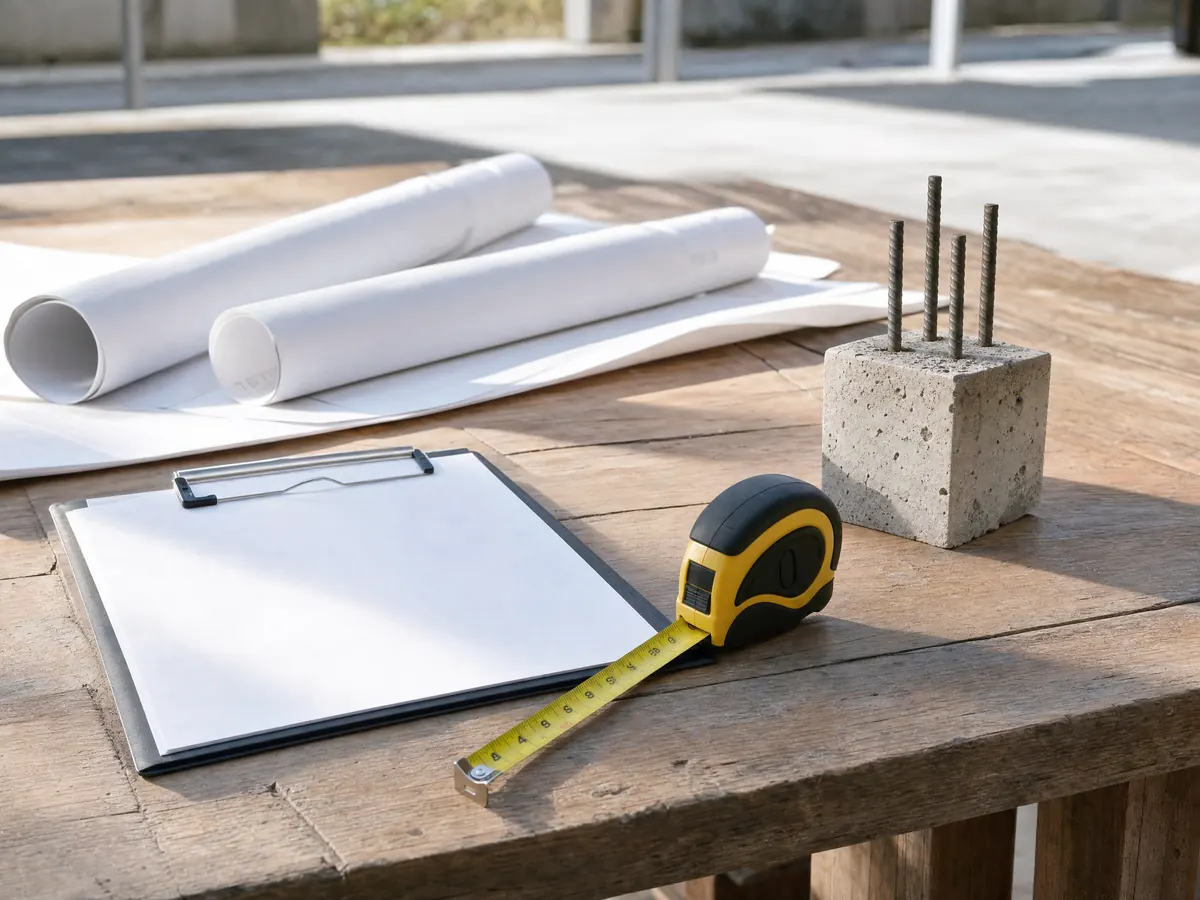
Can you pour a driveway or walk near an oak tree in Agoura Hills?
Often yes, but not casually. Under the protected tree ordinance (Municipal Code 9657, adopted December 10, 2025), every scrub oak is protected, along with any oak, California sycamore or Southern California black walnut whose trunk is 6 inches or more across at 4.5 feet above ground. A Tree Protection Zone starts 5 feet outside the dripline, runs in to the trunk and never measures less than 15 feet from it.
Flatwork, trenching and footings inside that zone count as encroachment, and so does driving vehicles or grading, so a new pad or a truck's route can trigger a tree permit. Ground disturbance within 25 feet of the zone's edge calls for a development tree permit, backed by a tree consultant's site map and protected tree report. Topping and lion tailing are banned, and each day of a violation is a separate offense.
Remedies can include mitigation trees on site, off site or an in lieu fee, plus restitution for willful destruction. We found no dollar figures, so ask Planning for current charges. The ordinance is less than a year old, and the City's handouts predate it.
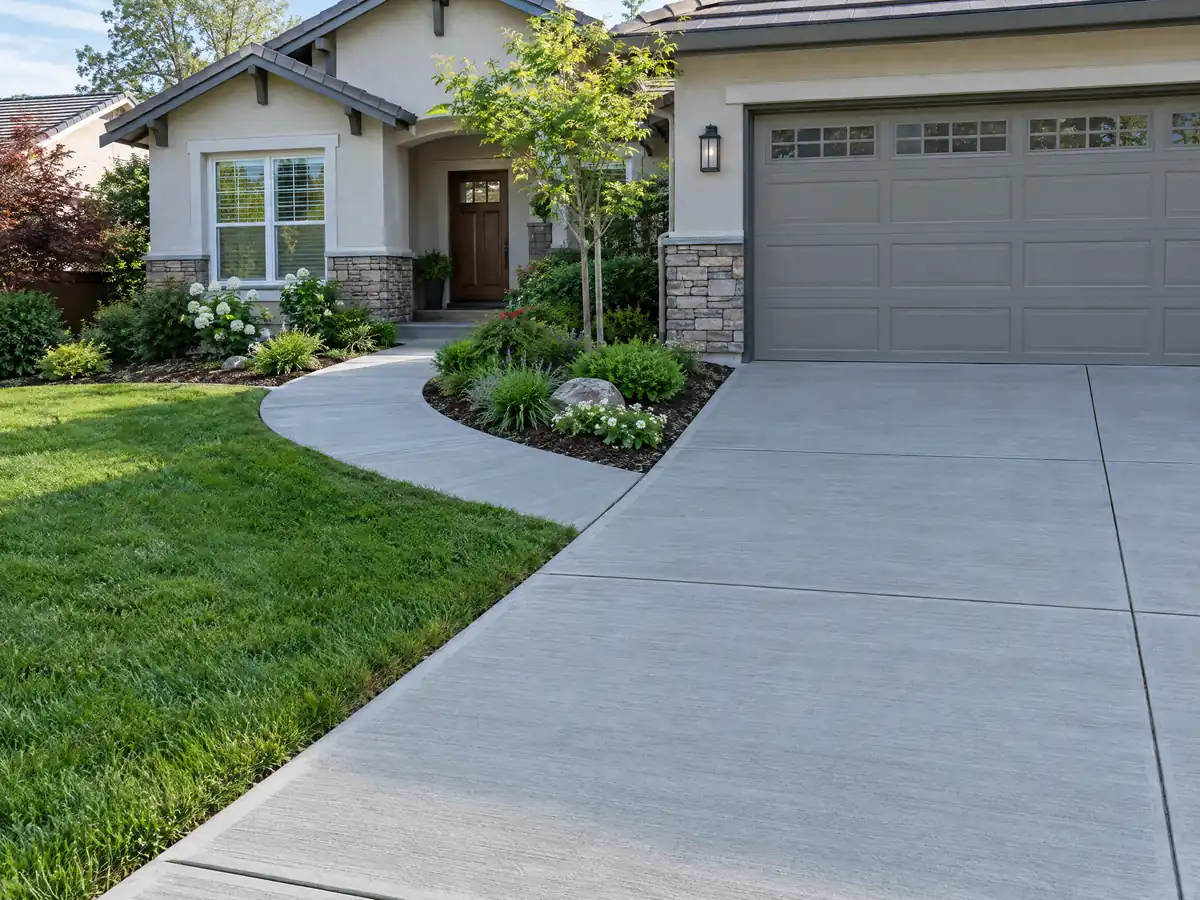
Does a sloped lot need a grading permit or a soils report before a slab?
Often both, and the slope decides. A parcel averaging more than 10 percent slope before grading counts as hillside under Municipal Code 9652, and a conditional use permit or architectural review approval must precede any building or grading permit. Grading falls under the amended Appendix J, enforced by the director of public works, and a permit is needed unless the work is exempt under J103.2. We did not read that exemption text, so ask what a small pad or wall qualifies for.
The soils report trigger is separate. The City's geotechnical policy asks for one on a designated hillside lot or a slope of 10 percent or more, in a liquefaction or flood zone, on fill, or for a retaining wall over 6 feet from the bottom of the footing. The County GIS layers we sampled at 59 points, which is not a parcel check, flagged landslide zones at 13 points and liquefaction zones at 6.
Steeper than 3 horizontal to 1 vertical, the City's setback handout applies CBC 1808.7 to footings near the slope face. Existing hillside groundcover must stay healthy under Appendix J, so clearing a slope for a slab can itself be a violation unless the County Fire Department orders the clearing.
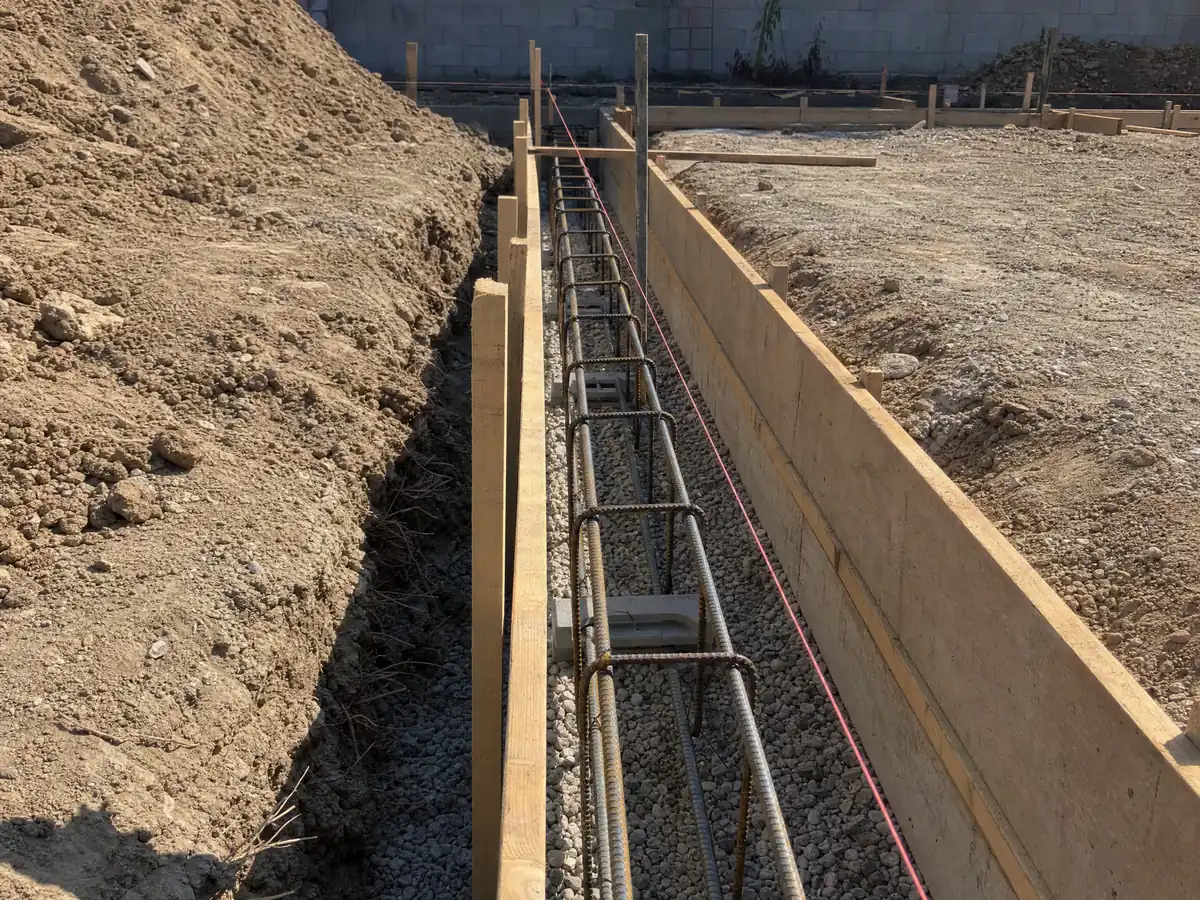
Do driveways, walkways and patio slabs need a permit in Agoura Hills?
Some do not. The City's amended Section 105.2 exempts sidewalks, driveways, platforms and walkways at one and two family homes when they sit no more than 30 inches above grade at any point, are not over a basement or story below, support no structure and are not part of an accessible route. A ground-level patio slab resembles those items but is not named, and we read the text on the GoCodebook mirror, so confirm with Building and Safety.
Zoning is a separate test. Driveways, walkways and patio slabs may sit in any required yard if they rise no more than 1 foot above ground (Municipal Code 9606.1.G), while ground-mounted equipment such as pool equipment or an air conditioner may not stand in the required front yard and must be screened from the public right of way.
Anything that does need a permit carries the City's contractor rules: a current license, a City business license and proof of workers' compensation. Starting without a required permit brings a stop work order and an investigation fee on top of the permit fee.
How tall can a retaining wall be in Agoura Hills before it needs a permit?
Lower than the state default. The amended exemption list passes retaining walls and masonry or concrete walls under 2 feet that carry no surcharge, and the City's Policies page lists retaining walls among the work that needs structural plan check. Zoning separately allows retaining walls up to 6 feet in every yard (Municipal Code 9606.2.D), so a wall can satisfy zoning and still need a permit and engineering.
A wall that holds fill counts toward the fence limit, while a fence on a wall that holds a cut can reach 6 feet from the highest natural grade, and an open 3 foot safety fence is always allowed. Front yard fences and walls top out at 3.5 feet. Beyond 6 feet from the bottom of the footing, the soils policy asks for a geotechnical report.
Neighbors matter too. A block or concrete wall on a shared line, built without a surveyor's certification, calls for the City's Common Property Line Wall Agreement signed by every affected owner; it does not certify the legal line. CSLB lists masonry walls under C-29, so a block wall and a poured wall may involve different subcontractors.
What do the Old Agoura, Indian Hills and Equestrian overlays change for concrete?
Each overlay adds review rather than a ban. Old Agoura expects earthtone colors and rural ranch materials, prohibits solid walls in front yard setbacks and allows 6 foot front fences only when open enough for driveway visibility. Indian Hills sends materials, colors and terrain fit to architectural review, so a bright stamped color or a tall wall can draw comments.
The Equestrian overlay matters for patios. A new house lot in it must reserve a 1,500 square foot horse keeping area, and while no horses live there the area may hold landscaping, patio covers, above-grade spas, barbecues and fire pits, all on permeable foundations. That last phrase is the catch: a poured fire pit slab there needs a Planning answer first. We do not list which streets sit in which overlay; the City's zoning map does.
When can a concrete truck pour in Agoura Hills, and what about deep digging near a neighbor?
Loud equipment, including compressors and diesel trucks, is banned on Sundays and holidays and from 7:00 p.m. to 7:00 a.m. on other days (Municipal Code 4100). The city manager can grant written exceptions (4101), but we found no routine process, so a long pour belongs on a morning start. The building official may suspend a permit for after hours noise or for dust above standards, which matters when saw cutting.
Deep digging has its own notice. Where an excavation is deep and close to a neighbor's structure, the amended Appendix J points to the 30 day written notice that Civil Code sections 829 to 834 describe, and the City lists a 30-Day Notice of Intent to Excavate form among its handouts. Permit holders must also protect utilities, adjacent property and drainage.
Flood is a lot by lot question. FEMA special flood hazard areas need a floodplain development permit before any construction (Municipal Code 3705), and our 59 County GIS sample points returned none in the 1 percent annual chance layer and 2 in the 0.2 percent layer.
What does concrete work cost in Agoura Hills, and what license should the crew hold?
We found no Agoura Hills price study, so the numbers come from Angi's Los Angeles pages, which cite customer surveys and professional data and were updated between February and August 2026. A patio runs $4 to $13 per square foot, averaging $5,248, and a 20 by 20 foot slab costs $1,600 to $5,200. Stamped work is $15 to $30 per square foot, a driveway $8 to $20 per square foot with a $7,270 average, and a plain slab averages $6,134. Retaining walls average $7,140 across a wide spread of $2,674 to $11,842, so we print no per-foot figure. Small jobs cost more per foot because of minimum charges.
Cement masons in the Los Angeles-Long Beach-Anaheim area averaged $33.67 an hour in the Bureau of Labor Statistics' May 2025 survey, which is pay and not a billing rate. Demolition, haul-off, base, rebar, any tree report and any soils work belong on separate proposal lines. CSLB's C-8 class covers forming, pouring and finishing concrete, and our license check guide and subcontractor guide explain the lookup and the hiring model.
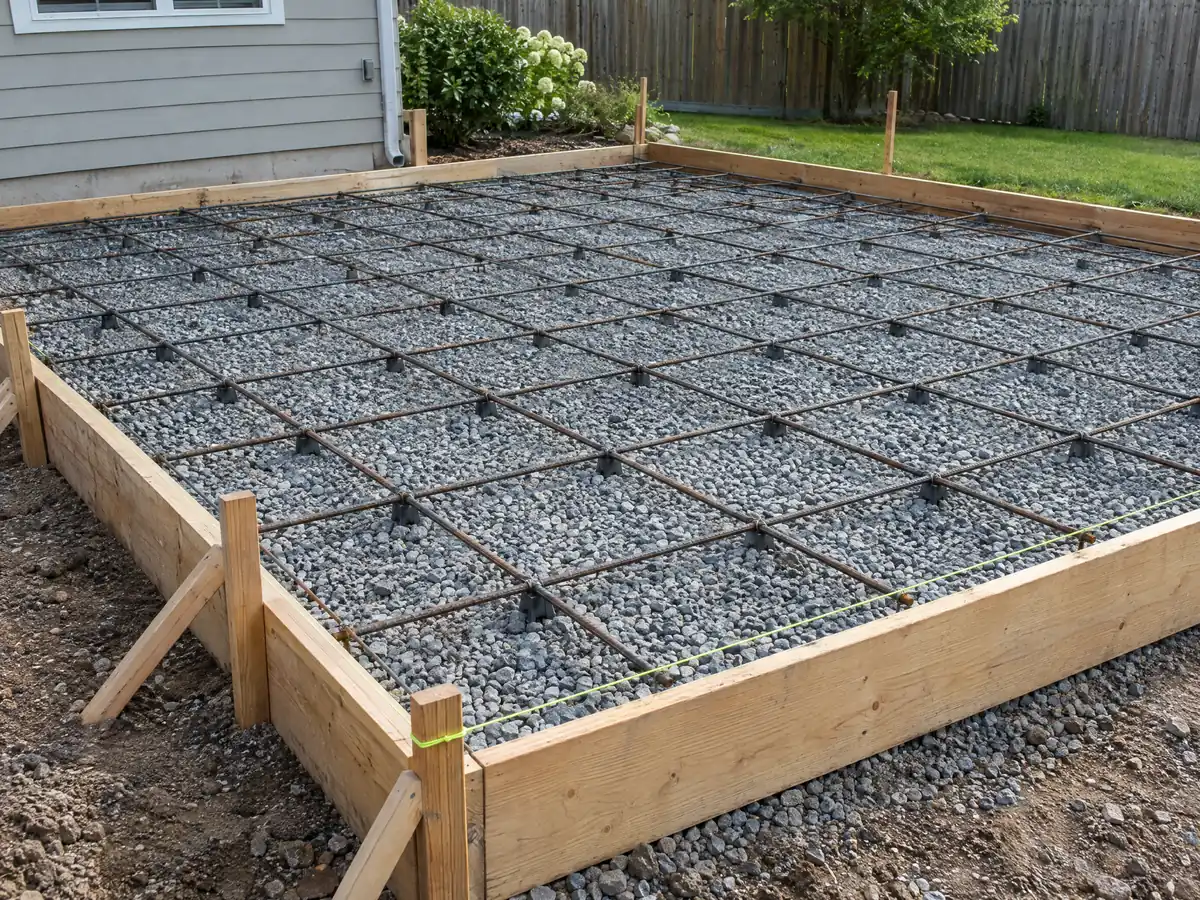
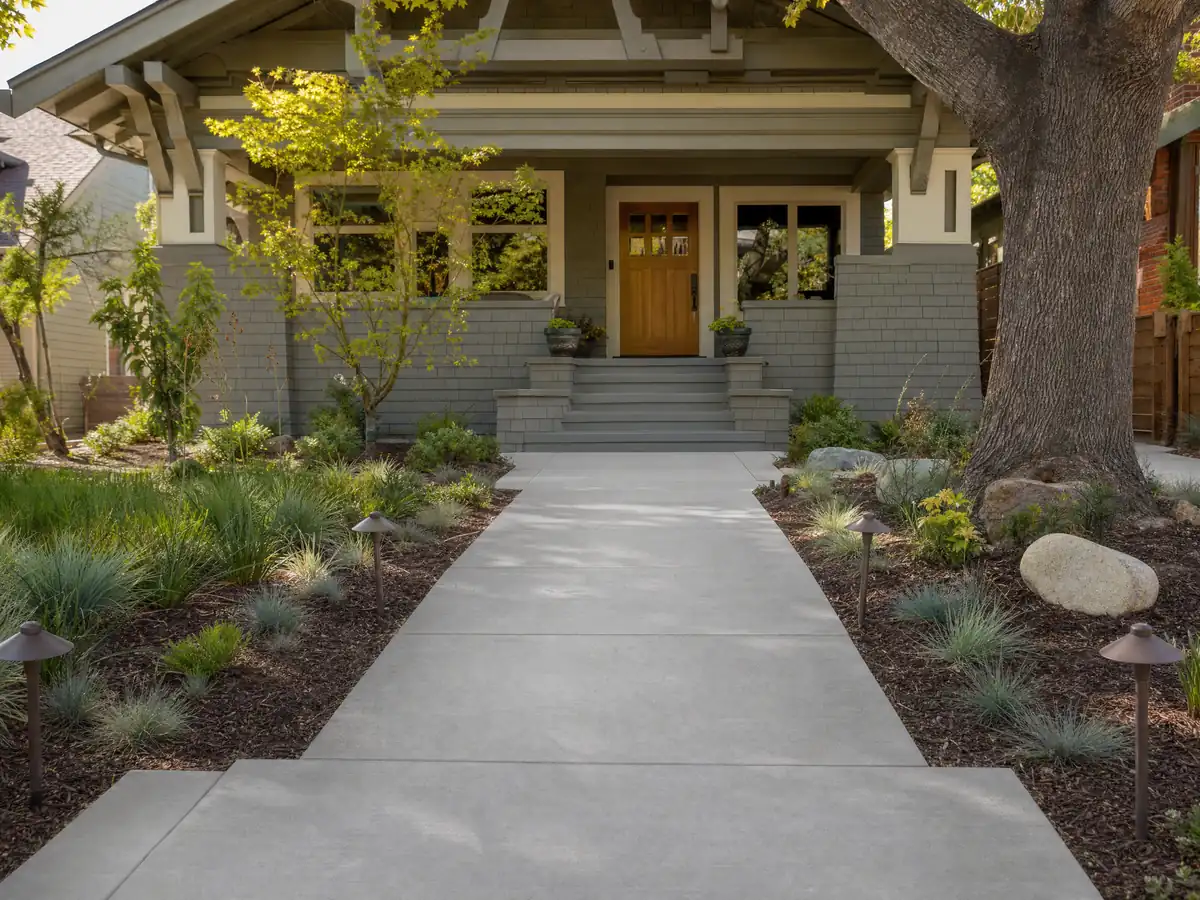
Concrete photos from Agoura Hills and nearby communities
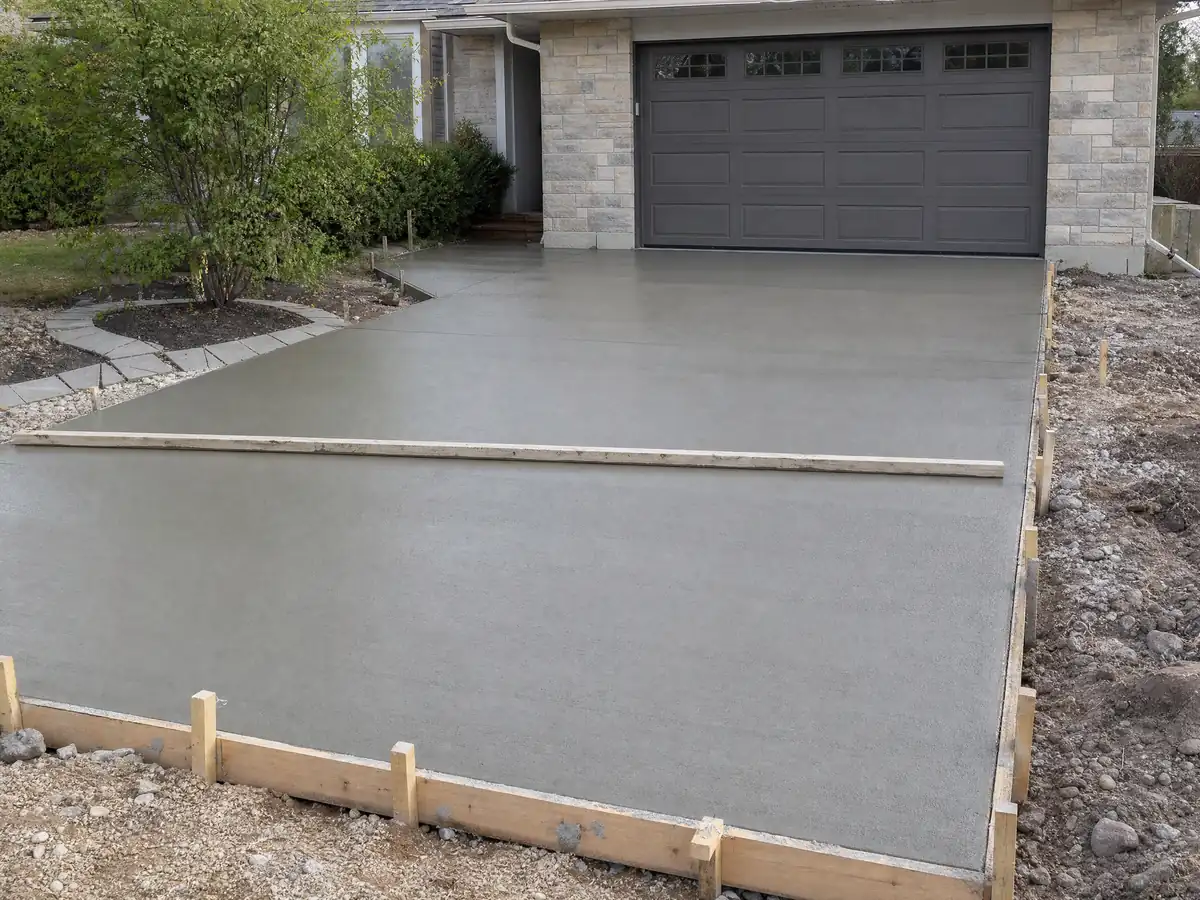
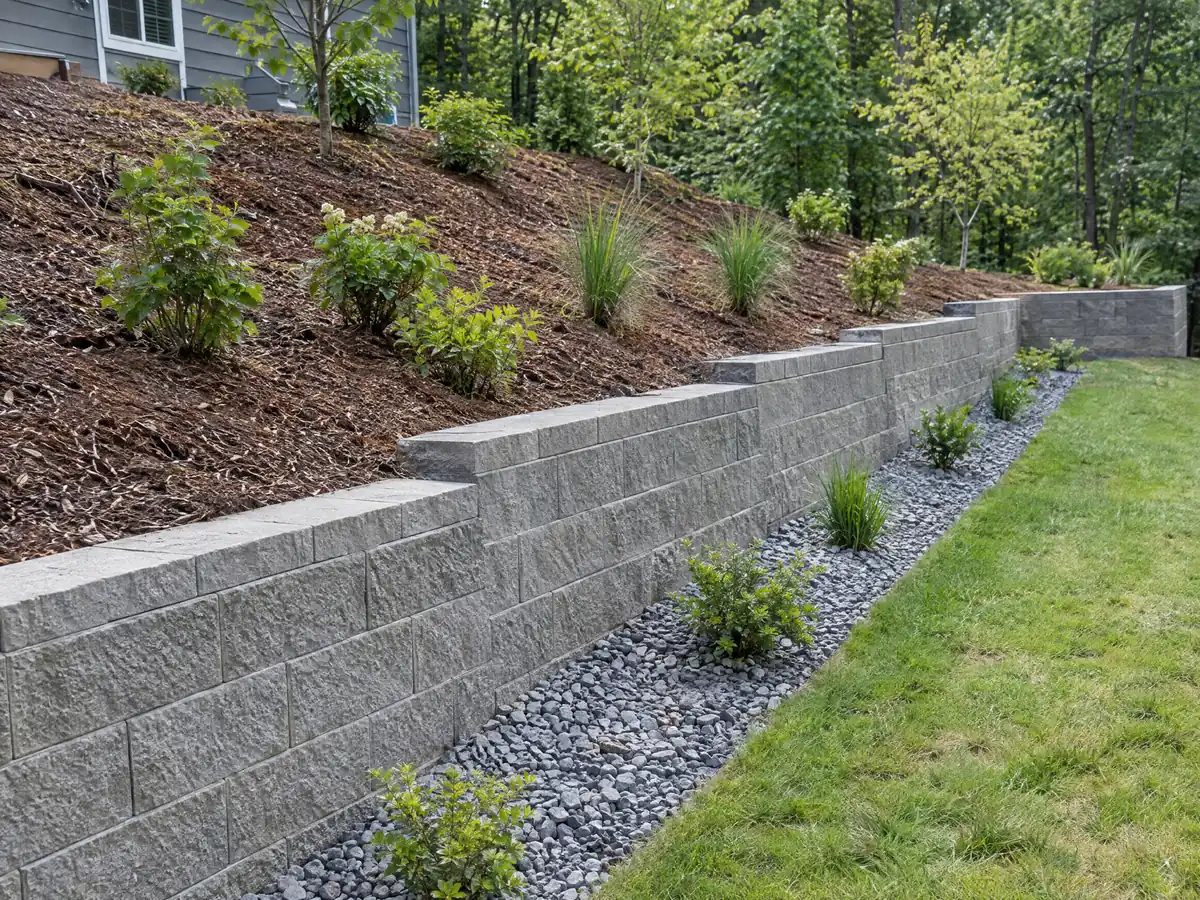
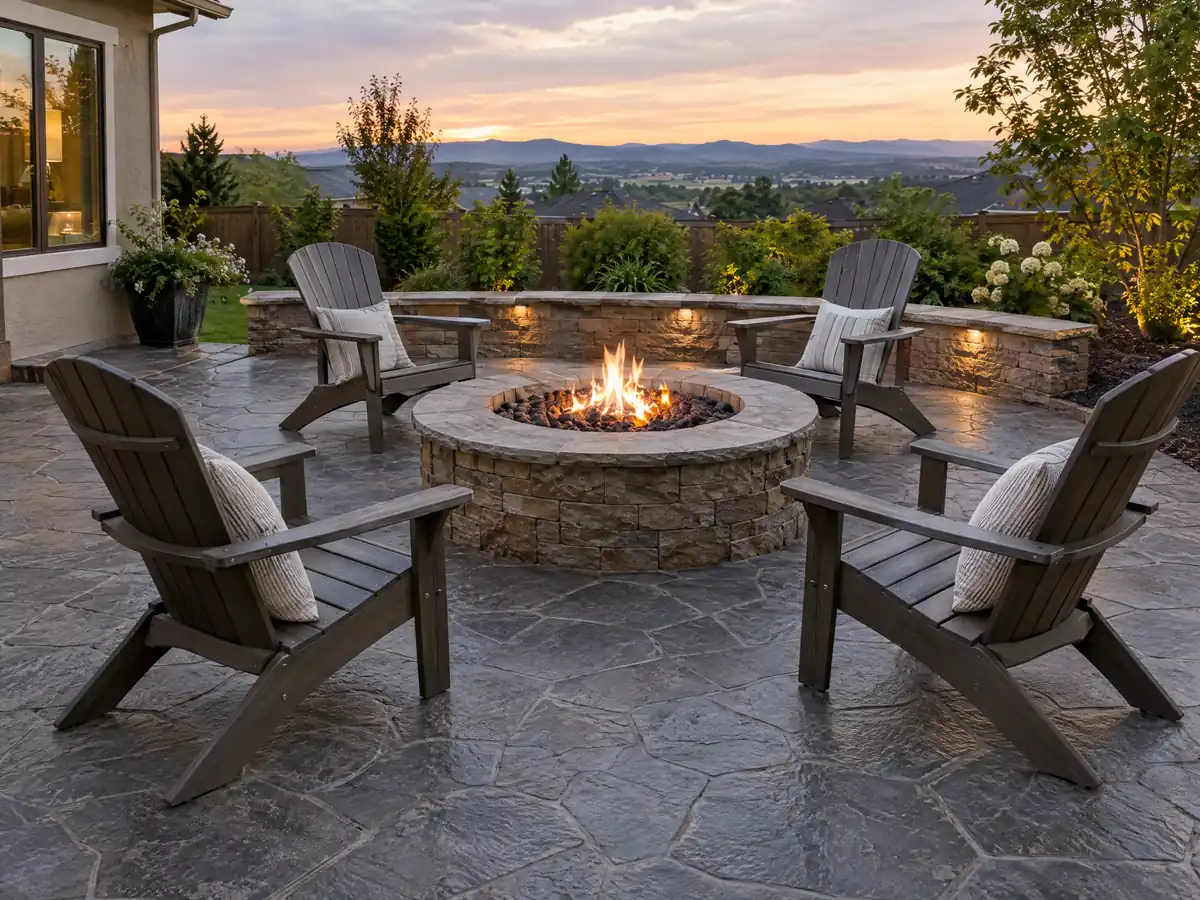
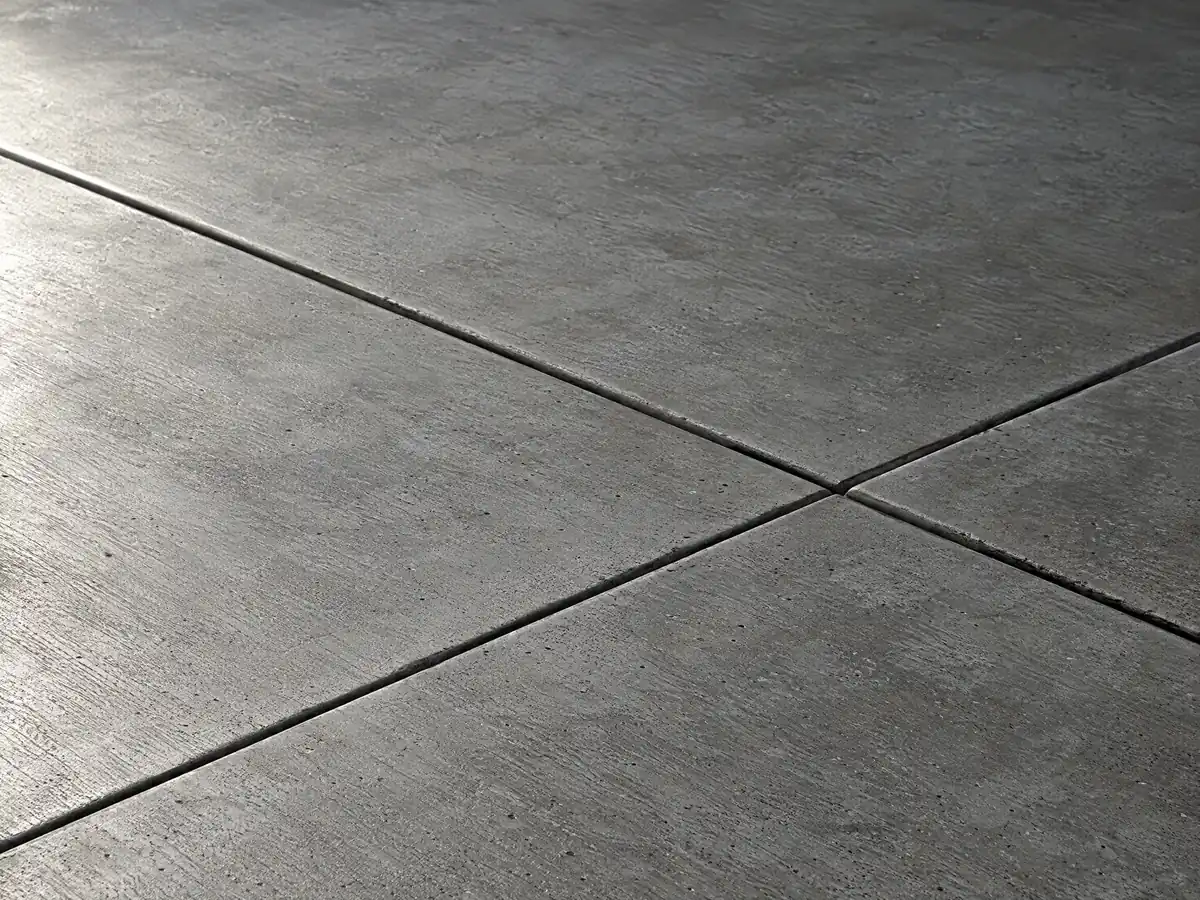
Forms, flatwork, walls and finished walks from Agoura Hills and neighboring communities, shown at the stages that matter. Tap any photo to enlarge it.
What concrete costs around Agoura Hills
These dollar figures are Los Angeles planning ranges, not an Agoura Hills bid, and a proposal should itemize demolition, base, tree or soils reports and any permit work, as the concrete page explains. For the same property, see flooring in Agoura Hills and decks in Agoura Hills. Nearby comparisons: concrete in Calabasas, concrete in Glendale, concrete in Pasadena and concrete in Los Angeles.
| What it covers | Typical range |
|---|---|
| Patio, walkway or slab, broom finish, 300 sq ft or more | $8 to $14 per square foot |
| Decorative: stained, stamped or exposed aggregate | $15 to $30 per square foot |
| Driveway replacement, with demolition of the old slab | $9 to $20 per square foot |
| 20 by 20 foot plain patio (400 sq ft) | About $3,200 to $5,600 |
| 20 by 20 foot decorative patio (400 sq ft) | About $6,000 to $12,000 |
| Small jobs under 300 sq ft | Usually above the per-foot range |
| Retaining walls | Set by the written proposal |
Other work we manage in Agoura Hills
Agoura Hills concrete questions, answered
Can I pour a concrete patio without a permit?
Possibly, but we cannot confirm it from a City source. The City's amended exemption list names sidewalks, driveways, platforms and walkways under 30 inches, not a ground-level patio slab. Zoning lets slabs sit in any yard if they rise under 1 foot, and tree or hillside review may still apply. Call Building and Safety with the size and location first.
Can I expand my driveway without a permit?
Do not assume so. Driveways under 30 inches are on the exempt list and zoning allows them in any required yard under 1 foot high, but we found no width or paved-share rule in the sources we read, so ask Planning. Protected trees within 25 feet of the zone's edge and slopes over 10 percent can add review.
How much should a 20x20 concrete patio cost?
Angi's 2026 Los Angeles page gives $1,600 to $5,200 for a 20 by 20 foot patio, which is 400 square feet, inside a broader range of $4 to $13 per square foot. We found no Agoura Hills study. Demolition, base work, finishes and minimum charges shift the number, so a site visit sets the real price.
How much do contractors charge for concrete?
Per square foot, Angi's 2026 Los Angeles pages show $4 to $13 for a patio, $8 to $20 for a driveway and $15 to $30 for stamped work. We rate plain flatwork medium in confidence and decorative finishes lower. Small jobs cost more per foot, and demolition, rebar, tree reports and soils work should appear as their own lines.
What is the maximum height of a retaining wall without a permit in Agoura Hills?
Under 2 feet if it carries no surcharge, according to the City's amended exemption list, and the City's Policies page lists retaining walls as needing plan check. Zoning allows walls up to 6 feet in every yard, and a soils report is required beyond 6 feet measured from the footing bottom. Confirm before digging.
Is 4 inches of concrete thick enough for a driveway?
Four inches is a common thickness for walks and patios, and many contractors go thicker where vehicles drive, but we found no City rule setting a driveway thickness. The City's only slab figure, 4 inches with No. 4 bars at 16 inches, is a foundation minimum for expansive soil. Ask how the base, joints and reinforcement will be handled.
How much would a 20x20 stamped concrete patio cost?
Stamped work at Angi's 2026 Los Angeles range of $15 to $30 per square foot puts 400 square feet at $6,000 to $12,000. We rate that lower in confidence than plain flatwork. List the pattern, color and sealer on the proposal so bids compare, and ask whether an overlay district's color rules apply.
Can I pour concrete near an oak tree in Agoura Hills?
Only with care and probably a tree permit. Flatwork, trenching and footings inside a protected tree's zone, never narrower than 15 feet from the trunk, count as encroachment, and ground disturbance within 25 feet of the zone's edge needs a development tree permit. The ordinance covers oaks, California sycamores and black walnuts of 6 inches or more across.
What license does a concrete company need in Agoura Hills?
A concrete company should hold CSLB's C-8 class, and masonry block walls fall under C-29. The permit counter asks for a license, a City business registration and workers' compensation coverage. Verify the number on the CSLB site and request a certificate of insurance before signing.
When can a concrete truck pour in Agoura Hills?
Not on Sundays or holidays, and not from 7:00 p.m. to 7:00 a.m. on other days, since Municipal Code 4100 bans loud equipment including compressors and diesel trucks in those hours. The city manager can grant written exceptions, but we found no routine process. Plan a morning start so finishing does not run late.
Describe the pour, the slope and any trees nearby
Tell us what you want poured, the rough size, whether the lot slopes and whether an oak, sycamore or walnut stands close. The tree, grading and permit questions travel with us to the first visit.