
Concrete Companyin Camarillo, CA
A concrete company in Camarillo can pour a sidewalk or patio up to 30 inches high without a building permit, but the soil comes first: the City requires an expansion index test on every building site. Walls, driveway approaches and anything in the public right-of-way follow separate rules, so call Building & Safety before the forms go up.
Camarillo's concrete follows its farmland. Rancho Calleguas was granted in 1837, the townsite was laid out about 1910 around St. Mary Magdalen Church, and the Ventura Freeway of the mid-1950s split Old Town and opened the valley to tract building, according to Wikipedia. Voters later fenced the city in with the Camarillo Urban Restriction Boundary, renewed through 2050 by Measure J on November 8, 2016, which keeps houses off the Pleasant Valley fields. Much of the work here is therefore replacing or widening flatwork that has been in place since the tract years.
MDG Builders, CSLB #1040337, is a Tarzana general contractor that designs the layout, asks the City the permit questions and schedules the trades. A subcontractor holding the right concrete license does the pour and the finish, and you can request that firm's license number and proof of insurance before signing. Pricing and materials are on our concrete page, and the Camarillo overview shows the other trades we run in town.
What Camarillo Building & Safety, Planning and Public Works say about concrete work
Where concrete permits come from in Camarillo: City of Camarillo Community Development Department, Building & Safety Division.
- Sidewalks and concrete patios not more than 30 inches high do not need a building permit in Camarillo (City permit handout), but patio covers, gazebos and patio enclosures over them need a zone clearance and a building permit.
- Anything built in the public right-of-way needs an encroachment permit from Public Works: Section 13.04.035(D) names curbs, gutters, sidewalks, driveways, pavement, base course and retaining or garden walls in or across a highway, and Section 13.04.430 requires driveways in the right-of-way to be portland cement concrete.
- Residential driveways must be at least 10 feet wide and 16 feet wide when 100 feet or longer, must not be blocked by any part of a building, and no permanent parking is allowed in the required front yard (Sections 19.44.140 and 19.44.160); single-family homes need two enclosed spaces (Section 19.44.030).
- Section 13.04.435 says a driveway cannot be built or kept where fences, buildings or natural grade would stop a vehicle from being stored entirely off the public right-of-way.
- Public improvements: Section 16.20.010 requires driveways, aprons, sidewalks, curbs and gutters abutting a lot to be brought up to City standard when an addition or alteration exceeds 50 percent of the structure's replacement value, with a guarantee security.
- Expansive soil rules: where the expansion index is above 50, Section 16.04.095 requires gutters and downspouts to carry roof water to pervious areas such as yards and vegetated areas, and says routing rooftop runoff through yard drains to the roadway or stormwater system is not permitted; flatwork and footings must follow the City's foundation table.
- The City's Handouts page offers a Foundation Certificate form with a surveyor or civil engineer stamp block, used to certify foundation work.
- Section 16.04.070 says each site's soil classification is determined by a California-licensed engineer experienced in soil engineering, with the soil expansion index listed in every soils investigation report.
Sources for these rules
- cms7files.revize.com: When%20is%20a%20Permit%20Required
- gocodebook.com: chapter 13.04 encroachment permits
- gocodebook.com: chapter 19.44 off street parking 5
- gocodebook.com: chapter 16.20 construction of curbs gutters and sidewalks
- gocodebook.com: chapter 16.04 uniform building codes adopted by reference 1
- cityofcamarillo.org: building safety handouts
How does expansive soil change a concrete slab, footing or patio in Camarillo?
It decides the design before the finish. Section 16.04.075 of the Municipal Code calls for a soil expansion index test on each building site, and Section 16.04.070 has a California-licensed engineer experienced in soils set the classification, with the index listed in every soils report. The City's September 2025 Safety Element records expansive-soil damage in the Camarillo Heights area and on the west side, and says the east-side neighborhoods along Santa Rosa Road are highly expansive too.
Where the index is above 50, flatwork and footings follow the City's foundation table, and Section 16.04.095 requires gutters and downspouts to deliver roof water to yards and other pervious ground. Piping it through a yard drain to the roadway is not permitted. We read that on the GoCodebook mirror, which is a third-party copy, so the City counter confirms it. For a patio, the plain lesson is to slope the slab away from the house and keep downspouts off the edge. The City also posts a Foundation Certificate form with a surveyor or engineer stamp block for foundation work.
Thickness is a separate question. Four inches is the usual home slab, but we found no code section that fixes it for patios or driveways, so treat it as practice. A good proposal states the base material, thickness, reinforcement and joint layout.
Do you need a permit to pour a concrete patio, sidewalk or driveway in Camarillo?
Often the slab alone does not, but what goes on top might. The City's permit handout says sidewalks and concrete patios not more than 30 inches high need no building permit, while a patio cover, gazebo or enclosure over a slab needs a zone clearance and a building permit. Section 19.48.010 makes it unlawful to build or alter before the planning zone clearance and the building permit are in hand. The Community Development fee schedule lists a residential zone clearance at a $135 base fee, before the 17.89 and 11.34 percent surcharges the City adds.
Skipping a required permit costs more than waiting. The Master Fee Schedule lists an Investigation Permit at $255 flat, and Section 16.04.045 sets the investigation fee equal to the permit fee, charged on top of it. We read the code through the third-party mirror, so confirm the amounts at the counter.
Applications go through the OpenGov portal, and questions go to the Building & Safety Division at 805-388-5395, open Monday to Friday 8 AM to 5 PM. Describe the height, the distance to the house and whether anything will stand on the slab.
How wide can a Camarillo driveway be, and who approves the apron at the curb?
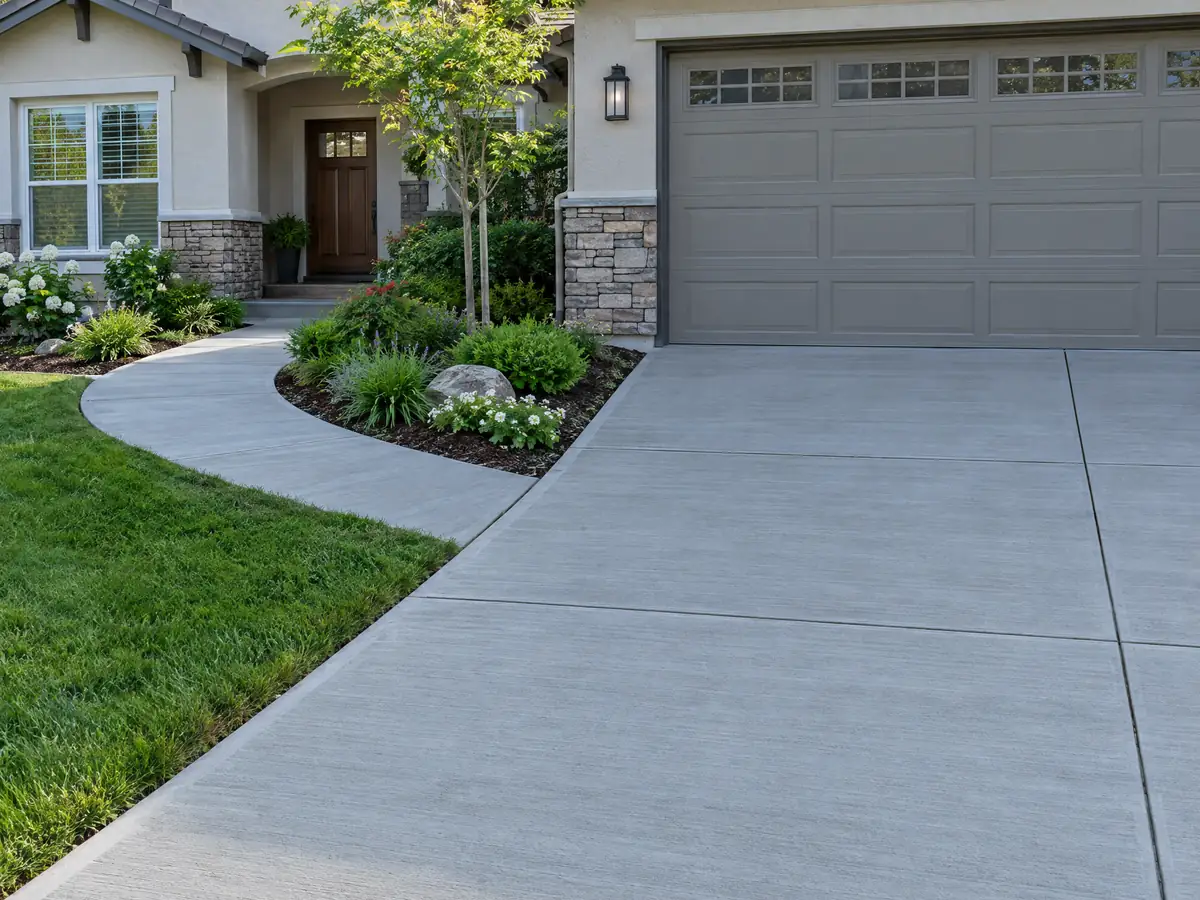
Ten feet is the floor and 16 feet applies to a long drive. Sections 19.44.140 and 19.44.160 set residential driveways at least 10 feet wide, or 16 feet wide when they run 100 feet or longer, and bar any part of a building from blocking them. No permanent parking is allowed in the required front yard, and Section 19.44.030 asks for two enclosed spaces at a single-family home.
The public side is a second approval. Section 13.04.035(D) names curbs, gutters, sidewalks, driveways, pavement and retaining or garden walls in or across a highway as work needing an encroachment permit from Public Works, which the City's ADU page lists at 805-388-5340. Section 13.04.430 requires driveways in the right-of-way to be portland cement concrete, and Section 13.04.435 refuses a driveway where fences, buildings or natural grade would keep a car from standing wholly off the street.
Bigger projects can pull the curb into the job. Section 16.20.010 requires driveways, aprons, sidewalks, curbs and gutters touching the lot to be brought to City standard when an addition or alteration exceeds 50 percent of the structure's replacement value, with a guarantee security.
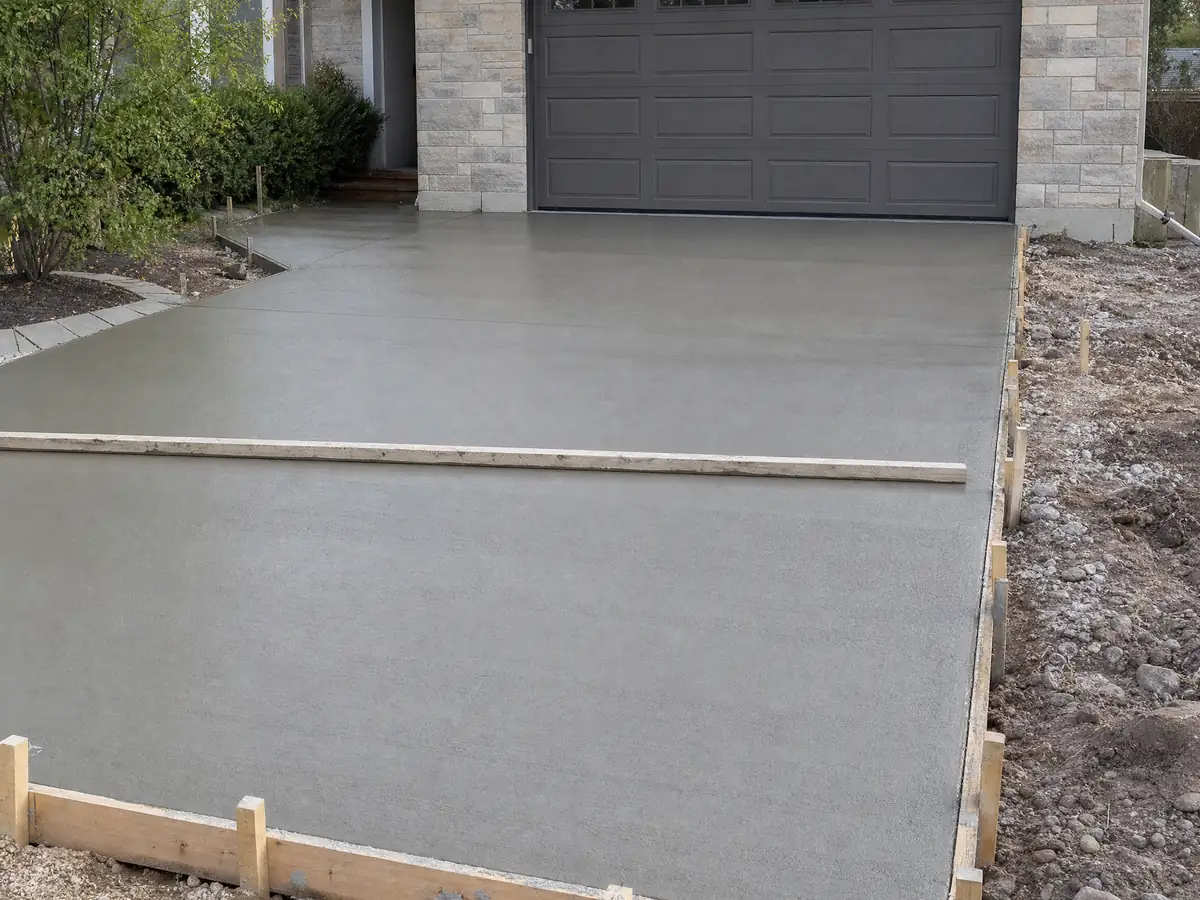
How tall can a retaining or block wall be in Camarillo before it needs a permit?
Three feet for a retaining wall, measured from the top of the footing to the top of the wall, and only when it holds back no surcharge. That and the 6 foot fence exemption are the two local exemptions in Section 16.04.029. Walls above that line pay base permit fees of $632 for the first 100 feet up to 6 feet high and $741 above 6 feet, before surcharges. Even exempt walls and fences still get a Planning check, and a front-yard wall is capped at 3 feet.
The City's Block Wall handout covers a concrete block garden wall up to 7 feet, with footing widths by height; a wall of 3 to 4 feet, for example, needs a 22 inch Footing B. It keeps walls and foundations 36 inches from a fire hydrant and 12 inches from a water meter, says the design does not retain soil, and says Planning must approve the plans before a permit issues.
Who builds it matters. CSLB's C-8 class covers poured concrete, block falls to masonry, and the C-13 fencing class excludes masonry walls, so ask who sets the footing and who lays the block. A wall that retains soil, sits on a slope or carries a driveway may need an engineer, so ask.
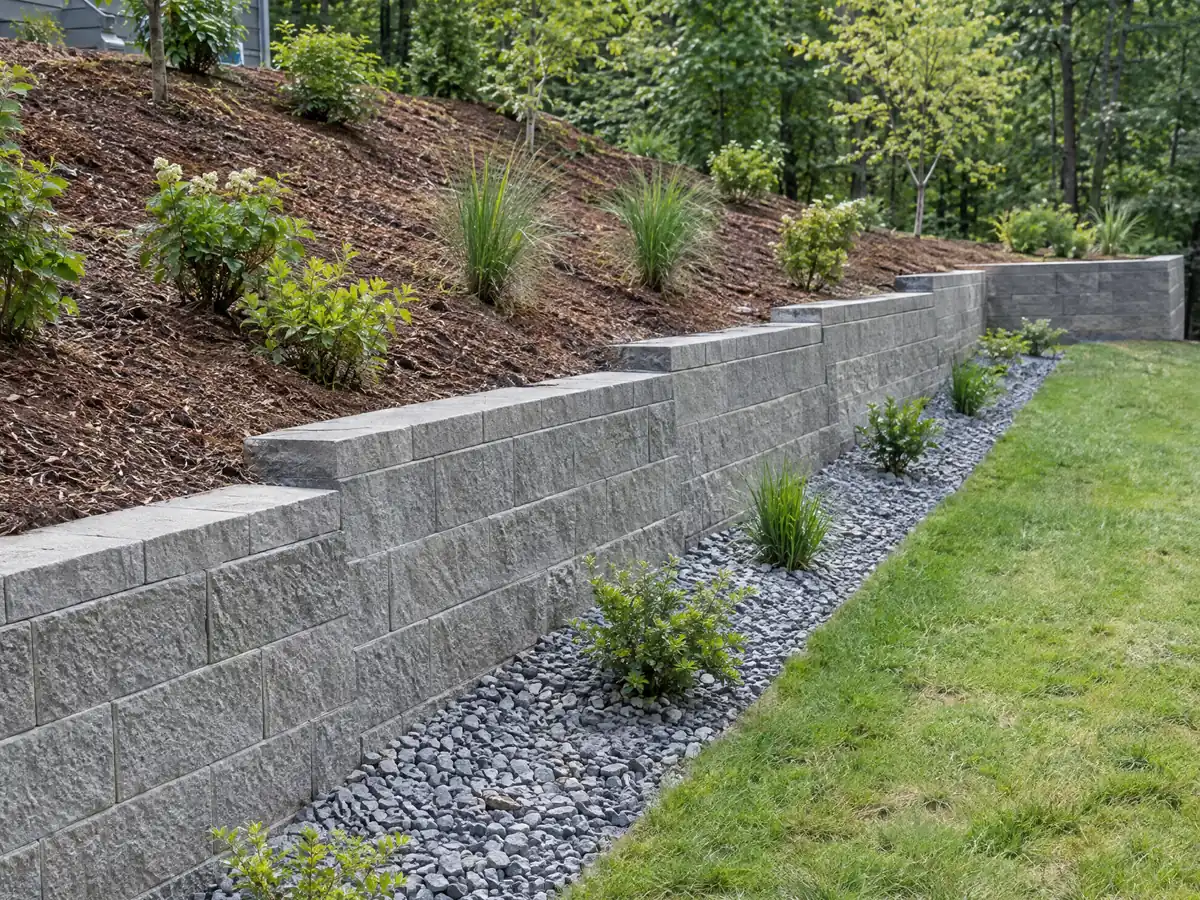
What do the creeks, the liquefaction zone and the Pleasant Valley edge mean for a pour in Camarillo?
Water is the first variable. Calleguas and Conejo Creeks cross the east side, Beardsley Wash and Revolon Slough lie to the west, and the Ventura County Watershed Protection District holds those channels. Chapter 16.34 uses FEMA's 1986 maps with all later amendments. We did not check any parcel's zone, so ask the City. The Safety Element also puts a large part of the city, mostly the western half, in a state liquefaction zone, with possible lateral spreading beside the creeks.
Moving dirt has its own threshold. Under Sections 16.04.150 and 16.04.155, a grading permit is not needed for an excavation under 2 feet deep, nor for fill under 3 feet deep that supports no structure, totals no more than 50 cubic yards on the lot and blocks no drainage course. Grading beyond 1,000 cubic yards must follow an engineered plan. Section 9.32.080 asks for a stormwater pollution control plan on permitted grading under one acre, and Section 9.07.010 asks crews to separate concrete for recycling.
Edge lots add one more question. The Agricultural Exclusive zone requires parcels of at least 10 acres with 50 foot yards, so ask Planning which zone and overlay your lot carries before drawing a farm drive or equipment pad.
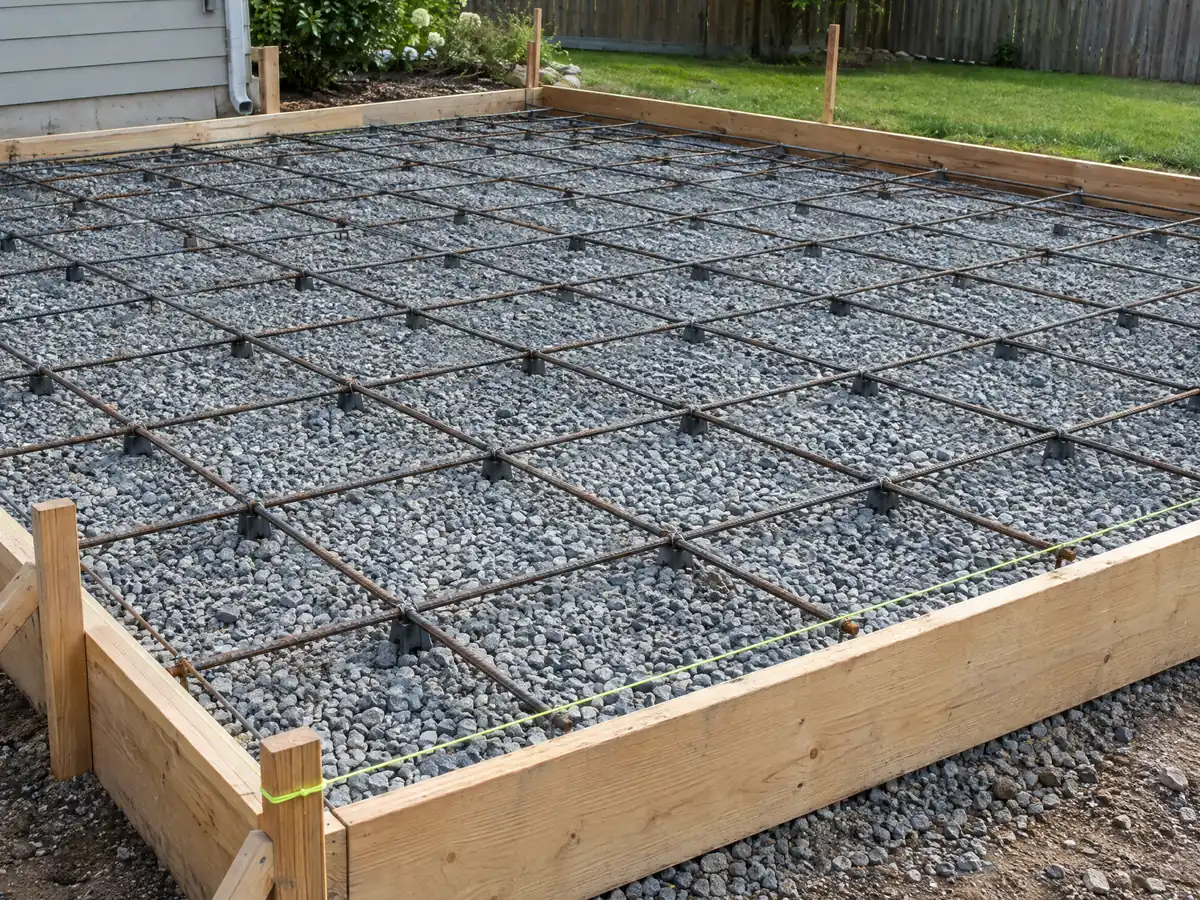
Why does concrete matter at Camarillo Springs and the hills?
Because it does not burn. The Safety Element puts the hills along the northern and eastern edges, and the Camarillo Springs neighborhood, in Very High and High fire zones. The 2013 Springs Fire started at Highway 101 and Camarillo Springs Road and burned 24,251 acres, and the 2018 Hill Fire started at Hill Canyon Road and Santa Rosa Road. The flat valley floor is not in those zones, so check your parcel on the Fire Department page.
Ventura County Fire's Standard 515, in its January 1, 2023 edition read through a Wayback copy because the County's site blocked our tools, treats the first 5 feet around a building as Zone 0. It says a patio on grade made of concrete, stone or similar material is not a deck, and it recommends concrete, rock or gravel in that strip instead of wood chips or mulch. A newer edition may exist, so call the Fire Hazard Reduction Program Unit at 805-389-9759 before you design the strip beside the wall.
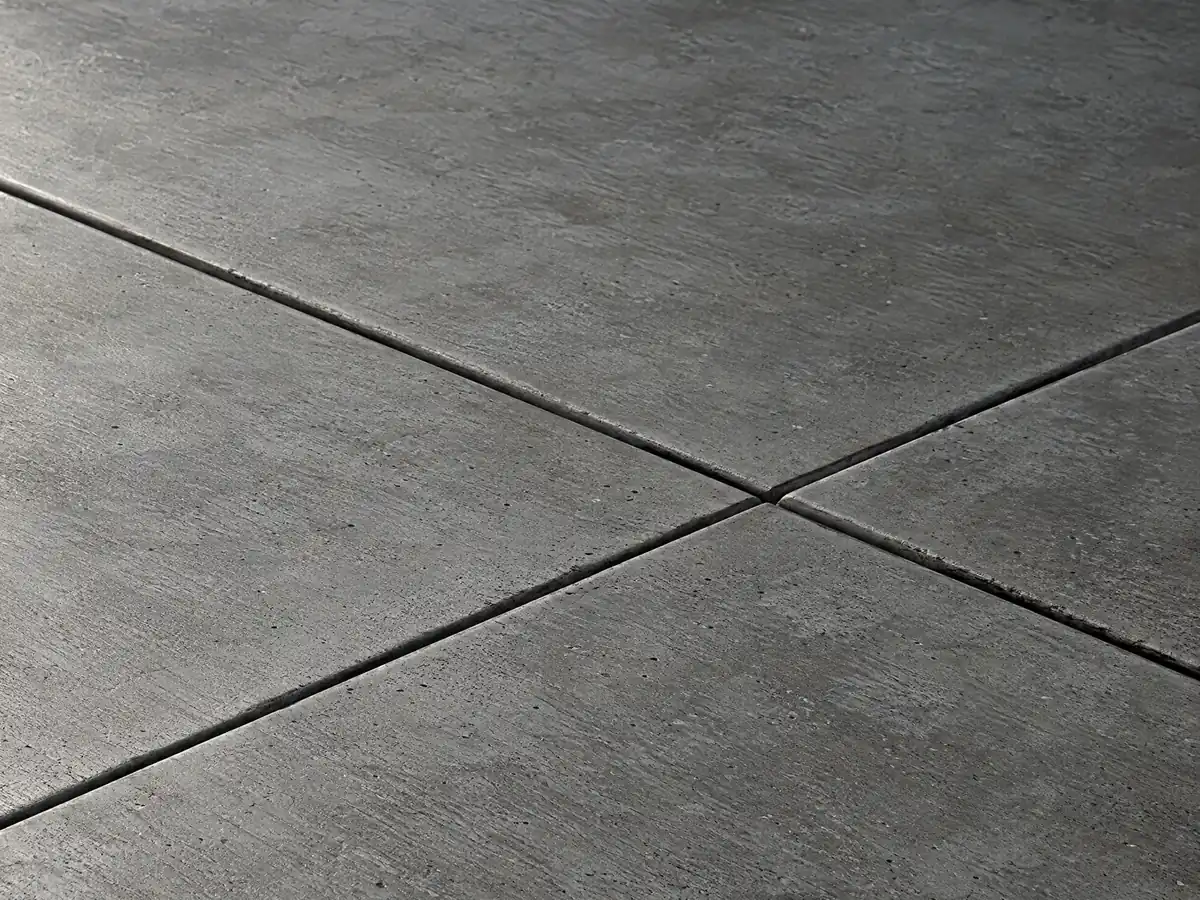
How much does concrete work cost in Camarillo, and how do you pick a concrete company?
We found no Camarillo price study with a stated method, so these are Los Angeles ranges from our concrete page: about $8 to $14 per square foot for plain patios, walks and slabs of 300 square feet or more, $15 to $30 for stained, stamped or exposed aggregate, and $9 to $20 for driveway replacement including demolition. A plain 20 by 20 foot patio comes to roughly $3,200 to $5,600. Angi's 2026 Los Angeles pages, HomeGuide and the Concrete Network are the sources. Confidence is medium for plain flatwork and medium-low for decorative, and small jobs often price above the per-foot range.
The Bureau of Labor Statistics puts Los Angeles area cement masons at a mean $33.67 an hour as of May 2025, a labor anchor and no more. CSLB's C-8 Concrete classification covers forming, pouring and finishing, and block is masonry. Ask each bidder for a license number, a certificate of insurance and separate lines for demolition, haul-off, reinforcement, drainage and permits.
Business and Professions Code 7159 requires a written, signed contract before work on any home improvement over $500. Construction noise is limited under Section 10.34.120(E) between 7 PM and 7 AM and on Sundays and holidays.
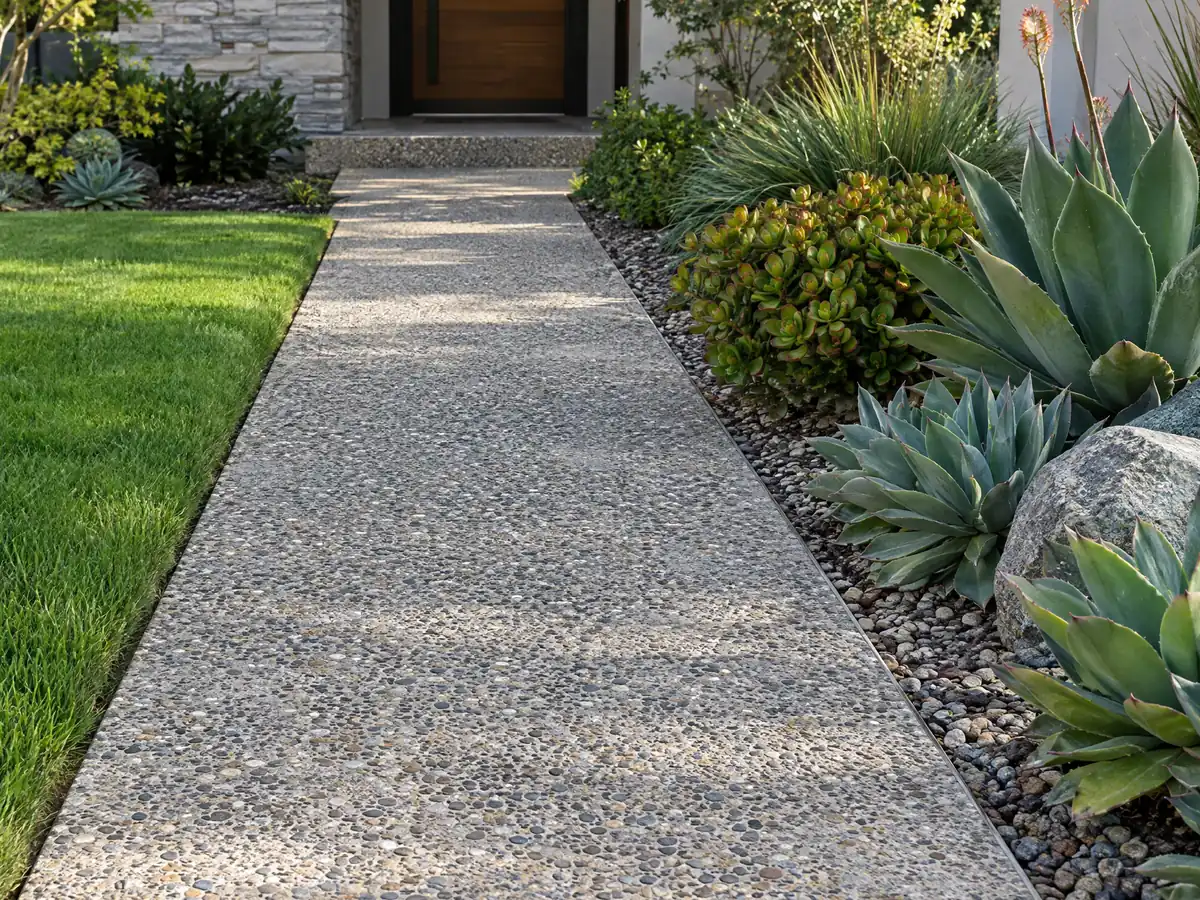
Concrete photos from Camarillo and nearby communities
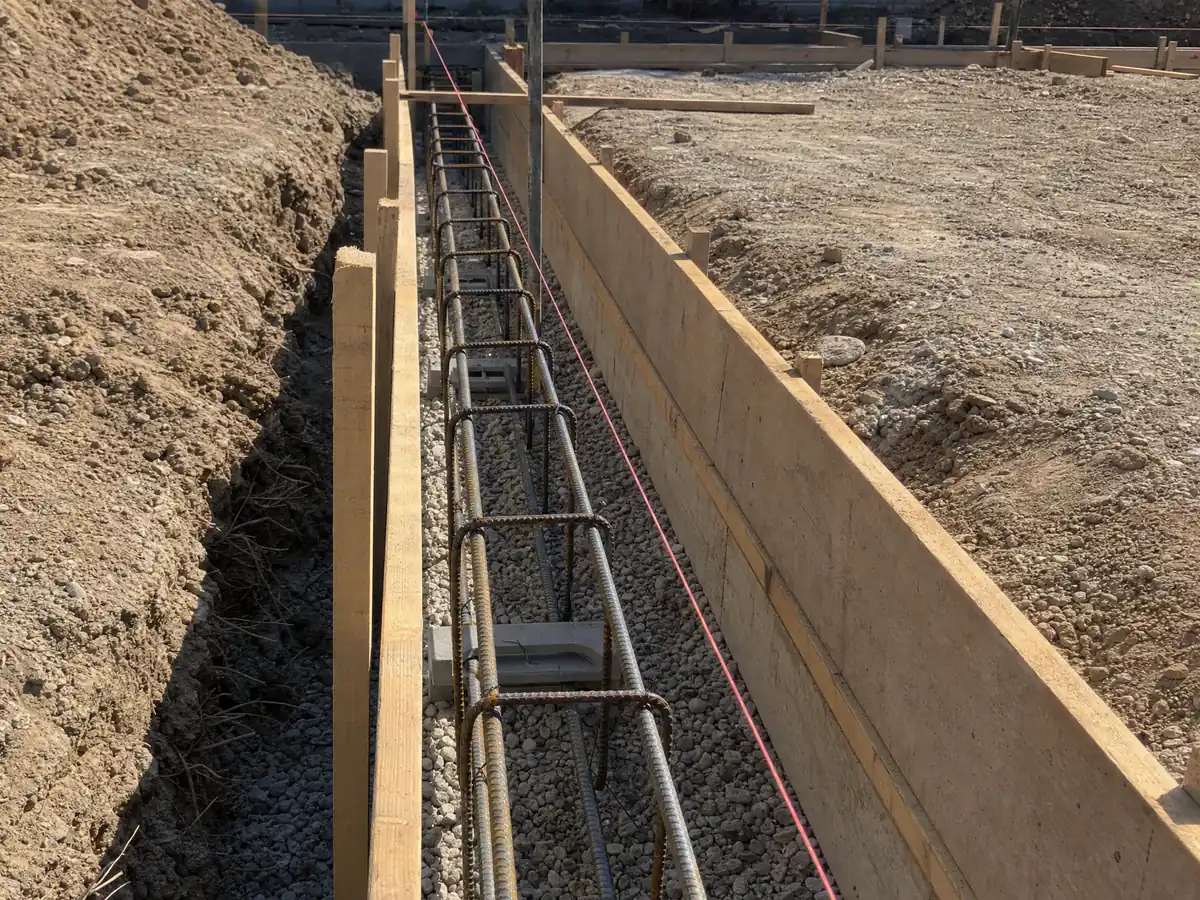
Footings, rebar, finished flatwork and block walls from Camarillo and the Ventura County towns around it, shown at the steps where the rules matter. Tap any photo to enlarge it.
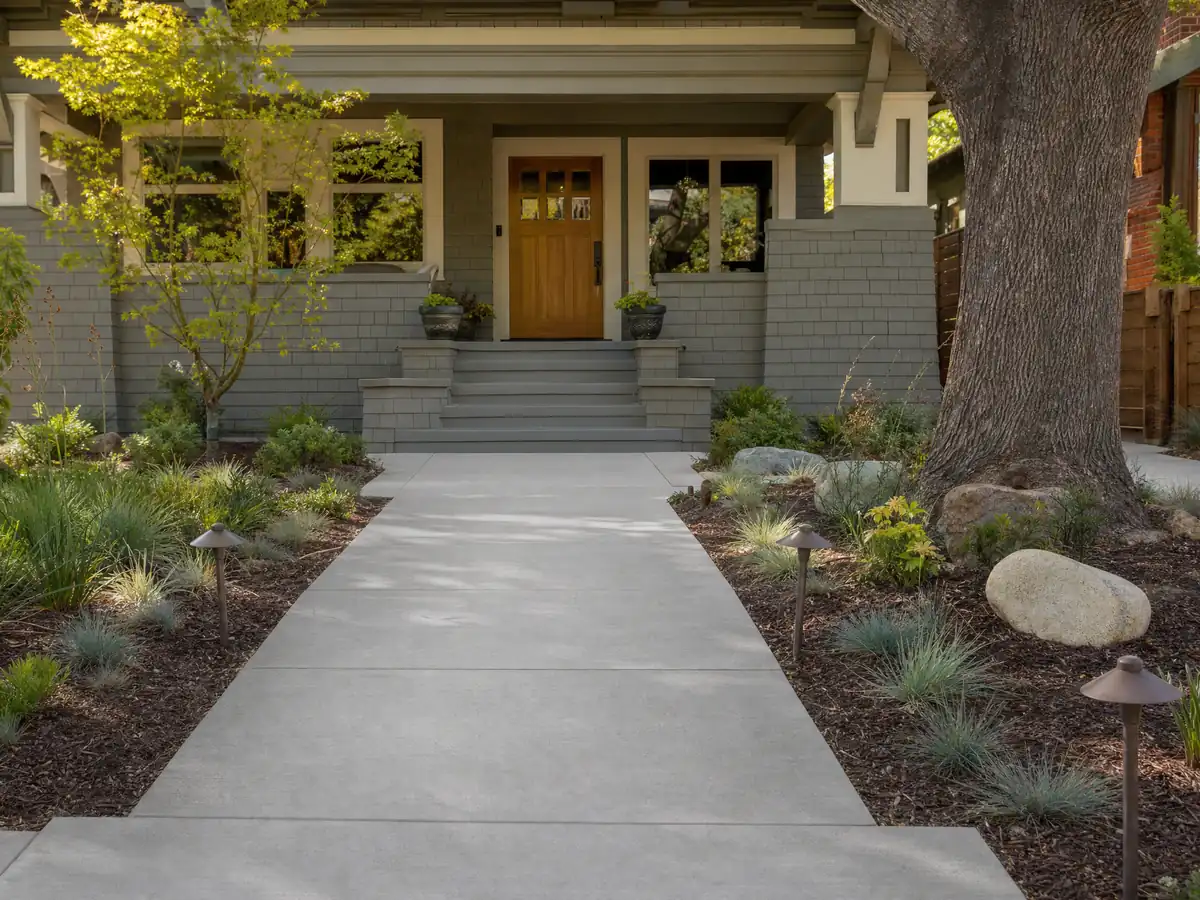
What concrete costs around Camarillo
These are Los Angeles ranges and not a Camarillo bid, and a sound proposal separates demolition, haul-off, drainage, any soils work and the zone clearance. The same lot may need flooring in Camarillo or a deck builder in Camarillo. For nearby comparisons, read concrete in Oxnard, concrete in Thousand Oaks, concrete in Moorpark, concrete in Simi Valley and concrete in Ventura, with concrete in Los Angeles as the big-city benchmark. Santa Paula has no page here yet. Our flooring cost guide covers what goes over a finished slab.
| What it covers | Typical range |
|---|---|
| Patio, walkway or slab, broom finish, 300 sq ft or more | $8 to $14 per square foot |
| Decorative: stained, stamped or exposed aggregate | $15 to $30 per square foot |
| Driveway replacement, with demolition of the old slab | $9 to $20 per square foot |
| 20 by 20 foot plain patio (400 sq ft) | About $3,200 to $5,600 |
| 20 by 20 foot decorative patio (400 sq ft) | About $6,000 to $12,000 |
| Small jobs under 300 sq ft | Usually above the per-foot range |
| Retaining walls | Set by the written proposal |
Camarillo concrete questions, answered
Can I pour a concrete patio without a permit?
In Camarillo, usually yes for the slab: the City's handout says concrete patios and sidewalks not more than 30 inches high need no building permit. A cover, gazebo or enclosure over it needs a zone clearance and a building permit. Call Building & Safety at 805-388-5395 with the height and distance to the house.
Can I expand my driveway without a permit?
Not necessarily. The slab may fall under the 30 inch flatwork exemption, but driveways must be at least 10 feet wide, and a curb cut or apron in the right-of-way needs a Public Works encroachment permit. No permanent parking is allowed in the required front yard, so bring a sketch of the new width.
What is the maximum height of a retaining wall without a permit in California?
Camarillo exempts retaining walls of 3 feet or less, measured from the top of the footing to the top of the wall, unless they support a surcharge. Walls taller than that pay a base fee of $632 for the first 100 feet up to 6 feet high, before surcharges. Front-yard walls are also capped at 3 feet.
How much should a 20x20 concrete patio cost?
Roughly $3,200 to $5,600 for a plain broom-finish 20 by 20 foot patio and $6,000 to $12,000 for a decorative one, using our Los Angeles ranges and leaving out demolition, drainage and permits. The numbers multiply Angi and HomeGuide figures, so they are not a Camarillo bid, and small jobs often cost more per square foot.
How much does a concrete driveway cost in Camarillo?
Our Los Angeles range for driveway replacement is $9 to $20 per square foot including demolition of the old slab, so 600 square feet runs roughly $5,400 to $12,000. We found no Camarillo study. Thickness, haul-off, grading and any apron at the curb move the price, and a site visit settles it.
Is 4 inches of concrete thick enough for a driveway?
Four inches is the common thickness for home slabs, yet we found no code section that fixes it for driveways, so treat it as practice. Heavy trucks, weak soil or tree roots can justify more. Camarillo's expansive clay makes the base, reinforcement and joint plan as important as thickness.
How wide should a concrete driveway be?
At least 10 feet in Camarillo, and 16 feet when the driveway is 100 feet long or longer, under Sections 19.44.140 and 19.44.160. No part of a building may block it, and Section 13.04.435 refuses one where fences or grade would stop a car from standing off the street.
Does expansive soil crack concrete in Camarillo?
It can. The City requires an expansion index test on each building site, and its Safety Element records soil damage in the Camarillo Heights area and on the west side. Control joints, a drained base and downspouts carried away from the slab limit the cracking, but no pour is crack-proof.
Do I need a permit to build a retaining wall or block wall in Camarillo?
Only above the exemptions: retaining walls over 3 feet or carrying a surcharge, and fences or walls over 6 feet. Exempt walls still get a Planning check. The City's Block Wall handout shows footing sizes up to 7 feet, and Planning must approve the plans before a permit issues.
What license does a concrete company need for concrete work in Camarillo?
California's C-8 Concrete class covers forming, pouring, placing and finishing, and block walls fall under C-29 masonry. Ask for the number, check it on CSLB's site and request a certificate of insurance. MDG holds a general building license and uses licensed subcontractors for the pour.
Tell us what you want poured, its size and how close it sits to the house
Describe the patio, driveway, walk or wall, the rough size and height, and whether it meets the curb, a slope or a creek. We bring the soil and permit questions to the first visit.