
Fence Companyin Camarillo, CA
A fence company in Camarillo builds to a 3 foot cap in the front yard and 6 feet along side and rear lines under Section 19.38.020. Fences of 6 feet or less that are not pool barriers need no building permit, but check with Community Development first. Near hillside homes, Ventura County Fire adds noncombustible fence rules.
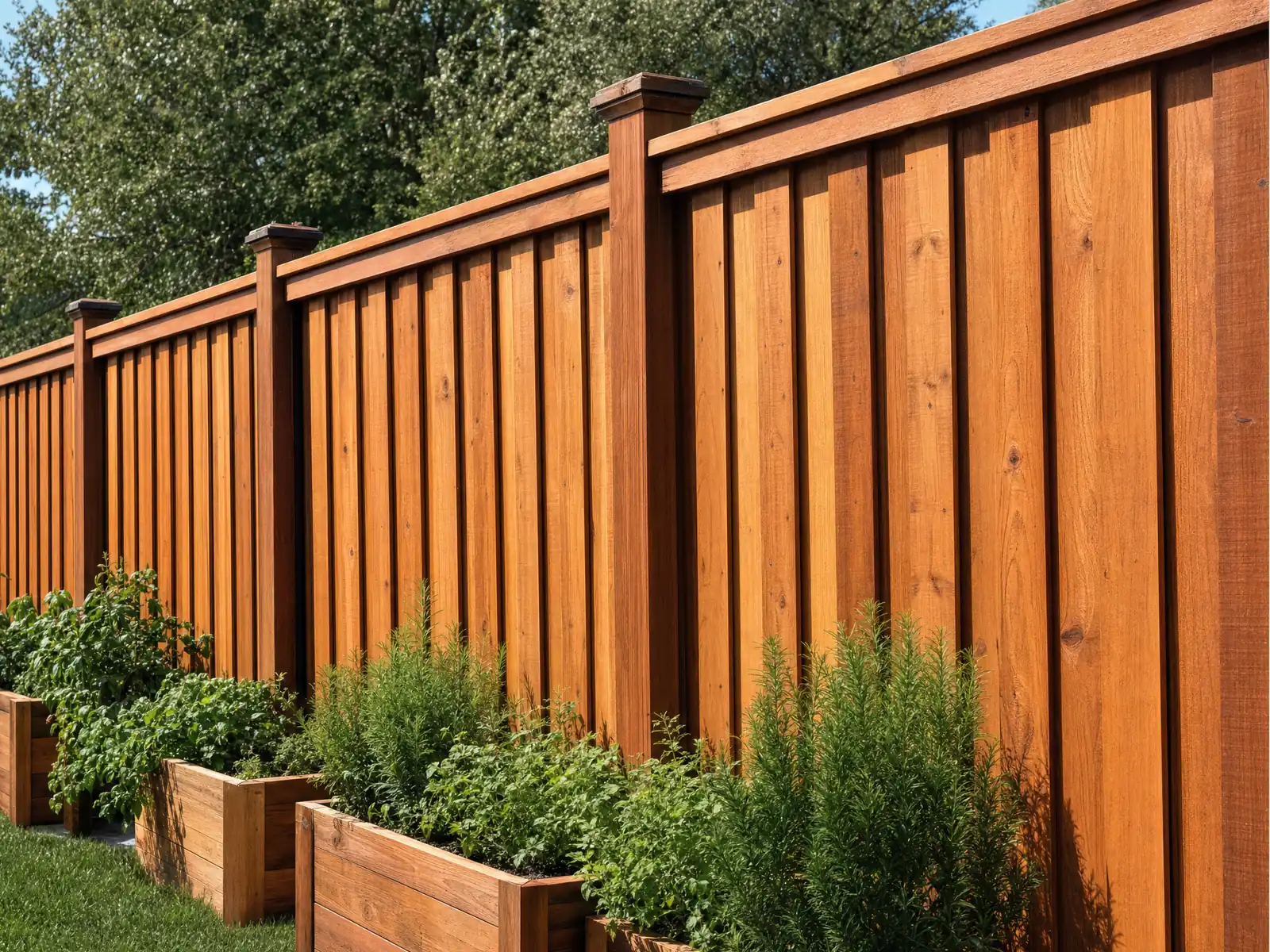
Camarillo is a fence-height city, and the front yard is where it shows. About 52.7 percent of the city's 27,476 housing units are single-family detached homes, per the Census Bureau's ACS 2024 one-year estimates, and the median owner-occupied home is valued at $871,300, so owners care about where a line runs and what stands on it. The Municipal Code treats the front yard, the side and rear lines, corners, slopes, pools and hazards each a little differently.
On a fence job MDG Builders (CSLB #1040337) acts as the general contractor: it reads those rules against your lot, writes the scope, handles any permit and neighbor notice, and schedules a licensed fencing subcontractor to build. The fencing price page holds the sourced cost table, the Camarillo overview lists our other local trades, and the closest Ventura County guides are Oxnard and Thousand Oaks, each under its own code.
What Camarillo's zoning code, building code and fire standard say about fences
Where fencing permits come from in Camarillo: City of Camarillo Community Development Department, Building & Safety Division.
- Fences that are not pool barriers and are 6 feet high or less do not need a building permit, and retaining walls of 3 feet or less (top of footing to top of wall) are exempt unless they support a surcharge; these are Camarillo's local exemptions under Section 16.04.029. The permit handout still says to check with Community Development before building a fence.
- Section 19.38.020 allows walls and fences up to 6 feet on side and rear lot lines, but limits any wall or fence in a front yard to 3 feet, which is lower than many cities allow; corner cutback areas are held to 3 feet unless Public Works finds visibility adequate.
- A wall can rise 1 foot for each 2 feet of grade difference within 5 feet of the wall, to a maximum of 8 feet, and Public Works must approve the wall design (Section 19.38.020(E)). In R-1 and R-E zones the Planning Director can approve up to 8 feet on a side facing a primary or secondary arterial after findings (Sections 19.14.090 and 19.12.100).
- Section 19.38.040 allows barbed and concertina wire only in commercial and industrial zones under a Planning permit, and Section 19.38.030 lets the City require a 6-foot fence around a physical hazard such as frequent inundation, erosion, excavation or a grade differential.
- Intersection sight rules: at controlled intersections everything inside the sight triangle must be below 3 feet or above 7 feet, and at uncontrolled intersections the corner cutoff is measured 50 feet back (30 feet for properties approved before April 26, 1995) per Section 19.38.050.
- The City's Block Wall handout shows a concrete block garden wall up to 7 feet with footing widths by height (for example 3 to 4 feet needs a 22-inch Footing B), notes no wall, fence or foundation within 36 inches of a fire hydrant or 12 inches of a water meter, says the wall is not designed to retain soil, and says Planning must approve the plans before any permit is issued.
- Master Fee Schedule Exhibit F lists Walls/Fences taller than 6 feet at $741 for the first 100 linear feet and $146 each additional 100, and Retaining Walls at $632 (first 100 feet, 6 feet or under) and $741 (over 6 feet), before surcharges.
- Ventura County Fire Standard 515: in a Wildland-Urban Interface area, new fencing or gates installed on or after January 1, 2023 within 5 feet of a building that are not parallel to the building must be noncombustible, combustible fences cannot be back to back (5 feet apart), and replacing any part of an existing fence within 5 feet triggers noncombustible replacement of the whole non-parallel run. The standard defines wood, plastic and other petroleum-based fencing as combustible.
Sources for these rules
- gocodebook.com: chapter 16.04 uniform building codes adopted by reference 1
- gocodebook.com: chapter 19.38 walls fences and landscaping
- cms7files.revize.com: Block%20Wall
- cms7files.revize.com: Master%20Fee%20Schedule%202026%20 %20Updated%202.26.26%20FOR
- web.archive.org: 515 Defensible Space and Fuel Modification Zones Standard
How tall can a fence be in a Camarillo front yard, side yard or corner lot?
The front yard is the low point. Section 19.38.020 allows walls and fences up to 6 feet along side and rear lot lines but limits any wall or fence in a front yard to 3 feet, lower than many cities allow. Corner cutback areas are held to 3 feet unless Public Works finds visibility adequate. A solid six-foot panel that works in the backyard of a Camarillo house stops at the side gate line.
Sight lines add a second limit. Under Section 19.38.050, everything inside the sight triangle at a controlled intersection must be below 3 feet or above 7 feet, and at an uncontrolled intersection the corner cutoff is measured 50 feet back, or 30 feet for properties approved before April 26, 1995. We read this text on GoCodebook, a third-party mirror of the Municipal Code, so confirm any measurement with Planning at 805-388-5360 before material is ordered.
Slopes and busy streets bend the numbers. A wall may rise 1 foot for each 2 feet of grade difference within 5 feet of it, up to 8 feet, and Public Works must approve the design (Section 19.38.020(E)). In R-1 and R-E zones the Planning Director can approve up to 8 feet on a side facing a primary or secondary arterial after making findings.
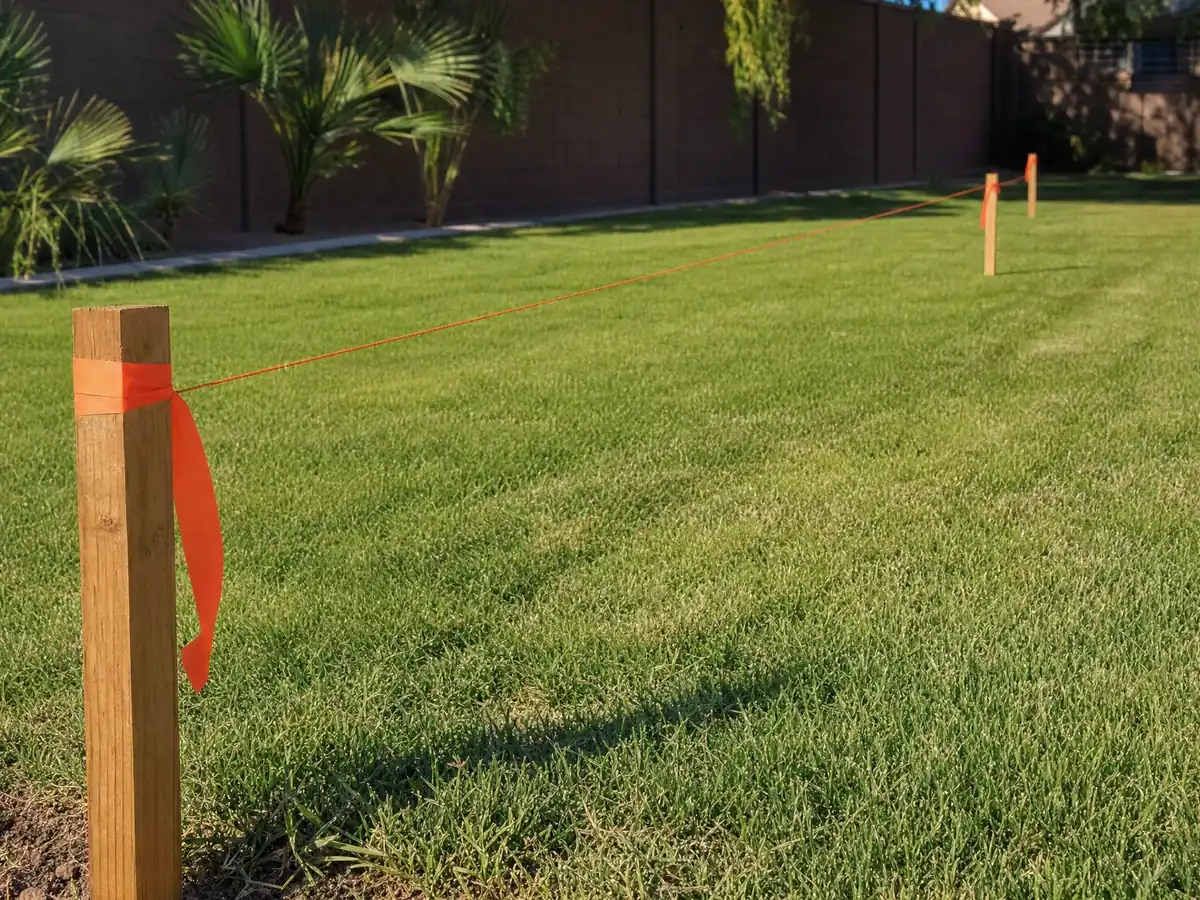
Measure the front yard from the property line, not from the house, before a design is drawn.
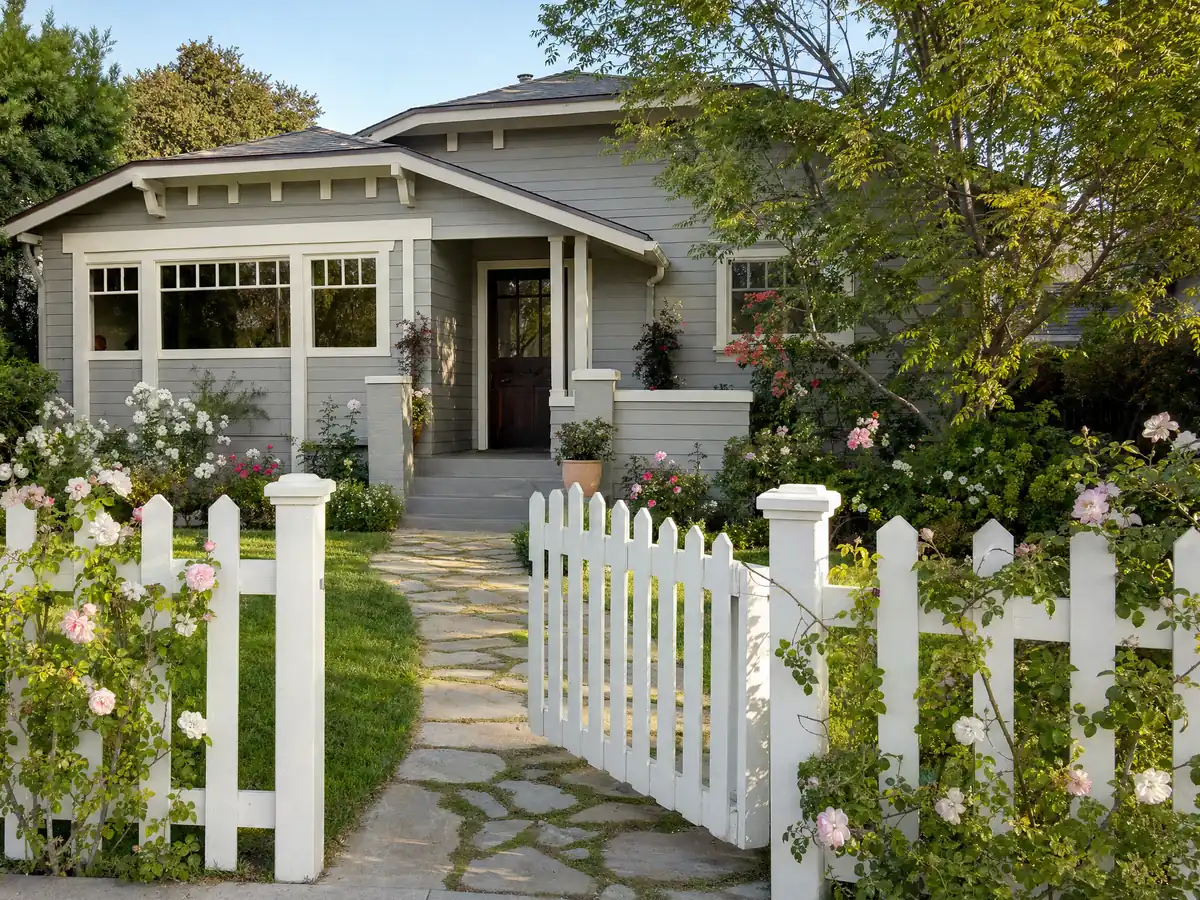
Does fence installation in Camarillo need a building permit, and what about block walls?
Mostly not for a fence, but there is a catch. Camarillo's local exemptions under Section 16.04.029 say a fence of 6 feet or less that is not a pool barrier needs no building permit, and a retaining wall of 3 feet or less, measured from the top of the footing to the top of the wall, is exempt unless it carries a surcharge. The City's permit handout still tells owners to check with Community Development before building a fence, because zoning applies whether or not a permit does.
Taller work is priced. The Master Fee Schedule lists walls and fences over 6 feet at a $741 base fee for the first 100 linear feet and $146 for each added 100, and retaining walls at $632 for the first 100 feet up to 6 feet high and $741 above that. Those are base fees before the City's 17.89 percent and 11.34 percent surcharges, which have applied since July 1, 2025.
The City's Block Wall handout shows a concrete block garden wall up to 7 feet, with a footing width for each height; for example, a wall of 3 to 4 feet calls for a 22-inch footing. It bars any wall, fence or foundation within 36 inches of a fire hydrant or 12 inches of a water meter, says the wall is not designed to hold back soil, and says Planning must approve the plans before a permit issues. CSLB class C-13 fencing excludes masonry walls, so a block wall goes to a masonry contractor.
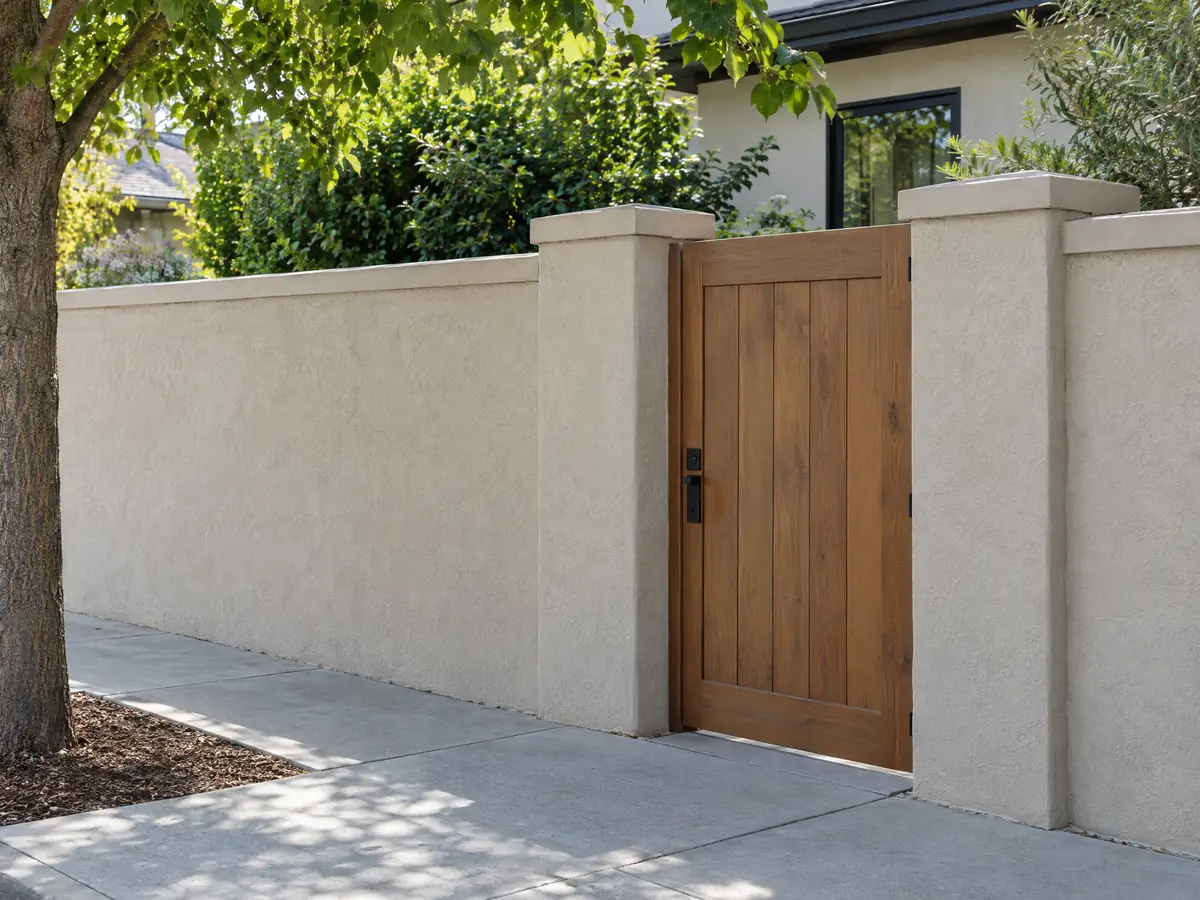
What does Ventura County Fire's Standard 515 mean for a fence beside a Camarillo house?
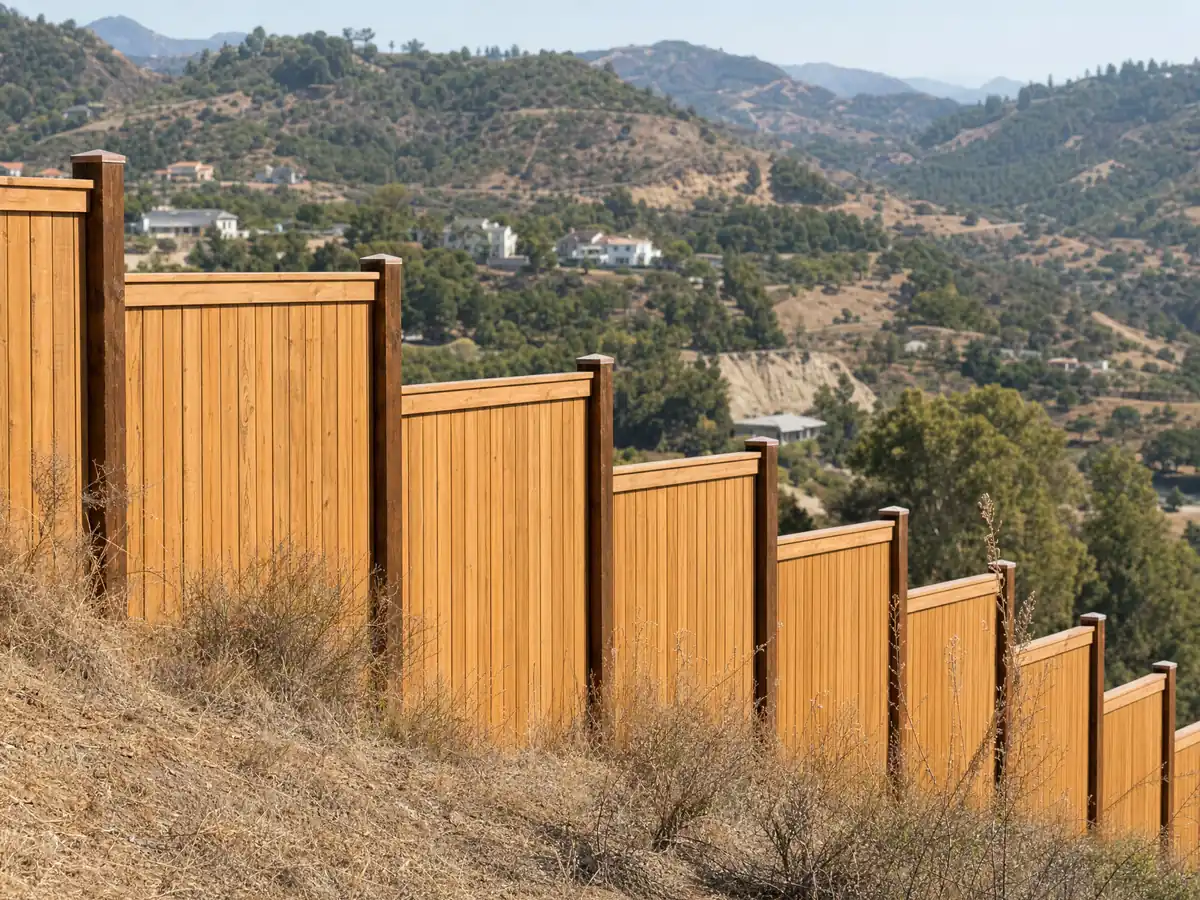
Near the hills, the material matters as much as the height. The Safety Element puts the northern and eastern hills in CAL FIRE's Very High, High and Moderate zones and Camarillo Springs in the Very High and High zones. In a Wildland-Urban Interface area, Ventura County Fire's Standard 515 says new fencing or gates installed on or after January 1, 2023 within 5 feet of a building, and not parallel to it, must be noncombustible. The standard classes wood, plastic and other petroleum-based fencing as combustible.
Two follow-on rules catch homeowners. Combustible fences may not run back to back, so they must sit 5 feet apart, and replacing any part of an existing fence within 5 feet of the building triggers noncombustible replacement of the whole non-parallel run. In the same first 5 feet the standard bars vines on structures and fences, and allows no wood mulch or artificial grass. We read the January 1, 2023 edition through a Wayback copy dated June 4, 2023, since vcfd.org rejects automated requests, and a newer edition may exist.
We did not read the City's hillside construction handout, which is a scanned image, so ask the counter whether a hillside review touches a fence on a graded lot. The 2013 Springs Fire burned 24,251 acres, according to CAL FIRE, and a gate that cannot be opened by hand in a hurry is worth a conversation with the builder.
Ask which side of the fence faces the house, and whether any run falls inside the first 5 feet.
What are Camarillo's pool fence rules, and who builds the gate?
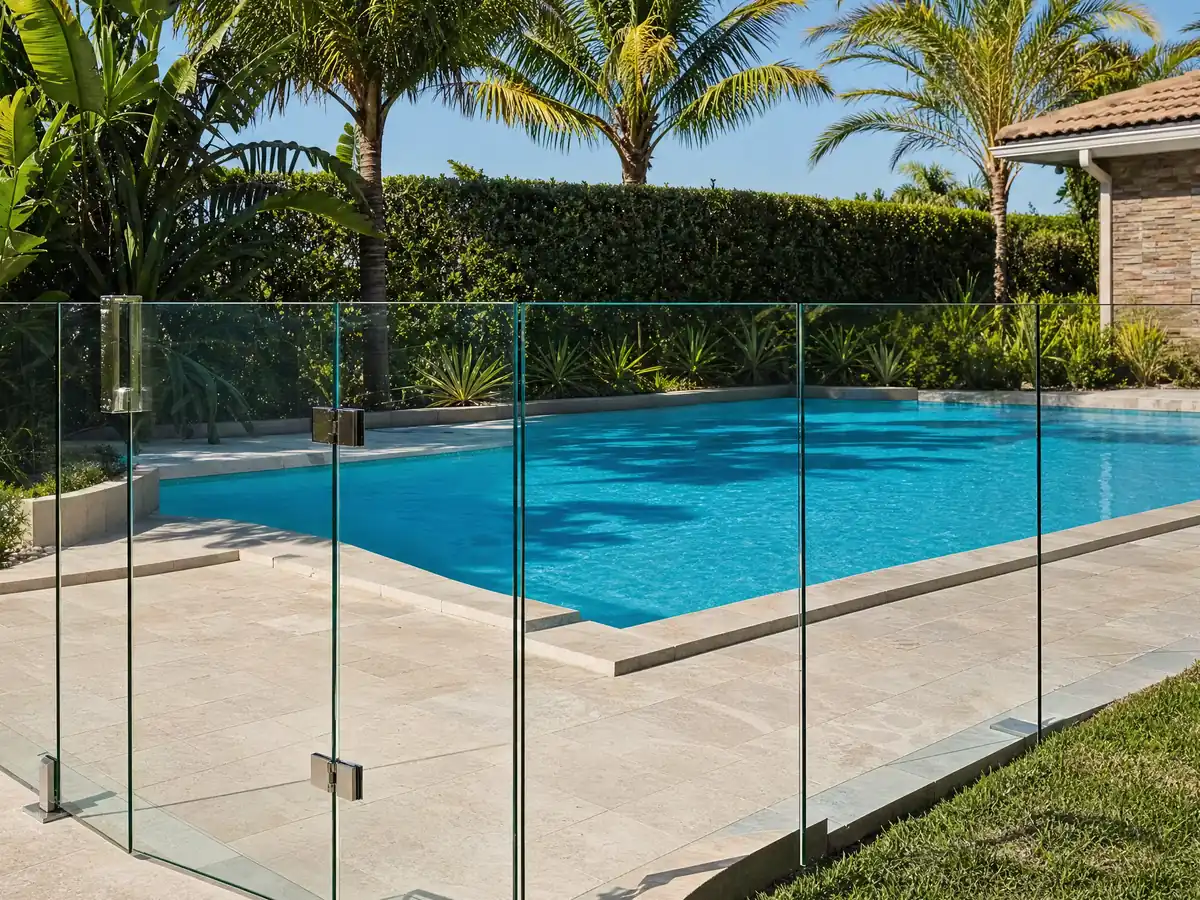
A pool barrier is regulated apart from a garden fence. Section 16.04.115 calls for a barrier at least 60 inches above grade with no more than a 2-inch gap at the bottom, openings that stop a 4-inch sphere, pedestrian gates that close and latch by themselves and open away from the pool, and a 36-inch clear zone from anything a child could climb. Pools need a zone clearance and a building permit, and the fee schedule lists a residential pool or spa at $803 for a standard plan and $1,289 for an engineered one, before surcharges.
Placement is regulated too. In the R-1 zone the water edge must be at least 3 feet from property and building lines, and Section 19.14.140 puts pool equipment 3 feet from side and rear lines and inside a solid wall or fence. State law adds its own layer: Health and Safety Code 115922 asks for at least two of seven drowning-prevention features when a permit issues for a new or remodeled pool, and the enclosure must meet section 115923. A pool fence is written into the permit, so it is not a weekend task.
On gates, the code we read sets no opener rule, so the question is mostly mechanical. Ask the fence company about hinge type, latch height and what keeps a heavy gate from sagging, and ask who is licensed to wire an electric opener.
Who pays for a shared fence in Camarillo, and what changes beside Old Town or farmland?
California Civil Code 841 starts from the presumption that neighbors split the reasonable cost of a boundary fence equally, unless they agreed otherwise in writing, and a neighbor can rebut it. Before incurring cost you want shared, give each neighbor 30 days' written notice that describes the problem, the proposed fix, the cost estimate and the timeline, and keep proof of delivery. A fence taller than 10 feet that was built without need and out of spite is a private nuisance under Civil Code 841.4.
Camarillo's edges are drawn by the city's history. According to Wikipedia, a third-party source, the townsite grew around St. Mary Magdalen Church about 1910, and the City incorporated on October 22, 1964. The Housing Element describes Camarillo Old Town as the original commercial district along Ventura Boulevard between Lewis Road and Carmen Drive, with a COT zone enacted in 1998, so a fence there is a commercial-zone question and not a front-yard one. On the farm side, voters renewed the Camarillo Urban Restriction Boundary through 2050 with Measure J, and Section 19.38.040 allows barbed and concertina wire only in commercial and industrial zones under a Planning permit, so a homeowner beside a field cannot copy a ranch fence.
We did not read the HOA rules for Leisure Village, The Springs or the Spanish Hills country club area, so ask an association before ordering anything visible from the street.
What does fence installation cost in Camarillo, and which materials suit a hillside or valley lot?
No Camarillo fence survey turned up, so this page prints no Camarillo price. The nearest numbers are Los Angeles planning ranges that blend Angi, HomeGuide, Thumbtack and Fixr. A 6 foot wood or vinyl privacy fence runs about $25 to $55 per linear foot, chain link $12 to $30 and aluminum or ornamental iron $35 to $85, so a 100 foot backyard run lands near $2,500 to $5,500. Labor is a sanity check: the Bureau of Labor Statistics lists fence erectors in the Los Angeles area at a $28.00 mean hourly wage for May 2025. Angi's national figures add $150 to $2,000 for a gate and $3 to $5 per foot to remove an old fence. Block walls, slat designs, gate openers and sloped lots have no independent price here, so the written proposal sets them.
Camarillo's own rules shape the choice. A 3 foot front-yard cap points to low openwork designs there, and the Standard 515 rule for noncombustible fencing near a hillside house moves metal or masonry into the conversation for runs beside the wall. For wood elsewhere, the University of California's pest program says drywood termites are most prevalent in southern California and infest fences, so ask about termite-resistant wood or concrete footings where posts meet soil.
How do I choose a fence company in Camarillo?
Fencing is CSLB class C-13, covering fences, railings, barriers and gates but not masonry walls, which belong to a masonry or concrete class. Check the number on the CSLB site, and use our license checking guide to read the record. Business and Professions Code 7159 calls for a written contract and caps the down payment at $1,000 or 10 percent of the price, whichever is less. When MDG runs the job, the fencing subcontractor's license number and certificate of insurance are yours to ask for, and how general contractors use subcontractors explains who is responsible for what. Then put these questions to every bidder:
- What is the CSLB number, and does the record match the name on the proposal?
- Which runs are front yard, corner cutback or within 5 feet of the house, and what height and material does each get?
- Who files the zone clearance or permit for any wall or fence over 6 feet?
- Does the written scope give footage, height, each gate and who hauls away the old fence?
- Who calls for the neighbor notice, and who pays for the survey if a line is in doubt?
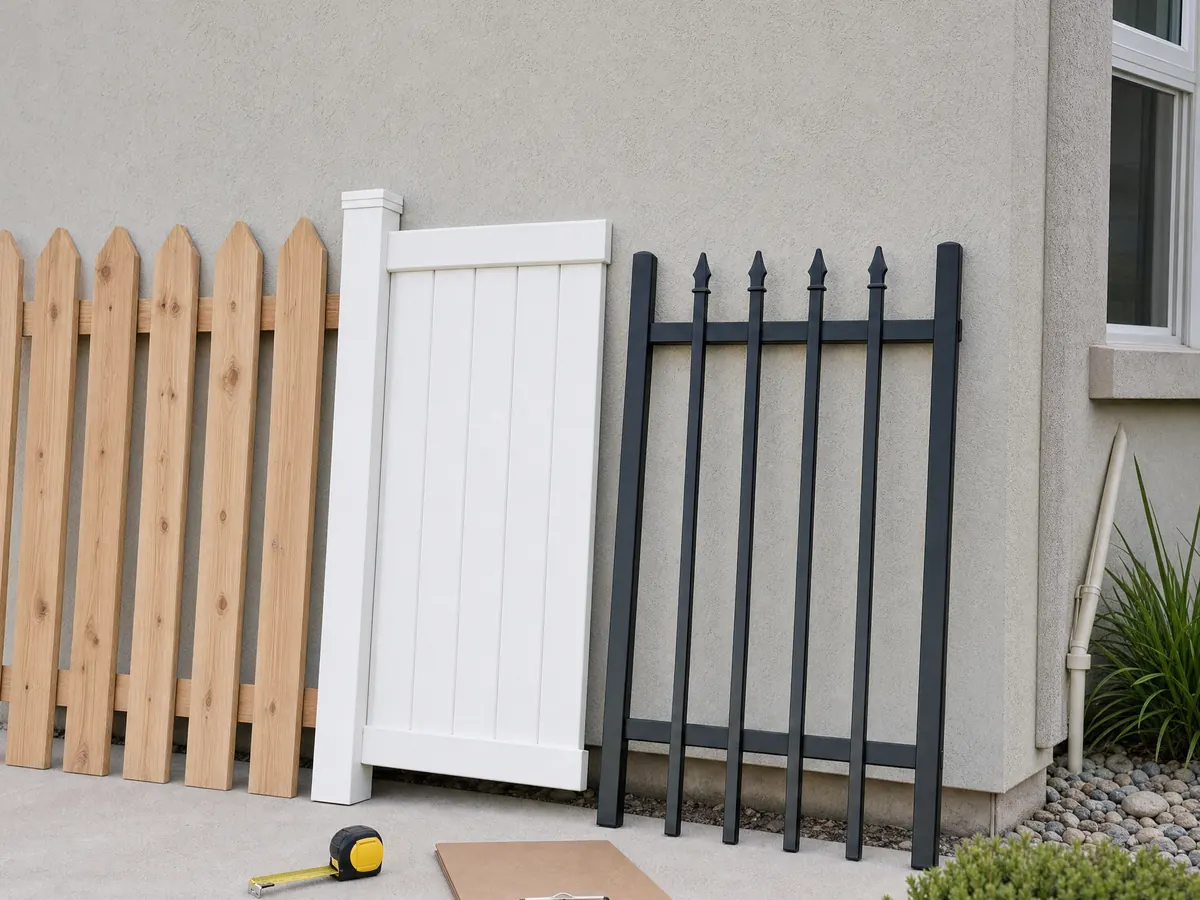
Fence and gate photos from Camarillo and nearby communities
Six fence scenes tied to Camarillo neighborhoods such as Old Town, Las Posas Estates and Camarillo Heights and to nearby communities such as Somis and Santa Rosa Valley, from wood privacy runs to metal gates and hardware.
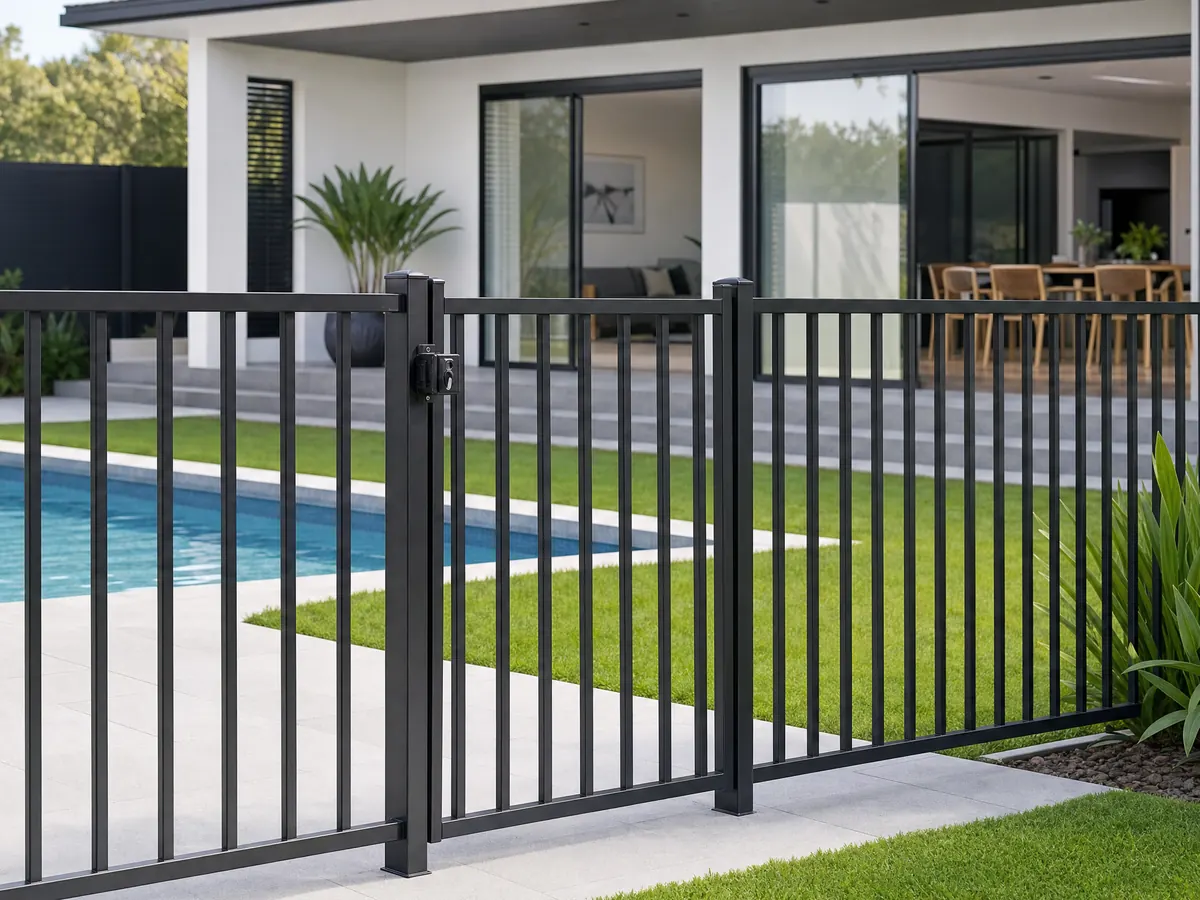
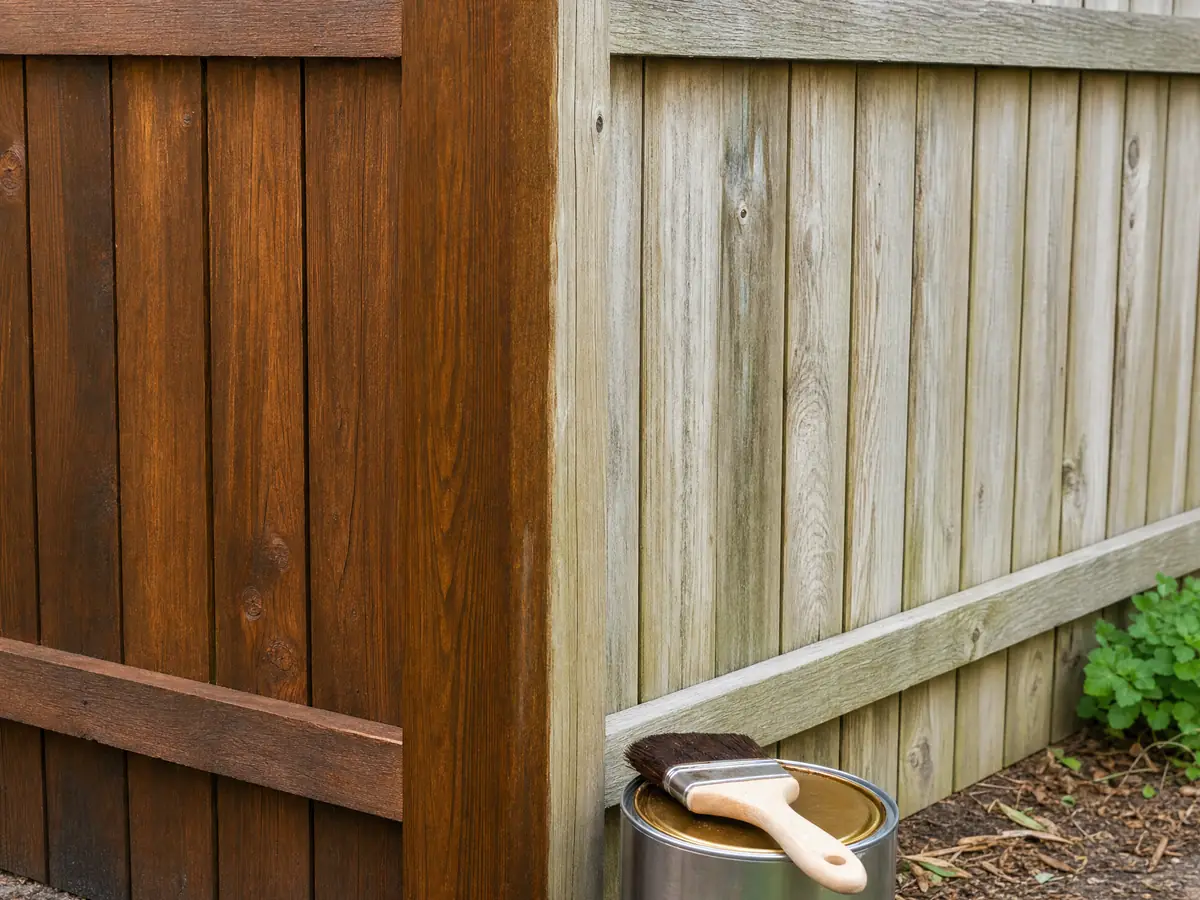
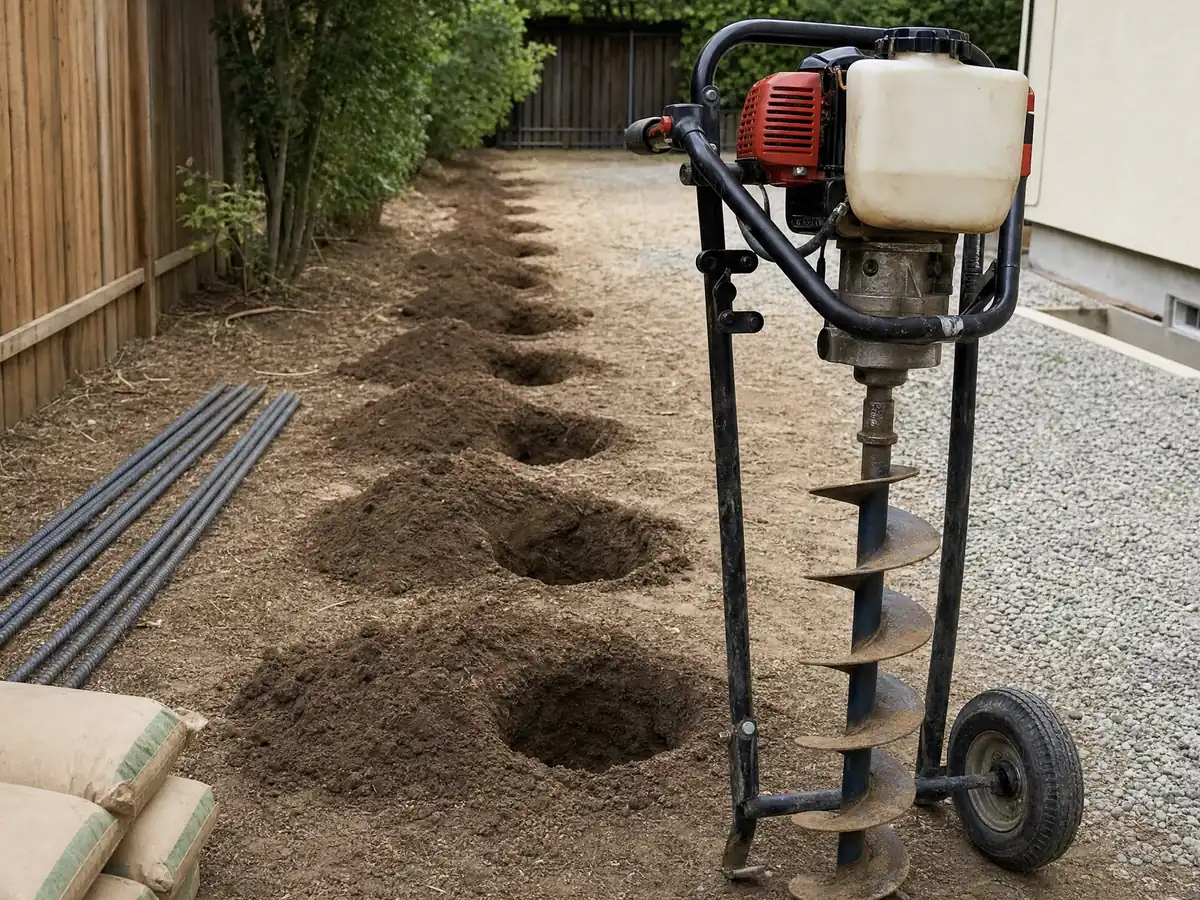
Where the fence numbers come from
Every per-foot figure here is a Los Angeles planning range, with each source named in the table on our fencing cost page. The City's permit fees are separate and are listed above as base fees. Because the sources disagree at the low end, use the numbers to compare bids and rely on a measured written proposal. New fencing often goes in with a roof replacement or a repaint, and the Camarillo rules for both have their own pages.
| What it covers | Typical range |
|---|---|
| Wood or vinyl privacy fence, 6 feet | $25 to $55 per linear foot |
| Chain-link | $12 to $30 per linear foot |
| Aluminum or ornamental iron | $35 to $85 per linear foot |
| Typical 100-foot backyard run | $2,500 to $5,500 total |
| Block walls, horizontal slat fences, gates and openers, hillside lots | Set by the written proposal |
Camarillo fence questions, answered
Do I need a permit to build a fence in my front yard?
Camarillo needs no building permit for a fence of 6 feet or less that is not a pool barrier, but the front yard is capped at 3 feet by Section 19.38.020, and the City asks you to check with Community Development first. A taller wall, a retaining wall over 3 feet or a pool barrier does need a permit.
How tall can a fence be in the front yard?
In Camarillo, 3 feet. Section 19.38.020 limits any wall or fence in a front yard to 3 feet, while side and rear lot lines allow 6 feet. Corner cutbacks are also held to 3 feet unless Public Works finds visibility adequate, so measure from the property line and confirm with Planning.
Can I put up a 7ft fence?
Rarely in Camarillo. Side and rear lines are capped at 6 feet, though a wall may rise 1 foot for each 2 feet of grade difference to a maximum of 8 feet with Public Works approval, and the Planning Director can approve up to 8 feet beside an arterial in R-1 and R-E zones after findings.
What happens if I don't have a permit for a fence?
Work that needed a permit and started without one triggers a special investigation. Section 16.04.045 says the investigation fee equals the permit fee and is charged on top of it, and the fee schedule lists an Investigation Permit at a $255 flat base. A fence of 6 feet or less is exempt, so the problem usually involves walls or pools.
Does your neighbor have to pay for half the fence in California?
Usually the law presumes they do. Under Civil Code 841, owners on both sides of a boundary fence are presumed to share its reasonable cost equally, unless a written agreement says otherwise, and a neighbor may rebut it. Send written notice 30 days ahead of any cost you plan to share, because skipping it weakens your claim.
How much should a 100 ft fence cost?
For a 6 foot wood or vinyl privacy fence, the Los Angeles planning range works out to about $2,500 to $5,500 for a 100 foot run, from Angi, HomeGuide, Thumbtack and Fixr. Gates, old fence removal, slopes and permits are extra, and Camarillo has no separate survey, so a measured proposal sets the price.
How much does it cost for 200 feet of fencing?
Multiply the footage by the per-foot range for your material and add the extras. At $25 to $55 per foot for wood or vinyl, 200 feet lands near $5,000 to $11,000, double the sourced 100 foot example. Chain link at $12 to $30 and aluminum at $35 to $85 per foot move the total, and so do gates and slopes.
What are the new fence rules in California in 2026?
We found no new statewide fence height rule. The documented change here is local: Camarillo adopted the California Wildland-Urban Interface Code by Ordinance 2034 on November 12, 2025, and Ventura County Fire's Standard 515 requires noncombustible fences within 5 feet of a building in fire areas. A proposed state ember-resistant rule was unsettled when we checked.
Is it cheaper to install a wood or vinyl fence?
The planning ranges overlap, with wood and vinyl both near $25 to $55 per linear foot at 6 feet in Los Angeles. Individual sources split them differently, and Angi's national page lists wood at $10 to $45 and vinyl at $15 to $40. Near a hillside house, Standard 515 treats both as combustible, which can settle the choice.
How do I choose a fence company or fence installation contractor in Camarillo?
Check the CSLB license first: fencing is class C-13, which excludes masonry walls. Then ask for the written contract that Business and Professions Code 7159 requires, proof of insurance and a clear answer on who handles any permit and the neighbor notice. Work that needs a permit never falls under the $1,000 unlicensed limit.
Plan your fence project in Camarillo
Tell us how many feet you want to enclose and which runs face the street, a corner, a slope or the house wall. We check the height, hillside and fire questions on your lot before we call back.