
Bathroom Remodelingin Mission Viejo, CA
Bathroom remodeling in Mission Viejo needs a City permit once a job moves or replaces a vanity, sink, toilet, tub or shower, changes lighting or replaces wallboard. Paint, mirrors, towel bars and floor coverings alone do not. Permits are filed online only, and about 55 percent of the city's homes predate 1980, so ask about lead-safe work.
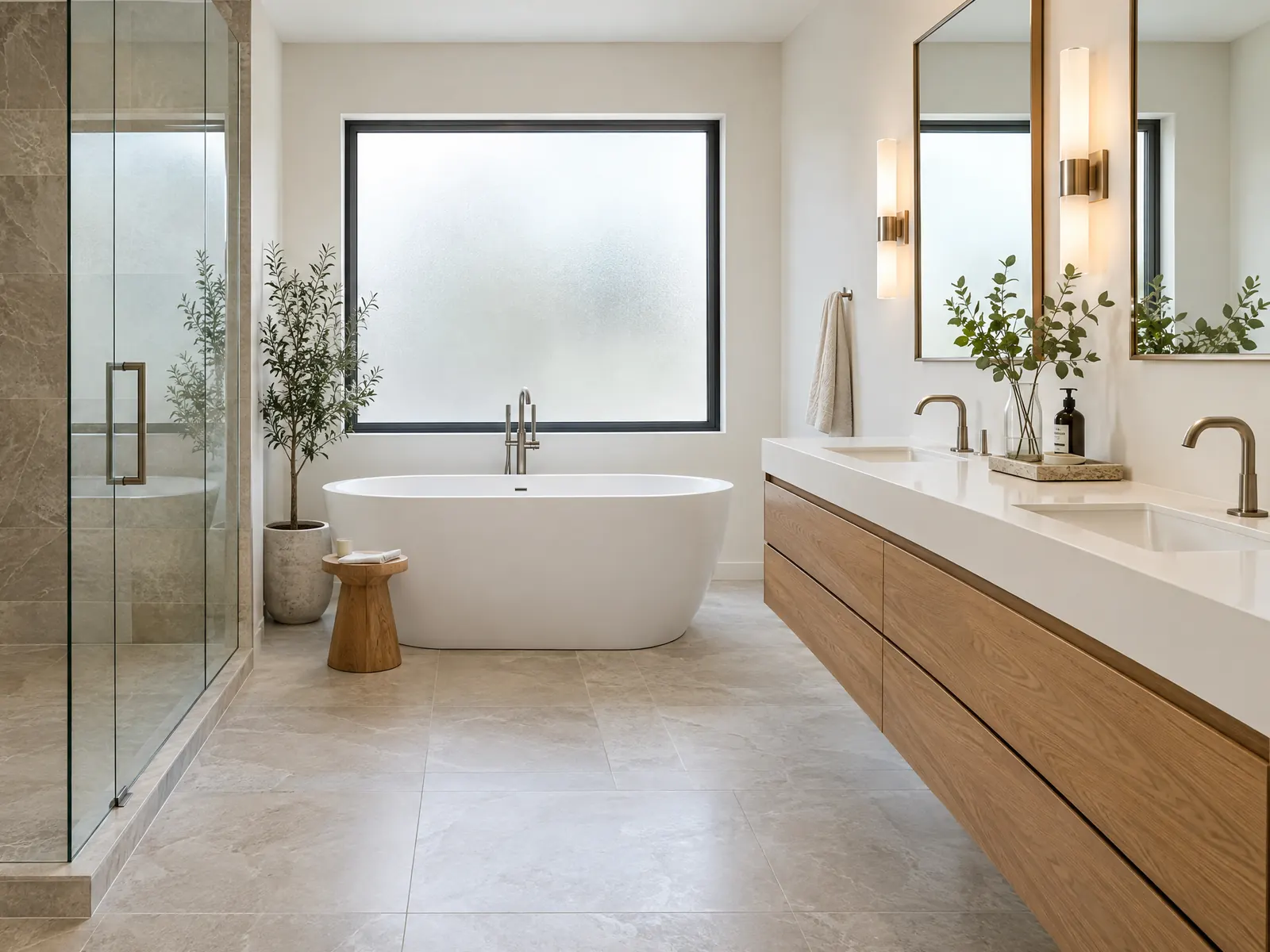
Mission Viejo is a planned city that grew in tracts. Donald Bren, Philip Reilly and James Toepfer bought the northern 10,000 acres of Rancho Mission Viejo in 1963, the first families arrived in 1966, and the city incorporated on March 31, 1988. The Census Bureau's 2024 one-year estimates count 34,794 homes here, about 39.7 percent of them built in the 1970s, and a median owner-occupied value of $1,110,600. Most bathrooms in town are therefore 35 to 55 years old, in stucco houses and condominiums that were designed to match.
This page covers which bathroom jobs need no permit, what triggers one, the City's own handout rules for fans and showers, what the age of the house means behind the wall, condo and HOA questions, layout changes and how a permit is filed. The City's municipal code on Municode returned an error to our tools, so we quote only the City's own handouts, forms and pages. Price tiers and the phase list are on our bathroom remodeling page, and the Mission Viejo area page lists every trade we cover in town.
Mission Viejo Building Services rules that apply to bathroom work
Where bathroom remodeling permits come from in Mission Viejo: City of Mission Viejo Community Development Department, Building Services Division.
- The City's Residential Bathroom Remodel handout (revised January 2026) says a bathroom renovation generally needs a permit when it relocates or replaces vanity cabinets, sinks, toilets, tubs or showers, changes lighting, or removes and replaces wallboard, while replacing towel bars, mirrors, paint and floor coverings with no other work is maintenance with no permit.
- The bathroom handout requires an exhaust fan with a back-draft damper even when the room has a window, venting outdoors with a termination at least 3 feet from an opening or property line, humidistat control unless the fan is part of whole-house ventilation, a 1,024 square inch minimum shower (30 inch circle) 70 inches high, pressure-balancing or thermostatic valves, and flow limits it lists as 1.28 for toilets, 1.8 for showerheads and 1.2 for lavatory faucets.
- A bathroom remodel in Mission Viejo needs at least a rough and a final inspection, and if a shower is replaced the City says additional waterproofing and shower pan test inspections may be required. Tempered glazing is required at tub and shower doors and windows less than 60 inches from the drain.
Sources for these rules
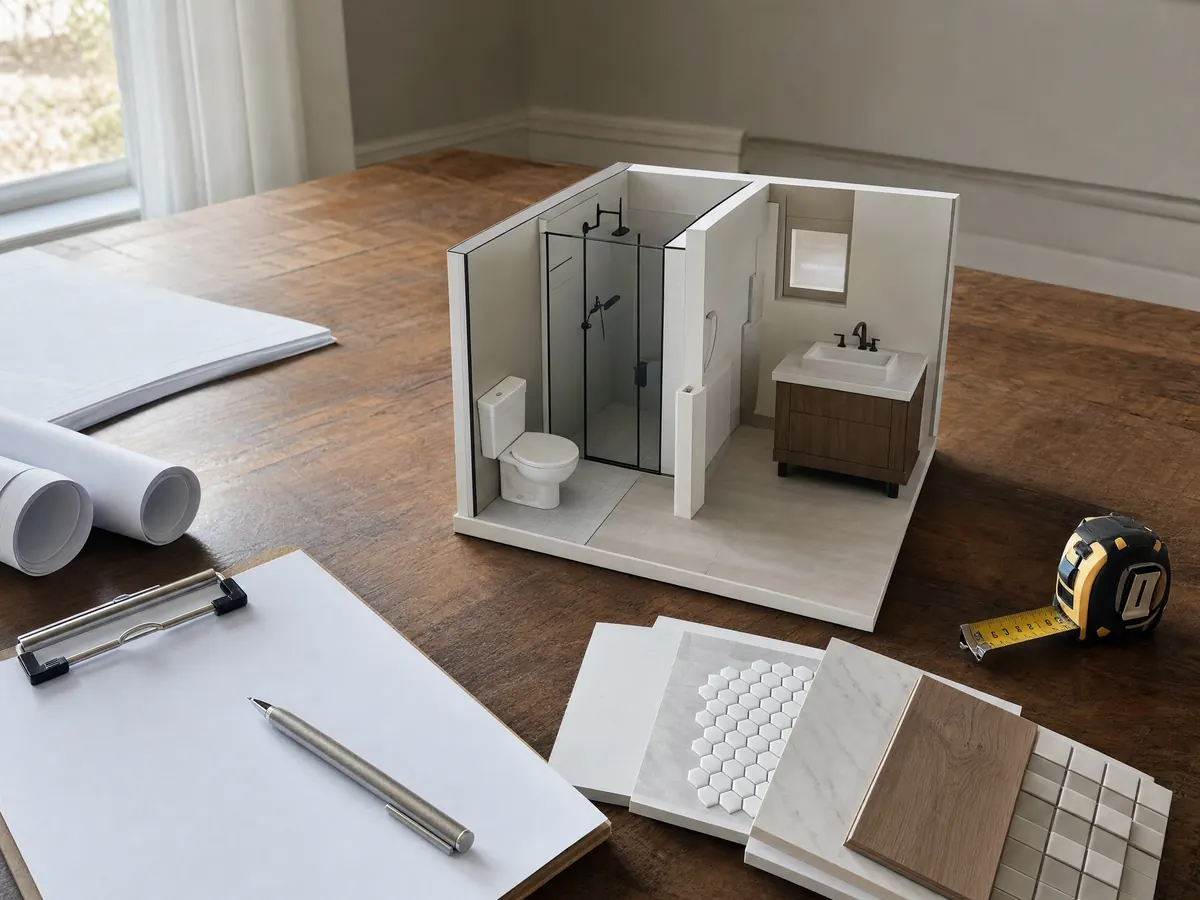
Which bathroom jobs need no permit in Mission Viejo? Paint, mirrors, towel bars and floor coverings
The City's bathroom remodel handout, revised in January 2026, draws its line in plain words. Replacing towel bars, mirrors, paint and floor coverings with no other work is maintenance, and it needs no building permit. The City's March 2026 list of work exempt from permits agrees, naming painting, carpet, linoleum, tile and cabinet-door-only replacement as decorative finishes.
A powder room refresh stays on the permit-free side while the vanity, toilet and lighting stay where they are and the walls stay closed. It crosses the line when the vanity cabinet, sink or toilet is replaced, when lighting changes or when wallboard comes out, because the same handout says those steps generally need a permit. Old tile on a wet wall often takes the wallboard behind it, so a tile job can turn into a permit job once the wall is open.
Exemptions never excuse work that breaks the code, and anything affecting structure needs a permit regardless. If you are unsure which side your scope falls on, describe the job to Building Services at 949-470-3054 before ordering tile.
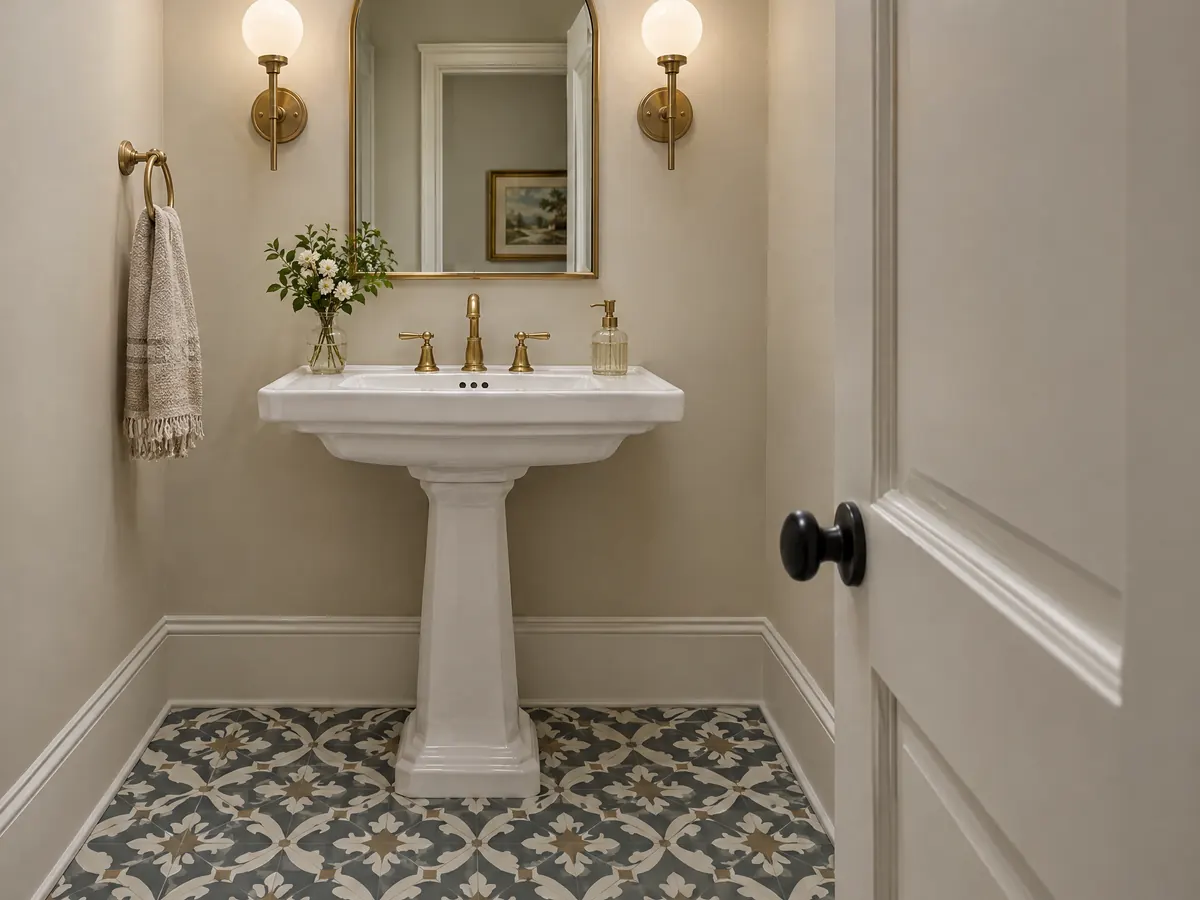
Do you need a permit for a bathroom renovation or remodel in Mission Viejo? Showers, tubs, toilets and vanities
Yes, once the work relocates or replaces a vanity, sink, toilet, tub or shower, changes lighting or removes and replaces wallboard. A tub-to-shower conversion is permit work, because it reaches the mixing valve, the drain line and the framing behind the tile. Settle which permit your scope needs before you order materials.
The City's kitchen handout names a 'Residential Like-For-Like Kitchen/Bathroom Remodel' permit for jobs with no wall removal, no structural change and no windows, and says anything that touches walls or windows needs the broader Residential Remodel permit. It adds that every item on the plans is labeled new or existing, with unlabeled items and like-for-like replacements both charged as new. Expect the same labeling on a bathroom set.
A bathroom needs at least a rough and a final inspection, and a replaced shower can add waterproofing and shower pan test inspections. Ask your contractor which inspections are on the schedule and who books them.
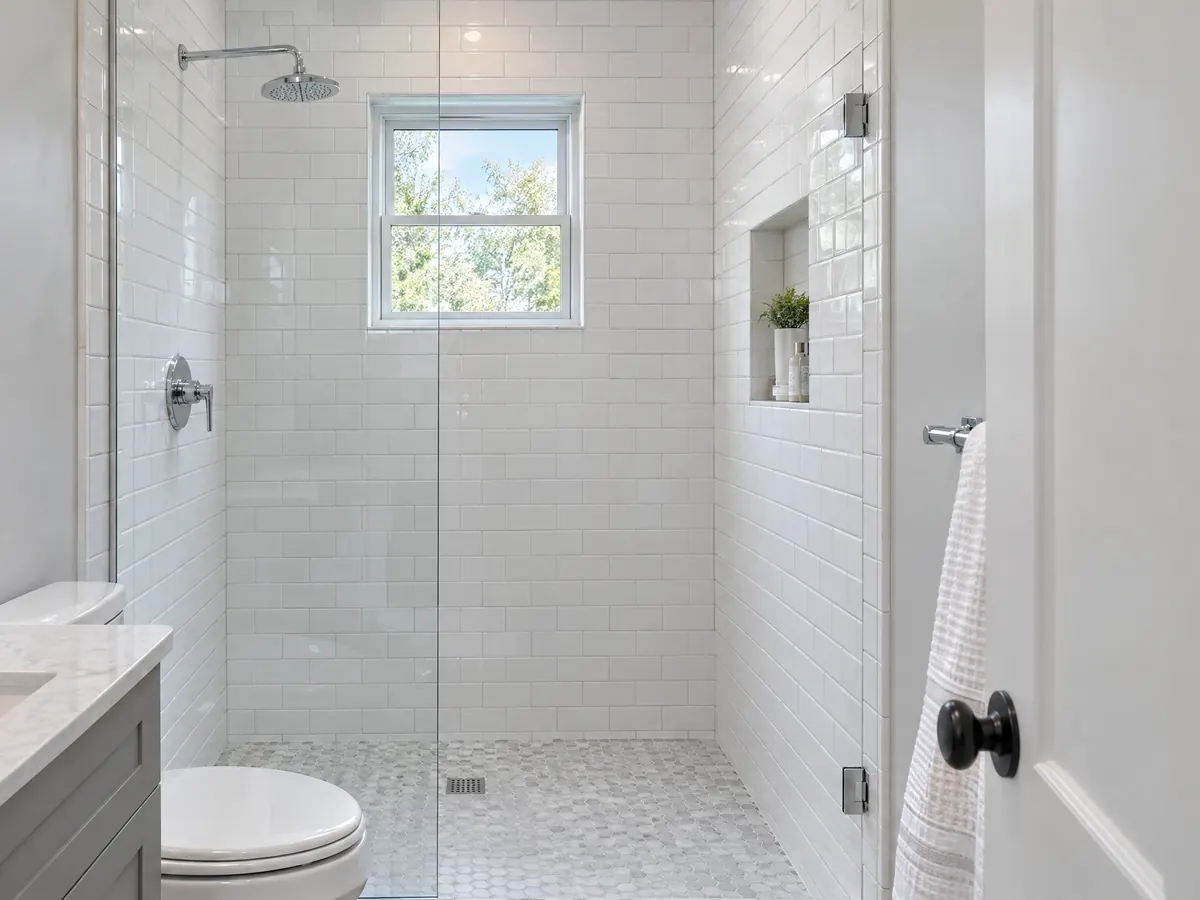
Mission Viejo's bathroom handout: exhaust fan, shower size, valves and water limits
The handout requires an exhaust fan with a back-draft damper even when the room has a window. The duct must end outdoors at least 3 feet from any opening or property line, and a humidistat runs the fan unless it is part of whole-house ventilation. The Energy Commission's summary of the 2025 Energy Code, which the City adopts by reference, adds local exhaust that runs continuously or on demand and at least one light on an occupancy or vacancy sensor.
A new shower must hold a 30 inch circle, which is 1,024 square inches, and stand 70 inches high. Valves must be pressure-balancing or thermostatic. The City lists flow limits of 1.28 gallons per flush for toilets, 1.8 gallons per minute for showerheads and 1.2 for lavatory faucets, and it requires tempered glass at tub and shower doors and at windows less than 60 inches from the drain.
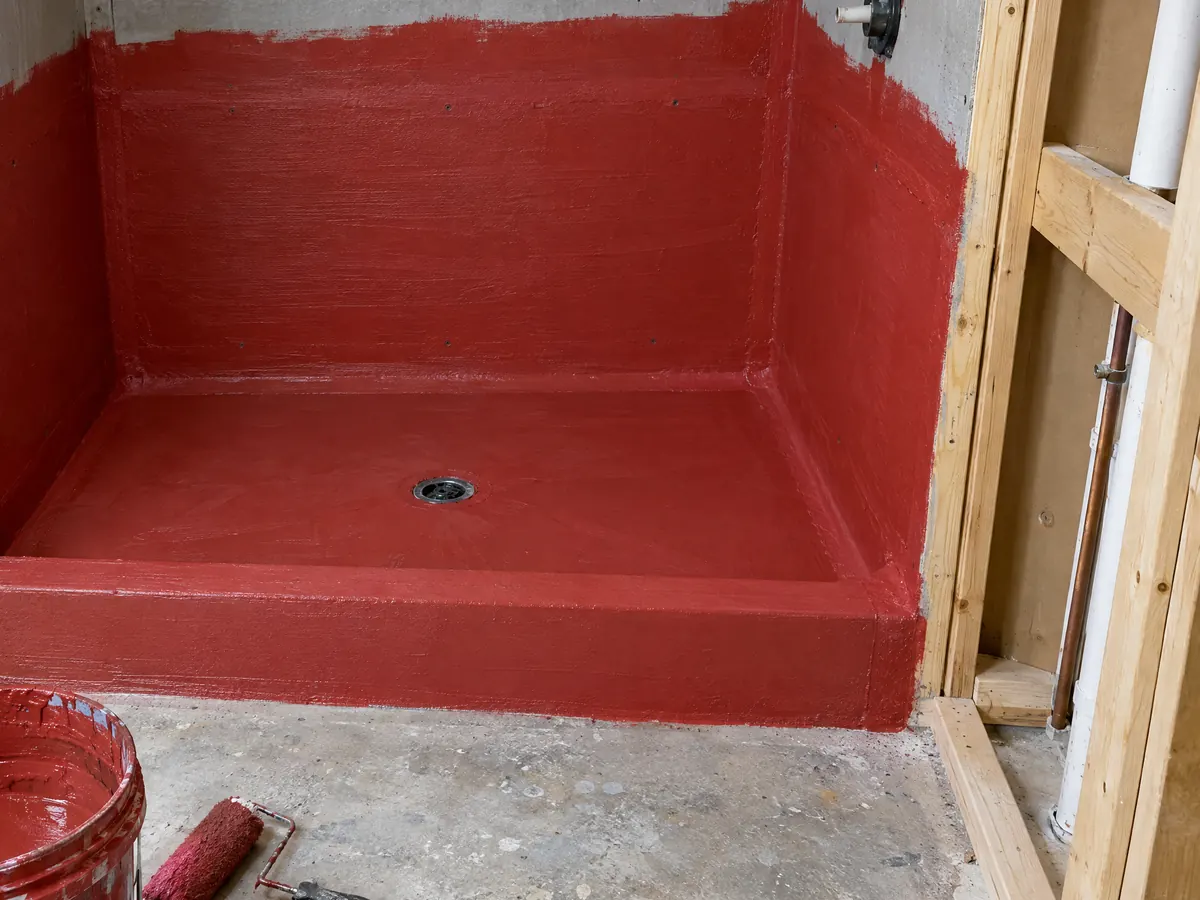
Steam does more damage here than weather. The nearest NOAA station, about 1.2 miles from the city center, averages 15.25 inches of rain a year, 11.40 of them from December through March. A sound shower is a sloped pan under one continuous membrane, flood tested before tile covers it, so ask for the test date in writing.
What is behind the walls of a 1970s Mission Viejo bathroom?
The City's own history gives the tract calendar: El Dorado and Monterey opened in 1967, Granada and Mission Ridge in 1968, Madrid and Aliso Villa in 1971, Barcelona in 1972, Castille in 1973 and Cordova in 1975. The Census table puts about 54.6 percent of homes, roughly 19,000, before 1980, and another 25.6 percent in the 1980s. These are city-wide estimates with wide margins, so read them as a guide.
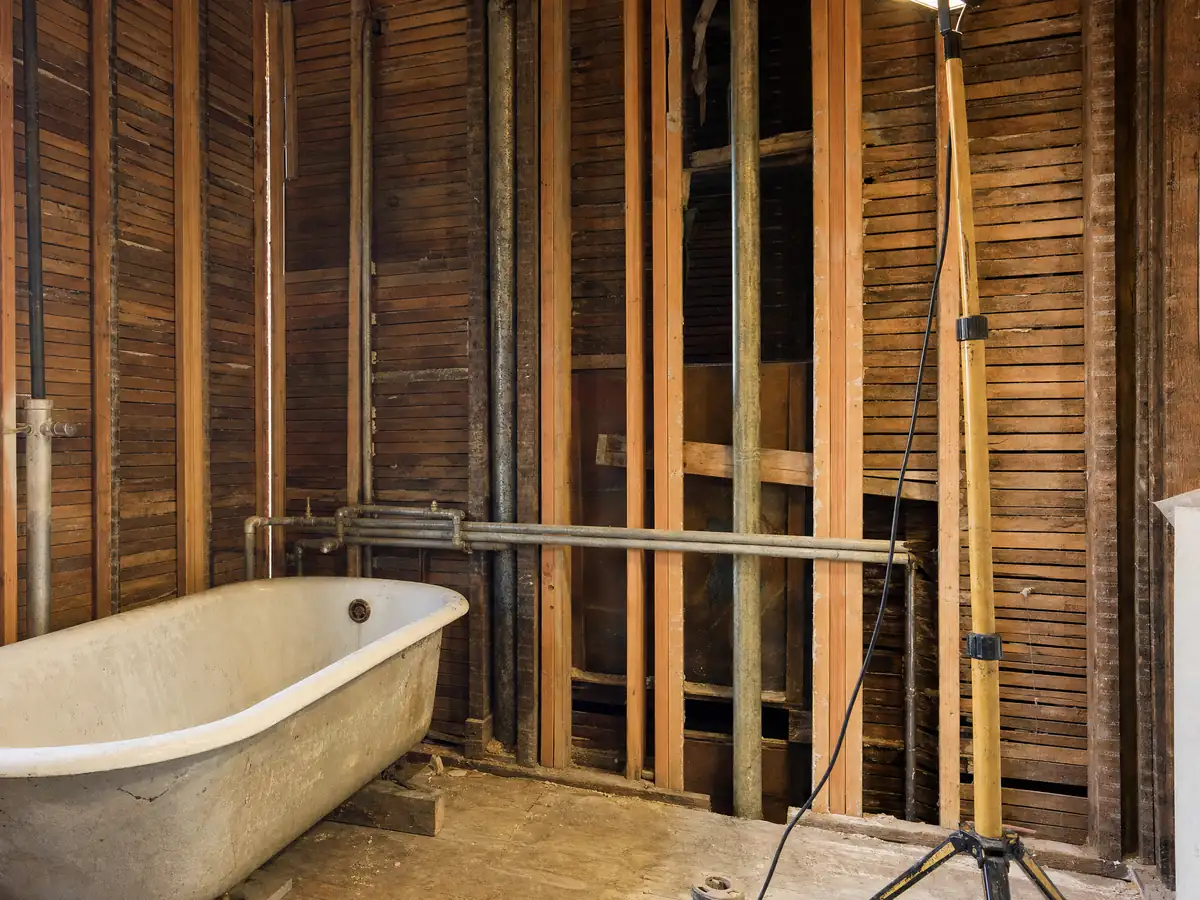
We found no source on which pipe material the tracts used, so we do not claim one. Open the wall, look, and carry an allowance in the quote for what turns up. For paint from before 1978, EPA's lead-safe renovation rule covers paid work that disturbs it, and the Census table cannot separate 1978 from 1979, so we cannot tell you which side of the line your house sits on. The City's own form says asbestos testing is required before any demolition or renovation under South Coast AQMD Rule 1403.
- Is the firm certified for lead-safe work if the house predates 1978?
- What happens to old tile, mastic and drywall during demolition?
- What allowance sits in the quote for surprises behind the wall?
Condo, townhome or tract house: the HOA and Chapter 9.43 questions for a bathroom
About 10.1 percent of Mission Viejo's homes, 3,505 units, sit in buildings of five or more units. For a condominium the first question is whose pipe it is, so ask the association whether the drain stack, a shared wall or the exhaust duct counts as common area, and get its answer in writing before paying for plans. We found no association's rulebook, so we cannot say what any of them requires.
The City's Municipal Code Chapter 9.43 routes permit-required exterior work, such as additions, new roofs, decks and fences, through a neighborhood compatibility review run by the HOA's architectural committee or the City. Nothing we read puts an interior-only bath through it. A new bathroom window or a bump-out that changes the outside of the house is different, and Planning at 949-470-3053 can say whether your scope counts as modifying a structure.
Primary bath or new layout: when a bathroom job becomes a remodel with a fire review
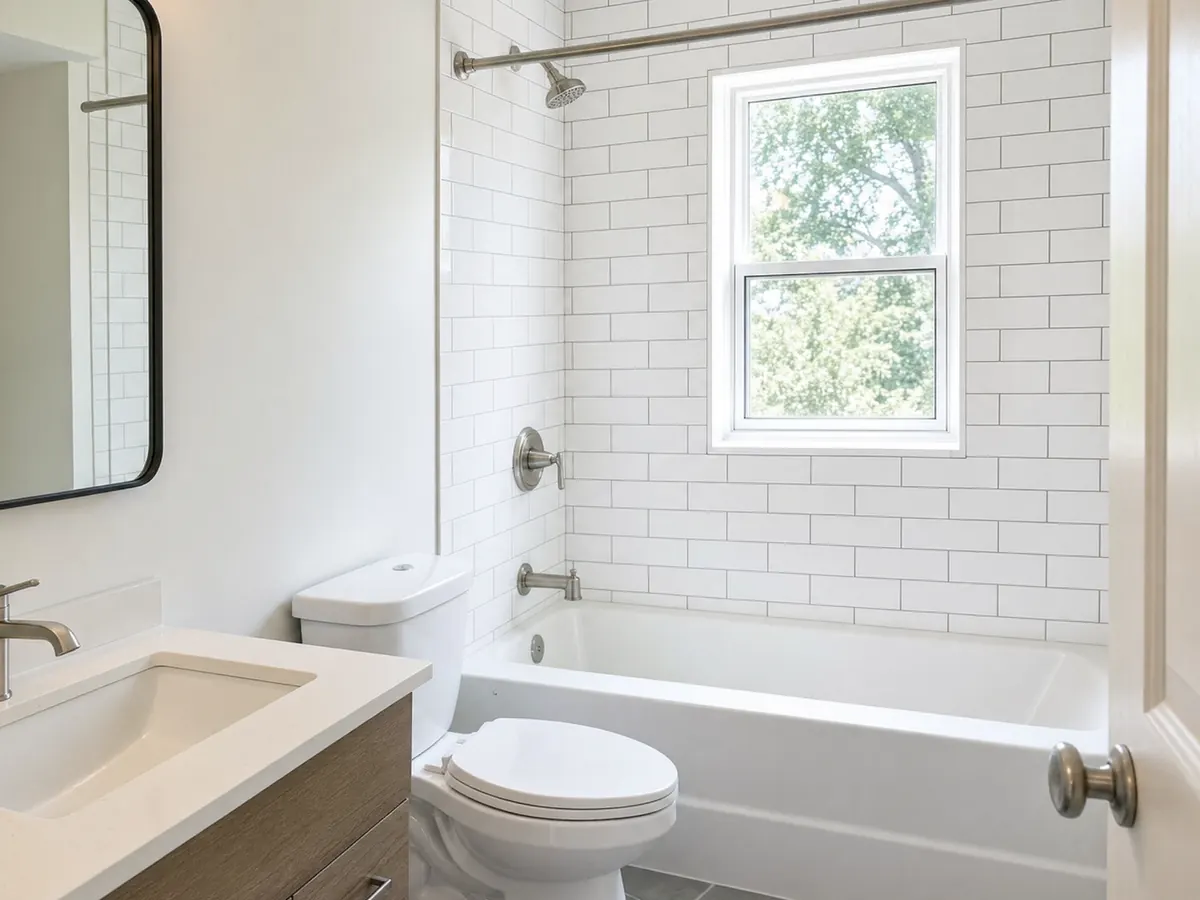
Moving a wall, enlarging a shower into the next closet or adding a window pushes a bath out of the like-for-like category. The plans then show an existing and a proposed floor plan, and an existing framing layout if a wall comes out. The portal also lists an OCFA Residential Preliminary Form and Plans among the attachments for residential remodels, so the Orange County Fire Authority can be part of a larger bath job.
A primary suite that adds floor area is a room addition, with footings, soil questions and Chapter 9.43 review of its own. Our Mission Viejo room addition page covers that route. A bath built inside a separate unit belongs on the Mission Viejo ADU page, and a new bath window on the Mission Viejo window page.
How to file a bathroom permit in Mission Viejo: the portal, the recycling form and inspections
Since September 7, 2023, the City takes permits, plans and inspection requests only through its Client Self Service portal. The Building Counter at 200 Civic Center, open Monday to Friday 8 a.m. to 4 p.m. and closed noon to 1 p.m., is for help, not filing. Everyone who needs to see the permit needs their own account, and the applicant adds them. The Fee Estimator works without an account.
Every permit-required job files a Construction and Demolition Waste Diversion form. Non-exempt work posts a deposit and recycles 75 percent of its debris. The City's April 2023 fee schedule lists $500 for renovating an existing structure, on work of 250 square feet or more and $10,000 or more in valuation, and the form's exempt option, at 65 percent diversion with no deposit, covers jobs under 250 square feet or under $10,000. That schedule is over three years old, so confirm the figure in the estimator.
MDG Builders, CSLB #1040337, runs a bathroom job as the general contractor: we draw the room, file through the portal and line up licensed plumbers, tile setters and electricians who do the field work. Mission Viejo issues no business license, so the state license is the one to check, and the City's permit form asks for a contractor's license class and number. The subcontractor chain explained shows who answers for what.
Bathroom photos from Mission Viejo and nearby homes
Bathroom scenes tied to Mission Viejo and the Orange County communities around it, from opened walls and waterproofing to finished tile. Tap a photo to enlarge it.

What bathroom remodeling costs around Mission Viejo
On our bathroom remodeling page, a 35 square foot room falls into one of four tiers. A refresh runs about $9,000 to $18,000, a midrange remodel in the same layout $25,000 to $40,000, a primary bath $50,000 to $85,000 and up, and a brand-new bathroom $60,000 to $120,000. The tiers lean on Remodeling magazine's 2025 Cost vs. Value report for Los Angeles, which lists a midrange bath at $27,143, recouping about 89.6 percent at resale, and an upscale one at $85,055, recouping about 42.3 percent. We found no Mission Viejo price survey and did not run the City's fee estimator, so permit fees and the recycling deposit appear as separate lines in a written proposal. The bathroom cost guide explains what moves a bath between tiers, and the license check guide shows how to verify any contractor on the CSLB site. For comparison, see bathroom remodeling in neighboring Lake Forest, in Irvine and in Los Angeles.
| What it covers | Typical range |
|---|---|
| Refresh in the same layout: new vanity, toilet, fixtures, lighting, paint, limited tile | $9,000 to $18,000 |
| Mid-range full remodel in the same layout: new shower or tub, tile, vanity, fixtures, lighting and fan | $25,000 to $40,000 |
| Upscale or primary bath: stone, custom glass, freestanding tub, double vanity, heated floor | $50,000 to $85,000 and up |
| Adding a new bathroom | $60,000 to $120,000 |
Other work we manage in Mission Viejo
Mission Viejo bathroom remodel questions, answered
Do I need a permit for a bathroom remodel in Mission Viejo?
Yes, once the job relocates or replaces a vanity, sink, toilet, tub or shower, changes lighting or removes wallboard. Replacing towel bars, mirrors, paint and floor coverings with no other work needs none. The permit is filed online only, so call Building Services at 949-470-3054 if your scope sits near the line.
Do I need a permit for a shower remodel?
Most of the time, since a replaced shower touches the valve, the drain line and the framing behind the tile. The City's handout says replacing a shower can add waterproofing and shower pan test inspections to the usual rough and final. A re-caulk or re-grout around untouched fixtures is maintenance, so describe your exact scope to the City first.
How much does a bathroom remodel cost in California?
Expect roughly $9,000 to $18,000 for a refresh, $25,000 to $40,000 for a midrange remodel in the same layout, and $50,000 to $85,000 and up for a primary bath, measured on a 35 square foot room. The tiers rest on 2025 Los Angeles data, not a Mission Viejo survey, so a written proposal sets the price.
Can a handyman do a bathroom remodel?
Only for very small jobs. California's unlicensed work limit is $1,000 since January 1, 2025, and it does not apply when any permit is needed or when the person hires a worker. A permitted Mission Viejo bath therefore needs a licensed contractor or an owner who files the City's owner-builder forms and accepts that liability.
What is the difference between a bathroom remodel and a bathroom renovation?
A renovation keeps the room as drawn and freshens its surfaces and fixtures, while a remodel changes the layout or the plumbing and wiring behind the wall. In Mission Viejo the split decides the permit: finish work alone is exempt, but replaced fixtures, new lighting or removed wallboard are not. Use the City's own wording when you call.
How long does a bathroom remodeling take?
Plan on 2 to 6 weeks for design and selections, then about 3 to 7 days of demolition and rough plumbing, 3 to 5 days of waterproofing and curing, 1 to 2 weeks of tile and fixtures, and 1 to 2 weeks for glass and the final. Tile and glass lead times cause most of the slippage.
Do I need HOA approval to remodel a bathroom in Mission Viejo?
For a condominium, assume yes until the association says otherwise, since the drain stack, shared walls and exhaust ducts may be common area. The City's Chapter 9.43 review names exterior work and we found nothing that sends an interior-only bath through it. Your association's recorded rules can still apply, so request its answer in writing.
Should I replace the toilet during a bathroom remodel?
Usually yes, because swapping a toilet is itself a permit trigger in the City's handout, and the replacement must meet its 1.28 gallons per flush limit. Doing it while the floor is open costs less than a second visit. Ask your contractor whether your older fixtures also fall under any rule that applies once a permit is pulled.
Where do I shower during a bathroom remodel?
Plan on losing the room for most of the build, from demolition through the 3 to 5 days the waterproofing needs to cure. If it is your only bath, ask the contractor to sequence the toilet and shower to come back first, and arrange a second bath or gym access for the middle weeks. We plan the gap rather than promise it away.
Is remodeling a bathroom worth it?
Partly, and the answer depends on the finish level. Remodeling magazine's 2025 Cost vs. Value report for Los Angeles shows about 89.6 percent of a midrange bath's cost coming back at sale but only 42.3 percent for an upscale one. We found no Mission Viejo resale study, so treat the figures as a regional guide.
Tell us about your Mission Viejo bathroom
Tell us which tract you live in, roughly when the house was built, whether it is a condo or a detached home and what you want changed, and the first visit will start from the permit line and the HOA question.