
Concrete Companyin Artesia, CA
A concrete company in Artesia works to a written parking spec: parking slabs at least 3 and 5/8 inches thick, driveways at least 9 feet wide, and a paved pad that counts only if it sits 20 feet from the right of way. Flatwork permits are unconfirmed, and any apron needs an encroachment permit.
Artesia's streets were laid out for dairies and then for tracts. The area took its name from natural artesian wells, grape growers were selling to wineries by 1885, and once the Portuguese and Dutch dairymen of the 1920s moved on, builders put up houses. Wikipedia counts 9,993 residents in 1960, the year after incorporation, and 14,757 in 1970. The Census puts the median year built at 1966, so a driveway or front walk that was never replaced is about 60 years old, and the Housing Element describes a historic pattern of small parcels under half an acre.
MDG Builders, CSLB #1040337, is a Tarzana general contractor and does not pour the slab itself. We scope the job, take the questions to Building & Safety and Planning and hire a licensed concrete subcontractor. The concrete page covers finishes, and the Artesia overview lists our other trades in the city.
What Artesia's Building & Safety counter, Planning Department and Municipal Code say about concrete work
Where concrete permits come from in Artesia: City of Artesia Community Development Department: Building & Safety.
- Mirror, not the official text: Municipal Code 9-2.1105(a) requires required parking spaces, maneuvering areas and the driveway reaching them to be surfaced with concrete at least 3-5/8 inches thick with expansion joints as needed, or asphalt compacted to at least 1-1/2 inches over at least 3 inches of compacted crushed rock or gravel. Driveways serving up to two dwelling units must be at least 9 feet wide (9-2.1106(c)(2)).
- Mirror, not the official text: an unenclosed paved space in front of a garage counts toward the required parking only if it is a paved pad designed for parking and the distance between the garage and the public right of way is at least 20 feet (9-2.1103(a)(1)(A)). For R-1 lots 50 feet or wider, a 3 bedroom home needs 2 enclosed spaces plus 1 paved space.
- Mirror, not the official text: R-1 lots must keep at least 40 percent of the front yard landscaped with an automatic irrigation system, at least 9 percent of the lot as outdoor living space with one dimension of 10 feet or more (driveways, parking and walkways do not count), and roofed structures may cover no more than 50 percent of the lot. The City's General Residential Guidelines state the same 40 percent landscaping within the first 20 feet, 9 percent outdoor living space and 50 percent lot coverage.
- Mirror, not the official text: Municipal Code 7-1.01 requires anyone constructing a building or dwelling to provide cement curbs and gutters to City specifications unless adequate ones already exist, and requires sidewalks only in commercial districts. Under 7-6.02 any excavation in a street, alley or sidewalk needs an encroachment permit, so a new driveway approach is likely to need one.
- The state list of permit exempt work in Residential Code R105.2 (2025 edition, copied on a third party code site) includes sidewalks and driveways. Artesia's Building & Safety page does not mention flatwork, and a grading permit and plot plan are separate City permit types, so confirm with Building & Safety whether a replacement slab or driveway needs anything beyond the encroachment permit for the apron.
- The Housing Element says Artesia sits on the San Gabriel River alluvial plain, that alluvial soils like these are especially prone to intense ground shaking, and that the city is within an identified liquefaction zone, and that these geological hazards 'affect construction requirements'. The same chapter reports no Alquist-Priolo zones inside the city.
- Mirror, not the official text: the R-1 article (Article 28) limits the finished floor to no more than 18 inches above finished grade at any point around the perimeter, and requires at least 800 square feet of floor area for a primary residence.
- Mirror, not the official text: Municipal Code 9-2.1550 adopts the state Model Water Efficient Landscape Ordinance (Title 23, Chapter 2.7) and 9-2.1553 lets the building official withhold the permit final until a certificate of completion is approved, which matters when a hardscape job comes with new landscaping.
Sources for these rules
How thick and how wide must an Artesia driveway or parking pad be?
Artesia writes a spec into its zoning. Municipal Code 9-2.1105(a), as a third-party mirror prints it, requires parking spaces, maneuvering areas and the driveway reaching them to be concrete at least 3 and 5/8 inches thick with expansion joints as needed, or asphalt compacted to at least 1 and 1/2 inches over 3 inches of compacted crushed rock or gravel. A driveway serving up to two dwelling units must be at least 9 feet wide under 9-2.1106(c)(2). The City's official code host returned a 403 error to us, so confirm each section with Planning.
A paved pad in front of a garage counts toward required parking only if it is designed for parking and the garage sits at least 20 feet from the public right of way (9-2.1103(a)(1)(A)). On an R-1 lot 50 feet wide or more, a 3 bedroom house needs 2 enclosed spaces plus 1 paved space, and a 4 bedroom addition needs 2 enclosed plus 2 paved.
- Is the new driveway at least 9 feet wide?
- Does the pad leave 20 feet to the right of way?
- Does the parking chart still add up with the bedrooms?
How much of an Artesia front yard has to stay planted?
At least 40 percent of an R-1 front yard must be landscaped with an automatic irrigation system, according to the mirror of Article 28, and the City's General Residential Guidelines (revised 5/17/23) repeat that figure for the first 20 feet. The same guidelines state a 50 percent cap on roofed structures and a 9 percent outdoor living space rule.
The 9 percent space needs one dimension of 10 feet or more, and driveways, parking and walkways do not count toward it, so a pour that swaps lawn for flatwork can shrink the area that qualifies. A covered patio counts toward the 50 percent coverage limit instead.
Hardscape that arrives with new planting has a water rule. Municipal Code 9-2.1550 adopts the state Model Water Efficient Landscape Ordinance, and 9-2.1553 lets the building official hold the permit final until a certificate of completion is approved. Ask Planning whether a widening that removes lawn triggers a landscape plan.
Can you pour a concrete patio or driveway in Artesia without a permit?
We cannot confirm that from a City source. The state model list in Residential Code section R105.2, read on a third-party code site, exempts sidewalks and driveways but does not name a ground-level patio slab, and the Building & Safety page never mentions flatwork. It does list grading and plot plan as their own permit types, so ask the counter what, if anything, a replacement slab needs.
Municipal Code 8-8.305 requires a development permit for all construction or other development so the City can judge flood exposure, and the Housing Element puts the whole city in FEMA Zone C, minimal flooding, an older designation. We did not open the current FEMA map. Planning takes walk-ins Monday to Thursday from 7:30 a.m. to noon.
Demolition debris may matter. The City's Construction & Demolition program asks for a recycling plan and 65 percent diversion on demolition and on residential additions that increase size, so ask whether tearing out an old slab counts.
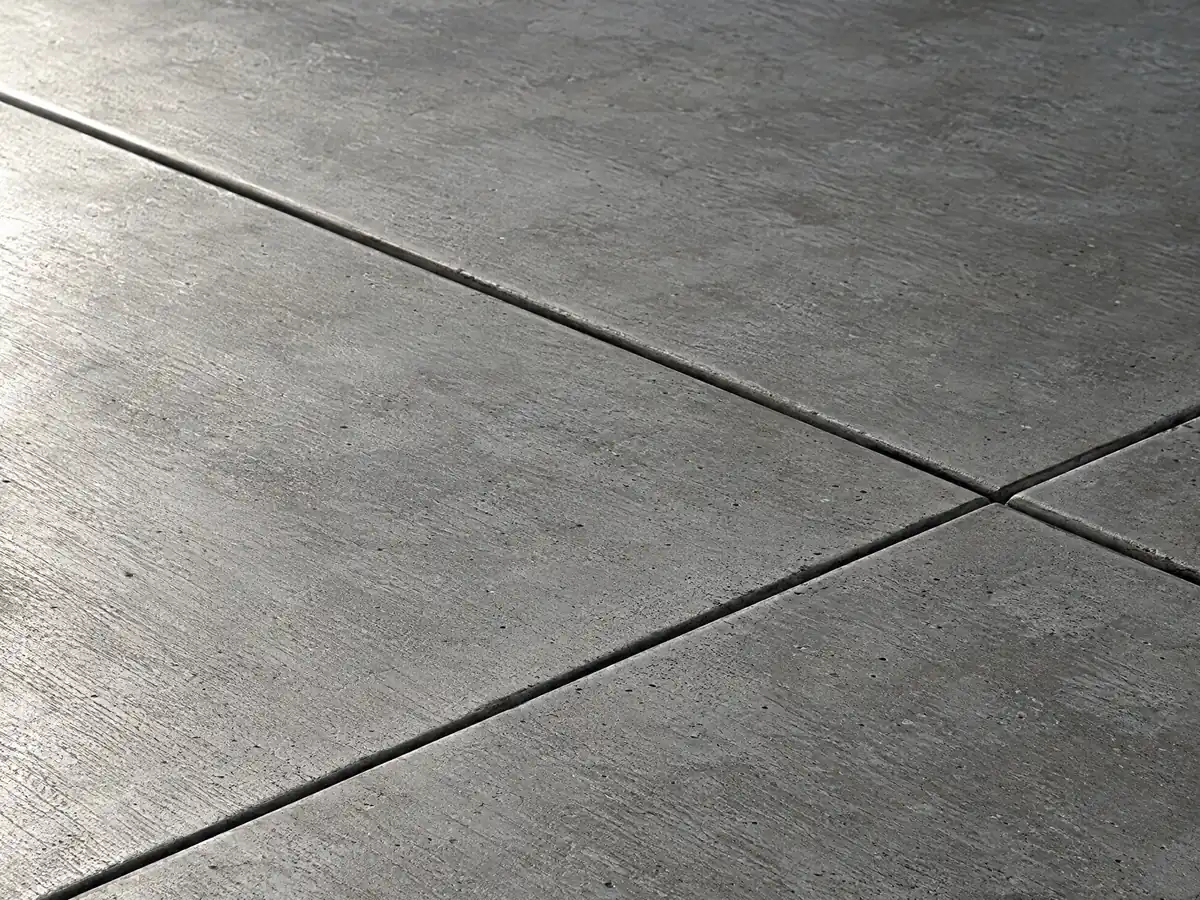
Who permits a new driveway apron, curb or sidewalk in Artesia?
The City Engineer does, through an encroachment permit. Municipal Code 7-6.02 and 7-6.03, per the mirror, require one for work on or within City property or the public right of way, including excavation in a street, alley or sidewalk, and make working without one a misdemeanor, each day a separate offense. The fee schedule lists an Encroachment Permit without traffic management at $186.13 plus a 1 percent General Plan Update fee, and a new driveway approach is likely to need one.
Curbs and sidewalks have their own chapter. Section 7-1.01 says anyone building a dwelling must provide cement curbs and gutters to City specifications unless adequate ones exist, and it requires sidewalks only in commercial districts, so many residential frontages have no walk to replace. Who pays to fix a lifted slab at the parkway we could not answer from the text.
Bins and trucks count too. The definition of facilities in 7-6.01 includes building materials and stockpiles in or across the right of way, so ask the City Engineer about a roll-off bin or a ready-mix truck that blocks a lane.
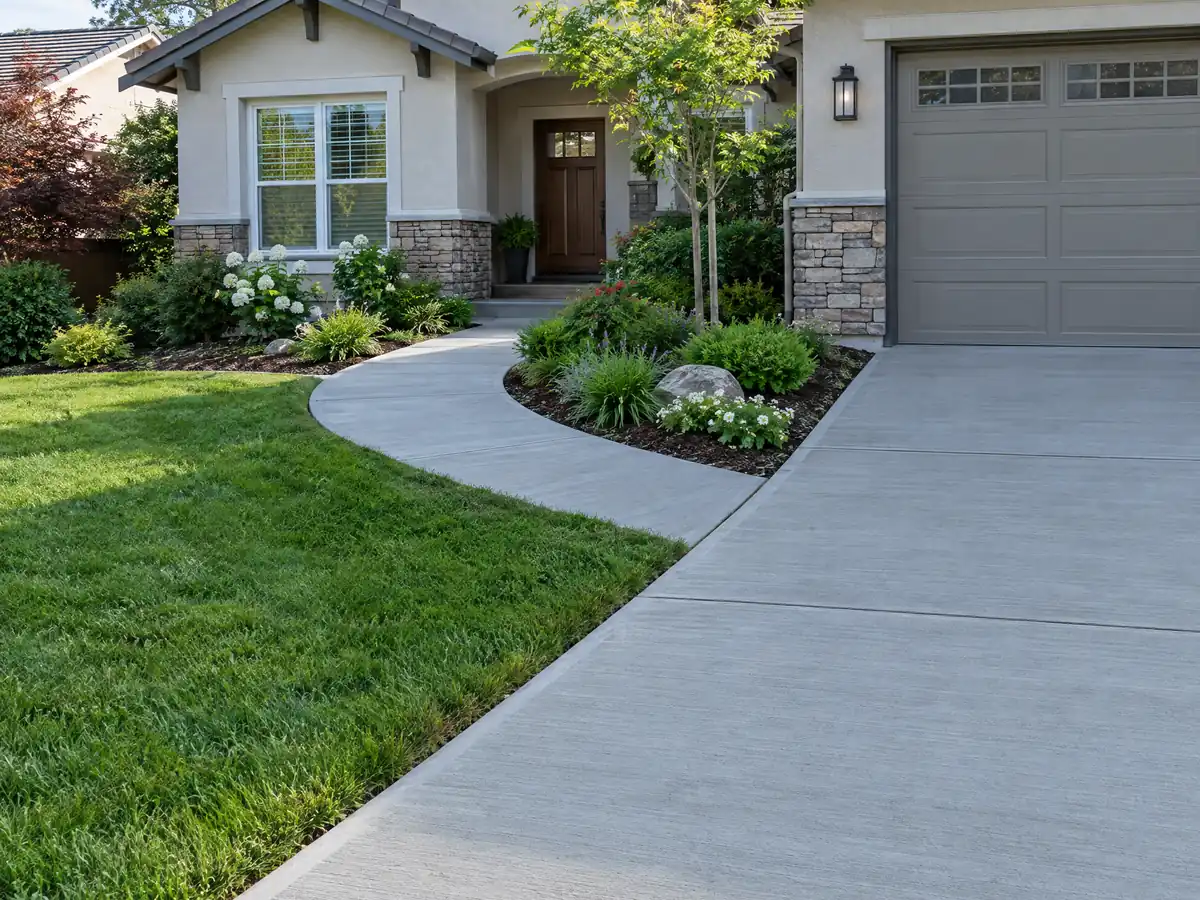
Why does concrete crack in Artesia, and what does liquefaction mean for a slab?
Cracks usually come from soil, shrinkage and heat before anything exotic. The Housing Element says Artesia lies on the San Gabriel River alluvial plain and inside an identified liquefaction zone, that alluvial soils are especially prone to intense ground shaking and that these hazards affect construction requirements. It reports no Alquist-Priolo fault zones in the city, with the Newport-Inglewood zone about 5 miles southwest and the Whittier-Elsinore zone about 8 miles northeast.
For a patio or walk, the base matters more than the surface. Ask how the subgrade will be compacted, where control joints go and whether reinforcement is planned. NOAA's 1991 to 2020 normals for Long Beach Daugherty Field, 5.4 miles away, list 23.3 days a year at or above 90 F and 1.9 at or above 100 F, so a summer pour needs a curing plan, and 9.71 of the 12.02 inches of rain fall from December through March.
Whether the City asks for a soils report on a patio or driveway, we could not confirm.
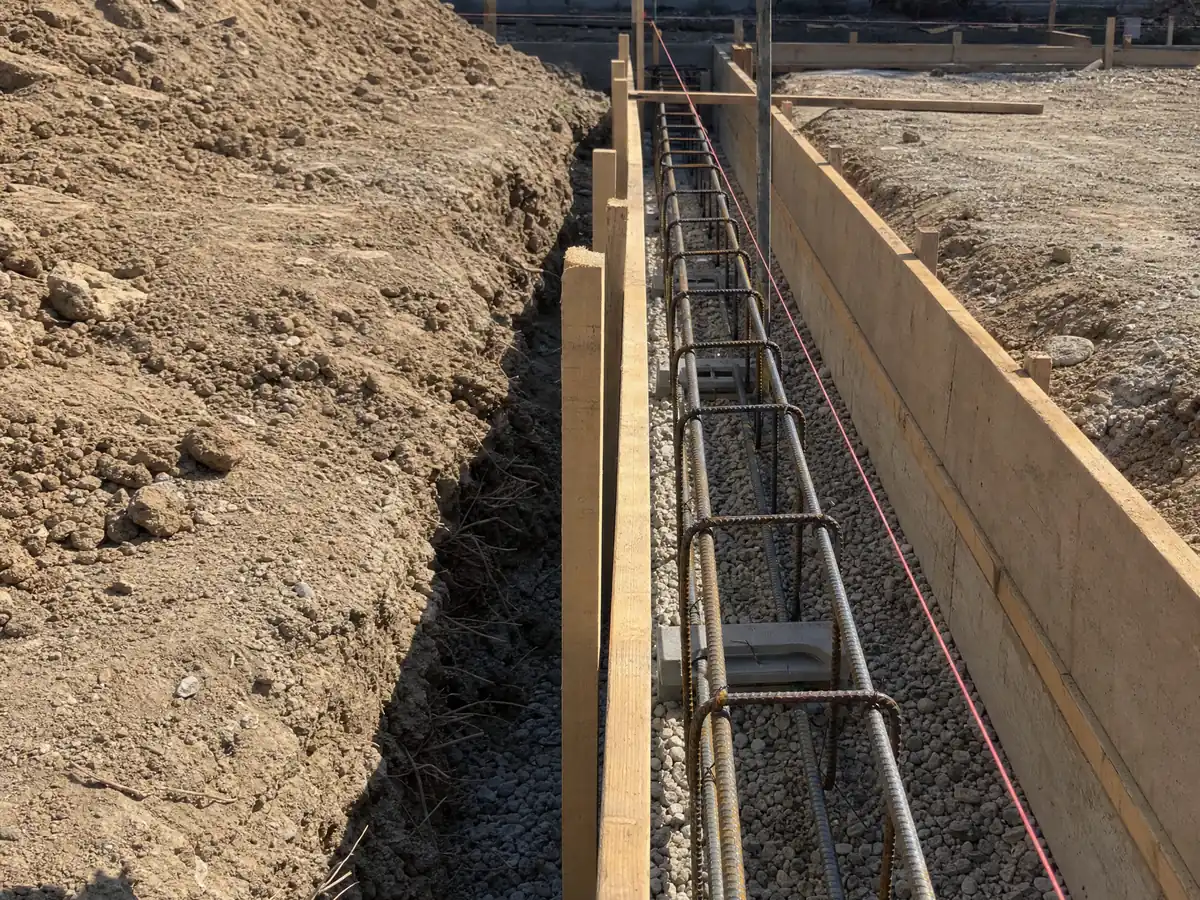
How tall can a retaining wall or block wall be in Artesia before the City steps in?
Artesia is stricter than the state model list. That list exempts retaining walls up to 4 feet unless they carry a surcharge, but the Building & Safety page names retaining walls over 3 inches among work that needs a permit, so the City's page governs unless the counter says otherwise. We did not read the County amendments.
Planning gets a say too. Municipal Code 9-2.1401(c), per the mirror, requires a Planning permit before any fence or wall goes up in a front, side or rear yard, with a licensed surveyor's property line survey or the neighbor's notarized consent. The fee schedule lists a Fence Permit at $58.17 plus 1 percent. Walls top out at 6 feet in side and rear yards and 42 inches in the required front yard, and block walls built after September 9, 2021 beside the Metro rail right of way must be 9 feet high.
CSLB's C-29 masonry class covers block walls, so a wall and a slab may go to different trades; our subcontractor guide explains how that works.
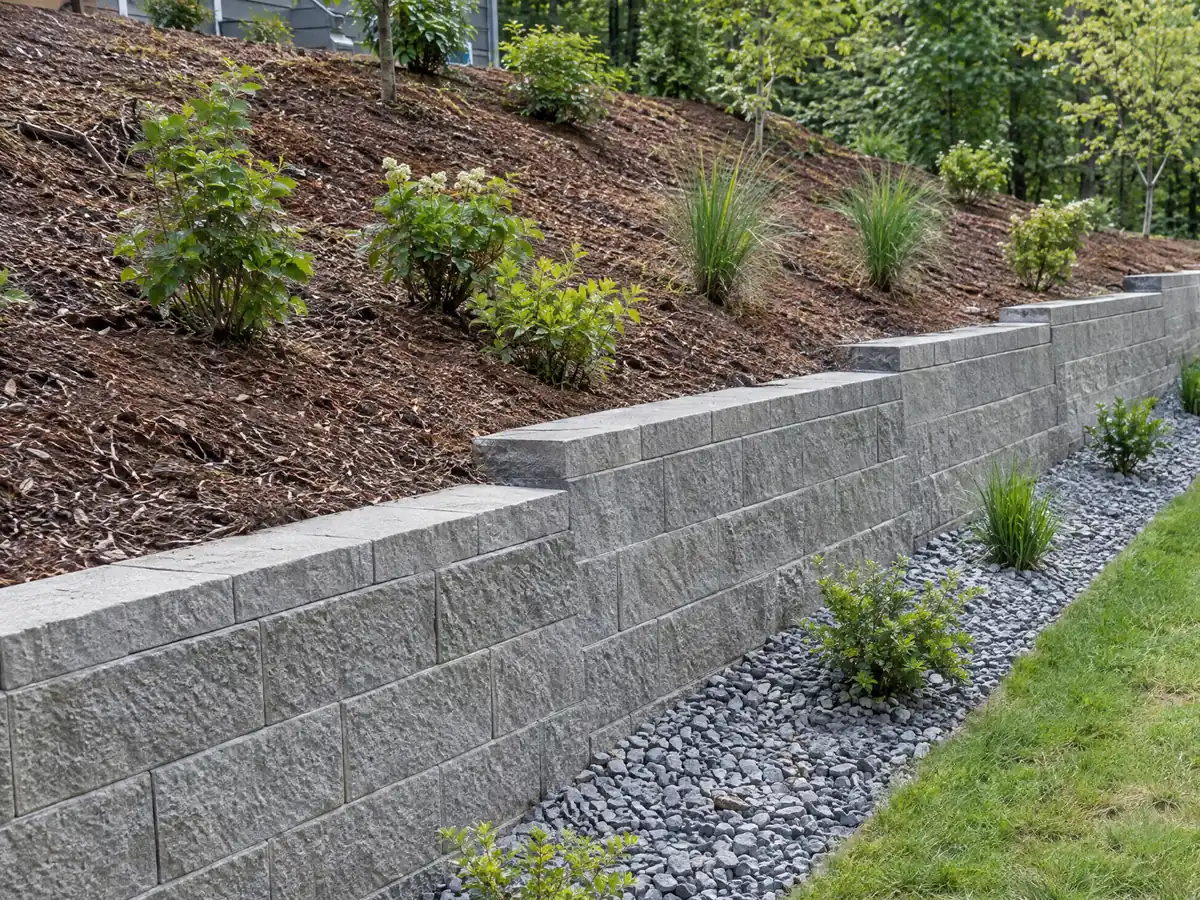
What does concrete work cost in Artesia, and what license should the crew hold?
No Artesia price study turned up, so the anchors are Los Angeles figures Angi published in 2026 from customer surveys and pro data: a patio at $4 to $13 per square foot averaging $5,248, a 20 by 20 foot slab at $1,600 to $5,200, stamped work at $15 to $30 and a driveway at $8 to $20 per square foot averaging $7,270. Our working range for plain flatwork on an easy site is $8 to $14 per square foot, and $9 to $20 for a driveway replacement with demolition. Plain flatwork rates medium in confidence and the rest lower; small jobs cost more per foot because of minimum charges.
Retaining walls get no per-foot price here. Angi's Los Angeles average is $7,140 across a very wide spread, and height and drainage drive it. For labor, the Bureau of Labor Statistics lists a May 2025 mean of $33.67 an hour for cement masons across the Los Angeles-Long Beach-Anaheim area; that is pay, not what a company bills. Demolition, haul-off, base, rebar and City lines should each stand alone in a proposal.
CSLB's C-8 class covers forming, pouring and finishing flat and other concrete work. Artesia also wants a City business license from the contractor before a building permit issues, and our license check guide shows how to look one up.
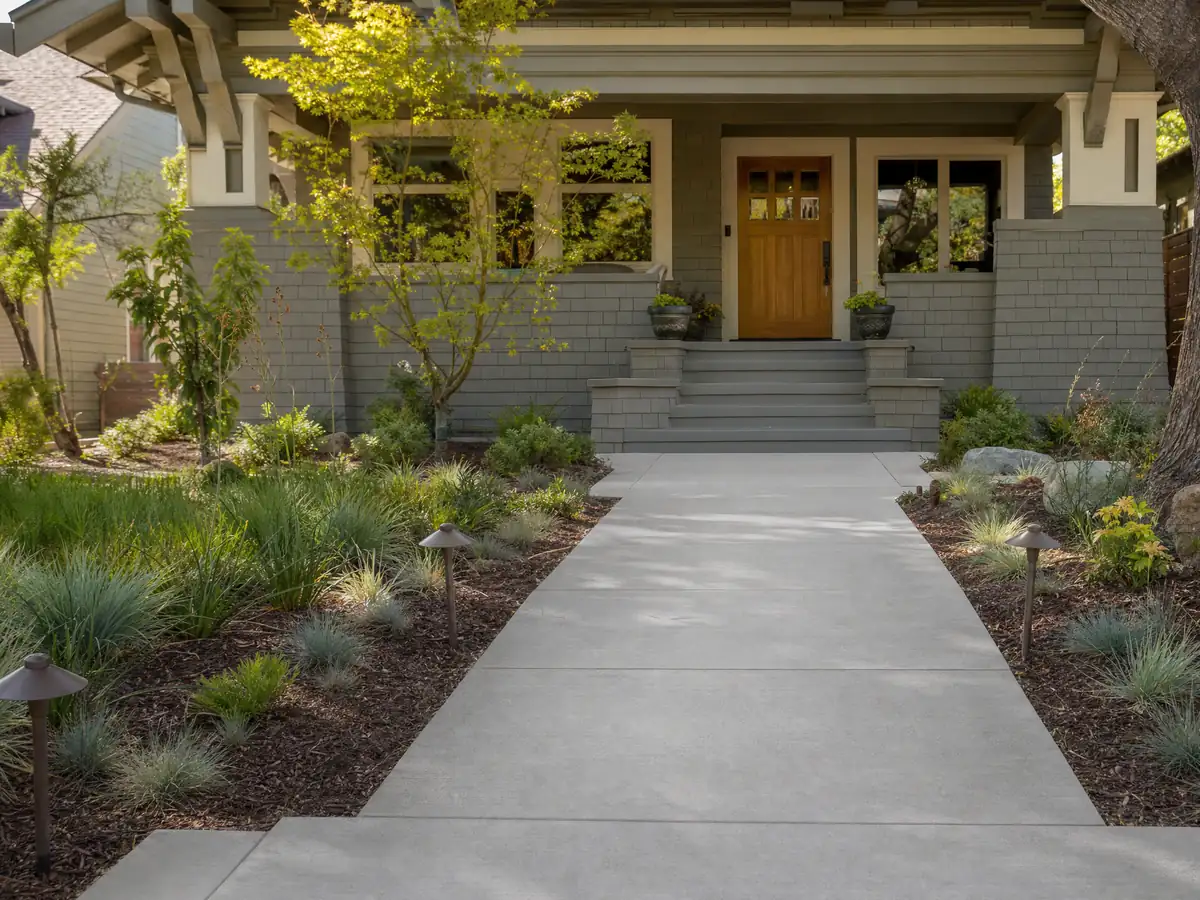
Concrete photos from Artesia and nearby communities
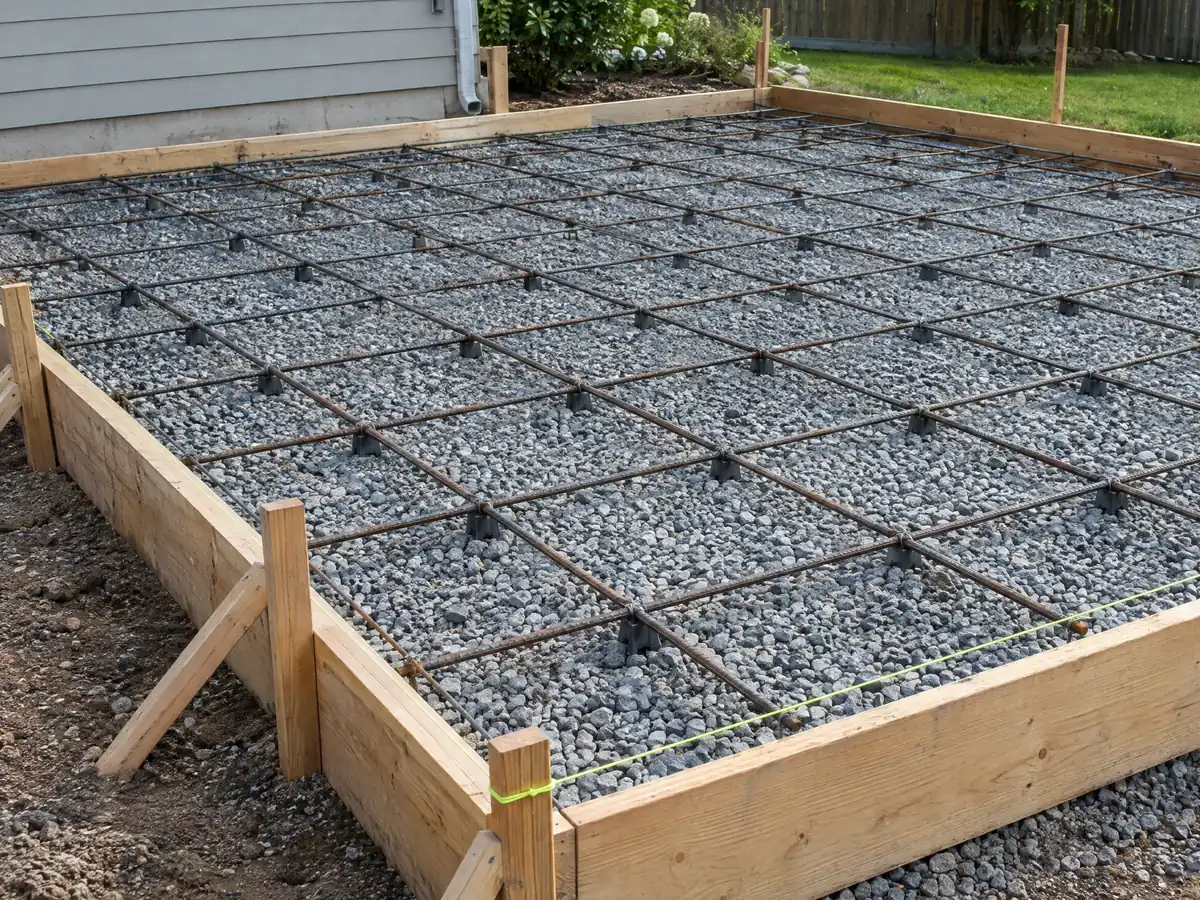
Driveways, patios, walks and forms from Artesia and nearby cities, shown at the stages that matter. Tap any photo to enlarge it.
What concrete costs around Artesia
Dollar figures on this page are Los Angeles planning ranges from our concrete page, not an Artesia bid, and the proposal should show demolition, base, the apron permit and any City fees on their own lines. On the same lot, see flooring in Artesia and decks in Artesia. Nearby comparisons: concrete work in Cerritos, concrete in Norwalk and concrete in Los Angeles.
| What it covers | Typical range |
|---|---|
| Patio, walkway or slab, broom finish, 300 sq ft or more | $8 to $14 per square foot |
| Decorative: stained, stamped or exposed aggregate | $15 to $30 per square foot |
| Driveway replacement, with demolition of the old slab | $9 to $20 per square foot |
| 20 by 20 foot plain patio (400 sq ft) | About $3,200 to $5,600 |
| 20 by 20 foot decorative patio (400 sq ft) | About $6,000 to $12,000 |
| Small jobs under 300 sq ft | Usually above the per-foot range |
| Retaining walls | Set by the written proposal |
Artesia concrete questions, answered
Can I pour a concrete patio without a permit?
We cannot confirm that from Artesia's pages. The state model list exempts sidewalks and driveways but does not name a ground-level patio, and the Building & Safety page never mentions flatwork. Call the counter with the slab size and its distance to each lot line before you book a pour, and ask about flood and grading rules too.
Can I expand my driveway without a permit?
Not safely. Widening changes the paved area the zoning code regulates: the driveway must be concrete or compacted asphalt of a set thickness and at least 9 feet wide, front yards need 40 percent planting, and a new apron needs an encroachment permit. Ask Planning for the width and landscaping answer before any forms go in.
What is the maximum height of a retaining wall without a permit in Artesia?
The state model list exempts walls up to 4 feet, but Artesia's Building & Safety page lists retaining walls over 3 inches as permit work, so plan on a permit. Fence and wall height limits also apply: 6 feet in side and rear yards and 42 inches in the required front yard.
How much should a 20x20 concrete patio cost?
Angi's 2026 Los Angeles figures put a 20 by 20 foot patio, which is 400 square feet, at $1,600 to $5,200, with $4 to $13 per square foot as the general range. We found no Artesia study. Tear-out, base preparation and any stamping or color change the figure, and only a visit to the yard fixes the price.
How much do contractors charge for concrete in Artesia?
Angi's 2026 Los Angeles pages show $4 to $13 per square foot for a plain patio and $8 to $20 for a driveway, averaging $7,270, with decorative work at $15 to $30. No Artesia study turned up, and small jobs cost more per foot. Ask for demolition, base and permit lines separately.
Is 4 inches of concrete thick enough for a driveway?
Four inches is the common thickness, and the Artesia code text we read sets 3 and 5/8 inches as the minimum for required parking surfaces, with expansion joints as needed. Many crews go thicker where trucks park. The river alluvium here makes base preparation and joint spacing the bigger questions to ask.
How much does a 20x20 stamped concrete patio cost in Artesia?
Angi's Los Angeles page for 2026 gives $15 to $30 per square foot for stamped work, which multiplies to $6,000 to $12,000 on 400 square feet, and an average stamped patio of $5,948. We rate decorative pricing lower in confidence than plain flatwork. Sealing, color and pattern all change the quote.
Do concrete trucks or dumpsters need a permit to block the street in Artesia?
Possibly. The mirror of the encroachment chapter counts building materials and stockpiles in or across the public right of way as facilities needing a City Engineer permit, and the fee schedule lists $186.13 for an encroachment permit without traffic management. Ask the City Engineer about a bin or truck before delivery day.
How much of my front yard can be paved in Artesia?
On an R-1 lot, at least 40 percent of the front yard must be landscaped with automatic irrigation, so the paved share is capped near 60 percent before the driveway width and parking pad rules apply. Confirm the exact figure for your lot with Planning, since special plan areas override the base zone.
What license does a concrete company need in Artesia?
Forming, pouring and finishing flat and other concrete work falls under CSLB's C-8 class, and block walls under C-29. Work that needs a permit must go to a licensed contractor even under $1,000, and Artesia requires a City business license before a building permit issues. Check the license on the CSLB site first.
Describe the pour, the lot and what is there now
A rough size, a photo of the driveway or yard and the year the house was built give us a start. We bring the parking, planting and apron questions to the first visit.