
Concrete Companyin Carson, CA
A concrete company in Carson works inside three local rules: driveways and walks under 30 inches high need no building permit, paving may cover only 35 to 50 percent of a required front yard, and a room slab near an old landfill or oil well can need an engineer's methane report. Grading and street work need separate permits.
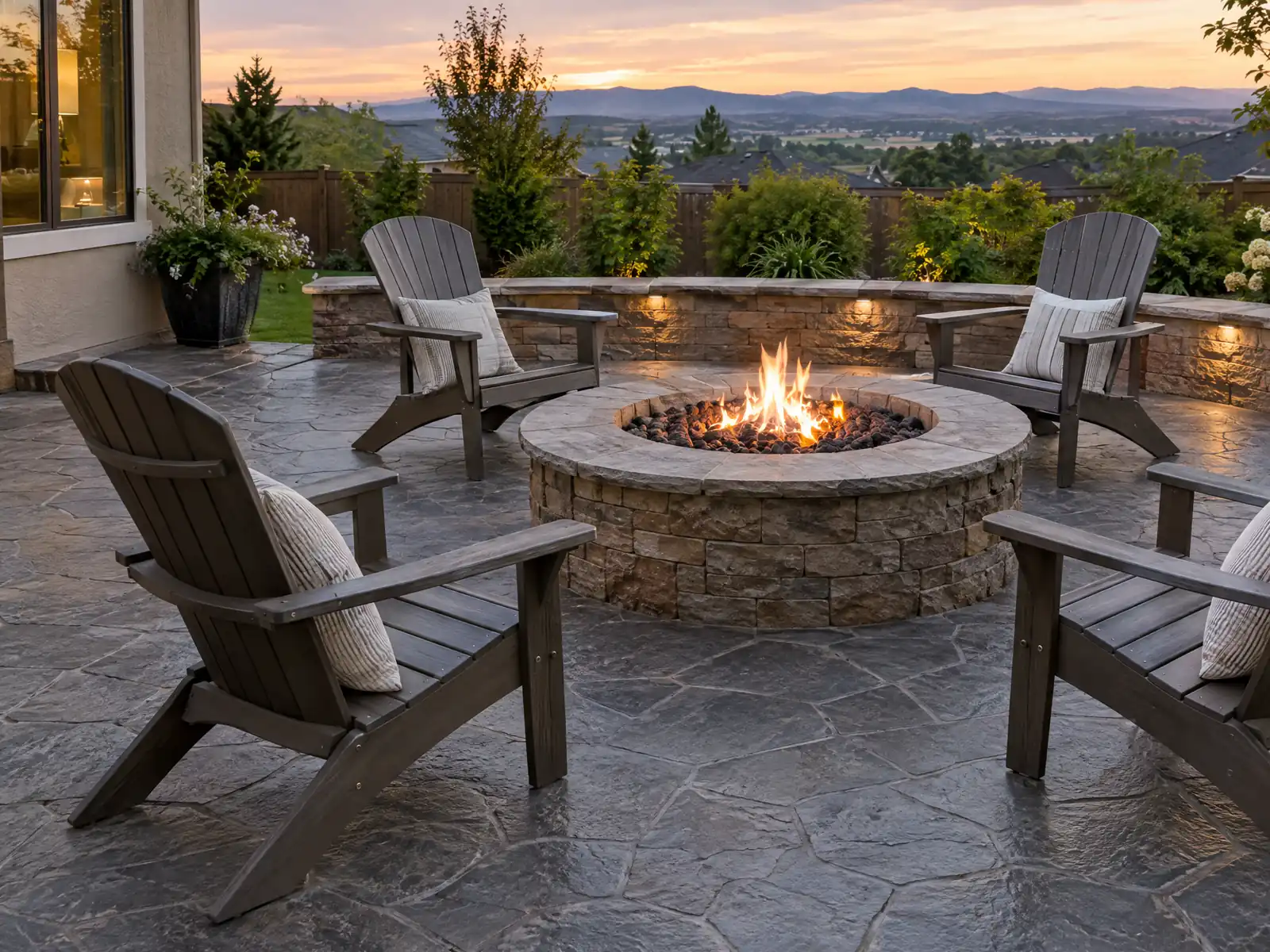
Carson's ground has a history. The Rancho San Pedro grant of 1784 became a Dominguez family cattle ranch, oil arrived in the 1920s, and refuse dumps, landfills and auto dismantling plants gathered on unincorporated land until residents incorporated the city on February 20, 1968. New sections of the Dominguez Channel finished in the 1960s eased flooding and opened drained land for homes. A pour here sits on soil that has been farmed, drilled, filled and re-graded, and the City's code reflects it.
This page covers what a slab rests on, when the methane rule reaches it, how much of a front yard can be paved, the permits for grading and street work, retaining walls, trucks and washout, and what concrete costs. MDG Builders, CSLB #1040337, is the general contractor on the job: we plan it, put the permit questions to the City and schedule a licensed concrete subcontractor to pour. Materials and ranges are on our concrete page, and the Carson overview lists our other trades here.
What Carson's code says about slabs, paving and walls
Where concrete permits come from in Carson: City of Carson Building & Safety Division.
- Decks, walks and driveways not more than 30 inches above grade are exempt from a building permit under CMC 8103(a)(18), but any grading needs a permit under CMC 8102, and work in the street, sidewalk or parkway needs a separate Public Works encroachment permit applied for through Civic Access.
- Driveways, sidewalks and paving may cover no more than 35 percent of a required front yard setback with a single-car driveway, 50 percent with a two-car driveway, and 40 percent where the garage does not face the street. The Director may allow up to 50 percent of the area between the house and the right of way for substandard lots or where parking has no rear access, with landscaping or screening and findings (Phase 1 code 9211.4(A)).
- CMC 7102 requires any excavation in a public street, way or place deeper than 6 feet to be protected by a fence, cover or patrol, and CMC 7401 (Ordinances 26-2609U and 26-2610, 2026) bars excavating a roadway for five years after City-financed construction, and three years after thin overlays, chip seal or slurry seal, with exceptions at the Public Works Director's discretion.
- CMC 7100 adopts the County Highway Permit Ordinance (Ordinance 3597 as in effect December 7, 1979) for work in the public right of way, and the City's Public Works Engineering counter handles encroachment and construction permits (inspections Monday through Thursday).
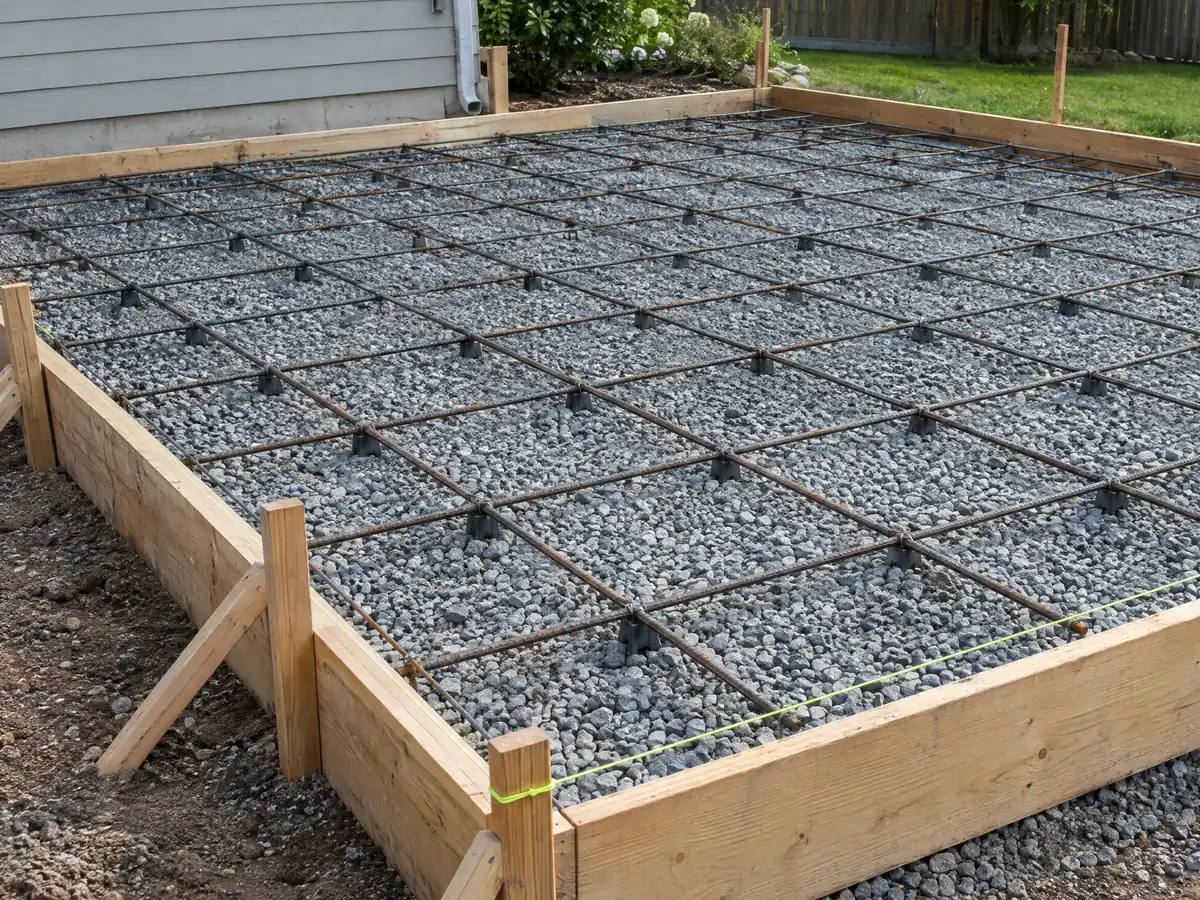
- CMC 5805(d)(8) forbids washing out concrete trucks into the storm drain system, so slab and driveway pours need a washout area on site.
- Street trees and parkway work: CMC Article 3 Chapter 9 describes selective root pruning for sidewalks, driveway approaches and curb and gutters (cut roots at least 4 inches from new hardscape, shave roots 4 inches or larger only to leave 2 inches of clearance) and says removal may be considered when root pruning is needed within 8 feet of the trunk.
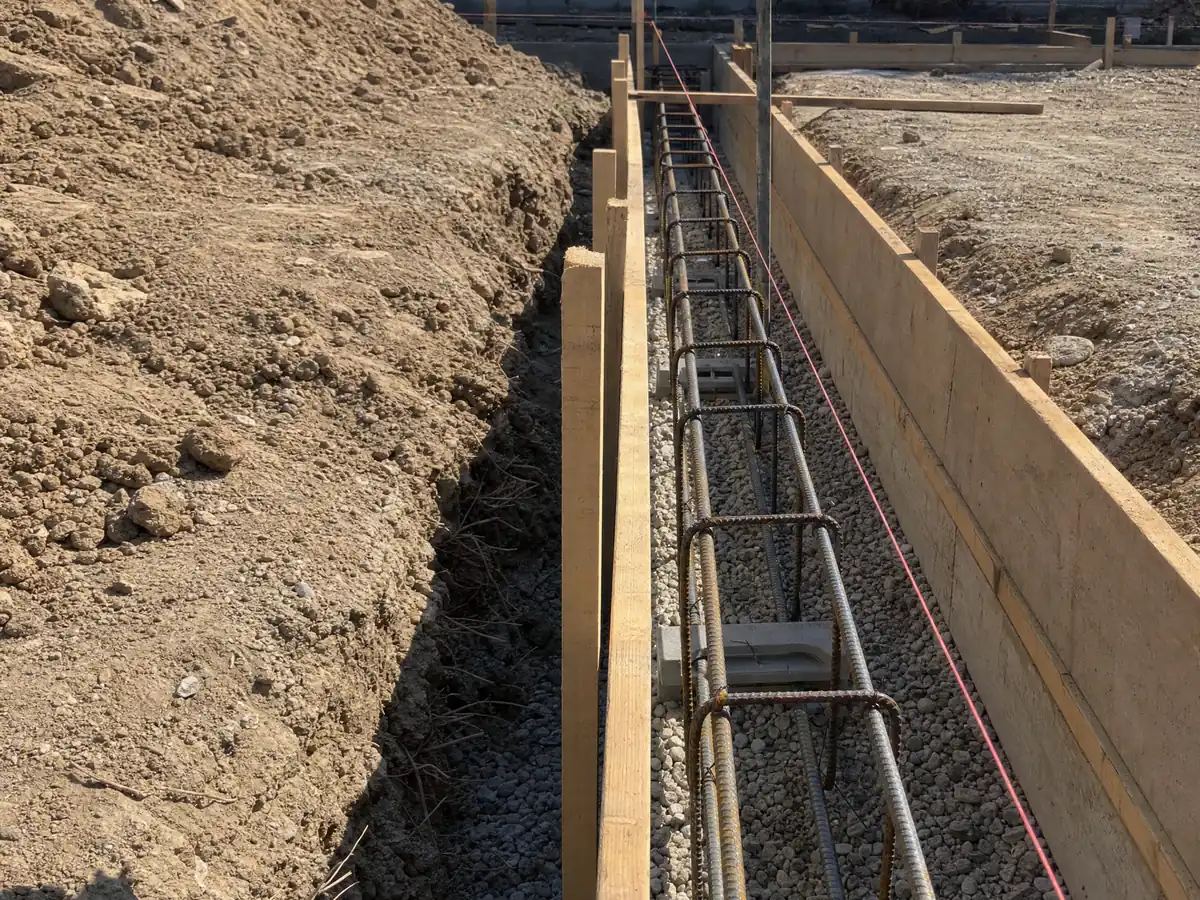
- Slabs on Carson's Ramona clay loam soils face high shrink-swell potential, while sandy soils have low expansion potential, per the Safety Element soil table. In liquefaction zones a geotechnical report is part of the permit process, and slabs inside the methane distances in CMC 8210.2 need the engineer's mitigation design.
What does Carson's soil do to a concrete slab?
It depends on the block. The Safety Element's soil table rates Ramona clay loam as highly expansive and every other mapped Carson soil as low to moderate, and it warns that clay areas can crack and heave shallow foundations, slabs on grade and pavement. Sandy soils swell little but have low cohesion and erode more readily when exposed, which matters for a trench or an open edge in a rainy week.
Water drives the movement. NOAA's 1991 to 2020 normals for the Torrance Airport station show 13.64 inches of rain a year with 82 percent of it from December through March, while Long Beach Daugherty Field, 6.2 miles away, shows 12.02 inches. A slab poured in a dry August can meet wet ground by February, so ask the crew how the base will be graded and where roof water will go.
Liquefaction is the larger hazard on the map. The Safety Element places zones in the southwest corner between I-110 and Figueroa Boulevard and along the Dominguez Channel and the Los Angeles River, and it requires a geotechnical report for development there. In the County's copy of the State layer, 124 of 303 sample points (about 41 percent) fell in a zone. We read nothing that makes a patio slab trigger a report, so ask whether your address is mapped.
When does a concrete slab need a methane report in Carson?
When it floors new living space near a fill or a well. Section 8210.2 of the Carson Municipal Code bars a building permit for a new building, or an addition or conversion creating habitable or occupiable space, within 1,000 feet of a fill with rubbish or other decomposable matter or within 300 feet of an active, abandoned or idle oil or gas well, unless the applicant files a report and mitigation design stamped by a registered design professional. Single-family additions of 500 square feet or less and alterations that do not enlarge the enclosed area are excepted, and a required methane control system lifts the permit fee to 125 percent of the schedule.
A walkway, driveway or backyard patio creates no habitable space, and nothing in the City sources we read applies the methane rule to flatwork. A slab for a new room, a garage conversion or a detached studio is different, and the report comes before the permit, not after the pour. The code does allow a grading permit when the grading is itself needed to mitigate the hazard.
The local numbers sit behind the rule. The Housing Element counts 27 closed land disposal sites in Carson, some of which may still produce landfill gas, and the Safety Element places the city over the Dominguez and Wilmington oil fields. Wikipedia reports that the State Water Board ordered Shell in 2011 to clean up the Carousel Tract after benzene and methane were found. We did not read the Board's own files, so we state nothing about health.
How much of a Carson front yard can be concrete?
Less than many owners hope. Under the Phase 1 Zoning Code, section 9211.4, driveways, sidewalks and paving may cover no more than 35 percent of a required front yard setback with a single-car driveway, 50 percent with a two-car driveway and 40 percent where the garage does not face the street. On a Low Density Residential lot the required front setback is 20 feet or 20 percent of lot depth, whichever is less, so the paved share is measured against that strip.
The Director may allow up to 50 percent of the area between the house and the right of way on a substandard lot or where parking has no rear access, with landscaping or screening and written findings. Ordinance 25-2514, effective in mid-August 2025, requires the City Manager's prior concurrence for any Director approval of a use or development, and an approval without it is null and void, so ask Planning whether a paving exception passes through that step.
Planning also performs a Zoning Compliance review before a building permit, under sections 9413.2 and 9413.3. Check whether the lot sits inside one of the 14 specific plan documents the Planning page lists, including Carson Town Center, Dominguez Hills Village, Monterey Pines and Villages of Brighton and Strathmore, because those standards override the base code where they differ. We did not read the individual plans.
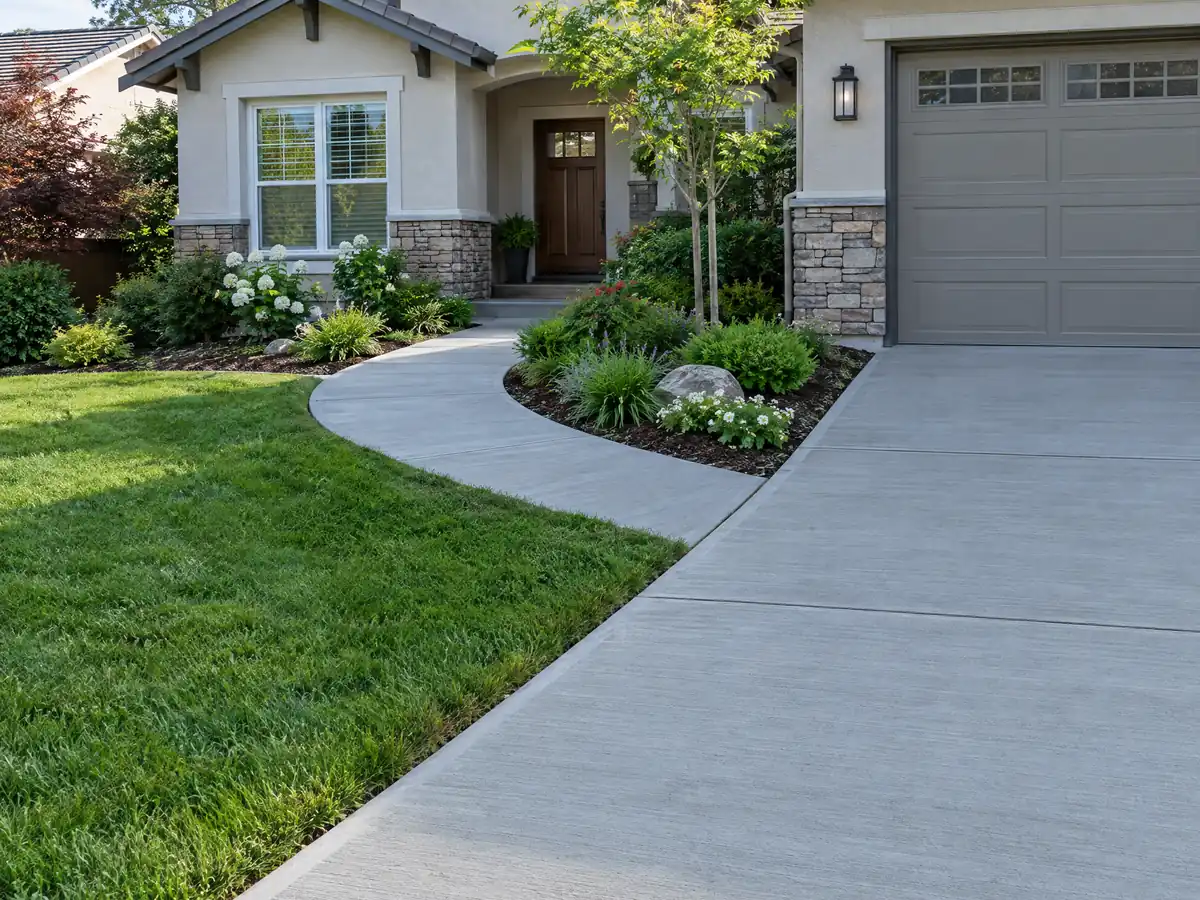
Does a patio, walkway or driveway need a permit in Carson, and what about the sidewalk?
For the slab, usually not. Section 8103(a)(18) of the code exempts decks, walks and driveways not more than 30 inches above grade, not over a basement or story below and not part of an accessible route, but section 8102 requires a separate permit for any grading. We found no line naming a ground-level patio slab, so we treat it as a question for the Building & Safety Division.
Work in the street, sidewalk or parkway is a Public Works matter. Encroachment and right of way construction permits go through the same Civic Access portal, with questions at PWPermits@carsonca.gov and inspection staff on duty 8:00 a.m. to 4:30 p.m., Monday through Thursday. Section 7401 also bars excavating a roadway for five years after City-financed construction and three years after thin overlays, chip seal or slurry seal, with exceptions at the Public Works Director's discretion, so freshly sealed pavement can block a trench for a new approach.
Parkway trees add a rule. City trees cannot be pruned or planted without a City permit, and Article 3 Chapter 9 describes root pruning beside new hardscape: cut roots at least 4 inches from it, shave roots of 4 inches or larger only to leave 2 inches of clearance, and consider removal when pruning would be needed within 8 feet of the trunk. Raise the tree before demolition day, not on it.
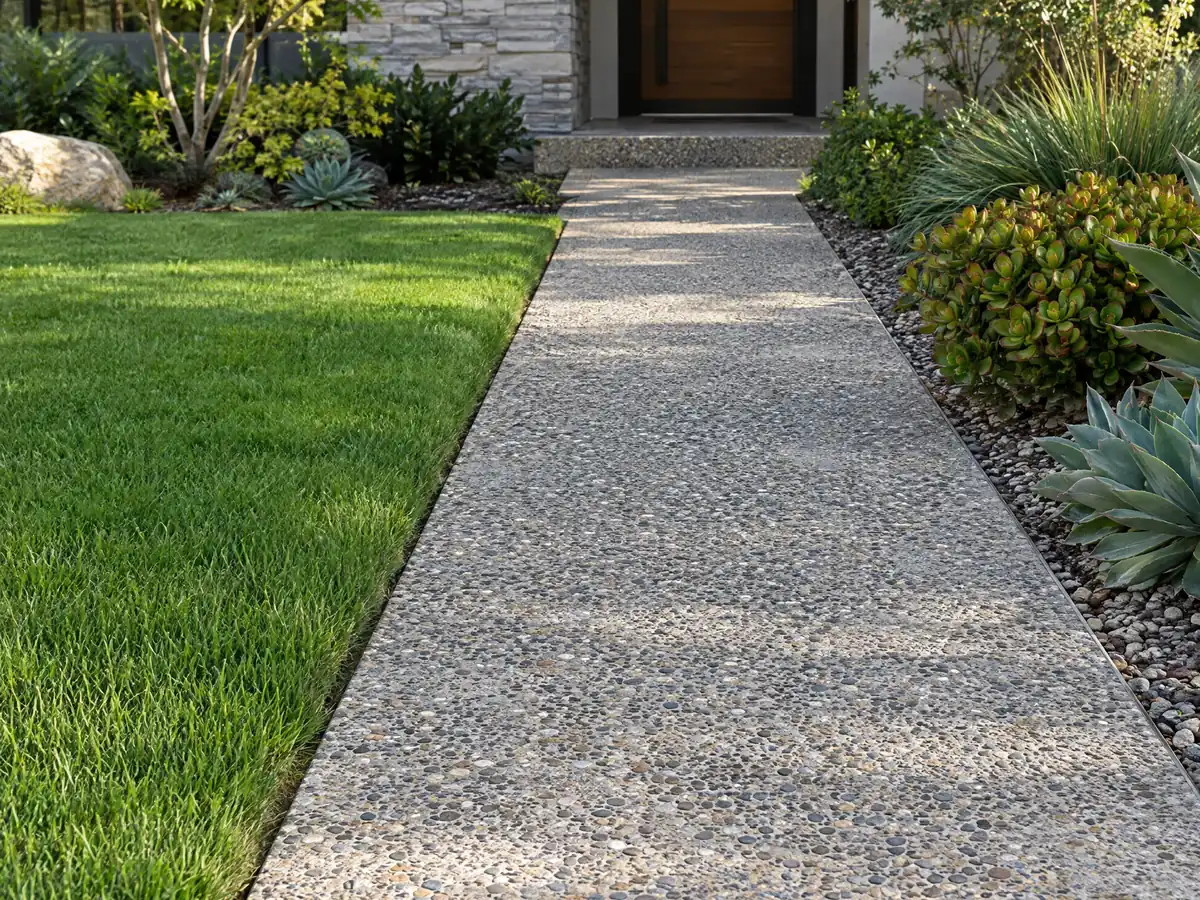
How tall can a concrete or block retaining wall be in Carson?
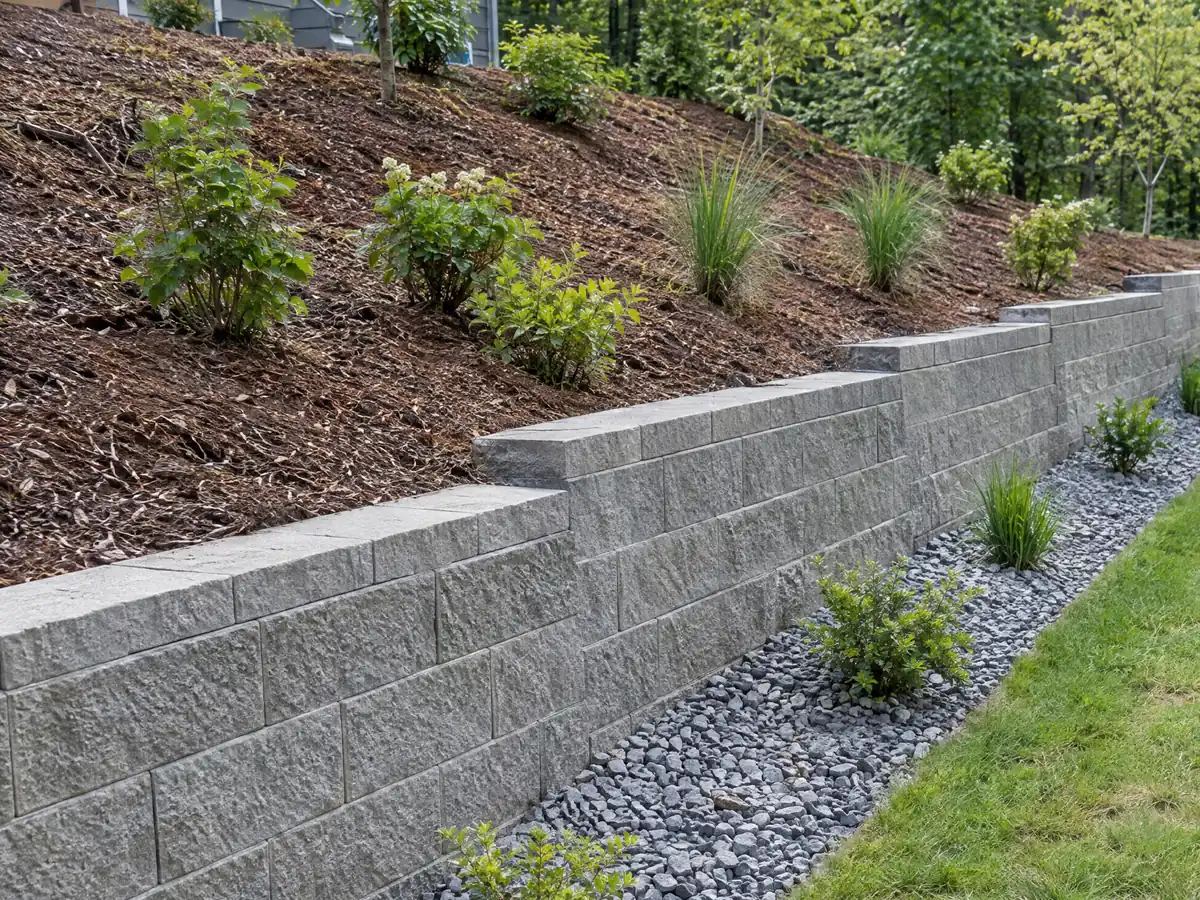
The exemption turns on the footing, not the visible face. A retaining wall escapes a building permit under section 8103(a) when it stands no more than 4 feet from the bottom of its footing to the top, provided nothing heavy sits behind it. A driveway, a parking strip or a structure uphill counts as surcharge and takes the wall out of the exemption whatever its height.
A freestanding masonry or concrete fence is a fencing question, with its own exemption line and zoning height caps by yard, so read those before pouring a footing for one. Licensing splits the work: CSLB's C-8 covers poured concrete and C-29 covers concrete block walls, and our reading, not a CSLB statement, is that a poured retaining wall is C-8 work and a block wall C-29.
Retaining walls are priced by height and drainage, so we print no per-foot figure. The soil warning matters most here, because backfill, drainage and the footing detail decide whether a wall on clay stays plumb. Ask whether an engineer's detail is needed, and what the bid assumes about water behind the wall.
What rules apply to concrete trucks, washout and noise in Carson?
Section 5805(d)(8) forbids washing out concrete trucks into the storm drain system, and the storm water chapter lists paints, solvents, cleaners, sediment and debris among materials that may not be discharged to it. A slab or driveway pour therefore needs a contained washout area on site, and the proposal should say where it will be and who hauls the waste.
Carson's construction noise limits come from section 5502. On jobs of 20 days or less, outside work near single-family homes is held to 75 dBA from 7:00 a.m. to 8:00 p.m. except Sundays and legal holidays, and to 60 dBA at night and on Sundays; on jobs of 21 days or more the daytime figure tightens to 65 dBA. Loading, unloading, opening or closing building materials between 9:00 p.m. and 7:00 a.m. in a way that disturbs neighbors is prohibited, so early pump trucks need another slot.
Rain schedules the rest. With 82 percent of the airport station's yearly rain falling from December through March, a winter pour needs a rain plan and cover for fresh surfaces. We found no Carson rule against pouring in the rain, so the call belongs to the crew and the proposal's weather clause.
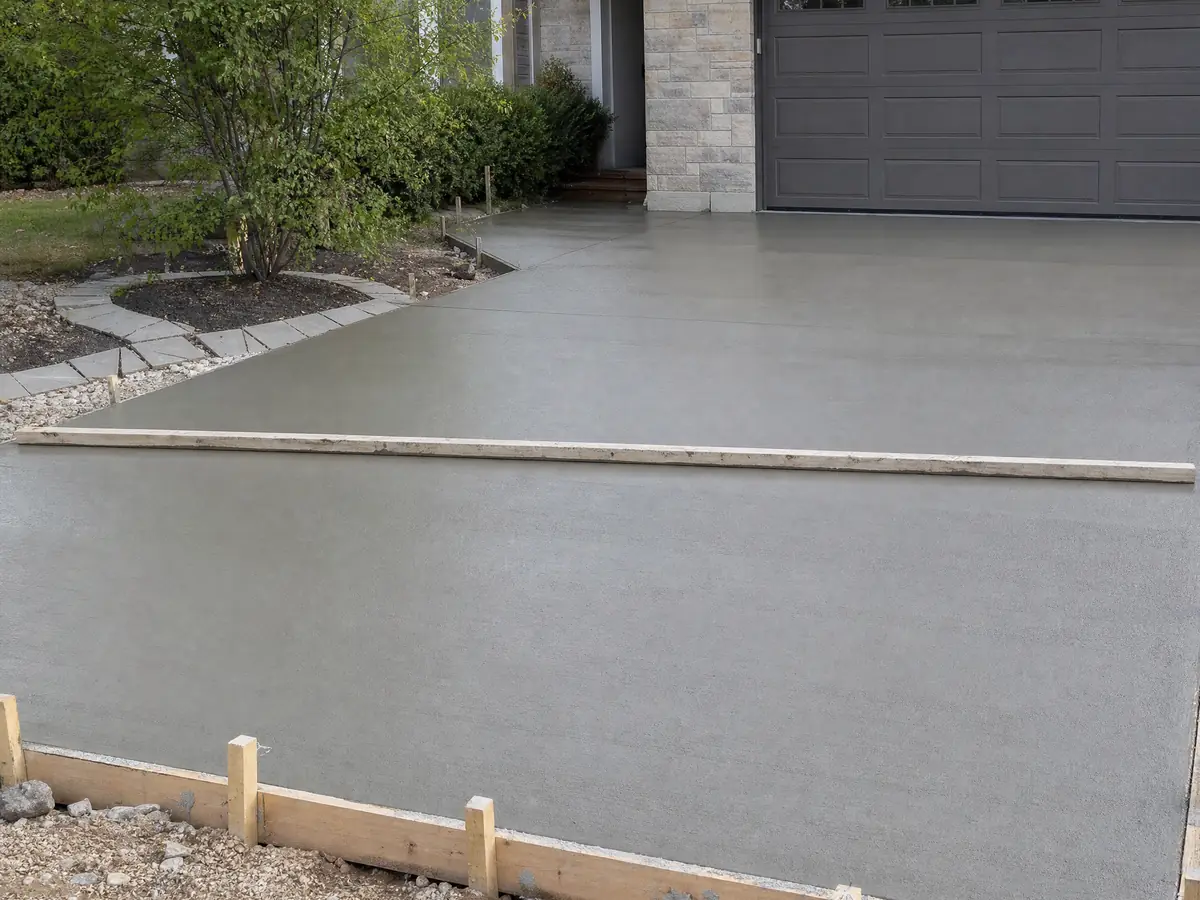
What does concrete work cost in Carson, and who should pour it?
No Carson study turned up, so our concrete page uses Los Angeles figures from Angi's 2026 city pages and HomeGuide: about $8 to $14 per square foot installed for plain patios, walks and slabs of 300 square feet or more, and $9 to $20 for a driveway replacement that includes demolishing the old slab. Add color, stamping or exposed aggregate and the working range climbs to $15 to $30 per square foot. Confidence is medium for plain flatwork and lower for decorative work, and small jobs often price above the per-foot range.
Labor sets a floor: the federal survey of May 2025 puts cement masons in the Los Angeles area at a mean of $33.67 an hour. We did not have Carson's fee schedule, so no permit cost is printed, and section 8106 says the City values a permit from its own valuation data rather than from your contract price.
Before you sign, get a C-8 or C-29 license number from each bidder and verify it with CSLB; our contractor license guide shows how. Demolition, haul-off, base work, drainage and any soils or methane report should appear as separate lines, and Business and Professions Code 7159 requires a signed written contract for work above $500.
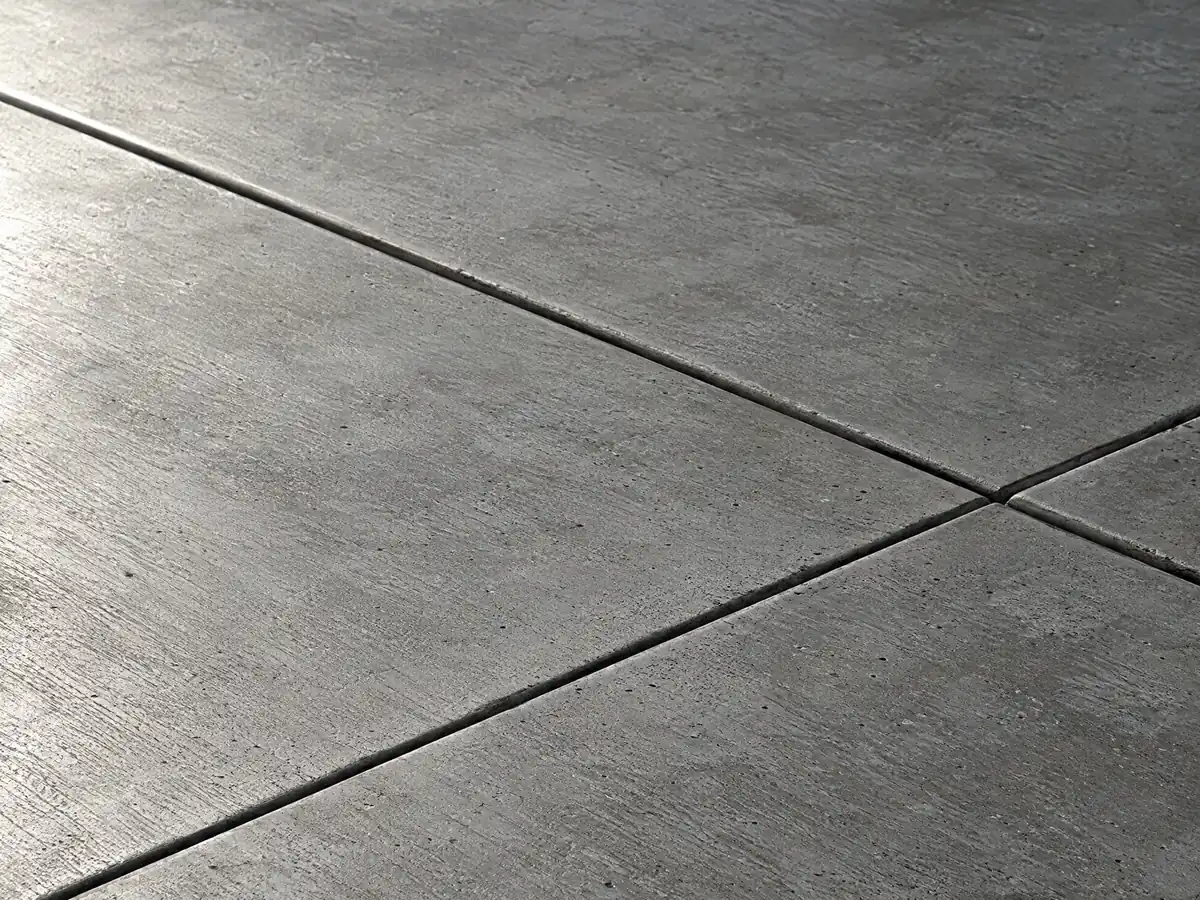
Concrete photos from Carson and nearby communities
Slabs, walks, driveways and walls around Carson and its neighbors, from rebar and forms to finished flatwork. Tap a photo to enlarge it.
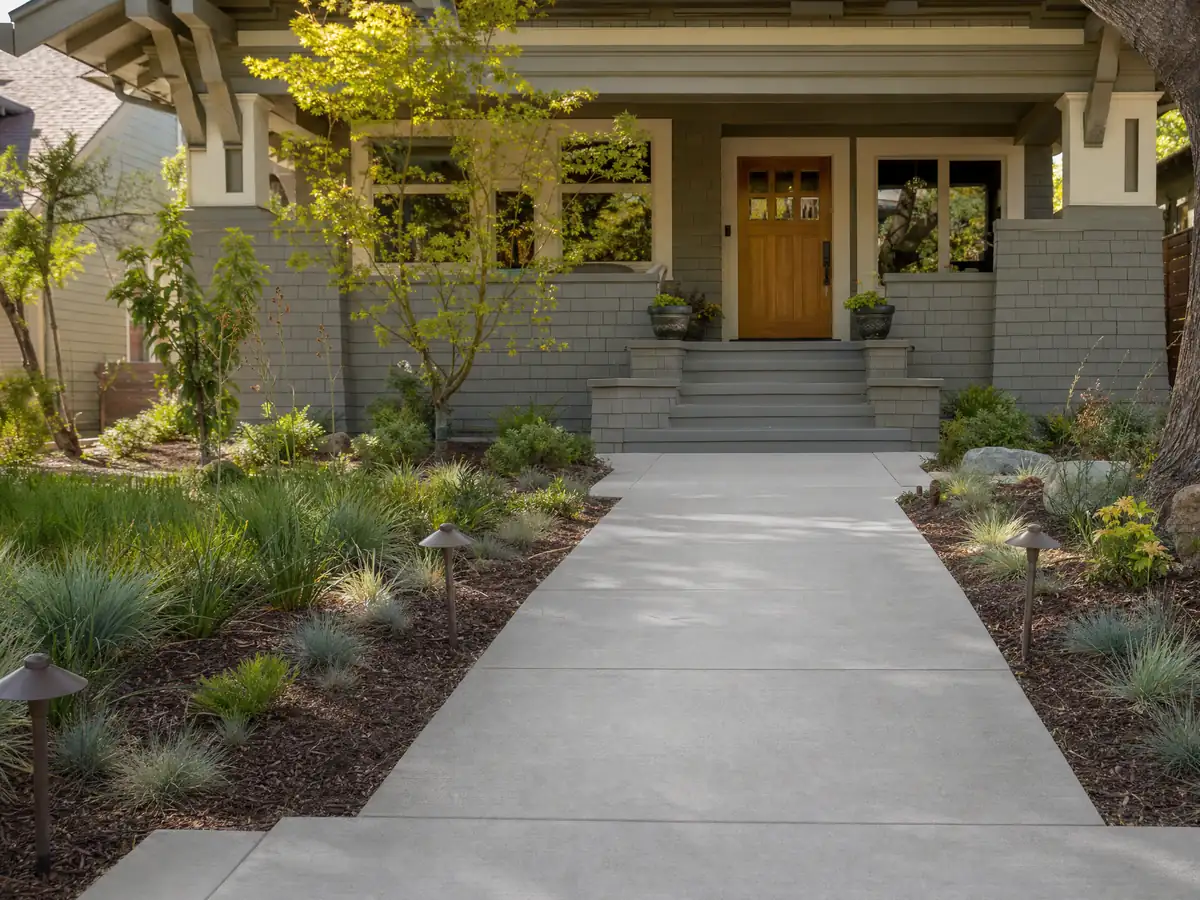
What concrete costs around Carson
These figures are the Los Angeles ranges on our concrete page, not a Carson quote, and no City fee amounts appear because we did not have the schedule. Soils work, methane reports and street permits add their own lines. A slab often goes with flooring in Carson and deck building in Carson. Nearby, concrete in Torrance, concrete in Compton and concrete in Long Beach answer to different codes, and concrete in Los Angeles is where our ranges come from. Our subcontractor guide explains who pours.
| What it covers | Typical range |
|---|---|
| Patio, walkway or slab, broom finish, 300 sq ft or more | $8 to $14 per square foot |
| Decorative: stained, stamped or exposed aggregate | $15 to $30 per square foot |
| Driveway replacement, with demolition of the old slab | $9 to $20 per square foot |
| 20 by 20 foot plain patio (400 sq ft) | About $3,200 to $5,600 |
| 20 by 20 foot decorative patio (400 sq ft) | About $6,000 to $12,000 |
| Small jobs under 300 sq ft | Usually above the per-foot range |
| Retaining walls | Set by the written proposal |
Carson concrete questions, answered
Can I pour a concrete patio without a permit in Carson?
Possibly. Carson's Municipal Code exempts decks, walks and driveways not more than 30 inches above grade from a building permit, but it does not name a patio slab, and any grading needs its own permit. Call the Building & Safety counter with the size and drainage plan, and keep the written answer with your contract.
Can I expand my driveway without a permit in Carson?
Not freely. Zoning caps paving at 35 percent of a required front yard setback with a single-car driveway, 50 percent with a two-car driveway and 40 percent where the garage does not face the street. The Director may allow more on substandard lots with findings. Work in the parkway or sidewalk needs a Public Works permit.
How much does a 15x30 concrete patio cost in Carson?
At the Los Angeles working range of $8 to $14 per square foot, 450 square feet comes to about $3,600 to $6,300 for plain concrete. Decorative finishes at $15 to $30 put it near $6,750 to $13,500. This is arithmetic on medium confidence figures, not a quote, and demolition and drainage are extra.
How much does it cost to pour a 24x24 concrete slab for a garage in Carson?
Flatwork at $8 to $14 per square foot puts the 576 square feet at about $4,600 to $8,100, but a garage slab with footings, thicker edges and reinforcement is priced from plans. Expect a soils or methane question if the garage will ever become a room. We found no Carson study.
Is 4 inches of concrete thick enough for a driveway in Carson?
Four inches is common practice for home slabs, but we found no Carson code section that sets driveway thickness, so we treat it as industry practice. Clay pockets, heavy trucks or roots can justify more or added reinforcement. Ask the concrete subcontractor to write thickness, base and reinforcement into the proposal.
What is the maximum height of a retaining wall without a permit in Carson?
Four feet, measured from the bottom of the footing to the top of the wall, and only if no driveway, structure or other load sits behind it, under section 8103(a). Zoning and drainage are separate questions, so call the Building & Safety counter before digging a footing, especially where the soil is clay.
Does Carson's methane rule apply to a concrete slab?
Only when the slab floors new habitable space, such as an addition, conversion or new building within 1,000 feet of a fill or 300 feet of an oil or gas well. Flatwork like walks, driveways and patios is not covered by anything we read. Ask the counter about your address before pouring a room slab.
How does Carson's soil affect a concrete slab?
Clay pockets can crack and heave slabs, sandy ground erodes when exposed, and about 41 percent of our sample points fell in a liquefaction zone. The Safety Element rates Ramona clay loam as highly expansive and others low to moderate. Ask where your lot falls and how the base and drainage will be built.
What license should a concrete company have for concrete work in Carson?
CSLB class C-8 covers forming, pouring, placing and finishing concrete, and block walls belong to class C-29 masonry. Ask each bidder for the number, look it up on CSLB's site and ask for a certificate of insurance. MDG holds a general building license and hires the licensed subcontractor to pour.
Do I need a permit to replace a driveway approach or sidewalk in Carson?
Yes, from Public Works. Work in the street, sidewalk or parkway needs an encroachment or right of way construction permit through the Civic Access portal, and a roadway cannot be excavated for five years after City-financed construction or three after thin seals without an exception. Email PWPermits@carsonca.gov before you schedule.
Describe the pour and the lot
Send the address, the size of the slab or wall, how much of the front yard it covers and whether the work touches the sidewalk or parkway. We check the front yard caps and the methane distances before we call.