
Flooring Installationin Carson, CA
Flooring installation in Carson usually needs no building permit for the finish itself, because the Municipal Code exempts carpet, vinyl, tile and similar floor coverings where disabled access rules do not apply. The methane rule bites when a job adds or converts living space on a slab. Moving plumbing, wiring or structure still needs permits.
Carson sits over the Dominguez and Wilmington oil fields, and the City's Housing Element counts 27 closed land disposal sites inside its limits. That gives a Carson floor job a question most cities skip: what lies under the slab, not only what goes on top. The population roughly doubled between 1960 and 1970, from about 38,000 to about 71,000, residents incorporated the city on February 20, 1968, and the 2024 Census survey estimates put 75.2 percent of its 29,300 housing units before 1980.
This page covers what the Municipal Code says about finish floors, where the methane rule starts, how Carson's soils and rain affect a slab, garage conversions, and what can hide under older floors. MDG Builders, CSLB #1040337, runs the job as the general contractor. We write the scope, put the permit questions to the City and book the work, and a licensed flooring or tile subcontractor lays the floor. Materials and ranges are on our flooring page, and the Carson overview lists the other trades we manage here.
What Carson's code says about floors and slabs
Where flooring permits come from in Carson: City of Carson Building & Safety Division.
- CMC 8103(a)(2) exempts installing carpet, vinyl, tile and similar floor coverings and similar finish work from a building permit where disabled access requirements do not apply. Floor work that moves plumbing, electrical or structure is not covered by that exemption.
- In the methane distances of CMC 8210.2 (within 1,000 feet of a fill or 300 feet of an oil or gas well), new floor slabs for additions or conversions creating habitable space need an engineer's methane report and mitigation design, with exceptions for single-family additions of 500 square feet or less and for alterations that do not expand the enclosed area.
- A garage converted without a building permit and used as living quarters is a listed property maintenance violation (CMC 5702(e)), and a legal garage conversion to an ADU needs no replacement parking under the ADU division (Phase 1 code 93110.4(F)(10)).
Sources for these rules
Does Carson's methane rule apply when I replace a floor?
Not for a new finish over an existing room, but it can reach a slab that makes new living space. Section 8210.2 of the Carson Municipal Code stops a building permit for a new building, or an addition or conversion creating habitable space, within 1,000 feet of a fill holding rubbish or other decomposable matter, or within 300 feet of an active, abandoned or idle oil or gas well, until the applicant files a report and mitigation design stamped by a registered design professional.
Single-family additions of 500 square feet or less and alterations that do not expand the enclosed area are excepted, and a required methane control system lifts the permit fee to 125 percent of the schedule. Pulling up carpet to lay plank in a bedroom sits outside the rule. Whether a garage conversion counts as an excepted alteration or as a conversion is a reading we leave to the Building Official, and we cannot measure the distances for an address from a desk.
The Housing Element says some of the 27 closed sites may still produce landfill gas and that parts of the city lie in County methane zones or buffer zones. The Safety Element reports up to 29 feet of historic subsidence over the Wilmington anticline, halted by water injection by the early 1980s.
- Is the address within 1,000 feet of a fill or 300 feet of an oil or gas well?
- Does the scope add enclosed area, or only change the surface of existing rooms?
Does flooring installation need a permit in Carson?
For the finish itself, generally no. Section 8103(a)(2) of the code lists carpet, vinyl, tile and similar floor coverings and other finish work among the jobs exempt from a building permit, except where disabled access requirements apply. The same section adds that an exemption never authorizes work that breaks the Code, other laws or another City department's approvals, and that plumbing, electrical and mechanical permits may still be needed.
Three things pull a floor job toward the counter: moving a drain, supply line or fixture while the floor is open, adding circuits or relocating outlets, and replacing joists or structural sheathing. Plans go through the Building & Safety Division and its Carson Civic Access portal, online since June 4, 2024. The permit counter runs 7:00 a.m. to 6:00 p.m. Monday through Thursday, questions about an existing permit go to building@carsonca.gov with the permit number and address, and City Hall's main line is (310) 830-7600.
Crews also work to a noise clock. Under Carson's noise rules, outside work near single-family homes on jobs of 20 days or less is held to 75 dBA from 7:00 a.m. to 8:00 p.m. except Sundays and legal holidays, and to 60 dBA at night and on Sundays. A saw station in the driveway belongs inside that window.
How do Carson's soils and winter rain affect the slab under new flooring?
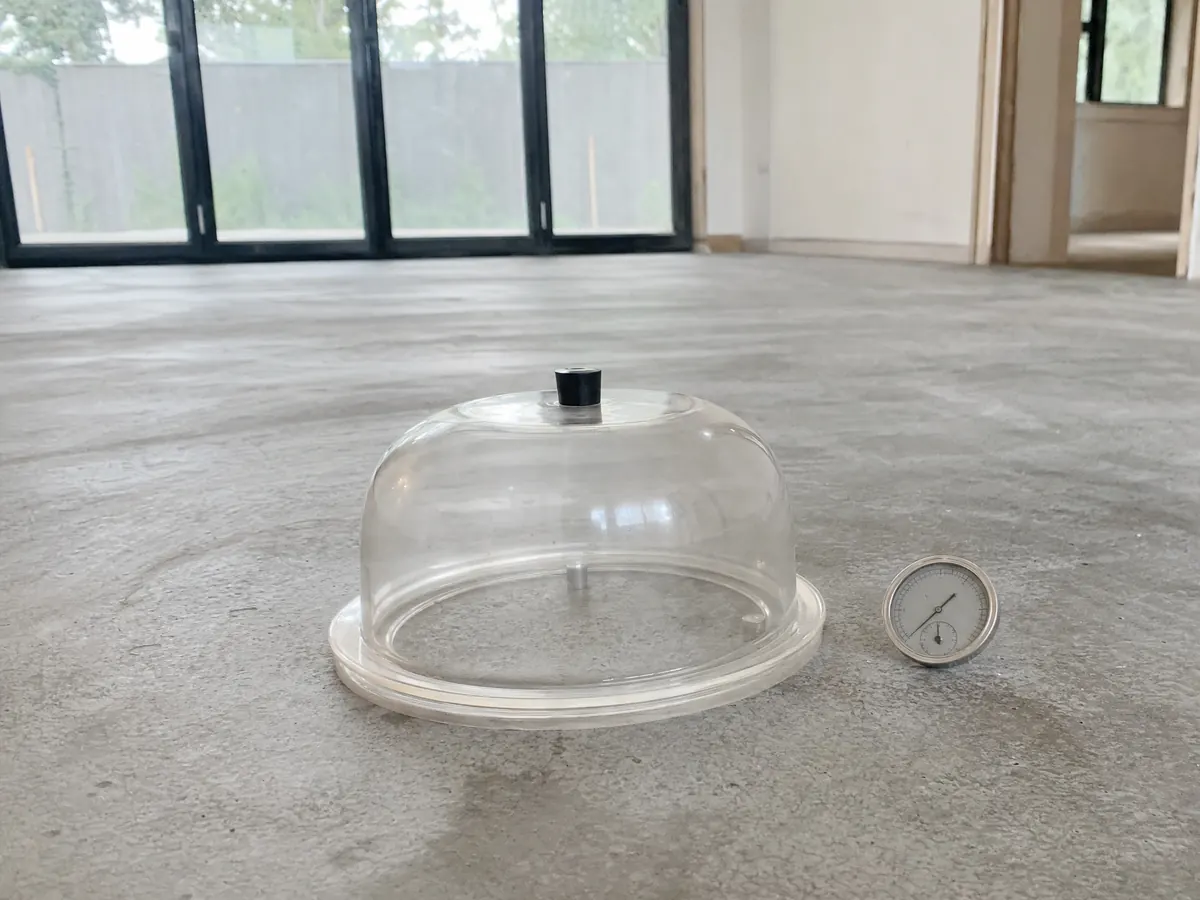
Test the slab, because the weather will not tell you. NOAA's 1991 to 2020 normals for the Torrance Airport station, about 5.9 miles from Carson's center, show 13.64 inches of rain a year with 11.24 of them from December through March, and Long Beach Daugherty Field, 6.2 miles away, shows 12.02. A dry August says nothing about moisture rising from the soil beneath concrete. The usual checks are ASTM F2170 probes that read humidity inside the slab and ASTM F1869 calcium chloride kits, and each floor and adhesive maker sets its own limit.
Ground varies across the city. The Safety Element's soil table rates Ramona clay loam as highly expansive, calls the other mapped soils low to moderate, and says clay areas can crack and heave shallow foundations and slabs on grade. A hairline crack is a movement and flatness question for tile and glued planks before it is a moisture question.
Liquefaction adds a layer. The Safety Element maps zones in the southwest corner between I-110 and Figueroa Boulevard and along the Dominguez Channel and the Los Angeles River, and 124 of 303 sample points we ran through the County's copy of the State layer fell inside one. That is a point sample, not a parcel map, and it matters to a floor only when slab is being replaced.
- Where will the probes go, and will cracks and exterior walls be tested?
- What is the written moisture limit for this product and its adhesive?
Can a Carson garage become a room, and what goes on its floor?
Yes, under the ADU division of the Phase 1 Zoning Code. Section 93110.4(F)(10) says a legal conversion of a garage to an ADU needs no replacement parking, and an application that meets the code is approved ministerially and must be processed within 60 days of a complete application when a home already stands on the lot. We found no separate ADU page on the City's site, so the Building & Safety counter is the place to start.
Do it with a permit. Section 5702(e) of the Municipal Code lists a garage converted without building permits and used as living quarters among the property maintenance violations, and the Building Official can record a notice of violation against a property where work began without one. What lies under a particular garage floor is not something a desk can tell us, so ask for a moisture reading and a level check before anyone orders planks.
Our garage conversion permit guide was written for Los Angeles, so use its steps as a checklist and ignore its office names. Ask also how the new floor height will meet the house floor at the doorway.
What is under the floor in a Carson house built before 1980?
In most homes, layers. ACS 2024 one-year tables show 19.9 percent of Carson's units built in the 1950s and 32.7 percent in the 1960s, 75.2 percent before 1980 and just 2.3 percent in 2020 or later; the five-year figures put the pre-1980 share at 77.5 percent. Oil arrived in the 1920s, tract housing grew around wartime defense jobs and then exploded after the war, and the Housing Element says most of what exists was built by 1981.
EPA's asbestos guidance names vinyl floor tiles, the backing on vinyl sheet flooring and adhesives among products that may contain asbestos, with risk arising when they are disturbed. Census age bands end at 1979, so a home built before 1980 gets a lab test of old tile or mastic before anyone sands, scrapes or lifts it.
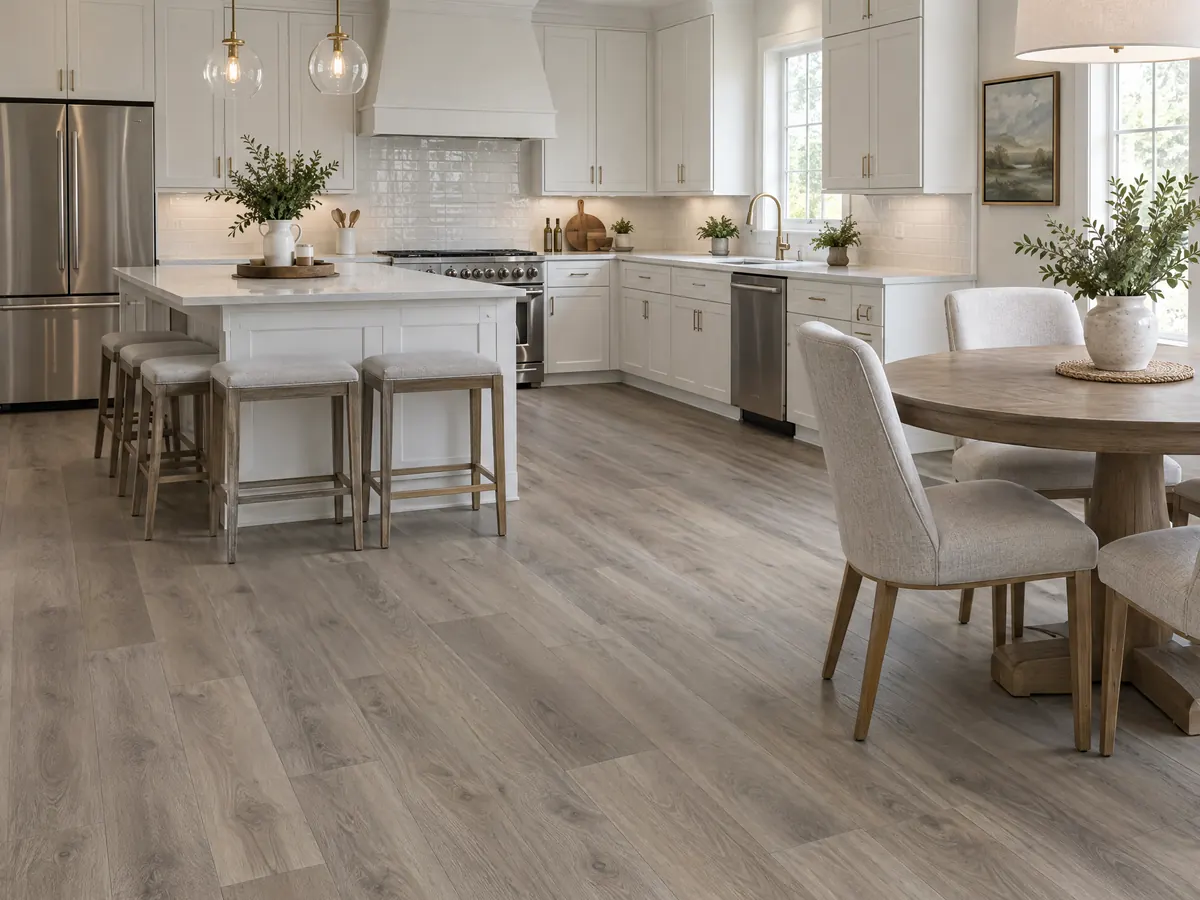
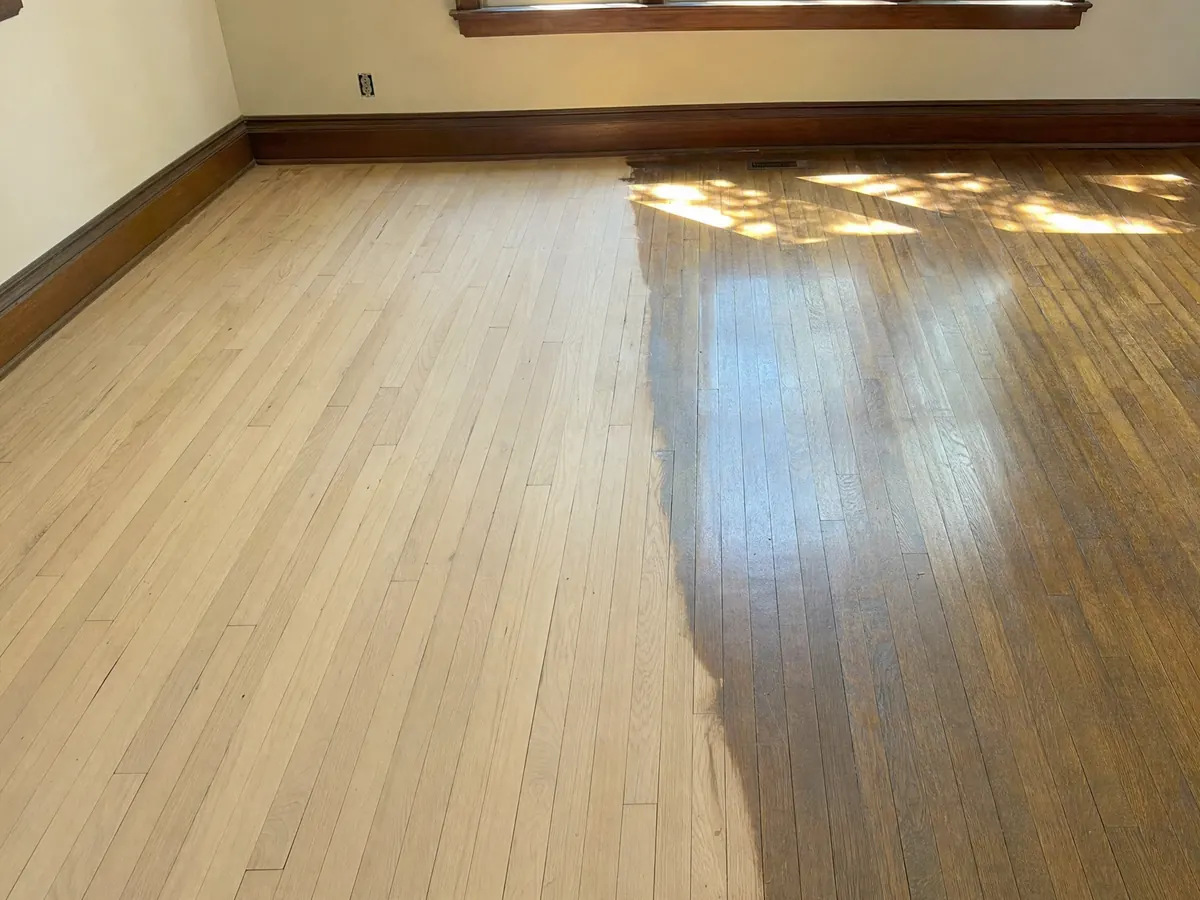
Original wood is the exception. The same tables count 1,125 units from 1939 or earlier and 959 from the 1940s, about 7.1 percent together, so oak under carpet is a find, not a given. Check a floor register or an edge before deciding, because boards with enough wear layer can often be sanded, and our California flooring cost guide weighs refinishing against replacement.
Hard floors in a Carson apartment, condo or mobile home
Carson is more than single-family streets. The 2024 estimates put 70.9 percent of units in detached houses, 13.5 percent in buildings of five or more units and 6.5 percent in mobile homes, and 28.7 percent of 28,426 households rent. Many floor jobs therefore have a neighbor below or beside the room, or a landlord whose consent comes first.
The City's exemption speaks to the building code and nothing else. A condominium owner follows the association's governing documents, usually through a written alteration request, and Civil Code 4765 sets the process an association must use to decide an architectural request. A renter needs the owner's written consent. We found no Carson source naming sound limits for particular buildings.
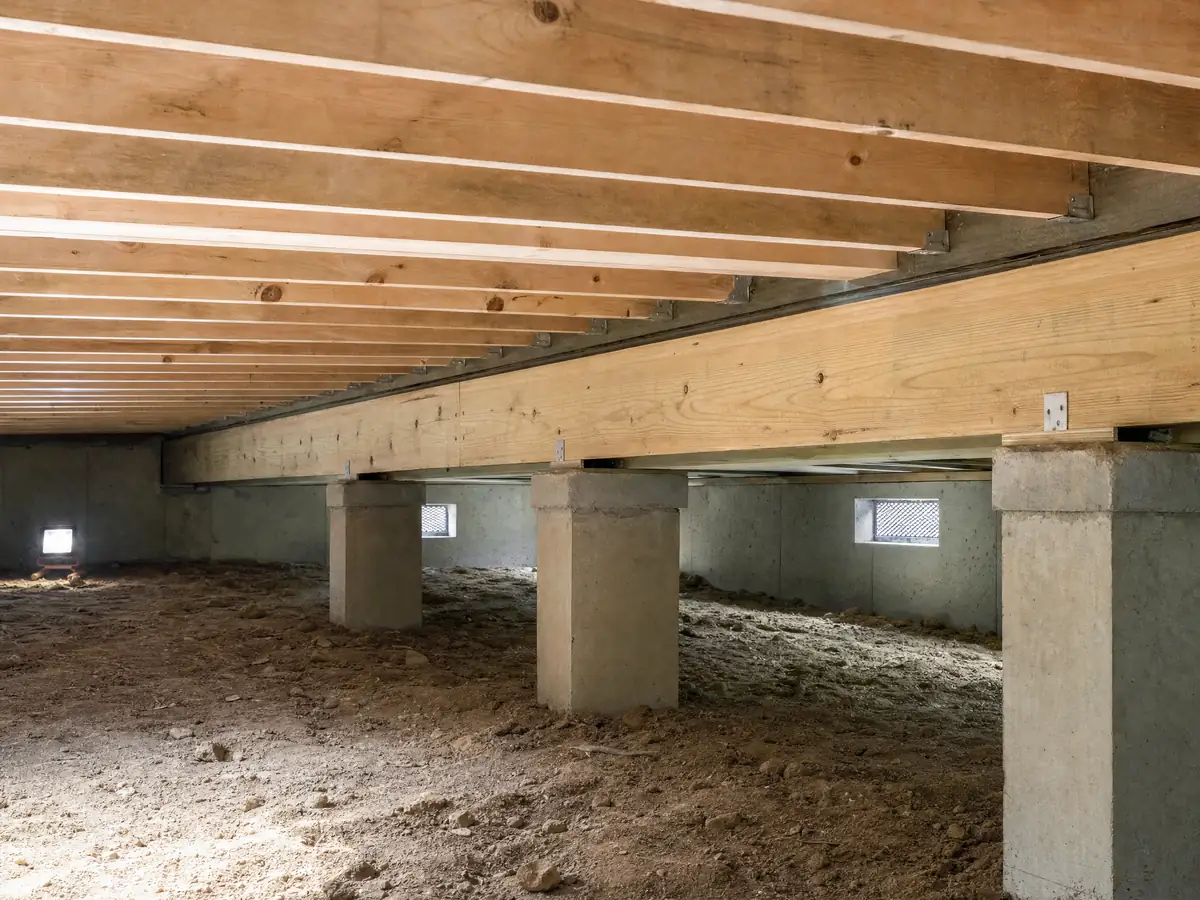
Mobile homes sit under their own overlay, which protects every park existing on April 4, 2023 from conversion to another use. We read nothing from the City on interior floors in a mobile home, so ask park management and the product maker about underlayment before ordering.
How much does a flooring contractor charge in Carson?
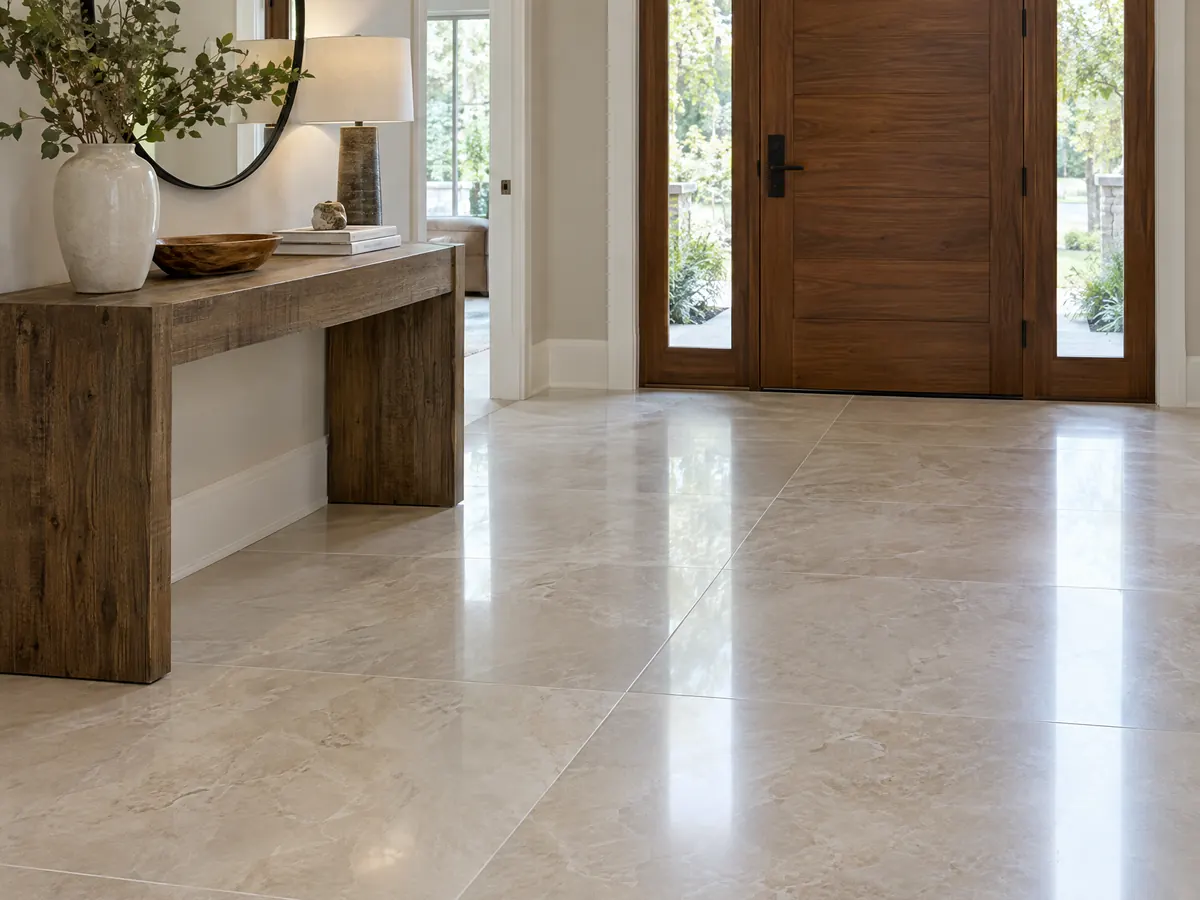
Carson has no published price study that we could find. Our flooring page borrows Los Angeles figures that Angi updated in July 2026: labor runs about $3 to $9 per square foot, engineered hardwood $10 to $18 installed, solid hardwood $12 to $22, and refinishing $4 to $8. Angi gives no method, and Remodeling magazine's Cost vs. Value report tracks no flooring project, so we rate these medium to low in confidence. The federal survey of May 2025 puts floor layers in the Los Angeles area at a mean of $33.48 an hour.
California's C-15 class covers preparing surfaces and installing carpet, resilient flooring and wood floors, and ceramic tile is C-54. Get each bidder's number, verify it with CSLB, and use our contractor license guide. Ask for the work to be priced on separate lines for removal of the old floor, subfloor repair, baseboards and stairs.
A home improvement contract above $500 must be written and signed under Business and Professions Code 7159, and the downpayment is capped at $1,000 or 10 percent of the price, whichever is less.
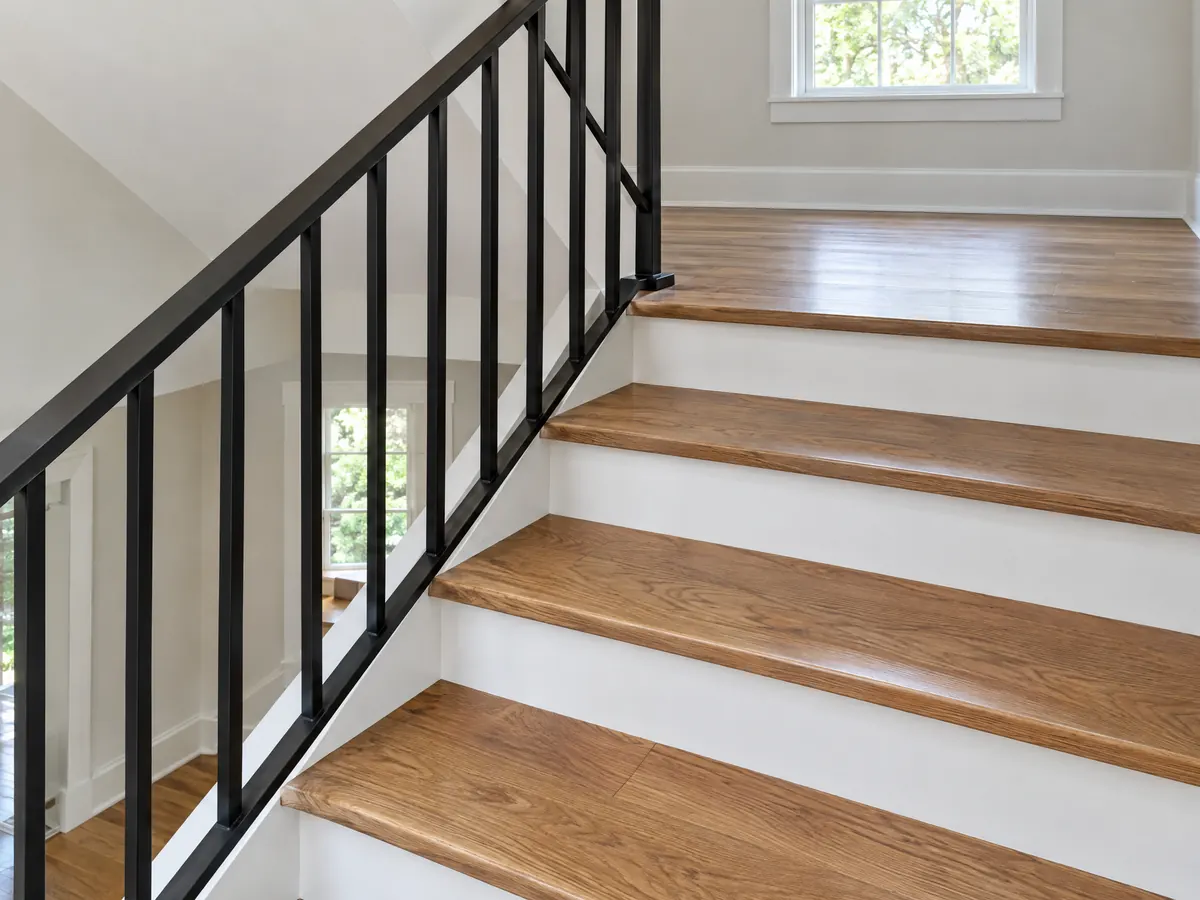
Flooring photos from Carson and nearby communities
Floors, subfloors and moisture checks from Carson and neighbors such as Torrance and Compton. Tap a photo to enlarge it.
What flooring costs around Carson
These are Los Angeles ranges from our flooring page, not a Carson quote, and no City fee amounts appear here because we did not have the fee schedule. Moisture work, subfloor repair, asbestos testing and any methane report price as separate lines. Floors often come with concrete work in Carson and deck building in Carson. Nearby, flooring in Torrance, flooring in Compton and flooring in Long Beach answer to their own city codes, and flooring in Los Angeles is where our price ranges come from.
| What it covers | Typical range |
|---|---|
| Installation labor only | $3 to $9 per sq ft |
| Solid hardwood, installed | $12 to $22 per sq ft |
| Engineered hardwood, installed | $10 to $18 per sq ft |
| Refinishing existing hardwood | $4 to $8 per sq ft |
| Laminate, whole project | $2,000 to $5,500 |
| Hardwood, whole project | $3,153 to $8,496 |
| Removing the old floor | $455 to $685 per 200 sq ft |
| Tile | No sourced Los Angeles range |
Carson flooring questions, answered
Do you need a permit to replace flooring in Carson?
Usually not for the finish. Carson's Municipal Code exempts carpet, vinyl, tile and similar floor coverings from a building permit where disabled access rules do not apply. Moving plumbing, adding circuits or repairing joists and structural subfloor still needs permits, so call the Building & Safety Division with your exact scope before work starts.
How much does it cost to have flooring professionally installed in Carson?
Carson has no study we could find, so borrow Los Angeles numbers: about $3 to $9 per square foot for labor, $10 to $18 installed for engineered hardwood and $12 to $22 for solid. Angi gives no method, so confidence is medium to low. Old floor removal and subfloor repair come as separate lines.
How much does it cost to install 1000 square feet of hardwood flooring in Carson?
On the Los Angeles ranges, 1,000 square feet runs about $10,000 to $18,000 for engineered hardwood and $12,000 to $22,000 for solid hardwood, while labor alone is about $3,000 to $9,000. That is arithmetic on medium to low confidence figures, not a quote. Removal, subfloor repair and stairs sit outside it.
Can you put flooring over a concrete slab in Carson?
Yes, once the slab is flat and a moisture test reads below the maker's written limit. Probes (ASTM F2170) or calcium chloride kits (F1869) give the number. Carson's clay pockets can crack slabs and its winters bring 11.24 of 13.64 inches of rain, so look at cracks and drainage before choosing a glued product.
Does Carson's methane rule apply to my floor?
Only if the job adds or converts living space near a fill or well. Section 8210.2 reaches new buildings, additions and conversions creating habitable space within 1,000 feet of a fill or 300 feet of an oil or gas well, and excepts alterations that do not expand the enclosed area. Ask the counter about your address.
Can I convert my Carson garage and put new flooring in?
Yes, through the ADU rules, which need no replacement parking for a legal conversion. Do it with a permit, because a garage used as living quarters without one is a listed property maintenance violation. Have the slab tested for moisture and levelness first, and ask whether the methane section touches your lot.
Should I worry about asbestos in an older Carson floor?
It is possible in homes built before 1980, which are 75.2 percent of Carson's units. EPA lists vinyl floor tiles, sheet flooring backing and adhesives as places asbestos may be found, with risk when they are disturbed. Have a lab test a sample before anyone sands or lifts old layers.
Can I put hard flooring in a Carson condo or apartment?
Only with the right approval. The City's permit exemption covers the building code, but a condominium's governing documents decide alterations and sometimes sound limits, and Civil Code 4765 governs how the association must decide. A renter needs the owner's written consent. Get that in hand before material is ordered.
What is the best company for flooring installation in Carson?
We cannot rank firms, and directory ratings are not a license check. Compare written bids from each flooring contractor, with removal, subfloor repair and baseboards priced separately, and confirm each bidder's CSLB number (C-15 for wood and resilient floors, C-54 for tile) and ask for a certificate of insurance. Expect a signed contract on any job above $500.
Should I refinish or replace hardwood floors in an older Carson house?
Refinish first when the boards are thick enough to sand, which you can judge at a floor register or an edge. Angi's Los Angeles figures put refinishing at $4 to $8 per square foot against $12 to $22 for new solid hardwood. Only about 7.1 percent of Carson's units date from the 1940s or earlier.
Tell us the address and what the floor sits on
Give us the street address, the rooms, today's floor covering and whether the house sits on a slab or a raised floor. We bring the moisture tools and the permit questions to the first visit.