
Flooring Installationin Long Beach, CA
Flooring installation in Long Beach usually needs no building permit for the finish layer: the City lists floor coverings, carpeting and tile as exempt, though the Building Official decides and historic or coastal addresses add rules. The base matters more, since 77 percent of the city's homes predate 1980 and may hide old adhesive and raised wood framing.
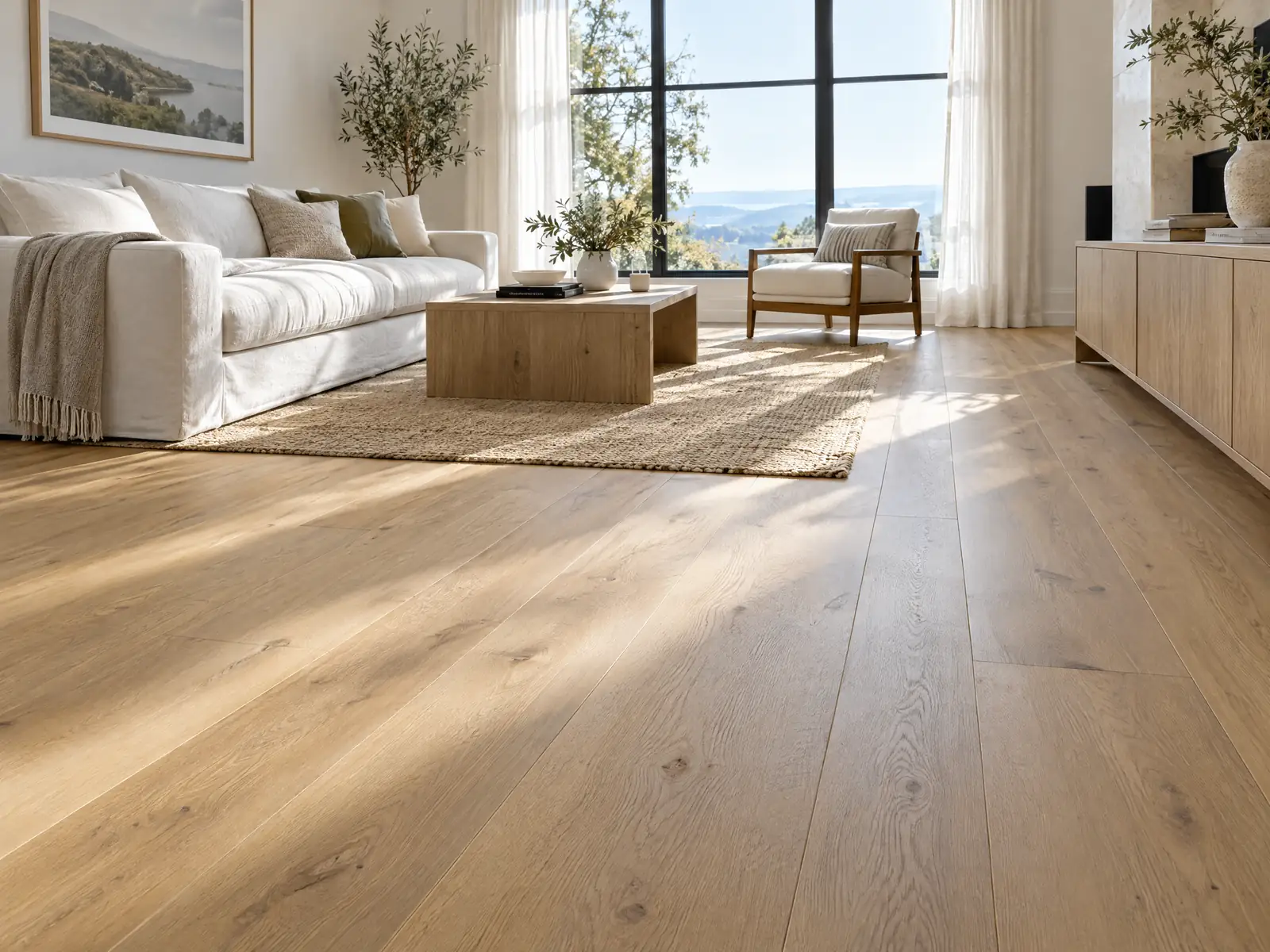
Long Beach began as Willmore City, subdivided in 1880 and renamed Long Beach soon after, and it incorporated in 1897. The houses came in waves. The Census Bureau's 2024 American Community Survey counts about 181,216 homes, with 18.8 percent built in 1939 or earlier, 15.3 percent in the 1940s, 16.9 percent in the 1950s and 77.1 percent before 1980. A floor replaced here is often resting on someone else's earlier decision, whether that was a raised wood floor, a postwar slab or a Craftsman subfloor.
MDG Builders, CSLB #1040337, is a general contractor in Tarzana. We write the scope, put the permit questions below to the City and set the schedule, and a flooring subcontractor licensed for the work lays the floor. Ask us for that firm's license number and certificate of insurance before you sign, and read how general contractors use subcontractors if the arrangement is new to you. Materials and prices are on our flooring page, and the Long Beach overview lists the other trades we manage in the city.
What Long Beach's Permit Center says about floors and finish work
Where flooring permits come from in Long Beach: City of Long Beach Community Development Department.
- Installing ceramic tile on floors or countertops, replacing broken tile in an existing installation, and installing carpeting and similar finish work are exempt from a building permit.
- Express Permit item B3 covers like-for-like kitchen flooring, cabinets, counters and fixtures with no layout change, issued without plan review outside Coastal Zones and Historic Districts.
Sources for these rules
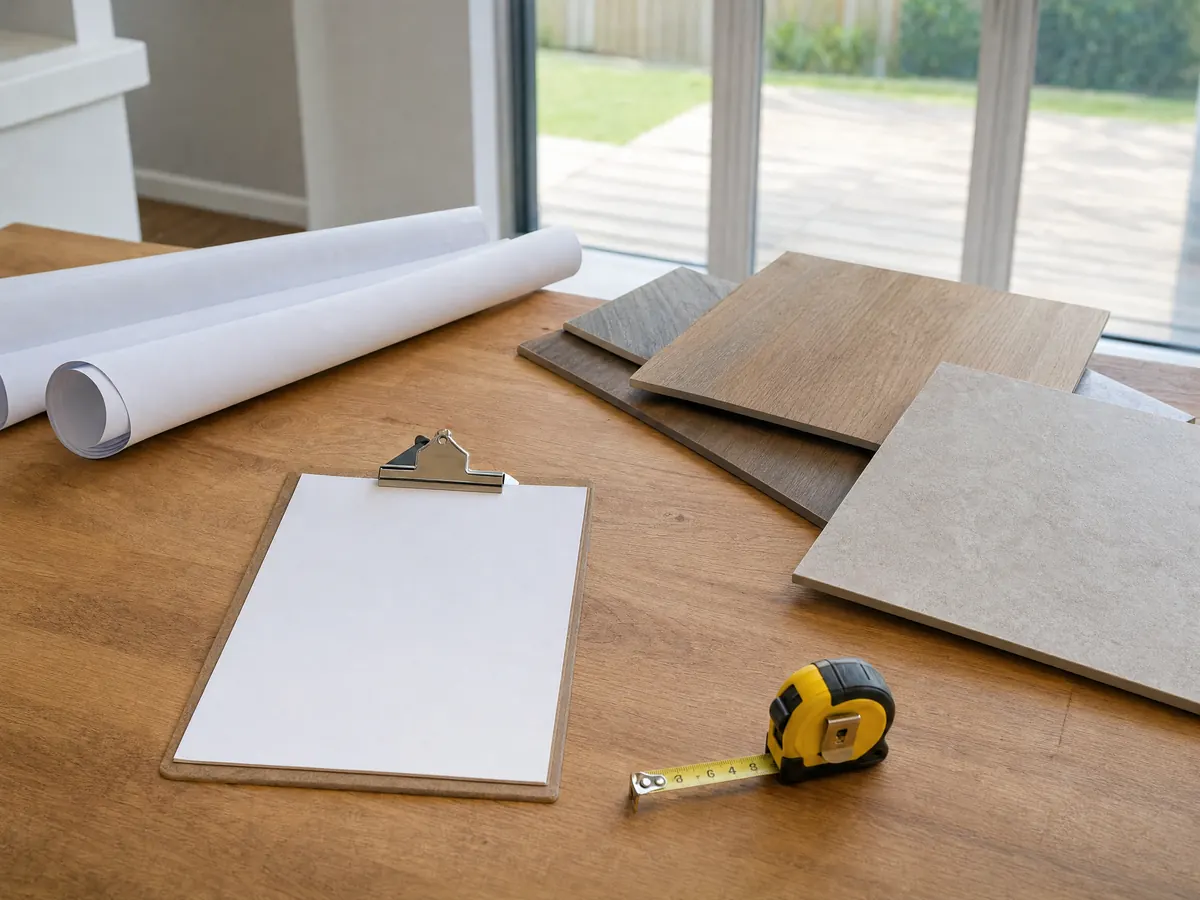
What is under a Long Beach floor built in 1925, 1955 or 1975?
It depends on which part of town you are in. Belmont Heights, Belmont Shore and Naples were laid out by the Alamitos Land Company, while Bixby Knolls, California Heights, Los Cerritos and North Long Beach came from the 1916 breakup of Rancho Los Cerritos. Oil found in 1921, then the Douglas Aircraft plant and the Navy shipyard, filled in the rest and took the population from 55,593 in 1920 to 344,168 in 1960.
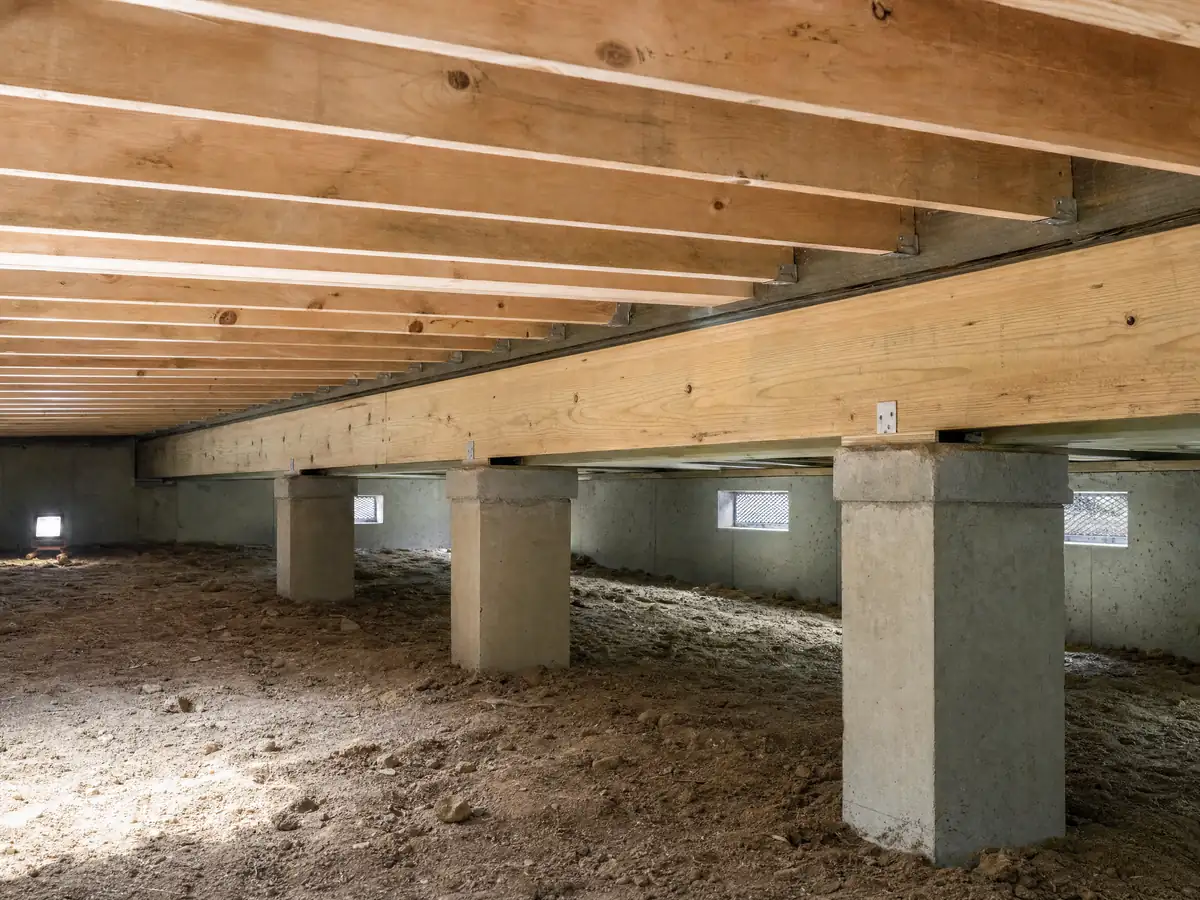
The earliest of those houses usually have raised wood floors over a crawlspace, and postwar tract houses are more often slabs. The City's Housing Element says 71 percent of Long Beach housing is over 50 years old, against 61 percent across Los Angeles County. Before we price anything we find out which kind of floor you have, because a crawlspace lets us look at joists and sheathing from below, while a slab has to be read from above.
Structural repairs found under an old floor, such as new joists or sheathing, are a different permit question from the finish floor itself, and they appear as separate lines in a proposal.
- Is the house on a raised floor or a slab, and what year was it built?
- Can the crawlspace be reached to check joists and sheathing before the price is set?
- Who pays if a soft or rotted section turns up after the old floor comes out?
Slab or raised floor: what should a Long Beach flooring contractor test first?
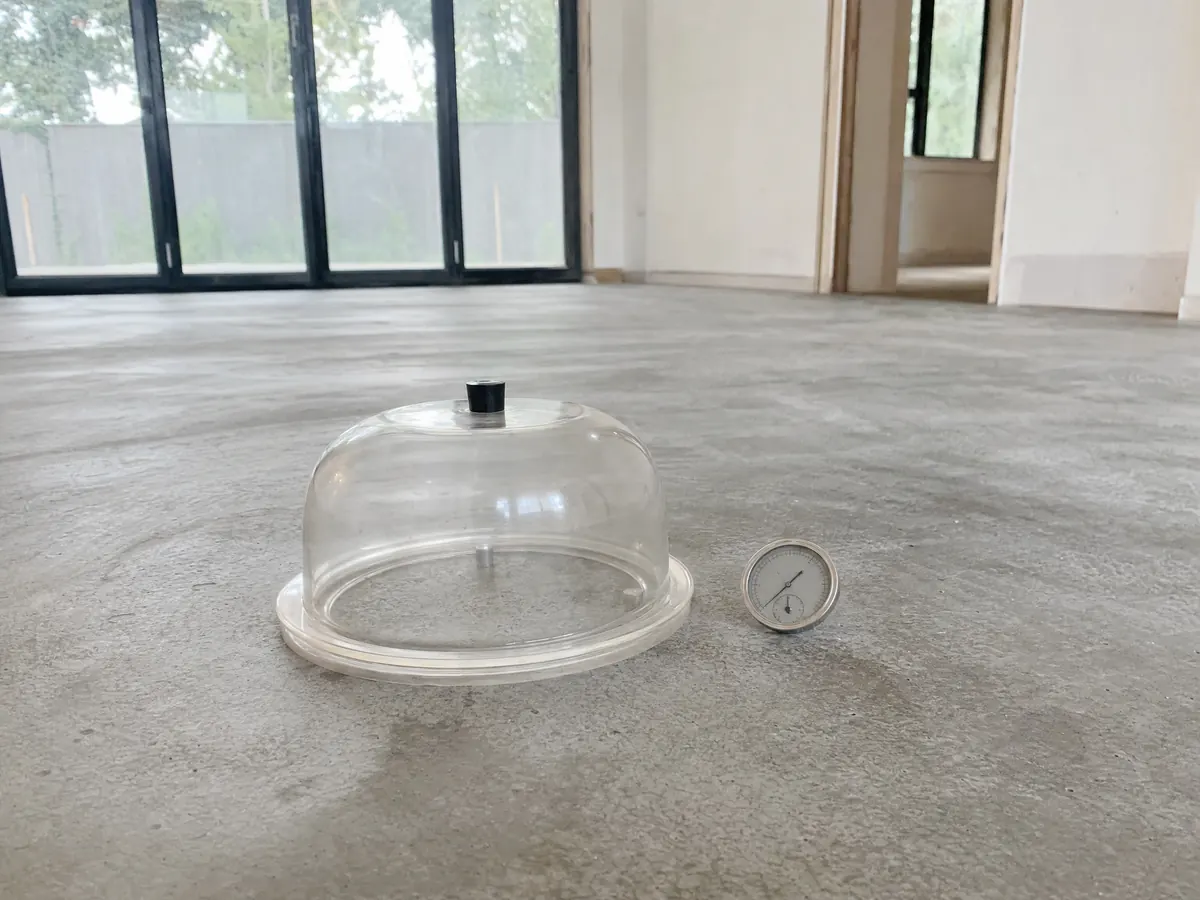
Long Beach is low and close to the water, and NOAA's Daugherty Field station sits at about 9 feet above sea level. Its 1991 to 2020 normals show 12.02 inches of rain a year, roughly 81 percent of it from December through March. Most of the year is dry, but a dry summer says little about a slab, because moisture rises from the soil beneath the concrete. Only a test turns that into a number.
The standard slab tests are ASTM F2170, which uses in-situ relative humidity probes, and F1869, which uses calcium chloride. The limit comes from the flooring and adhesive manufacturer, not from the test. The National Wood Flooring Association's concrete subfloor guide recommends a vapor retarder of 0.13 perms or less, such as 6-mil polyethylene. Ask where the probes will go, including beside exterior walls, planters and any past leak, and ask for the readings on paper.
The City's methane rules in Chapter 18.79 cover new construction and larger additions, and we found nothing saying a floor swap triggers them. Even so, we ask the Permit Center before any cutting or coring into a slab inside the mapped methane zone.
Is there asbestos under old vinyl or linoleum in a Long Beach house built before 1980?
Possibly. The EPA's asbestos page lists vinyl floor tiles, the backing on vinyl sheet flooring and adhesives among the places asbestos may be found, and says exposure generally happens when the material is disturbed or damaged. About 139,757 Long Beach homes date from before 1980, so an old tile layer with black mastic under a carpet is a normal discovery here, not a rare one.
We do not sand, scrape or tear up a suspect layer on a guess. The order is to identify the material, test it through a laboratory if there is doubt, and have removal handled by a qualified firm before the new floor goes down. Testing, removal and disposal are priced as their own lines. Our license check guide shows how to confirm who holds which license.
Lead is the other old-house question. The Housing Element records a $4,100,000 HUD grant in fiscal 2019 for lead-based paint hazard control, and baseboards and door casings removed for a new floor are painted surfaces, so ask how dust will be contained.
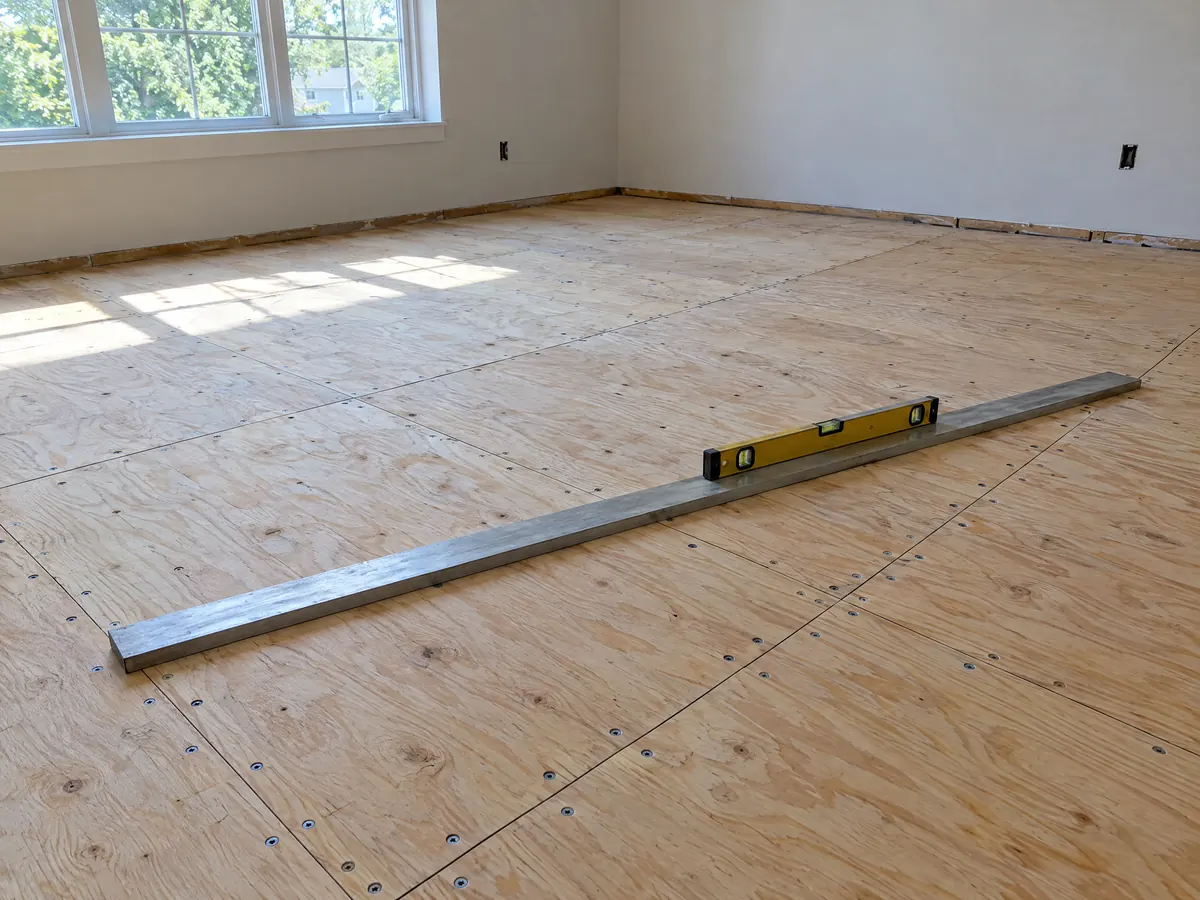
Do floors in a Long Beach historic district house need a Certificate of Appropriateness?
Not for interior work. The City's preservation page says a Certificate of Appropriateness is required for exterior changes to a landmark or a property in one of its 18 historic districts, and that interior alterations and ordinary maintenance with no exterior change need no historic review. The districts include Belmont Heights, Bluff Heights, California Heights, Rose Park, Wrigley and Hellman Street Craftsman.
A porch floor, front steps or an entry landing counts as exterior, so those do need review, and the Express Permit service cannot be used on a property in a historic district. Call Historic Preservation at (562) 570-6194 with the scope in writing.
Before replacing an original oak floor, check board thickness from a floor vent or an edge. Enough wood left usually means refinishing, which our flooring cost guide compares with replacement.
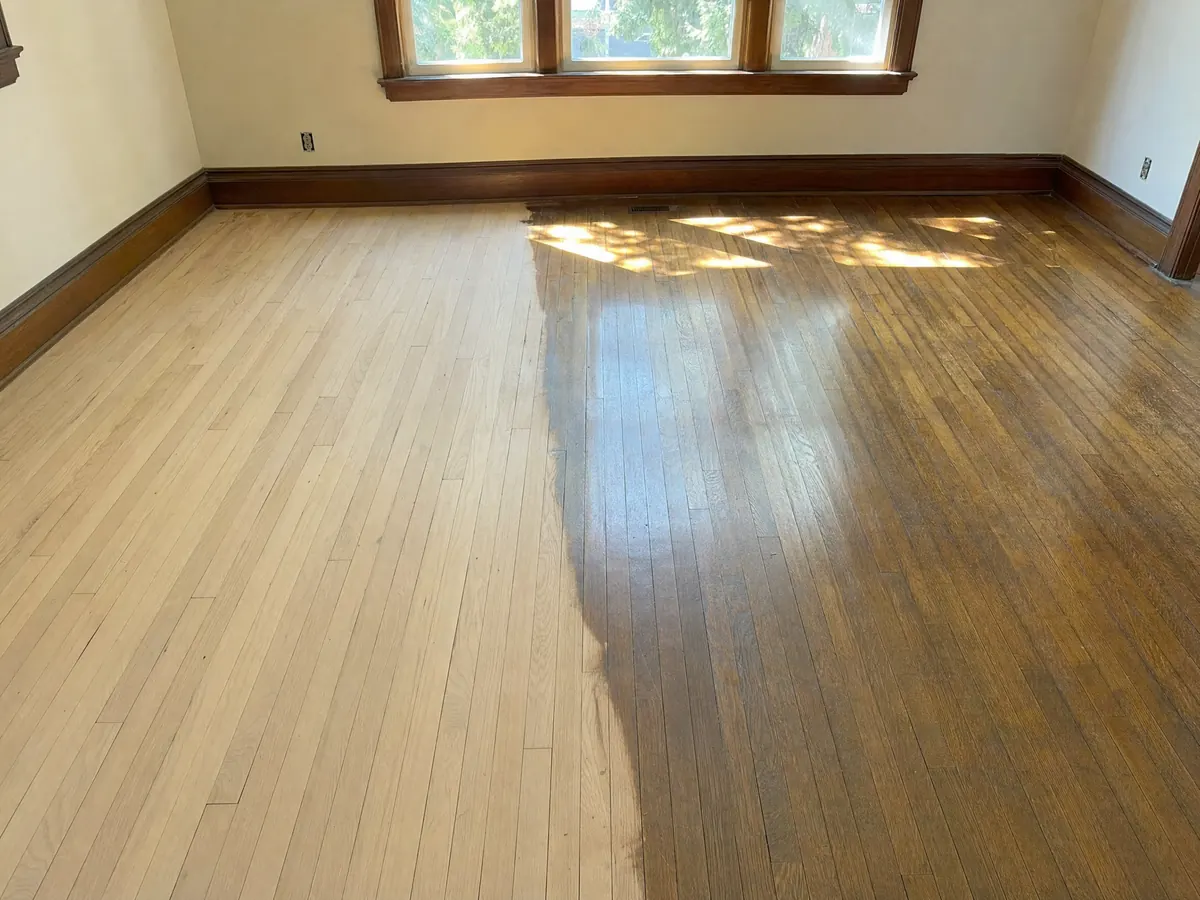
Does flooring installation need a Long Beach permit, and which flooring contractor may do the work?
Mostly not for the finish layer. The City's Do I Need A Permit page lists floor and wall coverings as minor decoration exempt from permits, and its permit FAQ exempts painting, tiling, carpeting and similar finish work, with ceramic tile on floors listed on its own. The Building Official makes the final call. Hardwood and vinyl plank are not named, so for those we ask the counter at 562.570.PMIT (7648).
Work under the floor is different. Replacing a toilet or sink needs a permit, and so does moving plumbing or wiring while the floor is open. A like-for-like kitchen floor with cabinets and counters in the same layout falls under Express Permit item B3, issued without plan review outside Coastal Zones and Historic Districts. A permit lasts two years and lapses after 180 days without work. The Permit Center is at 411 W. Ocean Boulevard.
On licensing, CSLB's C-15 class covers surface preparation and installing carpet, resilient flooring and wood floors, and tile sits in a separate class. Contracts over $500 must follow Business and Professions Code 7159.
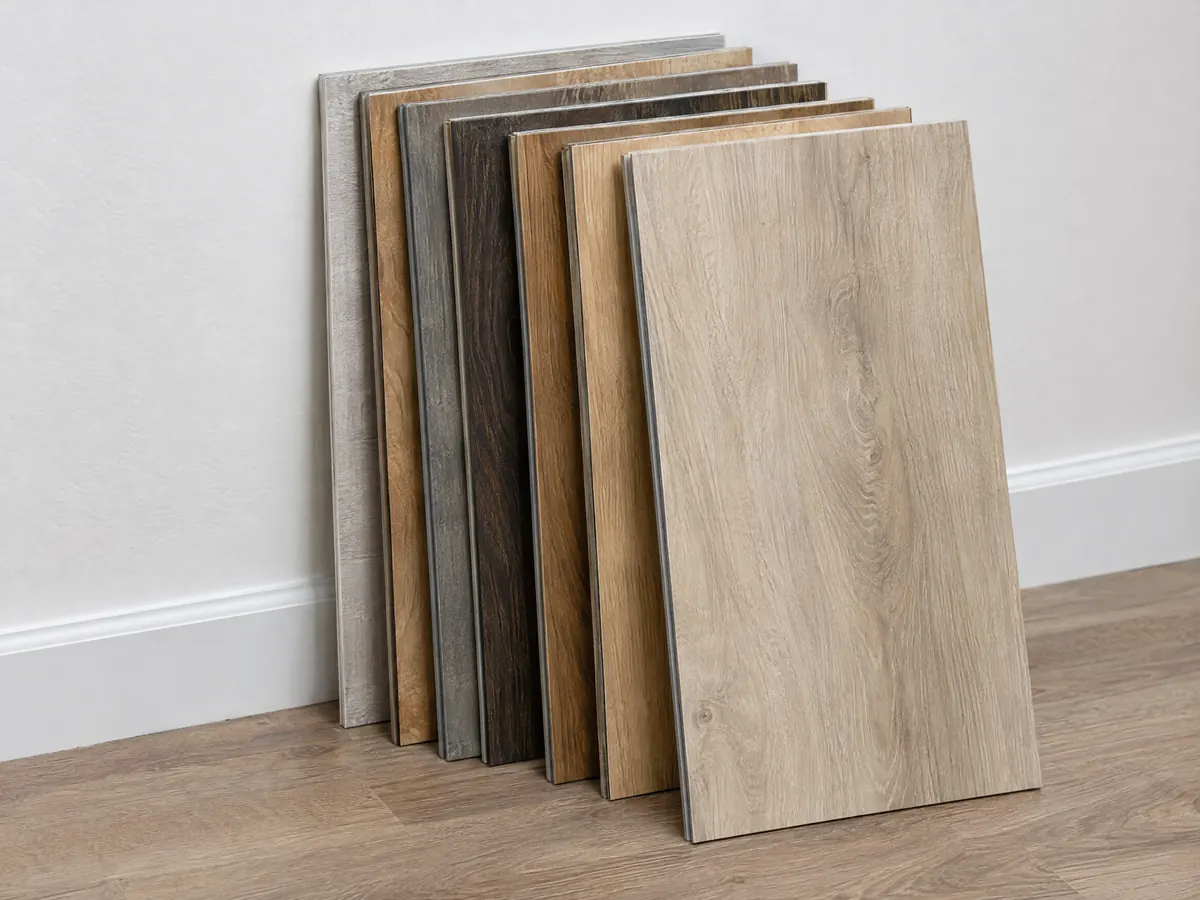
Hard floors in a Long Beach apartment, condo or rental: who has to approve them?
More Long Beach households rent than own: 58.9 percent of the 170,773 households rent, and 39.6 percent of homes sit in buildings of five or more units. For many floor jobs the first approval is therefore not the City's. A landlord decides what goes into a rental, and a condominium association's recorded rules decide what may be laid over another owner's ceiling.
Sound is the usual sticking point. The Davis-Stirling guide to hardwood floors says the association documents and a field sound test control, and published decibel and impact ratings conflict, so we quote none. Ask the association for its floor rule and any underlayment requirement in writing before ordering planks.
Neighbors outside the city, including Lakewood, Seal Beach, Carson, Paramount and Bellflower, take their permit questions to their own city halls. For comparison, see flooring in Los Angeles, flooring in Glendale and flooring in Pasadena.
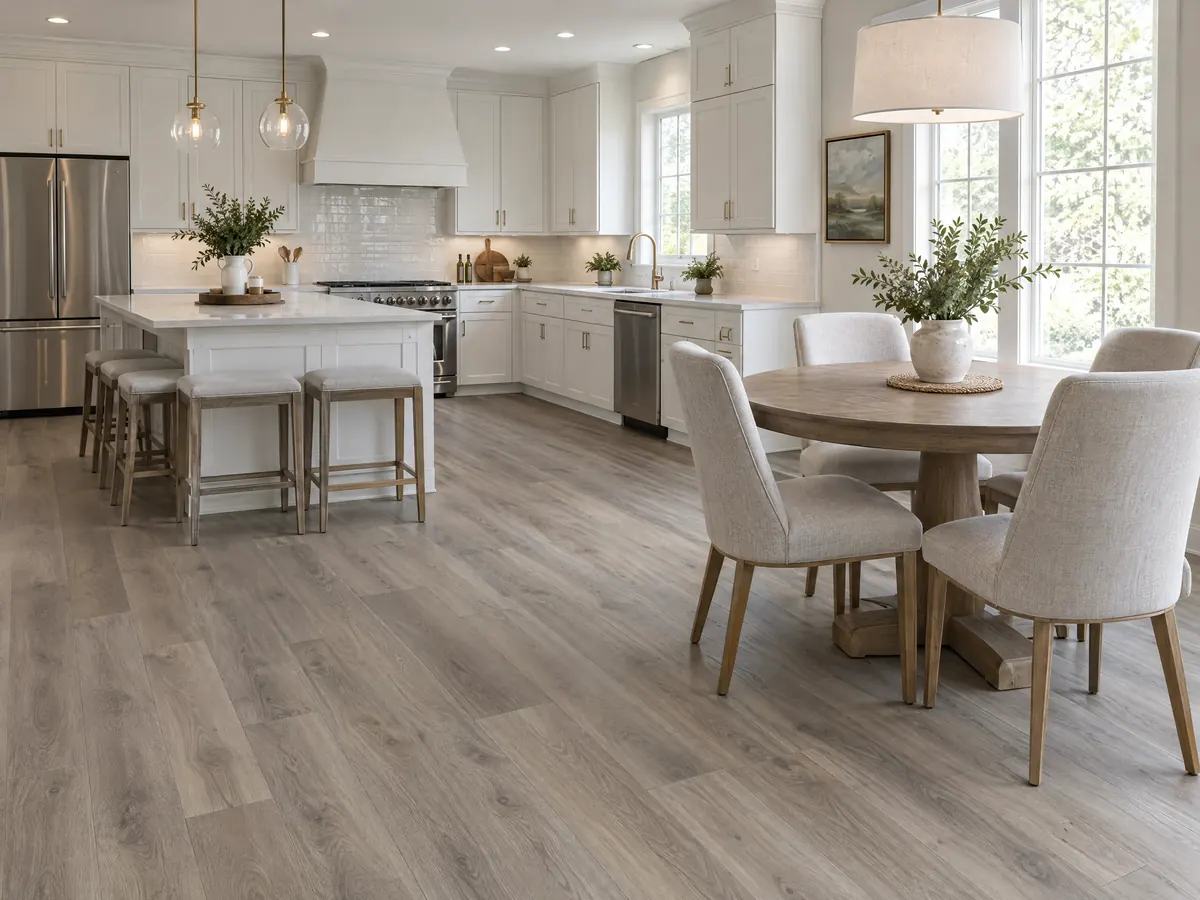
Floor details from Long Beach and nearby homes
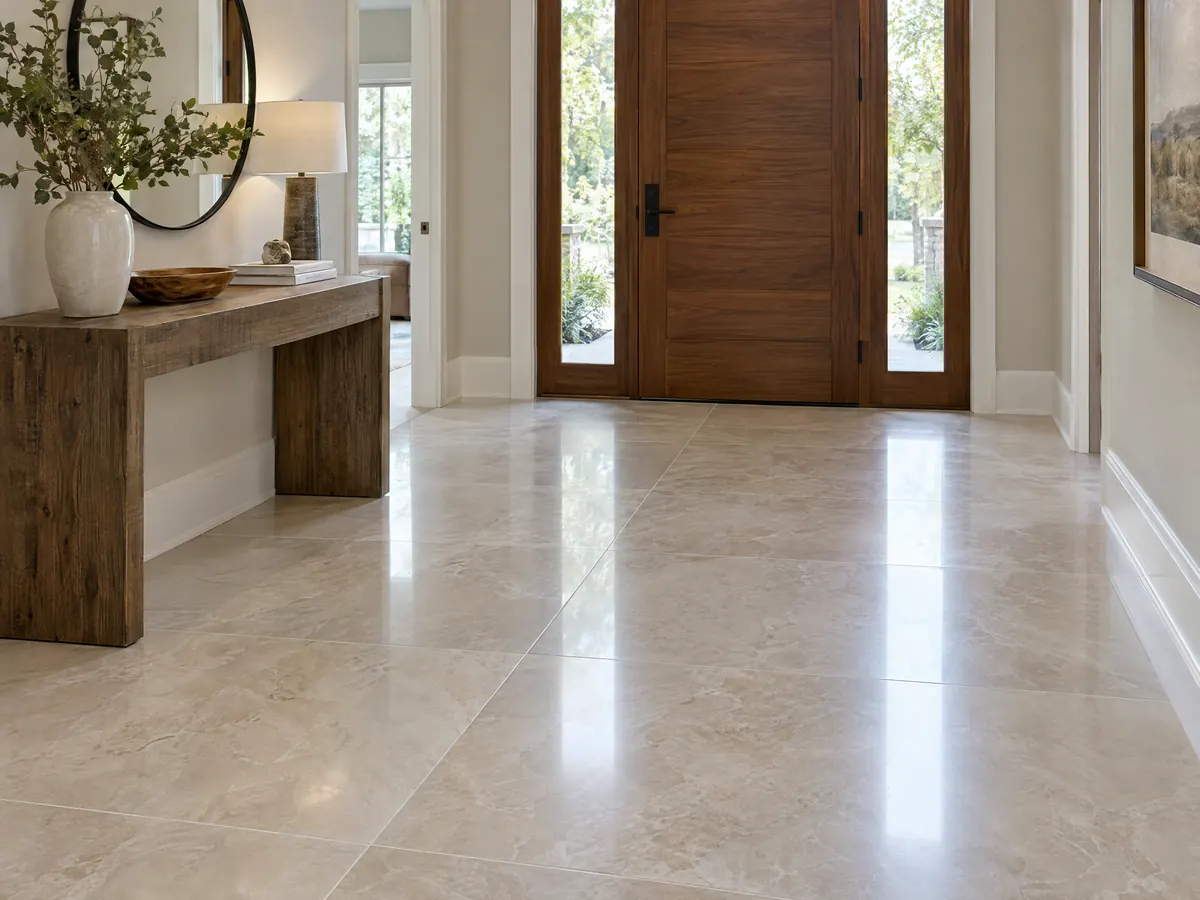
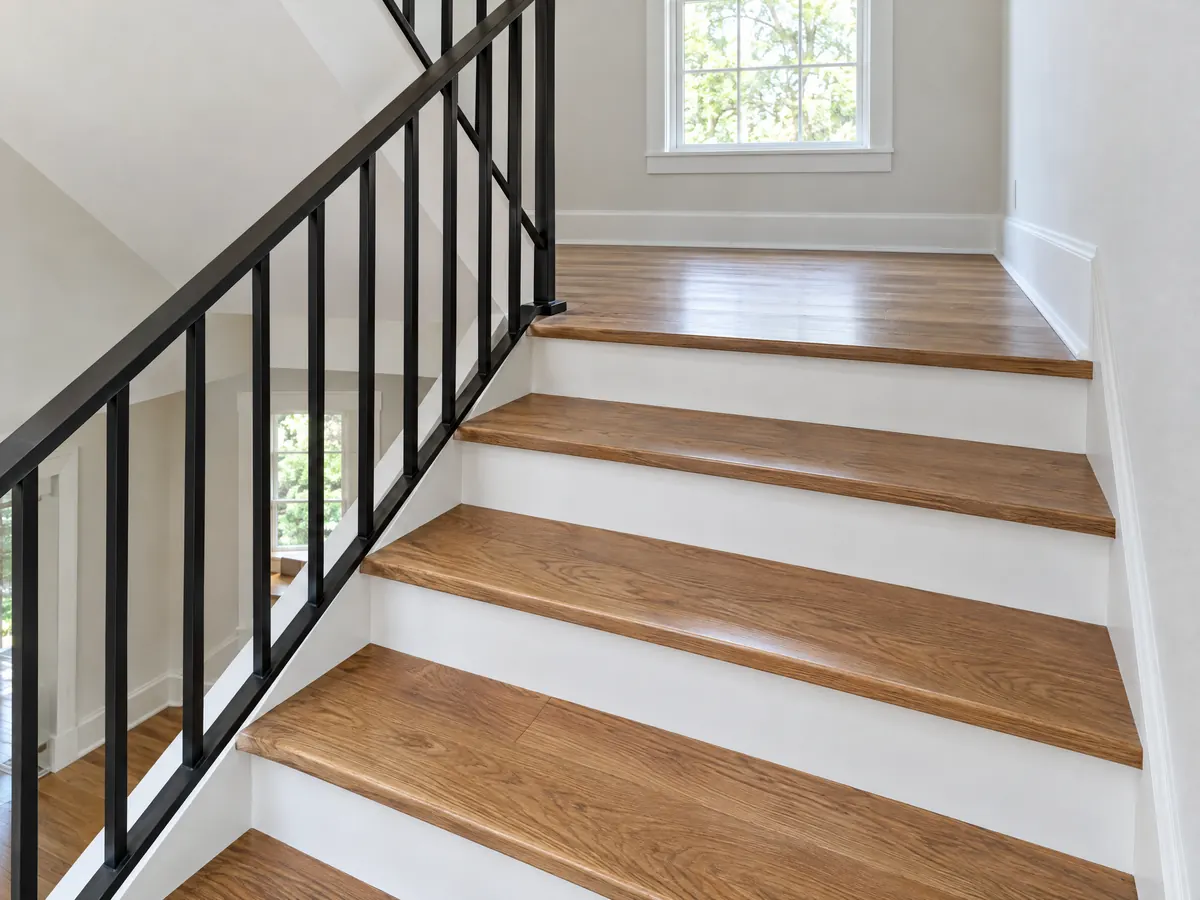
Six views of subfloors, planks and slab tests from Long Beach and the cities around it. Tap a photo to enlarge it.
What flooring costs around Long Beach
The ranges on our flooring page come from Angi's 2026 Los Angeles pages: about $3 to $9 per square foot for labor, $10 to $18 installed for engineered hardwood and $12 to $22 for solid. We found no Long Beach study with a stated method, and Angi does not publish how it collects its figures, so confidence is medium to low. Asbestos testing, subfloor repair and slab moisture work are separate lines. Related reading: kitchen remodeling in Los Angeles, bathroom remodeling in Pasadena, painting in Glendale and the Los Angeles overview.
| What it covers | Typical range |
|---|---|
| Installation labor only | $3 to $9 per sq ft |
| Solid hardwood, installed | $12 to $22 per sq ft |
| Engineered hardwood, installed | $10 to $18 per sq ft |
| Refinishing existing hardwood | $4 to $8 per sq ft |
| Laminate, whole project | $2,000 to $5,500 |
| Hardwood, whole project | $3,153 to $8,496 |
| Removing the old floor | $455 to $685 per 200 sq ft |
| Tile | No sourced Los Angeles range |
Other work we manage in Long Beach
Long Beach flooring questions, answered
How much does it cost to have flooring professionally installed in Long Beach?
Expect about $3 to $9 per square foot for labor alone, and $10 to $18 installed for engineered hardwood or $12 to $22 for solid, taken from Angi's 2026 Los Angeles pages because we found no Long Beach study with a stated method. Angi does not publish its method, so we rate the numbers medium to low. Subfloor repair and old-floor removal sit outside them.
How much does it cost to install 1,000 square feet of hardwood flooring in Long Beach?
Roughly $12,000 to $22,000 for solid hardwood and $10,000 to $18,000 for engineered, installed, by our arithmetic on Angi's Los Angeles per square foot ranges. Removal of the old floor is extra, and Angi puts it at $455 to $685 per 200 square feet. Use these as a starting point; the written proposal sets the price.
How much to refloor a 2,000 square foot house in Long Beach?
About $20,000 to $36,000 in engineered hardwood and $24,000 to $44,000 in solid, installed, found by multiplying Angi's Los Angeles ranges by 2,000 square feet. Stairs, closets and transitions are not in those figures. Laminate is far lower, since Angi's Los Angeles project range runs $2,000 to $5,500, so the material choice moves the total most.
Can you put flooring over concrete, and how do you stop moisture coming up through a slab?
Yes, once the slab has been tested. Moisture rises from the soil under the concrete, so installers take ASTM F2170 or F1869 readings and compare them with the flooring maker's limit. The National Wood Flooring Association also recommends a vapor retarder of 0.13 perms or less, such as 6-mil polyethylene. Get the readings in writing before material is ordered.
Do I need a permit for flooring installation in Long Beach?
Usually not for the finish layer. The City lists floor coverings, carpeting, tiling and similar finish work as exempt, though the Building Official decides and hardwood and vinyl plank are not named. Moving plumbing, replacing structural subfloor, or working at a historic or coastal address changes the answer, so call 562.570.PMIT (7648) with your scope.
How do I choose a flooring contractor in Long Beach?
Start with the license. CSLB's C-15 class covers installing wood, carpet and resilient flooring, and tile is a separate class. Ask for the license number and a certificate of insurance, compare itemized proposals rather than hourly rates, and confirm the contract meets Business and Professions Code 7159 if it is over $500. Check the number on CSLB's site yourself.
Is there asbestos under my old vinyl floor in Long Beach?
It is possible in an older house. The EPA lists vinyl floor tiles, sheet flooring backing and adhesives as places asbestos may be found, and 77.1 percent of Long Beach homes were built before 1980. Do not sand or scrape a suspect layer. Have it identified and tested first, and expect testing and removal as separate lines in the proposal.
Do I need City approval to replace floors in a Long Beach historic district?
Not for interior floors. A Certificate of Appropriateness covers exterior changes in the City's 18 historic districts, and interior alterations with no exterior change need no historic review. A porch floor, steps or entry landing is exterior and does need review. Historic Preservation takes questions at (562) 570-6194, and the Express Permit service is not available in a district.
Should I refinish or replace hardwood floors in my Long Beach house?
Refinish first when the boards are thick enough to sand, which you can judge from a floor vent or an edge. Angi's 2026 Los Angeles pages put refinishing at $4 to $8 per square foot, against $12 to $22 for new solid hardwood. Angi states no method, so treat both figures as medium to low confidence.
Can I put hard flooring in a Long Beach condo or apartment?
Only with approval from the owner or the association. A landlord decides for a rental, and a condo's recorded rules decide what may go over another unit. Sound limits vary and published numbers conflict. Ask for the association's flooring rule and any underlayment requirement in writing before you order planks. The City's permit rules are a separate question.
Send the address, the rooms and the floor underneath
Tell us the rooms, whether the house sits on a slab or a raised floor, the year it was built and the association name if it is a condo. We check the historic and coastal maps before we call.