
Flooring Installationin Bellflower, CA
Flooring installation in Bellflower needs no building permit for carpet, tile or similar finish work under the City's code, but structural floor changes, slab work and any plumbing or electrical do. With 71.4 percent of homes built before 1980 and 60.7 percent rented, the first approval is often a landlord's or an association's.
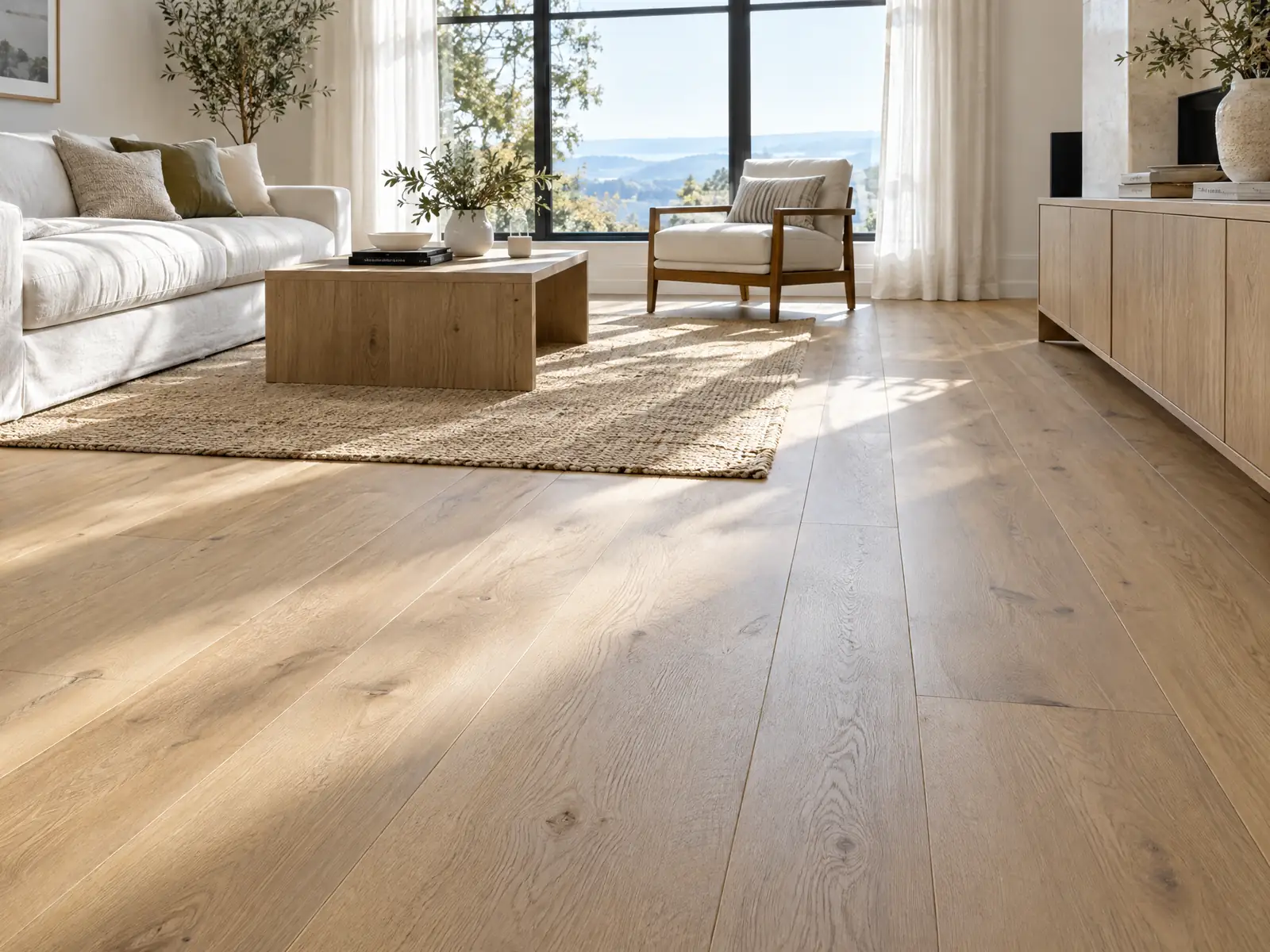
Bellflower's floors went down quickly. The City says its population rose from about 11,000 to 44,000 during the 1940s while seven schools were built, and the Census Bureau's 2024 five-year tables put the median year a home here was built at 1966, with 25.5 percent of the 24,683 housing units dating from the 1950s. Under today's carpet or vinyl you are more likely to find a 1950s or 1960s floor than anything newer.
MDG Builders, CSLB #1040337, is a general contractor in Tarzana. For a Bellflower floor we write the scope, put the permit questions to Bellflower Building and Safety and keep the schedule, and a licensed flooring or tile subcontractor lays the material, with a license number you are welcome to request. Prices and license classes are on our flooring page, and the Bellflower overview lists the other trades we manage here.
What Bellflower's City code says about flooring work
Where flooring permits come from in Bellflower: City of Bellflower Planning Department, Building & Safety Division.
- Carpeting, tiling and similar finish work are exempt from a building permit (BMC 15.04.040, Section 105.2); structural floor changes, slab work and any plumbing, electrical or mechanical work come back under the permit rules, and no separate flooring permit or flooring handout was found on the City site.
- New slab-on-grade for additions and ADUs follows the liquefaction rules: Handout 16 gives a prescriptive option for single-story construction under 750 square feet (4-inch slab reinforced with #4 bars at 16 inches on center each way, a 6-mil moisture barrier over 2 inches of compacted sand, dowels at 24 inches on center), and any project over 750 square feet needs a geotechnical design.
- Groundwater context from the 2017 Safety Element: historically highest groundwater ranges from about 8 feet to over 30 feet below ground, and City records generally show shallow groundwater at 12 to 55 feet, deepest in the north. The City sets no flooring moisture rule; this is background for slab moisture questions.
- The City's amended Table R301.2(1) lists termite exposure as 'Very Heavy' and a 12 to 24 inch frost line depth, which matters where wood subfloor, sleepers or wood underlayment meet an older slab or crawlspace.
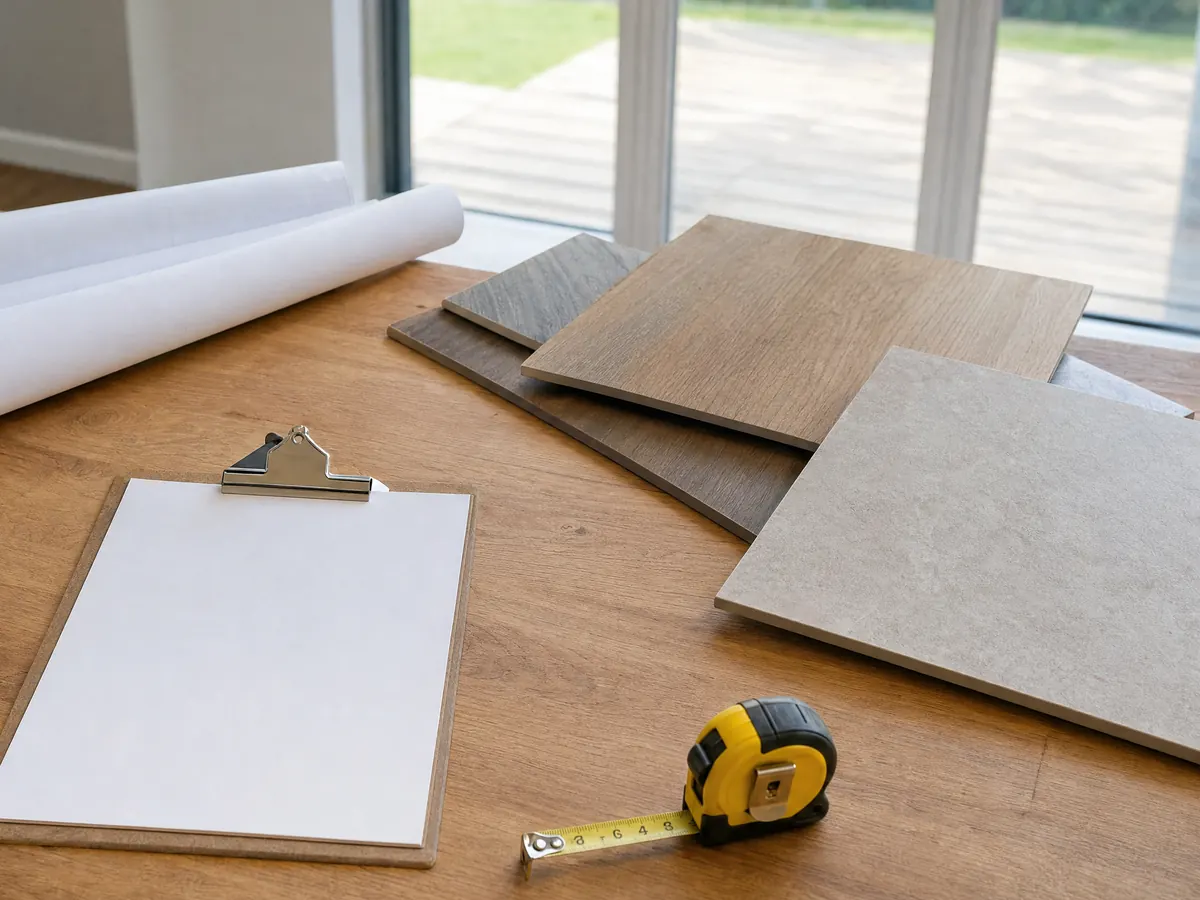
Who has to say yes before new flooring goes into a Bellflower rental or condo?
Whoever controls the unit, and in Bellflower that is frequently a landlord. The Census Bureau's 2024 five-year tables count 14,450 of the city's 23,802 occupied homes as rented, 60.7 percent, and 32.0 percent of all units sit in buildings of five or more. A tenant needs written consent before a plank comes up, and the lease says who puts the old floor back at move-out.
Condo and townhome owners answer to the association first. Civil Code section 4765 tells a board how to process an owner's request to alter a unit, with a written decision and a route to reconsideration, and a Davis-Stirling page on hardwood floors says the governing documents and a field sound test decide what may sit above a neighbor. Published sources disagree on the sound rating, so none is printed here.
About 4.9 percent of Bellflower's units, 1,220 of them, are mobile homes. We found no City rule on flooring in a mobile home, so ask the park's management what its own rules require before anything is ordered.
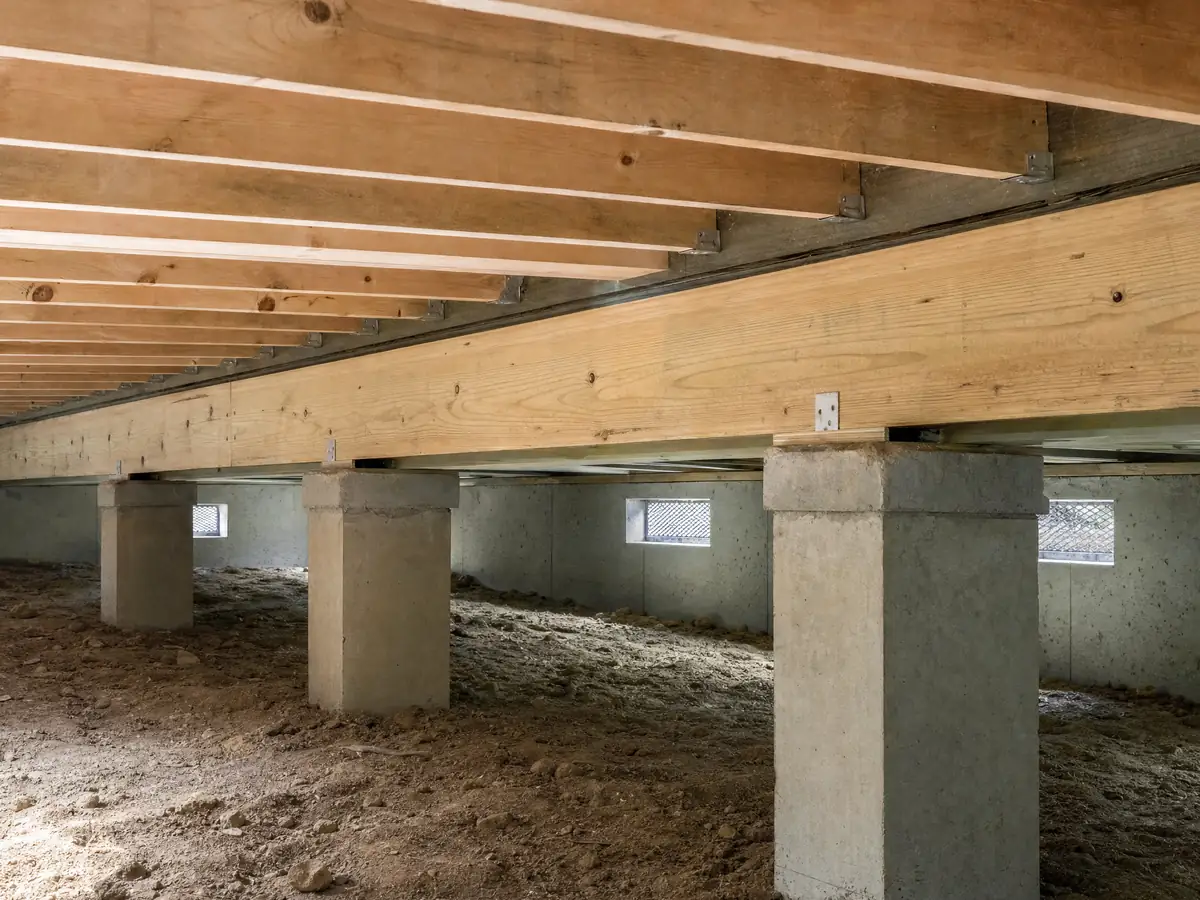
Does a flooring contractor need a permit to replace a floor in Bellflower?
Not for the covering itself, according to the code. BMC 15.04.040, Section 105.2 lists carpeting, tiling and similar finish work among the jobs exempt from a building permit, and we found no flooring handout or separate flooring permit on the City's website. The exemption ends where the job touches the building: structural floor changes, slab work and any plumbing, electrical or mechanical work come back under the permit rules.
The kitchen and bathroom are the usual trap. Pulling a dishwasher or moving a toilet to lay a new floor is plumbing, and the Building and Safety Division's permit page lists plumbing changes, showers and tubs among the jobs needing permits and inspections. Plan check is electronic, begins with a Planning pre-review and is posted at about 10 business days for residential work. The Division page gives counter hours of Monday to Thursday, 8:00 a.m. to 4:30 p.m., and alternating Fridays, while several handouts print later closing times, so call (562) 804-1424 before driving over.
The work clock applies with or without a permit. Section 117 of the same code allows construction Monday to Friday from 7:00 a.m. to 6:00 p.m. and Saturday from 8:00 a.m. to 6:00 p.m., with nothing on Sundays or City holidays, and it counts demolition and material deliveries too. A Sunday tear-out is not an option.
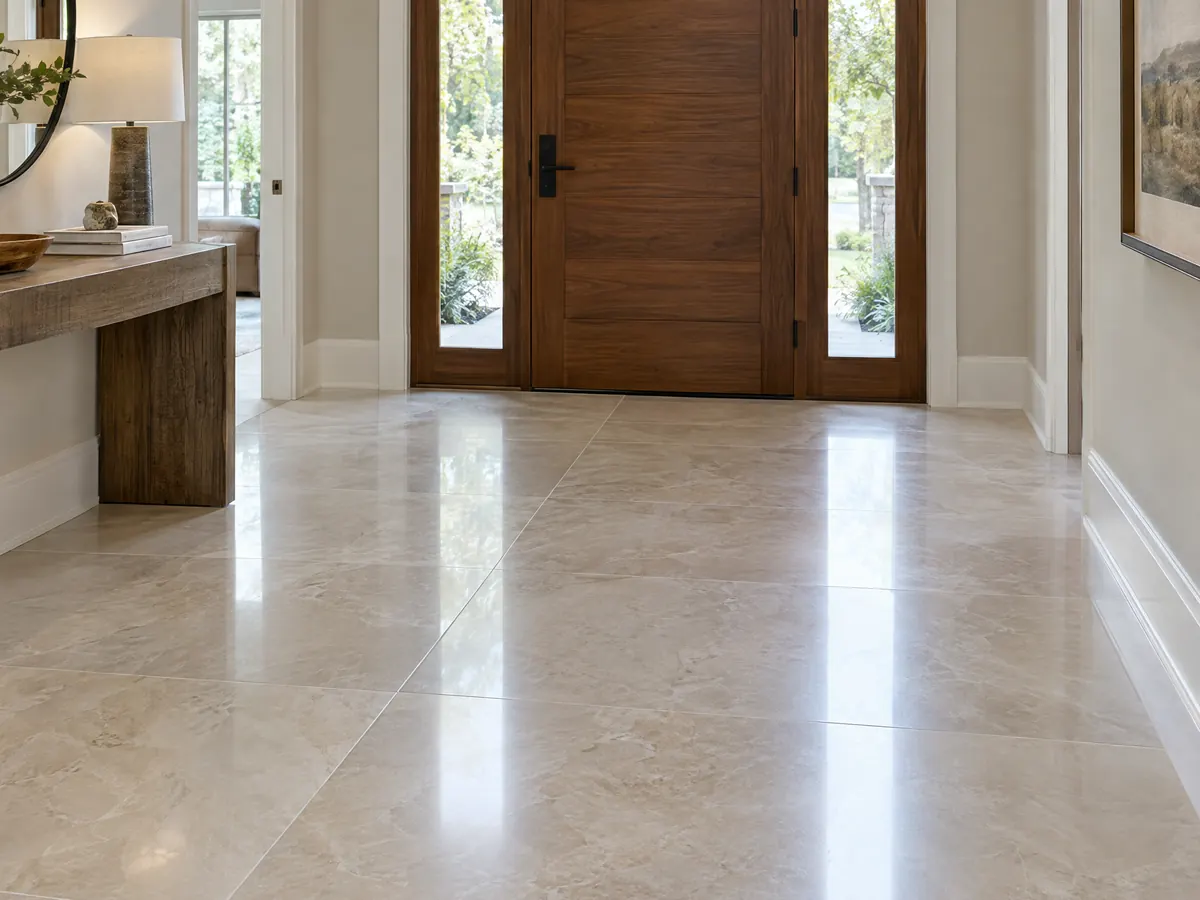
What could be hiding under a 1950s or 1960s Bellflower floor: layers, asbestos or lead?
The postwar boom explains the stack. The City's history says the north filled with houses while the narrow, deep lots became apartment sites, and the 2022 Housing Element says large tract homes followed in the south in the 1950s as farmers moved to Dairy Valley. Seventy years of owners have laid carpet, vinyl and tile over what the builder left, so one room can hold three floors.
With 71.4 percent of homes built before 1980, assume the layers need testing. Federal rule 29 CFR 1926.1101 presumes asphalt and vinyl flooring installed in 1980 or earlier contains asbestos until a lab clears it, and the black mastic under old tile is a separate material. For painted baseboards, EPA's lead-safe renovation rule reaches paid work in homes built before 1978, which covers most of this city's housing. We found no Bellflower rule on asbestos surveys, so we cite none; settle in writing who orders the sample, how many days it adds and who pays if abatement follows.
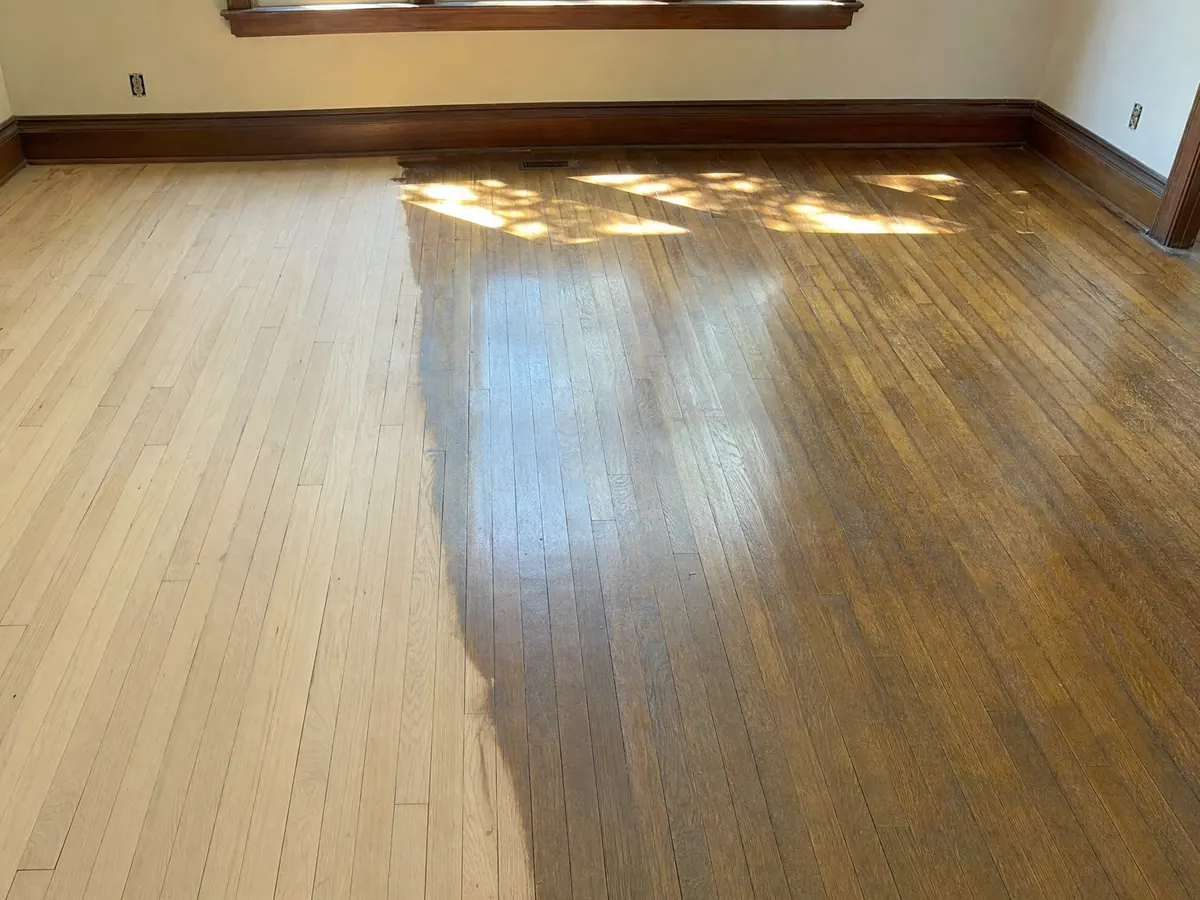
Before choosing to replace, look for an original wood floor under the carpet. A floor register or an edge shows the board thickness, and a floor with enough wood left above the nails can usually be refinished for less than new boards cost, as our flooring cost guide shows.
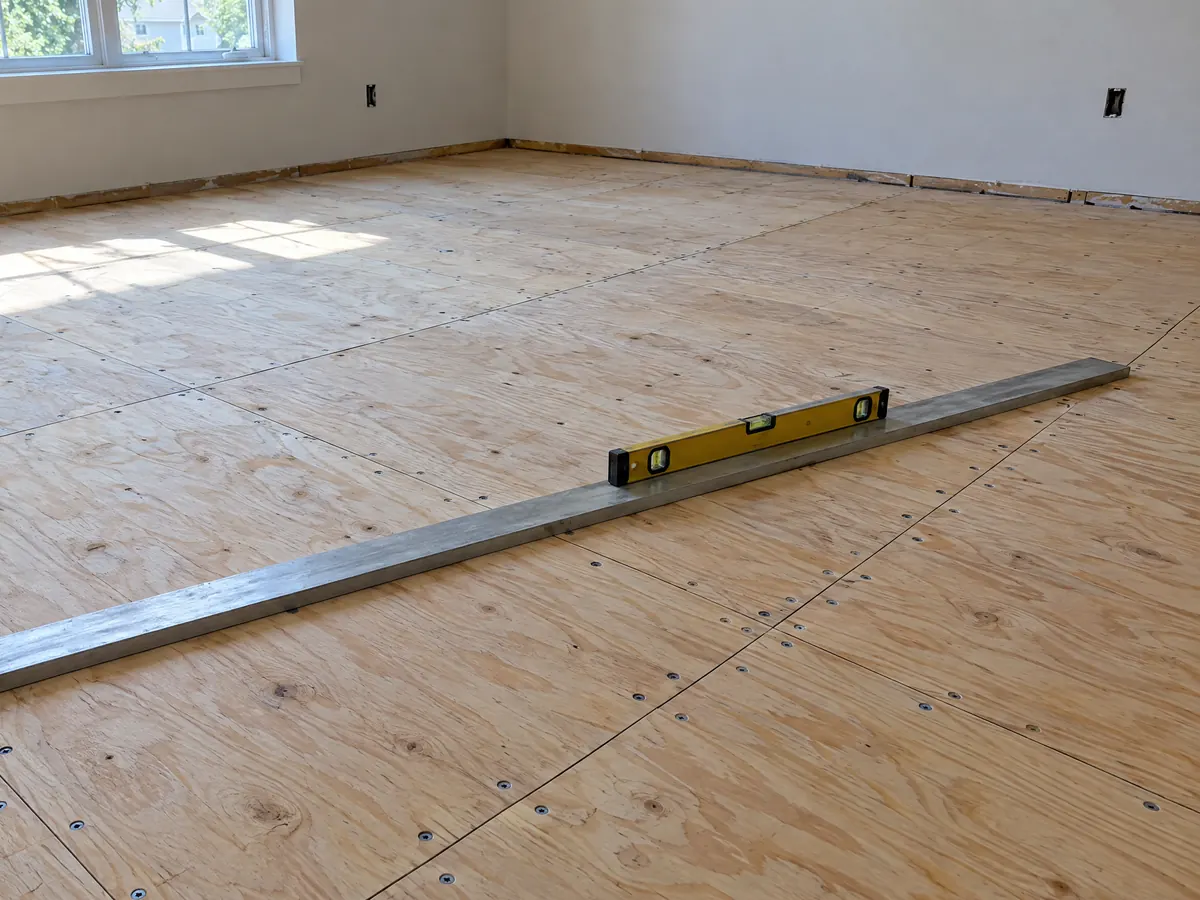
Does liquefaction ground and a shallow-water history change slab moisture testing in Bellflower?
It changes the context, not the test. The City's 2017 Safety Element says every part of Bellflower is susceptible to liquefaction, with historically highest groundwater from about 8 to over 30 feet down, shallowest in the south and deepest in the north. The land is old floodplain: until levees followed the County Flood Control District in 1917, the San Gabriel River spilled down what is now Bellflower Boulevard. The City sets no moisture rule for flooring.
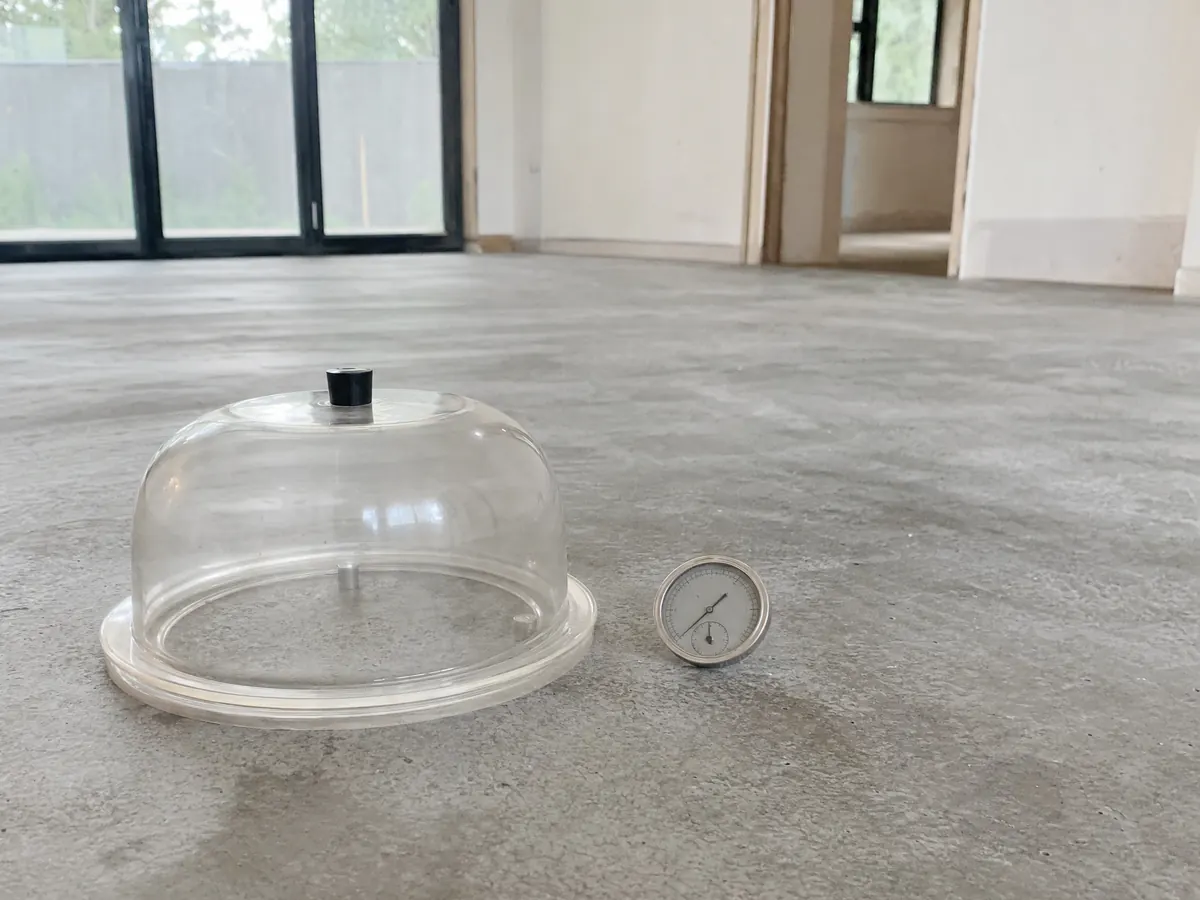
Two tests dominate. ASTM F2170 buries relative humidity probes in the slab, and ASTM F1869 weighs the vapor given off beneath a calcium chloride dish. Neither standard sets a pass mark, because that number is printed by the maker of the flooring or its adhesive, so the installer needs the product sheet before testing, not after. For wood, the National Wood Flooring Association's concrete subfloor guidance goes further and favors a vapor retarder of 0.13 perms or less over the slab, with 6-mil polyethylene as its example.
Ask where each probe goes, including beside exterior walls, planters and any old leak. The nearest full NOAA station, Long Beach Daugherty Field about 5.4 miles away, records 12.02 inches of rain a year, 80.8 percent of it from December through March.
How do termites and old framing affect a raised wood floor in Bellflower?
We have no count of Bellflower homes built over a crawlspace, so check each house. Low vents in a foundation wall, a hatch in a closet or a hollow sound underfoot suggest one. The City's amended Table R301.2(1) lists termite damage exposure as 'Very Heavy' for Bellflower, which makes wood subfloor, sleepers and wood underlayment worth a look before new boards go on top.
Whoever goes under the house should report stains below bathrooms and kitchens, sagging near heavy walls, insect damage and soft patches, and the report should reach you before the price is final. Replacing joists or structural sheathing is permit work under the code, and a quote line that says only remove existing flooring hides every one of those repairs.
- Who will crawl the house, and when does the written report arrive?
- What does a repaired joist or a replaced sheet of subfloor cost per item?
- Will the wood floor be allowed to acclimate, and for how long?
What do Bellflower's soils rules mean for the floor of an addition or converted garage?
A new slab is a different job from a new finish floor. For single-story work under 750 square feet, the City's Seismic Hazard Mitigation handout gives a prescriptive option: a 4-inch slab reinforced with #4 bars 16 inches on center each way, a 6-mil moisture barrier over 2 inches of compacted sand and dowels 24 inches on center. Anything over 750 square feet, or any second story, needs a soils report with liquefaction study under BMC 15.60.040.
Additions of 750 square feet or more also need drainage plans, according to the City's addition handout. We read no Bellflower page that deals with garage conversions, so confirm the requirements with Building and Safety before pricing a garage floor, and see our garage conversion guide for the order of steps in general; it was written for Los Angeles.
What does flooring installation cost in Bellflower, and which license class applies?
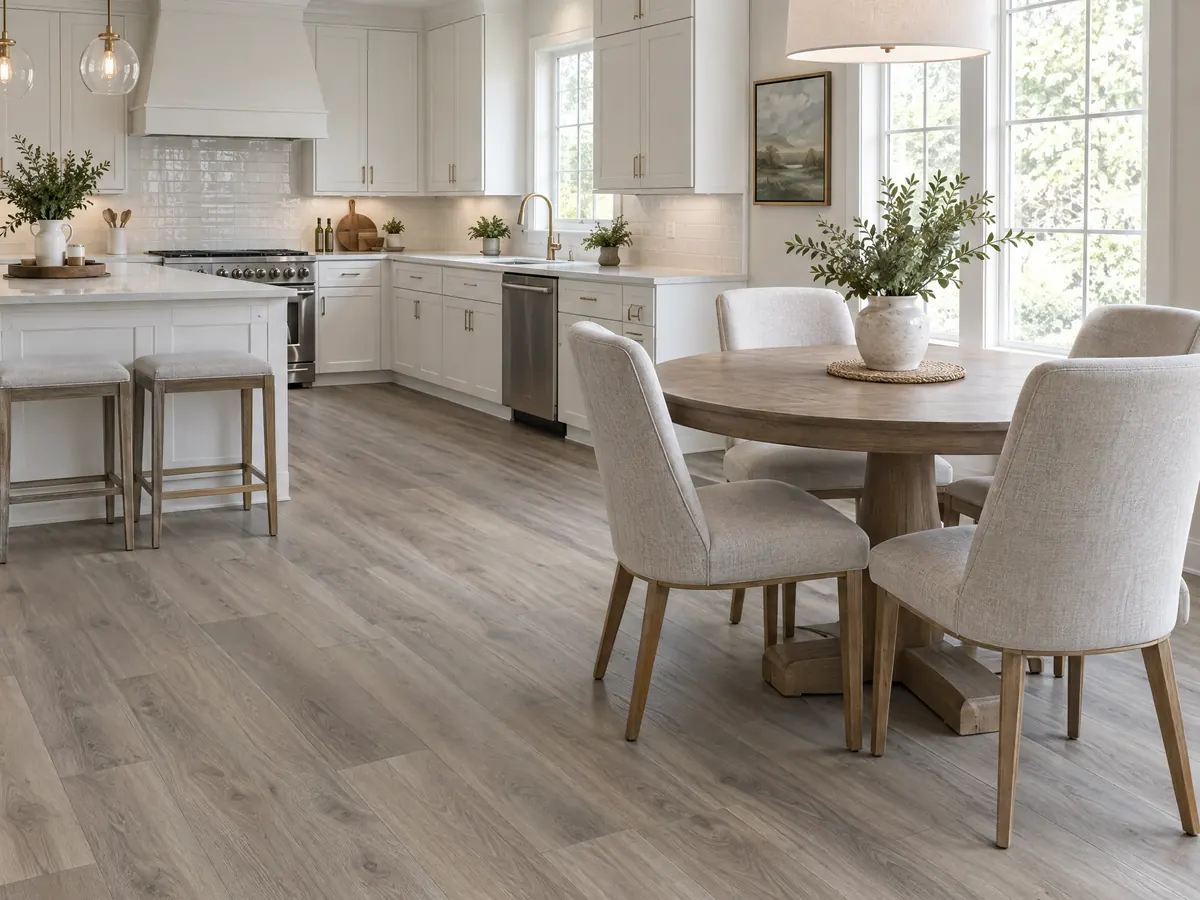
No Bellflower price study with a stated method turned up, so the figures come from Angi's Los Angeles pages, updated in July 2026, and we rate them medium to low in confidence. Labor runs $3 to $9 per square foot, engineered hardwood $10 to $18 installed, solid hardwood $12 to $22 and refinishing $4 to $8. Multiply for an 800 square foot house: engineered planks come to $8,000 to $14,400, refinishing to $3,200 to $6,400, and Angi's $455 to $685 per 200 square feet for removing an old floor scales to $1,820 to $2,740. Those are our calculations, not a bid.
Subfloor repair, lab tests and stairs are extra. Federal wage data from May 2025 put floor layers in the Los Angeles area at a mean $33.48 an hour, which is a wage, not a billing rate. The City's Permit Information page adds one protection worth knowing: a down payment may not exceed 10 percent of the price or $1,000, whichever is less.
On licensing, the state's C-15 class covers carpet, resilient and wood flooring, and tile falls under C-54. Our license check guide walks through the lookup.
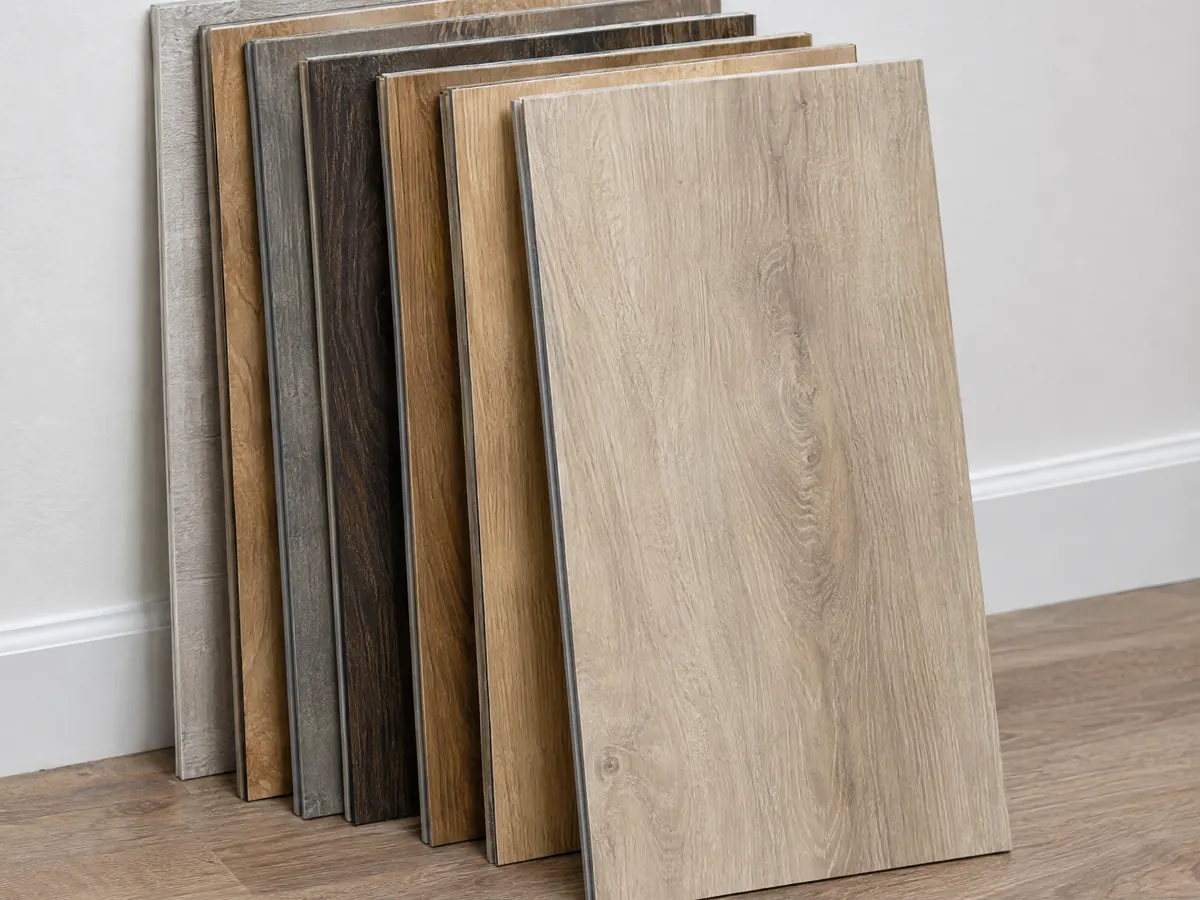
Flooring photos from Bellflower and nearby communities
Floors around Bellflower and the cities beside it, from subfloor prep and moisture kits to finished plank and tile. Tap any picture to see it larger.
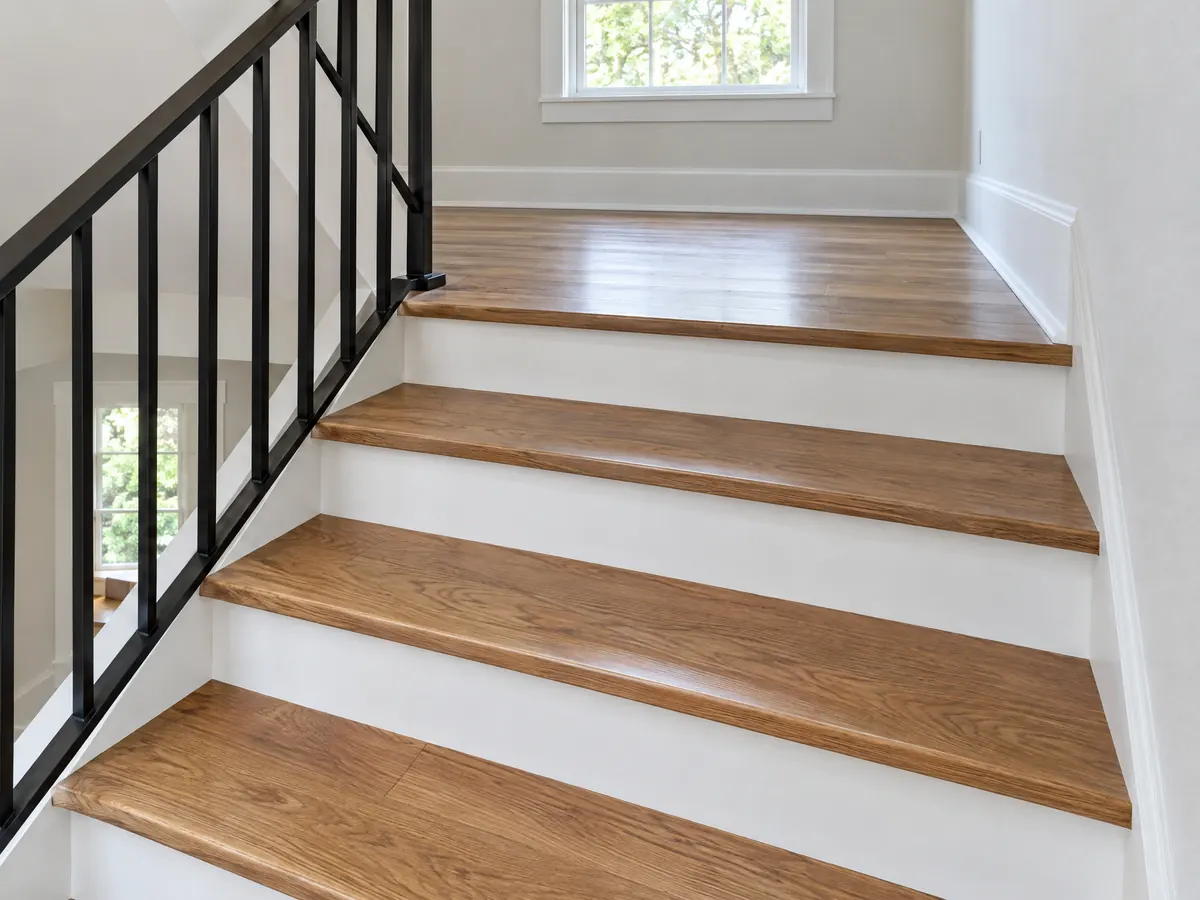
What flooring costs around Bellflower
Dollar figures here are the Los Angeles ranges behind our flooring page, not a Bellflower quote, and our subcontractor guide explains who does what between us and the installer. Nearby pages: flooring in Lakewood, flooring in Norwalk, flooring in Downey, flooring in Long Beach, flooring in Los Angeles, concrete work in Bellflower and decks in Bellflower.
| What it covers | Typical range |
|---|---|
| Installation labor only | $3 to $9 per sq ft |
| Solid hardwood, installed | $12 to $22 per sq ft |
| Engineered hardwood, installed | $10 to $18 per sq ft |
| Refinishing existing hardwood | $4 to $8 per sq ft |
| Laminate, whole project | $2,000 to $5,500 |
| Hardwood, whole project | $3,153 to $8,496 |
| Removing the old floor | $455 to $685 per 200 sq ft |
| Tile | No sourced Los Angeles range |
Other work we manage in Bellflower
Bellflower flooring questions, answered
How much do contractors charge to install flooring?
On Angi's 2026 Los Angeles figures, installation labor is about $3 to $9 per square foot, engineered hardwood $10 to $18 installed and solid hardwood $12 to $22. We found no Bellflower study with a stated method, so confidence is medium to low. Removing the old floor, subfloor repair and stairs are priced on top.
Do I need a permit to replace flooring in Bellflower?
Usually not for the covering itself. BMC 15.04.040, Section 105.2 exempts carpeting, tiling and similar finish work, and we found no flooring permit on the City site. Structural floor changes, slab work and plumbing, electrical or mechanical changes need a permit. Call Building and Safety at (562) 804-1424 with your exact scope.
Can you put flooring over concrete?
Yes, as long as the slab tests dry enough and is flat enough for the product. The flooring maker or adhesive maker sets the moisture limit, so the installer should run ASTM F2170 probes or an ASTM F1869 kit and follow the product sheet on vapor barriers. A crack with one edge higher than the other needs repair first.
Why does moisture come through a concrete floor?
Vapor rises from the soil beneath the slab, and concrete is porous. Bellflower's Safety Element lists historically highest groundwater of about 8 to over 30 feet below ground, and about 81 percent of the nearest NOAA station's annual rain falls from December through March. Leaking downspouts and planters beside a wall add more. A test shows the real level.
Is there asbestos under old flooring in a Bellflower house built before 1980?
It may be there, and appearance will not tell you. Federal rules presume that asphalt and vinyl flooring installed in 1980 or earlier contains asbestos, and 71.4 percent of Bellflower's homes predate 1980. Have a lab test the tile and the adhesive before any sanding or scraping. We found no City survey rule.
Can a tenant in Bellflower replace the flooring in a rental?
Only with the landlord's written consent. About 60.7 percent of Bellflower's occupied homes are rented, and the lease usually says who restores the original floor at move-out. Condo owners need association approval first, which Civil Code section 4765 governs. Get approvals, and the underlayment and delivery rules, in writing before ordering.
What hours can a flooring crew work in Bellflower?
Monday to Friday from 7:00 a.m. to 6:00 p.m. and Saturday from 8:00 a.m. to 6:00 p.m., with no work on Sundays or City holidays. Section 117 of BMC 15.04.040 counts demolition and material deliveries as construction, and it applies whether or not a permit is required, unless the Building Official approves otherwise.
What license does a flooring contractor need in California?
A C-15 license covers carpet, resilient and wood flooring, and C-54 covers ceramic and stone tile, unless the whole job is $1,000 or less and needs no permit. Bellflower issues permits to contractors licensed for the work or to owner-builders. A down payment is capped at 10 percent of the price or $1,000, whichever is less.
Describe the rooms and what is under your feet now
Give us the address, which rooms are changing and whether you have seen a slab or a crawlspace, and tell us if the home is a rental. We bring a moisture kit and a short list of permit questions to the visit.