
Flooring Installationin Lakewood, CA
Flooring installation in Lakewood often starts with a lab test, not a showroom visit, because 88.9 percent of the city's homes predate 1980 and old tile or vinyl may hold asbestos. The City pages we read never say whether a floor alone needs a permit, so call Building and Safety at 562-866-9771, extension 2350, before demolition.
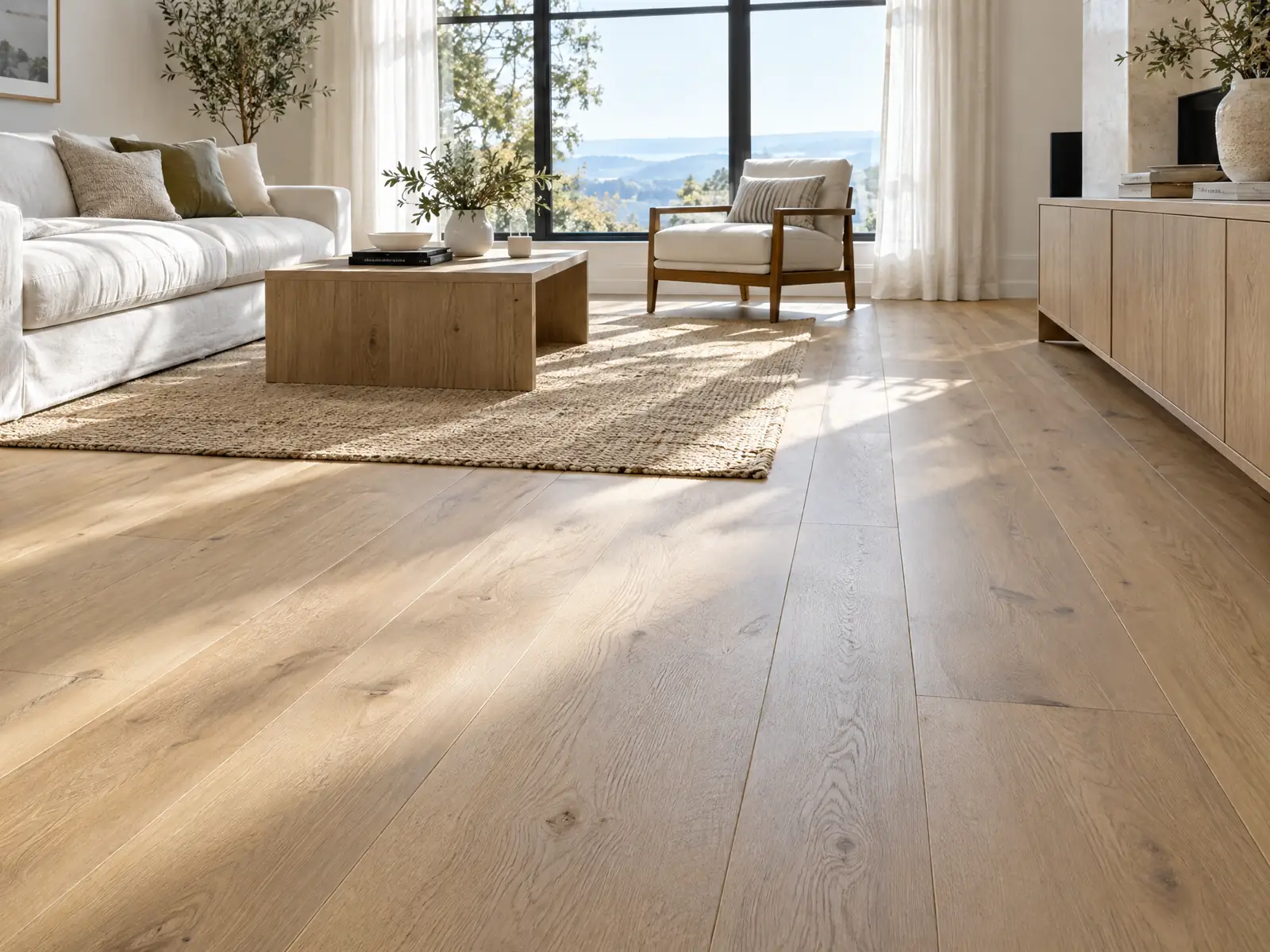
Lakewood floors share one origin story. The Lakewood Park Corporation bought the Montana Ranch in 1949 and poured its first foundations on February 24, 1950, and the City says about 17,500 houses were finished by 1953, at 40 to 60 a day and 110 on the busiest one. The city incorporated on April 16, 1954. The Census Bureau's 2024 five-year tables count 26,867 housing units here, 54.5 percent of them built in the 1950s and 88.9 percent before 1980, with a median year built of 1957.
MDG Builders holds CSLB #1040337 as a general contractor in Tarzana. On a Lakewood floor we write the scope, confirm what applies with Lakewood Building and Safety and keep the calendar, and the install itself belongs to a licensed flooring or tile subcontractor whose license number and proof of insurance you can request. Materials, prices and license classes are on our flooring page, and the Lakewood overview lists our other trades here.
What Lakewood's City pages and code say about flooring work
Where flooring permits come from in Lakewood: City of Lakewood Community Development Department, Building and Safety Division.
- Under R401.5 as added to the residential code by LMC 8806, a concrete floor slab is cast on a moisture barrier of at least 10 mils, is at least 4 inches thick and is reinforced with welded wire mesh or bars of at least 3/8 inch at no more than 24 inches each way, and residential slabs on sulfate soils use Type V cement where no approved method is provided.
- For an ADU created from a garage, any sloped floor must be retrofitted flat with approved moisture barriers and meet the adopted building codes (LMC 9302.21a.D.10).
- A garage-to-room conversion that is not an ADU must replace both covered parking spaces, and the new garage must be built before the remodel starts, per the Homeowner Project Guide.
- Flooring repair or replacement is one of the improvements the City's income-qualified home rehab loan (up to $35,000) can fund. The City pages read do not say whether floor covering alone needs a permit, so ask Building and Safety, and structural changes go to plan check.
- The City's 1950 press account of Lakewood Park says kitchens had inlaid linoleum and bathrooms had rubber tile, which tells a remodeler what original floors in 1950s tract homes were.
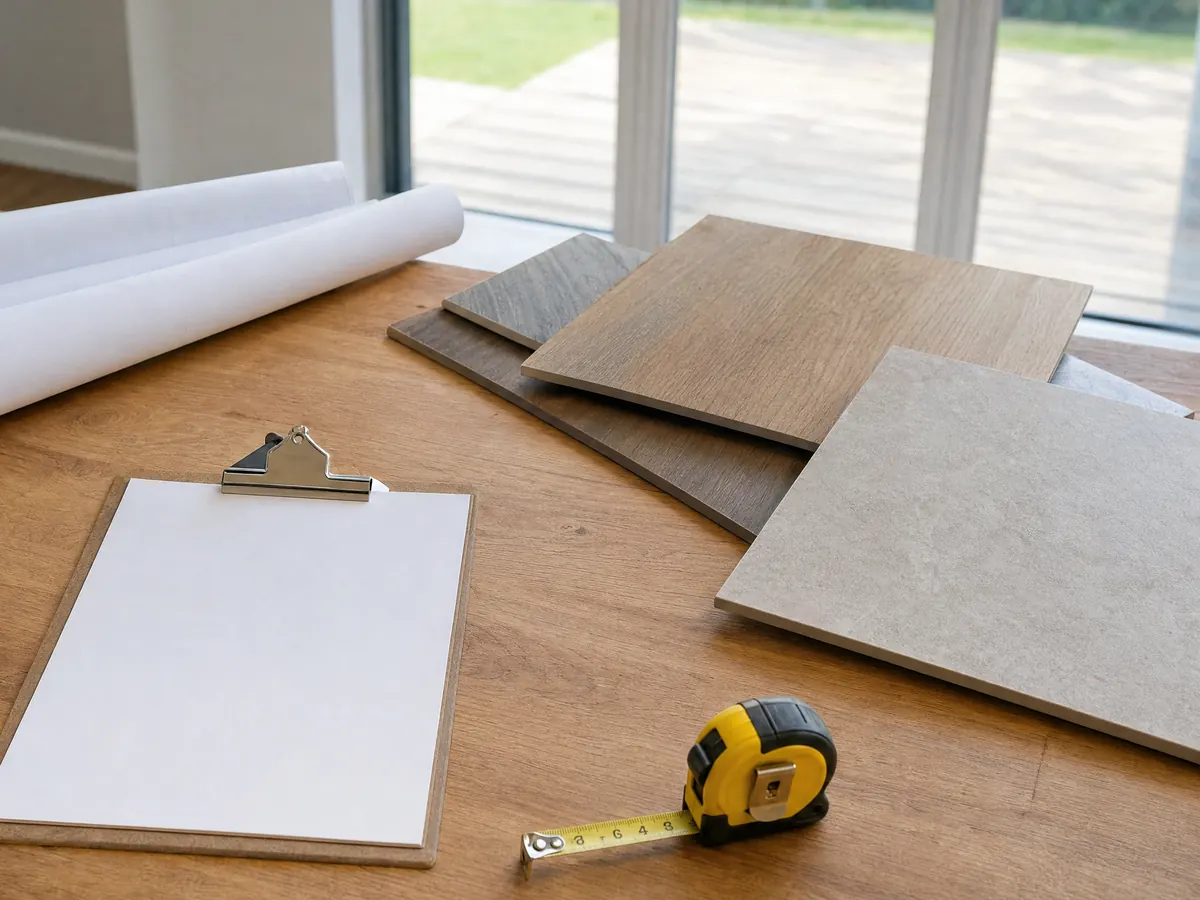
What is under a Lakewood floor built in the 1950s, and how do you tell a slab from a raised floor?
Start by counting layers. A 1950 press account of Lakewood Park, quoted on the City's history pages, describes inlaid linoleum in the kitchens and rubber tile in the bathrooms. Seven decades of owners have since added carpet, vinyl, laminate and tile, often on top of what was already there, so one Lakewood room can hold three floors stacked together.
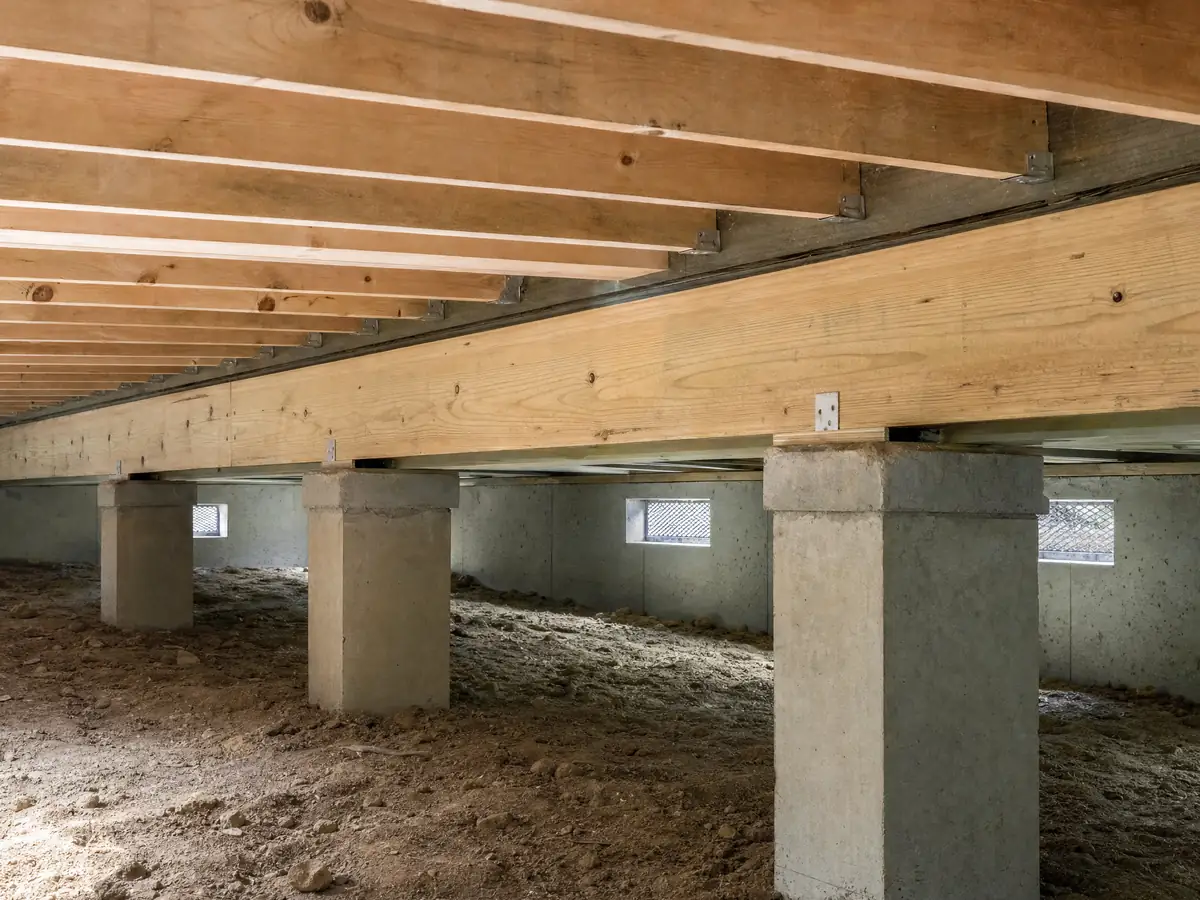
We cannot name one foundation type for the whole city. The Lakewood Park builders were turning out 40 to 60 houses a day, while the eastern neighborhoods across the San Gabriel River came from smaller developers between 1957 and 1963, each with its own designs. Vents low in the foundation wall, a hatch in a closet or a hollow knock underfoot suggest a crawlspace. If there is one, somebody should crawl it before material is ordered and report stains, soft spots and termite damage.
A quote that reads only remove existing flooring hides the layers, the glue and the repairs. Our flooring cost guide breaks those lines out the way a clear estimate should.
- How many layers are on this floor, and who lifted a corner to count them?
- Did anyone confirm whether this house has a slab or a crawlspace?
- Which repairs are priced apart from the new floor?
Could old tile, vinyl or painted trim in a Lakewood house contain asbestos or lead?
Possibly both, and a lab sample is the only proof. Under federal rules in 29 CFR 1926.1101, asphalt and vinyl flooring put down in 1980 or earlier is presumed to contain asbestos until tested, and sanding it is prohibited. Lakewood has 23,875 units from before 1980, so a great many floors here were laid in that window. Have the lab test the glue under old tile too, since it is a separate material.
Trim is the lead question. EPA's Renovation, Repair and Painting program applies to paid work in homes built before 1978, which takes in most of Lakewood. Under it a crew contains dust and cleans wet. Nobody should dry scrape a painted baseboard just so a new plank sits tighter.
None of the City pages we could open address asbestos surveys, so we cite no Lakewood rule on it. At bid time, settle three things in writing: who orders the sample, how many days the answer adds, and who carries the cost of abatement if it comes back positive.
How do Lakewood's flat flood plain and soft soils change slab testing before new flooring?
The City describes the land between the Los Angeles and San Gabriel rivers as so flat that the high-to-low difference across its 9.5 square miles is under four feet, and says water stood five feet deep on parts of the Montana Ranch in the 1914 storm. Los Angeles County's flood layers returned none of the 256 sample points we checked, but we could not confirm the FEMA map status of any lot, so check an address on the FEMA viewer. The County's State liquefaction layer covered 218 of the same 256 points, 85.2 percent, and a soils report is the only way to know one lot. Flooring does not trigger one.
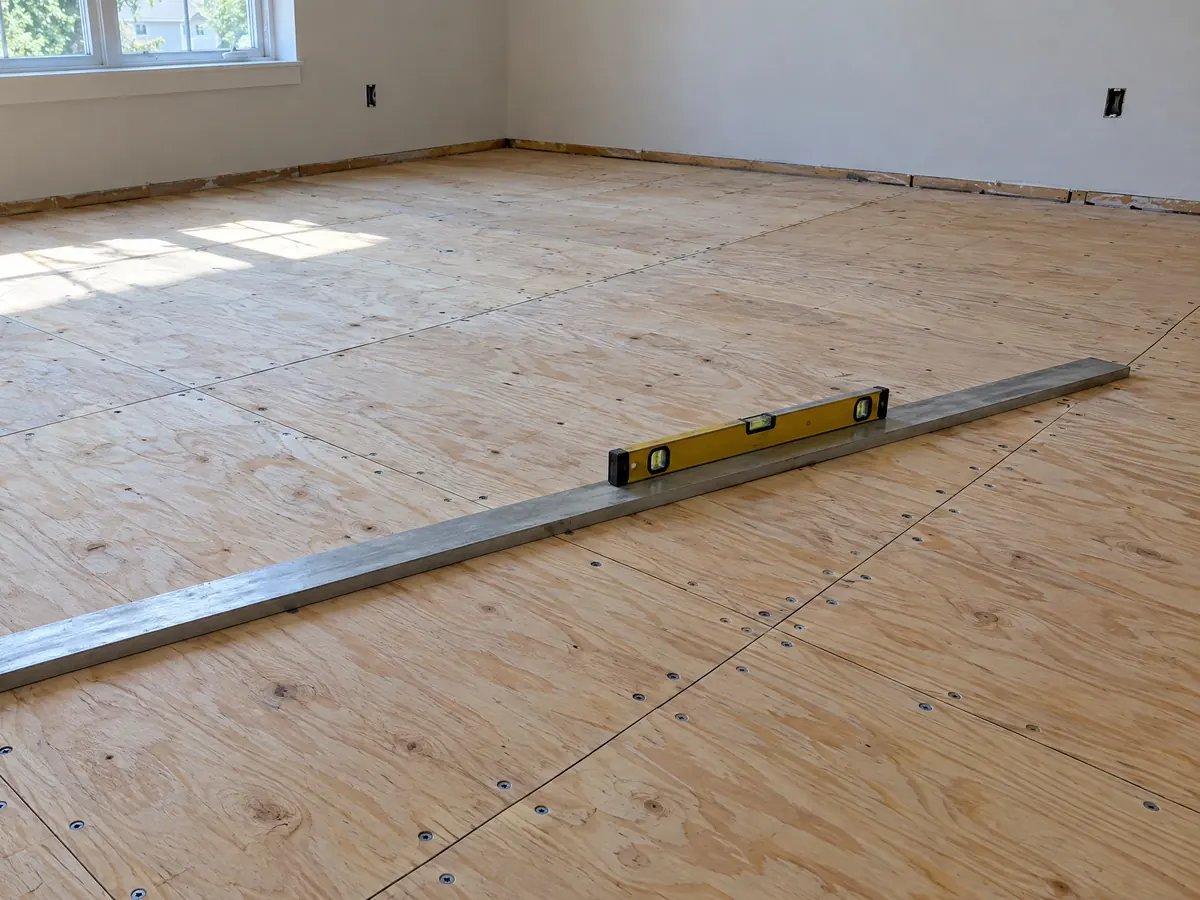
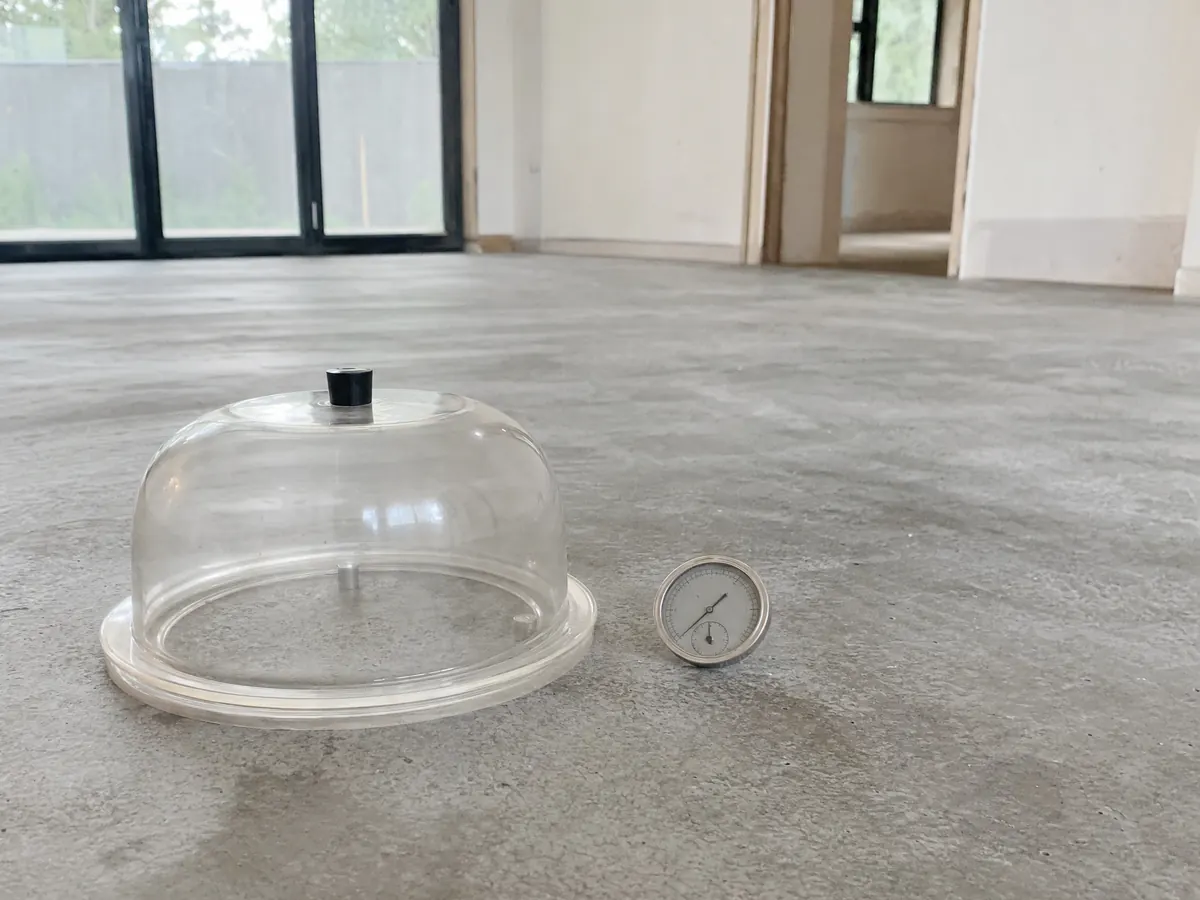
Under LMC 8110 and 8806, a new Lakewood slab goes over a membrane of at least 10 mils, is at least 4 inches thick and is reinforced, and where sulfates are present it takes Type V cement. Those lines govern new construction, so a 1957 slab may or may not have a membrane under it. Moisture tests answer that. ASTM F2170 sets humidity probes into the concrete, ASTM F1869 measures vapor emission with a calcium chloride kit, and the pass mark comes from the flooring maker. Wood-flooring trade guidance, in the National Wood Flooring Association's concrete subfloor paper, favors a retarder of 0.13 perms or lower, with 6-mil polyethylene as its example.
Can a Lakewood garage become a room, and what happens to its floor?
Yes, but the City attaches conditions that reach the floor. Lakewood's Homeowner Project Guide says a garage turned into a room, when it is not an accessory dwelling unit, must replace both covered parking spaces, and the new garage has to be built before the remodel starts. Build the parking first, then the room.
For a garage that becomes an ADU, LMC 9302.21a.D.10 says any sloped floor must be retrofitted flat with approved moisture barriers and meet the adopted building codes. Garage slabs are usually poured to shed water toward the door, so a flat living floor means leveling compound, a topping or a built-up subfloor, plus a barrier. Residential ADUs also go through ministerial staff design review under the City's Administrative Manual for Residential Development, a PDF we did not read.
For the order of steps in general, our garage conversion guide helps, though it was written for Los Angeles and Lakewood's rules come from its own code.
Does a flooring job in Lakewood need a permit, and when may the crew work?
The pages we read do not say whether floor covering alone needs one. The City's rehab-loan page lists flooring repair among eligible improvements without naming a permit. Its Home and Property Improvements page sends non-structural kitchen and bathroom upgrades to permitting and interior remodels with structural changes to plan check, so a floor laid with new cabinets or opened framing is a permitted job. Call Building and Safety at 562-866-9771, extension 2350. City Hall closes on alternate Fridays, and the City's own pages post different counter hours.
Which code edition applies is also unsettled. LMC 8100 and 8800 adopt the 2025 California Building and Residential Codes, amended by Ordinance 2025-2 on November 11, 2025, while the City's zoning page says Lakewood adopted the Los Angeles County codes. Ask which governs your permit. We read no PDF the City links, so these rules rest on the Municipal Code and its web pages.
Noise limits sit in LMC 8019: crews may work between 7 a.m. and 7 p.m. Monday through Saturday, never on Sundays or Council holidays, and owners doing their own work are exempt. A permitted tear-out can also need a Debris Recovery Plan filed through GreenHalo, and the City names EDCO as the only franchise hauler.
Who has to approve new hard flooring in a Lakewood apartment, condo or rental?
Whoever owns the unit or governs the building, well before the City gets involved. Of Lakewood's 26,230 households, 7,508 rent (28.6 percent), and 13.5 percent of its housing units sit in buildings of five or more. A tenant needs the landlord's written consent before a single plank comes up, and the lease says who restores the floor at move-out.
Condo owners should read the association's rules before drawing anything. Civil Code section 4765 tells an association how to process an owner's request to alter the unit, with a written decision and a route to reconsideration. A Davis-Stirling page on hardwood floors says the governing documents and on-site sound testing decide what may go above a neighbor. Sources disagree on the numeric rating, so none is printed here.
Single-family owners in older tracts have a different question. The City says Lakewood Gardens, begun in 1946 with slightly fewer than 500 homes, has one of California's oldest homeowner associations, so ask whether your tract has one before you order planks.
What does a flooring contractor charge in Lakewood, and which license class applies?
No Lakewood price study with a stated method turned up, so the numbers below come from Angi's 2026 Los Angeles pages, and we call their reliability medium to low. Installation labor is $3 to $9 per square foot, engineered hardwood $10 to $18 installed, solid hardwood $12 to $22, refinishing $4 to $8. Picture a 300 square foot bedroom wing: engineered wood multiplies to $3,000 to $5,400 and refinishing to $1,200 to $2,400. Those are calculations, not a bid. Angi's laminate page prices old-floor removal at $455 to $685 per 200 square feet, so 300 square feet scales to roughly $680 to $1,030.
Add subfloor repair, lab work, stairs and moisture barriers. For labor context, federal wage data (BLS, May 2025) show floor layers in the Los Angeles-Long Beach-Anaheim area averaging $33.48 an hour, a wage and not a billing rate. Lakewood's Housing division also offers low-income owner-occupants of single-family homes a zero-interest, deferred-payment rehab loan of up to $35,000, and flooring repair qualifies. Money is limited and first come, first served, so ask early.
On licensing, the state's C-15 flooring class handles carpet, resilient and wood installs, and tile belongs to C-54. Our license check guide walks through the lookup for either number.
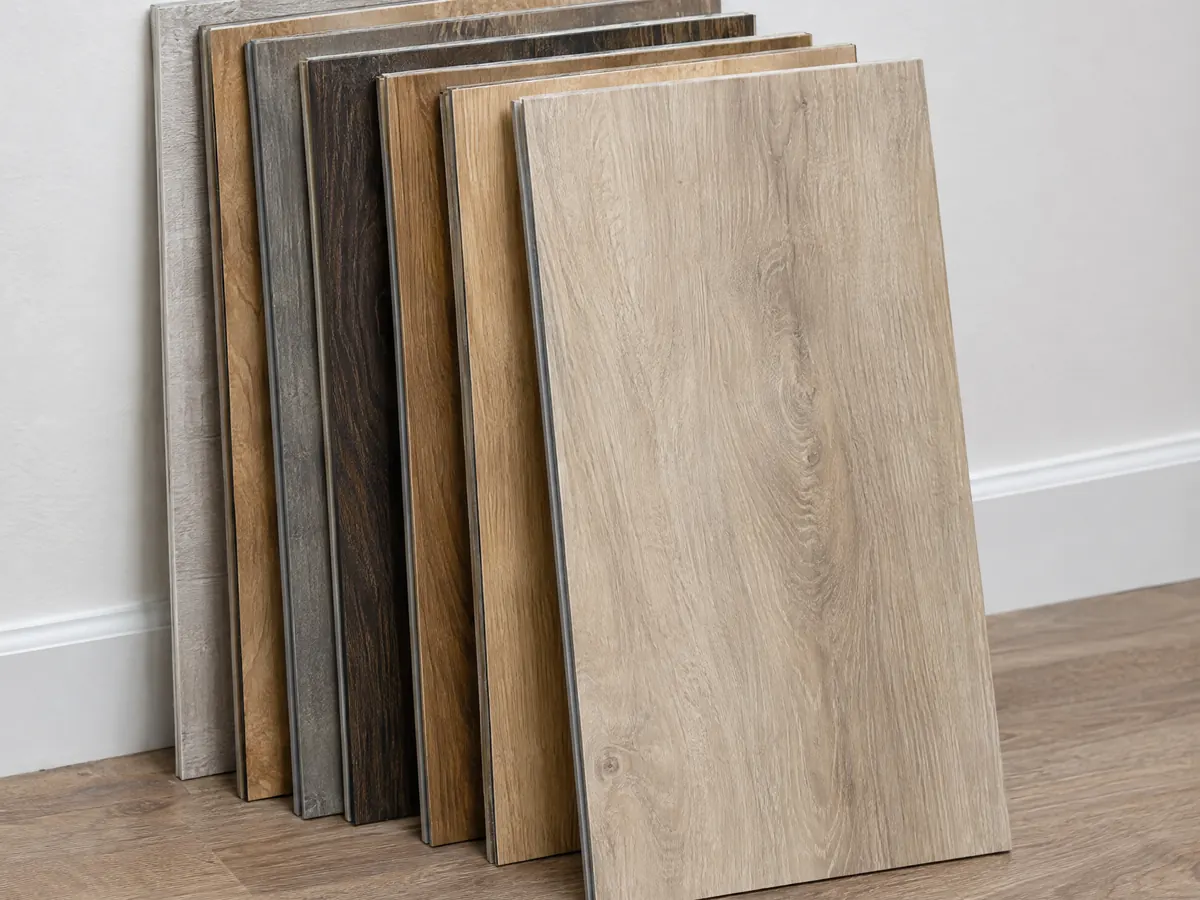
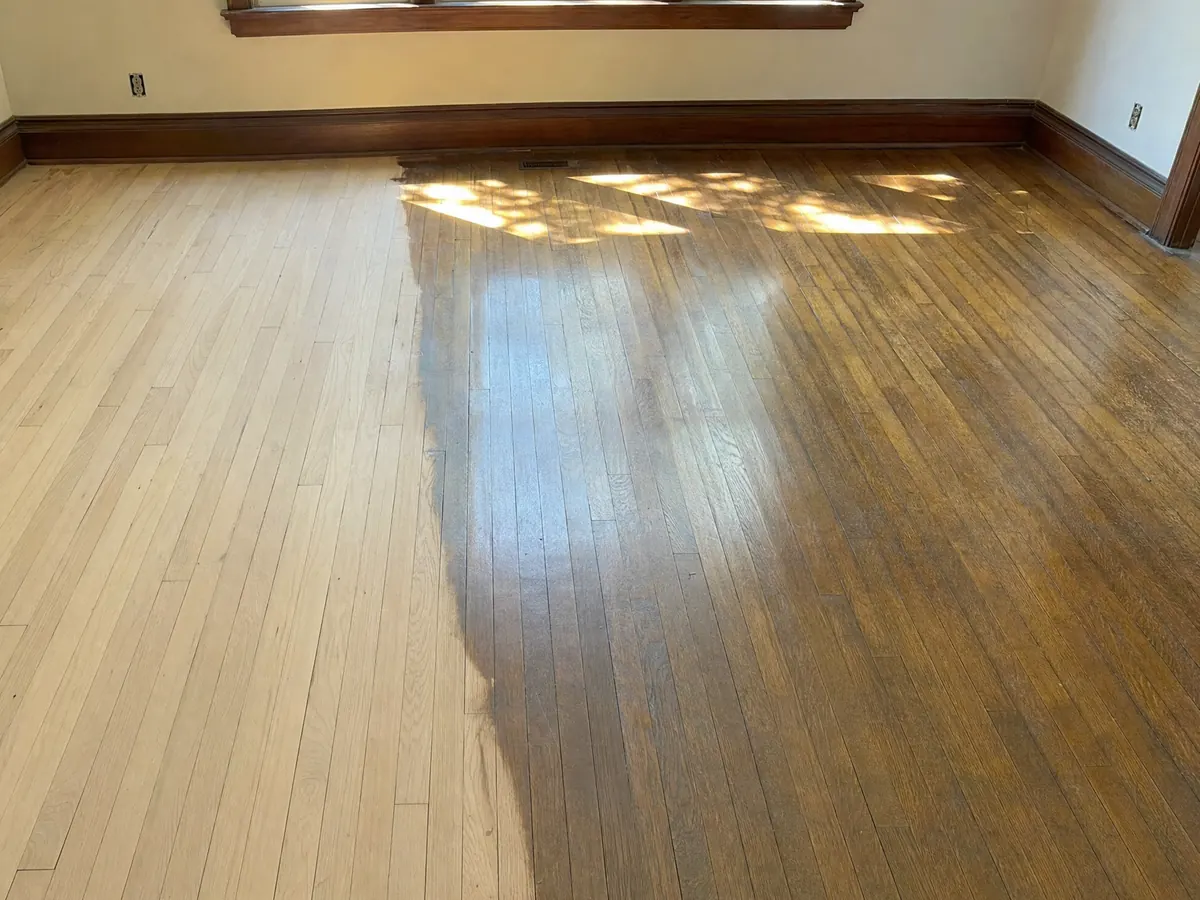
Flooring photos from Lakewood and nearby communities
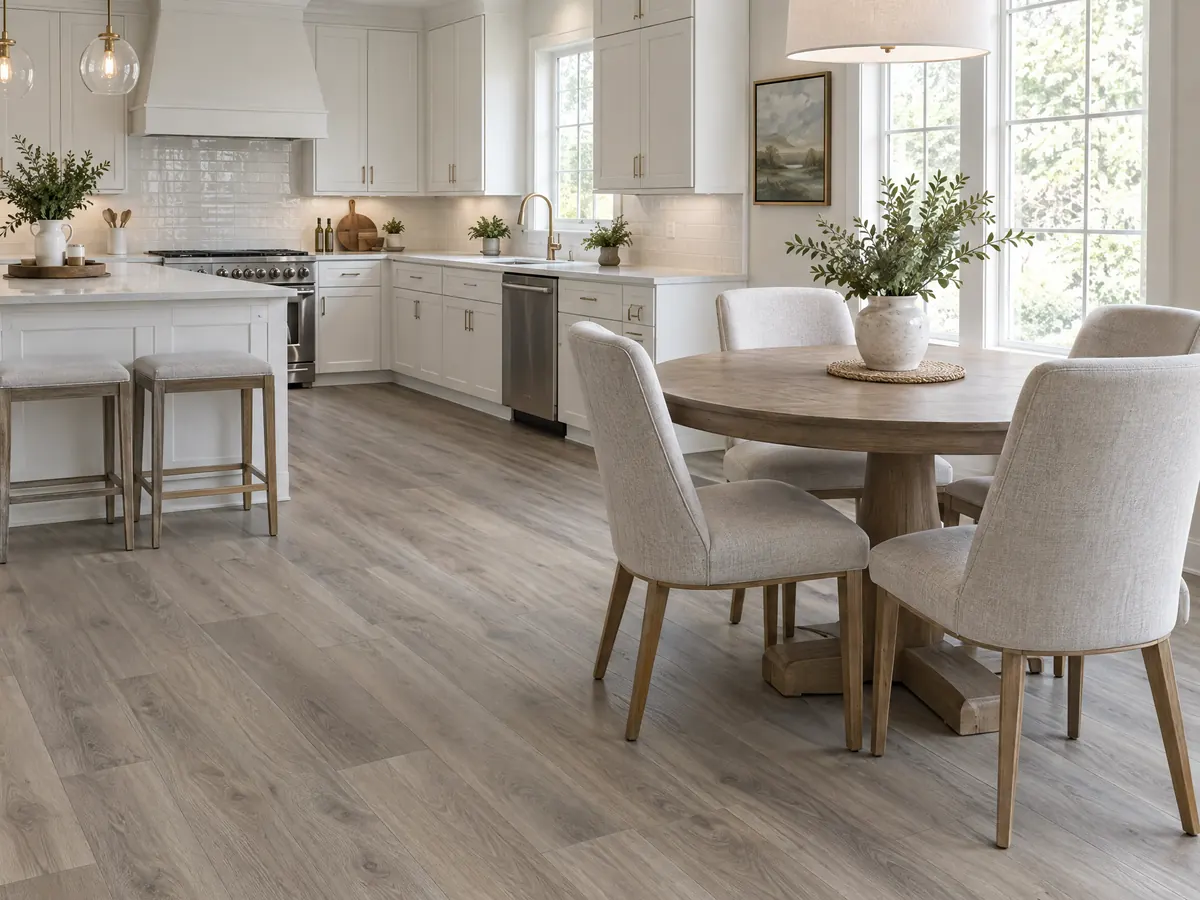
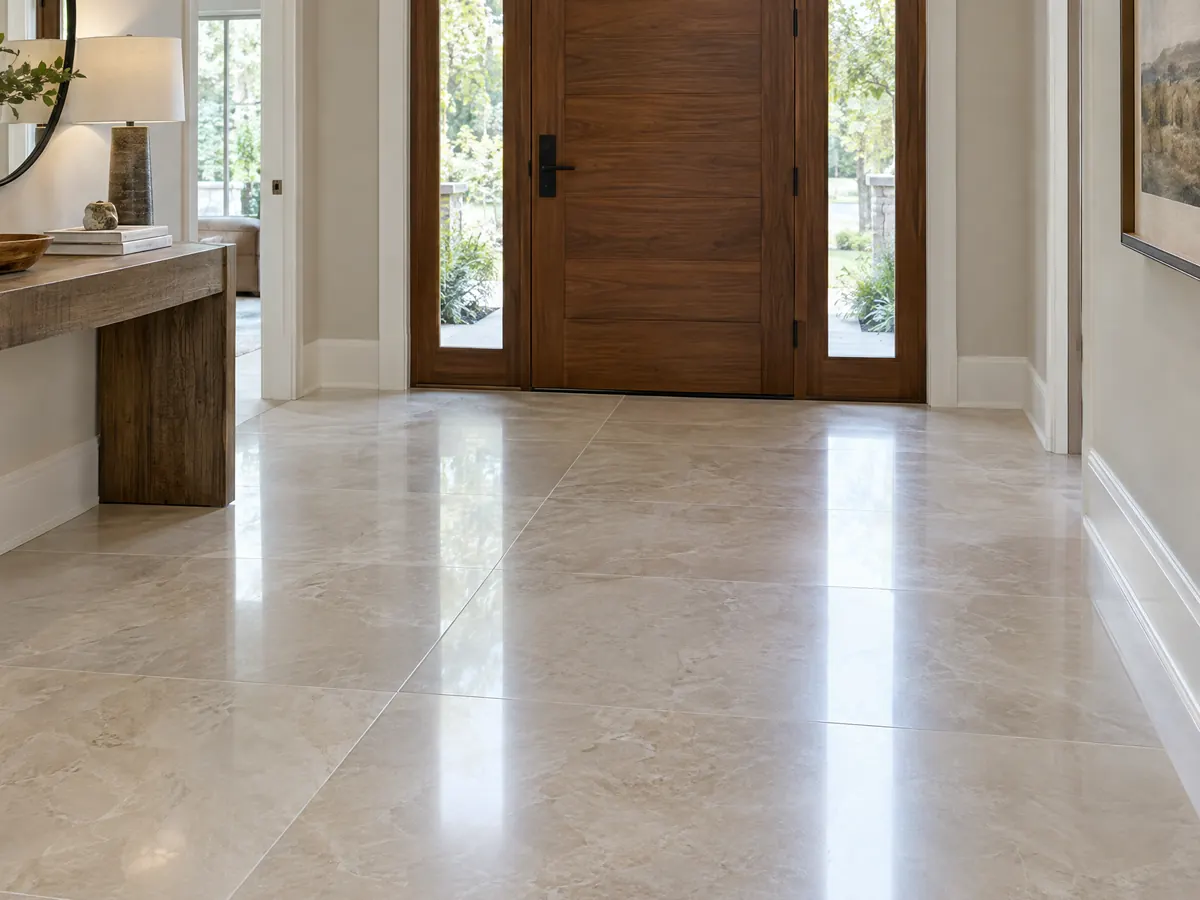
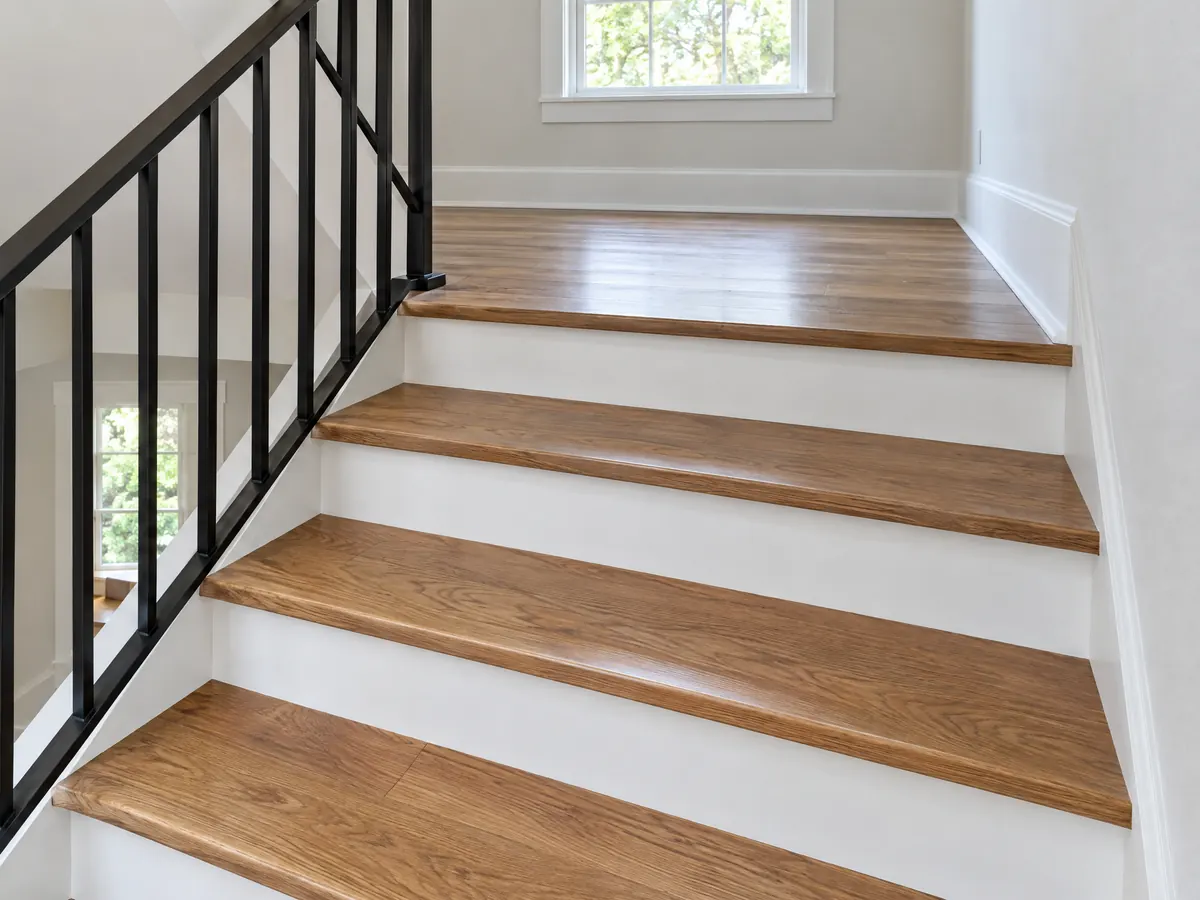
Floors from Lakewood and the towns beside it, shown from raised framing and moisture kits through finished plank and tile. Tap any photo to see it larger.
What flooring costs around Lakewood
Dollar figures on this page are the Los Angeles ranges from our flooring page and not a Lakewood quote. Our subcontractor guide shows who does what between us and the installer. Nearby pages: flooring in Norwalk, flooring in Long Beach, flooring in Downey, flooring in Los Angeles, concrete work in Lakewood and decks in Lakewood.
| What it covers | Typical range |
|---|---|
| Installation labor only | $3 to $9 per sq ft |
| Solid hardwood, installed | $12 to $22 per sq ft |
| Engineered hardwood, installed | $10 to $18 per sq ft |
| Refinishing existing hardwood | $4 to $8 per sq ft |
| Laminate, whole project | $2,000 to $5,500 |
| Hardwood, whole project | $3,153 to $8,496 |
| Removing the old floor | $455 to $685 per 200 sq ft |
| Tile | No sourced Los Angeles range |
Lakewood flooring questions, answered
Do I need a permit to replace flooring in Lakewood?
The City pages we read do not say, so ask Building and Safety at 562-866-9771, extension 2350. A floor laid during a kitchen or bathroom remodel, or over opened framing, belongs to a permitted job, and structural interior work goes to plan check. Anything built without a required permit needs a miscellaneous permit, which allows a one-time inspection only.
How much does it cost to have flooring professionally installed in Lakewood?
On Angi's 2026 Los Angeles figures, labor is about $3 to $9 per square foot, engineered hardwood $10 to $18 installed and solid hardwood $12 to $22. No Lakewood study with a stated method exists that we could find, so confidence is medium to low. Removing the old floor, repairing the subfloor and lab tests cost extra.
How much to refloor a 1,200 square foot house in Lakewood?
Engineered hardwood at $10 to $18 installed comes to about $12,000 to $21,600 for 1,200 square feet, and labor alone at $3 to $9 is $3,600 to $10,800. Those totals multiply Angi's Los Angeles ranges and are not a quote. Demolition, subfloor repairs and stairs sit outside them, and only a site visit fixes the real number.
Can you put flooring over concrete in a Lakewood house?
Yes, after the slab passes a moisture test and the surface is made flat. The flooring and adhesive makers set the limits, so the installer should run ASTM F2170 probes or an ASTM F1869 kit, lay a vapor barrier where the product calls for one. A crack with one edge higher than the other needs repair before anything goes over it.
Why does moisture come through a concrete floor in Lakewood?
Vapor rises from the soil beneath the slab, and concrete is porous. The City describes Lakewood as a flat plain where water once stood five feet deep, and NOAA normals show about 81 percent of its 12 inches of yearly rain falling from December through March. Leaky downspouts and planters beside a wall add more. A test gives the actual level.
Is there asbestos under old flooring in a Lakewood house built before 1980?
It can be, and appearance will not tell you. Federal rules presume that asphalt and vinyl flooring installed in 1980 or earlier contains asbestos, and 88.9 percent of Lakewood's housing units predate 1980. Send a sample of the tile and the adhesive to a lab before any sanding or scraping. The City pages we read set no separate survey rule.
What license does a flooring contractor need in Lakewood?
A C-15 license covers carpet, resilient and wood flooring, and C-54 covers ceramic and stone tile, unless the entire job is $1,000 or less and needs no permit. Lakewood issues building permits to licensed Class B and Class C contractors and to qualifying owner-builders. State law limits a down payment to $1,000 or 10 percent of the price, whichever is smaller.
Can I put new flooring in my garage when I convert it to a room?
Only inside a conversion the City accepts. A garage turned into a non-ADU room must first be replaced by two covered parking spaces. An ADU conversion must retrofit a sloped floor flat, with approved moisture barriers, under LMC 9302.21a.D.10. Plan on leveling compound or a built-up subfloor before the finish floor goes down.
Can I install hard flooring in a Lakewood condo or apartment?
Only after the owner or association says yes. Association documents and on-site sound tests govern hard floors above another unit, and Civil Code section 4765 sets how a board must answer a change request. A tenant needs the landlord's written permission. Confirm underlayment, delivery rules and allowed hours in writing before you order.
What hours can a flooring crew work in Lakewood?
Under LMC 8019, crews may work 7:00 a.m. to 7:00 p.m. Monday through Saturday, with no work on Sundays or Council holidays. The Director may extend hours after written notice to neighbors, and owners and family doing their own work are exempt. City Hall closes on alternate Fridays, so phone first when you need a permit question answered.
Tell us the rooms and what is on the floor now
Give us the address, the rooms and the year the house went up, and say whether you have seen a slab or a crawlspace. We arrive with a moisture kit and a list of questions about the old tile.