
Fence Companyin Long Beach, CA
A fence company in Long Beach starts with Planning, not the building permit: the City reviews the location, height and material of every fence, even where none is needed. Fence installation is capped at 3 feet in a front yard and 6 feet 6 inches elsewhere, and masonry walls over 4 feet need a permit.
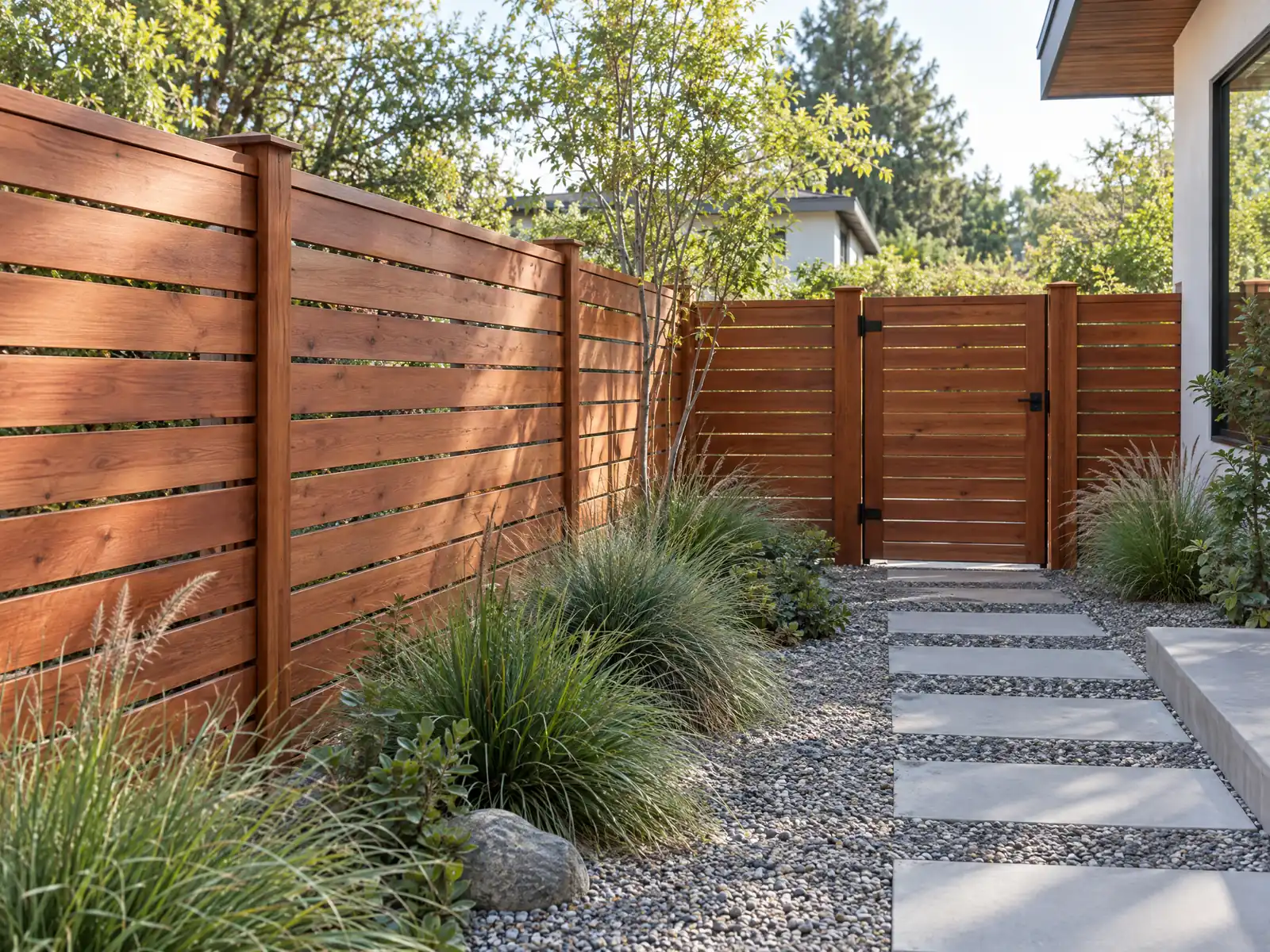
Long Beach fences stand on lots with unusual neighbors. The Census Bureau's ACS 2024 estimates show only 40.1 percent of the city's housing units are detached houses, while 39.6 percent sit in buildings of five or more units, so the other side of a fence is often a different kind of property. The city's patchwork of neighborhoods dates from Willmore City's 1880 subdivision, the Alamitos Land Company's plats for Belmont Heights, Belmont Shore and Naples, and the 1916 sale of Rancho Los Cerritos land that became Bixby Knolls, California Heights, Los Cerritos and North Long Beach. Those subdivisions meet at alleys, corners and shared lines, and each meeting point has its own rule.
The rules are short but strict. On a fence job, MDG Builders (CSLB #1040337) reads the City's bulletins against your lot, makes the Planning request and any permit application, and schedules the work, while a licensed fencing subcontractor builds and a masonry contractor takes any block wall. The fencing price page holds the sourced cost table. If the fence is part of a larger exterior job, neighboring cities have their own guides for Los Angeles, Glendale and Pasadena.
What Long Beach's Planning Bureau and Permit Center say about fences
Where fencing permits come from in Long Beach: City of Long Beach Community Development Department.
- The Residential Fence and Garden Walls bulletin (BU-041, revised 05-25-2018) says the Planning Bureau's review and approval is required in all cases for the location, height and material of a fence or garden wall, even where no building permit is needed.
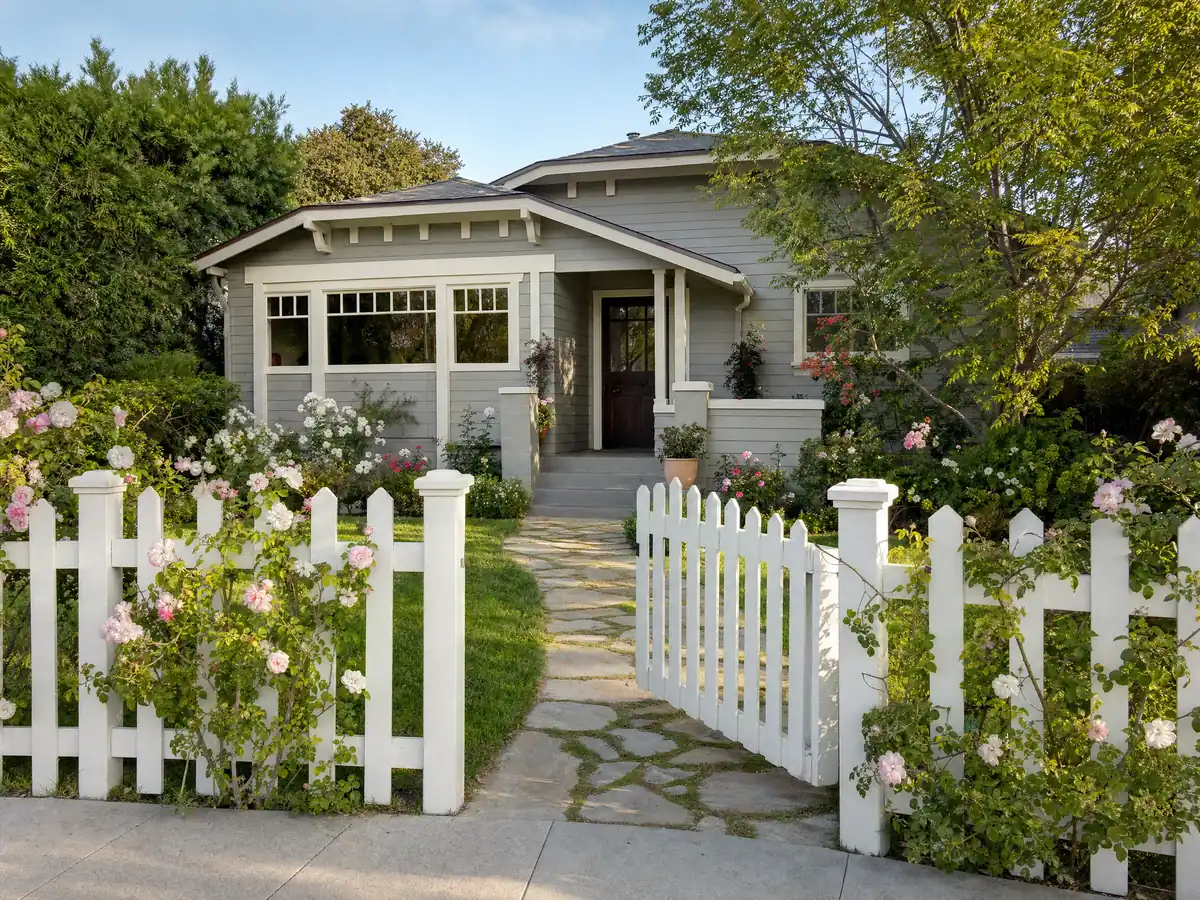
- BU-041 sets maximum fence and garden wall heights from Municipal Code Table 43-1 as 3 feet in a residential front yard, 6 feet 6 inches in other yard areas, 10 feet outside the required yard area, and 8 feet abutting a nonresidential area, an alley, or a major arterial, with 3 feet in the corner cutoff area. In the City Council's special fence height area the front yard limit rises to 4 feet if the added foot is wrought iron or chain link, and a front yard fence above 3 feet may be approved by an administrative use permit in designated high crime areas.
- BU-041 says barbed wire or similar fencing capable of cutting or puncturing is prohibited in all residential zones (decorative wrought iron excepted), gates and fences cannot swing over public property, and a corner cutoff of at least 6 feet by 6 feet at street, driveway and alley intersections must stay clear of anything between 3 and 8 feet high.
- A building permit is required for new wood, chain link or wrought iron fences over 6 feet 6 inches, and for concrete, masonry or brick walls over 4 feet. A fence on a common property line needs a notarized Common Property Line Wall/Fence Agreement (Form-013) from both owners before permit issuance, and BU-041 tells owners to call 811 (DigAlert) before digging.
- The City's Fences and Walls page repeats that fences up to 6 feet 6 inches in wood, chain link or wrought iron and masonry walls up to 4 feet need no building permit, that taller ones need engineered drawings reviewed at the Development Permit Center, and that an electrical permit may be needed for lights or automatic gates.
- BU-041 states that fences and garden walls in historic districts or on historic landmarks need a Certificate of Appropriateness before a building permit is issued.
- The CMU block wall bulletin (IB-009, revised 01-24-2025) requires a building permit for block walls over 4 feet, says a 6-foot corner cutoff may be required beside driveways and sidewalks, and says a California-licensed registered design professional should be consulted where the site slopes more than 10 percent or has expansive soil, liquefaction or flood hazard.
Do I need a permit for a fence in Long Beach, or only Planning approval?
The two questions have separate answers. The City's Residential Fence and Garden Walls bulletin, BU-041, says the Planning Bureau's review and approval is required in all cases for the location, height and material of a fence or garden wall, even where no building permit is needed. The building permit is a second test: new wood, chain link or wrought iron fences over 6 feet 6 inches need one, and so do concrete, masonry or brick walls over 4 feet. The City's Fences and Walls page adds that taller work needs engineered drawings and that lights or an automatic gate may need an electrical permit.
Historic districts add a third approval. BU-041 says fences and garden walls on a landmark or in one of the 18 historic districts need a Certificate of Appropriateness before a building permit is issued. We have not seen the City's district maps, so ask the Permit Center or Planning whether the address is inside one.
BU-041 also tells owners to call 811, DigAlert, before digging. Its text was revised May 25, 2018, and we could not open Title 21 of the Municipal Code, so ask Planning to confirm the current table.
Get Planning's answer in writing before the fence is ordered, because the review applies even when the building permit does not.
How tall can a fence be in a Long Beach front yard, side yard or backyard?
The height a fence may reach in Long Beach depends on where on the lot it stands, and corner lots take the most care. At street, driveway and alley intersections a corner cutoff of at least 6 feet by 6 feet must stay clear of anything between 3 and 8 feet high, and fences inside the cutoff area are held to 3 feet.
Two exceptions matter on the street side. In the City Council's special fence height area the front yard limit rises to 4 feet if the added foot is wrought iron or chain link, and a front yard fence above 3 feet may be approved through an administrative use permit in designated high crime areas. We could not find a map of either area, so ask Planning to confirm which applies to your street.
BU-041 takes its maximums from Municipal Code Table 43-1, and they read:
- Residential front yard: 3 feet
- Other yard areas: 6 feet 6 inches
- Outside the required yard area: 10 feet
- Abutting a nonresidential area, an alley or a major arterial: 8 feet
- Corner cutoff area: 3 feet
What are the rules for a block wall or garden wall in Long Beach?
A wall reaches the permit threshold sooner than a fence does. The City's CMU block wall bulletin, IB-009, revised January 24, 2025, requires a permit for block walls over 4 feet and says a 6 foot corner cutoff may be needed beside driveways and sidewalks. It tells owners to consult a California-licensed registered design professional where the site slopes more than 10 percent or has expansive soil, liquefaction or flood hazard.
Liquefaction is the Long Beach part of that sentence. The Los Angeles County hazard layer, which carries the State's liquefaction zone for the Long Beach quadrangle released March 25, 1999, covers parts of the city, including points we checked in Belmont Shore, North Long Beach and Wrigley but not downtown, Bixby Knolls or Naples. That is a point sample and not a parcel map, so ask the designer to check your lot.
CSLB's fencing class, C-13, excludes masonry walls, so a block wall goes to a masonry contractor.
What should a Long Beach fence plan say about gates, pool barriers and wind?
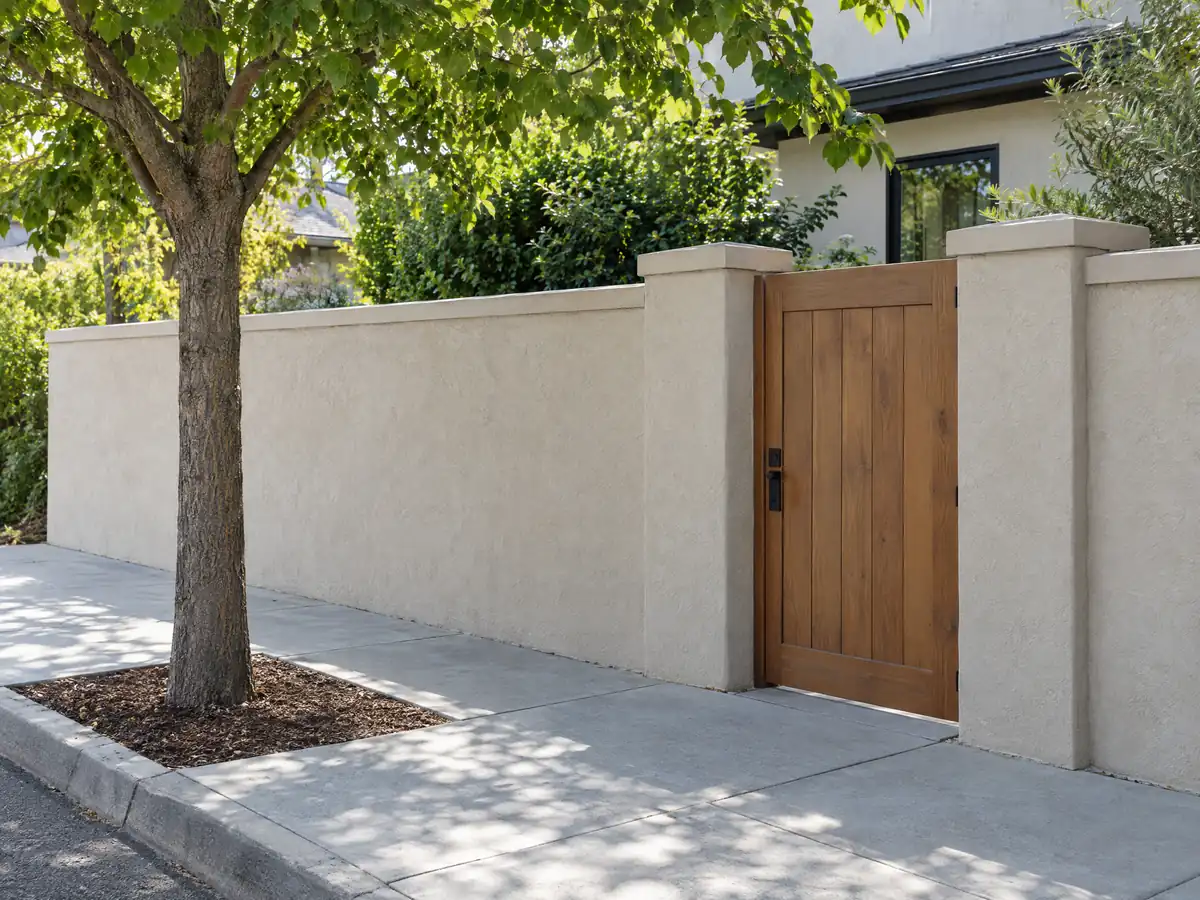
Gates and fences cannot swing over public property under BU-041, so a driveway gate has to open inward or slide. Barbed wire and any fencing capable of cutting or puncturing is prohibited in all residential zones, with decorative wrought iron excepted.
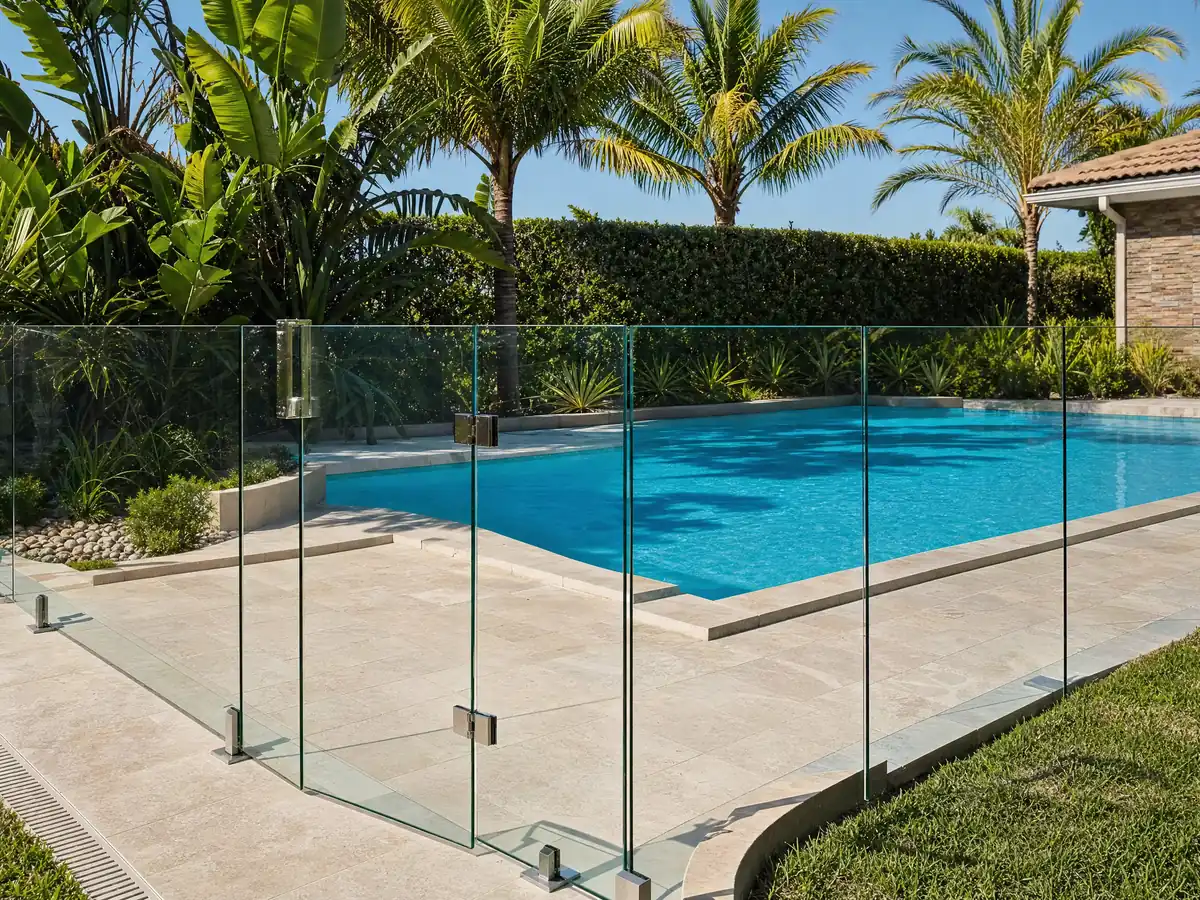
Pool barriers come from the State as well as the City. Health and Safety Code section 115922 requires a new or remodeled pool to have at least two of seven drowning-prevention features, with an enclosure that meets section 115923. We did not read 115923 and found no Long Beach pool barrier page, so ask the Permit Center for the barrier height and latch rules before you design.
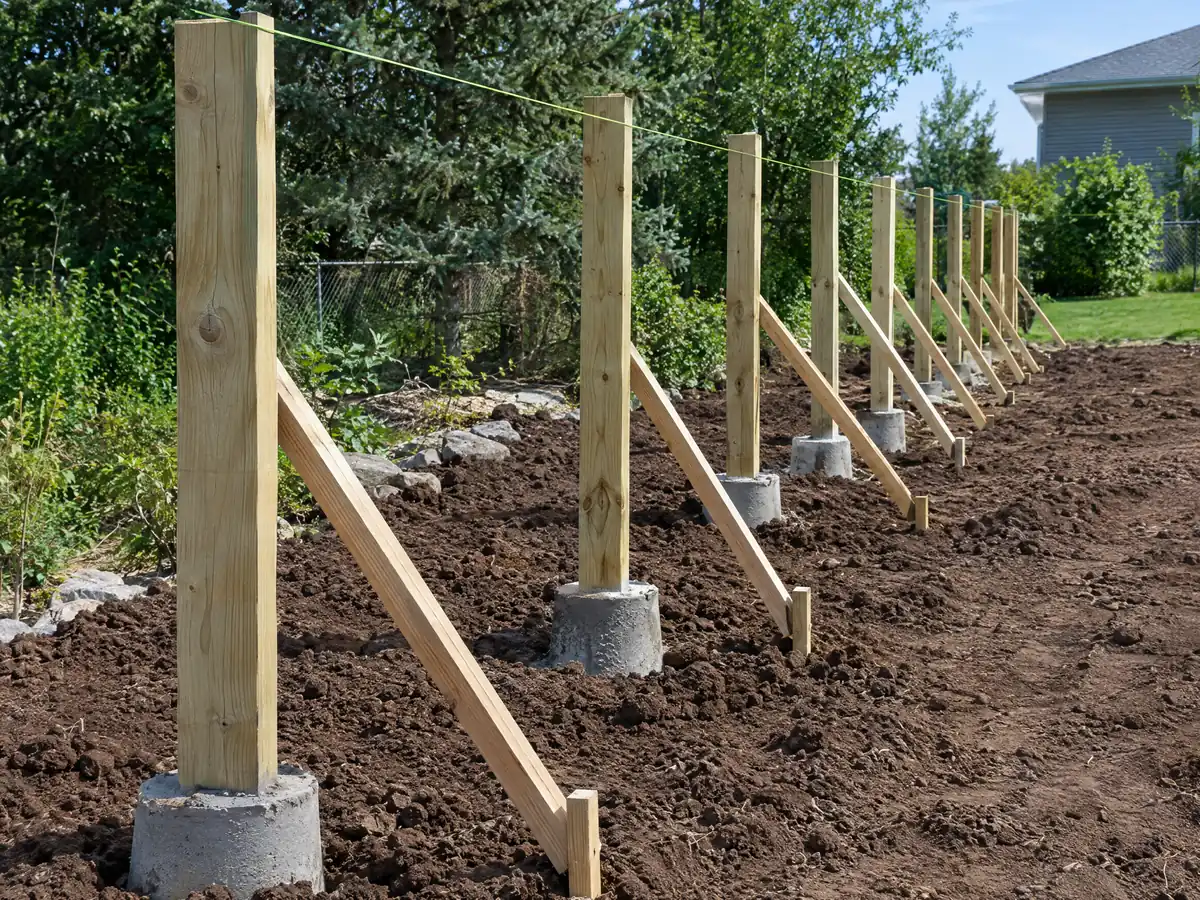
Wind is the last plan item. The City's design wind speed is 95 mph, and the National Weather Service forecast Santa Ana gusts of 35 to 55 mph for valleys and the coast in October 2026. Solid panels catch wind like a sail, so ask how deep the posts are set, what the footings are made of and whether panels are solid or slatted. We found no Long Beach rule that sets post depth for an ordinary fence.
Who pays for a shared fence in Long Beach, and what is Form-013?
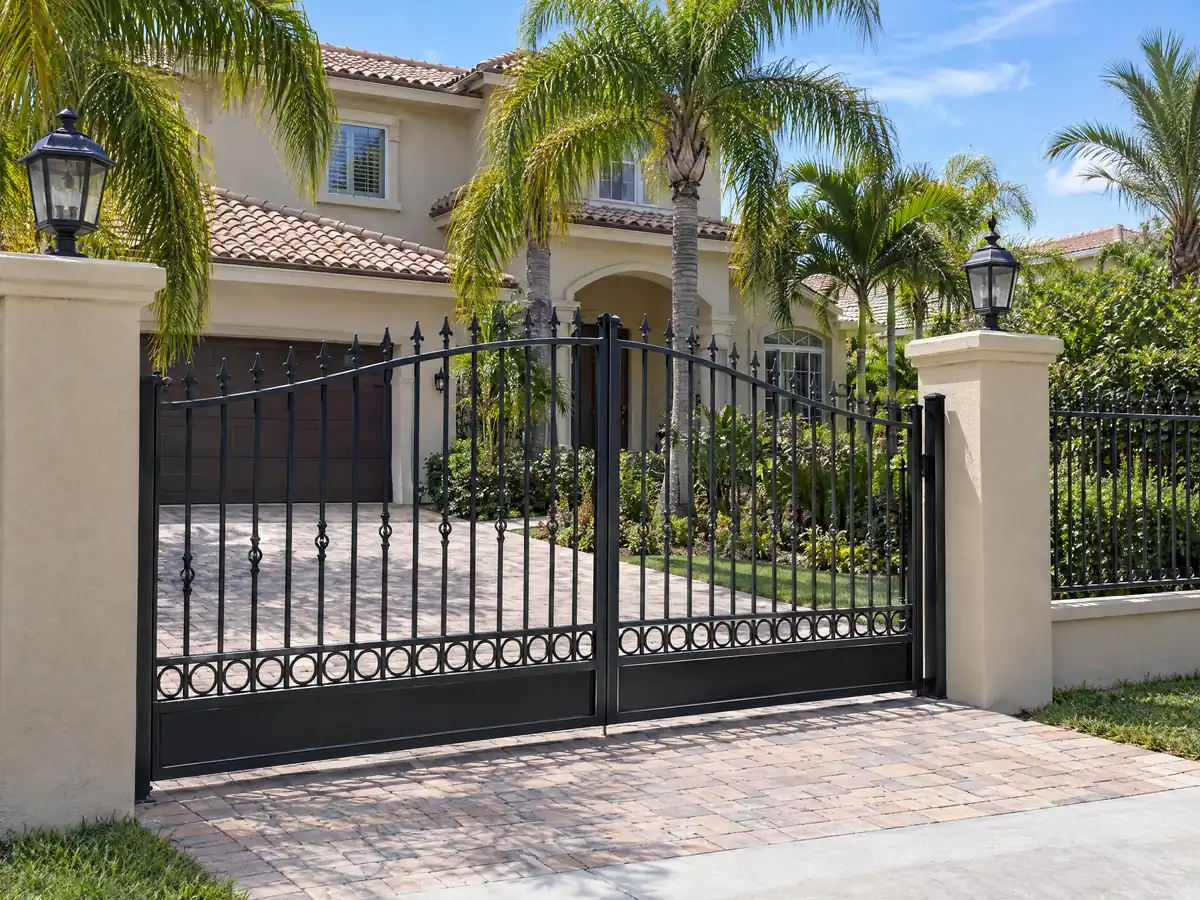
A fence on a common property line needs a notarized Common Property Line Wall/Fence Agreement, Form-013, signed by both owners before the permit is issued, according to BU-041. It sits on top of California Civil Code section 841, which presumes adjoining owners share the reasonable cost of a boundary fence equally unless they agreed otherwise. A neighbor can rebut that presumption, and the statute asks for 30 days' written notice before you incur costs.
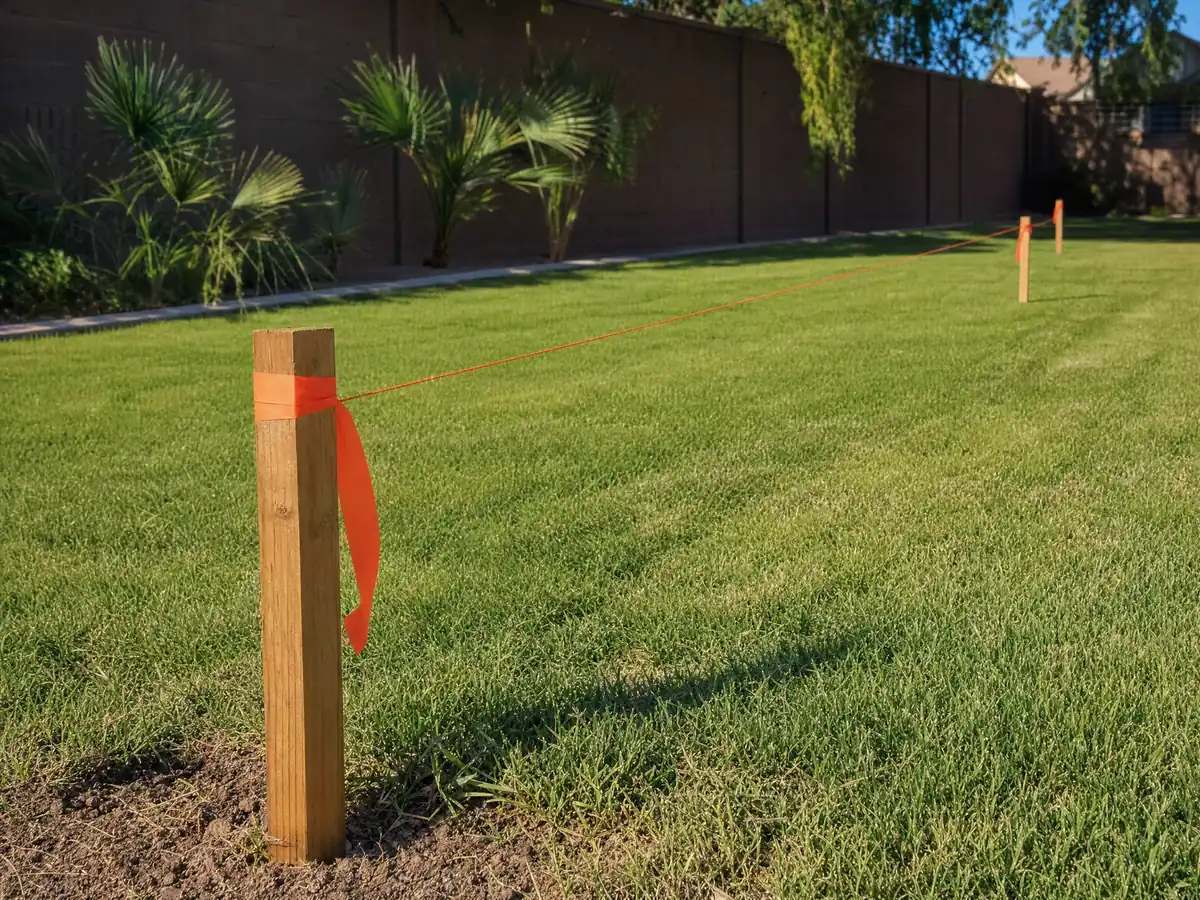
Many Long Beach lots were platted between 1880 and the 1916 breakup of Rancho Los Cerritos, so line markers can be old. A survey before the posts go in costs less than moving a fence afterward, and the survey should be in hand when you send the neighbor notice.
How much does fence installation cost in Long Beach, and which material fits?
We found no Long Beach fence survey, so this page prints no Long Beach price. Planning ranges for Los Angeles, drawn from Angi, HomeGuide, Thumbtack and Fixr, run $25 to $55 per linear foot for a 6 foot wood or vinyl privacy fence, $12 to $30 for chain link and $35 to $85 for aluminum or ornamental iron. That puts a typical 100 foot backyard run near $2,500 to $5,500. Angi's Los Angeles page alone shows a $3,051 average and a $1,734 to $4,422 range.
For a labor check, federal wage data for May 2025 lists fence erectors in the Los Angeles-Long Beach-Anaheim area at a mean $28.00 an hour. That is a wage, not a billing rate. Block walls, horizontal slat fences and gates with openers have no independent price, so the written proposal sets them.
Termites are a real material factor: the University of California's pest program says drywood termites are most common in southern California and attack fences, which makes concrete footers or termite-resistant wood a fair question for any bidder.
How do I hire a fence contractor in Long Beach?
Look up the CSLB number before you compare prices, using our guide to checking a contractor's license. Work that needs a permit can never be done under the $1,000 unlicensed limit, and a signed written contract under Business and Professions Code 7159 caps the down payment at $1,000 or 10 percent, whichever is less. On a project we manage, the fencing subcontractor's license number and certificate of insurance are yours to ask for, and our article on how general contractors use subcontractors explains the split. Put these to every bidder:
- Who files the Planning request, the permit and Form-013?
- Does the bid show footage, height, gates and removal of the old fence as separate lines?
- What is the post spacing and footing depth for a lot exposed to coastal wind?
- Is a block wall in the bid, and who holds the masonry license?
- Who calls 811 before digging?
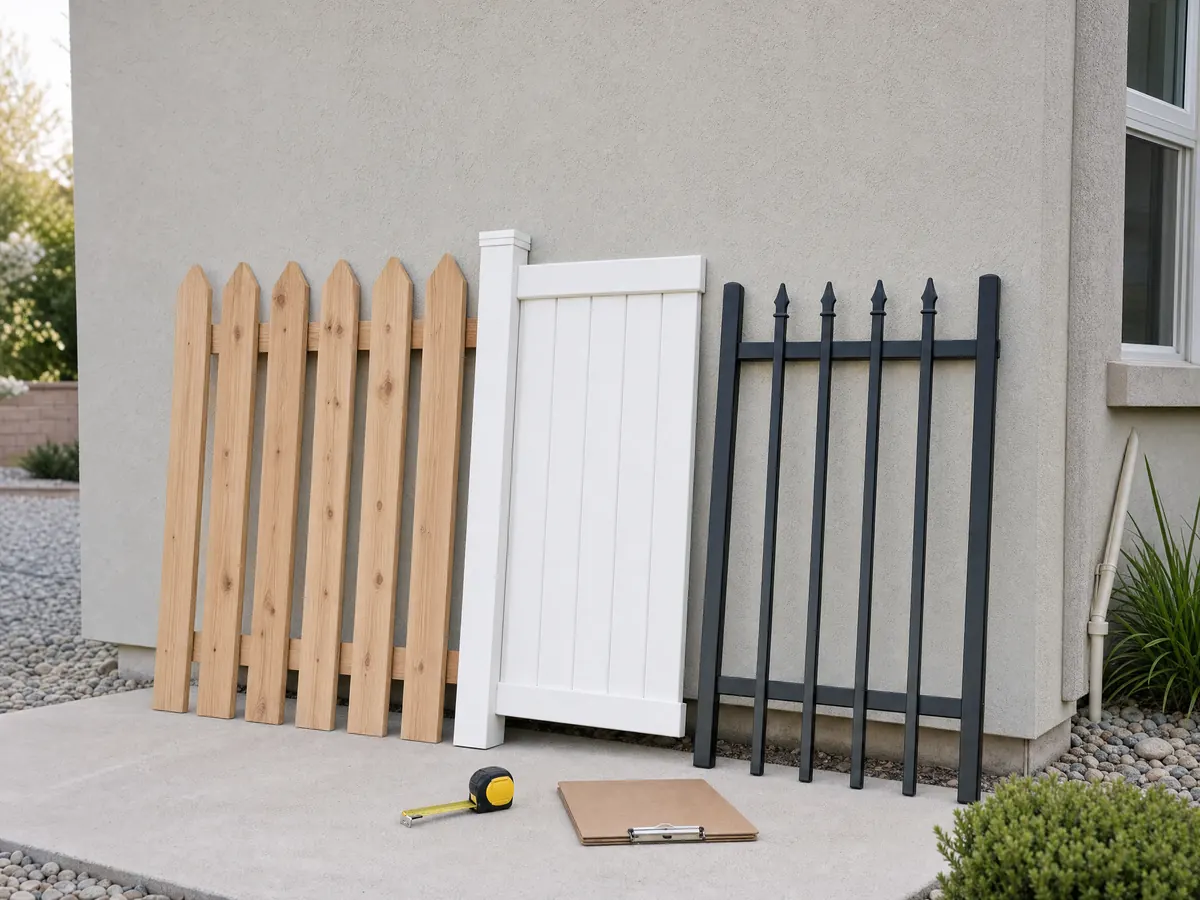
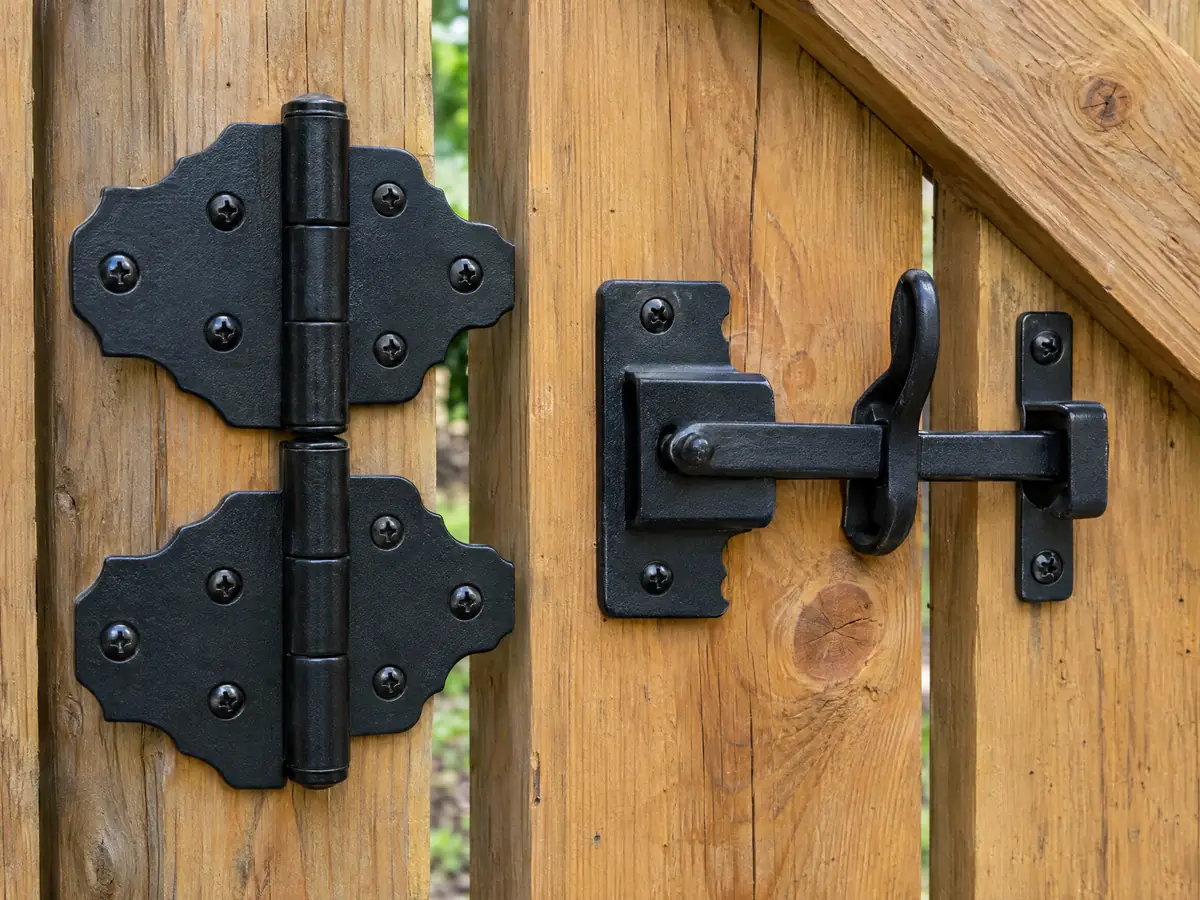
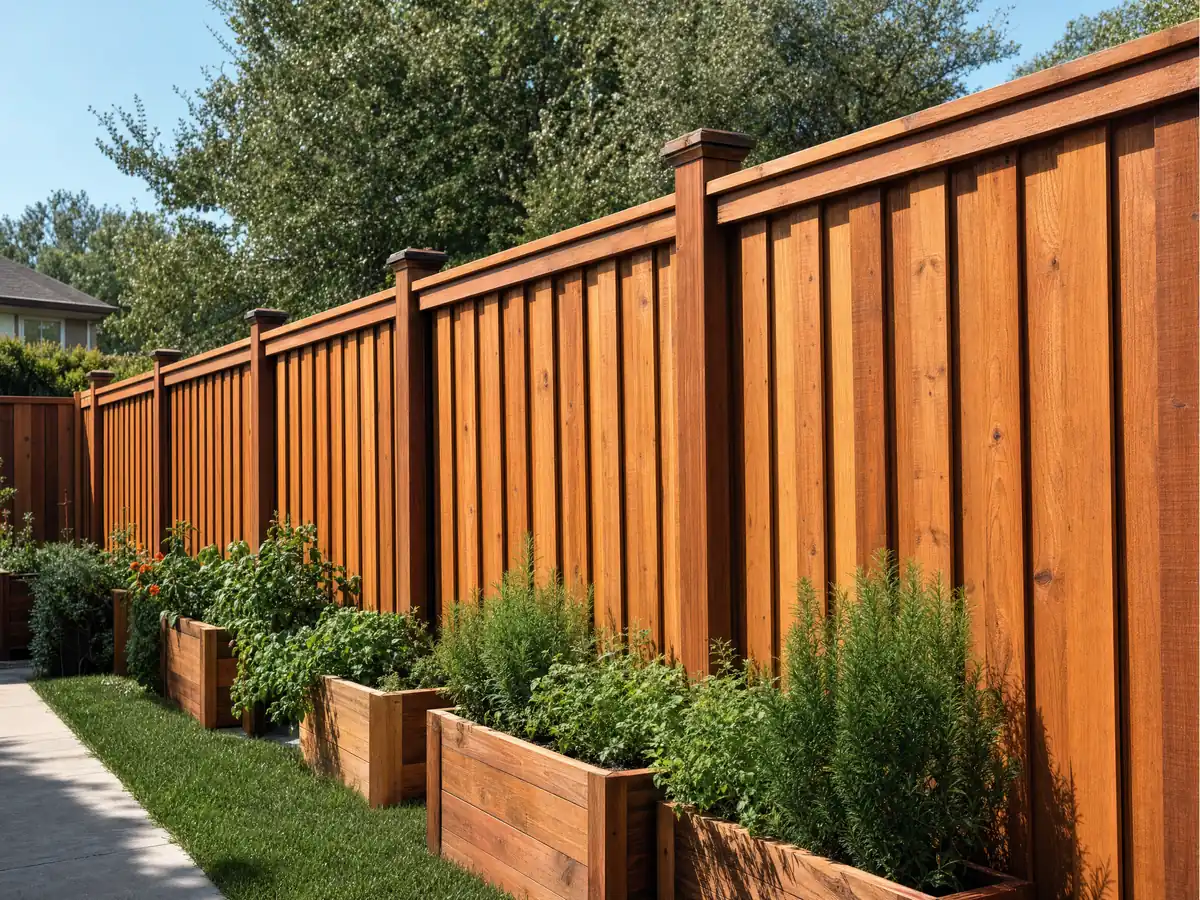
Fence and gate photos from Long Beach and nearby communities
Six fence scenes tied to neighborhoods such as Belmont Shore, Naples and Rose Park and to nearby communities like Seal Beach and Bellflower, from wood privacy runs to block walls and metal gates.
Where the Long Beach fence numbers come from
Every per-foot figure above is a Los Angeles number, and the sources and dates are in the table on our fencing cost page. Permit fees are not part of them. A new fence often goes in after a re-roof or a repaint, and the Long Beach rules for those are on the roofing page and the painting page, with the rest of our local work on the Long Beach overview.
| What it covers | Typical range |
|---|---|
| Wood or vinyl privacy fence, 6 feet | $25 to $55 per linear foot |
| Chain-link | $12 to $30 per linear foot |
| Aluminum or ornamental iron | $35 to $85 per linear foot |
| Typical 100-foot backyard run | $2,500 to $5,500 total |
| Block walls, horizontal slat fences, gates and openers, hillside lots | Set by the written proposal |
Other work we manage in Long Beach
Long Beach fence questions, answered
How much should I pay for fence installation in Long Beach?
Plan on a Los Angeles range and a measured bid. A 6 foot wood or vinyl privacy fence is about $25 to $55 per linear foot, chain link $12 to $30 and aluminum or ornamental iron $35 to $85, from Angi, HomeGuide, Thumbtack and Fixr. Long Beach has no published fence survey, and permit fees are extra.
How much does it cost for 200 feet of fencing?
At the Los Angeles planning range of $25 to $55 per foot for wood or vinyl, 200 feet works out to roughly $5,000 to $11,000 before gates, removal of the old fence and any permit. Chain link runs lower and ornamental metal higher. Block walls and slat designs have no independent price, so a site visit sets them.
How tall can my front fence be in California?
It depends on the city. In Long Beach a residential front yard fence is limited to 3 feet, and the corner cutoff area is also 3 feet. A special fence height area allows 4 feet if the added foot is wrought iron or chain link. We could not find a map of that area, so ask Planning.
Can I put up a 7ft fence?
Not in most Long Beach yards. Other yard areas are capped at 6 feet 6 inches, and a fence over that height needs a building permit. The table allows 8 feet where the lot abuts an alley, a major arterial or a nonresidential area, and 10 feet outside the required yard area, so the answer depends on the lot.
Do I need a permit to build a fence in Long Beach?
Sometimes, and Planning approval is needed either way. New wood, chain link or wrought iron fences over 6 feet 6 inches need a building permit, as do masonry walls over 4 feet. Planning reviews the location, height and material of every fence, and historic districts require a Certificate of Appropriateness first.
Does your neighbor have to pay for half the fence in California?
Usually the law presumes so, though a neighbor can rebut it. Under Civil Code 841, adjoining owners split the reasonable cost of a boundary fence equally unless they agreed otherwise, after 30 days' written notice. In Long Beach, a fence on the common line also needs the notarized Form-013 from both owners.
What happens if I don't have a permit for a fence?
We found no Long Beach penalty schedule for unpermitted fences, so we will not quote one. What the City does require is Planning approval for every fence and a building permit above its height limits. A fence that misses the table can mean a rebuild, so ask Planning before ordering materials.
Is it cheaper to install a wood or vinyl fence?
The sources disagree, so ask for both bids. HomeGuide puts wood at $20 to $50 per foot and vinyl at $30 to $60, while Thumbtack lists wood at $15 to $45 and vinyl at $19 to $35. The planning range for either is $25 to $55 for a 6 foot privacy fence in Los Angeles.
Do I need approval to build a fence in a Long Beach historic district?
Yes. BU-041 says fences and garden walls on a landmark or in one of the 18 historic districts need a Certificate of Appropriateness before a building permit is issued. The City is clear that exterior changes need review even where no building permit applies. Planning can say whether your address is inside a district.
How do I choose a fence company in Long Beach?
Verify the CSLB license, remembering that fencing falls under class C-13 and masonry walls do not. Then get the written contract Business and Professions Code 7159 calls for, plus proof of insurance. Ask the bidder who makes the Planning request, files any permit and calls 811, since a permitted job is never covered by the $1,000 exemption.
Plan your Long Beach fence
Send the address, the length you want to enclose and whether it is a front yard, a corner lot or a shared line. We check height limits and historic status before we call back.