
Concrete Companyin Seal Beach, CA
A concrete company in Seal Beach starts with where the lot sits. Walks, driveways and decks up to 30 inches above grade are on the City's permit-exempt list, retaining walls over 4 feet are not, and paving may cover only half of a required setback. With no certified coastal program, the Coastal Commission decides coastal permits.
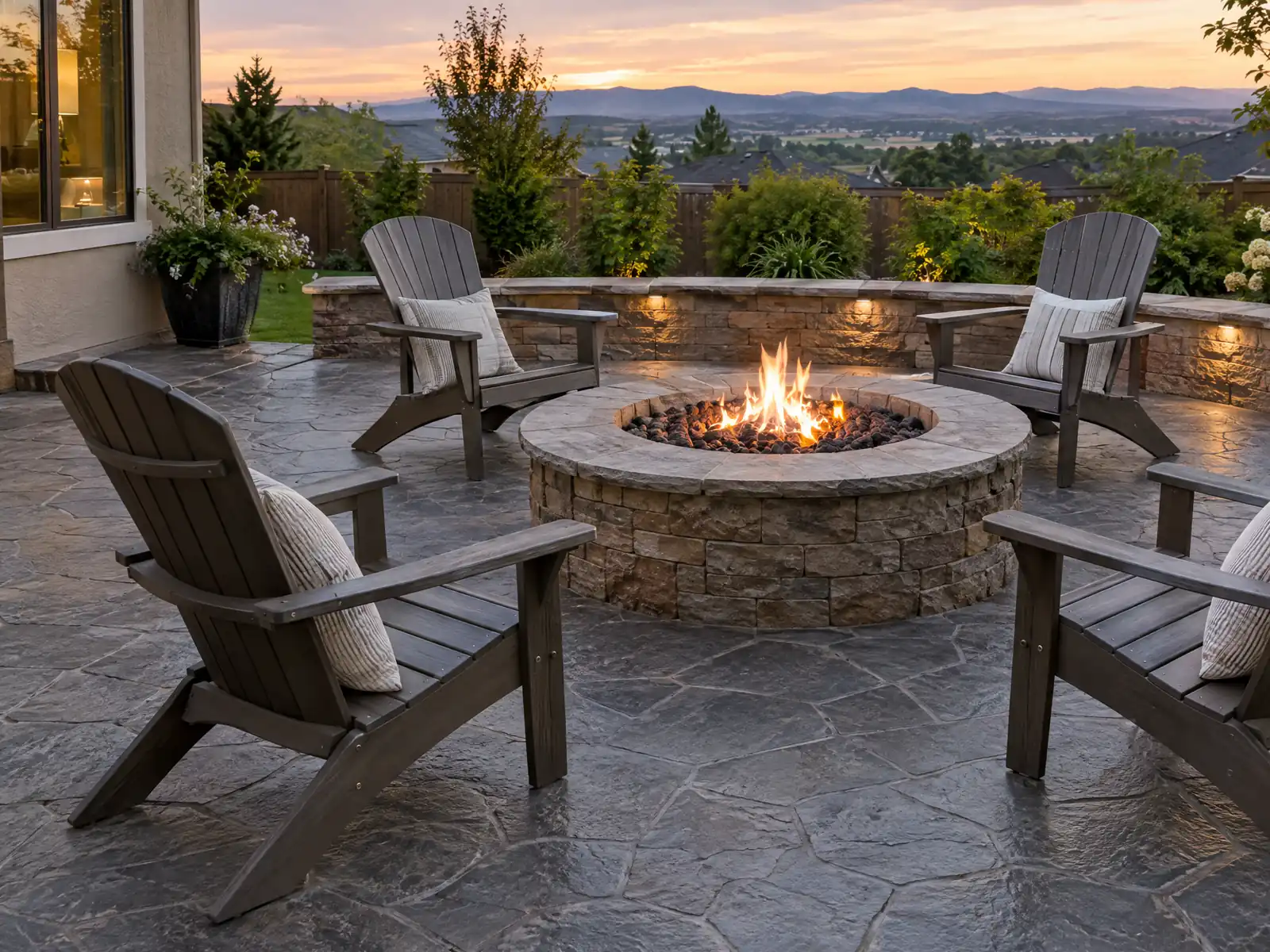
Seal Beach began as the Anaheim Landing port in the 1860s, platted the Bay City subdivision in 1903, built its pier in 1906 and incorporated in 1915. Census estimates for 2024 count 14,632 homes, 36.0 percent of them single-family detached, with a median year built of 1966 and 88.9 percent built before 1980, so most concrete jobs here are about fitting new work to a mid-century lot.
MDG Builders, CSLB #1040337, is a Tarzana general contractor that plans the pour, takes the coastal, setback and street questions to Seal Beach's Community Development Department and books a licensed concrete subcontractor for forms, pour and finish. Finishes and ranges are on the concrete page, and the Seal Beach overview covers the other trades we manage here.
What Seal Beach's Building & Safety Division, Public Works rules, coastal status and state law say about concrete work
Where concrete permits come from in Seal Beach: City of Seal Beach Community Development Department, Building & Safety Division.
- Seal Beach's permit exemption list (section 105.2, item 19) exempts decks, walks and driveways not more than 30 inches above grade and not over a basement or story below, as long as they are not part of an accessible route. Block walls are priced separately, with a building permit of $142.59 for the first 100 linear feet plus $31.69 per additional 50 feet.
- Municipal Code 11.4.05.100.E lets driveways, walkways, patio slabs and other concrete or asphalt paving, and wooden decks, cover up to 50 percent of the area within a required setback if they stay no higher than 12 inches, and at least 50 percent of every setback area must be permeable. Residential districts also limit paving to 50 percent of the required front or corner side yard.
- Residential driveway rules: maximum pavement width is 20 feet or 40 percent of the parcel width, whichever is less (minimum 10 feet), and in the RLD-9 district a street-facing driveway is limited to 18 feet and lots under 15,000 square feet get one curb cut (two for a circular driveway on a lot with at least 80 feet of frontage). All driveways are subject to city engineer approval.
- A Seal Beach grading permit is not needed for small jobs that disturb 2,499 square feet or less, have slopes under 10 percent, move 50 cubic yards or less, create 2,499 square feet or less of impervious surface and stay at least 100 feet from a coastal bluff top, watercourse bank, mean high water line or wetland (Municipal Code 9.50.025.G); larger paving or fill work does need one.
- Additions over 400 square feet trigger curb, gutter and sidewalk construction on the abutting street half (or a cash bond) and future underground utility conduits under Municipal Code 9.60.080, and the fee schedule lists a Type A encroachment permit (no plan check) at $222 and a temporary street or sidewalk closure, storage unit or dumpster permit at $205.
- A swimming pool in Seal Beach is limited to 20 percent of the lot area and 60 percent of the required rear yard, must sit at least 4 feet from side and rear lot lines, must be completely enclosed by a fence meeting the California Building Code, and needs a written engineer's statement that it will not harm neighboring structures before the building permit is issued; elevated pools may not exceed 4 feet. The fee schedule adds a $205 Public Works plan check fee for a swimming pool.
- Seal Beach's Safety Element says shallow groundwater (under 30 feet) means high or very high liquefaction susceptibility and that liquefaction risk can only be mitigated by site-specific geotechnical design, and the fee schedule prices in-house review of soils and geotechnical reports at $760 per hour, so a new slab, footing or pool on a low-lying lot can carry a geotechnical report requirement.
- Municipal Code 9.65 sets a 75 percent diversion requirement for concrete and asphalt debris on covered projects (additions, new structures or demolition of 1,000 square feet or more), with a waste management plan and per square foot deposit.
Sources for these rules
Do you need a permit to pour a driveway, patio or walkway in Seal Beach?
Usually not for flat concrete at ground level. Seal Beach's exemption list, section 105.2 item 19 of its building code, covers decks, walks and driveways not more than 30 inches above grade, not over a basement or story below and not part of an accessible route. A patio slab is not named on the list we read, so ask the Building Division to confirm yours in writing.
The exemption does not excuse zoning, and the City says a contractor needs the proper license to obtain a permit while an owner doing the work personally does not. Permit applications and inspection requests go through the online Civic Access Portal, and inspections are typically carried out within two business days. Under the fee schedule effective July 1, 2024, work done without a permit costs two times the permit fee, so confirm current amounts.
We read the municipal code on the GoCodebook mirror, a third-party host, because the official site blocked automated access, so check each section with the City at (562) 431-2527. Demolition carries a rule too: Chapter 9.65 covers additions, new structures and demolition of 1,000 square feet or more of floor area, and then requires at least 75 percent of concrete and asphalt debris to be diverted. A dumpster or storage unit placed in the street needs a $205 permit on that schedule.
- Is the slab at grade, under 30 inches and off an accessible route?
- Does the plan touch the street, a curb or a tree?
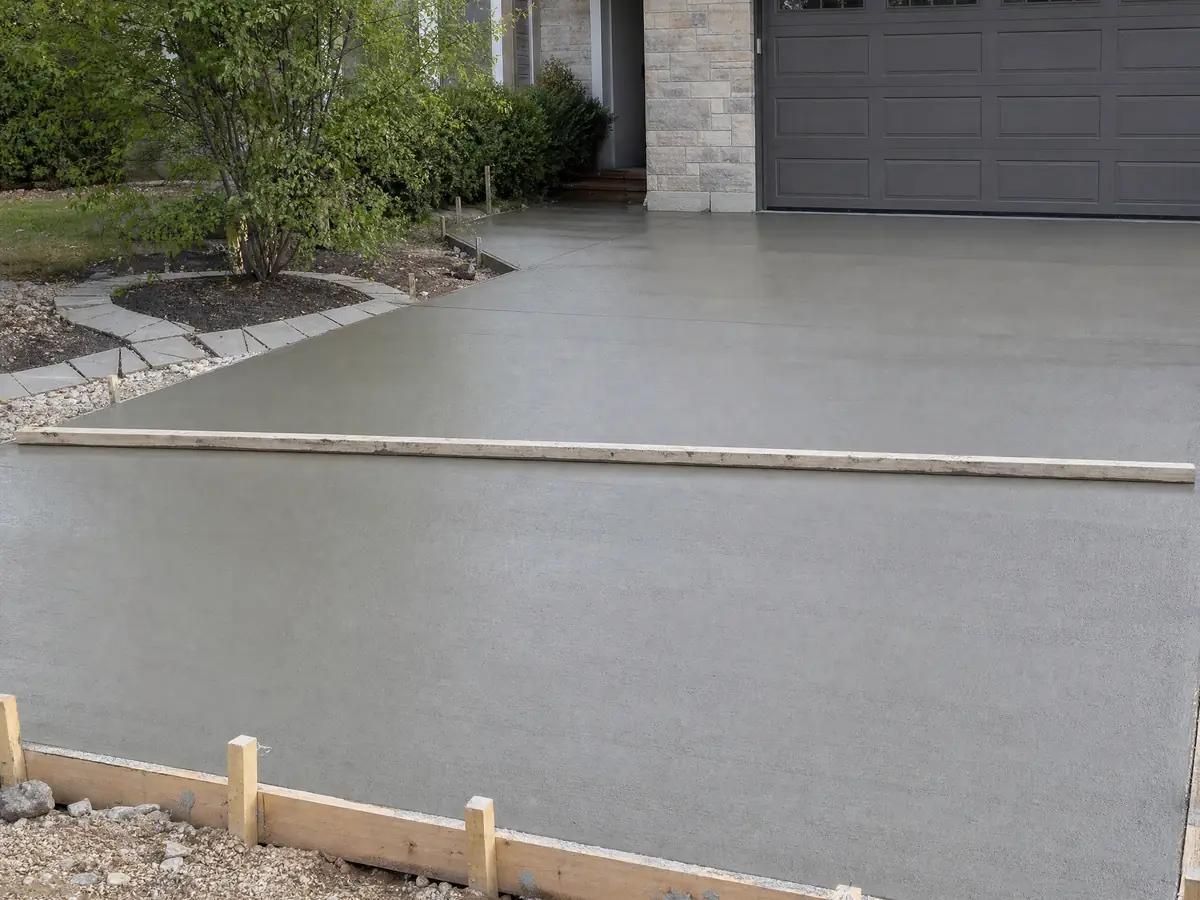
How wide can a Seal Beach driveway be, and how much of a setback can you pave?
The zoning code caps a residential driveway at 20 feet or 40 percent of the parcel width, whichever is less, with a 10 foot minimum. In the RLD-9 district a street-facing driveway is limited to 18 feet, and a lot under 15,000 square feet gets one curb cut, or two for a circular driveway on a lot with at least 80 feet of frontage. The city engineer approves every driveway.
Paving has its own cap. Driveways, walkways, patio slabs and other concrete or asphalt paving may cover up to 50 percent of the area within a required setback if they stay no higher than 12 inches, at least half of every setback must stay permeable, and residential districts also limit paving to 50 percent of a required front or corner side yard. That cap, not the 30 inch permit line, decides how large a front patio or parking pad can be.
Measure the parcel, the setback and the existing paving before asking for more width, because replacing a driveway at its present size is a different request from widening one. The apron where a driveway meets the street is public right of way, and the fee schedule lists a Type A encroachment permit with no plan check at $222, so ask Public Works whether yours needs one.
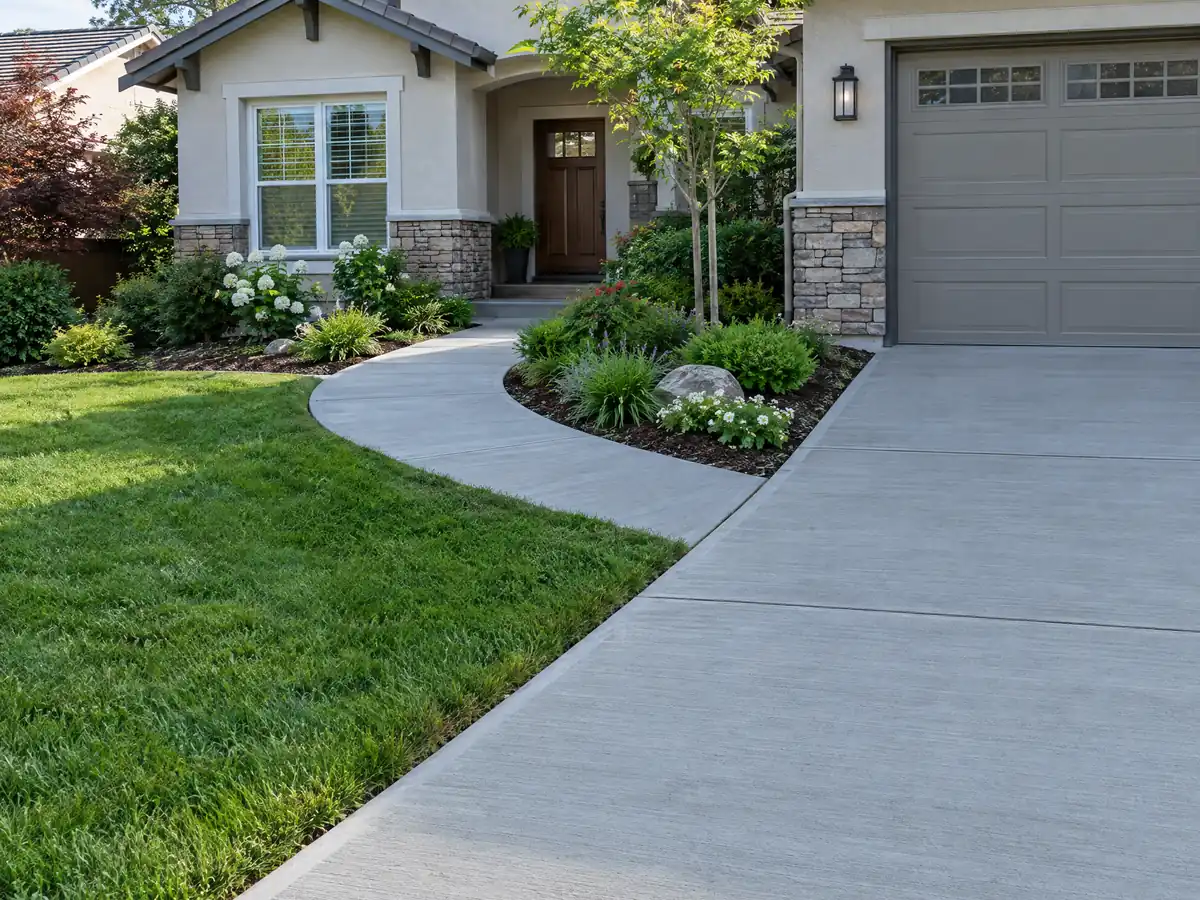
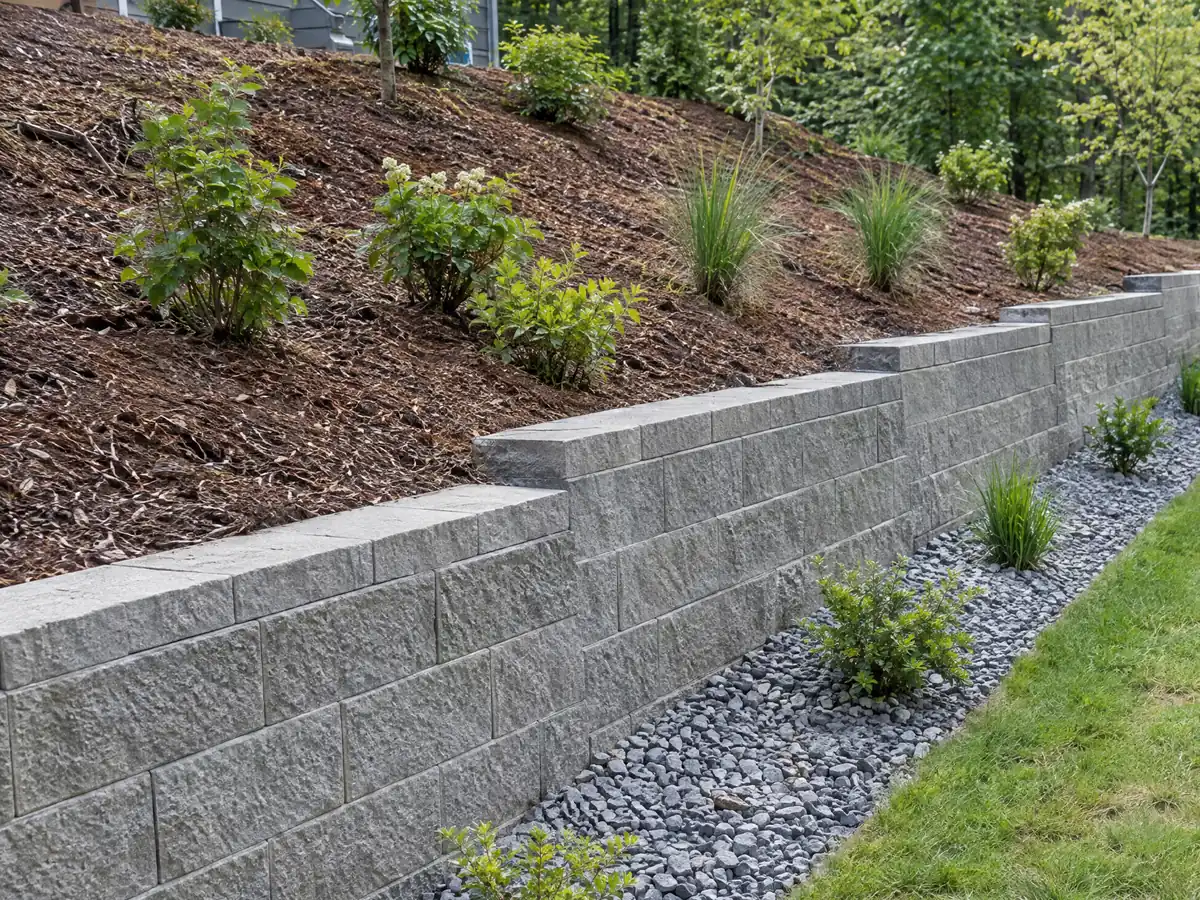
How tall can a retaining or block wall be in Seal Beach?
The building rule and the zoning rule differ. A retaining wall holding back not more than 4 feet, measured from the bottom of the footing to the top of the wall, is exempt from a building permit unless it carries a surcharge. Zoning is stricter: walls up to 30 inches high are allowed outright, walls over 30 and up to 48 inches need a minor use permit, and walls over 48 inches need a conditional use permit.
The July 1, 2024 fee schedule prices a residential minor use permit at $916 and a conditional use permit at $4,581, and lists a retaining or combination wall building permit at $63.37 per 50 linear feet. Block walls are priced like fences, at $142.59 for the first 100 linear feet plus $31.69 for each additional 50, and Public Works plan check at $102 applies only when review is required.
Old Town has its own lines. On Ocean Avenue between First and Eighth Streets, side yard walls over 30 inches need a minor use permit with no maximum height and none is allowed along the rear 96 feet of a lot, while rear walls beside Gum Grove Park or the wetlands on Avalon, Catalina, Crestview and Surf Place stop at 6 feet. A lawful wall built before January 1, 2010 is nonconforming and must meet current rules if damage passes 50 percent of replacement cost.
Does concrete work near the beach in Old Town or Surfside need a coastal permit?
It can, and the Coastal Commission, not the City, decides. Seal Beach has no certified Local Coastal Program, so the Commission issues coastal development permits under Chapter 3 of the Coastal Act. Under Title 14 section 13250, an existing home's garage, pool, fence or shed counts as part of the house, yet a permit is still needed on a beach, in a wetland, seaward of the mean high tide line, in habitat or within 50 feet of a coastal bluff edge. Between the sea and the first public road, or within 300 feet of a beach, a significant non-attached structure such as a garage or fence needs one too.
We found no rule that names a patio slab or driveway and could not read the City's own coastal approval steps, so put the lot to Planning at extension 1339 before booking a pour. The City sent a revised Draft Land Use Plan to the Commission on May 9, 2023. Commission permits in Old Town and on Seal Way have carried waivers of future shoreline protection.
Flood and grading rules reach slabs as well. In a special flood hazard area, new construction and improvements worth 50 percent or more of market value need the lowest floor at or above base flood elevation, certified by an engineer or surveyor. The small-job grading exemption needs all of these: 2,499 square feet or less disturbed, slopes under 10 percent, 50 cubic yards or less of earth and nothing within 100 feet of a bluff top, watercourse bank, mean high water line or wetland.
Does a new slab need a soils report, and what about street trees and curbs?
On a low lot it can. The City's 2003 Safety Element says groundwater shallower than 30 feet means high or very high liquefaction susceptibility and that the risk can be handled only with site-specific geotechnical design, and the fee schedule prices in-house review of soils reports at $760 an hour. The same element places the Seal Beach Fault, part of the Newport-Inglewood zone, inside an Alquist-Priolo zone running roughly parallel to the coast.
Footing, wall and basement excavations under a building permit are exempt from a grading permit while the unsupported height stays at 5 feet or less, and a grading permit lapses if work does not start within 180 days. Lot-level fault and liquefaction maps, wind design speed and seismic design category are things we could not verify, so slab thickness and reinforcement belong to the engineer, not to a number printed here.
Street trees matter too. Nobody may trim, prune or remove trees on city property, and owners must keep branches over a street or sidewalk at least 8 feet up, so a root lifting a walk is a call to the City. An addition over 400 square feet also triggers curb, gutter and sidewalk construction on the abutting street half, or a bond, under Municipal Code 9.60.080.
How much does concrete work cost in Seal Beach, and what license should the crew hold?
We found no Seal Beach concrete price study, so the anchor is Angi's 2026 Los Angeles pricing, built on customer surveys and pro data, and coastal Orange County can differ. Plain patios run $4 to $13 per square foot with a $5,248 average, or $1,600 to $5,200 for 20 by 20 feet. Stamped patios cost $15 to $30, and driveways cost $8 to $20 with a $7,270 average. Retaining walls average $7,140 across a $2,674 to $11,842 range, and height and drainage move that range so far that we print no per-foot wall price.
Our planning range for flatwork of 300 square feet or more on an easy site is $8 to $14 per square foot, decorative finishes $15 to $30 and driveway replacement $9 to $20 with demolition. Confidence is medium for plain flatwork and lower for the rest. Federal data put cement masons in the Los Angeles-Long Beach-Anaheim area at a mean $33.67 an hour in May 2025, a wage and not a bill, and small jobs price above the per-foot averages because of minimum charges.
A concrete company should hold CSLB's C-8 class, which covers forming, pouring, placing and finishing flat and pavement concrete but not a business whose sole work is plaster coatings or placing reinforcing steel. Block walls are masonry and often go to another crew, as our subcontractor guide explains. The $1,000 unlicensed-work limit never covers a permitted job, and the license-check guide shows the CSLB lookup.
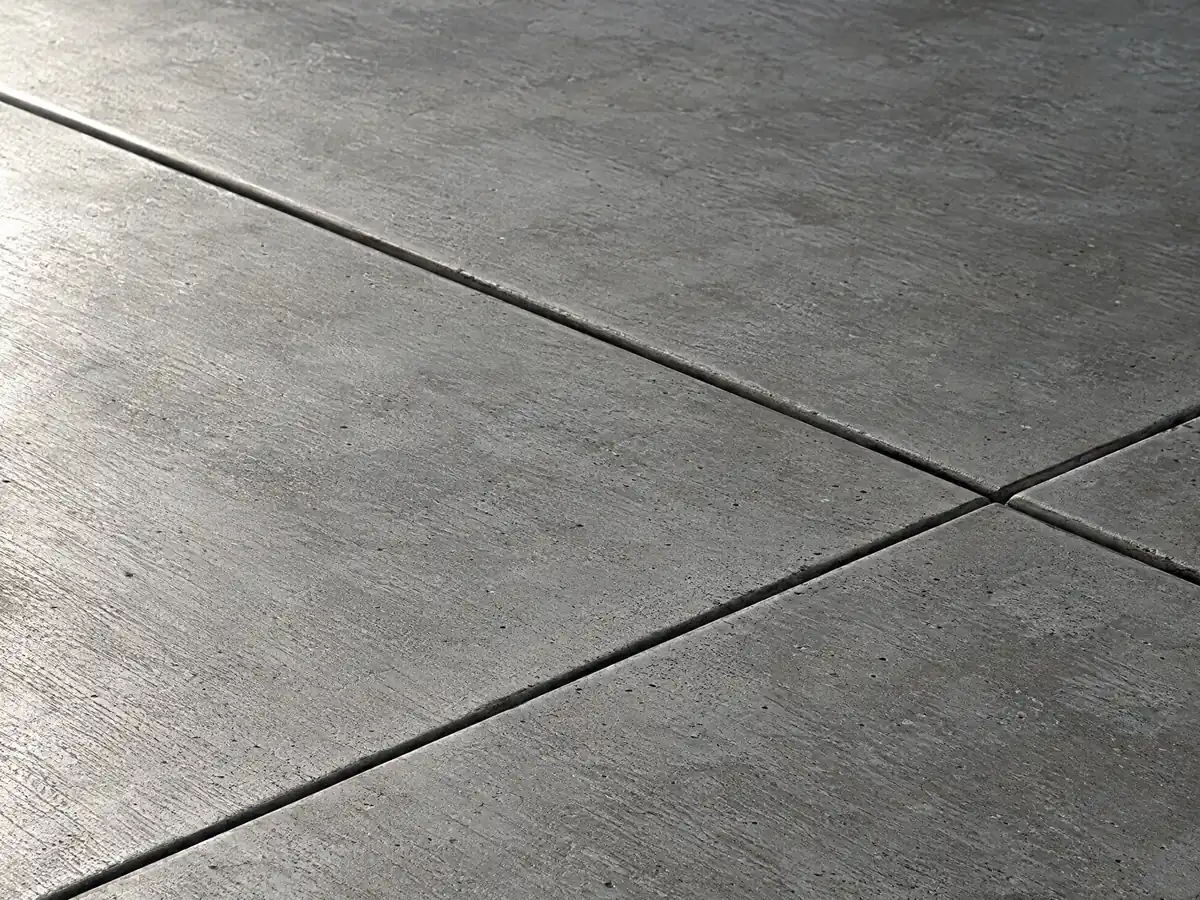
Concrete photos from Seal Beach and nearby communities
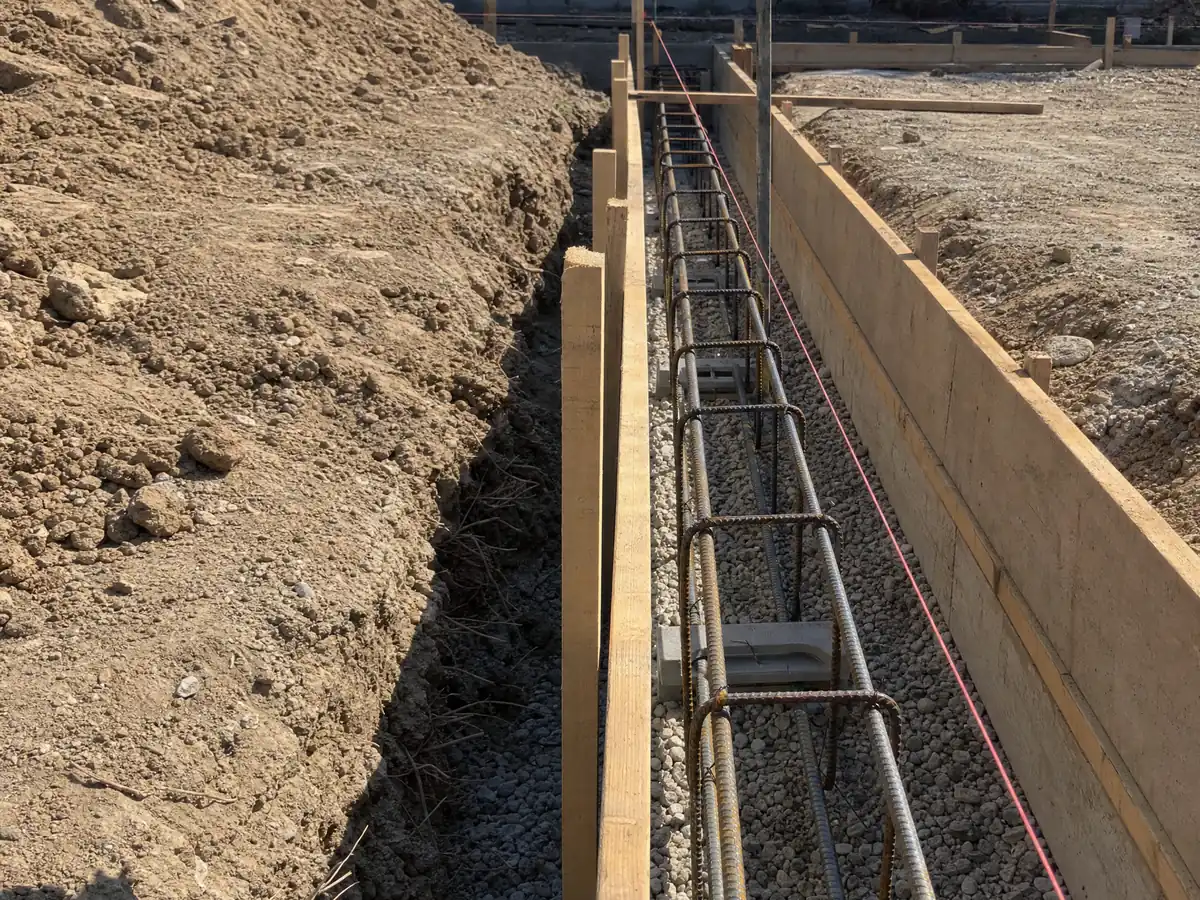
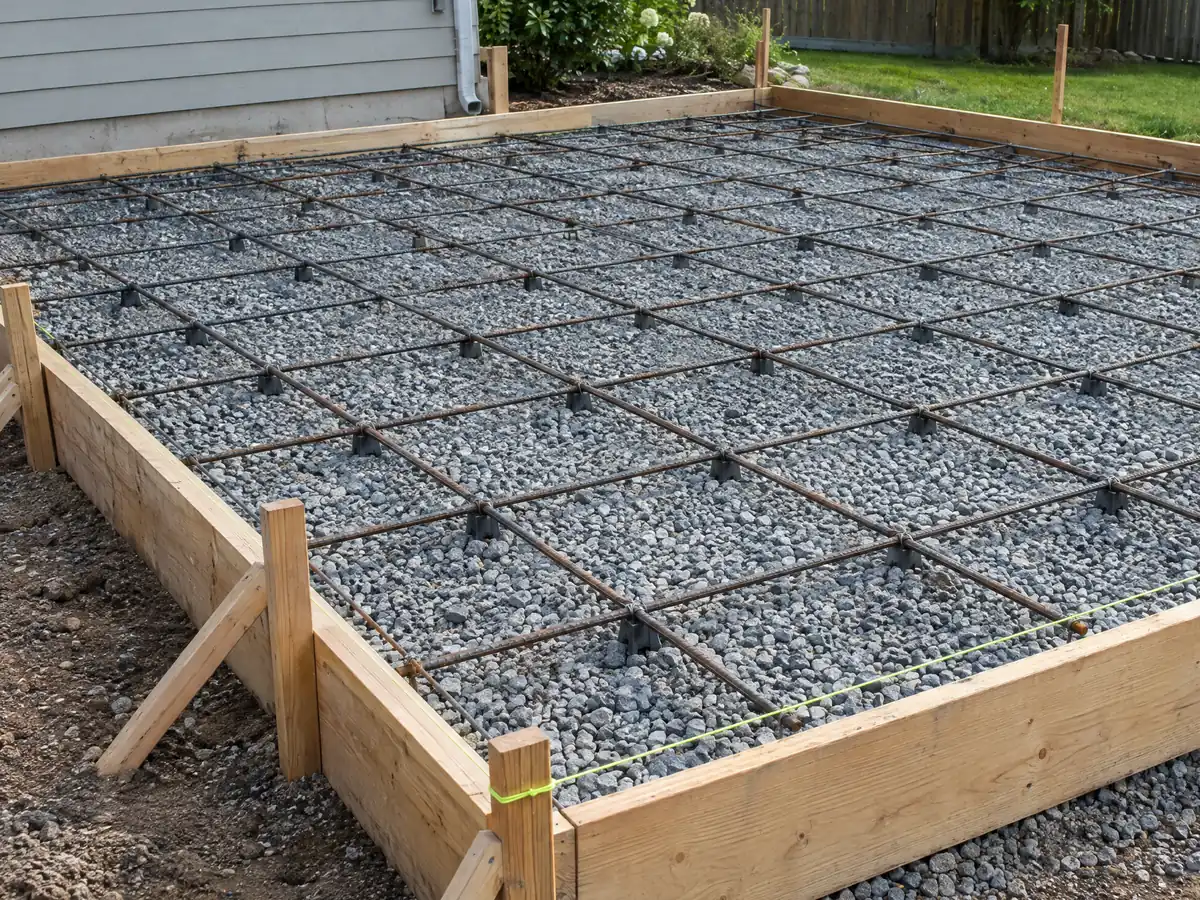
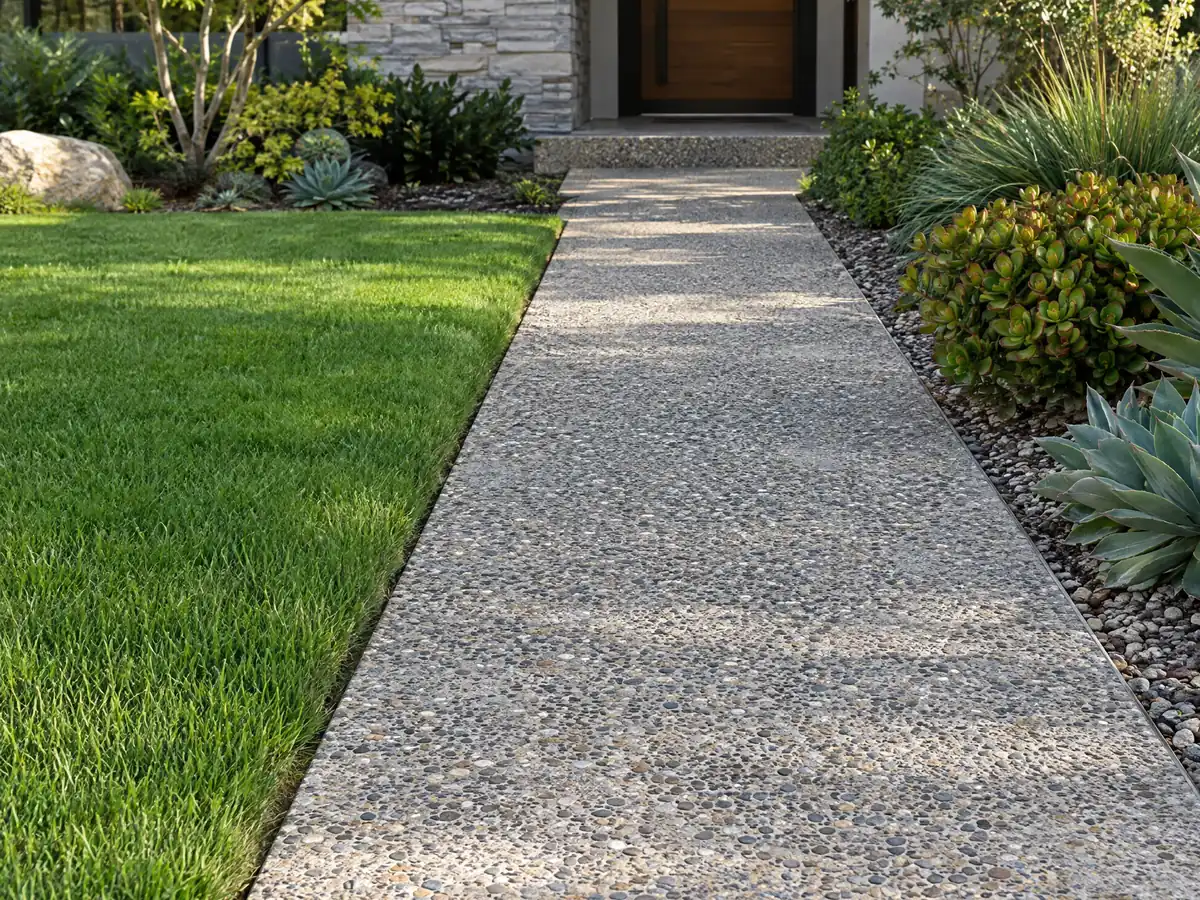
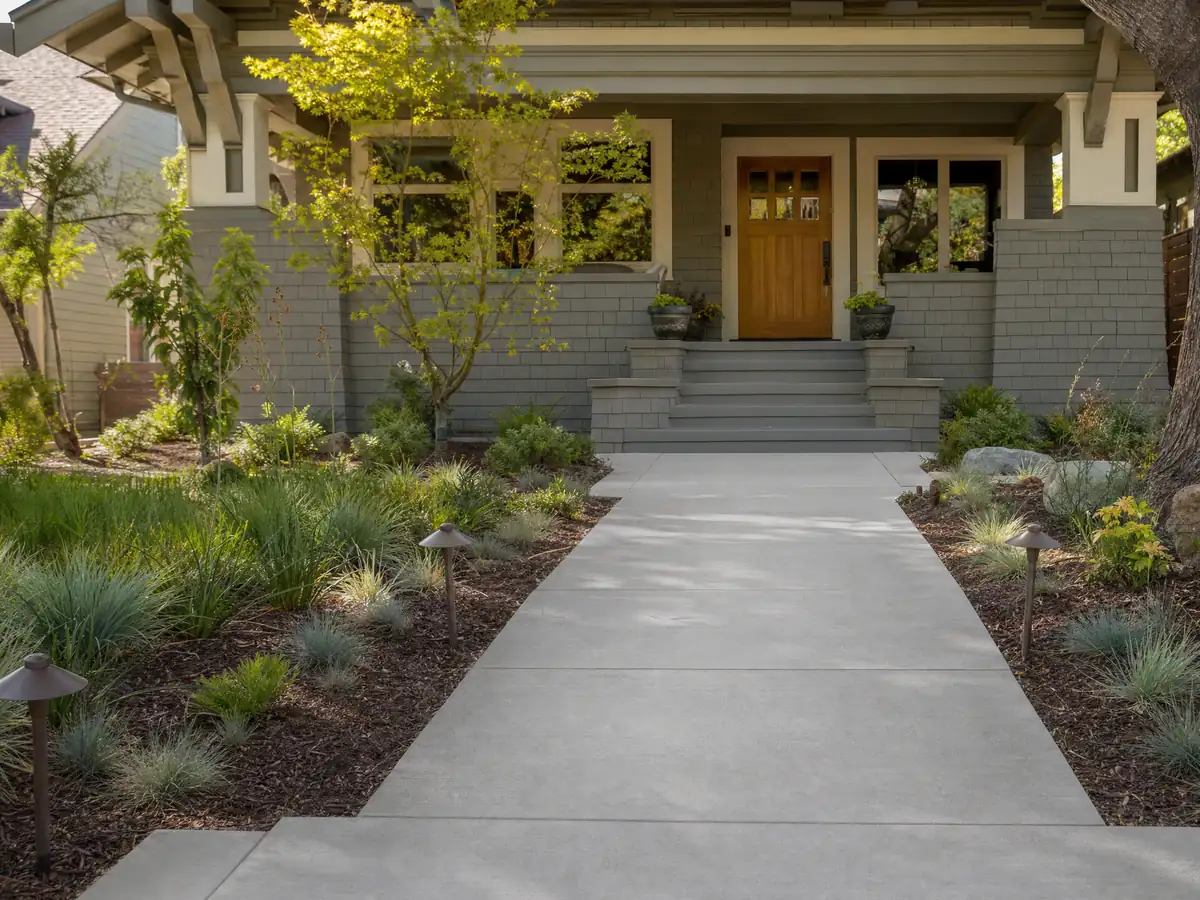
Forms, rebar, finished flatwork and block walls from Seal Beach and the towns around it, shown at the steps where the rules matter. Tap any photo to enlarge it.
What concrete costs around Seal Beach
Dollar figures here are Los Angeles planning ranges from our concrete page, not a Seal Beach bid, and the proposal should show demolition, base, rebar, engineering and any City review on separate lines. For the same property, see flooring in Seal Beach and decks in Seal Beach. For neighboring comparisons, read concrete in Long Beach, concrete in Huntington Beach and concrete in Westminster, and for a big-city benchmark see concrete in Los Angeles.
| What it covers | Typical range |
|---|---|
| Patio, walkway or slab, broom finish, 300 sq ft or more | $8 to $14 per square foot |
| Decorative: stained, stamped or exposed aggregate | $15 to $30 per square foot |
| Driveway replacement, with demolition of the old slab | $9 to $20 per square foot |
| 20 by 20 foot plain patio (400 sq ft) | About $3,200 to $5,600 |
| 20 by 20 foot decorative patio (400 sq ft) | About $6,000 to $12,000 |
| Small jobs under 300 sq ft | Usually above the per-foot range |
| Retaining walls | Set by the written proposal |
Other work we manage in Seal Beach
Seal Beach concrete questions, answered
Can I pour a concrete patio without a permit in Seal Beach?
Often, if the slab sits at grade. The City's exemption list covers decks, walks and driveways up to 30 inches above grade that are not part of an accessible route, but a patio slab is not named, and zoning still limits paving in a setback. Ask Building & Safety at (562) 431-2527, extension 1323, to confirm in writing.
Can I expand or replace my driveway without a permit in Seal Beach?
Replacing at the same size is usually exempt flatwork, but widening runs into zoning. A driveway is capped at 20 feet or 40 percent of the parcel width, whichever is less, and the city engineer approves every driveway. Paving may also cover only half of a required setback, so measure before you plan.
What is the maximum height of a retaining wall without a permit in Seal Beach?
Four feet for the building permit, measured from the bottom of the footing to the top of the wall, unless the wall carries a surcharge. Zoning is tighter: walls over 30 inches need a minor use permit and walls over 48 inches a conditional use permit. Walls on Ocean Avenue lots and beside Gum Grove Park have extra limits.
How much should a 20x20 concrete patio cost in Seal Beach?
On Angi's 2026 Los Angeles page a plain 20 by 20 foot patio runs $1,600 to $5,200, and our planning range of $8 to $14 per square foot gives $3,200 to $5,600 for 400 square feet. We found no Seal Beach study. Demolition, drainage and decorative finishes move the number, so a site visit sets it.
How much does a concrete driveway cost in Seal Beach?
Angi's 2026 Los Angeles page shows $8 to $20 per square foot and an average of $7,270, and our planning range for replacement with demolition is $9 to $20, or $3,600 to $8,000 for a 400 square foot two-car drive. Those are Los Angeles ranges, not a Seal Beach bid, and apron work and grading are extra.
How much does a stamped concrete patio cost in Seal Beach?
Angi's 2026 Los Angeles page puts stamped patios at $15 to $30 per square foot with an average of $5,948, which is $6,000 to $12,000 for 400 square feet. That is a Los Angeles range with medium to low confidence, not a Seal Beach bid, and color, pattern and sealing change the price.
Does concrete work near the coast in Seal Beach need a coastal permit?
It can. With no certified Local Coastal Program in Seal Beach, the Coastal Commission issues the permits, and its Title 14 section 13250 list targets beaches, wetlands, bluffs and structures such as fences or garages near the sand. We found no rule naming a patio or driveway, so ask Planning at extension 1339 before you book a pour.
Does a new slab in Seal Beach need a soils or geotechnical report?
Possibly on a low lot. The Safety Element says shallow groundwater means high or very high liquefaction susceptibility and that the risk calls for site-specific design, and the City reviews soils reports at $760 an hour. Whether your slab needs one is the Building Official's call, so ask before the forms go in.
How wide should a concrete driveway be in Seal Beach?
At most 20 feet or 40 percent of the parcel width, whichever is less, with a 10 foot minimum, and 18 feet for a street-facing driveway in the RLD-9 district. A lot under 15,000 square feet gets one curb cut. The city engineer approves the plan, so bring a parcel width and a sketch.
What license does a concrete company need in Seal Beach?
Flat and pavement concrete falls under CSLB's C-8 class, while block walls are masonry. The City says a contractor needs the proper license to obtain a permit, and the state's $1,000 limit on unlicensed work never covers a permitted job. Check the number on the CSLB site and ask for each subcontractor's license and insurance certificate.
Send the lot type, what you want poured and how close the water is
Describe what you want poured, the rough size and whether the lot is in Old Town, Surfside, Leisure World or a College Park tract. We bring the coastal, flood and setback questions to the first visit.