
Deck Builderin Bell, CA
A deck builder in Bell can skip the building permit only for a low deck: Municipal Code 15.02.020 exempts decks no more than 30 inches above grade that are not over a basement or story below. Taller decks need a permit, and Planning reviews patios, porches and covers on top of that, so confirm before building.
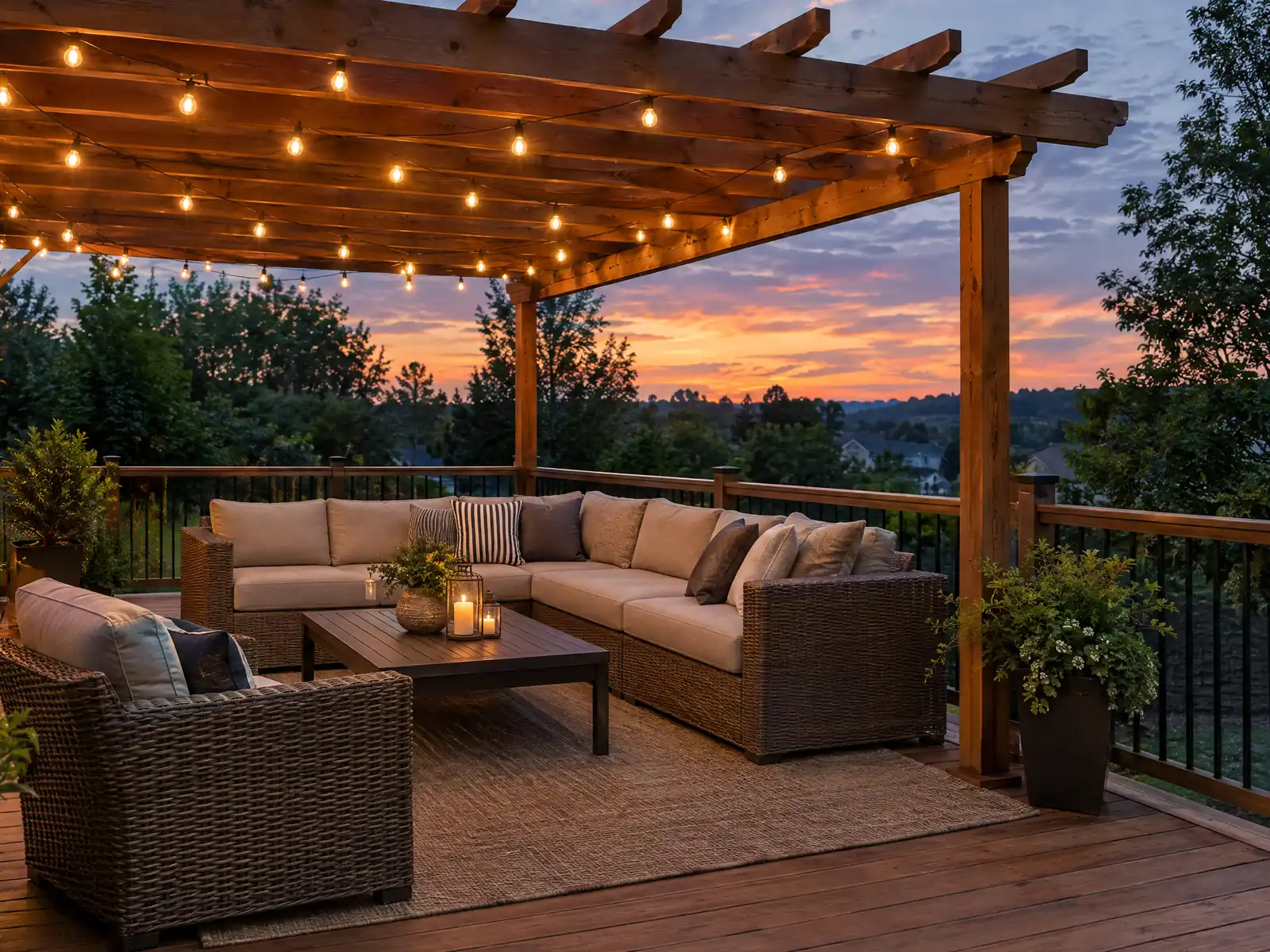
A Bell backyard is often shared. Census estimates for 2020 to 2024 count 4,501 detached houses among 9,436 homes, about 48 percent, while 73.5 percent of occupied homes are rented and roughly one in five units sits in a building of five or more. The city was a ranch settlement in 1875 and incorporated on November 7, 1927, according to the Los Angeles Almanac, and about 83 percent of its homes predate 1980, so an old wood deck or stoop is as likely to be a repair job as a new build.
MDG Builders, CSLB #1040337, is a general contractor in Tarzana. We design the deck, take the questions to Building and Safety and Planning and engage a licensed carpentry subcontractor to build it. Materials and ranges are on the decks page, and the Bell overview shows the other trades we manage in the city.
What Bell's Building and Safety Division, Planning Division and Municipal Code say about decks
Where decks permits come from in Bell: City of Bell Community Development Department, Building and Safety Division.
- Decks, walks and driveways no more than 30 inches above grade, not over a basement or story below and not part of an accessible route, are exempt from a building permit under Municipal Code 15.02.020. Patio covers, porches and accessory structures under 200 square feet need a Zoning Clearance, and patios and porches larger than 200 square feet need administrative site plan review, per the Planning Division form.
Sources for these rules
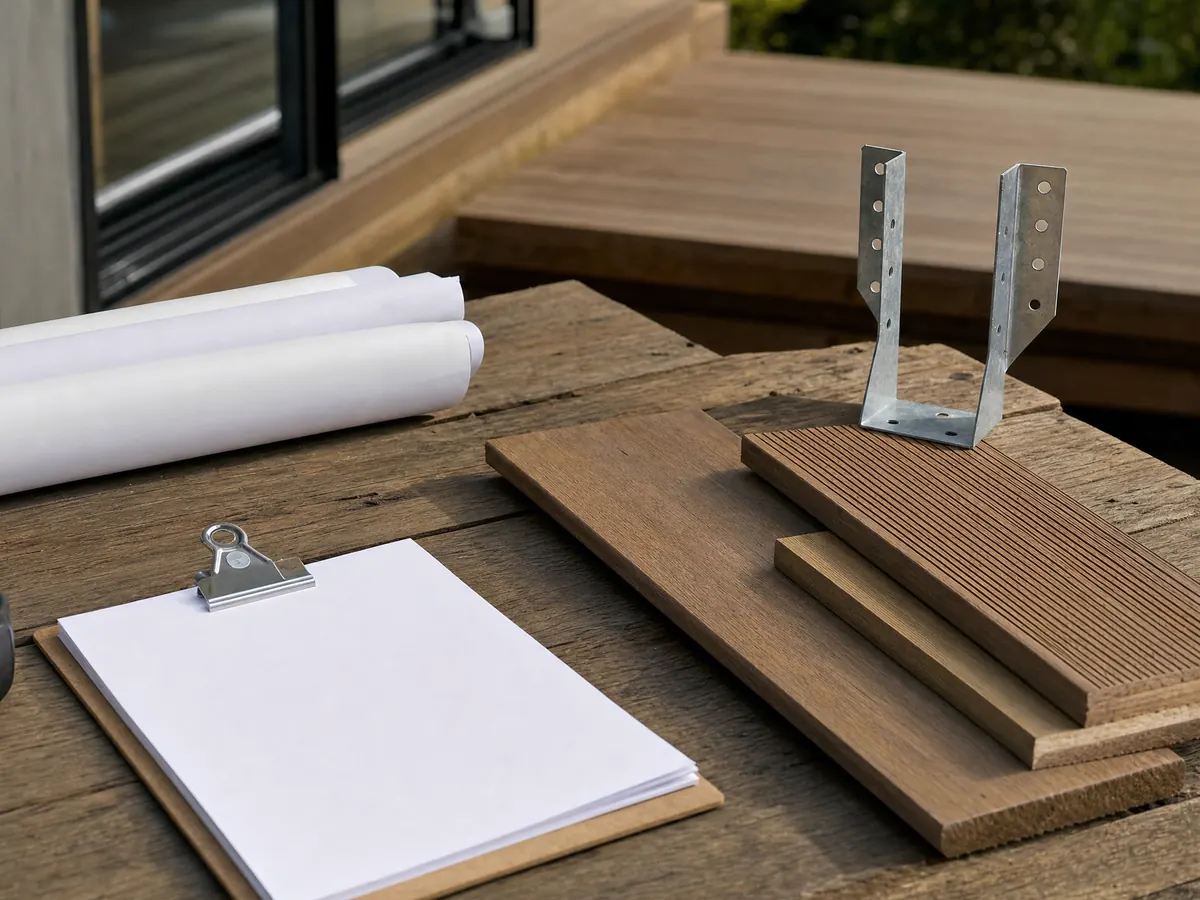
Where does a deck fit on a Bell lot that may be zoned R-3?
Check the zone before the design. Bell's Housing Element counts 569 acres of R-3 multifamily zoning against 68 acres of R-1 and 11 of R-2, and R-3 allows any use that R-1 allows first, so many lots with a single house still follow R-3 standards. Planning can tell you the zone for an address at (323) 588-6211.
R-1 sets a 5,000 square foot minimum lot, 5 foot interior side yards, a 10 foot rear yard and a 15 foot height cap for accessory buildings. R-3 allows 50 percent maximum lot coverage, a 15 foot front setback or the block average, and three stories or 35 feet. We did not find how Bell counts a deck toward coverage or whether a deck may reach into a setback, so ask Planning both questions before drawing.
A lot with a house, a garage and a rear unit leaves little yard, so measure what is left and send photos. Our Bell Gardens deck page covers a neighboring city with many small shared lots, where the rules differ.
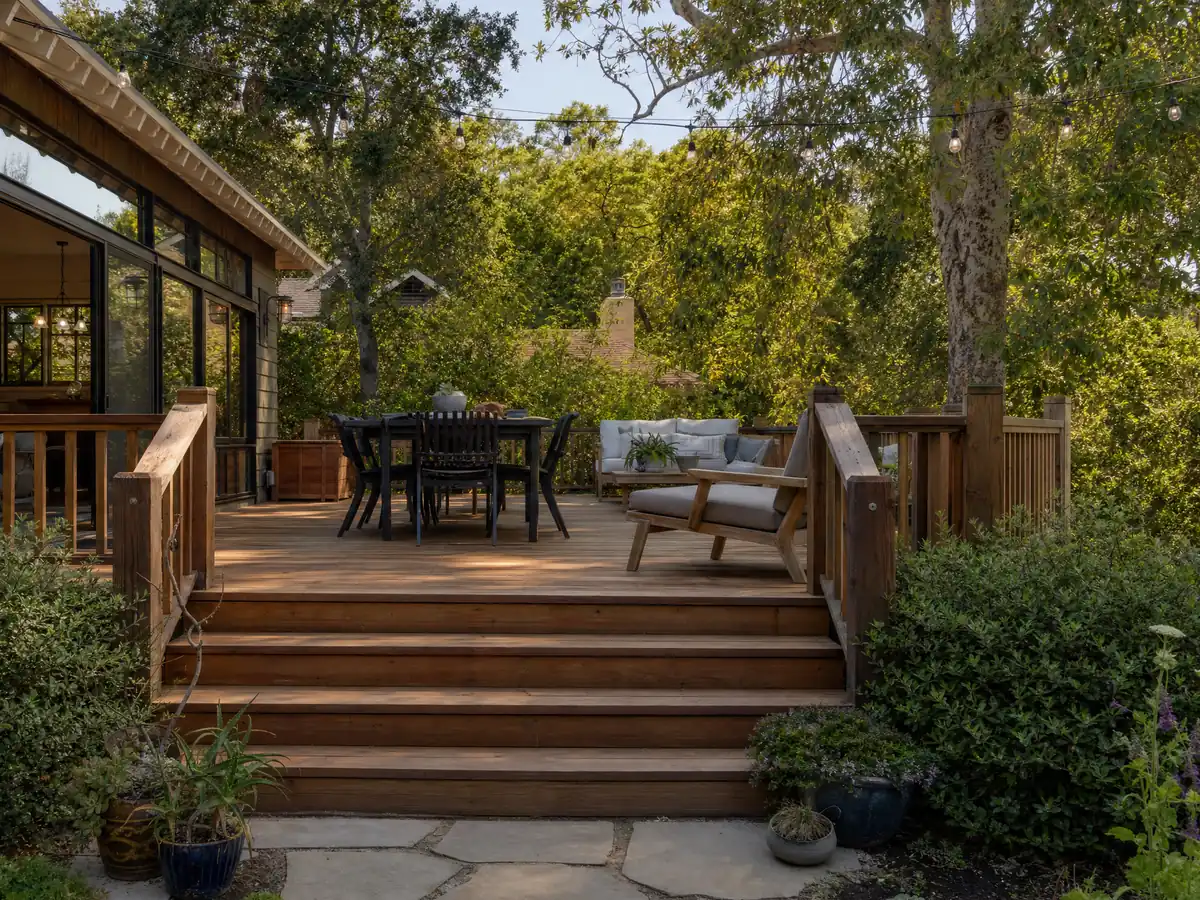
Which decks can skip a building permit in Bell?
Only low ones. Municipal Code 15.02.020 exempts decks, walks and driveways no more than 30 inches above grade, not over a basement or a story below and not part of an accessible route, so measure at the tallest point. The state model text adds a 200 square foot limit and a detached condition, which Bell's list as we read it did not repeat, so ask whether either applies.
Zoning is the second gate. The Planning Division's Zoning Clearance form covers patio covers, porches and accessory structures under 200 square feet, and administrative site plan review is required for patios and porches larger than 200 square feet. The form does not say whether a deck counts as a porch or patio, so ask. It is undated and prints a $148.00 clearance fee, which needs confirming.
Even an exempt deck has to meet zoning, because exemption from a permit never excuses a violation of zoning or other law. We read the code on the GoCodebook mirror, since the City's official eCode360 site blocked our access, so confirm each point with the City.
- Is the deck 30 inches or lower above grade everywhere?
- Is it clear of any basement or story below?
- Does Planning treat it as a deck, a porch or a patio?
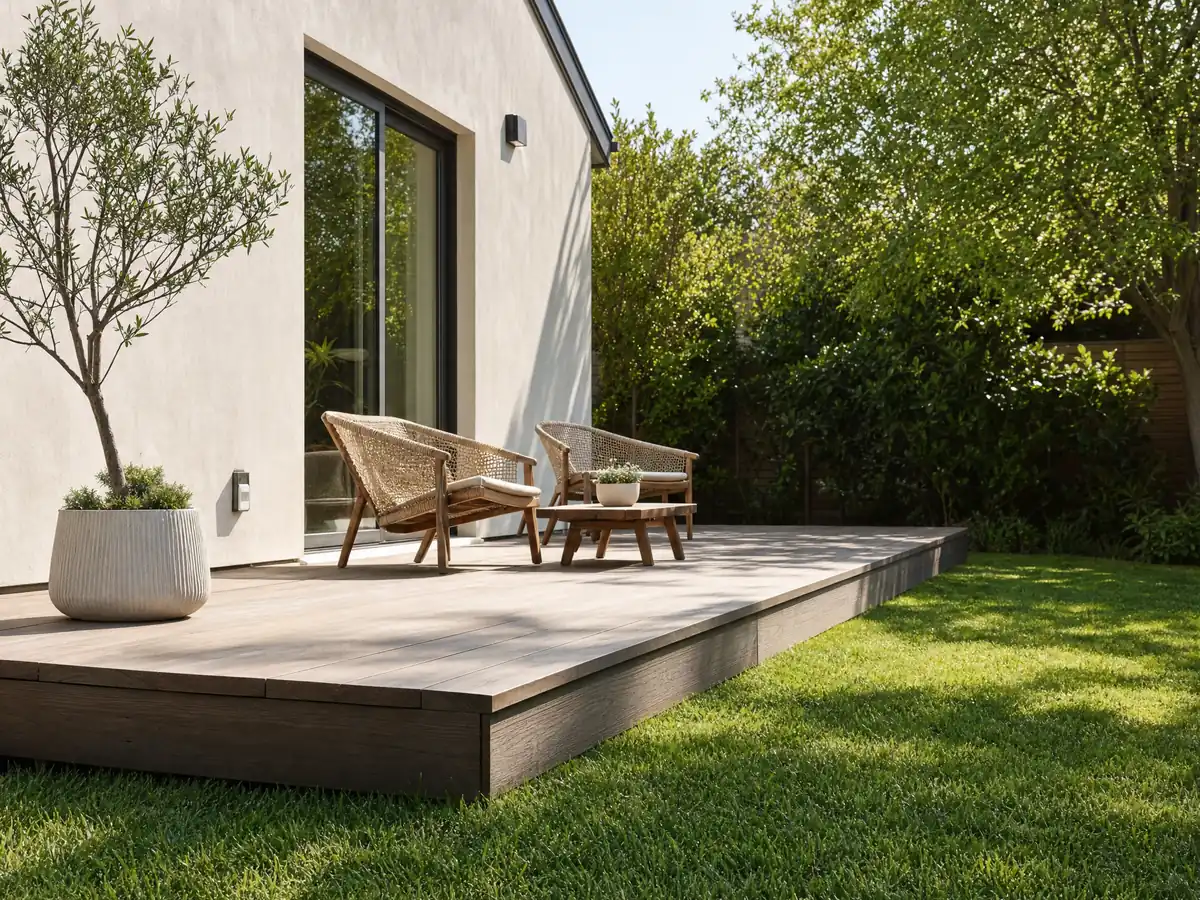
Can a patio cover or pergola go over a Bell deck?
Often yes, with Planning involved. A patio cover under 200 square feet needs a Zoning Clearance, and a larger patio or porch needs administrative site plan review, per the Planning form. In the R-3 zone, additions larger than 50 square feet also go to site plan review. Ask Building and Safety separately whether the cover needs its own building permit.
Height and distance matter as much as area. The R-1 cap is 15 feet for accessory buildings, and side and rear setbacks of 5 and 10 feet control where a freestanding pergola can stand. We found no Bell sentence that treats an open pergola as an accessory building, so confirm before ordering posts.
A solid roof changes the loads on the frame as well, which a plan checker or engineer sets. We did not research Bell's roof covering rules for patio covers.
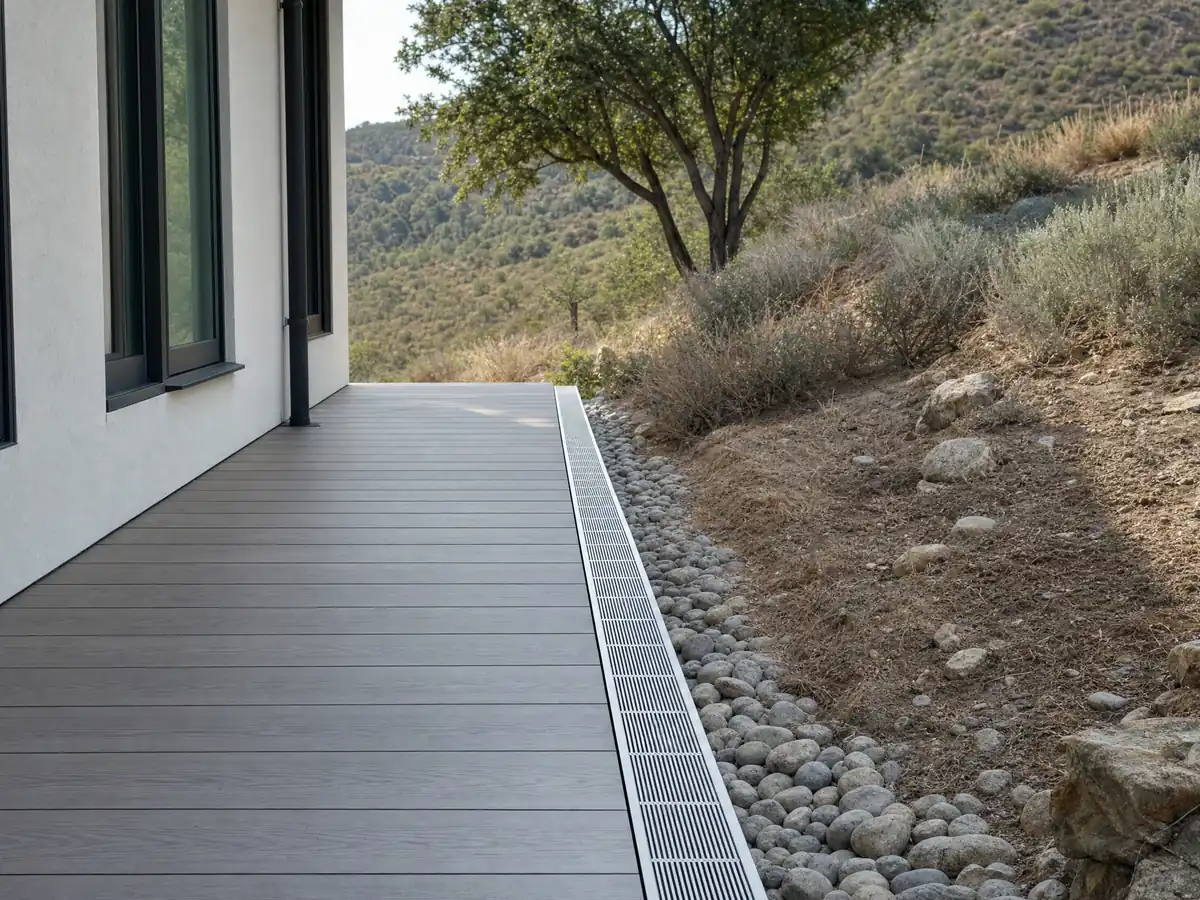
How high must a Bell deck guard be, and is 36 or 42 inches right?
Forty-two inches is the model residential code answer. A guard is required where the walking surface is more than 30 inches above grade within 36 inches of the edge, it must be at least 42 inches tall and openings must stop a 4 inch sphere. Those numbers come from the 2022 California Residential Code text we read. Bell adopted the 2025 edition by Ordinance 1295 in October 2025, so confirm the section numbers with the counter.
The ledger board is where many attached decks fail. The 2022 text calls for a pressure-treated ledger at least 2x8, flashed to the wall, fastened with hot-dipped galvanized or stainless hardware and tied sideways with hold-downs: two 1,500 pound devices within 24 inches of each end, or four 750 pound devices. It also bars hanging a ledger on stone or masonry veneer.
Ask the builder how the ledger will attach to the wall and what flashing goes over it. Those two answers say more than a brochure does.
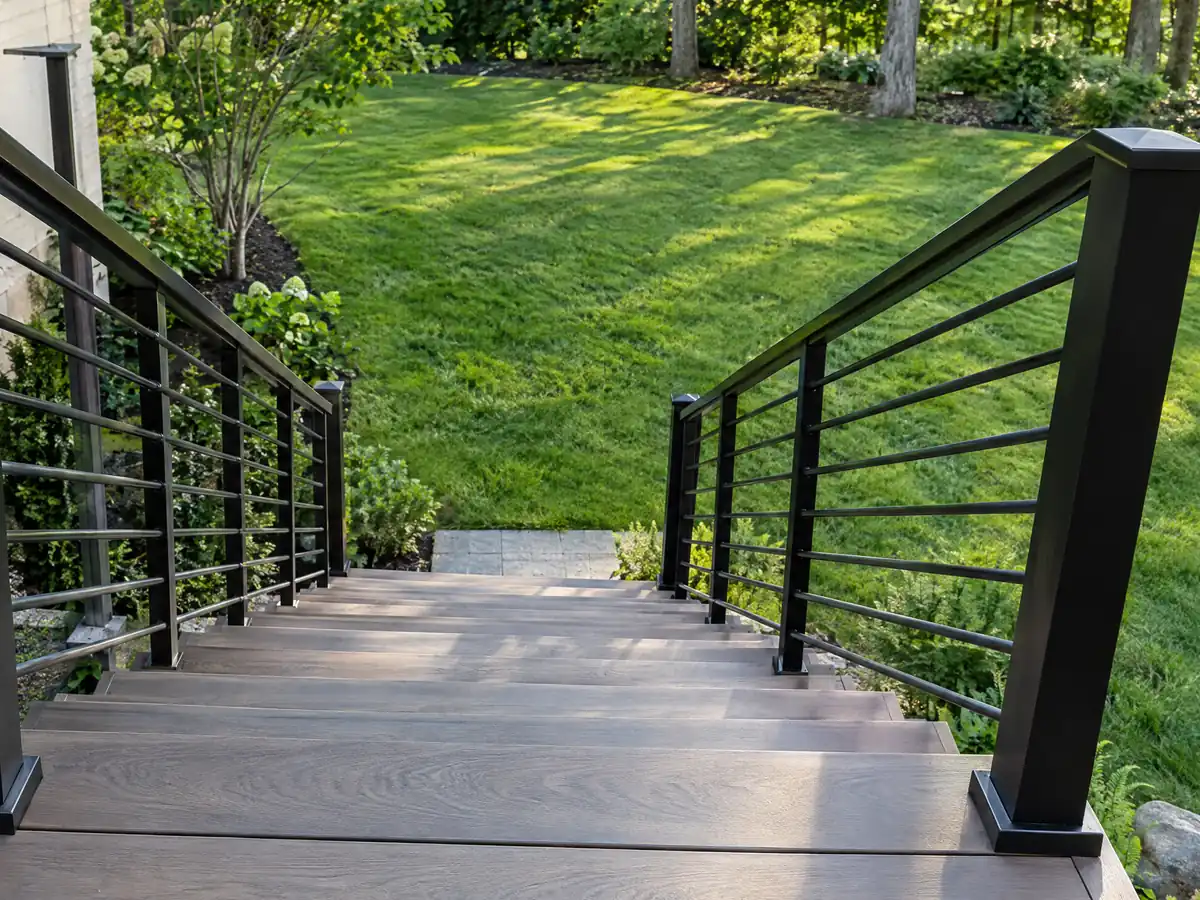
What holds a deck up in Bell's shallow-groundwater soil?
Footings sit in ground the city's own element calls liquefiable. The Health and Safety Element says the USGS rates Bell at moderate to high liquefaction potential because of shallow groundwater, and Los Angeles County's GIS layer places the city center in a state liquefaction zone. For a deck that is context, not a ban, and we found no Bell footing rule for decks. Ask the builder what depth and spread each footing has and what that choice rests on.
Wood has a second enemy. University of California pest management guidance names drywood termites as most common in southern California, where they infest decks and fences, and advises fixing moisture and sealing exterior wood. Ask where each post meets the soil and how the framing sheds water.
Fire rules are mostly absent. The Health and Safety Element says Bell is not in a CAL FIRE Fire Hazard Severity Zone and has no open grass areas that create wildfire risk, and the County's fire layer classes it NonWildland, so ember-resistant decking rules for hazard zones should not apply. Chapter 15.36 puts every lot in Fire Zone No. 2 or 3, and the text we read has no deck rules.
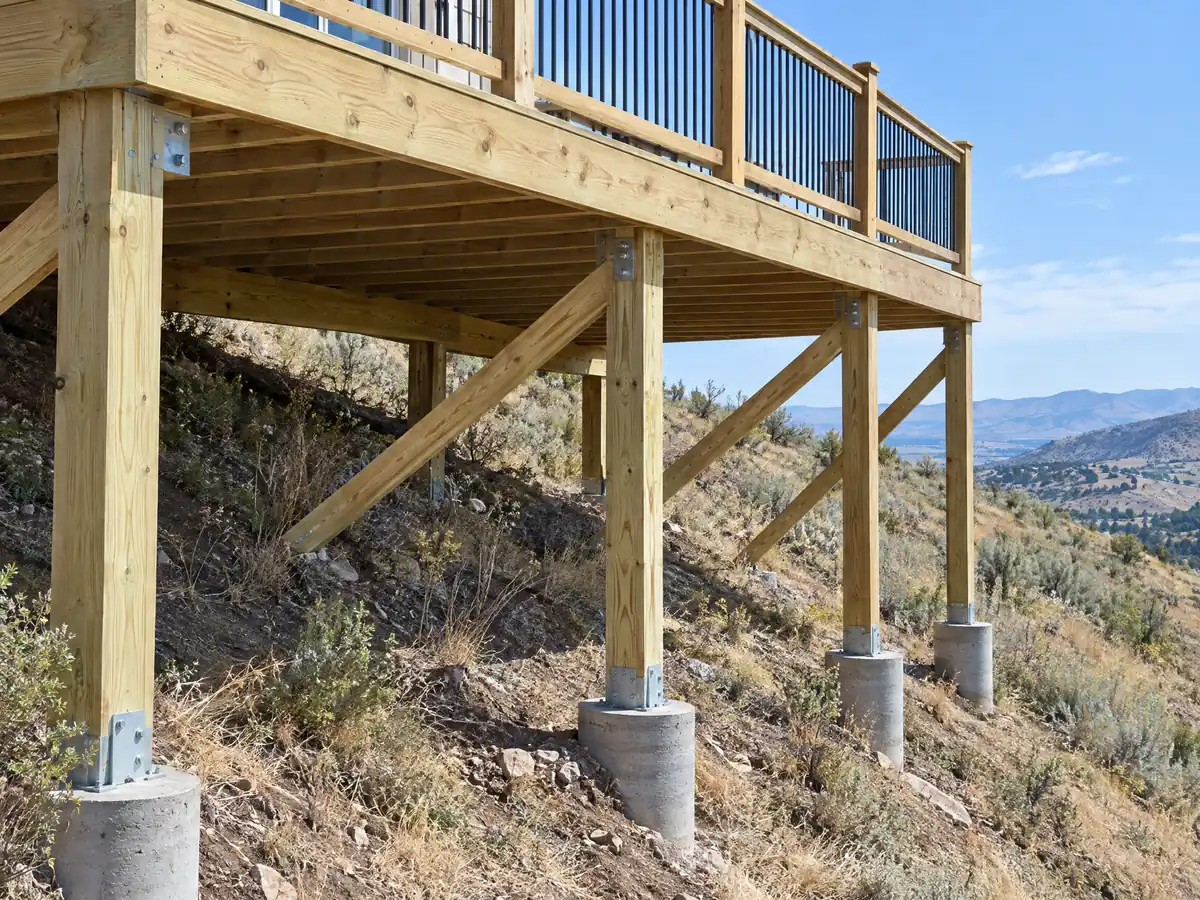
Does deck repair in Bell need a permit, and will a sale report catch it?
Swapping boards in place is probably the simple case, but no Bell sentence we read says so. Replacing framing, a ledger, posts, stairs or guards is structural repair, and the permit page says permits are required for many projects, so send Building and Safety photos of the damage before you hire anyone.
Bell's pre-sale rule turns this into a closing issue. Under Chapter 15.38 the owner must obtain a City report before agreeing to sell, listing permitted units and major work done without permits. It must reach the buyer at least 15 calendar days before closing and stays valid six months. A buyer may sign an acknowledgment to correct violations within up to six months after the sale. Whether a given deck counts as major work is for Building and Safety to say, and an interior inspection happens only if the owner asks for one.
Permits expire as well. Under Section 15.02.030 a permit lapses if work does not start within a year, extensions run up to 180 days for a fee of up to 25 percent of the original, and an expired permit needs a new application under current codes.
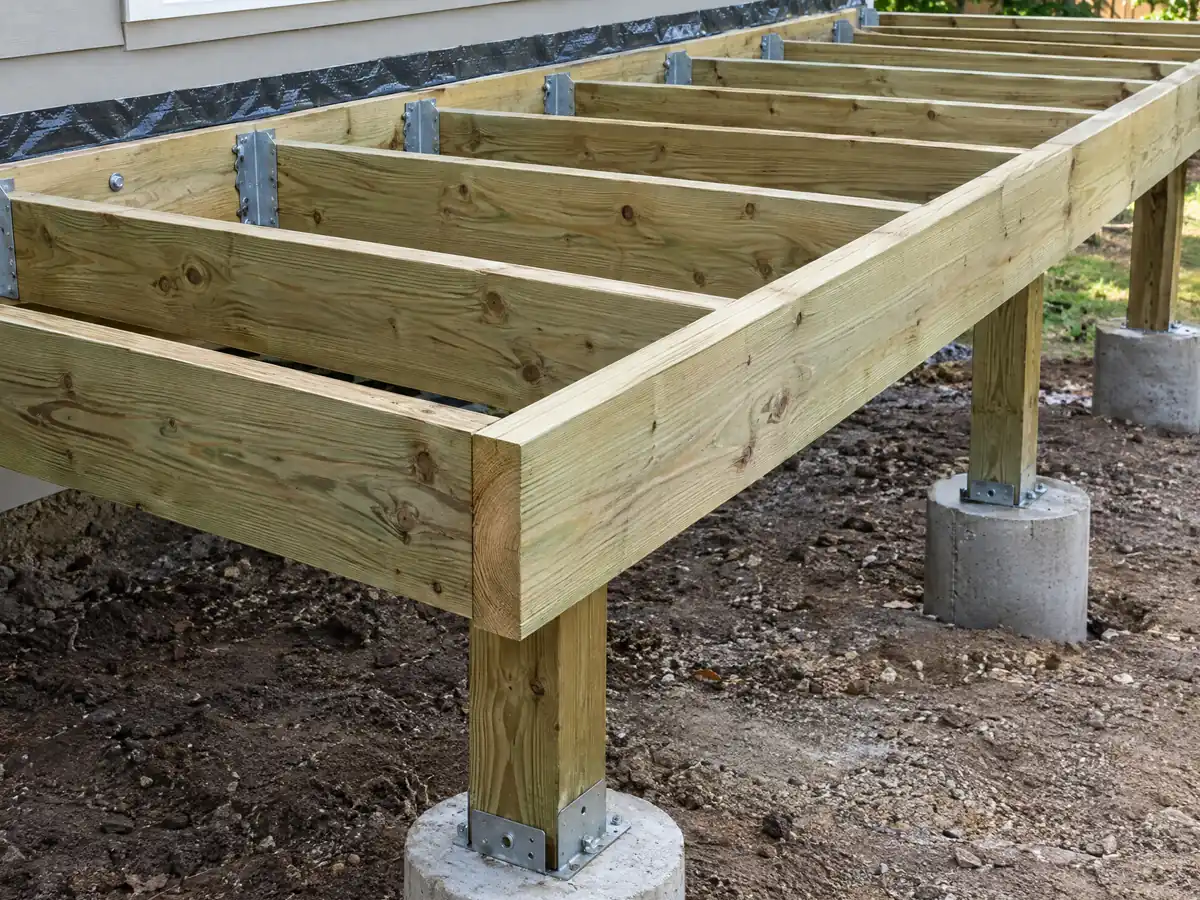
What does a deck builder charge in Bell, and is composite worth it?
In the Los Angeles edition of Remodeling magazine's 2025 Cost vs. Value report, a 16 by 20 foot deck with bench, planter, three steps and full railing costs $18,419 in treated wood and resells for $18,341, or 99.6 percent recouped. The composite version costs $26,872 and returns $19,845, or 73.9 percent. Wood costs less up front, while composite saves staining and leaves the wood-rot question behind.
Angi's Los Angeles page puts the average deck at $13,570, within a $6,335 to $20,871 range, and permits at $500 to $3,000. Our planning ranges from those sources are $45 to $75 per square foot for treated wood and $65 to $110 for composite. That makes a 400 square foot deck about $18,000 to $30,000 in wood and $26,000 to $44,000 in composite, with permits and engineering extra. We found no Bell study, so a visit sets the price.
A wood deck fits CSLB's C-5 framing class, and which class covers composite surfacing is unclear in anything we read. A deck that needs a permit must go to a licensed contractor even under $1,000. Our license check guide shows how to verify a number.
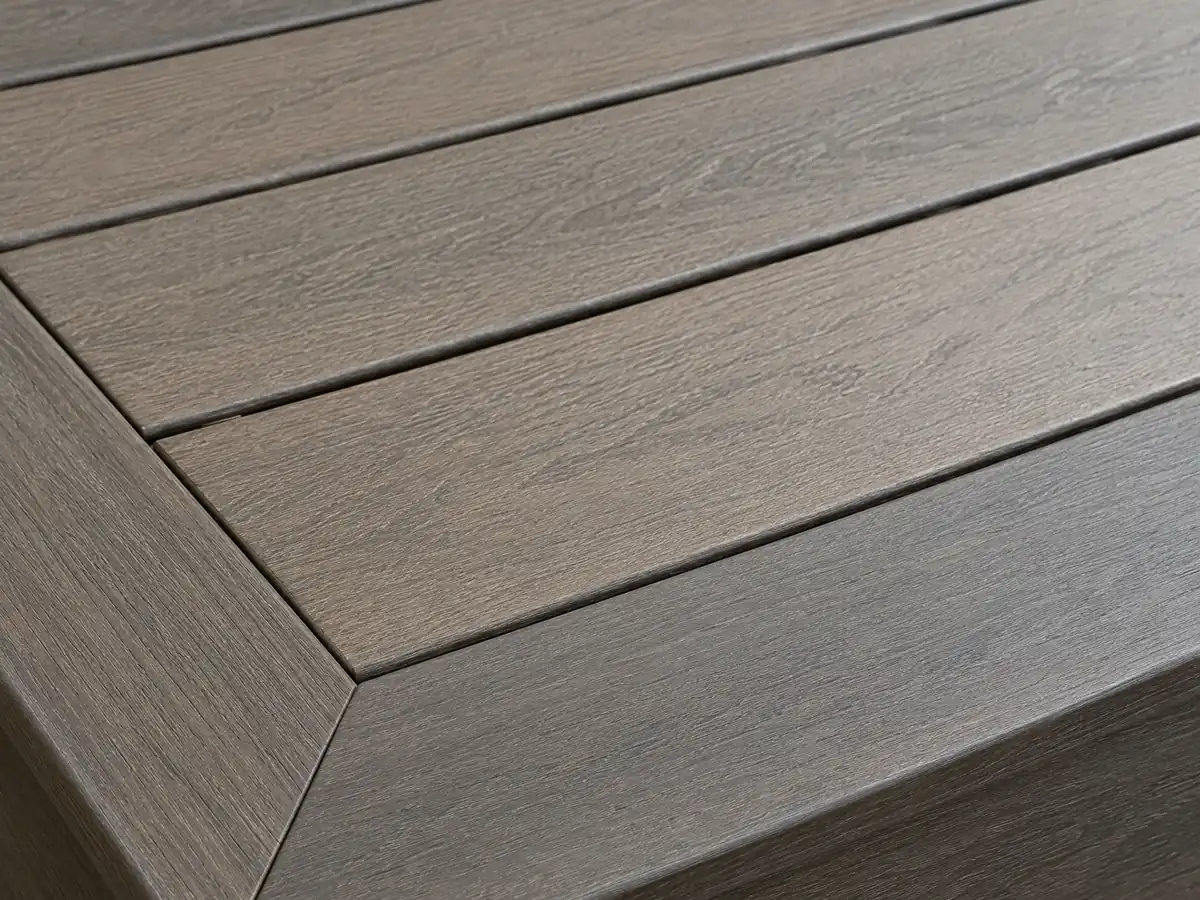
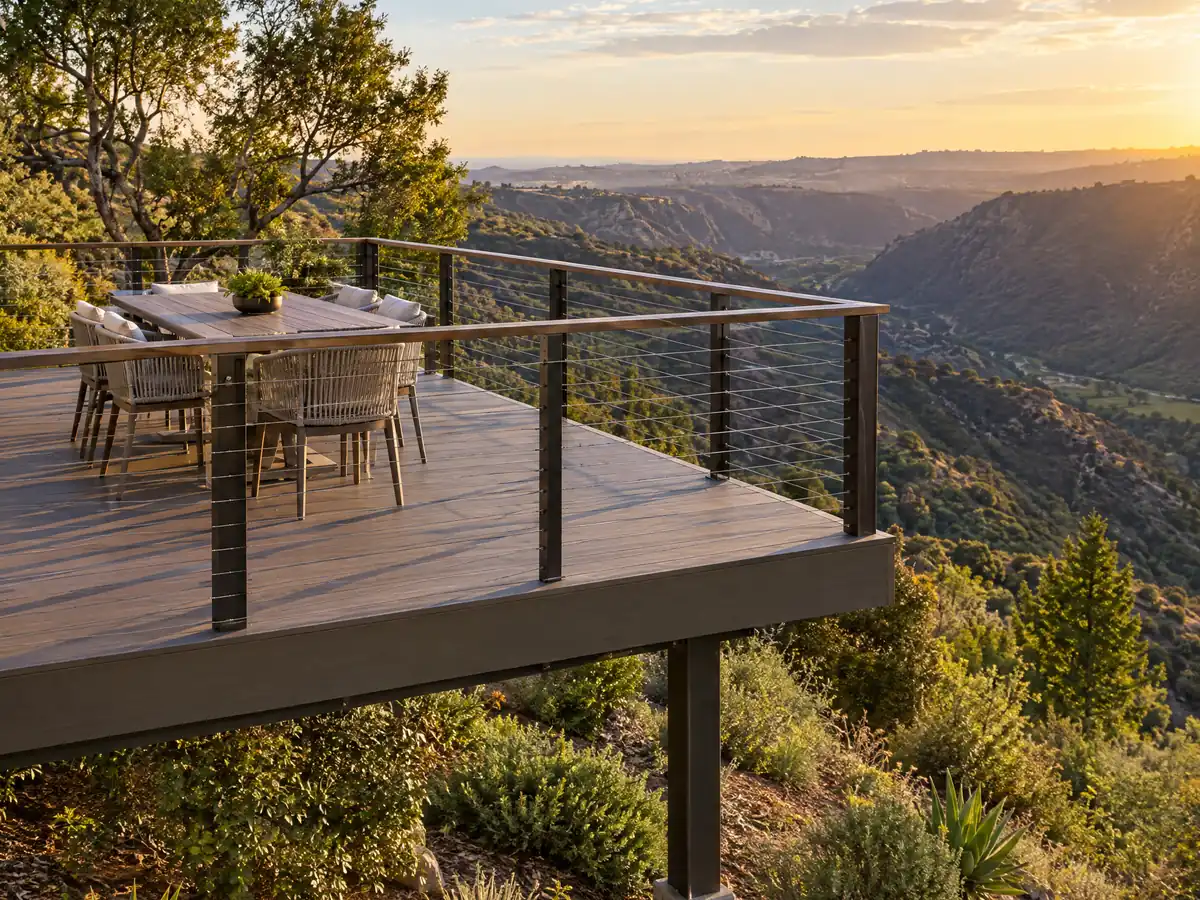
Deck photos from Bell and nearby communities
Footings, framing, railings and finished decks from Bell and nearby towns, shown at the stages that matter. Tap any photo to enlarge it.
What decks costs around Bell
Dollar figures here are Los Angeles planning ranges from our decks page, not a Bell bid, and permits, engineering and Planning review belong on separate proposal lines. For the same address, see flooring in Bell and concrete in Bell. Neighboring comparisons: deck building in South Gate, decks in Huntington Park and decks in Los Angeles.
| What it covers | Typical range |
|---|---|
| Pressure-treated wood deck | $45 to $75 per square foot |
| Composite deck | $65 to $110 per square foot |
| 16 by 20 foot wood deck (320 sq ft) | About $14,500 to $24,000 |
| 16 by 20 foot composite deck | About $21,000 to $35,000 |
| Hillside, second-story, rooftop and ipe decks | Priced by site visit |
| Permits and engineering | Quoted as separate lines |
Bell deck questions, answered
Do you need a permit to build a deck in Bell?
For anything above 30 inches, yes. Municipal Code 15.02.020 exempts only decks no more than 30 inches above grade that are not over a basement or a story below. Planning also reviews patios, porches and covers, so call Building and Safety and Planning at (323) 588-6211 before you build.
How big can you build a deck without a permit in Bell?
Bell's exemption list sets a 30 inch height limit and gives no square foot limit that we could read. The state model code adds 200 square feet for a detached deck. Because Planning reviews patios and porches over 200 square feet, treat that as the working line and confirm with the counter.
How high can a deck be without a railing in Bell?
Thirty inches above grade in the model code, since a guard is required where the walking surface is more than 30 inches up within 36 inches of the edge. That is the 2022 text; Bell adopted the 2025 edition, so ask the inspector whether the number changed.
Is railing height 36 or 42 inches for decks in Bell?
Forty-two inches in the model residential code, with openings that stop a 4 inch sphere. We read the 2022 text, and Bell adopted the 2025 edition in October 2025, so confirm the final numbers with Building and Safety.
Does deck repair in Bell need a permit?
Swapping boards in place is probably fine, but we found no Bell sentence that says so. Rebuilding framing, a ledger, posts, stairs or guards points toward a permit. Send photos of the damage to Building and Safety before hiring a deck repair crew, and ask in writing what the counter says.
What happens if a deck is built without a permit in Bell?
It can surface at sale. Chapter 15.38 requires a City report listing major work done without permits before a home is sold, and the report goes to the buyer at least 15 days before closing. We did not find Bell's penalty schedule, so ask the City what an unpermitted deck would face.
How much would a 16x20 deck cost in Bell?
For a 16 by 20 foot deck with bench, planter, steps and railing, the 2025 Cost vs. Value report for Los Angeles shows $18,419 in wood and $26,872 in composite. Angi's Los Angeles page shows a $13,570 average. We found no Bell study, so a site visit sets the real price.
Is it cheaper to build a wood deck or a composite deck in Bell?
Wood costs less to build, and the gap is large in the Los Angeles data: $18,419 for wood against $26,872 for composite, with 99.6 percent recouped against 73.9 percent. Composite saves staining later, while wood faces termites and rot, so weigh upkeep against the first bill.
Can I add a patio cover to my deck in Bell?
Usually, with Planning review. A patio cover under 200 square feet needs a Zoning Clearance, and a larger patio or porch needs administrative site plan review. In R-3, additions over 50 square feet go to site plan review. Ask Building and Safety separately whether the cover needs its own permit.
Send the address and a photo of the backyard
Give us the rough size, say whether the deck touches the house and how far it sits above the ground. We bring the zoning, footing and ledger questions to the first visit.