
Deck Builderin South Gate, CA
A deck builder in South Gate can skip a permit only for a small deck: 200 square feet or less, no more than 30 inches above grade, detached from the house and not serving an exit door. Anything attached, higher or larger needs a permit, and the City's amended code makes owning an unpermitted structure unlawful.
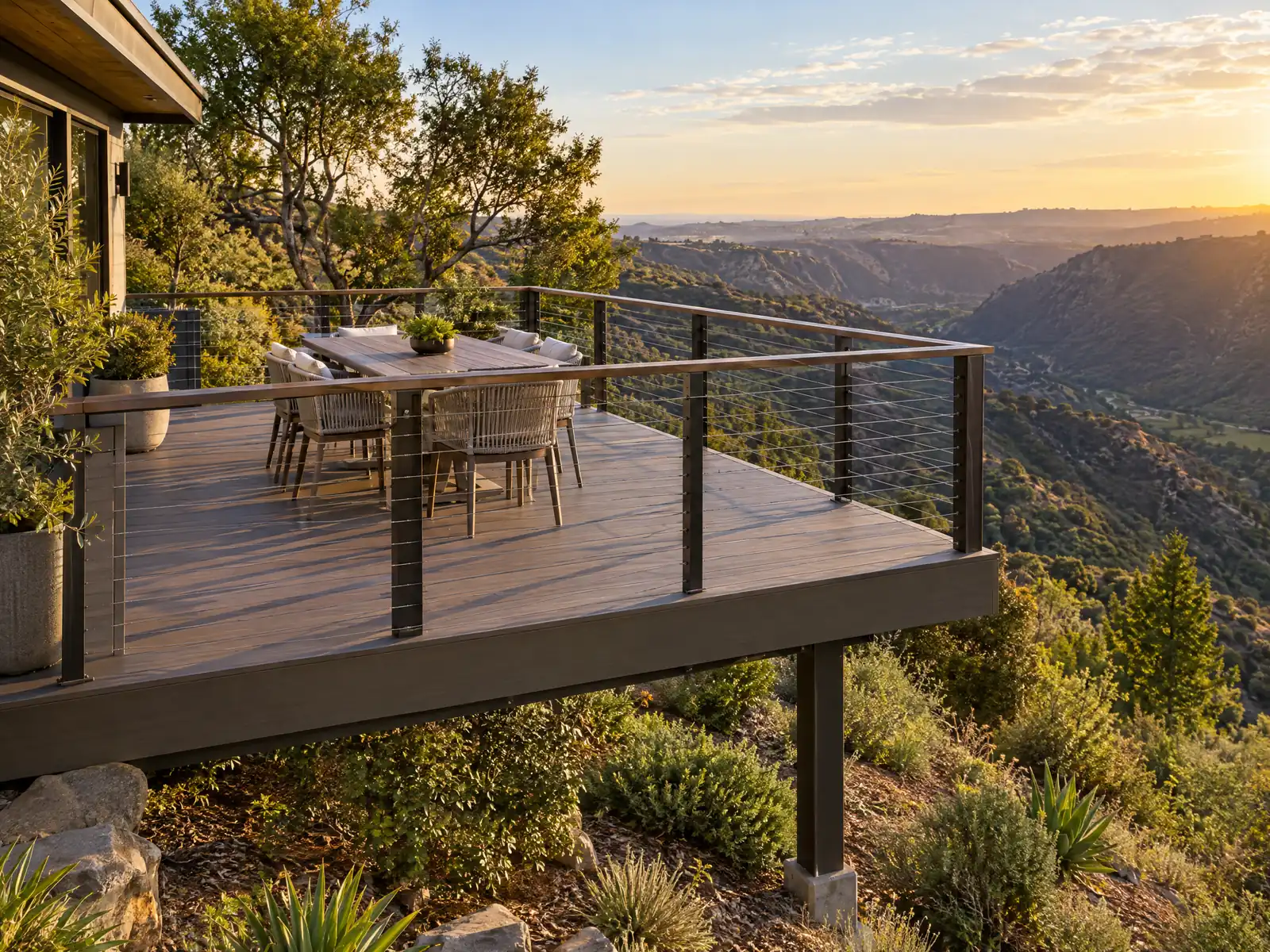
South Gate's backyards were laid out for working families. The Census Bureau's 2024 five-year estimates count 14,303 detached single-family homes, 55.6 percent of the city's roughly 25,700 housing units, and the median house dates from 1952. The first South Gate Gardens lots, sold in 1917, were mostly half an acre, but the Housing Element now calls the city essentially built out, and 54.7 percent of households rent, so decks here range from bungalow yards to the balconies of rented buildings.
MDG Builders, CSLB #1040337, is a general contractor in Tarzana. We draw the deck, ask South Gate Building & Safety what applies and run the job calendar, and licensed subcontractors do the framing, surfacing and railings, with license numbers and certificates of insurance available on request. Materials and sources are on our decks page, and the South Gate overview lists the other trades we handle, including concrete work and flooring.
What South Gate's permit pages and the residential code say about decks
Where decks permits come from in South Gate: City of South Gate Community Development Department, Building & Safety Division.
- The 'Do I need a permit' page says a permit is not required for decks up to 200 square feet that are no more than 30 inches above grade at any point, are not attached to a dwelling and do not serve the exit door, or for platforms, walks and driveways not more than 30 inches above grade and not over any basement or story below. It lists additions, patios and spas as needing a permit.
- South Gate adopts Appendix I (Patio Covers) of the 2025 California Building Code in Section 9.02.010, and Section 9.07.010 adopts Appendix AI (Patio Cover) of the California Residential Code, so patio covers are built to those appendices.
- Section 11.43.070 requires detached accessory structures in residential zones (other than ADUs) to be at least 5 feet from property lines, at least 6 feet from the main building and no more than 10 feet high (garages get 2 more feet to match the roof pitch), and not located in front of the main building. Accessory structures are not permitted above a detached garage, and non-habitable accessory buildings, except a pool bathroom, may not contain a bathroom.
- Section 11.43.070 also limits canopy structures on a residential lot to three days at a time, outside view of the public right-of-way, front or side yard or driveway, with rear-yard canopies capped at 200 square feet, 12 feet high and 20 feet long, and bans reflective, mirrored covering material.
Sources for these rules
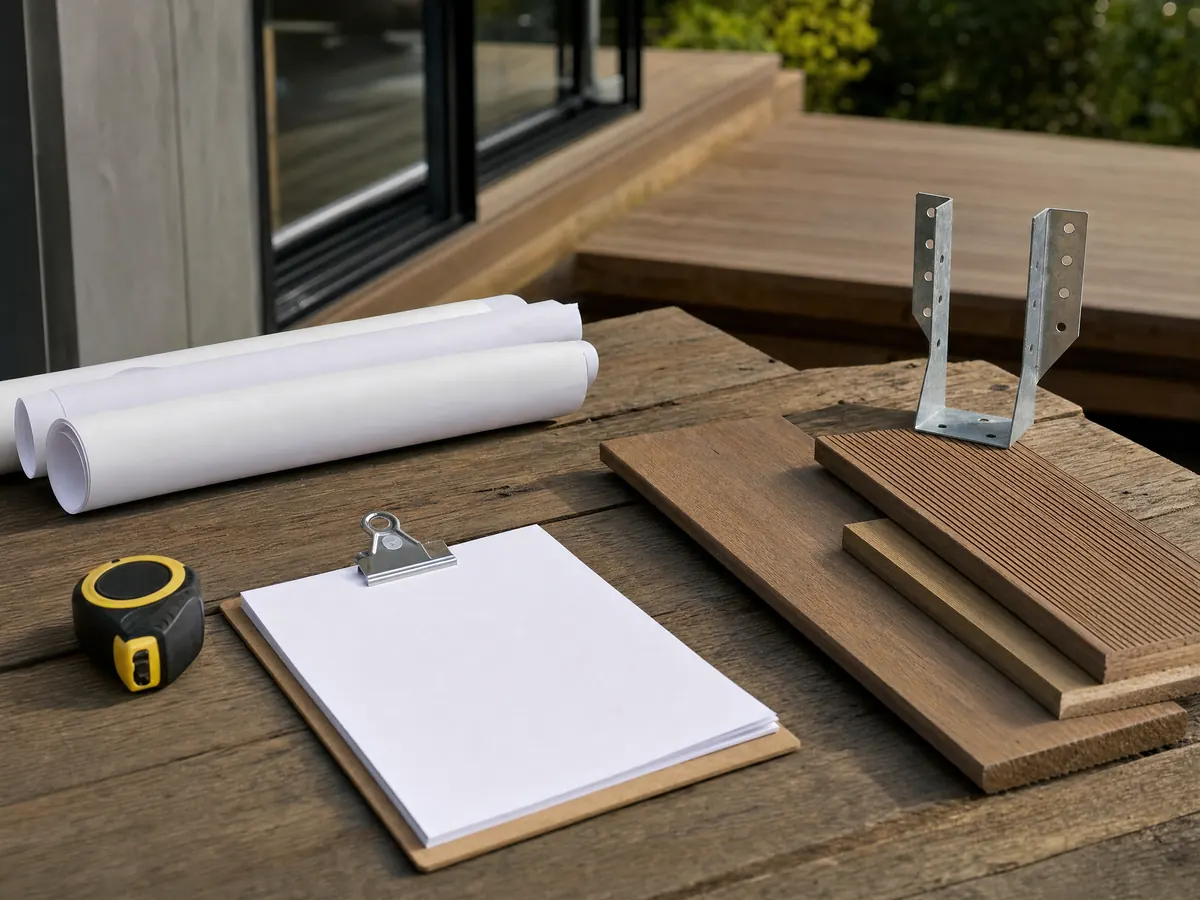
What is the largest deck you can build in South Gate without a permit?
The City's Do I need a permit page draws a narrow line: a deck of up to 200 square feet, no more than 30 inches above grade at any point, not attached to a dwelling and not serving the exit door. Platforms, walks and driveways no higher than 30 inches and not over any basement or story below are exempt as well. The same page lists additions, patios and spas as work that needs a permit.
Treat everything else as permit work. A deck bolted to the house, a platform at a back door that serves as the exit, or a 12-by-20 deck of 240 square feet all fall outside the exemption. Permits go to a California licensed contractor or to an owner-builder living on a property of two units or fewer, and every subcontractor needs a City business license.
Planning clears the zoning side before Building reviews plans, and Public Works approval applies to projects valued above $50,000 or new construction over 800 square feet, so a large deck project can touch three counters. The permit counter is open Monday through Thursday only, and City pages disagree on its hours, so call (323) 563-9549 before you drive over.
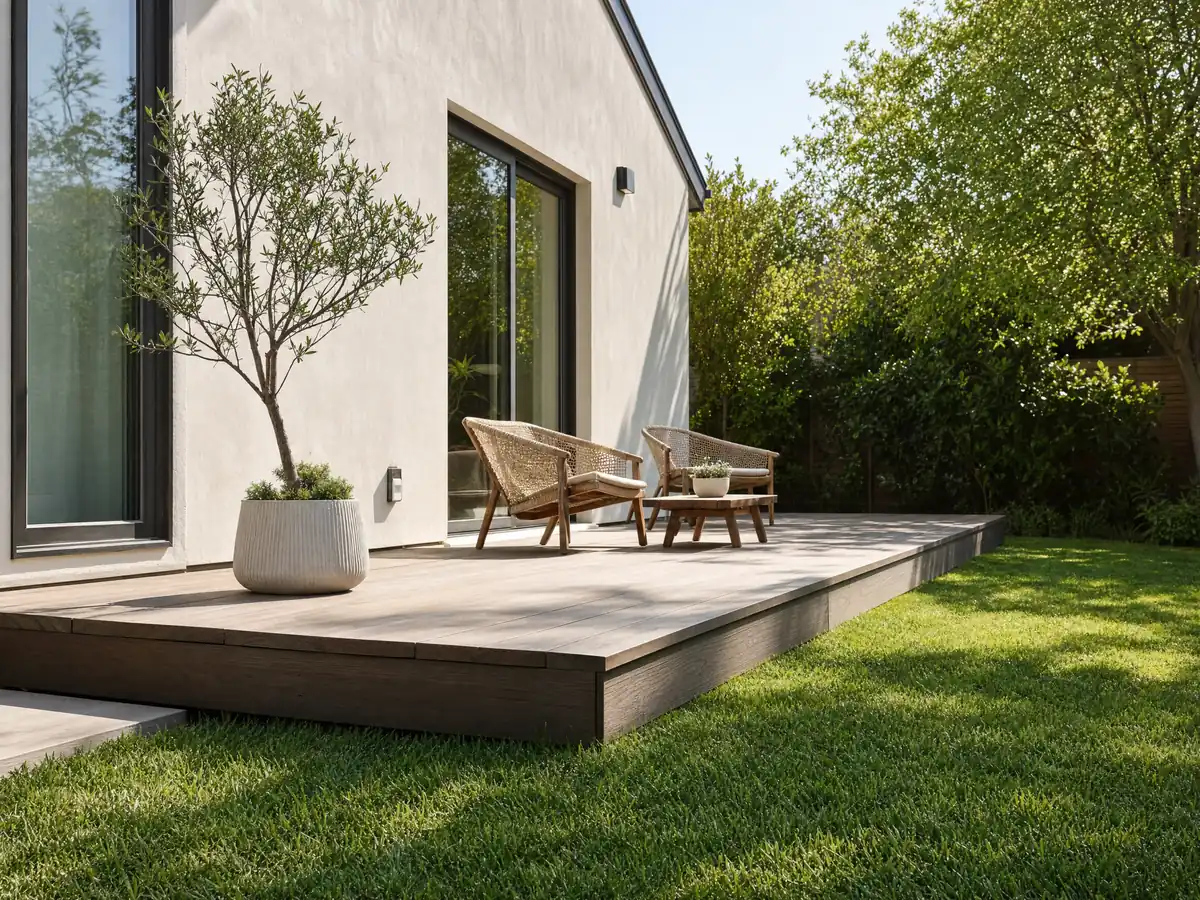
What happens to an unpermitted deck when a South Gate house is sold?
Chapter 9.62 puts the City in the room. Before a home goes into escrow, the owner must obtain a City report of the building record, and Building & Safety inspects from outside for zoning violations and major structural additions or alterations that appear to have been built without permits. The report costs $135 on the 2026-27 fee schedule, stays valid for one year and goes to the buyer, and the seller must fix violations by close of escrow unless the buyer signs a waiver.
We do not know how the inspector treats a rear deck, because the chapter speaks of major additions and alterations, so a big raised deck is a question for the Division and a low platform may never come up. What the code does say is plain. Section 114.1.1 of the amended Building Code bars anyone from owning, using, occupying or maintaining an unpermitted structure, including one built under a permit that later expired.
Legalizing means every applicable permit, plans with a plot plan, elevations and finish materials, and compliance with current code, and the Building Official may require finishes removed to expose the framing. A structure that cannot be legalized must be demolished or returned to its approved condition. Permits issued to legalize work expire after 60 days, and when work starts before the permit the amended code doubles the permit fees.
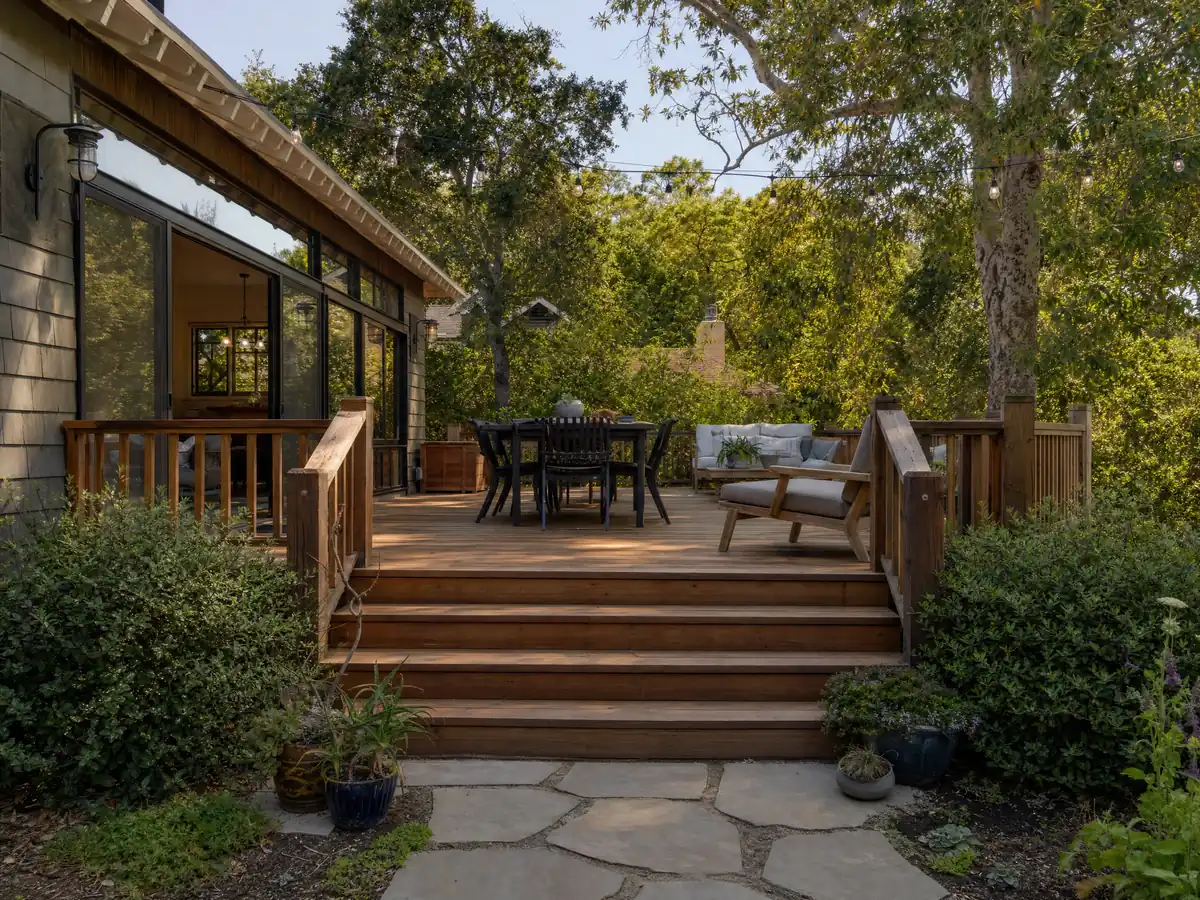
Where on a South Gate lot can a deck, pergola or patio cover go?
Zoning sets the frame. In the NL single-family zone, Table 11.25-1 gives lot coverage of 40 percent, a height of 2.5 stories or 35 feet, setbacks of 20 feet at the front and 5 feet on interior and rear lines, and 10 feet between buildings. The text we read does not say how an open deck counts toward coverage or the 5-foot rear line, so that answer comes from Planning, not from us.
Section 11.43.070 requires detached accessory structures to sit at least 5 feet from property lines and 6 feet from the main building, stand no more than 10 feet high and stay out of the front yard. Nothing may be built above a detached garage, and ask Planning whether a freestanding pergola counts as one of these structures before the footings are poured.
Patio covers are built to Appendix I of the California Building Code and Appendix AI of the Residential Code, which Sections 9.02.010 and 9.07.010 adopt. Canopy structures are different. Section 11.43.070 limits them to three days at a time, keeps them out of view of the street, the front and side yards and the driveway, caps a rear-yard canopy at 200 square feet, 12 feet high and 20 feet long, and bans reflective covering, so ask before hanging a sail over a deck.
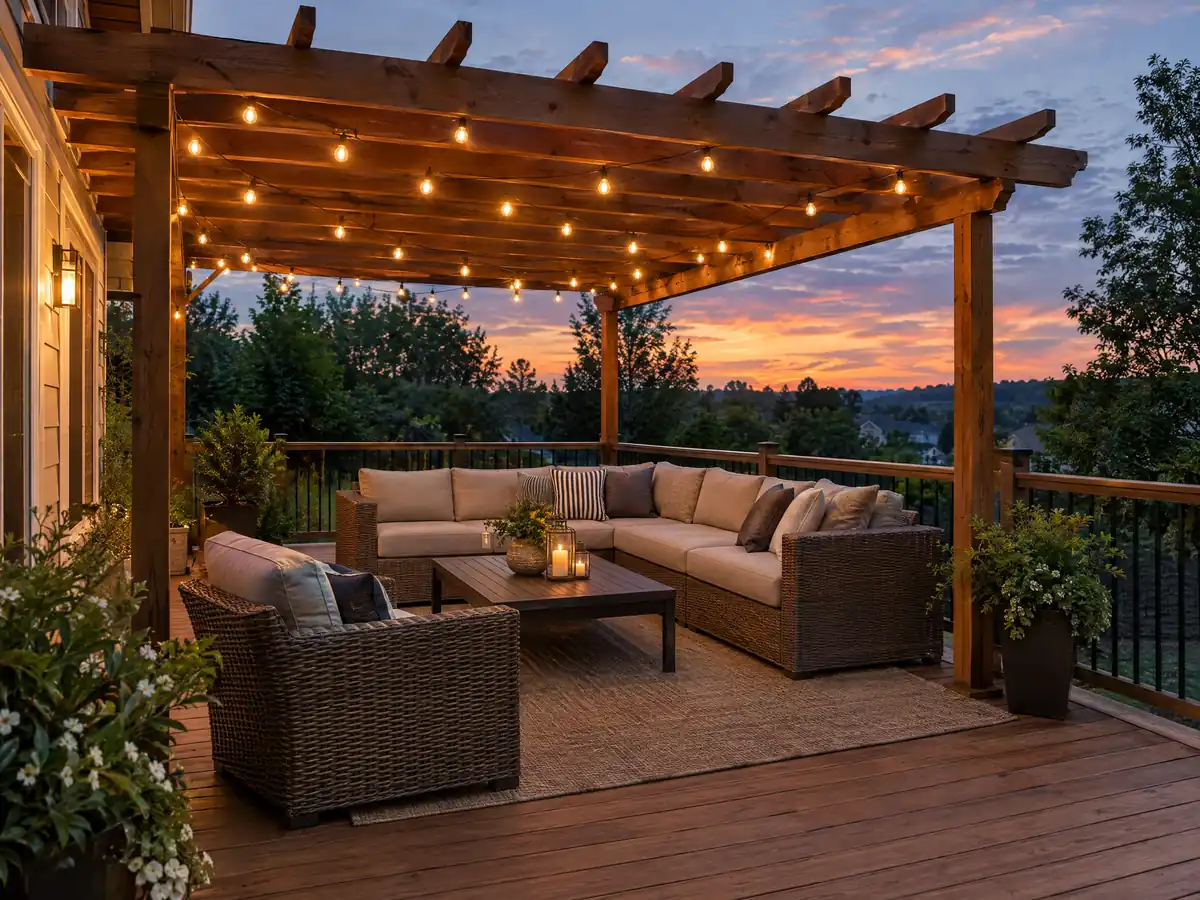
How is a deck attached to a 1940s South Gate house, and what does the ledger need?
The ledger, where deck meets house, is the first thing to get right. Section R507.9.1.1 of the 2022 California Residential Code calls for a pressure-treated ledger of at least 2 by 8, bars concentrated loads from beams or girders and does not permit the ledger on stone or masonry veneer. A bidder should open up stucco or siding to see what lies behind it, and since the City lists stucco work among jobs needing a permit, patching belongs in the same conversation.
Section R507.9.1.3 requires hot-dip galvanized or stainless steel fasteners and flashing under R703.4, and R507.9.2 calls for lateral hold-downs, either two devices of 1,500 pounds within 24 inches of each end or four of 750 pounds. South Gate's adopted design table lists Seismic Design Category D2 and an 85 mph wind speed, so framing and connectors are a plan-check detail, not guesswork.
A freestanding deck avoids the ledger but not the footings. Every post needs a footing sized for its load, and liquefaction mapping here is contested, with the State treating the whole city as elevated risk and City staff saying the water table is 80 to 100 feet or more down. Ask Building & Safety whether a soils report is expected for your footings.
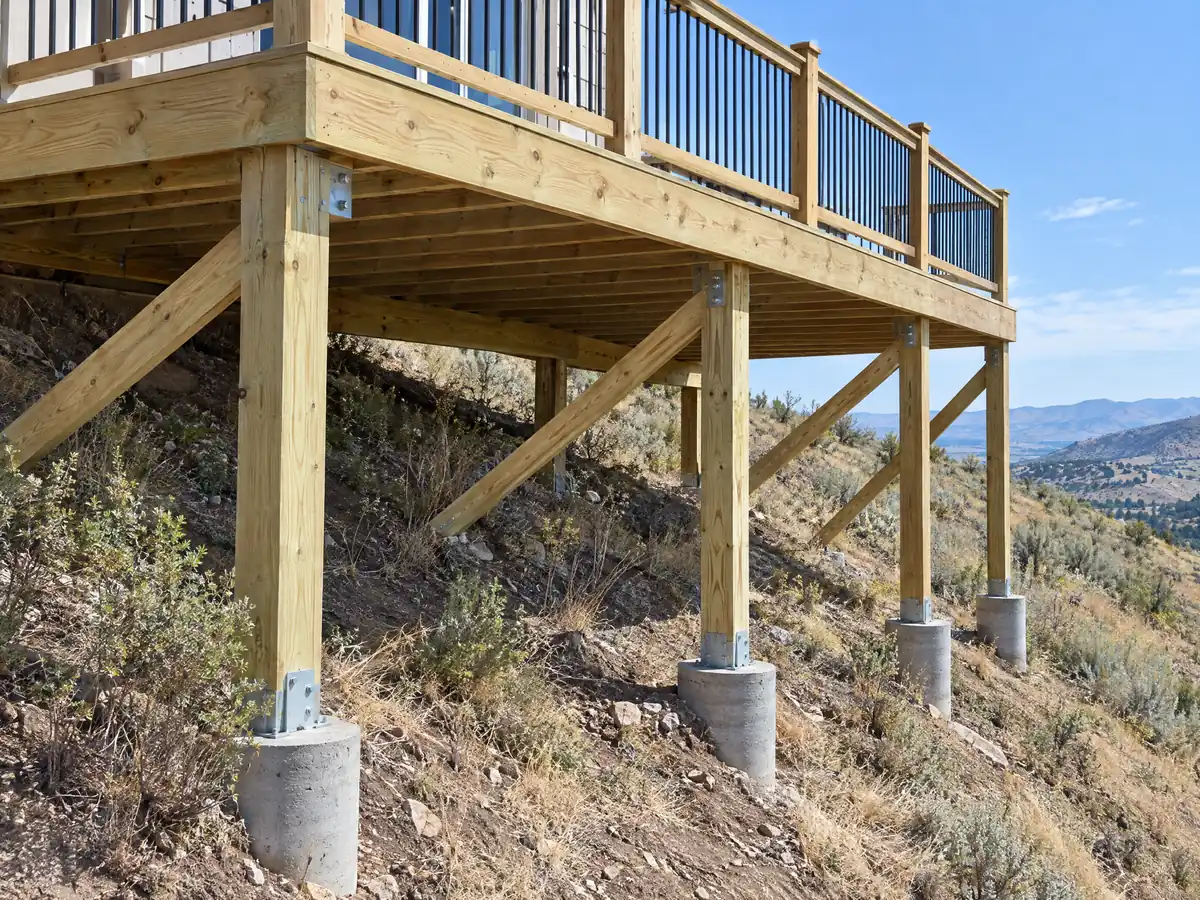
Is deck railing 36 or 42 inches in South Gate, and who inspects apartment balconies?
It is 42 inches, and a 3-foot-high deck does need one. Section R312.1.1 of the 2022 California Residential Code calls for a guard where the walking surface is more than 30 inches above grade within 36 inches of the edge, and 36 inches is already past that mark. R312.1.2 sets the minimum guard height at 42 inches, and R312.1.3 requires openings that stop a 4-inch sphere. South Gate says it enforces the 2025 California codes, and we cite the 2022 edition we could read, so ask the plan checker to confirm.
A platform at or below 30 inches needs no guard, which keeps a ground-level deck cheaper, while stairs and any landing above that line bring the railing back into the price.
Rented buildings carry a state rule too. California's balcony laws, SB 721 for apartments and SB 326 for condominiums, call for a licensed inspection of wood-framed balconies, decks, landings, stairs and railings more than six feet above ground in buildings of three or more units. About 16.9 percent of South Gate's housing units sit in buildings of five or more, and the deadlines were extended by AB 2579 while sources differ for condominiums, so ask the property manager what applies.
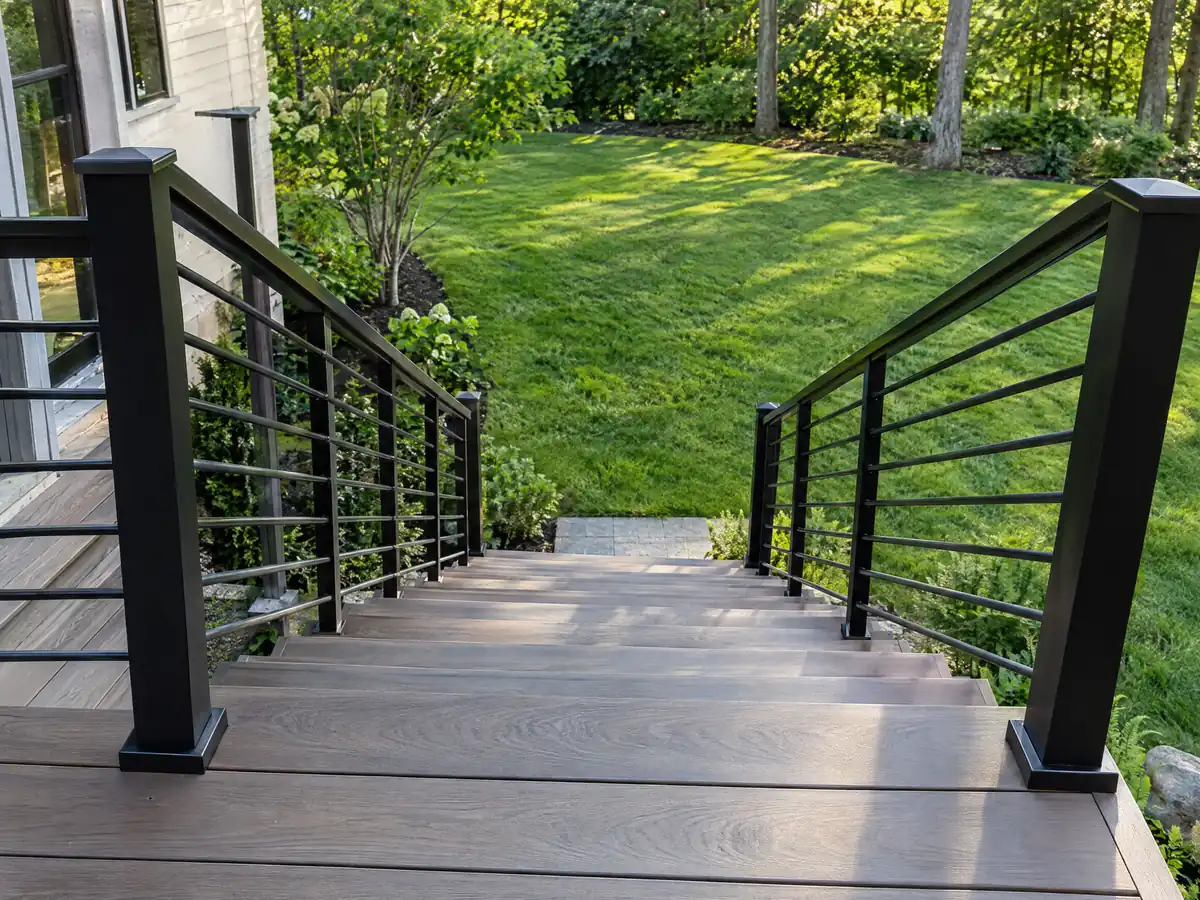
Do termites, sun and fire rules change which boards belong on a South Gate deck?
Termites matter most. University of California Integrated Pest Management says drywood termites are most prevalent in southern California and infest decks and fences, and that fixing moisture and sealing exterior wood helps. On an older house, ask the bidder how existing wood is inspected before new framing ties into it and how water is kept off the lumber.
Wildfire barely registers in South Gate's mapping. All 18 grid points we checked in the County's CAL FIRE Local Responsibility Area layer, revised August 2025, came back Non-Wildland, though that is a point sample and not a parcel map. The ember-resistant decking rules in Section R337.9.3 apply in wildland-urban interface areas, so ask Building & Safety to confirm none apply to your address.
Heat is the steadier issue. NOAA's 1991 to 2020 normals for the Downtown USC station show about 26 days a year at or above 90 degrees and an average August high of 84.0 degrees, so shade and board color change how a surface feels underfoot. We found no sourced heat figure for composite boards, so ask the supplier for one.
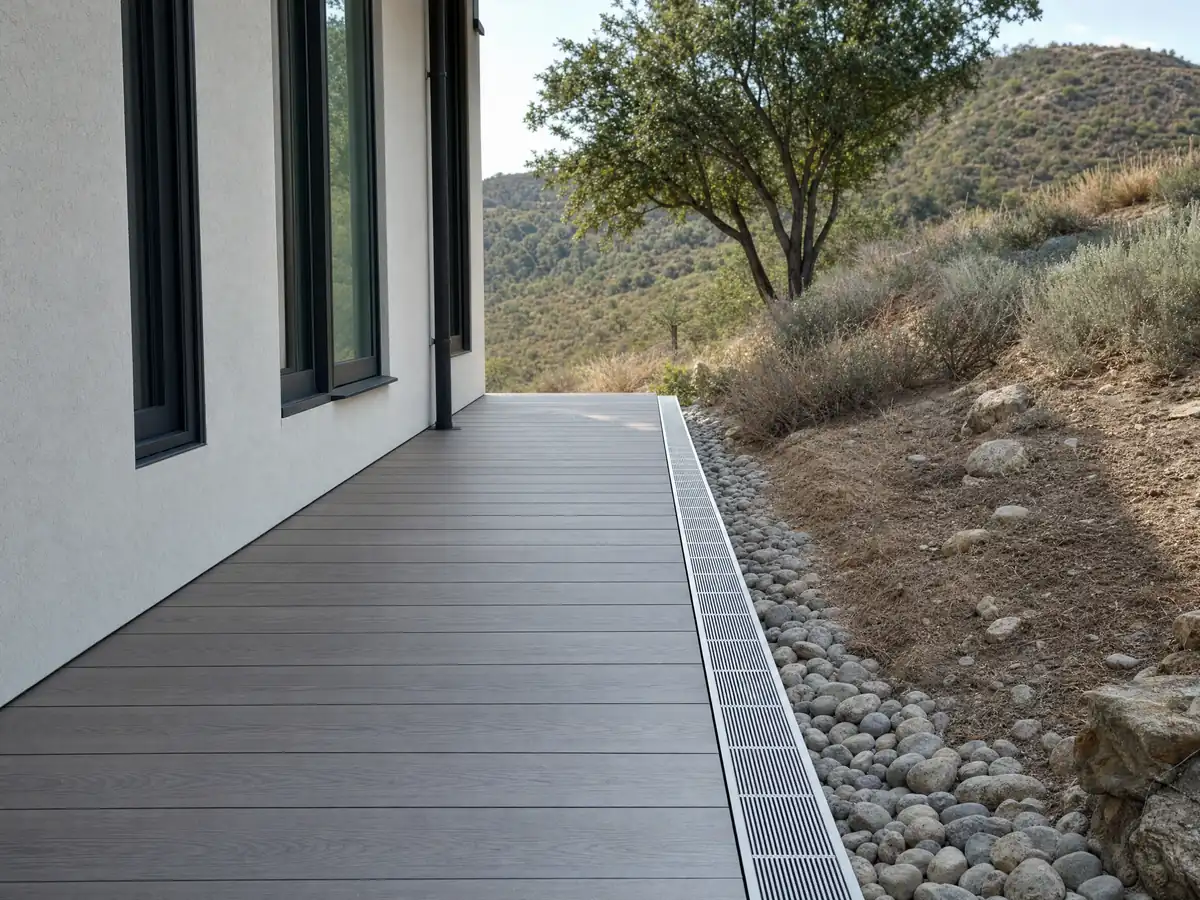
What does a deck builder charge in South Gate, and when does deck repair need a permit?
Repair is where the City's pages say least. The Building Permits page says permits are typically required for any home improvement, repair, alteration, construction or demolition, and we found no deck repair threshold. Replacing a few boards is routine, while replacing posts, beams, the ledger or stair stringers is structural, so ask the Division before ordering lumber, particularly for a deck over 30 inches or attached to the house.
We found no South Gate price study, so these are Los Angeles figures. The Cost vs. Value report from JLC and Zonda, 2025 Los Angeles edition, costs a defined 16 by 20 deck of treated wood with bench, planter, three steps and full railing at $18,419 and a composite version at $26,872, with resale recovering 99.6 and 73.9 percent. Angi's Los Angeles page says $45 to $90 per square foot. We use $45 to $75 for pressure-treated wood and $65 to $110 for composite, which puts 320 square feet near $14,500 to $24,000 and $21,000 to $35,000.
Permits, engineering and railings sit outside those ranges. CSLB's C-5 class covers framing and rough carpentry, and Business and Professions Code section 7057(b) lets a general building contractor take a framed deck as a prime contract. We found no CSLB statement on which class covers composite surfacing, so ask every bidder what the subcontractor holds, using our license check guide.
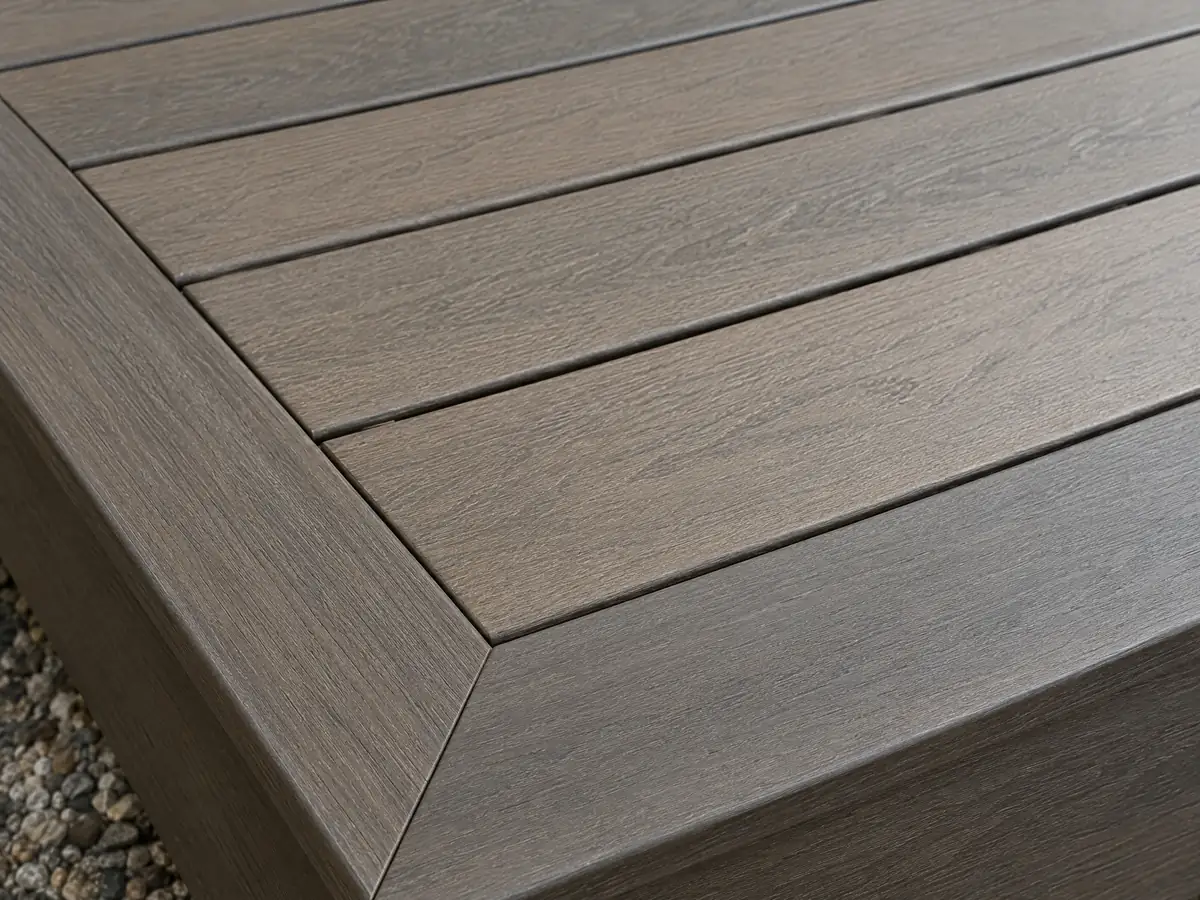
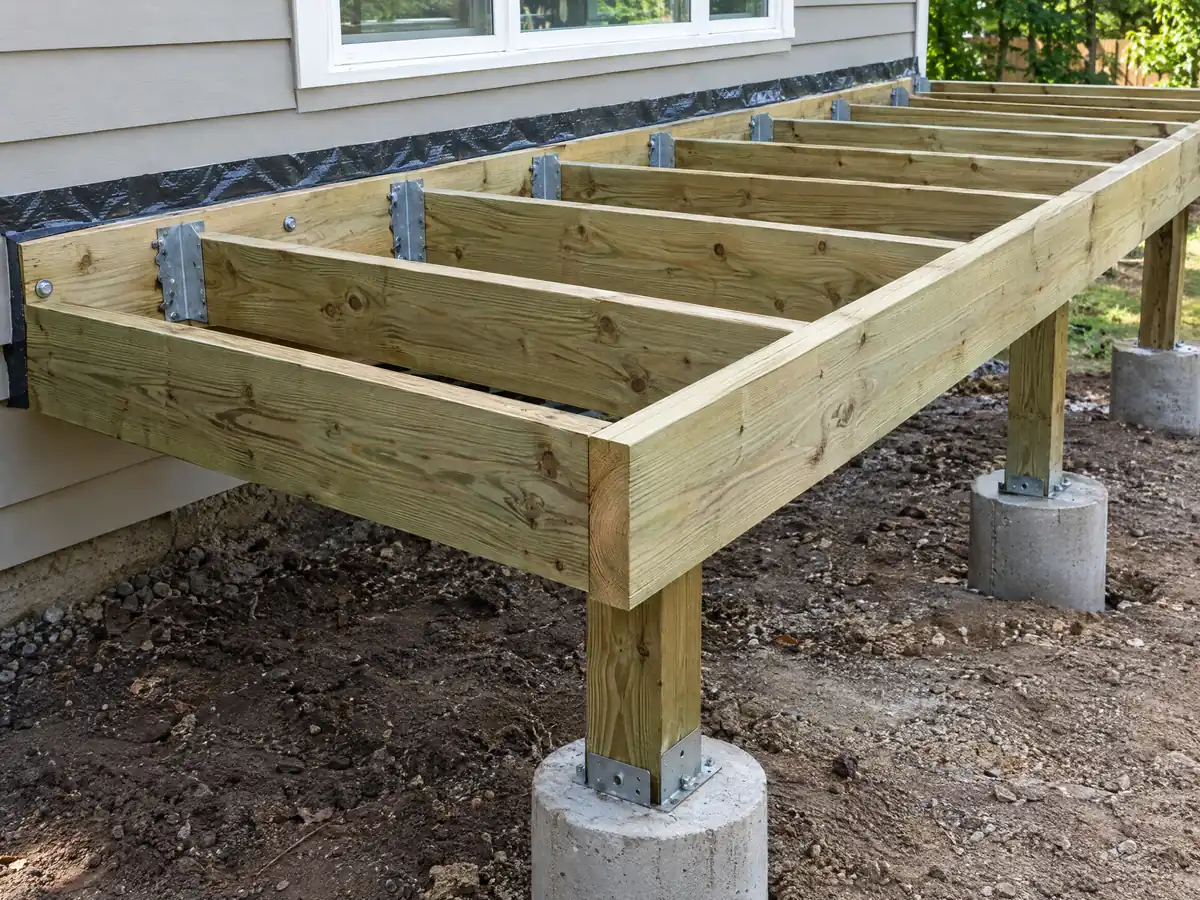
Deck photos from South Gate and nearby communities
Six photos of decks around South Gate and its neighbors, from low platforms and footings to railings, pergolas and composite boards. Tap any photo to enlarge it.
What decks costs around South Gate
The ranges above are Los Angeles figures from the sources behind our decks page, not a South Gate quote, and the subcontractor guide explains which trade does which part. Nearby pages: decks in Los Angeles, deck building in Downey, decks in Compton, decks in Carson, decks in Glendale, decks in Pasadena, concrete work in South Gate and flooring in South Gate. For Lynwood, Bell Gardens, Cudahy, Huntington Park and Paramount we have no deck page yet.
| What it covers | Typical range |
|---|---|
| Pressure-treated wood deck | $45 to $75 per square foot |
| Composite deck | $65 to $110 per square foot |
| 16 by 20 foot wood deck (320 sq ft) | About $14,500 to $24,000 |
| 16 by 20 foot composite deck | About $21,000 to $35,000 |
| Hillside, second-story, rooftop and ipe decks | Priced by site visit |
| Permits and engineering | Quoted as separate lines |
Other work we manage in South Gate
South Gate deck questions, answered
Can I build a deck without a permit in South Gate?
Only a small one. The City's permit page exempts a deck of 200 square feet or less that sits no more than 30 inches above grade, is not attached to a dwelling and does not serve the exit door. Anything attached, taller or larger needs a permit. Call Building & Safety at (323) 563-9549, Monday through Thursday, to confirm your plan.
What is the largest deck you can build without a permit in South Gate?
Up to 200 square feet, so a 10-by-20 deck just reaches the limit. It must also stay within 30 inches of grade at every point, stand free of the house and not serve the exit door. A 12-by-20 deck of 240 square feet needs a permit, as does any deck bolted to the house.
What happens if a deck is built without a permit in South Gate?
The owner faces Section 114.1.1 of the City's amended code, which makes owning or occupying an unpermitted structure unlawful. Legalizing it requires plans, current code compliance and sometimes removal of finishes to expose framing, and an unfixable structure is demolished. The pre-sale report, $135 on the 2026-27 fee schedule, also looks from outside for unpermitted additions.
How much would a 20x20 deck cost in South Gate?
Roughly $18,000 to $30,000 in pressure-treated wood and $26,000 to $44,000 in composite, found by multiplying 400 square feet by Los Angeles ranges of $45 to $75 and $65 to $110 per square foot. Permits, engineering and railings are extra, and these are medium to medium-low confidence figures, not a quote.
Can you build a deck for $10,000 in South Gate?
Only a small wood deck. At $45 to $75 per square foot, $10,000 covers roughly 130 to 220 square feet, and composite at $65 to $110 stretches to about 90 to 155 square feet. Permits, engineering and railings sit outside those figures, so a site visit decides whether your size fits the budget.
Is it cheaper to build a wood deck or composite deck in South Gate?
Wood costs less up front. The 2025 Cost vs. Value report prices a 16 by 20 wood deck at $18,419 and a composite one at $26,872 in Los Angeles. Composite recovers less at resale in that report, 73.9 percent against 99.6, but wood asks for more upkeep and termite attention.
Is railing height 36 or 42 inches for decks in South Gate?
Forty-two inches under the 2022 California Residential Code, which requires a guard once the walking surface is more than 30 inches above grade within 36 inches of the edge. Openings must stop a 4-inch sphere. The City says it enforces the 2025 codes, so ask the plan checker to confirm the figures.
Does a 3 foot high deck need a railing in South Gate?
Yes. Thirty-six inches is above the 30-inch trigger in the California Residential Code, so the edge needs a guard at least 42 inches tall with openings that stop a 4-inch sphere. A deck at or below 30 inches generally needs none, but stairs and landings above that line still do.
Do freestanding decks need footings in South Gate?
Yes. Each post needs a footing sized for its load even when the deck never touches the house, which only removes the ledger. The State maps the whole city as elevated liquefaction risk while City staff dispute it, so ask Building & Safety whether a soils report is expected for your footings.
Does deck repair need a permit in South Gate?
It depends on what is replaced. The City says permits are typically required for repairs and alterations, but we found no deck repair threshold. A few new boards are routine, while posts, beams, a ledger or stair stringers are structural and should go to Building & Safety first, especially on a deck over 30 inches or attached to the house.
Tell us the yard, the house height and the size you want
Send the address, how high the back door sits above the ground and a rough size. We check the 200 square foot line and the setbacks before we draw anything.