
Concrete Companyin South Gate, CA
A concrete company in South Gate can pour a driveway or walk on private property without a building permit, but the City lists patios as permit work, and zoning caps front yard paving at the driveway and a short entry walk. Anything at the curb needs a Public Works permit, and block walls over 30 inches need a building permit.
South Gate is a city of concrete in more ways than one. Firestone's tire plant turned out its first tire on June 15, 1928, General Motors arrived in 1936, and homes for the workers went up on small lots, almost half of them between 1940 and 1959 according to the Housing Element. The 2024 five-year estimates put the median house at 1952 and count about 25,700 homes on 7.49 square miles. The Housing Element calls the city essentially built out, so new concrete here nearly always replaces old concrete.
MDG Builders, CSLB #1040337, is a general contractor in Tarzana. We measure the site, ask South Gate Building & Safety and Public Works what applies, and schedule the job, while a licensed concrete subcontractor forms and places the slab, and you can ask that firm for its license number and proof of insurance. Prices and materials are on our concrete page, and the South Gate overview lists the other trades we manage here, such as flooring and decks.
What South Gate's code says about concrete and paving
Where concrete permits come from in South Gate: City of South Gate Community Development Department, Building & Safety Division.
- The 'Do I need a permit' page exempts sidewalks and driveways within private property, but any work in the public right-of-way (such as a drive approach, curb or sidewalk in the parkway) needs an encroachment permit from Public Works with insurance, a City business license, a hold harmless form, plans and a schedule.
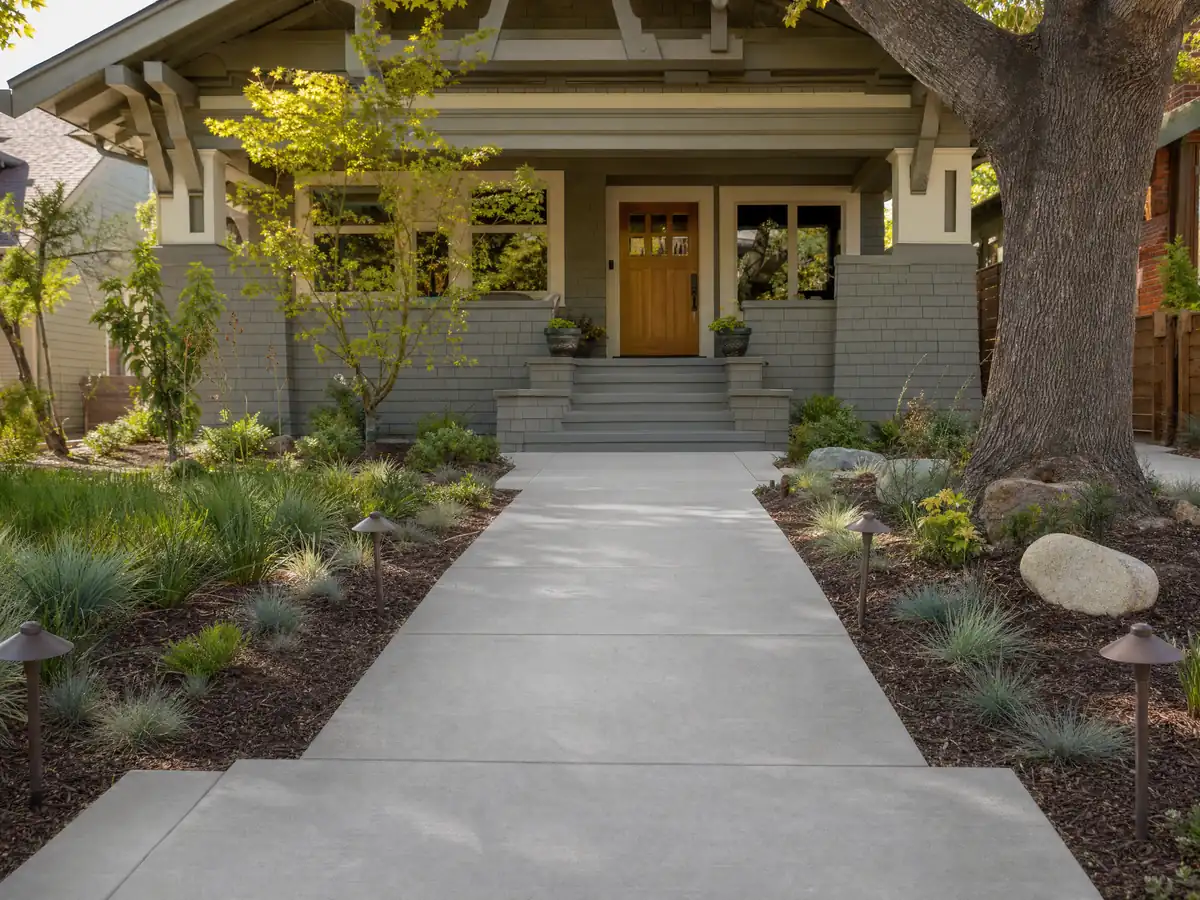
- Section 11.25.070(A) limits hardscape on grade in the front setback (driveways, walkways, steps, terraces) to the permitted driveway and a six-foot-long access walk to the entry of the residence.
- Section 11.30.050(C) says driveway width is limited to what is needed to reach the permitted parking spaces, driveways must run to a garage or carport, and a driveway depth between 3 feet and 18 feet from the back of the curb is not permitted in the NL and NM zones (3 feet is allowed for short driveways on small lots, 18 feet or more is the standard for resident or guest parking).
- Section 11.25.070(B) says parking of vehicles may occur only in the designated driveway or garage, vehicles for daily use may not be parked or stored for more than 36 hours in a required setback area other than a designated parking space, and recreational vehicles, boats and trailers may not be parked or stored on a designated driveway.
- The Housing Element's description of the Safety Element says it requires new projects to use low-impact development techniques and to use pervious paving and landscaping to increase on-site stormwater retention, and says the entire city is at risk of seasonal urban flooding where storm drains and pumping stations are overburdened.
How much of a South Gate front yard can be paved, and how deep can a driveway be?
Less than most owners assume. Section 11.25.070(A) of the zoning code limits on-grade hardscape in the front setback to the permitted driveway and a six-foot-long access walk to the entry, which leaves no room for a second pad, a wide terrace or a decorative apron without Planning's say. The same section allows parking only on the designated driveway or in a garage, and a daily-use vehicle may not sit more than 36 hours in a required setback outside a designated space.
Section 11.30.050(C) adds a depth rule. A driveway between 3 and 18 feet deep, measured from the back of the curb, is not permitted in the NL and NM zones, so the options are a 3-foot driveway on a small lot where the code allows it or a standard 18 feet or more that fits a car. Width is limited to what the permitted parking spaces need, and the driveway has to run to a garage or carport. Recreational vehicles, boats and trailers may not be parked on a designated driveway.
Planning approval comes before Building review, and Planning takes applications only by email at planninginfo@sogate.org, so a plot plan for a widened driveway starts there. Its approvals stay valid for one year, which is a clock any concrete schedule has to respect.
Who permits a South Gate driveway apron, curb or sidewalk, and what does the City ask for?
Public Works does, under a separate encroachment permit. The City's permit page exempts sidewalks and driveways inside private property from a building permit, but a drive approach, curb or sidewalk in the parkway lies in the public right-of-way. The application goes by email to the Public Works permit address, by mail or to the front counter, and an incomplete application is not reviewed.
A contractor attaches the permit application, a certificate of insurance naming the City as additionally insured, a City business license, the Hold Harmless and Indemnification form, plans, a schedule showing working days and, where it applies, a traffic control plan. The page lists no fee. A resident placing a bin in the right-of-way needs the application, the hold harmless form, plans and a schedule as well.
Plan the apron before the first saw cut, because a new slab that stops at the property line and leaves a broken approach is a half-finished job. Neighboring cities write their own approach rules, as Downey and Compton show, and South Gate's list is the one that binds here.
What should you know before breaking out a pre-war South Gate slab, walk or driveway?
Expect surprises under it. The Housing Element says the oldest housing sits in the western part of the city, west of Long Beach Boulevard, and that City staff estimate about 25 percent of units have deferred maintenance or outdated systems. A camera look at the sewer lateral before demolition costs less than a crushed pipe, though the City pages we read set no rule for it.
Landmark houses are a narrow exception. Chapter 7.68 lets the Council designate culturally significant landmarks, among them the 1939 former library at 8680 California Avenue with its tile mosaic and the Seaborg House, and Section 7.68.050 requires a Council hearing before the City issues a permit that affects one. We found no historic district in the pages we read, so for an ordinary bungalow the question is condition, not approval.
Breaking out concrete creates tonnage. On permitted jobs the City refunds its construction and demolition deposit after final inspection when 65 percent or more of the debris is recycled or reused, prorated below that, with paperwork due within 30 days and processing taking 6 to 10 weeks. Signing the City's hauler contract with Universal Waste avoids a 5 percent deposit fee, so ask the bidder who handles it and which yard takes the rubble.
Does a new driveway or slab help when a South Gate garage was turned into living space?
It can, but only if the room goes back to being a garage. Chapter 9.60, the City's 1991 amnesty for illegal garage conversions, recorded the Council's finding that numerous conversions exist, mostly detached garages remodeled into rental space. It covered only attached garages converted before 1960 and fully absorbed into the floor plan, its application window closed after six months, and a certificate lasts only until substantial remodeling, a 10 percent or greater increase in habitable floor space, when off-street parking under Chapter 11.33 must be restored.
The Housing Element says garage conversions are still common, and the pre-sale inspection under Chapter 9.62 checks from the outside for unpermitted conversions and major additions before any sale. Restoring a garage means a door opening, a floor that takes a car and often driveway work. The City's fee schedule did not read cleanly enough for us to print a building fee, so ask Building & Safety how a restoration would be approved before any slab is formed. A legal conversion into an ADU is a separate route through the City's ADU Program.
What height of block wall or retaining wall needs a permit in South Gate?
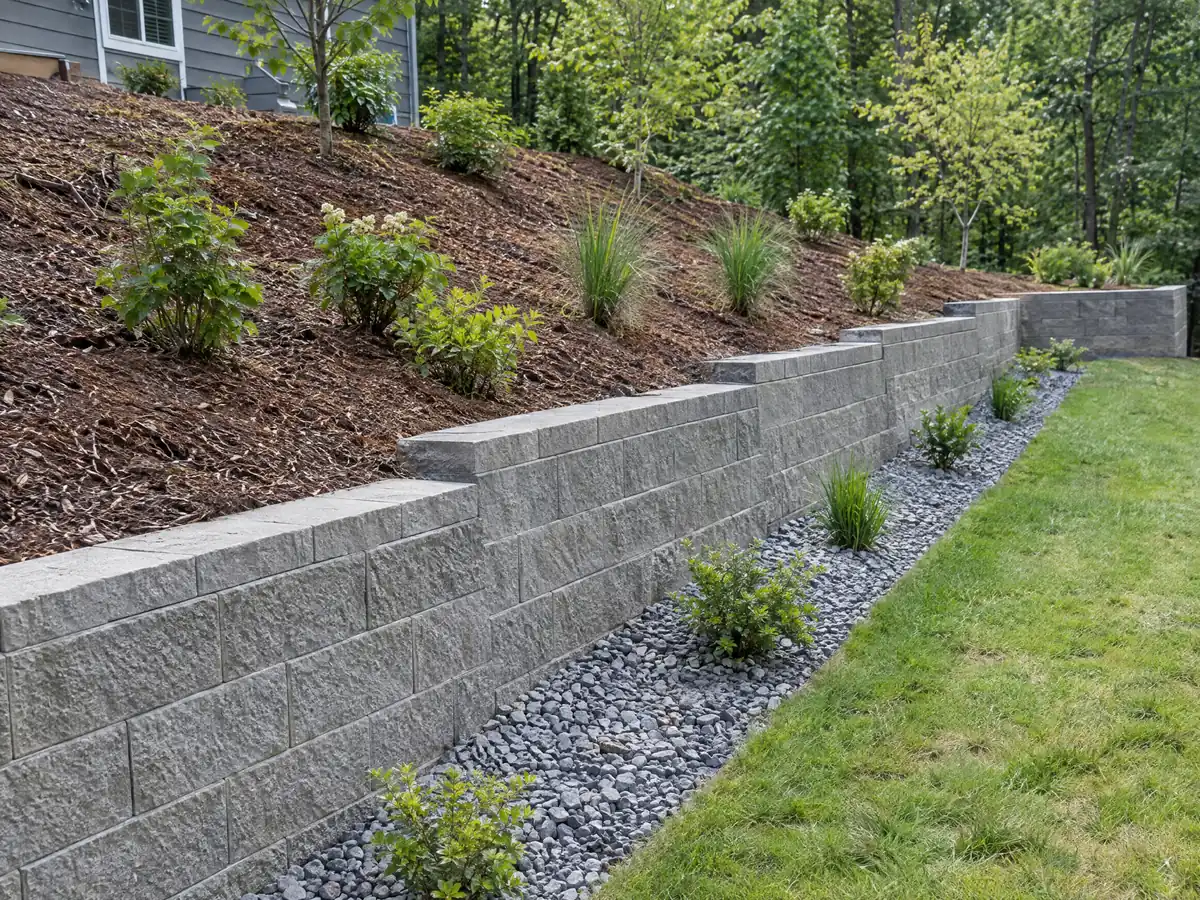
Walls carry their own thresholds. The permit page requires a building permit for block wall fencing more than 30 inches above grade. Retaining walls get a bigger allowance: the City exempts those no taller than four feet from footing bottom to wall top, unless the wall supports a surcharge or certain liquids.
Fences not over 7 feet need no building permit but still follow Planning's height rules. In the NL single-family zone, Table 11.25-1 limits walls and fences in the front setback to 24 to 36 inches and along interior lines to 6 feet, with 7 feet by administrative permit and 8 feet where the lot adjoins commercial, industrial, alley or similar uses. Barbed wire is prohibited. For a wall on a shared line, the City's form has the adjoining owner sign, notarized, that half the width of the wall sits on that owner's land.
CSLB's C-29 masonry class lists concrete block walls for structures and fences, while its C-8 class covers poured concrete. CSLB does not say which class builds a poured retaining wall, so ask each bidder which license the sub holds. Our subcontractor explainer lists what to request.
Can concrete be poured in South Gate's heat and rain, and does flood mapping matter for a new patio?
Yes, with scheduling. NOAA's 1991 to 2020 normals for the Downtown USC station, the nearest with full normals, show 14.25 inches of rain a year, about 82 percent of it from December through March, and about 26 days a year at or above 90 degrees. A pour is usually booked for a dry stretch, and in a hot week the crew starts early and keeps the surface damp while it cures. Ask how fresh concrete is covered if rain arrives.
Water also shapes the design. The Housing Element says the Safety Element asks new projects to use low-impact development and pervious paving to hold more stormwater on site, and that the whole city faces seasonal urban flooding where storm drains and pumping stations are overburdened. Flood mapping disagrees with itself: the Housing Element puts nearly half the city in FEMA's 500-year zone, while the County's flood layers returned no hits at our sample points. Check your parcel on the FEMA map and ask the bidder where runoff will go.
Liquefaction mapping is contested too, since the State treats all of South Gate as elevated risk while City staff say the water table sits 80 to 100 feet or more down. A garden walk is not designed around that debate, but footings and tall walls are, so ask Building & Safety whether a soils report is expected. We found no construction-hours window in the noise chapter, so ask the Division when saws and mixers may run.
What does concrete work cost in South Gate for a patio, walk or driveway?
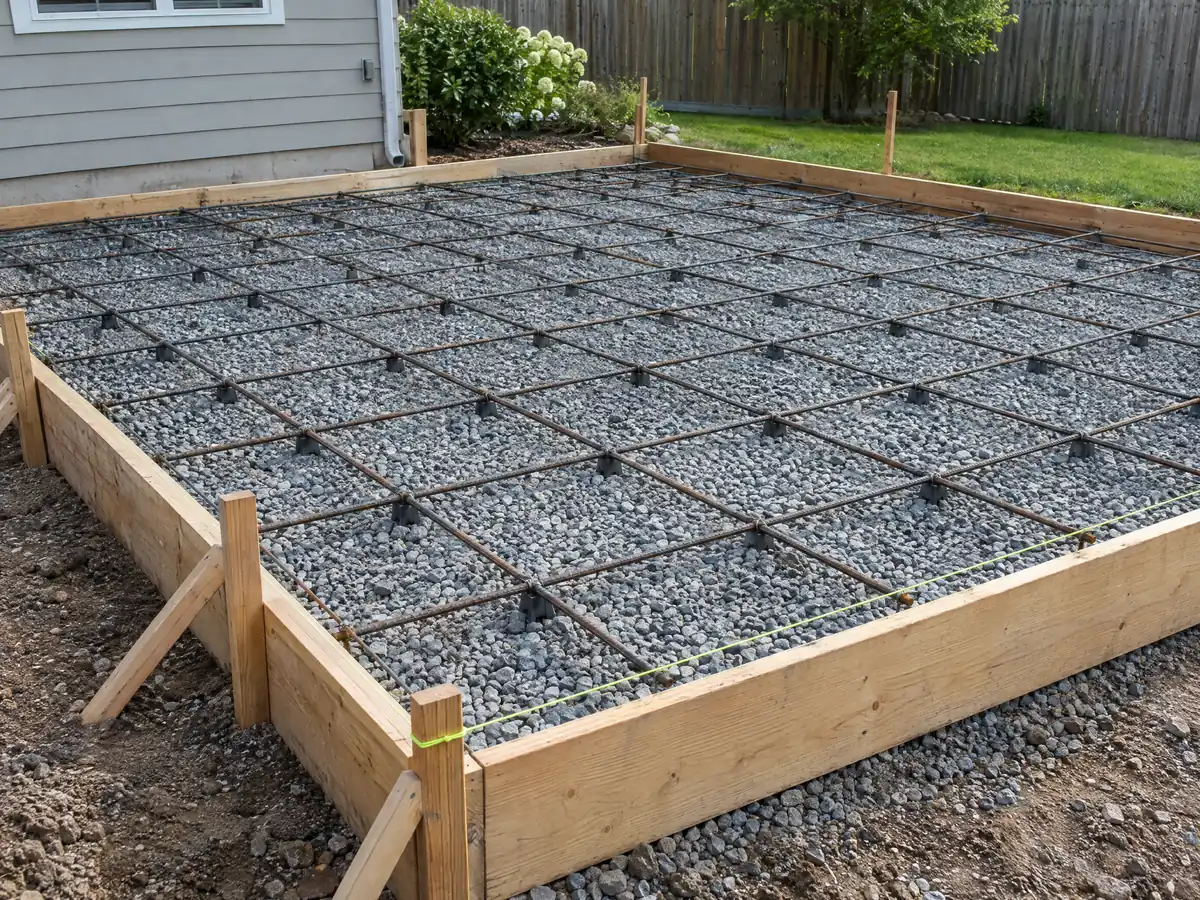
We found no South Gate price study with a stated method, so these are Los Angeles figures. For a flat, easy-access site and slabs of 300 square feet or more, our working band is $8 to $14 per square foot with a broom finish. It rests on Angi's Los Angeles patio page and HomeGuide, whose ranges meet at $4 to $13. Run that over 400 square feet and the arithmetic gives roughly $3,200 to $5,600, and small jobs usually price above the average because of minimum charges.
Colored, stamped or exposed aggregate surfaces start near $15 and top out around $30 a square foot, and a driveway replacement that includes demolishing the old slab runs about $9 to $20. A 400 square foot driveway therefore multiplies to roughly $3,600 to $8,000, and a 400 square foot stamped patio to $6,000 to $12,000. We rate the decorative and driveway ranges medium to low in confidence.
We print no retaining wall price per foot, because the sources we found spread too widely and engineered walls are priced by height and drainage. Federal survey data list a mean hourly wage of $33.67 for cement masons in the Los Angeles-Long Beach-Anaheim metro as of May 2025, which is what a mason earns, not what a company bills. Demolition, base repair, rebar, drainage and the Public Works permit are separate proposal lines; our concrete page has the sources, and the license check guide shows how to confirm a C-8 number.
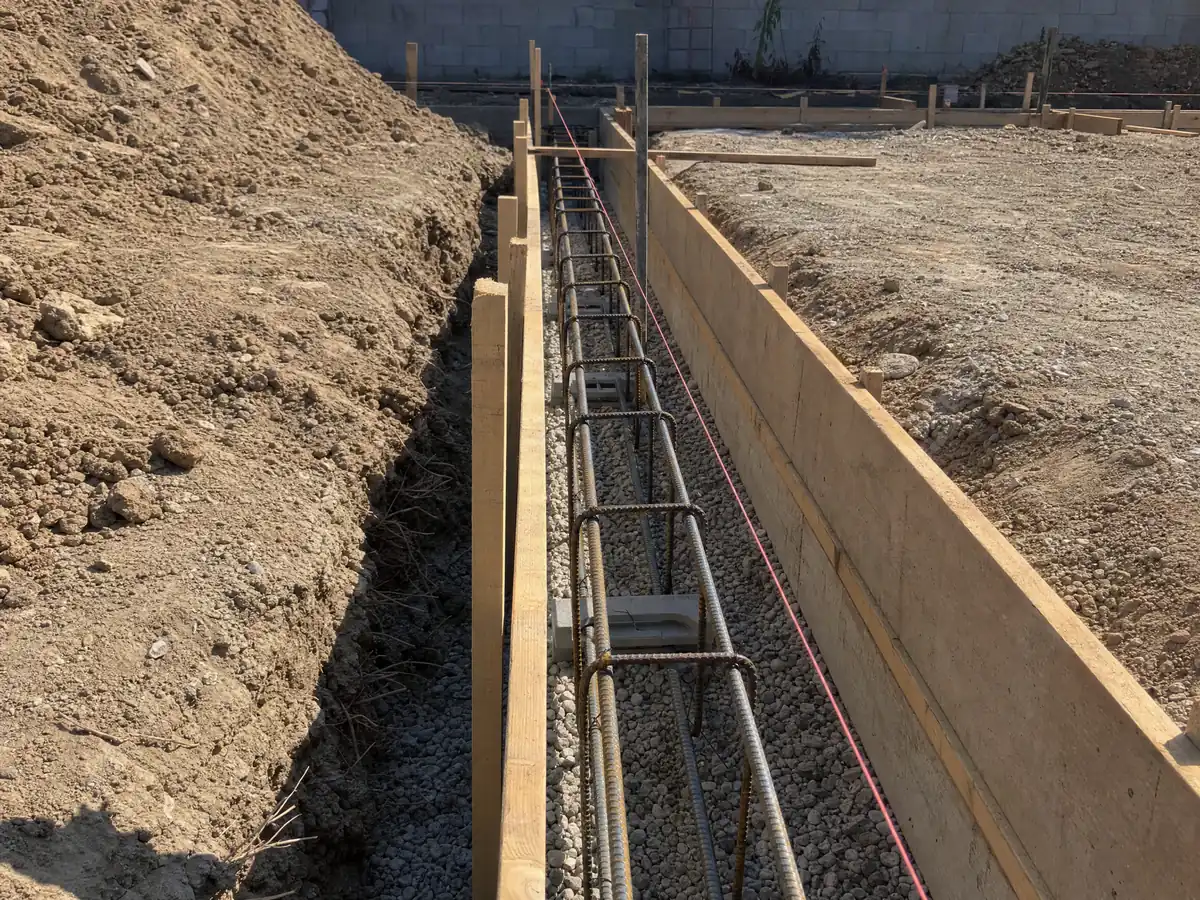
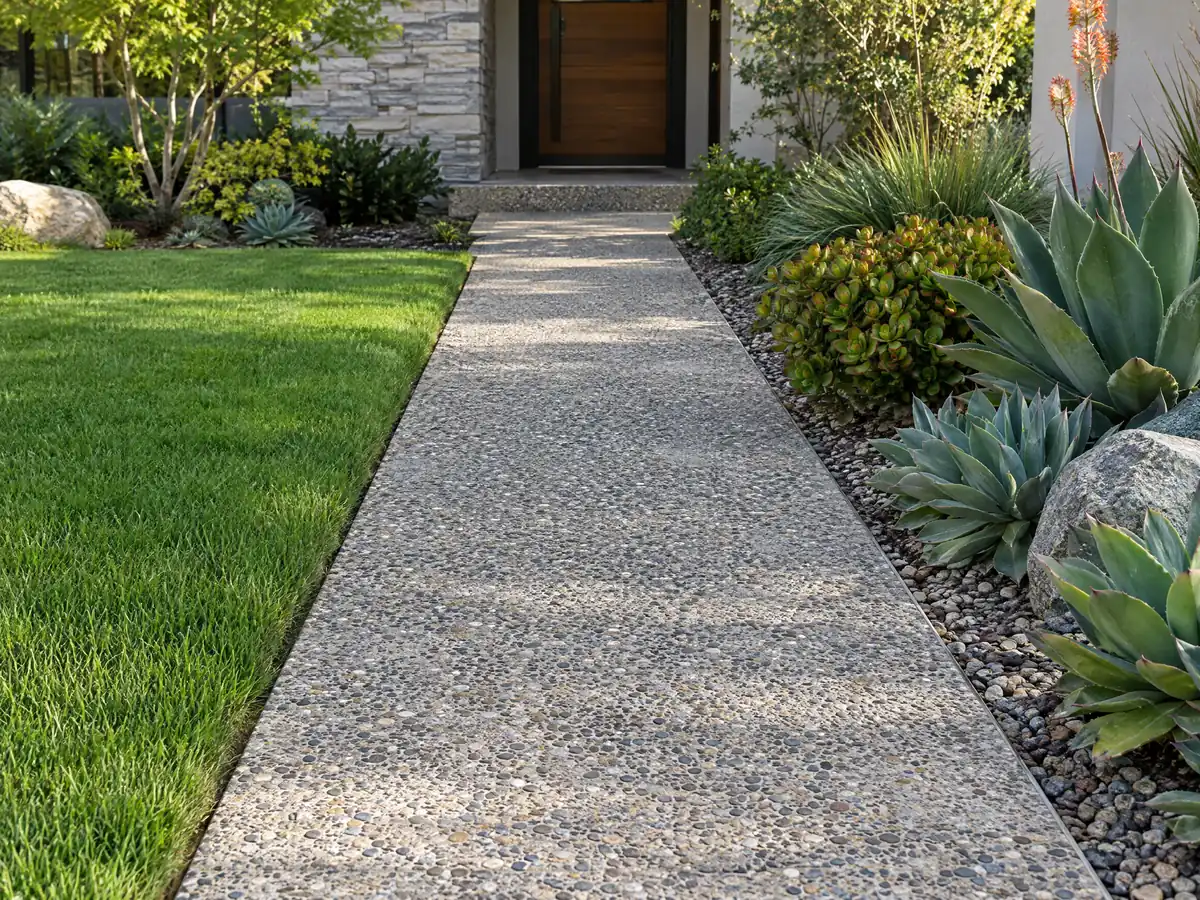
Concrete photos from South Gate and nearby communities
Six photos of concrete work in South Gate and the towns around it, from rebar and forms to walks, walls and finished patios. Tap any photo to enlarge it.
What concrete costs around South Gate
The ranges above are Los Angeles figures from the sources behind our concrete page, not a South Gate quote, and permit and parkway lines are priced apart from the pour. Nearby pages: concrete work in Los Angeles, concrete work in Downey, concrete work in Compton, concrete work in Carson, concrete work in Glendale, concrete work in Pasadena, flooring in South Gate and decks in South Gate. Our neighbors Lynwood, Bell Gardens, Cudahy, Huntington Park and Paramount have no concrete page yet.
| What it covers | Typical range |
|---|---|
| Patio, walkway or slab, broom finish, 300 sq ft or more | $8 to $14 per square foot |
| Decorative: stained, stamped or exposed aggregate | $15 to $30 per square foot |
| Driveway replacement, with demolition of the old slab | $9 to $20 per square foot |
| 20 by 20 foot plain patio (400 sq ft) | About $3,200 to $5,600 |
| 20 by 20 foot decorative patio (400 sq ft) | About $6,000 to $12,000 |
| Small jobs under 300 sq ft | Usually above the per-foot range |
| Retaining walls | Set by the written proposal |
Other work we manage in South Gate
South Gate concrete questions, answered
Can I pour a concrete patio without a permit in South Gate?
It depends, and the City's pages point both ways. The permit page exempts sidewalks and driveways inside private property, yet the same list names patios as work that needs a permit. Call Building & Safety at (323) 563-9549 with the size and location before ordering concrete, and ask Planning about front yard limits.
Can I expand my driveway without a permit in South Gate?
Not safely. Zoning limits front setback paving to the permitted driveway and a six-foot-long entry walk, driveway width is limited to what the permitted parking needs, and any change at the curb needs a Public Works encroachment permit. Planning handles the plot plan first, by email, so ask for the answer in writing.
Are you allowed to pour your own driveway in South Gate?
Yes, an owner can apply, with conditions. An owner-builder permit requires the owner to live on a property of two units or fewer, and work in the parkway needs a certificate of insurance naming the City, a hold harmless form, plans and a schedule. A concrete company working there also needs a City business license.
What is the maximum height of a retaining wall without a permit in South Gate?
Four feet, measured from the bottom of the footing to the top of the wall, according to the City's permit page, and only if the wall supports no surcharge and holds no certain liquids. Walls above that line need a building permit, and block wall fencing over 30 inches above grade needs one too.
How tall can a block wall be on a South Gate property line?
Six feet along interior lines in the NL single-family zone, with 7 feet by administrative permit and 8 feet next to commercial, industrial, alley or parking uses. The front setback is limited to 24 to 36 inches. A shared-line wall needs the neighbor's notarized signature, and a block wall over 30 inches above grade needs a building permit.
How much should a 20x20 concrete patio cost in South Gate?
Roughly $3,200 to $5,600 with a broom finish and $6,000 to $12,000 stamped or stained, from multiplying 400 square feet by Los Angeles ranges of $8 to $14 and $15 to $30 per square foot. These are medium to low confidence arithmetic, not a quote, and a small slab can price above the average.
How much does a concrete driveway cost in South Gate?
About $9 to $20 per square foot in the Los Angeles sources we use, with the old slab demolished and hauled away, so a 400 square foot driveway multiplies to roughly $3,600 to $8,000. Base repair, the parkway permit, drainage and a sewer line check are extra, and a site visit sets the real price.
Is 4 inches of concrete thick enough for a driveway?
Four inches is what contractors commonly quote for residential flatwork, but we found no code section that sets it, so treat it as practice, not law. What counts is the written spec: slab thickness, base, reinforcement and joint layout, and whether heavy vehicles or a trash truck cross the apron. Ask the bidder to put those in the proposal.
What license does a concrete company need in South Gate?
A C-8 license covers forming, pouring and finishing concrete, and C-29 covers concrete block walls, unless the job costs $1,000 or less in labor and materials and needs no permit. Parkway work also needs a City business license and insurance naming the City, and every subcontractor on a permit must be listed with the City.
What happens to broken-out concrete from a South Gate project?
On permitted jobs the City refunds its debris deposit when 65 percent or more of the debris is recycled or reused, prorated below that, if paperwork arrives within 30 days of final inspection. Signing the City's hauler contract avoids a 5 percent deposit fee. Ask your concrete company which yard takes the rubble and who files the form.
Send the address, a sketch and the finish you want
Tell us what is there now, how big the new slab should be and whether it reaches the curb. We check the front yard limits and the parkway permit before we call back.