
Concrete Companyin Paramount, CA
A concrete company in Paramount works under two local rules neighbors rarely share: R-1 front yards must stay at least 65 percent planted, which limits new paving, and the City reimburses up to $3,000 to widen a driveway. Ask Building and Safety whether a slab needs a permit, because Paramount publishes no flatwork rule.
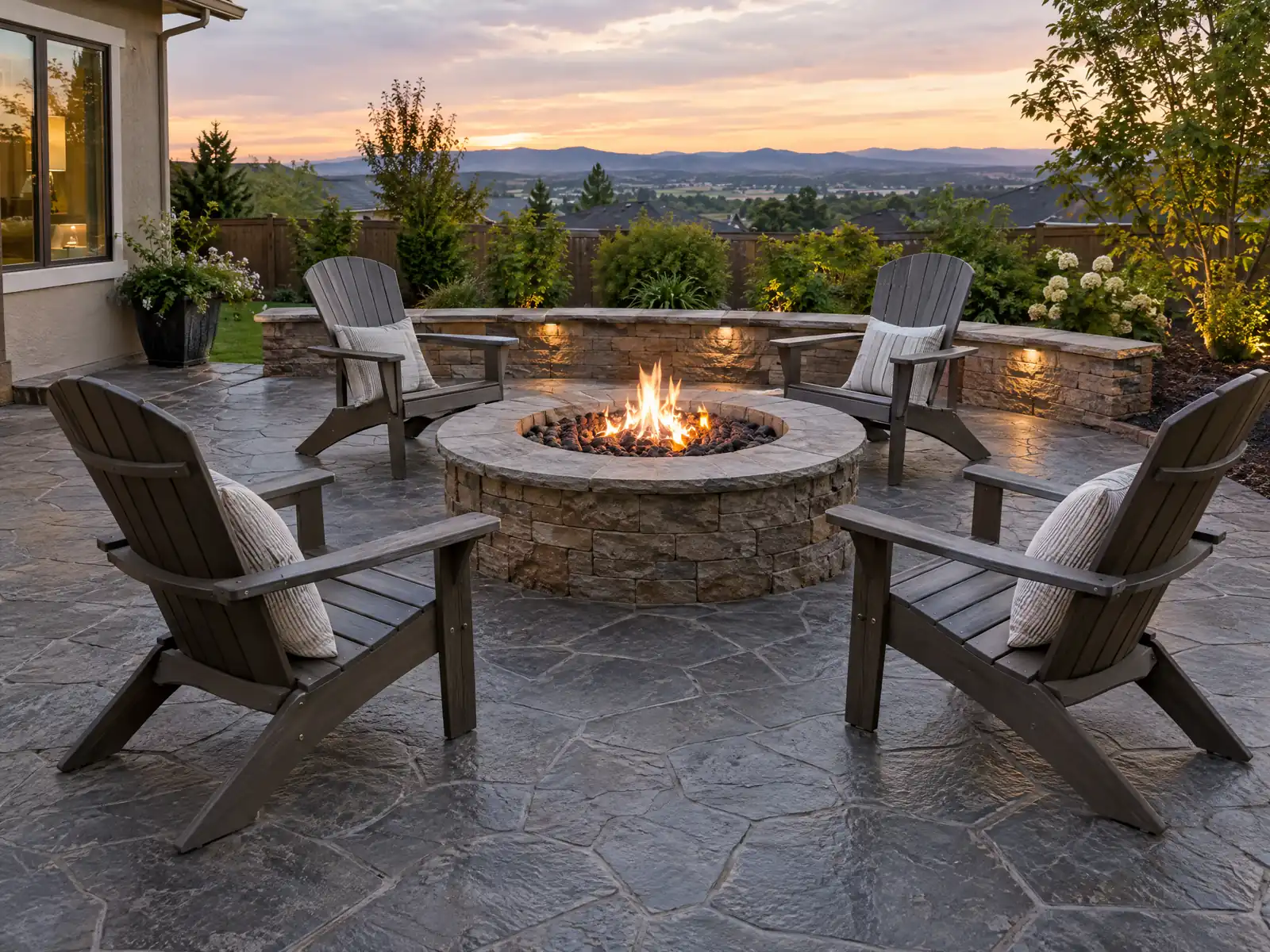
Most concrete work in Paramount replaces what postwar builders poured. The median home dates from 1971, about 63 percent were built before 1980, and the Housing Element's history counts 67 percent of the city's 1973 housing as built between 1950 and 1970. The Century Freeway marked 421 Paramount parcels for clearance in the early 1970s, so a typical job today is a driveway, walk or patio laid beside slabs that may be fifty years old or more.
MDG Builders, CSLB #1040337, runs each project from Tarzana: we measure the lot, take the planting and permit questions to Paramount Building and Safety and Planning, and schedule the crew. A licensed concrete subcontractor forms and pours the work, and you may ask for that firm's license number and proof of insurance. Prices sit on our concrete page, and the Paramount overview lists neighboring trades such as flooring and decks.
What Paramount's code says about concrete and paving
Where concrete permits come from in Paramount: City of Paramount Planning and Building Department, Building and Safety Division.
- Off-street parking areas in the R-1 zone must be surfaced and maintained with Portland cement concrete or bituminous pavement to eliminate dust and mud, graded and drained to the curb or gutter and away from neighbors, and never drained across sidewalks; driveways must be at least 9 feet wide (17.08.080.B).
- Vehicles, RVs, boats and trailers may be parked in required yards only on a driveway on one side of the lot (not into the public right-of-way) or in the rear yard on a paved surface at least 5 feet from side and rear lines with a 6-foot solid screen fence or wall (17.08.080.B.3).
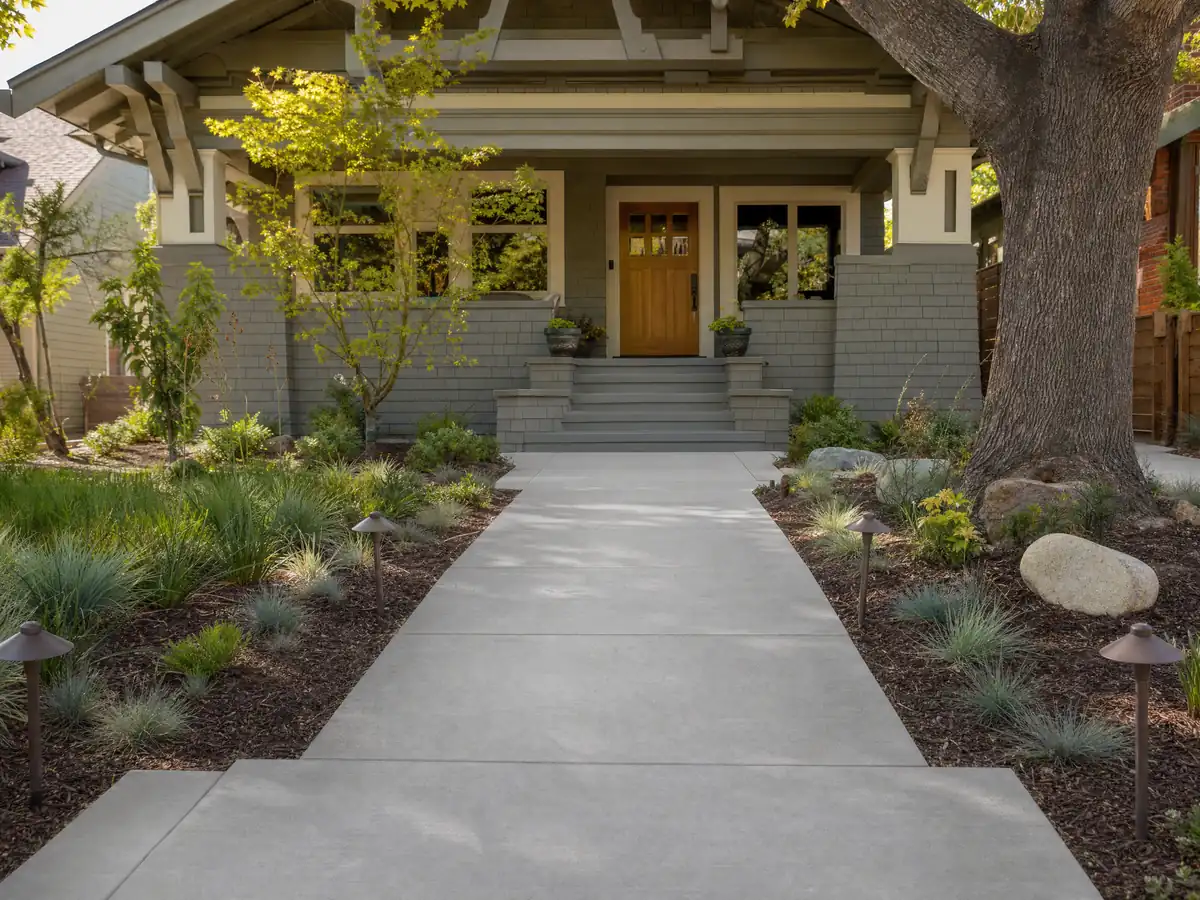
- Front yards: at least 65 percent plant coverage (drought-tolerant plants, artificial turf, permeable material), at most 35 percent accent alternatives such as pavers on sand with no mortar or grout, 3 inches of mulch, decomposed granite or artificial turf, and hardscape limited to existing driveways, walkways, patios and courtyards; all front yard landscape changes need Planning Department review before planting (17.08.060.A).
- Driveway Expansion Program: reimburses up to 12 homeowners a maximum of $3,000 for a driveway widening on R-1 or R-2 lots, first come, first served, with work starting only after approval; frontage of 40 feet or less allows up to 18 feet of driveway and 41 feet or more up to 22 feet, side planters of at least 5 feet stay (waived under 40 feet of frontage), at least 100 square feet of concrete is required, and the addition must match the existing driveway material.
- Driveway program details: asphalt and decomposed granite are not reimbursable, staff inspect completed work before paying, the site must be left broom clean, a replacement tree may be required, and approach aprons in the public right-of-way may be included as funding allows; the City's 2026 application form is posted on the page.
- Public right-of-way concrete (curbs, gutters, driveway approaches, retaining walls, storm drains) needs a permit under Chapter 12.20, and the owner of property abutting a sidewalk or curb must repair or rebuild it when it is out of repair or dangerous, with notice and City repair at the owner's cost after five days if ignored (12.24).
- Parkways in residential zones must be more than 65 percent live plant material (excluding driveways) with the rest permitted non-living material, owners must water and maintain parkway landscaping and report tree hazards, and no one may remove, cut, trim or injure a parkway tree (12.32.030 to .050).
- Block walls follow the City's Block Wall Detail (footing depth and width tied to wall height, grade 40 steel, fully grouted reinforced cells, vibrated grout), and the Master Fee Schedule prices grading permits of 1 to 50 cubic yards at $211 plus the $57 issuance fee.
Can the City of Paramount really pay for part of a wider driveway?
Yes, up to a point. The Planning Division's Driveway Expansion Program reimburses up to 12 homeowners a maximum of $3,000 each for widening a driveway on an R-1 or R-2 lot, first come, first served, and work may begin only after approval. The page we read does not say how the amount is figured, so ask Planning whether it tracks your invoice.
The design limits are specific. A lot with 40 feet of frontage or less may have a driveway up to 18 feet wide, and a lot with 41 feet or more up to 22 feet. Side planters of at least 5 feet stay, a rule waived under 40 feet of frontage, and the work must add at least 100 square feet of concrete that matches the existing driveway. Asphalt and decomposed granite are not reimbursable.
Staff inspect the finished work before paying, the site must be left broom clean and a replacement tree may be required. Neighbors may not share a connecting driveway, so a planter, a 42-inch front fence or a similar element must separate the two lots. At the plain-concrete range of $8 to $14 per square foot, the 100 square foot minimum comes to roughly $800 to $1,400.
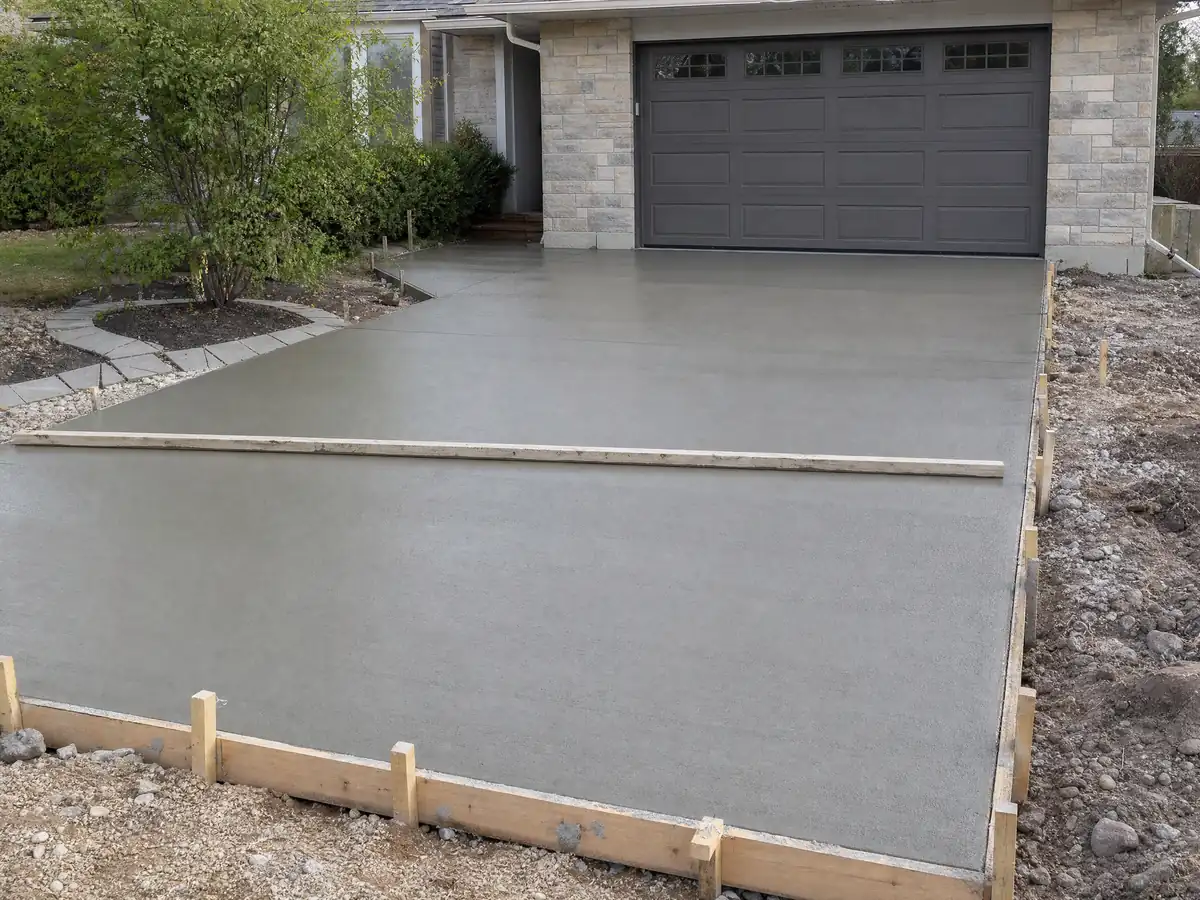
How much of a Paramount front yard can be covered in concrete?
Section 17.08.060.A of the R-1 zoning code says front yards must be at least 65 percent planted, using drought-tolerant plants, artificial turf or permeable material, with at most 35 percent left for accents such as pavers on sand without mortar or grout, three inches of mulch or decomposed granite.
Hardscape is limited to existing driveways, walkways, patios and courtyards, so a new pad is not a given, and every change to front yard landscaping needs Planning review before anything is planted. Ask Planning to confirm the planted percentage for your lot in writing before a saw touches the old slab. The proposal should state the front yard area, the paved area after the work and the approval that covers it.
The strip between sidewalk and curb has its own rule. Chapter 12.32 of the Municipal Code requires residential parkways to be more than 65 percent live plants, not counting driveways, makes the owner water and maintain them and bars anyone from removing, cutting or injuring a parkway tree. A trench or a new apron near a parkway tree is worth raising at the first visit.
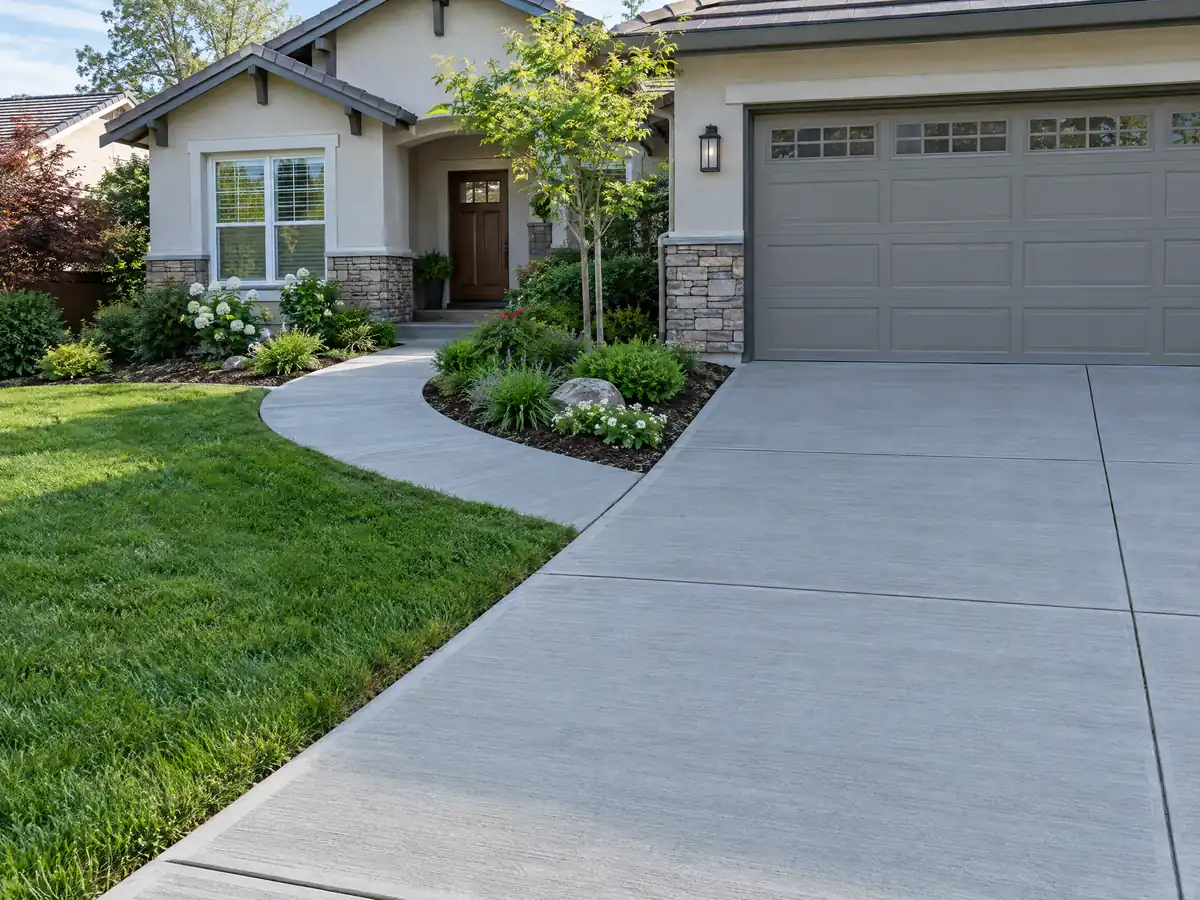
What surface and layout does Paramount require for parking, RVs and boats?
Section 17.08.080.B requires R-1 off-street parking areas to be surfaced with Portland cement concrete or bituminous pavement, graded and drained to the curb or gutter and away from neighbors, and never drained across a sidewalk. Driveways must be at least 9 feet wide. Slope is therefore part of the pour, and a contractor should say where the water goes before the forms are set.
Parking must also be covered. New R-1 construction needs two spaces in a fully enclosed garage with a 20 by 20 foot clear interior, and Section 17.08.110 says both required spaces sit under a carport or garage roof. A wider driveway eases access but does not replace those spaces. If you are thinking of converting the garage, read our garage conversion guide and ask Planning which section controls, since the ADU chapter and the garage conversion section read differently.
Boats, trailers and recreational vehicles may stand in required yards only on a driveway on one side of the lot, never reaching into the public right-of-way, or on a paved rear yard surface at least 5 feet from the side and rear lines behind a 6-foot solid screen fence or wall. A rear parking pad is therefore a concrete job and a fence job at once.
Who permits a driveway apron, curb or sidewalk panel in Paramount?
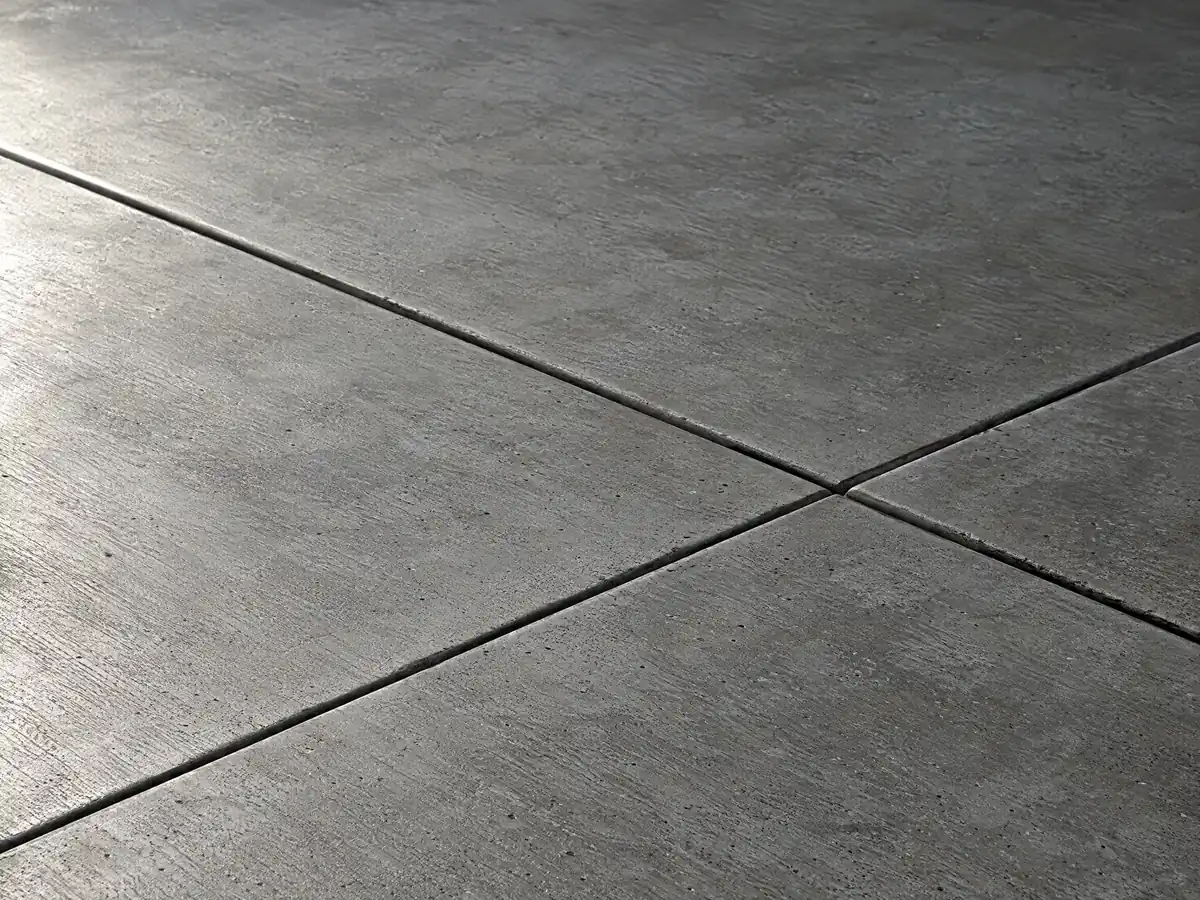
Work in the public way is its own permit. Chapter 12.20 of the Municipal Code covers curbs, gutters, driveways, retaining walls and storm drains in the right-of-way, and the text we read still routes applications and inspections through the County Road Commissioner, so ask Building and Safety which office takes yours today. A residential driveway permit carries no inspection deposit when the curb line is within 10 feet of the property line and the code's other listed conditions are met, and work must start within 60 days.
Sidewalks fall to the owner. Under Chapter 12.24, the owner of property next to a sidewalk or curb must repair or rebuild it when it is out of repair or dangerous, and if a notice is ignored for five days the City may do the work at the owner's cost. A cracked panel in front of the house is worth fixing before a notice arrives.
Whether a patio slab needs a building permit is not answered in the City pages we read. The 2022 model code text exempts sidewalks and driveways no more than 30 inches above adjacent grade and not part of an accessible route, and Paramount enforces the 2025 edition, so ask the Division in writing about your slab. For a large job expect three offices: Planning for the yard, Building and Safety for structures and grading, and the right-of-way permit for the curb. South Gate and Downey sort it out differently.
Does Paramount's liquefaction zone change footings, retaining walls and block walls?
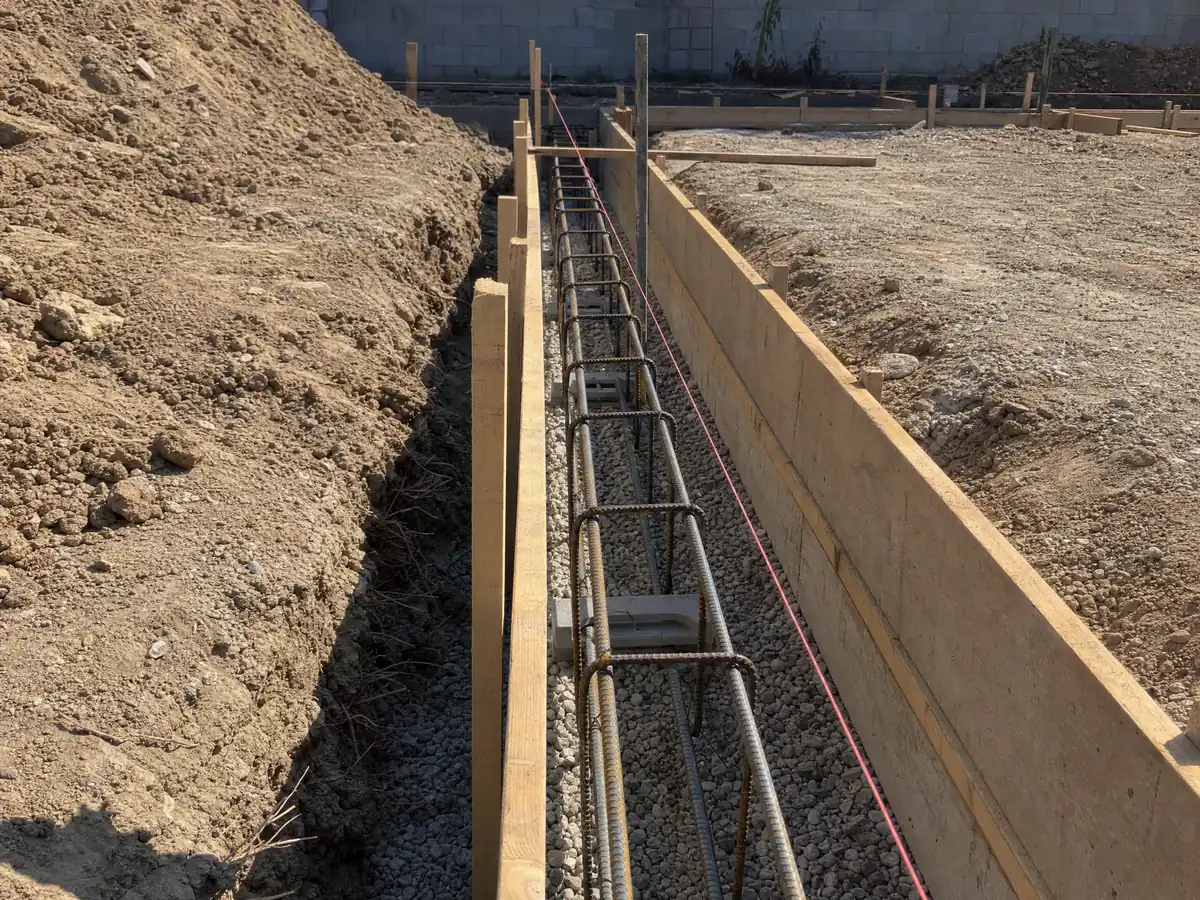
It changes the questions asked of tall footings and walls more than those asked of a garden path. The State's liquefaction layer covered all 137 sample points we checked, which is a sample and not a parcel map, and the City's design table lists seismic design category D2 or E. The Health and Safety Element requires special soils and structural investigations for larger structures, and the Municipal Code bars prescriptive foundation walls in categories D, E and F, so a new footing or a wall with real height starts with engineering.
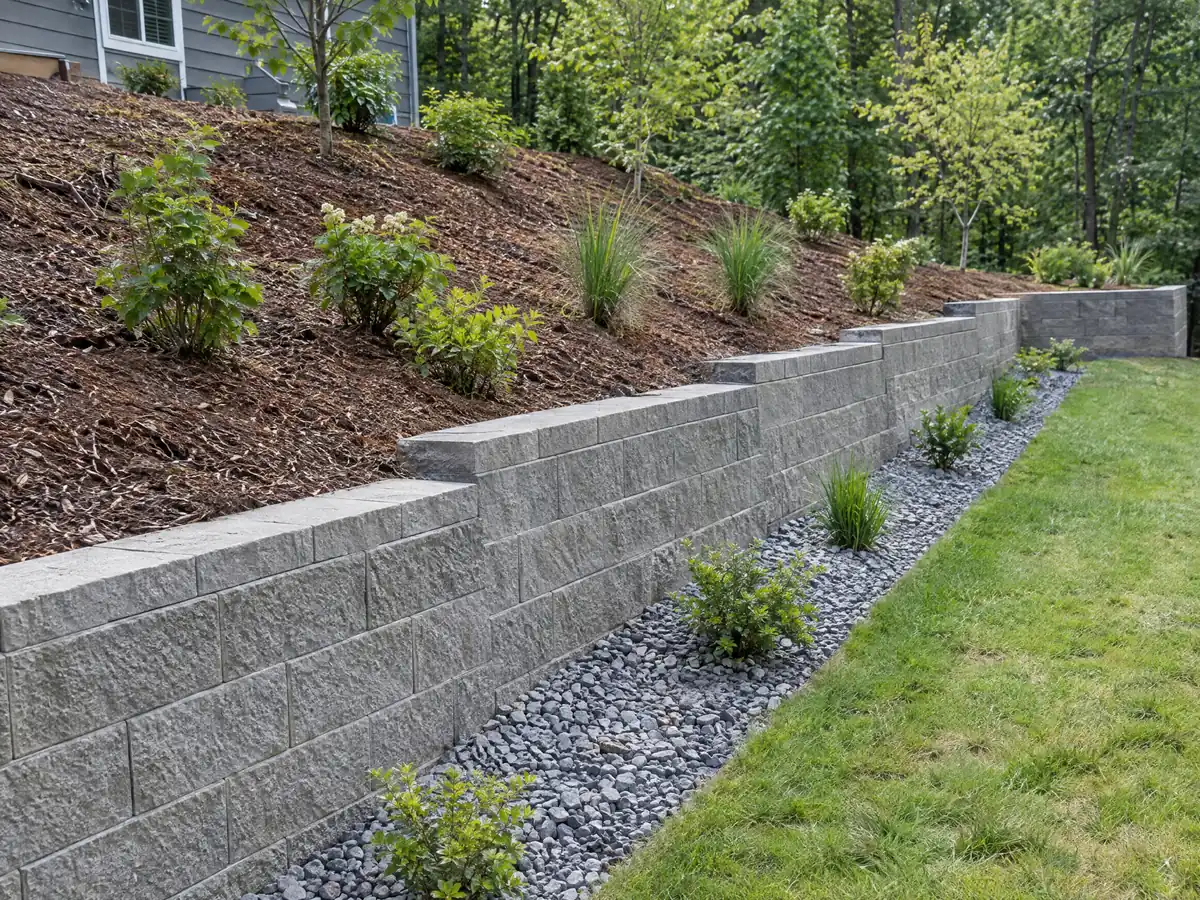
The model state code exempts a retaining wall measuring four feet or less from the bottom of its footing to its top, provided it holds back no added load such as a driveway or a building. Paramount's pages give no exempt height for walls, though its pool fence section mentions earth retained above 3 feet, so ask the Division whether your wall needs a permit and a drainage plan.
Fence heights conflict inside the Code: Section 17.44.340 allows 8 feet behind the front yard line, while Section 17.08.080.F limits R-1 walls and fences to 6 feet with Planning Director approval. Use 6 feet as the cautious figure and confirm with Planning. A block wall follows the City's Block Wall Detail, which ties footing depth to wall height and calls for grade 40 steel in fully grouted cells. CSLB's C-29 class covers block, and its C-8 class covers poured concrete.
What does concrete work cost in Paramount for a driveway, patio or stamped finish?
We found no Paramount price study with a stated method, so these are Los Angeles figures. For plain broom-finish flatwork of 300 square feet or more our working range is $8 to $14 per square foot, where Angi's Los Angeles patio page and HomeGuide overlap near $4 to $13. Small jobs price higher because crews charge minimums.
Suppose the pad is 20 feet by 20 feet, or 400 square feet. Plain concrete at those rates lands near $3,200 to $5,600. A driveway replacement at $9 to $20, with the old slab broken out and hauled off, would be $3,600 to $8,000 for the same area, and a decorative surface at $15 to $30 would reach $6,000 to $12,000. Confidence is medium to low for the decorative and driveway ranges, since each rests on one publisher.
Angi's Los Angeles stamped patio page, updated in July 2026, puts stamped work at $15 to $30 per square foot, nearly double the plain rate, with an average project of $5,948. A retaining wall gets no per-foot figure from us, because published numbers scatter widely and an engineered wall is priced from its height, footing and drainage. Demolition, base repair, rebar and any right-of-way permit are separate lines, and our license check guide shows how to confirm a C-8 license.
Can concrete be poured in Paramount's rainy season and heat, and when may crews work?
Yes, with scheduling. NOAA's 1991 to 2020 normals for Long Beach Daugherty Field show 12.02 inches of rain a year, 81 percent of it from December through March, and about 23.3 days a year at or above 90 degrees. The station is 6.1 miles from the city point, so treat the numbers as nearby rather than local. Crews book dry stretches, start early in a hot week and cover fresh slabs when rain is forecast.
The Building and Safety page bars construction, repair and remodeling from 8:00 p.m. to 7:00 a.m., and the noise chapter exempts construction noise only for permitted work inside those hours. R-1 and R-2 limits are 62 decibels by day and 57 at night, so a power trowel running late can draw complaints.
Broken slab counts as debris. The City asks for a Pre-Project Waste Diversion Plan, Form A, with the permit application and a goal of recycling or reusing at least 65 percent of project material, and concrete is a heavy share of that. Ask the bidder which yard takes crushed concrete and who hauls it. Inspections can be booked online until 4 p.m. the day before.
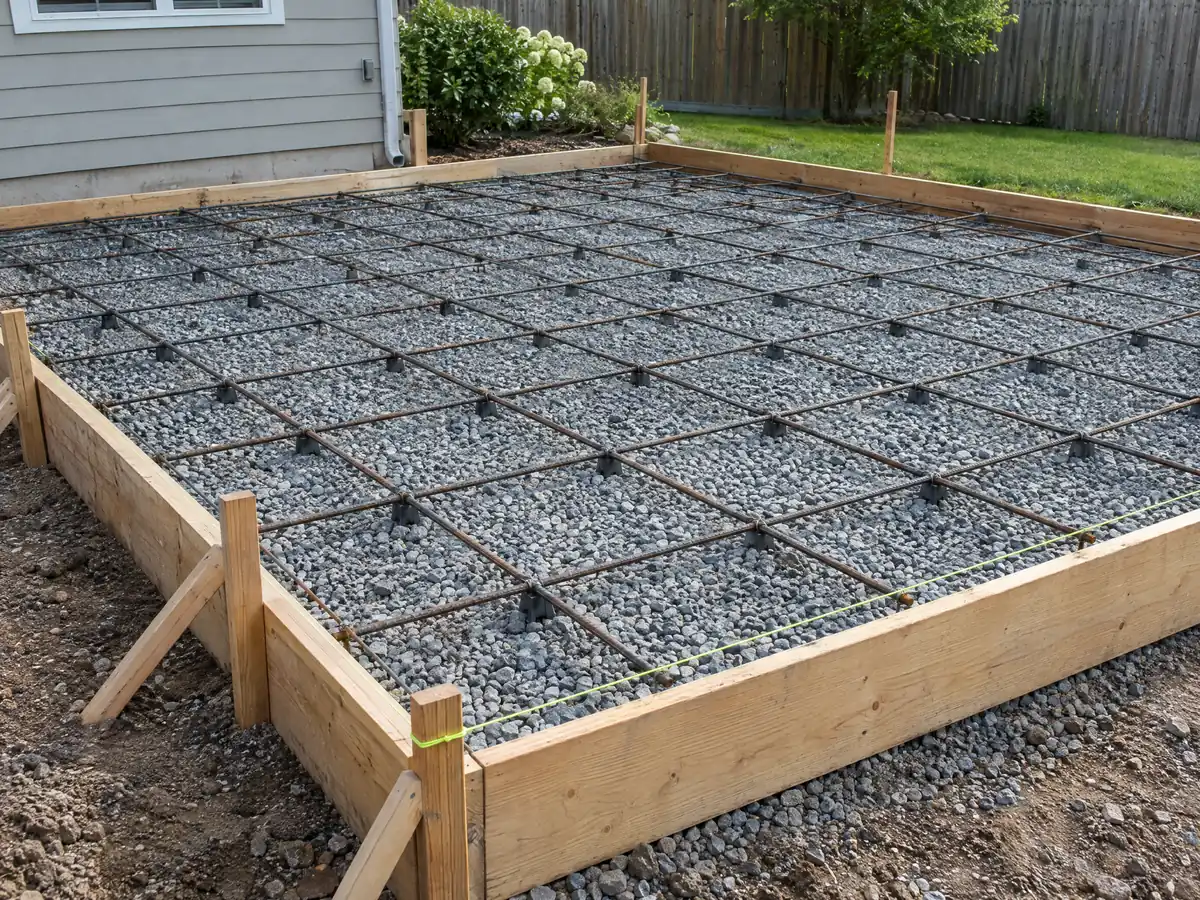
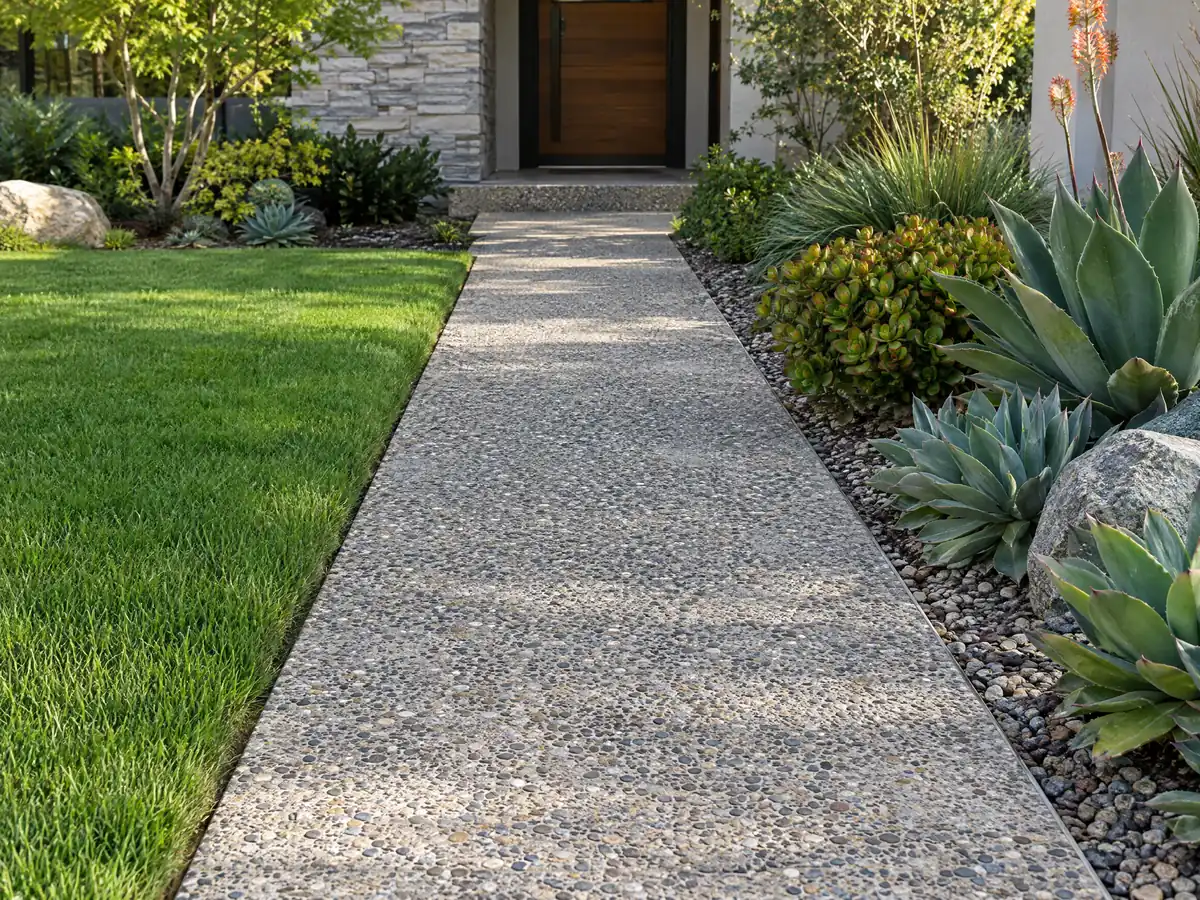
Concrete photos from Paramount and nearby communities
Six photos of forms, rebar, walls and finishes behind concrete work around Paramount and its neighbors, from screeded driveways to stamped patios. Tap a photo to enlarge it.
What concrete costs around Paramount
These are Los Angeles ranges from the sources behind our concrete page, not a Paramount quote. Demolition, haul-off, rebar and right-of-way permits are priced as their own lines, and our subcontractor guide explains who does which part. Nearby pages: concrete work in Downey, concrete work in South Gate, concrete work in Bellflower, concrete work in Compton, concrete work in Lynwood, concrete work in Long Beach, concrete work in Los Angeles, flooring in Paramount and decks in Paramount.
| What it covers | Typical range |
|---|---|
| Patio, walkway or slab, broom finish, 300 sq ft or more | $8 to $14 per square foot |
| Decorative: stained, stamped or exposed aggregate | $15 to $30 per square foot |
| Driveway replacement, with demolition of the old slab | $9 to $20 per square foot |
| 20 by 20 foot plain patio (400 sq ft) | About $3,200 to $5,600 |
| 20 by 20 foot decorative patio (400 sq ft) | About $6,000 to $12,000 |
| Small jobs under 300 sq ft | Usually above the per-foot range |
| Retaining walls | Set by the written proposal |
Paramount concrete questions, answered
Can I pour a concrete patio without a permit in Paramount?
Paramount publishes no patio slab rule in the pages we read, so ask Building and Safety before you pour. A front yard patio also needs Planning review under the 65 percent planted rule. Send the Division a sketch and the square footage at (562) 220-2036 or buildingpermits@paramountcity.gov, and keep the written answer.
Can I expand my driveway without a permit in Paramount?
Not safely. Front yard changes need Planning review, R-1 front yards must stay at least 65 percent planted, and anything at the curb needs a right-of-way permit under Chapter 12.20. The City's Driveway Expansion Program reimburses up to $3,000, but only if work starts after approval, so ask Planning first.
Does the City of Paramount pay for driveway widening?
Partly. The Driveway Expansion Program reimburses up to 12 homeowners a maximum of $3,000 each for widening a driveway on an R-1 or R-2 lot, first come, first served. Work begins only after approval, new concrete must match the existing driveway and staff inspect it before paying. Asphalt and decomposed granite do not qualify.
How much of my front yard can be concrete in Paramount?
Very little in an R-1 zone. The code requires front yards to be at least 65 percent planted, with at most 35 percent for accents such as pavers on sand, mulch or decomposed granite, and hardscape limited to existing driveways, walkways, patios and courtyards. Planning must review front yard landscape changes before anything is planted.
Is 4 inches of concrete thick enough for a driveway in Paramount?
It is common for patios and walks, but we found no single-family driveway thickness in Paramount's code. Four inches does appear in the City's rules for pedestrian paths on two-unit lots and for converted slabs. Vehicles are heavier, so ask the bidder to write the thickness, base and reinforcement into the proposal.
What is the maximum height of a retaining wall without a permit in Paramount?
Paramount's pages list no exempt height. The model state code exempts retaining walls up to 4 feet from the bottom of the footing unless they hold a surcharge, but the City's pool fence section mentions earth retained above 3 feet. Ask Building and Safety, and expect engineering if the wall is tall or carries a driveway.
Does a 4 ft retaining wall need drainage?
Almost always. Trapped water pushes harder on a wall than the soil does, whatever its height, so the proposal should show gravel backfill and a perforated pipe that runs to a legal outlet. Paramount's flat ground and soft soil make drainage more important, and the Division can say whether a soils report is expected.
How much does a 20x20 concrete patio cost in Paramount?
Plain broom-finish concrete for 400 square feet runs about $3,200 to $5,600 at our $8 to $14 per square foot working range, while stamped or colored work at $15 to $30 reaches $6,000 to $12,000. These are Los Angeles ranges, medium confidence, not a quote. Demolition and permits are separate lines.
How much does a concrete driveway replacement cost in Paramount?
Roughly $9 to $20 per square foot with the old slab broken out and hauled away, using Los Angeles figures. Angi's Los Angeles driveway page, dated May 2026, shows $8 to $20 per square foot and an average project of $7,270. A widening may qualify for the City's $3,000 reimbursement, and a curb apron needs its own permit.
What license does a concrete company need for concrete work in Paramount?
California requires a contractor license for work of $1,000 or more, and CSLB class C-8 covers forming, pouring and finishing concrete, while block walls fall under C-29. MDG Builders holds CSLB #1040337 and hires licensed concrete subcontractors. Ask any bidder for a license number and check it with CSLB before signing.
Plan a driveway, patio or wall in Paramount
Send the address, the lot frontage, what is poured now and whether the new slab reaches the curb or a wall. We check the planted front yard share and the driveway program before we call back.